 The conventional wisdom of the international expert class is that “you can't win a trade war.” What they really mean is that you can't win a trade war in a fair game . If all sides start in balance, the rules are the same for everyone, and no player has coercive power over any other, the winning strategy is for everyone to cooperate. Economics 101. But if one country starts with a massive trade deficit, the existing rules are written to favor its opponents. And when the country with the trade deficit just happens to be the most powerful country in the world, it's safe to say that there are multiple paths to victory. Despite being widely ridiculed in the press, the homespun wisdom encapsulated in President Donald Trump's April 4 tweet that “When you’re already $500 Billion DOWN, you can’t lose!” is essentially correct. The only thing incorrect was the figure. The U.S.trade deficit was $568 billion in 2017, and that figure incorporates America's trade surplus in services. America's trade deficit in goods alone was a whopping $811 billion.
11 July 2018
Trump Is Right: The U.S. Can’t Lose a Trade War
The conventional wisdom of the international expert class is that “you can't win a trade war.” What they really mean is that you can't win a trade war in a fair game . If all sides start in balance, the rules are the same for everyone, and no player has coercive power over any other, the winning strategy is for everyone to cooperate. Economics 101. But if one country starts with a massive trade deficit, the existing rules are written to favor its opponents. And when the country with the trade deficit just happens to be the most powerful country in the world, it's safe to say that there are multiple paths to victory. Despite being widely ridiculed in the press, the homespun wisdom encapsulated in President Donald Trump's April 4 tweet that “When you’re already $500 Billion DOWN, you can’t lose!” is essentially correct. The only thing incorrect was the figure. The U.S.trade deficit was $568 billion in 2017, and that figure incorporates America's trade surplus in services. America's trade deficit in goods alone was a whopping $811 billion.Madeleine Albright: ‘The things that are happening are genuinely, seriously bad
Andrew Rawnsley
Madeleine Albright has both made and lived a lot of history. When she talks about a resurgence of fascism, she says it as someone who was born into the age of dictators. She was a small girl when her family fled Czechoslovakia after the Nazis consumed the country in 1939. After 10 days in hiding, her parents escaped Prague for Britain and found refuge in Notting Hill Gate, “before it was fancy”, in an apartment which backed on to Portobello Road. Her first memories of life in London are of disorientation. “I didn’t have a clue. My parents were very continental European and I didn’t have siblings early on. I felt isolated.” As Hitler unleashed the blitz, “every night we went down to the cellar where everybody was sleeping.”
The Problem With Farm Loans
Ashutosh Datar
The government ensures credit to farmers with the best intentions. But they lead to horrible outcomes. In his budget speech every year, the Finance Minister lays down an indicative target of farm credit to banks. Banks have an explicit target for agriculture lending as part of their overall priority sector lending target. Banks must give at least 18% of their total loans to agriculture (and related activities allowed by the RBI). The underlying, unflinching belief is that farmers need more institutional credit as against credit from money lenders. Loans from formal financial institutions are cheaper and they do not resort to unscrupulous recovery practices. Crop loans are generally available at a four percent interest rate due to a subsidy from the central government, and some states provide a subsidy on top of it, making crop loans effectively interest-free.
Explaining the Hype Around Hypersonic Weapons

Is it better to defend the Army’s network in the field or from afar?
By: Mark Pomerleau
/arc-anglerfish-arc2-prod-mco.s3.amazonaws.com/public/BHQ6Y2ND25AXND72KCHJLW2SVA.jpg) U.S. Army commanders are coming to grips with the need to more robustly defend their tactical networks from intrusions from highly sophisticated enemies.
U.S. Army commanders are coming to grips with the need to more robustly defend their tactical networks from intrusions from highly sophisticated enemies.
A pilot program at the National Training Center at Fort Irwin in California integrates cyber planners and tactical cyber operators with brigade combat teams doing their rotations through the center as part of their normal brigade training. For the sake of the pilot, a defensive cyber planner is embedded with the brigade staff to help coordinate with the brigade’s organic network operators. The planner acts as a liaison with the brigade between remote defensive capability provided by the cyber protection brigade.
Cyber in movies is cool, but can the Army do it?
By: Mark Pomerleau
/arc-anglerfish-arc2-prod-mco.s3.amazonaws.com/public/K6EPMWFDORC6FHFFLYSHHZ3XRI.net2414f7d86cb74b5eb01f4763b111a254635979665113267457) Leaders on an Army team that experiments with bringing cyber weapons to the battlefield say their top priority is managing commanders’ expectations.
Leaders on an Army team that experiments with bringing cyber weapons to the battlefield say their top priority is managing commanders’ expectations.
The Army is testing giving brigade commanders direct authorities of cyber capabilities, a new concept that includes offensive and defensive planners on the brigade staff.
Army Cyber Command is using a pilot program, Cyber and Electromagnetic Activities Support to Corps and Below, to test the infrastructure changes necessary to insert tactical cyber teams within brigades.
Guess which world leader is urging cybersecurity cooperation
/arc-anglerfish-arc2-prod-mco.s3.amazonaws.com/public/O4HG36ZMQVHSPI6A2KMN3M6MNA.jpg) MOSCOW — President Vladimir Putin on Friday called for closer international cooperation in fending off cyberattacks.
MOSCOW — President Vladimir Putin on Friday called for closer international cooperation in fending off cyberattacks.
Addressing a cybersecurity conference in Moscow, Putin said it’s important to develop common cybersecurity standards that take into account interests of all nations. He noted that cyberthreats have mounted around the world.
“Cyberthreats have reached such a scale that they could only be neutralized by combined efforts of the entire international community,” Putin said.
“We have repeatedly seen that some nations’ egoism, their attempts to act squarely to their own advantages, hurt the global information stability,” he added without specifying.
Encryption Is the Key
By Carl M. Cannon
In this series of articles running through July, RealClearPolitics and RealClearDefense take an in-depth look at the intersection of cybersecurity, technology, and warfare in the 21st century. Below is Part 9.
Although the bad blood between President Trump and James Comey helped shape our current contentious political environment, on one highly charged policy issue both men were in complete agreement during the brief time Comey served under Trump. That issue relates to cybersecurity and the pitched battle between law enforcement and the tech industry over encryption.
The president and the former FBI director have been equally vehement in their denunciation of Silicon Valley tech giants for building encrypted software code that protects users of computers and mobile phones from intrusion -- even from law enforcement officials pursing criminals.
10 July 2018
Modi govt revamps DRDO: Key body reconstituted, to set agenda
Shishir Gupta
 DRDO’s powers have been enhanced by the government for sanctioning projects and competitive procurement to Rs 150 crore from the existing Rs 75 crore. The Narendra Modi government has taken its first steps towards restructuring and revamping the Defence Research and Development Organisation (DRDO) by reviving the defunct DRDO Science and Technology Management Council (DSTMC) under the chairmanship of principal scientific advisor K Vijayraghavan and doubling the financial powers of the secretary, DRDO, to Rs 150 crore. According to a July 3 notification accessed by Hindustan Times, the reconstituted DSTMC is a high-profile body that will chart the future of DRDO laboratories in synergy with the science and technology department.
India’s Looming Drinking Water Crisis
Rajesh Singh
 NITI Aayog has warned of a crisis that must make policymakers and the rest of us act now, and not later, because later could be too late. The danger the panel has spoken of has not been considered important enough for prime time television debates and, therefore, it is possibly out of the radar of most Indians who determine the importance of news based on how prominently it is raised in the electronic media. But the issue has the potential to trigger major social unrests across the country, since it relates to water.
Looking back at the Simla Agreement and its failure to achieve peace
By VIVEK KATJU
As India has passed another anniversary of the India-Pakistan Simla Agreement of July 2, 1972, fresh and fascinating insights into the assumptions, motivations and aims of the eventual head of Indian negotiators, P N Haksar, have been put into focus through Jairam Ramesh’s interesting book Intertwined Lives: P N Haksar and Indira Gandhi. Do they establish the charge that the opportunities created by what was won on the battlefield were squandered on the high table of diplomatic negotiations? As the Simla Agreement has acquired seminal importance in India-Pakistan relations, a sober and objective assessment in light of the material in Ramesh’s book would be timely, especially at a time India-Pakistan bilateral ties are deeply troubled.
Afghanistan: Technocrats vs. Warlords
By Ahmad Shah Katawazai
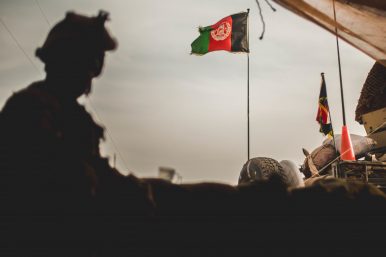 In Afghanistan’s Faryab province, protesters stormed the national intelligence agency’s offices in the city of Maimana, looted the provincial governor’s compound, and burned several vehicles. The protests happened after the arrest of a powerful warlord and commander, Nezamuddin Qaisari, who is loyal to Vice President Abdul Rashid Dostum. Qaisari was arrested after he allegedly threatened to kill people at a provincial security meeting. Qaisari is the provincial representative of fellow ethnic Uzbeks. He is closely affiliated with Dostum, who fled to Turkey last year after he was accused of being involved in the rape and torture of a political rival. Dostum warned the removal of Qaisari could worsen insecurity in Faryab, where government forces are fighting the Taliban and Islamic State-Khorasan Province (ISKP).
Hezbollah’s Missiles and Rockets
The Issue
Hezbollah is the world’s most heavily armed non-state actor, with a large and diverse stockpile of unguided artillery rockets, as well as ballistic, antiair, antitank, and antiship missiles. Hezbollah views its rocket and missile arsenal as its primary deterrent against Israeli military action, while also useful for quick retaliatory strikes and longer military engagements. Hezbollah’s unguided rocket arsenal has increased significantly since the 2006 Lebanon War, and the party’s increased role in the Syrian conflict raises concerns about its acquisition of more sophisticated standoff and precision-guided missiles, whether from Syria, Iran, or Russia. This brief provides a summary of the acquisition history, capabilities, and use of these forces.
Afghanistan: Technocrats vs. Warlords
By Ahmad Shah Katawazai
In Afghanistan’s Faryab province, protesters stormed the national intelligence agency’s offices in the city of Maimana, looted the provincial governor’s compound, and burned several vehicles. The protests happened after the arrest of a powerful warlord and commander, Nezamuddin Qaisari, who is loyal to Vice President Abdul Rashid Dostum. Qaisari was arrested after he allegedly threatened to kill people at a provincial security meeting. Qaisari is the provincial representative of fellow ethnic Uzbeks. He is closely affiliated with Dostum, who fled to Turkey last year after he was accused of being involved in the rape and torture of a political rival. Dostum warned the removal of Qaisari could worsen insecurity in Faryab, where government forces are fighting the Taliban and Islamic State-Khorasan Province (ISKP).IN PAKISTAN’S CURRENCY CRISIS, CHINA IS THE PROBLEM AND THE SOLUTION
BY TOM HUSSAIN
 A last-ditch Chinese loan may have temporarily rescued Pakistan from a foreign exchange reserves crisis, but experts say Islamabad’s growing dependence on Beijing has become as much a liability as it is an asset. The US$1 billion emergency loan released in the last week of June boosted Pakistan’s reserves enough to cover two months of imports, which have reached unsustainably high levels largely – and ironically – because of Islamabad’s commitment to the Belt and Road Initiative, Beijing’s plan to link Eurasia in a China-centred trading network.
Technology, and Xi Jinping’s Question
KAUSHIK BASU
Despite unprecedented technology-enabled development, the world is beset with challenges, from violent conflict to rising inequality. The underlying reason for these problems may be that we have reached a turning point in the march of technological progress – and we are navigating it very badly. “It was the best of times; it was the worst of times,” said President Xi Jinping, quoting Charles Dickens’ famous line to open his speech at the 2017 World Economic Forum. “Today,” Xi continued, “we also live in a world of contradictions.” On one hand, “growing material wealth and advances in science and technology” have enabled unprecedented rates of development. On the other hand, “frequent regional conflicts, global challenges like terrorism and refugees, as well as poverty, unemployment, and a widening income gap” are generating deep uncertainty.
CHINA MILITARY EXPANSION PLANS REVEALED AS NEW WARSHIPS LAUNCHED
BY DAVID BRENNAN
Chinese plans to expand the country's regional power projection have been revealed by leaked internal military documents, indicating that Beijing is expanding its armed forces to protect its interests around the globe. The documents came to light as the People’s Liberation Army (PLA) navy launched two advanced warships designed for surface warfare, long-range air defense and anti-submarine operations, as the country's naval modernization continues apace. The leaked document—obtained by the Kyodo News agency—was published by the Chinese Central Military Commission in February. As detailed by The Japan Times, it notes increasing friction in the East and South China Sea and heightened tensions with the U.S. and neighboring states.
The Chinese cyber threat is increasing rather than diminishing
China Won’t Back Down on Cyber Espionage Anytime Soon
Highlights
China’s efforts to control its cyberspace will only increase as the central government tries to defend against ideological and organizational threats from near and far. The growing economic and technological competition between the United States and China will encourage Beijing to maintain policies that enable it to catch up with U.S. cyber capabilities.
Concerns that Western intelligence agencies and hackers could exploit backdoors in its networks will prompt China to keep promoting policies aimed at developing indigenous versions of foreign hardware and software.
Review: Blessings from Beijing: Inside China’s Soft-power War on Tibet by Greg Bruno
Greg Bruno
 These days, some books on Tibet are hopeful. Others speak of doom and gloom for Tibetans against the background of China’s rise and its willingness to throw its economic muscle around the world. Blessings from Beijing, a combination of fine travel writing and great reporting, expresses both fear and hope. In his travels to Tibetan communities in America, Europe, India, and Nepal, Greg Bruno poses the question that is racking the minds of the Tibetan people: What would happen to Tibetans when the Dalai Lama is no longer with them? For older Tibetans both in Tibet and outside, those in their 70s and 80s, to pose the question itself is unthinkable, leave alone posit either a hopeful or fearful guess. But for young Tibetans on both sides of the Himalayas and beyond, the question is debated discreetly but fiercely because the eventual answer will impact their lives and decide the fate of the Tibetan people and their culture.
Donald Trump’s trade war is worrying Japanese car-parts giant Denso as it plans China expansion
Denso Corp, whose US$37 billion market value exceeds Fiat Chrysler Automobiles, sees the threat of US tariffs of as much as 25 per cent and reciprocal levies from trade partners as a “grave concern”, Executive Director Yasushi Matsui said. The duties are set to hit right as Denso readies an expansion in China, along with a war chest worth at least US$9 billion for investments aimed at broadening its business beyond top customer Toyota Motor Corp.
“A trade war is not the correct course,” Matsui said last week at Denso’s headquarters near Toyota City, about halfway between Tokyo and Osaka. “As long as the rules are free and fair, we have confidence we won’t lose to anyone.”
U.S. airstrikes are pounding al-Qaeda in Yemen, yet the militants fight on fiercely
Sudarsan Raghavan
The land mines had been planted. As hundreds of U.S.-backed forces approached in pickup trucks mounted with machine guns, the al-Qaeda militants watched and waited in their redoubt, tucked into the jagged mountains of southern Yemen. The first explosion shattered one vehicle, but the convoy pushed forward. Then came a second blast. Within minutes, five trucks were destroyed and the militants began firing with heavy weapons from their perches, recalled five witnesses to the May 10 ambush. Shabwani Elite Forces members stand on a hill overlooking Hota, Yemen. The militia, which is supported by the United Arab Emirates, liberated the village in December 2017 from al-Qaeda in the Arabian Peninsula.
The End of Global Britain
MARK MALLOCH-BROWN
In the two years since the Brexit referendum, the United Kingdom's global influence has been significantly diminished. A country that once punched above its weight in international affairs now only punches down, and Brexiteers’ aspiration to lead the vast “Anglosphere” into a brave new world has become a comical delusion. Nowadays, Britain’s words and actions on the world stage are so at odds with its values that one must wonder what has happened to the country. Since the June 2016 Brexit referendum, British foreign policy seems to have all but collapsed – and even to have disowned its past and its governing ideas.
Why Iran Is Threatening to Close the Strait of Hormuz
By Stratfor Worldview
Facing the imminent reinstatement of U.S. oil sanctions, Iran is threatening to close the Strait of Hormuz, which would shut down the region's oil trade. Iran has made this threat before and has never followed through, since actually shutting down the strait would be a drastic and damaging move for the country. The tough rhetoric is more than likely to be followed up by more mild retaliation attempts, such as the harassment of vessels in the Strait of Hormuz.
What happened?
Trump Might Be Right About NATO—but for All the Wrong Reasons
By BRIAN FINLAY

Last month, President Trump opened yet another front in his tense relations with some of America’s closest allies, firing off terse letters admonishing Germany, Belgium, Norway, Canada, and others, warning them that the U.S. is losing patience with their failure to meet their security obligations under the NATO alliance. The president’s blunt message and scathing remarks have been met with a mix of hand-wringing and outrage at home and abroad. Trump’s detractors, however, would do well to separate the message from the messenger and recall that the longstanding debate over NATO burden-sharing—defense lexicon for the division of responsibilities within the alliance—is as old as the alliance itself. Furthermore, the world may well need the engagement of the non-American NATO allies more today than ever with rising global threats—mass migration, the rise of cyber warfare, and a persistent terrorist threat in an unstable Middle East—coupled with an unpredictable and seemingly isolationist partner in Washington.
Marx's Theories Evolved - Marx Did Not
Written by Steve Keen, Steve Keen's Debtwatch
 Marx was the committed revolutionary, so much so that, when reflecting on his life, he said that if he had his time again, he would still be a revolutionary, but he would not marry, to save a wife having to suffer the privations of life with him. There were, of course, many committed revolutionaries in the 19th century. What set Marx apart from and above them all, was that he had proven that revolution not only would happen, but had to happen. It was inevitable. And then, one day, he proved, using a significant advance in his own economics, that revolution did not have to happen: that the inexorable force he had believed pushed in that direction was the outcome of a flaw in his own theory. When the flaw was corrected, the force was gone, and not only was revolution not inevitable, it might not even be necessary. How do you think he reacted?
Breaking News: North Korea reveals that two days of nuclear talks with SecState Mike Pompeo in Pyongyang did not go well
Gardiner Harris and Choe Sang-Hun
PYONGYANG, North Korea — North Korea accused the Trump administration on Saturday of pushing a “unilateral and gangster-like demand for denuclearization” and called it “deeply regrettable,” hours after Secretary of State Mike Pompeo said his two days of talks in the North Korean capital were “productive.” Despite North Korea’s criticism, its Foreign Ministry said leader Kim Jong-un still wanted to build on the “friendly relationship and trust” forged with President Trump during their summit meeting in Singapore on June 12. The ministry also said Mr. Kim had written a personal letter to Mr. Trump, which was handed to Mr. Pompeo to deliver.
Competing Visions of Europe Are Threatening to Tear the Union Apart
Hans Kundnani
 Last Thursday the German chancellor, Angela Merkel, warned that the future of the EU depended on whether it could find answers to the question of migration. But as difficult as the issue of migration is, it is actually just one element of the hugely complex challenge facing the EU, which is divided along multiple, overlapping faultlines that have developed over the last decade and seem to be deepening.
Is Cyber the Perfect Weapon
JOSEPH S. NYE
 CAMBRIDGE – For years, political leaders such as former US Secretary of Defense Leon Panetta have warned of the danger of a “cyber Pearl Harbor.” We have known for some time that potential adversaries have installed malicious software in our electricity grid. Suddenly the power could go out in large regions, causing economic disruption, havoc, and death. Russia used such an attack in December 2015 in its hybrid warfare against Ukraine, though for only a few hours. Earlier, in 2008, Russia used cyber attacks to disrupt the government of Georgia’s efforts to defend against Russian troops.
Big Red One Attacks Foes in Training with New Electronic Warfare Kit
By Matthew Cox
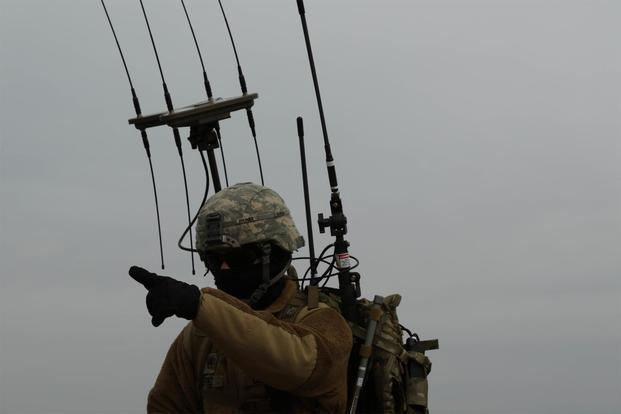 Soldiers from the Army's 1st Infantry Division recently got the chance to attack another unit with the service's first electronic warfare (EW) prototype equipment during a force-on-force exercise at the National Training Center at Fort Irwin, California. The 1st ID's 1st Brigade Combat Team at Fort Riley, Kansas, is the first stateside unit to receive the same EW prototypes that went to forward-based units in Europe in February. After receiving the assortment of electronic sensing and jamming equipment in March, the unit's electronic warfare officers put it into action as part of the opposing force at NTC, "locating the 'blue' or friendly forces on the battlefield, passing that information to the OPFOR commander and even applying some jamming effects against the friendly forces," according to a recent Army press release.
Hacker vs. Cybercriminals: What’s the Difference and Why It Matters
BY STEVE LANDRY
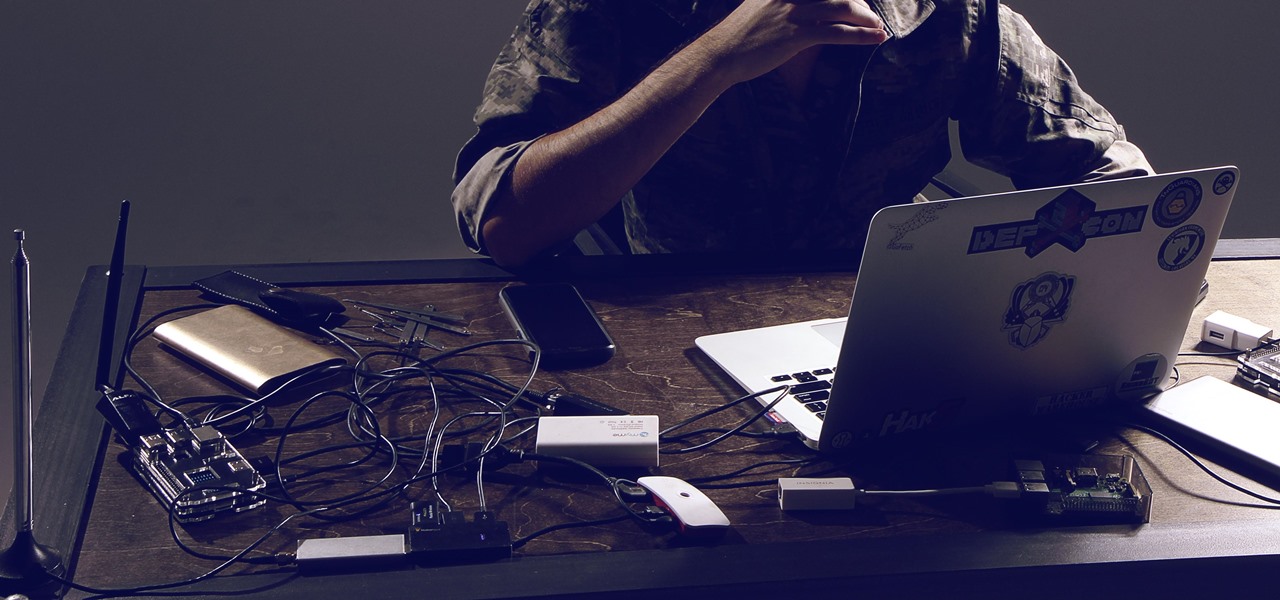 The term “hacker” is often used as a catchall for anyone who does anything nefarious online. But saying that all hackers are criminals is like saying anyone with a gun is a killer – some hackers use their skills for good and others for bad. It’s important to draw a distinction between hackers and cybercriminals. In reality, hackers are one of the best defenses against cybercriminals. If we didn’t have hackers working on the side of good, the cybersecurity problem would be much, much worse. A crucial part of any cyber attack strategy is understanding the nature of the problem and perpetrators. That way companies can craft an intelligent defense based on the most urgent and likely threats. As you build your awareness, learn about the most common types of hackers:
P.W. Singer: Adapt fast, or fail
Brendan Nicholson
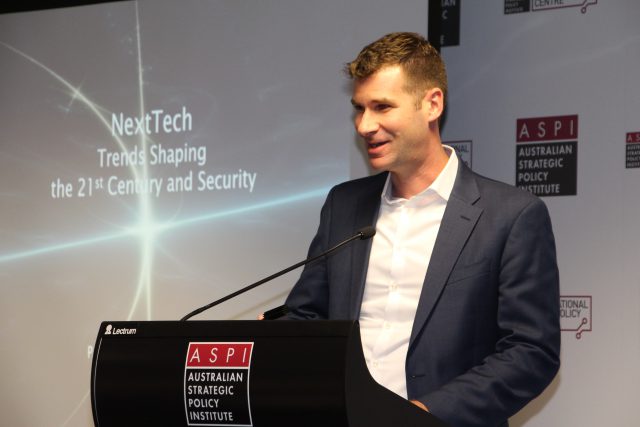 The overwhelming speed of technological development means armed forces must change their approach to everything from who they recruit and train to how targets are attacked and how a nation defends itself. The warning was delivered in a speech to ASPI by Dr P.W. Singer, an American specialist in 21st-century warfare and a global relations scholar. A strategist with US think tank New America, Singer warned that as more and more items were linked to the internet of things, the opportunities for nations and societies to be attacked became much broader. Internet attacks would have physical impacts and cost lives.
The overwhelming speed of technological development means armed forces must change their approach to everything from who they recruit and train to how targets are attacked and how a nation defends itself. The warning was delivered in a speech to ASPI by Dr P.W. Singer, an American specialist in 21st-century warfare and a global relations scholar. A strategist with US think tank New America, Singer warned that as more and more items were linked to the internet of things, the opportunities for nations and societies to be attacked became much broader. Internet attacks would have physical impacts and cost lives.Military capability and international status
Recent debates regarding the United Kingdom’s defence ambition have highlighted the important question of how to assess military capability. Here we propose 11 criteria for measuring military power. The debate regarding the level of the United Kingdom’s defence and security ambition was recently given added political piquancy with the news that Prime Minister Theresa May had reportedly challenged the Ministry of Defence (MoD) to justify why the UK should remain a ‘tier one’ military power. This was subsequently denied by the prime minister, but not before the new Chief of the Defence Staff, General Sir Nick Carter, commented that all countries, in some way or another, think they are a tier one military power.
Going Green: HPSCI’s Opportunity to Restore DIA’s Partner Military Analysis Capabilities
July 6, 2018
According to recent reports, the House Permanent Select Committee on Intelligence (HPSCI) is finishing its work on a comprehensive reexamination of the roles and missions of the Defense Intelligence Agency. This oversight effort is much needed and long overdue: as the committee’s report accompanying the Fiscal Year 2018 Intelligence Authorization Act noted in announcing the review, “today’s defense intelligence apparatus is cumbersome, duplicative, and expensive.” DIA has taken on a broad assortment of missions that have, as the committee notes, “detracted from DIA’s ability to execute its primary mission: providing intelligence on foreign militaries and operating environments that delivers an information advantage to prevent and decisively win wars.”
9 July 2018
Democracy and India’s Foreign Policy
In 1950, the year the Republic of India came into being, Jawaharlal Nehru told his fellow parliamentarians that India “stood not only for progressive democracy in our own country but also in other countries … it has consistently been part of our policy in distant quarters of the world” (Muni 2009: 25). In recent decades, we have seen even greater emphasis on India’s identity as a democracy. In 2005, India’s then Prime Minister Manmohan Singh exhorted, “liberal democracy is the natural order of political organisation in today’s world. All alternate systems, authoritarian and majoritarian in varying degrees, are an aberration.”1 By affirming “India’s identity as the world’s largest democracy,” it has been suggested that policymakers were “breaking from post-Nehruvian Third Worldism” (Mohan 2015: 142). External actors too, often for strategic motives of their own, have drawn greater attention to India’s political system as a factor that should shape Delhi’s foreign policy choices.
Islam in India’s soft power
BY Sukh Deo Muni
Religion is an important component of the soft power countries use in their foreign policy. Yet, no Indian government has given Islam adequate prominence, especially in its interactions with South-East Asia, where the majority of people are Muslim Countries have been deploying soft power[1] in the conduct of their foreign policy and diplomacy well before the term was coined by Joseph S. Nye. ‘Soft power’ consists of a whole range of tools: the use of medical facilities, education and language learning, food festivals, cinema and other art forms, diasporas, support for electoral procedures – and religion, a key component. States with a religious identity invoke it where required in their external engagements. Some countries have even forged regional groupings on this basis, such as the Organisation of Islamic Countries.
Subscribe to:
Posts (Atom)