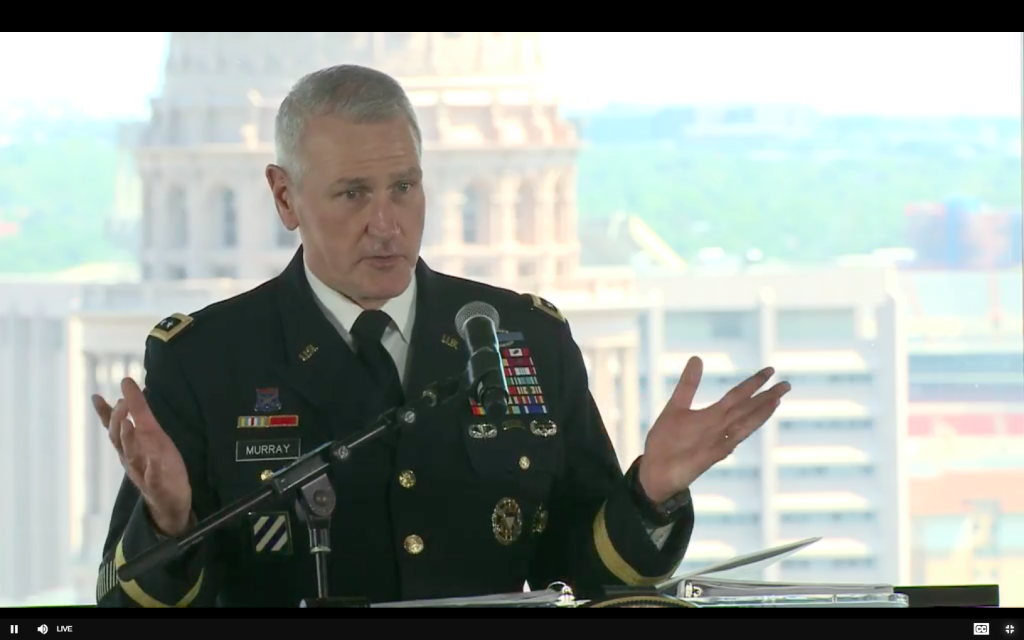
 DEFENSE NEWS CONFERENCE: The Army’s new Futures Command won’t tear down the most failure–prone procurement system in the entire US military. Instead, both its commander and the Army’s No. 2 civilian emphasize they want to be just “a little bit disruptive” and “work with the institution.” That will disappoint critics of the service’s chronically troubled acquisition programs who saw the Army’s much-touted “biggest reorganization in 40 years” as an opportunity to tear the whole thing down and start again. The necessary change to Army culture “is going to take time,” brand-new four-star Gen. John “Mike” Murray said here yesterday, “and I think you do that by being a little bit disruptive, but not being so disruptive you upset the apple cart.”
10 September 2018
‘A Little Bit Disruptive’: Murray & McCarthy On Army Futures Command
DEFENSE NEWS CONFERENCE: The Army’s new Futures Command won’t tear down the most failure–prone procurement system in the entire US military. Instead, both its commander and the Army’s No. 2 civilian emphasize they want to be just “a little bit disruptive” and “work with the institution.” That will disappoint critics of the service’s chronically troubled acquisition programs who saw the Army’s much-touted “biggest reorganization in 40 years” as an opportunity to tear the whole thing down and start again. The necessary change to Army culture “is going to take time,” brand-new four-star Gen. John “Mike” Murray said here yesterday, “and I think you do that by being a little bit disruptive, but not being so disruptive you upset the apple cart.”9 September 2018
America Shouldn’t Miss Its Chance With India
BY TIM ROEMER
 President Donald Trump likes winning. He tweets about it, boasts of his prowess, and is quick to remind all who will listen of his purported successes. Unfortunately, when it comes to the U.S. president’s foreign policy, he’s losing battles far too often, with stalled North Korean nuclear talks, tattered trust with NATO allies, and a poorly planned trade war with China. Added together, the United States is losing credibility and allies around the world. If Trump wants to win, he should think “huge.” He should think about the largest democracy in the world, which is also one of the world’s fastest-growing economies. He should build a relationship that can get China’s attention while speaking to a powerful Indian diaspora at home. A president’s time is an invaluable resource; where and how it’s spent can affect war and peace. Trump should invest his time into India, where the 2+2 talks, which start on Thursday, are a perfect opportunity to put the U.S.-India partnership back in the win column.
Ep 16: India's Vanishing Waters
How will India cope with life without water and what’s being done to avoid a looming humanitarian crisis?
"Peace" in Pieces: The Tragedy of Syria, Iraq, and Afghanistan
By Anthony H. Cordesman
It is tempting to call most reporting on the wars in Syria, Iraq, and Afghanistan "blind and stupid." This, however, is unfair to journalists – whose job is primarily to report current news and not to speculate about its ultimate meaning or the future. The phrase "blind and stupid" should be applied to most policymakers, strategists, and think tank analysts who try to address these wars – people whose mission is not only to think about the future, but to propose credible solutions to emerging and easily foreseeable problems.
Roads to Hell Without "Good," or Even Enough "Intentions," to Describe the Road
Can Afghanistan Be Saved?
by Arif Rafiq
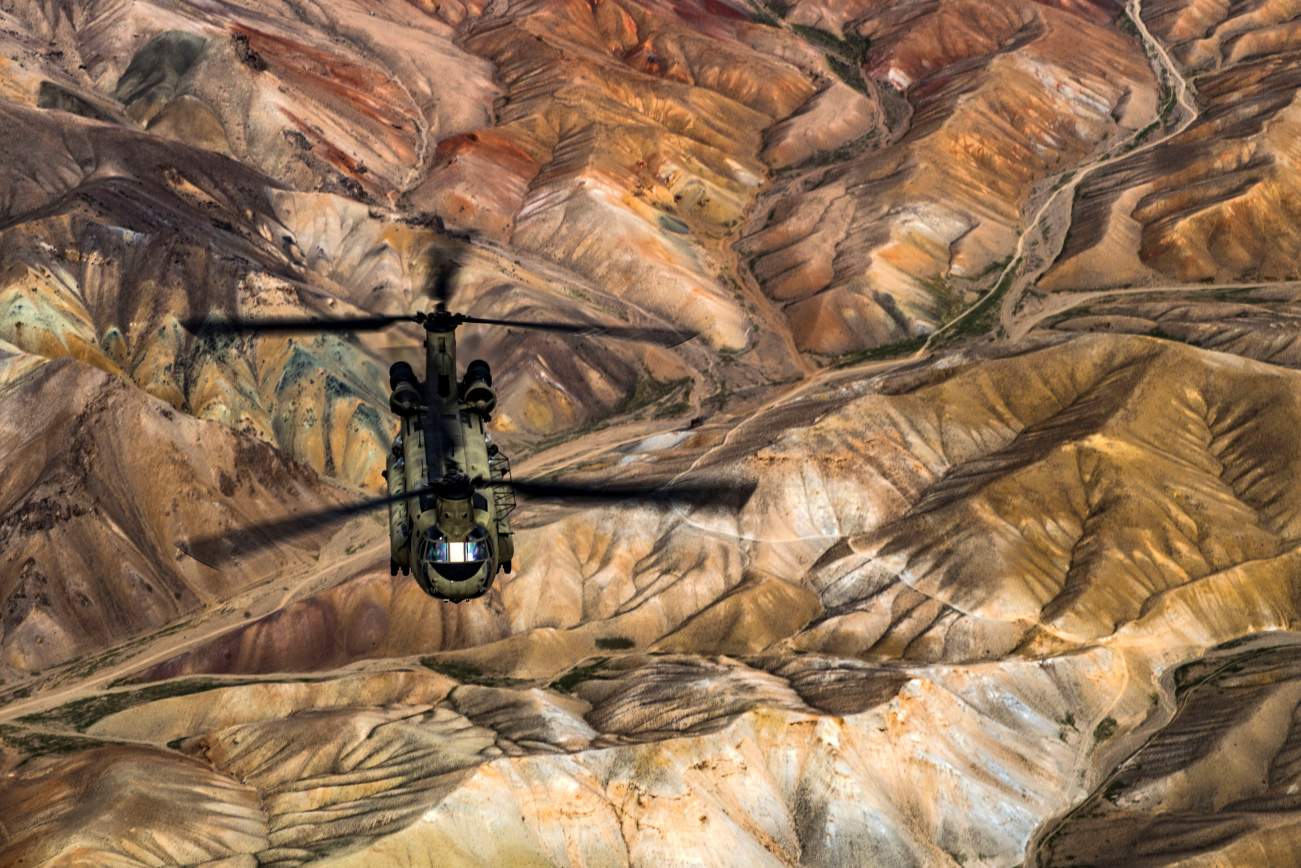 Two elections are scheduled in Afghanistan over the next eight months. And they will be consequential not just for determining the balance of power in Kabul, but also for the legitimacy and survival of the post–9/11 system that is in place. It is highly probable that the results of the October parliamentary and district council polls and April presidential elections will be disputed. A checkered electoral process, combined with other rising drivers of ethnic discord, raises the risk of the Afghan political system and security forces fracturing on ethnic lines. It is critical that the United States and international community develop a backup plan in the event the presidential elections do not take place or their results are rejected by the designated losers, who then threaten violence. A loya jirga or pan-Afghan constitutional conference backed by the international community may be necessary next year.
Will We Ever Leave Afghanistan?
by Akhilesh Pillalamarri
 Earlier this month, the Taliban launched a series of attacks throughout Ghazni province in Afghanistan, not far from the capital, Kabul. They attacked at will, wiping out hundreds of Afghan commandos and reducing the city of Ghazni to rubble, before they were beat back by Afghan reinforcements and U.S. airstrikes. Yet, the battle demonstrated the Taliban’s increasing ability to plan and execute major offensives around the country—a trend that shows no sign of abating soon. If this is demonstrative of the capacities of the Afghan army, which cannot win battles on its own even after receiving billions of U.S. taxpayer dollars over the course of seventeen years, then continued U.S. assistance and training is unlikely to achieve anything more.
Imran Khan: High Hopes, Greater Expectations
By Daud Khattak
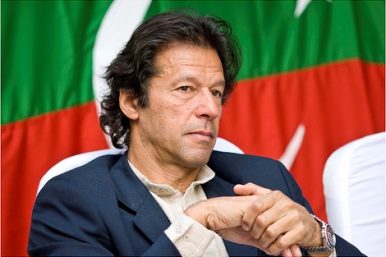 It’s been less than a month since Imran Khan’s swearing-in, and Pakistan’s most popular politician, who is now prime minister of the country, is mired in controversies regarding the performance of his government and team members. The “missteps” that the new government is being derided for are in fact oft-repeated practices under previous administration. The problem is that people did not expect the same routine from a government they believe — or were made to believe — is based on justice, equality, austerity, and the rule of law. Social justice is what the average Pakistani longs for, along with equal opportunities of employment. And Khan, during his 22-year political career after announcing his retirement from cricket in 1992, crafted his party’s narrative along the same lines.
Southeast Asia is Pivotal, and U.S. Strategy Should Aim to Keep it That Way
By Adam Fields
In The Art of War, Sun Zi warns that “the general who loses a battle makes but few calculations beforehand. Thus do many calculations lead to victory, and few calculations to defeat.” John Lewis Gaddis hinted at something similar when he defined grand strategy as “the calculated relationship of means to larger ends.” In business, the goal, strategy, objective, tactic (GSOT) method of project management teaches strategists that while goals and strategies should rarely change, it is important to always calculate whether the tactics are delivering on the objectives. Despite doubtful claims of corporate style management curing government ills, the State Department could learn from private sector project managers and approach foreign policy across a temporal spectrum, focusing its work on developing and executing flexible tactics, aimed at achieving adjustable objectives, advancing a broader strategy in pursuit of steady foreign policy goals.
Beyond Defining a ‘Free and Open Indo-Pacific’
By Abigail Grace
 Nearly one year in to the United States, Japan, Australia, and India’s collective pursuit of a “Free and Open Indo-Pacific,” broad misunderstandings of the policy’s intentions and objectives endure. These hyper-analytic concerns are misguided and limit experts’ capacity to evaluate tangible, fact-based shifts in regional powers’ Indo-Pacific policy. Despite robust evidence to the contrary, some continue to insist that the free and open Indo-Pacific (FOIP) represents an anti-China alliance or a sophisticated U.S.-led containment strategy. This analysis overlooks the regionally-driven nature of the strategy, which was first announced by Japanese Prime Minister Shinzo Abe in August 2016. Furthermore, Australia began using the “Indo-Pacific” construct in official government documents as early as 2013. India’s “Act East” policy, which is a foundational element of its “free, open, and inclusive” vision for the Indo-Pacific region, was initially unveiled in 2014.
China’s Lessons for Fighting Fake News
BY MARIA REPNIKOVA
 In the face of overwhelming evidence that fake news has permeated our newsfeeds, politics, and lives, observers, politicians, and the public seem to have hit on more and better government regulations of media companies and tech giants as the solution for this post-truth era. Following the Cambridge Analytica scandal that consumed Facebook in March, U.S. Sen. Lindsey Graham argued in favor of the company’s regulation, and this past July, Rep. Steve King went so far as to propose turning social media platforms into public utilities. Meanwhile, according to a recent public opinion survey, Americans across the political spectrum now favor deeper regulation of tech companies.
Why Is China's Top Military Official Visiting Central Asia?
By Catherine Putz
China’s top military official, Vice Chairman of the Central Military Commission Xu Qiliang has been making his way across Central Asia, underscoring China’s increasing security interests and activities in the region.On August 30, Chinese Defense Ministry spokesperson Senior Colonel Wu Qian announced that Xu would be traveling to Kazakhstan, Tajikistan and Kyrgyzstan in early September to implement agreements reached between the Central Asian leaders and Chinese President Xi Jinping. Xu’s visits, Wu said, would include talks between Xu and regional military leaders and visits to military installations. “General Xu Qiliang’s visit will deepen the strategic mutual trust with these three countries, and promote the pragmatic cooperation in the military field in a substantial and deep manner,” he said.
Why do people in China give so little to charity?
 EVERY month the Longyue Foundation, a Chinese charity based in the southern city of Shenzhen, pays modest stipends to nearly 3,000 extremely elderly veterans of China’s war with Japan. In its early years the foundation got most of its money from a handful of supportive businesspeople, explains Luo Yangwei, one of its bosses. That changed in 2014 when it began soliciting donations online. Last year it collected about 46m yuan ($6.7m) from warm-hearted internet users, whose numerous small gifts amounted to almost nine-tenths of what it raised. This year it hopes to boost its total income by 10%.
What Russia's Vostok-18 Exercise with China Means
by Lyle J. Goldstein
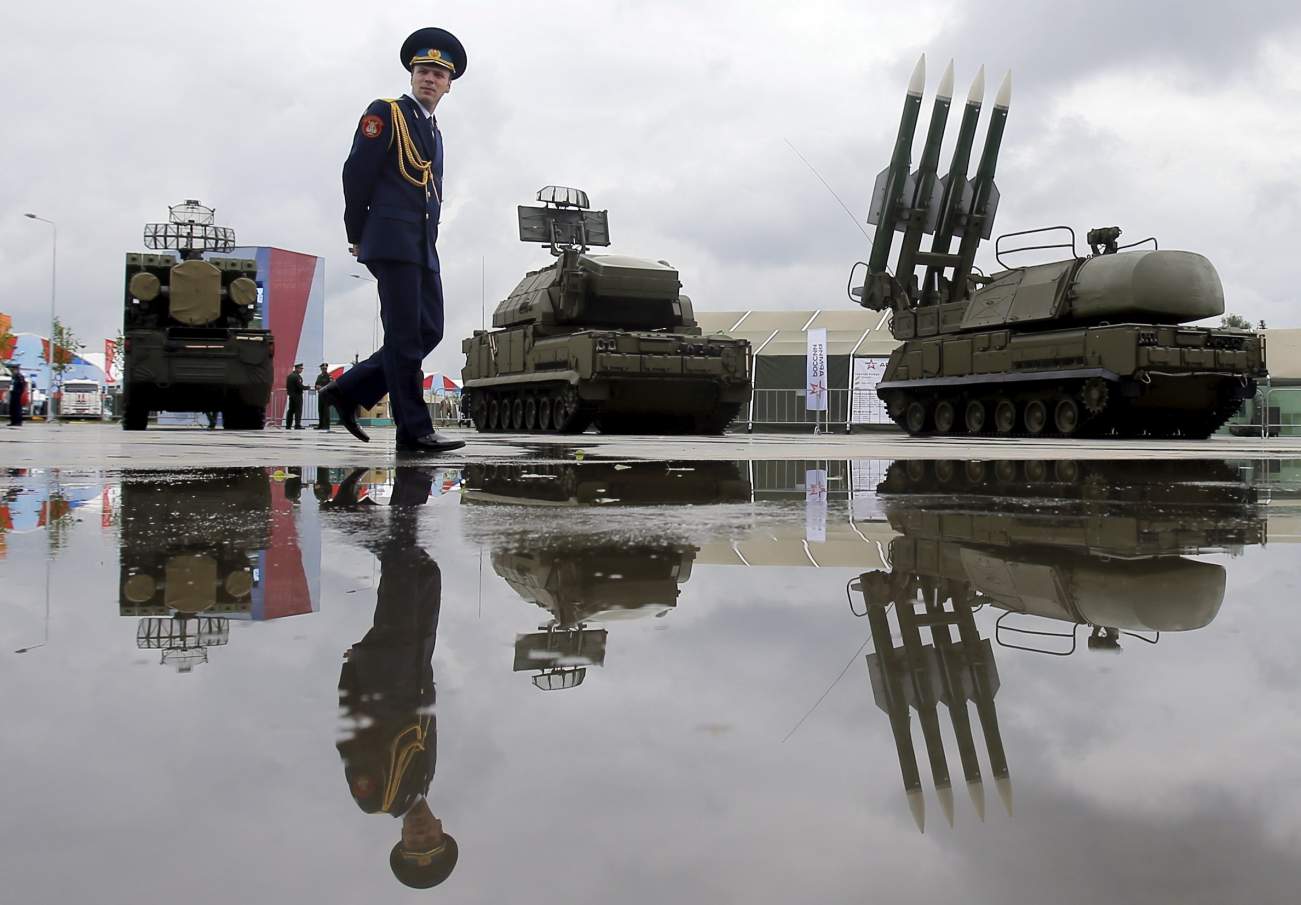 The West got a fresh jolt from Moscow last week. That’s when Russian defense minister Sergey Shoygu announced that Russian armed forces would hold a military exercise in September, called “Vostok-18” [East-18], on a scale not seen since the early 1980s. If there was any doubt that Russia sees itself in a “New Cold War,” Shoygu’s direct reference to the massive “Zapad” [West] exercise from 1981 seems to confirm that is the prevailing mentality in the Kremlin. In fact, Shoyguclaimed , “They (the exercises ‘Vostok-2018’) will in some ways recall ‘Zapad-81,’ but in other ways, actually, will be even larger in scale [Они (учения ‘Восток-2018’) в чём-то повторяют ‘Запад-81’, но в чем-то, пожалуй, ещё масштабнее].”
The China Hype
BY BENJAMIN H. FRIEDMAN
 Last week’s New York Times offered a breathless take on China’s Navy, noting that its two-carrier fleet is now larger than the United States’ and poised to project power globally. This naval prowess, plus a new generation of accurate land-based anti-ship missiles, create a robust anti-access/area denial capability, which, the Times suggests, means China may “prevail” in a fight with the United States off its coast.
Japan Doesn't Need to Compete With China's Belt and Road
By Trissia Wijaya and Yuma Osaki
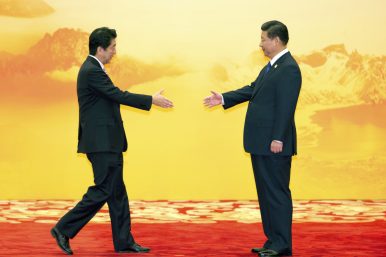 Half a decade has passed since Xi Jinping’s flagship Belt and Road Initiative (BRI) was first unveiled in Kazakhstan. Nevertheless Japan continues to flip-flop on the audacious vision. On the one hand, Tokyo has been ramping up its diplomatic détente with China. Since mid-2017, positive signs of potential cooperation have been rising along with a series of reciprocal high-level official visits to discuss a whole range of issues, including but not limited to collaboration over infrastructure development. In tandem with its rising tension with United States, China has also largely welcomed Japan’s embrace. Taking cooperation a step further, in an iteration of the Japan-China High Level Economic Dialogue, both sides pledged to constructively establish a “Sino-Japanese public-private sector committee” to fuel intensified efforts to improve infrastructure in third countries. Southeast Asia will become the most visible test ground of the Public Private Partnership (PPP).
Who Don’t Japanese and Taiwanese Militaries Talk to Each Other?
by Katsuya Yamamoto
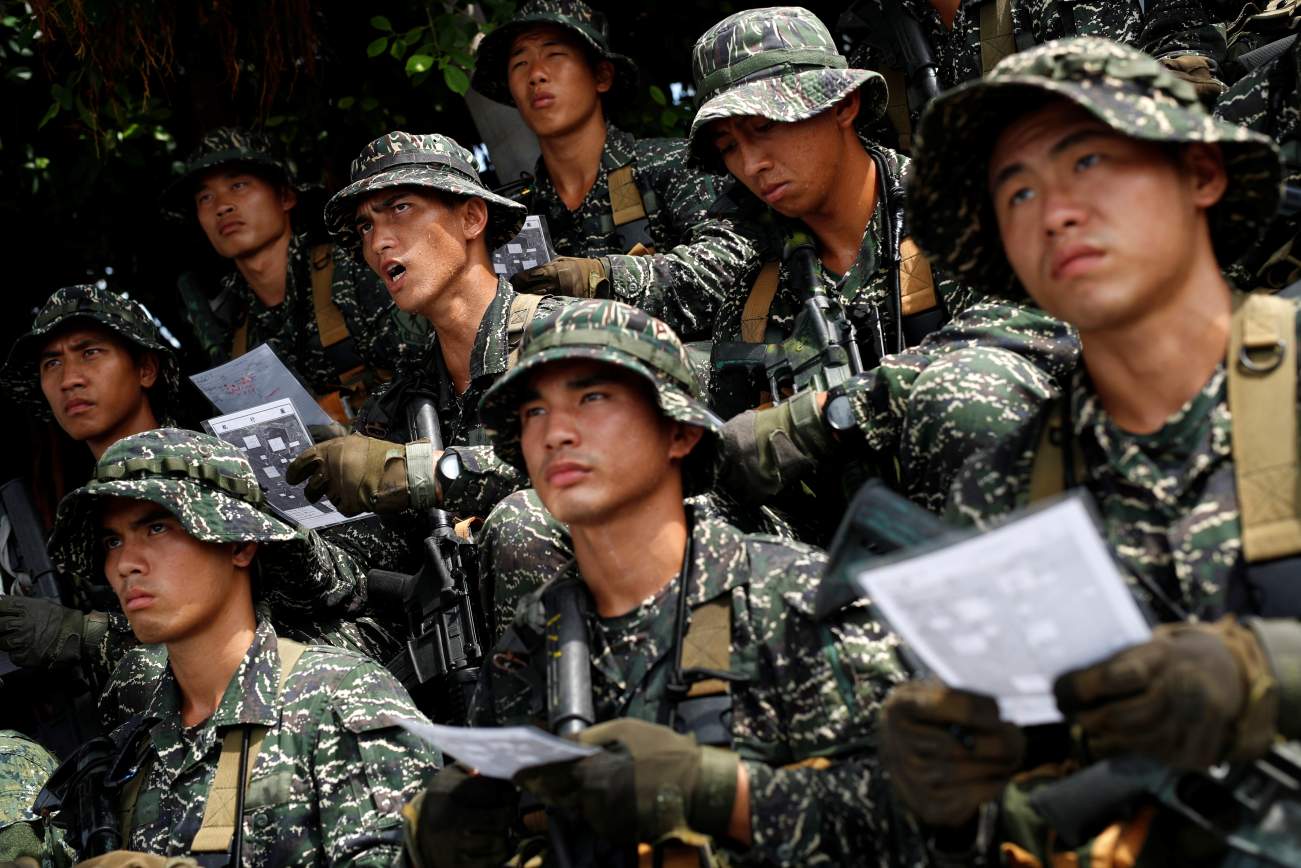 On June 8, 2018, Japan and China launched a communication mechanism between their defense authorities to avert accidental clashes in the air and on the sea. This is a huge achievement for the two countries, but it still leaves a major outlier, which has direct security relevance for Japan. In fact, the only remaining neighbor who cannot communicate smoothly with other defense authorities is Japan’s neighbor to the southwest: Taiwan.
Six Neighbors
The world has not learned the lessons of the financial crisis
 WHEN historians gaze back at the early 21st century, they will identify two seismic shocks. The first was the terrorist attacks of September 11th 2001, the second the global financial crisis, which boiled over ten years ago this month with the collapse of Lehman Brothers. September 11th led to wars, Lehman’s bankruptcy to an economic and political reckoning. Just as the fighting continues, so the reckoning is far from over.
Bob Woodward’s new book reveals a ‘nervous breakdown’ of Trump’s presidency
President Trump and Bob Woodward discuss Woodward’s new book, “Fear,” before its publication.(The Washington Post) John Dowd was convinced that President Trump would commit perjury if he talked to special counsel Robert S. Mueller III. So, on Jan. 27, the president’s then-personal attorney staged a practice session to try to make his point.m In the White House residence, Dowd peppered Trump with questions about the Russia investigation, provoking stumbles, contradictions and lies until the president eventually lost his cool. “This thing’s a goddamn hoax,” Trump erupted at the start of a 30-minute rant that finished with him saying, “I don’t really want to testify.”
Russia Wants a Deal with the United States on Cyber Issues. Why Does Washington Keep Saying No?
 Alex Grigsby is the assistant director of the Digital and Cyberspace Policy Program at the Council on Foreign Relations. Earlier this month, Russian business daily Kommersant reported that the Kremlin proposed to cooperate with the United States to prevent "cyberattacks on critical infrastructure," and wanted to include language to that effect in a communiqué issued at the end of the Helsinki Summit.
NATO, Russia Prep Biggest War Games Since Cold War
By PAUL MCLEARY
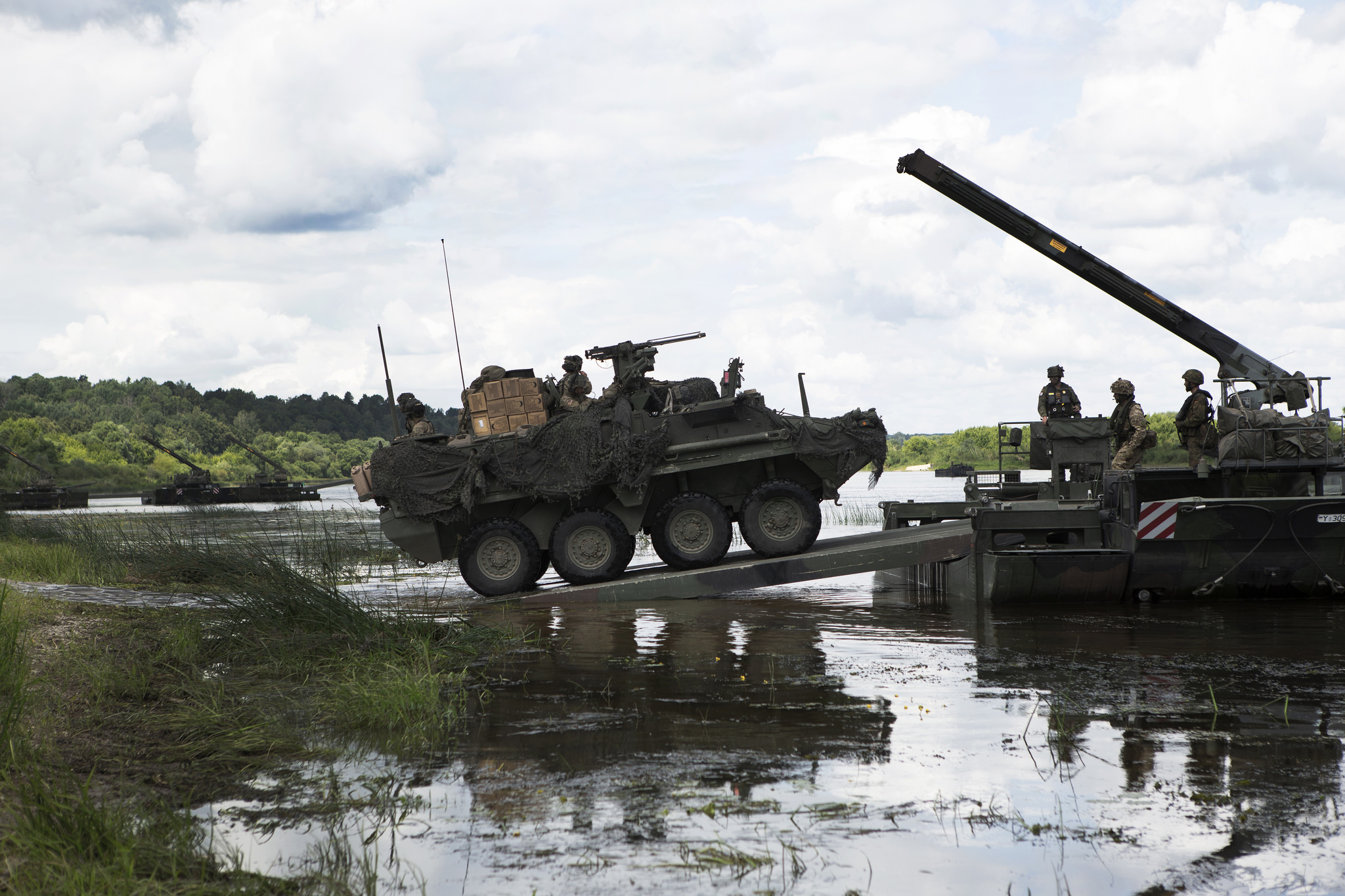 WASHINGTON: Within the next several weeks, both Russia and NATO will kick off some of the largest military exercises since the end of the Cold War. Hundreds of thousands of troops, tens of thousands of vehicles, hundreds of aircraft, and dozens of warships will charge into action in a series of mock engagements stretching from China to Iceland, from the North Atlantic to the Mediterranean. Russian officials are openly advertising their Vostok war game as the country’s largest since 1981, with plans to put a staggering 300,000 troops in the field along with 900 tanks. Moscow has also has secured the participation of over 3,000 Chinese troops who will link up with Russia near the Chinese and Mongolian borders. Meanwhile, Russian naval forces have unexpectedly announced an exercise in the Mediterranean, warning other nations to stay away and arousing suspicions the drills are cover for intervening in Syria.
Notes from the frontier: Modeling the impact of AI on the world economy
By Jacques Bughin, Jeongmin Seong, James Manyika, Michael Chui, and Raoul Joshi
Artificial intelligence has large potential to contribute to global economic activity. But widening gaps among countries, companies, and workers will need to be managed to maximize the benefits. The role of artificial intelligence (AI) tools and techniques in business and the global economy is a hot topic. This is not surprising given that AI might usher in radical—arguably unprecedented—changes in the way people live and work. The AI revolution is not in its infancy, but most of its economic impact is yet to come.
Pompeo Eyes Fox News Reporter to Head Counterpropaganda Office
BY ROBBIE GRAMER, ELIAS GROLL
 Secretary of State Mike Pompeo is eyeing a Fox News correspondent and former U.S. Navy pilot to head the State Department’s struggling anti-propaganda office as Washington grapples with how to push back against Russian disinformation and election interference in the run-up to the U.S. midterm elections in November. Lea Gabrielle is the leading contender to become the new chief of the Global Engagement Center, five officials and sources familiar with internal deliberations confirmed to Foreign Policy. The news was first reported by CNN.
Artificial intelligence faces public backlash, warns scientist
Artificial intelligence faces public backlash, warns scientist Researchers and companies urged to engage in debate on risks and benefits of AI Jim Al-Khalili: '“It is quite staggering to consider that until a few years ago AI was not taken seriously, even by AI researchers' Share on Twitter (opens new window) Share on Facebook (opens new window) Share on LinkedIn (opens new window) Save Save to myFT Clive Cookson, Science Editor YESTERDAY Print this page48 Artificial intelligence will face a backlash from the public unless researchers and companies make a much greater effort to engage society in its development, one of Britain’s leading scientists has warned. Jim Al-Khalili, professor of physics at Surrey university and incoming president of the British Science Association, said AI was more important than all other big issues facing humanity, including climate change, world poverty, terrorism, pandemic threats and antimicrobial resistance:
NSA Official: Foreign Hackers Have ‘Pummeled’ U.S. By Stealing IP – CyberScoop
by Sean Lyngaas
Hackers sponsored by foreign governments have chipped away at the United States’ global economic advantage through a steady campaign of intellectual property theft, according to a top National Security Agency official. “It pains me to see the core of how we’ve defined ourselves over the last century” – in terms of innovation and intellectual property – “be continuously pummeled by external nation-state and non-nation-state-sponsored malicious cyber activity,” NSA Deputy Director George Barnes said Tuesday at the Intelligence and National Security Summit (INSA) in National Harbor, Md. Rather than one, devastating cyberattack, Barnes said there has been a “slow drop” of “continual theft of intellectual property from our industries.”
Prevailing in Today’s Cyber Battlefield Requires Strategic Consensus
By Annie Fixler, Tyler Stapleton
In 1953, the United States stood at a precipice. After the death that year of Soviet strongman Joseph Stalin, senior U.S. cabinet officials could not agree on how to contain and confront Soviet expansion and aggression. So President Eisenhower devised an exercise to “ analyze competing national strategies ” to check the Soviets where possible and roll back their advances where feasible. The White House convened three teams of leading scholars and practitioners to analyze and craft distinct strategies so that the president could review the strongest arguments, reach consensus among his advisors, and determine the direction of U.S. policy. The exercise, Project Solarium , influenced U.S. national security policy for decades.
What excites the Defense Department about Project Maven
By: Mark Pomerleau
/arc-anglerfish-arc2-prod-mco.s3.amazonaws.com/public/7OUN3EF2HZH55O2KBKILLBHNOE.jpg) In an era in which the Department of Defense is criticized for delivering solutions too slow, one effort on the cutting edge of technology is proving the opposite. Aside from just being a pathfinder project to solve a critical need of more quickly processing intelligence using machine learning, Project Maven is “proving out how we go fast and how we deliver to the field,” Kari Bingen, deputy under secretary of defense for intelligence, said Sept. 5 at the Intelligence and National Security Summit hosted by INSA and AFCEA. “We’re not here talking about come see me in five years and we’re finally deliver something to the user downrange,” Bingen said when asked what excites her about the effort. “This is six months from authority to proceed to delivering a capability in theater.”
In an era in which the Department of Defense is criticized for delivering solutions too slow, one effort on the cutting edge of technology is proving the opposite. Aside from just being a pathfinder project to solve a critical need of more quickly processing intelligence using machine learning, Project Maven is “proving out how we go fast and how we deliver to the field,” Kari Bingen, deputy under secretary of defense for intelligence, said Sept. 5 at the Intelligence and National Security Summit hosted by INSA and AFCEA. “We’re not here talking about come see me in five years and we’re finally deliver something to the user downrange,” Bingen said when asked what excites her about the effort. “This is six months from authority to proceed to delivering a capability in theater.”Who is in charge during an energy sector hack? The answer may not be clear
/arc-anglerfish-arc2-prod-mco.s3.amazonaws.com/public/VY6QN5NWPJAQLGSWALUQ3ZO7BQ.jpg) A cyberattack on a New England power grid during January’s sub-zero temperatures is a nightmare scenario for America’s top spy. “A lot of people are going to suffer and die,” Director of National Intelligence Dan Coates saidduring a July event at the Hudson Institute. But the ensuing chaos may cause even more destruction in the biting cold. A Sept. 4 report from the Intelligence and National Security Agency said questions remain about who is in charge during a cyberattack on critical infrastructure. Despite what government officials say are clear lines of authority during a hack, the report lays out how uncertainty was still rife during a simulated cyberattack.
A cyberattack on a New England power grid during January’s sub-zero temperatures is a nightmare scenario for America’s top spy. “A lot of people are going to suffer and die,” Director of National Intelligence Dan Coates saidduring a July event at the Hudson Institute. But the ensuing chaos may cause even more destruction in the biting cold. A Sept. 4 report from the Intelligence and National Security Agency said questions remain about who is in charge during a cyberattack on critical infrastructure. Despite what government officials say are clear lines of authority during a hack, the report lays out how uncertainty was still rife during a simulated cyberattack.IS THE “CHAIN OF COMMAND” STILL MEANINGFUL?
By Michael Piellusch and Tom Galvin
In the face of so much change in the private sector, continued adherence to formal structures in the military seems old-fashioned. Without a doubt, the chain of command is one of the most durable concepts in military organizations. From Roman times until present, the chain of command fixed formal authorities and accountability from the highest leader to the front line soldier. It made the generation, issuing, and following of orders simple despite the vastness of formations being put to battle. The chain also formalized the separation of officers and soldiers into different castes. As societies industrialized, formal chains of command were instituted in bureaucracy which would become the leading model of organization in the civilian sector.
The Drone Threat Is Real. The Solution Is Complex
By Ben Joelson, Sean Horner
In August, Venezuelan President Nicholas Maduro claimed he was the target of a drone-borne explosive assassination attempt. While some sources assert that the entire episode may have been staged to assist Maduro in consolidating power in distressed Venezuela, the incident highlights the challenges of defending against and mitigating drone threats. The United States has experienced our own less nefarious drone incidents, including one that occurred in 2015 at the White House. Although it garnered less notoriety than the Maduro incident, a drone carrying de-activated grenades, and likely flown by an organized cartel, targeted a police chief in Baja Mexico in June of this year. These incidents bring to the forefront an issue that security professionals and governments have been struggling with since the introduction of inexpensive, and readily available, commercialized unmanned aircraft systems (UAS) or “drones” — how to identify, classify, and defend against one or many hostile drones?
A CURE FOR CHAOS
The Vostok (East) spectacular, which starts on September 11, will involve 300,000 troops and 900 tanks (and for the first time include Chinese troops). It is easy to get jumpy about this. Russian military exercises in the north Caucasus in 2008 preceded the war in Georgia. Amid the movement of military equipment eastwards, elderly T-62 tanks have been spotted on railway wagons trundling southwards, towards Ukraine. The assassination of Alexander Zakharchenko, the separatist warlord in Donetsk, a Russian puppet state, has prompted predictably bellicose rhetoric. Russia is also stoking acrisis in the Sea of Azov, to the east of occupied Crimea, by throttling Ukrainian maritime trade. In short, if Russia wants a sharp escalation of conflict with the West, it has the pretext and means in place.
Can the intel and defense community conquer data overload?
By: Mark Pomerleau
/arc-anglerfish-arc2-prod-mco.s3.amazonaws.com/public/AOPUTVVLNVCHLKA7DDPYKZS7J4.png) The Department of Defense and intelligence community is coming to grips with the realization that it might have too much to make sense of after almost two decades of collecting mass quantities of intelligence data. This realization was one of the catalysts for DoD’s flagship machine-learning effort dubbed Project Maven; with the hours of imagery data collected from aerial platforms, maybe algorithms could do the processing and unburden analysts. With all the data coming in from ISR systems and sensors, the Pentagon is having difficulty processing it all.
The Department of Defense and intelligence community is coming to grips with the realization that it might have too much to make sense of after almost two decades of collecting mass quantities of intelligence data. This realization was one of the catalysts for DoD’s flagship machine-learning effort dubbed Project Maven; with the hours of imagery data collected from aerial platforms, maybe algorithms could do the processing and unburden analysts. With all the data coming in from ISR systems and sensors, the Pentagon is having difficulty processing it all.8 September 2018
Manto: the writer who felt the pain of India's partition
 It took just a moment to cleave India in two. At midnight between 14 and 15 August 1947, the country of Pakistan was born and India was liberated from British rule. In the months leading to the end of the British Raj, one of the world’s largest migrations occurred. Fourteen million people were displaced, leading to acts of mass violence, turning Hindu, Muslim and Sikh against one another. On the morning of the 15th, Saadat Hasan Manto looked on with horror as communal violence erupted on the streets of his adopted home city, then known as Bombay. A journalist and short story author, he had just been fired from his job as a screenwriter at the Bombay Talkies film studio for being a Muslim. Fearing for his family’s safety, he had little choice but to flee the city, finding refuge in Lahore, Pakistan. By 1955 he was dead, aged 42, due to alcoholism. He had never returned to the city he loved.
Read the first part of the series about the petition of 356 officers and soldiers here.
Read the first part of the series about the petition of 356 officers and soldiers here.
 On September 10, the unprecedented petition of 356 officers and soldiers against the dilution of the Armed Forces Special Powers Act (AFSPA), without specific amendment to that effect—and the perceived prosecution and persecution by the CBI for alleged human rights violations—will come up for hearing before the Supreme Court. Ironically, this is exactly 60 years after the AFSPA was enacted on September 11, 1958.
In Defense of Nationalism
Dr. Arpita Mitra
 In 1917, Rabindranath Tagore came out with a booklet on nationalism. It was a collection of three articles and a poem. Two of these, ‘Nationalism in the West’ and ‘Nationalism in Japan’, were lectures delivered in the USA in 1916-17 and in Japan in 1916 respectively. The third piece, ‘Nationalism in India’, was written in late 1916. Of course, Tagore’s position vis-à-vis nationalism goes far beyond the scope of these three essays and permeates almost the entire corpus of his significant writings—starting from his novels to his debate with Gandhi on nationalism.
New US adviser to Afghanistan raises hackles in region
 ISLAMABAD (AP) — The choice of Zalmay Khalilzad as a U.S. special envoy to Afghanistan has raised some hackles in the region, with many saying the veteran diplomat’s tough stance on Pakistan could hinder his mission to convince a resurgent Taliban to engage in peace talks. In the past, Khalilzad has called on the U.S. to declare Pakistan a terrorist state, saying it harbors insurgents. The Trump administration has embraced a similar position, recently suspending $300 million in aid to Pakistan, saying it isn’t doing enough to eliminate Taliban safe havens on its territory.
Subscribe to:
Posts (Atom)