24 November 2018

The U.S. Could Regulate AI in the Name of National Security

By Dave Gershgorn and Max de Haldevang,

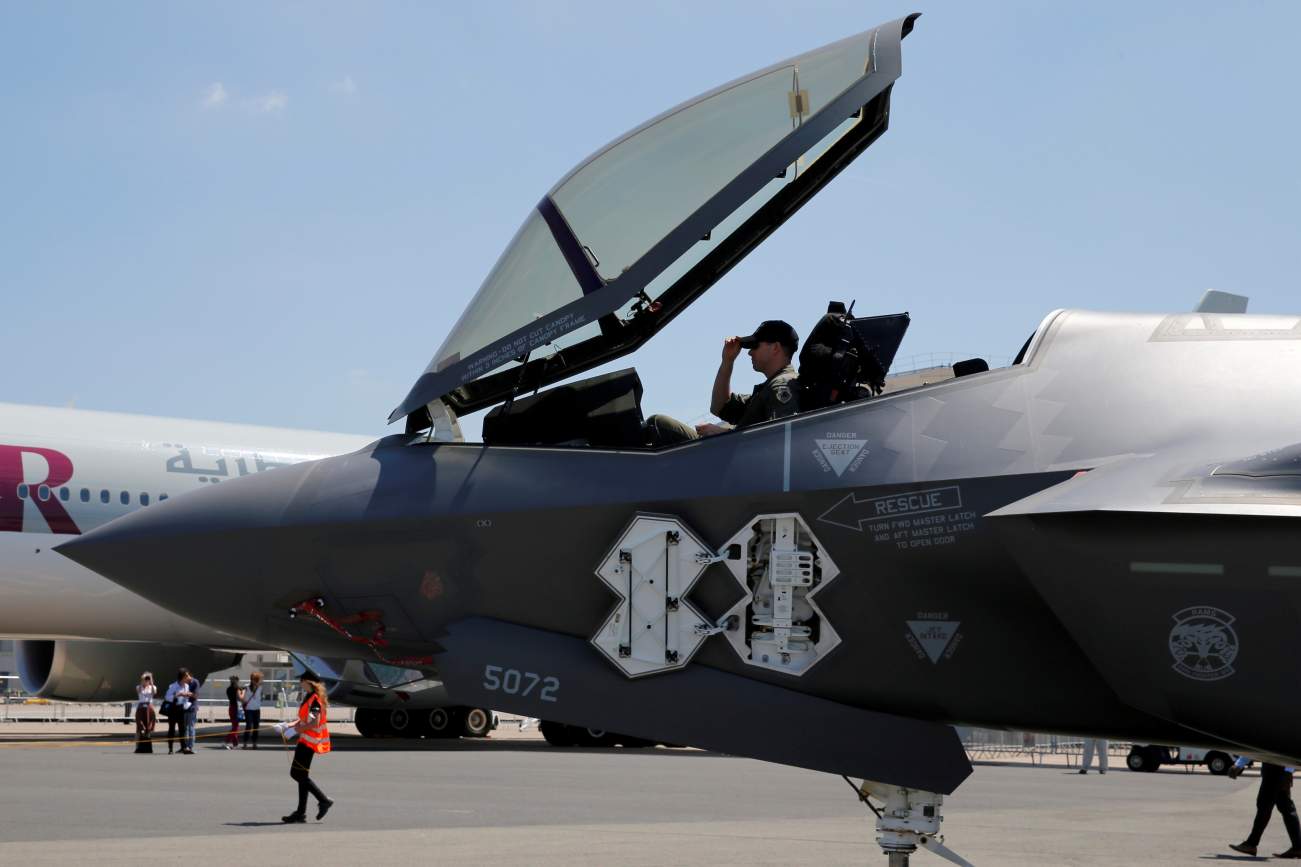
Artificial intelligence technology has the capability to be the most impactful software advance in history and the U.S. government has no idea how to properly regulate it.

The U.S. does know that it doesn’t want other countries using its own AI against it. A new proposal published Monday by the Commerce Department lists wide areas of AI software that could potentially require a license to sell to certain countries. These categories are as broad as “computer vision” and “natural language processing.” It also lists military-specific products like adaptive camouflage and surveillance technology.

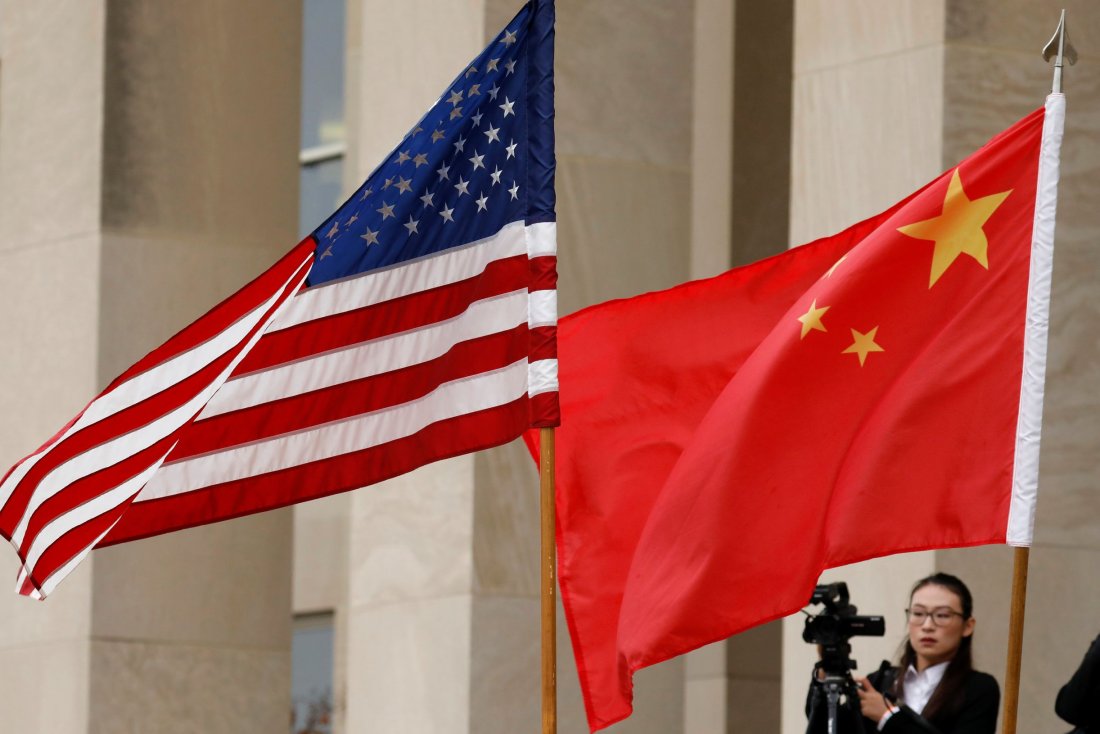
The small number of countries these regulations would target includes a big name in AI: China. Donald Trump, who has placed tariffs on hundreds of billions of dollars of Chinese goods as part of a simmering trade war, has long railed against China’s alleged theft of intellectual property. This proposal looks like a warning from U.S. officials, just as Chinese president Xi Jinping aims to boost AI in his own country.

Zero Botnets Building a Global Effort to Clean Up the Internet

Zero Botnets 

Botnets are the bane of the internet. Criminals use these groups of computers infected with malicious software to propagate spam, send phishing emails, guess passwords, impersonate users, and break encryption. Their most pernicious use, however, is to carry out distributed denial of service (DDoS) attacks. DDoS attacks harness the power of the individual computers that make up the botnet to send internet traffic to a target, thereby blocking legitimate traffic. As much as 30 percent of all internet traffic may be attributable to botnets, and most of that traffic is from DDoS attacks.

Most DDoS attacks are criminal in nature, often used by companies to take down their competitors’ websites or servers; however, China, Russia, and Iran have all harnessed botnets for geopolitical purposes. A motivated nation-state actor could easily harness millions of systems to shut down countries’ domestic networks or target core internet infrastructure and shut the internet down globally. Foreign governments certainly might judge such actions to be to their advantage in some scenarios.

Trusting Technology: Smart Protection for Smart Cities

By Marie Baezner, Linda Maduz and Tim Prior 

What do technological advances in Artificial Intelligence (AI) and the Internet of Things (IoT) mean for the protection of critical infrastructure (CI) of today’s increasingly complex and connected smart cities? According to Marie Baezner, Linda Maduz and Tim Prior, it means trusting technology to play a more substantial role in security infrastructure for the resilient provision of critical services. In addition, a crucial challenge will be to strike a balance between the preservation of security and the openness to exploit opportunities that come with technological advancement.

This CSS Analyses in Security Policy was originally published in September 2018 by the Center for Security Studies (CSS). It is also available in German and French.

Connectedness within and between modern societies generally strengthens social systems. But connectedness can also increase the exposure and sensitivity of technical systems to disturbances (natural, technical, and social). When those technical systems provide critical services for social systems, connectivity can become a problem.

Can Army Afford The Electronic Warfare Force It Wants?

By SYDNEY J. FREEDBERG JR

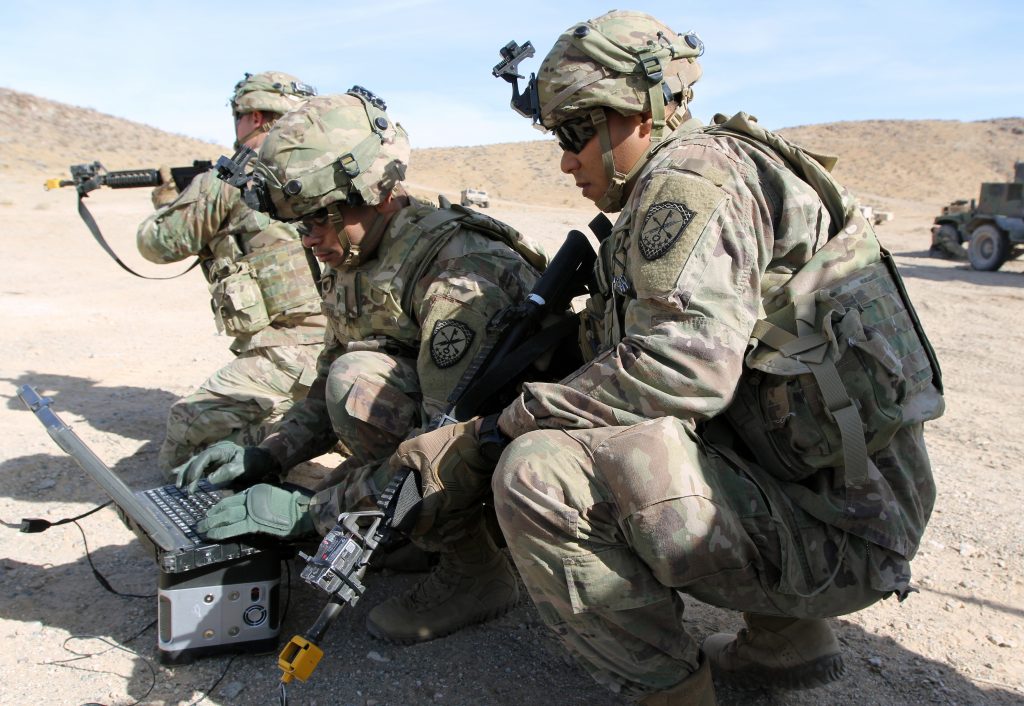
WASHINGTON: Army planners are thrashing out how many electronic warfare specialists the service needs, not just to rebuild radio-jamming and spoofing capability in combat units, but to create a training cadre that can sustain the EW corps for the long-term. Whether this plan for robust growth — certainly hundreds of soldiers, possibly over a thousand — will survive the coming budget crunch is another question, but there are positive signals from Pentagon leaders.

After four years focused on cyber warfare, “we have really focused on the build of the next phase of development, and that’s in our electronic warfare force, bringing cyber, electronic warfare, and information operations capabilities across all echelons of the Army,” said Brig. Gen. Jennifer Buckner.

Show Me The Battle: Cyber Command Needs Data Fusion, Training Sims & C2

By SYDNEY J. FREEDBERG JR.

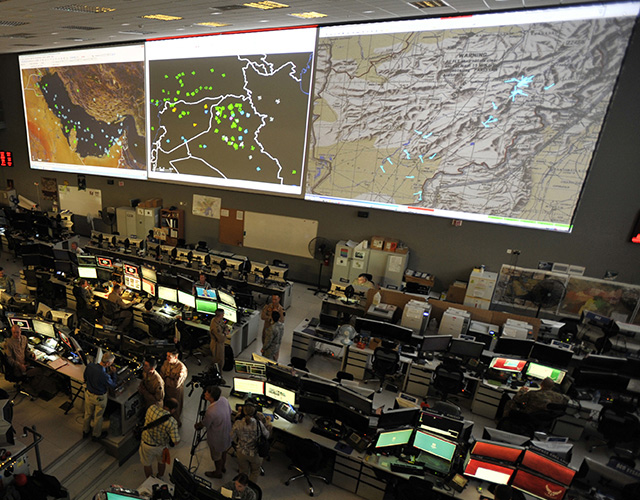
WASHINGTON: What does Cyber Command need industry to invent ASAP? Simulators that capture the full complexity of cyber warfare and command systems that show the virtual battle raging in real time, Lt. Gen. Vincent Stewart said this morning at CyCon US, a US ArmyNATO cyber conference.

It’s an irony of the information age. The US military has plenty of simulators to train pilots, sailors, tank crews, and even foot troops in physical combat. It has plenty of command-and-control systems to feed commanders data on what planes, ships, tanks, and troops are doing in physical operations. But it doesn’t have comparable computer systems to either train for or to control operations in cyberspace — the very kind of conflict where computers are both the weapons and the battlefield.

Understanding the Drone Threat

By Steve Tomaselli 

Last summer, fans at a San Diego Padres baseball game caught a glimpse of the future when a drone crashed into the stands. Thankfully, the operator was a hobbyist who had lost control of his drone and nobody was hurt. But the incident highlighted the drone threat, both in terms of a potential physical attack as well the capability to gather video surveillance and livestream it online, where malicious actors can exploit that footage in a number of ways.

In a recent report, Goldman Sachs estimated that the total drone market could reach $100 billion by 2020. And while we tend to think of drones as tools for the military, commercial aviation and hobbyists, the reality is that drones play significant roles in every sector of the economy, from agriculture to entertainment and everything in between. For security professionals, the scope of the threat is huge and evolving.

The Confusion of Clausewitz in Modern Warfare

By Daniel Covany

It is not uncommon in today’s world to see some quote of the infamous general Carl Von Clausewitz manuscript “on war” in an article or presentation advocating for current counterinsurgency strategies. Designed to win the hearts and minds of the people by combining politics and war into a single operation. Which can defeat the enemy in the ideological sphere rendering him impotent, but strangely enough you will find no such advice within Von Clausewitz’s manuscript. Instead, you find a constant and complete opposite:

Now philanthropists may easily imagine there is a skillful method of disarming and overcoming an enemy without causing great bloodshed, and that this is the proper tendency of the art of war. However plausible this may appear, it is an error which must be stamped out; for in such dangerous things as war; the errors which proceed from a spirit of compassion are the worst.

Command Has Not Been Eroded


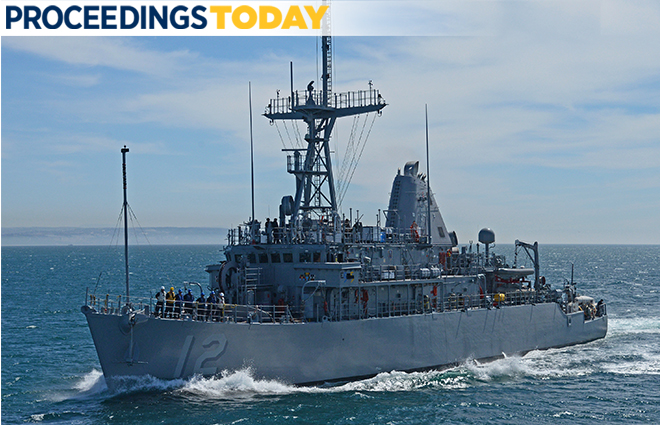
Admittedly, the stakes are increasing in the Surface Force, but the CO is more rather than less important in this challenging environment in the wake of high-profile accidents and the revival of great power competition.

For starters, Commander, Naval Surface Forces, Vice Admiral Rich Brown, clearly believes in the primacy of COs and in our judgement. From his first communication via “Personal For” message to his commanders through this fall’s Commanders’ Training Symposium, his consistent message is one of empowerment and reducing administrative burdens while setting thresholds for minimum requirements in the force. [1]

The new Surface Force Training and Readiness Manual (SFTRM) streamlines the qualification process, and, for ships with strong leaders and capable crews, dramatically decreases training redundancies while giving valuable time back to the Captain. A day at sea is great, but a day at sea without inspectors on board is better. The SFTRM allows ships to forgo the previous block training and incorporates our most qualified watchstanders into mission area certification—changes that incentivize COs and give training time back to the crews of prepared ships. [2]

Army & Air Force Craft New Joint Combat Attack Plan - Information as Weapon

by Warrior Maven

The Army and the Air Force are crafting a new combined air-ground combat attack strategy to improve warfare networks, perform long-range sensing of targets, strike enemies more effectively and strengthen defenses across multiple domains in real-time.

The Army-Air Force collaboration, called "Multi-Domain Operations," has included in-depth joint-service wargames; it is ultimately aimed at developing new doctrine, service leaders explained.

23 November 2018

Patel-Nehru rift over Tibet & China was deep


On October 31, the world’s tallest statue, the Statue of Unity dedicated to Sardar Vallabhbhai Patel, was unveiled by Prime Minister Narendra Modi.The work on the 182-metre tall statue has been completed after round the clock work by 3,400 labourers and 250 engineers at Sadhu Bet island on Narmada river in Gujarat. Sadhu Bet, located some 3.5 km away from the Narmada Dam, is linked by a 250-metre-long long bridge.

Unfortunately, for several reasons, scarce scholarly research has been done on the internal history of the Congress; the main cause is probably that a section of the party would prefer to keep history under wraps. Take the acute differences of opinion between Sardar Patel, the deputy prime minister, and “Panditji”, as Nehru was then called by Congressmen. In the last weeks of Patel’s life (he passed away on December 15, 1950), there was a deep split between the two leaders, leading to unilateral decisions for the PM, for which India had to pay the heaviest price.

These Afghan villages had been safe from insurgents. Then a deadly Taliban assault forced thousands to flee.

By Sharif Hassan

BAMIAN, Afghanistan — It was 3 a.m. when the loudspeaker at the village mosque crackled to life. An elder was calling everyone to come quickly. Taliban forces had just attacked a neighboring village, he said, and there was no time to lose.

Murtaza Nasiri, 23, recalled later that he was among those who immediately volunteered to help defend their village, Haider, located in the long-peaceful ethnic ­Shiite Hazara heartland of Ghazni province. Nasiri had grown up there, and he was studying to be an economist. 

He had never held a gun in his life. But suddenly he found himself being handed a Kalashnikov automatic rifle and following a group of men up the forested hills, where they began firing toward the insurgents. He had no idea how to handle the weapon, so someone else grabbed it.

Lead Inspector General for Operation Freedom’s Sentinel

This Lead Inspector General (Lead IG) report to the United States Congress on Operation Freedom’s Sentinel (OFS) is the 14th quarterly report detailing the overseas contingency operation. The report summarizes significant events involving OFS and describes completed, ongoing, and planned Lead IG and partner agency oversight work. This report covers the period from July 1, 2018, to September 30, 2018.

During the quarter, General Austin Scott Miller assumed command of U.S. Forces-Afghanistan (USFOR-A) and the Resolute Support mission. Also this quarter, the Trump Administration’s South Asia strategy passed its one year mark. Under the strategy, the U.S. Government has increased the amount of troops and equipment in Afghanistan, increased offensive strikes against the Taliban, expanded training and assistance for Afghan forces, and sought to pressure Pakistan to eliminate terrorist safe havens. Overall, the strategy seeks to drive the Taliban to enter into negotiations for a political settlement.

China’s Risky Drive into New-Energy Vehicles

Scott Kennedy

The Freeman Chair in China Studies proudly presents the third report of the China Innovation Policy Series (CIPS), which seeks to analyze trends in technology innovation in China and consider the implications for government policies and business strategies. In this latest report, Deputy Director of the Freeman Chair Scott Kennedy investigates China's ambitious development of new-energy vehicles and the global implications that innovation in this sector have on technology, energy, and strategic competition. To the read the full report, click here.

China has made developing new-energy vehicles (NEV) a top priority. The hope is that NEVs will help the country transform from a follower to a technological leader in the automobile sector, reduce China’s dependence on imported oil, and improve the country’s overall air quality. To achieve these goals, China has employed an intensive, government-led effort to generate a steady supply of NEVs, batteries, and other key components, as well as promote consumer demand.

The Limits of China’s Charm Offensive

MINXIN PEI

Facing escalating geopolitical competition with the US, China is scrambling to win friends in East Asia. But while China's neighbors will undoubtedly welcome any respite from Chinese belligerence, they will not be fooled by sweet talk – or even sweet trade deals.
STOCKHOLM – Over the last decade, China has taken an increasingly muscular approach to relations with East Asian countries. But in recent months, it has surprised its neighbors with a charm offensive. What changed?

In terms of China’s behavior in the region, quite a lot. In 2013, China unilaterally declared an Air Defense Identification Zone covering the East China Sea’s disputed Senkaku/Diaoyu Islands – a move that exacerbated tensions with Japan. A year later, China began to construct large artificial islands in disputed areas of the South China Sea. In 2016, China imposed sanctions on South Korea in response to the decision to allow the United States to deploy a missile-defense system there.

How China Walled Off the Internet

By RAYMOND ZHONG 

Source: S&P Global Market Intelligence, as of Nov. 15.

It is years ahead of the United States in replacing paper money with smartphone payments, turning tech giants into vital gatekeepers of the consumer economy.

And it is host to a supernova of creative expression — in short videos, podcasts, blogs and streaming TV — that ought to dispel any notions of Chinese culture as drearily conformist.

‘Karma’s a Bitch,’ a meme

Earthworm

Liu Bubao

Big Lemon ๐Ÿ‹Carrie

The Security Risks of a Trade War With China

By Ali Wyne

Trade tensions between the United States and China continue to rise. In June, U.S. President Donald Trump’s administration announced that it would impose tariffs of 25 percent on $50 billion worth of Chinese exports, with the first wave targeting some 800 goods worth $34 billion. China pushed back with its own set of tariffs targeting the U.S. agricultural sector and industrial heartland. In response, Trump has reportedly ordered his administration to consider a 25 percent tariff on an additional $200 billion worth of Chinese exports. As the showdown escalates, many observers are understandably focused on the potential for a full-fledged trade war that could destabilize the world economy. But they should also consider second-order, longer-term implications—in the security realm. Up until recently, the two nations’ economic ties had served as an effective brake on escalating strategic distrust. A China less constrained by and invested in economic ties with the United States could pose a substantially greater challenge to U.S. foreign policy. For all the Trump administration’s frustrations with managing interdependence, the consequences of decoupling could mean even bigger headaches.

The Evolution of the Salafi-Jihadist Threat


Despite the Islamic State’s loss of territory in Iraq and Syria, an increasingly diffuse Salafi-jihadist movement is far from defeated. This report constructs a data set of groups and fighters from 1980 to 2018, including from the Islamic State and al-Qaeda. It finds that the number of Salafi-jihadists in 2018 declined somewhat from a high in 2016, but is still at near-peak levels since 1980. The regions with the largest number of fighters are Syria (between 43,650 and 70,550 fighters), Afghanistan (between 27,000 and 64,060), Paki­stan (between 17,900 and 39,540), Iraq (between 10,000 and 15,000), Nigeria (between 3,450 and 6,900), and Somalia (between 3,095 and 7,240). Attack data indicates that there are still high lev­els of violence in Syria and Iraq from Salafi-jihad­ist groups, along with significant violence in such countries and regions as Yemen, the Sahel, Nigeria, Afghan­istan, and So­malia.

The End Of U.S. Naval Dominance In Asia

by Robert Ross

Editor’s Note: Although the Trump administration has made much of China’s rise when it comes to trade, the president should be focused more on the security implications. Robert Ross of Boston College points to the decline in U.S. naval strength in East Asia as a game-changer for the regional order. Ross argues that the Navy’s forward presence is strained, while China’s capabilities are growing steadily. U.S. allies are aware of this painful reality, and their willingness to trust America to protect them will decline.

Daniel Byman

The rapid rise of the Chinese Navy has challenged U.S. maritime dominance throughout East Asian waters. The United States, though, has not been able to fund a robust shipbuilding plan that could maintain the regional security order and compete effectively with China’s naval build-up. The resulting transformation of the balance of power has led to fundamental changes in U.S. acquisitions and defense strategy. Nonetheless, the United States has yet to come to terms with its diminished influence in East Asia.

U.S. Military Strategy Must Return to the Basics

by James Holmes

Nor is it any mystery why the report generated buzz. The commissioners postulate that “Americans could face a decisive military defeat” if the U.S. armed forces tangle with, say, Russia in the Baltic Sea or China in the Taiwan Strait. That’s dark language and marks quite a turnabout from the triumphalism of the post-Cold War years, when Americans talked themselves into believing history had ended in Western triumph underwritten by perpetual U.S. maritime supremacy .

But it’s also accurate language, and has been for some time. Think about the algebra of Eurasian warfare. Likely contingencies would pit a fraction of U.S. forces against the concentrated military might of Russia in the Baltic or China in the Taiwan Strait. The same would go for other hotspots. Decisive defeat is always a possibility when part of one force squares off against the whole of another on the latter’s home turf.

Welcome Back to History

Dunford Slams Google for Working with China, But Not U.S. Military

By Stew Magnuson

HALIFAX, Nova Scotia — Chairman of the Joint Chiefs of Staff Marine Corps Gen. Joseph Dunford —during a wide-ranging interview at the Halifax International Security Forum — took Google to task for its recent decision to withdraw from a Defense Department artificial intelligence initiative.

“I have a hard time with companies that are working very hard to engage in the market inside of China, and engaging in projects where intellectual property is shared with the Chinese, which is synonymous with sharing it with the Chinese military, and then don't want to work for the U.S. military,” he said Nov. 17.

Dunford said he did not want to single out any specific company, but had been asked by an interviewer specifically about Google’s decision not to continue working with the Pentagon on its Project Maven AI initiative after a larger number of its employees objected to the program on moral grounds.

Ukraine’s War With Russia Poised to Escalate in Azov Sea

By Paul D. Shinkman

HALIFAX, NOVA SCOTIA – A dispute over shipping lanes is threatening to reignite the 4-year-old simmering war between Ukraine and Russia following confrontations sparked by both sides in recent days.

Russian border guards on Monday detained Ukrainian fishing vessels in the Sea of Azov, a strategically important body of water contained to the north by Ukraine, to the west by the Crimean Peninsula and to the east and south by Russia. Monday's incident came days after Russian President Vladimir Putin slammed Kiev for detaining Russian commercial ships also in the Azov in what he described as "a totally illegal move" and which Kremlin officials have warned may prompt retaliation.

The Gulf Scramble for Africa: GCC states’ foreign policy laboratory


The Issue 

Arab Gulf states are intervening more assertively in sub-Saharan Africa to capitalize on economic opportunities and protect their security interests. 

They view Africa as a relatively uncontested arena in which they can experiment with foreign interventions as part of their strategy to prove their rising status on the world stage. 

The impact of Gulf states’ rivalries in Africa is becoming increasingly damaging, as their zero-sum rivalry has provoked retaliations, which have dangerously destabilized vulnerable parts of Africa, such as during the fallout to the GCC crisis. 

When the border dispute between Eritrea and Ethiopia descended into bloody conflict in 1998, few could have predicted where a peace agreement would be signed some 20 years later. On September 16, 2018, the Eritrean and Ethiopian leaders at at desks facing one another in the middle of a lavish hall in the Peace Palace in Jeddah. A huge portrait of Abdulaziz, Saudi Arabia’s first king, loomed over them. King Salman bin Abdulaziz sat underneath, with Crown Prince Muhammad bin Salman and the secretary general of the United Nations Antonio Guterres on either side. The optics were clear: It was under Saudi sponsorship that decades of conflict ended. The deal would be known as the “Jeddah Peace Agreement.”1 

The Oil Price Is Now Controlled By Just Three Men

Julian Lee

OPEC has lost what control of the oil market it ever had. The actions (or tweets) of three men — Presidents Donald Trump and Vladimir Putin and Crown Prince Mohammed Bin Salman — will determine the course of oil prices in 2019 and beyond. But of course they each want different things.

While OPEC struggles to find common purpose, the U.S., Russia and Saudi Arabia dominate global supply. Together they produce more oil than the 15 members of OPEC. All three are pumping at record rates and each could raise output again next year, although they may not all choose to do so. 

Big Beasts

‘Like a Terror Movie’: How Climate Change Will Cause More Simultaneous Disasters

By John Schwartz

Global warming is posing such wide-ranging risks to humanity, involving so many types of phenomena, that by the end of this century some parts of the world could face as many as six climate-related crises at the same time, researchers say.

This chilling prospect is described in a paper published Monday in Nature Climate Change, a respected academic journal, that shows the effects of climate change across a broad spectrum of problems, including heat waves, wildfires, sea level rise, hurricanes, flooding, drought and shortages of clean water.

Such problems are already coming in combination, said the lead author, Camilo Mora of the University of Hawaii at Manoa. He noted that Florida had recently experienced extreme drought, record high temperatures and wildfires — and also Hurricane Michael, the powerful Category 4 storm that slammed into the Panhandle last month. Similarly, California is suffering through the worst wildfires the state has ever seen, as well as drought, extreme heat waves and degraded air quality that threatens the health of residents.

Why Central Bank Digital Currencies Will Destroy Cryptocurrencies

NOURIEL ROUBINI

Leading economic policymakers are now considering whether central banks should issue their own digital currencies, to be made available to everyone, rather than just to licensed commercial banks. The idea deserves serious consideration, as it would replace an inherently crisis-prone banking system and close the door on crypto-scammers.

NEW YORK – The world’s central bankers have begun to discuss the idea of central bank digital currencies (CBDCs), and now even the International Monetary Fund and its managing director, Christine Lagarde, are talking openly about the pros and cons of the idea.

Human Rights and Dรฉtente: Kissinger's Failed Balancing Act

By Joseph Bosco

On the day before Thanksgiving forty-eight years ago, a human tragedy occurred in the waters off the coast of Massachusetts that quickly became an international incident.

The episode unfolded during the early period of dรฉtente with the Soviet Union. U.S. President Richard Nixon and National Security Adviser Henry Kissinger were negotiating the timing and agenda for a summit meeting to launch talks that would lead to the Strategic Arms Limitation Treaty. Kissinger, who touted the dรฉtente policy as ushering in “a generation of peace,” described the episode in his memoir as one of those “minor issues [that] seemed to arise almost spontaneously to sour things.”

On that day, Nov. 23, 1970, a Soviet fishing vessel was tied up alongside a U.S. Coast Guard cutter off Martha’s Vineyard for official talks on fishing rights.Late that morning, after furtively signaling to the Americans an intention to defect, a Lithuanian sailor jumped off his trawler and boarded the USCGC Vigilant. In his broken English, Simas Kudirka immediately begged for political asylum. 

Radio Frequency Spectrum Management


Definition: Radio Frequency Spectrum Management is the analytical, procedural, and policy approach to planning and managing the use of the electromagnetic spectrum.

Keywords: harmful interference, policies and procedures, radio frequencies, radio frequency interference analysis, radio spectrum, system acquisition

MITRE SE Roles and Expectations: MITRE systems engineers (SEs) are expected to understand the role that radio frequency spectrum management has in the system acquisition processes of our customers. SEs need to be able to advise sponsors and their contractors, where appropriate, on the processes, procedures, policies, and analytical measures needed to identify, acquire, and retain radio frequencies for use by government communications, navigation, and surveillance systems.
Background

How Much Will the Space Force Cost?


The Issue

The proposed creation of a new military service for space, known as the Space Force, is likely to be a hotly debated issue in the FY 2020 legislative cycle. One of the central questions about this proposal is how much it will cost and what the overall size and scope of the Space Force will be. This brief provides rough estimates for the number of military and civilian personnel, the number and locations of bases, the budget lines that would transfer to the new organization, and the additional personnel and headquarters organization that would be needed for the new military service.
Introduction

The size and budget of a new military service for space depends on how broadly its charter is defined and which existing space-related organizations it would incorporate. The three options evaluated in this analysis are: a Space Corps within the Department of the Air Force; a limited but independent Department of the Space Force (“Space Force-Lite”); and a more expansive Department of the Space Force (“Space Force-Heavy”). The Space Corps option is limited to the space-related organizations, personnel, programs, and bases currently within the Air Force, similar to the legislation that passed the House on July 6, 2017, as part of the FY 2018 National Defense Authorization Act (NDAA). The Space Force-Lite option includes everything in the Space Corps plus the space-related organizations, personnel, programs, and bases in the other Services. The Space Force-Heavy option includes everything in the Space Force-Lite option plus some missile defense activities and programs in the Army and Missile Defense Agency that could be considered space-related under a broader definition.

Most ATMs can be hacked in under 20 minutes

By Catalin Cimpanu

An extensive testing session carried out by bank security experts at Positive Technologies has revealed that most ATMs can be hacked in under 20 minutes, and even less, in certain types of attacks.

Experts tested ATMs from NCR, Diebold Nixdorf, and GRGBanking, and detailed their findings in a 22-page report published this week.

The attacks they tried are the typical types of exploits and tricks used by cyber-criminals seeking to obtain money from the ATM safe or to copy the details of users' bank cards (also known as skimming).

Is a “No Deal” Brexit Still Avoidable?

By Henry Farrell

W. C. Sellar and R. J. Yeatman’s comic history of England, 1066 and All That, talks about nineteenth-century British Prime Minister W. E. Gladstone’s efforts to solve the Irish Question—the puzzle of what to do with rebellious Ireland, which was then part of the United Kingdom. According to Sellar and Yeatman, every time that Gladstone got close to an answer the Irish changed the question. Over the last couple of days, a new Irish question has stymied Brexit negotiations between the United Kingdom and the EU: how to deal with the border between the Republic of Ireland, which will remain part of the EU, and Northern Ireland, which will not. This time it’s EU negotiators who keep on trying to come up with answers, while British politicians keep on changing the question.

The new way the Army will conduct information operations

By: Justin Lynch 

The Army's guide to information operations suggest creating a map to analyze the effectiveness of "propaganda". (US Army/ATP 3-13.1) 

Time to Rethink America's Vast Arms Deals

by Daniel R. DePetris 

Selling weapons is big business for the United States. The State Department cleared $75.9 billion in arms deals in fiscal year 2017, a one-year record since the Defense Security Cooperation Agency started keeping tallies. President Donald Trump is a firm believer in selling American weapons, aircraft, missiles, anti-air systems, and military technology to overseas buyers, both to grow America’s domestic defense manufacturing workforce and to increase U.S. foreign policy leverage over the countries choosing to buy American. The Cato Institute assessed that Washington has delivered a $197 billion worth of conventional weapons platforms, equipment, and related training services to 167 countries between 2002–2016.

U.S. Military Strategy Must Return to the Basics

by James Holmes

Here’s a tip: read the whole thing.

Nor is it any mystery why the report generated buzz. The commissioners postulate that “Americans could face a decisive military defeat” if the U.S. armed forces tangle with, say, Russia in the Baltic Sea or China in the Taiwan Strait. That’s dark language and marks quite a turnabout from the triumphalism of the post-Cold War years, when Americans talked themselves into believing history had ended in Western triumph underwritten by perpetual U.S. maritime supremacy .

But it’s also accurate language, and has been for some time. Think about the algebra of Eurasian warfare. Likely contingencies would pit a fraction of U.S. forces against the concentrated military might of Russia in the Baltic or China in the Taiwan Strait. The same would go for other hotspots. Decisive defeat is always a possibility when part of one force squares off against the whole of another on the latter’s home turf.

Welcome Back to History

Social Media Has Democratized Psychological Warfare. Can the U.S. Military Adapt?


Warfare has always been both physical and psychological. As combatants attempt to injure, incapacitate or kill enemy fighters, they also try to weaken the will of their adversaries and anyone who might support them. Throughout history, warriors relied on ferociousness for that, intimidating their enemies by the way they looked or the horrible actions they took. In the modern era, militaries turned to communication technology and psychology. Soldiers were trained to craft and transmit messages and propaganda, while psychological operations became a particular military specialization.

22 November 2018

Jihadism in Jordan

By: Andrew Devereux


On August 10, one police officer was killed and six civilians were wounded in al-Fuheis, Jordan when an IED detonated near a police vehicle (Alaraby, August 11). The attack prompted a swift response from the security forces, which identified the suspected perpetrator’s hideout in al-Salt. Five security personnel were killed during a siege of the property the following day. The building was ladened with explosive tripwires, and the terror cell engaged Jordanian state forces in a gun battle. Authorities arrested three suspected jihadists after the siege, and the bodies of five others were identified in the rubble of the building (Asharq al-Awsat, August 13).

Despite its proximity to Syria and the Islamic State’s proto-state, Jordan has been spared the frequent jihadist attacks which have punctuated the Middle East since the Islamic State (IS) began seizing population centers in 2014. The most notable incident was the armed raid of Karak Castle in December 2016, in which 14 people, including four attackers, were killed (Jordan Times, December 18, 2016). While fatal attacks have been rare, reports of the security forces arresting suspected jihadist sympathizers have been more common. In January 2018, the security forces announced they had dismantled a terrorist cell which was buying bomb parts and staking out potential targets in Amman (Jordan Times, January 8). The aggressive operations of the jihadist cell have raised concerns of a resurgence in terror attacks in the Hashemite Kingdom.

Sleeper Cells