7 May 2019

Implications of Quantum Computing for Encryption Policy


The Carnegie Endowment for International Peace and Princeton University have convened a small group of experts to advance a more constructive dialogue on encryption policy. The working group consists of former government officials, business representatives, privacy and civil rights advocates, law enforcement experts, and computer scientists. Observers from U.S. federal government agencies attended a select number of working group sessions. Since 2018, the working group has met to discuss a number of important issues related to encryption policy, including how the relevant technologies and uses of encryption will evolve in the future.

This paper and its companion piece on user-controlled encryption were prepared by Princeton University’s Center for Information Technology Policy at the request of the Carnegie Encryption Working Group as briefings to provide insight into future trends related to encryption policy. The papers do not take a position on encryption policy, rather they provide analysis of the future trends related to encryption and how they will shape the issues that policymakers must address.

Forget about artificial intelligence, extended intelligence is the future

By JOI ITO

Last year, I participated in a discussion of The Human Use of Human Beings, Norbert Weiner’s groundbreaking book on cybernetics theory. Out of that grew what I now consider a manifesto against the growing singularity movement, which posits that artificial intelligence, or AI, will supersede and eventually displace us humans.

The notion of singularity – which includes the idea that AI will supercede humans with its exponential growth, making everything we humans have done and will do insignificant – is a religion created mostly by people who have designed and successfully deployed computation to solve problems previously considered impossibly complex for machines.

They have found a perfect partner in digital computation, a seemingly knowable, controllable, machine-based system of thinking and creating that is rapidly increasing in its ability to harness and process complexity and, in the process, bestowing wealth and power on those who have mastered it.

How big tech designs its own rules of ethics to avoid scrutiny and accountability

David Watts

“Digital ethics and privacy” shot into research and advisory company Gartner’s top ten strategic technology trends for 2019. Before that it barely raised a mention.

In the past year governments, corporations and policy and technology think tanks have published data ethics guides. An entire cohort of expert data ethicists have magically materialised.

Why this sudden interest in data ethics? What is data ethics? Whose interests are the guidelines designed to serve?

To understand what is going on, it’s necessary to take a step back and look at how the information landscape has unfolded.

The picture that emerges is of an industry immune from the regulatory constraints that apply to everyone else.
The shine has gone

Cybersecurity R&D to Counter Global Threats

Takeshi Nakatsuru, Yoshiaki Nakajima, Jun Miyoshi, and Katsumi Takahashi

New cybersecurity threats are continuing to expand on a global scale, and Japan is expected to become the target of cyber-attacks in the run up to 2020. In these Feature Articles, we discuss the key points of resisting global cybersecurity threats and introduce our research and development strategy for dealing with them.

1. Introduction

The NTT Group has aggressively expanded into the global business sector to establish global cloud services as a cornerstone of our business. To this end, we are establishing stronger systems to offer to the world by responding to the needs of our customers who are developing diverse information and communication technology (ICT) services on a global scale. In the global business arena, ICT is an essential component that is used by a wide range of businesses in diverse fields. Incidents of cyber-attacks on these businesses can cause serious damage such as service interruptions or information leaks. In recent years, many cases of cyber-attacks directly aimed at exploiting business secrets or financial assets have been reported, and the financial impact of these attacks is also increasing.

National Cybersecurity R&D Programme


The National Cybersecurity R&D Programme (NCR) seeks to develop R&D expertise and capabilities in cybersecurity for Singapore. It aims to improve the trustworthiness of cyber infrastructures with an emphasis on security, reliability, resiliency and usability. 

NCR is coordinated by National Research Foundation Singapore (NRF), National Security Coordination Centre, Cyber Security Agency of Singapore, Ministry of Home Affairs, Ministry of Defence, Government Technology Agency, Info-communications Media Development Authority (IMDA) and Economic Development Board to promote collaboration among government agencies, academia, research institutes and private sector organisations.

Launched in 2013, the NCR was supported at $130 million over five years. The funding supports research efforts into both technological and human-science aspects of cybersecurity. In 2016, an additional $60 million was allocated to extend the support until 2020. The funding will be used to deepen the development of cybersecurity R&D expertise in Singapore. This includes the funding of grant calls and cybersecurity research infrastructure. 

Basic Research in Cyber Security


Cyber is a prefix derived from the word cybernetics and has acquired the general meaning of through the use of a computer which is also termed as cyberspace. The word security in general usage is synonymous with being safe, but as a technical term security means not only that something is secure, but that it has been secured. Joining the two words together form the word cybersecurity is concerned with making cyberspace safe from threats, namely cyber threats. The information and communications technology (ICT) industry has evolved greatly over the last half century. With the advent of the internet, security becomes a major concern. ICT devices and components are generally inter dependable and vulnerable to the security attacks. The act of protecting ICT systems and their contents has come to be known as cybersecurity. Cybersecurity is an important tool in protecting and preventing unauthorized surveillance. As commonly used, the term cybersecurity refers to three things:

• A set of activities and other measures, technical and non-technical, intended to protect computers, computer networks, related hardware and devices software, and the information they contain and communicate, including software and data, as well as other elements of cyberspace, from all threats, including threats to the national security.
• The degree of protection resulting from the application of these activities and measures.
• The associated field of professional endeavor, including research and analysis, aimed at implementing and those activities and improving their quality

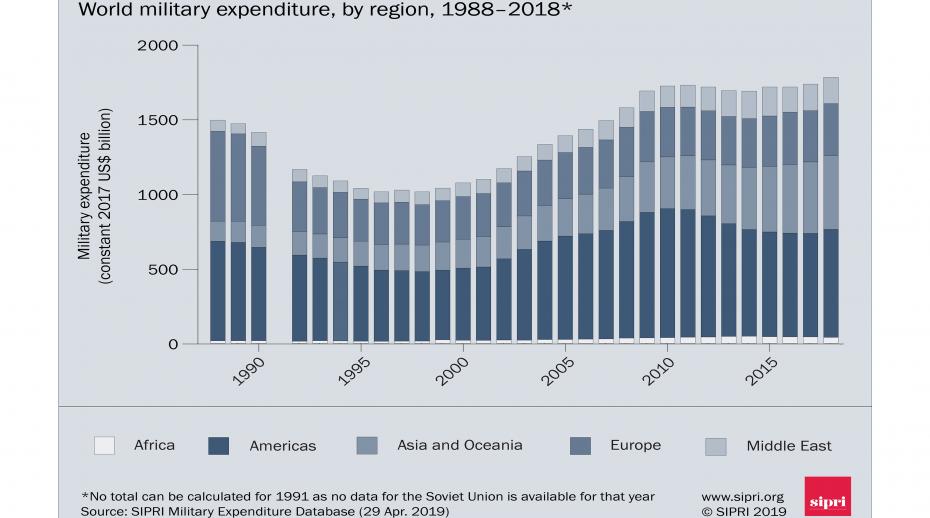
World military expenditure grows to $1.8 trillion in 2018


(Stockholm, 29 April 2019) Total world military expenditure rose to $1822 billion in 2018, representing an increase of 2.6 per cent from 2017, according to new data from the Stockholm International Peace Research Institute (SIPRI). The five biggest spenders in 2018 were the United States, China, Saudi Arabia, India and France, which together accounted for 60 per cent of global military spending. Military spending by the USA increased for the first time since 2010, while spending by China grew for the 24th consecutive year. The comprehensive annual update of the SIPRI Military Expenditure Database is accessible from today at www.sipri.org.

Explained: How Israel Won a War in Just 6 Hours

by Michael Peck

It was June 5, 1967, and the Six-Day War was about to begin.

At 7:10 a.m. Israeli time, sixteen Israeli Air Force Fouga Magister training jets took off and pretended to be what they were not. Flying routine flight paths and using routine radio frequencies, they looked to Arab radar operators like the normal morning Israeli combat air patrol.

At 7:15 a.m., another 183 aircraft—almost the entire Israeli combat fleet—roared into the air. They headed west over the Mediterranean before diving low, which dropped them from Arab radar screens. This was also nothing new: for two years, Egyptian, Syrian and Jordanian radar had tracked Israeli aircraft—though never this many Israeli aircraft—taking off every morning on this same flight path, and then disappearing from their scopes before they returned to base. But that morning, instead of going home, the Israeli armada of French-made Mirage and Super Mystere jets turned south toward Egypt, flying under strict radio silence and just sixty feet above the waves.

6 May 2019

Soldiers and mandarins: The bureaucracy is trying to make armed forces tribunals ineffective

By Gyan Bhushan

The Supreme Court’s order to fill up vacancies in armed forces tribunals has brought hope to many martyrs’ families, widows and disabled soldiers for they can now expect early adjudication of their cases. Created in 2009, the AFT had brought relief to many serving and retired army, navy and air force personnel. Cases that had been pending in various courts for decades were adjudicated upon. It was extremely effective with almost a record number of case disposals. But AFT members began to be reduced by end-2016 till they came down to 50 per cent. Now against the authorization for 17 judicial and 17 administrative members, there are only eight judicial and eight administrative members (two of these members are slated to retire by mid-May 2019).

In June 2017, the government notified the Tribunal, Appellate Tribunal and other Authorities (Qualifications, Experience and other Conditions of Service of Members) Rules, 2017 in the Gazette of India. The rules, effective from June 1, amended existing ones, including the Armed Forces Tribunal Act, giving wide-ranging powers to the government regarding appointment and removal of tribunal members. The validity of these have been challenged in the Supreme Court.

The Pakistani Military’s Worst Nightmare Is Coming True

BY DAUD KHATTAK 

For decades, Pakistan’s powerful military has been in control of the country’s politics whether directly, as during several decades of military dictatorships, or indirectly, as during attempts by civilian leaders to reassert their authority in the 1970s, 1990s, and after 2008.

In their efforts to wrest control from the military, plenty of Pakistani politicians have been defeated and dismissed from office. So dire was their record that, at times, challenging the brass seemed like a fight not worth picking.

But all that may be changing at last.

US Military Stops Releasing Afghanistan War Information

By Robert Burns

Amid a battlefield stalemate in Afghanistan, the U.S. military has stopped releasing information often cited to measure progress in America’s longest war, calling it of little value in fighting the Taliban insurgency.

The move fits a trend of less information being released about the war in recent years, often at the insistence of the Afghan government, which had previously stopped the U.S. military from disclosing the number of Afghans killed in battle as well as overall attrition within the Afghan army.

The latest clampdown also aligns with U.S. President Donald Trump’s complaint that the United States gives away too much war information, although there is no evidence that this had any influence on the latest decision.

A government watchdog agency that monitors the U.S. war effort, now in its 18th year, said in a report to Congress on Wednesday that the U.S. military command in Kabul is no longer producing “district control data,” which shows the number of Afghan districts — and the percentage of their population — controlled by the government compared to the Taliban.

Sri Lanka bombings and the rise of ISIS in Asia

Rachel Avraham

After I reported that ISIS is starting to move its forces to Africa and Asia following the destruction of the Caliphate, the Sri Lanka bombings occurred. Across Asia, ISIS is on the ascent. How should American policy makers respond? 

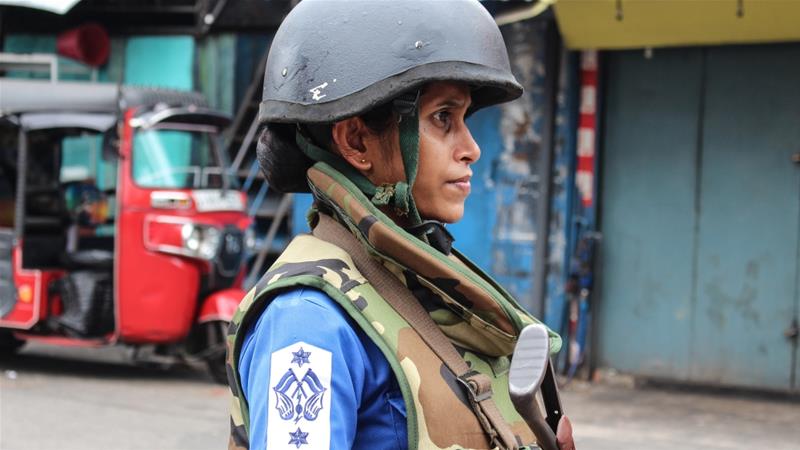
Last week, as Christians across the globe were celebrating Easter and Jews throughout the world were enjoying Passover, suicide bombers blew up three churches and three luxury hotels in Colombo, Sri Lanka. Later on the same day, there were additional smaller explosions within the country. 259 people were massacred and 500 others were injured in one of the worst coordinated terror attacks in recent history. ISIS claimed responsibility for the coordinated terror attacks in Sri Lanka. This came after I reported, “The murderous terror group is starting to move its forces to Africa and Asia.” The question remains, in the wake of the fall of the Caliphate in Iraq and Syria, to what extent does ISIS pose a threat to Asia following the Sri Lanka bombings?

Although US President Donald Trump had claimed that the War against ISIS is over due to the collapse of the Caliphate in Syria and Iraq, many counter-terror analysts warned that such statements were premature given that ISIS terror leader Abu Bakr Al Baghdadi remains free and the terror group still has the potential to wage deadly terror attacks worldwide. Furthermore, in the wake of the fall of the Caliphate, many ISIS terrorists have returned to their home countries in Asia, where they are beginning to claim territory.

What the Easter Attacks in Sri Lanka Tell Us About the Islamic State

By Scott Stewart

While a jihadist attack on Easter was unsurprising, the site of the attack, Sri Lanka, was. The bombings show the Islamic State movement continues to pose a threat through its franchise groups and grassroots terrorists, but are not a useful gauge of its core organization. The jihadist threat in Sri Lanka will no longer be ignored, and future would-be attackers will face a far less permissive environment. 

The attacks against three churches and four hotels in Sri Lanka on April 21, Easter Sunday, rocked the island nation, reverberating around the globe. While the attack location — Sri Lanka — was a surprise, a holiday attack of some kind had been anticipated. In fact, Stratfor's Threat Lens team had warned clients of the elevated threat of attacks against houses of worship over Passover and Easter.

A dash of stimulus helps stabilize China’s wobbly economy

David Dollar

David Dollar gives an economic update on China, unpacking the first quarter (Q1) data, explaining the government's current stimulus actions, and commenting on the ongoing U.S.-China trade negotiations. This piece originally appeared on The Hill

China was a frequent topic of discussion at the International Monetary Fund (IMF)/World Bank spring meetings held April 12-14 in Washington.

The IMF marked down the 2019 growth forecasts for every major economy except China. The forecast for the U.S. was reduced 0.2 percentage points, to 2.3 percent. China was marked up from 6.2 percent to 6.3 percent — a small change but a signal that the Chinese economy is stabilizing. 

The first quarter (Q1) data reported this week ratified this confidence: GDP growth of 6.4 percent year-on-year (y/y) was better than expected; industrial production growth in March came in at a surprisingly high 8.5 percent y/y; and retail sales in March were up 8.7 percent. 

China’s Belt and Road Initiative: Why the Price Is Too High


Fears of unsustainable indebtedness among many of the countries that are partnering in China’s Belt and Road Initiative (BRI) set the backdrop for a two-day meeting last week in Beijing. The $1 trillion initiative includes projects in transportation, energy and infrastructure in more than 70 countries across Asia, Europe, Africa and Oceania such as ports, railways, oil and gas pipelines, and power grids, along with plans for new economic corridors.

Facing a slowing economy at home made worse by a trade war with the U.S., and increasingly strident opposition to the BRI from the U.S. and European countries, China’s president Xi Jinping was compelled to acknowledge the concerns that BRI is a debt trap for participating countries. He committed to creating a “debt-sustainability framework” for the initiative, compliance with international infrastructure contracting standards, and measures to curb corruption and to ensure environmental sustainability, according to a Wall Street Journal report. Xi also urged foreign and private-sector partners to contribute more funding to BRI projects. The BRI meeting saw attendance by 37 countries, but the U.S. and India were among those that did not attend.

May 4, 1919: The Making of Modern China

By Sebastian Veg

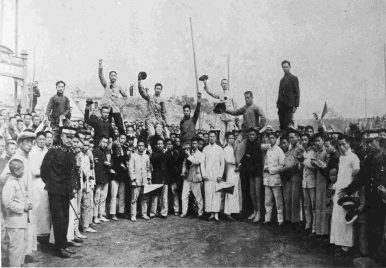
As China marks the 100th anniversary of the 1919 May Fourth demonstrations, it is certainly a challenge to write anything new about this unanimously celebrated event. May Fourth has been studied and discussed from every imaginable angle and political perspective over the last century. It is no longer the case, as it was when Chow Tse-tsung (1916-2007) published his seminal study around the time of its 40th anniversary in 1959, that scholars are divided over whether to see it as a national renaissance or a national catastrophe. Today it is indiscriminately celebrated by progressives and conservatives – with the possible exception of some die-hard Confucian fundamentalists – the Communist (CCP) and Nationalist (KMT) parties, Chinese people and foreigners. It was even briefly appropriated by advocates of independence in the 2008 presidential campaign in Taiwan. However, such unanimity is only achieved at the price of considerable ambiguity as to what is actually being commemorated.

China, U.S.: Washington Raises the Stakes in the South China Sea


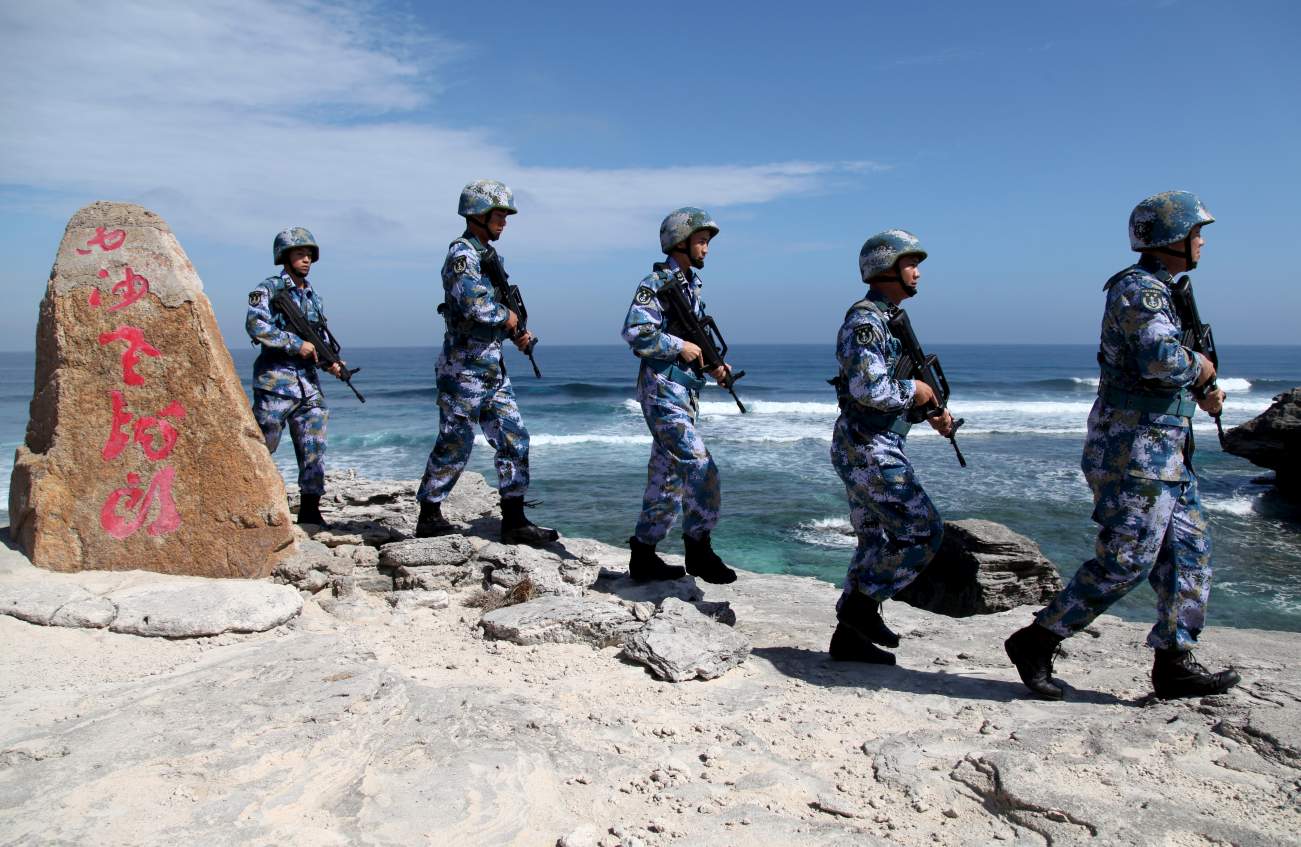
Clashes between the United States and China in the contested waters of the Asia-Pacific region have ramped up in recent months, abetted by the two countries' ongoing great power competition. This is particularly apparent in the South China Sea, where Beijing continues to push for dominance. In response, Washington has begun evolving its strategies to deter China's growing presence — increasing the likelihood for direct confrontation in the region.

What Happened

As ISIS Regroups, the U.S. Is Forgetting the Lessons of Counterinsurgency—Again

Judah Grunstein 

The surprise reappearance of the leader of the Islamic State, Abu Bakr al-Baghdadi, in a recently recorded video seems like a throwback to the mid-2000s. The most visible difference from the video recordings Osama bin Laden used then to remind al-Qaida followers he was still alive—and persuade them he was still relevant—is that al-Baghdadi, who was last seen in 2014, is seated on the floor of what seems like a furnished living room, rather than a cave.

In other ways, too, the defeat of the Islamic State as a self-declared caliphate and its return as a transnational terrorist network would seem to put us back to where we found ourselves in 2001, after the expulsion of al-Qaida from Afghanistan.

Challenge Accepted: Why America Needs to Confront Its Adversaries in the Gray Zone

by Bob Jones

The return of great-power competition has dominated the national-security discussion in the United States since the release of the 2018 National Defense Strategy. However, little of it has been spent focusing on the previous era of great-power competition during the Cold War. Even a cursory exploration of that time-period will turn up documents that demonstrate the benefits of a better understanding of Cold War history. One example is a lecture delivered by the Chief of Naval Operations (CNO), Adm. Arleigh A. Burke, to the Naval War College in December of 1958.

The themes touched on by Admiral Burke’s address “The U.S. Navy’s Role in General War and Conflict Short of General War” still resonate today. The geopolitical situation it describes eerily resembles our present era. In fact, it’s not a stretch to say that with a few minor revisions the CNO could deliver the same address today. And while his blunt statement that the Sino-Soviet Bloc is America’s enemy might not survive in today’s political environment, his arguments are the same as those listed in the National Defense Strategy for classifying China and Russia as the United States’ primary competitors.

Bipartisan Foreign Policy Died This Weekend

BY GEOFFREY KABASERVICE

Former Indiana Sen. Richard Lugar, who died Sunday at age 87, was the man whom many conservatives had in mind when they railed against the Republican establishment. His long Senate service, from 1977 to 2013, was an affront to advocates of term limits. He was the Senate’s leading authority on foreign policy, a field despised by populists and nationalists as the province of elite sellouts. He was a leading exponent of bipartisanship and compromise, which made him a target for die-hard partisan warriors. It came as no surprise when he was ousted out of politics in 2012 by a Tea Party fanatic.

But Lugar was a considerably more interesting and consequential figure than the conservative caricature. The paucity of Republican politicians of his stature and outlook is a large part of why the American Century seems to be hastening to a premature end.

‘We Are Not Negotiating With a Gun to Our Head’

BY KEITH JOHNSON

The European Union, like everybody else, is trying to come to grips with a tumultuous era for global trade, with trade wars and tariffs threatening an economic order decades in the making. Foreign Policy spoke to EU Trade Commissioner Cecilia Malmstrรถm about upcoming talks with the United States, never-ending U.S. tariff threats, and how to deal with China’s challenge to the global trading order.

Foreign Policy: I wanted to start with trade talks between the EU and the United States, where the big sticking point is agriculture. The United States insists agriculture must be part of a deal, and the EU insists it not be. Is there any chance for a change in the EU stance? And since many U.S. lawmakers say that without agreement on agriculture, it’s dead in Congress, what’s the point of the talks?

The City of Europe’s Future

BEN JUDAH

Forget economic anxiety. Rotterdam is a warning that the emerging political fight across Europe really is about cultural assimilation after all.

I’ve often wondered, “Where is Europe?”

Its essence could never be found in a modern megacity—any place too particular cannot really be “Europe.” It could not be found in too ancient a city either, because truth be told very few Europeans live in ancient homes. Europe, the Europe we live in, is really a continent of suburbs, supermarkets, and business parks, the Europe of Carrefour and le Corbusier knock-offs, its concrete tower blocks hidden behind the cathedrals.

I felt it, Europe as it is, watching the Eurolines pull into Victoria Coach Station, in London, at 6:00 AM, full of bleary eyes—migrants,...

Russia and NATO: A Dialogue of Differences

Mathieu Boulรจgue

On 14 April, General Curtis Scaparrotti, the outgoing Supreme Allied Commander Europe (SACEUR) of NATO Allied Command Operations General, deplored the broken communication process with Russia and a lack of understanding of “each other’s signals”. Immediately afterwards, Russian Deputy Foreign Minister Alexander Grushko denounced the current deadlock with NATO, claiming cooperation had been discontinued and disagreements with the Atlantic Alliance were now “even deeper than before”.

Relations between NATO and the Kremlin have reached a dangerously abrasive stage, as the existing threat-reduction arrangements and confidence-building mechanisms with Russia are not working. Russia and NATO are talking past each other and substantive dialogue is not possible under current conditions.

This relationship breakdown, however, is not due to a collapse of dialogue with Moscow - and a greater volume of dialogue will not improve relations. Instead there has long been a problem with the dialogue itself: a change in its substance is necessary.

Examining the Global Terrorism Landscape

By Bill Roggio

Editor’s note: Below is Bill Roggio’s testimony before the House Committee on Foreign Affairs Subcommittee on the Middle East, North Africa and International Terrorism. 

Chairman Deutch, Ranking Member Wilson, and other distinguished committee members, thank you for inviting me to testify today to examine the global terror landscape.

The Easter day bombings in Sri Lanka serve as a stark reminder that our enemies are committed to their cause and are willing to go to any lengths to destroy our way of life. Nine suicide bombers, many of them well educated, including two sons of a wealthy spice tycoon, and a pregnant woman, killed more than 250 people during attacks on churches and hotels. The suicide bombers swore allegiance to Islamic State emir Abu Bakr al-Baghdadi before carrying out their heinous attacks.

The Sri Lanka bombings took place just one month after the U.S.-backed Syrian Democratic Forces (SDF) declared a victory over the Islamic State. While the Islamic State may have lost its physical caliphate in Iraq and Syria, it is by no means defeated.

Old Roads And New Paradigms: On The Last BRI Summit – OpEd

By Juan Martin Gonzรกlez Cabaรฑas*

On April 26 and 27, the summit of the Belt and Route Initiative, also known as the New Silk Road, was held in Beijing. With the presence of 125 countries, which are involved to a greater or lesser extent, 37 foreign heads of state and government. More than 20 international organizations also participated as guests. The initiative is the great plan and Chinese geostrategic bet, through investments in various infrastructures, boosting to connect Asia with Europe, Africa and even Latin America and the Caribbean. 

In this last region, there are already 19 countries that are part of the initiative to some extent, in the summit were present in different levels of committees: Argentina, Chile, Bolivia, Peru, Ecuador, and Panama just to name a few. The Initiative is an attractive offer for a continent with large deficits in infrastructure and investments.

Saudi Gas Ambitions Likely To Have Geopolitical Impact – Analysis

By James M. Dorsey

A Saudi push to become a major natural gas player is as much about diversifying the kingdom’s domestic consumption and export mix as it is about taking advantage of harsh US economic sanctions against Iran designed to force a change of the Islamic republic’s policy, if not its regime.

Saudi Arabia scored an initial success with the sale of its first Liquified Natural Gas (LNG) cargo in Singapore, the trading hub for Asia and the Pacific, the world’s largest LNG market.

The sale speaks to the ambitions of Saudi Arabia’s national oil company, Aramco, that seeks to become a major gas player by partnering with producers across the globe, including in the Russian Artic, and developing its own reserves.

Aramco expects the partnerships to position it as major marketeer and trader, primarily in the spot and short-term markets.

Russia's Defense Industry Finds Itself in a Tailspin


Domestic budget limits and decreasing arms exports are set to severely impact the viability of Russian arms manufacturers. The Kremlin's efforts to promote import substitution policies are not succeeding and the defense sector is unlikely to bolster its bottom line by shifting to produce products for the domestic market. The Russian defense industry's inherent weaknesses could become self-perpetuating; the failure to find markets for Russian products will increase the costs of production and, therefore, military modernization.

Russia's defense industry is face to face with a major foe, but it's not a foreign military power. The Kremlin has been striving to modernize all branches of the Russian military, but the country's defense industry is struggling thanks to decreasing volumes of orders, difficulties in attracting high-skilled talent and limits to its technological capabilities. According to recent figures, the performance of Russia's aerospace sector is declining precipitously. In 2018, for instance, Russian aircraft and spacecraft makers produced 13.5 percent less than in 2017. And there's been no letup in 2019 either: In the first two months of the year, aerospace output plummeted 48 percent year on year.

Time to Pursue an International Cyber Treaty?

By James Carden

You will receive occasional promotional offers for programs that support The Nation’s journalism. You can read our Privacy Policy here.

Despite the chorus of recrimination directed at the current president over his alleged “coddling” of Putin’s Russia, relations between the world’s sole nuclear superpowers are at their lowest point in many decades.

The Trump administration’s record, far from confirming its critics’ fears that the president himself is in the pocket of the Kremlin, would seem to indicate precisely the opposite: during Trump’s two plus years in office the US has sent lethal arms to Ukraine; has twice attacked (in the absence of UN Security Council authorization) Russia’s ally Syria; has withdrawn from the landmark 1987 Intermediate-Range Nuclear Forces Treaty; has continued the policy of NATO expansion in the Balkans with the addition of Montenegro; and has continued to rattle the saber at Venezuela against the explicit objections of Russia and other UN Security Council members.

Time to sound the alarm about 5G?

By Robert Arvay

My grandmother cooked in her kitchen on a wood-burning stove until, at 92 years of age, she passed away. Wood stove technology is not as simple as some people think. We may have to learn it all over again. Here is why:

I recently read an online article about something called 5G and became aware that this innovation will potentially enable any large government, our own or our adversaries, to spy, hack, sabotage or otherwise wreak havoc on the entire world infrastructure of communication and security. This is not hyperbole. It is as real as nuclear bombs, and if not as destructive, it poses almost as deadly a threat. Indeed, the 5G cyber-war might well spark a nuclear conflagration.

The network on which cell phones operate is being upgraded. That innovation will, as they say, usher in a new age of vast potential. It can also be weaponized against us. An enemy could plunge us back into the dark ages.

Is this for real? Apparently, very serious authorities are concerned. The biggest internet tech companies are already accruing surveillance powers that rival those of our own government, and in all likelihood, exceed them. Worse yet, many of those companies are hostile to our nation, refusing to assist our military, while eagerly aiding the foreign dictatorships that threaten our freedoms.

This chip was demoed at Jeff Bezos’s secretive tech conference. It could be key to the future of AI.

by Will Knight

Recently, on a dazzling morning in Palm Springs, California, Vivienne Szetook to a small stage to deliver perhaps the most nerve-racking presentation of her career.

She knew the subject matter inside-out. She was to tell the audience about the chips, being developed in her lab at MIT, that promise to bring powerful artificial intelligence to a multitude of devices where power is limited, beyond the reach of the vast data centers where most AI computations take place. However, the event—and the audience—gave Sze pause.

The setting was MARS, an elite, invite-only conference where robots stroll (or fly) through a luxury resort, mingling with famous scientists and sci-fi authors. Just a few researchers are invited to give technical talks, and the sessions are meant to be both awe-inspiring and enlightening. The crowd, meanwhile, consisted of about 100 of the world’s most important researchers, CEOs, and entrepreneurs. MARS is hosted by none other than Amazon’s founder and chairman, Jeff Bezos, who sat in the front row.

Doubts At The NSA: Shelving A Mass Surveillance Program – OpEd

By Binoy Kampmark

Earlier this year, Luke Murry, national security adviser for Republican House Minority Leader Kevin McCarthy, revealed that the National Security Agency had been averse over the last six months to using the phone surveillance program that hoovers information from millions of US phone calls and text messages. This was hardly a comforting point; the issue spoke as much to competence as it did to any broader issue of warrantless surveillance of the good people in Freedom’s land. Vast, cumbersome, and generally self-defeating, the essence of such programs is paranoid inefficiency. Put it down to “technical issues”, suggested Murry.

The Call Details Records (CDR) program, hostile to liberties in its warrantless nature, has been a fixture of the US security landscape since 2001, when that nasty piece of legislation known as the USA PATRIOT ACT found its way onto the statue books. The program was given legal approval by the Foreign Intelligence Surveillance Court pursuant to Section 215 of that dastardly piece of penmanship.

Can Courts Clear the Fog of War?

BY ELISABETH BRAW 

What constitutes an act of war? A military invasion, sure. Hostile acts by smaller armed formations, sure. The blowing up of a bridge by commandos or the poisoning of water, very likely. But a cyberattack? Zurich, one of the world’s leading insurers, claims that’s the case. The confectionary giant Mondelez, one of its customers, argues the opposite. This isn’t an abstract discussion: Two years ago, Mondelez was laid low by NotPetya, a computer virus unleashed by Russia against Ukrainian targets. Now the two companies are battling out the definition of war in court—and regardless of how the ruling turns out, a new fog of war is still settling over society.

NotPetya struck with devastating force in June 2017. First, the virus—subsequently traced to hackers working for Russian military intelligence—brought down virtually all of Ukraine’s government along with Ukrainian hospitals, power companies, airports, and banks. That was probably its real target. Then, however, the virus traveled on in a less predictable fashion. It crippled Maersk, the Danish shipping giant, and the global law firm DLA Piper. FedEx subsidiary TNT Express was hit, too, as was the U.S. pharmaceutical giant Merck and French construction company Saint-Gobain. Several of them lost hundreds of millions of dollars as a result of the attack.

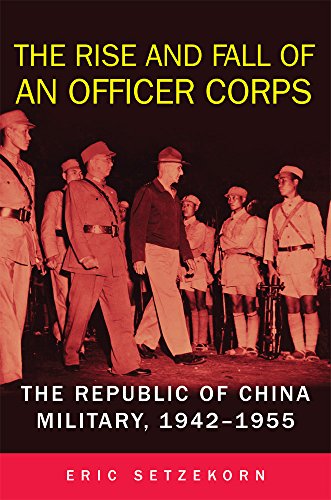
The Rise and Fall of an Officer Corps

By James Char

In Taiwan, June 6th, 1955, on the eleventh anniversary of the Allied landing on Normandy, one of the most decorated commanders of World War II was soon to fall from grace. As troops of the Republic of China (ROC) military got ready for a parade in Pingtung, its guest of honor, President Chiang Kai-shek, did not arrive at 0930 as scheduled. When he did show up, and having given an unusually short speech, the Kuomintang (KMT, or Nationalist) leader purportedly also appeared flustered. Two months later on 20th August, 1955, his Chief Military Advisor, General Sun Li-jen, (otherwise referred to as Sun Liren in hanyu pinyin) who had accompanied the Generalissimo at the parade was suddenly placed under house arrest after one of Sun’s former subordinates, Kuo Ting-liang, had admitted to working as a Communist spy under forced confession. This marked the beginning of the 33-year incarceration of one of Republic of China’s most well-known soldiers in modern Chinese history.[1]

5 May 2019

After 'caliphate' collapse, jihadists head to Afghanistan to plot attacks

Thomas WATKINS,

IS claimed responsibility for an attack on a government ministry in Kabul that killed at least seven civilians and three Afghan troops IS claimed responsibility for an attack on a government ministry in Kabul that killed at least seven civilians and three Afghan troops (AFP Photo/STR)

Islamic State fighters who waged a bloody campaign in Syria and Iraq are heading to Afghanistan to continue their jihad and help plot "spectacular" attacks against America, a US official has told AFP.

The warning comes as IS seeks to assert a regional influence after the loss of its self-proclaimed Middle East "caliphate", and as South Asia reels from a series of devastating attacks.

"We know some have already made their way back here and are trying to transfer the knowledge, skills and experience they learned over there," a senior US intelligence official in Kabul told AFP in a recent interview.

America Cannot Save Afghanistan

by Robert Gaines Scott Horton

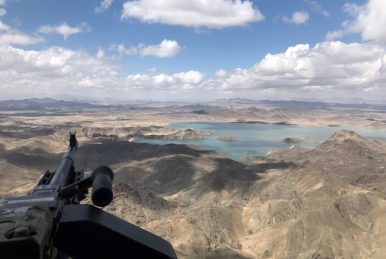
After nearly two decades of bloodshed, meaningful progress is finally being made towards a conclusion of the war in Afghanistan. Negotiations with the Taliban in Qatar have achieved an uncommon consistency. On the domestic front, a bipartisan resolutionmatching the Taliban’s proposed timeline has emerged in the U.S. Senate. The main voices opposing peace originate from within the Pentagon and the Afghan National Unity Government. In a departure from their constitutionally mandated subordinate role, top generals are calling for yet another extension on murky grounds. Afghan president Ashraf Ghani has also urged against a timely withdraw, claiming that the government in Kabul lacks the strength required for independence. Whether by incompetence orcorruption, neither contingent should have the credibility to dictate the plan for removing U.S. forces from Afghanistan.

The conditions Washington and Kabul point to as requirements for a withdraw cannot be met. The National Unity Government does not represent a plurality of the Afghan people, and with former warlords in its ranks, it will continue to lack the requisite legitimacy to govern. In spite of the nearly $900 billion dedicated to reconstruction and governance efforts since 2001, Afghan National Security Forces (ANSF) suffer from infiltration,ineptitude, and high casualty rates. It is unclear how additional years, lives, and billions of dollars will guide Afghanistan toward a stable future. The peace talks in Doha represent gradual yet genuine progress, and they warrant all the support Washington can muster. Alternatives to this current opportunity for peace represent a continuation of the same failed strategies toward an even more shameful, inevitable departure.