REBECCAH HEINRICHS
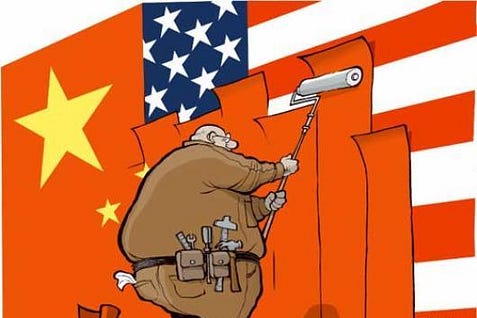
The COVID-19 pandemic has thrown the China challenge into fuller view. A new Pew Research poll shows 66 percent of Americans now have an unfavorable view of the communist country, the highest percentage since Pew began tracking in 2005. President Donald Trump should give a major national address and outline the breadth of the challenge posed by the Chinese Communist Party (CCP) and outline his administration's efforts to galvanize domestic and global support with the ultimate goal of winning that challenge.
Since the pandemic began, there has been a renewed sense of urgency to strengthen U.S. sovereignty and end its dependence on China. Some of those efforts include moving critical supply chains to American soil, ending dependence on China for rare earth minerals used for manufacturing everything from missiles and munitions to batteries and motors, and barring Chinese telecom giant Huawei and its suppliers from using American technology and software. Elected officials are urging greater scrutiny of Chinese student visas, as U.S. prosecutors aggressively work to crack down on Chinese spying and intellectual property theft in our academic and scientific institutions.
President Trump has mostly left straight talk about China to his deputies. According to Secretary of State Mike Pompeo, "the Chinese Communist Party is a Marxist-Leninist Party focused on struggle and international domination." Attorney General William Barr warned that, "as a dictatorship, China can marshal an all-of-country approach" as it seeks to dominate other nations and destroy capitalism. Defense Secretary Mark Esper said, "They have said that by 2035, the [People's Republic of China] intends to complete its military modernization and, by 2049, it seeks to dominate Asia as the preeminent global military power."