2 November 2020

The U.S. Air Force Has One Word on Its Mind: Drones

by Kris Osborn

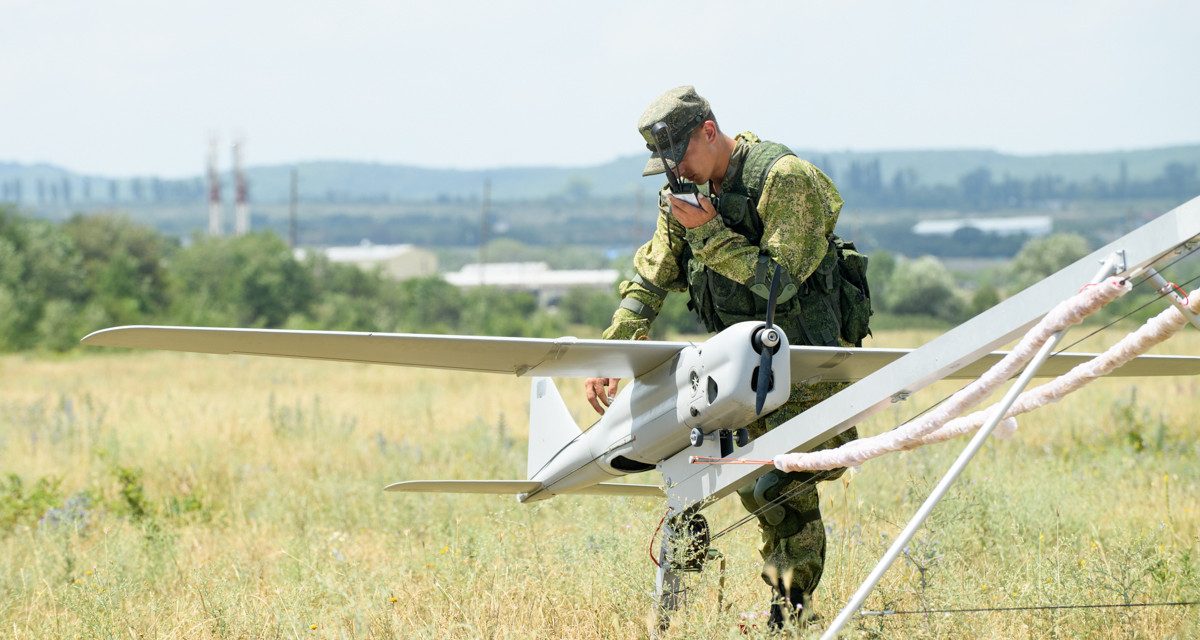
The Air Force not only wants more drones, but multi-functional drones able to pursue a wider range of missions from a single platform such as logistical operations, personnel recovery, surveillance and attack.

“When you start looking at the different platforms and mission areas, we have strike and ISR but less on logistics. If you are able to build a UAS system that has mixed capability you will have flexibility to move forward,” Air Force Chief of Staff Gen. Charles Brown told The Mitchell Institute for Aerospace Studies in a special video interview. 

The Air Force Reaper, for instance, can very successfully conduct intelligence, surveillance, and reconnaissance (ISR) missions and also increasingly fire a wide range of weapons. The Air Force is even developing the Reaper, and its future replacement, with more weapons including lasers, new air-dropped bombs and air-to-air weapons as well. The Reaper can perform reconnaissance and attack missions, but can it do logistics? 

What about Brown’s comment that unmanned aircraft are needed for supply and logistics missions in high-risk areas while under enemy fire? At the moment, manned C-130s perform much of the air-dropping of supplies in so-called “hotzones.” While this has proven successful, it is an extremely high risk, raising the question as to whether cargo-carrying drone aircraft could perform the mission just as successfully. There is, of course, a need for forward combat troops to have food, water, equipment, fuel and of course ammunition. So, what if a large, heavy-lift flying drone were able to deliver combat-crucial supplies? 

How Fast Can the U.S. Military Build Hypersonic Weapons?

by Kris Osborn

The Pentagon wants to build hypersonic weapons quickly and in large numbers.

Senior Department of Defense weapons developers made it clear that the U.S. military services do not just seek to prototype hypersonic weapons, but that they want very large numbers of them battlefield-ready.

This dual-pronged goal explains the rationale for the Pentagon move to stand up a new University Consortium for Applied Hypersonics designed to streamline testing, research, innovation, weapons development and acquisition into a sharp, laser-focused, high-speed operation. Run by Texas A&M, the consortium is moving quickly to award up to $20 million in funding for as many as twenty-six project solicitations, Dr. Gillian Bussey, Director of the Joint Hypersonics Transition Office, told reporters according to a Pentagon transcript of the event. 

How fast will large numbers of new hypersonic weapons arrive ready for war? That remains a bit of a mystery but the answer is within a few years. That being said, Pentagon leaders emphasized that there is a broad boundary or goal time of 2028 as a point at which to have many war-ready hypersonics. 

“We’re looking to deliver real capabilities in just a handful of years. We don’t say exactly when because we’ve got peer competitors who are carefully monitoring what we’re doing. We do believe that we are in a bit of a race right now,” said Dr. Mark Lewis, Director Of Defense Research And Engineering For Modernization.

Lewis explained that the Pentagon effort encompasses a wide-range of hypersonic weapons applications, depending upon the pace at which new technical innovations arrive, mature and become operational. 

Conventional-Nuclear Integration in the Next National Defense Strategy

By John K. Warden

The Bottom Line

The next National Defense Strategy (NDS) should prioritize conventional-nuclear integration so that:

U.S. defense and nuclear policies give precedence to deterring limited adversary aggression that is backed by threats of escalation, including across the nuclear threshold.

Deliberate combatant command plans are designed to achieve U.S. objectives while minimizing the risk of nuclear escalation.

Combatant commands have adaptive planning capabilities and procedures to develop courses of action that will achieve U.S. objectives should the adversary employ nuclear weapons.

The Joint Force is prepared to conduct operations under threat of adversary nuclear employment, and if necessary, in a nuclear environment.

The best mix of U.S. nuclear, non-nuclear, and dual-use capabilities are fielded to deter conflict and escalation.

Introduction

Many of the challenges that will confront the next NDS relate to new military technologies, ranging from maneuvering hypersonic-speed missiles to artificial intelligence and machine learning. It is just as important for the strategy to account for how major power adversaries may rely on a proven technology—nuclear weapons—to advance their interests in a conflict with the United States and its allies. For too long, the trend was to treat nuclear weapons issues as a bolted-on annex of U.S. defense planning. But now that U.S. defense strategy has recentered on preparing for high-intensity conflict with nuclear-armed adversaries, the next NDS must build on the limited progress that has been made to integrate conventional and nuclear strategy, planning, doctrine, and capabilities.

U.S. Military Forces in FY 2021: Army

Mark F. Cancian
Source Link

This is part of the CSIS series U.S. Military Forces in FY2021. The U.S. Army plans slow expansion through FY 2025, but a constrained budget environment will force it to choose between maintaining the units it has and building new kinds of structures. With modernization, the Army has increased production of proven systems and shifted billions into development of high-priority programs to prepare the Army for great power conflict.

Key Takeaways

After a dip in personnel strength in FY 2019, both regular and reserve components have recovered. FY 2021 targets include: regular Army, 485,900; Guard, 336,500; and Army Reserve, 189,800.

The regular Army and Army Guard project small increases through FY 2025; the Army Reserve will stay essentially level. This represents a substantial reduction to earlier growth plans, but probably the most expansion that can be done in the current budget and security environment.

New air and missile defense units are entering the force. Security Force Advisory Brigades continue despite their focus on stability operations. Other new kinds of units, such as the widely discussed multidomain brigades, remain mostly conceptual.

The active-reserve mix has stabilized at 52 percent Guard/Reserve, 48 percent active. There is now less tension between regular Army and its reserve components as a result of closer consultations, higher overall budgets, and shared recruitment challenges.

The Leaky Pipeline

Dr. Naazneen H. Barma

The last decade has brought a series of welcome initiatives to amplify, bolster, and expand the diversity of voices in the national security sphere—including the Leadership Council for Women in National Security, the Diversity in National Security Network, Out in National Security, and Women of Color Advancing Peace and Security. What each of these seeks to redress is the simple fact that a paucity of diverse voices in the national security spaces results in poorer national security dialogue and practice. There is a normative imperative: our national security professional cadre should represent us and the diversity of identities that comprise this country; it is the right thing to do. And the goal is also instrumental: bringing the wealth of a wider range of lived experiences into national security policy formulation does improve the process; it is the effective thing to do.

A crucial part of the challenge of achieving better representation in national security lies in the pipeline that runs through academia and into the policy-making sphere. Whether we are talking about those who undertake graduate education in order to pursue national security careers or about emerging scholars who want to make a career of studying and informing national security, the pipeline leaks diverse voices all along the way.

The “leaky pipeline” metaphor encapsulates therecognition that, at various steps along the way, structural sexism and racism in the academy and in our society lead women, people of color, and other under-represented and historically marginalized groups to leave what could have been successful and influential careers—in this case, in national security academia and policy. In any starting cohort of graduate students interested in pursuing such a career, some will be discouraged at the outset by blatant bias—the false message that minorities cannot contribute meaningfully and will not have successful policy careers. Others will feel the sting of the more subtle yet incessant signals sent to them over the course of their academic careers: such as a lack of representation in the classroom (in terms of both faculty and other students) and such a high degree of gender bias in curricula that only one in five required readings in core international relations graduate seminars are written by women.

1 November 2020

India-China Row Sets New Dimension For India’s Economic Partnership In Asia, Albeit Decoupling From RCEP – Analysis

By Subrata Majumder

For the first time, India witnessed a paradoxical situation with its large trading partner. It is China who happened to be the top trading partner of India consecutively for four years till 2018-19. But, the trade relation turned sour with the outbreak of COVID 19. It rattled China’s significance as dependable supply chain. Added to this, the repeated face-off in border intensified security concern.

As a result, a trust deficit grew between India and China, which has become detrimental for the furtherance of trade relations. India has been facing a wide trade deficit with China. Notwithstanding, India opened the door for cheap imports from China, without indulging in any trade dispute on the line of US trade practices. But, a bell of concern rang when it found that its trade sovereignty was at stake due to over-dependence on China for some industries, which are related to new and emerging and healthcare industries.

This led the policy makers for a second thought on Chinese hegemony in the trade and growing Chinese investment in the country, even though it is on the background of foreign investment for Make in India. India vowed for an alternative to China as a new strategic trade and investment policy in Asia. 

The widening trade deficit with China imparted a major impact on balance of payment. The fallacy of wide trade deficit lies with India importing substantially from China, more than it exports to China. The major factor attributing to this was the large importation of electronic and telecommunication equipment and parts. About 30 percent of total import from China was accounted by electronic and telecommunication equipment and parts. 

Al Qaeda Feels Losses in Syria and Afghanistan but Stays Resilient

Eric Schmitt

WASHINGTON — Last week was a bad week for Al Qaeda around the world.

At least seven top Qaeda operatives were killed in the latest of a recent spate of U.S. Special Operations drone strikes in northwest Syria.

Afghan commandos killed a senior Qaeda propagandist in a raid in a Taliban-controlled district. And the United States continues to pressure the Qaeda affiliate in Somalia, the Shabab, which may be undergoing a leadership shake-up.

Yet nearly two decades after the 9/11 attacks and with many of its top leaders dead, Al Qaeda remains resilient and has “ingrained itself in local communities and conflicts” spanning the globe, from West Africa to Yemen to Afghanistan, a U.N. counterterrorism report issued in July concluded.

Both Al Qaeda and the Islamic State, as well as their global affiliates and supporters, “continue to generate violence around the world, whether through insurgency tactics, the direction and facilitation of terrorism or providing the inspiration for attacks,” the U.N. report said.

Over the weekend, Afghanistan’s intelligence service, the National Directorate of Security, tweeted that the country’s special forces had killed a senior Qaeda leader in the eastern province of Ghazni.

China launches crackdown on mobile web browsers, decries 'chaos' of information


SHANGHAI (Reuters) - China’s top cyber authority said on Monday it would carry out a “rectification” of Chinese mobile internet browsers to address what it called social concerns over the “chaos” of information being published online.

China’s strict internet censorship rules have been tightened numerous times in recent years and in the latest crackdown, the Cyberspace Administration of China (CAC) has told firms operating mobile browsers that they have until Nov. 9 to conduct a “self examination” and rectify problems.

The problems include the spreading of rumours, the use of sensationalist headlines and the publishing of content that violates the core values of socialism, it said in a statement.

“For some time, mobile browsers have grown in an uncivilised way ... and have become a gathering place and amplifier for dissemination of chaos by ‘self-media’,” the CAC said, referring to independently operated social media accounts, many of which publish news.

“After the rectification, mobile browsers that still have outstanding problems will be dealt with strictly according to laws and regulations until related businesses are banned.”

The campaign will initially focus on eight of the most influential mobile browsers in China, including those operated by Huawei Technologies Co Ltd [HWT.UL], Alibaba Group Holding’s UCWeb and Xiaomi Corp, it said.

In forcing TikTok sale, the US is taking a page out of China’s playbook

Yukon Huang and Joshua Levy

“It is time that other countries saw through the outrageous farce … and joined hands to oppose such blatant robberies and maintain a fair global business environment.”

“These forms of state-sponsored forced technology transfer are truly a devil’s bargain.”

A casual observer could be forgiven for thinking that China and the United States disagree on everything these days: from how to confront a global pandemic to Hong Kong’s status. So some may be surprised to learn that the former quote was published in a People’s Daily editorial and the latter penned by Peter Navarro, US President Donald Trump’s top trade adviser.

After Trump banned TikTok, a Chinese social media app, and forced the sale of its US operations to an American company, Beijing and Washington have struck a remarkably similar tone regarding forced technology transfers.

American companies in China have long complained of forced technology transfers, where they are pressured (legally or otherwise) to hand over their trade secrets to joint-venture business partners. Indeed, it became a rallying cry for Trump in his trade war. The irony is that Washington is taking a page out of Beijing’s playbook.

In an August 6 executive order, Trump cited national security concerns in banning TikTok. He then ordered its Chinese parent company ByteDance to divest its interest in TikTok’s US operations. This in effect meant selling TikTok to a US company. Oracle and Walmart have since brokered a deal to take a majority stake in TikTok Global, which will be spun out of ByteDance.

How the United States Handed China its Rare Earth Monopoly

By Jamil Hijazi, James Kennedy

At the end of September, U.S. President Donald Trump released an executive order amounting to an all-hands-on-deck call to end China’s monopoly on rare earths, the metals and alloys used in many high-tech devices. It was high time; China’s dominance of these resources has resulted in the transfer of entire U.S. industries (medical imaging, for example), technologies, and jobs to China while also compromising the U.S. defense industry’s supply chain.

China didn’t always dominate the Rare Earth (RE) industry. In fact, up until 1980, 99 percent of the world’s heavy REs were a byproduct of U.S. mining operations for titanium, zircon, and phosphate. In fact, it was only because of changes in U.S. regulations, the voluntary transfer of expertise and intellectual property, and the absence of an industrial policy that China has been able to corner this market.

The story of how the United States and others surrendered the RE industry to China may suggest the ways in which the country might reestablish self-reliance.

The United States’ downfall as a leader in the RE industry was set in motion in 1980, when the U.S. Nuclear Regulatory Commission (NRC) and International Atomic Energy Agency (IAEA) amended its definition of source material (broadly, material containing uranium or thorium) for nuclear weapons. Previously, heavy RE byproducts had not been considered source materials, which meant that they could be easily sold and processed into high-value materials. But under the amended definition, they were suddenly placed under extensive licensing, regulatory, disposal, and liability rules. Given the added cost and liabilities, their production and refining was eventually terminated in the United States and other IAEA member states.

China’s Inexorable Rise to Superpower Is History Repeating Itself

Michael Schuman

No foreign policy issue will plague the winner of the White House more than China. There’s already a debate raging among China watchers over what Washington’s next steps should be. Some favor a “reset” to tamp down tensions and return to more constructive diplomacy. Others are fearful of that very reset and argue the U.S. mustn’t stray from the hard line.

The choices made by the next administration will be critical. As the U.S. struggles to contain the coronavirus outbreak and restart its economy, China appears to be gaining strength. Its gross domestic product expanded 4.9% in the third quarter, an astounding rebound in a world still mostly mired in a pandemic-induced paralysis. (Official Chinese data have to be taken with several grains of salt, but economists generally agree the economy is rapidly on the mend.) In its own foreign policy, Beijing has barely flinched under U.S. pressure and instead has become more assertive—enhancing its influence in global institutions such as the World Health Organization, crushing the pro-democracy movement in Hong Kong, turning up the heat on Taiwan, and brawling (literally) with India along their disputed border.

The Overreach of the China Hawks

By Michael D. Swaine, Ezra F. Vogel, Paul Heer, J. Stapleton Roy

In “An Answer to Aggression,” (September/October 2020), Aaron Friedberg argues that the United States and its allies and partners should use aggressive policies to contain China. Friedberg repeatedly offers sweeping, unqualified worst-case statements about China’s views, intentions, and actions—playing loose with the facts and exhibiting a lack of understanding of aspects of the Chinese system—to justify zero-sum policy prescriptions. Coercive “push back” policies alone will not compel Beijing to do the United States’ bidding—as Washington’s Cuba policy demonstrates. To the contrary, such policies would increase the risk of conflict, strengthen chauvinistic nationalism in China, and reduce the chances that the United States can work with China to deal with urgent common problems.

U.S. policymakers must adopt a more careful and considered approach. The United States must coordinate with allies and partners not only to deter and compete with China when needed but also to

Surviving the Recent Arab Peace Accords

JAKE WALLES

On September 15, Israel signed agreements at the White House with the United Arab Emirates (UAE) and Bahrain to establish diplomatic relations and normalize ties. They became the third and fourth Arab states to do so, after Egypt in 1979 and Jordan in 1994. The Palestinian reaction was rapid and harsh, with the Palestinian Authority President Mahmoud ‘Abbas calling it “a stab in the back.”

Shortly thereafter, ‘Abbas’ Fatah movement began talks with Hamas under Turkish auspices to discuss elections and, potentially, reaching a power-sharing agreement. It is uncertain if these intra-Palestinian talks will succeed, given the failure of previous reconciliation efforts. But with the Arab world divided and the United States on the eve of a very consequential election, what options do the Palestinians have to advance their national agenda in a difficult environment?

President Donald Trump spoke of Arab normalization with Israel as “the dawn of a new Middle East,” but in fact it is more a manifestation of ongoing regional trends than a revolutionary change. Over the past decade, the central geostrategic feature of the region has been its division into two antagonistic blocs: the main Sunni Arab states (Saudi Arabia, the UAE, and Egypt) plus Israel on one side; Iran, its allies (the Assad regime in Syria, Hezbollah, and the Houthis), and a collection of Islamist Sunnis (Qatar, Turkey, and Hamas) on the other. Despite the obvious fault lines within each group, the component parts on each side have come more closely together spurred by the threat they perceive from the other side. In the case of the Sunni states and Israel, they have drawn ever closer over their shared antagonism toward Iran. Supported by the United States, their logic was simple: the enemy of my enemy is my friend.

The geopolitics of normalization were reinforced by the transactional nature of the peace deals. For the Emiratis, the key deliverable was the prospect that they could obtain American F-35 fighters, something they had long wanted. While Israel has concerns about losing its regional monopoly over F-35s, it is likely that a modified version of the fighter for the UAE will ultimately be approved.

Foreign Influence Operations After 2020

By Emerson Brooking 

After 2016, the issue of foreign influence and social media manipulation seized the public’s attention. Broadcast media have aired hundreds of segments on the dangers of shadowy Russian bots and trolls. Meanwhile, a vast new research community—according to the Partnership for Countering Influence Operations, more than 400 distinct organizations and initiatives—has sprouted to study every dimension of the problem. 

The result has been a perpetual national conversation about information operations originating from abroad. My team at the Digital Forensic Research Lab has tracked 80 distinct allegations of foreign interference since the 2018 midterms, with widely variant credibility and transparency. Articles about these claims have received a cumulative 26 million social media shares and engagements. 

It’s a lot. But is it too much? Has the threat of interstate influence operations been overblown? 

Even as Josh Goldstein and Renee DiResta began this series, the issue has continued to rise in visibility. Recent days have seen what may or may not be another foreign hack-and-release operation targeting former Vice President Joe Biden, along with what was almost certainly an Iranian influence operation targeting Florida voters. With less than a week before the 2020 election, it’s useful to tally the arguments of series contributors and draw out broader trends. It is also important to consider what might come next for the field of disinformation studies. 

Laura Rosenberger and Lindsay Gorman don’t think that the threat of foreign influence operations is overblown. Instead, they argue, it represents one facet of the broader information conflict between democracies and autocracies: a struggle that will define geopolitics in the decades ahead. “This is a contest not just to wield digital tools but also to shape information realities,” they write. To spend too much time parsing the particulars of Russian troll behavior is “missing the forest for the trees.” 

‘Unless US Stops Printing Money, The Dollar Will Collapse’ – Interview

By Claudio Grass

We’re about a week away from the US election, and yet this sense of utter confusion, bitter political conflict, and economic uncertainty that has been ominously hovering over the nation, as well as the rest of the world, doesn’t seem to have subsided. The country still appears to be in a directionless state, with its economy in serious trouble and its society dangerously fragmented. 

There seems to be a wide rift in US politics, which is not just pragmatic or ideological, but perceptual too: The two “camps” and their supporters appear to be living in and arguing about two different versions of reality, and neither corresponds to the actual experiences of most ordinary citizens, taxpayers and savers. This disconcerting dissonance became painfully apparent in the first Presidential debate, at least to those who had the patience to keep watching after the first few minutes. It was especially pronounced when the candidates were asked about their economic policies and recovery plans. Both had all these grand plans, big-spending dreams and voter-pleasing promises, and for those of us who understand even the very basic lessons from our monetary history, one thing was clear as day: If there’s one thing the two sides can agree on, it’s that fiscal prudence, responsibility and long-term thinking, are at the bottom of their priority list. 

This has serious implications for investors and savers that go well beyond the theoretical realm of politics and ideology. To put all these risks in their proper context and to help us get a clearer understanding of how investors can prepare for what lies ahead, I asked my friend Patrick Barron for some of his valuable insights. Pat is an Austrian school economist and he has been a private consultant to the banking industry since 1985. He has taught an introductory course in Austrian economics for several years at the University of Iowa and he also taught for over thirty years at the Graduate School of Banking at the University of Wisconsin. He has written dozens of excellent essays disseminated worldwide, including the Mises Institute, Auburn, Alabama, USA.

Claudio Grass (CG): For any student of monetary history, the past decade was a fascinating period. Many of us expected this reckless experiment with QE, negative rates and aggressive expansionism by central bankers to end in tears, but few could have foreseen the response to the Covid crisis. Do you expect this move to “double down” on bad policies to expedite the monetary system’s demise or perhaps to breathe new life into it and simply prolong it?

Trump Turning More Countries in Europe Against Huawei

By Robbie Gramer

The Trump administration has signed a raft of bilateral declarations with countries in Central and Eastern Europe aimed at rolling back Chinese influence in cutting-edge 5G telecommunications infrastructure, notching an important eleventh-hour success for an administration that has sought to counter Beijing’s growing global influence. 

In the past week, the State Department announced that it had clinched agreements with Slovakia, North Macedonia, Kosovo, and Bulgaria on high-speed wireless network technology. The memorandums make no explicit mention of other countries, but they stress that any new 5G systems should take into account whether the network suppliers are subject “to control by a foreign government,” taking indirect aim at Chinese telecoms giants like Huawei and ZTE that are building up 5G infrastructure all over the world, including in Europe.

During a visit to Washington, Slovak Foreign Minister Ivan Korcok said in an interview that the memorandum with the United States “is fully consistent with our own national effort to do everything that is needed to make sure that 5G will be secure.”

“Everybody’s aware of all the risks involved,” he said. “And we don’t want to see any backdoor players coming in unless we know and decide that on [the] national level.”

Slovakia’s position is emblematic of how many smaller countries in Central and Eastern Europe are braving new geopolitical headwinds amid competition among the United States, Europe, Russia, and China. Slovakia’s new government, propelled into office on a wave of protests and promises of anti-corruption reform, has actively sought to tighten relations with fellow European Union members—and with the United States and other NATO allies.

What should Europe expect from American trade policy after the election?

BY: URI DADUSH AND GUNTRAM B. WOLFF

The European Union-United States trade and investment relationship remains the world’s most intensive even after Brexit. Trade between the US and the EU (minus the United Kingdom) totalled around $1 trillion in 2018, about a third larger than US ties with China. EU27/US bilateral FDI stocks surpassed $4.5 trillion, dwarfing those with China. Despite the frequently differing positions of EU members on trade policy, the EU-US relationship stood the test of time and continued to deepen. But, over the last four years, President Trump’s strictly transactional approach to trade policy, with an obsessive emphasis on reducing bilateral deficits, has amounted essentially to managed trade and is diametrically opposed to the principle of non-discrimination enshrined in multilateral trade disciplines, which Americans and Europeans worked together to establish.

President Trump’s strictly transactional approach to trade policy, with an obsessive emphasis on reducing bilateral deficits, has amounted essentially to managed trade

This is not just political opportunism, but reflects the President’s deep convictions and those of his advisors. Trump’s re-election would almost certainly reinforce the trends he established. Trump’s challenger Joe Biden is well ahead in the polls but is not certain to prevail even if Trump’s campaign is now hobbled by his COVID-19 infection. All of America’s trading partners face the question of what the change in American leadership, if it occurs, would bring.

The World Is Trapped in America’s Culture War

Helen Lewis

LONDON—Sharing the internet with America is like sharing your living room with a rhinoceros. It’s huge, it’s right there, and whatever it’s doing now, you sure as hell know about it.

This month, Twitter announced that it would restrict retweets for a few weeks, and prompt its users to reconsider sharing content which has been flagged as misinformation. The reason for this change, of course, is the U.S. presidential election. The restricted features will be restored when its result is clear.

Anything that makes Twitter fractionally less hellish is welcome, as is the recent crackdown by Facebook and YouTube on QAnon conspiracy groups and Holocaust denial. But from anywhere outside the borders of the U.S., it is hard not to feel faintly aggrieved when reading this news. Hey guys! We have elections too!

After all, according to an anguished 6,000-word memo by Sophie Zhang, a departing Facebook data scientist, the political situations in Azerbaijan, Bolivia, Ecuador, Honduras, Ukraine, and elsewhere have all been negatively influenced by online manipulation. “In the three years I’ve spent at Facebook, I’ve found multiple blatant attempts by foreign national governments to abuse our platform on vast scales to mislead their own citizenry,” she wrote, adding that interference in Western Europe and the U.S. was taken more seriously than that in smaller, non-Western countries. (In a statement, Facebook told BuzzFeed: “We investigate each issue carefully, including those that Ms. Zhang raises, before we take action or go out and make claims publicly as a company.”)

Does the U.S. Nuclear Umbrella Still Protect America’s Allies?

By Ivo H. Daalder

One important consequence of the fraying of U.S. alliances over the last few years is the reemergence of concern in allied capitals about the credibility of the U.S. nuclear guarantee. In Europe, allies wonder whether the United States would be willing to defend Poland or the Baltics if Russia were to threaten them with nuclear attack. In Asia, China’s growing military might and North Korea’s acquisition of long-range missiles have raised similar concerns about Washington’s nuclear commitments.

Faced with these growing threats, can U.S. allies still rely on the United States’ nuclear umbrella to deter an attack? Because the answer is no longer evident, more and more voices in allied capitals have suggested that they may need to rely on other nuclear capabilities to ensure their security—and perhaps even acquire their own.
If we are to avoid a world of rapid nuclear proliferation, the next president will have to move swiftly to reassure allies that the U.S. nuclear guarantee remains credible.

If we are to avoid a world of rapid nuclear proliferation—in which not only countries such as Iran and Saudi Arabia move to acquire nuclear weapons but also long-standing allies such as South Korea and Turkey—the next president will have to move swiftly to reassure allies that the U.S. nuclear guarantee remains credible.

Most people have forgotten that the primary proliferation concern 50 years ago wasn’t about Pakistan, North Korea, or Iran but about U.S. allies such as Germany and Japan. In the end, both these and other allied nations were willing to forgo their own nuclear capabilities and sign on to the nuclear Nonproliferation Treaty as non-nuclear weapons states. But they did so only after obtaining an explicit guarantee from the United States that its nuclear forces would defend their security if needed. In the case of NATO, that guarantee was enshrined in its formal strategy, the forward deployment of U.S. nuclear weapons, the creation of a nuclear planning group, and the sharing of nuclear tasks and missions. In Asia, agreements were less formal but nevertheless committed Washington to come to its allies’ nuclear defense.

Tomgram: Rajan Menon, The Nightmare That Joe Could Inherit

Rajan Menon.

Okay, I admit it, I’ve been worried -- and no surprise there. In this world from hell, it’s not hard to worry about untold numbers of things going wrong. Let me, however, lay out my own large-scale version of worry about this America of ours. What if Joe Biden does win? The world -- at least the world I know and read and watch and talk to -- has one giant anxiety then: that Donald Trump will declare the election a “fake,” refuse to leave office, send the lawyers into the courts, the troops or the dreaded feds into the streets, and call out all those armed Trumpsters for support. You more or less know the scenario(s) yourself, I’m sure, and whether the U.S. military then would or would not decide to literally remove the president from office, it would indeed be a nightmare.

Still, something else has long been on my mind: not what Donald Trump could try to stop from happening, but what he could actually do between November 3rd and January 20, 2021. This is, after all, the head of an administration that has tried to roll back nearly 100 environmental regulations, turning this country into a potential hell on earth. His people, now undoubtedly fearing defeat, are already moving fast to make sure that the U.S. will, in the worst sense imaginable, remain Donald Trump’s land until that hell freezes over.

My worry: what, in those months, could The Donald do to ensure that, when Joe Biden sits at that desk in the Oval Office for the first time, he finds himself waist deep in you-know-what (including potentially a future Great Depression) that he and his crew might never be able to shovel themselves out of? With that in mind, I asked TomDispatch regular Rajan Menon to consider just what shape we might find ourselves in economically in the Biden moment (if it ever arrives). So get your shovel ready and dig in. Tom

The Global Rise of Anti-Lockdown Protests—and What to Do About It

Thomas Carothers

The wave of anti-government protests that roiled global politics over the past decade initially seemed to be an early casualty of COVID-19. Lockdown measures, especially stay-at-home orders and restrictions on mass gatherings, halted protests almost everywhere. Yet as the pandemic has dragged on, the increasingly strained relationship between governments and citizens in many countries has brought demonstrators back into the streets. While many renewed protests reflect anger over familiar issues like corruption, political repression and economic hardship, a striking new trend is afoot: citizens openly challenging the public health measures governments have taken to slow the spread of the coronavirus.

Since March, more than 30 major protests in 26 countries have targeted coronavirus restrictions. Such demonstrations have emerged in every region of the globe, not only in wealthy countries like Australia, Germany and the United States, but also in poorer ones like Brazil, Mexico and Nigeria. Moreover, anti-lockdown uprisings are occurring in states with very different governance systems—consolidated autocracies and liberal democracies alike. These popular eruptions have generally occurred in two waves: An early one in April and May emerged soon after the virus spread around the world, and an ongoing second one started in early August in reaction to the extension of public health measures. As large demonstrations in the past month across multiple regions have made clear, their tempo is accelerating. ...

The End of American Power

By Eliot A. Cohen

If President Donald Trump manages to win reelection, many things will not change. His narrow worldview will continue to shape U.S. foreign policy. His erratic approach to leadership, his disdain for allies, his fondness for dictators—all will remain throughout a second Trump term.

But beyond the realm of policy, a Trump victory would mark a sea change for the United States’ relationship with the rest of the world. It would signal to others that Washington has given up its aspirations for global leadership and abandoned any notion of moral purpose on the international stage. It would usher in a period of disorder and bristling conflict, as countries heed the law of the jungle and scramble to fend for themselves. And a second Trump term would confirm what many have begun to fear: that the shining city on a hill has grown dim and that American power is but a thing of the past.

RUNNING ON HIS RECORD

Trump’s first term provides a guide for what would follow. Under his leadership, the United States has disengaged from some major international commitments, including the Paris climate accord, and cooled its relations with NATO allies. It has set a course of confrontation with China and pursued an incoherent policy vis-ร -vis Russia—Trump’s admiration for Russian President Vladimir Putin clashes with congressional and bureaucratic hostility to Moscow. The administration’s exceptionally close relationship to Israel, coupled with partnerships with the Gulf Arab states, has sped up a transformation of Middle Eastern politics. The question of Palestinian statehood has faded away, with the focus shifting to the creation of counterbalancing coalitions against Iran and Turkey. Concern about human rights is now purely instrumental, a convenient lever in realpolitik and domestic politics. U.S. officials largely ignore Latin America and Africa and view most relationships with Asian countries through the prism of trade.

The Pandemic Depression

By Carmen Reinhart and Vincent Reinhart

The COVID-19 pandemic poses a once-in-a-generation threat to the world’s population. Although this is not the first disease outbreak to spread around the globe, it is the first one that governments have so fiercely combated. Mitigation efforts—including lockdowns and travel bans—have attempted to slow the rate of infections to conserve available medical resources. To fund these and other public health measures, governments around the world have deployed economic firepower on a scale rarely seen before.

Although dubbed a “global financial crisis,” the downturn that began in 2008 was largely a banking crisis in 11 advanced economies. Supported by double-digit growth in China, high commodity prices, and lean balance sheets, emerging markets proved quite resilient to the turmoil of the last global crisis. The current economic slowdown is different. The shared nature of this shock—the novel coronavirus does not respect national borders—has put a larger proportion of the

Finding a Vaccine Is Only the First Step

By Ngozi Okonjo-Iweala

It is now abundantly clear that the world cannot fully emerge from its current state of novel coronavirus lockdown until a vaccine is found. Never before have so many lives, livelihoods, and economies depended so much on a single health intervention. But as scientists race to develop potential vaccine candidates, the international community must remember that the ultimate goal is not only to produce a safe and effective inoculation but to bring the pandemic to an end. And that can happen only after billions of doses are produced affordably and made available to everyone, particularly those in low-income countries.

An enterprise on this scale requires a new perspective: vaccines must be recognized as global public goods. Neither domestic agendas nor profit can be allowed to drive the effort for the largest vaccine deployment in history. Governments, pharmaceutical companies, and multilateral organizations must work together to develop, produce, and deliver the vaccine. Producing and distributing billions of doses of a new vaccine would be challenging at the best of times. Doing so during a pandemic will require an unprecedented global effort.

PREVENTING SHORTAGES

Just consider the recent global shortages of personal protective equipment and test kits. A coordinated international effort is needed to avoid similar vaccine shortages and to prevent large numbers of people from going unvaccinated. Unfortunately, equitable vaccine distribution has frequently been a problem in the past. Increased demand for the HPV vaccine in developed countries, for example, has recently impeded access for vulnerable adolescent girls in developing countries. And during the 2009 H1N1 pandemic, a small number of countries placed large advance orders for the vaccine before it became available, effectively buying up most of the global supply and leaving little for the rest of the world.

The Real Threat of Foreign Interference Comes After Election Day

By Laura Rosenberger

With just days to go before the U.S. presidential election, Americans are once again scrolling through news feeds full of stories about foreign operations that seek to undermine their country’s electoral process. Some of the reports raise questions about whether the administration of U.S. President Donald Trump is politicizing these concerns—and the president himself has cast doubt on the integrity of the election. Americans are left wondering what to make of all the noise.

The good news is that the United States is better prepared to address many such threats than it was four years ago: its intelligence community, private companies, and independent researchers have met interference attempts with early detection, exposure, and countermeasures, and they have acted particularly effectively to secure U.S. election infrastructure. But Americans should be prepared for foreign actors to take some of their most significant actions in the days and

No Compromise in Sight for Armenia and Azerbaijan

By Thomas de Waal

For a century, conflict has flared over the region of Nagorno-Karabakh, a predominantly ethnic Armenian enclave nestled within the borders of Azerbaijan. In the 1990s, Armenians believed they had won a military victory over Azerbaijan when they took over the disputed region and many surrounding Azerbaijani areas. In late September, Azerbaijan set out to prove them wrong, launching a new military offensive that has taken many of those territories back and given thousands of displaced Azerbaijanis hope of returning to the lands they still consider home. Russian President Vladimir Putin has claimed that close to 5,000 people have already died—including dozens of civilians. And in reversing one injustice, Azerbaijan is bloodily creating a new one: the Armenians of Nagorno-Karabakh are under attack and may soon be encircled, facing potentially devastating humanitarian consequences. 

The conflict in Nagorno-Karabakh remains one of the most tragic and persistent disputes in Europe. It is one

The future of artificial intelligence and quantum computing

J.R. Wilson

NASHUA, N.H. - Until the 21st Century, artificial intelligence (AI) and quantum computers were largely the stuff of science fiction, although quantum theory and quantum mechanics had been around for about a century. A century of great controversy, largely because Albert Einstein rejected quantum theory as originally formulated, leading to his famous statement, “God does not play dice with the universe”.

Today, however, the debate over quantum computing is largely about when — not if — these kinds of devices will come into full operation. Meanwhile, other forms of quantum technology, such as sensors, already are finding their way into military and civilian applications.

“Quantum technology will be as transformational in the 21st Century as harnessing electricity was in the 19th,” Michael J. Biercuk, founder and CEO of Q-CTRL Pty Ltd in Sydney, Australia, and professor of Quantum Physics & Quantum Technologies at the University of Sydney, told the U.S. Office of Naval Research in a January 2019 presentation.

On that, there is virtually universal agreement. But when and how remains undetermined.

For example, asked how and when quantum computing eventually may be applied to high-performance embedded computing (HPEC), Tatjana Curcic, program manager for Optimization with Noisy Intermediate-Scale Quantum devices (ONISQ) of the U.S. Defense Advanced Research Projects Agency in Arlington, Va., says it’s an open question.

“Until just recently, quantum computing stood on its own, but as of a few years ago people are looking more and more into hybrid approaches,” Curcic says. “I’m not aware of much work on actually getting quantum computing into HPEC architecture, however. It’s definitely not mainstream, probably because it’s too early.”

Chief of the Defence Staff, General Sir Nick Carter launches the Integrated Operating Concept


The Prime Minister I think has set a clear vision for the future of Global Britain. One where the UK is considered an outwardly looking, internationalist country, that acts as a burden-sharing and problem-solving nation, making a tangible contribution to tackling diplomatic and security challenges in our neighbourhood and beyond.

To do this though and particularly from our perspective in Defence, we must first understand that the threats to our national security, our values and our prosperity have evolved and diversified markedly. Our authoritarian rivals see the strategic context as a continuous struggle in which non-military and military instruments are used unconstrained by any distinction between peace and war. These regimes believe that they are already engaged in an intense form of conflict that is predominantly political rather than kinetic. Their strategy of ‘political warfare’ is designed to undermine cohesion, to erode economic, political and social resilience, and to compete for strategic advantage in key regions of the world.

Their goal is to win without going to war: to achieve their objectives by breaking our willpower, using attacks below the threshold that would prompt a war-fighting response. These attacks on our way of life from authoritarian rivals and extremist ideologies are remarkably difficult to defeat without undermining the very freedoms we want to protect. We are exposed through our openness.

The pervasiveness of information and rapid technological development have changed the character of warfare and of politics. We now have new tools, techniques and tactics that can be used to undermine political and social cohesion, and the means to make the connection to an audience ever more rapidly. Information is now democratised. It’s available for everyone.

SWARMS OVER KAVKAZ

Joe Varner

Last month, the Russian military conducted large-scale annual exercises in Russia’s Southern Military District called Kavkaz-2020. The Kavkaz series of exercises runs on an annual basis, which might suggest that they are merely routine military training and war games. And in some ways, this year’s iteration was. But in at least one aspect, Kavkaz-2020 was anything but routine: the exercises demonstrated for the first time that Russia has a capability to use mass drone warfare in conjunction with its massive conventional power for offensive operations against the United States and NATO.

This year’s wargames were characterized as being defensive in nature, and official messaging from Moscow said they were aimed mainly at preparing to counter terrorists. They featured some eighty thousand Russian troops and one thousand foreign forces, along with hundreds of combat aircraft, around 250 tanks, 450 armored vehicles, two hundred artillery pieces, and a flotilla of warships.

The exercises involved a series of ground, air, naval, air defense, engineering, logistics, and chemical, biological, radiological, nuclear units over an area ranging from the Caspian and Black Seas to the Caucasus and Volgograd in southern Russia. Kavkaz-2020 also saw Russian forces training with Armenian units, Iranian missile boats in the Caspian Sea, Chinese staff officers in planning sessions, Belarusian and Pakistani personnel, as well as forces from the Georgian breakaway territories of Abkhazia and South Ossetia and from Crimea, annexed from Ukraine in 2014. Other participating states reportedly included, Syria, Mongolia, Myanmar, Indonesia, Sri Lanka, Turkmenistan, and Kazakhstan. (Notably, Kavkaz went ahead without several important intended international participants, including Azerbaijan, India, and Serbia.) According to Russian Chief of the General Staff Gen. Valery Gerasimov, Kavkaz was based heavily on Russian combat experience gained in Syria and Libya.

Electromagnetic spectrum management moves to Headquarters Air Force

Mark Pomerleau

WASHINGTON — The U.S. Air Force has officially moved its electromagnetic spectrum management office from Air Combat Command to the Headquarters Air Force staff.

Announced in September that the move was coming, the office officially moved Oct. 23 to the Cyberspace Operations and Warfighter Communications Directorate beneath the deputy chief of staff for intelligence, surveillance, reconnaissance and cyber effects operations, or A2/6, the Air Force said.

The move is part of the Air Force’s larger push to ingrate information warfare capabilities under a single hat, which includes cyber, electronic warfare, intelligence, information operations and public affairs.

The transformation began when cyber effects operations to the A2 portfolio followed by merging its cyber and ISR-numbered Air Forces in October 2019 to create the first information warfare-numbered Air Force — 16th Air Force.

“To understand information warfare we must first focus on the EMS as the purveyor of data and information. To be a leader in AI [artificial intelligence], you have to first be a leader in Data and to be a leader in information warfare, you first have to be a leader in spectrum operations,” Lt. Gen. Christopher Weggeman, deputy commander of Air Combat Command, said in an Air Force release.

Officials also described the move as important to synchronizing the variety of technology and information warfare efforts.

31 October 2020

Why Is India Silent on China’s Human Rights Record at the UN?

By Arkoprabho Hazra

Despite criticism at the Third Committee of the U.N. General Assembly on China’s human rights violations in Xinjiang, Hing Kong, and Tibet, the country on October 13 managed to win the U.N. Human Rights Council (HRC) elections with 139 votes. Before the elections, in an effort to ask member states to not elect major violators of human rights, the U.N. Director of Human Rights Watch, Louis Charbonneau, had said that China and Saudi Arabia have not only committed grave human rights violations but, at the same time, they also disregard the international system around human rights. This statement seemed to have made an impact, partially, as Saudi Arabia lost the election, managing a mere 90 votes as compared to 152 votes back in 2016, but China still made it to the council as only five Asian countries were contesting for four seats.

While China is now going to resume its membership at the HRC starting from January 2021, India opted out of supporting either bloc of countries — either those effectively acquiescing to, or standing against, China’s activities in Hong Kong, Tibet, and Xinjiang – in the recent General Assembly session of the Third Committee. (The Diplomat’s Shannon Tiezzi and Catherine Putz have mapped the countries forming these blocs.) Revisiting the list of countries in the two blocs from 2019 reveals India wasn’t involved in the matter even then.

Thus, the pertinent question is: Why did India not voice its preference, even after being cognizant of the fact that Beijing stands as a strategic hindrance when it comes to Indian interests at the United Nations?

Toothless and Terrified: The State of Pakistan’s Media

By Niha Dagia

Imran Khan owes much of his political success to unprecedented coverage by the media in Pakistan and his party’s ability to tap into the politicking world on social media. This love affair, however, didn’t last long. Since making inroads to the corridors of power, Khan’s biggest allies have become his bรชte noire.

When in opposition, the cricketer-turned-politician marveled at reporting targeting his predecessors and championed a free media. He changed his mind when the roles were reversed.

In a recent interview, Khan sought evidence of media curbs. As if on cue, the following week saw a financial regulatory agency employee, Sajid Gondal, go “missing” after his name surfaced in a report alleging corruption against the prime minister’s aide Lt. Gen. (retd) Asim Bajwa. Then there were police complaints against journalists Bilal Farooqi, Asad Toor and Absar Alam for criticizing “state institutions” in social media posts.

The premier claims that local media in Pakistan enjoy more freedom than their counterparts in Britain. The reality on the ground tells a different story. From September 2018 through to January 2020, Freedom Network reported that seven journalists and one blogger were killed, six were abducted, and 15 were slapped with legal cases, among a total of 135 “violations against media practitioners.”