27 January 2021

Facing a multitude of challenges of its own, Jordan welcomes Biden

Bruce Riedel

While many Middle Eastern leaders are apprehensive about the incoming American administration, Jordan’s King Abdullah is pleased to see the end of the Trump administration and welcome Joe Biden. The Trump team virtually ignored Jordan and its interests for four years. Biden is a well-known player in the Hashemite Kingdom, but the relationship will need mending.

The king tried courting Trump in 2017, meeting face-to-face four times that year — including in Riyadh, when Trump traveled to the region. But they have not met since June 2018, an unusually long period of absence for Jordanian kings and American presidents. Only the hiatus between King Hussein and President George H.W. Bush after their falling out over Iraq’s invasion of Kuwait 30 years ago was as lengthy as the current freeze.

Trump pursued a regional policy that stressed Saudi and Israeli interests. Washington supported the Saudi war and blockade in Yemen, which has killed tens of thousands and starved even more in a reckless quagmire. It is very unpopular in Jordan, which sympathizes with the Yemeni people, a sentiment that is sometimes expressed in the media. Jordan did not join the Saudi blockade of Qatar, despite Saudi pressure. The king has made little secret of his disdain for Crown Prince Muhammad bin Salman, who has been an inept leader and ordered the assassination of Jamal Khashoggi in Istanbul more than two years ago.

Trump’s other fan in the region is Israeli Prime Minister Benjamin Netanyahu, whom the Jordanians have despised since 1997 when he ordered a bungled assassination attempt against Hamas’ leader in Jordan, Khaled Mishal, in downtown Amman. I took King Hussein’s angry call to President Bill Clinton, demanding the antidote for the poison that had been used. Trump’s so-called “deal of the century” was a craven rehash of right-wing Israeli demands, including for the annexation of the Jordan River valley. King Abdullah has not met with Netanyahu in years.

Biden Orders Sweeping Assessment of Russian Hacking, Even While Renewing Nuclear Treaty

By David E. Sanger and Julian E. Barnes

WASHINGTON — President Biden ordered a sweeping review on Thursday of American intelligence about Russia’s role in a highly sophisticated hacking of government and corporate computer networks, along with what his spokeswoman called Moscow’s “reckless and adversarial actions” globally and against dissidents inside the country.

At the same time, White House officials said the president would seek a clean, five-year extension of the last remaining nuclear arms treaty between the two countries, which expires in two weeks.

While Mr. Biden has long favored the extension, there was debate among his top aides about how long it should be. He chose the most time available under the treaty’s terms, in hopes, his aides said, of preventing a nuclear arms race at a time the new president expects to be in a state of near-constant, low-level competition and confrontation with Moscow around the world — and particularly in cyberspace.

“This extension makes even more sense when the relationship with Russia is adversarial as it is at this time,” said Jen Psaki, the White House press secretary.

Taken together, the paired announcements make clear the complexity of Mr. Biden’s two-step approach to contain the actions of President Vladimir V. Putin of Russia. Mr. Biden’s aides have said they have no interest in a “reset” in relations of the kind that President Barack Obama and his secretary of state at the time, Hillary Clinton, tried a dozen years ago.

UK Government Announces New National Cyber Force


by Antonia Gough

Recently, the UK government announced its plans to take more offensive steps in its approach to cybersecurity. The announcement is further evidence of a gradually emerging trend exhibited by nation states: an increasing openness about their offensive cyber operations. This behaviour is likely to become the norm as many of the motivators for such an offensive stance — hybrid warfare, cyber espionage, and disinformation campaigns –only continue to grow.
What Will the Force Entail?

On Thursday 19th November 2020, the UK Prime Minister announced a new partnership: the National Cyber Force (NCF). This new body is the result of cooperation between the Ministry of Defence and Government and Communications Headquarters (GCHQ). MI6 and the Defence, Science and Technology Laboratory will also contribute. 

The four organisations will collaborate under one unified command for the first time. The Ministry of Defence’s official tagline for the NCF is, “A Defence and Intelligence Partnership”, to emphasize the fact that there is no other organization like it anywhere else on the globe, to date. 

The Guiding Objectives of the Taskforce

With Trump Gone, Taiwan Seeks Assurances From Biden Administration

BY JACK DETSCH, CHRISTINA LU 

Personnel with Taiwan's chemical corps stand in formation during a demonstration as Taiw

Taiwanese officials and lawmakers have been playing out the same worst-case scenario in their head for years now: China attacks the island across the Taiwan Strait, and officials in Taipei call for backup from the United States and other allies. With Joe Biden now sitting in the Oval Office, Taiwan wants to know: How would the United States respond?

Wang Ting-yu, who co-chairs the foreign affairs and defense committee in Taiwan’s parliament, told Foreign Policy that the island’s military would not be caught off guard if China prepped for an attack. Taiwanese satellite and radar systems would be able to spot a buildup of People’s Liberation Army forces in Guangdong or Fujian province, across the strait, and it could take as many as 60 days for China to mass enough troops for an amphibious assault, he said. 

“Those 60 days will be a precious time for international society to stop a war or to send a clear signal. ‘This is a red line you cannot cross,’” he said. “The question is, Taiwan will be prepared to protect our home. What will the world, especially the United States, what will you do?” The message that Biden should send to Chinese President Xi Jinping is simple, Wang said: “‘Don’t even try it.’”

Lloyd Austin, who was confirmed Friday as Biden’s defense secretary, told lawmakers during his confirmation hearing this week that he would “make sure” the United States was living up to its commitments to help Taiwan defend itself.

America’s Promise Seems Distant Now, but It Will Be Back


Candace Rondeaux 

America’s longest winter is not yet over. But the inauguration this week of President Joseph R. Biden Jr. and Vice President Kamala D. Harris should reassure the country and the world that though the promise of American reinvention seems distant, it will come again.

We have arrived at this moment violently, as usual. With baseball bats and long guns cradled in our arms, some of us Americans pulled on battle fatigues, convinced that the war for the soul of a nation could be won with just a little more menace—not just on TV or on Facebook, but in Washington and other state capitols. When that outrage and other tricks didn’t work, Donald Trump’s supporters cast their mind’s eye backward through history, all the way to 1776. Hooked by the Big Lie, they wandered through the fog of American supremacy, dragging the whole country and democracy along with them. All the while, the death toll from the virus spreading through the land rapidly rose, hitting 250,000, then 300,000, then 350,000, and higher.

Out there, distant from each other and grieving, some of us Americans turned a blind eye to the collateral damage, choosing instead to whitewash our political fences. Even as the lines for food snaked down our streets, it became an urgent priority for some to paint over American history, including the evils of slavery and the memory of Crispus Attucks, a mixed-race slave who, after rising up against colonial tyranny in 1770, lay in state at the insistence of the man who would become our second president. In the mood of forgetting, it was made clear through banal repetition and petty bureaucratic fiat that references to 1619, when the first slave ship landed in the British colony of Virginia, would no longer be tolerated in a government by some of the people for some of the people. Imagine the shock when, after 81 million people had spoken on Nov. 3 in favor of a different vision for America, that manifesto fell flat.

America’s Promise Seems Distant Now, but It Will Be Back

Candace Rondeaux 

America’s longest winter is not yet over. But the inauguration this week of President Joseph R. Biden Jr. and Vice President Kamala D. Harris should reassure the country and the world that though the promise of American reinvention seems distant, it will come again.

We have arrived at this moment violently, as usual. With baseball bats and long guns cradled in our arms, some of us Americans pulled on battle fatigues, convinced that the war for the soul of a nation could be won with just a little more menace—not just on TV or on Facebook, but in Washington and other state capitols. When that outrage and other tricks didn’t work, Donald Trump’s supporters cast their mind’s eye backward through history, all the way to 1776. Hooked by the Big Lie, they wandered through the fog of American supremacy, dragging the whole country and democracy along with them. All the while, the death toll from the virus spreading through the land rapidly rose, hitting 250,000, then 300,000, then 350,000, and higher.

Out there, distant from each other and grieving, some of us Americans turned a blind eye to the collateral damage, choosing instead to whitewash our political fences. Even as the lines for food snaked down our streets, it became an urgent priority for some to paint over American history, including the evils of slavery and the memory of Crispus Attucks, a mixed-race slave who, after rising up against colonial tyranny in 1770, lay in state at the insistence of the man who would become our second president. In the mood of forgetting, it was made clear through banal repetition and petty bureaucratic fiat that references to 1619, when the first slave ship landed in the British colony of Virginia, would no longer be tolerated in a government by some of the people for some of the people. Imagine the shock when, after 81 million people had spoken on Nov. 3 in favor of a different vision for America, that manifesto fell flat.

Covid-19 is up-ending capitalism


BY PATRICK FOULIS

RECESSIONS ARE capitalism’s sorting mechanism. Weak businesses shrink or fail and stronger ones expand. But in 2020 the process of creative destruction did not take place in the typical manner. Because the downturn was the result of a health crisis rather than, say, a financial crash or inflation scare, there were some idiosyncratic corporate winners and losers: think of the boom in video streaming, or cruise-liner firms being wrecked. Meanwhile vast state handouts propped up companies around the world, masking the scale of the corporate carnage. In 2021 the toll will become clearer as stimulus tapers down and more firms fail. Healthy businesses will ramp up investment, giving them an enduring advantage. These top dogs will, however, face a new climate in which three tenets of modern business—the primacy of shareholders, globalisation and limited government—are in flux.

Downturns tend to be infrequent and swift: since the second world war America has been in recession only 14% of the time. But they have a profound impact on the structure of business. During the previous three slumps the share prices of American firms in the top quartile of each of ten sectors rose by 6% on average, while those in the bottom quartile fell by 44%.

This desalination breakthrough could make clean water cheaper


Making membranes uniform in density could vastly improve the efficiency of desalinisation, researchers have found.

The breakthrough could lead to increased access to clean water and lower water bills for individual homes and large users alike.

Researchers have solved a complex problem with water desalination that had baffled scientists for decades, until now.

The work could make it possible to produce clean water at a lower cost.

Desalination membranes remove salt and other chemicals from water, a process critical to the health of society, cleaning billions of gallons of water for agriculture, energy production, and drinking. The idea seems simple—push salty water through and clean water comes out the other side—but it contains complex intricacies that scientists are still trying to understand.

The research team, in partnership with DuPont Water Solutions, solved an important aspect of this mystery, opening the door to reduce costs of clean water production. The researchers determined desalination membranes are inconsistent in density and mass distribution, which can hold back their performance. Uniform density at the nanoscale is the key to increasing how much clean water these membranes can create.

Climate change will be sudden and cataclysmic. We need to act fast


Tipping points could fundamentally disrupt the planet and produce abrupt change in the climate.

A mass methane release could put us on an irreversible path to full land-ice melt, causing sea levels to rise by up to 30 metres.

We must take immediate action to reduce global warming and build resilience with these tipping points in mind.

The speed and scale of the response to COVID-19 by governments, businesses and individuals seems to provide hope that we can react to the climate change crisis in a similarly decisive manner - but history tells us that humans do not react to slow-moving and distant threats. Our evolution has selected the “fight or flight” instinct to deal with environmental change, so rather like the metaphor of the frog in boiling water, we tend to react too little and too late to gradual change.

Climate change is often described as global warming, with the implication of gradual changes caused by a steady increase in temperatures; from heatwaves to melting glaciers.

But we know from multidisciplinary scientific evidence - from geology, anthropology and archaeology - that climate change is not incremental. Even in pre-human times, it is episodic, when it isn’t forced by a human-induced acceleration of greenhouse gas emissions and warming.

Putin, Poison, and Self-Inflicted Wounds: Navalny’s Return to Russia


The dramatic arrest of Russian opposition activist Alexei Navalny at a Moscow airport on Sunday is the latest in a series of self-inflicted wounds by the Kremlin. The most egregious was the state-backed assassination attempt against Navalny using a military-grade nerve agent. Taken together, the Kremlin has indisputably propelled him to the leadership of Russia’s beleaguered opposition, and in the process undercut one of its long-running political strategies over the past two decades: strengthening President Vladimir Putin’s standing by ensuring that the political landscape remains free of any meaningful political challengers. 

Most of the current media attention focuses on Navalny’s bravery in returning home to face almost certain arrest and confinement. That decision was fairly straightforward: had Navalny remained in Germany, he would simply have joined the ranks of Putin’s many critics living in exile.

The Kremlin’s hard-edged treatment of Navalny has backfired spectacularly. Having miraculously survived the poisoning, he has become something of a mythical hero, resurrected and given a second chance: not to live out his days peacefully abroad, but to conquer evil, defy death, and defeat his enemies.

The Russian authorities faced their own dilemma of how better to demonstrate the insignificance of their opponent: arrest him (for the Orwellian charge of allegedly breaking the terms of a 2014 suspended sentence for embezzlement), or pretend to ignore his return? The plot to kill Navalny demanded a secret operation that could be denied for all eternity. Arresting him is an open act by the state that cannot be denied: it must be explained and justified. 

Will Angela Merkel’s Ambiguous Legacy Last?

JUDY DEMPSEY

Unless the coronavirus pandemic upends Germany’s federal elections in September 2021, Chancellor Angela Merkel will be political history.

This consummate politician—chancellor since 2005—will leave the center stage after winning four elections for her Christian Democratic Union party (CDU).

But before she does so, Merkel has to deal with some urgent matters. She must ensure that Germany and the EU can economically recover from the second wave of the coronavirus pandemic that is sweeping across Europe.

She has a few months to mend bilateral and transatlantic relations with the incoming U.S. administration of Joe Biden.

And she must give the EU the direction and strategy it needs to deal with China and Russia at a time when both countries are sowing divisions in Europe and exacerbating tensions in the transatlantic relationship.

MERKEL’S WOULD-BE SUCCESSOR

Army Needs ‘Unified Network’ Linking Tactical & Home-Base Systems: G-6

By KELSEY ATHERTON

ALBUQUERQUE: To win the fast-moving battles of the future, the Army must connect its separate networks for tactical units — which are designed to deploy abroad — and its enterprise networks, which is based at home, the service’s chief communications officer told an AFCEA NOVA conference today.

“If you buy into the notion of multi-domain, which the Army has, it is our operational concept of the future, you must have a unified network,” said Lt. Gen. Morrison, the Army’s deputy chief of staff for command, control, communications, and computers, aka staff section G-6. “Cyber effects almost always will be delivered from infrastructure that resides on the enterprise side, but may have tactical effects inside tactical formation. We must have that be seamless.”

In other words, the Army needs to employ cyber weapons on the battlefield — but its most powerful cyber weapons, both offensive and defensive, are based back in the United States. It needs to fire battlefield precision weapons over hundreds or thousands of miles — but the satellites to spot targets at such ranges are largely controlled by command centers in the US. Current networks aren’t adequate to coordinate US-based cyber and space operators with frontline tactical units.

This kind of network integration, between distant effects and local impacts, extends beyond launching packets of hostile code at enemy systems. It extends, too, to directing explosions on a battlefield.

Pentagon Suspends $2B Cybersecurity Project, Fails Classified Network Protections

by D. Howard Kass

The U.S. Defense Department (DoD) has reportedly suspended a $2 billion project to consolidate network security across hundreds of U.S. and global systems for repeatedly failing tests to protect classified material, a new Pentagon report said.

In test results conducted over the last four years, the “joint cyber war fighting” framework, known as the Joint Regional Security Stack (JRSS), has shown an inability to “help network defenders protect DoD components networks” against hackers, Robert Behler, the Pentagon’s Operational Test and Evaluation director, wrote in a report, Bloomberg reported. A classified February 2020 evaluation of the program “resulted in poor cybersecurity findings that contributed to” the decision not to extend it to classified systems, Behler said in the report. Installation of the JRSS to classified systems is now slated for 2023.

The JRSS security platform features network security capabilities, firewall protections, intrusion detection and prevention, enterprise management, and virtual routing and forwarding. It is still authorized to secure non-classified material. According to Bloomberg, a classified February 2020 report that called out the system’s cybersecurity failings prompted the DoD to freeze the project and cut funding until it was operationally secure.

The review was written before the massive malware attack on at least 10 U.S. government facilities allegedly masterminded by Russian-backed operatives who hijacked SolarWinds management software. At this point, the DoD has said none of its data was pilfered nor systems compromised in the attack.

26 January 2021

Who Wins? Pakistan’s Anti-Ship CM-400AKG Missile vs. India’s Aircraft Carriers?

by David Axe

The Pakistani air force is acquiring more than a hundred JF-17s from China in order to complement older F-16s, Mirages and J-7s.

To help the single-engine JF-17s target enemy warships such as India’s growing fleet of aircraft carriers, Islamabad’s air arm in 2017 and 2018 bought 60 CM-400AKG anti-ship missiles.

The CM-400AKG, a product of the Aviation Industry Corporation of China, is an unusual weapon. Unlike many other anti-ship missiles, it follows a high ballistic flight path.

The supersonic standoff missile first appeared in public at an air show in Zhuhai, China in 2012. The missile appeared in a display with the JF-17, a highly-evolved derivative of the MiG-21 that China has sold to Pakistan, Myanmar and Nigeria at a cost of around $30 million per plane.

Six years later, the Pakistani defense ministry revealed that it purchased 60 CM-400AKGs at a total cost of $100 million. The acquisition transformed the country’s JF-17s into potent ship-killers.

In 2018 photos circulated apparently depicting a JF-17 firing a CM-400AKG in a test that perhaps took place a few years earlier.

U.S.-India Insight: These Aren’t Your Father’s Trade Disputes


As we start a new era in U.S.-India ties, our economic relationship remains a weak link. There is a palpable sense of resignation and a common refrain that “there have always been trade problems.” However, the nature of our trade problems has evolved. In earlier times, the focus was on India’s not started or incomplete reforms. Today, an overwhelming majority of U.S. commercial concerns focus on India’s backtracking on trade liberalization and resultant trade actions against India taken by the Trump administration. Even as our respective leaders bemoan this truth, they have continued digging the hole deeper.

Since India’s liberalization process began, the process of opening the economy has moved largely in a positive direction, though the pace was quite uneven. Then finance minister Yashwant Sinha articulated a powerful message in his February 1999 Budget Speech, stating that India’s customs duties will be phased down to Asian levels. Over the next several years, the world saw steady decreases in India’s most overt form of trade barrier.

For Pakistan, India's Nukes Aren't the Problem. Its Everything Else.

by Kyle Mizokami

It’s distinctly possible that any future war between India and Pakistan would involve limited action on the ground and full-scale fighting at sea and in the air. India has the upper hand in both, particularly at sea where it would have the ability to blockade Pakistani ports. Pakistan imports 83% of its gasoline consumption, and without sizable reserves the economy would feel the effects of war very quickly. An economic victory, not a purely military one might be the best way to decisively end a war without the use of nuclear weapons.

With that scenario in mind, let’s look at several Indian weapons Pakistan would fear most in a war.

INS Vikramaditya Aircraft Carrier

Commissioned in November 2013, INS Vikramaditya is the newer and more modern of India’s two aircraft carriers. In the event of war, Vikramaditya would lead an offensive at sea designed to sweep the Pakistani Navy from the field. The nightmare scenario for Pakistan would be Vikramaditya parked off the coast of Karachi, Pakistan’s largest port, enforcing a naval blockade.

Will Pakistan Capitalize on a New Opportunity to Work with Israel?

by Michael Kugelman

Last September, the Trump administration brokered the Abraham Accords, a normalization agreement between Israel and the United Arab Emirates. Similar bilateral accords between Israel and Bahrain, Sudan, and Morocco have followed. A few more with additional Muslim-majority states that haven’t recognized Israel may be in the pipeline.

It’s not surprising, against this backdrop, that speculation has abounded about possible steps to improve relations between Israel and Pakistan. These are two very different countries that nonetheless share some striking similarities. Both were established on a religious basis, and they are surrounded by hostile neighbors and disputed borders. But they’ve never had formal relations, and Islamabad has long refused to recognize Israel until there’s a Palestinian state. Pakistan is unlikely to join the normalization wave—but it does have a strong incentive to step up more modest forms of engagement with Israel.

No to Normalization

On Dec. 15, an Israeli media report claimed that a top adviser to the leader of a “large Muslim-majority” country secretly led a delegation to Israel at the end of November. A London-based Pakistani researcher, Noor Dahri, said this report was true, and he also claimed, in an Israel television interview on Dec. 15, that it was a Pakistani delegation. Meanwhile, several prominent Pakistani media personalities known to be close to the military, which calls the shots on foreign policy, have made public pitches for better bilateral relations.

When will Britain take a stand against Pakistan?


Well, now that we’re all fired up about Britain’s moral role in the world courtesy of Theresa May, who is indignant about cuts to the overseas aid budget, how about moving on to Pakistan? This week a Pakistani court has ruled that a 12-year-old Christian girl, Farah Shaheen, consented to her marriage with an alleged abductor over twice her age and consented freely to convert to Islam. When the girl was recovered from the household of Khisar Ahmed Ali in December, she was reportedly too traumatised to speak about what happened to her over the five months since she, ah, consented to marry a 29-year-old and convert to Islam. But according to her father, Asif Masi, who gave a statement to Aid to the Church in Need charity, she was kept shackled, forced to work from dawn, usually clearing dung, and raped repeatedly by the man who is said to have abducted her from her home. She was, as I say, 12 years old.

The fate of Mr Ali awaited the police investigation in Faisalabad. The police medical report investigating her age concluded she was 16 or 17, though her birth certificate and her parents contest that she was 12. The Times, which reported the case today, has seen photographs showing deep cuts to her ankles and wrists. An investigating officer, Musaddiq Riaz, told the paper that, 'Ms Shaheen confessed before a magistrate… that she married… of her own will and wants to live with him'. The case will go to a parliamentary committee. Tahir Mehmood Ashrafi, special representative on religious harmony to the Pakistani Prime Minister, Imran Khan, said government agencies would take up the case.

The Global Reach of China’s Venture Capital

By Sophie Zinser

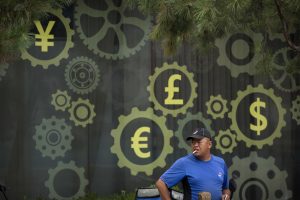
In this July 20, 2018, file photo, a deliveryman stands near a mural displaying Chinese yuan and other world currency symbols on the outside of a bank in Beijing.Credit: AP Photo/Mark Schiefelbein

Over the past few months, the Chinese government has made critical efforts to quash its $12.9 trillion shadow banking system and slowly break up its most influential business conglomerates. Last Wednesday, the China Banking and Insurance Regulatory Commission made public a notice ensuring that companies would become regulated on a trial ranking system. This regulation comes on the back of the last-minute block of Ant Group’s planned November IPO – set to be the largest IPO in world history – and Alibaba co-founder and tech giant Jack Ma’s subsequent unexplained disappearance from public life. The Chinese government is clearly encouraging the consolidation of smaller companies while breaking up bigger ones.

This push will impact how China’s corporate tech giants leverage their massive global influence abroad. Some of the first companies likely to see any changes work first are those who are receiving massive Chinese venture capital (VC) funding across South and Southeast Asia.

Huge Chinese Drone Swarms Could Block Out the Sun

by Michael Peck

Here's What You Need To Remember: What’s particularly interesting about a Chinese drone swarm is China’s predominance in drone production. Chinese manufacturer DJI makes nearly 80 percent of the drones used in the United States and Canada (U.S. authorities recently warned these robots could be stealing data from their users).

China has a history of overwhelming its enemies with sheer numbers of troops.

Now, China may have a modern iteration on that tactic: swarms of tiny rocket-armed helicopter drones that will swamp enemy forces like angry bees.

“China’s domestically developed helicopter drones carrying proximity explosive mortar shells, grenade launchers and machine guns can now form swarms and engage in coordinated strikes,” according to Chinese newspaper Global Times, citing a statement by the Guangdong-based Zhuhai Ziyan company, which makes unmanned aerial vehicles. The system was also displayed at a recent Turkish defense trade show.

“With a single push of a button, the drones can autonomously take off, avoiding colliding in the air and finding their way to their designated target,” Global Times said. “Once they receive an order to attack, they will engage the target autonomously in a coordinated manner. Upon finishing a mission, the system will lead the drones back to base and land automatically. The operator does not need to expose himself or herself in a dangerous frontline as the drones can easily be controlled remotely.”

Biden would do the world a favor by keeping Trump’s China policy

by H.R. McMaster

H.R. McMaster, a retired U.S. Army lieutenant general, was national security advsier from February 2017 to April 2018 and is a senior fellow at the Hoover Institution and author of “Battlegrounds: The Fight to Defend the Free World.”

Given President Trump’s behavior since the election, in particular encouraging his supporters’ assault on the U.S. Capitol, the incoming Biden administration understandably may be tempted to repudiate Trump’s policies. But a wholesale rejection would be a mistake. Elements of Trump’s policies toward China, for example, are eminently worth preserving.

Little noticed during a week when the House of Representatives voted for impeachment, the Trump administration released a partially declassified document from February 2018 entitled “U.S. Strategic Framework for the Indo-Pacific.” That document, and the collaborative work across the U.S. government during the year that preceded it, effected the most significant shift in U.S. foreign policy since the end of the Cold War.

The shift was long overdue, because U.S. policy between the end of the Cold War and 2017 was based on a flawed assumption: that China, having been welcomed into the international order, would play by the rules, and, as it prospered, would liberalize its economy and, ultimately, its form of governance.

THERE’S A DIGITAL INFRASTRUCTURE RACE TAKING SHAPE IN THE ARCTIC, AND BOTH RUSSIA AND CHINA ARE PLAYERS

Maria Shagina and Elizabeth Buchanan 

In our global information age, connectivity plays a central role. The geopolitics of connectivity is increasingly garnering attention, presenting various challenges and opportunities. Unfolding in real-time is a new great game of sorts: the digitalization of the Arctic. Stakeholders range from public to private enterprises and include autocratic and democratic governments. The “prize” is control over the flow of information within the Arctic, which affords both political and economic windfalls. Of course, restricting access to information is a well-known playbook of states like China, North Korea and Iran. After all, information is power.

Economically, digitalization directly improves living standards, an important precursor to socio-economic development. Indeed, the key economic drawcard for digitalization in the Arctic is the geographic reality that the region is the shortest distance connecting Europe to Asia. In tech-speak, this means data fiber-cables are shorter, which translates to optimal latency. Latency, the holy grail of digital communication, is essentially the “delay” in which information moves between origin and destination. The global financial system is merely one key sector that has its eye on the prime latency which Arctic digital avenues provide.

How Codebreakers Helped Defeat Nazi Germany

by Warfare History Network

Great Britain’s military intelligence leaders learned from their experience in World War I that the kinds of minds capable of breaking codes are a rare commodity and are often not likely to blossom in a military atmosphere. As World War II approached, the Government Code and Cipher School (GC&CS), a name deliberately underplaying the unit’s importance, was moved out of bomb-vulnerable London.

For its new home, the chief of the Secret Intelligence Service, an eccentric millionaire named Hugh Sinclair, purchased the Bletchley Park estate in the town of Bletchley, Buckinghamshire. It was a nondescript manufacturing community some 50 miles northwest of London. But for Sinclair the important fact was that it was also a railway center, located on a main line out of London and another line that connected it to Oxford and Cambridge. In August 1939, as World War II loomed inevitably, Bletchley Park became Britain’s codebreaking center, making use of the strange old eyesore of a mansion on the property while new structures were built when needed.

Bletchley Park: Their Own Small World

HAS TURKEY OUTFOXED CHINA IN AZERBAIJAN TO BECOME A RISING EURASIAN POWER?


Turkey's decision to provide an unprecedented level of military assistance to Azerbaijan empowered Baku to achieve a resounding victory in the 2020 Nagorno-Karabakh War, changing the geopolitical rules of the game in the South Caucasus. Moreover, the war has enhanced Ankara's ability to project its influence in Central Asia. Benefiting from its inclusion in the Chinese-led BRI network of connectivity across Central Asia, Turkey may have outfoxed China in Azerbaijan to become a rising Eurasian power. Although Russia now has to tolerate the presence of Turkish troops on Azerbaijani soil, China may be the big strategic loser in the war's outcome.

Background

The 10 November 2020 ceasefire agreement created a corridor through Armenia connecting the Azerbaijani exclave of Nakhichevan to the rest of Azerbaijan – providing Turkey, which shares a border with Nakhichevan, with direct connectivity with Azerbaijan and access across the Caspian to all of Turkic Central Asia. China has been wary of Turkey and apprehensive of its ability to spearhead a movement of Pan-Turkic solidarity that would include the Turkic Uighur minority of China’s Xinjiang province. Turkey is home to the Turkic Council (Cooperation Council of Turkic-Speaking States, Tรผrk KeneลŸi) and a highly active Uighur expatriate community. As mayor of Istanbul in 1995, now Turkish President Recep Tayyip ErdoฤŸan built a memorial monument to Isa Yusuf Alptekin, leader of the short-lived East Turkestan Republic, defying Chinese protests. As Prime Minister, ErdoฤŸan harshly condemned China's suppression of the July 2009 'riots' in Xinjiang's capital Urumqi and publicly declared China's actions to be “a kind of genocide.”

Is Turkey about to come in from the cold?


The UAE and Cyprus signed a defence co-operation deal last week, a month after the UAE became a permanent observer member of the EastMed Gas Forum and two months after the Emirates and Athens agreed to broader defence co-operation. The international body, widely seen as a bulwark to Turkish influence in the Mediterranean, appears to be gaining strength.

Yet there have also been signs of an opening to Ankara. “We want to tell Turkey that we want normal relations with it that respect mutual sovereignty,” UAE Minister of State for Foreign Affairs Dr Anwar Gargash told Sky News Arabia just before the UAE-Cyprus deal. “We don’t have any problems with Turkey.”

A few days earlier, Saudi Arabia, the UAE, Bahrain and Egypt announced the end of a three-and-a-half-year freeze on diplomatic, trade and travel ties with Qatar – a move that could potentially clear the way for improved relations between Gulf states and Turkey, an ally of Doha.

A hopeful Turkey, meanwhile, has put on its flirtiest smile. After pushing each other to the brink of war last summer, Ankara and Athens are set to launch exploratory talks next week, to address conflicting maritime claims and drilling rights in the eastern Mediterranean.

Is Turkey about to come in from the cold?


The UAE and Cyprus signed a defence co-operation deal last week, a month after the UAE became a permanent observer member of the EastMed Gas Forum and two months after the Emirates and Athens agreed to broader defence co-operation. The international body, widely seen as a bulwark to Turkish influence in the Mediterranean, appears to be gaining strength.

Yet there have also been signs of an opening to Ankara. “We want to tell Turkey that we want normal relations with it that respect mutual sovereignty,” UAE Minister of State for Foreign Affairs Dr Anwar Gargash told Sky News Arabia just before the UAE-Cyprus deal. “We don’t have any problems with Turkey.”

A few days earlier, Saudi Arabia, the UAE, Bahrain and Egypt announced the end of a three-and-a-half-year freeze on diplomatic, trade and travel ties with Qatar – a move that could potentially clear the way for improved relations between Gulf states and Turkey, an ally of Doha.

A hopeful Turkey, meanwhile, has put on its flirtiest smile. After pushing each other to the brink of war last summer, Ankara and Athens are set to launch exploratory talks next week, to address conflicting maritime claims and drilling rights in the eastern Mediterranean.

Ready or Not, Biden Faces an Early Test With Putin

Frida Ghitis

U.S. President Joe Biden’s first opportunity to pivot away from Donald Trump’s often cozy approach to Russia came just days before he took office. The Kremlin’s swift detention of President Vladimir Putin’s chief critic, Alexei Navalny, when he returned to Moscow on Sunday—five months after surviving a failed assassination attempt—presents Biden with perhaps unwelcome pressure to respond quickly. But it also gives his administration the chance to accelerate its goal of reversing four years of silence on Russia from the White House and simultaneously restarting diplomatic coordination with much-neglected European allies.

Navalny’s decision to return to Russia was either foolish or brave, depending on your view of personal sacrifice for a higher cause. Everyone, including himself, knew Putin would not countenance his presence.

It is all but certain that Russian agents tried to kill Navalny in August. While on a commercial flight over Siberia, he became gravely ill. The pilot diverted to a local hospital, where Navalny lay in a coma on the verge of death. After much pressure, Russian authorities finally allowed his medical transfer to Germany, where doctors in Berlin determined he had been poisoned with Novichok, a nerve agent developed by the KGB and used by its successor agency, the FSB, when it tried to assassinate Sergei Skripal, a double agent, in Salisbury, England, in 2018. Putin has denied responsibility for Navalny’s poisoning, even joking that if Russian agents had wanted to kill him, “they would have probably finished the job.”

The Coronavirus and the European Economic Challenge

by Desmond Lachman

With the Eurozone now in the midst of a second coronavirus surge, one economic prediction for the year ahead can be made with a considerable degree of confidence.

In 2021, the Eurozone will be involved in an even greater struggle to keep the Euro from tearing apart than it was during the 2010 Eurozone sovereign debt crisis. It will do so as the economic divergence between its richer and poorer member countries grows at an even faster rate than it did over the past decade.

Even before the coronavirus pandemic struck, the Eurozone was characterized by a growing economic divergence between its prosperous northern-member countries and its economically challenged southern-member countries. This can be illustrated by contrasting Germany and Italy’s economic performance over the past decade. Whereas by the beginning of 2020 the German economy was some 12 percent above its pre-2008 Great Economic Recession peak, Italy’s economy was yet to regain that peak.

A large part of the past divergent economic performance between Italy and Germany owes to the Euro and to the fact that a highly indebted Italy was forced to engage in a prolonged period of budget austerity whereas Germany was not. Being stuck in a Euro straitjacket, no longer could Italy depreciate its currency to offset the negative economic effects of the budget austerity policies it was forced to adopt to restore order to its public finances. It also did not help matters that a sclerotic Italian economy could no longer restore its international competitiveness against a highly productive German economy through currency depreciation as it routinely did before joining the Euro.

The Way Big Tech Wields Political Power is a Threat to American Democracy

by Jerry Davis

Big Business and Big Tech both reacted swiftly to the insurrection at the U.S. Capitol, punishing and condemning those they deemed responsible for the riot or for creating the conditions that led to it.

But there was a big difference in how each group acted.

Dozens of U.S. companies as diverse as Walmart, General Motors, McDonald’s and Nike at least temporarily shut off the cash spigot to politicians who voted against certifying the results of the presidential election. While the reaction was unprecedented, the next congressional election is almost two years away, leaving erstwhile donors the option to change their minds.

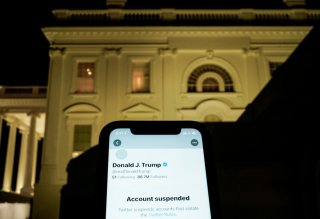
Big Tech, however, responded more directly and consequentially. Twitter and Facebook banned former President Donald Trump, Apple and Google removed Parler – the preferred platform for many of his followers – from their app stores, and Amazon stopped hosting the service. The results were immediate: Trump lost his dominant means of communication for the rest of his time in office, and prospective insurrectionists lost an important venue to plan what comes next.

NEWS & COMMENTARY – NATIONAL SECURITY


News & commentary by Dave Maxwell. Edited and published by Daniel Riggs.

1. China's Foreign Ministry Spokesperson Announces Sanctions on Pompeo and Others

2. Read the full text of Amanda Gorman's inaugural poem 'The Hill We Climb'

3. Army falsely denied Flynn's brother was involved in key part of military response to Capitol riot

4. Beijing Fills the Mideast Vacuum

5. Defined By Scandal At Voice of America, CEO Resigns At Biden's Request

6. QAnon believers struggle with inauguration.

7. President Biden's Tech To-Do List

8. Amazon offers Biden resources for COVID-19 vaccine rollout

9. China revives conspiracy theory of US army link to Covid

10. Irregular Warfare (IW) - Commentary (Jan 2021) | SOF News

11. 'Really quite shocking': Inside the ugly transition at the Pentagon

12. 'Are you QAnon?': One Trump official's brush with an internet cult gone horribly wrong

13. SecDef nominee pledges to evaluate information operations

14. Perspective | The media can be glad for the Biden White House's return to normalcy. But let's not be lulled.

15. Biden is inheriting a nonexistent Covid-19 vaccine plan from Trump administration, sources say

Welcoming a Stronger European Defense

By Michael Shurkin

President Joe Biden’s early foreign-policy agenda might include resetting America’s relationship with Europe. Washington might specifically reconsider its stance toward the prospect of a Europe capable of what French President Emmanuel Macron refers to as strategic autonomy. 

Washington has bristled at this notion in the past, viewing it as a threat to its influence and dominance, especially when the advocate for European autonomy is France. This could be a mistake. The Biden administration might do better to take seriously the prospect of Europe as a (potentially great) power, and welcome it.

The reasons for welcoming a strong European defense community are many. First, the United States cannot stand alone. It needs allies if it is to remain secure and prosperous in the face of hostile challenges from China, Russia, and a host of smaller nations including Iran and North Korea. The United States does already claim most EU member states as allies, but collectively they could be a lot stronger than they are individually. Moreover, the ally that the United States has relied on most for support on the international theater, the United Kingdom, is much diminished and likely will remain so. France is stronger, militarily at least. Germany is stronger economically, while militarily it is a sleeping giant. Other European countries also bring much to the table. Combined with the French and the Germans, they could project significant power, hard and soft.

Renewing US global engagement in a changed world

George Ingram

The world of 2021 that awaits the Biden-Harris administration is not the straight-forward frame of post-World War II U.S.-USSR competition, or of the dominant position the U.S. briefly held in the post-Cold War period of the 1990s. The economic, social, and political disruption wrought by the coronavirus, along with retrenchment from global leadership by the Trump administration, have unmasked and accelerated what has been an evolving alteration in the international order and the position of the United States in that system. The disruption to the international order is forcing a reassessment of the notion of “American exceptionalism” and what is meant by “U.S. global leadership”—maybe “leadership” in a multipolar/multi-actor world means listening and partnering rather than driving the train?

To understand how the U.S. can best maneuver in this increasingly complex world, it is important to recognize a few basic dynamics.

One is that the U.S. and the West’s success in winning the Cold War was built on, not our military prowess—an important backstop for sure—but on values and results. Inherent flaws in the Soviet system undoubtedly contributed to victory by the West, but more fundamental were basic American values and accomplishment. People around the world have been inspired by the ideals upon which this nation was founded—individual rights, liberty, rule of law, and the vibrance of our democracy and culture. They have been awed by our accomplishment—economic success, top universities, cutting edge technology, ability to innovate, and strong, well-managed companies. America has been viewed as the “can-do-country.”

First Amendment: Why Big Tech Should Be Left Alone

by Paul Levinson

Twitter’s banning of Trump – an action also taken by other social media platforms, including Facebook, Instagram, YouTube and Snapchat – has opened a fierce debate about freedom of expression and who, if anyone, should control it in the United States.

I’ve written and aught about this fundamental issue for decades. I’m a staunch proponent of the First Amendment.

Yet I’m perfectly OK with Trump’s ban, for reasons legal, philosophical and moral.

The ‘spirit’ of the First Amendment

To begin, it’s important to point out what kind of freedom of expression the First Amendment and its extension to local government via the Fourteenth Amendment protect. The Supreme Court, through various decisions, has ruled that the government cannot restrict speech, the press and other forms of communications media, whether it’s on the internet or in newspapers.

Twitter and other social media platforms are not the government. Therefore, their actions are not violations of the First Amendment.

Deterrence By Detection: Can UAV Surveillance Prevent Armed Conflict?

by Jasmin Lรฉveillรฉ

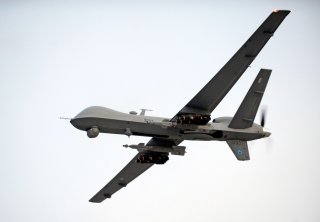
Non-stealthy, high-altitude, long-endurance Unmanned Aerial Vehicles (UAVs) have been instrumental to counterterrorism and counter-insurgency operations of the last decades, but a renewal of great power competition promises to change their roles in future conflicts.

Adversaries like Russia and China strive to exploit temporal advantage, for example by achieving rapid military gains before the United States or its allies can implement effective responses. To prevent such fait accompli, the Center for Strategic and Budgetary Assessments recently articulated the concept of deterrence by detection: fleets of UAVs maintaining persistent Intelligence, Surveillance, Reconnaissance (ISR) orbits over potential conflict areas, such as the South China Sea or Eastern Europe. The core mechanism of deterrence by detection is that potential aggressors, knowing that they are being observed in the “court of global public opinion,” will be less likely to initiate military actions. Historical precedents might lend credibility to the effectiveness of deterrence by detection, but the approach may prove hardly sufficient when applied to the kinds of aggressive maneuvers witnessed in the emerging threat environment.

The tactics frequently employed by great power rivals can make it difficult to ascertain who and what is seen from the vantage point of Medium- or High-Altitude, Long-Endurance UAVs (MALE or HALE, respectively). Aggressive maneuvers might be conducted under disguise—for example, by deploying the coast guard or fishing boats to pursue expansionist plans, or by hiding the affiliation of armed forces. Various objectives may also be achieved indirectly by exploiting local insurgencies whose alignments are not always clear. Ultimately, detection by UAVs may be evaded by using electronic warfare tools to jam, spoof, or disrupt UAV data links, targeting either the remote piloted aircraft or satellite communications. The net result of these and other tactics is a general obfuscation of the battlespace, which orbiting MALE or HALE UAVs conducting ISR missions are unlikely to mitigate significantly on their own.

Infographic Of The Day: The Most Populous Cities In The World


Today's infographic shows the 20 most populous cities in the world.