9 April 2021

Putting the Serum Institute of India’s Success in Perspective

By Krzysztof Iwanek

The coronavirus pandemic has directed the gaze of the world to the Serum Institute of India (SII), an unlisted private Indian pharmaceutical company which is currently producing AstraZeneca’s vaccine, and is poised to produce other COVID-19 vaccines as well. In what ways does SII – a clear example of an Indian company successful on the global market – point to some of modern India’s achievements and, yes, the country’s failures as well.

Make in India…

SII is a an instance of a relatively small Indian family business growing to become not just a major company, but also a global player. The Poonawalla family represents the country’s small, shrinking, but overall wealthy and well-educated Parsi minority. They hail from Maharashtra, one of India’s most important states in terms of business, and, as their name signals, from the city of Pune, not far from the country’s financial heart of Mumbai. The family started in a more traditional, “old school” business (horse breeding and racing) but moved to a modern and globally important one: producing vaccines.

Also typically for Indian elites, the SII was established by an India-educated father (Cyrus S. Poonawalla) who sent his son (Adar Poonawalla) through a Western education, and later made him the company’s CEO. Adar Poonawalla has, in fact, been exposed to Western education even more than a “regular” representative of Indian elites, as he not only graduated from a Western university (Westminster University) but as a child, from the age of ten on, had been a student in a Western school (St. Edmund’s School, Canterbury).

What’s Behind India’s Second Coronavirus Wave?


BY RUKMINI S

CHENNAI, India—If there’s one thing that’s sure about the COVID-19 pandemic, it’s new waves can always be just around the corner. But even with that knowledge, India’s second wave is unique and challenges established narratives. Just one month ago, the global consensus was India had emerged as an unlikely success story of the pandemic. From a peak of close to 100,000 new lab-confirmed cases each day by the middle of September 2020, its decline had been swift and sharp, even as developed nations were struggling. “India has successfully contained the pandemic,” Health Minister Harsh Vardhan said at the end of January. Some were quick to declare that mask compliance was responsible for India’s low numbers. Other health officials said the decline showed that India’s strict lockdown had been effective.

But if it wasn’t evident earlier, it is now abundantly clear to local and national administrations, doctors, and citizens that the second wave is here. India reported more than 100,000 new cases on April 4, a new record for the country, a level not seen in its first wave. This places it at the top of the list of countries worldwide in terms of new cases being reported each day. The western state of Maharashtra alone reported more than 40,000 new cases on March 28, making it one of the worst-hit regions in the world. Moreover, the second wave has gathered momentum much quicker than the first. Although it took 61 days between June and August 2020 to go from almost 8,000 to almost 55,000 daily cases, it took just 41 days to go from 10,000 to 60,000 this time around.

COVID forces India’s former Gulf workers to forge new futures


It is not yet dawn but Yeroor village is long awake, the hum of productivity floating over “Gulf Street”, a lush green boulevard named for the thousands of workers who leave the southern Indian state of Kerala every year for jobs in the Middle East.

But now the workers are back, from machine operator Sudheesh Kumar, who has been forced back into manual labour in Yeroor to make ends meet, to former banker Binoj Kuttappan, who has taken up dog breeding in the state capital, Thiruvananthapuram.

In the single biggest reverse migration in more than 50 years, workers from the Gulf have streamed back to the coastal state of Kerala in the past year, propelled by a pandemic that deflated dreams of overseas riches and changing family fortunes.

While once they came home wealthy and revered, bearing gold, sunglasses, clothes and funds to buy homes, now they have returned sheepish and penniless.

“Prior to COVID, they were celebrated as heroes. Now they have nothing,” said Irudaya Rajan, a professor at the Centre for Development Studies in Kerala, who has studied migration patterns in India’s southernmost state.

“This is the first time they have returned empty-handed and will end up borrowing and selling assets,” said Rajan.

Among the Indian states, Kerala sends the most workers to the Gulf, accounting for about 2.5 million of six million Indian nationals there.

US-Central Asia: New Trilateral Dialogues Bring Regional Focus to Afghanistan

By Akram Umarov

On March 17, Afghanistan, the United States, and Tajikistan inaugurated a new trilateral format to promote development, security, and peace in Afghanistan and Tajikistan. The meeting was chaired by the foreign ministers of Afghanistan and Tajikistan, Muhammad Hanif Atmar and Sirojiddin Muhiddin, together with U.S. Under Secretary of State for Political Affairs David Hale. The participants discussed trilateral cooperation in the security, political, people-to-people, energy, and economic realms. Moreover, enhancing connectivity between Afghanistan and Tajikistan, construction of energy and transport infrastructure, and further support for capacity building in the border security and counter-narcotics forces of both countries were emphasized during the online negotiations.

A similar trilateral dialogue between Afghanistan, the United States, and Uzbekistan was officially launched in May 2020. During the online conference, Atmar and Hale, alongside Uzbek Minister of Foreign Affairs Abdulaziz Kamilov, underlined the increasing role of cooperation to address issues of mutual interest. The declared agenda for the trilateral format is very comprehensive and includes a variety of priorities like security cooperation, improving connectivity and trade, food security, energy supply, humanitarian collaboration, gender equality, and more.

Myanmar's military is waging war on its citizens. Some say it's time to fight back

By Helen Regan, Kocha Olarn, Mark Phillips and Ivan Watson, CNN

Chiang Mai, Thailand (CNN)From a fenced-off compound close to the Myanmar border in northern Thailand, a rebel leader offers a bleak view of Myanmar's future, as the country is cleaved apart by a military coup.

The possibility of a deepening civil war in Myanmar is "high," Gen. Yawd Serk said from his administrative base in Chiang Mai province.

"The world has changed. I see people in the cities won't give up. And I see (coup leader) Min Aung Hlaing won't give up. I think there is possibility that civil war might happen."

Yawd Serk is an old hand at confronting military rulers. He is chairman of the ethnic minority political organization Restoration Council of Shan State (RCSS) and founder of its armed wing, the Shan State Army (SSA), which controls large pockets of land in Myanmar's east. His is one of more than two dozen ethnic armed groups that have been fighting against the Myanmar military -- know as the Tatmadaw -- and each other in the country's borderlands for greater rights and autonomy, on and off for 70 years.

Since the military seized power on February 1, deposing the elected government of Aung San Suu Kyi, many of these rebel groups -- including the RCSS -- have expressed support for non-violent nationwide protests against junta rule, and condemned the indiscriminate brutality and deadly use of force inflicted on Burmese civilians by junta-controlled soldiers and police.

China as a ‘cyber great power’: Beijing’s two voices in telecommunications

Rush Doshi, Emily de La Bruyère, Nathan Picarsic, and John Ferguson

External Chinese government and commercial messaging on information technology (IT) speaks in one voice. Domestically, one hears a different, second voice. The former stresses free markets, openness, collaboration, and interdependence, themes that suggest Huawei and other Chinese companies ought to be treated like other global private sector actors and welcomed into foreign networks. Meanwhile, domestic Chinese government, commercial, and academic discourse emphasizes the limits of free markets and the dangers of reliance on foreign technologies — and, accordingly, the need for industrial policy and government control to protect technologies, companies, and networks. Domestic Chinese discourse also indicates that commercial communication networks, including telecommunications systems, might be used to project power and influence offensively; that international technical standards offer a means with which to cement such power and influence; and — above all — that IT architectures are a domain of zero-sum competition.

That external Chinese government and corporate messaging might be disingenuous is by no means a novel conclusion. However, the core differences between that messaging and Chinese internal discussion on IT remain largely undocumented — despite China’s increasing development of and influence over international IT infrastructures, technologies, and norms. This report seeks to fill that gap, documenting the tension between external and internal Chinese discussions on telecommunications, as well as IT more broadly. The report also parses internal discourse for insight into Beijing’s intent, ambitions, and strategy. This report should raise questions about China’s government and commercial messaging, as well as what that messaging may obscure.

Rare Earth Metals Production is No Longer Monopolized by China

By Govind Bhutada


Rare Earth Elements: The Technology Metals

In the midst of our daily hustle and bustle, we often don’t notice the raw materials that go into the technologies we rely on.

Why the U.S. Military Will Think Twice Before Invading China

by Kris Osborn

Here's What You Need to Remember: China is known to possess a large mechanized force along with as many as one million ground soldiers, a scenario that clearly presents a threat like no other in the world. Then there is the issue of China’s rugged, mountainous terrain, making it almost impossible for larger mechanized forces to advance.

The U.S. Army’s Pacific theater strategy has long maintained that it does not plan to consider a land war against China for a number of key reasons.

First and foremost, perhaps most obviously, deployment would be a problem. How could any kind of mechanized land force, with the requisite expeditionary capability, mobilize for some kind of large-scale land assault on the Asian continent. Where would there be a staging area? Possibly India, a major U.S. ally, could offer some kind of option. Abrams tanks, for example, need to be shipped, deployed and prepared, as do larger infantry carriers, howitzers and other weapons systems. For this reason, the U.S. Army has based its approach on the prospect of joint-attack options with force concentrations possibly launched from Japan, Australia, allied island areas south of China, such as the Philippines or South China Sea area.

Furthermore, China is known to possess a large mechanized force along with as many as one million ground soldiers, a scenario that clearly presents a threat like no other in the world. Then there is the issue of China’s rugged, mountainous terrain, making it almost impossible for larger mechanized forces to advance.

IF YOU BUILD IT, THEY WILL LOSE: COMPETING WITH CHINA REQUIRES NEW INFORMATION WARFARE TOOLS

By Andrew P. Thompson

Written into the most recent National Security Strategy is the principle that Great Power competition will continue to play a major role in the shaping of our strategic priorities.1 As the Navy continues adapting to operations below the level of armed conflict, how we implement combat capability must adjust. China’s modernization of its Navy, enhanced with its desired use of Artificial Intelligence (AI), should catalyze change in our own development efforts. Its modernization initiative directly supports its system destruction warfare principle, which operationalizes a system of systems approach to combat. Confronting this style of warfare requires a new mindset, and the Information Warfare apparatus, of which Naval Intelligence is an integral part, must align itself appropriately to support this change. While the last century’s wars heavily favored attrition-centric warfare, 21st century Great Power competition requires the use of warfare that is decision-centric. The Information Warfare Community (IWC) support required for such an approach must capitalize on the use of new technologies, developed from industry, to aid commanders. Doing so will allow the IWC to provide decision-makers with the best advantages as fast as possible and the method to accomplish such a feat will determine both the IWC’s and Naval Intelligence’s legacy in this modern fight.

By the end of 2020, China is assessed to have 360 battle force ready ships compared to the U.S. Navy with 297.2 Projecting forward to 2025, China will have 400 battle force ships and 425 by 2030.3 In addition to the sheer size of its projected ship count, China is currently making strides to modernize its programs associated with anti-ship ballistic missiles, anti-ship cruise missiles, submarines, aircraft, unmanned aircraft, and command and control, communications, computers, intelligence, surveillance, and reconnaissance (C4ISR) tools.4 One supporting element in modernizing these programs is the Chinese utilization of AI. According to the Congressional Research Service, “the Chinese aim to use AI for exploiting large troves of intelligence, generating a common operating picture, and accelerating battlefield decision-making.”5 As opposed to the bureaucratic red tape that exists in much of the U.S. defense acquisitions process, few such barriers exist in China’s between its commercial, academic, military, and government entities. Therefore, the Chinese government can directly shape AI development to meet its desired need in whatever capacity it wants. To support this effort, the Chinese government founded a Military-Civil Fusion Development Commission in 2017 in order to rapidly transfer AI technology, from whatever source, directly to the military.6 In doing so, China is incrementally utilizing AI to enhance its conventional force modernization programs at a more rapid pace than one impeded by self-imposed bureaucracy.

AI Benefits/Issues

GREAT POWER INTERNET GOVERNANCE: COMPETING WITH CHINA FOR THE SOUL OF THE INTERNET

by Marc Losito

China—above all else—is the preeminent issue on the U.S. foreign policy agenda. The competition between a rising China and the ruling U.S. will test the presumption that great power wars were obsolete. This great power war, however, will not be emblematic of the past. It has taken shape amidst global governance institutions and utilizes new domains of strategic terrain to compete without conflict, reform institutions and norms, and present an alternative international model—in lieu of the liberal world order—that reflects authoritarian priorities and values. In an era of democratic absenteeism, the problem is clear: autocracies have learned how to use the strengths of the liberal order to promote undemocratic ends. What is required is a unified and coordinated democratic response to promote the liberal ideals of a new, technology-driven world order. While the scope of the issue is both wide and deep, one arena for competition and cooperation stands out from the others—internet governance. At the center of China’s technological self-reliance ambitions—Made in China 2025[1]—is the Chinese techno-autocracy model of internet governance. China has adapted to the factually unsophisticated truth that sophisticated innovation has changed the governance dynamics of the post-WWII new world order. Just as the Bretton Woods system, the United Nations, and the Group of Six were designed to accommodate the challenges and transitions of their days; the west must redesign institutions and systems to handle the immense contests of the 21st century and suppress the threat of Thucydidean competition.

For the past 50 years, the international community had hoped Beijing would become a prosperous, responsible stakeholder of the international order. Instead, Beijing has mobilized its newfound wealth and state-owned enterprises to engage in a techonomic cold war and reshape internet governance in the image of cyber sovereignty. Accordingly, President Xi intends to transform international norms and institutions to accommodate the Chinese internet governance model in ways that are diametrically opposed to U.S. and allied interests.[2] In short, China has postured itself to launch a diplomatic assault on global internet governance while insulating itself from rebuke, revising supranational norms, and chipping away at liberal leadership throughout the rules-based order. If left unchecked, China will reshape internet governance by supplanting democratic values and standards with authoritarian principals rendering the digital commons less free, less prosperous, and less safe. What’s worse is the damage already done; China, Russia, France, Brazil, India, Turkey, and Saudi Arabia are all practicing some form of cyber sovereignty[3]—even if it is masked as data localization. Due to China’s influence, the internet is increasingly becoming dichotomous to a free and open global society.

The Year of Techno-autocracy

Europe’s Tightrope Diplomacy on China

PHILIPPE LE CORRE

The European Union’s Comprehensive Agreement on Investment (CAI) with China—announced on December 30, 2020, at the end of Germany’s six-month rotating presidency of the Council of the European Union—was the result of long discussions among EU officials and member states. After nearly seven years and thirty-five rounds of EU-China talks, the European Commission decided it had achieved as much as it could. Negotiations had gone at a snail’s pace until recently, but commitments finally came from Beijing in the last weeks of December on two major areas: first, international labor standards, and second, sustainable development and climate change. At last, China—with the personal involvement of President Xi Jinping, who last year declared relations with Europe a top foreign policy priority—was ready to sign and make some concessions. And, above all, this round of negotiations was the last chance for German Chancellor Angela Merkel—who has visited China twelve times since taking office in 2005—to strike a deal with the country before she retires after Germany’s general elections in September.

The timing of the CAI announcement—three weeks before the inauguration of President Joe Biden, who had committed to a new approach of bringing together the United States’ democratic allies for engaging with China—raised eyebrows in Washington, especially as national security adviser–designate Jake Sullivan had tweeted on December 21 that the new administration would “welcome early consultations with our European partners on our common concerns about China’s economic practices.” Although it was not able to interact officially with the EU or European governments before taking office, the Biden team clearly seemed keen to engage with them on unfair Chinese practices such as state subsidies, forced technology transfers, and market access discrepancies.

Jordan in turmoil

Bruce Riedel

Jordan is in the midst of what may be its most serious political crisis in 50 years. King Abdullah appears securely in charge, but the country faces substantial socio-economic challenges aggravated by the pandemic. Over a dozen people were arrested over the weekend and the former Crown Prince Hamzah bin Hussein is apparently under house detention. It is unprecedented turmoil in the ruling family, and there are credible allegations of foreign meddling.

Rumors of a conspiracy to oust King Abdullah have circulated in Jordan for months, some alleging Saudi support for the plotters. Criticism of the government has been widespread, especially in some tribal areas. On Saturday, the army and the intelligence service moved preemptively, quickly, and efficiently to round up and arrest dissident suspects. There are no reports of dissent in the military or security forces.

Among those arrested is Sharif Hassan bin Zaid, a former envoy to Saudi Arabia and the brother of a senior Jordanian intelligence officer who was assassinated in 2009 by an al-Qaida double agent in Afghanistan. The suicide attack also killed five CIA officers. Former cabinet member Bassam Awadallah, a long-time advocate of political reforms, was another prominent figure arrested. He too has been close to the Saudi government. Hamzah’s office director has also been arrested.

Iran Demands U.S. Lift All Nuclear Sanctions, Won't Accept 'Step-by-Step' Plan

BY BENJAMIN FEARNOW 

Iranian leaders on Saturday announced they won't accept any "step-by-step" plan to lift U.S. sanctions put in place by the previous Trump administration, instead demanding an immediately removing all nuclear program restrictions.

"No step-by-step plan is being considered," Iranian foreign ministry spokesman Saeed Khatibzadeh told state broadcaster Press TV Saturday. "The definitive policy of the Islamic Republic of Iran is the lifting of all U.S. sanctions."

Iran said Saturday they want the U.S. to lift all sanctions against them just days ahead of a Vienna conference where many American lawmakers are pushing to revive a 2015 nuclear deal between Tehran and world powers. French Foreign Minister Jean-Yves Le Drian urged Iran to be "constructive" in their potential nuclear program talks with the U.S., which prompted Iran to rebuke that Saturday and again call for an immediate end to the "illegal sanctions" put in place by former President Donald Trump's administration.

"In a telephone call with French FM @JY_LeDrian today I urged France to show a constructive stance on the JCPOA [Joint Comprehensive Plan of Action] in next week's meeting in Vienna. I called on France to honor its commitments under the accord, and to cease abiding by illegal sanctions imposed by the US," tweeted Iranian Foreign Minister Javad Zarif, in follow-up remarks Saturday afternoon.

Is Putin about to launch a new offensive in Ukraine?

by Peter Dickinson

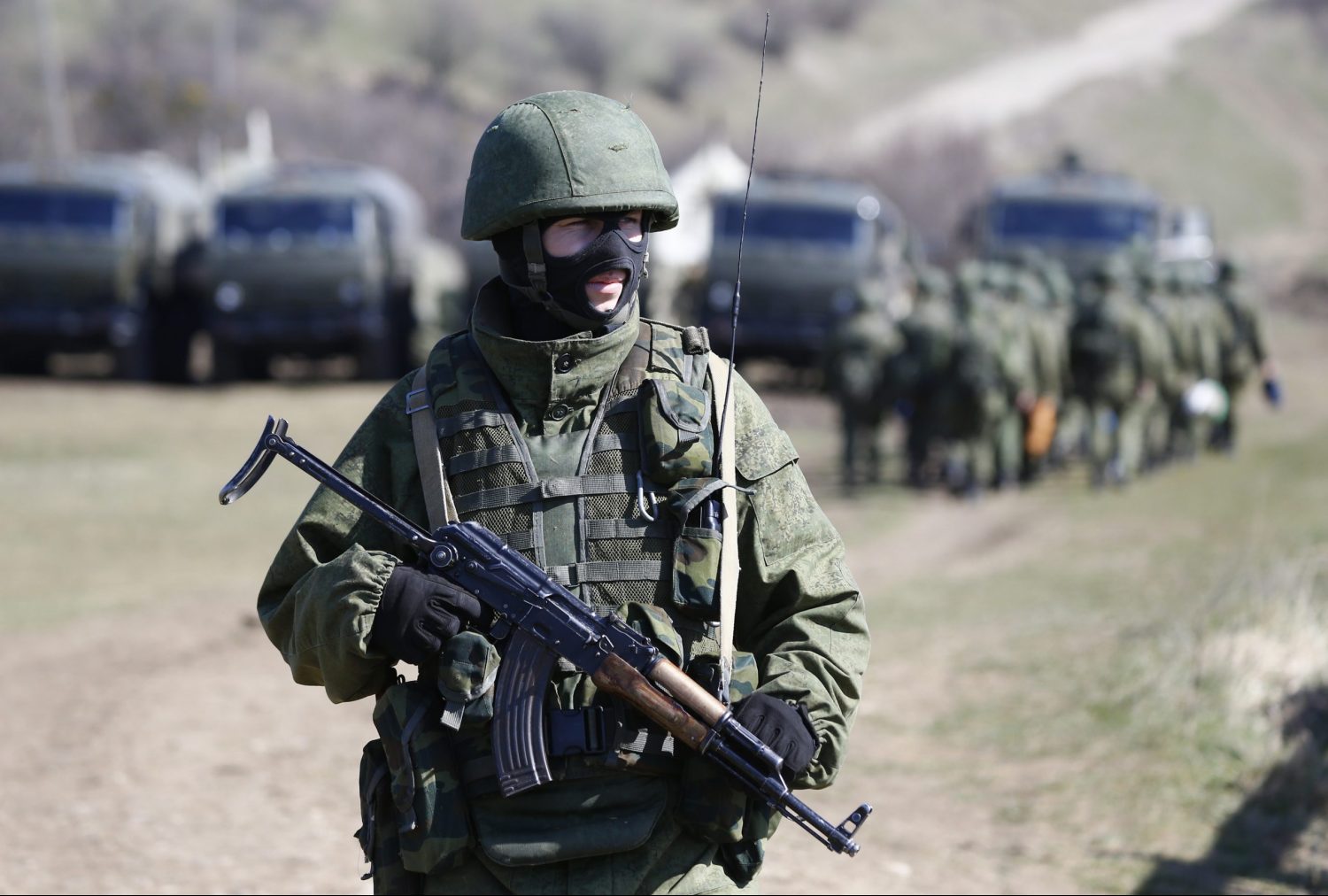
A Russian soldier pictured during the 2014 military takeover of Ukraine's Crimean peninsula. In recent weeks, a major Russian military build-up in occupied Crimea and close to the border with eastern Ukraine has sparked fears of a possible imminent escalation in the seven-year conflict between the two countries. 

Russia has sparked alarm in Ukraine and throughout the international community in recent days by massing its armed forces close to the Ukrainian border. The military build-up has raised fears of a possible Russian offensive that could push beyond the areas of eastern Ukraine currently under Kremlin control and lead to a dramatic escalation in the simmering seven-year conflict between the two countries.

Ukraine’s Western partners have responded to the threat by voicing their support for Ukrainian sovereignty and calling on Russia to end its aggressive actions. As tensions mounted late last week, US President Joe Biden made his long-awaited first call to Ukrainian President Volodymyr Zelenskyy and “affirmed the United States’ unwavering support for Ukraine’s sovereignty and territorial integrity in the face of Russia’s ongoing aggression in the Donbas and Crimea.”

As details of Russia’s troop movements emerged, the US European Command raised its alert status to the highest level. Some military observers believe the Kremlin may be engaged in strategic posturing in order to intimidate Zelenskyy and test the resolve of the new Biden administration. However, a number of factors point to the possibility of a looming Russian offensive.

The New Age of Protectionism

By Henry Farrell and Abraham Newman

Last week, British Prime Minister Boris Johnson warned of an impending “coronavirus vaccine war” that pits the United Kingdom against Europe. Days earlier, the EU had introduced measures that would halt AstraZeneca vaccine shipments to countries such as the United Kingdom that refuse to export vaccines themselves. “Zero” doses will move across the English Channel until supplies increase or the United Kingdom changes its stance on vaccine exports, European Commissioner Thierry Breton has said, adding that there is “nothing to negotiate.”

The EU’s proposed export restrictions represent a sudden about-face for the bloc. Until recently, the European Commission, the EU’s executive arm, was one of the strongest international voices backing the open trading system. It spent years fighting right-wing populists, such as former U.S. President Donald Trump, who were skeptical of trade, and many on the left regarded its trade directorate as one of the command

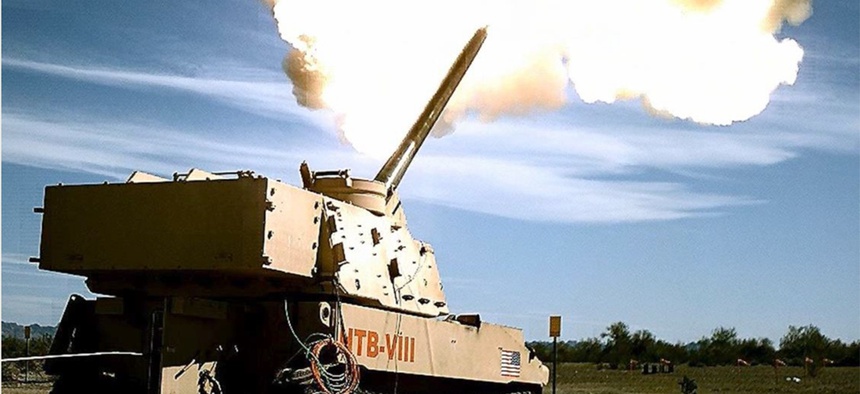
US Army’s Not Stupid for Wanting Long-Range Fires — But More Analysis Needed, Hyten Says

BY PATRICK TUCKER

SEATTLE, Washington — It’s more than appropriate to weigh a long-range fires capability for the U.S. Army, even if more analysis ultimately shows that the costs would outweigh the benefits, the Joint Chiefs’ vice chairman said Monday.

Several days ago, the leader of Air Force Global Strike Command disparaged Army efforts to develop various long-range weapons. On Monday, Gen. John Hyten spoke to Defense One and said the Pentagon’s new joint warfighting concept stresses that future battles will be fought by small, expeditionary units coming together at times to hit some targets and then dispersing. And every service will need to be able to defeat an enemy’s own long-range missiles.

"You might aggregate Navy and Army; you might aggregate Air Force and Army, but if someone shows up to the battle and they don’t have long-range fires and the adversary does, you can’t effectively operate in that theatre,” he said. “This means you want each service to bring those long-range fires; so, the joint warfighting concept succeeds if all of the force can apply fires wherever they happen to be, wherever the target is, whatever the lines of conflict, that is the joint warfighting concept.”

Last week, Air Force Gen. Timothy Ray said on a Mitchell Institute podcast that long-range strike capability properly resided with his own service.

Conventional Forces and Technology: What is Their Impact on Escalation Management with Nuclear Powers?

By Robbin Laird

Recently, Dr. Paul Bracken, a long-time nuclear analyst strategist (we first met in the domain of Dr. Herman Kahn), argued for the importance of always focusing on escalation management when shaping conventional forces dealing with nuclear powers. The United States is facing two major – China and Russia – and one growing nuclear power – North Korea – but for this generation of strategic thinkers, too often conventional modernization is conceived of in terms where the nuclear use equation is simply factored out.

Or put another way, nuclear weapons are simply in a box by themselves, and really do not figure into conventional modernization strategies. For example, ideas of putting missiles by ground forces into the face of the Chinese in close proximity to Chinese territory are clearly being proposed with little or — more likely– no thought of how such deployments and actions would affect the Chinese calculus of escalation.

The blunt reality is that full spectrum crisis management with a nuclear power ALWAYS carries with it the ongoing challenge of escalation management within which nuclear weapons are woven in, and not factored out because the strategist does not want to think about it. After all we both knew well the man who wrote the seminal book Thinking the Unthinkable.

In his recent piece published March 18, 2021 in The Hill, Bracken underscored the threat of inadvertent use of new technologies for conventional modernization upon escalation management.

Putting the Serum Institute of India’s Success in Perspective


By Krzysztof Iwanek

The coronavirus pandemic has directed the gaze of the world to the Serum Institute of India (SII), an unlisted private Indian pharmaceutical company which is currently producing AstraZeneca’s vaccine, and is poised to produce other COVID-19 vaccines as well. In what ways does SII – a clear example of an Indian company successful on the global market – point to some of modern India’s achievements and, yes, the country’s failures as well.

Make in India…

SII is a an instance of a relatively small Indian family business growing to become not just a major company, but also a global player. The Poonawalla family represents the country’s small, shrinking, but overall wealthy and well-educated Parsi minority. They hail from Maharashtra, one of India’s most important states in terms of business, and, as their name signals, from the city of Pune, not far from the country’s financial heart of Mumbai. The family started in a more traditional, “old school” business (horse breeding and racing) but moved to a modern and globally important one: producing vaccines.

Also typically for Indian elites, the SII was established by an India-educated father (Cyrus S. Poonawalla) who sent his son (Adar Poonawalla) through a Western education, and later made him the company’s CEO. Adar Poonawalla has, in fact, been exposed to Western education even more than a “regular” representative of Indian elites, as he not only graduated from a Western university (Westminster University) but as a child, from the age of ten on, had been a student in a Western school (St. Edmund’s School, Canterbury).
The Age of Global Protest


Popular protests are on the rise, and they are increasingly going global. Over the past two years, popular movements demonstrating against fiscal austerity and corruption have brought down governments—in democracies and authoritarian regimes alike—from Europe and Latin America to Africa and Asia. And with the advent of new communication technologies and media platforms, what happens anywhere can be seen everywhere. The messages and actions of pro-democracy protesters in Hong Kong, for instance, have inspired and guided demonstrators in other continents.

The Black Lives Matter protests in the United States have been particularly resonant. Building on centuries of international abolitionist and anti-colonialist protest, the latest round of demonstrations, sparked by the May 2020 death of George Floyd after a white police officer kneeled on his neck for nearly eight minutes, spread rapidly around the world. In addition to standing in solidarity with U.S. protesters, demonstrators in Europe, South America and Asia connected the movement to their own experiences of colonialism, racism and state violence that have been perpetrated by their governments.

New communication technologies and media platforms are not only raising awareness. They are also enabling movements in different countries to learn from and engage with each other. The leaderless pro-democracy protest movement in Thailand is connected to groups guiding similar efforts in Hong Kong. There is some concern, though, that the ease with which protest methods and tactics can be shared might obscure the amount of work required to organize effective movements that can successfully achieve political change. As a result, nascent efforts could splinter or fail because protesters are not adequately prepared to maintain them, particularly when they are challenged by government forces.

Combating Terrorism Center (CTC)


A View from the CT Foxhole: Mary McCord, Executive Director, Institute for Constitutional

 Advocacy and Protection, Georgetown University Law Center

Securing the Least Bad Outcome: The Options Facing Biden on Afghanistan

Have the Taliban Changed?

Lessons Learned from U.K. Efforts to Deradicalize Terror Offenders

USSOCOM: Information-Enabled Command versus AI-Enabled Command

By Dr. Mark Grzegorzewski

As the excitement around artificial intelligence applications grows, United States Special Operations Command (USSOCOM) remains on the forefront in adopting this emergent technology. Special Operations Forces (SOF) have always been the tip of the spear in fighting our nation’s wars and serve as the preeminent asymmetric force. Thus, it comes as no surprise that USSOCOM would want to incorporate the potentially game changing technology of AI into every new program. However, SOF should be careful not to become too enamored with AI tools. Rather, it should continue the focus on executing its core missions and seeing where AI applications may fit in instead of being captivated by a still brittle technology that may or may not have the impacts needed within SOF’s core missions. For the missions of the future, especially downrange in the future operating environment, highly advanced technology may not always be the weapon of choice. Therefore, we both must prepare the force for the potentialities of AI and stay focused on operating with the human domain without support from AI technologies.

Before delving further, it is critical to understand what is meant by both the Information Environment (IE) and Artificial Intelligence (AI). The Information Environment as defined by Joint Publication (JP) 3-12 is “the aggregate of individuals, organizations, and systems that collect, process, disseminate, or act on information.” JP 3-12 further states the IE “consists of three interrelated dimensions, which continuously interact with individuals, organizations, and systems. These dimensions are known as physical, informational, and cognitive. The physical dimension is composed of command and control systems, key decision makers, and supporting infrastructure that enable individual and organizations to create effects. The informational dimension specifies where and how information is collected, processed, stored, disseminated, and protected. The cognitive dimension encompasses the minds of those who transmit, receive, and respond to or act on information.” The information environment is not distinct but rather crosses through each of the other five warfighting domains. Used as a tool, AI could hypothetically analyze and/or impact each of the different dimensions of the information environment: physical, informational, and cognitive.

PSYOP, CYBER, AND INFOWAR: COMBATING THE NEW AGE IED

Chaveso Cook and Liam Collins 

Editor’s note: This article is the fourth in a series, “Full-Spectrum: Capabilities and Authorities in Cyber and the Information Environment.” The series endeavors to present expert commentary on diverse issues surrounding US competition with peer and near-peer competitors in the cyber and information spaces. Read the first three articles in the series here, here, and here.

Special thanks to series editors Capt. Maggie Smith, PhD of the Army Cyber Institute and MWI fellow Dr. Barnett S. Koven.

Extremist ideology and the associated mass-casualty acts of both domestic and foreign terrorism remain a threat to the global community. Ideology is the manifestation of deeper beliefs based upon intensely held but rarely understood underlying assumptions. A bullet may kill an extremist but it will not kill extreme ideology; that is, “Bullets do not kill ideas. . . . A ‘hot’ war against an idea is destined to be a losing prospect.” Arguably, 9/11-like events in the form of large suicide bombs will be replaced by mass media exploitation, political chess, electoral manipulation, and cyber intrusion via social influence mediums. These events will likely occur just beneath the surface, more improvised explosive device (IED) than weapon of mass destruction (WMD).

The ubiquity of the internet and social networking involves the exponential growth of a globally connected culture. As a consequence, a comprehensive understanding of the web is critical for the defense of our nation. As a manifestation of Moore’s Law, technology has advanced at an exponential pace and the associated technological platforms have evolved at an even higher rate. These platforms need to be understood, as recognized in the creation of US Cyber Command (USCYBERCOM) in 2009. However, it is possible that the social network is the new daisy-chained IED, in that it may be the case that USCYBERCOM is not best positioned to be the assault force, quick reaction force (QRF), or explosive ordinance disposal (EOD) team. To address this possibility, this article examines the reasons why psychological operations (PSYOP) forces have distinct advantages in comparison to the cyber community regarding online influence efforts.

Encryption Has Never Been More Essential—or Threatened


As we communicate more digitally, governments encroach more on our privacy. End-to-end encryption cannot be taken for granted.

FIVE YEARS AGO today, WhatsApp completed our roll out of end-to-end encryption, which provides people all over the world with the ability to communicate privately and securely. This was a technical achievement decades in the making, a vision first imagined by Stanford mathematicians Whit Diffie and Martin Hellman, who in 1975 developed the underlying cryptography we rely on today.

Tigray Is Being Deliberately Starved to Death


Alex de Waal 

Millions of people in Ethiopia’s northern Tigray region are facing starvation. Until now, it’s been a crisis without pictures. Those wrenching images of emaciated children and mothers with dull-eyed gazes, so sadly familiar from famine zones, have yet to emerge. But that’s because journalists aren’t permitted to travel to the worst-hit areas of Tigray, where hunger is deepening by the day. When the media can finally get access, or when starving villagers abandon their homes and flee to towns, the pictures will surely remind viewers of drought victims from Ethiopia’s 1984 famine, which prompted the famous LiveAid benefit concert and a vast outpouring of charity.

Now, though, there is no drought and no harvest failure. Tigrayans are hungry today because starvation is being used as a weapon of war—relentlessly and systematically. .

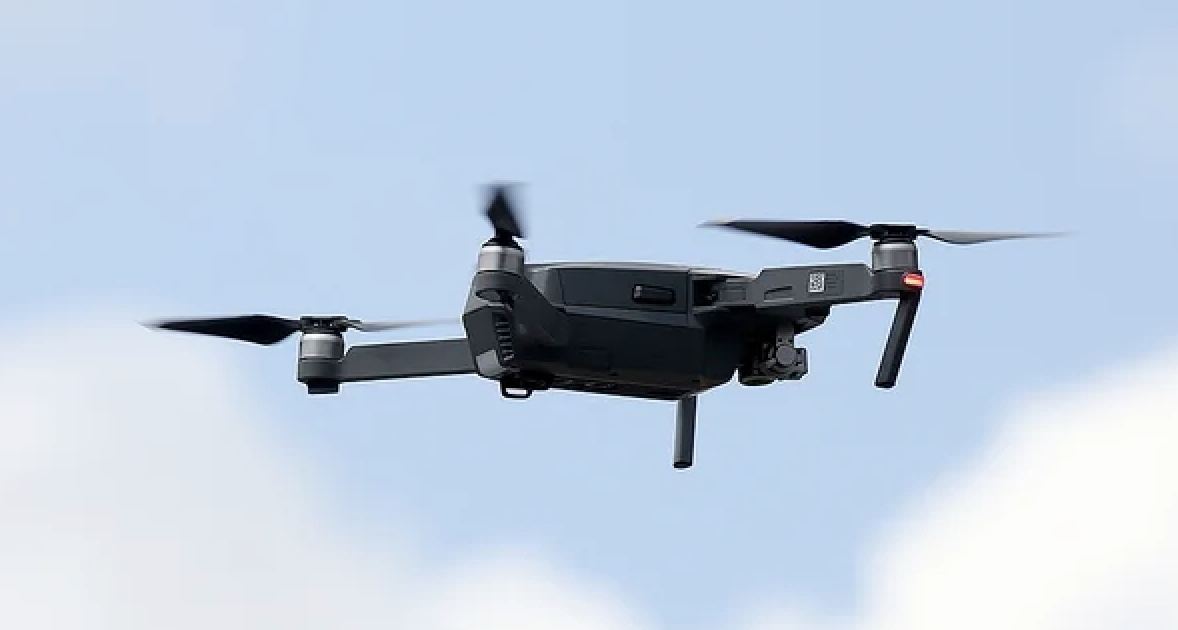
The Air Force Is Testing the Weapon of the Future: Drone Swarms

by Kris Osborn

Here's What You Need to Remember: Algorithms could progress to the point where a drone, such as a Predator or a Reaper, might be able to follow a fighter aircraft by itself – without needing its flight path navigated from human direction from the ground.

Advances in computer power, processing speed and AI are rapidly changing the scope of what platforms are able to perform without needing human intervention.

The Air Force and DARPA are now testing new hardware and software configured to enable 4th-Generation aircraft to command drones from the cockpit in the air, bringing new levels of autonomy, more attack options and a host of new reconnaissance advantages to air warfare.

Working with BAE Systems at Edwards Air Force Base, Calif., Air Force test pilots are combing ground-based simulators with airborne leer jets to demonstrate how 4th generation cockpit avionics can direct drones from the air, BAE Systems developers said.

8 April 2021

India’s Sustained Economic Recovery Will Require Changes to Its Bankruptcy Law

ANIRUDH BURMAN

One of the key drivers of economic recovery in India will be the efficient movement of capital from inefficient firms to efficient ones. The economic downturn caused by the coronavirus pandemic has been severe, and India’s economy was one of the worst affected in 2020–2021. Though the economy is recovering faster than initial estimates, sustained economic recovery will not take place if stressed businesses cannot restructure their debts properly or if failing firms cannot be resolved efficiently. India’s bankruptcy law is key to solving these challenges.

In 2016 India enacted the Insolvency and Bankruptcy Code, 2016 (IBC), which was a landmark reform to the nation’s financial system and the first comprehensive law to regulate insolvency.1 But the IBC has been suspended for a period of one year since the COVID-19-related lockdown was imposed in March 2020. In its place, India’s banking regulator, the Reserve Bank of India (RBI), has introduced a limited restructuring scheme for COVID-19-related stress in the meantime. Older mechanisms for insolvency that are still in operation have historically not worked according to expectations. As the one-year period of suspension comes to a close, this paper argues that bringing back the IBC—with adequate modifications—is an important prerequisite for sustained economic growth.

India historically suffered from a patchwork framework of insolvency laws that either did not give lenders adequate powers to recover their debts upon default or only catered to the interests of certain kinds of lenders—to the exclusion of others.2 The IBC is a modern and comprehensive bankruptcy law that since its enactment has had a significant role in reducing the problem of nonperforming assets (NPAs), or “bad loans,” in India’s financial system.

In the wake of the economic disruption caused by COVID-19, the Indian government suspended the operation of critical parts of the IBC. These changes meant that lenders could not trigger insolvency proceedings against defaulting businesses if the default occurred after March 20, 2020. While this suspension possibly prevented unnecessary business failures and provided a “calm period” for the economy, these measures have outlived their utility.

How a new rail line in China will pose a security challenge to India


By Suyash Desai

China’s 14th Five-Year Plan, approved in the recent National People’s Congress’s (NPC) annual session, outlines the Sichuan-Tibet railway line near the China-India border as a key strategic priority.

The 1,629km Sichuan–Tibet high-elevation railway line will connect Chengdu, Sichuan province’s capital, to Lhasa, the capital of Tibet Autonomous Region (TAR). The 14th Five-Year plan reportedly highlighted this railway’s central section, from Ya’an in Sichuan to Nyingchi in Tibet, as a key infrastructure project. In November 2020, the Communist Party of China’s general secretary and China’s president, Xi Jinping, said that this railway line’s work is extremely challenging due to the complex geological and climatic conditions and the region’s sensitive environment.

This railway line is divided into three sections. The Chengdu-Ya’an section in Sichuan had opened in December 2018, while the construction on the Lhasa-Nyingchi section in Tibet started in 2015. The latter is expected to be completed by June this year. The work on the central section linking Ya’an and Xinduqiao in Sichuan and Bomi and Nyingchi in Tibet will start soon as the public bidding to secure these projects was recently completed.

The central section’s construction is the most challenging part and the Chinese state media reports that the entire railway line from Chengdu to Lhasa would be functional by 2030. Upon completion, the railway will be the second to link Tibet with the rest of the country, following the Qinghai-Tibet Railway, which opened in 2006.

Technology and Geopolitics: An Indian Perspective on the Past and Future

BYANIRUDH KANISETTI

Introduction

What is technology? The question appears so banal as to barely require answering. But the question bears tremendous significance for an understanding of human history and of the turbulent geopolitics of our world. In scope, it extends from the cuneiform scrawls of Bronze Age Sumerian scribes to the complex algorithms of modern AI applications. Technologies shape societies, polities, and economies. They directly impact the lives of millions. And most importantly, technologies affect statecraft.From using reeds to inscribe clay tablets to etching semiconductors with robotic arms, humans and technology have come a long way. Or have we?

Consider the relatively limited perspective of military technology. Over the last 500 years, and especially in the last 200 and last 100, the development of sophisticated military technology has been one of the top priorities of any organised polity. Military superiority over adversaries has allowed countries to upend centuries-old dynamics and shape the world to tremendous advantage. Consider, for example, Britain forcing the Qing Dynasty of China to give up attempts to ban opium imports. Or, for example, the US’s development of the atomic bomb, and the arms race that ensued with the USSR to ensure that neither would have a decisive military edge over the other.

What China’s plans to rapidly militarise Tibet mean for India

Jayadeva Ranade

While China is keeping India engaged in protracted and seemingly stalled talks on military disengagement in Ladakh, the Chinese leadership is investing vast sums in boosting its defence capabilities. This includes upgrading the military infrastructure along the border with India. The plenary sessions (March 4-11, 2021) of China’s National People's Congress (NPC) its version of a parliament and the Chinese People's Political Consultative Conference (CPPCC) its top political advisory body - approved these plans.

Particularly important for India is the 142-page, 70,000-character “14th Five Year Plan (2021-2025) and the Long Range Objectives through the Year 2035 for National Economic and Social Development of the People’s Republic of China”. Its English version is yet to be released. Chinese President Xi Jinping proposed the ‘Long Range Objectives-2035’ and approved its final draft. The document clarifies China’s national strategic intent and identifies core areas of national security and development. It has a definite focus on strategic science and technology programmes in frontier areas. The document details projects that have direct implications for India.

Approval of these projects shapes imminent conventional and non-conventional threats which will put India under additional pressure. The plenum decisions clearly reveal that China intends to rapidly militarise Tibet which, within a few years, will become a centre of long-term pressure on India.

U.S. Looks to Build on Secret Portions of Taliban Deal to Reduce Violence

By Thomas Gibbons-Neff

DOHA, Qatar — U.S. diplomats are trying to build on parts of the peace deal made with the Taliban last year, specifically the classified portions that outlined what military actions — on both sides — were supposed to be prohibited under the signed agreement, according to American, Afghan and Taliban officials.

The negotiations, which have been quietly underway for months, have morphed into the Biden administration’s last-ditch diplomatic effort to achieve a reduction in violence, which could enable the United States to still exit the country should broader peace talks fail to yield progress in the coming weeks.

If these discussions, and the separate talks between the Afghan government and Taliban falter, the United States will likely find itself with thousands of troops in Afghanistan beyond May 1. That’s the deadline by which all American military forces are meant to withdraw from the country under the 2020 agreement with the Taliban and would come at a time when the insurgent group likely will have begun its spring offensive against the beleaguered Afghan security forces.

Both of these conditions would almost certainly set back any progress made in the past months toward a political settlement, despite both the Trump and the Biden administrations’ fervent attempts to end the United States’ longest-running war.

China sets hopes on blockchain to close cyber security gaps


With an already large and growing digital economy and increasing use of the Internet of Things (IoT), China is in dire need of strong data security standards, data privacy protection and an efficient digital infrastructure. Kai von Carnap looks at how China is deploying blockchain technology to meet these challenges and analyzes both its rate of success and the implications China’s approach has for other parts of the world, including Europe. His analysis is accompanied by a slidedeck that provides context for and deeper insights on China’s attempts to develop and control this strategic technology.

Every three months China’s population with access to the Internet increases by the size of a medium-sized EU country. By February 2021, it had already reached a staggering one billion people. At the same time, its cyber security issues are growing too. In January 2020, for example, 200 million phone numbers were lost by China Telecom (中国电信), one of China’s three telecom SOEs. A month later, 538 million leaked accounts on Weibo, a microblogging platform often compared to Twitter, were found on the dark web - a worrying number, given that only 500 million users are active on the platform every month. Reporting on these security breaches and on a 4.4-fold increase in malware-hosting websites, CCID, a Chinese ministry-led think tank that specializes in the development of information industries, said recently that it was “not optimistic” about the state of China’s overall cybersecurity.

In recognition of its growing cyber vulnerabilities, the CCP is giving increasing support to the development of blockchain technology. Widely known as the technology behind cryptocurrencies such as Bitcoin, China hopes that this emerging technology – also known as Decentralized Ledger Technology, or DLT – will enable it to ramp up the resilience of its digital infrastructure and make full use of the efficiency potential of its digital economy (Slide 2).

Don’t Let China Mint the Money of the Future

Niall Ferguson

Niall Ferguson is the Milbank Family Senior Fellow at the Hoover Institution at Stanford University and a Bloomberg Opinion columnist. He was previously a professor of history at Harvard, New York University and Oxford. He is the founder and managing director of Greenmantle LLC, a New York-based advisory firm.

What is the money of the future? My nine-year-old son thinks it will be Robux. For those of you trapped in the human museum known as adulthood, Robux is the currency used by players of Roblox computer games. If I offer Thomas grimy dollar bills for household chores, he shows an almost complete lack of interest and motivation. But if I offer him Robux, it’s a different story.

The current exchange rate is around 80 to the dollar. So, in order to incentivize my son to do the dishes, I need to go online and buy 2,000 Robux for $24.99. This I do by entering my credit card details on a website, an act of self-exposure that never fails to make me feel sick. However, the dishes get cleaned and, later, my son blows some of his Robux on a cool new outfit and a pair of wings for his avatar, earning the admiration of his friends.

The New China Challenge: A Game-Changing Strategic Agreement with Iran

by Mohammed Ayoob

China and Iran have recently signed a strategic agreement that is supposed to last for a quarter-century. Some observers believe this could be a game-changer in the Middle East providing China a firm foothold in the region at the expense of the United States. It is also speculated that the agreement would increase Iran’s leverage in its negotiations with the Biden administration about reviving the Joint Comprehensive Point of Action (JCPOA). It is argued that in the long run, the agreement will also provide Iran with the opportunity to free itself from the economic and strategic viselike grip of the United States and its allies that has stifled its economy and restricted the spread of its political influence around the Middle East.

The agreement had been under discussion since 2016 but its signing was delayed because of Iran’s concerns that it might have an adverse effect on U.S.-Iran relations and negatively affect the implementation of the JCPOA provisions calling for the lifting of sanctions on Iran. Former President Donald Trump’s withdrawal from the nuclear deal and the re-imposition of even harsher American sanctions as well as the Biden administration’s foot-dragging about returning to the deal convinced Iran that it was now time to signal Washington that it has other strategic and economic options which can no longer be put on hold.

While the details of the China-Iran agreement have not been made public, it is commonly assumed that it is largely unchanged from an eighteen-page draft obtained last year by the New York Times. China would invest $400 billion over twenty-five years in dozens of fields, including banking, telecommunications, ports, railways, health care and information technology, and in return would be guaranteed a regular supply of Iranian oil on heavily discounted terms during that period, according to that draft. Additionally, per the New York Times, the draft included provisions regarding expanding military cooperation and joint research and weapons development as well as intelligence sharing.

Combat Drones Made in China Are Coming to a Conflict Near You


By Bruce Einhorn

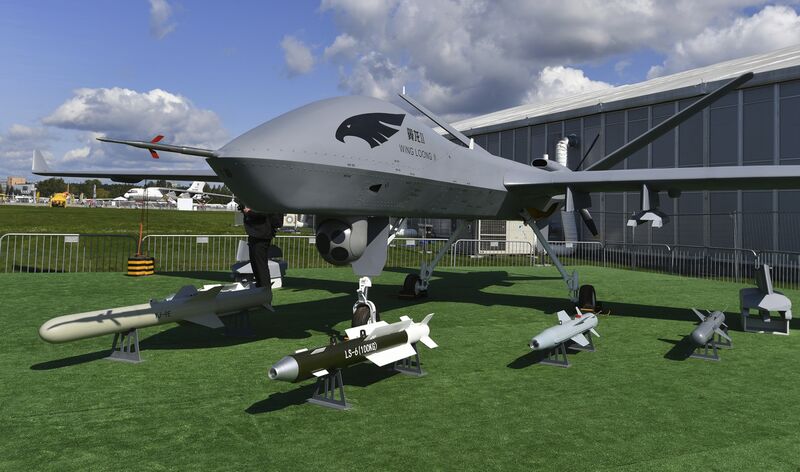
A dozen years into its fight with the Islamic insurgent group Boko Haram, Nigeria is getting some new weapons: a pair of Wing Loong II drones from China. The deal is one of a growing number of sales by state-owned Aviation Industry Corp. of China (AVIC), which has exported scores of the aircraft. The United Arab Emirates has used AVIC drones in Libya’s civil war, Egypt has attacked rebels in Sinai with them, and Saudi-led troops have deployed them in Yemen. The company’s drones “are now battle-tested,” says Heather Penney, a fellow at the Mitchell Institute for Aerospace Studies, a think tank in Arlington, Va. “They’ve been able to feed lessons learned back into their manufacturing.”

Nigeria is getting AVIC’s second generation of Wing Loongs—the name means “pterodactyl”—which can fly as fast as 230 mph and as high as 30,000 feet, carrying a payload of a dozen missiles. Since 2015, when AVIC introduced the newer model, it’s produced 50 for export and an unknown number for China’s People’s Liberation Army. And it’s working on even more advanced aircraft, such as a stealth combat drone with a flying-wing design similar to that of the U.S. B-2 bomber. The drone program, combined with deliveries of fighter jets, trainers, transporters, and assault helicopters, has propelled AVIC into the upper ranks of the global arms trade. In 2019 it sold military equipment valued at $22.5 billion, according to the Stockholm International Peace Research Institute (Sipri), placing it sixth in the world, behind five U.S. companies.

China rising across the Middle East

By JONATHAN GORVETT

Shaking hands and signing deals from Abu Dhabi to Ankara, Tehran to Riyadh, Chinese Foreign Minister Wang Yi’s recent Middle Eastern tour once again demonstrated China’s growing influence in the region.

Yet, while the trip saw some impressive numbers talked and important political statements made, the visit may have had more to do with a country many miles from the region: the United States.

Coming hot on the heels of angry exchanges between Chinese and US officials in Alaska last month, Wang Yi’s visit saw him go to the capitals of a number of countries also at odds with Washington.

“It was a win-win,” Aykan Erdemir, Senior Director of the Turkey Program at the Foundation for Defence of Democracies in Washington DC, told Asia Times. “China could signal to the US that it has substantial relations with Washington’s challengers and adversaries, while those countries could signal to the US that they have another option.”

Wang Yi’s six-country tour started on March 24 in Saudi Arabia, where he held talks with Saudi Foreign Minister Faisal bin Farhan Al Saud in Riyadh.