22 May 2021

A People-Centric Approach to Securing Cyberspace


Candace Rondeaux 

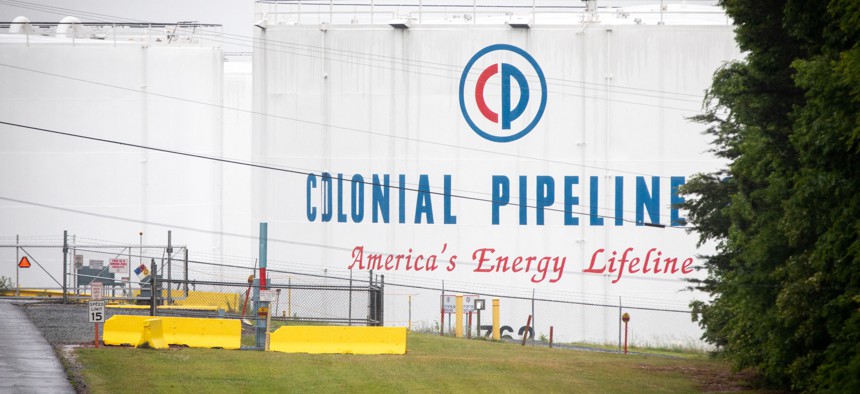
The internet today is on the brink of reaching a state of entropy, as anyone who tried to fill up the gas tank of their car anywhere along the Eastern Seaboard of the United States this week knows. Nearly a week after a crafty network of cybercriminals penetrated the databases of the company that operates the massive Colonial fuel pipeline, which runs nearly the entire length of the East Coast, the United States is still reeling from the crippling cyberattack.

The ransomware attack forced the Colonial Pipeline company to close down a sizable portion of its 5,500-mile-long fuel conduit for days. Only quick action to isolate a server where the ransomware was lodged prevented an even worse catastrophe. Still, the impact was keenly felt and prompted the governors of Virginia, Georgia, Florida and North Carolina to declare a state of emergency over gas shortages after news of the hack drove up consumer anxieties. The online assault on the Colonial Pipeline not only triggered a rush of panic buying at the fuel pump, but also served as another reminder of the dismal state of U.S. cyber defenses—and the even sorrier state of global internet governance. ...

Space Is a Great Commons. It’s Time to Treat It as Such.

BENJAMIN SILVERSTEIN, ANKIT PANDA

Traditionally, commons are areas beyond state dominion that host finite resources available to all (like the oceans) or that provide non-excludable global benefits (like the atmosphere). Outer space is no different, though some dispute this fact. Beyond micrometeoroids, the only natural resource in near-Earth space is the volume of Earth orbits themselves. Space is available for all to use, and states and commercial enterprises use satellites in Earth orbits to deliver agricultural, educational, financial, and security benefits to communities around the globe.

Yet not all leading space powers have endorsed the concept of outer space as a great commons. The United States has not consistently considered space to be a commons. Former president Donald Trump’s administration repeatedly rejected this position, explicitly stating that “the United States does not view [space] as a global commons,” a sentiment reiterated by Congress. This view was a departure from the position of former president Barack Obama’s administration, which reflected a commitment to “safeguarding the global commons . . . to optimize the use of shared sea, air, and space domains.” Meanwhile, other significant space-faring states and organizations recognize space as a commons, including China, which has used the phrase a “global public domain.”

Benjamin Silverstein is a research analyst for the Space Project at the Carnegie Endowment for International Peace.

21 May 2021

China’s Cyber-Influence Operations

 Maj Gen PK Mallick, VSM (Retd) China’s Cyber-Influence Operations

The digital era has transformed the way we communicate. Using social media like Facebook and Instagram, and social applications such as WhatsApp and Telegram, one can be in contact with friends and family, share pictures, videos, messages, posts and share our experiences. Social media has become an effective way of influencing human society and behavior, and shaping public opinion. By sharing a post, tweeting an idea, contributing a discussion in a forum and sharing a sentimental picture, we can influence others and sometimes convince into with our opinion.

Use of cyber tools and methods to manipulate public opinion is called ‘Cyber Influence Operation’. In the present day, many countries use cyberspace, especially the social media, to accomplish Cyber Influence Operations as a part of Information Warfare. Most of these operations are done covertly. It is difficult to differentiate between legitimate or malicious influence operations. Continue Reading..... 

Ahead of the Curve: Preventing a Third Wave of Covid-19

By Multiple Authors

The government has embarked upon a programme of easing Covid-19 restrictions on social activity as the vaccination programme builds up biological immunity among the population.

But as the prime minister reminded the country this week, the results of modelling by SAGE’s epidemiological advisors suggest that once all restrictions are lifted – step 4 of the government’s roadmap, currently planned for 21 June – there is expected to be a third wave of Covid-19 infections that could result in between 20,000 and 40,000 further deaths in the UK and upwards of 100,000 further hospital admissions.

This is not inevitable, however. Getting under the bonnet of the SAGE analysis, this paper describes three components of the third wave that can help us avoid that fate.

First, the planned lifting of the final set of restrictions is at risk of running too far ahead of the vaccination rollout, leaving many soon-to-be-vaccinated people exposed to unnecessary infection.

Second, despite impressive vaccine take-up, the population protection afforded by inoculation and past infections looks set to fall short of what will be needed to reach herd immunity even once the vaccine has been offered to all adults.

Finally, these two facts together also make it likely that a summer surge in case numbers will cause infections to substantially overshoot the herd immunity threshold, resulting in more cases and deaths than would occur if numbers were under control.

China’s Port Investments in Sri Lanka Reflect Competition with India in the Indian Ocean

By: Anita Inder Singh

Introduction

Located at the crossroads of global shipping lanes, Sri Lanka has become a significant recipient of Chinese economic and military influence in the Indian Ocean Region (IOR). For its part, Sri Lanka has largely welcomed China as a major investor and strategic partner in the past decade. China surpassed India to become Sri Lanka’s largest source of foreign direct investment (FDI) in 2011 (Gateway House, December 1, 2016). Additionally, China is Sri Lanka’s second largest source of trade imports and arms sales after India (SIPRI, accessed April 27; WITS, accessed April 27). In return, Sri Lanka has been a critical partner in China’s expansive foreign policy and infrastructure-focused Belt and Road Initiative (BRI), although the relationship has been balanced by local tensions over Chinese influence. Sri Lanka has been held up as an example of China’s so-called “debt trap diplomacy” model for foreign investment, but this narrative is insufficient to fully describe the complex situation unfolding, as well as obscuring the Sri Lankan government’s own agency in balancing neighboring powers while simultaneously seeking investments for ambitious development goals (China Brief, January 5, 2019, April 13, 2020).

Developments in Colombo

Recent news about the development of Sri Lanka’s strategically important port in the capital city of Colombo further highlights Sri Lanka’s delicate balancing act between China and India. In 2011, a consortium led by the state-owned enterprise (SOE) China Merchants Port Holdings Company signed a 35-year build, operate and transfer agreement to develop the deep water South Container Terminal, later called the Colombo International Container Terminal (CICT),at Colombo Port (Sri Lanka Foreign Ministry, accessed April 20). It promised an initial investment of $500 million in exchange for an 85 percent stake in CICT, which is now the only state of the art deep water terminal in South Asia. China Harbor Engineering Company (CHEC)—a key competitor with China Merchants, responsible for building the controversial Hambantota port project and which has also been involved in land reclamation efforts around Colombo—signed an agreement late last year to develop a financial district in Colombo Port City (Xinhua, December 18, 2020). China Harbor’s $1.4 billion investment marks the first of a $13 billion plan to develop Colombo Port City into a world-class financial and trade center (Xinhua, September 9, 2020). The agreement was promptly challenged by opposition parties, civil society groups, and labor unions alleging that the project violated Sri Lanka’s sovereignty, constitution, and labor rights (The Hindu, April 17).

Time Crunch for Afghanistan Withdrawal Is Producing a Big Trash Pile

BY JACQUELINE FELDSCHER

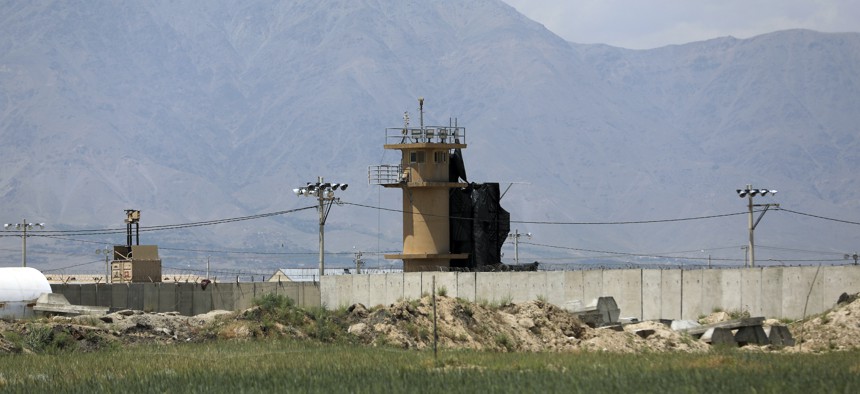
Sen. Joe Manchin is worried about the military’s wasteful destruction of equipment in Afghanistan, but analysts say troops are on such a tight timeline to leave, that they don’t have any other options.

Troops have sent more than 1,800 pieces of equipment to the Defense Logistics Agency to be destroyed, U.S. Central Command said in a statement Tuesday. In addition, more than 100 C-17 cargo planes of material have already been taken out of the country.

But destroying vehicles and other assets in Afghanistan “doesn’t make any sense,” said Manchin, D-W.V.

“After all that we have spent, after all that we have endured, after all the blood that has been shed there by Americans,...now we destroy everything...to make [the Afghans] think ‘Who are these Americans? They have no value for anything whatsoever,’” Manchin said at a Senate Armed Services Committee hearing to consider the nominations of Michael McCord and Ronald Moultrie, who were tapped to be the comptroller and undersecretary for intelligence and security, respectively.

Both nominees demurred, saying they suspected it came down to the cost of transporting old equipment home, but didn’t know the details since they are still outside of the department.

‘It’s going to be messy’

Air Force Bomber Completes Hypersonic Missile Test Amid China, Russia Arms Race

BY JACK DUTTON 

AB-52 has completed the first successful off-ground test of a hypersonic missile being developed by the U.S. Air Force, as the Pentagon races against China and Russia to develop the next generation of weapons.

A B-52 Stratofortress bomber flew a 13-hour round trip to Alaska from Barksdale Air Force Base in Louisiana to test data transmission and target sensing for the AGM-183 air-launched rapid response weapon—or ARRW—on May 5, according to an Air Force statement released on Thursday.

Owner of Gaza Apartment Building Was Warned by Israeli Military to Evacuate

During the trip, the B-52 was able to receive target data from sensors via the All-Domain Operations Capability experiment, or ADOC-E, more than 1,000 nautical miles away at Joint Base Elmendorf-Richardson in Anchorage, the statement said.

Once it had received the data from the ADOC-E, the bomber was able to take a simulated shot of the target from 600 nautical miles away using the hypersonic missile.

"We were really exercising the data links that we needed in order to complete that kill chain loop, and then get the feedback to the players in the airspace that the simulated hypersonic missile was fired and effective," said Lt. Col. Joe Little, deputy commander of the 53rd Test Management Group.

"The team did an outstanding job effecting this event both in planning and execution," said Lt. Col. Matt Guasco, commander of the 49th Test and Evaluation Squadron. "This is a win for the U.S. Air Force and greater [Department of Defense] as a whole but make no mistake, we are just getting started."

The flight test of the ARRW had been delayed after it was initially scheduled for December 2020. The Air Force has not explained precisely why the launch was pushed back, but said "technical findings" and the coronavirus pandemic were among the reasons.

Breaking China’s Stranglehold on the U.S. Rare Earth Elements Supply Chain

Larry M. Wortzel, Kate Selley

In historical terms, the United States has been caught off guard by China’s dominance of the rare earth industry. Over the years, the U.S. has become dependent on a potential adversary for some of the most crucial materials in high technology production: rare earth elements. Rare earths are a collection of 17 elements that include: scandium, yttrium, lanthanum, cerium, praseodymium, neodymium, promethium, samarium, europium, gadolinium, terbium, dysprosium, holmium, erbium, thulium, ytterbium, and lutetium. These elements may one day soon become as essential to the U.S. as oil. They are important in producing a range of technological products, including cellular telephones, computer hard drives, and medical imaging equipment, as well as green technology like electric vehicle motors and wind turbines. In scientific circles in China, rare earth materials are considered a “trump card” of national policy due to the country’s dominance in industrial production...

Tracking the Digital Component of the BRI in Central Asia, Part Two: Developments in Kazakhstan

By: Sergey Sukhankin

Introduction

This is the second of a three-part series describing the People’s Republic of China’s (PRC) growing digital presence in Central Asia—part of a larger project commonly referred to as the Digital Silk Road (DSR, 数字丝绸之路, shuzi sichou zhi lu) that supplements the wide-ranging geo-economic and foreign policy Belt and Road Initiative (BRI). Part One of this series focused on Central Asia’s most populous country, Uzbekistan (China Brief, February 11). In this article, special emphasis will be put on the region’s most affluent and resource endowed actor, Kazakhstan, which has had a particular importance for the BRI since the initiative was first launched by Chinese President Xi Jinping during his state visit to Kazakhstan in 2013 (PRC Ministry of Foreign Affairs, September 7, 2013).

Background: Deepening Sino-Kazakh Relations and Technology Cooperation

Kazakhstan’s ties with Beijing have been boosted after the 2019 election of President Kassym-Jomart Kemeluly Tokayev, a professional sinologist who spent time studying in the PRC during the 1980s (Ru.sputnik.kz, June 17, 2019). Under Tokayev’s leadership, the bilateral relationship was elevated to a “comprehensive strategic partnership” in 2019. Cooperation in the realm of new digital technologies has rapidly become yet another facet strengthening bilateral ties. Both sides have their own interests in boosting technological cooperation: for China “cooperation in the fields of digital economy, e-commerce and artificial intelligence” opens up a new and rapidly developing market for its domestic technology companies seeking to become competitive players in the global market (Xinhua, January 22) as well as being a means of boosting Chinese influence in Central Asia more generally. China has also relied on Kazakhstan to support a variety of international technology issues, including a global initiative on data security and “jointly combatting disinformation” following the COVID-19 pandemic (Xinhua, September 13, 2020), as well as promoting a concept of internet sovereignty that is friendly to authoritarian control of the Internet (CPO Magazine, August 1, 2019).

Hamas tries to seize the day

Daniel L. Byman

The latest round of Israeli-Palestinian fighting began in Jerusalem, but it has spread throughout Israel and to Gaza. The bloodshed could become more intense, leading to another Israeli ground operation in Gaza and far more casualties than we’ve already seen. Even if Israel batters the Hamas leaders in Gaza into submission, the violence threatens to further weaken peaceful Palestinian voices, help Hamas overcome its many weaknesses, and create new rifts within the state of Israel.

The latest conflict grew out of threatened evictions of Palestinians from the Sheikh Jarrah neighborhood in Jerusalem and was magnified after provocative Jewish settler marches through Arab areas of the city, with some marchers chanting “death to Arabs.” Violence spread to the Al-Aqsa Mosque compound, one of the holiest sites in Islam, and an Israeli police raid on the venerated mosque — including the use of stun grenades on worshipers demonstrating there — set off more demonstrations. At the same time, Israeli officials tried to deescalate, postponing the evictions and rerouting a potentially provocative parade by religious Jewish nationalists.

Things took a dramatic turn on Monday, when Hamas and another Islamist group, Palestine Islamic Jihad, sent massive salvos of rockets into Israel, firing them toward Jerusalem, with claims of defending the holy mosque and Palestinians there against Israeli aggression — the first rocket attacks on Jerusalem since 2014. Israel then responded with airstrikes on Gaza, which Palestinian health officials claim have killed 53 people, including 13 children, as of Wednesday afternoon. Hamas launched more rockets at Tel Aviv, as well as targets closer to Gaza, such as Ashkelon. Residents of cities targeted by the rockets are forced to hide in shelters and rocket attacks have killed seven Israelis, increasing pressure on the Israeli government to act. Arab citizens rioted in several Israeli cities and towns. In mixed Jewish-Arab cities, including Jaffa but especially Lod (Lydda) and Acre, communal violence not seen in decades included mobs attacking civilian homes, synagogues, and property, with vigilante violence and reprisals.

Israeli-Palestinian Clashes Resonate Across the Middle East

Barnaby Papadopulos 

Israeli forces and Palestinian militant factions in the Gaza Strip have been engaged in their heaviest exchange of fire this week since the 2014 Gaza War. A heavy barrage of Israeli airstrikes has killed at least 83 people thus far in Gaza, including 17 children, while authorities in Israel have reported seven fatalities due to Palestinian rocket attacks. Among them was a 6-year-old child. Qatar, Egypt and the United Nations are all working to broker a cease-fire, but there is no indication yet of an end to the violence, with potentially far-reaching implications across the region.

The conflict follows weeks of escalating tensions in anticipation of a now-delayed Israeli Supreme Court ruling on whether six Palestinian families could be evicted from their homes in the historic Sheikh Jarrah neighborhood of East Jerusalem to make way for Israeli settlers.

The Deadly Israeli-Palestinian Escalation


Weeks of rising tensions between Israelis and Palestinians in Jerusalem broke into large-scale violence on Friday, May 7. When Israeli police moved on Palestinian Muslims gathered at a site holy to Jews and Muslims alike in the midst of Ramadan, more than 200 Palestinians were injured. Hamas launched a barrage of rockets toward Jerusalem in response, and Israel responded with an air attack on Gaza that killed more than 20 Palestinians. Several Israelis were killed in the subsequent exchange of fire.

Q1: Why now?

A1: Tensions had been rising over the impending eviction of some Palestinian families from disputed land in East Jerusalem and an increasing set of skirmishes between Israelis and Palestinians in the Old City of Jerusalem. Then, two sets of events converged last weekend. Palestinian Muslims streamed to the Haram al-Sharif for Ramadan prayers, with large numbers assembling for Leilat al-Qadr on the evening of May 8 to mark the revelation of the Qur’an to the Prophet Muhammad—considered not only the most sacred night of Ramadan, but of the whole Islamic calendar. Meanwhile, some Israeli Jews were gathering ahead of Jerusalem Day on Monday, May 10, marking Jewish control over the Old City of Jerusalem secured during the 1967 war. The focal point of those celebrations is the Western Wall of the Temple Mount—the same elevated platform that Muslims call the Haram al-Sharif.

Q2: What is the danger?

The U.S. Is Getting a Reality Check in Yemen

Bobby Ghosh

 
The limits of talking softly with Yemen’s brutal Houthi rebels should now be abundantly clear to the Biden administration. The trouble is that the U.S. has no big stick to wield instead.

Given Iran’s support for the insurgents, this bodes well for Tehran in its nuclear negotiations with the U.S. — but ill for American allies in the Middle East.

In his first days in office, President Joe Biden suspended U.S. military support for an Arab coalition fighting against the Tehran-backed rebels, put a temporary hold on arms sales to coalition leaders Saudi Arabia and the United Arab Emirates, and overturned Donald Trump’s designation of Houthis as a terrorist group.

The Biden team believed these moves would create the conditions for negotiating a resolution of Yemen’s six-year war. The president appointed a seasoned diplomat, Timothy Lenderking, to bring all parties in the conflict to the table. Encouraged by the signals from Washington, Martin Griffiths, the United Nations point man on Yemen, flew to Tehran to try and persuade the regime there to support peace.

But the U.S. didn’t reckon with the Houthis’ fanatical determination to keep fighting, and Iran’s interest in keeping them foaming at the mouth. Both have grown stronger with the Biden team’s soft-pedaling.

US and EU tech strategy aren’t as aligned as you think

Konstantinos Komaitis and Justin Sherman

During her speech before the World Economic Forum’s virtual meeting in Davos in January, European Commission President Ursula von der Leyen invited the United States to join Europe in writing a new set of rules for the internet: “Together, we could create a digital economy rulebook that is valid worldwide. It goes from data protection and privacy to the security of critical infrastructure. A body of rules based on our values: human rights and pluralism, inclusion, and protection of privacy.”

This invitation to collaboration comes at a time of remarkable diversity in how states are approaching internet governance. Beijing is advancing new internet standards to replace the global, open, interoperable ones. Moscow is continuing to clamp down on the web through a combination of online and offline coercive measures. India is advancing a data-protection framework with large carve-outs for state data collection against the backdrop of the Modi government’s repressive internet shutdowns. A Brazilian official who authored the country’s data localization proposal recently called data flows abroad a violation of the country’s sovereignty. In Europe, the previous watchword of “digital sovereignty” may be giving way to talk of “strategic sovereignty” in the digital sphere, but the underlying premise remains the same: creating an internet environment where European values proliferate. In the United States, the Biden administration is grappling with how to reinvigorate U.S. global engagement on technology while simultaneously managing new regulatory proposals for American tech giants.

This fractured policy landscape has prompted hope that Europe and a United States led by President Joe Biden might collaborate to facilitate a more consistent and predictable approach in internet governance, one that seeks to uphold the fundamental values of the internet. But the United States and the European Union are not as aligned on this question as some might claim. American internet governance has been described as everything from a privatized model to a hands-off-the-internet approach. In the EU, however, varying understandings of “sovereignty” online both reflect and shape the different political contexts in which member states are designing their internet governance models, which have historically been far more willing to embrace regulation than in the United States.

White House Aims To Beef Up Nation’s Cybersecurity After Pipeline Hack

BY PATRICK TUCKER

A new executive order, issued days after ransomware shut a major U.S. pipeline, aims to change how companies manage and report cybersecurity incidents, give consumers better ways to evaluate the security of products and services, and create a standard playbook for federal responses to breaches and attacks.

“We routinely install software with significant vulnerabilities to some of our most critical systems and infrastructure,...systems that are used to deliver our power and our water to help manage traffic,” a senior Biden administration official told reporters during a call on Wednesday. “Continuing status quo is simply unacceptable.”

The order will likely force businesses to change how they communicate to the government and the public about their cybersecurity postures.

The order also invalidates contractual obligations that can make IT providers hesitant to share information about network breaches with the government, according to a fact sheet sent out by the National Security Council.

It adds new standards for government purchases of federal software and IT services.

This is how climate change is impacting the ocean - and what we can do about i

Douglas Broom

The ocean is a massive carbon sink, protecting us from the worst of climate change.

But rising air temperatures are melting glaciers, while warming seas are bleaching coral.

Action like coral reef restoration is already underway - and research has found some corals to be more resistant to higher temperatures.

And there are now calls to designate Marine Protected Areas for 30% of the ocean by 2030.

The ocean is inextricably linked to our climate. Rising air temperatures due to global warming are melting the polar ice caps and dissolving glaciers, leading to rising sea levels.

But the ocean is also playing a crucial role in protecting us from the worst effects of climate change. Scientists say the seas have absorbed 90% of all the warming that has taken place in the past 50 years.

On the rise

5 things climate-vulnerable countries need from the COP26 summit

Yamide Dagnet

The climate crisis is becoming more of a threat and we are not currently on track to limit global warming to 1.5 degrees Celsius.

Vulnerable nations are least responsible for creating the climate crisis yet are often the most affected by its impacts.

As COP26 approaches, this article outlines 5 areas where climate-vulnerable countries need more support.

The ACT2025 consortium will also mobilize a wide range of stakeholders to design options, test ideas, and identify ways to achieve the best outcome at COP26 and beyond.

The world is at a critical juncture in the fight to solve the climate crisis.

President Biden’s recent Leaders Summit on Climate restored some momentum on global climate action, but we are not yet on track to limit global warming to 1.5 degrees C (2.7 degrees F), the threshold scientists agree will prevent the most dangerous climate impacts. Failure to reach this goal will take a disproportionate toll on developing countries.

Indeed, in recent years vulnerable nations, including small island developing states and least developed countries, have watched their key demands and needs go unanswered by other nations. These vulnerable nations are least responsible for creating the climate change problem, but they are often the most affected by its impacts like sea level rise, floods, droughts and more. It is time for vulnerable countries to be heard ahead of the COP26 climate negotiations in Glasgow in November 2021. Ensuring that these countries are empowered, mobilized and adequately supported is a matter of climate and economic justice.

What the cyber-attack on the US oil and gas pipeline means and how to increase security


The recent cyber-attack on the US major oil and gas pipeline could become one of the most expensive attacks to an economy.

80% of senior cybersecurity leaders see ransomware as a dangerous growing threat that is threatening our public safety.

Here are six principles to improve the cybersecurity of critical infrastructure.

The recent cyber-attack on the US major oil and gas pipeline could become one of the most expensive attacks to an economy. It's also the latest reminder that both the frequency and severity of catastrophic digital shocks on critical infrastructure are on the rise.

The increasing digitalization of critical infrastructure sectors such as oil and gas, and the associated industrial systems, is changing the nature of cyber risks. As digitalization drives growth and transition to net-zero emissions, the energy sector’s ecosystem has become increasingly decentralized and complex. According to the 2021 Global Risks Report, cybersecurity failures are among the top mid-term threats facing the world.

Should Tech Make Us Optimistic About Climate Change?


Climate change is affecting millions of lives around the world, whether through rising sea levels, vanishing ice sheets or record-breaking heatwaves. Fuelled by extreme temperatures and extensive drought, the Australian bushfires of 2019–2020 killed more than 30 and destroyed over 11 million hectares of parks, forests and natural ecosystems. Indonesia’s climate-induced flood in early 2020, meanwhile, claimed more than 60 lives. In the same year, a super-cyclone broke out over the coasts of India and Bangladesh, causing severe destruction, while flooding damaged hectares of land from which people in Kenya, Central and West Africa make their living. Over in Europe, record heatwaves killed more than 1,400 people in France during the summer of 2019. A few months later, on 28 November of the same year, the European Parliament declared a global climate and environmental emergency.

Not only has climate change manifested itself more visibly in recent years, but its impact on socioeconomic development has been significant too. In 2019, an estimated $100 billion of economic losses were attributed to extreme climate events. Since then, severe winter storms sweeping across the US have undermined energy security in Texas, cutting power supply to four million customers. In Africa, where an estimated $35 billion is spent on annual food imports, the burden of feeding the continent’s teeming young population will be multiplied dramatically. Food insecurity, infrastructure vulnerability, mass migration and civil unrest are some of the existing and anticipated knock-on effects of the emergency.

The Siren Song of the Drone: Understanding the Factors Driving GCC Drone Acquisition

D.B. Des Roches

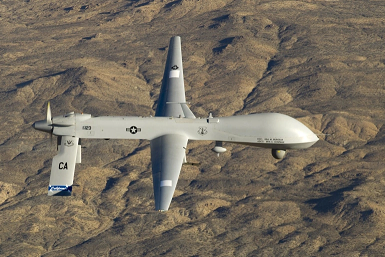
Drones are currently the “hot weapons.” They occupy roughly the same position as Patriot missiles after the first Gulf war, (1) sea-skimming anti-ship missiles after the Falklands War, (2) aircraft carriers after the Second World War, and submarines after the First World War. Every country’s military wants to have them, sees a use for them and wants them now. These factors are global, but they are attenuated in the Gulf Cooperation Council (GCC) states – traditionally among the most eager adapters of new military equipment and always interested in military capacity that does not require big investments of manpower.

Military requirements have driven scientific advances from the earliest time in history. The forging of metal was used in weapons; the first large scale factories produced cannons for French kings; the first use of interchangeable parts in machinery was the British military’s “Brown Bess” musket. The internet started as an initiative by the US army, and many other technological advances owe their genesis to military research.

What history has shown is that if new technology has a definite military application, then those nations which field the new technology will have an advantage over nations that do not. When new military technology is successfully used in combat, all militaries rush to acquire it for themselves. A good example is the rapid development of chemical weapons by nearly all countries after they were introduced in World War I.

Hot weapons

Combating Terrorism Center (CTC)

CTC Sentinel, April/May 2021, v. 14, no. 4

A View from the CT Foxhole: Admiral (Retired) William H. McRaven,

Former Commander, U.S. Special Operations Command, and Nicholas

Rasmussen, Former National Counterterrorism Center Director, Reflect

on the Usama bin Ladin Raid

Uniting for Total Collapse: The January 6 Boost to Accelerationism

The March 2021 Palma Attack and the Evolving Jihadi Terror Threat to Mozambique

The Revival of the Pakistani Taliban

A New Approach Is Necessary: The Policy Ramifications of the April

2021 Loyalist Violence in Northern Ireland

The Lurid Orientalism of Western Media

BRAHMA CHELLANEY

NEW DELHI – When reporting on any mass tragedy, a basic rule of journalism is to be sensitive to the victims and those who are grieving. Western media, which double as the international media, usually observe this rule at home but discard it when reporting on disasters in non-Western societies.

The coverage of India’s devastating second wave of COVID-19 is a case in point. Western media have been filled with images of dead bodies and other graphic scenes that generally would not be shown following a similar disaster in a Western country. About half of global COVID-19 deaths have occurred in Europe and the United States alone, yet Western media have avoided presenting harrowing images from those settings.

Even at the height of the pandemic in the US and Europe, it was unthinkable that television crews would barge into emergency rooms to show how overwhelmed the doctors and nurses were. Yet such scenes have been broadcast internationally from inside Indian hospitals, with little concern for how the intrusion could affect life-or-death decisions. Television journalists have also swarmed Indian families who lost loved ones, turning their private grief into a public spectacle for Western consumption.

When covering grief in their own countries, the same media organizations are far more careful. For example, coverage of mass graves being dug to accommodate New York City’s early surge of COVID-19 fatalities featured sanitized images of misty tree-lined fields. By contrast, India’s pandemic experience will be remembered for the haunting images of bodies burning on pyres – images that the Western media beamed around the world.

Colonial Pipeline Paid Hackers Nearly $5 Million in Ransom

By William Turton, Michael Riley, and Jennifer Jacobs

Colonial Pipeline Co. paid nearly $5 million to Eastern European hackers on Friday, contradicting reports earlier this week that the company had no intention of paying an extortion fee to help restore the country’s largest fuel pipeline, according to two people familiar with the transaction.

The company paid the hefty ransom in difficult-to-trace cryptocurrency within hours after the attack, underscoring the immense pressure faced by the Georgia-based operator to get gasoline and jet fuel flowing again to major cities along the Eastern Seaboard, those people said. A third person familiar with the situation said U.S. government officials are aware that Colonial made the payment.

Once they received the payment, the hackers provided the operator with a decrypting tool to restore its disabled computer network. The tool was so slow that the company continued using its own backups to help restore the system, one of the people familiar with the company’s efforts said.

A representative from Colonial declined to comment. Colonial said it began to resume fuel shipments around 5 p.m. Eastern time Wednesday.

When Bloomberg News asked President Joe Biden if he was briefed on the company’s ransom payment, the president paused, then said: “I have no comment on that.”

Quantum computing: A national security primer


Key Points

Quantum computing has vast potential in a broad range of fields, including national security.

The United States faces crucial security vulnerabilities if one of its adversaries achieves quantum computing superiority before American cyber defenses are sufficiently updated.

In recent years, governments around the world have pledged more than $20 billion toward quantum development, with China leading in public funding by a decisive margin.

Building on its recently established National Quantum Initiative, the US must safeguard its national security interests in quantum computing through enhanced risk awareness, strategic international cooperation, and accelerated network securitization.


Introduction

White House Aims To Beef Up Nation’s Cybersecurity After Pipeline Hack

BY PATRICK TUCKER

A new executive order, issued days after ransomware shut a major U.S. pipeline, aims to change how companies manage and report cybersecurity incidents, give consumers better ways to evaluate the security of products and services, and create a standard playbook for federal responses to breaches and attacks.

“We routinely install software with significant vulnerabilities to some of our most critical systems and infrastructure,...systems that are used to deliver our power and our water to help manage traffic,” a senior Biden administration official told reporters during a call on Wednesday. “Continuing status quo is simply unacceptable.”

The order will likely force businesses to change how they communicate to the government and the public about their cybersecurity postures.

The order also invalidates contractual obligations that can make IT providers hesitant to share information about network breaches with the government, according to a fact sheet sent out by the National Security Council.

It adds new standards for government purchases of federal software and IT services.

Principles for the Combat Employment of Weapon Systems with Autonomous Functionalities

By Robert O. Work

Introduction

An international debate over lethal autonomous weapon systems (LAWS) has been under way for nearly a decade.1 In 2012, the Department of Defense (DoD) issued formal policy guidance on weapon systems with autonomous functionalities,2 and nations have come together since 2014 to discuss LAWS through the United Nations Convention on Certain Conventional Weapons (CCW). The discussions at the CCW have been hampered by the lack of an agreed-upon definition for LAWS.3 However, states party to the CCW agreed in 2019 that “human responsibility” for the decisions over the use of weapon systems and the use of force “must be retained.”4 Accordingly, discussions now tend to focus on the type and degree of human involvement required to ensure compliance with international humanitarian law and satisfy ethical concerns.5

Several scholars argue these discussions should focus on “developing objective, commonly held, and function-based understandings of autonomy in the military context” (emphasis added).6 The premise of this paper is that the best way to achieve such an understanding is to develop, debate, and agree upon some commonly accepted principles for the employment of weapon systems with autonomous functionalities in armed conflict.7 This is where the legal, ethical, and moral questions about autonomy in warfare are most acute and deserve the most attention.

These seven new principles concentrate on the responsible use of autonomous functionalities in armed conflict in ways that preserve human judgment and responsibility over the use of force and help minimize the probability of loss of control of the system or unintended engagements, especially against noncombatants.

The Evil Military-Industrial Complex (V2)

by Frank Li

The MIC (Military-Industrial Complex) destroys America not only morally, but also economically. So, it's time to have it fixed, completely!

1. What is the MIC?

The military - industrial complex (MIC) describes the relationship between a nation's military and the defense industry that supplies it, seen together as a vested interest which influences public policy.[1][2][3][4] A driving factor behind this relationship between the government and defense-minded corporations is that both sides benefit—one side from obtaining war weapons, and the other from being paid to supply them.[5] The term is most often used in reference to the system behind the military of the United States, where it is most prevalent due to close links between defense contractors, the Pentagon and politicians[6][7] and gained popularity after a warning on its detrimental effects in the farewell address of President Dwight D. Eisenhower on January 17, 1961.[8][9]

The video below is President Eisenhower's warning against it:

2. Why is the MIC evil?

The MIC destroys America not only morally, but also economically.

2.1 The MIC destroys America morally!

20 May 2021

China’s Cyber-Influence Operations

Maj Gen PK Mallick, VSM (Retd)
China’s Cyber-Influence Operations
The digital era has transformed the way we communicate. Using social media like Facebook and Instagram, and social applications such as WhatsApp and Telegram, one can be in contact with friends and family, share pictures, videos, messages, posts and share our experiences. Social media has become an effective way of influencing human society and behavior, and shaping public opinion. By sharing a post, tweeting an idea, contributing a discussion in a forum and sharing a sentimental picture, we can influence others and sometimes convince into with our opinion.

Use of cyber tools and methods to manipulate public opinion is called ‘Cyber Influence Operation’. In the present day, many countries use cyberspace, especially the social media, to accomplish Cyber Influence Operations as a part of Information Warfare. Most of these operations are done covertly. It is difficult to differentiate between legitimate or malicious influence operations. Continue Reading..... 

Why is China making a permanent enemy of India?

Brahma Chellaney

Brahma Chellaney is a geostrategist and author of nine books, including "Asian Juggernaut: The Rise of China, India and Japan."

When India, currently fighting a devastating second COVID wave, was similarly distracted a year ago with enforcing the world's strictest coronavirus lockdown, China took advantage to stealthily infiltrate key border areas in India's high-altitude Ladakh region.

As thawing ice reopened access routes after the brutal Himalayan winter, a shocked India discovered that the People's Liberation Army had occupied hundreds of sq. kilometers of the borderlands, fortified by heavily armed bases. The discovery triggered the first deadly clashes in the region since 1975.

The intruding PLA forces remain well dug in, with Beijing in no mood to roll back its encroachments or accept further buffer zones of the kind established in two other confrontation areas to avert further armed clashes.

With tens of thousands of Chinese and Indian troops facing each other in multiple areas, the standoffs constitute the longest period of military confrontation since China imposed itself as India's neighbor in the early 1950s by occupying then-autonomous Tibet. Even China's 1962 military attack on India -- the only foreign war that communist-ruled China has won -- only lasted 32 days.

Tehreek-e-Taliban Pakistan: Is China in its Crosshairs?

By: Sudha Ramachandran

On April 21, a car packed with explosives detonated in the parking lot of the Serena Hotel in Quetta, the capital of Pakistan’s restive Baluchistan province. Five people were killed and another twelve were injured in the attack (Dawn, April 21). Tehreek-e-Taliban Pakistan (TTP) claimed responsibility for the deadly explosion (The News, April 23). An umbrella grouping of Pashtun militias that operate in the Pakistan-Afghanistan border areas, the TTP wreaked havoc in Pakistan between 2007 and 2014. It carried out countless attacks on military installations, convoys, police stations, schools, and places of worship for minority religious sects. The violence it unleashed claimed the lives of over 80,000 soldiers and civilians in this period (Terrorism Monitor, March 26). However, the TTP’s capacity began to weaken in 2014, relegating it to “near-irrelevance” in subsequent years (TRT World, August 21, 2020). It is in this context that the TTP’s attack at the Serena Hotel is significant as it indicates that the grouping is ascending again. The TTP could also increasingly target Chinese projects and nationals in Pakistan.

The TTP’s Rise and Fall

The TTP was established in December 2007 in response to the Pakistani military’s crackdown on militant clerics holed up in Islamabad’s Lal Masjid. Its main objective is to topple the Pakistani state and establish Islamic law in the country. Within a year of its formation, the TTP was in control of much of the seven Federally Administered Tribal Areas (FATA) and wielded influence over a large expanse of Khyber Pakhtunkhwa province. After taking control over much of Swat, it advanced to Buner and seemed within striking distance of Islamabad (Dawn, July 13, 2017).

China, the victim? From behind the Great Wall is a government under siege by foreign threats

By: Mike Yeo

MELBOURNE, Australia, and BEIJING — Activity by U.S. military ships and surveillance planes directed toward China has increased significantly under the Biden administration, a spokesperson for the Chinese Defense Ministry said April 29.

As an example, Wu Qian said the U.S. Navy’s Arleigh Burke-class destroyer Mustin recently conducted close-in observation of the Chinese aircraft carrier Liaoning and its battle group.

That had “seriously interfered with the Chinese side’s training activities and seriously threatened the safety of navigation and personnel on both sides,” Wu said. The ship had been warned to leave and a formal protest filed with the U.S., he added.

Compared to the same period last year, activity by U.S. military ships was up 20 percent and by planes 40 percent in areas China claims as its territory since President Joe Biden took office in January, Wu said. At the same time, China is continuing to modernize its military across all domains amid what it considers diverse and complex security threats and challenges from foreign actors.

China routinely objects to the U.S. military presence in the South China Sea, which it claims virtually in its entirety, as well as the passage of Navy ships through the Taiwan Strait.

Pentagon Backs Off Xiaomi Blacklisting After Legal Challeng

By Dan Strumpf

HONG KONG—The U.S. Defense Department agreed to remove Xiaomi Corp. from a blacklist banning U.S. investment in the Chinese tech giant, opting against further defending a Trump administration action that alleged ties between the smartphone maker and the Chinese military.

The retreat comes two months after Xiaomi won a key victory in a federal lawsuit challenging the listing, in which a Washington, D.C., judge criticized the Pentagon’s rationale for the move and ordered a temporary halt against its enforcement.

In a one-page legal filing on Tuesday, lawyers for both Xiaomi and the Pentagon said the company’s removal from the blacklist was appropriate following the judge’s order. Shares of Xiaomi ended 6.1% higher in Hong Kong following the announcement.

In agreeing to delist Xiaomi, the Pentagon signaled a willingness to walk away from a sustained fight over one of the Trump administration’s final actions against a major Chinese tech company. Xiaomi joins a small but growing list of Chinese tech companies including the owners of Chinese social-media apps TikTok and WeChat that have successfully won courtroom reprieves against Trump-era actions.

In an emailed statement, a spokeswoman for the National Security Council said: “U.S. courts found that the Trump administration failed to develop a legally sufficient basis for imposing restrictions on the company and compelled this action. The Biden administration is deeply concerned about potential U.S. investments in companies linked to the Chinese military and is fully committed to keeping up pressure on such companies.”

When and Why China Might—or Might Not—Attack Taiwan

BY JACOB STOKES

Security tensions are brewing in East Asia. China has on several recent occasions sent military aircraft to fly around Taiwan, including into its air defense identification zone, complete with taunts from the Chinese pilots. Officials and analysts worry that an attack on the self-governing island could be in the offing. But when? Sometime between tomorrow and mid-century. Or never. No one knows, and that’s because no one really knows what drives China’s decision-making.

Some commentators have advanced what might be called structural theories about when and why China could attempt to invade Taiwan. General Secretary Xi Jinping has proclaimed the goal of achieving the “great rejuvenation of the Chinese nation” by the centennial anniversary of the founding the People’s Republic of China in 2049 (often shorthanded as “mid-century”). Rejuvenation and unification are inextricable in the eyes of the CCP. Xi asserted in January 2019 that the “Taiwan question…will definitely end with China’s rejuvenation.” Others expect it sooner: by 2035, when state-run media say the People’s Liberation Army, will “basically” be modernized enough to fight and win a regional war against another advanced military. The implication being that China will invade once it concludes the PLA can win.

Alternative structural assessments see a more imminent peril. They argue the world, especially the United States, is entering a dangerous decade in relations with China generally and with regard to Taiwan specifically, where Beijing’s relative power is reaching an apex compared to would-be geopolitical competitors. Those theories posit that Chinese leaders might conclude they must attempt to forcibly annex Taiwan while they are at their strongest or risk it falling out of their grasp forever. Others acknowledge China faces future challenges but note that even slowing economic growth rates would arrive on top of a massive base, so Beijing’s power, at least relative to Taiwan, will likely continue to accrue.

The Two Sides of Chinese GDP

NANCY QIAN

CHICAGO – Economic reporting about China focuses far too much on total GDP and not enough on per capita GDP, which is the more revealing indicator. And this skewed coverage has important implications, because the two indicators paint significantly different pictures of China’s current economic and political situation. They also focus our attention on different issues.

The prevailing consensus among Israelis that Palestinian nationalism had been defeated – and thus that a political solution to the conflict was no longer necessary – lies in tatters. And even as the violence escalates, it has become clear to both sides that the era of glorious wars and victories is over.

A quick search through all English-language news outlets in the ProQuest database for the ten-year period from 2011-21 shows that 20,915 articles discussed China’s GDP, whereas only 1,163 mentioned its GDP per capita. The difference was proportionally even larger among the eight largest and most elite papers, including the New York Times, Wall Street Journal, and Washington Post, where 5,963 articles referred to Chinese GDP and only 305 discussed the per capita measure.

In 2019, China’s GDP (measured at market exchange rates) of $14 trillion was the world’s second largest, after that of the United States ($21 trillion), with Japan ($5 trillion) in third place. Aggregate GDP reflects the total resources – including the tax base – available to a government. This is helpful for thinking about the size of China’s public investments, such as in its space program or military capacity. But it has much less bearing on Chinese people’s everyday lives.