11 June 2021

Despite Recent Growth, Turkey’s Economy Remains Fragile

By Stratfor Worldview

The economic growth Turkey’s seen this year is unlikely to be sustainable in the long term, as President Recep Tayyip Erdogan pushes to cut interest rates in ways that further destabilize the country’s already fragile currency and financial situation. Erdogan has been clear in recent statements that he wants to begin easing Turkey’s high-interest rates despite ongoing high inflation in the country, which doesn’t bode well to begin an easing cycle. Currency, balance of payments and debt crises are not imminent, but capital flight and tighter financial market conditions will accelerate trends in that direction.

Erdogan is well known for his unorthodox monetary policy, which embraces easing at all costs to promote economic growth and, in his view, help tame high inflation.

This unorthodox approach has spurred numerous personnel shake-ups at the helm of Turkey’s central bank in recent years, prompting currency outflows by damaging confidence in the bank’s political independence.

A recent small dip in inflation will add fuel to Erdogan’s push to cut interest rates before the central bank is ready to embrace easing. May's inflation numbers show the first slowdown in seven months, halting the record rise for now but still leaving Turkey with some of the highest inflation rates in the world. Annual consumer price index (CPI) inflation went down to 16.6% last month from 17.1% in April. Despite remaining well above Turkey’s official inflation target of 5%, the recent dip — even if temporary — will fuel Erdogan’s calls for lower interest rates, making an interest rate cut more likely in the coming months. The governor of Turkey’s central bank, Sahap Kavcioglu, followed Erdogan’s latest calls for easing with the assertion that “expectations for an early easing of policy...need to disappear.”

Nigeria’s Twitter Ban Is Another Sign Dictatorship Is Back

By Kọ́lá Túbọ̀sún

Nigeria has slipped back to dictatorship.

It was already clear when dozens of protesters were shot in October 2020 for demanding a change to the behavior of heavy-handed security agencies. But it has become even clearer. President Muhammadu Buhari, formerly the military dictator of the country from 1983-85, used threatening language on Twitter last week in response to agitations in the southeastern part of the country. The tweet in question, a threat to use “the language they will understand” against civilian protesters, was deleted shortly afterward by Twitter for violating its policies. Two days later, the government announced an indefinite ban on Twitter, because its actions in the country were “capable of undermining Nigeria’s corporate existence.” As of today, millions of citizens can only access the social media platform through VPNs.

The real reason for the ban, of course, is to silence a citizenry that found, through social media, an unfettered speech and a way to hold the leadership accountable through screenshots, quote tweets, replies, satire, mockery, and humor. This has not gone down well with their political leaders who consider it an affront to the old ways of ruling, as Minister of Information Lai Mohammed accidentally implied during the week. “Books and all forms of writing have always been objects of terror to those who seek to suppress truth,” as Wole Soyinka once wrote.

Artificial Intelligence Act: What Is the European Approach for AI?

By Eve Gaumond

On April 21, the European Commission unveiled the first-ever legal framework on artificial intelligence (AI): the Artificial Intelligence Act. The extensive AI Act addresses the risks stemming from the various uses of AI systems and aims to promote innovation in the field of AI. Mark MacCarthy and Kenneth Propp have called the proposed regulation “a comprehensive and thoughtful start to the legislative process in Europe [that] might prove to be the basis for trans-Atlantic cooperation.” This post builds on MacCarthy and Propp’s discussion and closely examines the key elements of the proposal—the provisions most likely to shape the discussion regarding the regulation of AI on this side of the Atlantic.

Before diving deep into the legislation itself, it is important to recognize the significant amount of work that the European Union has done to come up with this text.

Responding to Gray Zone Conflict: Countering Russia in the Donbas and Beyond

By Barnett S. Koven

Gray Zone conflict offers revisionist states the opportunity to expand their territorial control and/or influence through approaches that are ambiguous in nature and that do not rise to the level of war. As a result, the risk of retaliation by the U.S.-led international community is substantially reduced. This is the case given the tendency of U.S. defense planning to view conflict as dichotomous – instead of continuous – either peace or war. While this thinking may be appropriate enough for planning conventional campaigns, it handicaps defense planners when responding to unconventional challenges, such as Gray Zone conflict. Given the difficulty of constructing appropriate responses and the absence of a clear casus belli necessitating an immediate response, it is tempting to ignore Gray Zone threats. However, doing so merely emboldens challengers who utilize these strategies. Consequently, this article leverages the Russian Federation’s intervention in the Donbas in order to explore potential responses. Nevertheless, the types of approaches advocated herein are likely to be more broadly applicable as the U.S. government continues to engage in great power competition with both Russia and China in numerous regions of the world.

This article proceeds in four sections. Given that various competing conceptions of Gray Zone conflict exist; the first section is devoted to defining Gray Zone conflict. The second section provides an overview of the crisis in the Donbas. In doing so, it also offers a brief history of the crisis in Crimea, given that this history is instructive for understanding the Donbas. The penultimate section is devoted to countering this threat. The final section concludes.

Vulnerabilities in Weapons Systems


“If you think any of these systems are going to work as expected in wartime, you’re fooling yourself.”

That was Bruce’s response at a conference hosted by US Transportation Command in 2017, after learning that their computerized logistical systems were mostly unclassified and on the Internet. That may be necessary to keep in touch with civilian companies like FedEx in peacetime or when fighting terrorists or insurgents. But in a new era facing off with China or Russia, it is dangerously complacent.

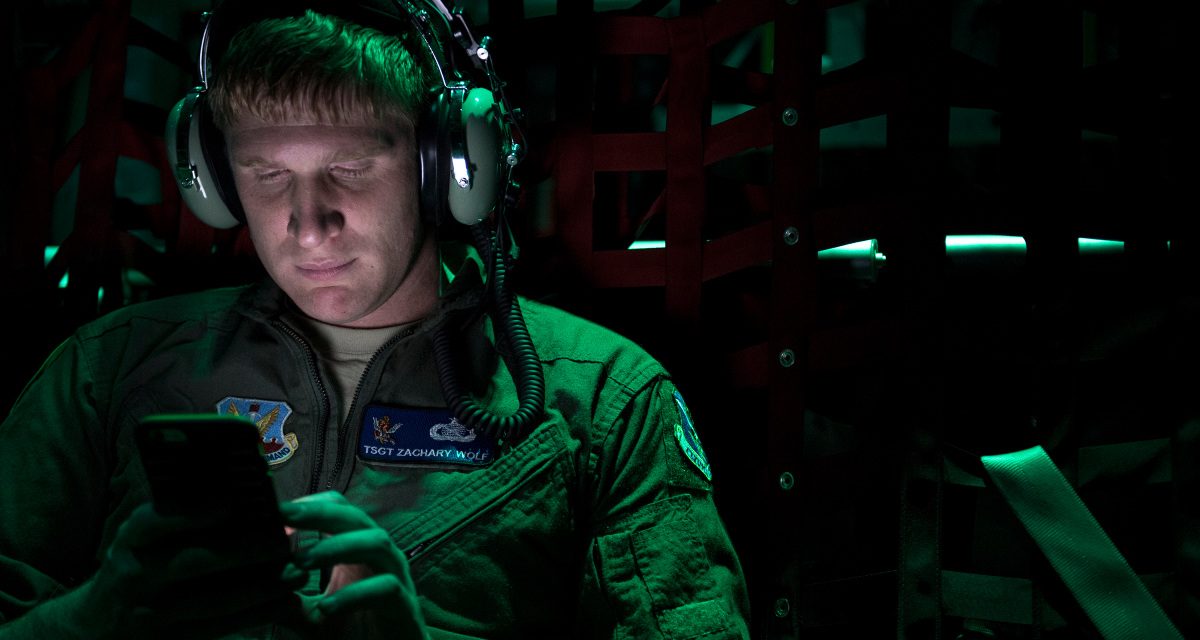
Any twenty-first century war will include cyber operations. Weapons and support systems will be successfully attacked. Rifles and pistols won’t work properly. Drones will be hijacked midair. Boats won’t sail, or will be misdirected. Hospitals won’t function. Equipment and supplies will arrive late or not at all.

Our military systems are vulnerable. We need to face that reality by halting the purchase of insecure weapons and support systems and by incorporating the realities of offensive cyberattacks into our military planning.

Ransomware attacks show we're getting clobbered on cybersecurity

BY KEVIN R. BROCK

Eastern Seaboard Americans actually sat in lines last month waiting to buy gas. For baby boomers and those older, it was a trip down memory lane to the late ’70s when gas shortages were purposefully engineered by oil-producing countries in the Middle East.

This time, the disruption in gas flow was caused by criminals armed with software, not rich men wearing keffiyehs. And now, last week, we learned that it might be tough to buy beef for a little while because crooks have extorted a major meat distributor with ransomware.

Suddenly, Americans are getting a taste of a specific threat the intelligence community and cybersecurity experts have warned about for years: cyber attacks, engineered overseas, can evolve to a point where they interfere with basic services we all depend on.

Make no mistake, we are at a worrisome, if not yet fully dangerous, inflection point.

He spent years at war in Afghanistan. Now he commands the U.S. withdrawal.

By Dan Lamothe

During his first two years in command in America’s longest war, Army Gen. Austin “Scott” Miller oversaw a partial withdrawal of U.S. troops from Afghanistan that came in waves under President Donald Trump. Now he was meeting with the new president for the first time, via video feed from the White House.

Miller and other senior military officers had urged Trump to leave a couple thousand U.S. troops in Afghanistan to counter threats posed by terrorist groups, and they were recommending roughly the same to President Biden. While Biden and Trump disagreed on many issues, both had vowed to end U.S. involvement in a conflict that Pentagon officials said they could not win on the battlefield.

Biden and Miller would meet only that one time before the president announced in April that he would withdraw all U.S. troops from the country by September, U.S. officials said.

After 2,400 U.S. military deaths, more than $2 trillion spent and about a dozen generals under four presidents, Miller expects to be the last U.S. commander in the war. He won’t be able to rewrite history. But he’ll command the departure.

OUR DIGITAL VULNERABILITY LAID BARE: THE OPENING GAMBIT OF THE NEXT WAR

Thomas G. Pledger

Setting the Board
In the Pacific Ocean, a submarine mast quietly broke the surface of the warm water just before midnight. Its hatch cracked open, and its crew quickly went to work opening dry storage containers and inspecting their contents on the fore and aft decks. The submarine’s captain was thankful for the low winds, calm seas, and dark blanket provided by the new moon. Although off the coast by more than twelve miles, the submarine could not afford to be identified. Capt. Zhao hoped his fellow captains farther up the coast were laboring under equally favorable conditions.

Almost three hundred miles away, Capt. Matt Chandler had just gotten his children to sleep; they were fighting off colds, and bedtime had taken longer than anyone preferred. Being that Matt was a spouse in a dual-military marriage, the kids were his to care for this evening while his wife was flying unmanned aerial vehicles (UAVs) from a small control building at Creech Air Force Base. Out of habit, he checked his phone, though knowing there would not be a text message from her. As a UAV pilot himself, he knew that her phone would be turned off and locked in a box at the entrance of the secure facility while she was flying. Matt sent text messages to his mom and his sister, both to check in with them and to confirm that the upcoming family gathering on Labor Day was still on.

Assessing U.S. Army Diversity Efforts in the Context of Great Power Competition


Summary: The heuristics (mental shortcuts that ease the cognitive load of making a decision) that people rely on matter. Relying on outdated heuristics can be problematic. While U.S. Army talent management efforts have been important in realizing increased diversity, the effort to create matching heuristics is lacking. The result will likely undermine the U.S. Army’s efforts at achieving diversity.

Text: On May 20, 2021, U.S. Senator Ted Cruz made comments about U.S. Army recruiting advertisements[1]. Twitter users responded to the senator’s tweet quickly and in a highly negative manner. Beyond these twitter responses, the situation Senator Cruz’s comments created highlights a larger implication of similar behaviors in the U.S. Army. The issue at hand is a reliance on flawed heuristics; approximations of knowledge that are useful in making immediate, though not necessarily the most efficient, decisions.

Despite Senator Cruz’s attempts to back away from his position about the efficacy of the U.S. Army compared to the Russian military[2], the heuristic that he used is clear: efficacy of a military is defined by its ability shape its members into a similar, unthinking mold; a vessel to contain violence, unleashed automatically in response to a command given by their masters. The senator’s tweet illustrates a belief that soldiers are identical cogs in the machine of an army; when a cog breaks, it is replaced, and the machine grinds on. This heuristic echoes the industrial revolution and does an adequate job of describing Queen Victoria’s army[3], but is not useful today.

10 June 2021

Water Security as Part of Non-Traditional Security: Threat - Implications for India

Maj Gen P K Mallick, VSM (Retd)

Like oil or data, water is an integral part of the world’s economy. Although about 71 per cent of the earth’s surface is water-covered, the oceans hold about 96.5 percent of all Earth’s water which is salt water. Freshwater, most of it is frozen in glaciers, accounts for the rest. That leaves less than 1 per cent of the world’s water available to support human and ecological processes. We withdraw 4.3 trillion cubic meters of freshwater every year from the earth’s water basins. We use it in agriculture, which accounts for 70 per cent of the withdrawals. Industry and households consume 19 per cent and 11 per cent, respectively. However, these percentages fluctuate widely across the globe. In the United States, industrial and agricultural usage is almost the same around 40 per cent. In India, agriculture uses 90 per cent of water withdrawals, while only 2 per cent is consumed by industry. Over the past century, rate of withdrawal of available freshwater resources have risen almost six times, outpacing global population growth.

China’s Cyber-Influence Operations

 Maj Gen PK Mallick, VSM (Retd) 

The digital era has transformed the way we communicate. Using social media like Facebook and Instagram, and social applications such as WhatsApp and Telegram, one can be in contact with friends and family, share pictures, videos, messages, posts and share our experiences. Social media has become an effective way of influencing human society and behavior, and shaping public opinion. By sharing a post, tweeting an idea, contributing a discussion in a forum and sharing a sentimental picture, we can influence others and sometimes convince into with our opinion.

Use of cyber tools and methods to manipulate public opinion is called ‘Cyber Influence Operation’. In the present day, many countries use cyberspace, especially the social media, to accomplish Cyber Influence Operations as a part of Information Warfare. Most of these operations are done covertly. It is difficult to differentiate between legitimate or malicious influence operations. Continue Reading..... 

India’s suspect ‘Quad’ credentials

BY RAMESH THAKUR

A chain is only as strong as its weakest link. The Quadrilateral Security Dialogue process brings together Japan, Australia, India and the United States as an informal grouping of democracies to cooperate around the vast and critical Indo-Pacific maritime space.

India has always been the weakest link in the chain. Its sizable armed forces equipped with nuclear weapons are a bulwark against China’s much superior military might. Still, it’s a very poor country with a per capita income of only 3% to 5% of the other three; a weak state with limited capacity to govern a billion plus population; and a soft state without the political will to make and implement tough decisions.

The second wave of COVID-19 in April and May is India’s biggest national tragedy and international embarrassment since partition in 1947. The national and world press covered this in graphic detail (more than they would in their own countries), with images of people gasping to death on the streets, bodies piled up awaiting last rites and cremation and mass numbers of corpses floating in the Ganges River, many of which having washed up on its banks. Prime Minister Narendra Modi’s carefully cultivated competence bubble has been punctured by the open display of mass ineptitude.

Taliban seizes eight districts in the past week

BY BILL ROGGIO

The Taliban has taken control of eight district centers in four different regions of Afghanistan over the past week as Afghan security forces struggle to maintain control of the security situation.

Eight districts in the north, south, southeast, west and center have fallen under Taliban control, while another district in the south is under effective Taliban control. The disbursed location of the Taliban attacks will force the already strained Afghan military to divide its forces if it wants to retake the districts.

In the north, the Taliban seized control of Du Ab and Mandawal (Mandol) districts in the rugged mountainous province of Nuristan. Afghan officials said in both cases the Afghan military and police units stationed at the district centers retreated from the Taliban advance. Afghan officials had previously admitted in February that Mandawal was under effective Taliban control as government officials were unable to administer the district due to the strong Taliban presence. Nuristan is a heavily contested province. Of its eight districts, two are Taliban controlled, four are contested, and two are government controlled, according to an ongoing study of the security situation in Afghanistan’s districts by FDD’s Long War Journal.

Can Afghan forces hold off the Taliban after American troops leave?


LITTLE MORE than a month after its final phase began, the pace of America’s military withdrawal from Afghanistan is accelerating. President Joe Biden has declared that all American troops will be out by September. Now it seems possible that they will be gone as soon as July. Generals reckon the packing-up and handing-over is nearly half-finished.

Violence from the Taliban-led insurgency is swelling, but Mr Biden is in no mood to tarry. He has long been a critic of America’s involvement in Afghanistan, and the faster troops go, the fewer casualties America will suffer (though, in truth, they are already very low). The vast Kandahar air base, once home to scores of jets, helicopters and drones, is deserted. The equally enormous Bagram air base near Kabul is next in line to be handed over to the Afghan government. Other NATO forces are racing the Americans to the exit. The Afghan army will have to face the Taliban on its own.

For Atiqullah Amarkhel, it is a familiar sensation. The former general was a commander in Afghanistan’s air force when Soviet troops left in 1989. The government they left behind, headed by the communist strongman president, Muhammad Najibullah, was expected to fold within weeks in the face of the mujahideen, Islamist guerrillas backed by America and Pakistan. In fact Mr Amarkhel and his comrades held off the militants for three years, even as the mujahideen launched a series of costly and unsuccessful offensives on cities such as Jalalabad, near the border with Pakistan. It was only later, when Russia stopped paying the bills, that Najibullah fell and the country descended into anarchy.

Nations in Southeast Asia want peace and trade, not war

Alex Lo

The Asean countries – which include Brunei, Cambodia, Indonesia, Laos, Malaysia, Myanmar, the Philippines, Singapore, Thailand, and Vietnam – have taken a neutral and nuanced position in the rivalry between the United States and China. It’s time they spoke out loudly.

Few people are more qualified to explain the Asean position than Dino Patti Djalal, former Indonesian ambassador to the US, and ex-deputy foreign minister.

The Association of Southeast Asian Nations, he wrote in Foreign Policy magazine, welcomes the re-engagement of US President
Joe Biden, but only “in the right way”.

“They do not want to see a heightened US-Chinese rivalry in Southeast Asia,” he wrote. “Asean countries do not want to be polarised … and see [their] cohesion undermined. [They] are hoping that the Biden administration will lower the temperature, tone, and tension … and keep the rivalry manageable.

“It is in the national interest of Asean countries to maintain good relations with both the United States and China. They all want to extract benefits from both powers.”

Countering China’s Intimidation of Taiwan

BY ROBERT S. WANG

On the first weekend following President Joe Biden’s inauguration, Taiwan’s Defense Ministry reported back-to-back incursions by two large fleets of Chinese military aircraft into Taiwan’s self-declared southwestern air defense identification zone. On Jan. 23, the fleet comprised eight nuclear weapon–capable Chinese H-6K bomber planes, four J-16 fighter jets and one anti-submarine aircraft. This was followed the next day by another fleet of 12 fighters, two anti-submarine aircraft and a reconnaissance plane. Beijing repeated these exercises several times in the subsequent months.

Since the election of Taiwan President Tsai Ing-wen in 2016, Beijing has markedly stepped up military pressure on Taipei. According to Taiwan, Beijing sent warplanes into the same area on at least 100 days in 2020. In January 2021, Chinese military planes flew into that zone 26 out of the first 30 days. Previously, such flights were usually conducted by one to three reconnaissance or anti-submarine warfare aircraft. According to Bernard Cole, a professor at the National War College, the latest incursions “demonstrate the People’s Liberation Army Air Force’s ability to put together a multiplane strike, which we would likely see in the event of a hot war against Taiwan.” Additionally, Taiwan’s defense minister informed its legislature last October that nearly 50 Chinese aircraft had crossed the median line of the Taiwan Strait in the first nine months of 2020.

China: Rise or Demise?

By John Mueller

Policymakers increasingly view China’s rapidly growing wealth as a threat. China currently ranks second, or perhaps even first, in the world in gross domestic product (although 78th in per capita GDP), and the fear is that China will acquire military prowess commensurate with its wealth and feel impelled to carry out undesirable military adventures.

However, even if it continues to rise, China does not present much of a security threat to the United States. China does not harbor Hitler‐​style ambitions of extensive conquest, and the Chinese government depends on the world economy for development and the consequent acquiescence of the Chinese people. Armed conflict would be extremely—even overwhelmingly—costly to the country and, in particular, to the regime in charge. Indeed, there is a danger of making China into a threat by treating it as such and by engaging in so‐​called balancing efforts against it.

Rather than rising to anything that could be conceived to be “dominance,” China could decline into substantial economic stagnation. It faces many problems, including endemic (and perhaps intractable) corruption, environmental devastation, slowing growth, a rapidly aging population, enormous overproduction, increasing debt, and restive minorities in its west and in Hong Kong. At a time when it should be liberalizing its economy, Xi Jinping’s China increasingly restricts speech and privileges control by the antiquated and kleptocratic Communist Party over economic growth. And entrenched elites are well placed to block reform.

China's Growing Military Is Screaming "Pay Attention"

by James Holmes

Here's What You Need To Remember: Capability and willpower represent the two basic components of strength for any combatant.

Admirals say the darnedest things. Over at the U.S. Naval Institute’s Proceedings magazine, retired U.S. Pacific Command Intelligence Chief Capt. Jim Fanell takes PACOM kahunas, past and present, to task for disparaging China’s People’s Liberation Army Navy (PLAN). Respect for prospective foes, proclaims Captain Fanell, constitutes the most prudent attitude.

Such counsel is evergreen.

Military folk must beware of hubris, the worst of all strategic habits. As ancient Greeks warned, hubris begets nemesis, meaning divine retribution. It’s insidious—especially for a force like the U.S. Navy. After all, it’s been twenty-six years since the Cold War. Few sailors or naval aviators now in uniform have known anything except American maritime supremacy. Such a historical interlude can give rise to triumphalism that taints assessments of rising challengers.

Suez Closure Brightens the Future of China’s New Silk Road

By: John C. K. Daly

Introduction
On March 23, the 240,000-ton, 1,312 feet long (399 meters) Panama-flagged MV container ship Ever Given, drawing 47 ft 7 in (14.5 meters) and carrying 20,000 containers from China’s Yantian International Container Terminal in Shenzhen, Guangdong Province bound for Rotterdam, accidentally grounded its bow on the Suez Canal’s eastern bank while transiting northwards from the Red Sea. It completely blocked the passage in both directions for six days, stranding hundreds of waiting vessels and paralyzing the global shipping industry.

The Ever Given had been chartered by Taiwan-based Evergreen Line and was under the control of a local pilot for its passage through the canal when it grounded. Japan’s Shoei Kisen Kaisha Ltd., owner of the Ever Given, now faces legal action over the accident, and an Egyptian court has sustained a Suez Canal Authority request for the ship to be detained until its owners pay more than $900 million—later lowered to $550 million—in compensation for the costs of the salvage operations, stalled canal traffic and lost transit fees (Hellenic Shipping News, May 24).

The grounding had a ripple effect through the global economy. Typically, more than 50 ships transit the canal each day, transporting roughly 12 percent of world trade and 8 percent of its liquefied natural gas (LNG), along with one million barrels of oil (Caixin, April 5, 2021.) The Suez Canal is the most important trade corridor linking Asia with Europe and the U.S. East Coast and disruptions can affect the economies of these regions. While hundreds of vessels idled in situ for the canal to be cleared, some ships with time-sensitive cargoes were forced to take the longer route around South Africa’s Cape of Good Hope, requiring additional fuel and added costs.

Azerbaijanis and Georgians Clash in Dmanisi: Isolated Incident or Growing Trend?

By: Giorgi Menabde

On May 16, in the small town of Dmanisi, about 40 miles from the border with Azerbaijan, a fist fight at a local shop escalated into a violent brawl involving hundreds of Georgian mountain dwellers (Svans) and local ethnic Azerbaijanis wielding clubs, iron rods and stones. The rioting was pacified only after the introduction of Special Forces of the Georgian Ministry of Internal Affairs. Both Interior Minister Vakhtang Gomelauri and the head of the State Security Service, Grigol Liluashvili, arrived in Dmanisi to assess the situation. Clashes of this magnitude in the surrounding Kvemo Kartli province last occurred in 1989 (Civil.ge May 17).

As is often the case with such conflicts, the clashes in Dmanisi began with a relatively minor incident involving representatives of the two ethnic groups. Reportedly, four Svans came to a small grocery store named Omari, owned by a local Azerbaijani. and demanded that the Azerbaijani saleswoman give them a bottle of beer on credit. The clerk replied that she could not release the goods without the consent of the store owner. Soon the businessman himself arrived at the scene. His conversation with the highlanders turned into a fight, with the participation of several relatives and friends of the Azerbaijani. The Svans left, but soon returned with 20 of their relatives and friends. Several people armed with truncheons were already waiting for them at the store. As a result of the fierce fight, eight people on both sides were bruised and wounded (Jam-news, May 17).

EXCLUSIVE: Biden not seeking to add countries to Quad to counter China

By Guy Taylor

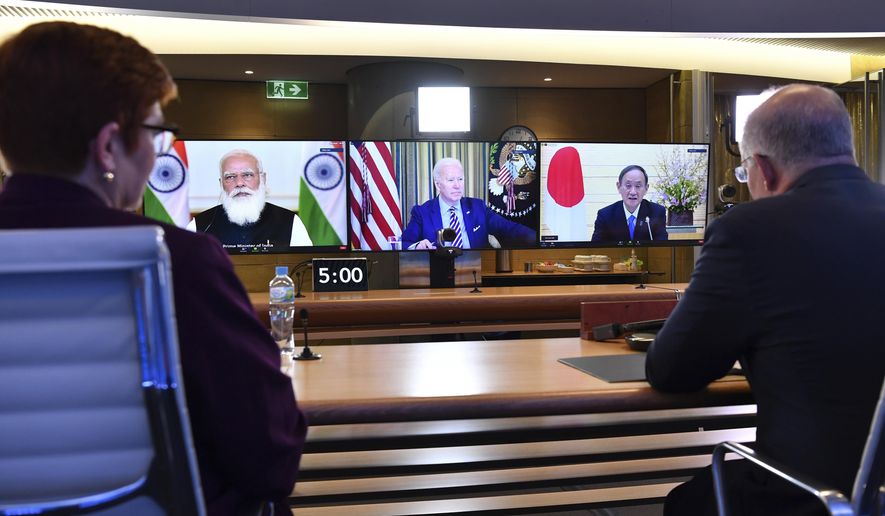
Biden administration officials say they are not pushing to add other countries to the strategic U.S.-India-Japan-Australia “Quad” group but stress that the future of American policy in the Indo-Pacific region hinges on the deepening alignment among the four powerful democracies to counter authoritarian China’s increasingly aggressive rise on the world stage.

“The Quad is definitely going to be a central focus of overall U.S. policy in the Indo-Pacific moving forward,” one senior administration official involved in the initiative told The Washington Times. The official said the White House is laying the groundwork for a first-of-its-kind, in-person “leader level” summit of Quad countries this year.

The comments coincide with mounting Chinese condemnation of the Quad amid speculation that the U.S. is seeking to establish an informal “Quad-plus” paradigm to generate strategic buy-in from smaller nations on China’s periphery, including South Korea, the Philippines, Singapore, Malaysia and perhaps Vietnam.

The Biden Defense Budget: the Good, the Bad and the Ugly

By Elaine McCusker

There are a lot of elements to evaluate and understand in the defense budget released by the Biden Administration on May 28. Some good. Some bad. And some ugly. Following are macro observations in each category.

First, the good.

The FY 2022 Biden defense budget continues the same key priorities outlined under the 2018 National Defense Strategy. Budget justification documents include these important words, “The continued erosion of U.S. military advantages relative to China remains the most significant risk to U.S. security interests.”

The proposed budget funds nuclear modernization, missile defeat and defense, and disruptive technologies such as artificial intelligence, hypersonics, microelectronics and quantum computing. It increases funding for cyberspace activities. The Department also acknowledges that its planning, programming, budgeting and execution process will require streamlining for “developing, acquiring and deploying these technologies.” Momentum has been building to fix this issue as the current process leads to missed opportunities in fielding new capabilities. It is good to see it specifically addressed in the budget request as well.

America Still Needs Counterinsurgency

By Max Boot

In 2006, when the U.S. war in Iraq was at its low point, the American military rediscovered counterinsurgency (COIN). This doctrine, developed in the 1950s by military innovators such as the British field marshal Gerald Templer in Malaya and the U.S. operative Edward Lansdale in the Philippines, holds that a military can’t defeat an insurgency by simply killing insurgents. In fact, by killing indiscriminately, one may actually create more enemies than one eliminates. The way to prevail, according to COIN doctrine, is to provide ordinary people with security and basic services. Doing so helps counterinsurgents earn people’s trust, making it more likely that they will provide the vital intelligence necessary to kill or capture hardcore insurgents without harming innocent civilians.

Two generals—David Petraeus of the U.S. Army and James Mattis of the U.S. Marine Corps—collaborated on a seminal field manual, published in December 2006, that popularized COIN thinking. In the years that followed, Petraeus applied COIN doctrine as commander of U.S. forces in Iraq. The “surge” he oversaw wound up reducing violence there by more than 90 percent. Although U.S. troops could not resolve underlying ethnosectarian tensions or turn Iraq into a model

PENTAGON UNDERCOUNTS CIVILIAN CASUALTIES IN NEW REPORT, EXPERTS SAY

Nick Turse

THE U.S. MILITARY killed 23 civilians and injured another 10 in Afghanistan, Iraq, and Somalia during 2020, according to a Pentagon report on civilian casualties that was released on Wednesday and immediately faced charges of being a whitewash. Experts said the report vastly undercounts the dead and wounded from U.S. military operations, and they noted that the Pentagon failed to provide condolence payments even in the handful of cases where it acknowledges causing deaths or injuries.

“The failure to accurately account and make amends for civilian harm does a disservice to civilians already suffering unimaginable loss, as well as to the Americans who deserve fuller transparency into the ways that U.S. operations have harmed civilians,” Annie Shiel, the senior adviser for U.S. policy and advocacy at the Center for Civilians in Conflict, told The Intercept. She also noted an “enormous discrepancy between DoD’s civilian casualty numbers and those published by civilian harm tracking organizations, human rights groups, the United Nations, and the media.”

A conservative accounting of civilians killed by the U.S. military in 2020, according to Airwars, a U.K.-based airstrike monitoring group, is almost five times higher: 102 noncombatant deaths resulting from U.S. attacks in Afghanistan, Iraq, Somalia, Syria, and Yemen. And as Chris Woods, the director of Airwars, pointed out, “The Pentagon’s failure to pay out any compensation to affected civilians during 2020 – despite several million dollars being available for that purpose — suggests a lack of interest in the devastating aftermath of those U.S. actions which go wrong.”

UFOs Were Born Among America’s Cold War Fears

By Kate Dorsch

The U.S. Senate is currently awaiting an official report detailing everything the government knows about unidentified flying objects (UFOs) and unidentified aerial phenomena (UAPs). The report is the result of a provision in the $2.3 trillion 2020 appropriations bill that provided coronavirus relief to Americans and avoided a government shutdown. It is expected, among other things, to address the now infamous Advanced Aerospace Threat Identification Program (AATIP), made famous by reporting in late 2017.

The current UFO-mania centers on a series of sightings made by U.S. Navy pilots or appearing on their sensors in 2004, 2014, and 2015, the video and reports of which were leaked by former U.S. Defense Department official Luis Elizondo. Elizondo’s alleged credibility derives from his claim to have served as director of AATIP. He described the program as “understandably overstretched” and without “the resources that the mounting evidence deserved.” His effort to ignite interest in un- or underreported military sightings has been bolstered by the creation of To the Stars Academy of Arts and Science (TTSA), a research institute co-founded by UFO true believer and former Blink-182 frontman Tom DeLonge, and former CIA official Jim Semivan. Elizondo now works with TTSA in the company of another former U.S. intelligence official, Christopher Mellon. The credentials of both the Navy pilots and the former government officials involved in TTSA have kept these sightings, and the controversy around them, in the public eye for more than three years.

Deterrence, U.S. Grand Strategy, and the Wisdom of Bob Gates

by Michael O'Hanlon

The Biden administration is now working on its national security strategy, a basic set of concepts and priorities that should guide the nation over the next four years of foreign policymaking. At a time of great demands at home, it may be tempted to look primarily inward in developing that strategy. However, it needs to be careful not to go too far in that direction. America’s basic role in the global security order today is sound and does not require radical adjustment.

In the debate over U.S. national security policy and American grand strategy, those who favor restraint and offshore balancing sometimes argue for dismantling some or most existing American alliances. Former President Donald Trump seemed to share that view. The restrainers and balancers are on solid ground when they question the idea of any further alliance expansion—notably, to Ukraine, Georgia, or other former elements of the Soviet Union. They should keep this refrain up at a time when some in Congress and elsewhere are unwisely trying to bring Ukraine into NATO as a response to greater tensions between Ukraine and Russia. But the offshore balancing argument is much less compelling when it extends to the proposition that we should dismantle existing security pacts, and effectively retrench or withdraw from certain key parts of the world.

Is There a Place for a U.S. Military Base in Central Asia?

By Temur Umarov

U.S. President Joe Biden has promised there will be no U.S. troops left in Afghanistan by the twentieth anniversary of the 9/11 terrorist attacks this year. But Washington is determined to keep supporting the Afghan government in its fight against the Taliban, and this is unlikely to be achievable without the establishment of U.S. military bases in Afghanistan’s neighboring countries. The U.S. military command’s preferred option reportedly would be Central Asia.

This is certainly the most obvious option: U.S. troops were, after all, based in the region from 2001 to 2014. Since then, however, much has changed. Most importantly, the U.S. relationships with Central Asia’s two main external partners — Russia and China — have sharply deteriorated, and they will clearly not welcome a U.S. return to the region. Washington, therefore, will have to prove to the Central Asian states that the financial and political benefits of cooperating with it would outweigh the inevitable losses that the host countries would sustain as a result of Moscow and Beijing’s displeasure. That won’t be easy, because during the last decade, people in Central Asia have conclusively stopped believing that the United States is prepared to act as a counterbalance to Russia and China in the region.

What the EU’s Green Deal Means for Europe and Russia

By Antonia Colibasanu

Last week, the European Commission announced that it will unveil in July a dozen climate change policies meant to ensure that member states meet the targets of the EU’s Green Deal program. The goal of the program is to cut greenhouse gas emissions by at least 50 percent (compared to 1990 levels) by 2030 and to become climate neutral by 2050. The new regulations will likely target transportation and industry, sectors that have fallen behind on emissions reductions. The announcement came a week after the European Parliament formally approved the EU’s multibillion-euro fund to support communities that will be most affected by plans to curb fossil fuel-intensive industries.

Implementation will fall mostly to member states, many of which will struggle to apply the ambitious new policies. Implementation will therefore likely be a slow and uneven process, considering that countries need to balance between Brussels’ green goals and the socio-economic needs of their citizens. The Green Deal also has broader implications for the bloc. It could increase division among member states and reshape Europe’s relationship with Russia, currently a major energy provider for many European nations. In the long term, the program has the potential to remodel member states’ relations both with each other and with Europe’s eastern neighbor.

Not Even Covid-19 Could Slow Down Nuclear Spending


“It’s very profitable to prepare for omnicide,” Daniel Ellsberg, famed whistleblower and anti-nuclear weapons activist, said in a recent interview. “Northrop Grumman and Boeing and Lockheed and General Dynamics make a lot of money out of preparing for such a war. The congressmen get campaign contributions, they get votes in their district and almost every state for preparing for that.”

But don’t just take it from Ellsberg. At an investor conference in 2019, a managing director from the investment bank Cowen Inc. queried Raytheon’s CEO on this subject. “We’re about to exit the INF [Intermediate-Range Nuclear Forces Treaty] with Russia,” said the Cowen executive. Did this mean, he asked, whether “we will really get a defense budget that will really benefit Raytheon?” Raytheon’s CEO happily responded that he was “pretty optimistic” about where things were headed.

A new report from the International Campaign to Abolish Nuclear Weapons released Monday examines in detail just who’s getting all the radioactive cash and why. ICAN received the Nobel Peace Prize in 2017 in recognition for its work “to draw attention to the catastrophic humanitarian consequences of any use of nuclear weapons and for its ground-breaking efforts to achieve a treaty-based prohibition of such weapons.”

The Conflict in Ukraine is Getting Very High-Tech

by Sebastien Roblin

Here's What You Need to Know: In the past, Ukraine harbored a major share of the Soviet Union’s military-industrial sector, building Antonov transport planes, T-64 tanks and even aircraft carriers. Ukraine is seeking to leverage that industrial base to strengthen its hand in the conflict in Eastern Ukraine.

For several years, Ukrainian troops have been locked in a “frozen conflict” with Russian-backed separatists for control of the Donbas region in Eastern Ukraine. The maneuver warfare and urban/airport siege phase of the conflict ended in 2015. Now the opposing forces glare at each other across no man’s land from fortified outposts and periodically lash out with sniper fire, artillery and mortar barrages, or even precision-attacks delivered by anti-tank missiles.

When the slightest exposed movement spotted by adversaries could provoke a deadly bombardment, it’s easy to understand why Ukrainians are seeking to introduce robotic vehicles to minimize the risks to flesh-and-blood combatants.

In the past, Ukraine harbored a major share of the Soviet Union’s military-industrial sector, building Antonov transport planes, T-64 tanks and even aircraft carriers. Ukraine is seeking to leverage that industrial base to strengthen its hand in the conflict in Eastern Ukraine.

Illegal Fishing Is a Global Threat. Here’s How to Combat It.

by John C. Vann

Illegal, unreported, and unregulated fishing—known as IUU fishing—is a global scourge. Carried out by malicious actors in the shadows of the world’s oceans, it can devastate ecosystems, degrade food stocks, and undermine fragile fishing economies. A broad network of international partners, including U.S. civilian and military agencies, should work to eradicate this threat to the world’s shared prosperity.

What is IUU fishing?

Illegal fishing refers to fishing activities in contravention of applicable laws and regulations. Unreported fishing refers to fishing activities that are not reported or are misreported to relevant authorities. And unregulated fishing is done by vessels without nationality or that are not regulated by their flag state, the country in which a vessel is registered. It also occurs when vessels fish in areas or for stocks for which there are no applicable conservation or management measures.

Where is it happening?

IUU fishing is a global problem, occurring in the South China Sea, off the west coast of Africa (where estimates put illegal catch at 40 percent), off both coasts of South America, in the eastern Indian Ocean, throughout Oceania, and around Antarctica. According to the Global Initiative Against Transnational Organized Crime’s IUU Fishing Index, which benchmarks countries’ vulnerability to, prevalence of, and response to IUU fishing, four of the top five worst-scoring countries are in Southeast Asia. China tops the list, and Russia is the sole non–Southeast Asian country, at number four.

Uncharted territory: The global economy has everyone guessing

Stephen Bartholomeusz

Markets and economists are debating the implications of another surge in US inflation to levels last seen a quarter of a century ago but the dilemma confronting investors and policymakers is whether that has any relevance within economic settings that are unprecedented in the post-war period.

When the US CPI is released on Thursday it is expected to reveal that headline inflation has spiked from 4.2 per cent in April – already the highest number since 2008 – to 4.7 per cent in May. Core inflation, excluding food and energy prices, is expected to rise from 3 per cent – the highest since 1995 – to 3.4 per cent, the highest level recorded since 1993.

Would that matter? The US Federal Reserve Board and other policymakers say it doesn’t. They argue that the spike in inflation is transitory, a response to the disruption generated by the worst of the pandemic impacts last year.

It will pass, they say, as supply chain bottlenecks, school closures and pandemic-induced caution among the unemployed gradually resolve themselves as the vaccination rates increase and businesses gradually return to normal operations.

Ransomware Struck Another Pipeline Firm—and 70GB of Data Leaked


WHEN RANSOMWARE HACKERS hit Colonial Pipeline last month and shut off the distribution of gas along much of the East Coast of the United States, the world woke up to the danger of digital disruption of the petrochemical pipeline industry. Now it appears another pipeline-focused business was also hit by a ransomware crew around the same time, but kept its breach quiet—even as 70 gigabytes of its internal files were stolen and dumped onto the dark web.

A group identifying itself as Xing Team last month posted to its dark web site a collection of files stolen from LineStar Integrity Services, a Houston-based company that sells auditing, compliance, maintenance, and technology services to pipeline customers. The data, first spotted online by the WikiLeaks-style transparency group Distributed Denial of Secrets, or DDoSecrets, includes 73,500 emails, accounting files, contracts, and other business documents, around 19 GB of software code and data, and 10 GB of human resources files that includes scans of employee driver's licenses and Social Security cards. And while the breach doesn't appear to have caused any disruption to infrastructure like the Colonial Pipeline incident, security researchers warn the spilled data could provide hackers a roadmap to more pipeline targeting. LineStar did not respond to requests for comment.

Is the Future of Naval Warfare Drone Swarms That Can Wipe Out Submarines?

by Sebastien Roblin

Here's What You Need To Remember: Drones offer a lot of interesting possibilities for how warfare might change. However, they aren't yet able to displace traditional systems.

After a post-Cold War hiatus, navies across the planet are pursuing new anti-submarine capabilities as a submarine arms race accelerates in the Pacific Ocean. Developing technologies like quantum magnetometers and satellite-based optical sensors are leading to forecasts that submarines may be on the verge of losing their stealthy edge by the mid-twenty-first century.

But swarms of cheap drones both above and below the water (unmanned underwater vehicles, or UUVs) may pose the biggest and most proximate threat to submarines.

Swarming drones are distinct from larger, higher capability (and more expensive) long-range autonomous unmanned vehicles like the Large-Diameter HSU-001 submarine, recently displayed by China, or the Extra-Large Displacement Orca being built for the U.S. Navy.

9 June 2021

Water Security as Part of Non-Traditional Security: Threat - Implications for India

Maj Gen P K Mallick, VSM (Retd)

Like oil or data, water is an integral part of the world’s economy. Although about 71 per cent of the earth’s surface is water-covered, the oceans hold about 96.5 percent of all Earth’s water which is salt water. Freshwater, most of it is frozen in glaciers, accounts for the rest. That leaves less than 1 per cent of the world’s water available to support human and ecological processes. We withdraw 4.3 trillion cubic meters of freshwater every year from the earth’s water basins. We use it in agriculture, which accounts for 70 per cent of the withdrawals. Industry and households consume 19 per cent and 11 per cent, respectively. However, these percentages fluctuate widely across the globe. In the United States, industrial and agricultural usage is almost the same around 40 per cent. In India, agriculture uses 90 per cent of water withdrawals, while only 2 per cent is consumed by industry. Over the past century, rate of withdrawal of available freshwater resources have risen almost six times, outpacing global population growth.