10 October 2021

White Paper on Trustworthy Artificial Intelligence


At present, the new generation of artificial intelligence (AI) technology is developing rapidly, and its penetration into all fields of society is accelerating, bringing profound changes to human production and life. While AI brings great opportunities, it also contains risks and challenges. When presiding over the ninth collective study session of the Central Committee Politburo in October 2018, General Secretary Xi Jinping emphasized that “it is necessary to strengthen our judgment of the potential risks of the development of artificial intelligence and to strengthen our watchfulness against them, to safeguard the interests of the people and national security, and to ensure the security, reliability, and controllability of artificial intelligence.” Enhancing confidence in the use of AI and promoting the healthy development of the AI industry has become an important concern.

The development of trustworthy AI is becoming a global consensus. In June 2019, the Group of Twenty (G20) proposed the “G20 AI Principles,” emphasizing the need to be people centered (以人为本) and develop trustworthy AI. These principles have also been universally recognized by the international community. The European Union (EU) and the United States have also placed the enhancement of user trust and the development of trustworthy AI at the core of their AI ethics and governance. In the future, translating abstract AI principles into concrete practices and implementing them into technologies, products, and applications is an inevitable choice when responding to social concerns, resolving outstanding contradictions, and preventing security risks. It is an important issue related to the long-term development of AI and is an urgent task that industry must quickly address.

Press Conference on the “Launch and Implementation of the National Key R&D Program”: Summary Transcript


[Director of the General Office (办公厅) of the Ministry of Science and Technology (MOST) and MOST Spokesperson] Wu Yuanbin (吴远彬): Good morning to our friends in the press, and welcome everyone to MOST’s first regular press conference of 2016. We thank all our friends in the media for their concern and support for science and technology (S&T) endeavors. Since fully launching management reform of the central government fiscal [budget-funded] S&T programs (special projects, funds, etc.) at the end of 2014, under the correct leadership of the Party Central Committee and the State Council, and under the kind care and guidance of Vice Premier [Liu] Yandong, MOST, the Ministry of Finance, the [National] Development and Reform Commission (NDRC), and relevant departments, reform tasks have been actively assigned and implementation of reform has been promoted, a number of breakthroughs have been made, and the work is beginning to show results. Today [February 16, 2016], with the first batch of guidelines for key special projects of the National Key Research and Development (R&D) Program (国家重点研发计划) beginning to be issued, the reform work has taken an important step forward. In the following, we asked Vice Minister of Science and Technology Hou Jianguo (侯建国) to brief us on the relevant progress of the National Key R&D Program.

Hou Jianguo: The core tasks of national program management reform are—in accordance with the requirement to fully implement the innovation-driven development strategy—to improve the efficiency of S&T programs, enhance innovation capacity, establish an open and unified national S&T management platform, build a new framework and layout for the S&T program system, and focus on solving the major deep-seated problems that constrain the innovation and development led by China’s S&T programs. While following the objective laws of S&T development, and giving full rein to the enthusiasm and creativity of S&T personnel, we shall better promote S&T innovation as the core of comprehensive innovation.

AI Education in China and the United States

Dahlia Peterson, Kayla Goode Diana Gehlhaus

Executive Summary

Many in the national security community are concerned about China’s rising dominance in artificial intelligence and AI talent. That makes leading in AI workforce competitiveness critical, which hinges on developing and sustaining the best and brightest AI talent. This includes top-tier computer scientists, software engineers, database architects, and other technical workers that can effectively create, modify, and operate AI-enabled machines and other products.

This issue brief informs the question of strategic advantage in AI talent by comparing efforts to integrate AI education in China and the United States. We consider key differences in system design and oversight, as well as in strategic planning. We then explore implications for maintaining a competitive edge in AI talent. (This report accompanies an introductory brief of both countries’ education systems: “Education in China and the United States: A Comparative System Overview.”)

Both the United States and China are making progress in integrating AI education into their workforce development systems, but are approaching education goals in different ways. China is using its centralized authority to mandate AI education in its high school curricula and for AI companies to partner with schools and universities to train students. Since 2018, the government also approved 345 universities to offer an AI major, now the country’s most popular new major, and at least 34 universities have launched their own AI institutes. The United States is experimenting with AI education curricula and industry partnership initiatives, although in a piecemeal way that varies by state and places a heavier emphasis on computer science education.

China’s Economic Coercion Is More Bark Than Bite

Pratik Jakhar

Economic warfare has been part of statecraft for centuries, so it’s no surprise Beijing is leveraging its growing economic clout for political ends. But what might be unusual is how ineffective the tactic is becoming. China has been increasingly obsessed with deploying coercive economic measures against countries that have supposedly offended it, such as Australia, Canada, and Lithuania. Last week, China suspended imports of sugar apples and wax apples from Taiwan over supposed pest concerns—but actually in retaliation for Taiwan’s plans to rename its representative office in Washington. Earlier this year, it imposed a similar ban on pineapples from Taiwan amid deteriorating ties.

Often targeting symbolic and visible areas of trade, China usually employs informal tools that are difficult to call out or challenge at the World Trade Organization (WTO) or other bodies, such as customs delays, market access denial, stricter import inspections, phytosanitary concerns (as in the case of Taiwan), and anti-dumping. Typically, Beijing denies any link between the measures and any prevailing political tensions with a country, but it makes sure the target gets the message. Further, state media outlets also encourage supposedly spontaneous popular boycotts, citing public rage against the targeted country.

The Real Reasons Behind China’s Energy Crisis

Lauri Myllyvirta

More than half of China’s provinces have been rationing electricity over the past couple weeks, disrupting the daily lives of tens of millions of people. Elevators have been turned off, stores’ opening hours have shortened, and factories have had to reduce operating days and power consumption. Some provinces have experienced outright blackouts. Meanwhile, September saw industrial output decline for the first time since China started recovering from the COVID-19 lockdowns.

It’s the worst electricity crisis China has faced in a decade. The immediate cause is that China is still highly dependent on coal, which provides 70 percent of the country’s power generation. The electricity prices paid to generators are regulated by the central government, while coal prices are set on the market. When coal prices rise, unless regulators increase electricity prices, it doesn’t make economic sense for coal power plants to keep supplying electricity. Plants can then avoid generating at a loss by claiming they have a technical malfunction or by failing to purchase the coal they need to run, both of which happened in the run-up to the current crisis.

But the reasons for the crisis can also be traced back to a string of policy missteps and poorly thought-out market interventions after the beginning of the pandemic. The crisis has put China’s continued dependence on coal in stark relief, even as its market shares of renewable and nuclear energy have continued to increase.

Beijing’s Global Ambitions for Central Bank Digital Currencies Are Growing Clearer

ROBERT GREENE

As central banks around the world contemplate the risks and benefits of issuing central bank digital currencies (CBDCs), Beijing is likely to leverage frustrations with the inefficiencies of existing cross-border payments channels to strengthen support for its vision of lower-cost alternatives built upon CBDCs. If realized, such arrangements could allow Chinese firms and their trading partners to reduce usage of the U.S. dollar for cross-border transactions and circumvent payments channels that the U.S. government can shut off to entities it sanctions for national security reasons.

China’s state-sponsored digital currency, the digital renminbi (or e-CNY), is already being designed to achieve these ends. The country’s central bank, the People’s Bank of China, stated in a July 2021 white paper that the digital renminbi is “ready for cross-border use.” Yet for Beijing’s grandest ambitions for its state-sponsored digital currency to be realized, the digital renminbi must be interoperable with the CBDCs of other countries. Hence, the People’s Bank of China is supporting the development of global CBDC standards and working with other monetary authorities to launch a multi-CBDC arrangement.

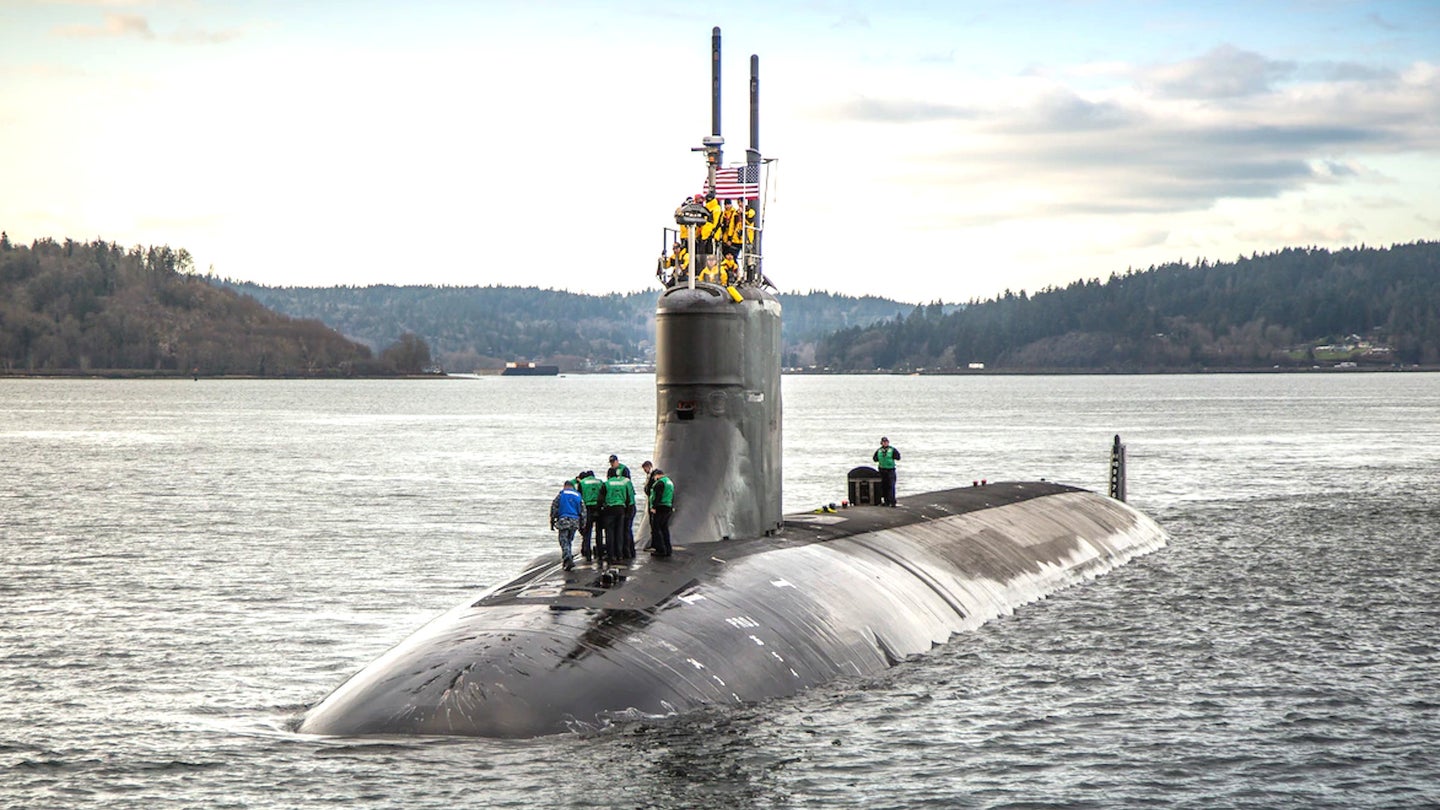
One Of The Navy's Prized Seawolf Class Submarines Has Suffered An Underwater Collision

JOSEPH TREVITHICK

The USS Connecticut, one of the U.S. Navy's highly advanced and secretive nuclear-powered Seawolf class submarines, is on its way back to port after suffering an underwater collision. The service says that there were no life-threatening injuries among the members of Connecticut's crew as a result of the accident. The submarine itself is in a "safe and stable condition" and its reactor plant was unaffected and remains fully operational.

USNI News was first to report on this accident, which occurred on Oct. 2. The Navy would not say where the submarine was at the time of the collision, beyond in international waters somewhere in the Indo-Pacific region, or what it hit. The service also only said that Connecticut was now headed to a port in the U.S. 7th Fleet area of responsibility, which includes the Western Pacific Ocean and a significant portion of the Indian Ocean, as well as various bodies of water in between. U.S. 7th Fleet has its main headquarters in Japan.

Why Biden’s Foreign Policy Looks so Similar to Trump’s

Sumantra Maitra

Council on Foreign Relations president Richard Haass recently wrote for Foreign Affairs that President Joe Biden is determined to carry on a Trumpian nationalism that rejects American internationalism at precisely the time when it is needed most. The dawn of a new consensus looms in Washington, DC: The dawn of America First. Despite the Biden administration’s rhetoric of internationalism, “there is far more continuity between the foreign policy of the current president and that of the former president than is typically recognized,” Haass writes. The new consensus perhaps pushes aside a strategy that evolved in the wake of World War II. The present paradigm is hardly isolationist, but it rejects the core tenet of internationalism that the United States has a vital stake as a shareholder to actively prevent collapse and preserve the international liberal order.

Haass admits there were mistakes made during the hubristic “unipolar moment” after the end of the Cold war, including a failure to stem China’s rise, decisions to expand NATO that sparked Russian revanchism, and of course the Iraq War. But Haass is wary of the nationalism that accompanies the new emerging realism and restraint consensus:

From Cold War Sanctions to Weaponized Interdependence

Adam Kline andTim Hwang

Introduction

CSET is providing this annotated bibliography as a resource for researchers interested in studying the history and future of international competition and control over emerging technologies. We hope that this review will prove useful for scholars interested in the history of Cold War economic and technological policies, technological competitiveness, economic statecraft, and the escalating technological rivalry between Beijing and Washington. It covers decades of scholarship on technology and strategic economic competition, drawing from a wide variety of sources, from journal articles to declassified CIA documents, and a range of perspectives, from academics to policymakers.

The bibliography includes five main sections. Each section features an introduction synthesizing its contents and then lists and briefly summarizes individual sources in chronological order. First is a section surveying the hefty theoretical literature on economic interdependence, conflict, and economic statecraft, including perennial debates over the “commercial peace” theory and the efficacy of sanctions. The next two sections review strategic economic competition, export controls, and technology transfer policies during the Cold War and the post-Cold War era. The fourth section concentrates on U.S. fears of domestic economic decline and technological dependence on Japan in the 1980s and early 1990s. The final section focuses on scholarly discussions of China’s rise, U.S. export controls and technology transfer policies toward Beijing, and a potential U.S.-China decoupling.
Observations and Key Takeaways

This review suggests several important lessons for scholars and policymakers grappling with the thorny challenges of strategic economic and technological competition.

The Fatal Flaw in the West’s Fight Against Autocracy

Casey Michel

To hear Western politicians tell it, liberal democracies are in an existential fight against the forces of autocracy, despotism, and dictatorship around the world. That framing has found a home in U.S. President Joe Biden’s recent rhetoric and is the raison d’être for his upcoming Summit for Democracy.

Biden and the other Western politicos echoing his calls are correct in their diagnosis. Rising illiberalism, swelling autocracies, and increasingly muscular dictatorships from Beijing to Moscow are smothering democratizing efforts on the ground and threatening the broader liberal order.

But their efforts to thwart rising autocracy have overlooked a critical way Western democracies themselves enable such regimes to thrive: by providing anonymous financial secrecy tools that allow kleptocrats around the world to move, hide, and launder their ill-gotten wealth, safely away from the prying eyes of their own people.

These tools by now form a familiar playbook. On the one hand, you have such devices as shell companies and trusts that effectively anonymize wealth, stripping the money from any identifying information. On the other hand, you have an entire range of industries more than happy to process the proceeds of this now-anonymous wealth, from real estate and luxury vendors to auction houses and the art market writ large.

Biden Aims to Challenge China in Latin America With B3W

Frida Ghitis 

While the Biden administration tries to navigate the domestic political obstacles to implementing the president’s so-called Build Back Better plan, it has quietly started laying the groundwork for a parallel program with major geopolitical implications. Just getting off the ground, Build Back Better World, or B3W, is a plan to improve global infrastructure, widely defined, with an eye to not only raise living standards but, just as importantly, to counter China’s growing influence.

The idea was formally announced by the Group of Seven leaders during the G-7 summit last June. It aims to take on China’s high-profile Belt and Road Initiative, or BRI, but in a way that contrasts sharply with China’s most controversial practices, while deliberately highlighting the distinctions between the two initiatives by emphasizing partnerships built on values and transparency.

B3W will formally launch next year, but preparations are now underway to make Latin America a key focus of the strategy. The initiative had its most visible moment yet last week, during a tour of the region by high-level U.S. officials, who met with heads of state and other key players in several countries.

Five Things the United States Can Do to Stop Being a Haven for Dirty Money

JODI VITTORI

The largest-ever leak of private financial records, dubbed the “Pandora Papers,” has shown a spotlight on the role the United States plays as a secrecy jurisdiction in enabling everyone from organized crime syndicates to world leaders to tax dodgers to hide their ill-gotten gains. As Ian Gary of the Financial Accountability and Corporate Transparency coalition has explained, “the US is deeply implicated, secretly sheltering billions of dollars from outside the US in places such as South Dakota and Nevada, and it is time for strong action by the Biden Administration and Congress.”

Here are five things that U.S. President Joe Biden, his administration, and Congress should do to stop the United States from being one of the world’s central nodes for dirty money.

BACK UP THE CORPORATE TRANSPARENCY ACT WITH TOUGH REGULATIONS

The Pandora Papers especially noted how the loose regulation of trusts in the United States can undermine good governance. Laws starting in the 1980s in states such as Alaska, Delaware, Nevada, South Dakota, and New Hampshire dramatically expanded the duration of trusts, leading to what are termed “dynasty trusts.” Often these trusts can also be held anonymously. While there are plenty of legitimate reasons for families to establish trusts, the combination of their multigenerational duration and anonymity make them ripe for abuse. Regulations associated with the recently passed Corporate Transparency Act (CTA) could substantially close these and other loopholes in provisions to combat money laundering.

Passed as part of the Fiscal Year 2021 National Defense Authorization Act, the CTA includes nearly 200 pages of reforms to U.S. anti–money laundering and bank secrecy laws. Most notably, it requires many businesses to identify their true beneficial owners to the Treasury Department; the registry of those owners will not be publicly available but will be accessible to law enforcement and regulatory agencies. The Treasury Department has started the associated rule making, which is due by January 2022.

While the CTA did not address trusts, implementing regulations could require trust clients to undergo similar transparency requirements as limited liability companies, putting U.S. trust regulations in line with those of the EU. By “broadly interpreting” legislation on beneficial ownership of “other similar entities” to pertain to shell companies, foundations, charities, sole proprietorships, partnerships, and other businesses not explicitly included in the legislation, such entities could all come under the upcoming rules. Moreover, these rules should minimize roadblocks for authorized users of the beneficial ownership registries to access this information.

IMPROVE U.S. FINANCIAL INTELLIGENCE CAPABILITIES

Documents and analysis from a 2020 leak of over 2,100 suspicious activity reports (SARs) from banks—a trove known as the FINCEN Files—highlighted the weaknesses of U.S. financial intelligence capabilities. These leaks showed how leading U.S. banks have allowed huge sums of cash to traverse the U.S. financial system by individuals allegedly involved in corruption, embezzlement, sanctions evasion, fraud, and a host of other crimes.

Even as banks filed SARs about these funds, there was almost no one to follow up: in 2019, banks filed over 5 million SARs in the United States, but there were only about 300 employees to follow up at the Treasury Department’s Financial Crimes Enforcement Network (FinCEN), the U.S. financial intelligence unit. That’s about the same size as Australia’s financial intelligence unit, even though Australia is far less central to the world’s financial infrastructure.

FinCEN should also be given more influence and authorities to assess and then help stop money laundering through the U.S. financial system. A working group of academics, government officials, and industry actors (including this author) recommended five ways to improve FinCEN’s effectiveness. This includes a new National Anti-Money Laundering Data Center; a project on the new technologies needed to help stop money laundering; a new training center so that law enforcement, prosecutors, and regulators have the knowledge and tools they need; and a strategic analysis team to keep up to date on emerging trends on the subject.

PLACE MORE FINANCIAL ENABLERS UNDER THE CORPORATE TRANSPARENCY ACT’S RULES

A 2015 undercover investigation by Global Witness highlighted how lawyers can facilitate the entry of illicit money into the United States (even as no crimes were committed and no money changed hands since the meetings involved were preliminary). Both the 2016 Panama Papers and this week’s Pandora Papers emphasize the role that lawyers, accountants, corporate service providers, and other financial enablers play in facilitating money laundering throughout the United States. For instance, reporting by the International Consortium of Investigative Journalists (ICIJ) showed that the U.S. law firm Baker McKenzie helped former financier Jho Low set up a slew of companies in Malaysia and Hong Kong. U.S. authorities reportedly allege that some of those firms were involved in helping move some of the $4.5 billion that was stolen from the Malaysian sovereign development fund known as 1MDB. (A spokesperson for Baker McKenzie told investigators it conducts “strict background checks on all potential clients,” according to the ICIJ reporting.)

A bipartisan bill introduced on October 6, 2021, entitled the Establishing New Authorities for Business Laundering and Enabling Risks to Security (ENABLERS) Act would close many of the loopholes used by accountants, public relations firms, art and antiquities dealers, investment advisers, and some lawyers. This law would require these professionals to conduct at least basic due diligence on the sources of client funds and thus help align U.S. regulations with international best practices. This is especially important when money for financial transactions does not go through banks, which already have due diligence requirements. Congress should prioritize this bill for consideration.

STOP EXEMPTING REAL ESTATE FROM MANY RULES TO COMBAT MONEY LAUNDERING

One of the best avenues to launder money is the real estate sector, and the Pandora Papers highlighted how funds can be secreted into the United States for large real-estate purchases. The leaks show that Jordan’s King Abdullah II owns at least thirty-six shell companies in various havens; he bought at least fourteen luxury homes in the UK and the United States over a fourteen-year period. Meanwhile, Jordan, a poverty-stricken country that is surrounded by conflict and hosts over 1 million refugees, received $1.5 billion in aid from the United States and $281 million from the European Union last year. The king’s attorneys denied to investigators that any improprieties were involved.

But it is not just foreign potentates who have a penchant for American properties. The U.S. Department of Justice is seeking the forfeiture of $100 million worth of commercial property owned via a network of shell companies held by Ukrainian oligarchs Ihor Kolomoisky and Gennadiy Bogoliubov. These properties were allegedly used to launder billions of dollars stolen from PrivatBank, one of Ukraine’s largest banks.

The real estate sector is especially poorly regulated when it comes to money laundering. This is in part because FinCEN granted real estate professionals a temporary exemption from anti–money laundering and counter-threat finance requirements that were part of the 2001 Patriot Act. The aforementioned ENABLERS Act would lift that exemption. FinCEN could, however, choose to lift that exemption even without this legislation. Another part of the ENABLERS Act would enhance reporting requirements for certain real estate purchases, a reform long advocated by law enforcement and anti-corruption advocates. The current rules only require this enhanced reporting for residential purchases in specific geographic areas associated with money laundering; the new legislation would make this nationwide and permanent, and it would also apply to commercial properties.

TREAT CORRUPTION LIKE A CORE NATIONAL SECURITY ISSUE

In June, the Biden administration officially declared that the fight against corruption is a core U.S. national security interest in its National Security Study Memorandum-1 (NSSM-1). As part of the announcement, the administration noted that “corruption threatens United States national security, economic equity, global anti-poverty and development efforts, and democracy itself.” There are plenty of opportunities for the Biden Administration to demonstrate that it is serious about this.

On December 9–10, 2021, the United States will host the Summit of Democracies; one of the summit’s three pillars is fighting corruption. A bold announcement during the summit that the United States will seek to thoroughly reform itself to help stop dirty money would put teeth behind future public statements. For instance, this would be an ideal time to announce the strongest possible rules for implementing the CTA along with a plan to reinvigorate FinCEN and better integrate the agency into the broader national security architecture. New rules on gatekeepers and the real estate sector could also be announced. The Treasury Department could also prepare a National Corruption Risk Assessment and announce that it will lead international efforts to end offshore financial secrecy once and for all.

As part of NSSM-1, an interagency review process is also due to be completed in December, including the Department of Defense, the Department of State, the Central Intelligence Agency, and the National Security Agency. These national security–focused agencies should be required to appoint an office to integrate efforts to fight corruption and money laundering throughout their agencies. In addition to learning the lessons from the role that corruption played in the fall of Kabul this summer, the Defense and State Departments should be mandated to examine how to minimize corruption in the arms trade and defense services sectors. The intelligence community should be tasked with how to improve its collection and assessment of intelligence associated with financial crime.

The Grid Isn’t Ready for the Renewable Revolution


YOU CAN ALMOST hear the electrical grid creaking and groaning under the weight of the future, as two forces converge to push it—often literally—to its breaking point.

One force is climate change, which can exacerbate disasters that take down parts of the grid, as Hurricane Ida did this summer, knocking New Orleans offline just as a heat wave settled in. Or extreme weather can suddenly spike the demand for energy just when the grid is least able to provide it, like during last winter’s Texas freeze and subsequent power system failure.

The other force, ironically enough, is the massive deployment of renewable power—the best way to fight climate change and avoid these kinds of disasters. But this will demand a fundamental rethinking of how the grid operates. Gas and coal power plants generate continuous power by burning fuel, and how much they burn can be modulated based on the demand for electricity. But the generation of solar and wind energy fluctuates. The sun doesn’t shine at night, and turbines don’t turn without wind.

The art of communicating nuclear risk

Sara Z. Kutchesfahani, Tom Weis

 
Mexican artist Pedro Reyes constructed a three-story inflatable mushroom cloud, Amnesia Atomica, to “put pressure on political leaders, policymakers, and global citizens by reminding them of the consequences of inaction.” Similarly, American artist Barbara Donachy installed 35,000 small clay missile replicas in her exhibit, Amber Waves of Grain, to depict the volume of the US nuclear arsenal. And Smriti Keshari and Eric Schlosser created The Bomb—a multimedia experience that immerses “the viewer within the story of nuclear weapons.” Even this publication relies on design when it presents the Doomsday Clock as a visual representation of “how close we are to destroying our world with dangerous technologies of our own making.”

Members of the public, policymakers, and scientists would be wise to look to artists, designers, government agencies, and nonprofit organizations that have successfully experimented with creative approaches to raising public awareness about nuclear risk.

One of us—Tom—teaches industrial design at the Rhode Island School of Design, where he helps students leverage design techniques on the topic of nuclear threats. One of Tom’s students, for example, designed a game that allows players to advance through virtual worlds while learning nuclear facts. Another student wrote a hip-hop song, “Forget what you know,” that considers what a nuclear winter might look like:


Do you see our future?

And if so, is there a chance of rain?

Do the clouds promise pain? Is the landscape unchanged?

Or should we keep our heads low, eyes closed, and pray in vain?

Over the past five years, Rhode Island School of Design students have been increasingly interested in design courses focused on security. And many students continue security-focused design work after graduation. For example, two recent graduates were selected as Global Security Design Fellows, a program that is funded by the John D. and Catherine T. MacArthur Foundation.

West Point cadets and Rhode Island School of Design industrial design students discussing the future of conflict in urban environments. Credit: Tom Weis. Used with permission.

Tom has also worked on a nuclear-themed design project at Sandia National Laboratories. In a 90-minute exercise, he invited senior lab leaders to select one card from each of three trend categories: science and technology, the world order, and human geography. They were then asked to imagine a scenario in which the trends collided, after which they discussed how they might have anticipated and adapted to the scenario as individuals, a lab, and a nation. For example, in one imagined scenario from an outside expert, a lack of fresh water accelerated the construction of small nuclear reactors in the region, which in turn outpaced agencies’ abilities to monitor the reactors. Participants were encouraged to reframe questions and expand upon the narrative as they sought creative solutions. The Carnegie Corporation of New York saw value in this work and subsequently provided funding for a digital version of this activity to reach a wider audience.

The International Atomic Energy Agency has also demonstrated a willingness to try design methods as it works to address challenges in the nuclear field. In its 2020 Emerging Technologies Workshop, they enlisted designer Marco Steinberg to give the keynote. Steinberg shared insight from his design practice, including his view that innovation often relies less on new technology than on organizational change. The workshop sessions encouraged generative discussions that are deeply rooted in design practices. In one workshop, participants reconfigured their seating arrangement from one in which participants were all looking toward the front of the room to one in which they gathered in small groups—an arrangement that facilitated collective brainstorming. It was exciting to transform a space designed for lectures into one that fostered active work among participants.

In another design-meets-nuclear example, the N Square Fellows’ Voices in Action campaign offers policy analysts models for improved work cultures, professional development opportunities, and leadership and mentorship opportunities. The models offer a mix of formal and informal, structured and unstructured, and internal- and external-facing ways to acknowledge, amplify, celebrate, and challenge nuclear policy experts. The celebration model, for example, champions large successes such as individuals’ publications and media appearances as well as small successes such as an unusually quiet colleague who speaks up and ensures that they are heard. The models were designed to be flexible and adaptive, as a diversity of perspectives are needed to address problems.

When people pursue art and design projects, they are asked to observe, practice, listen, and ask questions without fear. This requires a mix of humility and bravery. But when the best practices of art and design are in place, participants can expect direct, specific, constructive, and collaborative feedback that encourages them to act—and get results. Members of the public, policymakers, and scientists concerned about nuclear threats might take note. To address the existential threat that nuclear weapons pose to humanity, the world may need a creative solution.

US-Russian Cyber Stability Needs ‘Drunken Party’ Approach: Limits, Deterrence and Communication

Joseph S. Nye

For two decades, Russia has proposed a cyber treaty at the U.N., and the U.S. has resisted it as unverifiable, in part on the grounds that there is often no difference between a cyber weapon and a harmless program except the unknowable intent of the user. Instead, experts from 15-25 countries have been gathering at the U.N. since 2004 to sketch cyber norms that can enhance stability. But shortly after Russia signed off on the 2015 U.N. Group of Governmental Experts report, which recommended refraining from attacks on “critical infrastructure,” Moscow seemed to violate the spirit of the document by allegedly launching cyberattacks on Ukraine’s electricity grid (a charge Russia has denied).

With mistrust high between the U.S. and Russia, it is not clear that normative agreements can really enhance cyber stability, especially without enforcement and deterrence. But there is a positive interaction to keep in mind: Norms can enhance deterrence. All too often international relations are modeled as a game of prisoner’s dilemma where each side has overwhelming incentives to cheat in a particular instance. But as political scientists have shown in computer tournaments with repeated games of prisoner’s dilemma, tit-for-tat reciprocity turns out to be the best strategy for players in the long run. Moreover, in the tacit bargaining that is involved, norms are useful points of salience. As Thomas Schelling has pointed out, in tacit negotiation, the parties may search for common points visible to both sides even if they are not explicitly articulated. And some norms—like not interfering with the “public core” of the internet, proposed by the non-governmental Global Commission on Stability in Cyberspace (of which I was a member)—are in the interest of all countries.

How Deep Is the North-South Divide on Climate Negotiations?

SINAN ÜLGEN

At their core, climate negotiations continue to be shaped by equity concerns between postindustrial countries in the Global North and emerging economies in the Global South. The debate is largely over which countries have contributed most to greenhouse gas (GHG) emissions and how the costs of mitigating and adapting to climate change should be shared. How effectively the principle of equity will be embodied in global efforts to combat climate change will help determine the scope and ambition of these efforts.

TALLYING PAST AND PRESENT EMISSIONS AMID EQUITY CONCERNS

Industrialized and postindustrialized nations are responsible for a great share of the historical carbon dioxide (CO2) emissions in the atmosphere today (see figure 1). The United States has emitted more carbon than any other country to date and is responsible for 25 percent of historical emissions. Next in line are the twenty-seven countries of the EU (plus the UK), which are responsible for 22 percent of global CO2 emissions. Meanwhile, China’s historical contributions are estimated to be around 12.7 percent. By contrast, India (3 percent) and Brazil (0.9 percent) have not been large contributors to global emissions in a historical sense. Similarly, the contributions of African countries (3 percent combined), relative to the continent’s population size, has also been very small.


In addition, the Global North continues to have much higher per capita emissions than much of the world even today (see figure 2). The United States ranked high among postindustrialized countries in 2019 with 16 tonnes of CO2 emissions per capita, just behind Australia (16.3 tonnes per capita) and ahead of Canada (15.4 tonnes per capita). The figures for Europe generally fall between 5 and 10 tonnes per capita depending on the country. Hydrocarbon-based economies like Russia and members of the Gulf Cooperation Council in the Persian Gulf like Kuwait, Qatar, Saudi Arabia, and the United Arab Emirates also rank quite high, some of them even higher than countries in the Global North.


Equity concerns essentially stem from the asymmetry between countries’ emissions and their respective burdens to respond to climate change (including the costs of emissions mitigation, adaptation, and other impacts and risks). Most human-driven GHG emissions in the atmosphere are from economic activities performed in or for affluent countries. Yet a more significant burden of the impacts of climate change is carried by poorer nations weathering climate-induced environmental shocks.

A further dividing line in climate negotiations is a result of the contrast between past emissions and future emissions. While industrialized and postindustrialized countries in the Global North are responsible for the majority of past emissions, these countries led by the EU are implementing policies to reduce their GHG emissions. At the same time, the emissions of most developing nations (particularly China) remain on an upward trajectory. This second group of countries will not reach peak emissions for another decade at least. As a result, developing countries share the responsibility for reducing future emissions. These juxtaposed trends also create issues of generational justice.

These differences coupled with the immediacy of the effects of climate change also shape the diplomatic groups engaging in multilateral climate negotiations. Subgroups among countries in the Global South and issue-based coalitions of countries in the Global North and South have emerged on the basis of common concerns. Less developed economies and small island nations, which are already facing the existential threat of climate change, are demanding immediate answers from postindustrialized and developing countries alike. The members of the Organization of the Petroleum Exporting Countries are urging postindustrialized economies to embrace policies that reduce welfare losses in nations that rely on petroleum exports.

Although all uphold the principle that developed and developing countries have different responsibilities for mitigating carbon emissions, as established at the 1992 Rio de Janeiro Earth Summit, the four countries in the BASIC grouping split when Brazil and South Africa accepted greater responsibility than India and China. More recently, however, China announced in September 2020 (to widespread praise) its intention to achieve carbon neutrality by 2060, and Chinese leader Xi Jinping further unveiled plans to curtail (or even end) Chinese funding for overseas coal power plans in September 2021. Yet the equity principle in the global debate over adjustments to climate change still leads to several important, commonly held policy positions among developing countries on mitigating GHG emissions, adapting to climate change, and financing the climate transition.

MITIGATING CLIMATE CHANGE

First, developing countries generally expect postindustrialized nations to lead efforts to reduce GHG emissions. In multilateral climate negotiations, India articulated the basic positions on climate change held by many emerging economies on the respective roles of developed and developing countries. As Sandeep Sengupta has put it:

First, the primary responsibility for reducing greenhouse gas (GHG) emissions . . . rested with the developed world. . . . Second, the emissions of developing countries were still very low and needed to grow to meet their future development [needs]. . . . Third, any formal agreement on climate change needed to provide for technology transfer and funds for developing countries to help them address this challenge.

Latin American countries have also regularly emphasized that their historical contributions to the problem of climate change are minimal and that developed countries therefore bear more responsibility for working to mitigate its effects and otherwise help developing countries adapt with financing, technology, and other resources. In Latin America, the term climate justice is used to express the need for developed countries to pay their environmental and ecological debt to developing countries affected by climate change and help them remedy its effects.

Meanwhile, African countries have emphasized their need to be free to pursue economic development at least to some degree through new and existing deposits of fossil fuels. These countries firmly believe that it is unjust for immediate and severe mitigating targets to be erected without any form of compensation or financial aid. The African continent has plenty of fossil fuels, but the global shift away from hydrocarbons may cause further economic losses. According to a United Nations University report, oil, gas, and minerals contribute to over half of African GDP and account for around 70 percent of African exports. As the global economy transitions to greener, more renewable energy systems, African countries with large deposits of fossil fuels will pay a high price for not extracting these resources, a price for which they believe they should be compensated.

In addition, African countries will increasingly face the social, economic, financial, and governance challenges of responding to climate disruptions. They believe that the Global North has failed to acknowledge the extent of this economic stunting and these structural inequities. Some of these countries are vulnerable and have few resources, so they require regional and international assistance. Despite these considerations, any mention of the special vulnerabilities of African countries was excluded from the text of the Paris Agreement. African countries have been attempting to rectify this ever since.

China has also backed the position of developing countries writ large, emphasizing the historical responsibilities of postindustrialized nations. At an April 2021 climate summit convened by U.S. President Joe Biden, Xi stated:

Developed countries need to increase [their] climate ambition and action . . . they need to make concrete efforts to help developing countries strengthen the capacity and resilience against climate change, support them in financing, technology, and capacity building, and refrain from creating green trade barriers, so as to help developing countries accelerate the transition to green and low-carbon development.

Yet China’s position on climate change remains controversial given its current and rising levels of carbon emissions. China reportedly emitted an estimated 27 percent of global GHG emissions in 2019—more than twice as much as the second-ranking country (the United States with 11 percent) and more than the combined emissions of all developed nations. China’s emissions ballooned by a factor of more than three in the past three decades, according to the Rhodium Group.

More generally, developing countries insist on the recognition of the UN-enshrined principles of “common but differentiated responsibilities” and “respective capabilities” between postindustrial and developing countries for reducing GHG emissions. This claim takes into account differences in countries’ historical contributions to global emissions as well as developing countries’ need to have flexible policy options for spurring economic development.

But the future paradigms of economic and urban development will likely be very different from past ones. As things stand, policymakers around the world lack a proper understanding of how development in a climate-disrupted world will look. It is difficult for many developing nations to craft policy responses to address this new reality and these uncertainties. Their development goals and strategies remain embedded in past experience, which in all likelihood will not provide an adequate vision to drive sustainable growth in the future.

ADAPTING TO CLIMATE CHANGE

Although developing countries have put equity concerns on the agenda for climate negotiations, postindustrialized countries have largely done the agenda setting, which thus far primarily has focused on mitigating climate change, as opposed to adapting to its effects through resilience. The vast majority of green finance is earmarked for climate mitigation initiatives, which lower emissions from existing sources. For example, according to San Bilal and Pamella Eunice Ahairwe, the European Investment Bank allocated only $432 million for climate adaptation, even as it poured more than ten times that amount (nearly $5.3 billion) into climate mitigation efforts. These mitigation-focused initiatives allow funders to earn solid returns on their investment. The benefits of decreasing those emissions are felt around the world, resulting in widespread societal returns. Funds to help communities adapt to and weather the effects of climate change, on the other hand, are often used for initiatives with more localized benefits. As a result, these projects typically have lower financial incentives and more concentrated societal benefits, making them less appealing to potential funders.

Yet developing nations want the disproportionate burden of weathering the impact of climate change and the costs of adaptation to take center stage in the climate debate. Emerging economies are calling on developed countries to honor their financial pledges and help them build resilience. Under the Paris Agreement, developed countries pledged to furnish $100 billion per year for climate action. According to the Organisation for Economic Co-operation and Development, the pledged money actually flowing to developing countries may have reached nearly $80 billion in 2019. This figure nonetheless has been controversial. India has, for instance, raised issues with the skewed flows of climate financing. After all, the bulk of climate finance (more than 90 percent) continues to be tapped for climate mitigation even though developing countries need funds focused on adaptation.

FINANCING CLIMATE ASSISTANCE

The support of postindustrialized economies will be critical for helping developing countries—through financial assistance, capacity building, and technology—as the latter undergo a green transition.

Consider, for instance, how most of the obligations of African countries under the Paris Agreement are conditional on such support. The African Development Bank has estimated that African countries will need $20 billion to $30 billion per year for climate adaptation until 2030 or so. This amount could increase to $50 billion per year by 2050 even if temperature rises are kept in check (below 2 degrees Celsius), according to a 2015 UN report. Meanwhile, the acceleration of climate disruptions suggests that even the most advanced climate models still may be underestimating the pace and extent of climate disruptions.

A host of developing countries have explicitly tied the availability of climate finance to their mitigation ambitions. For example, in a 2019 report, the Indian government argued that in contrast to its significant needs, global financial flows to India were miniscule. The document explicitly tied India’s ability to meet its Paris Agreement obligations to access to climate financing, stating, “in order to respond to the worldwide call for stepping up climate actions, [there will need] . . . adequate provision of means of implementation to developing countries. Climate finance is a key pillar in enabling climate actions.

A welcome development has been the newfound enthusiasm of China and the United States for allocating more funding to help countries adapt to climate change. China has prioritized efforts to help the world’s least developed countries, such as African nations and small island states. Ahead of the 2015 UN Climate Change Conference in Paris, Xi established the China South-South Climate Cooperation Fund to provide 20 billion renminbi ($3.1 billion) to help developing countries tackle climate change. Subsequently, at the summit itself, Xi elaborated on his commitment, stating that China would implement ten low-carbon industrial parks, 100 climate mitigation and adaptation projects, and 1,000 training opportunities on climate change for participants from developing countries. Climate policy is a pillar of Beijing’s charm offensive to increase its soft power worldwide as well as an economic policy aimed to enhancing market access for Chinese goods.

The EU and more recently the United States have been among the leading contributors to the instruments of climate finance. In 2019, the EU provided the largest share of external public funding for climate projects to the tune of 23.2 billion euros (about $26 billion). Meanwhile, Washington has promised to significantly increase its contributions to climate finance for developing nations to around $11 billion per year.

PRICING CARBON EMISSIONS

In addition to the prevailing divisions over mitigation responsibilities and climate finance allocations, another highly divisive issue between developed countries and the developing world is the potential impact of the carbon pricing schemes that several countries in the Global North are gradually implementing.

Postindustrialized countries view carbon pricing not only as a tool to raise additional public revenues but also as a way to account for the negative externalities of carbon emissions. To this end, some have suggested the creation of a global carbon pricing mechanism, in the form of a tax or an emissions trading system (ETS). With carbon taxes, regulators set a price on carbon by defining a tax rate on GHG emissions or the carbon content of fossil fuels, while emissions reductions depend on the corresponding measures taken by companies. For instance, the International Monetary Fund states that large GHG-emitting countries need to introduce a carbon tax of $75 per ton or more by 2030 to be consistent with the goal of limiting global warming.

An ETS—a cap-and-trade system—puts a ceiling on the total level of GHG emissions and allows firms with low emissions to sell their surplus allowances to those who emit more. Under an ETS, the market determines the price, while regulators determine the quantity of emissions reductions. The effectiveness of the ETS model remains debated, with some claiming that it allows larger polluters to continue polluting the atmosphere by acquiring emissions rights.

The chief strength of such a global price mechanism for carbon is its potential ability to shift the burden for mitigating the harm caused by climate change onto the market players that are responsible for this harm and can reduce it. Such mechanisms would encourage producers in all countries to adopt low- or zero-carbon technologies by sending an economic signal instead of dictating who should reduce emissions and how they should do so. Such price mechanisms would remove uncertainty for the private carbon-offset markets, which companies and individuals use to compensate for their emissions. Specifically, supporters claim that a price that is applied simultaneously in all countries may help level the international playing field.

Meanwhile, critics argue that global carbon pricing tends to treat inevitable and unavoidable emissions like electricity generation for consumption in poor households on par with other categories of emissions and fails to allocate emissions rights fairly between developing and developed countries. A global ETS would leave less room for developing economies to burn fossil fuels to meet their economic needs. The increase in energy costs that would arise from reduced fuel consumption in wealthier countries may curtail economic activity in markets that cannot absorb such price changes. In countries where the economic structures depend on energy-intensive activities that are heavily exposed to international competition, industries fear that competitive disadvantages in international markets could result in job losses.

For these reasons, developing countries tend to reject ETSs for sidelining the multilaterally agreed-upon international regime and establishing ad hoc norms. They view ETS schemes as protectionist measures at odds with the rules of international trade. They want multilateral negotiations to lead norm creation, as these focus not just on mitigation targets but also on minimizing subsequent welfare losses.

A second and more recent policy option discussed in developed countries is a domestic carbon tax levied together with border adjustments on imports from countries that do not impose an equivalent carbon duty on their producers. Led by the EU, supporters of this approach view it as an efficient way to let the consumers of postindustrial economies take responsibility for their GHG footprint both domestically and in the emissions of other countries. The underlying logic rests on an expectation that unilaterally imposed border adjustments would provide a building block toward global price mechanisms by incentivizing exporting countries to impose equivalent domestic carbon taxes to prevent companies from paying taxes at the importing country’s borders. Proponents propose that the revenue collected at the border could be channelled to overseas climate aid programs to prevent the mechanism from functioning as a de facto tariff.

From the perspective of developing countries, however, a carbon border-adjustment mechanism incorporates several pitfalls. A carbon tax may raise the price of energy-intensive products such as steel and cement, which would increase construction costs and imperil infrastructure projects in developing countries that import these products. When imposed only by the importing countries, domestic carbon pricing would hinder the competitiveness of exporters. Developing countries have less capacity to offer offsets to their companies in the industrial sectors that would suffer a resulting competitive disadvantage against international competition. Moreover, border adjustments can act as tariffs because if carbon taxes are imposed at the importing country’s border, rather than within the exporting country, the importing country gets to keep the tax revenue with no assurances over how the funds would be used. In light of these considerations, developing countries view these types of policies as a disguised form of protectionism.

CONCLUSION

Ultimately, the cleavages in international climate negotiations between the Global North and the Global South are driven by the need for an adequately ambitious global response to climate change. In other words, the current agenda of the Conference of Parties’ (COP) gatherings under the UN Framework Convention on Climate Change may not be comprehensive enough to tackle this structural and critical challenge. COP meetings like the upcoming Glasgow Climate Change Conference in October and November 2021 provide a forum for exchanging views and deliberating about climate mitigation and adaptation.

But these global discussions need to be more open and ambitious and must account for the needs of developing countries, not just postindustrial ones. There are other important matters these deliberations cannot ignore. For instance, there is a need to address issues like climate-induced migrations and an overhaul of the international regime governing the treatment of refugees. These discussions should also include proposals to reform the intellectual property rights regime to incentivize a clean development agenda for the developing world. A fair settlement on the burdens of adjusting to the realities of climate change can only emerge if a broader policy agenda can be constructively promoted.
NSA Cyber Chief Spells Out Near-Term Priorities

BRANDI VINCENT

Ensuring the U.S. has next-generation encryption necessary for the post-quantum era and reversing the recent increase in fallout from ransomware attacks are among National Security Agency cyber officials’ top areas of focus in the near-term.

“Six months ago, ransomware was not a huge priority for NSA. We had cybercrime elements being worked, but it was primarily viewed as a law enforcement issue and law enforcement had to lead. They still have that huge role,” NSA National Cybersecurity Directorate Director Rob Joyce explained on Wednesday. “But what we're doing is stepping up with a surge on ransomware issues to help the FBI, [U.S. Cyber Command], even things like the Treasury and State departments—because what we can do is we can inform their ability to get after the criminals.”

Joyce for decades has served in government cybersecurity and intelligence capacities, including in high-profile roles like special assistant to the president and White House cybersecurity coordinator. The directorate he now leads is only a couple years old and was formed partly to help the government track and eradicate foreign hacking campaigns and evolving cyber threats. He assumed his current position early this year, when his predecessor and close colleague Anne Neuberger was tapped to join President Joe Biden’s administration as the National Security Council’s deputy national security adviser for cyber and emerging technology.

OPEC Stays the Course despite Rising Oil Prices


The Organization of the Petroleum Exporting Countries (OPEC) and its allies in OPEC+ are proceeding with their production plans despite the run-up in oil prices. On October 4 the group decided to continue adding 400,000 barrels per day (b/d) to the market each month, ignoring pressure from oil-importing states for greater volumes. For now, OPEC+ is shrugging off concerns over the economic impact of higher oil prices, perhaps mindful of a softer outlook for next year.

Q1: What happened at the OPEC meeting?


A1: OPEC+ is sticking with its plan to gradually add more volumes to the market as it unwinds the largest-ever production cut it instituted in April 2020. In July OPEC+ accommodated demands from some members for higher production quotas and targeted output increases of 400,000 b/d each month from August until April 2022, with slightly higher volumes in subsequent months. The group is on track to phase out its production cuts by next September but will leave some room for flexibility in the second half of 2022. Speculation that OPEC+ would open the taps and add more than 400,000 b/d in November proved to be unfounded. The group will meet again on November 4.

Facebook’s empire is beginning to crumble

Ross Clark

When empires crumble they slide slowly at first, then the temple walls come crashing down. Facebook is not quite at the latter stage yet, but you can hear the creaking in the pillars and lintels. This week, the social media giant suffered two blows: an outage which took down its platform, along with Instagram and WhatsApp, and an expose by a disillusioned ex-employee who accuses the company of saying one thing about social responsibility in public – while behaving quite differently in private.

Many of us might not notice if Facebook suddenly wasn’t there. But it is a different story for the many businesses which have built their model on the back of selling via Facebook or Instagram. For them, Facebook is as important a part of their infrastructure as the postal service or telephone network was for previous generations. They rely on Facebook’s platforms being constantly available. Yet in the past the post sometimes failed and the telephone lines came down, and so too Monday’s few hours without Facebook – which the world endured, or enjoyed, according to your personal view – weren’t necessarily an existential threat to Facebook.

9 October 2021

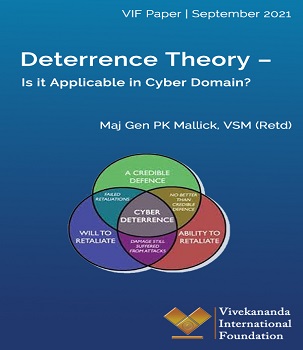
Deterrence Theory– Is it Applicable in Cyber Domain?

Maj Gen PK Mallick, VSM (Retd)

Introduction 

The Deterrence Theory was developed in the 1950s, mainly to address new strategic challenges posed by nuclear weapons from the Cold War nuclear scenario. During the Cold War, the U.S. and the Soviet Union adopted a survivable nuclear force to present a ‘credible’ deterrent that maintained the ‘uncertainty’ inherent in a strategic balance as understood through the accepted theories of major theorists like Bernard Brodie, Herman Kahn, and Thomas Schelling.1 Nuclear deterrence was the art of convincing the enemy not to take a specific action by threatening it with an extreme punishment or an unacceptable failure.

Social Media in Violent Conflicts – Recent Examples

 Maj Gen PK Mallick, VSM (Retd)


Introduction
Alan Rusbridger, the then editor-in-chief of the Guardian in his 2010 Andrew Olle Media Lecture, stated, “News organisations still break lots of news. But, increasingly, news happens first on Twitter. If you’re a regular Twitter user, even if you’re in the news business and have access to wires, the chances are that you’ll check out many rumours of breaking news on Twitter first. There are millions of human monitors out there who will pick up on the smallest things and who have the same instincts as the agencies—to be the first with the news. As more people join, the better it will get. ”

The most important and unique feature of social media and its role in future conflicts is the speed at which it can disseminate information to audiences and the audiences to provide feedback.