Tabita Rosendal
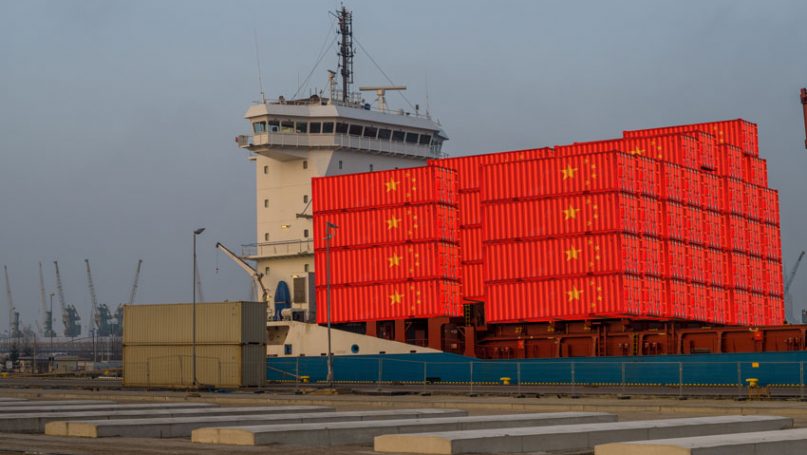
Is China beating the US and EU through its pragmatic approach towards cooperation under the “Belt and Road” Initiative (“一带一路”倡议) (BRI)? Despite the advent of the US’ “Build Back Better World” (B3W) and the EU’s “Connecting Europe Globally” (CEG), evidence from Sri Lanka suggests that some countries still look to China for support due to the ‘no-strings-attached’ nature of its investments. The stark reality is that China’s “pragmatic values”, combined with loans, may outcompete the two Western initiatives.
The US and EU forward their initiatives through a focus on Western values such as liberalism, democracy, freedom of speech, and human rights – all moral frameworks which supposedly lead to ‘good governance’ (US White House, 2021; EU Council, 2021; Yan, 2021; Pleeck and Gavas, 2021; Qureshi, 2021). Conversely, the Chinese Communist Party (CCP) holds that the BRI has pursued a pragmatic framework of non-interference (respecting sovereignty) and ‘win-win’ (mutual benefits) (FMPRC, 2021A; Ginsburg, 2021). In a nutshell, China claims to meet the countries where they are, with investments made in areas or sectors in which they seek support (Li and Vicente, 2020; FMPRC, 2021B; Wang and Cao, 2021: 65). Moreover, non-interference goes both ways: China remains pragmatic about cooperation and urges other countries to do the same, ultimately securing mutual political support in times of strife (China Power, 2017; Dezenski, 2020; Jie and Wallace, 2021). However, while countries do benefit from Chinese investments, China arguably remains at the head of the negotiation table, with its own interests at the fore (Rolland, 2017; China Power, 2017). But what does this mean in practice?
 © Statista A graphic using the latest U.S. military assessment of Chinese and Taiwanese military strength shows the scope of the imbalance of power across the geopolitically sensitive Taiwan Strait.






:quality(70)/cloudfront-us-east-1.images.arcpublishing.com/mco/SQQLWCMTBJH35BH6WEHQ6SL6CE.jpg)

:quality(70)/cloudfront-us-east-1.images.arcpublishing.com/mco/KP7P3BJNJJCTJJULW6MAAZ7FOI.jpg)
:quality(70)/cloudfront-us-east-1.images.arcpublishing.com/mco/QEX4RPNI3JEYTOXLW6B4PTT2UU.jpg)