26 October 2022

China’s Xi is more powerful than ever. What does it mean for the world?

Simone McCarthy and Nectar Gan

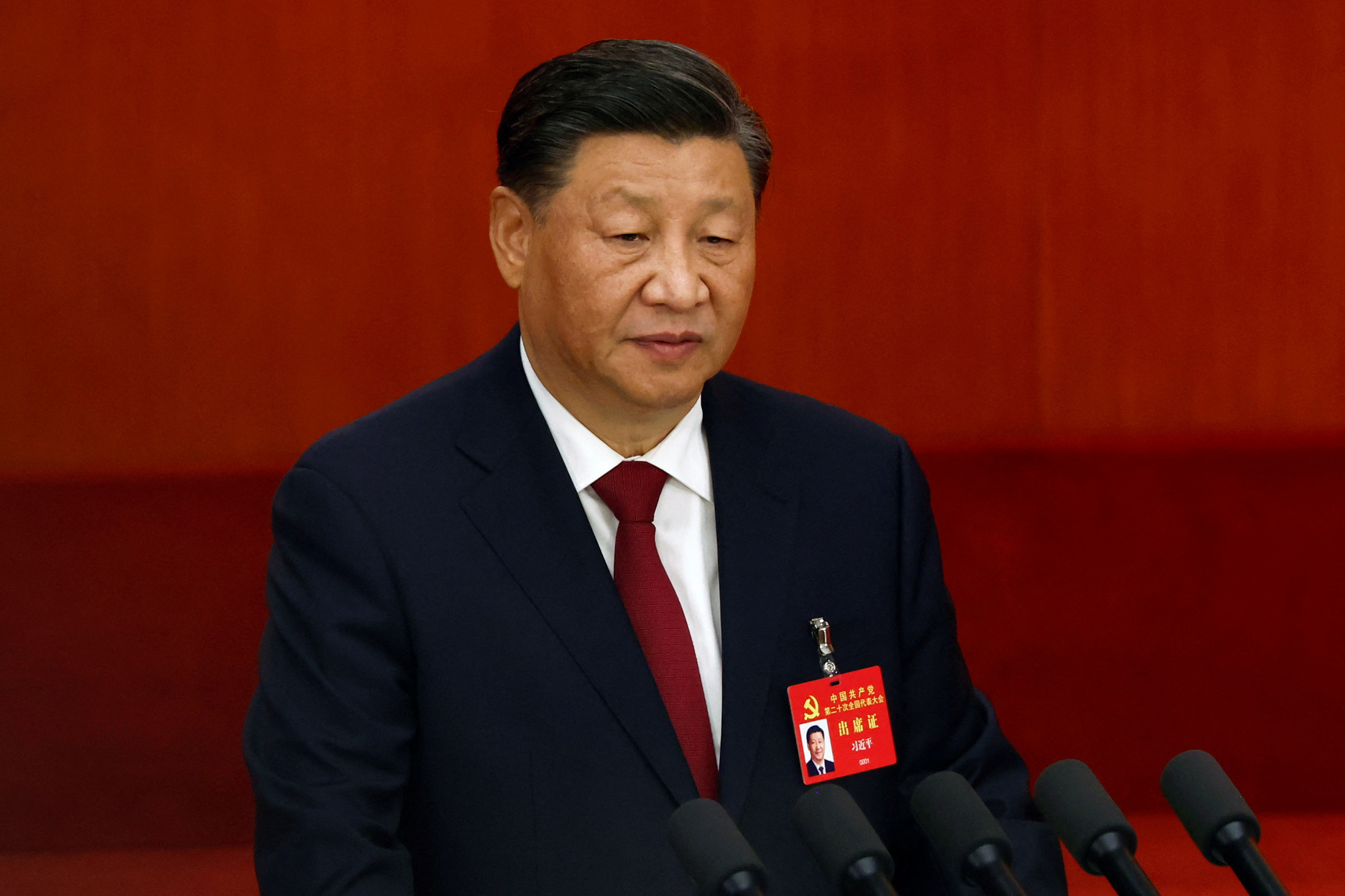
It was a crowning moment for Xi Jinping when he stepped onto a red-carpet stage on Sunday to begin his norm-shattering third term as China’s supreme leader.

Xi, 69, has emerged from the ruling Communist Party’s five-yearly congress with more power than ever, stacking his party’s top tiers with longtime proteges and staunch allies.

That loyal inner circle has not only strengthened Xi’s hold on power – but also tightened his grip over China’s future. To an extent unseen in decades, the country’s trajectory is shaped by the vision and ambition of one man, with minimal room for discord or recalibration at the party’s apex of power.

In the eyes of Xi, China is closer than ever to achieving its dream of “national rejuvenation” and reclaiming its rightful place in the world. But the path ahead is also beset with “high winds, choppy waters, or even dangerous storms” – a dark warning Xi made at both the start and the end of the week-long congress.

Security News This Week: TikTok’s Security Threat Comes Into Focus


AS RUSSIA’S WAR in Ukraine drags on, Ukrainian forces have proved resilient and mounted increasingly intense counterattacks on Kremlin forces. But as the conflict evolves, it is entering an ominous phase of drone warfare. Russia has begun launching a series of recent attacks using Iranian “suicide drones” to inflict damage that is difficult to defend against. With Russian president Vladimir Putin escalating his rhetoric about the potential for a nuclear strike, and NATO officials watching closely for any signs of movement, we examine what indicators are available to the global community in assessing whether Russia is actually preparing to use nuclear weapons.

Meanwhile, an unrelenting string of deeply problematic vulnerabilities in Microsoft's Exchange Server on-premises email hosting service has left researchers to raise the alarm that the platform isn't getting the development resources it needs anymore, and customers should seriously consider migrating to cloud email hosting. And new research examines how Wikipedia's custodians ferret out state-sponsored disinformation campaigns in the crowdsourced encyclopedia's entries.

If you're worried about the ongoing threat of ransomware attacks around the world, researchers pointed out this week that middle-of-the-pack groups like the notorious gang Vice Society are maximizing profits and minimizing their exposure by investing very little in technical innovation. Instead, they simply run the most sparse and unremarkable operations they can to target under-funded sectors like health care and education. If you're looking to do something for your personal security, we've got a guide to ditching passwords and setting up “passkeys” on Android and Google Chrome.

Biden Embraces America's Fiercest Enemies: Whose Side Is He On?

Khaled Abu Toameh

These members of Congress, [Saudi author Mohammed Al-Saed] implied, either do not know or are conveniently "forgetting" that Iran has been at least as brutal to Americans as Saudi Arabia has.

While the gruesome murder of Osama bin Laden's good friend, Jamal Khashoggi -- whose dream was to "establish an Islamic state anywhere" -- cannot be ignored, Iran's regime has created a list of hostile acts against the US at least as long.

This simplified list does not even include that Iran is presently supplying Russia with kamikaze drones and trainers as well as missiles to use against the civilians of Ukraine. Just suppose for an instant that Iran possessed nuclear weapons instead?

Iran already controls four Middle Eastern countries in addition to its own -- Lebanon, Syria, Yemen and Iraq -- as well as countless terrorist proxies, including Hezbollah, Hamas, the Houthis and Palestinian Islamic Jihad. Since 1979, the Iranian regime has repeated its plan of "Death to Israel" and "Death to America." And now the Biden administration still wishes it could "reward" Iran with legitimized nuclear weapons, the ballistic missiles to deliver them, and a trillion dollars? How can anyone see that as "fair"?

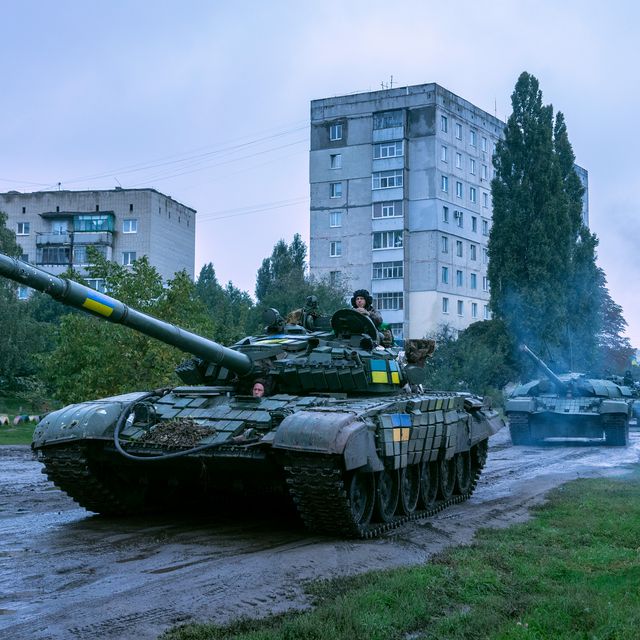
How the Kharkiv Counteroffensive in Ukraine Proves Tanks Are Still Warfare Workhorses

THOMAS MUTCH

KHARKIV, UKRAINE—On a bright, sunny day in May, as birdsong mixed with the booms of explosions, I noticed a T-72 tank with broken treads and a burned-out, rusted chassis lying before me. The infamous “Z” sign painted on its side showed that this was a Russian tank, likely destroyed by a British-supplied NLAW missile system that Ukrainian forces in the area had been using to hamstring the once-dominant Russian Armed Forces. Its turret was undamaged and it pointed harmlessly toward our small gaggle of journalists and soldiers as we stood outside a burned-out farmhouse.

These scenes are now some of the war’s defining images. Here is supposedly an indomitable part of the Russian war machine, demolished by plucky and nimble Ukrainian forces, armed with shoulder-mounted Western anti-tank weapons in true David-and-Goliath fashion. The T-72 is the AK-47 of tanks—a reliable workhorse seen in wars from Iraq to Ethiopia, from Syria to the carnage before us in Ukraine. But here, Ukrainian soldiers were obliterating them in the hundreds.

Eighty years ago, a swarm of Soviet tanks, numbering in the thousands, had liberated these same battlefields from the Nazis in World War II. Was the wrecked T-72 in front of us a symbol that the tank is now an obsolete weapon of war, doomed to go the way of the horse or the bayonet?

The Russian Air Force has been very effective, contrary to Western narrative, short take-offs, and more

Rohan Khattar Singh

The Russian Air Force has re-engaged itself in Ukraine over the last ten days and has conducted strikes across all the provinces of Ukraine, affecting 1,100 towns in Ukraine. These strikes have increased as Russian troops have been retreating and losing territory that they previously controlled. The Russian Air Force targeted electric and energy supply stations including water infrastructure. Striking public infrastructure has not been a part of Russia’s playbook as it has concentrated its air-strikes against Ukrainian armed forces. Since the air-campaign first began in February this year, Russia primarily targeted military installations of the Ukrainian armed forces, in order to achieve fast and effect suppression of their armed forces. This was done to ensure that Russia is seen as being against Ukrainian establishment and not it’s people. The recent strikes have clearly deviated from Russia’s doctrine and it needs to be studied closely to understand what Russia plans ahead for the winter.

Analysis

When Russia attacked Ukraine, the Russian Air Force held a clear majority in terms of numbers and technology, as Moscow was able to field around 800 strike and fighter aircraft against Ukraine’s 80 odd fighters. The difference in attack helicopters was also massive with Russia operating around 700 gunships against Ukraine’s 30. There is enough evidence that highlights the type of payload dropped by Russia in the first 10 days of the war, as Russia fired 1100 KH-101 cruise missiles into Ukraine and by August the total cruise missiles used were almost 4,000. This means that over time, regardless of Russia’s retreating position on the ground it has more than tripled it’s strikes, proving that the Russian Air Force has been effective in creating an open air-space for its strike aircraft. The cruise missiles have had a hit-rate of 90%, however Ukraine has managed to keep it self afloat through the air-onslaught, partly because of the massive influx of funds and equipment from NATO countries.

Nippon Steel pouring big money into India and Thailand

SCOTT FOSTER

Nippon Steel and ArcelorMittal, two of the world’s largest steel companies, have turned their attention to India and Thailand amid weakening demand in Japan and the energy crisis in Europe.

The ArcelorMittal Nippon Steel India joint venture (AM/NS India) has announced two new initiatives to expand operations in India: New construction and capacity expansion of upstream and hot-rolling facilities at the Hazira integrated steel mill in Gujarat.The purchase of port, electric power and other assets from the Essar Group, an Indian conglomerate.

ArcelorMittal is the world’s second-largest producer of steel. Headquartered in Luxembourg, it was created in 2006 by the acquisition of European steel maker Arcelor by India’s Mittal Steel.

The Putin Pawns in the NATO Alliance? How the West Emboldens ErdoÄŸan's Aggression

Burak Bekdil

Turkey's Islamist President, Recep Tayyip ErdoÄŸan, has been militarily threatening a fellow NATO ally, Greece, using increasingly threatening language. He also proudly announced that Russian President Vladimir Putin has promised him to make Turkey an international natural gas hub, therefore selling his gas via Turkey, avoiding Western sanctions. What does ErdoÄŸan get in return? Huge American (and other Western) pats on the back.

"The most dangerous period for Greece," Steven Cook from the Council on Foreign Relations wrote in the Greek daily Kathimerini, "is the period leading up to the elections, which Turkey is absolutely adamant on winning as he wants to be president for the 100th anniversary of Turkey's democracy in 2023. He will use any means at his disposal and Greece is an issue that arises naturally in his planning. But the Aegean is very close to Turkey and the fighter jets of the two countries fly in very close proximity, so we cannot rule out an accident or a misunderstanding or a mistake."

In September, Greek Defense Minister Nikos Panagiotopoulos visited the eastern Aegean island of Kastellorizo, some two kilometers off Turkey's southern coast. This visit, according to Turkish Defense Minister Hulusi Akar was a "provocation."

Xi’s Third Term Is a Gift in Disguise

Craig Singleton

o exactly no one’s surprise, Xi Jinping will secure a third term atop the Chinese Communist Party at this week’s 20th Party Congress. Xi’s political triumph—which has been months, if not years, in the making—overturns decades of party precedent that used to limit Chinese leaders to two consecutive five-year terms. But in breaking the rules, Xi has done the United States and its allies a favor by taking the guesswork out of China’s path forward.

The formal extension of Xi’s tenure locks in China’s current policy orientation—one that is unabashedly hostile to political pluralism and free market forces. Indeed, for the last few years, Xi has outlined, often in excruciating detail, his desire not only to deepen the party-state’s influence over China’s economy and 1.4 billion citizens but also to extend that influence far beyond China’s borders. Rarely has a geopolitical rival so unambiguously telegraphed his plans. Yet the Western world remains woefully unprepared for the coming “decisive decade” in its rivalry with China, as U.S. President Joe Biden described it last week.

IntelBrief: The Evolution of the Online Violent Extremist Landscape


Terrorist and violent extremist use of the Internet continues to evolve, especially as new technologies afford nefarious actors more opportunities to radicalize, recruit, and raise funds. The online extremist landscape has matured significantly from the days when the Zapatista National Liberation Army (EZLN), or “Zapatistas,” in Mexico were using the Internet in the 1990s to disseminate information and white supremacists in the United States were using static websites and message boards to spread propaganda. In 2022, there are almost no terrorist or violent extremist groups without at least some kind of online presence. Over time, non-state actors have proven highly adaptive and skilled in the virtual space, able to rebound from counterterrorism actions while attempting to stay one step ahead of law enforcement authorities and intelligence agencies. In a world where extremists connect online, political boundaries, geography, and proximity are less determinative. However, it is crucial not to downplay the importance of real-world interactions, as radicalization is rarely a result of solely online behaviors.

Terrorists and violent extremists continue to seek to exploit the Internet to finance their activities and organizations. Cryptocurrencies have captured the attention of groups like the Islamic State and Hamas, while far-right extremists have also dabbled in the myriad of crowdsourcing platforms to raise money. Islamic State’s “virtual plotter” model, where operatives coordinate attacks online with support around the globe, highlights the importance of the internet for networking and coordination within and among terrorist networks, echoing the increased use of the internet for licit purposes such as work, community organization and socializing, particularly in an era shaped by Covid lockdown experiences. Enabled by end-to-end encryption, this approach revolutionized attack planning for jihadist organizations. The Internet has also been a force multiplier for recruitment and radicalization, particularly as extremist narratives and ideas can be shared widely, spread quickly, and then mainstreamed into public discourse. Terrorist and extremist groups also rely on the internet for the diffusion of tradecraft, taking advantage of do-it-yourself “DIY” chatrooms to improve technical know-how related to artificial intelligence, 3-D printing, and unmanned aerial systems (UAS) or drones. Moreover, there is a mobilization to action or incitement aspect, wherein jihadists, far-right accelerationists, and others actively call for their followers to engage in real-world acts of violence and terrorism.

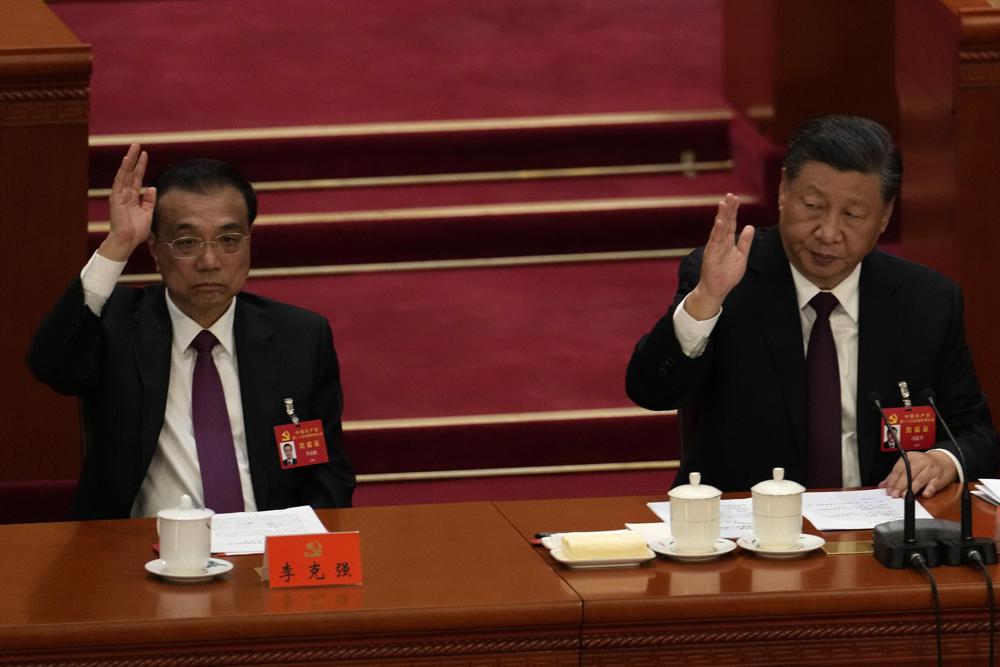
China reaffirms Xi’s dominance, removes No. 2 Li Keqiang

KEN MORITSUGU

BEIJING (AP) — China’s ruling Communist Party reaffirmed President Xi Jinping’s continued dominance in running the nation Saturday, one day ahead of giving him a widely expected third five-year term as leader.

A party congress effectively removed Premier Li Keqiang from senior leadership. Li, the nation’s No. 2 official, is a proponent of market-oriented reforms, which are in contrast to Xi’s moves to expand state control over the economy.

The weeklong meeting, as it wrapped up Saturday, also wrote Xi’s major policy initiatives on the economy and the military into the party’s constitution, as well as his push to rebuild and strengthen the party’s position by declaring it absolutely central to China’s development and future.

Xi Jinping Expands His Power, Elevating Loyalists, Forcing Out Moderates

Chris Buckley and Keith Bradsher

Poised to take a groundbreaking third term in power, China’s leader, Xi Jinping, has advanced a contingent of Communist Party loyalists ready to defend him, expand state influence over the economy and bolster national security.

Mr. Xi opened the new phase of his authoritarian rule with a clutch of victories at the end of a party congress on Saturday. He hurried into retirement two top officials from a more moderate political mold. He positioned allies to dominate the new leadership. He kept officials who have promoted his muscular approach in diplomacy and the military. And Mr. Xi gave no hint of preparing for eventual retirement by anointing a likely successor.

“China has entered a new era of maximum Xi,” said Neil Thomas, an analyst of Chinese politics for the Eurasia Group. The outcome, Mr. Thomas added, “means more support for Xi’s policies, which means a stronger focus on political control, economic statism, and assertive diplomacy.”

Would Putin Roll the Nuclear Dice?

STEVEN PIFER

Since Russia launched its most recent invasion of Ukraine in February, Moscow has threatened—sometimes subtly, other times explicitly—nuclear escalation should the war not go its way. Ukraine and the West have to take such threats seriously. But the Kremlin also needs to take their probable responses seriously and would have to weigh the substantial risks and costs of using a nuclear weapon.

Shortly after Russian forces assaulted Ukraine on Feb. 24, Vladimir Putin ordered a “special combat readiness” status for Russian nuclear forces. But it’s unclear what that means since the Pentagon has consistently said it sees no change in Russia’s nuclear posture. The alert may have amounted to little more than additional command post staffing.

Since then, Russian officials have made implicit nuclear threats, such as Putin’s reference to using “all the forces and resources” Russia has to defend the Ukrainian territory he claims to have annexed on Sept. 30. Other Russians have voiced more overt threats. Former president Dmitry Medvedev on Sept. 27 “imagined” Russia using a nuclear weapon against Ukraine. The rhetoric has increased as the Russian army has suffered setbacks on the battlefield.

How not to estimate the likelihood of nuclear war

Amy J. Nelson and Alexander H. Montgomery

As Russia retaliated for Ukraine’s destruction of the Kerch Bridge by launching strikes on energy facilities and civilian targets in Kyiv, commentators returned to the question of whether events were escalating, and whether the world was inching closer to the brink of nuclear war. Probability estimates by these observers have, unsurprisingly, mushroomed as well.

On the high end, these estimates ranged from 10-20 percent to an overly precise 16.8 percent to 20-25 percent for “some analysts.” Some of these headline-grabbing estimates are likely inflated to create a sense of urgency and put pressure on policymakers to take action, rather than to showcase the ability to carefully craft probability estimates. The difference between estimates may simply reflect the prominence of each nuclear scenario in each analyst’s mind.

Here, we lay out the debate over the probability of nuclear use, outlining flaws in current estimates. We offer an alternative approach that focuses on thinking broadly across multiple scenarios and minimizing the rewards of using nuclear weapons, to minimize the possibility of nuclear war.

Russia may prefer sabotage of critical infrastructure over nuclear weapons

Constanze Stelzenmüller

Can he? Would he? Will he? Western capitals are abuzz with alarm over Russian President Vladimir Putin’s repeated nuclear threats. Joe Biden, the U.S. president, invoked a possible “Armageddon” at a Democratic party fundraising event. Emmanuel Macron, France’s president, explained to a primetime television audience how Paris would react to a Russian nuclear attack “on Ukraine or in the region” — not with a nuclear counterstroke, it was said.

In Berlin, senior officials mutter darkly and off the record about various scenarios. On Monday, the head of Germany’s national intelligence agency warned in parliament that Moscow might use “substrategic nuclear weapons”.

Putin has a tendency to double down when on the defensive — which he is now, both on the battlefield in Ukraine and against a churning undertow of criticism at home. So there can be no question that responsible Western leaders must plan for that ghastly eventuality.

How does Gen Z see its place in the working world? With trepidation


Youth can be an exhilarating time but also one of high anxiety, as young people struggle to establish themselves economically and find their place in society. While each generation may encounter struggles and doubts as they join the workforce, Generation Z1 has entered the working world during a global pandemic and amid concerns over rising inflation rates, recession fears, geopolitical conflicts, and climate change. The latest iteration of McKinsey’s American Opportunity Survey (AOS) reveals a generational gap in the workplace, with marked differences among how Gen Z and other generations view themselves, their ability to work effectively, and their futures.

Our spring survey of 25,062 Americans included 1,763 respondents (see sidebar, “Our methodology”) in the Gen Z age range of 18 to 24. Our survey shows that Gen Z respondents who are working are more likely to have independent jobs or multiple jobs than older workers. Unlike other generations, they are less likely to expect this period of financial insecurity to end and have high levels of doubts about their eventual ability to either buy homes or retire.

On the cusp of a new era?

Chris Bradley, Jeongmin Seong, Sven Smit, and Jonathan Woetzel


The past two and a half years have been extraordinary. What we are seeing is surely more than the progression of just another business cycle. The unnerving combination of a global pandemic compounded by energy scarcity, rapid inflation, and geopolitical tensions boiling over has people wondering what certainties are left. Today’s events might even feel like a cluster of earthquakes that is reshaping our world.

We have been here before. Similar “earthquakes” have struck the past: in the immediate aftermath of World War II (1944–46), during the period around the oil crisis (1971–73), and at the time of the breakup of the Soviet Union (1989–92). Like a real earthquake, each of them changed the global landscape with the sudden release of powerful underlying forces that had been building up around a fault line over time—but in these cases, unfolding over a few years rather than in a big bang. Each of them ushered in a new era: the Postwar Boom (1944–71), the Era of Contention (1971–89), and the Era of Markets (1989–2019). Are we now on the cusp of a new era presaged by today’s earthquakes?

A Xi Jinping ‘report card’: Six ways Xi’s decade of crackdowns and campaigns has changed China

Lili Pike

Next week, China’s President Xi Jinping is likely to make history. The man who has ruled China for a decade is expected to secure a third term as the country’s leader at the Communist Party Congress, China’s once-every-five-years leadership reshuffle. This year may bring a “reshuffle” at lower levels, but despite a range of domestic problems, almost no one anticipates change at the very top. In which case Xi will cement his status as one of China’s most powerful leaders ever.

It’s a moment to take stock of Xi’s tenure and what has without question been a period of staggering change in China. Grid surveyed experts who have watched Xi and China closely, with the aim of assessing where Xi has had the greatest impact on the country he has led since 2012.

“Things have changed dramatically on the social, political and economic fronts,” John Yasuda, a political scientist at Johns Hopkins University who focuses on China, told Grid. “It is difficult to pinpoint any one particular thing because it has been a sea change in many respects since the Hu [Jintao] years.”

Ransomware is Being Used As a Precursor to Physical War: Ivanti

Alessandro Mascellino

Ransomware has grown by 466% since 2019 and is increasingly being used as a precursor to physical war.

The findings come from Ivanti's Ransomware Index Report Q2–Q3 2022, which the company shared with Infosecurity earlier today.

The data also shows ransomware groups continuing to grow in volume and sophistication, with 35 vulnerabilities becoming associated with ransomware in the first three quarters of 2022 and 159 trending active exploits.

Further, the Ivanti report highlighted 10 new ransomware families compared to the previous quarter: Black Basta, BianLian, BlueSky, Play, Hive, Deadbolt, H0lyGh0st, Lorenz, Maui and NamPoHyu. These bring the total to 170.

Ukraine Could Still Face Cyberattacks, Experts Say

Bree Fowler

The fact that Ukraine has yet to suffer a crippling cyberattack after nearly eights months of war with Russia is a credit to the country's own online defenses, but experts say a major attack could still come as the war drags on and Russia gets more desperate.

The Ukraine-Russia conflict and how it could affect the world's security as a whole was a major topic of discussion this week at Mandiant's mWise cybersecurity conference in Washington.

Though Ukraine has been hit with wiper malware, along with other kinds of destructive cyberattacks, they've so far been fairly low level, threat intelligence experts said during a Wednesday panel discussion.

What observers haven't seen as much as expected are major attacks on targets outside Ukraine, says John Hultquist, Mandiant's head of intelligence analysis. He adds that it remains to be seen whether those kinds of attacks will unfold down the road.

Russia Failing to Reach Cyber War Goals, Ukrainian Official Says

CATE BURGAN

After more than eight years of trying, Russia has yet to realize its strategic cyber war-fighting goals in Ukraine, a top Ukrainian government technology official said on Oct. 19 at Mandiant’s Worldwide Information Security Exchange event in Washington.

That was one of the top takeaways from an address by Viktor Zhora – the Ukrainian Deputy Chairman and Chief Digital Transformation Officer at the State Service of Special Communication and Information Protection.

The official detailed how Ukraine has become resilient against Russia’s cyber warfighting tactics by, among other steps, preparing the workforce for cyber aggression and improving cooperation between partners.Are you ready to unleash innovation wherever the mission demands? 

25 October 2022

Bombing to Lose Why Airpower Cannot Salvage Russia’s Doomed War in Ukraine

Robert A. Pape

Beginning in early October, facing huge territorial loses and other reversals in Ukraine, Russian President Vladimir Putin reached for a military strategy in which Russia should have a decisive advantage: airpower. In the most widespread such campaign to date, he ordered a blistering series of missile attacks against a dozen cities and electrical infrastructure across the country. Ukrainians were forced into basements and bomb shelters, and some 30 percent of the country’s power generation capacity was knocked out, causing rolling blackouts that affected homes, hospitals, and even the basic functioning of the economy. In the weeks since, Russia has been sending waves of drones to attack residential buildings and offices in Kyiv and other cities. In effect, Putin was reminding the Ukrainian government of his ability to attack its main population centers—a threat that Ukraine, having scrapped Soviet-era bombers long ago, having no long-range rockets able to hit Russian cities, and having only a tiny number of ground attack aircraft—is unable to match. The goal, it seems, is to punish civilians, wearing them down in the hope of convincing their leaders to sue for peace.

But it is a strategy doomed to failure. As in earlier phases of the war, Russia’s supposed air superiority has done little to shift the overall momentum on the ground. Despite the significant damage they have caused, Putin’s airstrikes have failed to hinder Ukrainian advances in the east. And when they have reached civilian targets they have only served to strengthen Ukrainian resolve.

Baloch Conflict: No Longer a Low-Level Insurgency

Manish Rai

For decades, the Pakistani establishment has termed the Baloch insurgency a low-intensity conflict confined mostly to Balochistan, the country’s largest province by territory. But that seems to have changed, as a spate of attacks this year clearly demonstrates that the insurgency has entered into a new phase.

Despite Pakistani security forces claims of a sweeping crackdown on rebels, the insurgency’s lethality has increased many folds in recent times. As a result, more ferocious attacks, such as suicide bombings, high-profile targeted attacks, and kidnappings of high-ranking army officials are now shaping the course of Pakistan’s oldest separatist insurgency.

In particular since the start of this year, a remarkable shift in the strategy of Baloch militants has been evident. It started with a large-scale attack in January on a security checkpoint in Balochistan’s Kech region, which borders Iran. Less than a week later, another bold attack was carried out by militants from the Baloch Liberation Army (BLA) suicide wing (the Majeed Brigade). In these attacks, militants stormed two security camps in Balochistan’s Nushki and Panjgur districts.

Lt. Gen. Stephen N. Whiting on Posturing U.S. Space Operations for a Warfighting Advantage


Kari A. Bingen: Good afternoon. I’m Kari Bingen, the new director of the Aerospace Security Project at the Center for Strategic and International Studies.

It turns out that we share our event today with a famous space broadcast. On October 14th, 1968 the Apollo 7 crew transmitted the first live telecast from space. The broadcast began with a view of a card reading “from the lovely Apollo room high atop everything.” So it is fitting that I welcome everyone from the lovely CSIS Aerospace Security Project virtual room and I get to welcome Lieutenant General Whiting, commander of U.S. Space Operations Command, as my first guest in this new role to discuss how Space Operations Command is posturing U.S. space operations for a warfighting advantage.

What I think is remarkable about General Whiting’s career is that he is a true space operator and an engineer. Many Air Force Academy graduates at the time who wanted to pursue a space track got their start as missileers and then moved over to space. General Whiting started as a crew commander at a space warning squadron and then went on to command several operational space units – the UHF Follow-On system, Satellite Control Network, Missile Warning and Space Control, the Joint Space Operations Center – and as the deputy commander of Air Force Space Command. He brought a space perspective to tactics development at the Air Force Warfare Center, conducted scholarly analysis at RAND and the Navy’s Strategic Studies Group, and worked at the senior-most levels at the Pentagon as the deputy secretary of defense’s senior military assistant. I can’t think of anyone better positioned with the right breadth of experiences to lead the standup of Space Operations Command at this consequential time.

Will the Ukraine War Reshape the Internet?


Russia’s invasion of Ukraine, for the most part, seems an old-fashioned war of invasion and terror that demands boots on the ground. In reality it has blended traditional and innovative elements, and while the cyber dimension has been less visible, it has been full-fledged from the very start. A study by Microsoft indicates that as a prelude to the war, on Feb 23, 2022, one day before the official invasion, Russia launched a cyberweapon called “Foxblade” against computers in Ukraine. ­“Reflecting the technology of our time, those among the first to observe the attack were half a world away, working in the United States in Redmond, Washington,” the report said. As for the Ukrainian defense, it has been quick “to disburse its digital infrastructure into the public cloud, where it has been hosted in data centers across Europe.”

Ukraine also has launched one of the most successful public relations campaigns ever, amassing international information technology armies of 500,000 hacktivists. It lobbied the Western block for tough sanctions on Russia and was rewarded with the most severe sanctions ever levied on a major economy, and successfully orchestrated a private sector digital embargo. In addition, President Zelensky called for Russia’s right to vote in the UN Security Council to be discounted, and there are calls for similar action in other international institutions. While Vice Prime Minister and Minister of Digital Transformation Mykhailo Fedorov asked internet governance institutions to cut off Russia from the internet. Fedorov’s appeal received a collective but sympathetic no on the grounds that the core of the internet should remain apolitical. Today, Ukraine receives robust intelligence cooperation from the United States, while the European Union offers cyber capacity-building support through its Permanent Structured Cooperation (PESCO) policy. Meanwhile, an agreement has been signed between the State Archival Service of Ukraine and the National Archives of the United Kingdom on the temporary transfer of cloud data storage and backup copies of digital materials of Ukrainian state archival institutions in case of their potential loss.

China’s 20th Party Congress Report: Doubling Down in the Face of External Threats


President Xi Jinping loomed large over the opening of the Chinese Communist Party’s 20th National Congress on October 16, 2022. He is all but guaranteed to emerge from the party congress with a history-making third five-year term, and he is widely expected to tighten his hold over the party by placing political allies in key positions.

Xi kicked off the party gathering with a landmark speech that stretched for nearly two hours. His address, an abridged version of the full party congress report, focused heavily on domestic issues but also provided a useful glimpse into how Xi and the party leadership view the world and China’s place in it. Xi’s address (and the full report) struck a different tone from the last one Xi delivered at the 19th Party Congress in 2017. While Xi still voiced confidence that China’s power and prospects are on the rise, he also doled out stark warnings about the growing threats and challenges that China faces.

China’s Worsening External Environment

In his 2017 report to the 19th Party Congress, Xi took a triumphant tone, proclaiming that China “stands tall and firm in the East” and asserting that China’s soft power and international influence were on the rise. That speech was seen at the time as presaging a more assertive and activist Chinese foreign policy. Those predictions panned out. The last five years witnessed Beijing ratchet up pressure on Taiwan and take steps to crush Hong Kong’s autonomy. Chinese “wolf warrior” diplomats also aggressively ramped up their rhetoric and tactics in defense of Chinese interests.

Team Biden Balks on Africa Sanctions

Robbie Gramer

The Biden administration is sitting on dozens of potential sanctions for human rights violators and coup-plotters in countries in Africa, refusing to pull the trigger despite mounting pressure from U.S. lawmakers and human rights advocates, according to seven officials, congressional aides, and experts familiar with the matter.

The U.S. State Department has extensive dockets for possible sanctions on people involved in grave human rights violations in countries including South Sudan; Ethiopia, where a deadly internal war has raged for nearly two years; and Sudan, where security officials helped plot a coup last year and then unleashed a deadly crackdown on pro-democracy protests, the officials and experts said. For reasons that are unclear to U.S. lawmakers and outside advocacy organizations, the Biden administration has yet to implement any of the potential sanctions.

Pakistan’s Military Is Here To Stay

Husain Haqqani

Pakistani politics have always revolved around the country’s military. Civilian politicians compete for support while criticizing—or seeking covert help from—a ubiquitous security establishment. Since his ouster as prime minister last April, cricketer-turned-politician Imran Khan has become the latest to challenge this system. But Khan’s polarizing rhetoric is only adding to Pakistan’s chaos—not marking the advent of a revolution.

The government elected after Khan’s removal via a no-confidence vote initially tolerated the former prime minister’s attacks on generals, judges, and political rivals in addition to his conspiracy theories about his ouster being the result of a U.S.-backed plot. Unlike previous civilian leaders who fell afoul of the military, Khan was not immediately arrested, charged with corruption, or disqualified from future elections by judicial fiat. But now, Khan and his close aides are beginning to face the wrath of the state apparatus. Both the security establishment and the civilian government seem to have realized that Khan’s populist influence will not diminish without prosecuting him and his associates.

Xi's call to win tech race points to new wave of Chinese state-led spending

Josh Horwitz

SHANGHAI, Oct 17 (Reuters) - President Xi Jinping's call for China to "win the battle" in core technologies could signal an overhaul in Beijing's approach to advancing its tech industry, with more state-led spending and intervention to counter U.S. pressures, analysts say.

Achieving self-reliance in technology featured prominently in Xi's full work report to kick off the once-every-five-years Communist Party Congress, with four mentions versus none in 2017. The term "technology" was referred to 40 times, up from 17 times in the report from the 2017 congress.

While the report did not mention any other countries or specific sectors for that goal, it comes days after Washington imposed sweeping new regulations aimed at undermining China's efforts to develop its own chip industry.

HSBC analysts said their takeaway was that increased spending in China, particular in STEM (science, technology, engineering and maths) fields, and policy support was likely.

Iris Pang, chief economist for Greater China at ING, said Xi's remarks addressed "the urgent need for talent and promoting self-sufficiency in technological advancement".

Profits at the Expense of Patriotism Is a Dangerous Game

Lawrence Kadish

Today's American mega-billionaires need to think long and hard about where their allegiances lie: perhaps reciting the Pledge of Allegiance before our nation's flag might be a good place to start.

If past history is any indication, their current corporate behavior will become their personal legacy illuminated under a harsh and revealing spotlight.

American industrial giants, General Motors and Ford, found that to be the case when lawyers dug through national archives in the 1990s and discovered documents that revealed how these two corporations had their German-based subsidies working hand-in-glove with the Nazi regime both before World War II and during the conflict.

Company spokesmen were quick to suggest that those firms were operating at a distance but researchers begged to differ. History records that there is reason to be skeptical of corporate "spin."

What Does Russia Hope to Achieve by Bombing Ukrainian Cities?

Mikhail Vinogradov

Russia’s recent aerial bombardment of Kyiv and other Ukrainian cities is a response to several new and unforeseen problems that the Kremlin has found itself facing in recent weeks. First and foremost was the mass withdrawal of Russian troops from the vicinity of Kharkiv and Lyman, which caught most Russian commentators unaware, regardless of their views on the war. Despite the mixed results of the first six months of the war, there was skepticism in Russia that Ukraine could really launch a counteroffensive.

Accordingly, Russia’s severe military setbacks in the Kharkiv and Kherson regions could not fail to cause dismay, and sparked a widespread desire to find a scapegoat, forcing the powers that be to engage with the public more than usual. This, in turn, had the effect of emboldening the public to be far more critical of the military campaign, which had until recently been widely considered to be nothing but victorious.

On top of this, it also became apparent that the Russian establishment had no plan in place for presenting a united front over the implementation of the partial mobilization announced by the Kremlin. Although the public reaction to the announcement was calmer than many had predicted, criticism of the military top brass over its erratic implementation was so widespread that it threw into question the seemingly self-evident theory about people rallying around the regime at a time of war. Combined with the shock of Russia’s military losses, it created the impression that the Russian political class was losing the ability to demonstrate any unity on difficult issues.

Can Putin’s Center Hold?

Tatiana Stanovaya

The question of how Russian elites are responding to further developments in the Russia-Ukraine war has become one of the most discussed issues in Russian and Western media. That’s understandable: While ordinary Russians remain relatively conformist and show no signs of politicization—despite the unpopular mobilization—there have been some hopes that the elites could perhaps play a role in restraining Russian President Vladimir Putin from further escalation. Or, at least, that they would become a factor Putin would have to take into consideration when making his decisions. The debate over whether Russian elites are split or not has been intensifying against the backdrop of unprecedented internal conflicts questioning Russian tactics in Ukraine. So, are the elites a threat to Putin? And how might possible further military failures impact the mood among the elites?

When it comes to the war in Ukraine, what is important is whether the splits concern Putin and his decisions. Putin’s regime is well known for its inter-elite fighting; indeed, that is its natural state. Security officials, or siloviki, clash with other siloviki (the FSB vs. the Federal Protective Service, the military intelligence service vs. the FSB); some of Putin’s friends with others (businessman and mercenary boss Yevgeny Prigozhin vs. St. Peterburg Gov. Alexander Beglov); senior officials with other officials (domestic policy overseer Sergei Kiriyenko has long been embroiled in a confrontation with his predecessor, State Duma speaker Vyacheslav Volodin); and so on.

ISIS Terrorists Living in Turkey - with Yazidi Captives

Uzay Bulut

In Ankara's Sincan district, a 24-year-old enslaved Yazidi woman was rescued after her relatives in Australia (who themselves are asylum-seekers) purchased her freedom on the dark web. The woman was held captive in a house in Sincan for 10 months and systematically raped. Signs of torture in the form of cigarette burns and razor cuts were found on her body.

[A] secrecy order was placed on the indictment against those ISIS members who had kidnapped a seven-year-old Yazidi child to Turkey and listed her for sale. These are allegedly high-ranking IS members. They are currently living in Ankara and remain free.

[I]t is difficult to obtain data on the detained ISIS members from state authorities. When we ask questions to authorities, it is not possible to get an answer from them. — Hale Gonultas, Turkish journalist, interview with Gatestone Institute, October 2022.

Germany’s Continued Illusions About China and Russia

JUDY DEMPSEY

As if the German government needed to be reminded of the high price of its dependence on Russia and China.

Over the years, these two authoritarian regimes embedded themselves in the German economy and ingratiated themselves with the elites. Such developments prevented the EU from forging a coherent, critical strategy toward both Moscow and Beijing.

The union is now conducting major political and economic reassessments of its relations with Russia and China. But what about Germany, Europe’s biggest economy?

Over the decades, regardless of whether the Social Democrats or the Christian Democrats were in government, both parties consistently pursued economic and political relationships with Russia and China. This pursuit was based on national, not European interests. It was motivated by profit, not values or principles. These policies were also naively based on the idea that closer trade and economic ties would lead to stability, even trust.

U.S. has viewed wreckage of kamikaze drones Russia used in Ukraine

Shane Harris, Dan Lamothe, Alex Horton and Karen DeYoung

The U.S. government has examined the wreckage of Iranian-made drones shot down in Ukraine, deepening its insight into the unmanned craft that Russia has launched in a spate of kamikaze attacks on the country’s critical infrastructure, according to two U.S. officials.

Information about the drones’ structure and technology could prove crucial in helping the United States and its Ukrainian allies better identify and ultimately defeat them before they can reach their targets. Officials said the process has been used in the past to study weaponry deployed by Iran’s proxies in conflicts in the Middle East. People interviewed for this report spoke on the condition of anonymity to discuss sensitive intelligence collection.

The Shahed-136 unmanned aerial vehicles (UAVs) used in this week’s attacks on the Ukrainian capital, Kyiv, have targeted power stations and other utilities, killing at least four, authorities there have said. Their use by Russian forces has underscored the growing ties between Moscow and Tehran, alarming Western leaders whose sanctions and other punitive economic measures have drastically undercut the Kremlin’s ability to regenerate its military after eight months of war.

China, Russia Deepen Partnership on Satellite Navigation

John Hardie

China and Russia signed contracts late last month to host ground stations for their respective global navigation satellite systems (GNSSs), BeiDou and GLONASS, which are alternatives to the U.S.-run Global Positioning System (GPS). These stations will improve the performance of their systems, which provide precision, navigation, and timing (PNT) services for both military and civilian purposes.

The two sides inked the contracts during the September 27 annual meeting of their Project Committee on Important Strategic Cooperation in Satellite Navigation, launched in 2015. He Yubin, head of the China Satellite Navigation System Committee, and Yuri Borisov, head of Russia’s state corporation Roscosmos, co-chaired the meeting.

Under the contracts, Beijing will place three ground monitoring stations at various locations throughout Russia, while Moscow will do the same in China. Both countries have sought to expand their respective networks of ground stations in recent years, aiming to bolster the performance of their systems. Sino-Russian talks on mutual hosting of ground stations have been ongoing since at least 2014.