4 January 2023

Uneven Snows: Why Winter Will Hurt Russia’s Military Far More Than Ukraine’s

Brian E. Frydenborg

There is much Conventional Wisdom out there that the coming winter will mean major combat operations will halt in Ukraine and a general pause in the war, that winter means windows and opportunities will close for Ukraine or that Ukraine is somehow at a disadvantage once winter sets in. Before Ukraine retook Kherson City, you could easily find commentary that Ukraine needed to rack up victories before the winter sets it, that, somehow, winter would force Ukraine or both sides to dig in and regroup and await a thaw for a return to bigger battles.

The ubiquity of such commentary is only matched by its level of inaccuracy (though in recent weeks, it seems more people are realizing this, but this should have been clear even earlier).

Firstly, historically, from the Napoleonic Wars through World War II in even colder climates in Eastern Europe than Ukraine (just to name a few centuries), winter has not meant an end to major fighting in this part of the world. From the Napoleonic river-crossing Battle of the Berezina at the end of November 1812, to the Battle of Suomussalmi in Finland in late 1939 to through 1940, to Stalingrad in Soviet Russia in late 1942 through early 1943, major battles have been fought in the modern era in this region in the middle of winter. In two of those, the Russians were fighting on their territory against an invader, whom they bested in the fighting, but in another, they were humiliated as invaders by the defending Finns. Today in Ukraine, as in the case with that Battle of Suomussalmi (and as I pointed out in an earlier piece), the Russians are again the invaders and again being humiliated.
2022: End of the End of History

Ivan Timofeev

In 1989, the “short 20th century” ended with the “end of history”—the victory of the Western capitalist world over the Soviet socialist project. At that time, there was not a single country or community left in the world that would offer a global alternative in the form of its own view on the organisation of the economy, society and political system. The Soviet bloc dissolved itself. A significant part of it quickly integrated into NATO and the European Union.

Other major world players began to organically integrate into the Western-centric world system long before the end of the Cold War. China retained a high level of sovereignty in terms of its internal structure, but quickly integrated into the capitalist economy, actively trading with the US, the EU and the rest of the world. At the same time, Beijing avoided promoting the socialist project abroad. India did lay claim to its own global projects, although it also maintained a high level of originality in its political system, and still evaded joining blocs and alliances. Other more or less major players also remained within the rules of the game of the “liberal world order”, avoiding challenging it. Individual rebels, such as Iran and North Korea, did not pose much of a threat, although they raised concerns about their tenacity of resistance, their insistence on having nuclear programs, successful adaptation to sanctions, and, by and large, high resilience to potential military attack due to its high cost.

A BRICS Reserve Currency: Exploring the Pathways

Yaroslav Lissovolik

The new BRICS reserve currency can act in concert with the stronger role performed by BRICS national currencies to take on a greater share of the total pie of currency transactions in the world economy, writes Valdai Club Programme Director Yaroslav Lissovolik.

The issue of the creation of a BRICS reserve currency has taken on particular significance in recent months after President Putin declared that the creation of such a currency was in the process of discussion. This was followed by a series of statements coming from Russia’s legislative branch on the expediency of creating a new reserve currency — most recently from the Federation Assembly speaker Valentina Matvienko. While the debate on the possibility of creating such a reserve currency is only starting in Russia and more broadly across the global economy, the implications of such a move on the part of the BRICS could have transformational consequences for the global financial system.

Initially, the proposal to create a new reserve currency based on a basket of currencies of BRICS countries was formulated by the Valdai Club back in 2018 — the idea was to create an SDR-type currency basket composed of BRICS countries’ national currencies as well as potentially some of the other currencies of BRICS+ circle economies. The choice of BRICS national currencies was due to the fact that these were the among the most liquid currencies across emerging markets. The name for the new reserve currency — R5 or R5+ — was based on the first letters of the BRICS currencies all of which begin with the letter R (real, ruble, rupee, renminbi, rand).

Digitalization Going Green

Grigory Yarygin

Digitalization accompanies and drives modern human development. It has led to a huge boom in the volume of available information and its streamlining. Additionally, it has led to increasing the speed of decision-making, and simplified means of communication amid decreasing business travel intensity, and the volume of resources required for traditional correspondence. Additionally, new digital technologies can mitigate many environmental risks. For example, artificial intelligence makes it possible to process big data, integrate results into environmental monitoring systems, and perform modeling, forecasting and early warning assessments of critical environmental conditions.

However, this does not mean that digitalization is environmentally neutral and poses no threat. With its tangible (devices and infrastructure) and virtual (data exchange, etc.) dimensions, it bears certain threats that are traditionally associated with excessive resource consumption with device manufacturing. Additionally, to produce and make devices work, CO2 emissions are released into the atmosphere, global flora and fauna are altered, and mounts of electronic waste is produced.

Digitalization as a system has a complex structure that consists of electronic devices, networks connecting, storing, and transmitting information, energy consumption, and environmental impacts. Estimates of such impacts vary considerably, from being critical and avalanche-like to others being more moderate. The most grievous negative effects of digitalization can, more or less, be assessed.

World Economic Forum Cancels Twitter, Directs Followers To Chinese Social Media Apps

TYLER DURDEN

Prior to its upcoming conference in Davos next month, the World Economic Forum (WEF) appears to have joined the cancel campaign against Twitter, taking to recommending Chinese state-controlled social media apps to “follow along” with Davos Man into the future.

Twitter is noticeably absent from the entities listed on the organization’s “How to follow Davos 2023” social media pamphlet, and that appears to be no accident.

To stay up to speed with all that is happening within the invite-only doors of the ruling class confab, the WEF recommends following along through a handful of social media sites. They include the U.S.-based narrative-compliant Facebook, LinkedIn, Instagram, and YouTube, along with the Chinese social media apps TikTok WeChat, and Weibo. Twitter, which has freed itself from the grasp of the WEF-endorsed censorship-compliant social apps, is no longer included.

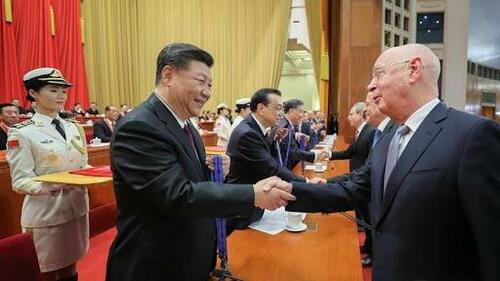
Through its founder Klaus Schwab and partner organizations, the WEF has a very cozy relationship with the Chinese government. Davos recently revealed that their China office now has 40 full time staffers. Moreover, every year in Beijing, the WEF hosts its “Annual Meeting of the New Champions,” which facilitates partnerships between international businesses and the Chinese Community Party. In 2018, the CCP awarded Klaus Schwab with its China Reform Friendship Medal, a medal for non-Chinese people who do the CCP’s bidding overseas.

Opinion – Zelenskyy’s Visit to Washington

Alexander Brotman

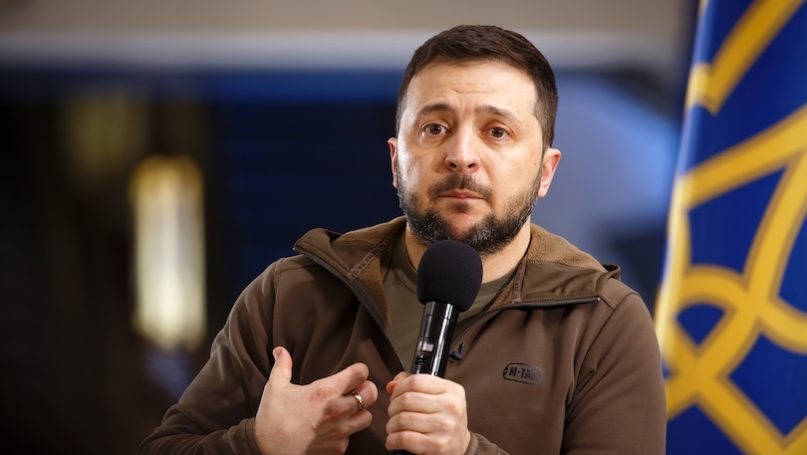
Ukrainian President Volodymyr Zelenskyy’s visit to Washington on 21 December was a momentous occasion both for Ukraine and for the United States. For Ukraine, it served to solidify its place on the international stage and cemented a critical alliance with the US and other NATO partners that is determined to pull Kyiv in a Euro-Atlantic direction. For Washington, it was a reminder of the immense power the US still has in the world after the turbulent Trump years, and that the United States remains the primary security guarantor in Europe. The conflict in Ukraine has demonstrated the indispensable nature of American power in crafting alliances of like-minded states to help defend the international order. As the new year dawns, much more needs to be done to support Ukraine and the conflict is far from over. However, Zelenskyy’s visit was an optimistic shot-in-the arm for two nations that were counted out in terms of their capabilities and influence but who now have pragmatic, realist-driven leaders at the helm.

Of Zelenskyy’s speech, two important points were raised that separate this moment from other periods in the post-Cold War era and serve to crystallise Ukraine’s geostrategic trajectory.

The first point was Zelenskyy’s adamant statement that the conflict must not become frozen, a reference to the post-Soviet frozen conflicts present from Moldova to Georgia that stifle the ability of states to move forward so long as a cold, yet unresolved peace with Russia remains. A frozen conflict because of a premature peace settlement would permanently stall Kyiv’s long march towards Europe and deny its citizens the Western identity they have sacrificed so much for in recent years. It may ease the tensions of a nuclear or third world war, but it would not ease the tensions for Ukrainians who would always be mindful of another Russian advance so long as a part of their country remains occupied. The decision by Zelenskyy to not make Ukraine ‘frozen’ grants Kyiv a degree of agency and legitimacy it has so far lacked as an independent state, marking a watershed moment for Russian influence in the post-Soviet space.

Thomas Sankara, Intersectionality and the Fate of Africa’s Liberation

Ethan Oversby and Benjamin Maiangwa

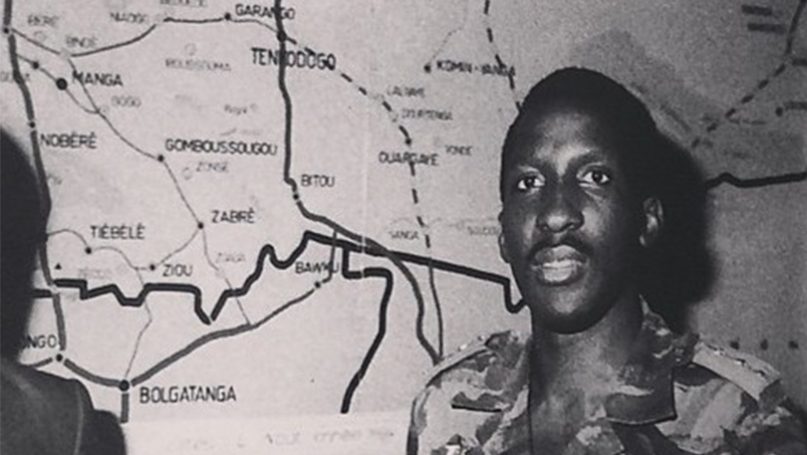
Thomas Sankara is relevant today as a Marxist revolutionary, and a martyr to those inspired by his subaltern resistance to what bell hooks calls the “white supremacist capitalist patriarchy”; an “interlocking system of domination” that exist between the west and the rest of the world. Sankara’s legacy is particularly felt among the younger generation in Africa and elsewhere who are becoming increasingly dissatisfied with exploitative capitalism, the kleptocracy of their leaders and other planetary crises.

Thomas Sankara was born in December 21, 1949 in French Colonial Upper Volta, a small landlocked country, like the nearly one-third of the entire continent that have had to live with the burden of the arbitrary mapping of their communities at the Berlin Conference (1884–5). Sankara became politically active whilst in the military and his oration made him popular among the citizens. He capitalized on this popularity and staged a successful coup in August 1983, becoming the President of Upper Volta. Despite the leftist support and wide regional acclamation that he garnered in Africa and among other leftists’ regimes elsewhere, Sankara lacked international backing. But he remained resolute in his decolonial ways. He understood that Africa’s development had to come both from internal transformation and opposition to corrupt forces, as well as resistance and untrammelled freedom from imperialism, “severing the lines of economic and political slavery with the North.”

The Password Isn’t Dead Yet. You Need a Hardware Key


IN AUGUST, THE internet infrastructure company Cloudflare was one of hundreds of targets in a massive criminal phishing spree that succeeded in breaching numerous tech companies. While some Cloudflare employees were tricked by the phishing messages, the attackers couldn't burrow deeper into the company's systems. That's because, as part of Cloudflare's security controls, every employee must use a physical security key to prove their identity while logging into all applications. Weeks later, the company announced a collaboration with the hardware authentication token-maker Yubikey to offer discounted keys to Cloudflare customers.

Cloudflare wasn't the only company high on the security protection of hardware tokens, though. Earlier this month, Apple announced hardware key support for Apple IDs, seven years after first rolling out two-factor authentication on user accounts. And two weeks ago, the Vivaldi browser announced hardware key support for Android.

The protection isn't new, and many major platforms and companies have for years supported hardware key adoption and required that employees use them as Cloudflare did. But this latest surge in interest and implementation comes in response to an array of escalating digital threats.

A Portrait of Carl von Clausewitz as a Senior Officer: The Question of Military Regulations and the Role of Routine and Creativity in Military Conduct

Vanya Eftimova Bellinger

In the realm of Clausewitzian scholarship, the 1820s represent a conundrum. On the one hand, this was when Carl von Clausewitz wrote most of his treatise On War. On the other hand, despite the period's undoubted significance for the military theorist’s legacy, we know relatively little about his life, career, and writing process. For modern national security professionals, this knowledge gap is particularly unfortunate, as it tends to, first, reinforce the mistaken impression that Clausewitz's efforts to write a theory of war were an exoteric process separated from his experience in war or his performance as a senior officer. As a result, it is also easier to brush aside the need for reflection and the continuous study of war, politics, and society Clausewitz thought central for the business of war.

The reasons for this decade-long knowledge gap are manifold. First and foremost is the lack of correspondence between Clausewitz and his wife Marie as they lived together; although other letters are preserved, their number is not as great nor their content as candid and detailed as their correspondence as a couple. Furthermore, the military theorist spent most of this period drafting On War, and the prolonged and secluded nature of that writing process offers a less compelling narrative to scholars and audiences. Following the riveting accounts of the Napoleonic Wars, the realities of peace and the Restoration Era's stifling climate additionally constrain interest in the period. Thus, biographies tend to describe the 1820s in broad strokes, often squeezing the decade Clausewitz dedicated to writing On War into a single chapter.

COGNITIVE WARFARE”: NATO IS PLANNING A WAR FOR PEOPLE'S MINDS

Jonas Tรถgel

Since 2020, NATO has pursued plans for psychological warfare that must stand on an equal footing with the military alliance's five previous areas of operation (land, water, air, space, cyberspace). It is the battleground of public opinion. NATO documents speak of “cognitive warfare”, i.e.: mental warfare. How concrete is the project, what steps have been taken so far, and who is it aimed at?

To be victorious in war, one must also win the battle for public opinion. This has been carried out for more than 100 years with increasingly modern tools, the so-called soft power techniques. These describe all those psychological tools of influence by which people can be guided in such a way that they themselves are not aware of this control. The American political scientist Joseph Nye thus defines soft power as “the ability to persuade others to do what one wants without using violence or coercion”.

Distrust of governments and the military is increasing, while NATO is stepping up its efforts to use increasingly sophisticated psychological warfare in the battle for people's minds and hearts. The main program for this is “Cognitive Warfare”. With the psychological weapons of this program, man himself is to be declared the new theater of war, the so-called “Human Domain” (human sphere).

Return of Big War: Military expert on why the invasion of Ukraine will change conflicts to come

Stephen Stewart

Russia’s invasion of Ukraine suggests “big war is back” with large-scale conflict between nations likely to shape world politics for years to come, according to a military expert.

Ben Barry, senior fellow for land warfare at the respected International Institute for Strategic Studies thinktank, said the conflict had transformed contemporary warfare.

The former British Army brigadier said Ukraine was more like major wars such as the Korean War, the Bosnian conflict or the Iran-Iraq War than a smaller-scale “special military operation” as it was initially described by Russian President Vladimir Putin.

Strategists in the UK and the US have been too preoccupied with counterinsurgency involving campaigns of unconventional, irregular and special operations warfare in countries such as Afghanistan but Ukraine has shifted the focus, Barry said.

He said: “Big War is back. Perhaps the most important facet of the war is that what was planned as a short ‘special military operation’ against an inferior enemy has turned into a large-scale conflict between states in which prolonged fighting has been at a high intensity and over a wide geographical area.

PATRIOT MISSILES, NATO, AND UKRAINE: TACTICAL WEAPONS WITH STRATEGIC IMPACTS

Peter Mitchell

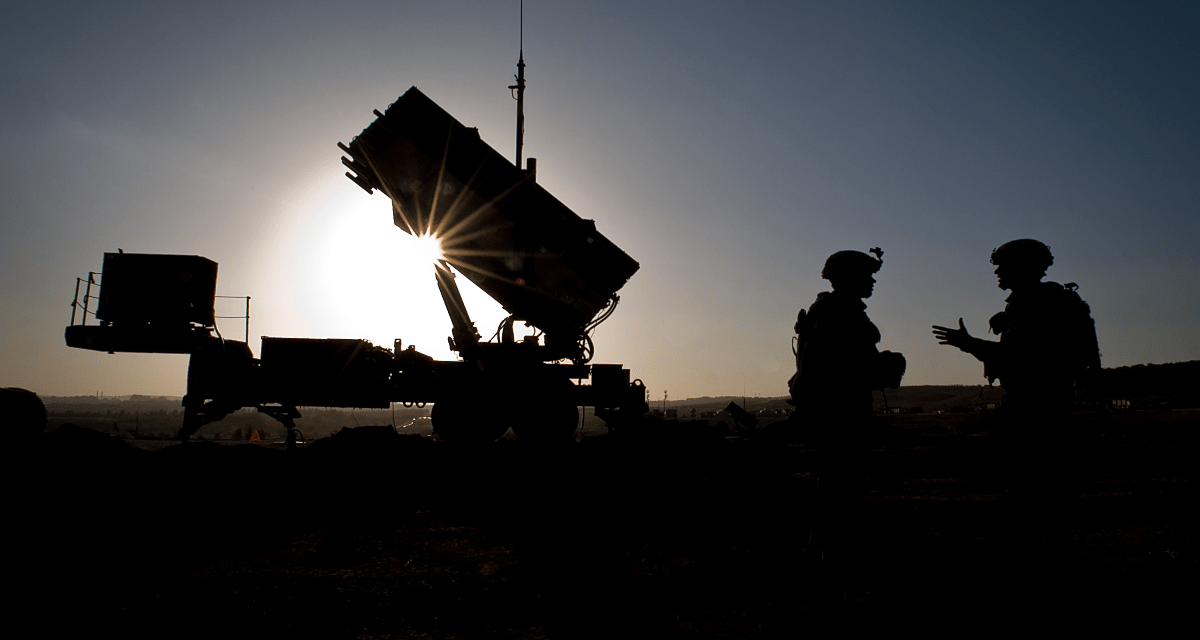
In his address to Congress, Ukrainian Volodymyr Zelensky unsurprisingly asked for additional weapons, support, and funding for Ukraine’s ongoing efforts to repel the Russian invasion. He specifically named one weapon: the MIM-104 Patriot. “If your Patriots stop the Russian terror against our cities, it will let Ukrainian patriots work to the full to defend our freedom.” Shortly thereafter, the Department of Defense announced Patriots were headed to Ukraine as part of ongoing efforts to support Ukraine. Following the training of Ukrainian servicemembers at the Grafenwoehr Training Area in Germany, Patriot batteries will likely be deployed around critical defended areas within Ukraine itself. This move by the Pentagon—although of limited tactical importance—marks a seismic strategic shift in intra-NATO cooperation and sets the stage for long-term NATO-Ukrainian partnership.

Training a Patriot Battery

Long-range air defense systems are complicated machines, and the Patriot is no exception. While most photographs of the Patriot focus on the M901 launching station, the system also comprises of four other components. The eyes of the system, a C-band radar, feeds information to the brains, the engagement control station. Firing data is sent to the muscles, the launcher, and coordination is conducted with the battalion information control center and to other elements using Link 16. Powering the battery is a truck-mounted generator. Each component is unique and requires intensive individual training and constant maintenance to remain mission ready.

European SCAF programme heads to Phase 1B ramp up

Richard Thomas

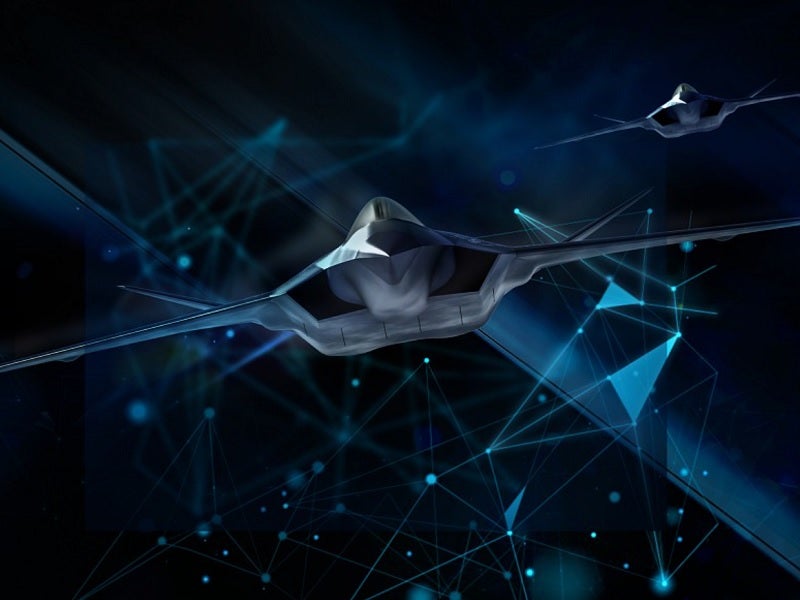
European aerospace and defence prime Airbus outlined its upcoming technological roadmap for the Future Combat Air System (FCAS/SCAF) programme, including shedding greater light on the Loyal Wingman platforms that will accompany the Next Generation Fighter (NGF) element of the project once in service.

Providing the updates during a trade media briefing on 12 December, Airbus officials detailed the programme timeline of the SCAF, which will see ramp up into Phase 1B by the end of the year, as work continues on demonstrator development efforts related to the NGF, Loyal Wingman platforms, combat cloud architecture, and technology maturation.

Phase 1B and Phase 2 are expected to continue until the 2027 timeframe, at which point the main development phase, known as Phase 3, is due to begin. The main development phase will also see flight demonstrations by early NGF and Loyal Wingman platforms in the 2028-2029 timeframe ahead of a production phase beginning in 2030.


Entry into service for SCAF, comprising the NGF, which is being led by European industrial duo Airbus and Dassault, and Loyal Wingman platforms, is scheduled for 2040. The timeline is further to the right to the rival UK-Italy-Japan Global Combat Air Platform (GCAP) programme, likely in part due to acquisition timelines that do not see the NGF replacing existing 4.5 generation-era fighters currently in service with Germany, France, and Spain.

3 January 2023

AFGHANISTAN: IMPLICATIONS OF TALIBAN RULE


As part of our ongoing transparency efforts to enhance public understanding of the Intelligence Community’s (IC) work and to provide insights on national security issues, ODNI today is releasing this unclassified IC product dated June 2022.

About the National Intelligence Council:

The National Intelligence Council (NIC) plays a central role in coordinating intelligence products and is responsible for leading analysis across the IC to inform immediate and long-term policy deliberations. National Intelligence Officers (NIOs) serve as the principal subject matter experts to the DNI and national security decision makers on all aspects of analysis related to their regional and functional roles.

Transboundary Water Governance is a Regional Security Issue in Asia

Genevieve Donnellon and Zhang Hongzhou

The Tibetan Plateau and the surrounding Hindu Kush-Himalayan regions, also known as the “Asian water tower,” is the source of 10 major Asian rivers. Abundant glacier ice reservoirs and alpine lakes feed an extended river system encompassing the Yellow, Yangtze, Indus, Mekong, Salween, Ganges, Yarlung Zangbo, Amu Darya, Syr Darya and Tarim rivers, supplying freshwater to downstream areas. Holding the world’s third-largest global reservoir of snow and ice after the Arctic and Antarctica, the area provides nearly 2 billion people with freshwater, meaning that around 25 percent of the Earth’s population depends on the region.

Climate Threats

Recent studies demonstrate that climate change is significantly affecting the region, not just in the short term but also causing significant long-term hydrological, socio-economic, humanitarian, and security challenges. The region has warmed at rates considerably higher than the global average, disrupting the water cycle. Annual and seasonal temperatures have increased more at higher elevation zones, while precipitation patterns have shifted, rising in the northwest but decreasing in the south. At the same time, glaciers are shrinking, groundwater is depleting, permafrost is degrading, and snow cover days are dwindling.

China and the US: On collision course for war over Taiwan

Richard Walker

"We can only avoid a war by preparing for a war," said Taiwan's president, Tsai Ing-wen, approaching the end of 2022 with a stern message for her people.

"Taiwan needs to strengthen our ability to defend ourselves," Tsai said, announcing that from 2024, compulsory military service would be extended from four months to a full year.

"No one wants war," she said. "But, my fellow countrymen, peace will not fall from the sky."
The Chinese threat

The Taiwan dispute has festered since the end of the Chinese Civil War in 1949, when the defeated nationalists fled to the island. The victorious Communists have been determined to take it ever since.

Now, the threat of war has seemed closer than at any time in decades.

In August 2022, China launched its largest military exercises in a generation — seen by many as a rehearsal for a blockade or even invasion.