Ceren Ergenc
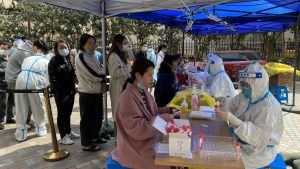
While the world was already phasing out COVID-19 prevention measures, major Chinese cities were again placed under strict lockdowns in 2022. In the spring, shocking videos from Shanghai appeared in social and mainstream media, showing residents screaming from their balconies amid another strict lockdown to prevent the spread of COVID-19.
What followed in the second half of 2022 was even more shocking. There were news reports of residents committing suicide when they could not receive any health services other than COVID-19 treatment, and an entire family perished in a fire when fire fighters were not allowed into their locked-down compound.
Factory workers first took the streets to protest the strict lockdown measures, and were then followed by university students in big cities in late 2022. In response to the protests, the central government ordered the gradual easing of local measures, then changed centrally planned policies such as quarantine rules for international arrivals.
Now, facing mounting case counts, local governments are once again on their own to decide how to cope with the post-zero COVID surge. Looking at how they coped with the pandemic in its initial stages helps us understand their responses today.
China startled the world with a full lockdown of the city of Wuhan for two months in the early stages of the pandemic in 2020. Since then, the general assumption is that Chinese pandemic management was uniform across the country and was decided by the central government in a top-down manner.
As a political scientist specializing in China’s local governance, I looked at local practices to see if this was the case. I have compiled a database of local government policy documents during the initial stage of the pandemic. Based on my research, there was much variation in the way China’s provinces and major cities implemented pandemic policies. The socioeconomic development level of localities seems to determine the different pandemic policies of the various provinces and cities.








 O
O