BEN HO WAN BENG
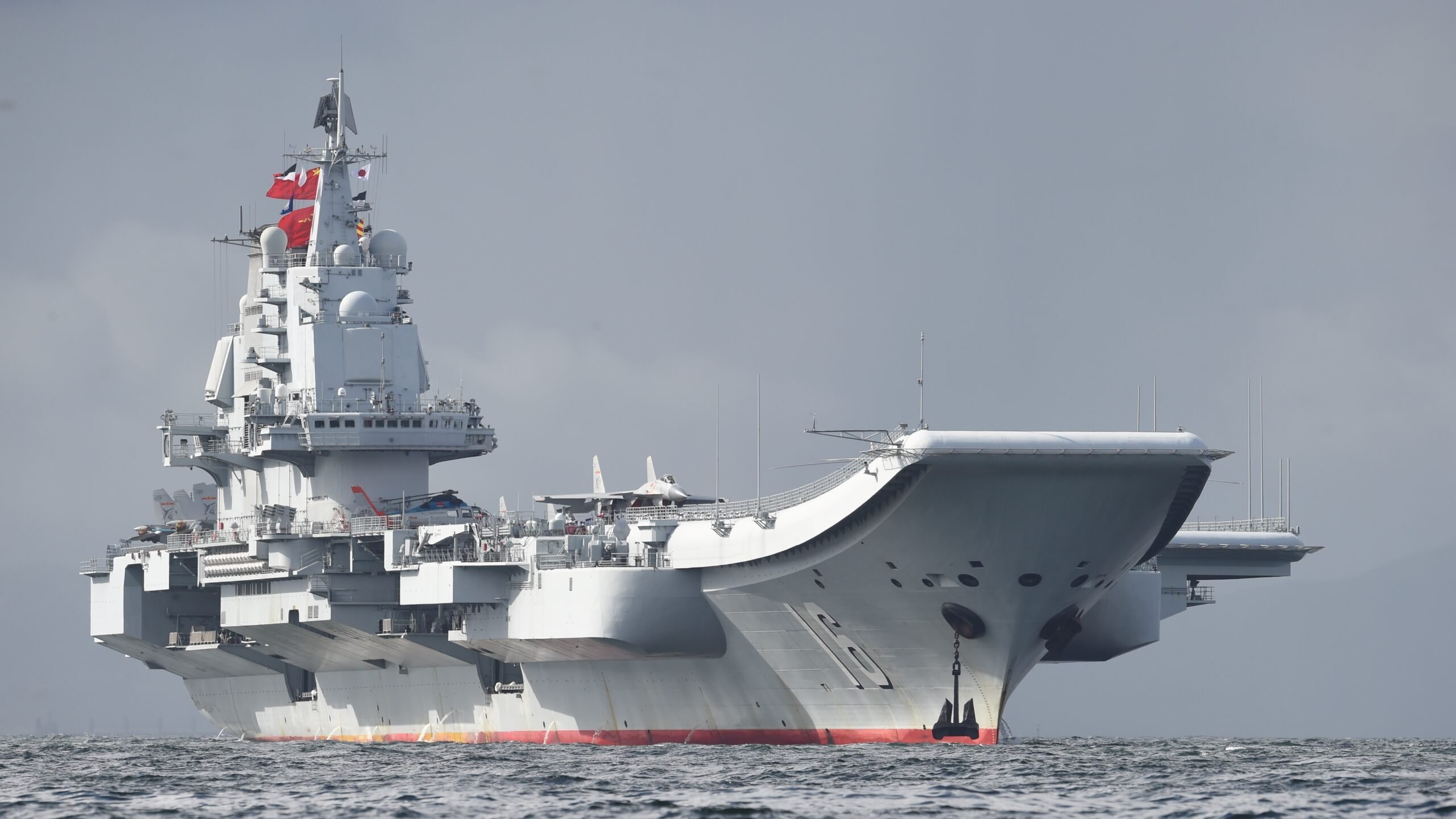
With the fast approach of the Davidson Window, which sets the date for a potential Chinese invasion of Taiwan as soon as 2027, much attention has been focused on Beijing’s aircraft carriers and how they could come into play. In the following analysis, Ben Ho of IISS looks at two prevailing theories about how effective the carriers may be in an invasion, before raising a new way of looking at the issue.
In the past decade, there has been much talk over China’s staggering pace of defense modernization. Of note would be Beijing’s aircraft-carrier program, and this aspect of the People’s Liberation Army Navy (PLAN) has spawned a bustling cottage industry. There have been additions to this conversation in recent months. For instance, in a May Reuters article, various experts maintained that the Chinese carrier force is still embryonic and poses “little threat yet” despite 10 years of development and counting. The story came on the back of the early-spring deployment of the PLAN’s second flattop, the Shandong, into the western Pacific and approaching Guam.
The Reuters piece added that there are questions over the value of Chinese carriers during a Taiwan contingency, at least in the short term (read within the next few years or within the timeframe of the “Davidson window.”), and such doubts are largely due to the limited capabilities of the Liaoning (China’s first flattop) and Shandong. (While China’s third carrier, the Fujian, is much more capable owing to its catapult-assisted takeoff and barrier-arrested recovery, or CATOBAR, flight-deck configuration, the ship will probably be operational only in the late 2020s given the “first-in-class” issues that will invariably surface). In response to the Reuters article, military analyst Rick Fisher warned of underestimating the Chinese carrier threat because of the protective cover of Beijing’s shore-based anti-access/area-denial (A2/AD) edifice. The arguments both sides put forth have merit, but need more nuance. What is more, that PLAN carrier airpower could adequately menace Taiwan’s east coast — an argument which seems to be gaining traction — needs to be addressed.