7 August 2023

Pakistan’s Spy Agency Buys Israeli Cellphone Hacking Tech

Oded Yaron

Pakistan’s Federal Investigation Agency and various police units in the country have been using products produced by the Israeli cybertechnology firm Cellebrite since at least 2012.

The flagship product of Cellebrite, whose stock is traded on the Nasdaq exchange, is called UFED. It enables law enforcement agencies to engage in digital forensic work by hacking into password-protected cellphones and copying all the information stored on them – including pictures, documents, text messages, calling histories and contacts.

Cellebrite, whose CEO is Yossi Carmil, says that its tools are only sold to police departments and security forces – to fight serious crime including terrorism. Over the years, however, the company’s hacking tools have also found their way to organizations that oppress human rights activists, minorities and the LGBTQ community.

As Haaretz has reported on numerous occasions, Cellebrite’s clients have included oppressive regimes that were or still are subject to sanctions, including Belarus, China (including Hong Kong), Uganda, Venezuela, Indonesia, the Philippines, Russia and Ethiopia, as well as Bangladesh’s notorious Rapid Action Battalion.

The security forces in Pakistan are known to commit serious violations of human rights and freedom of expression. The U.S. State Department’s 2022 report on human rights in Pakistan stated: “Significant human rights issues included credible reports of: unlawful or arbitrary killings, including extrajudicial killings by the government or its agents; forced disappearance by the government or its agents; torture and cases of cruel, inhuman, or degrading treatment or punishment by the government or its agents; harsh and life-threatening prison conditions; arbitrary detention; political prisoners; transnational repression against individuals in another country; arbitrary or unlawful interference with privacy; serious restrictions on free expression and media, including violence against journalists...”

American National Security Has an Economic Blindspot

Justin Muzinich

The world has entered an era in which economic conflict can increasingly determine the fate of nations. While the use of economic tactics to gain geopolitical advantage extends back to ancient Greece, globalization has amplified the consequences of potential disruptions in trade and money flows, leaving the United States in unfamiliar territory. When the last great-power rivalry ended in the late 1980s, the value of world trade was about 37 percent of GDP globally. Today, as great-power tensions rise again, global trade stands at 57 percent of the world’s GDP. Perhaps even more important, U.S. economic integration with China is

Biden Administration Ignores Risks of China-Dominated Mineral Supply Chains

Sarah Montalbano

The Wall Street Journal recently reported that automakers are worried that the Inflation Reduction Act’s renewable energy incentives, which often require materials sourced in the U.S., are going to make the “green transition” more expensive. But the Biden administration’s all-out push for electric vehicles, solar panels, and other mineral-intensive green technologies fails to recognize the dangers of U.S. dependence on a hostile China. Before the U.S. can undergo any semblance of a “green transition,” it needs to wean itself off of foreign-sourced minerals — and the sooner, the better.

Electric vehicles, solar panels, and other renewable energy technologies use many critical minerals — including copper, cobalt, nickel, lithium, and rare earth elements — in larger quantities than traditional technologies. Electric vehicle batteries use six times the minerals of conventional cars and can weigh 1,000 pounds or more. To provide energy when the sun isn’t shining, solar farms need batteries, which use 35 of the 50 critical minerals vital to national security. A single wind turbine can use more than 1,000 pounds of rare earth elements.

The U.S. does not have reliable domestic supply chains for almost all of these minerals. In 2022, the U.S. was 56% reliant on foreign sources for nickel, 76% reliant on foreign sources for cobalt, and completely reliant on foreign sources for graphite and manganese.

What’s worse is that the Biden administration subsidies have spurred demand such that there will need to be a “42-fold increase in lithium demand, a 25-fold increase in graphite demand, [and] a 21-fold increase in cobalt demand” by 2040.

China aims to capture more supply chains and expand its dominance in those it already controls. China’s authoritarian government prevents foreign companies from mining for rare earth minerals within its borders and supports its companies with export tax rebates. Until 2015, China incentivized the processing and usage of rare earth minerals within its borders, which fueled its production of electric vehicles and consumer electronics.

China has aggressively financed mining in developing African and South American countries. Over the past two years, Chinese companies have sunk $4.5 billion into lithium mining in Namibia, Zimbabwe, and Mali. There is a similar level of investment in South America and Mexico.

Davids And Goliaths: The Case Studies Of Israel, Taiwan, And Ukraine

Robert Wilkie and Jacob Olidort

In 2023, the United States approaches transition points in its relationships with three nations that share the following qualities: Each is in a theater with a major U.S. adversary (a “Goliath”). Each is not part of any formal alliance structure. And each is a small nation (a “David”) to which the United States makes consistent annual defense contributions.

The similarities among Israel, Taiwan, and Ukraine end there. It is their differences that might illuminate how the United States can optimize its defense assistance in an increasingly interconnected world—where events in one theater can make a difference in another.

Israel is perhaps a “model” David. Before becoming a recipient of consistent U.S. assistance, it miraculously succeeded in fighting for its survival against all neighboring states since its founding in 1948. The turning point was 1967, when over the course of six days Israel defeated the militaries of Syria, Jordan, and Egypt.

While U.S. support for Israel has been unambiguous from its founding—the United States was the first nation to recognize Israel 11 minutes after it declared independence—the nature of U.S. military support became more deliberate and robust several years later. When the same constellation of states launched a surprise attack against Israel in October of 1973, Richard Nixon shuttled key military equipment to Israel. “Send them everything that can fly” were Nixon’s words as he launched Operation Nickel Grass—an airlift over the course of one month that included more than 22,000 tons of armaments that effectively ensured Israel survived the Yom Kippur War. Nixon’s support of Israel—which Golda Meir noted made him the greatest friend the Jewish state ever had—tilted U.S. foreign policy from the indifference of the Johnson Administration to decades of steadfast support that has only been threatened by the Obama and Biden administrations.

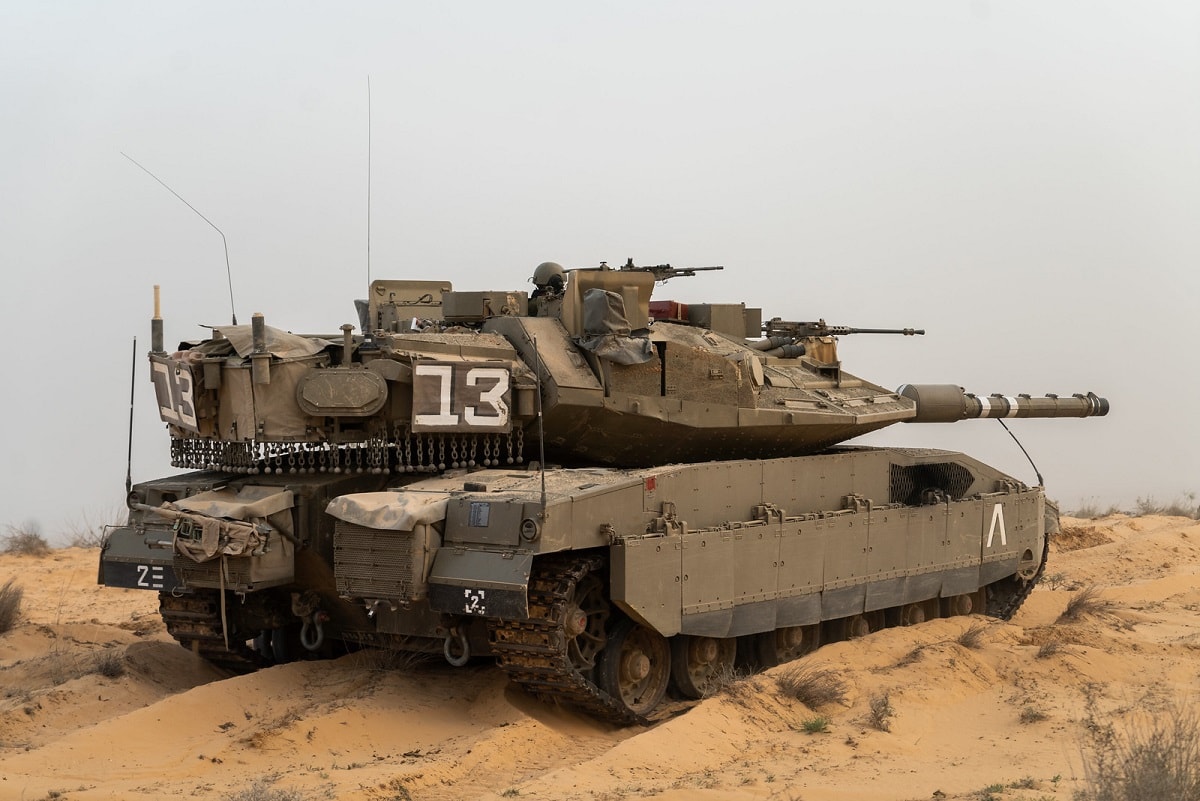
In the decades since 1973, not only has the Middle East changed but so has Israel’s role as both a defense consumer and a defense contributor. The $3 billion annual U.S. assistance to Israel helps in the development of innovative military technology that includes capabilities that the United States and its allies have acquired – for example, the U.S. purchase of the Iron Dome and Germany’s planned acquisition of the Arrow-3 missile defense system. Israel faces a multi-front threat environment from the Iranian regime—whose ideology calls for the destruction of both Israel and the United States—which ranges from its nuclear and missile programs to terrorist attacks from Iran’s proxies in Gaza, the West Bank, and Lebanon. As the threats to Israel have evolved, its military and intelligence have grown to be without equal in the region and on par with some of Europe’s most effective militaries.

Xi’s Security Obsession

Sheena Chestnut Greitens

Since he came to power in 2012, the Chinese leader Xi Jinping has been laser-focused on ensuring the security of his regime. He has purged potential political rivals, restructured the military and internal security apparatus, built an Orwellian surveillance state, and pushed through repressive new laws in the name of national security. Undergirding all these initiatives is what Xi calls the “comprehensive national security concept,” a framework for protecting China’s socialist system and the governing authority of the Chinese Communist Party, including that of Xi himself.

In an article in Foreign Affairs last October, I wrote that China’s leadership

The End of China’s Economic Miracle

Adam S. Posen

As 2022 came to an end, hopes were rising that China’s economy—and, consequently, the global economy—was poised for a surge. After three years of stringent restrictions on movement, mandatory mass testing, and interminable lockdowns, the Chinese government had suddenly decided to abandon its “zero COVID” policy, which had suppressed demand, hampered manufacturing, roiled supply lines, and produced the most significant slowdown that the country’s economy had seen since pro-market reforms began in the late 1970s. In the weeks following the policy change, global prices of oil, copper, and other commodities rose on expectations that Chinese demand would surge. In March, then Chinese Premier Li Keqiang announced a target for real GDP growth of around five percent, and many external analysts predicted it would go far higher.

Initially, some parts of China’s economy did indeed grow: pent-up demand for domestic tourism, hospitality, and retail services all made solid contributions to the recovery. Exports grew in the first few months of 2023, and it appeared that even the beleaguered residential real estate market had bottomed out. But by the end of the second quarter, the latest GDP data told a very different story: overall growth was weak and seemingly set on a downward trend. Wary foreign investors and cash-strapped local governments in China chose not to pick up on the initial momentum.

This reversal was more significant than a typical overly optimistic forecast missing the mark. The seriousness of the problem is indicated by the decline of both China’s durable goods consumption and private-sector investment rates to a fraction of their earlier levels, and by Chinese households’ increasing preference for putting more of their savings in bank accounts. Those trends reflect people’s long-term economic decisions in the aggregate, and they strongly suggest that in China, people and companies are increasingly fearful of losing access to their assets and are prioritizing short-term liquidity over investment. That these indicators have not returned to pre-COVID, normal levels—let alone boomed after reopening as they did in the United States and elsewhere—is a sign of deep problems.

What has become clear is that the first quarter of 2020, which saw the onset of COVID, was a point of no return for Chinese economic behavior, which began shifting in 2015, when the state extended its control: since then, bank deposits as a share of GDP have risen by an enormous 50 percent and are staying at that high level. Private-sector consumption of durable goods is down by around a third versus early 2015, continuing to decline since reopening rather than reflecting pent-up demand. Private investment is even weaker, down by a historic two-thirds since the first quarter of 2015, including a decrease of 25 percent since the pandemic started. And both these key forms of private-sector investment continue to trend still further downward.

Energy Is Taiwan’s Achilles’ Heel

Eugene Chausovsky

The U.S.-China standoff is heating up, especially in tech. The two countries have been increasingly targeting each other’s inputs and supply lines of semiconductors, the microchips that are crucial to the modern economy and have diverse applications, from artificial intelligence development to military operations. There is one element of this competition that could have unexpected and potentially pivotal consequences: Taiwan and its energy supply vulnerabilities.

Why falling confidence in America’s military is creating ‘a real crisis’

ELLEN MITCHELL 

The public’s confidence in the U.S. military is the lowest it’s been in decades, and it’s doing no favors to the armed forces’ current recruitment struggles.

Thanks to a combination of culture war issues, fresh reports of sexual assaults and suicides within the ranks, and a disastrous end to the Afghanistan War two years ago, Americans’ perception of the armed forces has taken a hit, according to experts and recent polls.

“It’s a confluence of lots of things and it’s becoming a real crisis,” said Michael O’Hanlon, a security fellow at the Brookings Institution.

The latest numbers from Gallup, taken from a poll conducted June 1-22, found that Americans’ confidence in the military was at its lowest point in 25 years: 60 percent. The last time it was this low was in 1997. Republican sentiment has seen a particularly steep decline, dropping from 91 percent to 68 percent in the past three years.

Pentagon press secretary Brig Gen. Pat Ryder on Thursday said while he wasn’t in a position to address the “why?” behind the decrease, he maintained that the Defense Department will continue to try to earn the trust and confidence of Americans.

“Popularity ebbs and flows over time,” Ryder told reporters. “We don’t take public trust and confidence for granted. As an all-volunteer force, we know that we have a responsibility to Congress and the American public to ensure that they have an understanding of what we’re doing to defend the country, how we are spending taxpayer dollars, how we are employing the resources that we’ve been entrusted with.”

The military has long found itself entwined in various culture war issues, but increasingly has found itself under criticism from the right in recent years over various social policies — a driving factor in the falling support.

At the same time, it’s not as if it is making up support on the left, where different kinds of worries are aimed at the military.

Ukraine says density of Russian mines is ‘insane’ as it plays down counteroffensive expectations

Tim Lister, Julia Kesaieva and Olga Voitovych

A week after US officials said Ukraine was deploying extra troops to its counteroffensive, movement is limited on the southern front lines with fighting concentrated in two parts of Zaporizhzhia region, according to available videos and statements from official sources.

At the same time, Ukrainian officials continue to cool expectations for the progress of the operation, while Russian-appointed officials in the occupied south claimed that Ukrainian attempts to break through Russian military lines have been defeated.

Pro-Russian Telegram channels have posted images and video of destroyed Ukrainian armor, though it’s unclear when and exactly where the equipment was struck.

But Ukrainian forces have struggled to breach layers of Russian defenses as tank traps and minefields slow their advance. One Ukrainian official described the density of mines as “insane” on Wednesday.

The Ukrainian military said one Russian position in the Zaporizhzhia sector had been eliminated, along with an ammunition depot.

Around the Bakhmut area, the Ukrainians have not reported any further progress but have posted video of the targeting of Russian positions.

The Ukrainians have also posted video of additional Zuzana self-propelled artillery systems provided by Slovakia.

Oleksandr Syrskyi, Commander of Ukrainian Land Forces, posted on Telegram that a “gradual advance continues” in the Bakhmut area.

At the same time, Russian military bloggers have posted video of Ukrainian infantry vehicles being struck. One of the bloggers (Readovka) said that “the Russian army continues to repel the attacks of the AFU northwest of the city [of Bakhmut]. The fiercest fighting is now taking place near Klishchiivka,” a village south of Bakhmut that the Ukrainians have been trying to capture for several weeks.

‘No deadlines’ for counteroffensive

In the far north, in the Kupyansk direction, the Russian Defense Ministry says that well-hidden tank forces are providing support to infantry, “ensuring the advance of Russian troops.”

How the Ukraine Counteroffensive Can Still Succeed

Frederick W. Kagan , Karolina Hird and Kateryna Stepanenko

The situation in Ukraine still favors Kyiv despite the limited progress made in the counteroffensive so far. Ukrainian forces attempted a limited mechanized penetration of prepared Russian defenses in the south in early to mid-June, but failed to break through the Russian lines. They then switched to slower and more careful operations while disrupting Russian rear areas with long-range precision strikes. Ukraine began the next, reportedly main, phase of its counteroffensive on July 26 with a determined drive to penetrate Russian lines in western Zaporizhia Oblast. It’s far too soon to evaluate the outcome of that effort, which is underway as of the time of this writing, but it is vital to manage expectations. Ukrainian forces are fighting now to break through the first line of long-prepared Russian defenses. Several lines lie behind it, stretching for many miles. Ukrainian progress will very likely alternate periods of notable tactical advances with periods, possibly long periods, of pause and some setbacks. Much as we might hope that the road to the Sea of Azov will simply open for Ukrainian forces the odds are high that fighting will remain hard, casualties high, and frustration will be a constant companion. All of which is normal in war.

But the Ukrainian counteroffensive can succeed in any of several ways. First, the current Ukrainian mechanized breakthrough could succeed, and the Ukrainians could exploit it deeply enough to unhinge part or all of the Russian lines. Second, Russian forces, already suffering serious morale and other systemic problems, could break under the pressure and begin to withdraw in a controlled or uncontrolled fashion. Third, a steady pressure and interdiction campaign supported by major efforts such as the one now underway can generate gaps in the Russian lines that Ukrainian forces can exploit at first locally, but then for deeper penetrations. The first and second possibilities are relatively unlikely but possible.

The wooden Orthodox Church of John the Theologian is shown destroyed as a result of shelling by Russian troops in the village of Kuprylivka, Kharkiv region, Ukraine on June 28, 2023.

Sofiia Bobok—Anadolu Agency/Getty Images

Ukrainian troops are abandoning US tactics in their counteroffensive because they haven't worked

Tom Porter

Newly trained Ukrainian artillery specialists firing British-donated AS90 155mm self-propelled artillery guns under the supervision of British Army instructors as they come to the end of their training in southwest England.Ben Birchall/PA Images via Getty Images

Ukraine has made only modest gains in its summer counteroffensive against Russia.

Troops are abandoning US tactics because they've proved ineffective, The New York Times reports.

Russia formed deep defensive lines over the winter, protected by miles of landmines.

Western-trained Ukrainian troops are abandoning US tactics in their counteroffensive to seize back territory from Russia, The New York Times reports.

Ukraine had hoped to punch through Russian positions and make sweeping gains comparable to their counteroffensive in the summer of 2022 when it seized back several strategically important cities.

But the counteroffensive is making slow progress, with troops encountering heavily defended Russian positions, protected by minefields, helicopter gunships, and artillery fire.

Ukrainian units are now ditching plans to attack Russian positions head-on using complicated Western maneuvers and are instead wearing the enemy down with artillery and missile barrages, the Times says.

Analysts told the Times that Western allies of Ukraine pushed for the Ukrainian military to adopt more aggressive offensive tactics.

Western allies believe that a protracted conflict would further deplete Ukrainian ammunition supplies and play into Russian hands, the report says.

The AUKUS Wager

Charles Edel

At the end of July, U.S. Secretary of State Antony Blinken and U.S. Defense Secretary Lloyd Austin traveled to Brisbane, Australia, for a series of high-level meetings with top Australian officials. It was the latest indication of the stepped-up security cooperation that has emerged since the 2021 signing of AUKUS, the tripartite defense collaboration among Australia, the United Kingdom, and the United States.

This spring, U.S. President Joe Biden met with his Australian and British counterparts, Anthony Albanese and Rishi Sunak to announce the way forward for AUKUS. At a U.S. naval base at the edge of the Pacific Ocean with the USS Missouri, an attack-class submarine, looming behind them, the three leaders detailed how they would work together to help Australia acquire, build, and maintain conventionally armed nuclear-powered submarines—a centerpiece of the AUKUS deal. In addition, the three leaders announced a series of other steps related to the deal: U.S. and British submarines are to begin showing up in Australian waters later this year and will establish a rotational presence there, the United States will sell three to five Virginia class submarines to Australia, marking the first time that Washington will transfer these boats to a foreign nation, and all three countries will invest in their own and one another’s submarine industrial capacities—an approach that has never been undertaken before.

Canberra, London, and Washington all have their own specific reasons for signing onto AUKUS, but concerns about Beijing are the common denominator. The accelerating and often nontransparent growth of China’s military, combined with Beijing’s increasingly assertive posture, has shifted the dynamics of regional security, diplomacy, and politics. Any effort by the United States and its partners to effectively compete with China must address the profound degradation in the Indo-Pacific security environment. Perhaps most important, however, they must address the unspoken but growing assumption in the region that China’s advantages are insurmountable and that smaller countries have no agency in their—or the region’s—fortunes.

Ukraine Has a Breakthrough Problem

Barry R. Posen

It is the stated policy of the Ukrainian government to retake all of the territory that Russia has seized since 2014, including Crimea. To achieve this goal through military action, the Ukrainian military must accomplish one of the most daunting of military tasks: It must break through dense, well-prepared defensive positions, find some running room, and then either move quickly toward an important geographic objective such as the Sea of Azov, hoping to unravel the remains of the defending Russian army along the way, or quickly attempt to encircle a portion of Russia’s sizable forces in hopes of annihilating them.

Winning the Advanced-Network Race

LIZA TOBIN, WARREN WILSON, and CONNOR MARTIN

WASHINGTON, DC – No industry embodies US ingenuity more than telecoms. American innovators spearheaded the development and commercialization of the telegraph, the telephone, the internet, and the cellphone. Today, the latest generations of these telecom networks, including 5G and 6G technology, coupled with the artificial-intelligence revolution, are driving even more powerful capabilities.

The result is a rapid convergence of the physical and digital domains, which could bring huge economic rewards. In the future, 5G-enabled factories could see 20-30% productivity gains, and greater industrial automation, in the form of smart robots, could make workers more efficient. Smart cities could leverage cloud-connected sensors and AI capabilities to redirect traffic flow and optimize energy grids, saving money and reducing carbon dioxide emissions. The deployment of 5G is projected to contribute up to $1.7 trillion to US GDP in the next decade, while enabling an estimated $13.2 trillion of global economic output by 2035.

But the United States has almost allowed these opportunities to slip away, with potentially dire consequences for national security and prosperity. As part of a brute-force strategy to displace the rules-based world order, China has sought to use national firms Huawei and ZTE to dominate next-generation network infrastructure. American missteps also contributed to China racing ahead in the production and export of network hardware, leaving the US and other countries vulnerable to economic coercion and threats to sensitive data and critical infrastructure.

No longer oblivious to the danger, the US has taken steps to address these vulnerabilities, including a ban on new Chinese-backed telecom equipment. But those of us who served in government while Huawei surged ahead to become the world’s largest telecom equipment producer had nothing to offer when partner countries asked for an exportable, end-to-end American alternative.

More alarming still, China’s ambitions are extending to other networking segments where the US remains competitive. While the US remains a global leader in producing fiber-optic cables through firms like Corning, for example, China is ahead in the share of fiber-optic cabling in its broadband mix (95% vs. 16%) and in the share of global exports (28% vs. 14.4%). In subsea cables, China is aggressively pursuing market share through firms like HMN Tech, challenging American firms like SubCom.

Ukraine's invisible battle to jam Russian weapons

Abdujalil Abdurasulov

In the early days of the invasion of Ukraine, experts were surprised at how poorly the Russian army's electronic warfare units performed. But nearly 18 months later they are causing significant problems for Ukraine's counter-offensive.

"Use single rounds," whispers a Ukrainian soldier hiding behind a wall near the eastern front line. "This way we will be able to last till the morning [if they come closer]."

The soldier's call-sign is Alain Delon, like the famous French film star of the 1970s. And like something from a spy movie, he is part of a lightly armed team of electronic intelligence officers - a high-priority target for the Russian army.

Alain fears Russian troops may have spotted their antenna and started heading for their base. He decides to change position. The key in electronic warfare is being invisible to the enemy.

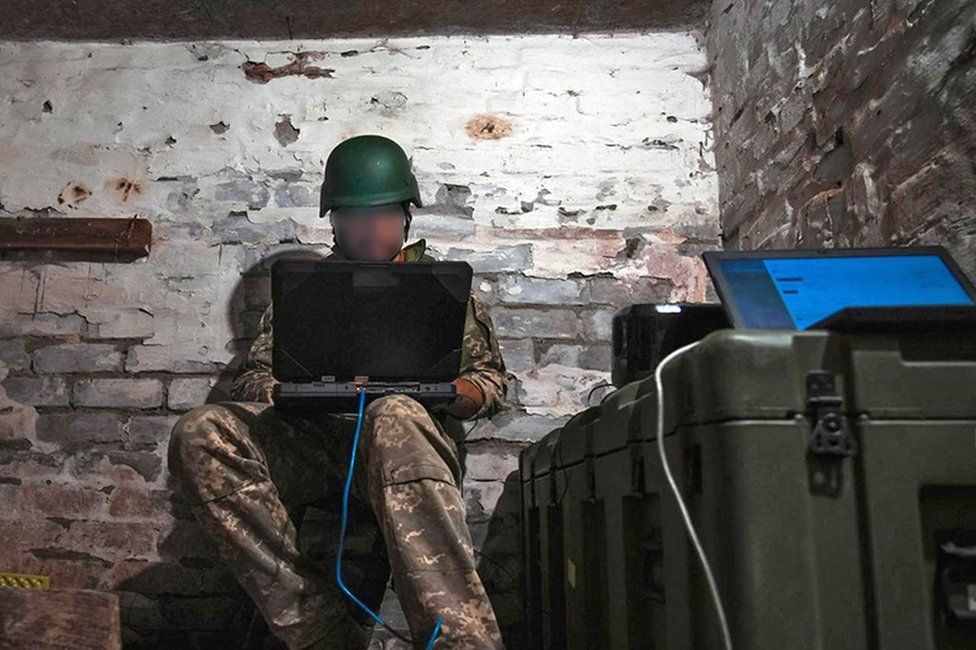
Their job is to detect electronic signals from all kinds of Russian weapons - including drones, air defence systems, jammers, artillery, and multiple rocket launchers. They work out where the signals originate and the type of weapon, then pass on coordinates to other units that will aim to destroy the target.

This is a war of technologiesCol Ivan Pavlenko
Ukraine electronic and cyber warfare department

The information also helps commanders build up a picture of the battlefield.

"This is a war of technologies," Col Ivan Pavlenko, chief of the Ukrainian General Staff's electronic and cyber warfare department, tells the BBC.

"If I see a number of radio stations in the same place, I understand it's a command post. If I see some radio stations begin to move forward, I understand it could be a counter-offensive or an offensive."

UK calls artificial intelligence a “chronic risk” to its national security


The National Risk Register officially classes AI as a long-term security threat to the UK’s safety and critical systems.

Artificial intelligence (AI) has been officially classed as a security threat to the UK for the first time following the publication of the National Risk Register (NRR) 2023. The extensive document details the various threats that could have a significant impact on the UK's safety, security, or critical systems at a national level. The latest version describes AI as a "chronic risk", meaning it poses a threat over the long-term, as opposed to an acute one such as a terror attack. The UK government also raised cyber attacks from limited impact to moderate impact in the 2023 NRR.

Advanced AI technology could, at some stage, pose a significant security threat if it were used to launch a cyberattack against the UK. Meanwhile, the various cybersecurity implications of advancing AI technology such as generative AI are well documented.
AI poses a range of potential risks to the UK

AI systems and their capabilities present many opportunities, from expediting progress in pharmaceuticals to other applications right across the economy and society, which the Foundation Models Taskforce aims to accelerate, the document read. "However, alongside the opportunities, there are a range of potential risks and there is uncertainty about its transformative impact. As the government set out in the Integrated Review Refresh, many of our areas of strategic advantage also bring with them some degree of vulnerability, including AI."

For this reason, the UK government has committed to hosting the first global summit on AI Safety which will bring together key countries, leading tech companies and researchers to agree safety measures to evaluate and monitor risks from AI, read the NRR. "The National AI Strategy, published in 2021, outlines steps for how the UK will begin its transition to an AI-enabled economy, the role of research and development in AI growth and the governance structures that will be required."

The AI rules that US policymakers are considering, explained

Dylan Matthews

AI is getting seriously good. And the federal government is finally getting serious about AI.

The White House announced a suite of artificial intelligence policies in May. More recently, they brokered a number of voluntary safety commitments from leading AI companies in July. That included commitments to both internal and third-party testing of AI products to ensure they’re secure against cyberattack and guard against misuse by bad actors.

Senate Majority Leader Chuck Schumer outlined his preferred approach to regulation in a June speech and promised prompt legislation, telling his audience, “many of you have spent months calling on us to act. I hear you loud and clear.” Independent regulators like the Federal Trade Commission have been going public to outline how they plan to approach the technology. A bipartisan group wants to ban the use of AI to make nuclear launch decisions, at the very minimum.

But “knowing you’re going to do something” and “knowing what that something is” are two different things. AI policy is still pretty virgin terrain in DC, and proposals from government leaders tend to be articulated with lots of jargon, usually involving invocations of broad ideas or requests for public input and additional study, rather than specific plans for action. Principles, rather than programming. Indeed, the US government’s record to date on AI has mostly involved vague calls for “continued United States leadership in artificial intelligence research and development” or “adoption of artificial intelligence technologies in the Federal Government,” which is fine, but not exactly concrete policy.

That said, we probably are going to see more specific action soon given the unprecedented degree of public attention and number of congressional hearings devoted to AI. AI companies themselves are actively working on self-regulation in the hope of setting the tone for regulation by others. That — plus the sheer importance of an emerging technology like AI — makes it worth digging a little deeper into what action in DC might involve.

US Air Force electronic warfare commander seeks spectrum dominance

Colin Demarest

WASHINGTON — Bombs boom. Tanks trundle. Fighters fly. All are visible to the human eye and are familiar images of war.

But invisible battles are fought, too. And as the U.S. prepares for potential conflict with China in the Indo-Pacific or with Russia in Europe, the value of the electromagnetic spectrum is proving paramount. Militaries rely on the unseen energy to communicate, guide weapons, spoof and spy, and more.

The U.S. military in 2021 activated the 350th Spectrum Warfare Wing, a first-of-its-kind entity aimed squarely at spectrum dominance and related electronic warfare equipment. Headquartered at Eglin Air Force Base in Florida, the wing is staffed by engineers and EW specialists, including its commander, Col. Joshua Koslov.

In an interview with C4ISRNET, Koslov discussed the importance of his wing; its ties to the Pentagon’s connect-everything campaign known as Joint All-Domain Command and Control, or JADC2; and concerns expressed by at least one Air Force senior leader that the U.S. is losing its EW “muscle memory.”

The conversation below was edited for length and clarity.

What makes the 350th Spectrum Warfare Wing special? Why was this wing necessary?

There wasn’t a commander who was focused on Air Force electronic warfare types of activities. So they needed to put all that into one place, where we can develop the tactics, the techniques, the procedures, the thought processes and deliberately develop the people to be able to inform war plans and budgets in order to make sure that we gain the advantage that we need to in the spectrum. And that’s what the 350th Spectrum Warfare Wing’s job is.

Who Controls AI?


The challenge of regulating generative artificial intelligence has been a topic of fierce debate since the technology captured the world’s attention late last year. But when it comes to ensuring that generative AI advances the common good, the who is just as important as the how.

For MIT’s Daron Acemoglu, Simon Johnson, and Austin Lentsch, workers themselves must play a central role in compelling their employers not to pursue mindless automation, but rather to use AI to augment human creativity, boost productivity, and ultimately drive widely shared prosperity. The ongoing Writers Guild of America strike will be an important litmus test: if striking Hollywood screenwriters fail, “other knowledge workers will stand even less of a chance of shaping the future of work and technology.”

Maria Eitel, Nike’s founding Vice President of Corporate Responsibility, places the onus for limiting the dangers of AI squarely on the companies developing and applying the technology. “After all,” she points out, “regulators and governments don’t fully understand how AI-based products work or the risks they create; only companies do.” But firms must be required to devise and commit to “credible action plans” to guide responsible innovation.

Princeton University’s Anne-Marie Slaughter and Ethos Capital’s Fadi Chehadé, for their part, call on leading “scientists, technologists, philosophers, ethicists, and humanitarians from every continent” to “come together to secure broad agreement on a framework for governing AI that can win support at the local, national, and global levels.” Institutions will be vital, but the type of institution needed will depend on the specific function in question, from ensuring AI’s safe development and use to spreading beneficial technologies.

10 Ideas For Using AI Helpers When Working With Documents

Kseniya Fedoruk

Summary: The possible scenarios of implementing AI into eLearning are numerous and impressive. In this article, we focus on how AI helpers can help you enhance your work with docs.

Using AI In Digital Education

The currently booming AI trend brings a lot of positive feedback and expectations. At the same time, it can be a bit daunting for some people, which is totally understandable when it comes to the usage of something brand-new.

Nevertheless, various services and tools based on Artificial Intelligence are already being used in digital education, starting from assignment and grading automation to data analysis and customized learning algorithms. For example, popular platforms such as Coursera and Duolingo have adopted AI algorithms for better app personalization for each student.

A well-known AI chatbot, ChatGPT, which has recently overwhelmed the news feeds, is now also widely used for education purposes, both as a separate service and as a plugin within other eLearning solutions, such as Moodle and ONLYOFFICE.

So, let's discover several ideas for using AI when working with documents which might be really useful.

1. Get Stories Written

Text generation is one of the most widely used features provided by AI chatbots. It can be useful when, for example, you get stuck while writing an essay or any other text, or just need an idea about how to start.

1/4 of DOD cyber jobs are vacant. Here's the plan to fill them

LAUREN C. WILLIAMS

Nearly a quarter of the Pentagon’s cyber jobs are unfilled, but the department has a plan to slash that number as part of a multiyear implementation plan released Thursday.

“Today we have about a 24 percent vacancy rate. And our plan, in the first two years…we're trying to reduce that about in half,” Mark Gorak, the principal director for resources and analysis for the Pentagon's chief information officer, told reporters Thursday.

The Defense Department has long struggled with maintaining its cyber workforce, which consists of about 75,000 civilians, 25,000 troops, and about 75,000 contractors, Gorak said.

And civilian cyber workers are the main challenge, as it's harder for DOD to attract and keep them, he said. For the military, retention is the primary challenge.

To address this, the Pentagon wants to set up a more formal revolving door with private industry through a pilot apprenticeship program for “employment exchanges with private companies,” according to the implementation plan dated July 13 but publicly released Aug. 3.

That is one of the implementation plan’s 22 objectives and 38 initiatives. Others include identifying a solid group of organizations with exceptional cyber talent to work with, improving recruiting tactics, and leaning into remote work and flexible scheduling.

The implementation plan follows the release of the Pentagon’s cyber workforce strategy in March.

The Pentagon intends to have its initial action plans submitted to the chief information officer this fall, with working groups tracking progress by the end of the year, according to the document.

6 August 2023

Critiquing Competition: International Voices Skeptical of Technology Competition Reinforce the Need for a Positive U.S. Tech Vision


Hello, I’m Ylli Bajraktari, CEO of the Special Competitive Studies Project. In this edition of 2-2-2, SCSP Director for Foreign Policy Will Moreland reflects on the recent Kigali Global Dialogue and lessons for engaging those developing economies that are skeptical of, but essential actors in, the global technology competition.

Recognizing a competition is the first step in winning one. For too long, the current international competition grew with inadequate recognition. Then history began a sharp turn. Evidence of expanding authoritarian “tech spheres of influence” started to emerge. Russia’s 2022 invasion of Ukraine brought a stark reminder that authoritarian aggression persists. Within the United States, awareness of the People’s Republic of China (PRC) as a competitor now has grown. Internationally, Washington’s re-engagement with core partners — from NATO and the G7 to the Quad and beyond — has also yielded deeper alignment. Within that close circle, momentum appears strong.

However, a wider lens reveals a more fraught picture. Beyond those allies and partners, skepticism of the competition paradigm is deepening, particularly for countries in the “Global South.” Many of these concerns are not new. For years, there has been a refrain of “don’t make us choose” between Washington and Beijing. Russia’s blatant territorial aggression spurred only tepid interest in sanctions outside the West. An entire recent Foreign Affairs issue heralded a new age of non-alignment and “fence sitters.”

The United States can ill afford to ignore the concerns of over two-thirds of the world’s population. Attending the recent Kigali Global Dialogue offered greater insight into these concerns. An American response demands a combination of a new positive vision for a tech-enabled future and specific steps to engage developing countries on their priorities.

A Very Quiet Meeting in Doha: US Officials Meet With Taliban Representatives

Catherine Putz

On July 30-31, a U.S. delegation, led by U.S. Special Representative for Afghanistan Thomas West, met with Taliban representatives and “technocratic professionals” in Doha, Qatar.

Close watchers of Afghanistan noted the meeting, which appears to be the first official talks between the United States and the Taliban since August 2021.

Jonathan Schroden of the CNA Corporation remarked on Twitter (X): “The fact that the (seemingly) most substantive talks between the US & the #Taliban since the signing of the Doha deal in 2020 didn’t even register as a news item here makes clear where #Afghanistan stands on the US list of priorities these days.”

The U.S. State Department’s July 31 media note on the meeting provided some details of the discussion; what was left out is telling too.

For instance: Who attended these meetings?

West was joined in Doha by U.S. Special Envoy for Afghan Women, Girls, and Human Rights Rina Amiri and the chief of the U.S. Mission to Afghanistan, Karen Decker (the mission is presently still based in Doha). Presumably, other staff attended as well, but the U.S. readout highlights these three.

The composition of the Afghan delegation was not laid out with the same level of detail in the U.S. readout, with only “representatives of the Afghan Central Bank and Afghan Ministry of Finance” mentioned.

Why We Continue to Misunderstand Conflict Economies

David Mansfield

It’s said that the definition of madness is doing the same thing over and over and expecting a different outcome. Yet, once again, the international community is using the reports of a government in Kabul to build an understanding of the Afghan economy and the tax revenues that the de facto authorities earn. Corruption shaped the economic political fabric of the Afghan Republic and impacted the very data used to measure and analyze the performance of the economy. This all points to the need for a more skeptical view of the official data reported by Kabul, and other administrations in fragile and conflict-affected states. There is, after all, much that takes place on the peripheries of these states that is difficult to monitor and control; it is part of what defines them.

For example, in February the World Bank reported that the value of cross-border trade between Afghanistan and its neighbors had returned to the levels occurring under the Republic, and that the revenues it generated for the Taliban had increased. Surely, this was a claim that should have immediately set alarm bells ringing given the scale of the current economic crisis in Afghanistan reported by the United Nations and the history of misreporting and false statistics that emanated from Kabul for almost two decades.

After all, Khalid Payenda, the former minister of finance, referred to the scale of corruption at the customs offices as “mind boggling” during the final months of the Afghan Republic and provided a rich account of the scale of the graft occurring at several official border crossings in September 2021. My own research with the United States Agency for International Development as well as our imagery collection at the borders of Torkham, Islam Qala, Abu Nasr Farahi, Ziranj, and Spin Boldak in late 2020 indicated that underreporting at these borders was endemic and that, in most cases, the volume of goods entering and exiting Afghanistan was often more than twice as much as reported.

Taliban Abuses Worsen as World Turns a Blind Eye

AHMAD MANSOOR RAMIZY

On August 15, 2021, Sonita Soroush, a proclaimed journalist, producer, manager, and reporter for Ariana News, found herself in the midst of a crowd of her colleagues and coworkers in front of the Ariana TV station discussing the following day’s schedule and program. Little did she know what was about to happen in the next few minutes and the following weeks. As they were chatting about what to put in front of their millions of viewers the next morning on Sob-e-Zindagi (the morning show), the show she was responsible for, one of their admin managers showed up and asked why they were still standing in front of the office. Shockingly, Sonita recalls, “Our manager told us that the Taliban might enter Kabul anytime now, and to go home, pack your bags, get your passport, and we will evacuate you all to safety.” She further said, “Shockingly, I stepped outside and noticed there was heavy traffic. I was halfway to getting to my home when I got another call from the News Department Manager asking me where I was.” Sonita told her manager that she was on her way to her house to get her passport and bags as per the office’s recommendation. “He abruptly told me, don’t come back, go and hide; the Taliban have entered the city gates.”

She recalls this moment in dismay and discomfort. Remembering the days when Afghanistan had one of the most open and free media outlets and agencies providing facts and stories to millions of people reignites her feelings of grief at what the country has lost since then. “Suddenly, everything seemed dark. Even with that image carved in my mind, I still thought maybe this would not be like the last time the Taliban were here,” she said. She would later understand that she could not have been more wrong. The Taliban are the same as they always have been, and even worse in many aspects.

Media and journalism have historically been vital yet underdeveloped aspects of Afghan society. The first official newspaper in Afghanistan, known as Shams -ul- Nahar or the Morning Sun, was established in 1873 during the reign of King Sher Ali Khan. On January 11, 1906, the second official newspaper, Siraj-ul-Akhbar, or Lamp of the News, was formed. However, due to widespread illiteracy in the country, the majority of Afghans relied on oral communications to receive news and information. Newspapers primarily catered to the educated elite, both men and women, who were literate. Research indicates that even during the early 20th century and the late 19th century, when newspapers existed, the monarchy, particularly the royal families, exercised control over the content intended for public consumption. Illiteracy empowers government officials and strips the citizenry of their agency to digest and interpret information for themselves.

For the US, Fentanyl Is All About China

Allison Fedirka

While many governments around the world are focused on securing supply chains, there’s at least one the U.S. government desperately wants to break up: the fentanyl supply chain. Nearly a dozen U.S. government agencies are working together to choke off illicit flows of the drug. In addition to saving American lives, Washington wants to reduce insecurity in Latin America and highlight China’s role in the fentanyl trade to introduce an anti-China element into its security cooperation, particularly with Mexico and Colombia.

China’s rapid growth has over the past two decades helped it develop its economic influence in Latin America – aided in no small part by the absence of a U.S. counter-strategy. At first, Washington saw Beijing’s growing presence as simple economic diversification, and thus no threat to hemispheric security or U.S. security and military relationships with Latin America. Only recently has the U.S. started to see China’s commercial activities in the region as a potential threat, especially as it relates to U.S. access to rare earth elements and the security of allies’ ports and 5G technology.

At the same time, China’s economy is in secular decline. This slowdown, combined with the United States’ drive to decouple supply chains from China, is naturally steering Mexico back toward its northern neighbor. Mexico is an obvious destination for multinational firms that want to manufacture close to the U.S. market at a relatively low cost. For its part, Colombia – for years a beneficiary of Chinese trade and investment – has gotten closer to Beijing politically since the inauguration in 2022 of President Gustavo Petro. However, it too is questioning the future of Chinese foreign investment and trade, leading it to consider alternatives such as the United States.

The New Silk Road: A Project For China’s Global Hegemony – Analysis

Matija Šerić

China’s “Belt and Road Initiative”, or as it is called in China, “One Belt, One Road”, is much better known under the name “New Silk Road”. It’s one of the most ambitious infrastructure projects of all time.

The initiative was launched in 2013 by Chinese President Xi Jinping, and includes a large set of development and investment projects aimed at connecting Asia and Europe through all forms of transport infrastructure. Over the course of a decade, the initiative spread to Africa, Oceania and Latin America, significantly strengthening the global economic and political influence of the People’s Republic of China.

The project currently covers 151 countries (with the potential to grow) and is considered a central pillar of Xi’s foreign policy that seeks to ensure China’s global dominance and make the 21st century China’s century. In other words, Xi wants his country to assume the status and role of the US in the world. China wants to become the most dominant country in the world, which will lead the world into new times.
The historic Silk Road

The historic Chinese Silk Road was created during the westward expansion of the Chinese Han dynasty (from 206 BC to 220 AD). The ancient Chinese created a trade network across Central Asia (modern Afghanistan, Kazakhstan, Kyrgyzstan, Tajikistan, Turkmenistan, Uzbekistan) and modern India and Pakistan. Also, these trade routes stretched more than 6,000 km to Europe.

China was thus at the center of ancient globalization in those ancient times. It connected eastern and western markets, encouraged the development of economies and exchanged cultural and religious traditions. Valuable Chinese silk, spices, porcelain, and other goods moved west, while China received gold and other precious metals, ivory, and glassware.

Shakeup At China’s Rocket Force Suggests Strategy Shift Toward ‘Nuclear Triad’ – Analysis

Joyce Huang

Chinese President Xi Jinping, also the military’s commander-in-chief, this week replaced two leaders of the elite force overseeing the People’s Liberation Army’s conventional and nuclear missiles.

The reshuffle at the PLA Rocket Force suggests a marked shift in Xi’s nuclear strategy toward the so-called “nuclear triad” — a three-pronged force that enables nuclear missiles to be launched from the air, sea and land — under an integrated command system, analysts warn.

That will help strengthen China’s nuclear deterrent capabilities and thus pose a greater threat to U.S. security, they say.
Nuclear triad

Xi, on Monday, appointed Wang Houbin, former deputy commander of the navy, and Xu Xisheng, former political commissar of the air force’s Southern Theater Command, to serve, respectively, as the rocket force’s commander and political commissar.

“What has happened is that, in order to have a modern and effective nuclear deterrent, is to have what is called the nuclear triad. So, three ways of delivering nuclear missile or nuclear deterrence … This is more about putting nuclear weapons on planes, on submarines and not necessarily on land-based missiles,” Alexander Neill, a Singapore-based adjunct fellow at the think tank Pacific Forum, told VOA Mandarin by phone on Tuesday.

Neill said that China, in order to be a modern nuclear power with aggressive and offensive capabilities, has to acquire the ability to launch nuclear weapons from various positions – something that will keep its enemy guessing.
Fresh leadership

Wang and Xu will replace their predecessors Li Yuchao and Xu Zhongbo.

Why China Has a Giant Pile of Debt

Keith Bradsher

China, which has lent nearly $1 trillion to some 150 developing countries, has been reluctant to cancel large debts owed by countries struggling to make ends meet. That is at least in part because China is facing a debt bomb at home: trillions of dollars owed by local governments, their mostly off-the-books financial affiliates, and real estate developers.

One of the main issues for Treasury Secretary Janet L. Yellen during her visit to Beijing this week is whether she can persuade China to cooperate more to address an evolving debt crisis facing lower-income countries. But China’s state-controlled banking system is wary of accepting losses on foreign loans when it faces far greater losses on loans within China.
How much debt does China have?

It’s hard to know exactly because official data is scant. Researchers at JPMorgan Chase calculated last month that overall debt within China — including households, companies and the government — had reached 282 percent of the country’s annual economic output. That compares with an average of 256 percent in developed economies around the world and 257 percent in the United States.

What distinguishes China from most other countries is how fast that debt has accumulated relative to the size of its economy. By comparison, in the United States or even deeply indebted Japan, debt has risen less precipitously. The steep increase in China’s debt, more than doubling compared with the size of its economy since the global financial crisis 15 years ago, makes managing it harder.

China’s lending to developing countries is small relative to its domestic debt, representing less than 6 percent of China’s annual economic output. But these loans are particularly sensitive politically. Despite heavy censorship, periodic complaints emerge on Chinese social media that banks should have lent the money to poor households and regions at home, not abroad. Accepting heavy losses on these loans would be very unpopular within China.