3 September 2023

Goldman Sachs bought US firms with Chinese state cash in $2.5 BILLION 'partnership fund' that invested in drones, AI, cloud computing and supply chains - despite rock bottom relations with Beijing

LAURA PARNABY

Goldman Sachs has quietly been using Chinese cash from a $2.5 billion 'partnership fund' to invest in several US companies in the field of AI and computing.

The Wall Street giant is funneling funds from a private equity stash it created with the China Investment Corporation, the Financial Times reports.

Since its launch in 2017, the China-US Industrial Cooperation Partnership Fund has been used for deals with US companies from the fields of cloud computing, drug-testing, global supply chains, and retail tech.

This comes despite increasingly terse relations between the US and China due to disputes about technology, security and Taiwan - and amid Joe Biden signing an executive order to restrict American investments in Chinese companies.

Cybersecurity as a Legal Problem

Josh A. Goldfoot

Cybersecurity law has many silos. If a teenager’s private photo is hacked from Google Drive, lawyers think about anti-hacking statutes like the Computer Fraud and Abuse Act. If the U.S. government seeks access to the same photo from the same account, lawyers think about the Fourth Amendment and criminal procedure rules like the Electronic Communications Privacy Act. If the British government seeks access to that photo, lawyers think about mutual legal assistance treaties and the CLOUD Act. If the Russian government accesses that photo, lawyers think about national security law. If Google were to launch a new social network that automatically shares its users’ photos, lawyers would think about privacy policies and privacy statutes. Cybersecurity law is the intersection of all those silos; it is the law of who may control which computer.

As I argue in this article, cybersecurity is both a technical problem and a social problem. Network defense is the technical half of cybersecurity, but law is the social half. While regulating how computers behave is an important part of cybersecurity, regulating how humans and governments behave is just as important. Law is the foundation of cybersecurity because law defines the “security” in cybersecurity, who is entitled to that security, and how human beings and governments should behave to guarantee cybersecurity.

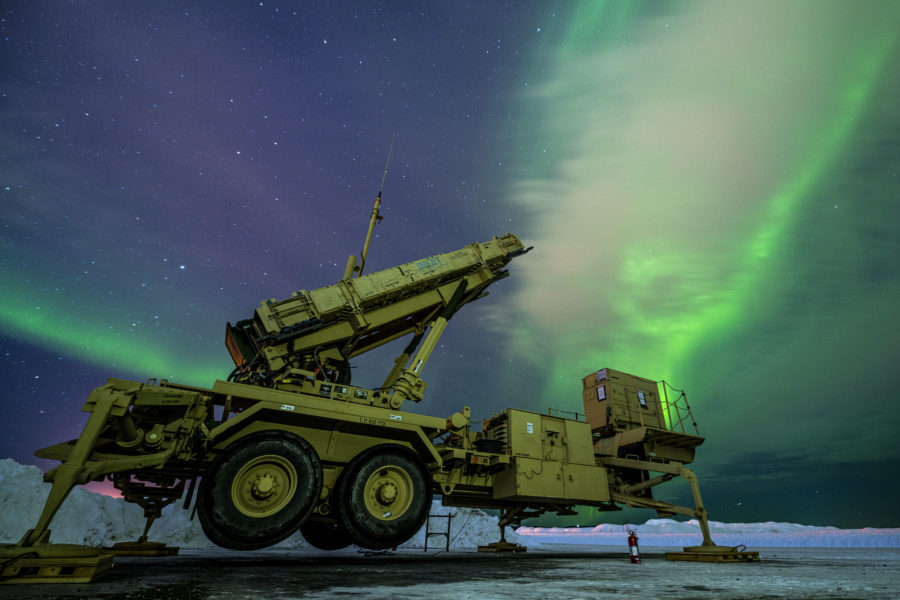
Air Force and Army Collaborate on Air Defense That’s Smaller and Cheaper for the Indo-Pacific

John A. Tirpak

The Department of Defense and the armed services are focused and cooperating like never before on the logistical challenges of operating in the Pacific—exemplified by how the Army and Air Force are working together on air defense, USAF officials said Aug. 29.

The challenge of dispersed operations across the Pacific, in austere locations and under the threat of missile attack and denied communications, has “galvanized” the Pentagon, said Brig. Gen. Michael Zulsdorf, deputy director of resource integration for engineering, logistics and force protection, during a virtual event hosted by the Mitchell Institute for Aerospace Studies.

“I have been in and out of the Pentagon since 2009, and I’ve never seen more galvanized, cohesive teamwork from the Department of Defense, through the respective services,” Zulsdorf added. “This is amazing to see. And it’s awesome that we can work together and fight through typical sister service-specific stovepipes and break that down.”

All the services are in the same predicament and are searching for cost-effective, joint solutions, he noted.

The Army has previously focused on theater-level air defenses like the Patriot and Terminal High-Altitude Area Defense (THAAD) systems. But those weapons are too few and too expensive to defend small operating locations, a key component of the Air Force’s plan for Agile Combat Employment.

2 September 2023

Another Leap Forward: India’s Historic Moon Landing and the Space Competition Underway

Kari A. Bingen

Indian lunar lander Chandrayaan-3 successfully touched down on the lunar surface on August 23, 2023, making India the fourth nation to successfully land on the Moon and the first to land in the south pole region. This historic accomplishment further cements India’s rise as a global space power at a time of heightened international competition in space.

Q1: What is the significance of India’s Moon landing?

A1: The Chandrayaan-3 mission (“moon vehicle” in Hindi and Sanskrit), led by the Indian Space Research Organisation (ISRO), is a mark of national prestige. The mission sets India up to lead internationally in the exploration of frozen water on the Moon and demonstrate its scientific and technical prowess, which Prime Minister Modi remarked, “are the foundation of a bright future for our nation.”

ISRO’s space exploration program is part of a broad government strategy to realize the scientific, economic, and security benefits of space capabilities. India’s space program is also seen as a pathway for attracting young Indians into high-technology fields and for ushering in a more technically advanced society. Indian communications satellites orbiting the Earth can improve connectivity across rural areas, navigation satellites can aid mariners, and imagery satellites can support disaster relief operations as well as monitor Chinese military developments. India also maintains its own fleet of space launch vehicles that loft satellites from governments and commercial companies alike.

India’s surging food prices are a problem not just for India


To taste the effects of inflation in India, visit a fast-food restaurant. Sandwiches at Subway no longer come with a free cheese slice. Burgers at McDonald’s and Burger King are tomato-free. Restaurants are scrimping because of soaring food costs. Local eateries are hiking up the prices of tomato-based dishes—a staple across the country. In July vegetable prices increased by 37% year on year; tomato prices at some wholesale markets have surged by 1,400% over the past three months. All told, the annual food inflation rate jumped to 11.5% in July, the highest in more than three years, pushing overall inflation to a 15-month high of 7.4% (see chart).

Race for Green Metals Goes to South Asia

ARIF RAFIQ

This month, China became the first country to designate an ambassador to Taliban-ruled Afghanistan, marking a step toward official recognition of the group’s rule of the country.

Among global and regional powers, Beijing is at the forefront of efforts to recognize the Taliban regime. Its eagerness to normalize relations with Taliban-ruled Afghanistan may even be greater than that of neighboring Pakistan, which has faced a surge in terrorist attacks from the Afghanistan-based Tehreek-e Taliban Pakistan.

China’s primary motivation is to ensure a stable, compliant regime in Afghanistan that does not challenge the status quo in Xinjiang, the region of China where millions of Uyghur and other Turkic Muslims have been forced into “re-education camps” as part of President Xi Jinping’s forced Sinicization program.

But metals and minerals are also on China’s mind. And Afghanistan has lots of them. So too does neighboring Pakistan. What we’re now seeing is a rise in interest in accessing the region’s treasures from a range of global players in what has been seen as China’s backyard.

Earlier this year, a previously unknown Chinese company expressed interest in investing $10 billion to mine Afghanistan’s massive lithium reserves and build the necessary infrastructure to transport the metals out of the landlocked country. A Pentagon task force in 2010 assessed that Afghanistan was home to upwards of $1 trillion in mineral and metal wealth — including deposits of copper, iron ore, gold, as well as lithium.

Untapping the mineral wealth of Afghanistan and Pakistan faces serious headwinds: including violence, poor governance, and the absence of basic infrastructure. But the potential upside here is huge.

Xi Jinping to Skip G20 Summit in New Delhi, Chinese Premier Li Qiang to Attend Instead

The Wire Staff

New Delhi: Close on the heels of speculation that Chinese president Xi Jinping may be giving the G20 meet hosted by New Delhi a miss, The Wire has learnt from sources that it is Chinese premiere Li Qiang who will attend the event.

Indian authorities, the sources said, had known for a month that Xi will give the leaders’ summit a miss.

This will be Li’s first visit to India as premier.

The G20 summit will be held in New Delhi from September 8 to 10.

Xi had last visited India in 2019 for the second edition of the informal summit at Mamallapuram.

Since he took over leadership, Xi Jinping has attended all the in-person G20 summit meetings from 2013 to 2019. After the break for COVID-19, the next physical summit meeting took place in Rome in 2021. At that time, Beijing had said that Xi’s absence was due to China’s own regulations on COVID, which had been highly restrictive. The effects of the pandemic were still lingering in many places of the world then.

There has been no response from the Indian government on the matter yet.

As per PTI, the Chinese foreign ministry spokesperson Wang Wenbin was asked at a media briefing in Beijing on Thursday about a media report saying Xi is likely to skip the upcoming G20 summit in India.

Russia will struggle to salvage the Wagner empire

Dimitar Bechev

It took Russian President Vladimir Putin some 24 hours to break his silence on the reported death of Yevgeny Prigozhin, the Russian businessman behind the notorious Wagner Group. Putin described him as “a talented businessman” who “worked not only in our country, and worked with results”, but who had made some “serious mistakes in life”.

While the Kremlin still refuses to officially confirm the death of the mercenary boss in an August 23 plane crash, to the Russian president, he is clearly dead: He spoke of the man once known as “Putin’s chef” in the past tense.

Prigozhin had it coming. After all, he challenged his patron by starting a mutiny that exposed the fragility of the Russian security state. In late June, Wagnerites took over the Rostov-on-Don headquarters of the Southern Military District, the command centre of Putin’s “special military operation” in Ukraine. They also marched on Moscow, making it within 200km of the capital city and encountering little opposition. The squabble ended in a truce, with Wagner bending the knee and ostensibly moving its forces from Ukraine to Belarus.

Having called the mutiny “an act of treason”, Putin appeared to “forgive” Prigozhin, personally meeting with him and Wagner commanders and having him attend the Russia-Africa Summit in St Petersburg.

The dawn of the Brics World Order: India is losing ground to Russia and China

THOMAS FAZI

Last week’s Brics summit was supposed to herald the dawn of a new world order. It would announce the end of the American era and the rise of another, this time belonging to developing nations. It would even, according to excitable analysts, be remembered as another Bandung Conference, the 1955 meeting that paved the way for a non-aligned movement during the Cold War.

And on that front, the gathering in Johannesburg succeeded. The organisation announced its first expansion since its founding in 2009: next year, the five original Brics members — Brazil, Russia, India, China and South Africa — will be joined by Saudi Arabia, the United Arab Emirates (UAE), Egypt, Iran, Ethiopia and Argentina (provided the current government wins the upcoming elections, which seems unlikely). Even more significantly, the summit underscored the bloc’s inclination to use its increasing economic clout to challenge the Western-dominated global order. The combination of these two elements — growing economic muscle and political boldness — means that the bloc (to be renamed Brics Plus) has become a full-blooded geopolitical actor that can longer be ignored.

In demographic and economic terms, the power of the Brics, especially in light of its recent expansion, is all too evident. With its new members, the bloc will represent almost half of the global population. In terms of purchasing power parity (PPP), the most appropriate measure for comparing the relative economic size of countries, it already represented nearly one third of global GDP — more than the US-led G7’s economies, which account for 30%. The latest additions will bring its share up to 37%.

With No Good Options, China’s Xi Jinping Turns Up The Temperature In The Taiwan Strait

CHUCK DEVORE

China’s supreme leader, Xi Jinping, can’t be happy right now with his mounting troubles at home and abroad.

The nation he rules is under increasing economic pressure, much of it made worse by his Bigfooting into both domestic and foreign businesses; it appears uninvited Chinese Communist Party interference is both unwelcome and bad for business.

Internationally, the “wolf warrior” diplomacy he encouraged his ambassadors to unleash on their host nations has backfired spectacularly. Instead of cowing countries in its immediate neighborhood, being bellicose has had the opposite effect, driving South Korea and Japan to work together, and pushing Vietnam, the Philippines, Malaysia, and Indonesia away from Beijing. The Philippines is even working militarily with America once again.

Regarding Taiwan, China’s constant military drills around the island appear no longer able to influence public opinion on behalf of the Nationalist Party, or Kuomintang, the old party of Chiang Kai-shek, which is, paradoxically, the Chinese Communist Party’s (CCP) favored party in Taiwan.

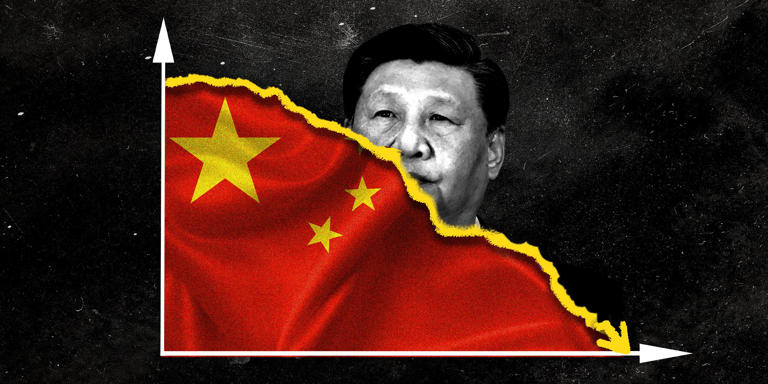
China is doing everything it can to conceal the true extent of its economic turmoil

Linette Lopez

China's economy is turning into a big black blob.

This transformation means that while the country's economy will still be significant to global business, it will no longer be the lodestar for growth. It will still advance, but much more slowly. And while those on the outside will still be able to observe the economy, it will become increasingly difficult to truly understand what's going on within.

The reality of China's blob era pushed its way to the center of the global news cycle earlier this month when the Chinese government announced that it would no longer publish the unemployment rate for young people as part of its monthly jobs report. The final release for the data series — July's number — came in at a record high of 20.5%. The number had become a global shorthand for China's inability to reignite its economy since President Xi Jinping ended the country's draconian COVID-19 lockdowns. So now it's gone.

The sudden disappearance of the youth-unemployment report generated headlines, but it's not a shock for longtime China watchers. Data has been disappearing from all over the country for years now. Reports detailing everything from exports to cement production — which are arguably more crucial for understanding the country's structural malaise than youth unemployment — have vanished or become corrupted to the point that they're no longer useful. This is not happening just because the economy is slowing; plenty of countries continue publishing data even though it's no longer rosy. This is happening because Xi's China is one that puts ideology before economic growth.

What will replace Russia’s Wagner mercenary army?

Mansur Mirovalev

Kyiv, Ukraine – The Kremlin says it is at odds about the future of the Wagner Group, Russia’s largest and most notorious private military company.

“I can’t tell you anything now, I don’t know. Legally, no such structure exists,” Kremlin spokesman Dmitry Peskov said on Friday, two days after Wagner’s head Yevgeny Prigozhin and his top brass died in a plane crash that Western officials claim was caused by an explosion.

But observers tell Al Jazeera that Wagner’s battle-tested fighters are too valuable to just be disbanded and let go.

What and who is left of Wagner is already being torn apart by Russia’s military, intelligence services, state-run corporations and private military companies (PMCs) financed by Kremlin allies or oligarchs – and even Belarusian President Alexander Lukashenko may get his share.

Since 2014, Wagner employed thousands of experienced fighters of starkly different backgrounds. Some graduated from elite military and intelligence units, some fought for Moscow in Chechen wars, and some hailed from criminal groups that mushroomed in the former Soviet Union in the 1990s.

Last year, Wagner enlisted tens of thousands of inmates from Russian jails who were promised hefty paycheques and presidential pardons, but were largely used in what is known as “meat marches” on Ukrainian positions.

What night-time lighting tells us about Tibet's prisons and detention centres


Introduction

Authorities in Tibet are engaging in preventive repression towards their population.

As part of their nationwide 'stability maintenance' strategy, they are detaining, persecuting and convicting Tibetans for non-violent forms of protest and other expressions of dissent such as assisting or supporting self-immolations and carrying pictures of the Dalai Lama.

The precise workings, nature and scale of the Chinese Communist Party's efforts to imprison and detain Tibetans, however, remain poorly understood.

In contrast with the body of knowledge on the detention and imprisonment of Uyghurs and other ethnic minorities in Xinjiang, the Tibetan detention system is still very much a black hole to the international community. The lack of evidence on many issues, especially on the so-called 'vocational training centres' and detention through the criminal justice system, is not evidence of the absence of repression. Rather, it highlights a need for further research to address many of the research gaps and to better understand the situation.

This study therefore aimed to build on the scant available evidence and leveraged an innovative method — night-time lighting data — to shed light on the prisons and detention facilities in Tibet.

Measured on a daily basis using satellite-based sensors, night-time lighting data represent an equilibrium measure of electricity consumption at night at specific locations over time. Aggregated into monthly trends, these data can help illuminate potential changes in the construction, growth or decline in the use of specific detention facilities across Tibet that may not be visible using overhead satellite imagery alone.

As Hurricane Idalia moves inward, another storm brews off East Coast

TARA SUTER

As Hurricane Idalia passed through Florida on its way to Georgia on Wednesday, the National Hurricane Center (NHC) warned Americans about another storm looming in the Atlantic.

“Though many eyes remain on the dangers #Idalia is bringing to the southeast, distant storm Hurricane #Franklin continues to stir up the western Atlantic, creating potentially deadly surf and rip currents along the US East Coast,” the NHC posted on X, the platform formerly known as Twitter.

Franklin, currently a Category 2 storm, isn’t currently projected to hit the U.S. However, in a public advisory Wednesday, the NHC warned of “dangerous surf and rip currents” adjacent to “the Eastern Seaboard.”

“Life-threatening surf and rip currents generated by Franklin are affecting Bermuda and the east coast of the United States,” the NHC said in the advisory. “These conditions are expected to continue during the next couple of days.”

Satisfaction with quality of K-12 education falls to record low

LEXI LONAS

Americans’ satisfaction with the K-12 education system has tied for a record low at the start of the 2023-24 school year, according to a poll Gallup released Thursday.

Only 36 percent of Americans today are completely or somewhat satisfied with U.S. education, equaling the low seen in 2000.

The record comes as both Republicans and Democrats are finding little satisfaction in the educational system, with a record low 25 percent of Republicans and 44 percent of Democrats being satisfied.

The record comes as both Republicans and Democrats are finding little satisfaction in the educational system, with a record low 25 percent of Republicans and 44 percent of Democrats being satisfied.

Although Gallup, which has been asking this question since 1999, didn’t offer any explanation for why the numbers have dropped, the political landscape surrounding education has become increasingly volatile since the beginning of the COVID-19 pandemic.

Schools have been dealing with decades of learning loss, teacher shortages, student misbehavior and chronic absenteeism since the arrival of COVID-19. Meanwhile, politically, fights over book bans, the teaching of sexual orientation and gender and the treatment of transgender students have riddled school boards.

War, Ukraine and Adaptation

MICK RYAN

Frequent readers of my work, here at Futura Doctrina or in my other publications such as my 2022 book, War Transformed, will have recognised that one of the central themes of my examination of the phenomenon of war – and the war in Ukraine in particular – is the concept of adaptation.

Exploration of the theory of adaptation has its origins in early advances in the biological sciences. English naturalist, geologist, and biologist, Charles Darwin, produced a theory of evolution. This theory explored the causal mechanism to account for evolutionary changes in the natural world. Darwin, with his theory of natural selection, sought to understand and describe how new animal species emerge and how others disappear in nature.

The exploration of adaptation has resulted in the development of concepts that underpin an understanding of how adaptation occurs and how it can be applied. In military literature, the best-known adaptive cycle is Colonel John Boyd’s OODA (observe-orient-decide-act) loop.

In the 21st century, adaptation research has shifted well beyond the work of Charles Darwin and John Boyd. Adaptation theory is now applied across a variety of scientific endeavours. The theory of adaptation has become important in the examination of the optimum organisation of societies, businesses and other organisations as they attempt to improve their effectiveness in changing environments.

Taiwan Cannot Win if the U.S. Does Not Help Strengthen Taipei’s Will to Fight

Julian Spencer-Churchill

Taiwan will not be able to resist a Chinese invasion without first resolving a paralyzing political crisis over its identity, for which the Taiwanese need Washington’s helpful intervention. U.S. leadership has been wasting its scarce political capital, trying to convince Taiwan to improve the relevance of its armaments purchases, when it should instead be focused on resolving Taiwan’s crisis of self-confidence, which will impact more immediately on Taiwan’s will to prepare and fight. The findings of The Dupuy Institute have consistently shown that intangible political and cultural factors have a bigger impact on combat outcomes than any other variable, as is now self-evident in Russia’s invasion of Ukraine.

This surprisingly pessimistic and provocative conclusion is the result of a three-week research trip in May-June of 2023, in which I interviewed over 75 persons from every major city, north to south, in Taiwan. Equipped with an ethics certificate from my university and a translator, this author drove over 3,000 km, passing through every city with a population greater than 40,000. I approached people while they were walking, and asked them a simple open-ended question: would they fight, did they expect their fellow citizens to fight, and what, if anything, did they want America to do? Interviews varied between 10 minutes to several hours and included retired officers from the Taiwanese Air Force, Army and Navy, and a quarter of the interviews took place on the campus of National Taiwan University, the country’s top-ranked institution of higher learning. Only two individuals refused to participate, both university professors. The advantage of in-person open-ended conversations over formal surveys revealed that Taiwanese insecurity is primarily the result of a lack of open political discussion about the security of Taiwan, rather than the impact of Beijing’s propaganda.

Washington’s apprehension of interfering in the domestic affairs of another country emerges out of the anxiety of provoking a local nationalist blowback, which it fears could further divide Taiwanese society, paralyzing its preparations for war, or even push it closer to Beijing. Chinese propaganda already portrays the U.S. as a “hegemonic” Western imperialist power, seeking to divide an originally united and brotherly Chinese community. However, these fears are unfounded. Instead, the Taiwanese recall a sense of abandonment and insecurity when the U.S. departed in 1979.

Geopolitical Own Goal: How Putin Came to NATO’s Aid

Timothy Hopper

Russian President Vladimir Putin has always warned about the eastward expansion of NATO and cited concerns about Kyiv or other countries joining this organization as one of the most important reasons for attacking Ukraine. The irony of the matter is that this attack not only did not stop NATO but led to the revival of its existential philosophy and the expansion of its members. The conflict in Ukraine provided NATO with the justification it had been seeking for the past three decades: the immediate and tangible threats posed by Russia and China. These threats materialized with Russia’s aggression against Ukraine, which validated the US doctrine of “collective defense” and “collective security” within the framework of NATO. These developments occurred in favor of the United States and at the expense of NATO partners.

Ever since the dissolution of the Soviet Union, NATO has attempted to rationalize its existence and role as a defensive alliance, but it has always encountered the challenge of explaining why it needs to expand its collective defense capabilities in such proportions when the world no longer has two antagonistic power blocs.

To address these uncertainties and questions, the United States endeavored to transform NATO from a “collective defense” organization to a “collective security” organization and then, subsequently, to a “collective interests” organization. This effort was aimed at updating and aligning the existential philosophy of this organization with the interests of the United States.

As the leader of NATO, the United States, based on a simplistic definition of security, initially relied on the necessity of collective defense to cope with non-traditional security threats. The terrorist attack of September 11 served as a catalyst for NATO’s transition and the enlargement of its objectives from purely defensive to offensive. In the subsequent stage of NATO’s expansion, the United States extended its responsibilities beyond defense and security and attempted to portray itself as a multilateral organization that provides the security interests of like-minded powers in Europe. This stage focused on new threats like terrorism and cyberattacks, security implications of geo-economic trends in technology, environment, and energy, and strengthening NATO’s foundations and collaborations.

BRICS expansion is a big win for China. But can it really work as a counterweight to the West?

Nectar Gan

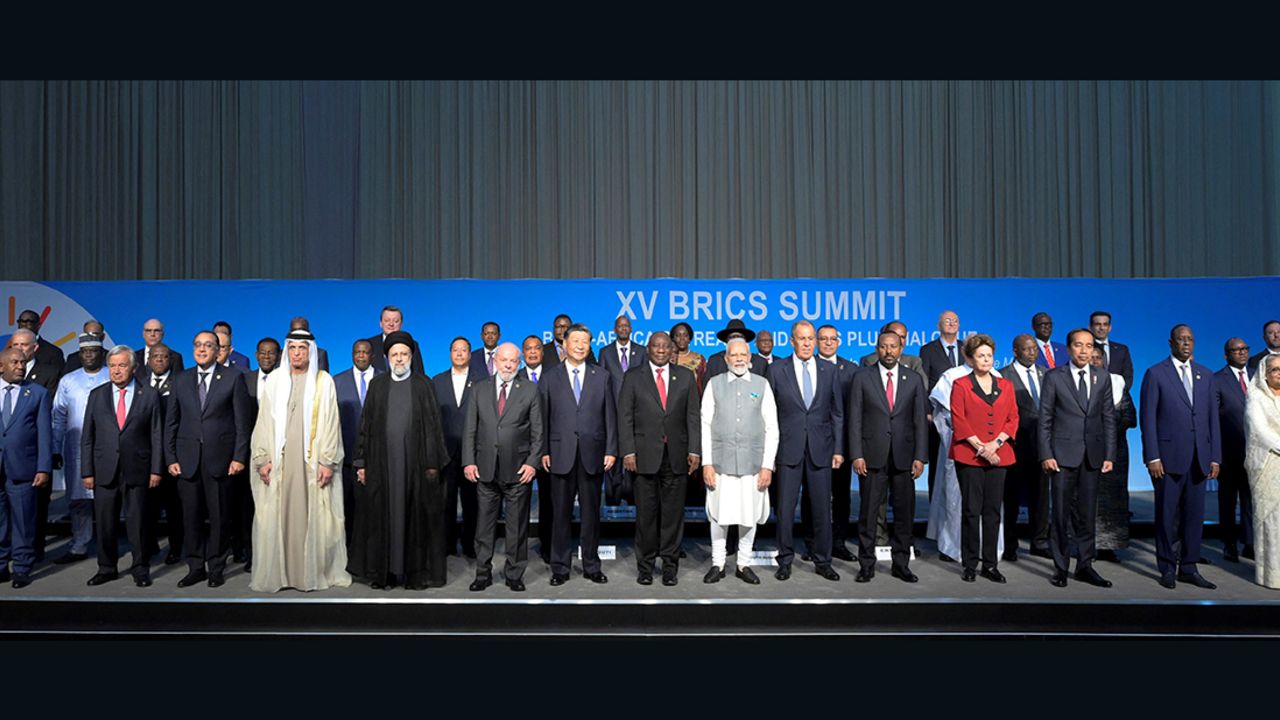
When leaders of the BRICS nations gathered for group photos at the end of their summit in Johannesburg last week, it offered a glimpse of the contours of the new world order Beijing is trying to shape.

Standing at the front and center was Xi Jinping, China’s powerful leader, surrounded by a stage of leaders from emerging markets and developing countries across Africa, Asia and Latin America.

The summit was the largest the BRICS have ever held, with more than 60 countries attending alongside member nations Brazil, Russia, India, China and South Africa.

Flanking the current BRICS leaders were counterparts from Argentina, Ethiopia, Iran, Saudi Arabia, Egypt and the United Arab Emirates – who had just been invited to join the club.

The development is a big win for Xi, who has long pushed to expand the bloc and its clout despite reservations from other members such as India and Brazil.

The expansion, the first since South Africa was added in 2010, is set to more than double the group’s membership and significantly extend its global reach – especially in the Middle East.

“This makes China the clear winner,” said Steve Tsang, director of the SOAS China Institute at the University of London. “Getting six new members is a significant move in its preferred direction of travel.”

For Beijing, as well as Moscow, the expansion is part of its drive to forge the loose economic grouping into a geopolitical counterweight to the West – and Western institutions such as the G7.

The Biden Administration’s Bad Bet on Venezuelan Oil

Gerardo E. Suarez

As the United State’s economic turmoil has subsided in recent months, President Joe Biden has seen some good press about his allegedly strong economic policy. A quick look at the oil and gas industry over the past three years, however, would show how squishy those claims really are. A more likely explanation for the relief our economy is experiencing would be the recently established flow of oil from Venezuela into the U.S. energy market—and given the broken state of Venezuela’s oil industry, these improvements won’t last long.

President Biden has always taken a progressive approach to the economy, expanding the government’s economic involvement from “pro-climate” tax reforms to government spending projects like the $1 trillion infrastructure bill. But the one policy that opened the pandora’s box of the U.S. economy was the canceling of the Keystone Pipeline.

By themselves, the first two decisions would probably have had a minimal effect on the economy. But when you add a gas shortage to a weakened economy that has already sustained a huge injection to the money supply, you get something like what the Biden administration will be forever remembered by: the worst rate of inflation in the last 40 years.

The Keystone pipeline would have provided a constant and cheap supply of sulfur rich crude oil from Canada into the refineries of the United States in Texas, cutting transport and extraction costs without leaving the US defenseless against changes in international crude prices.

BRICS Expansion Is No Triumph for China

C. Raja Mohan

Those who believe that the world is moving to a post-Western global order saw their belief confirmed last week. At its annual summit in Johannesburg, the BRICS forum of five major emerging economies—Brazil, Russia, India, China, and South Africa—announced a major expansion by inviting six new members. In January, the group will add Argentina, Egypt, Ethiopia, Iran, Saudi Arabia, and the United Arab Emirates. If economic weight is a measure of power, this will be a singularly potent group. Together, the 11 BRICS states will have a higher share of global GDP based on purchasing power parity than the G-7 industrialized countries.

Depending on where you stand, you might celebrate a more powerful BRICS bloc or worry about it—but neither reaction is warranted. An expanded BRICS will not turn the world upside down, nor does it herald the rise of a post-Western global order. Equally outlandish is the claim that BRICS expansion marks a major victory for China, Russia, and their attempts to build an anti-Western bloc among the countries of the global south—or that BRICS is the core of a new Non-Aligned Movement.

All these potential interpretations take little heed of the internal dynamics of an expanded BRICS and their implications. By confusing their hopes and fears about the global order with analysis, the Western commentariat reveals its enormous ignorance about the countries of the global south, their diverse interests, and their engagement with the great powers.

There is no doubt that the sudden clamor for BRICS membership from so many significant countries has colored the analysis. But expanding the list of members does not turn BRICS into a potent bloc. If anything, the expansion only undermines what little cohesion the group had before the expansion.

Escaping Attrition: Ukraine Rolls the Dice

BIG SERGE

It has been a while since I published anything long-form commenting on the ongoing Russo-Ukrainian War, and I confess that writing this article gave me a modicum of trouble. Ukraine’s much anticipated grand summer counteroffensive has now been underway for about eighty days with little to show for it. The summer has seen fierce fighting in a variety of sectors (to be enumerated below), but the contact line has shifted very little. I have been reluctant to publish a discussion of the Ukrainian campaign simply because they have continued to hold assets in reserve, and I did not want to post a premature commentary that went to press right before the Ukrainians showed some new trick or revealed a hidden ace up their sleeve. Sure enough, I wrote the bulk of this article last week, right before Ukraine launched yet another major attempt to force a breach in the Orikhiv sector.

At this point, however, the appearance of some of Ukraine’s last remaining premier brigades, which had previously been held in reserve, confirms that the axes of Ukraine’s attack are concretized. Only time will tell if these precious reserves manage to achieve a breach in the Russian lines, but enough time has passed that we can sketch out what exactly Ukraine has been trying to do, why, and why it has failed to this point.

Part of the problem with narrating the war in Ukraine is the positional and attritional nature of the fighting. People continue to look for bold operational maneuver to break the deadlock, but the reality seems to be that for now some combination of capability and reticence has turned this war into a positional struggle with a plodding offensive pace, which far more resembles the first world war than the second.

Why Tribalism Took Over Our Politics

Aaron Zitner

Ahead of his arrest on Thursday in Georgia, Donald Trump repeatedly told his supporters about the legal peril he faced from charges of election interference. But the danger wasn’t his alone, he said. “In the end, they’re not coming after me. They’re coming after you,” he told a campaign rally.

It was the latest example of the Republican former president employing a potent driver of America’s partisan divide: group identity. Decades of social science research show that our need for collective belonging is forceful enough to reshape how we view facts and affect our voting decisions. When our group is threatened, we rise to its defence.

The research helps explain why Trump has solidified his standing as the front-runner for the Republican presidential nomination despite facing four indictments since April. The former president has been especially adept at building loyalty by asserting that his supporters are threatened by outside forces. His false claims that he was the rightful winner of the 2020 election, which have triggered much of his legal peril, have been adopted by many of his supporters.

Democrats are using the tactic, too, if not as forcefully as Trump. The Biden campaign criticized Republicans in Wednesday’s presidential debate as “extreme candidates” who would undermine democracy, and President Biden himself has accused “MAGA Republicans” of trying to destroy our systems of government.

The split in the electorate has left many Americans fatigued and worried that partisanship is undermining the country’s ability to solve its problems. Calling themselves America’s “exhausted majority,” tens of thousands of people have joined civic groups, with names such as Braver Angels, Listen First and Unify America, and are holding cross-party conversations in search of ways to lower the temperature in political discourse.

Planning Ethical Influence Operations: A Framework for Defense Information Professionals

Christopher Paul

U.S. Department of Defense (DoD) efforts to plan and conduct influence operations in an ethical manner face several challenges, including concerns regarding the appropriateness of any influence activity, a lack of explicit consideration of ethics in the influence-planning process, and decoupling the ethics of force from the ethics of influence in military operations. Currently, DoD lacks a framework to explicitly consider the ethics of an influence activity outside legal review.

Ethics scholarship reveals that the principal ethical objection to influence is its threat to autonomy. Although influence is a threat to autonomy and is thus morally fraught, this scholarship points to several situations in which influence activities might be justified.

This report includes (1) clear ethical principles that should govern the planning and conduct of influence operations; (2) clear procedures for assessing ethics and the ethical risk associated with a proposed influence operation; and (3) guidelines for creating a justification statement for a proposed influence operation based on a preliminary ethical determination so that reviewers and approvers are presented with a consistent, coherent, and nonarbitrary ethical evaluation with which they can engage and agree or disagree.

Episode 143 — Decoding China’s AI Ambitions: The Rise of Informationized and Intelligentized Warfare

John “Slick” Baum

In Episode 143 of the Aerospace Advantage, Decoding China’s AI Ambitions: The Rise of Informationized and Intelligentized Warfare, John “Slick” Baum chats with Daniel Rice, China Expert at the Brute Krulak Center for Innovation and Future Warfare at Marine Corps University, and Dennis Murphy, who researches the implications emerging technologies will have on international security at Georgia Tech.

This discussion takes a deep dive into China’s most cutting-edge concepts that are shaping its vision of future warfare—ideas known as informationization and intelligentization. These concepts represent a shift from the past convention of attrition warfare toward a more dynamic, algorithm-driven model of engagement that leverages the information battlespace and emerging technologies like artificial intelligence and autonomous systems. Said another way, the U.S. military is not alone in focusing on the role information will play in future conflicts. So while concepts like JADC2 and ABMS are shaping the future of the U.S. military, it’s crucial to recognize that China is pursuing similar vectors and that the PLA’s evolution is not just about amassing new hardware and weapons platforms. This episode explores these concepts, and our guests explain what they reveal about China’s ambitions to become a world-class military.

It Costs Just $400 to Build an AI Disinformation Machine

WILL KNIGHT

IN MAY, SPUTNIK International, a state-owned Russian media outlet, posted a series of tweets lambasting US foreign policy and attacking the Biden administration. Each prompted a curt but well-crafted rebuttal from an account called CounterCloud, sometimes including a link to a relevant news or opinion article. It generated similar responses to tweets by the Russian embassy and Chinese news outlets criticizing the US.

Russian criticism of the US is far from unusual, but CounterCloud’s material pushing back was that the tweets, the articles, and even the journalists and news sites were crafted entirely by artificial intelligence algorithms, according to the person behind the project, who goes by the name Nea Paw and says it is designed to highlight the danger of mass-produced AI disinformation. Paw did not post the CounterCloud tweets and articles publicly but provided them to WIRED and also produced a video outlining the project.

Paw claims to be a cybersecurity professional who prefers anonymity because some people may believe the project to be irresponsible. The CounterCloud campaign pushing back on Russian messaging was created using OpenAI’s text generation technology, like that behind ChatGPT, and other easily accessible AI tools for generating photographs and illustrations, Paw says, for a total cost of about $400.

Paw says the project shows that widely available generative AI tools make it much easier to create sophisticated information campaigns pushing state-backed propaganda.

ChatGPT offers 'business' version of artificial intelligence amid declining popularity

Timothy Nerozzi

Artificial intelligence development firm OpenAI has announced a business version of its popular ChatGPT bot.

The new product, dubbed ChatGPT Enterprise, is touted as the most powerful version of the company's AI technology yet.

"Today marks another step towards an AI assistant for work that helps with any task, is customized for your organization, and that protects your company data," OpenAI said in its announcement.

The premium version of the chatbot will provide enhanced security and privacy features catering to major companies.

It also provides unlimited use and higher performance speeds, according to its developers.

"ChatGPT Enterprise removes all usage caps, and performs up to two times faster. We include 32k context in Enterprise, allowing users to process four times longer inputs or files. ChatGPT Enterprise also provides unlimited access to advanced data analysis, previously known as Code Interpreter," Open AI claimed.

The Executive’s Guide To Quantum Computing: What you need to know for your strategy today

BOB GOURLEY

This guide captures key concepts and the status of major quantum computing research initiatives in a way meant to serve the needs of operational decision-makers. Our goal: inform you about the near future so you can make the right changes to your strategy today.

After a review of some key quantum computing concepts we will provide an update on some of the most promising research initiatives and key use cases being explored. We then conclude with insights you can use for your strategic approach and a list of resources for further research.

Key Quantum Computing Concepts Executives Should Be Tracking
  • What is quantum computing?  It is the leveraging of quantum effects to solve problems that cannot be solved by traditional computing. Today’s computers are built on circuits of transistors that can calculate on the simplest of math. Information is processed using addition and subtraction and memory of 1’s and 0’s. This state of information, the 0 or 1, is called a bit. 8 of those is a byte. With quantum computing, the quantum mechanical properties of single atoms, sub atomic particles and superconducting electrical circuits are used to calculate over matter that can exist in more than just an on or off state. So a value that is being calculated on can be assumed to hold a value of 0 or 1 or even both! This new type of value is called a qubit.
  • What is NISQ?  NISQ is an acronym that describes the current era of quantum computing. It stands for Noisy Intermediate Scale Quantum computing. This is the the NISQ era. We do not expect many useful functions of NISQ era computers, error rates need to decrease and the number of Qubits need to increase. We are on the path to this but timelines are uncertain.

Deterring Russia and Iran: Improving Effectiveness and Finding Efficiencies

Jeffrey Martini

The United States makes significant investments in military activities that are intended to deter Russian and Iranian aggression. These investments have only grown in Europe since 2014, when Russia invaded and subsequently annexed Crimea, and remain substantial in the Middle East despite the overall trend of the United States reducing its forward posture in that theater. The increased importance of deterrence as a military mission raises the question of how the United States can most effectively and efficiently deter Russia and Iran without crowding out investments in its other key military missions — including competing with China in the Indo-Pacific.

To support defense planners in crafting effective and efficient deterrence strategies, RAND researchers conducted a multimethod analysis — consisting of a literature review, roundtables with subject-matter experts, quantitative analysis, and a case study of Ukraine — to examine conventional deterrence in two theaters: U.S. European Command (EUCOM) and U.S. Central Command (CENTCOM). Specifically, the researchers assessed the deterrent impacts of three categories of U.S. operations, activities, and investments (OAIs): U.S. forward presence; exercises and short-term deployments, such as bomber task force (BTF) missions; and security cooperation. In this report, the researchers describe their findings and offer recommendations for defense planners. This research was completed before the February 2022 Russian invasion of Ukraine. It has not been subsequently revised.

1 September 2023

China Goes Underground In Aksai Chin - What It Means For Indian Forces

Vishnu Som

New Delhi:

Sixty kilometres east of the Depsang Plains in Northern Ladakh, Chinese forces have begun carving tunnels and shafts into a hillside along a narrow river valley to construct multiple reinforced shelters and bunkers for soldiers and weaponry.

The site identified in this report lies in Aksai Chin, East of the Line of Actual Control, in territory held by China and historically claimed by India.

International geo-intelligence experts, who have analysed the images sourced by NDTV from Maxar for over a week, have identified the presence of at least 11 portals or shafts bored into the rockface on both banks of the river valley.


The images show massive construction activity over the last few months and are a likely attempt to protect heavy weaponry and soldiers from Indian airstrikes and extended-range artillery.

India’s Universities Lack the Freedom to Excel

MILAN VAISHNAV

The abrupt resignation of an economics professor from a prestigious private university has highlighted concerns about academic freedom in India. The country will never be a “vishwaguru” (teacher to the world), as Prime Minister Narendra Modi often boasts, unless the government stops silencing dissenting voices.

GENEVA – Since enacting the National Education Policy 2020, India has sought to position itself as a twenty-first-century knowledge hub featuring globally competitive institutions of higher education. But the abrupt resignation of a young economist from one of the country’s most prestigious universities, and the subsequent campus revolt over his exit, casts doubt on India’s ability to realize this ambition

In July, Sabyasachi Das, an assistant professor at Ashoka University, released a working paper alleging irregularities in India’s 2019 general election. The study, which has not yet been peer-reviewed, suggested that Prime Minister Narendra Modi’s Bharatiya Janata Party (BJP) won a disproportionate share of closely contested constituencies because of electoral manipulation – namely, the selective culling of Muslims from voter rolls.

To be sure, Das notes that the purported irregularities did not affect the outcome of the vote; the BJP won by a landslide. But given that Modi’s party promotes a strident form of Hindu nationalism and views India’s Muslim minority as electorally irrelevant, the specter of electoral tampering is troubling.

Can Economic Ties Continue to Power China-US Relations?

Shannon Tiezzi

From August 27-30, U.S. Commerce Secretary Gina Raimondo was in Beijing and Shanghai for talks with her Chinese counterparts. Raimondo met with Chinese Premier Li Qiang, Vice Premier He Lifeng, and Minister of Culture and Tourism Hu Heping, in addition to her direct counterpart, Minister of Commerce Wang Wentao.

Her visit was part of a broader trend of re-engagement at the official level between the Chinese and U.S. governments. Starting with U.S. Secretary of State Anthony Blinken’s visit to China in mid-June, four Cabinet-level officials from the United States (Blinken, Treasury Secretary Janet Yellen, climate envoy John Kerry, and now Raimondo) have traveled to China.

Prior to any of those trips, however, China’s commerce minister had visited the United States in late May to attend an Asia-Pacific Economic Cooperation (APEC) meeting in Detroit. Wang met with U.S. Trade Representative Katherine Tai there before traveling to Washington. D.C. for talks with Raimondo.

The two commerce ministers reunited in Beijing on August 28. The difference in the readouts – and, by implication, the discussions – was striking.

After the Raimondo-Wang talks on May 25, the U.S. Commerce Department issued a brief, one-paragraph note stating that the two officials “had candid and substantive discussions on issues relating to the U.S.-China commercial relationship, including the overall environment in both countries for trade and investment and areas for potential cooperation.” There were no specifics on either “areas of potential cooperation” or the “concerns” that Raimondo was said to have raised about “actions taken” against U.S. businesses operating in China.

The readout following the August 28 meeting in Beijing was much longer, including concrete outcomes. According to the U.S. Commerce Department, the two sides agreed to set up four new frameworks for interaction. First, there’s a “new commercial issues working group,” which will meet twice a year at the vice minister level beginning “in early 2024.” The group was described as “a consultation mechanism involving U.S. and PRC government officials and private sector representatives to seek solutions on trade and investment issues.”

Why the South China Sea Could Be the Flashpoint That Starts World War III

KYLE MIZOKAM

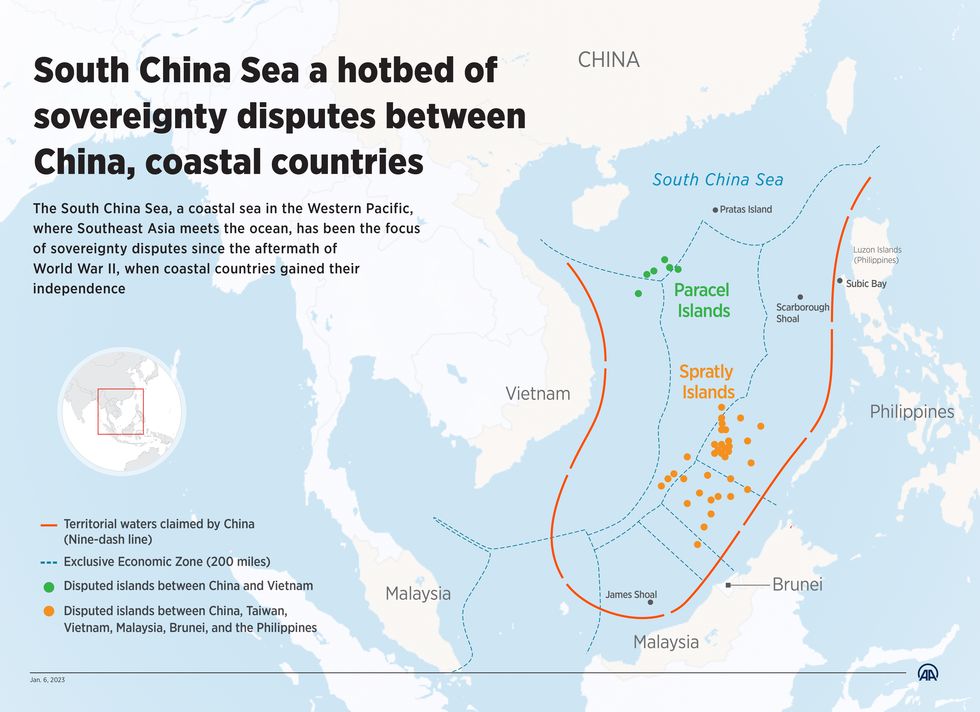
The South China Sea, famous for its commerce, abundant fishing grounds, and massive oil and natural gas reservoirs, is now known as something else entirely: a chessboard for the struggle between the United States and China.

China’s military expansion into the sea is taking place at the expense of regional neighbors whose competing territorial claims are being ignored. Into this volatile mix comes the U.S., which is supporting longstanding allies and international rules of law.

1.35 Million Square Miles


The South China Sea is tricky to define by location. The sea is off the coast of Vietnam but also off the coast of China, the Philippines, Brunei, Malaysia, and Taiwan. That’s the defining geographic feature of the sea, that its border is shared by many countries—and also the problem.

The Case for Negotiating with Russia

Keith Gessen

If you want to hear a different perspective on the war in Ukraine, talk to Samuel Charap. A fine-featured Russia analyst with, at forty-three, a head of gray hair, Charap works at the rand Corporation, a think tank that has been doing research for the U.S. military, among other clients, since the nineteen-forties. In the self-abnegating architectural spirit of many Washington institutions, it rents several floors of an office tower attached to a mall in Arlington, Virginia, not far from the Pentagon. The mall has a Macy’s and a Bath and Body Works, which are not places that Charap likes to go.

Charap, who grew up in Manhattan, became interested in Russian literature in high school, and then became interested in Russian foreign policy in college, at Amherst. He got a Ph.D. in political science at Oxford and spent time researching his dissertation in both Moscow and Kyiv. In 2009, he started working at the Center for American Progress, a liberal think tank in D.C. Russia had just fought a short, nasty war with Georgia, but the incoming Obama Administration was hoping to “reset” relations and find common ground. Charap supported this effort and wrote papers trying to think through a progressive foreign policy for the U.S. in the post-Soviet region. But tensions with Russia continued to increase. In the wake of Russia’s annexation of Crimea and incursion into eastern Ukraine, in 2014, Charap wrote a book, with the Harvard political scientist Timothy Colton, called “Everyone Loses,” about the background to the war. In it, Charap and Colton argue that the U.S., Europe, and Russia had combined to produce a “negative sum” outcome in Ukraine. Russia was the aggressor, to be sure, but by asking that Ukraine choose either Russia or the West, the U.S. and Europe had helped stoke the flames of conflict. In the end, everyone lost.

Prigozhin RIP, Or Do the Best You Can

George Friedman

Wagner Group boss Yevgeny Prigozhin is dead. He died of a fatal dose of self-confidence. He made three mistakes. First, he thought himself a competent commander. Second, he attempted a coup against a former KGB man who was trained in paranoia. His final mistake was to fail at all that he tried. Arguments over who killed him and how he died are inevitable. Enough time had passed since Prigozhin’s failed coup that it seemed reasonable to conclude that Russian President Vladimir Putin had decided to let him live, and strange theories emerged to support this. My favorite was that Prigozhin and Putin had collaborated in staging the coup. The theory never advanced to the point where it explained why Putin would organize a coup against himself, but the obvious answer – that the apparent coup was just a coup – was so boring.

An early theory about Prigozhin’s death was that a surface-to-air missile downed his plane. The uncertain origins of this missile could allow Putin to neutralize suspicions that he had organized the killing and, more important, signal that he was still worried about Prigozhin. It is more likely that a bomb was placed on the plane while it was on the tarmac preparing to leave Moscow.

But the missile theory opens the possibility of shifting the blame onto the Americans or Ukrainians. The problem with that theory is that Prigozhin was worth more to them alive than dead. Prigozhin frightened Putin by staging a coup that came within 120 miles (190 kilometers) of Moscow. Prigozhin was Putin’s caterer and friend. He was likely at many dinners and other social events where things took place that Putin would rather be forgotten and that Putin’s enemies would cherish. His continued existence might cause Russians and others to believe that Putin had lost his resolve at a time when the Russian president couldn’t afford to let doubts linger. A living Prigozhin was Putin’s nightmare and an American and Ukrainian dream.