Alexis Schlotter

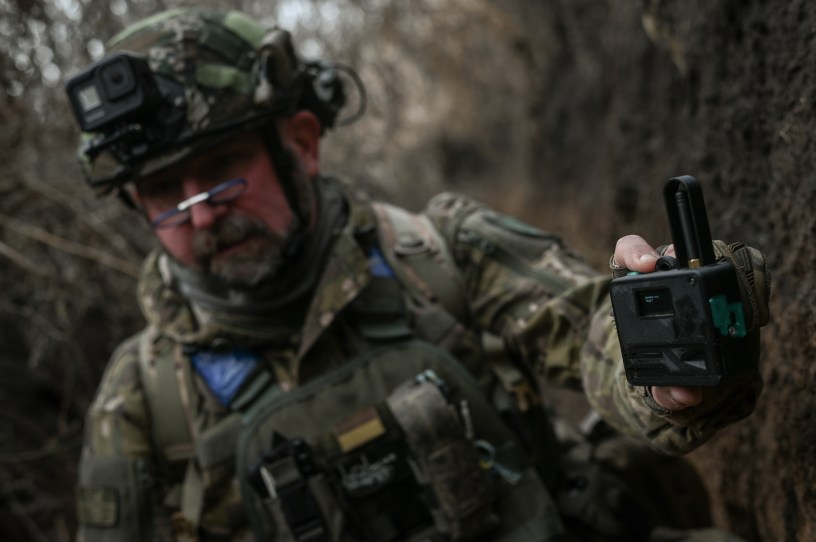
While no single agency oversees Russian cyberattacks, the amount of personnel involved in these operations continues to increase. There is a heavy reliance on criminal and civilian involvement to conduct offensive measures. Combining Russian interest in cyber and outer space has led to the “proliferation of handheld Global Positioning System (GPS) jammers, deployment of road-mobile jammers, and even development and testing of space-based jammers,” as reported on by Sarah Mineiro. She also warns that Russia can hack American ground control systems for the GPS constellation.
Types of Satellite Cyberattacks
Though electronic means of interfering with satellite signals, such as jamming or spoofing, occur at a more frequent rate, attacks using cyber may prove to be more impactful and frequent in the next decade. Cyberattacks “target the data itself and the systems that use, transmit, and control the flow of data,” potentially causing irreparable harm for military commanders and civilians reliant on communications and navigation systems for decision-making.
Like other cyberattacks, those on satellites and their networks require four main components: “access, vulnerability, a malicious payload, and a command-and-control system.” Multiple methods and modes of attack can take out a satellite system or render it inoperable without using kinetic force. Adversaries can target the networks that satellites use, individual satellites, and the supply chains that produce satellite hardware and software. The Center for Strategic and International Studies describes three main types of cyberattacks: data intercept/monitoring, data corruption, and seizure of control.