16 December 2023

Rape as a weapon: why war's 'oldest, most silenced' crime is on the rise

HARRIET MARSDEN

The Israeli government has given evidence to the United Nations claiming Hamas militants used rape and sexual violence against women during the 7 October atrocities.

First responders and mortuary workers described multiple signs of sexual assault and torture on female bodies, the BBC reported, including mutilation, inserted objects and broken pelvises. Videos of naked and bloodied women being paraded around Gaza have circulated online.

Police say they have "multiple" eyewitness accounts of sexual assault, reported the broadcaster, but at the time of the BBC report, "they hadn't yet interviewed any surviving victims". Hamas has denied that its fighters sexually assaulted anyone.

"The trendlines for conflict-related sexual violence are worsening," the UN special representative on the issue, Pramila Patten, warned in July – before the outbreak of war in the Middle East. Each new conflict brings new waves of what Patten described as "war's oldest, most silenced and least condemned crime".

Why is rape used in war?

Rape has always existed in war. The breakdown of law and a hypermasculine military culture are often cited as contributing factors. The purpose can range from intimidation and psychological trauma to the spread of disease and forced pregnancies. More recently, rape has been documented as a tool of ethnic cleansing and genocide.

Hamas vs PLO: Anatomy of Anti-Israel Resistance

Salman Rafi Sheikh

Since October 7, at least 273 people have been killed by Israeli forces in the West Bank region even though the Palestine Liberation Organization itself has been neither involved in nor supported Hamas’s attacks. Yet the West Bank continues to operate without an uprising. Whether Israeli attacks ultimately lead to an uprising is questionable, but it certainly is entirely imaginable.

In the historical roots of the conflict, and how Western powers contributed to it by essentially facilitating Jewish settlement on Palestinian lands, there were few if any substantial differences between the Hamas-led Gaza and the Palestine Liberation Authority-led West Bank. But political differences have evolved over time, and these differences are at the heart of why armed resistance is today confined to Gaza, although the West Bank Palestinians, too, continue to encounter Israeli violence in their everyday lives.

The differing response can be traced back many decades, but it came to light in 2007 when Hamas fought Fatah, one of the largest factions comprising the PLO, after Hamas defeated Fatah in the 2006 elections. Even though Hamas won a legitimate election, the West still saw it as a terrorist organization because of its anti-Israel stance – a framing that Arab states didn’t necessarily challenge. Today, Hamas’s view of Israel as an illegitimate state is what makes it different from the PLO.

PLO/Fatah doesn’t pursue this objective in the same manner as it did following the years after its 1964 creation. After briefly pursuing the possibilities of an independent state of Palestine and “de-ZioniZation” of the region, the PLO, backed by several Arab states, adopted a two-state solution as its primary goal in 1977, leading to the US-mediated 1993 Oslo Accords and the establishment of the internationally recognized Palestinian Authority (PA).

Fears of Suez Canal Closure as Red Sea Threats Persist

Chloe Mayer

A Norwegian oil tanker in the Red Sea was blasted by a missile fired from Yemen's Houthi rebels—in an attack that could have far-reaching implications for international trade and the global economy.

The assault on the tanker on Tuesday apparently marks an escalation for the Iran-backed group, which recently admitted responsibility for targeting Israeli or Israeli-linked commercial ships in the region.

The Houthis support Palestinian-based Hamas, a U.S.-designated terror group that is at war with Israel after it launched a deadly attack on the country on October 7 and kidnapped hundreds of civilian hostages. Israel responded with a series of devastating airstrikes across Gaza and a ground invasion, reducing entire areas to rubble.

But the latest attack against the Strinda, a Norwegian-flagged tanker with no apparent ties to Israel, suggests the Houthis have expanded their campaign, according to the Associated Press. By firing at ships close to the Bab el-Mandeb Strait—which is an entryway to the Red Sea and the Suez Canal—the group could potentially choke off access to crucial global shipping routes and increase the international impact of the war currently raging in the Middle East.


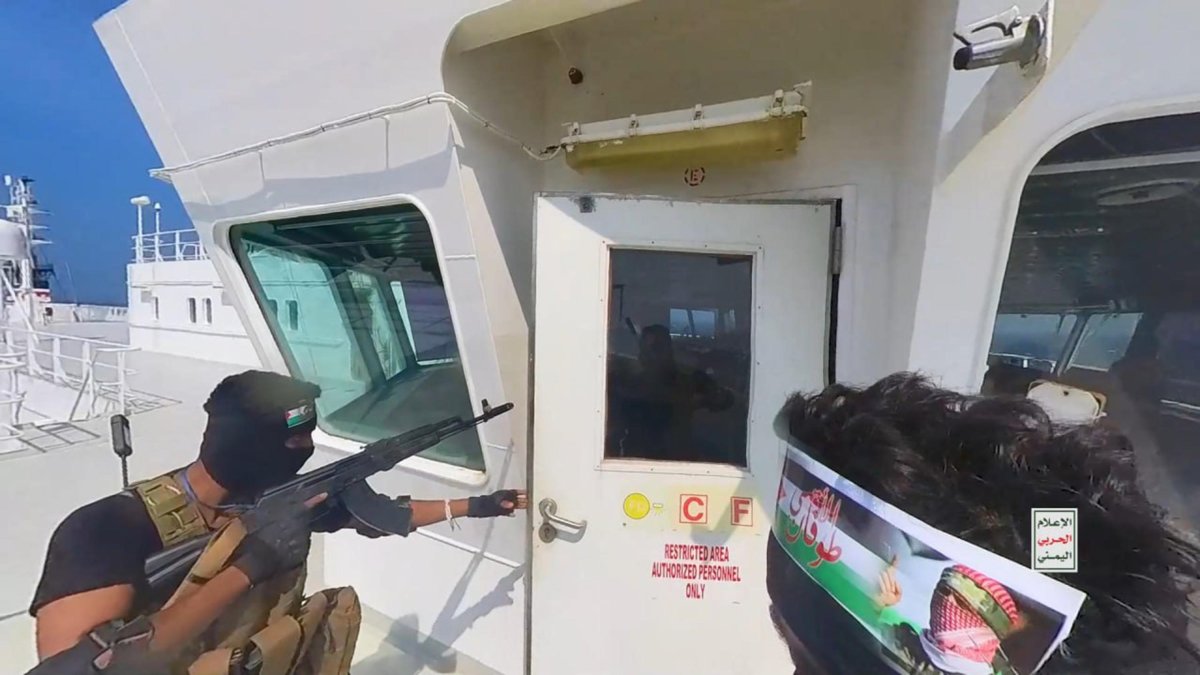
Houthi fighters have claimed responsibility for a missile strike against a Norwegian-flagged oil tanker on Tuesday. Pictured: Houthi rebels storm the Galaxy Leader in the Red Sea off the coast of Yemen on November 20, 2023.

Israel determined to finish Gaza operation despite civilian suffering

Jeremy Bowen

Israel is on holiday. Schools are out, and away from the frontline areas the shopping centres are full. Cake shops are bursting with the doughnuts that Jews like to eat during Hanukkah, the current religious festival.

It is different the closer you get to the fighting. Along the Gaza border, the area known by Israelis as the "envelope", tanks and troops are moving, civilians are mostly elsewhere and it looks like a war zone.

In the north, along the border with Lebanon, communities have also been evacuated and the military continues to exchange fire with Iran's strongest ally, Hezbollah.

But casual visitors might be able to deceive themselves that life has somehow returned to "normal" in central Israel, the broad swathe of land between Jerusalem and Tel Aviv.

A sharp reminder of how wrong that impression would be came as I drove down to Tel Aviv.

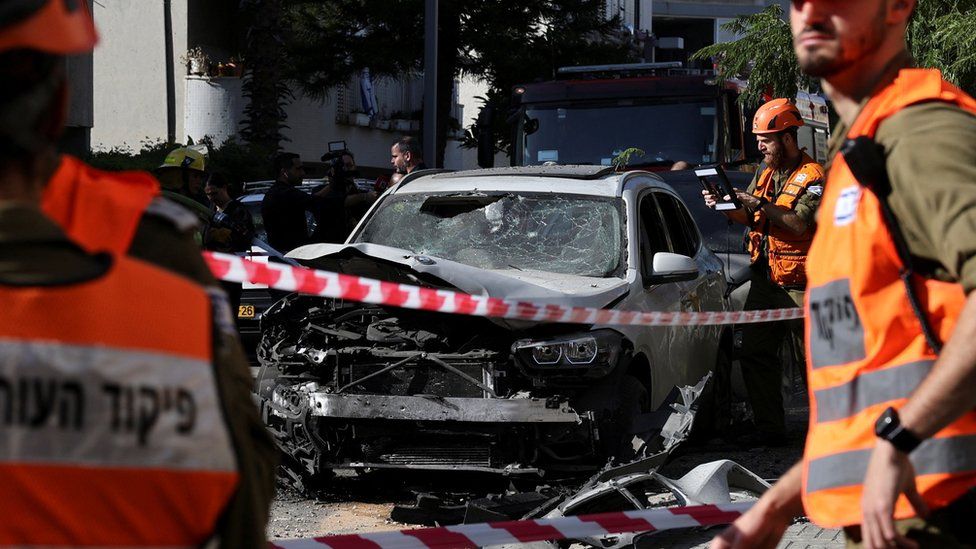
The air raid sirens started, and the red alert app Israelis have on their phones sent out warnings as cars swerved onto the hard shoulder so the people inside could stop to take cover. Other drivers accelerated to speed out of the area. In the confusion, three cars managed to crash into each other.

We pulled over as a group of women left their car and held each other in a tight, terrified embrace.

Narratives, Techniques, And Pathways: How The Islamic State Khorasan Province Recruits Afghan Students Online

SIMON COPELAND

Introduction

Since its formation in early 2015, the Islamic State’s affiliate in Central and South Asia, Islamic State Khorasan Province (ISKP) (also referred to as Wilayat Khorasan) has prioritised developing its online presence alongside its physical operations. This includes building and sustaining a sophisticated digital communications apparatus that encompasses and spans various social media platforms and messaging applications. In the aftermath of several developments that have impacted ISKP’s traditional sources of recruitment and the Taliban seizing control of Afghanistan in August 2021, the importance of these online operations for sustaining the group’s activities and membership has significantly increased.

Forced to abandon the territory it held in northern and eastern Afghanistan in 2019, ISKP has resorted to a campaign of urban warfare and terror attacks to demonstrate the Taliban’s inability to deliver security and erode their legitimacy with the local population. As a result, the group’s internal structure is now highly decentralised, comprising hundreds of covert cells based across different Afghan cites - something that necessitates a dependable flow of reliable and committed recruits to sustain operations. The establishment of a new Islamic State province, Wilayat Pakistan, has also only added to ISKP’s recruitment pressures, with the two affiliates effectively now competing to attract new members in the region.

For these reasons, ISKP’s need to recruit within Afghanistan is now more pressing than ever. Though Salafi madrasas once represented a source of ideologically committed recruits, the Taliban was quick to crack down on these institutions after taking power, closing any suspected of providing manpower to ISKP. Instead, two overlapping populations have emerged as the primary recruitment pools for ISKP. The first is Afghanistan’s Salafist community, who have long endured a fractured relationship with the Taliban. ISKP has tried to exploit this mistrust and has called on, primarily young, Salafis to join with them to take revenge on the Taliban, who have imposed further restrictions on Salafis in the aftermath of their takeover. The success of ISKP’s recruitment of this population is hard to assess. Nevertheless, some have suggested that the Taliban’s perception that ISKP is successfully recruiting within this group may have motivated its own attempts to repair relations with the Salafist community since 2022.

Biden must end ‘strategic ambiguity’ on Taiwan

JOSEPH BOSCO

Taiwan’s presidential and legislative elections are just weeks away. China correctly sees them as a further repudiation of its rigid ideological stance that a Chinese society is incapable of handling democracy with all its free choices, checks and balances, and reliance on human rights. Beijing has made its wishes clear: It wants Taiwanese voters to reject William Lai, who pledges to follow the moderate policies of President Tsai Ing-wen favoring greater international space for Taiwan and opposing forced unification.

As in past elections, China has ramped up its rhetorical pressure against Taiwan and increased military exercises and forays near Taiwan. During their recent meeting, President Joe Biden and Chinese ruler Xi Jinping warned each other against provocative actions on Taiwan.

Xi reportedly told Biden that Washington should refrain from interfering in China’s “internal” affairs, such as by sending defensive arms to Taiwan. For his part, Biden said he “didn’t expect any interference at all” in Taiwan’s elections. But more is needed from the U.S. side to counter China’s already overt interference.

If Lai and his Democratic Progressive Party (DPP) colleagues are victorious and the DPP prevails for the fifth time in eight presidential elections, Beijing may well invoke its 2005 Anti-Secession Law. The ASL states that if “possibilities for a peaceful re-unification should be completely exhausted, the state shall employ non-peaceful means” to impose unification on Taiwan.

China would launch any of a range of actions, including a naval and air quarantine, embargo or blockade — which it practiced when then House Speaker Nancy Pelosi (D-Calif.) visited Taiwan; seizure of one or more of Taiwan’s outlying islands; or a full-fledged amphibious, air and missile assault and invasion of Taiwan.

New Digital Dilemmas: Resisting Autocrats, Navigating Geopolitics, Confronting Platforms

STEVEN FELDSTEIN

Across the globe, the struggle between rights and repression persists. Digital technology remains at the center of these contests. Governments continue to use censorship strategies, mass surveillance measures, disinformation campaigns, and internet shutdowns to counter political protests, rig elections, and consolidate military coups. The 2023 Freedom on the Net report reflected this, indicating thirteen consecutive years of global internet freedom declines.

Despite these challenges, citizens continue to devise creative ways to use digital tools to mobilize demonstrations, circumvent information controls, and deter electoral manipulation. Although in many countries it is hard to escape the impression that the balance of digital technology weighs in favor of the forces of repression, at least several countries experienced positive changes in 2023. Protesters spurred a change in government in Sri Lanka; soon after, authorities lifted widespread social media and communications blocks. In Gambia, online expression is blossoming as the country gets further away from the two-decade rule of deposed strongman Yahya Jammeh. And in Georgia, online mobilization against a bill that would have forced civil society groups to register as “agents of foreign influence” prompted tens of thousands of demonstrators to descend on the capital and brought about a decisive legislative defeat of the measure.

The digital rights and policy landscape is increasingly entangled by other issues as well. One area of concern is the fraught relationship between large tech companies on the one hand and human rights and transparency concerns on the other. Platforms such as Facebook, Google, Instagram, TikTok, X (formerly Twitter), WhatsApp, and YouTube hold inordinate power to determine what users see, what content will be amplified, and what will be taken down. Platforms make these decisions largely behind closed doors, providing little insight into their reasoning.

A major inconsistency regards how to handle harmful content—for example, hate speech or harassment—that is protected under the law but can still lead to significant damage (because of the volume, scale, and speed of dissemination). Modern legal systems did not anticipate that volume and speed could or should render speech illegal, and it is unclear whether changing free speech protections based on these factors is sensible. Yet there is little doubt that the viral spreading of falsehoods, propaganda, and harassing speech has deeply wounded the world’s democracies and undermined public trust.

China’s cyber army is invading critical U.S. services

Ellen Nakashima and Joseph Menn

The Chinese military is ramping up its ability to disrupt key American infrastructure, including power and water utilities as well as communications and transportation systems, according to U.S. officials and industry security officials.

Hackers affiliated with China’s People’s Liberation Army have burrowed into the computer systems of about two dozen critical entities over the past year, these experts said.

The intrusions are part of a broader effort to develop ways to sow panic and chaos or snarl logistics in the event of a U.S.-China conflict in the Pacific, they said.

Among the victims are a water utility in Hawaii, a major West Coast port and at least one oil and gas pipeline, people familiar with the incidents told The Washington Post. The hackers also attempted to break into the operator of Texas’s power grid, which operates independently from electrical systems in the rest of the country.

Several entities outside the United States, including electric utilities, also have been victimized by the hackers, said the people, who spoke on the condition of anonymity because of the matter’s sensitivity.

None of the intrusions affected industrial control systems that operate pumps, pistons or any critical function, or caused a disruption, U.S. officials said. But they said the attention to Hawaii, which is home to the Pacific Fleet, and to at least one port as well as logistics centers suggests the Chinese military wants the ability to complicate U.S. efforts to ship troops and equipment to the region if a conflict breaks out over Taiwan.

These previously undisclosed details help fill out a picture of a cyber campaign dubbed Volt Typhoon, first detected about a year ago by the U.S. government, as the United States and China struggle to stabilize a relationship more antagonistic now than it has been in decades. Chinese military commanders refused for more than a year to speak to American counterparts even as close-call intercepts by Chinese fighter jets of U.S. spy planes surged in the western Pacific. President Biden and Chinese President Xi Jinping agreed only last month to restore those communication channels.

The Big One

Andrew F. Krepinevich, Jr.

Over the past decade, the prospect of Chinese military aggression in the Indo-Pacific has moved from the realm of the hypothetical to the war rooms of U.S. defense planners. Chinese leader Xi Jinping has significantly accelerated his country’s military buildup, now in its third decade. At the same time, China has become increasingly assertive across a wide swath of the Pacific, advancing its expansionist maritime claims and encroaching on the waters of key U.S. allies and important security partners, including Japan, the Philippines, and Taiwan. Xi has asserted, with growing frequency, that Taiwan must be reunited with China, and he has refused to renounce the use of force to achieve that end. With the United States distracted by major wars in Europe and the Middle East, some in Washington fear that Beijing may see an opportunity to realize some of these revisionist ambitions by launching a military operation before the West can react.

With Taiwan as the assumed flash point, U.S. strategists have offered several theories about how such an attack might play out. First is a “fait accompli” conquest of Taiwan by China, in which the People’s Liberation Army employs missiles and airstrikes against Taiwanese and nearby U.S. forces while jamming signals and communications and using cyberattacks to fracture their ability to coordinate the island’s defenses. If successful, these and other supporting actions could enable Chinese forces to quickly seize control. A second path envisions a U.S.-led coalition beating back China’s initial assault on the island. This rosy scenario finds the coalition employing mines, antiship cruise missiles, submarines, and underwater drones to deny the PLA control of the surrounding waters, which China would need in order to mount a successful invasion. Meanwhile, coalition air and missile defense forces would prevent China from providing the air cover needed to support the PLA’s assault, and electronic warfare and cyber-forces would frustrate the PLA’s efforts to control communications in and around the battlefield. In a best-case outcome, these strong defenses would cause China to cease its attack and seek peace.

Pentagon alarmed by Chinese rush for 'intelligentized' warfare, but experts warn about over-reliance on AI

Peter Aitken

The U.S. Department of Defense has warned that China’s artificial intelligence (AI) initiatives have seen heavy integration with the People’s Liberation Army (PLA), raising concerns of a possible AI arms race.

"The size, scope and sophistication of Chinese military modernization programs is breathtaking," James Anderson, who served as the deputy undersecretary of defense during the Trump administration, told Fox News Digital. "The report makes clear that Beijing remains hellbent on developing a world-class military force, despite its recent economic slowdown."

The annual Pentagon report on the Military and Security Developments involving the People’s Republic of China argues in the preface that China remains "the" pacing challenge for the Department of Defense as Beijing seeks "national rejuvenation" by 2049 – the centenary anniversary for the Chinese Communist Party (CCP).

Chief among the various avenues the party has pursued to achieve this goal stands the "multi-domain precision warfare" concept, which seeks to incorporate advances in big data and AI to "rapidly identify key vulnerabilities in the U.S. operational system and then combine joint forces across domains to launch precision strikes," according to the report.

The concept would help China develop "additional subordinate operational concepts" with an eye toward refining China’s capabilities to fight and win "future wars." The country’s latest Five-Year Plan prioritizes these developments, which the Pentagon claimed would include advances in "brain science" and biotechnology, semiconductors and deep space, deep sea and polar-related tech.

U.S. and China must seize opening to discuss military AI risks

Sam Bresnick

Last month in California, U.S. President Joe Biden and Chinese leader Xi Jinping agreed to combat global narcotics manufacturing and trafficking and to reopen military-to-military dialogues, as well as to hold discussions in the future on risks stemming from artificial intelligence.

Journal of Policy & Strategy, 2023, v. 3, no. 4

  • Estimating the Number and Characteristics of Russia’s Strategic Nuclear Weapons
  • Back to the Future: U.S. Nuclear Deterrence Today and the Foster Panel Study
  • What Do Russia’s Nuclear Threats Tell Us About Arms Control Prospects?
  • Can Nuclear War Stay Limited?
  • Gen. Glen D. VanHerck, USAF, Commander, North American Aerospace Defense Command (NORAD) and United States Northern Command (USNORTHCOM) [interview]
  • Michael Rรผhle, former Head of the Climate and Energy Security Section at NATO [interview]
  • Restraints at the Nuclear Brink:Factors in Keeping War Limited, May 2023
  • Comparing Soviet, Russian, and Chinese Influence Operations, June 2023
  • Russia’s New START Suspension: Does Arms Control Matter?, July 2023

Terrifying hacks on critical infrastructure have arrived. America isn’t ready

GORDON G. CHANG

On Nov. 25, an Iran-linked hacker group — with ties to the Iranian state itself — took control of a part of the Municipal Water Authority of Aliquippa, in western Pennsylvania near Pittsburgh. Crews switched to manual systems to deliver water to two towns.

The hackers entered the system through an Israeli-made programmable logic controller, which had been successfully targeted in attacks in Israel in the past couple of months.

The Iranian hackers were able to get in with little effort. Critical infrastructure in the U.S. contains industrial control systems that are known to be easy targets for cyber attackers.

Many of these vital networks are, incredibly, permitted to determine on their own what level of security is appropriate, which means they are essentially unprotected. The Aliquippa attack occurred less than a month after the Environmental Protection Agency rescinded a rule requiring water systems to include cybersecurity testing.

Since the Aliquippa attack, hackers have reportedly breached four other utilities and an aquarium in the U.S., according to one source.

At one time, hackers were focused on espionage and data theft. Now, however, there is another objective: disruption of critical infrastructure.

These “aggressive cyber operations” can not only take down infrastructure but also “induce societal panic,” as Jen Easterly, director of the U.S. Cybersecurity and Infrastructure Security Agency, put it in June to the Aspen Institute.

In a first, delegates at UN climate talks agree to transition away from fossil fuel


The agreement was approved without the floor fight many feared and is stronger than a draft floated earlier in the week that angered several nations. But it didn’t call for an outright phasing out of oil, gas and coal, and it gives nations significant wiggle room in their “transition” away from those fuels.

“Humanity has finally done what is long, long, long overdue,” Wopke Hoekstra, European Union commissioner for climate action, said as the COP28 summit wrapped up in Dubai.

Within minutes of opening Wednesday’s session, COP28 President Sultan al-Jaber gaveled in approval of the central document — an evaluation of how off-track the world is on climate and how to get back on — without giving critics a chance to comment. He hailed it as a “historic package to accelerate climate action.”

The document is the central part of the 2015 Paris accord and its internationally agreed-upon goal to try to limit warming to 1.5 degrees Celsius (2.7 degrees Fahrenheit) above pre-industrial times. The goal is mentioned 13 times in the document and al-Jaber repeatedly called that his “North Star.” So far, the world has warmed 1.2 degrees (2.2 degrees Fahrenheit) since the mid 1800s. Scientists say this year is all but certain to be the hottest on record.

Several minutes after al-Jaber rammed the document through, Samoa’s lead delegate Anne Rasmussen, on behalf of small island nations, complained that they weren’t even in the room when al-Jaber said the deal was done. She said that “the course correction that is needed has not been secured,” with the deal representing business-as-usual instead of exponential emissions-cutting efforts. She said the deal could “potentially take us backward rather than forward.”

Beyond the Neutral Card: From Civil-Military Relations to Military Politics

Strategy Bridge

How should senior military officers in democratic states influence their domestic political environments? The flippant answer is that they should not; they should do as they’re told. The American civil-military relations literature, written largely in the shadow of Samuel P. Huntington’s myth of an apolitical military, has consistently downplayed the positive role officers play in politics, to such a degree that we have only a dim outline of what constitutes appropriate and effective political influence by officers Thus, in practice, we fear that too many officers find their professional military education fails to prepare them for the realities of being a commander. They discover to their chagrin that there is no neutral ground available; even doing nothing is a willful political act, rife with significance, which is easily turned against them. We do not believe that officers can remove themselves from politics by “playing the neutral card.” Apolitical neutrality often seems prudent from a traditional perspective, but can fail spectacularly when applied in practice. We argue instead for a new theoretical posture, for soldiers and scholars alike, that foregrounds the political agency of officers. We call this the military politics approach.

MARK MILLEY AND THE NEUTRAL CARD

The fundamental problem with playing the neutral card was underscored when President Donald Trump told Chairman of the Joint Chiefs of Staff General Mark Milley to join him for a short walk (which ended up taking them to Lafayette Square).[1] When told to come, Milley played the neutral card and went. One week later Milley reflected, “My presence in that moment and in that environment created a perception of the military involved in domestic politics.”[2]

What should Milley have done, if doing nothing is also doing something? Milley’s answer provides no great insight: “We must hold dear to the principle of an apolitical military…and that is not easy.”[3] Milley’s misstep and his subsequent frustration were not surprising. Officers are not educated in how to navigate complex political environments, not least because there is so little research done on this topic. Whatever the cause, there is no structured means to develop political competencies, and indeed most officers in democratic countries spend their careers being told that they are and must remain apolitical.[4]

Is this the end for Zelenskyy?

THOMAS FAZI

Since Russia’s invasion of Ukraine, the Western public has been sold the story of a Ukrainian front united in its unwavering commitment to a total military victory over Russia. Over the past few weeks, however, this narrative has started to crumble.

Despite the failure of Ukraine’s Nato-backed counteroffensive, which is now universally accepted, Zelenskyy continues to stick to the maximalist victory-at-all-costs narrative — that Ukraine must go on fighting until it retakes every inch of lost territory, including Crimea, and that Putin should not be negotiated with. This is understandable: he has staked everything on achieving that objective — anything less would probably mean the end of his political career.

But Zelenskyy’s position is looking increasingly isolated. As Simon Shuster wrote in Time magazine, “Zelenskyy’s associates themselves are extremely skeptical about the [current] policy”, describing the president’s belief in Ukraine’s ultimate victory over Russia as “immovable, verging on the messianic”.

In early November, none other than Ukraine’s commander-in-chief, General Valery Zaluzhny, told The Economist that the war with Russia had reached a stalemate and was evolving into a long war of attrition — one in which Russia has the advantage. Many took this to mean that the general believes that the time has come to negotiate a deal with Russia. This led to a public confrontation between Zaluzhny and Zelenskyy, who rebuked the general’s assessment and repeated his refusal to negotiate any ceasefire deal with Moscow.

Since then, the rivalry between the two has grown into an all-out power struggle. According to the Ukrainian news site Ukrainska Pravda, Zelenskyy views Zaluzhny’s popularity as a political threat — and recent events have only heightened the president’s fears. Indeed, the army, it reports, is divided between those who are subordinate to Zaluzhny and those who are loyal to Ground Forces Commander Oleksandr Syrskyi, an ally of Zelenskyy.

Tanks may face new threats on the modern battlefield, but they’re already adapting

YAVUZ TURKGENCI

The modern operating environment is filled with examples of heavy main battle tanks suffering extensive damage in the battlefield.

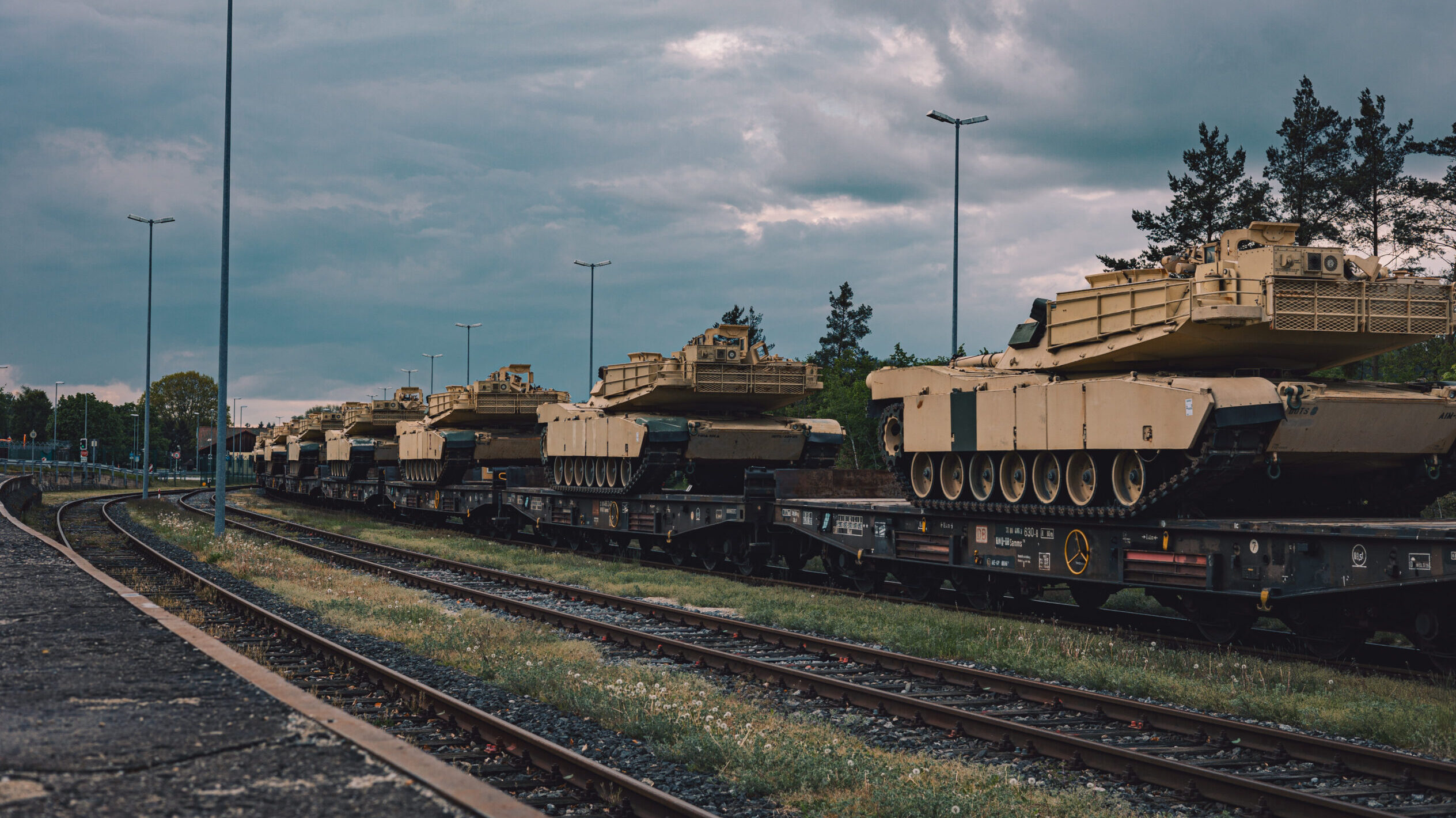
Avdiivka, a city in eastern Ukraine, has now become a cemetery for Russian armor, tanks in particular. Trying to crush through the Ukrainian defenses surrounding the city, Russia reportedly lost over 100 tanks in three weeks.

In around just over a year since the outbreak of the Russo-Ukrainian War, both belligerents lost around half of their tanks. The Russians have lost about 1688 tanks out of 3400, while the conflict cost the Ukrainians around 459 tanks out of 900.

In Gaza, Hamas and Palestinian Jihad militants ambushed Israel’s famous Merkava tanks using creative guerrilla tactics. One prominent example saw them reportedly placing an explosive under the tank’s Trophy active protection system, before running away and shelling the tank with tandem charged RPGs from a safe distance. With such tactics, militants heavily damaged platforms advertised to be powerful war machines.

Yet, military experts claiming the knights of the battlefield are losing their “charisma” in the modern age need a reminder on the history of warfare. With every threat they faced, tanks have improved in agility, evolving to remain formidable foes. In the years to come, they will continue to do so.

Machine guns and fortified trenches made the operating environment of the First World War stagnant. Tanks caused a disruption in the static battlefield by providing a breaching operation capability through the heavily fortified trench systems, meeting a pressing operational requirement. The tank’s introduction to the battlefield marked the start of an endless struggle between tank and anti-tank weapon systems. As tanks’ cast steel armor got thicker, anti-tank canons grew their diameters. The introduction of anti-tank missiles with shaped charge shells that could be easily carried and fired by infantry on the battlefield, led to the emergence of reactive armor.

The impact will be felt in Ukraine war if US aid dries up

Jonathan Beale

Without vital US military support there is a real danger Ukraine could end up losing this war - not immediately but in the longer term.

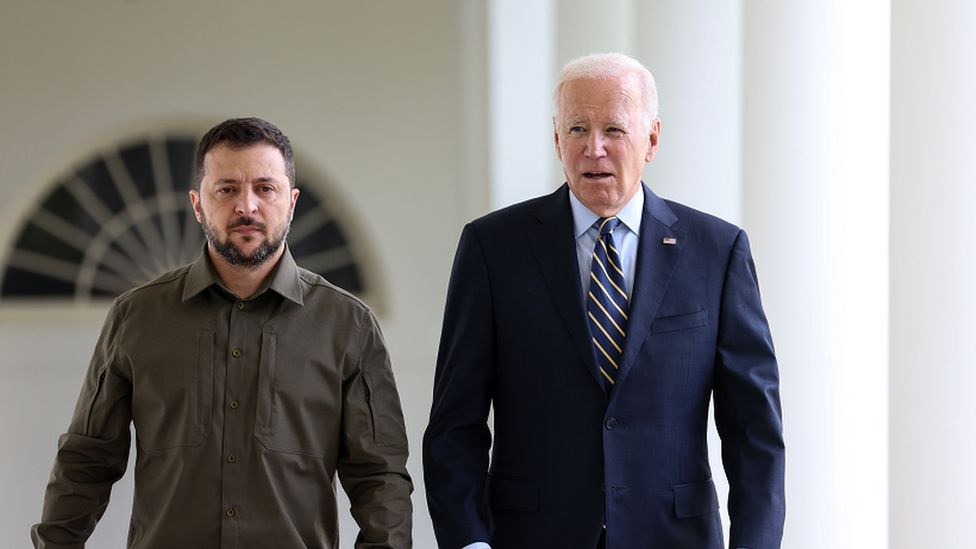
President Volodymyr Zelensky is in Washington to spell that out, hoping that he can persuade Congress to pass a $60bn aid package that has stalled amid a row over US border security.

On Sunday, Ukraine's first lady, Olena Zelenska, warned Ukraine is in mortal danger without continuing American support.

Western officials have told the BBC they remain confident the US administration will find a way out of the current impasse. But even if President Biden succeeds, the worries about where the US stands won't go away. A presidential election year will only bring more uncertainty.

It's America, not Europe, which has provided the lion's share of military support to Ukraine.

Europe is now on track to overtake the US in terms of economic support to Ukraine. But the US is well ahead in terms of military support.

According to the Kiel Institute, which tracks support, the US has donated €44bn worth of military equipment. Germany, the largest European donor, has contributed €18bn.

Space Development Agency, Army cooperating on alternates to GPS sat signals

THERESA HITCHENS

The Space Development Agency is now working with the Army to explore new options for satellite-based positioning, navigation and timing (PNT) as alternatives to GPS, according to SDA Director Derek Tournear.

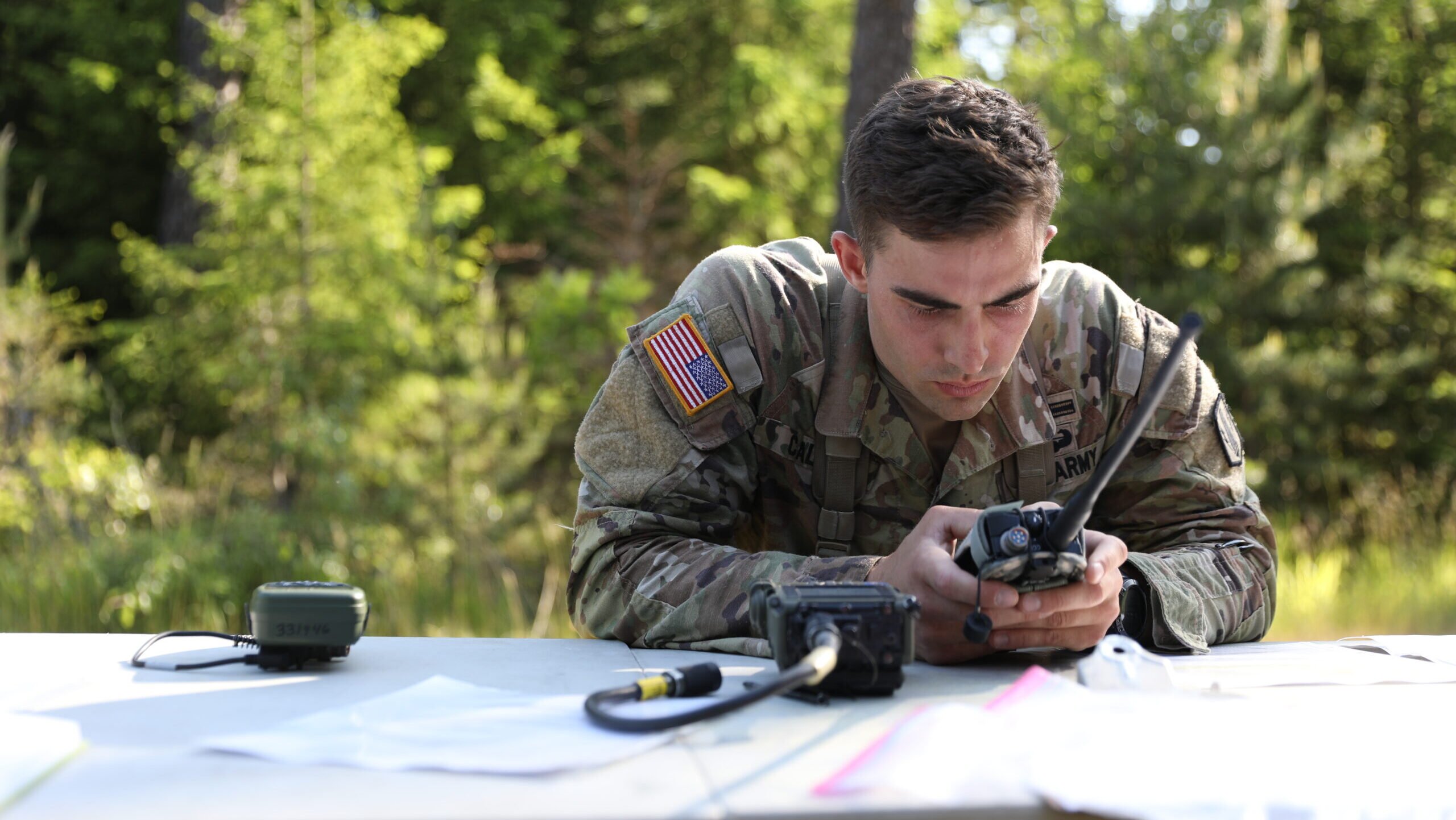
“We’re working very closely with the Army, who’s been pioneering the alt-PNT across the Department of Defense,” he told the National Security Space Association today. “We’re working with them to be able to broadcast that same signal so it can be picked up by by existing, fielded and planned user equipment.”

He explained that the Army has an alternate PNT (alt-PNT) signal that still can be picked up by the Military GPS User Equipment (MGUE) Increment 2 radio chip sets — which primarily are being developed to allow access to the GPS constellation’s jam-resistant M-Code signal. That effort, however, is “a little ways in the future,” he said, only starting once SDA has launched its third iteration, confusingly called Tranche 2, of Transport Layer satellites to low Earth orbit to provide high-speed data relay around the globe. SDA plans to begin launching those birds in 2026.

The military is pursuing alternate PNT tech with the assumption that in a future conflict, units may be operating in environments where GPS is naturally not accessible or is being jammed by the adversary.

Tournear said that meanwhile SDA next year will begin launching the Tranche 1 Transport Layer satellites for regional communications, which also will carry a “navigation message” embedded in their venerable Link 16 data links.

The future of the world is intelligent: Insights from the World Economic Forum’s AI Governance Summit

Landry Signรฉ

On November 16, the World Economic Forum’s AI Governance Summit convened over 200 global leaders, tech experts, academics, innovators, and policymakers to address the evolving landscape of artificial intelligence (AI) governance and shape its responsible future. The Summit offered a unique platform for insightful discussions at the forefront of ethical AI governance, and participants have engaged in the development of strategies, multistakeholder collaboration, and specific commitments for a safe, inclusive, responsible, and more “humane” AI. Anecdotally, the Summit couldn’t have been more timely given the new developments in the AI space, with a governance crisis resulting in OpenAI firing and immediately reinstating the CEO. As we distill the key takeaways from the Summit, several central themes emerge, offering a roadmap for responsible AI development.
Five takeaways

My five key takeaways from the AI Governance Summit are as follows:

1. Embracing transformation: The dual pacing and coordination dilemmas

The pace of technological change emerged as a central challenge during discussions. With technology evolving at an unprecedented speed, the imperative is not only to keep up with it, but to also leverage these advancements for the benefit of humanity. Ensuring safety, trust, and inclusion became a non-negotiable call to action at the Summit, prompting a call for multistakeholder cooperation. The consensus was that, as we navigate the swiftly changing tech landscape, we must engage deliberately, recognize differences, and foster trust through ethical design principles. Trust and ethics, positioned as design elements, should be incorporated from the outset to create inclusive solutions. In a Brookings report I co-published with Steve Almond, A blueprint for technology governance in the post-pandemic world, we proposed six steps to address the pacing and coordination challenges, including anticipating innovation and its implications, focusing regulation on outcomes, creating the space to experiment, using data to target interventions, leveraging the role of business, working across institutional boundaries, and collaborating internationally.

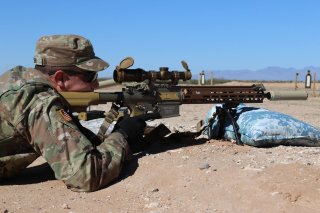
5.56 vs. 7.62: Which Designated Marksman Rifle (DMR) Is the King?

Travis Pike

The DMR, or designated marksman rifle, has become an integral part of the infantry rifle squad. Numerous American and foreign forces have adopted some form of DMR into their squad. The designated marksman’s rifle sits between a standard infantry rifle and a sniper rifle. In the United States and in most foreign military forces, two calibers rule the DMR, the 5.56 and 7.62 NATO. Today we’ll explore the pros and cons of both.

THE ADVANTAGES OF THE 5.56 DMR

The 5.56 designated marksman rifle is often an accurized M16 equipped with an optic. These rifles have changed through time, and the most well-known is the Mk 12.

One of the big advantages of the 5.56 is that it is a lightweight rifle and uses lighter ammunition. Lighter rifles are easy to maneuver and easier to carry over long patrols.

The 5.56 ammunition allows you to carry more ammo and more ammo is often better than less ammo. A 5.56 DMR has less recoil and muzzle rise and is, therefore, easier to control. You can very comfortably control the gun, and less recoil ensures you can fire faster follow-up shots.

On a logistics front, the use of the same ammunition and magazines simplifies things for a rifle squad: It’s easier to carry one type of ammo and use it in a pinch. The 5.56 DMR is best suited with high-quality ammunition, but a shooter can also toss in standard M855 ball and rock and roll.

THE ADVANTAGES OF THE 7.62 DMR

The 7.62 DMR has been around a lot longer than the 5.56-caliber DMR. The military produced the earliest variants from old M14s and accurized the rifles for longer-range performance. The Russians used a 7.62x54R rifle for the longest time and essentially pioneered the DMR with the Dragunov.

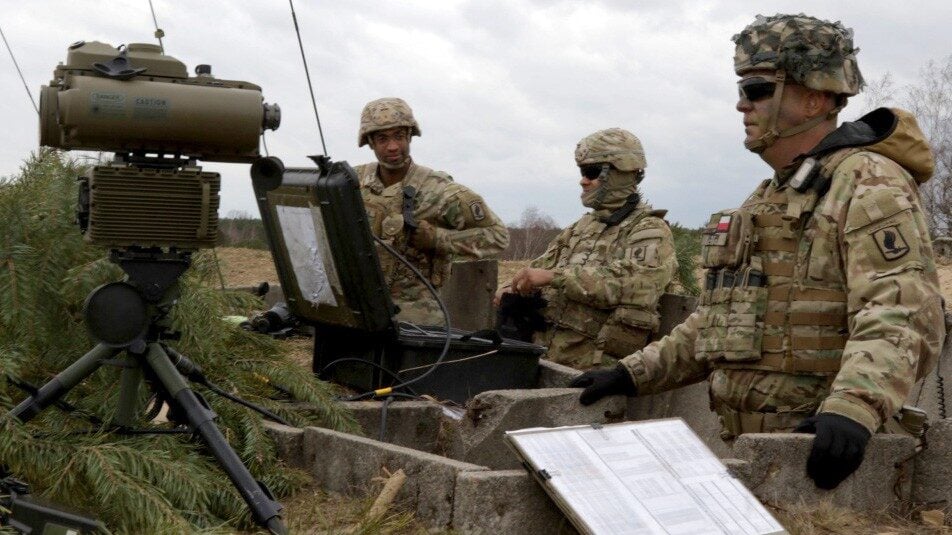
Here are the Army’s new planned EW, signals programs

JASPREET GILL

The Army is making progress on several programs on the electronic warfare, intelligence and sensors front, and the official in charge of making those efforts a success is gearing up for some new starts over the next fiscal year.

Speaking with reporters on Tuesday, Brig. Gen. Ed Barker, program executive officer for intelligence, EW and sensors, provided some updates on already-established EW programs and new starts planned for fiscal 2025 and beyond. Those include:
  • Theater Signals Intelligence Program: TSIG, a new start in FY25, will “provide the tactical commanders at echelons above corps with a forward deployable and remotely or even locally controlled signals intelligence systems and supporting potential … contingency operations,” Barker said. The effort is a “conglomeration of existing capability” that supports theater intelligence collection, Kenneth Strayer, project manager for EW and cyber, added.
  • High Altitude Platform for deep sensing: Another new start in FY25 which has gained interest across the military services, the Army will be looking at what capabilities it can acquire “from either a high-altitude balloon, solar and fixed-wing aircraft, really looking at affordability and the balancing of low SWAP and high efficiency sensors to take advantage of HAP capabilities,” Barker said. You can expect to see more requests for information come out for HAP in the next four to six months, he added.
  • Modular Electronics Spectrum System: This program, which uses electromagnetic techniques to confuse and disrupt adversaries, is planned to be a new start in FY26, and Barker said the capability is really important in the European theater right now.
  • Spectrum Situational Awareness System: S2AS, a new start in FY25, can provide sensing and visualization and would allow commanders to see their command post signature in real time, Barker said.
  • High Accuracy Detection and Exploitation System: The aerial intelligence program was recently approved to move into a middle tier acquisition for rapid prototyping, Barker said. Phase one of HADES will include two different aircraft with different sensor packages, and the goal is “to demonstrate the flexible aspect of the capabilities themselves and also to understand the best of breed that we want to pursue from a production standpoint,” he added.

15 December 2023

ISRAEL – HAMAS SYMPOSIUM 2023 – FLOODING HAMAS TUNNELS: A LEGAL ASSESSMENT

Aurel Sari

Reports emerged last week suggesting that Israel is preparing to flood the network of tunnels constructed by Hamas underneath Gaza with sea water. According to unnamed U.S. officials cited in the media, the Israel Defense Forces (IDF) have assembled at least five pumps that could draw water from the Mediterranean Sea to fill the tunnel network in a matter of weeks. The aim of the operation is to render the tunnels inaccessible and to drive Hamas fighters above ground.

Neither tunnelling nor flooding are new methods of war. Underground warfare has a long history. In the ancient world, tunnels were used primarily to overcome fortifications. More recently, they have been used during the First World War to breach enemy trenches, by Japanese troops for defensive purposes during the War in the Pacific, and by the Viet Cong for shelter and concealment. In Gaza, Hamas has constructed a complex web of tunnels believed to run for several hundred miles below the surface. The network serves both defensive and offensive purposes. It provides Hamas with protection, a logistical base, mobility, and an element of surprise.

Artificial flooding and other forms of hydraulic warfare too have a long tradition. During the Eighty Years’ War in the late sixteenth century, Dutch rebels destroyed dams to impede the movement of Spanish forces. Other historical examples include the famous Dambuster Raid carried out by the Royal Air Force in 1943 to put the Ruhr Valley under water. More recently, the Kakhovka Dam was destroyed, most likely by Russian forces, in the context of Russia’s invasion of Ukraine.

Bearing in mind the widespread use of these two forms of warfare, it should not come as a surprise to find that belligerents have relied on hydraulic warfare to counter underground warfare, including by flooding tunnels. In fact, Egypt has on more than one occasion pumped sea and waste water into Hamas tunnels running under its border with Gaza.

Rifts between Biden and Netanyahu spill into public view

Kevin Liptak and Jeremy Diamond

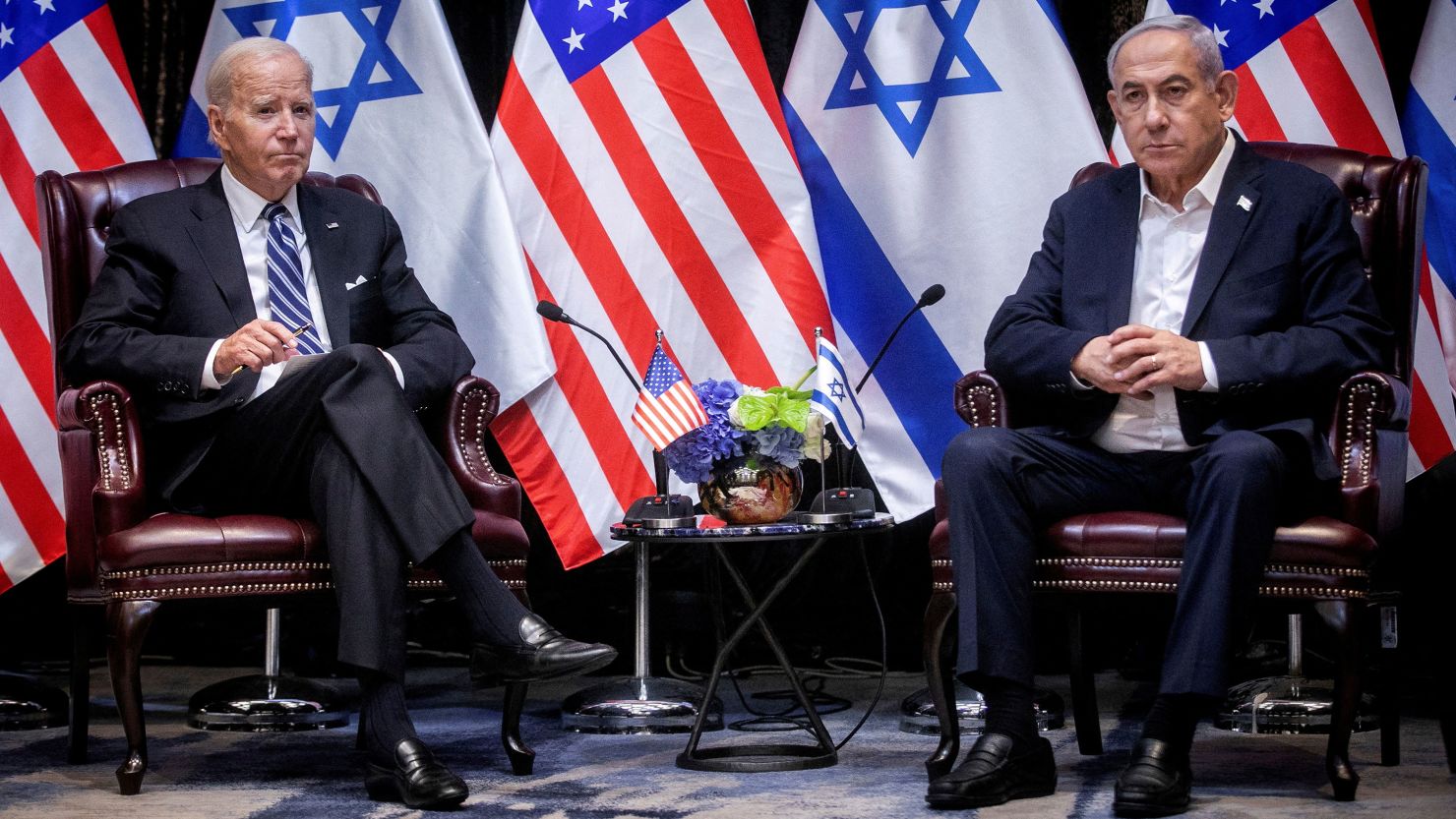
Rifts between the United States and Israel spilled into public view Tuesday as President Joe Biden warned that Israel was losing international support for its campaign against Hamas and Prime Minister Benjamin Netanyahu publicly rejected American plans for post-war Gaza.

The divides, which until now had mostly been contained behind the scenes, reflected growing differences between the two staunch allies as the civilian death toll in Gaza mounts.

Speaking to Democratic donors in Washington, Biden voiced criticism of Israel’s hardline government and said Netanyahu needed to alter his approach.

“I think he has to change, and with this government, this government in Israel is making it very difficult for him to move,” Biden said, calling Netanyahu’s government the “most conservative government in Israel’s history.”

He warned support for the country’s military campaign is waning amid heavy bombardment of Gaza and added that the Israeli government “doesn’t want a two-state solution.”

Biden said right now Israel “has most of the world supporting it,” but said “they’re starting to lose that support by the indiscriminate bombing that takes place.”

Speaking ahead of Biden’s comments at the fundraiser, Netanyahu admitted Tuesday that he and the US president disagree on what should happen to Gaza after the war. In a statement, the Israeli leader said: “Yes, there is disagreement about ‘the day after Hamas’ and I hope that we will reach agreement here as well.”

9 Israeli soldiers killed in Gaza City ambush in sign that Hamas resistance is still strong

WAFAA SHURAFA, JACK JEFFERY AND MELANIE LIDMAN

Palestinian militants carried out one of the deadliest single attacks on Israeli soldiers since the Gaza invasion began, killing at least nine in an urban ambush, the military said Wednesday, a sign of the stiff resistance Hamas still poses despite more than two months of devastating bombardment.

The ambush in a dense neighborhood came after repeated recent claims by the Israeli military that it had broken Hamas’ command structure in northern Gaza, encircled remaining pockets of fighters, killed thousands of militants and detained hundreds more.

The tenacious fighting underscores how far Israel appears to be from its aim of destroying Hamas — even after the military unleashed one of the 21st century’s most destructive onslaughts. Israel’s air and ground assault has killed more than 18,600 Palestinians, according to Gaza’s health officials. Gaza City and surrounding towns have been pounded to ruins. Nearly 1.9 million people have been driven from their homes.

The resulting humanitarian crisis has sparked international outrage. The United States has repeatedly called on Israel to take greater measures to spare civilians, even as it has blocked international calls for a cease-fire and rushed military aid to its close ally.

Israeli troops are still locked in heavy combat with Palestinian fighters in and around Gaza City, more than six weeks after invading Gaza’s north following the militants’ Oct. 7 attack.

Clashes raged overnight and into Wednesday in multiple areas, with especially heavy fighting in Shijaiyah, a dense neighborhood that was the scene of a major battle during the 2014 war between Israel and Hamas.

The Hamas Leader Who Studied Israel’s Psyche—and Is Betting His Life on What He Learned

Rory Jones, Summer Said, Dov Lieber

When Hamas leader Yahya Sinwar was imprisoned in Israel more than a decade ago, he explained to an Israeli official a theory now central to the war in Gaza.

Sinwar said that what Israel considers its strength—that most Israelis serve in the army and soldiers hold a special status in society—is a weakness that can be exploited, said Yuval Bitton, who spent time with Sinwar as the former head of the Israel Prison Service’s intelligence division.

The idea proved accurate in 2011 when Sinwar was one of 1,027 Palestinian prisoners freed for a single Israeli soldier.

Now, Sinwar is holding hostage 138 Israelis, including soldiers, and the Hamas leader is betting he can force the release of thousands of Palestinian prisoners and establish a permanent cease-fire. He’s relying on his judgment of Israeli society after two decades studying it in jail, learning Hebrew, watching the local news and getting inside the Israeli psyche.

But first, Hamas has to survive Israel’s powerful and deadly counterattack. If Hamas has miscalculated, Sinwar could be overseeing the destruction in Gaza of the U.S.-designated terrorist group—and lose his own life.

Israel Is Up Against the Clock in Its Long War With Hamas

Tom O'Connor

As Israel wages what its government says will be a protracted conflict to defeat Hamas and bring home hostages held in the Gaza Strip, an Israel Defense Forces (IDF) official tells Newsweek exclusively that the scope and length of the campaign is being influenced by growing internal and external pressure.

The comments give unique insight into the likely remaining time frame for a conflict that has dominated global headlines since Israel launched an all-out assault on Hamas that has killed thousands of Palestinians and prompted a humanitarian crisis in the Gaza Strip after the group launched an unprecedentedly bloody raid of killing and kidnap into Israel on October 7.

The war has drawn battle lines around the globe, from the United Nations to social media to college campuses and has prompted fears of a wider regional conflict. Meanwhile, U.S. President Joe Biden is under growing political pressure over his strong support for Israel as backers of a ceasefire call for an end to the Palestinian death toll in Gaza amid an endless stream of harrowing images of dead children in the rubble.

The IDF official, who spoke to Newsweek on the condition of anonymity, says the timetable for achieving the two operational goals of defeating Hamas and bringing home the hostages could be looked at through "different clocks" that are influencing the course of the ongoing campaign.

"We understand that there are a lot of different clocks that have impact on this and how fast we can go, and in kinetic ways [as well]," the IDF official says. "Can we strike extensively, which reduces some of the other clocks because it makes them go faster because of the international pressure that can come with that?

Israel and U.S. Face Growing Isolation as Deadly War in Gaza Continues With No End in Sight

NAJIB JOBAIN, WAFAA SHURAFA AND SAMY MAGDY

Israel and the United States were increasingly isolated as they faced global calls for a cease-fire in Gaza, including a non-binding vote expected to pass at the United Nations later on Tuesday. Israel has pressed ahead with an offensive against Gaza’s Hamas rulers that it says could go on for weeks or months.

The war ignited by Hamas’ Oct. 7 attack into southern Israel has already brought unprecedented death and destruction to the impoverished coastal enclave, with more than 18,000 Palestinians killed, mostly women and minors, and over 80% of the population of 2.3 million having fled their homes.

Much of northern Gaza has been obliterated, and hundreds of thousands have fled to ever-shrinking so-called safe zones in the south. The health care system and humanitarian aid operations have collapsed in large parts of Gaza, and aid workers have warned of starvation and the spread of disease among displaced people in overcrowded shelters and tent camps.

Strikes overnight and into Tuesday in southern Gaza — in an area where civilians have been told to seek shelter — killed at least 23 people, according to an Associated Press reporter at a nearby hospital.

In central Gaza, the Al-Aqsa Martyrs Hospital in Deir al-Balah received the bodies of 33 people killed in strikes overnight, including 16 women and four children, according to hospital records. Many were killed in strikes that hit residential buildings in the built-up Maghazi refugee camp nearby.

In northern Gaza, the aid group Doctors Without Borders said a surgeon in the Al-Awda hospital was wounded Monday by a shot from outside the facility, which it says has been under “total siege” by Israeli forces for a week. There was no immediate comment from the military.

Gaza, Asia, and the Crisis in Global Governance

Dustin Barter

For people living in or engaged with the Asia-Pacific, the violence in Gaza and the accompanying rhetoric are all too familiar, mirroring much of what Myanmar’s military has unleashed against ethnic minorities for decades.

Being forced to live in “open air prisons” matched by systematic dehumanization and state-backed violence are exactly what the Rohingya of Rakhine State have experienced at the hands of Myanmar’s military. The insurgent attacks by the Arakan Rohingya Salvation Army (ARSA) on August 25, 2017, triggered the military’s euphemistically called “clearance operations” that resulted in the violent displacement of over 700,000 Rohingya into Bangladesh. The military justified the atrocities as a form of self-defense aimed at protecting the nation, but the offensive was quickly labelled a “textbook case of ethnic cleansing” by the United Nations.

The international response was painstakingly slow, but it was near unanimous in its condemnation, even at the fractious U.N. Security Council. By 2022, the United States had declared the military’s actions as genocide.

Israel is now deploying a similar dehumanizing discourse about Palestinians as it begins “ground operations” that, following the forced displacement of over 1.4 million people, are strikingly similar to the Myanmar military’s “clearance operations” against the Rohingya. While this should result in a similar level of condemnation, the international response could not be more different. This has major implications for the Asia-Pacific and for global governance writ large.

A growing body of commentary and analysis is highlighting the jarring double standards in the international, predominantly Western, response to Israel’s actions. Comparisons are being drawn with Ukraine, both in terms of political action and media portrayals, and how this relates to the dehumanization of Palestinians. What are painted as innocent civilians in the former case have become collateral damage in the latter.

Don’t Overestimate India’s New Middle East Strategy

Kadira Pethiyagoda

Much of the commentary on Indian Prime Minister Narendra Modi’s unprecedentedly pro-Israel response to the Oct. 7 Hamas attack has overestimated the extent of deviation from India’s traditionally nonaligned and slow-evolving Middle East policy. Modi’s response came after the largest attack on Israel in decades and was made prior to major Israeli retaliation. Furthermore, soon after Modi’s initial statement, and later through its external affairs minister, India issued more balanced statements,