Nakissa Jahanbani, Caleb Benjamin, Robert Fisher, Muhammad Najjar, Muhammad al-'Ubaydi, Benjamin Johnson
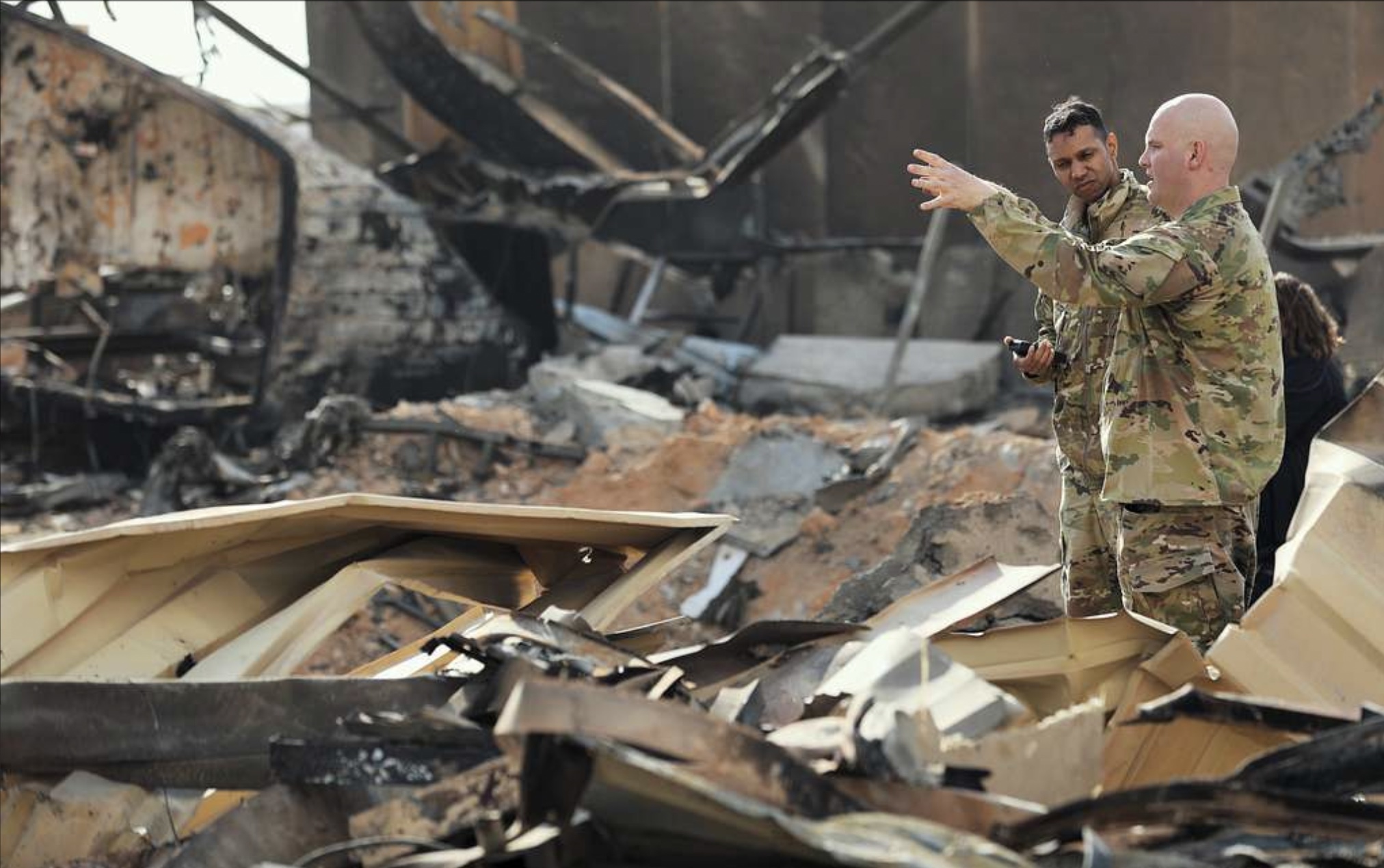
But perhaps most immediately worrying for the U.S. are Iranian-backed militias’ drone and rocket attacks on U.S. installations in Iraq and Syria. As of this writing, according to the Department of Defense, there have been at least 97 attacks on U.S forces in Iraq and Syria since the uptick in attacks began following the explosion at al-Ahli Hospital in Gaza on Oct. 17. While the Pentagon indicated there was a pause in attacks during the temporary cease-fire in Gaza, the tempo has increased again since the cease-fire ended on Nov. 30.
Behind these strikes are two sets of actors with two distinct sets of goals. Iran is using its proxies’ attacks to signal to the U.S. and Israel that it is capable of expanding the conflict. By urging its proxies to attack, Iran also seeks to maintain and bolster its legitimacy among the proxies as the principal anti-Israel and anti-U.S. power in the region. Iranian-backed militias are answering the call to prove to Iran they are a worthwhile proxy and to signal to their local constituencies that they represent their interests and have the requisite military capacity to do so effectively. These proxies are also shrewd political actors, attempting to use the attacks to advance their independent political objectives—such as expelling U.S. troops from the region.
It’s worth noting this is not the first time Iranian-backed attacks on U.S. installations in Iraq and Syria have been used for political signaling. For instance, in April 2021, there were a series of attacks on logistic convoys and Balad Air Base in the lead-up to a meeting of the U.S.-Iraq Strategic Dialogue. In December 2018, an attack came a day after then-President Trump’s visit to the U.S. al-Asad Air Base. Similar attacks in the past five years or so have been purposefully limited in lethality and aimed primarily at political signaling, so as to not provoke a major U.S. response. By comparison, some attacks from a decade earlier during the U.S.-Iraq war, such as the 2007 Karbala attack, appear to have had the primary aim of causing U.S. casualties.