23 March 2024

Why China’s Ambitious Agenda Could Fail in 2024 - Opinion

Ashton Ng

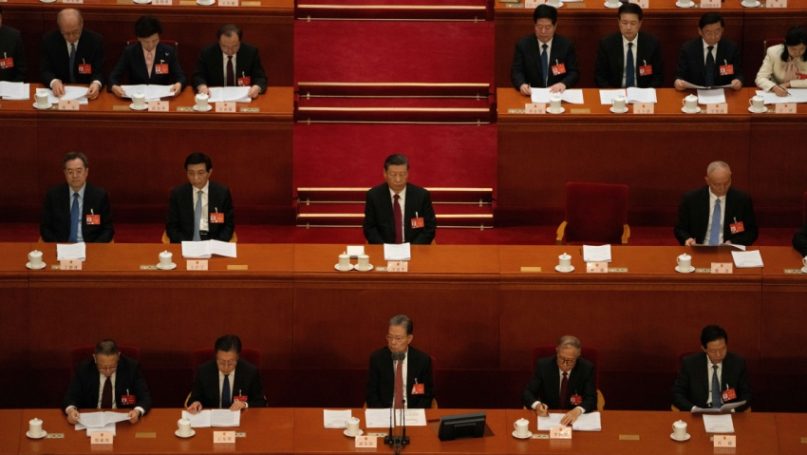
At the National People’s Congress on March 5, Premier Li Qiang presented China’s government work report, which trumpets the country’s achievements over the past year and sets an ambitious agenda for 2024. However, implementing this agenda may prove difficult, especially as China grapples with a range of economic, social, and geopolitical challenges.

On the economic front, the report celebrates China’s 5.2% GDP growth in 2023, but acknowledges that the “foundation for China’s sustained economic recovery and growth is not solid enough,” given weak demand and overcapacity. Although China avoided economic catastrophe in 2023 whilst exiting its strict “zero-COVID” policies, the report acknowledges that “Risks and potential dangers in real estate, local government debt, and small and medium financial institutions were acute in some areas.” For 2024, China targets GDP growth of around 5% and over 12 million new urban jobs. However, the only new measure announced was “ultra-long special treasury bonds” issued over several years, offering one trillion yuan in 2024 for national development. Amid a real estate downturn, sluggish consumer spending, and a slowing global economy, the government seems to have no new ideas to spur domestic demand without resorting to the debt-fueled building sprees of the past.

The report emphasizes scientific and technological innovation—from new energy vehicles to semiconductors and AI—but concedes that China’s capacity in these critical domains “needs to be further improved.” Previous state-led efforts to build up domestic tech champions have yielded mixed results, with tens of billions squandered on unproductive investments. Furthermore, the report’s rhetoric on technological self-reliance portends continued tensions with the West. As both sides pursue decoupling, there are risks of inefficient duplication, trade and investment restrictions, and technological fragmentation.
China's New KJ-600 Surveillance Plane Expands Maritime Targeting

KRIS OSBORN

Surveillance at sea beyond the horizon, if properly networked, can not only save lives in maritime warfare by “seeing” threats at greater stand-off ranges, enabling more time for defenses, countermeasures or counterattack, but also conduct offensive targeting and attack missions to “find,” “verify,” and “destroy” otherwise unreachable enemy targets.

This is the Concept of Operation informing the US Navy’s continued maturation and deployment of its famous carrier-launched E-2D Hawkeye. While the Hawkeye has for years functioned as an early warning surveillance plane engineered to “detect” and “see” potential threats, in more recent years the US Navy has leveraged technological advances to evolve the E-2D into a flying command and control node as well. In a tactical sense, this means the surveillance aircraft can increasingly network with fighter jets, surface ships, drones and even satellites in near real time with an ability to gather, process and disseminate time-sensitive high-value combat data.

Biden May Not Have Enough Rope To Push His Vision Of The Middle East – Analysis

James M. Dorsey

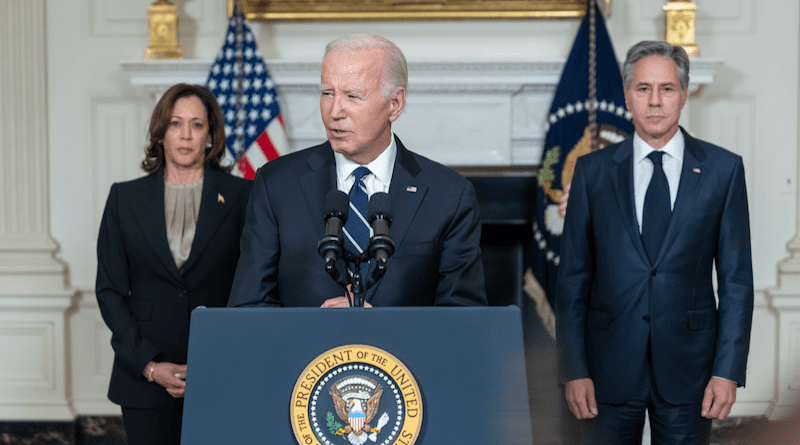
This year’s US presidential elections are not the only potential hurdle confronting President Joe Biden’s multi-pronged vision for a Middle East peace once the Gaza war ends.


The Biden administration is pushing for a multi-pronged comprehensive Middle East deal that would not only end the war in Gaza but also produce a resolution of the Israeli-Palestinian conflict.

The deal would involve a reformed Palestine Authority governing Gaza and the West Bank, a credible pathway to an independent Palestinian state alongside Israel, and Saudi recognition of the Jewish state.

The plan doesn’t lack ambition but the odds of all the pieces coming together are almost insurmountable, certainly in the time left until the November US election, even if Saudi Arabia has bought into the concept, albeit with a high price tag.

Assuming the price is right, Saudi Arabia is interested in cutting a deal while Mr. Biden is in office. The kingdom is not sure that a second Donald J. Trump presidency would meet Saudi demands, particularly its insistence on a legally binding defense agreement with the United States.

Despite his catering to the Saudis during his presidency, Mr. Trump turned the moment the kingdom needed US assistance into a business opportunity.

In response to Yemeni Houthi attacks in 2019 on Saudi oil facilities that temporarily knocked out 50 per cent of the kingdom’s oil production capacity, Mr. Trump described the incident as a Saudi, not an American problem, and offered to retaliate on behalf of the Saudis if they were willing to foot the bill.

Vital Yet Vulnerable: Undersea Infrastructure Needs Better Protection

Henri van Soest and Harper Fine

On Monday, March 4, the Seacom, TGN-Gulf, Asia-Africa-Europe 1, and Europe India Gateway submarine cables in the Red Sea were cut, affecting 25 percent of data traffic flowing between Asia and Europe. The incident is currently under investigation, as officials try to determine if it was deliberate or accidental. While it is plausible that the incident is an extension of the attacks by Houthi rebels on international shipping, they have so far denied any involvement. This disruption highlights the vulnerability of critical subsea infrastructure, which are some of the most important assets to modern economies.

The seabed hosts a large number of subsea cables and pipelines that provide several different services to modern digital society. For example, while satellites get all the fame for helping modern humans talk to one another, more than 97 percent of the world's telecommunications are transmitted through cables beneath the sea that are thousands of kilometres long. These cables also play a vital role in supporting financial services, as they carry almost £8 trillion in financial transactions every day.

The seabed also supports the energy needs of our economies: amidst efforts to reduce European reliance on Russian exports, for example, the North and Mediterranean Seas' oil and gas pipelines play a particularly important role in safeguarding access to energy. European countries are also connected through subsea electricity cables. For example, as an island nation the United Kingdom already has electricity interconnectors to France, the Netherlands, Belgium, Ireland, and Norway, with planned connections to Denmark, Germany, and even Morocco. These interconnections make it possible to transfer electricity between countries, which makes it easier to match the supply and demand of electricity.

Tom Friedman’s strange case for a US military presence in Syria

STEVEN SIMON

An iconic New York Times columnist, Thomas Friedman, has just been squired around the Middle East by the commander of Central Command, the U.S. military headquarters for operations in the Middle East, Persian Gulf and North Africa.

Now, don’t get me wrong, the military and American journalists have cultivated symbiotic relations since the Civil War. It’s in the nature of things. The press needs access, and the military needs public and congressional support. Quality time shared by the top U.S.military officer for this volatile region and the top foreign affairs columnist for the nation’s top broadsheet makes sense.

Among their whistlestops were U.S. installations in Syria. About 900 American troops are there, distributed in penny packets among seven bases. Some of these protect oil fields that supply U.S.-backed Kurdish authorities; others are in the far northeast, where they assist Kurdish units, help secure and supply the cluster of camps that house ISIS prisoners and their families and continue to hunt ISIS fighters; and still others in the southeast, at a road junction where the Iraqi, Syrian and Jordanian borders meet. This base was set up to interdict Iranian-backed forces attempting to entrench themselves in Syria and transport supplies to Lebanon.

In Friedman’s recap of this visit, he explained that the importance of these U.S. deployments lay in the need to fight the terrorists over there so we would not have to fight them over here.

Let’s say, for the moment, that there are several other rationales for maintaining troops in Syria. Iran, for example, does seek to use Syria as a land corridor to Lebanon and the Israeli-Syrian border, from which it can carry the fight to its enemy. Iran is 1,200 kilometers from Israel, so if it wants to reach out and touch someone without using ballistic missiles, it needs to be on Israel’s borders. Rendering this a bit more difficult than it might otherwise be makes a regional blow-up marginally less likely.

Ukraine gets first M1117 wheeled armored vehicles

Dylan Malyasov

Ukraine has finally showcased the recently received M1117 Armored Security Vehicles (ASVs) promised by the United States in 2022.

According to reports by Militarnyi, Ukrainian Soldiers shared footage showing the American-made M1117 wheeled armored vehicles, believed to have been captured during training exercises at one of Ukraine’s training ranges.

The supply of these ASVs comes as part of the US government’s commitment to providing additional security assistance to Ukraine under the Ukraine Security Assistance Initiative (USAI). The $400 million military aid package announced in November 2022 included the supply of 250 refurbished M1117 ASVs among other equipment and support.

Manufactured by Textron Marine & Land Systems, the M1117 ASV, also known as the Guardian, is a 4×4 armored vehicle designed to offer enhanced protection against mine threats and small arms fire. It has been deployed by the US military in conflict zones such as Iraq and Afghanistan since its adoption in 2001.

Featuring a modular expandable armor package from IBD Deisenroth Engineering, the M1117 offers robust protection for its crew and passengers against various threats, including improvised explosive devices (IEDs).

Equipped with a one-man turret armed with a 40mm automatic grenade launcher and a .50-caliber machine gun, the M1117 provides firepower support while maintaining maneuverability and versatility on the battlefield.

French government hit with cyberattacks of ‘unprecedented’ intensity

ANTOANETA ROUSSI

Several French government departments have been experiencing a series of cyberattacks in the past day, with the government activating a crisis unit to deal with the attack.

According to the prime minister's office, the impact has now been reduced and access to some government websites was “re-established,” but the attacks are still ongoing.

“Since [Sunday], several government departments have been the subject of cyberattacks whose technical methods are conventional but the intensity unprecedented,” the prime minister’s office said in a statement. “Many ministerial services have been targeted," it added.

Teams mobilized from the interministerial digital affairs department DINUM and France’s cybersecurity agency ANSSI continue to fend off the attacks, added the prime minister’s office.

It is still unclear who is behind the attacks. Pro-Russian hacker group Anonymous Sudan claimed responsibility for "a massive cyberattack" on the infrastructure of the French Interministerial Directorate of Digital Affairs on their Telegram channel.

The group has been behind a series of politically motivated "distributed denial-of-service" attacks (DDoS), in which massive amounts of internet traffic are directed at websites and services, causing them to go offline. The attacks in themselves do not constitute a breach of IT systems but can seriously disrupt communications and services, and are sometimes conducted in parallel with attempts to hack into systems.

Ukraine war: The sea drones keeping Russia's warships at bay

Abdujalil Abdurasulov

It was a dark night when the attack happened. Ukrainian drones were approaching fast through the water.

By the time the crew of the Russian patrol ship Sergey Kotov saw them, it was too late. Russian sailors opened fire with heavy machine guns, but their ship was hit and destroyed.

Ukrainian sea drones have revolutionised naval warfare over the last few years, relentlessly hunting down Russian ships in the open sea and even at naval bases.

Group-13, a secretive unit of Ukraine's military intelligence agency, was behind the Sergey Kotov attack last week, and the BBC has been given rare access to its operations.


Since it was set up last year, the unit says it has sunk five Russian vessels and damaged others. But its commander, who asked us to refer to him by his call sign, Thirteenth, says the Sergey Kotov was the most difficult target so far.

Group-13 had attacked and damaged the ship twice in the past, but only managed to sink it on the third attempt.


Ministry Of Defence Of UkraineFootage released by Ukraine purported to show the Sergey Kotov being sunk by drones.

The Age of Aircraft Carriers for the Royal Navy Is Over

Brandon J. Weichert

Summary: The ambition to restore Great Britain's naval prowess has led to significant strategic missteps, notably the construction of the HMS Queen Elizabeth and HMS Prince of Wales aircraft carriers. Despite the historical pride and efforts to regain maritime dominance, the reality of Britain's post-imperial status and economic limitations has starkly contrasted with its aspirations. The Royal Navy, once the embodiment of British global power, now grapples with budget constraints that hinder its ability to fully equip and support these carriers, compromising other vital naval capabilities.

When she vowed to put the “great” back in “Great Britain,” Lady Margaret Thatcher was presiding over a post-imperial Britain in transition from her position atop the international system to a new place, a lesser location, somewhere in the middle. Back in the 1980s, when Thatcher reigned, Britain could still go through the motions of being relevant.

But it was purely superficial.

Since 1945, and certainly following the Suez Canal Crisis, Britain’s days as a dominant world power were over.

The best she could do was to nestle alongside another greater power and seek to behave as the equivalent of a remora on the body of a shark.

Even when Thatcher surprised her American allies and resisted Argentina’s attempts to seize the Falkland Islands, there was much concern among Thatcher’s own military leadership, because the British military had been so thoroughly gutted by 50 years of decolonization and national economic failures. The Falklands, though, were more like Britain’s last hurrah, rather than a revitalization.

Whither the Monroe Doctrine?

Joseph A. Ledford

As an immigration bill languishes in Congress, President Joe Biden and former President Donald Trump’s simultaneous appearances at the U.S.-Mexico border heightened the salience of border security. The border crisis has yielded an unprecedented number of asylum seekers and migrants from across the globe, making it one of American voters’ top concerns. However, despite the regional issue absorbing the public’s attention, the United States is not fully executing a strategy for building security in the Western Hemisphere.

From a historical vantage point, the lack of a proactive strategy for securing the Western Hemisphere is disorienting. Since the republic’s founding, the United States has strived to preserve regional stability and prevent foreign powers from intervening in Western Hemisphere affairs. This aim, famously codified in the Monroe Doctrine, has resulted in infamous excesses and resounding successes. Nevertheless, the past fifteen years of inattention have nearly undone over two centuries of consensus at a dangerous time.

America’s adversaries have noticed the neglect. To varying degrees, the despotic quartet of China, Russia, Iran, and North Korea have increased their influence in the region. Most significantly, China has pursued diplomatic, economic, and military ties with Latin American countries at an alarming rate. It has become the top trading partner for South America by signing up twenty-two countries for the Belt and Road Initiative and constructing dual-use facilities, not to mention exporting fentanyl precursor chemicals to Mexico.

In addition to trading with democratic countries, Russia maintains close security ties with Cuba, Nicaragua, and Venezuela, the autocratic trio perennially opposing the United States in the region. In February, Russia thwarted a security assistance package to Ecuador, using its influence to great consequence for both South America and Europe. Under the agreement, Ecuador would have received American weapons for President Daniel Noboa’s campaign against gangs in exchange for old Soviet-made weapons that the United States would send to Ukraine for its defense against a Russian invasion. After Russia banned Ecuadorean bananas imports, jeopardizing the $800 million Russian market, Noboa canceled the deal.

Will U.S.-Turkey Relations Survive the Wars in Gaza and Ukraine?

Ali Mammadov & Riccardo Gasco

Turkey and the United States are facing substantial challenges in their bilateral relations amid the ongoing Russia-Ukraine and Israel-Hamas wars. On the one hand, the alliance has been strained by these conflicts. On the other, it also opened new windows of opportunity and cooperation. As both countries deal with these challenges, the upcoming presidential elections in the United States loom large, potentially reshaping the path of their relationship. Within this framework dominated by uncertainty, the major question that still needs to be answered is how Turkey and the United States will handle these difficult times and sustain their relationship.

When discussing bilateral relations between Turkey and the United States, a popular topic is the extent to which Ankara is drawing closer to Russia and distancing itself from the United States. But is this the case? The beginning of 2024 has marked a remarkably positive phase for Turkey-U.S. relations after several challenging years. The long-awaited approval of Sweden’s NATO membership was quickly followed by the announcement that the United States would sell F-16s to Turkey in a $23 billion deal. Canada also promptly lifted a series of arms embargoes against Turkey.

During a visit to Ankara, Acting Deputy Secretary of State Victoria Nuland went even further by stating, “Should Turkey be able to resolve our concerns about the S-400, then there could be a restoration of movement into the F-35 program.” These moves illustrate that for Ankara, concerns regarding the Kurdistan Workers’ Party (PKK)’s presence in Sweden were not as pressing as lifting the embargoes on arms exports.

Nuland’s statement, made at a particularly complex time for European and NATO security, indicates how the Biden administration has taken several steps to de-escalate and improve relations with Turkey. This occurred even though Biden was the only president not to officially extend an invitation to the White House over Erdogan’s two decades in power. Despite the ongoing issue of the S-400 missiles purchased from Russia remaining a significant thorn in bilateral relations, the recent bipartisan visit by two U.S. Senators signals the intention of the United States to mend ties with Ankara. 

How should Israel bring to justice the perpetrators behind the worst attack in its history?

TIA GOLDENBERG

Hamas’ unprecedented raid on southern Israel has prompted a legal predicament: How does a country scarred by the deadliest attack in its history bring the perpetrators to justice?

Israel is holding hundreds of Palestinians from Gaza accused of taking part in the Oct. 7 attack that sparked its war with Hamas. It is grappling with how to prosecute suspects and offer closure to Israelis, including victims’ families.

None of the available legal options seem to fit.

Mass criminal trials could overwhelm Israel’s already sluggish courts. An ad hoc war crimes tribunal established under Israel’s far-right government could lack credibility. Freeing the suspects as part of a deal to release hostages held in Gaza would trouble many traumatized Israelis.

“They slaughtered, raped, looted and were caught red-handed,” said Yuval Kaplinsky, a former senior official in the Israeli Justice Ministry. “There is no silver bullet here for how to try them.”

Rights groups say the longer Israel takes to decide the right legal path, the longer suspected perpetrators languish in poor conditions and with no known contact with the outside world. At least 27 Palestinians from Gaza have died in Israeli custody since the war began, according to Israeli figures.

HOW DOES ISRAEL HANDLE PALESTINIAN SUSPECTS?

Israel has long contended with legal issues surrounding Palestinian suspects — and has long been criticized for its approach. It regularly uses a measure called administrative detention to hold Palestinians without charge or trial.

The U.S. Navy Needs to Stop Building Aircraft Carriers

Brandon J. Weichert

Summary: The US Navy faces a strategic crisis due to the rise of anti-access/area-denial (A2/AD) capabilities by adversaries like China, Russia, Iran, and North Korea. These developments challenge traditional naval power projection, particularly the effectiveness of aircraft carriers in such contested environments. To adapt, the Navy needs to embrace a new force posture focusing on stealth, submersibles, directed energy weapons, drones, and hypersonic weapons. Despite this, investment continues in aircraft carriers, overlooking the strategic advantage of submarines, especially in potential conflicts over Taiwan or the South China Sea. The Navy's current acquisition strategy, favoring expensive carriers over versatile and stealthy submarines like the Virginia-class, is criticized for not aligning with modern warfare needs. This approach risks the Navy's ability to counter A2/AD strategies effectively and calls for a shift in priorities towards more relevant and cost-effective platforms and technologies.

The US Navy is in a real crisis and they might not even realize it. Having spent decades obsessed with the aircraft carrier, the Navy appears to not have internalized the fact that America’s foes were developing capabilities to stunt the Navy’s power projection capabilities into the backyards of their rivals.

This has been especially true with China, which probably leads the world in what we know as “anti-access/area-denial” (A2/AD) capabilities. Russia, Iran, and North Korea are likely right behind China with their A2/AD systems, too.

What this means is that the Navy has no choice but to fundamentally rethink its entire force posture and the way that it fights. No longer able to move its assets within physical range of potential targets, the Navy needs to learn to leverage stealth, submersibles, directed energy weapons (DEW), drones, and hypersonic weapons together into one seamless strike package; a sort of pin to pierce the bubble that A2/AD systems create around the regions they are deployed to.

Top US General Tries to Reassure Defense Industry of Predictability Amid Stalled Ukraine Aid

Anthony Capaccio

The top US military official got a whirlwind tour of a Lockheed Martin Corp. plant as the Pentagon attempts to assure contractors that it will provide predictable signals while it seeks more funding to send weapons to Ukraine.

General Charles Brown, the chairman of the Joint Chiefs of Staff, traveled to Camden, Arkansas, to visit the 308,000-square-foot facility, which produces the HIMARS mobile rocket.

North Korea launches 3 short-range ballistic missiles off its eastern coast

DAVID CHOI AND HANA KUSUMOTO

South Korea — North Korea fired three short-range ballistic missiles off its eastern coast Monday morning, according to Japanese and South Korean authorities.

The weapons were launched between 7:44 a.m. and 8:22 a.m. from Sangwon county in North Hwanghae province, the South’s Joint Chiefs of Staff said in a text message to reporters. They flew more than 185 miles before splashing down in the Sea of Japan, also known as the East Sea.

A news release from Japan’s Ministry of Defense said North Korea fired three ballistic missiles to a maximum altitude of 30 miles and all three fell outside Japan’s exclusive economic zone.

The South Korean military has strengthened its surveillance capabilities in preparation for additional launches and will work closely with U.S. and Japanese authorities to analyze them, the Joint Chiefs said.

The Japanese Coast Guard issued an alert Monday morning about a possible ballistic missile launch and advised ships in Japanese waters to avoid fallen objects but to report anything found.

Tokyo “strongly protested and strongly condemned” North Korea’s actions, the defense ministry said.

“Actions by North Korea, including its repeated launches of ballistic missiles, threaten the peace and security of Japan, the region, and the international community,” the release said. “Furthermore, such ballistic missile launches violate relevant [U.N.] Security Council resolutions and are a serious issue concerning the national safety.”

North Korea’s last ballistic-missile launch, a solid-fuel intermediate-range weapon on Jan. 14, flew around 620 miles before falling into the Sea of Japan. The communist regime fired 24 ballistic missiles, five of them intercontinental range, last year.

From Jan. 5-7, Pyongyang fired around 350 artillery shells toward its southern maritime border, according to South Korea’s military. The North also launched several cruise missiles over a 10-day span starting Jan. 24.

Secretary of State Antony Blinken arrived in South Korea on Sunday to attend the Summit for Democracy in Seoul and meet with South Korean President Yoon Suk Yeol and Foreign Minister Cho Tae-yul on Monday, according to a news release from the Ministry of Foreign Affairs.

During his meeting with Yoon, Blinken reiterated that Washington will stand with Seoul and develop a “firm response to North Korean provocations,” according to a news release from the South Korean presidential office.

Monday’s launch comes four days after U.S. and South Korean troops wrapped up their 11- day Freedom Shield exercise. The militaries described the large-scale training held SUBSCRIBE throughout South Korea as defensive in nature; however, North Korea’s state-run media labeled it a rehearsal for an invasion.

Top Hamas commander killed in Israeli airstrike

ELLEN MITCHELL

Israel killed Hamas’s No. 3 commander in an airstrike last week, White House national security adviser Jake Sullivan told reporters Monday.

“Israel has made significant progress against Hamas. They’ve broken a significant number of Hamas battalions [and] killed thousands of Hamas fighters including senior commanders. Hamas’s number three, Marwan Issa, was killed in an Israeli operation last week,” Sullivan said, adding that the remaining top leaders “are in hiding likely deep in the Hamas tunnel network.”

Issa, the deputy of Mohammed Deif, head of Hamas’ military division, helped plan the Oct. 7 attack against Israel, the Israel Defense Forces claimed last week.

Sullivan’s comments came as he relayed a call earlier Monday between President Biden and Israeli Prime Minister Benjamin Netanyahu, in which the two discussed Israel’s plans for Rafah.

During the call — the first in weeks between the two leaders amid mounting tensions over Israel’s handling of its war in Gaza — Netanyahu agreed to send senior officials to Washington, D.C., this week to discuss potential military plans in Rafah.

Israel has indicated it will soon launch a major operation in the city, where more than 1 million Palestinian civilians have sought refuge since the start of the war in October. The city also serves as the primary entry point for humanitarian assistance into Gaza from Egypt and Israel.

How to better study—and then improve—today’s corrupted information environment

Sean Norton, Jacob N. Shapiro

Social media has been a connector of people near and far, but it has also fueled political conflict, threatened democratic processes, contributed to the spread of public health misinformation, and likely damaged the mental health of some teenagers. Given what’s come to light about these platforms over the last several years, it is increasingly clear that current guardrails—both government regulations and the companies’ internal policies—aren’t sufficient to address the issues plaguing the information environment. But for democracies and their citizens to thrive, a healthy virtual ecosystem is necessary.

To get there, experts need an international effort to link policymakers to research by gathering, summarizing, and distilling relevant research streams. Two such initiatives, the International Panel on the Information Environment and the proposed International Observatory on Information and Democracy, have begun working towards that goal. Both are inspired by the Intergovernmental Panel on Climate Change (IPCC), a multinational organization that elects a scientific bureau to conduct evaluations of climate research and create policy recommendations. Since its founding in 1988, the IPCC has firmly established the anthropogenic origin of climate change and provided policy recommendations that formed the basis of two major international agreements, the Kyoto Protocol of 1997 and the Paris Agreement of 2015. Policymakers and researchers have called for similarly structured efforts to create research-informed, globally coordinated policies on the information environment.

For such efforts to work, though, they have to able to draw on a well-developed research base. The IPCC’s first report, written from 1988 to 1990, capitalized on decades of standardized measurements and research infrastructure, including atmospheric carbon dioxide monitoring, sophisticated measurements from weather balloons and meteorological satellites, and 16 years of satellite imagery of the Earth’s surface.

Is the World Ready for the New Era of Deterrence?

Stephen Cimbala & Lawrence J. Korb 

The twenty-first century will challenge the concept of deterrence in new ways. Some are already apparent. There are at least nine important components of the new metaverse for deterrence (or meta-deterrence) that will be significant for military planners, policymakers, and theorists.

The first component of the new metaverse for deterrence is the growing threat to states’ cybersecurity and the possibility of cyberwar. Cyberwar among state and non-state actors is already a significant challenge to international security. Cyberattacks occur as solo excursions or as supplements to the kinetic use of force. Both the public and private sectors are vulnerable to cyberwar, and the possibility of a crippling attack against American infrastructure, including military forces and command systems, requires constant vigilance and upgrades to information systems. In the case of nuclear deterrence, a nuclear first strike would probably be preceded by cyberattacks against the opponent’s early warning, command-and-control, and response systems in order to introduce confusion or paralysis that could delay or forestall an effective response.

Second, military uses of space and the ability to deny space superiority to potential U.S. adversaries will become primary concerns for the Defense Department. Partnerships between the U.S. government and high-end defense contractors are already exploring ways to increase the reliability and resilience of space-based and space-dependent systems for reconnaissance and surveillance, communications, early warning, command-and-control, and other functions. Both Russia and China have tested satellites for rendezvous and proximity operations (RPO) in various orbits, ostensibly for the inspection and repair of friendly satellites, but also capable of close inspection or destruction of adversaries’ systems if so tasked. U.S. options for increasing the resilience of orbital platforms include the proliferation of numerous smaller satellites in critical orbits, equipping satellites with defensive measures (including stealth and maneuverability), and developing offensive capabilities for responding to perceived threats. Legal issues arise with respect to whether an attack on critical mission satellites for national defense is tantamount to an attack on the American homeland or other vital military assets.

22 March 2024

Bangalore Water Crisis: Marginal pricing of water, subsidies to poor may curb water woes

ANUPAM MANUR

Barely a few days into summer and there are already reports of Bangalore facing a severe water crisis. Groundwater is depleting and borewells are running dry. The price charged by private tankers have doubled. Some apartment complexes and RWAs are already rationing water and cutting off water supply to households for a few hours in the daytime. Meanwhile, the state government has decided to nationalise all private water tankers in the city.

This is a complex problem with multiple causal factors – geography (Bangalore is situated far away from any naturally occurring water body), weather (weak southwest monsoons), and mismanagement. Mismanagement takes the shape of encroachment and building property on lake beds, failure to enforce rainwater harvesting systems, not providing piped water supply to peripheral areas, and unabated exploitation of ground water.

Grossly Underpriced

In the discourse on Bangalore’s water crisis, while many causes and potential solutions are strewn about, pricing of water does not attract attention. At the heart of it, the water crisis is a demand and supply problem. There is excess demand and less supply and unfortunately, water is criminally underpriced in our cities.

Water maybe a free gift of nature, but that is only if you live near the water source. For most of us living in dense urban areas, it taken an enormous amount of resources to deliver water from the source to the taps in our homes. Thus, potable drinking water is an economic good, which comes at a cost.

India’s Civilizational Imagination of Southeast Asia

Udayan Das

A substantial amount of India’s international thought engages with the idea of the Indian civilization (Mawdsley, 2023). Statist perceptions and usage of civilization as a category need not overlap with the academic study of what constitutes a civilization. Rather statist imaginations of civilizations are contingent, constructed and deeply political. Civilizational imaginations are contingent as they change and evolve with time depending on who is constructing them. For instance, the state in India has so far oscillated between a Nehruvian and a Hindutva understanding of the Indian civilization (Chatterjee & Das, 2023). While both these imaginations agree on India’s civilizational greatness reserving a rightful place in the world order, their understanding of what consists of the Indian civilization is different. It is precisely because they are constructed that they are termed to be imaginations. There is no one authoritative account of a civilizational past which is pure. Therefore, a civilizational past is refashioned and popularized selectively owing to the needs of the present. Statist usage of civilization is inherently political. It is curated and projected by political elites. It serves a political identity. It is the political calculation that propels civilizational projects to be created at certain junctures, in some cases, inflated and in other cases consciously toned down. Consider a counter proposition: if all civilizational arguments are predicated on a usable past, notwithstanding the prominence of a civilization, all states would have raised civilizational arguments. All states are historical entities and they are products of the past where they belong centrally to a civilization or attached to one. However, only some states raise civilizational arguments. The question beckons: what makes a state actively shape a past into civilizational imagery? It depends on the projected audience and the prevailing context. This is supplemented by the political will, capability and machinery that propels a civilizational imagination in public memory and imprinted into policy making.

Civilizational arguments of a state are projected at two levels – state actors and people, both domestic and international populace. For the domestic audience, civilizational underpinnings may invoke a sense of identity to relate to the community and the state. This may be enacted in multiple forms ranging from pedagogy to political campaigning. They are useful in creating a sense of national identity that is historical. They are easy to convey to the masses as they come in the language, metaphors and folklore that the people are well versed with. However, any project of mobilization runs the risk of including some and excluding others. While the boundaries of a civilizational are more fluid than a nation-state, civilizational metaphors deploy similar tropes of the insider-outsider as the civilized and barbarian. Civilizational projects can be corrosive if the barbarians of the past are found within the territory of the present. For the international audience, civilizational arguments can be couched in terms of soft power to wield attraction. This can be carried out through modes of public diplomacy. The other state actors in the international system are another set of stakeholders. Civilizational arguments may be used to invoke respect, solidarity or hierarchy between states. This depends on how the civilizational arguments are conveyed by a state and how they are received by the other states in concern. Take, for instance, the objective of status and prestige that the Indian state seeks to achieve by using its civilizational past to create an image of a rule-abiding and responsible power. India’s civilizational claims have contrarily also created fears of hierarchy and cultural hegemony through the expression of Akhand Bharat in South Asia since the ascendancy of the Hindu Right.

Pakistan Navy gets its first spy ship, courtesy China

Vikrant Singh

Pakistan Navy has inducted its first research vessel, or spy ship, with assistance from China in an attempt to counter the growing muscle of the Indian Navy. The 87m-long PNS Rizwan is understood to be Pakistan’s answer to India’s INS Dhruv; however, it’s much smaller than the 175-metre-long marine beast, packed with long-range radars, dome-shaped tracking antennae, and advanced electronics.

INS Dhruv was inducted into the Indian Navy in 2021 with capabilities to track nuclear missiles and gather intelligence. Vessels like these play a crucial role in modern-day warfare.

By inducting PNS Rizwan, Pakistan has joined an elite list of nations that operate such ships, including India, France, the US, the UK, Russia, and China.

China’s ‘Pakistan card’

Experts say China wants to boost its interests in the Indian Ocean Region by reinforcing a crucial ally like Pakistan.

“This modernisation effort of Pakistan is supported by China aligning with its strategic interests in the Indian Ocean Region, with aims to enhance the capabilities of a crucial ally,” said open-source intelligence expert Damien Symon on X.

Six more years of Putin will worry many countries. But not China

Simone McCarthy

For leaders across the West, Vladimir Putin’s inevitable landslide win in an election without true opposition was a reminder of his tight control over Russia’s political arena as his war against Ukraine grinds on.

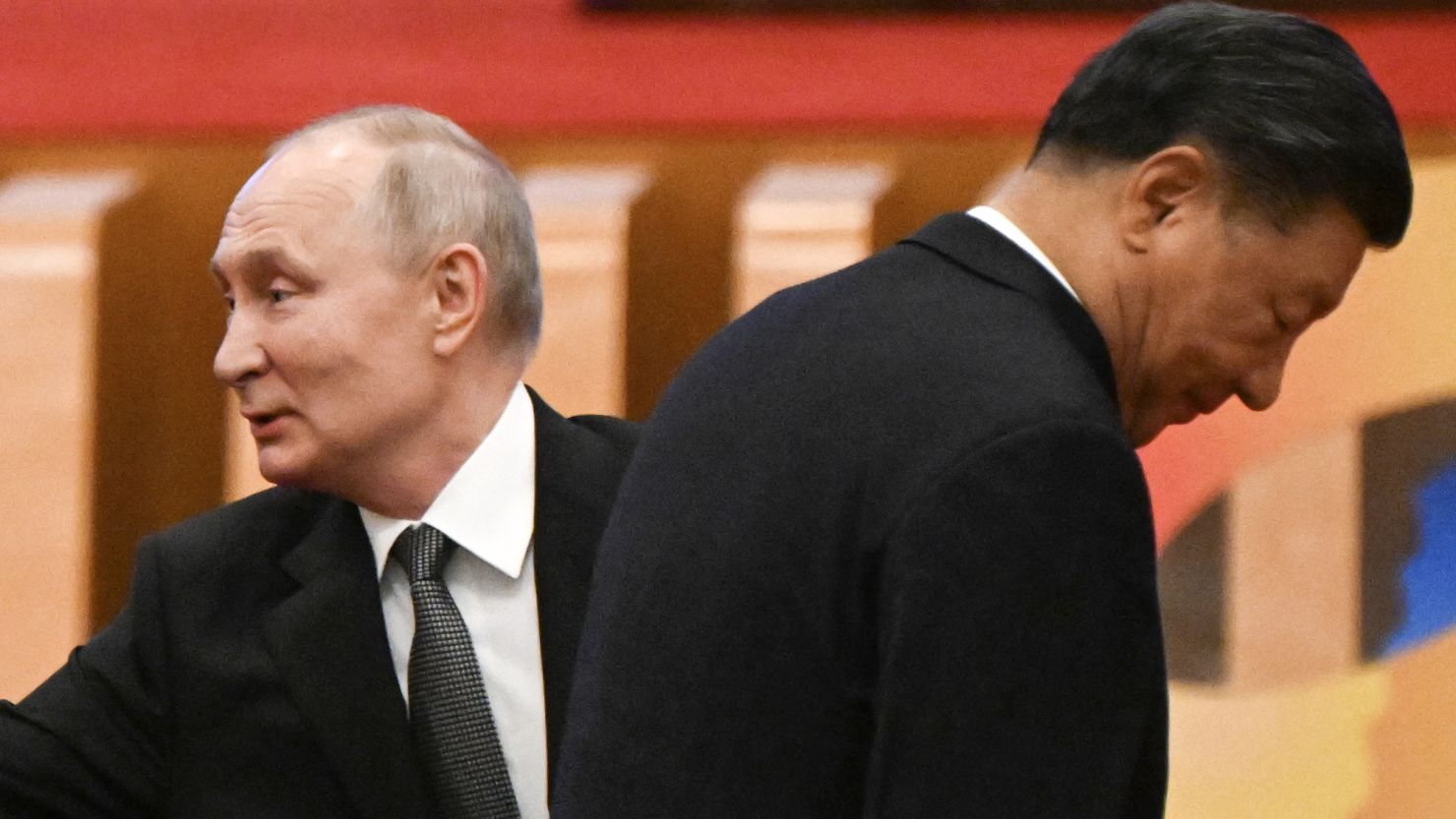
But Chinese leader Xi Jinping, and other leaders benefiting from Putin’s rejection of a Western-led global order, will be cheering his victory.

With 99.8% of ballots counted, Putin amassed 87.3% of the vote, according to preliminary results reported Monday morning by Russia’s Central Election Commission.

Xi congratulated the Russian leader in a call that day, saying his re-election “fully reflected the support of the Russian people,” Chinese state media reported. He also pledged that China would promote the “sustained” and “in-depth” development of the two countries’ strategic partnership, the report said.

Xi has staked much on his relationship with Putin since the start of the Kremlin’s war more than two years ago, refusing to back away from the “no limits” partnership he declared with the Russian leader weeks before the invasion, while strengthening trade, security, and diplomatic ties.

China has paid a price for this. While it claims neutrality, its refusal to condemn the invasion as the US and its allies united to sanction Russia piqued European suspicion about its motivations. It also drew attention to Beijing’s designs on the self-ruling democracy of Taiwan. An annual NATO report released Thursday reflected the bloc’s hardening line on China, with chief Jens Stoltenberg saying Beijing does “not share our values” and “challenges our interests,” while pointing to its increasing alignment with Moscow.

But China’s stance enabled Xi to stay focused on deeper goals: he sees Putin as a crucial partner in the face of rising tensions with the US and in reshaping a world he believes is unfairly dominated by rules and values set by Washington and its allies. A stable relationship with Moscow, too, allows Beijing to focus on other areas of concern such as Taiwan and the South China Sea.

For many Chinese, there are ‘more important things’ than Taiwan unification

Frederik Kelter

“It is difficult to imagine that this used to be a warzone,” 23-year-old *Shao Hongtian told Al Jazeera as he wandered along a beach near the city of Xiamen on China’s southeast coast.

Halting by the water’s edge where gentle waves lapped against the sand, Shao gestured beyond the shallows towards the sea and the Kinmen archipelago – now peaceful, but in the 1940s and 1950s, a battleground.

The communists won the Chinese Civil War in 1949, and the nationalists of the Kuomintang (KMT) fled Beijing for the island of Taiwan. It was on Kinmen, the main island of the archipelago of the same name, less than 10km (6.2 miles) from the coast of China, that the nationalists repulsed repeated communist invasion attempts, but not before the fighting had wreaked havoc on both Xiamen and Kinmen.

Kinmen and its outlying islets – some of which lie even closer to the Chinese coast – have been a part of Taiwan’s territory ever since.

Chinese citizens like Shao were once able to get tourist visas to visit the islands, but that ended with the pandemic.

“Kinmen, China and Taiwan are all part of the same nation, so it should be possible to visit, and I hope I can visit one day,” Shao said over a video connection – his eyes fixed on Kinmen.

Like Shao, Chinese President Xi Jinping and the ruling Chinese Communist Party (CCP) claim that Taiwan and its territory are part of China.

Hi-Tech, High Risk? Russo-Chinese Cooperation on Emerging Technologies

Roman Kolodii, Dr Giangiuseppe Pili and Jack Crawford

Ever since Russia invaded Ukraine in February 2022, China has kept the world in suspense regarding its military aid to Moscow. While China remains hesitant about the breadth and intensity of its military support for Russia, its cooperation with Moscow on civilian cellular and satellite technologies could have significant intelligence and military outcomes.

Despite backing Moscow politically and diplomatically, Beijing has declared that it will not send weapons to Russia or Ukraine. Nonetheless, this has not dissuaded Chinese companies from reportedly supplying Russia with assault rifles, body armour and drones via clandestine shipments, nor has it impeded China’s collaboration with Russia on 5G and satellite technologies with abundant (and, often, already utilised) battlefield applications, particularly in Ukraine.

Extensive deployment of drones and advanced telecommunications equipment have been crucial on all fronts in Ukraine, from intelligence collection to airstrike campaigns. These technologies, though critical, require steady connectivity and geospatial support, making cooperation with China a potential solution to Moscow’s desire for a military breakthrough.

Reaching Out: Improving Connectivity with 5G

5G has the potential to reshape the battlefield through enhanced tracking of military objects; faster transferring and real-time processing of large sensor datasets (like soldiers’ biometrics or large-resolution drone images); and enhanced communications, including between autonomous vehicles. Given the urgency of Russia’s objectives in Ukraine, it may want to tap into such potential – something which could be aided by China.

CHINESE NUCLEAR COMMAND, CONTROL, AND COMMUNICATIONS

Peter Wood, Alex Stone, and Thomas Corbett

INTRODUCTION

The unique arrangement of China’s strategic missile forces (chiefly the SAF/PLARF), wherein conventional and nuclear-armed missiles are deployed side by side in the same base and even on the same launcher, and the ambiguity surrounding its nuclear policy, strategy, and deterrence theory, represent significant barriers to a clear-eyed assessment of China’s nuclear command, control and communications (NC3) arrangements.

Writing in 2012, John Lewis and Xue Litai provided a framework for understanding China’s conceptual approach to nuclear weapons in the form of a six-tier hierarchy of guidance and policies. This framework provided increasing granularity, from high-level grand strategy down to specific guidance for units during a nuclear conflict.1 Tiers 1-4 are directly referenced in China’s defense white papers, albeit in abbreviated form. Tiers 5 and 6 involve more direct discussions about China’s NC3 arrangement, and can be inferred from PLA doctrinal writings, including those reviewed for this study. The secrecy and perhaps intentional ambiguity surrounding tiers 1-4 casts doubt on the trustworthiness of some PLA publications that are often deemed authoritative and restricts the types of analysis that can be performed on the specifics of China’s plans set forth in tiers 5 and 6.

According to the 2006 Defense White Paper, China’s nuclear strategy is subject to the national nuclear policy and military strategy. An anonymized Chinese source also states that the SAF’s strategy falls under national military strategy and that the specific objectives, approaches, and methods of its force building, and employment must be designed in accordance with the overall national military strategy.3 As a result, grasping Tiers 5 and 6, Applied Strategic Principles and Operational Regulations, requires a clear and timely understanding of Tiers 1 through 4. Chinese researchers have raised issues with western scholars who use books like the Science of Second Artillery Campaigns (SSAC 2004) to deduce China’s nuclear strategy.4 According to Wu Riqiang [吴ζ—₯εΌΊ], a nuclear and arms control expert at Renmin University in Beijing, China’s senior political leaders formulate nuclear strategy and policy, with the SAF solely responsible for implementation.

The increasing challenge of obtaining information from Xi's China

Kai von Carnap
    
1 Introduction

Following China’s “securitization of everything,”1 —when more and more issues are deemed national security threats—more and more domains are becoming matters of “national security.” One of the most recent fields subject to this dynamic is knowledge and information. In step with rising geopolitical tensions, China’s leadership is increasingly working to keep certain sensitive domestic information out of foreign hands. Examples are visible in nearly every field, from China’s technology policy to its rule of law (table 1).

Information is the most essential currency in all decisions, whether by businesses or governments. Hence, it is crucial to understand how information from China is becoming more restricted, how this may affect different stakeholders, and how they might mitigate these challenges.

This report focuses on China’s securitization of online information from two angles: the decreasing transparency of China’s government in general and, more specifically, restrictions targeting foreign access. On the one hand, authorities are gradually reducing the amount of information they release to the public—especially affecting domains subject to intensified geopolitical competition like technology policy. Making government action more opaque, the decline in transparency affects Chinese citizens and foreign observers equally. On the other hand, the government is rolling out both regulatory and technical means to block access to potentially sensitive information from abroad. As a result, in the immediate future, stakeholders will have to face global challenges with less information to guide them.

China’s nascent railgun is just the tip of its shipboard R&D

MATT BRUZZESE and PETER W. SINGER

China’s researchers recently claimed to have developed a working electromagnetic railgun, potentially providing the PLA with one of the most disruptive new weapons of the 21st century. Whether they actually have overcome the technical issues that long stymied U.S. work in this space remains to be seen, but it is clear that the PLA research investment in electromagnetic and power-generation systems goes back well over a decade.

Artillery has been powered by relatively inefficient chemical explosions since at least 1128, when the first depiction of a cannon was carved in western China. By contrast, a railgun uses magnets to accelerate projectiles to speeds that can surpass Mach 6. Railguns promise to match the greater range and accuracy of missiles and rockets with the low-cost-per-shot of traditional artillery. This flips the cost-imposition problem that bedevils modern militaries, where even successful systems can become incredibly expensive to operate or simply overwhelmed by enemies firing swarms of cheaper weapons. U.S. forces off Yemen, for instance, are shooting cruise missiles, which cost at least three orders of magnitude more than the drones they are intended to destroy.

The U.S. military was a leader in railgun research for many years, but it ended its program in 2021 after spending over $500 million. The stated reasons were the engineering challenges involved, particularly the tendency for the barrel to wear down after only a few shots, as well as a desire to shift resources to other programs, such as hypersonic missiles. But an underlying driver was a mismatch between the envisioned role and shifting Navy priorities. The railgun was initially meant to equip the future Zumwalt-class destroyers, a program which was cut short over its own cost issues. The railgun was also primarily envisioned to conduct attacks that the Navy now believes can be handled by existing cruise missiles and new hypersonic missiles. Railguns’ potential as an air/missile/drone defensive system were never fully explored, despite this being a far thornier problem for the Navy and other U.S. services.

Armenia's PM says he must return disputed areas to Azerbaijan or face war

Felix Light

Armenia could face a war with Azerbaijan if it does not compromise with Baku and return four Azerbaijani villages it has held since the early 1990s, Prime Minister Nikol Pashinyan said in a video published on Tuesday.

Pashinyan was speaking during a meeting on Monday with residents of border areas in northern Armenia's Tavush region, close to a string of deserted Azerbaijani villages that Yerevan has controlled since the early 1990s.

The four villages, which have been uninhabited for over 30 years, are of strategic value to Armenia as they straddle the main road between Yerevan and the Georgian border.

Azerbaijan has said the return of its lands, which also include several tiny enclaves entirely surrounded by Armenian territory, is a necessary precondition for a peace deal to end three decades of conflict over the region of Nagorno-Karabakh, which Baku's forces retook last September.

Russia's TASS state news agency quoted Pashinyan as telling residents in the video clip that was circulated by his government that failure to compromise over the disputed villages could lead to war with Azerbaijan "by the end of the week".

"I know how such a war would end," he added.

Yerevan suffered a major defeat last September when Baku's forces retook Nagorno-Karabakh in a lightning offensive, prompting almost all of that region's estimated 100,000 ethnic Armenians to flee to Armenia.