Sitakanta Mishra and Nisarg Jani
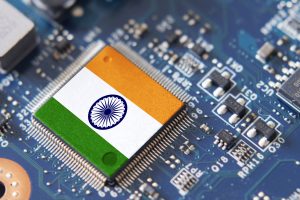
India is not a passive onlooker in the unfolding global geopolitics of semiconductor production. As both one of the largest markets for electronics and a major source of technical talent, India has the advantage of being a predominant player in the global technology drive.
Realizing the economic potential and geostrategic importance of the technology over the decades to come, India has embarked on a quest to build a robust semiconductor ecosystem. Drawing lessons from the upheaval in the global semiconductor value chain during the COVID-19 pandemic, India in the post-pandemic phase is venturing into the entire ecosystem – research and development, fabless chipmaking, design, and fabrication along with equipment supply, besides incubating a talent pool – rather than just focusing on a single aspect of the industry.
Since 2021, with the unveiling of the India Semiconductor Mission (ISM) along with the provision of unprecedented subsidies and a conducive business environment to the major industrial players, the Indian semiconductor era seems to have dawned. India is likely to establish itself as a reliable supply chain hub, taking advantage of geopolitical turbulence between major powers.
The semiconductor value chain – including the design, manufacturing, and sale of final products – is a complex global network, traditionally concentrated in the United States, its allies (South Korea, the Netherlands, Japan, and Taiwan), and China. Owing to pandemic-related disruptions and subsequent rise in labor costs, most global producers decided to diversify supply chains away from China, at least in part. In addition, the geopolitical uncertainties involving the China-U.S. trade war, followed by the Biden administration’s de-risking measures, have compelled companies to seek alternative production bases or sourcing locations outside China.

:quality(70)/cloudfront-us-east-1.images.arcpublishing.com/archetype/5QUH7OA2ENC4JP4RCVFXTWOJEU.jpg)
















)
)