7 April 2024

The Looming Ukraine Debacle

Matthew Blackburn 

With Ukraine’s military situation deteriorating, NATO foreign ministers have gathered in Brussels to develop a long-term plan to deliver the necessary supplies to Kyiv. As NATO secretary-general Jens Stoltenberg put it, “Ukrainians are not running out of courage, they are running out of ammunition.” Distracted by other matters, America increasingly looks to Europe to coordinate the defense of Ukraine. But, other than scrambling for shells and money or unveiling a modest EU defense industry strategy, European leaders do not appear to have the ideas or the means to intervene in a decisive or timely fashion.

French president Emmanuel Macron’s suggestion that NATO troops may enter Ukraine was supported by Poland and Czechia but caused some consternation in France itself. More importantly, Germany, the United Kingdom, and the United States still rule out boots on the ground. Instead of a new approach, the old pattern continues: NATO mulls over how to help Ukraine without provoking open war with Russia and fails, in the end, to deliver the kind of decisive assistance needed to turn the course of the war.

Another established pattern is the repetition of moralistic binary language. The West “cannot let Russia win.” The “rules-based order” could unravel. Then there is the new domino theory: if Ukraine falls, Russian hordes will flood further west. The personalization of the conflict onto one evil man, Vladimir Putin, continues with the death of Alexei Navalny. It is a Manichean struggle of good and evil, democracy and authoritarianism, civilization and darkness. There can be “no peace until the tyrant falls.” The Western alliance must not waver in its commitment to Ukraine.

What is lacking throughout the discourse is realism. What is the real balance of power between the warring nations, and what can be concluded from two years of Russia-NATO hard power competition? Unsurprisingly, Western leaders are reluctant to admit that the dire situation facing Ukraine is related to their own fundamental miscalculations about Russia. Russia’s multiple blunders in this war are well-known but what of those made by the Western alliance?

US ground-based conventionally armed missile programmes stretch their wings


As a new generation of United States ground-based conventionally armed missile programmes gather pace, the question of where the US Army and Marine Corps will deploy these systems is coming into focus. These basing decisions are critical in the Indo-Pacific theatre.

The appearance of U.S. Department of Defense (DoD) visual information does not imply or constitute DoD endorsement

This blog was first published on the Military Balance+ on 2 April 2024.

Efforts by the United States to build up its ground-based long-range conventional strike capability are starting to materialise, setting the stage for further competition with China in the Indo-Pacific.

The US underscored its appetite for these systems with the release in March of the fiscal year 2025 defence budget request. The US Army is asking Congress to fund 230 Precision Strike Missiles (PrSMs), a more than 20% jump from earlier plans. The service also seeks funding for 32 ground-launched Tomahawk cruise missiles as part of its Strategic Mid-Range Fires (or Typhon) programme, while the Marine Corps is requesting eight launchers under the Long-Range Fires programme and 22 Tomahawk cruise missiles. US Indo-Pacific Command’s unfunded priorities list includes various ground-based missile systems.

Prime time for missilesThe push to field ground-launched strike systems with ranges exceeding 500 kilometres dates to 2019, when Washington exited the Intermediate-Range Nuclear Forces (INF) Treaty. The US withdrew due to its assessment that Moscow had been in breach of the treaty for several years, pointing to the 9M729 (RS-SSC-8 Screwdriver) ground-launched land-attack cruise missile, with a range more than triple the treaty’s lower limit of 500 km, as the system of concern.

Is Techno-Monopoly Inevitable?

WILLIAM H. JANEWAY

Given the need to reward those who risk time and money on unproven ventures and ideas, there is often a tension between encouraging innovation and preventing monopolization in capitalist economies. The question is how to strike a proper balance in the face of immensely powerful technological and market dynamics.

CAMBRIDGE – The detective in a typical British crime procedural would say that Mordecai Kurz “has got form.” An emeritus professor at Stanford University, Kurz received his doctorate in economics from Yale University more than 60 years ago. In 1970, he co-authored a book with Kenneth J. Arrow, a soon-to-be Nobel laureate in economics and among the greatest cross-over mathematician-social scientists ever.

Kurz would go on to establish a distinctive platform for criticizing John Muth and Robert Lucas’s rational expectations hypothesis, demonstrating with rigor that any number of models could be mapped to the historical statistical record to reveal a spectrum of alternative “rational beliefs.” And now, in his book The Market Power of Technology: Understanding the Second Gilded Age, he brings the same rigor to bear on the question of what shapes income growth and the distribution of wealth in an economy driven by privately owned technological innovations.

Kurz’s theory of “technological market power” distinguishes legally sanctioned monopolies based on innovation from illegal conspiracies that restrain trade. He offers the example of General Electric, which exemplified the persistence of technological market power for a century, starting in the 1890s. An initial innovation that improves the innovator’s competitive position creates market power which, in turn, generates monopoly profits that are invested in entrenching and extending the scope of market power. Moreover, those monopoly profits can and observably have been applied to influence the extent to which the political process can counter the accumulated market power.

Joseph S. Nye, Jr. Says More…


This week in Say More, PS talks with Joseph S. Nye, Jr., an emeritus professor at Harvard Kennedy School, a former US assistant secretary of defense, and the author, most recently, of A Life in the American Century.

Project Syndicate: In your new memoir, A Life in the American Century, you describe implementing US President Jimmy Carter’s policy of ensuring that plutonium formed from uranium in nuclear reactors was not reprocessed and reused. Is there a comparable rule or initiative that could help mitigate nuclear risks today, when, as you recently wrote, “conditions seem especially dire”? What are the most glaring gaps in current nonproliferation efforts?

Joseph S. Nye, Jr.: The beginning of the 1970s was marked by widespread fear of oil shortages and the belief that the world did not have enough uranium to power all the nuclear reactors we would need to replace the oil. We were headed for an economy based on plutonium – a weaponizable material. Some predicted that dozens of countries would soon possess nuclear weapons. Yet today, there are just nine nuclear-weapons states – still too many, but far fewer than expected – and the implementation of an internationally safeguarded “once through” fuel cycle (which left plutonium locked up in the stored spent fuel) is a major reason why.

Today, the threat of proliferation comes less from a new technology than from the loss of credibility in extended deterrence. Russia’s full-scale invasion of Ukraine, which gave up its nuclear weapons in 1994, has given some countries second thoughts about their non-nuclear status. Restoring the credibility of the US nuclear umbrella – not least by making clear to our allies that we are not embracing isolationism – has now become urgent.

Losing the Race for Nuclear Fusion


Hello, I’m Ylli Bajraktari, CEO of the Special Competitive Studies Project. In this edition of 2-2-2, SCSP’s Pieter Garicano discusses what we know about the PRC’s fusion energy efforts and recaps SCSP’s fusion week.

We are thrilled that so many of you are joining us for this first-of-its-kind event on May 7th & 8th in Washington, D.C. If you haven’t registered for SCSP’s AI Expo for National Competitiveness, don’t wait!

In 33 days, we will witness a national convergence of leaders, innovators, technologists, warfighters, students - a powerhouse of minds - at the Washington D.C. Convention Center.

This morning, we announced Rhombus Power, Skydio, Stairwell, Strider Technologies, and Booz Allen Hamilton are joining us as sponsors of the AI Expo. SCSP Chair, Dr. Eric Schmidt will be joined by Deputy Director of CIA, David S. Cohen, and Co-Founder and CEO of Palantir, Dr. Alex Karp, for a conversation on The Future of Geopolitics and the Role of Innovation and Technology at The Ash Carter Exchange. Organizations like the International Institute for Strategic Studies (IISS), National Endowment for Democracy (NED), and Truepic are partnering with us to host special events at the AI Expo. Get the latest information at expo.scsp.ai.

Nuclear fusion is having its day in the sun. Over the last few months, scientists have touted breakthroughs at Lawrence Livermore National Laboratory, the successful use of AI to accelerate fusion research, spiking datacentre energy demand, new German and Japanese R&D efforts, and a record-breaking burn at a British lab. All indicate that the long-awaited realization of power generation through controlled nuclear fusion may be inching closer.

And while many scientists involved still seek to temper expectations, it is clear why fusion provokes such excitement. Nuclear fusion, where light atomic nuclei combine to form heavier ones, releases tremendous amounts of energy. It promises clean, near-limitless power – supercharging energy independence for America and its allies, decarbonizing the grid, and enabling every other technology vertical.

Its ability to provide abundant carbon-free baseload power will make it a much sought-after technology export. In the long term, fusion leadership may well become one of the pillars determining the outcome of the strategic competition between the United States and China.

Israeli cabinet approves reopening northern Gaza border crossing for first time since October 7, official says

Jeremy Diamond and Tara John

Israel’s security cabinet has approved reopening of the Erez crossing between Israel and northern Gaza for the first time since the October 7 Hamas attacks, an Israeli official told CNN Thursday.

The Israeli official said the crossing would be opened to allow more humanitarian aid to enter blockaded Gaza. The cabinet also approved using the Israeli Port of Ashdod to help transfer more aid to Gaza.

It comes after US President Joe Biden said Thursday that the overall humanitarian situation in Gaza had become unacceptable in a call with Israeli Prime Minister Benjamin Netanyahu and warned Israel to take steps to address the crisis or face consequences.

The Erez crossing, a pedestrian passageway, was one of the border points breached by Hamas fighters on October 7 when they launched their bloody attack on Israel, killing 1,200 people and taking 250 others hostage.

It remains unclear how the reopening will be implemented; the volumes of aid deliveries that have been allowed through crossings in Gaza’s southern border so far have been insufficient compared to the scale of human suffering in the territory.

The United Nations welcomed news of the reopening cautiously. “This is positive news but, of course, we will have to see how this is implemented. We need a humanitarian ceasefire and a massive influx of aid,” spokesperson to the UN Secretary General, Stephane Dujarric, said Thursday.

The UN’s Relief and Works Agency for Palestine Refugees in the Near East (UNRWA), the principal aid agency for Gaza, has been sidelined by Israel and remains restricted in parts of the enclave – particularly the north where the risk of famine is the highest and cases of death by starvation have been reported.

Since January, residents of northern Gaza have been forced to survive on an average of just 245 calories a day, according to Oxfam.

Thursday’s announcement also comes amid mounting international fury over Israeli strikes that killed seven aid workers from the World Central Kitchen in Gaza. Israel has acknowledged responsibility for the deaths, but maintains the attack was not intentional.

Trickling aid

Since the October 7 terror attacks, Israel’s siege of Gaza has killed at least 32,916 people, according to the Gaza Ministry of Health, and has led to a spiraling humanitarian crisis where nearly three-quarters of the population in northern Gaza are suffering from catastrophic levels of hunger, according to a UN-backed report.

Land crossings into Gaza, through which the bulk of vital aid has traditionally entered the territory, remain heavily restricted by Israel. Aid agencies have accused Israel of throttling the entry of relief into the war-ravaged territory, though Israel has said it has “no limit” on the amount of relief that can enter.

Before the war started, Israel restricted all access to and from Gaza by sea and air, and kept land crossings under tight control. It had two functional crossings with the enclave: Erez, which was for the movement of people, and Kerem Shalom, for goods.

Gaza also has one crossing with Egypt, at Rafah, which is run by Egyptian authorities. While Israel has no direct control over this crossing, it monitors all activity in southern Gaza.

Israeli Defense Minister Yoav Gallant vowed to halt the supply of electricity, food, water and fuel to the Palestinian enclave after October 7.

Aid began to trickle in through Rafah at the end of October, and, following pressure from the US, Israel began allowing aid trucks to pass through Kerem Shalom in late December – but at rates far below the 500 commercial and aid trucks a day before the war.

Today, all 2.2 million people in Gaza do not have enough food, with half of the population on the brink of starvation and famine projected to arrive in the north “anytime between mid-March and May,” according to the Integrated Food Security Phase Classification (IPC).

The World Central Kitchen was central to a much-touted new sea corridor from Cyprus but it, along with at least two other aid organizations, are suspending operations in Gaza after Israeli airstrikes killed its workers.

Israel is using artificial intelligence to help pick bombing targets in Gaza, report says

Tara John

The Israeli military has been using artificial intelligence to help identify bombing targets in Gaza, according to an investigation by +972 Magazine and Local Call, citing six Israeli intelligence officials involved in the alleged program – who also allege that human review of the suggested targets was cursory at best.

The officials, quoted in an extensive investigation by the online publication jointly run by Palestinians and Israelis, said that the AI-based tool was called “Lavender” and was known to have a 10% error rate.

When asked about +972 Magazine’s report, Israel Defence Forces (IDF) did not dispute the existence of the tool but denied AI was being used to identify suspected terrorists. But in a lengthy statement it emphasized that “information systems are merely tools for analysts in the target identification process,” and that Israel tries to “reduce harm to civilians to the extent feasible in the operational circumstances ruling at the time of the strike.”

The IDF said “analysts must conduct independent examinations, in which they verify that the identified targets meet the relevant definitions in accordance with international law and additional restrictions stipulated in the IDF directives.”

However, one official told +972 “that human personnel often served only as a “rubber stamp” for the machine’s decisions” and typically devoted only around 20 seconds to each target – ensuring they are male – before authorizing a bombing.

The investigation comes amid intensifying international scrutiny of Israel’s military campaign, after targeted air strikes killed several foreign aid workers delivering food in the Palestinian enclave. Israel’s siege of Gaza has killed more than 32,916 people, according to the Gaza Ministry of Health, and has led to a spiraling humanitarian crisis where nearly three-quarters of the population in northern Gaza are suffering from catastrophic levels of hunger, according to a United Nations-backed report.

As Nato turns 75, what's next for the alliance

WILLIAM ALBERQUE

It is a time of great change for the North Atlantic Treaty Organisation as it marks its 75th anniversary. With new members come some new, if somewhat familiar, challenges. Nato’s relevance has never been more obvious in the face of a destabilised global security environment that is unlike anything since the darkest days of the Cold War.

The North Atlantic Treaty was signed in Washington on April 4, 1949 by 12 democracies that sought to stand together against the imminent threat posed by the massive army and aggressive posturing of the Soviet Union. Those nations created Nato together with one purpose: to ensure that “an armed attack against one” “shall be considered an attack against them all”, and therefore deter attack on any. These famous phrases from Article 5 of the Treaty are further embedded within Article 51 of the UN Charter on the right of states to “individual or collective self-defence”, locating Nato firmly within the rules-based order.


Swedish Prime Minister Ulf Kristersson speaks at a flag-raising ceremony for his country's accession to Nato in Brussels, on March 11. 

The threats faced by Nato today are familiar. In the alliance’s members’ view, those threats include a revisionist Russia seeking to expand its borders, joined by an increasingly active China, and other disruptive regional powers such as North Korea and Iran feeding non-state actors with advanced weapons, while also seeking technological and military capabilities to disrupt regional and international peace.

Ukraine's AI Drone Gamble

Ellie Cook

In the spiraling race to develop new, better and more drones, artificial intelligence is one of the new frontiers Ukraine is hoping to dominate before Russia gets the chance to edge ahead.

But with the demands of a grinding war, there are pressing concerns over how quickly AI is taking to the skies and how reliable the nascent merging of drones and AI will be in the coming months.

Mykhailo Fedorov, Ukraine's drone tsar and digital transformation minister, has suggested that AI drone prototypes will appear along the front lines in eastern and southern Ukraine before the year is over.

The technology appears to be already there. A Ukrainian drone attack on the Tatarstan region, more than 1,000 kilometers into Russian territory, refocused attention earlier this week on just how far Ukraine's drone reach has extended.

Some of Kyiv's drones, used to zero in on Russia's energy infrastructure, have started using a basic form of AI to tone down the impact of jamming and aid navigation, CNN reported on Tuesday.

"Accuracy under jamming is enabled through the use of artificial intelligence. Each aircraft has a terminal computer with satellite and terrain data," an unidentified source, described as being close to Ukraine's drone program, told the network.

As drones have developed, so have counter-drone technologies. Jamming is a cornerstone of Kyiv's, and Moscow's, attempts to pull down and knock off course enemy drones before they can complete their missions. AI, particularly machine vision, is one tool intended to fight off these effects.

The Navy wants to make info-warfare training ubiquitous

LAUREN C. WILLIAMS

The Navy knows information warfare runs through every warfighting domain. But it’s not yet an integral part of training. U.S. Naval Information Forces, or NAVIFOR, have been trying to change that in recent years—with a payoff expected as early as 2025.

The Navy uses a combined training environment called LVC, which stands for live, virtual, and constructive. But integrating myriad information warfare systems—which are often classified—into a single training environment isn’t simple.

“IW underpins every single warfare area in the Navy. And so there's a number of capabilities that do that across the three pillars of information warfare—battlespace awareness, assured command and control, and then integrated fires,” Elizabeth Nashold, NAVIFOR’s deputy commander, said during the WEST 2024 conference. “All of the disciplines that support that, those are the capabilities we're trying to bring in.”

That includes cyber, communications and networks, cryptology, intelligence, electronic warfare, naval meteorology, and oceanography, she said. But the sensitivity of these systems makes it difficult to put them in a more open training environment where sailors can learn the ins and outs before encountering them on a mission.

“Based on the information warfare capabilities that we bring, there is a lot that we actually can't reveal in a training environment. And so, we don't have the opportunity in information warfare to practice those capabilities,” Nashold said. “We don't want to reveal our capabilities. But we also don't want to be implementing those capabilities for the first time when we really need them.”

Tailoring Deterrence by Studying Restraints at the Nuclear Brink

Matthew R. Costlow

The classic questions of the Cold War about nuclear escalation and how to potentially stop it receded for a time with the fall of the Soviet Union, but today the United States confronts these questions anew as nuclear threats have grown. U.S. officials navigating the very real dangers of an adversary’s threats of nuclear employment are unhelpfully bombarded with news reports about how this action or that policy might cause the adversary to escalate a conflict—often without voicing the other perspective: why a state may refrain from escalation. This Information Series examines this latter possibility—not because it is necessarily the most likely possibility in all cases, but because studying a state’s reasons for restraint may illuminate some factors U.S. decisionmakers and intelligence analysts can employ to better tailor deterrence threats. In short, understanding the potential reasons for restraint can help produce more effective deterrence threats to reinforce and strengthen the validity of those reasons in the adversary’s mind.

Each adversary will likely have a different set of values, goals, worldviews, risk propensities, and other unique factors relevant to deterrence, so this Information Series cannot present a universal “how to” guide for promoting adversary restraint. Its goal, instead, is to examine the political reasons why a state leadership may choose to limit its actions in two scenarios: refraining from employing nuclear weapons during a conventional conflict and trying to keep an ongoing nuclear war limited in some fashion. There are other factors pertinent to whether states act in a restrained fashion when considering nuclear employment beyond political reasons, such as operational factors (the resilience of command and control capabilities) and bureaucratic factors (whether the war plan in practice meets the intent of stated political objectives). These factors, however, are beyond the scope of this article. The assumption for the purpose of this discussion is that political leaders have the means to signal or demonstrate restraint—with the obvious caveat that in reality such an assumption may not be true; and, even if it was, the adversary still may not respond as desired.

The focus here is on potential choices made at the strategic level for restraint instead of escalation. To examine these potential choices, this Information Series is organized in six parts, with the first being an explanation about why this topic in particular is relevant today and for the foreseeable future. Even looking past today’s news headlines concerning potential Russian nuclear employment against Ukraine, U.S. officials since the Obama Administration have repeatedly stated their belief that the risk of an adversary’s nuclear employment is rising. Yet this relatively recent concern is not reflected in the current academic or strategic literature. Put simply, there is a gap between what U.S. officials are concerned about—i.e., promoting adversary restraint in a conflict—and what today’s available literature discusses.

Israel Unleashed?

Dalia Dassa Kaye

On April 1, Israel launched its latest attack on Iran in the two countries’ ongoing shadow war, with an airstrike that flattened a section of Iran’s embassy complex in Damascus and reportedly killed at least 12 people. Among the dead was Mohammad Reza Zahedi, who headed Iran’s military operations in Syria and Lebanon, where he worked for decades and became a close interlocutor with Hezbollah and its leader, Hassan Nasrallah. The strike also killed Mohammad Hadi Haji Rahimi, Zahedi’s deputy, and at least five other officers in Iran’s Islamic Revolutionary Guard Corps (IRGC).

Israel crossed a new line with the strike on Iran’s diplomatic compound, which Iran and many other governments see as tantamount to striking Iranian territory itself. The decision to target high-level officials at that location may reflect the Israeli government’s belief that now is its moment to act against Iranian military targets, wherever they may be, with relative impunity. From Israel’s perspective, Iran is constrained enough that it will be unlikely to respond in ways that could lead to an uncontrollable outbreak of regional war. That is, Israel may view the Gaza war as expanding rather than constraining its room to maneuver against Iran and its allies. If that is the case, it’s possible that the Israelis are underestimating the unpredictability of the current regional climate. The attack may prove to be a miscalculation that leads to dangerous outcomes, not just for Israel but also for the entire region.
OUT OF THE SHADOWS

Israel’s campaign against Iranian-linked targets in Syria did not start after Hamas attacked Israel on October 7, even if Israel’s strikes appear to have intensified since the war in Gaza started. Israel has been engaged in what Israeli security experts have dubbed a “campaign between the wars” in Syria for over a decade, part of a sustained effort to degrade Iranian-linked militia groups. The scale and nature of Israeli attacks have shifted over the years from a focus on striking Iranian weapons transfers and munition sites to a more targeted campaign to kill key operational and intelligence leaders in Iran’s network, including increasingly senior Iranian military personnel.

Indeed, the latest strike follows a pattern of Israeli attacks on high-value Iranian targets in Syria and beyond in recent months. Iran accused Israel of killing a top IRGC commander in an airstrike in Damascus in December, and the following month an Israeli airstrike there killed an Iranian intelligence head and several other IRGC members. In February, Israeli air attacks in Damascus again targeted senior members of the IRGC as well as Hezbollah, which has also faced an uptick in Israeli strikes.

Since the start of the war in Gaza, Israel has killed senior Hezbollah commanders in Lebanon and at least 150 Hezbollah fighters in response to multiple Hezbollah drone and antitank missile attacks on northern Israel. Israeli Defense Minister Yoav Gallant acknowledged in February that Israel had “stepped up” attacks on Hezbollah with heavier bombs and targets deeper into Lebanese territory. Israeli forces also killed the deputy head of Hamas, Saleh al-Arouri, in a drone strike in Beirut in early January, marking a clear escalation; previous Israeli strikes were largely contained to the border area between Israel and Lebanon. On March 29, Israeli airstrikes killed dozens of Syrian soldiers and Hezbollah militants near Aleppo.

Although Israel has been striking Iranian targets in Syria for years, its attacks since October 7 are taking place at a time when the entire region is on edge. The Iranian-backed, Yemeni-based Houthi militant group remains undeterred from attacking international shipping through the Red Sea. Iranian-backed militias in Syria and Iraq have targeted U.S. forces. Meanwhile, continued clashes between the Israel Defense Forces and Hezbollah have displaced tens of thousands of civilians on both sides of the Israeli-Lebanese border. To be sure, it is not yet an all-out regional war, but military escalation continues on all fronts, and any lulls in violence are likely to be temporary as long as the bloodshed and humanitarian catastrophe in Gaza continue. In this dangerous environment, there is an increasing risk that Israeli strikes on Iranian targets will lead to blowback.

A PAPER TIGER?

After Hamas’s unprecedented attacks on October 7, Israel could have scaled back its wider regional campaign against Iran as it focused on the imminent threats emanating from Gaza, particularly given that Hezbollah did not appear eager to join Hamas’s fight. Israel could have adjusted its regional campaign in light of the increased regional volatility, especially in view of the strong U.S. desire to contain the war and avoid a direct confrontation with Iran, a preference shared by Israel’s Arab neighbors.

But Israeli Prime Minister Benjamin Netanyahu and his emergency war cabinet appear to be choosing a different route. Six months into the war, Israel is doubling down on its regional campaign. This is the logical extension of what Naftali Bennett, then Israel’s education minister, dubbed “the octopus doctrine” in 2018. Israel believes it needs to confront Iran directly and not just go after the proxy forces that serve as its enemy’s tentacles throughout the region. Following this strategy, Israel must hold Iran accountable for the actions of its regional militias, even if Iran has varying degrees of control over the different groups in its decentralized network. There is strong support from the Israeli public and across the Israeli political spectrum for this approach.

Some observers believe that Israel is trying to provoke Iran into war. But the opposite logic may be playing out. Israel may be making the bet that Iran is more restrained and boxed in now because it is wary of retaliatory actions that could spark a direct Israeli attack. Israel sees Iran as being in a vulnerable political and economic position, even as many analysts believe that Iran has been bolstered by the Gaza war and its increased military alignment with Russia. Policymakers and analysts have debated Iran’s ability to respond to attacks ever since the United States killed General Qasem Soleimani, commander of Iran’s Quds Force, in 2020. A common narrative within Israel is that Soleimani’s assassination revealed that Iran is a paper tiger: after promising to avenge Soleimani, the Iranians ultimately did very little. The competing interpretation is that the Soleimani killing in fact fostered increased militancy and threats against both Israel and the United States. The expanded capacities of Iranian-backed militant groups in recent years suggests that Soleimani’s killing did not fundamentally deter or diminish the ability of Iranian-backed actors to cause considerable damage across the region.

Israel crossed a new line with the strike on Iran’s diplomatic compound.

But Israel is not wrong in its observation that after the onslaught of Israeli attacks in Syria and Lebanon over the past six months, Iran and Hezbollah have done little to retaliate. The Israelis may view this moment, when they still have the full backing of Washington and already believe the world is against them, as an opportunity to further weaken Iran and its regional allies. Israel may feel confident that it can push boundaries without provoking Hezbollah or Iran into a direct war. In other words, the Israelis may not be escalating their military strikes to provoke Iran to directly enter the war; they might be escalating because they think the Iranians are likely to stay out.

A similar logic may be guiding Israeli calculations regarding Washington. Israel may believe it can keep pushing the limits on military escalation because it expects the United States to stay out of its way or may even tacitly support Israeli actions against groups that also threaten U.S. interests. The Biden administration’s track record of supporting Israeli military actions since October 7 would seem to bolster such assumptions. Despite the unease the Biden administration has expressed about the Israeli campaign in Gaza, U.S. military and political support for Israel remains unchanged.

FLIRTING WITH DISASTER

By assuming that it faces few constraints as it tries to weaken Iran and its proxies, Israel is taking a significant risk. Iran may feel the need to respond at some point against Israel directly, and it appears to be facing increasing pressure at home to do so. Reports of foiled Iranian plots to attack Israeli diplomatic facilities and civilians abroad suggest that Iran’s failure to retaliate directly against Israeli interests isn’t for lack of trying. Iraqi militia forces are already starting to attack Israel, launching a drone attack on an Israeli naval base in Eilat the night before Israel’s latest strike in Damascus. The Houthis in Yemen have aimed missiles at southern Israel as well.

Israel might see such risks as manageable. But an increased sense of impunity is not just a risk for Israel; it’s a dangerous posture that could directly endanger American interests and lives. After previous Israeli attacks on Iranian targets in Syria before the Gaza war, Iran chose to retaliate against U.S. troops through its militia forces in Iraq and Syria. Starting in 2021, Iranian-backed groups launched more than 80 attacks on U.S. forces, until an informal de-escalation deal was reached between Iran and the United States in mid-2023. After the war in Gaza began, attacks on American forces resumed, and with more intensity. In January, an Iranian-backed militia in Iraq carried out a drone attack that killed three U.S. military personnel in Jordan. In response, the United States launched a series of retaliatory strikes against Iranian-backed groups in Iraq and Syria. Since the American attack, there has been a lull in violence against U.S. troops in the region. Now with the Israeli strike in Damascus, this pause may be in jeopardy. Within hours of the Israeli strike, U.S. troops stationed in Syria shot down an attack drone flying nearby.

The Gaza war seems to be reinforcing already strong Israeli incentives for more, not less, military escalation with Iran. Israeli leaders have been working under the assumption—both before and after Gaza—that the conflict with Iran can remain contained as Israel accomplishes its goals of degrading the Iranian axis while improving ties with Arab states similarly wary of Iran. Those assumptions were flawed even before October 7. But in the midst of a sustained assault on Gaza and the killing of Palestinian civilians at a previously unimaginable scale, Israel is playing with fire. The risk is that, at some point, Israel will pay a higher price for its attacks than it anticipated. And in that scenario, it is likely that the United States will pay as well.
Marine Infantry Battalion Commander Fired at Camp Pendleton for 'Loss of Trust and Confidence


Rachel Nostrant
Source Link

The commander of 1st Battalion, 4th Marine Regiment, at Camp Pendleton in California was relieved of command last week, according to a statement from the Marine Corps.

Lt. Col. Christopher O'Melia was fired from his role as battalion commander on March 26 "due to a loss of trust and confidence in his ability to continue to serve in that position," Marine spokesman Lt. Col. Lucas Burke told Military.com in an email.

"There is no more sacred position in this division than that of a commanding officer," Maj. Gen. Benjamin Watson, the commanding general of 1st Marine Division who relieved O'Melia, said in an emailed statement. "Our Marines and sailors deserve the absolute best leadership the Marine Corps can offer, and I am committed to providing them the leadership they deserve."

Lt. Col. Jonathan Wagner, a prior-enlisted Marine who served as the operations officer for the 11th Marine Expeditionary Unit, deploying as part of Marine Rotational Force-Southeast Asia, has since taken command.

The 1st Battalion, 4th Marines, website had already been updated to reflect the change, with O'Melia's biography replaced with Wagner's before news publicly broke about the dismissal. While O'Melia's biography is currently unavailable, a website for the 12th Marine Corps District showed that he served as commander of Recruiting Station Los Angeles until 2021. He took command of 1st Battalion in July 2023.

A post on a popular military-focused social media account, NotInRegz, garnered mass attention late last year after O'Melia allegedly made comments during a battalion-wide uniform inspection comparing it to the bombing at Abbey Gate during the August 2021 withdrawal from Afghanistan.

Russia Lost Almost 1,000 Artillery Systems in March: Kyiv

Ellie Cook

Ukraine destroyed the highest number of Russian artillery systems taken out in a single month in March, according to Kyiv, as deep concerns hang over Ukraine's stocks of ammunition powering its own, vital artillery systems.

Russia lost 976 artillery systems last month, Ukraine's Defense Ministry said in a statement posted to social media on Wednesday. "Great job by the Ukrainian warriors," Kyiv added.

Newsweek has reached out to the Russian Defense Ministry for comment via email.

Artillery, and the ammunition to keep the systems firing, has been a key part of the land war raging for more than 25 months in eastern and southern Ukraine.

In updated figures published by Ukraine's military on Wednesday, Kyiv said Russian forces had lost a total of 11,142 artillery systems since February 2022. This tally includes the loss of 30 artillery systems over the previous 24 hours, Ukraine said.

Russia's Defense Ministry said on Tuesday that Ukraine had lost 8,629 field artillery guns and mortars in the more than two years of war.

It is not possible to independently verify the battlefield tallies published by either side. Western experts suggest the counts from Kyiv and Moscow will likely be higher than the true figure.

U.S. told Russia that Crocus City Hall was possible target of attack

Shane Harris

More than two weeks before terrorists staged a bloody attack in the suburbs of Moscow, the U.S. government told Russian officials that Crocus City Hall, a popular concert venue, was a potential target, according to U.S. officials familiar with the matter.

The high degree of specificity conveyed in the warning underscores Washington’s confidence that the Islamic State was preparing an attack that threatened large numbers of civilians, and it directly contradicts Moscow’s claims that the U.S. warnings were too general to help preempt the assault.

The U.S. identification of the Crocus concert hall as a potential target — a fact that has not been previously reported — raises new questions about why Russian authorities failed to take stronger measures to protect the venue, where gunmen killed more than 140 people and set fire to the building. A branch of the Islamic State has claimed responsibility for the attack, the deadliest in Russia in 20 years. U.S. officials have publicly said the group, known as Islamic State-Khorasan, or ISIS-K, “bears sole responsibility,” but Russian President Vladimir Putin has tried to pin the blame on Ukraine.

The attack has further dented the image of strength and security that the Russian leader seeks to convey and exposed fundamental weaknesses in the nation’s security apparatus, which has been consumed by more than two years of war in Ukraine. Domestically, Putin’s operatives appear more concerned with silencing political dissent and opposition to the president than rooting out terrorist plots, according to analysts and observers of Russian politics.

The Russian leader himself publicly dismissed U.S. warnings just three days before the March 22 attack, calling them “outright blackmail” and attempts to “intimidate and destabilize our society.”

Can AI Learn to Obey the Law?

ANTARA HALDAR

Whether human laws can be imposed as a design constraint on AI models is a question for the engineers. But if it can be done, it would help to settle many otherwise intractable debates about how the technology should be used and regulated in a world of competing values.

CAMBRIDGE – If the British computer scientist Alan Turing’s work on “thinking machines” was the prequel to what we now call artificial intelligence, the late psychologist Daniel Kahneman’s bestselling Thinking, Fast and Slow might be the sequel, given its insights into how we ourselves think. Understanding “us” will be crucial for regulating “them.”

That effort has rapidly moved to the top of policymakers’ agenda. On March 21, the United Nations unanimously adopted a landmark resolution (led by the United States) calling on the international community “to govern this technology rather than let it govern us.” And that came on the heels of the European Union’s AI Act and the Bletchley Declaration on AI safety, which more than 20 countries (most of them advanced economies) signed last November. Moreover, country-level efforts are ongoing, including in the US, where President Joe Biden has issued an executive order on the “safe, secure, and trustworthy development and use” of AI.

These efforts are a response to the AI arms race that started with OpenAI’s public release of ChatGPT in late 2022. The fundamental concern is the increasingly well-known “alignment problem”: the fact that an AI’s objectives and chosen means of pursuing them may not be deferential to, or even compatible with, those of humans. The new AI tools also have the potential to be misused by bad actors (from scam artists to propagandists), to deepen and amplify pre-existing forms of discrimination and bias, to violate privacy, and to displace workers.

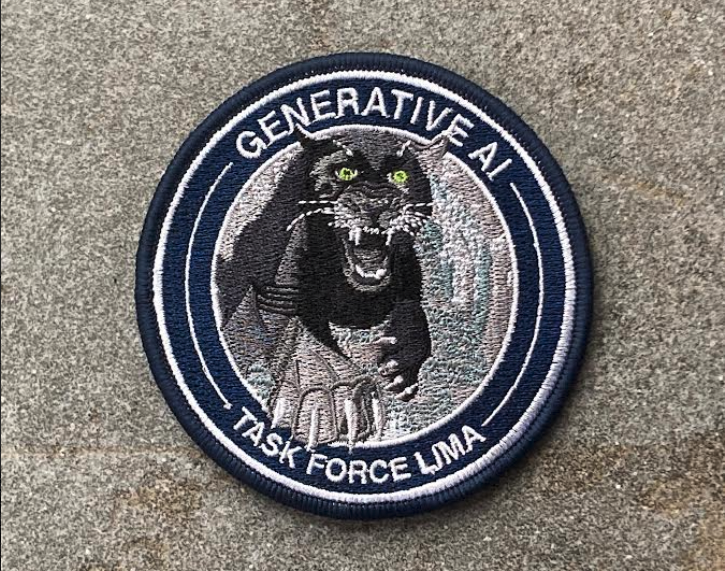
Task Force Lima preps new space for generative AI experimentation

BRANDI VINCENT

The Pentagon’s Task Force Lima team is getting set to launch a new “virtual sandbox” hub where military personnel will be able to responsibly experiment with approved generative artificial intelligence tools that hold potential to enhance their work.

“We already have the plans. It’s a matter, now, of executing on those plans,” Navy Capt. M. Xavier Lugo recently told DefenseScoop.

Lugo was tapped as Lima’s commander when Deputy Defense Secretary Kathleen Hicks established the temporary task force in August 2023 within the Chief Digital and AI Office (CDAO) to ultimately help the Department of Defense assess, synchronize and employ generative AI, which is broadly associated with large language models that generate (convincing but not always accurate) text, media and software code based on human prompts. Hicks set an 18-month deadline by which Lugo and his Lima team are expected to produce materials, resources and a path forward to guide DOD’s approach to unleashing this emerging technology.

Generative AI applications are already showing much promise for military functions, but Lugo and other experts also acknowledge that the tech could pose serious risks that are still far from fully realized.

During a recent virtual panel hosted by the Center for Strategic and International Studies, Lugo discussed the nearly 230 potential generative AI use cases that have been submitted to his team and are now being explored for and by the DOD. He also shed light on the CDAO’s new “Alpha-I” funding line and portfolio that’s now also under his purview as a division chief for AI scaffolding and integration in the office’s algorithmic warfare group.

6 April 2024

China Renames 30 Places In Indian-Controlled Arunachal Pradesh

Tenzin Pema

Beijing has issued Chinese names for 30 locations in Arunachal Pradesh to bolster its claims on the territory that is controlled by India, which quickly dismissed the move as meaningless.

It was the fourth time since 2017 that China released place names for geographical locations in what it refers to as Zangnan and claims is part of southern Tibet, in Chinese territory.

“If today, I change the name of your house, will it become mine?” asked India’s External Affairs Minister S Jaishankar on the sidelines of an event in the western state of Gujarat earlier this week.

“Arunachal Pradesh is a state of India,” he said. “It was, is, and will continue to remain a state of India. Changing the name of [various places] does not amount to anything.”

Tensions between India and China have escalated in recent weeks after Indian Prime Minister Narendra Modi’s visit to Arunachal Pradesh on March 9, prompting China to lodge a diplomatic protest.

The list issued by China’s Ministry of Civil Affairs includes standardized names for at least 11 residential areas, four rivers and 12 mountains among geographical locations in Arunachal Pradesh.

“In accordance with the relevant regulations on place name management of the State Council, our Ministry, together with relevant departments, has standardized some place names in southern Tibet,” the Chinese Ministry of Civil Affairs said in its official announcement. “The fourth batch of additional publicly used place names in southern Tibet is now officially announced.”

India in the Quad: insider or outlier?

Urmika Deb

The Raisina Dialogue, India’s flagship conference on geopolitics and geoeconomics, was held from 21 to 23 February this year, and discussions on and around the Quadrilateral Security Dialogue (Quad) took centre stage. Indian Minister of External Affairs S Jaishankar summed up his opening remarks at the inaugural Raisina Quad Think Tank Forum, stating ‘The Quad is here to stay. The Quad is here to grow. The Quad is here to contribute.’ However, India’s commitment to double down on its ties with Russia, coupled with the potential impact of Japan’s new security bill on India–Japan relations, raises concerns over India’s suitability and reliability as a partner within the Quad alliance.

The Quad is a diplomatic partnership between Australia, India, Japan and the US initially formed in 2004 to provide humanitarian relief and disaster assistance after the Indian Ocean tsunami. In 2017, the focus shifted to the Indo-Pacific region to counter China’s growing assertiveness there. Over the years, the Quad has formed multiple working groups. While member nations have progressed bilaterally and trilaterally, substantial collective progress is missing. Security cooperation between the four members looks more like a symptom of regional instability than a solution.

The Quad essentially suffers from the drawbacks of minilaterals. Minilaterals are voluntary, non-binding and consensus-based, and, therefore, while the motivation to shape policies and actions is present, they lack effective implementation mechanisms. Minilaterals are issue-specific partnerships with shared interests and security concerns, as is the Quad, but the national interests and priorities of individual countries might take precedence, resulting in poor execution efforts. India’s relations with Russia could be a classic example of national interests being embedded in strategic decisions.

India losing friends and looking vulnerable

BHIM BHURTEL

The Ukraine-Russia war and Hamas-Israel conflict have both significantly altered India’s strategic and security calculations.

The upheavals have in many ways contradicted the predictions and assessments of many Indian strategists, plunging India into a precarious situation calling for a serious reevaluation of its foreign policy priorities.

One immediate repercussion of the conflicts is the heightened vulnerability India faces along its northern border and the Indian Ocean regions, including from potential Chinese kinetic actions in the strategic areas where India acts and operates mainly in isolation from partners and allies.

There is a noticeable and worrying absence of publicly available consolidated documents outlining the foreign policy strategies and implementations of Prime Minister Narendra Modi’s Bharatiya Janata Party (BJP) government.

To be sure, certain insights into India’s foreign policy priorities and trajectory can be gleaned from the various interviews, speeches and writings of External Affairs Minister S. Jaishankar.

As India approaches the 2024 Lok Sabha election, Jaishankar’s recently released book “Why Bharat Matters” serves as a valuable resource for understanding some of Modi’s foreign policy shifts since 2014.

The book encapsulates Modi’s changed foreign policy stance and aims to broaden popular support for his government by emphasizing India’s supposedly enhanced power, posture, intent, and strength during his decade-long tenure.

It also underscores the importance of sustaining India’s rising global standing, a not-so-subtle call for continued popular support for Modi and his BJP at the upcoming general election.

Vietnam’s Flexible Nonalignment – Analysis

Abdul Rahman Yaacob

Vietnam’s relations with major powers are often described as non-aligned. This is usually linked to Hanoi’s ‘Four Nos’ policy — no military alliances, no siding with one country to act against another, no foreign military bases or using Vietnam as leverage to counteract other countries and no threat or use of force.

The nonalignment strategy and healthy, balanced relations with major powers has served Vietnam well. Vietnam has good trade relations with China while receiving assistance from Washington on issues such as maritime security, information sharing and cybersecurity.

While nonalignment currently serves its strategic interests, Vietnam may replace this strategy if a deteriorating regional security situation threatens its territorial integrity and sovereignty. Events leading to the Soviet Union’s military presence in Vietnam during the late 1970s and 1980s are an example.

In 2002, Russian military forces left Vietnam’s Cam Ranh Bay and handed over control of the military facilities to the Vietnamese. That event marked the end of the Russian military presence in Vietnam, which lasted nearly 25 years. The significance of the Russian military presence in Cam Ranh Bay demonstrated Hanoi’s swiftness in aligning itself with a major power when faced with regional dynamics threatening its territorial integrity and sovereignty.

When the Vietnam War ended in 1975, Hanoi was caught in the Soviet Union–China rivalry for influence in the communist world. The Soviet Union attempted to draw Vietnam into its orbit by providing military aid and forgiving Hanoi’s debt. Moscow approached Hanoi to form a military alliance and access the Vietnamese naval base at Cam Ranh Bay, but Hanoi rejected these requests.

What is China doing in the Philippines?

JAMES WOUDHUYSEN

In March, coastguard ships under the direction of the Chinese Communist Party (CCP) opened fire with water cannons on a wooden resupply vessel belonging to the Philippines. This caused the Unaizah May 4 to collide with a Chinese boat, resulting in injuries to three of the Filipino crew and heavy damage to the vessel itself.

This skirmish in the South China Sea may seem like a minor incident, but it is of huge geopolitical significance. What happens to the Philippines today gives us a hint of what could befall Taiwan tomorrow. Beijing’s threats towards Manila are part of an attempt to project power throughout Southeast Asia – and to send a message to America, Japan, South Korea and Australia not to push their luck there. They certainly give the lie to the CCP’s claim that it has no desire to upturn the current world order.

This particular incident took place by the Second Thomas Shoal, a small reef situated just 120 miles from the Philippines and a very long way from China. The Shoal is part of the Spratly Islands, some of the many islands in the South and East China Seas and in the Pacific that are being fought over by China, Japan and other regional powers.

The Philippines has claimed sovereignty over the Second Thomas Shoal ever since it dumped a rusting Second World War ship, the Sierra Madre, on it in 1999. Beijing, however, has never accepted Manila’s claims. It has consistently asserted its own sovereignty over the Shoal and the waters that surround it.

The incident will certainly come up on 11 April, when Philippine president Ferdinand Marcos Jr is in Washington, DC at a three-way summit with Joe Biden and Japanese prime minister Fumio Kishida. The trio will no doubt talk up the ‘ironclad’ military alliances between the US, Japan and the Philippines. As Biden’s press secretary, Karine Jean-Pierre, recently put it, theirs is a partnership ‘built on deep historical ties of friendship, robust and growing economic relations, and… a shared vision for a free and open Indo-Pacific’.

Chinese Smartphone Brands May Lag Behind A Generation Due To AI – Analysis

Kung Chan and Xia Ri

Recently, there have been reports that Apple is in discussions with Google on a large-scale collaboration agreement that could redefine the rules of the artificial intelligence industry by integrating Google’s Gemini artificial intelligence (AI) engine into the iPhone. There are also reports suggesting that this exposes Apple’s progress in AI may not be as smooth as expected, while also potentially exacerbating the antitrust scrutiny faced by both companies. There are various opinions surrounding such an issue, with some industry giants expressing concerns; some of these opinions are sensational while others are imaginative.

However, this matter is actually corresponding to the terminal model for the future AI era of laptops previously established by ABOUND’s founder Mr. Kung Chan. This model includes features such as natural language replacing keyboards, intense competition between two major operating systems, hardware design templates trending towards the iPad, further intelligentization in software devices, and primary supporting devices being headphones and various wireless broadband interfaces. Based on this model, Mr. Kung Chan believes that Chinese smartphone brands such as Huawei and Xiaomi may fall behind a generation due to AI, becoming not unlike Nokia phones in the past.

Firstly, AI development in China is lagging behind the productization trend. During the initial stage, large-scale model enterprises were competing in terms of parameters and computational power, while the second stage focused more on commercial applications. Ultimately, AI applications need to be reflected in products, and the competitiveness of products relies on AI to bridge generational gaps. As of now, AI products have emerged in South Korea. On January 17 this year, Samsung held its annual flagship product launch event in San Jose, California, United States, and unveiled the world’s first AI smartphone, the Galaxy S24 series. Among them, the most astonishing feature of Galaxy AI is its real-time voice translation and text translation capabilities, which can almost render all simultaneous interpreters worldwide unemployed. According to Samsung, this feature currently supports 13 languages, including Chinese, Korean, English, French, German, Japanese, etc., and to some extent, it breaks through human language barriers. Therefore, when Apple saw Samsung’s products and realized that this sets the standard for generational divisions, it sought cooperation to catch up with Samsung. 

Microsoft faulted for ‘cascade’ of failures in Chinese hack

Ellen Nakashima and Joseph Menn
Source Link

A review board, mandated by President Biden, issued a scathing report Tuesday detailing lapses by the tech giant Microsoft that led to a targeted Chinese hack last year of top U.S. government officials’ emails, including those of Commerce Secretary Gina Raimondo.

The Cyber Safety Review Board’s report, a copy of which The Post obtained before its official release, takes aim at shoddy cybersecurity practices, lax corporate culture and a deliberate lack of transparency over what Microsoft knew about the origins of the breach. It is a blistering indictment of a tech titan whose cloud infrastructure is widely used by consumers and governments around the world.

The board issued sweeping recommendations that if implemented would dramatically strengthen the openness and security of the booming cloud computing industry.

The intrusion, which ransacked the Microsoft Exchange Online mailboxes of 22 organizations and more than 500 individuals around the world, was “preventable” and “should never have occurred,” the report concludes.

Perhaps most concerning, the board report makes clear, Microsoft still does not know how the Chinese carried out the attack.

In a statement to The Post, Microsoft said it appreciated the board’s work.

A Microsoft spokesman said that “recent events have demonstrated a need to adopt a new culture of engineering security in our own networks,” noting that the company had created an initiative to do so. “While no organization is immune to cyberattack from well-resourced adversaries, we have mobilized our engineering teams to identify and mitigate legacy infrastructure, improve processes, and enforce security benchmarks."