17 January 2014

What Has NSA Officials Pissed Off About Snowden Revelations

January 14, 2014
I Spent Two Hours Talking With the NSA’s Bigwigs. Here’s What Has Them Mad
Steven Levy
Wired
January 13, 2014

My expectations were low when I asked the National Security Agency to cooperate with my story on the impact of Edward Snowden’s leaks on the tech industry. During the 1990s, I had been working on a book, Crypto, which dove deep into cryptography policy, and it took me years — years! — to get an interview with an employee crucial to my narrative. I couldn’t quote him, but he provided invaluable background on the Clipper Chip, an ill-fated NSA encryption runaround that purported to strike a balance between protecting personal privacy and maintaining national security.

Oh, and I was not permitted to interview my Crypto source at the agency’s headquarters in Fort Meade, Maryland. I was crushed; I had grown obsessed with the vaunted triple fence surrounding the restricted area and had climactic hopes that I’d get inside. Instead, the meet occurred just outside the headquarters’ heavily guarded perimeter, at the National Cryptologic Museum. (I did buy a cool NSA umbrella in the gift shop.)

This time around, the NSA’s initial comeback was discouraging. The public relations person suggested that perhaps some unidentified officials could provide written responses to a few questions I submitted. A bit later, an agency rep indicated there was the possibility of a phone conversation. But then, rather suddenly, I was asked if I would be interested in an actual visit to meet with a few key officials. And could I do it… later that week?

Um, yes.

Why the turnaround? Apparently, the rep told me, Crypto has some fans at Fort Meade. But my professional credentials were obviously not the sole reason for the invite. The post-Snowden NSA has been forced to adopt a more open PR strategy. With its practices, and even its integrity, under attack, its usual Sphinx-like demeanor would not do.
They really hate Snowden. The NSA is clearly, madly, deeply furious.

Soon I was swapping emails with a “protocol officer” who would coordinate my visit; she requested some personal data and asked for the make, model and serial number of my voice recorder. (I was happy about the latter — when I interviewed companies like Facebook for this story, they did not permit taping.)

So there I was, driving down the Baltimore-Washington Parkway, taking the exit that countless drivers have passed with a shudder of frisson. I got checked out at two gatehouses, and found my assigned parking space. Then I entered the glass leviathan whose image accompanies virtually every story in which a new Snowden leak is revealed.

N.S.A. Devises Radio Pathway Into Computers


N.S.A. Devises Radio Pathway Into Computers
JAN. 14, 2014


Launch media viewerThe headquarters of the National Security Agency at Fort Meade, Md. “We do not use foreign intelligence capabilities to steal the trade secrets of foreign companies,” an N.S.A. official said.

WASHINGTON — The National Security Agency has implanted software in nearly 100,000 computers around the world that allows the United States to conduct surveillance on those machines and can also create a digital highway for launching cyberattacks.

While most of the software is inserted by gaining access to computer networks, the N.S.A. has increasingly made use of a secret technology that enables it to enter and alter data in computers even if they are not connected to the Internet, according to N.S.A. documents, computer experts and American officials.

The technology, which the agency has used since at least 2008, relies on a covert channel of radio waves that can be transmitted from tiny circuit boards and USB cards inserted surreptitiously into the computers. In some cases, they are sent to a briefcase-size relay station that intelligence agencies can set up miles away from the target.

The radio frequency technology has helped solve one of the biggest problems facing American intelligence agencies for years: getting into computers that adversaries, and some American partners, have tried to make impervious to spying or cyberattack. In most cases, the radio frequency hardware must be physically inserted by a spy, a manufacturer or an unwitting user.

The N.S.A. calls its efforts more an act of “active defense” against foreign cyberattacks than a tool to go on the offensive. But when Chinese attackers place similar software on the computer systems of American companies or government agencies, American officials have protested, often at the presidential level.

Why Google Paid Three Billion Dollars for a Thermostat Company


In 1886, an American consul named George C. Tanner, who was stationed in Chemnitz, Germany, wrote, “Beer is the national beverage, and is used as such, if not to a greater extent than water, then assuredly equally so.” To illustrate his point, he wrote that, during his stay in Germany, he had yet to see anyone drink a single glass of water. Tanner’s report—which one suspects wasn’t conducted scientifically, in the absolute sense—noted that the sheer volume of Germany’s annual beer production could be compared to some of America’s largest rivers, and painted a picture of a highly refined beer culture. “Drunkenness is rare,” he wrote, “and if so, it rarely manifests itself in a boisterous or belligerent manner, but more frequently takes the shape of song, fun, and a general pleasurable feeling of warmth, energy, and self-command, and hence those horned crimes that sometimes shock us in the United States are rarely heard of here.” (The German-Americans Adolphus Busch and Adolph Coors had already crafted their iconic beers in the United States, but these had yet to really catch on.)

More than a century later, German beer is facing an existential crisis. This week, Germany’s anti-cartel office announced that it is levying more than a hundred million euros in fines against four of the country’s largest breweries, for price-fixing. Between 2006 and 2008, the office found, the breweries colluded to keep prices artificially high. (In general, fierce competition in Germany keeps prices low; in supermarkets in Berlin, for instance, it’s not hard to find a case of twenty half-litre bottles for less than five euros.) The scandal could mark the lowest point yet for the country’s beer industry, which has shrunk substantially in recent years.

It’s not that Germans aren’t drinking anymore. From my own admittedly unscientific research—which includes losing count of the number of people I’ve observed drinking lagers on the train during my morning commute in Berlin—Germans still consume a lot of beer. A 2011 Kirin Holdings report said that Germany places third on the list of top beer-drinking nations: Germans drink about twenty-eight gallons per capita annually, practically neck and neck with the second-place Austrians and a bit behind the world-leading Czechs, who drink about thirty-two gallons. But German beer consumption has been steadily declining since a peak in the late nineteen-seventies, when West Germans were drinking about forty gallons each.

FIVE QUESTIONS WITH STEVEN METZ ON U.S. LANDPOWER


John Amble
January 13, 2014 ·

This is the latest edition of our Five Questions series. Each week, we feature an expert, scholar, or practitioner answering five questions on a topic of current relevance in the world of defense, security, and foreign policy. Well, four of the questions are topical. The fifth is about booze. We are War on the Rocks, after all.

Steven Metz, Ph.D. has been an analyst and writer on national security politcy and military strategy for three decades specializing in American strategy, strategic futures, and insurgency. He is the author of Iraq and the Evolution of American Strategy and writes a weekly column on defense issues for World Politics Review. Follow him on twitter: @steven_metz.

1. With the imminent withdrawal of U.S. forces from Afghanistan, do you see this as a bookend of a finite period in which the Army was engaged as a counterinsurgency force? Do you foresee the Army serving in a long-term stabilization or COIN role again in this generation?

I think counterinsurgency support will remain an important part of U.S. strategy and hence an important task for the Army. We need to realize that initially Iraq and Afghanistan were not counterinsurgency support, but nation creation and counterinsurgency (i.e. where U.S. forces were in the lead). I don’t believe we’ll undertake that in the near future with one possible exception – the collapse of North Korea. And maybe not even there.

I would hope that the Army would do this time what I recommended in 1995: keep the capability for counterinsurgency alive even when it is not predominant. This could be done by analysis, education. experimentation wargaming, and regular limited exercises. This would, I think, be better than doing what we’ve done in the past: simply assume we’ll “never” do it again and erase all memory.

2. Based on your expectation about its future role, then, how would you define the Army’s most appropriate end strength and force structure, and how would you prioritise acquisitions over the next ten years?

I have no idea on specific end strength numbers but I think the lodestone for structure should be adaptability and expansibility. I’ve also argued that the world is at the beginning of a robotics driven RMA so I would prioritize acquisition and experimentation in that realm. Adaptability means smaller autonomous units – perhaps even smaller than a BCT – and more effective interface with multiple types of partners outside of traditional foreign militaries. To give one example of this, I’ve long argued that far futures wargames, rather than working with an extrapolation of the current force and current capabilities, should provide the players with a complex opponent or challenge and then task them to design a force (specifically an interagency force) to deal with it. In other words, rather than asking “How can the current projected force deal with future opponents and challenges?” we should ask “What would a force optimized to deal with future opponents and challenges look like?” Than we focus on the delta between the projected future force and the optimized future force to see how we can make it smaller.

Establishing a Floor Under the Army’s End Strength

Journal Article | January 14, 2014

How much Army is enough and too much? The essence of the argument, the size of the active Army, puts the cart before the horse. The challenge for the Army and indeed the Department of Defense: there is no longer a broad consensus on the threat (s) to the security of the Republic. The burden of educating national decision-makers on the need for the Army is on the Army itself. Our Army must determine what the Army needs to do to ensure national security, how to accomplish those tasks, the range of the size of the force required to accomplish the tasks, and articulate the risk to national security which accompanies the range of forces vis-ร -vis the threat.

The Army must find a better argument. The number 490,000 is not yet the floor as indicated in news reports on the new Army budget wherein the number is now 420,000. 490,000 may well be the ceiling. Our Army’s case requires a public, visible post-war strategic review, similar to the effort that produced the Army’s counterinsurgency doctrine. The Army must frame the problem and develop a broad consensus on how to address it.

Here is how I would put this together.

First, I would task the Commanding General of Fort Leavenworth to host a conference. I would put the Army Concepts Integration Center, ARCIC, the School of Advanced Military Studies, SAMS, and the University of Foreign Military and Cultural Studies, UFMCS (the red team school) in direct support. The conference should be held at Fort Leavenworth because Leavenworth is far enough from Washington to ensure people who attend cannot rush back to their offices in the afternoon to “work“on the merely urgent vice what is important. A conference such as this demands the full attention of the participants.

Second, I’d invite scholars from think tanks across the political spectrum; defense beat reporters; active and retired officers, and House and Senate Armed Services Committee staffers. I’d ask them to tackle defining the correct problem; what the Army must do for the Republic and what else might be required of the Army. Next, given the “correct” problem, answer what is the floor and ceiling for the size of the Army needed to address the “correct” problem. For the ceiling and floor numbers I’d also require the group to articulate the risk associated with each. Dealing with the “correct” problem also demands a clear understanding of anticipated risks, recognizing we will never divine ALL potential risks. The other main agenda point is ensuring there is broad understanding and support for the floor on Army numbers as well as convincing thought leaders just what the threat or range of threats consists of and the risk which accompanies “too small.”

This Is Why People Don’t Trust the Air Force With Air Power A response to Col. Robert Spalding


Last week at Foreign Affairs, U.S. Air Force Col. Robert Spalding III offered a response to my earlier article “Ground the Air Force.” I’d like to thank Col. Spalding for his contribution, and to offer the following response to several of his points.

 
Colonel Spalding opens with a revealing anecdote:
When ground commanders controlled aircraft, the results were disastrous. As Col. F. Randall Starbuck writes in Air Power in North Africa, 1942–43: “One example, relayed by Gen. [Jimmy] Doolittle, was the incident where a ground commander asked him to provide a fighter to cover a Jeep that was going out to repair a broken telephone line. He refused. The plane that would have wasted its time on that mission shot down two German Me-109s.”

Was the jeep ambushed? Were communications restored? How critical were these communications to maintaining offensive momentum? Did anyone bother to ask? Maybe Doolittle did, and maybe he had good reason to believe that, on that day, one of his planes could catch and kill two Bf109s.

Col. Starbuck doesn’t tell us, and Col. Spalding doesn’t seem to care.
And this, in short, is why some people don’t trust the Air Force with airpower.

Deciding how to use scarce resources is the essence of military decision-making. Every commander will run short of assets, and have to weigh values in order to decide to let some missions go while pursuing others. Air superiority is surely a critically important mission, but so is communications maintenance and ground force protection. Pre-emptively choosing one mission over the others amounts to dogmatism, not decision-making.

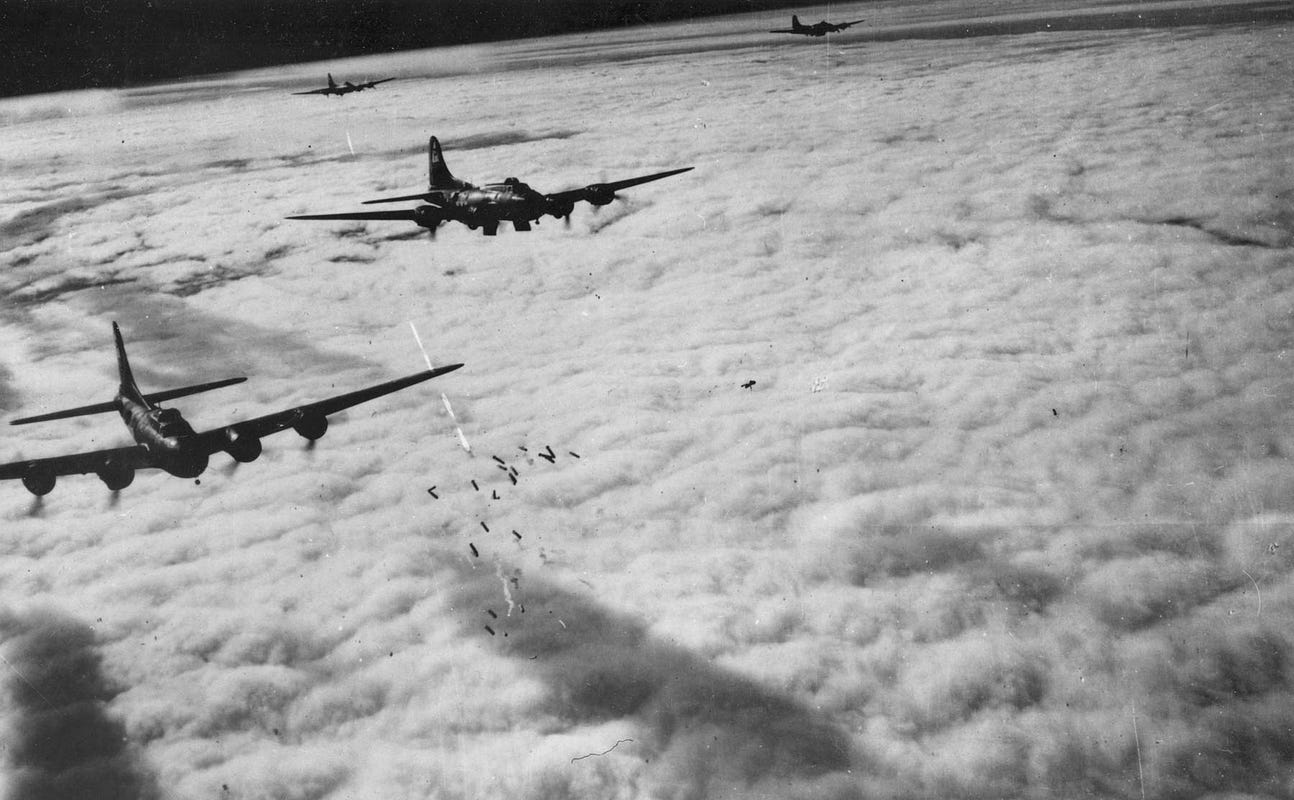
And so it’s revealing that a modern advocate of USAF independence chooses to invoke an anecdote that reveals disdain and contempt for the joint fight. I’ve argued that, high-minded statements about cooperation and jointness notwithstanding, the bureaucratic division of air assets from their land and sea partners is inherently antagonistic.U.S. Army B-17s bomb Germany in 1943. Wikipedia photo

No anecdote could better illustrate the persistence of that antagonism than the one Col. Spalding offers, in which force protection is a priori a “waste” relative to air superiority. And this, in a nutshell, is why the Air Force should be consigned to the dustbin of history.
Farley argues that Pentagon planners pushed for an independent air force because they had “misinterpreted the lessons of World War II” to conclude that strategic bombing—massive air raids on enemy cities—represented the future of warfare. But military leaders favored an independent air force because of what they had learned from the North African campaign.

IPCS Year in Review

16 January 2014

Estrangement and engagement

January 16, 2014
Updated: January 16, 2014

The challenge is to extricate India-U.S. dialogue from the pattern of complaining against or making excessive demands on each other

The handling of Indian Deputy-Consul General’s case by the U.S. Government is symptomatic of a deepening divide between India and the United States. President Barack Obama in 2010 declared India-U.S. relations to be “the defining partnership of the 21st century.” He told Prime Minister Manmohan Singh later that “India is a big part of my plans.” There is actually no plan to show, big or small. Even as both governments struggle to put the recent incident to rest, the high-handed U.S. action has guaranteed that the manner in which it transacts business with India will change.

India’s foreign policy goals today include creating a facilitating environment for India’s continuing transformation; securing access to markets, investments, technology, energy sources, and strategic minerals needed for development; coping with the impact of climate change; securing the global commons — outer space, the oceans, transportation and communication networks, and cyber-space; and reforming the United Nations and Breton Woods institutions, even while the United States and other industrialised countries are moving away from the open, democratic and rule-based conditions for international commercial and financial exchanges. Except the latter, these are not generally at odds with U.S. interests.

Closer home, India seeks to combat terrorist groups in the subcontinent, maintain maritime security, including by protecting the two choke points of the Indian Ocean — the Gulf of Hormuz and the Straits of Malacca — and promote stability in India’s larger neighbourhood and the world. Indeed, many of these are also U.S. goals.

Dramatic change

The dramatic change in India-U.S. relations, a full decade after the end of the Cold War, was propelled by India’s economic growth and, paradoxically, by its nuclear weapon tests of 1998. India’s relations with the other great powers began to change too, but only in synch with and partly as a consequence of the transformation of the India-U.S. relationship. It became clear also that the future success or failure of India’s external engagement, including that with the United States, would be determined by India’s economic performance.

The India-U.S. bilateral agenda straddles myriad fields. If a relationship were to be judged by the number of bilateral summits — Dr. Manmohan Singh has had six bilateral summits with Presidents of the United States — and ‘full-spectrum’ official dialogue mechanisms — there are now 35 of them in operation, spanning civil nuclear industry, counterterrorism, cyber security, culture, defence, energy, higher education, health, space, and science and technology — then there is no denying the multi-faceted interactions between the two countries.

Meetings must be judged by desirable outcomes, not by their count but by their content. U.S. leaders had committed to support India’s permanent membership of the U.N. Security Council and to the four principal international export-control groupings. But without proactive diplomatic pursuits — like when U.S. was seeking Nuclear Suppliers Group (NSG)’s approval for the Civil Nuclear Agreement — many Indians see these as empty promises.

The legacy of Dr Manmohan Singh

Condoning corruption is a charge that will haunt him
G. Parthasarathy

WHEN Dr Manmohan Singh assumed office in 2004, there was a sigh of relief, as the Congress had chosen a respected economist with a reputation of impeccable personal integrity to lead the government. He took over at a time when the policies of economic liberalisation initiated by Prime Minister Narasimha Rao had set the country for an era of high growth. The preceding NDA years had been marked by prudent fiscal management and a process of defence modernisation was under way to deal with challenges from Pakistan and China. On foreign relations the UPA-1 government inherited policies which had led to better relations with the USA, Russia and the EU together with moves for greater economic integration with the countries of the South, Southeast and East Asia.

In what was evidently his valedictory press conference, Prime Minister Manmohan Singh candidly admitted: "My best moment as PM was when we struck a nuclear deal with the US". The government, however, failed to explain to people in India what the India-US nuclear deal really involved. It was never clearly explained that as a non-signatory to the NPT, India was facing sanctions on access to all high-tech items which had dual uses, and that its economic growth and modernisation was suffering because of sanctions by 45 members of the Nuclear Suppliers Group. A country facing such sanctions could obviously not globally play the role of a responsible, technologically advanced power. Moreover, given its vast resources of thorium, India has virtually unlimited potential for development of nuclear energy. But for this process to kick-start, India needs vast amounts of uranium ore for installing new uranium-fuelled nuclear power reactors. It lacked exploitable indigenous uranium resources for such a programme — a vital shortcoming — which the nuclear deal has overcome.

The most significant aspect of the India-US nuclear deal was that it ended global nuclear sanctions without eroding or compromising our nuclear weapons programme. Despite this, the deal faced serious domestic political opposition, especially from the UPA's communist allies. India's communist parties, unlike their Chinese counterpart, are still wedded to the dogma of Marxism-Leninism, which has been discredited and discarded everywhere, especially with the collapse of the Soviet Union and China's economic reforms. Adding to Dr Manmohan Singh's troubles was the fact that Congress president Sonia Gandhi was never enthusiastic about the economic liberalisation and was averse to countering the communist effort to torpedo the nuclear deal. The Prime Minister's spokesman Sanjay Baru was compelled to quit his job for observing that the Congress was not backing the Prime Minister. Baru's departure from the PMO had far-reaching effects on the functioning of Dr Manmohan Singh and his office. The Prime Minister lost his only aide who could keep him frankly informed of media and public opinion.

Bengali Hindus in Muslim-majority Bangladesh

January 16, 2014
Updated: January 16, 2014
GARGA CHATTERJEE

The Jamaat-e-Islami, many of whose leaders are charged with war crimes and threatening the life and property of Bengali Hindus, has used its propaganda apparatus to portray itself as a victim of witch-hunting.

The ‘Partition’ was swift and vicious in the Punjabs and Sindh where religious minorities have ceased to exist for all practical purposes. This is not so in the Bengals, where many still live on their ancestral land

Few moments in the past century have evoked as much hope in its stakeholders as the emergence of the secular nation-state of Bangladesh in the eastern part of the subcontinent. That nation is in serious turmoil. In the last two years, the Opposition Bangladesh Nationalist Party–Jamaat-e-Islami combine has been partially successful in using its massive economic clout and propaganda apparatus to portray itself as a victim of state-sponsored witch-hunting.

The ‘witch-hunting’ boils down to two things that can finish off the Jamaat as a viable political force. The first is the de-registration of the Jamaat as an electoral force as per a Supreme court order that bars any party that “puts God before the democratic process”. The second is the war crimes trial of those who committed crimes against humanity during 1971. Much of the present Jamaat leadership was heavily involved in murder, rape, arson and forced conversions. In a subcontinent where politics thrives on the erasure of public memory, this episode has stubbornly refused to disappear. A dilly-dallying Awami League government was almost forced by the youth movement in Shahbag to pursue the war crimes trial seriously. Facing the prospect of political annihilation, the Jamaat responded by a three-pronged offensive. It marshalled its cadres and young Madrassa students and use them for blockading Dhaka. It lent its activists to a BNP in disarray to act as boots on the ground. It carried out targeted attacks on the homes, businesses and places of worship of Hindus, the nation’s largest religious minority.

The Americans have mocked India's judicial system

January 13, 2014 

'Evacuating' Devyani's maid's family from India on T visas -- associated with severe sex or labour trafficking... The maximum number of persons thus evacuated by the US from foreign countries last year was from India.'

'A thorough investigation of this is required at India's end,' says former foreign secretary Kanwal Sibal, 'with the US warned that such interference in India's judicial system will not be tolerated.'

India's then deputy consul general in New York, Devyani Khobragade, was indicted by a grand jury for her so-called crime of visa fraud and underpayment of wages to her maid, given full diplomatic immunity by the State Department upon her transfer to India's United Nations mission, and expelled from the United States.

It brings to a tangled closure an episode that has badly fouled up the atmosphere of US-India relations.

Some may argue that this was the only viable compromise that could be forged, given the determination of the US side to punish her, its procrastination in finding an early way out and in the process allowing public antagonism towards the US in India to grow, and the matching determination on the Indian side not to permit the US to get away with this deliberate affront to India's dignity and its sovereignty.

The US has, it can be argued, upheld its labour laws, made the point that foreign diplomats violating them are liable for legal action, but has been forced to end the impasse with India by granting Dr Khobragade full diplomatic immunity upon being accredited to India's UN mission as enjoined by its headquarters agreement with the UN.

The solution found has, however, left many loose ends and many questions unanswered.

To understand why this incident occurred, it needs recalling that already it was being bemoaned in expert circles on both sides that the relationship had lost its momentum and was not living up to its promise.

India, it was being said, was not in focus in the White House anymore, and in the State Department pro-India hands that were nurturing the relationship were no longer in position.

The recent Congressional campaign by the US corporate sector against India's tax, patent and market-access related policies have rattled the Indian side, not to mention the tightening of the visa regime for Indian information technology professionals.

This explains in part the cavalier way in which the US treated Dr Khobragade and the strong Indian reaction.

DEVELOPMENT MUST BE DEMOCRATIC TOO

16 January 2014

Infrastructure projects are not meant to generate millions for private developers and their political patrons. They are for the common man, especially the locals who must have a say in these plans

Everyone knows that India is an incredible country. It counts many world firsts in its tally — being the largest democracy is one of them; a party unknown a few months ago, being elected to represent the ‘common man’ of the capital city, is another one.

However one particularity has been missed by the ever-vigilant breaking-news media: It is the first time in the history of governance that the Union Minister for Petroleum and Natural Gas has also assumed the role of environment watchdog, holding the portfolio of Environment and Forests. It is true that Bharat is one of the few countries where contraries meet and even work together. But how Mr Veerappa Moily will achieve this feat is another issue.

Former Environment Minister Jayanthi Natarajan had walked on a tightrope. In her words, she was “caught in a tussle between industrial growth and green issues”. She felt like the Mridangam (a South Indian percussion instrument beaten on both sides), she had said as the industry was blaming ‘environment’ as the “single reason why the country has not been progressing at all”. Rumour has it that she was ‘sacked’ because she was not pushing files fast enough.

This is not the case with the new Minister. Since he took over the Environment Ministry last month, Mr Moily has cleared projects worth Rs 1.5 lakh crore. That is a lot. Even South Korean giant Posco has finally got its environmental clearance to build a Rs 52,000 crore steel plant in Odisha. Mr Moily has given the green light to more than 70-80 projects and has said that “the remaining will be approved before month-end”.

The Environment Minister follows the directives of his party boss. On December 21, 2013, the Congress vice president told the Federation of Indian Chambers of Commerce and Industry: “Many of you expressed your frustrations with environmental clearances, that they are delaying projects unduly. There is excessive administrative and judicial discretion. The loopholes are so big that you can drive a truck through some of them. Environmental and social damage must be avoided, but decisions must also be transparent, timely and fair.”

In a letter to the top brass of the UPA, Mr Himanshu Thakkar of the South Asia Network on Dams, Rivers and People wrote that, “You are right: The loopholes are so big in our environmental regulations that one can drive a truck through some of them. The loopholes in our environmental regulations are in fact so big that even whole dams, mines, mountains and rivers can be driven through them.”

Replying to the Prime Minister who stated during his recent Press conference that there were bottlenecks preventing timely environment clearances for industrial projects, Mr Thakkar asserts that the Expert Appraisal Committee for River Valley and Hydro Electric Projects, appointed by NDA Government, on has not rejected a single project in the last seven years. Mr Thakkar concludes that decisions should be not only transparent and fair, but they also need to be “democratic, well-informed and professional”. The stakeholders, in other words the common man, needs to be taken into confidence. China too is facing a similar dilemma.

According the to South China Morning Post: “While supporters often tout big dams as effective solutions to poverty and the country’s power shortages, critics have pointed to rampant environmental and geological hazards and simmering tensions over relocation disputes among those evicted to make way for dams.” The main issue is to find the right balance between the interests of the industrialists and the stakeholders who will live their entire lives with the negative environmental collaterals of the dams or mines.

Indian Inflation Eases Slightly

But inflationary pressures built into the economy complicate matters for the Reserve Bank.
January 15, 2014

As considered recently in Pacific Money Indian inflation data is hanging over monetary policy at the Reserve Bank of India. With growth struggling, but a disturbing bout of inflation – particularly in consumer prices – worsened during the autumn, policy was becoming complicated yet again.

Some good news for India comes in the form of the December 2013 retail inflation data. The Consumer Price Index (CPI) number came it at an annualized rate of 9.87 percent.

Although still high, this number is a significant easing from November’s record tally of 11.16 percent. Significantly in December, the sensitive and potentially dangerous issue of food price increases moderated significantly – down to 12.16 percent. This may still sound exceptionally high, but again, compared to November’s reading of 14.72 percent, it represents a substantial improvement.

The decision by the RBI and its star governor, Raghuram Rajan to hold interest rates stable last month now seems to have been prescient. However, the next rate-review, due on January 28, is still an open question.

While the improved December data may leave room for rates to hold again, there is still a fair amount of inflationary pressure in the economy. On the other hand, data last Friday showed that industrial production, a key measure of economic output, dropped 2.1 percent in November from a year earlier.

With inflation easing somewhat, yet still a threat, and economic activity figures still weak, it will be another interesting decision later this month.

One more medium-term factor that may also influence monetary policy decision-making is the recently announced hike in natural gas prices. In the next fiscal year (beginning in the spring), prices for domestically produced gas will double to around $8.4 per million British Thermal Units (BTU).

The price rise will almost certainly spur an expansion in output, partly by bringing currently unviable gas fields into the “profitable-to-extract” category. If the price increase can clear its Supreme Court hearing on March 4, it will be set. A partial hike in inflation can be expected in the initial period after the price rise, but this may be mitigated as supply increases in response to the higher profit levels.

With all this in mind, January 28 promises to be yet another headache for the RBI and Rajan.

Change At Pakistan's Nuclear Strategic Plans Division: Cause For Concern?


Pakistan’s long-term Strategic Plans Division head retired – are its nukes safe?
January 14, 2014

In 2009, the New York Times’ David Sanger wrotethat “In the second nuclear age, what happens or fails to happen in Kidwai’s modest compound [the SPD] may prove far more likely to save or lose an American city than the billions of dollars the United States spends each year maintaining a nuclear arsenal that will almost certainly never be used.” So who is this Kidwai fellow anyway?

Amid all the major leadership changes in Pakistan last year, Lieutenant General Khalid Kidwai’s departure hardly struck a chord with the mainstream media. As I wrote then for The Diplomat, Kidwai was unlike any other individual in the Pakistani military establishment – he stuck around at the heart of Pakistan’s strategic nuclear weapons program from the Chagai nuclear tests all the way through Musharraf’s tenure as President, into the final days of 2013. With Kidwai’s retirement, an important human constant was removed from the core of the Pakistan nuclear program.

So what exactly did Kidwai do that makes his departure warrant concern of any sort? Kidwai has formally headed Pakistan’s secretive Strategic Plans Division (SPD) since 2000. The SPD manages the operation, maintenance, and security of Pakistan’s nuclear weapons stockpiles. Kidwai stood at the heart of it all over his 15 year career, receiving wide praise from Pakistan’s civilian and military establishment alike. He formally retired in 2007, but has received 12 extensions since then, allowing him to continue to serve as head of the SPD. The Nation claims that Kidwai holds the record for the longest career in Pakistan’s strategic defense establishment.

Kidwai’s role didn’t end there. He was Pakistan’s chief adviser on nuclear matters and consulted for Prime Minister Nawaz Sharif during his first term, for Musharraf during his tenure, for Zardari thereafter, and for Sharif during his second term. He was also an interlocutor for U.S. defense officials – he constantly assured the United States that Pakistan’s nukes were safe under his watch, and that Pakistan was not a state proliferator of nuclear weapons or nuclear materials. His interactions with the United States caused controversy between him and A.Q. Khan – the infamous Pakistani nuclear scientist who sold nuclear secrets to unsavory actors in Iran and North Korea.

Few analysts have reflected on what Kidwai’s departure could entail for Pakistan’s strategic nuclear weapons. Michael Kugelman is one of the few. In a piece for The National Interest, Kugelman examines Kidwai’s tenure in some detail. He describes Kidwai as “the institutional face of Pakistani nukes” and argues that it is Kidwai’s “longevity and success that make [his] departure so unsettling.” It’s also concerning that Kidwai’s departure comes at a time when Pakistan continues to field the fastest growing nuclear arsenal in the world, with a particular focus on tactical nuclear weapons (TNW) which are significantly more maneuverable than their strategic counterparts.

World Bank: Global Economy Back on Track


Led by high-income economies, the outlook is good for 2014, but some risks remain.
January 15, 2014

Five years after the global financial crisis triggered the worst downturn since the Depression, the world economy may have finally turned the corner, at least according to the World Bank. With the International Monetary Fund also expected to revise its growth projections upwards, the Asia-Pacific region appears set to benefit.

Releasing its latest “Global Economic Prospects” report Tuesday, the Washington-based lender said global growth would increase to 3.2 percent in 2014, from 2.4 percent last year, rising to 3.4 percent in 2015 on stronger growth in high-income economies. Developing countries would benefit from the global upturn and continued strong growth in China, the bank said.

“Growth appears to be strengthening in both high-income and developing countries, but downside risks continue to threaten the global economic recovery,” World Bank group president Jim Yong Kim said in a statement.

“The performance of advanced economies is gaining momentum, and this should support stronger growth in developing countries in the months ahead. Still, to accelerate poverty reduction, developing nations will need to adopt structural reforms that promote job creation, strengthen financial systems, and shore up social safety nets.”

The bank said improved growth in high-income economies “marks a significant shift from recent years when developing countries alone pulled the global economy forward.” From just 1.3 percent growth in 2013, the wealthier economies are expected to post growth of 2.2 percent this year and 2.4 percent in 2015, aided by a reduced drag from fiscal tightening and an improving private sector.

North East Asia Strategically Notices India

http://www.southasiaanalysis.org/node/1443
Paper 5635 Dated 16-Jan-2014

By Dr Subhash Kapila

North East Asia is a strategically significant region which earlier experienced intense Cold War confrontations and is now witnessing the unfolding of possibly a new more intense Cold War, this time between China and the United States and in both cases Japan and South Korea are significant regional players on this chessboard.

With China looming large as a threat perception in varying shades in North East Asia and in Asia as a whole, India stands strategically noticed by the two prominent regional actors, namely Japan and South Korea, possibly because India’s power differentials with China are not too wide and Japan- India and South Korea-India have enough strategic convergences.

Strategically, it is naรฏve as some believe in India that there is some concept as ‘strategic non-alignment’ and that it can be pursued as India’s overall strategy in global power-politics. India has to realise that even without entering into military alliances strategic space exists to practise ‘balance of power’ politics. Asian security demands that with the United States obsessed with ‘China Hedging Strategy’, it is the Asian powers themselves which have to formulate ‘balance of power’ strategies as deterrence against any threats to Asian security and stability.

Japan and South Korea in recent times have forged ‘Strategic Partnerships’ with India whose significance and import has not been lost on China This stands evident from two recent newspaper articles by the Chinese Ambassador which indirectly reflect concerns at Japan and South Korea reinforcing strategic partnerships with India and highlighting that India conversely has more to gain strategically from China.

Significantly, the onset of 2014 witnesses India hosting visits of its North East Asia ‘Strategic Partners’ to New Delhi for apex level political discussions and meetings. The South Korean President Park Geun-hye is currently on a state visit to India heading a large delegation for substantive discussions on reinforcing further strategic and defence ties besides economic relations. South Korea is expected to make a bid for construction of nuclear reactors in India in which field it has good experience. South Korea also has figured as an economic power-house and has a thriving defence industry.

Japan’s Prime Minister Shinzo Abe is headed for India a few days later to be the Chief Guest at India’s Republic Day Celebrations on January 26, 2014. That the Japanese Prime Minister’s visit follows in quick succession of the royal visits of The Imperial Majesties of the Emperor and Empress of Japan is rich both in symbolism and strategic significance.

The $9 trillion sale

Governments should launch a new wave of privatisations, this time centred on property
Jan 11th 2014

IMAGINE you were heavily in debt, owned a large portfolio of equities and under-used property and were having trouble cutting your spending—much like most Western governments. Wouldn’t you think of offloading some of your assets?

Politicians push privatisation at different times for different reasons. In Britain in the 1980s, Margaret Thatcher used it to curb the power of the unions. Eastern European countries employed it later to dismantle command economies. Today, with public indebtedness at its highest peacetime level in advanced economies, the main rationale is to raise cash.

Taxpayers might think that the best family silver has already been sold, but plenty is still in the cupboard (see article). State-owned enterprises in OECD countries are worth around $2 trillion. Then there are minority stakes in companies, plus $2 trillion or so in utilities and other assets held by local governments. But the real treasures are “non-financial” assets—buildings, land, subsoil resources—which the IMF believes are worth three-quarters of GDP on average in rich economies: $35 trillion across the OECD.

Some of these assets could not or should not be sold. What price the Louvre, the Parthenon or Yellowstone National Park? Murky government accounting makes it impossible to know what portion of the total such treasures make up. But it is clear that the overall list includes thousands of marketable holdings with little or no heritage value.

America’s federal government owns nearly 1m buildings (of which 45,000 were found to be unneeded or under-used in a 2011 audit) and about a fifth of the country’s land area, beneath which lie vast reserves of oil, gas and other minerals; America’s “fracking” revolution has so far been almost entirely on private land. The Greek state’s largest stock of unrealised value lies in its more than 80,000 non-heritage buildings and plots of land. With only one holiday home for every 100 in Spain, Greece should be able to tempt developers and other investors at the right price. Analysts at PwC reckon Sweden has marketable state-owned property worth $100 billion-120 billion. If that is typical of the OECD, its governments are sitting on saleable land and buildings worth up to $9 trillion—equivalent to almost a fifth of their combined gross debt.

Japan Mulls Aircraft Carrier Future?

Japan will reportedly fly surveillance drones from its destroyers as a possible prelude to building aircraft carriers.
January 15, 2014

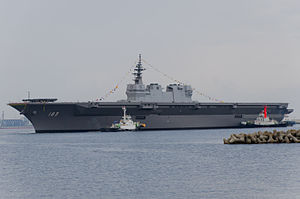
Japan’s Maritime Self-Defense Force may begin flying unmanned surveillance drones from destroyers at sea as a possible prelude to procuring aircraft carriers, local media is reporting.

According to The Japan Times, “The Maritime Self-Defense Force is considering deploying fixed-wing unmanned reconnaissance aircraft that can take off from and land on destroyers.” If the plan is approved, the MSDFs intend to research these operations extensively.

“Depending on its research, Japan might someday build an aircraft carrier equipped with fighter jets,” The Japan Times report said, citing numerous unnamed sources. No details were provided about the affiliations of the sources that might help evaluate the credibility of their claims. However, the paper did report that a source in the Defense Ministry had said that the studies will not lead the MSDF to operate fighter jets from surface ships in the future. The Defense Ministry source did say that unmanned drones would be deployed on the ships, however, because these can operate in “dangerous areas in emergencies.”

The move to operate aircraft from surface ships is likely to spark concern and criticism from some states in the region, particularly China, which insists that Japanese Prime Minister Shinzo Abe is seeking to break loose from the country’s post-WWII Pacifist constitution. As the report noted, although the MSDF currently flies helicopters from some of its ships, it has no experience flying fixed wing aircraft from its vessels because such a move could be construed as an offensive military capability, which Japan’s constitution prohibits.

Japan’s decision to only consider using (presumably unarmed) reconnaissance drones at this time was likely made, at least in part, with an eye toward deflecting the almost certain criticism that the move will provoke. By starting with unarmed aircraft, Japan could seek to gradually seek to make the region comfortable with it operating fixed wing aircraft from surface ships. Moreover, even if the Defense Ministry source is being truthful in saying that only drones and not fighter jets will be flown from Japanese ships, unmanned aircraft will become increasingly capable of being used in some of the same ways as bombers and jets in the years ahead.

What If China Did Invade Pag-asa Island?

An invasion of Pag-asa Island by Chinese forces would certainly be a tragic mistake for China.
January 16, 2014

In the midst of the furor over Hainan province’s new fishing regulations covering nearly sixty percent of the South China Sea, an unnamed Chinese writer penned an article in the Chinese-language publication Qianzhan (Prospects) arguing that China would recover Zhongye Island by force during 2014 as part of a long-term naval expansion plan.

The article likely would have attracted little attention outside China until a summary was translated into English by Chan Kai Yee (who is now often mistakenly listed as the original piece’s author). The summary was published by the China Daily Mail on January 13 under the headline, “China and the Philippines: The reason why a battle for Zhongye (Pag-asa) Island seems unavoidable.”

It is common for retired Chinese military officers and civilian ultranationalists to write about the South China Sea and threaten the Philippines and Vietnam with military action for “stealing” Chinese territory. The Qianzhan article cites unnamed “experts” that the People’s Liberation Army Navy has drawn up a detailed combat plan to seize Zhongye Island this year because of its strategic significance.

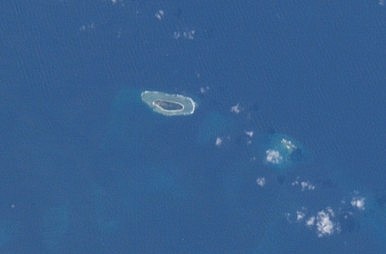
Zhongye is better known as Thitu Island or Pag-asa in Tagalog. It is the second largest island in the Spratlys, estimated to cover an area of 37.2 hectares (or 0.14 square miles/0.36 square kilometers). Itu Aba is the largest of the islands in the archipelago and covers an area of 46 hectares in size. It is occupied by Taiwan.

Pag-asa Island lies exposed in the upper northwest quadrant of the Spratlys at the outer boundary of islands and features forming the archipelago. To its west lies the open South China Sea.

Pag-asa Island is designated a town belonging to the Philippine municipality of Kalayaan. It boasts a civilian population of nearly two hundred. Pag-asa contains a number of structures including a municipal building, a community hall, health center, nursery school, water plant, communications tower and an airstrip.

The airstrip, known as Rancudo Airfield, is 1,400 meters in length and services both civilian and military aircraft, including the Philippine Air Force’s C-130 cargo plane. In March 2011, the Chief of Staff of the Armed Forces of the Philippines (AFP) Eduardo Oban announced plans to upgrade the airfield and repair army barracks. About fifty AFP soldiers are stationed on Pag-asa.

China’s Westward Strategy

Beijing is seeking new energy supply routes to its west. Will that influence its eastern strategy?

By Yo-Jung Chen
January 15, 2014

The implication of Xinjiang’s Uighur minority in last October’sTiananmen Square attacks has showcased Beijing’s failed ethnic policy. The incident not only caused deep shock within the ruling class in China, it has also had an inevitable impact on China’s westward pivot.

Most of the world tends to focus on China’s rapid seaward expansion to the east. Besides a strategic ambition of reaching out into the Pacific, China’s obsession with the East China Sea and the South China Sea also reflect a need to secure vital sea lanes for energy shipments from the Middle East.

Always energy hungry, the world’s second economic power has for the past several years been quietly exploring new supply routes in addition to the traditional ocean route extending through the Indian Ocean, the Strait of Malacca, the South China Sea and the East China Sea to one of the ports on China’s East Coast.

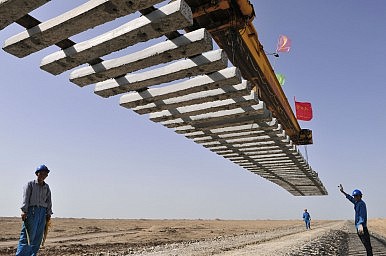
One of the new lines being envisioned is what Chinese President Xi Jinping has called the “New Silk Road,” which extends from China’s western border through Central Asia to the oil-rich Middle East. Eventually, this Silk Road may reach Europe via rail. In fact, this grand project is also closely linked to a sweeping shift in China’s internal economic development.

Developing China’s West

The bottom line of China’s westward pivot is a shift in the focus of the country’s economic development from the economically saturated and rich coastal eastern regions towards the inland areas to the west. This shift has become all the more urgent because, as the Tiananmen Square attacks demonstrated, popular discontent in these poor inland regions is rising to dangerous levels. The social disgruntlement can be explained by many factors, including a failed ethnic policy and worsening religious conflict. However, the central government in Beijing seems to believe that it is mainly due to the region’s economic backwardness compared to the industrialized east. It hopes that lavishing economic resources on the poor inland regions will help soothe the worrying social instability.

Africa: China and Japan's Next Battleground?

While China and Japan may look like they’re competing in Africa, the two countries are actually playing different games.
January 15, 2014

As tensions between China and Japan multiply, there is an increasing battle for influence in other states. For example, in his recent article in The Diplomat, Jin Kai noted China and Japan’s global media war. There has also been an upswing in more traditional diplomatic wrangling, with Japan seeking to increase its influence in ASEAN as an attempt to reduce China’s sway in the region. With both China and Japan seeking to assert their leadership over the Asia-Pacific, it makes sense that both countries would woo ASEAN. It’s a bit more surprisingly to see China-Japan diplomatic competition supposedly pop up in Africa.

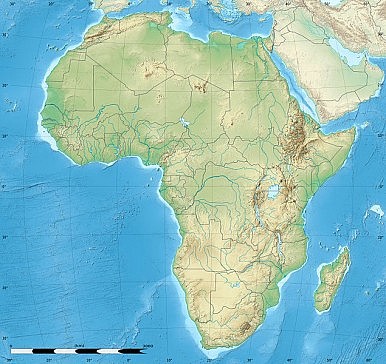
Recently, China’s Foreign Minister Wang Yi and Japan’s Prime Minister Shinzo Abe both visited the African continent. Abe left on January 9 for a week-long tour of the Ivory Coast, Mozambique, and Ethiopia. Meanwhile, Wang was in Africa from January 7 to January 11, visiting Ethiopia, Djibouti, Ghana, and Senegal. Given the current chill in China-Japan relations (and the tendency for both countries to snipe at each other in the media), the two trips quickly morphed into a sign of ‘competition’ over Africa.

Both countries rejected the idea that they were competing. When Chinese Foreign Ministry spokesperson Hua Chunying was asked to comment on the idea that Wang Yi’s visit to Africa “is directed against Japan,” sheresponded that anyone harboring this idea “is not so acquainted with the past and present of China-Africa relations.” Indeed, as Hua pointed out, it’s traditional for Chinese Foreign Ministers to visit Africa as their first overseas trip of the new year. Hua praised China “sincere and selfless help” for Africa, and warned that trying to stir up a rivalry in Africa is “a wrong decision which is doomed to fail.” This comment was likely directed at Japan, but could just as easily apply to the United States and other countries seeking to increase their influence in Africa.