8 May 2014

Role reversal: how Japan became America’s ally and China fell from grace

4 May 2014
Author: Jean-Pierre Lehmann, IMD


Ask ‘who were the allies in WWII?’ and the answer will likely be: ‘the US, the USSR and Britain’. The fourth ally, China, has been airbrushed from history.

Yet China fought valiantly and suffered hugely. Had the Chinese not kept up the war with Japan in the Pacific, the US would not have been able to concentrate its military efforts on the Atlantic. Only after the war was won in Europe was the US able to hop across the Pacific, capture Iwo Jima in February 1945, Okinawa in April, drop the atomic bombs on Hiroshima and Nagasaki in August, and force Tokyo’s unconditional surrender.

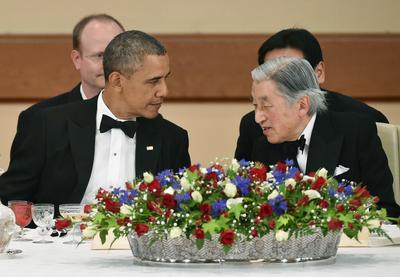
In a bizarre twist — after China and the US had suffered at Japanese hands — the positions of the two East Asian countries vis-à-vis the US were reversed: Japan became the ally, China the enemy. This has been the paradigm since; it informedBarack Obama’s visit to Tokyo and the need he felt to show support for Tokyo in its rift over the Senkaku/Diaoyu islands with Beijing.
This was not how the narrative was expected to develop. The sudden turn that occurred in the late 1940s/early 1950s accounts for the explosive powder keg that prevails in Northeast Asia to this day.

In the early to mid-19th century the rising Western imperialist powers, led by Britain, were seeking to open markets in East Asia. And it was the US, in the person of Commodore Matthew Perry, who forced the ‘opening’ of Japan in 1854 — setting in motion a series of striking developments that propelled Japan into a major industrial and imperial power.

The Chinese story is completely different. The Sino–American relationship developed in such a way that emotional bonds were created. In the late 19th century as the rapacious European imperialist powers and Japan were extending ‘spheres of influence’ in China, the US Secretary of State John Hay issued the ‘open door policy’. Though not as altruistic as it sounds, the intention could be seen as an attempt to prevent a European ‘scramble for China’ that occurred in Africa.

A powerful American China lobby emerged: China was America’s friend and America was China’s protector. The wife of Chiang Kai-shek, Soong May-ling, a Christian with native fluency in English, was tremendously effective in building up an influential American network.

THE ‘GOOGLIZATION’ OF INTELLIGENCE AND COUNTERTERRORISM ANALYSIS

May 5, 2014


The ‘Googlization’ of Intelligence and Counterterrorism Analysis

· By Dan Verton · May 02, 2014 

The ease of use and powerful search capabilities of Google have inspired a quiet revolution in the way some military intelligence organizations are using big data. But Google, the company, has nothing to do with it.

The company behind the big data search revolution in the military intelligence community is Melbourne, Fla.-based Modus Operandi Inc. Nearly a dozen military agencies, including the intelligence components of the services, have worked with Modus to conduct tests of the company’s Wave Exploitation Framework platform — a technology that leverages graph computing, natural language processing and big data analytics tools to help analysts map relationships between people, things, places and events.

Screen Shot 2014-05-01 at 2.59.39 PMThe Marine Corps and Army have recently conducted field tests using the Wave system, along with a new graphical user interface the company developed called BLADE, which is modeled after Wikipedia.

“It looks and acts like Wikipedia,” said Dr. Eric Little, vice president and chief scientist at Modus. “And you can search in a search bar just like Google.”

The familiar interface enables younger, less-experienced analysts to build profiles of individuals “just by clicking, dragging and dropping” information from multiple sources, he said. And it supports multimedia, including videos, photos and third-party apps.

Modus is marketing the technology to military, intelligence and counterterrorism organizations that are finding it difficult to manually discover relationships between terrorists and their supporters within the mountains of raw field data collected by soldiers and analysts. But the company believes the technology has much broader potential throughout the national intelligence community.

Graph computing

Screen Shot 2014-05-01 at 2.57.55 PMThe real power of Wave and BLADE comes from the ability to ingest massive amounts of data from existing stores and create an ontology that can be crunched and analyzed using graph computing.

First, the data is ingested and converted into a graph, a highly relational network model in which anything that can be classified as a thing becomes a node in the network. Those nodes are then assigned attributes for classification and search purposes.

For example, Wave enables analysts to understand the types of attributes that belong to persons, Little said. “People have parents, certain biometric characteristics, such as height, weight, hair color, eye color and skin tone,” he said. “They may have ancillary types of properties, like…glasses or a tattoo. You can describe certain features about where they live, where they work. You can also include things that people own, such as a cell phone.”

And that’s where things get interesting.

“Cell phones are the kinds of things that have phone numbers attached to them,” Little said. “Cell phones have call plans, cell phones have data plans, cell phones have carriers [and] cell phones have manufacturers. So you can see that from that person, you can go out to their cell phone; from the cell phone, you can go out to their data plan; from the data plan, you can hit their Facebook page; and from their Facebook page, now you’re connected to an organizational network of their friends.”

WE’RE SAVED! EXPERTS SHOW HOW TO FIX U.S. CYBER SECURITY

May 6, 2014 · by Fortuna's Corner 
We’re Saved! Experts Show How To Fix U.S. Cyber Security

Patrick Tucker, Technology Director for DefenseOne.com, and author of “The Naked Future: What Happens In A World That Anticipates You’re Every Move?,” had an online article May 4, 2014 in DefenseOne.com, with the title above. He writes that “350 members of the Truman National Security Project, ran a massive simulation last weekend — to see if the U.S. was capable of passing legislation to fix the nation’s cyber vulnerabilities — in the aftermath of a national crisis.”

After simulating a cyber attack against two electrical power generators in Coral Gables and St. Augustine Florida, the members of the Truman National Security Project war-gammed how Capital Hill and the POTUS might respond to such an event. Mr. Tucker notes that “the exercise represented something of a first in size and scope for legislative simulations, with players drawn from the Hill, cyber security field, and the military. In theory,” he writes, “the exercise showed that the POTUS and Congress are capable of passing a cyber security bill with mandatory standards for the industry.”

Matt Rhoades, Director of Cyber Space and Security Program at Truman; and, the designer of the exercise, “described it as an acid test to reveal the effectiveness (or not) of the White House’s recent Cyber Security Framework,” released this past February. Mr., Tucker adds that “the framework is a set of practices and guidelines for utility companies, software designers, and cyber security players to protect the nation’s critical infrastructure from [catastrophic] attack.”

“I have felt for a long time…that it’s unlikely that we will get much policy movement in the cyber area, without a crisis,” Rhoades told DefenseOne. “So, that leads me to two questions. One is, what is our threshold in terms of what sort of crisis actually spurs that on? The second one is, if we are actually making decisions at the time of a crisis, are we making good decisions, or bad decisions — are we making decisions that we are better off making at a more sober time — than at the time of the crisis?”

“How did the game play out?”, asks Mr. Tucker. “A simulated House and Senate were barely able to pass a bill with mandatory provisions for industry to follow to improve cyber security. But, this outcome was no liberal pipe dream,” he adds. “The White House had to carve out a role for industry via a public-private working group consisting of the Department of Homeland Security, a council of industry players and others.” “Republicans were willing to accept the mandatory standards because they felt the industry had more of a role…it was important to have industry at the table as part of the legislative process that was ongoing,” said Rhoades.

The Pentagon Just Got a New Ship That Can Track Satellites … And Help Destroy Them

Cobra King vessel has some of the most powerful radars ever put to sea
David Axe in War is Boring

The U.S. military has declared operational a high-tech new radar ship.Howard O. Lorenzen, named for a pioneering spy satellite inventor, is better known by her interchangeable code names “Cobra Judy Replacement” and “Cobra King.”

Officially a “missile range instrumentation ship,” in fact Cobra Judy Replacement, a.k.a. Cobra King, is a combination spy vessel, test asset and diplomatic tool—and a key part of a high-tech military team that, just six years ago, proved it could destroy a satellite in orbit with a ship-launched missile.

Just don’t ever expect the Pentagon to publicly state that.

CJR/CK was supposed to enter service earlier, but the ship—not her radars—had mechanical problems that needed fixing. The Navy’s quasi-military Sealift Command, previously in charge, is handing responsibility for the vessel to the Air Force.

“CJR will provide the nation with a fully capable, flexible and adaptable system that will handle future radar data collection on ballistic missiles,” the Navy stated.

Scores of nations possess long-range ballistic missiles. And all the world’s nuclear powers—the U.S., Russia, the U.K., France, China, India, Pakistan, Israel and North Korea—maintain ballistic rockets with atomic warheads.

It’s one of Cobra King’s main jobs to monitor any tests of these rockets using her S-band and X-band radars. The S-band sensor sweeps vast expanses of sky for possible missiles in flight. The X-band zeroes in to closely track a target.

Both radars boast ranges of thousands of miles, meaning the 534-foot-long Cobra King can park in international waters and watch rockets launches, say, deep inside China or Russia. Diplomats can use the data for what the military calls “treaty verification”—in other words, making sure countries are sticking to their arms-control agreements with each other.

Cobra King. U.S. Navy photo

There’s a flip side to treaty verification. Any data Cobra King collects could help the Pentagon develop missile countermeasures. The Defense Department has spent $10 billion annually for many years designing and manufacturing air-, sea- and land-based sensors and missiles for detecting and shooting down enemy rockets.

And with minimal tweaking, these Ballistic Missile Defense systems can also target satellites in orbit. The older ship Cobra King is replacing—code name Cobra Judy—helped the Pentagon do just that in 2008.

Journal of Defence Studies, Vol. 8, No. 2, April-June 2014

Journal of Defence Studies, Vol. 8, No. 2, April-June 2014

The issue discusses vulnerabilities in the capital acquisition process, maritime security cooperation, privatisation of anti-piracy operations, cloud computing's relevance for defence, Pakistan's biologicval weapons programme and how marine eco-concerns impact India's maritime strategy.


Perspective
-- Amit Cowshish
Focus
-- Lee Cordner

-- Riddhi Shah

-- Ajey Lele and Munish Sharma

-- Dany Shoham

-- Arnab Das

Review Essay
-- Gautam Sen

Book Reviews
-- Prakash Singh

-- Sanjiv Tomar

-- P.K. Chakravorty

7 May 2014

Military Assault on Pakistan Media

By Karamatullah K Ghori

Published: 07th May 2014 

http://www.newindianexpress.com/opinion/Military-Assault-on-Pakistan-Media/2014/05/07/article2209541.ece

The more things seemingly change in Pakistan the more they remain the same. Anyone doubting the veracity of this dictum need only look at the unfolding saga of the attempted murder of ace television anchor Hamid Mir on April 19, and the train of events since been triggered in its wake.

Pakistan’s chequered history has long been held hostage by its “deep state”, comprising a deep-seated oligarchy of feudal lords, generals and power-hungry bureaucrats. Under the frequent military rule—which spans, to date, half of its sovereign life—the “deep state” acted up front with impunity and without any accountability. It laid down ground rules that had to be obeyed in totality without question or demur.

Even when they weren’t stalking the land, up front, as rulers and overlords, the power brokers of the deep state made sure that the lines drawn by them—the so-called “red lines”—weren’t crossed, either by the civilian rulers or by those hanging on to their coat-tails. Anyone with the temerity to cross them did so at their own peril and perished in the process.

Who could have known this cardinal rule of political life in Pakistan better than incumbent prime minister Nawaz Sharif? He made the error of challenging the deep state and its pampered, puffed-up, denizens in his two previous stints in power and lost on both occasions. His nemeses in the deep state may have thought he’d learned his lesson and wouldn’t dare disturb the unwritten equation of power-peddling in his third crack at the rampart. But Nawaz apparently didn’t take any heed from his two previous Waterloos, a capital crime in the eyes of those ruling the roost in Pakistan.

It isn’t Nawaz alone who miscalculated; many others did, too, including pundits following the graph of Pakistani politics and the realm’s power distribution. They thought ground realities had changed, drastically perhaps, in the years since Nawaz was booted out of power by the last Bonaparte, General Pervez Musharraf, at the cusp of the century. Pundits and politicians, alike, overestimated the power of the news media which has come into its elements in the past one decade and thought it had become a power to contend with and also challenge the high and the mighty at their game.

Battles for Zoji-La and Namka Chhu

Issue Net Edition | Date : 05 May , 2014

A non-combatant who witnessed and filmed the first flight to Leh & Battles For Zoji-La and Namka Chhu.

“…the fall of Leh will be a strategic blow to India. It has to be saved at all cost….. I will be on that flight in your cock-pit. So let’s go.” Major General K S Thimayya, DSO, 23 May, 1948.

“An eye witness to two stunning Himalayan Battles fought at either end of the range… had savored the joy of victory at Zoji La ……. And the sadness of withdrawal at Se La, from poor preparedness …” W M (Bill) Aitken, 2009.

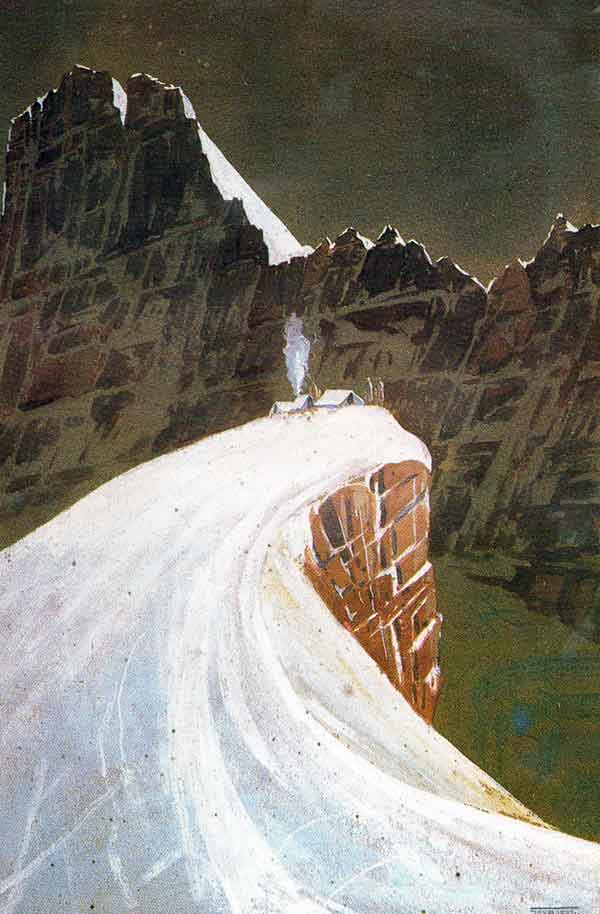
“ … very special thanks are due to Serbjeet Singh for his kind permission to reproduce the spectacular panorama of the Namka Chhu Valley and Thagla ridge which he was still painting, perched on a hill over-looking the Battle-field, when the Chinese launched their attack on 20 October, 1962.” Major General D K Palit, Vr C, 1991. 

It was in 1978, when waiting to catch the attention of the Director General Military Operations in his office, that I noticed a card-board object lying on a table by the window. On a closer look subsequently, that cratered card-board was in fact a paper-mache, three dimensional model of the Namka Chhu Valley. It was a stunning replica of the terrain over which 7 Infantry Brigade had sited its defenses and engaged the PLA troops in October 1962. The master crafts man was, Serbjeet Singh!

I had known the name but not the Man, leave alone his stupendous deeds and fame. A graduate in History (First Division) from Forman College, Lahore but his life’s calling lay elsewhere; the Himalayas were his load-stone, not just their physical attraction but rather the philosophical introspection they inspire among human beings at different levels and how they shape the lives and cultures of those who dwell in and around them. Above all, Serbjeet Singh (SS) perhaps even understood the geo-strategic significance of the Himalayas as India’s Northern frontier. For, how else can one explain the presence of a twenty four year old film-maker-cum-artist (Charcoal, water colour and Oils), participating of his free volition in the First Flight to Leh (24 May, 1948), and witness the Battles at Zoji La (01 November, 1948), watch the history-making exploits of the Stuart Tanks of 7 Cavalry beyond Zoji La and all other engagements culminating with the capture of Kargil, on 23 November, 1948!! And all of it filmed, sketched, painted and recorded in text too, in his personal diaries.

From times immemorial but especially beginning with Napoleon’s era, professional artists have been commissioned to paint battles and in particular scenes related to acts of valour (Victoria Cross) which are honored and prized to this day. All such art was a re-creation removed in time and space, even by Continents, but based on recorded history and supplemented at times by interviews with eye witnesses. But here was SS who was impelled solely by the inner urgings and the Faith of an artist (Dharma), not the money motive and certainly not ego. Perhaps SS may have assumed that his actions symbolized the “shoulder-to-shoulder” presence of the entire Nation with the front-line soldier? And in the same vane I salute SS, as the expression of gratitude to him on behalf of India’s Armed Forces as a whole, for recording on Film and through paintings the History of war in J&K in 1948-49.

The history of my narrative (in essence a compilation of nuggets of Military History), had its beginnings on the lawns of the Civil Lines Club, Jullander, on a balmy winters evening in February, 1948. SS was screening his 16 mm film on “Life In The Himalayas”, especially for Dr Gopi Chand Bhargava, the Chief Minister of the then Punjab State. Within minutes of commencement, “in strode a tall man who was received by the Chief Minister. That gentleman was Major General K S Thimayya, DSO, GOC Jullander Area.”* Evidently the General was so impressed by the film that he decided to encourage SS to document the combat actions of India’s fledgling Army in J&K, with the offer to SS and his younger brother thus, “If you boys are prepared to make a film on the war in Kashmir, I will send a signal to the GOC-in-C Western Command to help you. Come to my office tomorrow, in the Cantonment.” @

Uncertain future for India's security structure, says ex-DGMO

05 May 2014

"Indigenisation of weapons will not happen unless there are suitable economic measures," said Lt-Gen V R Raghavan (retd), formerly Director-General of the Indian Army.

Participating in an interaction on "Agenda for India-2014: Strategic aspirations and security preparations" at ORF-Chennai on March 23, Gen Raghavan expressed a pessimistic view regarding a post-poll government bringing about changes in the army. He said that not much has changed over the past 15 years and a lot of opportunities were lost during the last ten years of the United Progressive Alliance (UPA) Government of Prime Minister Manmohan Singh. 

Pointing out that there was mismanagement of the national security structure, Gen Raghavan was vociferous that Defence Minister A K Antony did not live up to the demands and expectations. He added that not much of a change would come about with a new government at the Centre, and hoped that the parliamentary elections would usher in a strong government with a comfortable parliamentary arithmetic would emerge.

Gen Raghavan said that modernisation of the military does not essentially mean using modern weapons. Instead, it involved modern thinking, and breaking away from a system to which the bureaucrats are locked into, thus resisting change. He said the nation thus may not have the capacity to handle a war. 

Gen Raghavan said that future wars would not be fought in the way it was fought earlier. Hence, developing modern ammunitions and tanks may end up being pointless, he said. With more modern weapons, there would also be more scandals in the country, he cautioned. 

On the strategic front, Gen Raghavan said that even if India does go to war with China, it would be 'left high and dry' even by our closest ally Russia. India has only two things left in this regard, to avert a possible war situation or yield to the superiority of China. 

Energy pool and 'growth revolution'

Expressing, at the outset, an uncertain future for India's security structure in 2014, the former DGMO said it would be a foolhardy exercise to speculate on the same. He gave a global perspective of the security scenario and where India stands in it. He touched upon various global scenarios and detailed the various aspects where India is dependent on other countries. 

The Oman Gas Pipeline: India’s Underwater Energy Supply Chain

5 May 2014
Vijay Sakhuja
Director (Research), Indian Council of World Affairs (ICWA), New Delhi

Energy hungry India has invested enormous political and diplomatic capital in gas pipelines such as the Iran-Pakistan-India IPI and the Turkmenistan-Afghanistan-Pakistan-India (TAPI) pipelines, from Iran and Turkmenistan. However, these projects have been mired in problems of insecurity and cost. Plans to build the IPI have been shelved and the TAPI is still on the drawing board. Similarly, in 2003, a pipeline project to transport gas from Iran to India was explored but did not fructify due to high construction and transportation costs. The focus has shifted to the Oman-India Pipeline (OIP) which would run below the sea across the Arabian Sea. Iran is now being included in the pipeline network and there are plans to build an energy corridor to link Turkmenistan. The underwater supply route is expected to eliminate potential vulnerabilities arising from attacks or hijacking of pipelines by subversive elements in Pakistan and Afghanistan, and to ensure uninterrupted supply of gas to India.

The OIP project was first mooted in 1999. The two sides signed an agreement for the supply of 56.6 million cubic meters (MCM) of natural gas through the 1,130 kilometer undersea pipeline across the Arabian Sea to be built at a cost of $5 billion. The seabed survey had revealed that the initial route of the pipeline would be via complex and rugged seabed terrain and that there were ‘faulted up thrusts’ enroute which would pose difficulties in the smooth and level laying of the pipeline. A new route was explored which was marginally shorter, but the technological capacity – including the lack of ships to lay pipes at 3500 meter depths, and pipeline repair systems – for deep sea pipe laying was unavailable then.

Siachen was accepted as Indian Territory in 1949!


Issue Net Edition | Date : 30 Apr , 2014

The Boss of Pakistan says: “It’s time to resolve the Siachen issue”, but what General Kayani forgets is that the Siachen issue was ‘solved’ long ago, in fact, in July 1949.

I reproduced here an article that I published 7 years ago on the subject.

…the resolution of August 1948 “had conceded the legality of Kashmir’s accession to India and as such no man’s land, if any, should be controlled by India during the period of ceasefire and truce. This meant that the onus of proof to convince the commission of any factual position, on the date of ceasefire, in any disputed territory, rested with Pakistan.

Where wild roses bloom

Once upon a time, a small Yarkandi village stood guarding the entrance of a mighty glacier of the Karakoram range. It was a meeting place for Balti traders to barter their goods with Central Asian merchants.

One day the Yarkandis decided to visit their southern neighbours; they descended from the glacier, but before returning north, they could not resist taking away a beautiful Balti girl. The offense could not remain unpunished; the Yarkandi village had to pay for its crime.

The Baltis contacted a local cleric, who gave them a taweez (amulet) to be placed on summit of the Bilafond-la pass. The villagers were told to strictly follow the priest’s instructions and come back via Nubra valley. However, the Baltis performed only the first part of the ritual. After leaving the taweez on the pass, they did not use the Nubra track to return. Legend says that a terrible storm destroyed the Yarkandi village; only a few stones and wild roses remained.

The priest later explained why the roses did not disappear; his instructions had not been fully followed. Result: Wild roses could still grow in the area. This glacier is known as the Siachen (‘Sia’ is rose, ‘chen’ is place)-the place where roses bloom. This is one of the many myths around the area. But there are also political myths anchored to the 72 km long glacier.

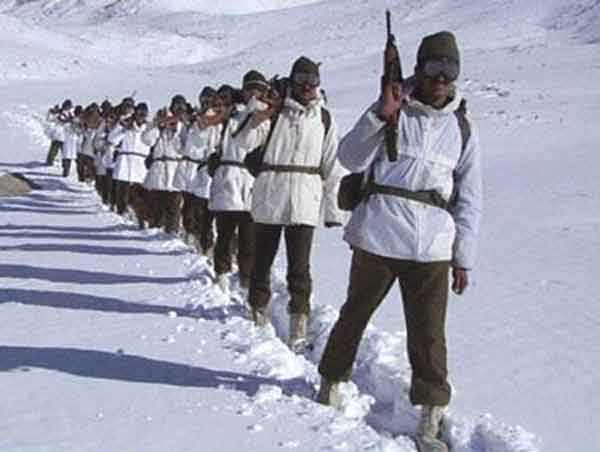
One such legend is that Pakistani troops are occupying the glacier. If you regularly read the Pakistani press, you are informed that Islamabad is ready to “withdraw its troops from the glacier” if New Delhi accepts to reciprocate. According to Islamabad, “demilitarisation” is the solution. General Pervez Musharraf has even declared that he finds the issue “actually troublesome for both sides and it is an unnecessary irritant which can be resolved”. But the point is that Pakistan does not occupy the glacier and never did (though it did try in 1983-84). Later in 1984, India took full control of the area as well as most of the peaks of the Saltoro range.

Violence in Assam Has Pan-India Implications

The recent violence in Assam’s Bodoland has implications for all of India.
May 06, 2014

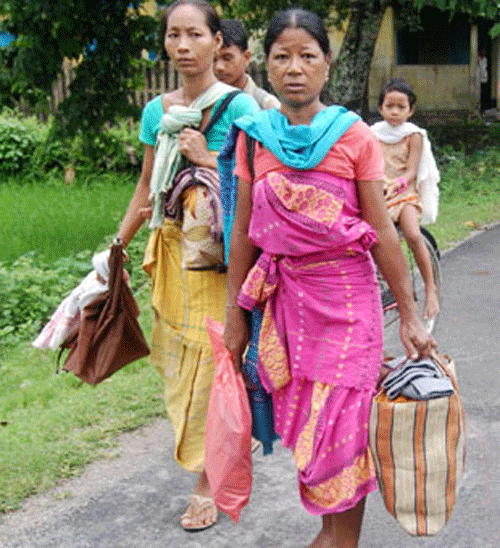
Assam’s fragile peace could be unraveling as its ethnic fault lines resurfaced again last week, claiming over thirty lives within the Muslim community. According to unconfirmed reports, over fifty people are still missing. The attack came just a week after parliamentary elections were held in the region, on April 24. The violence was attributed to the large-scale polarization of voters along ethnic and religious lines .

The incident took place in Bodoland, a northern area of Assam where the Bodo tribes lives. The Bodo are an indigenous people and one of the oldest tribes within the state. Over the years, the area also came to be occupied by non-Bodo communities from different parts of the country and even Bangladesh. Many Bangladeshis immigrated there both before and after the partition in 1947.

Eventually, the demographic marginalization of Bodos led to rebellion and violence against non-Bodo settlers and the demand for a separate state in the 1980s and 1990s. The insurgency under the aegis of the Bodo Liberation Tigers (BLT) culminated in the Bodo accord in 2003 that gave the indigenous ethnic group the Bodo Territorial Council (BTC) — an autonomous political body comprising four districts,where they can exercise exclusive control, thereby denying other communities any stake in the governance of Bodoland.

This led to resentment among non-Bodo groups. The Bodo constitute only 26 percent of the population of the area but exercise full political control. A majority of settlers in the Bodoland are Muslims but they are not illegal migrants; they have settled in the area over many decades and have become part of the area. The BTC has recognized the political aspirations of the indigenous tribe while ignoring the interests of the non-tribal population who comprise 74 percent of the population.

Pacing India-China Relations

Paper No. 5696 Dated 05-May-2014

By Bhaskar Roy

Howsoever little, the forward movement on the border issue in the over all India-China relations may be appreciated.

The recent visit of Gen. Qi Jianguo Deputy Chief of the People’s Liberation Army (PLA) to India (Apr 22-24), an Indian naval ship taking part in the PLA navy’s fleet review in Qingdao, Joint Working Group (JWG) bilateral meeting in Beijing, all add to positives in this relationship. Both sides have agreed to enhance military-to-military relationship to forge closer ties, and expand cooperation in various fields. This has particular relevance to the border issue especially transgressions along the Line of Actual Control (LAC) by troops of the other side.

Last year’s PLA’s incursion into the Indian side of the LAC in Depsang in the western sector, (pitching tents for three weeks) could have ruined an otherwise painfully and patiently constructed understanding between the two sides. At that point Chinese Premier Li Keqiang’s maiden visit to India was also threatened. The matter was resolved at the political level, with India seeming to concede more. Anyway the situation was saved. Under the new border defence agreement more mechanisms are being put in place to avoid Depsang like situations in the future.

Chinese President Xi Jinping is scheduled to visit India in the second half of the year, probably in September or October. By that time a new government would be in position in New Delhi. With change of governments in India, foreign policy does not undergo radical changes. In the last five years, however, there have been certain positions in the Indian foreign policy that demonstrated “obsequiousness” to the nation’s detriment.

Premier Li Keqiang’s visit last year did not yield much results. Of course, it was an exploratory visit to South Asia. In India, Li explored opportunities for Chinese business. From India Li went to Pakistan where he reassured Islamabad of China’s commitment and “all weather” friendship, underlining Beijing’s steadfast support to Islamabad’s defence and nuclear priorities.

President Xi Jinping will be coming to India in a somewhat different set of circumstances. Internal challenges in China are rising, and the problem with Uighur Islamic separatists/terrorists have become more acute in the last one year. Suicides and attempted suicides by Tibetan monks, nuns and lay people demonstrating against Chinese rule and demanding the return of the Dalai Lama to Tibet have put the Chinese authorities on the back foot. Beyond these are external challenges especially rising opposition to its aggressive behavior on the eastern sea board on territorial claims.

Demographic invasion of India from the North East


Issue Vol 22.2 Apr-Jun 2007 | Date : 04 May , 2014

Six decades of ‘Indian effort’, still Seven Sisters have not been fully integrated with the main landmass. Thousands of crores of money has been pumped into the North East. In fact our Central Govt is indirectly financing the underground governing bodies who de facto continue to rule the roost. The problem has been further accentuated by uncontrolled illegal migration from Bangladesh, the situation in the ‘Gateway to the North East’, the ‘Siliguri Corridor’, where insurgency is brewing and is likely to become a major security concern for our country.

Kamtapuri movement is making steady progress in carving out yet another autonomous state by amalgamating six districts of North Bengal viz, Darjeeling, Jalpaiguri, Cooch Behar Maldah, South Dinajpur and North Dinajpur.

As per 2001 census the population of India is approximately 1.02 billion, almost three-fold increase in population of 1947. The three-fold increase is attributable to, inadequacy and inconsistency of India’s family planning programme, (bureaucracy had to tow the line of their political masters) illiteracy, religious disbeliefs, backwardness of the people, underprivileged condition of women in India, poor health facility and so on. But no one bothered to mention that one of the reasons is presence of over 26 million Bangladeshi illegal migrants in India.

At the time of partition, in East Pakistan (now Bangladesh) the Hindu population was 25.6 percent. It got reduced to 14 percent in 1991 and today it has come down to abysmal 7 percent.

Bangladesh has the highest density of population in the world, the density of its population is 982 persons per/sq km. North Eastern States on the other hand are sparsely populated with average density of little over 215 persons per sq km. Principle of void theory in law of nature has taken its course. In addition not so good economic conditions in Bangladesh have forced people to embrace more lucrative options. This is not only true for this region, Mexican influx into south western United States of America is most recent phenomenon. Large-scale demographic movement continues to take place in the NE, resulting in demographic imbalance in states. In the state of Tripura imbalance has resulted in “demographic inversion”. After the partition, till 1971, there was a massive population influx caused by political, communal and economic reasons, which created serious ethnicity problems in these states. At the time of partition, in East Pakistan (now Bangladesh) the Hindu population was 25.6 percent. It got reduced to 14 percent in 1991 and today it has come down to abysmal 7 percent.

Afghanistan: Looking For Quick Solutions


May 5, 2014

Most Afghans blame the Pakistanis for any successes the Taliban have. There is some truth to this as it is no secret that ISI (the Pakistani CIA) created the Taliban in the early 1990s and Pakistan has been supporting Islamic terrorism since the late 1970s. In the last few years more evidence of this Pakistani perfidy has come to light. For example, officially Pakistan still denies that they sheltered Osama bin Laden, but it’s no secret that Pakistan still tolerates sanctuaries for all manner of Islamic terrorists who operate inside Afghanistan. One of the biggest complaints Afghans have against the Americans is that the Americans are not more forceful in persuading Pakistan to shut down these sanctuaries. Pakistan insists it is innocent and the civilian government in Pakistan will, at most, admit that it cannot control its own military, which is most responsible for providing support to Islamic terrorists. The sad fact is that this is all self-inflicted. Over three decades of government sponsored propaganda supporting Islamic terrorists has left a lot of Pakistanis still willing to accept excuses for all the terrorist violence. Many Taliban insist that they are not terrorists but simply “angry brothers” of fellow Pakistanis and trying to make Pakistan a better place. A growing number of Pakistanis see the flaws in this approach, but the Islamic terrorists and their supporters are still able to threaten critics with violence and that keeps many anti-terrorism Pakistanis quiet. 

In Afghanistan the increased popular (and often violent) opposition to the Taliban and Islamic terrorists in general has forced the Taliban to depend more on bases and support from Pakistan. The Afghan Taliban are particularly dependent on the Islamic terrorist sanctuary in North Waziristan, where many of the bombs used in Afghanistan are made and many of the suicide bombers are trained. The Afghan security forces have responded by increasing efforts to block Taliban efforts to get bombs, weapons and Islamic terrorists into Afghanistan. 

The Pakistani and Afghan Taliban have become a lot closer in the last few years because both groups are encountering more opposition, heavier losses and more problems raising money. Both groups have lots of factions that don’t agree with each other and despite all that is threatening them, the factions, especially in Pakistan, will still fight each other. Despite all these troubles there are still a lot of broke, uneducated and aimless young men willing to join up. That often ends up in an early death, but along the way these guys get a little respect (as a byproduct of fear) and, for a short while, the feeling that they are someone important. 

The Message Behind Raheel Sharif Raking up Kashmir


In a speech on the occasion of Martyrs Day, the Pakistan Army chief, Gen Raheel Sharif, parroted a nearly seven decade old, and by now tired and worn out cliché that Kashmir was Pakistan’s ‘jugular vein’ and demanded a resolution to the issue in accordance with the UN Security Council resolutions and ‘aspirations of the Kashmiri people’, adding for good measure that there can be no ‘durable peace’ in the region if the Kashmir issue is not resolved, presumably according to Islamabad's wishes.

Coming as it does in the midst of India’s General Election, Gen Sharif’s speech was bound to raise hackles in India and it was quite natural for the main political parties to close ranks and attack these remarks. The reaction in India was a lot stronger this time as compared to what happened just a couple of months back when Pakistan's Prime Minister, Nawaz Sharif, had said the same thing in his address to the UN General Assembly. Although there is neither anything new nor anything novel in what Raheel Sharif or for that matter Nawaz Sharif have said on Kashmir, this sort of statement is offensive to the Indian ears. More importantly, India cannot and should not remain blasé about the signals that are coming out of both Islamabad and Rawalpindi because, if nothing else, Pakistan’s position has once again significantly regressed from the ‘out of the box’ thinking during the Musharraf years. In other words, the Kashmir solution that was being worked out on the back channel is now history.

The rhetoric of ‘jugular vein’ is in itself quite empty and illogical: if Pakistan could survive for seven decades without what it imagines to be its ‘jugular vein’, then Kashmir clearly is not its jugular vein. That aside, the timing and the occasion of the reference to Kashmir by Gen Raheel Sharif is important in terms of the message that is being sent. The speech has been made in the backdrop of rising tensions between the civilian government and the military over the trial of the former military dictator Gen Pervez Musharraf, the government’s efforts to normalise relations with India by pushing ahead on the trade front, and the differences between the government and the Army on the issue of talks with the Taliban. Adding to the tensions is the stand-off between the army and Pakistan's largest media network, Jang/Geo Group, after the botched assassination attempt on journalist Hamid Mir which has been blamed on the ISI. With the government caught in a bind on this issue, Gen Sharif’s speech was the army asserting itself and drawing red-lines for the civilian government on Kashmir, media freedom and Taliban talks.

Iran and Saudi Arabia: Pakistan's balancing act

C. Raja Mohan
05 May 2014

Amid growing Saudi concerns about the shifting Middle East balance of power in favour of Iran, Pakistan is walking the tight rope between Riyadh, a close ally, and Tehran, an important neighbour.

Last week, the Pakistan army chief, General Raheel Sharif was a special guest at the largest military exercises ever conducted by Saudi Arabia that were widely seen as a show of political resolve against Iran.

This week, the Pakistan Prime Minister Nawaz Sharif is heading to Tehran to reassure Iran that Islamabad will not act as Saudi Arabia's proxy in the Syrian civil war.

In the Middle East, Syria has become one of the major theatres for Saudi-Iran rivalry for regional primacy. Tehran is supporting the regime of Bashar al Assad while Saudis are backing Sunni militant groups trying to oust him from Damascus.

In the last few months, there has been mounting speculation that Saudi Arabia is pressing the Pakistan army to recruit and train volunteers to fight against the Syrian regime. Riyadh's recent gift of $1.5 billion to Pakistan was seen as a reward for Islamabad's willingness to provide military teeth to the Saudi strategy in Syria.

It is no secret that Nawaz Sharif owes big to Saudi Arabia. When Gen Pervez Musharraf ousted Sharif from power and locked him up, it was Riyadh that bailed him out and gave him shelter in Jeddah. The Saudi financial carrot followed a series of high level visits by the Saudi Crown Prince and foreign minister to Pakistan.

The House of Saud was deeply distrustful of Asif Ali Zardari who was seen as close to Iran. One of the last political acts of Zardari to was to travel to the Iran border in March 2013 and inaugurate the construction of a natural gas pipeline between the two nations.

One of the first acts of Sharif since he took charge last year was to signal that Pakistan was no longer interested in the project. It was widely assumed that Sharif was acting under American and Saudi pressure. Since then Sharif has backtracked a bit and said Islamabad would not abandon the project. During his visit to Iran, Tehran is likely to demand clear answers from Sharif.

There have also been growing military tensions on the Pak-Iran border as Sunni militant groups based in Pakistan target Iranian security forces. The sectarian dimension to the Saudi-Iran rivalry, in addition, feeds the tensions between the Shia and the Sunni in Pakistan. The last few years have seen frequent attacks on the Shia minority in Pakistan by Sunni extremists.

Pakistani Spy Agency Trying to Muzzle Pakistan’s Press

May 5, 2014
Muzzling Pakistan’s Media
Hasan Zaidi
New York Times

Karachi, Pakistan — Pakistan’s media is in upheaval these days. But it’s not because of the stuttering “talks” between the government and militant groups, who have publicly vowed to target journalists.

The current upheaval began with the attempted assassination in Karachi on April 19 of Hamid Mir, arguably Pakistan’s most recognizable talk show host and journalist. Mr. Mir survived despite taking six bullets. The real furor came not in reaction to the attack but to Mr. Mir’s employer — Geo Television — which broadcast Mr. Mir’s distressed brother’s statement accusing the country’s premier spy agency, Inter-Services Intelligence, of being behind the attempted murder.

Most Pakistanis were stunned by these blunt accusations. Even with stronger proof, charges against the I.S.I. or serving military officers are unheard of in a country that has spent half of its existence under military rule and where the intelligence services still exert a powerful and often-intimidating influence.

There have been allegations of military complicity in the targeting of journalists before — most notably in the killings of Hayatullah Khan in 2006, Syed Saleem Shahzad in 2011 and Abdul Razzak Baloch in 2013 — but the difference this time was that the accusations were being made by family members of a man who had survived and could corroborate them.

The military’s spokesperson, while sympathizing with the Mir family’s distress, termed the allegations “emotional” and Geo’s conduct in continuing to air them, “irresponsible.” But far more remarkable was the conduct of some of Geo’s competitors. Attempting to be more loyal than the king, they jumped into the fray, criticizing Geo for its “lack of editorial control” and “flouting of journalistic ethics” in allowing the accusations to be broadcast.

In normal circumstances, Pakistan’s boisterous TV channels are loath to even mention competitors’ names. But efforts to curry favor with the military combined with commercial interests and petty personal issues between owners — Geo News is three times as popular as its closest competitor and attracts up to 70 percent of advertising revenue on news channels — seem to have trumped all previous restraint.

The vitriolic attacks on Geo and its parent company, the Jang Group, have increased with each passing day. One competitor devoted all its talk shows and 20 minutes of every hourly news bulletin for several days to Geo’s faults. Despite the veneer of discussing journalistic ethics, the underlying message was that accusations against a military agency were unacceptable.

Pakistan: Shooting The Messengers – Analysis

By IPCS
May 5th, 2014

By Shujaat Bukhari

Within a span of three weeks from March 28 to April 19, Pakistan’s two prominent journalists Raza Rumi and Hamid Mir escaped murderous assaults. The assassination bids show how hazardous the situation is for media persons in a country that has been facing the challenge to its very existence for over a decade now.

Raza, a seasoned journalist and anchor, had a close brush with death when his car came under attack in Lahore. He did survive but his 25-year-old driver Mustafa was not so lucky and embraced death. Hamid Mir, popular anchor for influential Geo TV who shot into prominence after interviewing Al Qaeda founder Osama Bin Laden, was shot at by gunmen when he was on way to his Karachi studio on April 19.

Both these incidents shook the media setup in Pakistan which has emerged as a vibrant voice in the recent past in leading the struggle for democracy in the country. It was in fact the media that shaped a strong opinion about military rule and culminated in ouster of Parvez Musharraf in 2007.

Notwithstanding the fact that it was Musharraf who opened the large window for media in Pakistan, the same institution turned tables on him when he took on the judiciary.

With the growing urge for breathing in the air of democracy, the media proved to be the catalyst in the change that Pakistan witnessed after 2007.

However, the same media became the target of not only the non-state actors who have been on prowl in Pakistan, but the agencies as well. According to a latest report, 34 journalists were killed after 2007 in various attacks. The needle of suspicion is on extremist militant outfits and certain state owned organs. The reason for these attacks may be simple— the Pakistani society was not used to this kind of freedom and to take on the powerful was something alien to the taste of those who have ruled the country by default.

While the media in Pakistan was passing through a difficult phase to recoup with the looming threat to its members from both the sides, it was expected that the civil society and also those who have faith in democracy would put their heads together to save this institution from a deep sense of demoralization. However, the situation not only turned ugly with certain media houses at loggerheads but it also divided the society on the lines of full view public support to Pakistani Army and the powerful intelligence agency ISI.

Since Geo TV had blamed the ISI for the attack on Hamid Mir, both the Army and ISI took umbrage to the serious allegation and even moved to competent authority for banning the TV channel. This did not end there only but people in large numbers came on streets in support of Army, just like a political party in any other free and democratic country. Posters featuring Pakistan Army Chief General Raheel Sharief and the traders associations eulogizing the support to Army and ISI were something that attracted the attention of foreign press as well.

Notwithstanding the fact that Army has always been at the centre of power in Pakistan for most part of its existence, this renewed trend of people coming in its support not only undermined the political set up of the country has but also indicated how other institutions of democracy were at the receiving end.

Sharif And The Pakistan Taliban: Peace Talks Loss Is Washington’s Gain – Analysis

May 5th, 2014
By Zachary J. Rose

It appears as though the latest attempt at reconciliation between the government of Pakistan and the Tehrik-i-Taliban Pakistan (Pakistan Taliban, or TTP) may be falling apart without any new breakthroughs. However, given the strategic dimensions involved, one has to wonder if any stakeholders were holding out any real hope of a peaceful resolution in the first place.

For several months, the government of Pakistan has apparently been attempting to end its conflict with the TTP, a militant insurgent network with ties to Al Qaeda and the Afghan Taliban. The TTP, which formed in 2007 and operates primarily in the northwestern regions on the afpak border, is fighting to impose strict Sharia law across Pakistan, and as such it rejects the country’s current constitution, which it believes fails to adequately enshrine Islamic law. Peace talks and reconciliation with the TTP were major campaign promises of Pakistani Prime Minister Nawaz Sharif prior to his election victory last summer.

Despite government efforts, peace talks have failed to gain any momentum, with both sides continuing to engage in military actions against the other. Brutal executions and military strikes have often left the talks stalled or officially suspended.

On March 1 the TTP agreed to a month-long ceasefire, during which time the peace talks could – it was hoped – make some real progress. Prime Minister Sharif is under a great deal of political pressure to end the fighting, which has resulted in thousands of deaths over the years. Despite their primary goal of overthrowing the Pakistani government and spreading Sharia law through jihad, the TTP has come forward with a few short-term, more realistic demands such as the release of several hundred prisoners, who the group claims to be non-combatants.

Earlier talks produced a ceasefire extension until April 10, but more recently, the TTP has announced that the combat freeze will not be renewed past this date. Both sides have asserted that the talks will continue despite resumed hostilities, though it is unlikely that any serious discussion will take place. Far more likely is that the peace process will regress to its familiar form: paused or cancelled every few weeks in the wake of some new attack.

It is still unclear what might have ever resulted from these talks. After all, the TTP’s ultimate objectives are completely unacceptable to Pakistan. Even if the TTP were to give up its goal of imposing Sharia law across the country, they would at the very least demand a full withdrawal of Pakistani forces from TTP-controlled tribal territory. Prime Minister Sharif could not accept these conditions – nor could the United States, which has shown no willingness to decrease its military footprint in the region.

CIA Is Dismantling Its Bases and Deactivating Its Paramilitary Units in Afghanistan

May 5, 2014
CIA Falls Back in Afghanistan
Kimberly Dozier
The Daily Beast

KABUL, Afghanistan—The CIA is dismantling its frontline Afghan counterterrorist forces in south and east Afghanistan, leaving a security vacuum that U.S. commanders fear the Taliban and al Qaeda will fill—and leaving the Pakistan border open to a possible deluge of fighters and weapons.

“The CIA has started to end the contracts of some of those militias who were working for them,” said Aimal Faizi, spokesman for outgoing Afghan President Hamid Karzai, a longtime critic of the CIA’s Afghan operatives. “Some of them were in very important locations, so we deployed our troops there.”

U.S. and Afghan military commanders tell The Daily Beast that Afghan forces are stretched too thin to replace many of those departing CIA paramilitaries. Thousands more CIA-trained operatives are about to get the boot ahead of what already promises to be a bloody summer fighting season. That could mean spectacular attacks against U.S. and Afghan targets just as the White House is weighing its long-term commitment to Afghanistan. And it could give the now-small al Qaeda movement inside the country more freedom to grow and eventually hatch new plots more than a decade after the invasion meant to wipe out the perpetrators of the Sept. 11th attacks.

Senior U.S. officials said the slow dismantling of the CIA’s forces has also alarmed U.S. lawmakers, who had assumed those forces would remain in the fight against al Qaeda and the Taliban after U.S. troops withdrew.

But CIA officials told lawmakers this past week that with U.S. troops slowly closing bases across the country, the intelligence agency’s footprint also has to shrink. The CIA doesn’t want to face another high-risk situation like Benghazi, Libya, where militants attacked both the U.S. diplomatic outpost and the CIA base. The U.S. ambassador, one of his staff and two CIA employees were killed in that strike.

The Obama administration had wanted to leave up to 10,000 U.S. troops in the country after the December 2014 withdrawal deadline. But the current Afghan president has refused to sign a long-term security agreement, and the Afghan presidential election seems headed for a runoff, meaning it could be months before a new Afghan president takes charge.

So U.S. forces here are rapidly closing outposts, preparing to withdraw to six “enduring” bases that could remain if a security deal goes through before early fall. While the CIA is not affected by the security agreement, it relies on the U.S. military for protection and logistical support—especially at its far-flung bases in south and east Afghanistan. Just months ago, the talk in administration circles was that these paramilitaries would be significantly expanded in the near future. Now, it appears, the opposite is taking place.