20 May 2014

Bangladesh-US: Towards new engagements?

Delwar Hossain
Professor, Department of International Relations, Dhaka University
The third round of the 2014 Bangladesh-US security dialogue was held in Dhaka on 22 April. It focused on issues such as peacekeeping, counter-terrorism, disaster-management, maritime security and regional security. The security dialogue is part of a larger dialogue process that encompasses defence-to-defense dialogue; military-to-military dialogue; security dialogue; and partnership dialogue between Dhaka and Washington. This security dialogue has been taking place annually since 2012.

The first two-day meeting to bolster bilateral and regional cooperation between the two countries under the Joint Declaration of the Bangladesh-US Partnership Dialogue took place in Washington, in September 2012. On the economic front, the first meeting of Trade and Investment Cooperation Forum Agreement (TICFA) between Bangladesh and the US was held in April 2014. The TICFA seeks to further bolster the annual bilateral trade – that exceeded $6 billion in 2013 – between the Dhaka and Washington. 

Amid conflicting positions of Bangladesh and the US over several domestic, bilateral and global issues, one may interpret these meetings as puzzling developments. In the post-election period, at the bilateral level, both the countries have continued with old discords on issues such as labour rights, the Yunus factor, the duty-free, quota-free market access, and the suspension of Generalized System of Preferences (GSP) facilities to Bangladesh, among others. From a Bangladeshi perspective, the US’ stance on domestic political changes in the former is a major irritant to smooth bilateral relations. The US’ insistence on holding credible and inclusive general elections in Bangladesh afresh – after the January 2014 elections – has created a diplomatic challenge for the incumbent Sheikh Hasina government. Globally, the Kosovo and the Crimea questions clearly demonstrate Bangladesh’s different foreign policy priorities. 

However, despite the continuing discord, Bangladesh and the US have remained engaged – as demonstrated via the dialogue process and the maiden meeting of TICFA. A strong view prevails in the policy community that these meetings will put US –Bangladesh relations on the path to recovery. Unlike in the past, the US has made it clear that preventing the spread of global terrorism and strategic understanding are its foremost agendas vis-à-vis Bangladesh. Both countries have developed three structured fora for mutual engagement. They are: the US-Bangladesh Dialogue on Security Issues; the Bangladesh-US Partnership Dialogue; and the US–Bangladesh TICFA. The US recognises that Bangladesh has a vital role in ensuring security and stability regionally and globally.

As the head of the US delegation to the Security Dialogue, Tom Kelly, observes, “A strong bilateral partnership and improved defense ties between Bangladesh and the United States are in both of our interests…. In a broader perspective US values Bangladesh's geographical location. It sees an important role for Bangladesh in the overall security context of the Middle East, and Indian-Pacific-Oceans region. This is why US wants Bangladesh by its side in its strategic pursuits.” Thus, for the US, geostrategic developments in the South Asian and the Asia Pacific regions have accorded Bangladesh a degree of importance. This is also linked to the shift of the 2010 US defence strategy, that the US cannot go solo, and in its attempt to address primary security issues, countries like Bangladesh matter.

Interestingly, Bangladesh appeared to be shy of expressing much optimism and enthusiasm, specifically regarding the outcomes of the meetings, and on bilateral ties in general. The head of the Bangladesh delegation mentioned that the dialogue was “very fruitful” and appreciated the US for the institutionalisation of the process of talks for intensive bilateral cooperation. The apparent lack of buoyant attitude on Bangladesh’s part reflects frustration about the US for its continuing emphasis on holding fresh elections in Bangladesh. It is also a reflection of Washington’s denial of the GSP facilities and duty free-quota free access. However, in reality Bangladesh shows a degree of pragmatism while dealing with the US in the current context. The benefits of Bangladesh-US bilateral ties – from trade to investment, and from culture to development – are substantive for both the nations. 

Vietnam Moves to Quell New Anti-China Protests

Dow Jones Reprints: This copy is for your personal, non-commercial use only. To order presentation-ready copies for distribution to your colleagues, clients or customers, use the Order Reprints tool at the bottom of any article or visit www.djreprints.com

Security Forces Overcome Renewed Protests as China Evacuates Thousands

By 
VU TRONG KHANH, 
NGUYEN ANH THU and 
CHARLES HUTZLER
Updated May 18, 2014


Police and paramilitary troops surround protesters on Sunday during an anti-China rally in Ho Chi Minh City. Reuters

HANOI—Vietnam deployed security forces and quelled renewed protests against China on Sunday amid escalating tensions between the two nations after a territorial dispute sparked anti-Chinese rioting across the southeast Asian country.

The Chinese government chartered planes and vessels as it evacuated more than 3,000 of its nationals in Vietnam, China's Xinhua news agency reported Sunday, following riots in recent days that left two Chinese dead and more than 100 injured. Among those evacuated were 16 critically injured Chinese as well as staff from the China 19th Metallurgical Corp. who were building an iron and steel complex in Vietnam's Ha Tinh Province, Xinhua said.

Mobs looted and burned their way last week through several of the industrial parks where Chinese and other foreign manufacturers have set up over the past dozen years to take advantage of Vietnam's low-cost, skilled workforce. The rioting was initially a response to China's deployment of an oil rig in South China Sea waters also claimed by Vietnam. But the violence also indiscriminately hit businesses from Taiwan, Malaysia and elsewhere whose owners had no relation to the dispute.

Vietnamese authorities, stung by the violence and destruction to foreign-owned factories, have signaled in recent days that they don't want to risk a repeat. Mobile carriers sent repeated texts to Vietnamese subscribers, passing along a message from Prime Minister Nguyen Tan Dung asking people not to participate in illegal protests.


Violent protests targeting Chinese factories in Vietnam have spilled over into the facilities of other global manufacturers. The WSJ's Deborah Kan speaks with Willy Lin, deputy chairman of Federation of Hong Kong Industries.

On Sunday in Ho Chi Minh City, police carried away some protesters among the hundreds who had gathered at the city's Notre Dame cathedral. Several appeared to have been detained. There was no immediate statement from police on arrests or injuries.

In Hanoi, hundreds of uniformed policemen and others in plainclothes dispersed a group of about 100 people gathering at a park near China's embassy, as police with loudspeakers ordered people to leave the area. A perimeter of metal barriers was erected about 500 yards from the embassy. "We are on our mission, and we ask you to leave the area," a policeman said on a loudspeaker. No arrests were made. Elsewhere in the city, large numbers of security officials and policemen were deployed to parks, public spaces and intersections.

The Great Debate

Fires in Vietnam could ultimately burn Beijing
By Vikram J. Singh 
MAY 16, 2014

The spilling of blood and burning of factories by anti-Chinese rioters sweeping across Vietnamreinforces Beijing’s message to other countries claiming territory in the South China Sea: resistance is costly and ultimately futile.

But a region in which anti-Chinese sentiment grows and where sovereignty disputes disrupt trade and economic growth will burn Beijing as well. Over the long term, a commitment to peaceful dispute resolution in accordance with international law, including some concessions on historic claims, would serve China better than its current path.

China made the provocative first move in this latest incident by deploying a massive oil rig to the contested Paracel Islands. There was no doubt that Vietnam would respond, and China prepared by sending an armada of 80 ships — including seven naval vessels along with the rig. The two countries’ maritime forces are now locked in a standoff with aggressive and dangerous maneuvers, water canons and collisions at sea.

Deploying the oil rig allows Beijing to show that Vietnam is in a lose-lose situation when faced with Chinese aggression. If Hanoi ignores the Chinese move, it allows “new facts on the water” that will bolster China’s legal claims down the road. If it resists, its coast guard and navy will be dragged into a long and costly contest against a stronger force. And if the dispute continues to spark violent protests at home by angry Vietnamese nationalists, investment and international confidence gets disrupted for Vietnam — not China.

China does not want open conflict with its neighbors, but when it comes to territorial disputes, the Chinese government has decided it can play hardball with little risk. It can push just enough to advance its own claims, but avoid serious conflict or war by deescalating before things get out of hand.

Beyond the oil rig, Chinese actions in this vein include new construction on contested reefs and shoals occupied by China; patrols and ceremonies on islands claimed by other nations like Malaysia; unilateral fishing bans imposed on other nations while China tolerates illegal fishing and harvesting of coral by Chinese fishermen; and many more. At the same time, China continues to participate in negotiations on a Code of Conduct among the countries it bullies, intended to prevent conflict and prohibit exactly this kind of behavior.

For Chinese leaders committed to defending what they view to be Chinese territory, this aggressive path makes sense for two reasons. First, it teaches the smaller maritime nations of Southeast Asia that they’re better off accommodating Chinese claims than resisting them. In essence, China is saying “we can do this the easy way or the hard way.”

Second, China knows that its most important claims — like the nine-dash line covering most of the South China Sea — are not well-founded under contemporary international law. By taking aggressive steps now, Beijing can establish a track record of presence and activity that will position China better if it ever needs to clarify claims in accordance with international law, as called for by the United States and other nations.

China’s Achilles’ Heel in the South China Sea

May 16, 2014

The recent anti-Chinese riots in Vietnam were catalyzed by China’s ongoing attempts to secure territory in the South China Sea that is claimed by both Beijing and Hanoi. Such protests represent a new chapter in the longstanding Sino-Vietnamese dispute over this maritime region. While the two countries have long been at loggerheads over the sovereign status of these ocean waters, this is the first time in recent memory that nationalist demonstrations have erupted over their status.

In light of this fact it is not surprising that media reports of the riots significance have been rather breathless, even hyperbolic. For example, some have suggested that they may create a pretext for Beijing to carry out a Russian-style annexation of the region. Others have noted that China may engage in a “forced war” to teach Vietnam, and the region, a lesson. As ominous as such observations appear, they are rather far-fetched, even misguided. 

Paradoxically, the riots are more likely to lead to a de-escalation of the current Sino-Vietnamese conflict, rather than serve as an accelerant for even more confrontation.

Such a stabilizing effect stems from that fact that the riots are less indicative of Chinese strengths in Southeast Asia, and more reflective of the underlying weakness of China’s position there. While Beijing governs only the People's Republic of China, it is increasingly seen by many of its citizens as being responsible for safety and well being of overseas Chinese as well. China’s diaspora population is spread throughout Southeast Asia, including, obviously, Vietnam, yet the Chinese government is still ill equipped to provide such assistance to them. 

When this overseas Chinese population is endangered, as seems to be the case in Vietnam today, China looks weak. This was evident in 1998 when anti-Chinese rioting in Indonesia erupted and Beijing could do little to stop it. Such ineffectuality led to intense criticism within China of the leadership’s handling of the situation. The memory of that critical chorus must be echoing within the minds of the Chinese leaders now when they look at what is happening in Vietnam.

Such a concern is all the more acute as this Achilles heel of the Chinese state has been amplified since 1998. Nationalist sentiments in segments of the Chinese public have hardened, and the advent of social media, such as weibo, has made the dissemination of such views all the easier. In such a caldron the attacks on Chinese nationals that have occurred within Vietnam are sure to elicit online Chinese demands for retribution. However, as was the case over a decade ago in Indonesia, Beijing has very few real policy options at its disposal. This is especially the case regarding military engagement with Vietnam as such an upping of the ante with Hanoi will only fuel even higher levels of anti-Chinese sentiment in the Southeast Asian nation, leading to more protests directed against overseas Chinese living there. Should such a situation develop it would create the need for even more reprisals from China, with the result being the construction of an unstable and widening spiral of conflict.

China’s Instructive Syria Policy

Chinese position on the Syrian crisis shows the consistency of its foreign policy.
By Adrien Morin
May 18, 2014

The crisis in Syria erupted early in 2011 as part of the Arab Spring and worsened as the year went on. A first draft resolution to intervene in Syria was proposed by France, Germany, Portugal and the U.K., on October 4. This proposal was vetoed by Russia and China, marking the start of a long diplomatic impasse with Moscow and Beijing on one side and the Western powers on the other. China and Russia would later veto two more draft UN resolutions.

Three years after the clashes in Syria began, and with the civil war now being supplanted in media headlines, it is worth reviewing Chinese policy. Has Beijing purposefully been more assertive toward Western powers, and the U.S. in particular?

Western Concerns

Chinese foreign policy worries the West on a number of fronts. One concern is the formation of a “united front” of China and Russia, to oppose Western goals. Certainly, China and Russia have together vetoed draft resolutions supported by the three other permanent members of the Security Council. The world has meanwhile witnessed China’s impressive rise in recent decades as well as Russia’s attempts to return to Great Power status. Perhaps an anti-Western alliance of those two actors could indeed challenge the U.S. and its allies.

In the meantime, the West finds itself frustrated by Chinese foreign policy pragmatism, or as the critics would have it, the absence of values. This is de facto incompatible with Western moral ideals, which invoke human rights or other ethical arguments. Chinese realpolitik is seen as amoral, if not immoral. Chinese policy is also not up for domestic debate – a lack of transparency and little civic engagement make sure of that.

Those who fear that Chinese foreign policy is driven by the intent of challenging (and eventually supplanting) the West would view Beijing’s support for the Syrian regime as ideological. This concern rises as China becomes more popular in the Middle East. Mostafa Kamel, a member of the Egyptian Foreign Ministry, “expressed admiration for China’s position and proposition on the Syrian issue and said that Egypt is willing to strengthen communications and coordination with China on the issue.” Could the influence of Western powers in the region be weakened, for the benefit of China?

All these concerns come back to one issue: China’s new role within the international community. As a new – and still growing – power, some observers fear that China may soon have the ability to challenge and threaten the Western liberal model that has dominated international organizations since the end of the Cold War.

Lord of the Sea

This British lawyer has been dead for 360 years. So why is he at the center of China's oil fight with Vietnam?
MAY 16, 2014

One of the men ultimately responsible for the diplomatic and military showdown taking place right now in the South China Sea is an English lawyer, famed for a massive treatise he wrote by hand in Latin and mysteriously acquiring a now-famous Chinese nautical map. Though he's been dead for 360 years, the legal arguments that John Selden laid out to justify countries snatching up oceans as if they were swaths of land are very much alive and kicking.

And that's a very big deal, because China's apparent embrace of Selden's ideas is leading to a head-on collision between America's belief that the world's waterways should be open to all and China's insistence that it can take exclusive control of portions of them. That is to say, what's at stake in the fight over China's dispatch of an oil rig to waters off the coast of Vietnam is not a few barrels of oil but rather whether the global system that has driven the rise of the West lives or dies.

"Chinese behavior calls into question the core principle of the freedom of navigation to favor a conservative, continental approach to the sea," said Alessio Patalano, a specialist on East Asian maritime issues at King's College London.

All this has come to a head this month because of Beijing's dispatch of a deep-water oil rig to waters 120 miles off the coast of Vietnam that both countries claim. Chinese and Vietnamese ships have repeatedly clashed; violent riots have erupted in Vietnam targeting Chinese-owned businesses. The United States has admonished Beijing for "provocative" and "aggressive" behavior, and the incident is souring relations between the two biggest powers in the world.

So what's all this have to do with the long-dead English lawyer? It goes back to a sordid legal duel between the English and Dutch in the early 1600s. The Dutch were the pre-eminent global trading and naval power of the day; the English were not. And nobody was more threatened by the Dutch rise than the English -- in 1667, the Dutch would sail up the Thames River and burn the whole fleet.

Wanting to make sure that the world's oceans were kept open for business, the Dutch jurist Hugo Grotius wrote "The Open Sea" in 1609. He argued that no one nation can own the high seas, because they are the common inheritance of all mankind. "Every nation is free to travel to every other nation, and to trade with it," he insisted. It was a blatantly self-interested legal argument for a trading power stuck in a tiny bit of land off the North Sea, but it packed a legal punch.

England sought a legal answer to Grotius, and by 1635 it had one when John Selden finally published a direct rejoinder: "The Closed Sea." Selden argued that waters off the coast of a kingdom, such as the waters that the Dutch and English were supposed to share, could in fact be claimed as national territory. 

Boko Haram and Nigeria

19/05/2014

The World Economic Forum on Africa, a mega event involving nearly 1000 participants which included leaders from business, government, civil society and academia, met in Nigeria from 07-09 May 2014, the theme - Forging Inclusive Growth, Creating Jobs. However, what belied the atmosphere of this mega-event, were regional security concerns highlighted by the clear and present danger posed by the activities of Boko Haram. On 14 April 2014, Boko Haram members had abducted 276 schoolgirls from their dormitories in Chibok in the Northeast Nigeria state of Borno. On 05 May 2014, a video was released by Boko Haram showing their leader Abubakar Shekau claiming responsibility for the abduction – his exact words were “I abducted your girls. I will sell them in the market, by Allah. Allah has instructed me to sell them. They are his property and I will carry out his instructions."

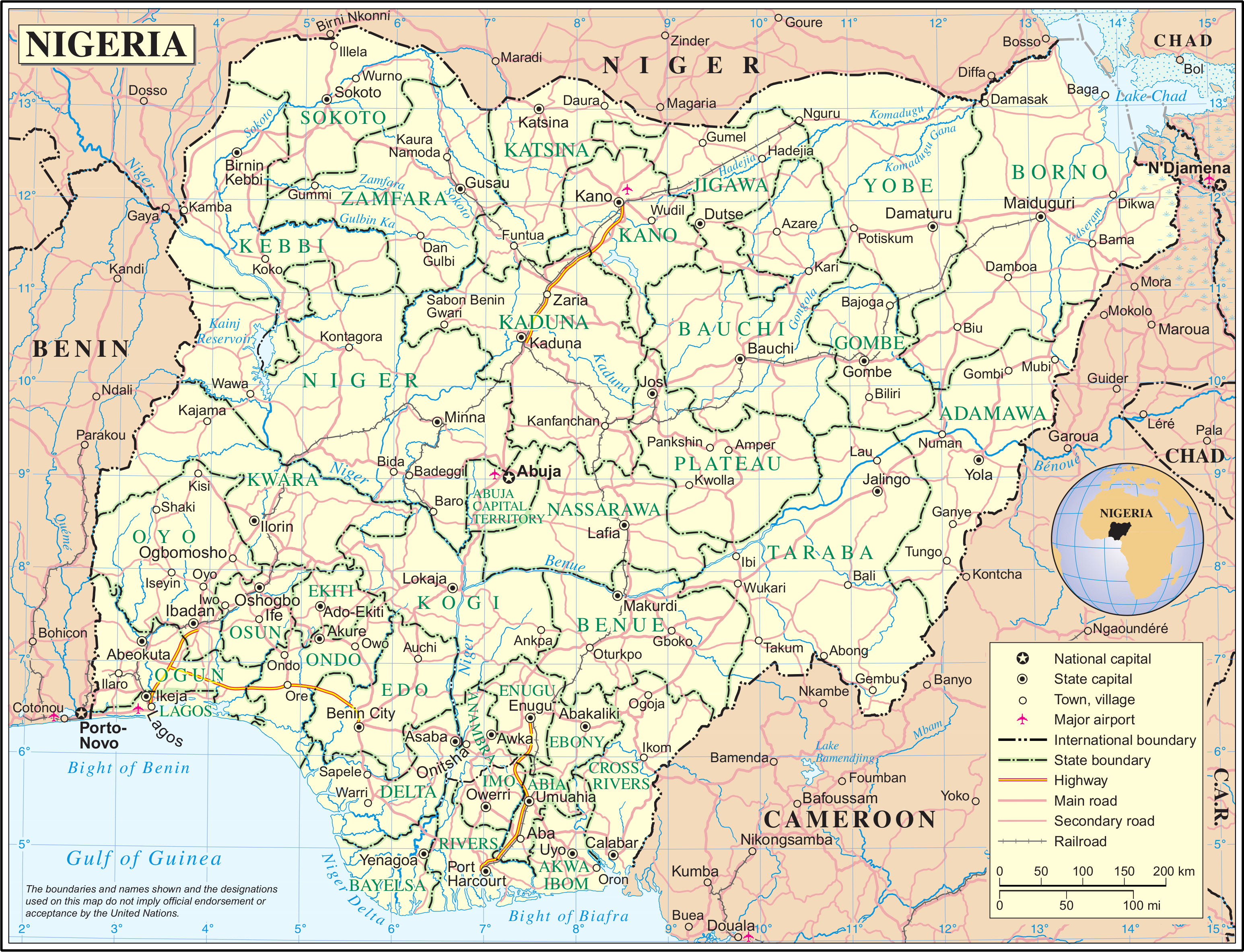
Origins. Boko Haram is the commonly referred name, in Hausa language, to a group officially called Jama'atu Ahlis Sunna Lidda'awati Wal-Jihad in Arabic. Hausa is the Chadic language spoken by almost 52 million people as either a first or second language in West Africa (Map of Nigeria athttp://upload.wikimedia.org/wikipedia/commons/a/ae/Un-nig eria.png). While ‘Jama'atu Ahlis Sunna Lidda'awati Wal-Jihad’translates into ‘the People Committed to the Propagation of the Prophet's Teachings and Jihad’, ‘Boko Haram’ simply means‘Western education (Boko) is forbidden (haram)’. Commonly believed to have first formed in 2002 by aMuslim cleric called Mohammed Yusuf, there are views that the group may have come out of a similar organisation called ‘Shabaab’ as early as 1995. In 2002, following his expulsion from two mosques in Maiduguri by Muslim clerics for preaching radical views, Mohammed Yusuf, a follower of Wahhabi/Salafi form of Islam, formed Boko Haram, with the aim of changing the secular government to an Islamist one. It was more of a movement and less of an insurgent organisation. One of the earliest actions ascribed to Boko Haram was attacks on police stations in two towns of Yobe state from 23-31 December 2003 by 200 Boko Haram members from an enclave on the Nigerian border with Niger. Several policemen were killed and vehicles and weapons stolen. Military was deployed to contain Boko Haram and 18 militants were killed and many arrested in follow up operations. Between 2002-2004 there were occasional actions by Boko Haram, mostly by splinter groups. Mohammed Yusuf remained free from arrest. From 2005-2008 the group was building up and gaining popularity amongst the population in Borno State. Between 2002 and 2009, Yusuf managed to gather a substantial following, primarily of young individuals upto 30 years of age, from poor and unemployed youths from states of northern Nigeria, and neighbouring bordering states of Niger, Chad and Cameroon. Called Yussufiyas, they joined Yusuf’s religious organisation where he propagated his ideology. Boko Haram also undertook social programmes targeted towards the poor. Thus Boko Haram was, in a way, a populist movement for the poor northerner expressing their opposition to the corrupt and rich image of the Nigerian State itself. In 2007, Buju Foi, a top ranking Boko Haram member, was even appointed commissioner of religious affairs in 2007, attesting to the fact that political leaders depended on the support Boko Haram could rein in.

Turning Point. In June 2009, Boko Haram members in a funeral procession were stopped by police in Maiduguri, Borno’s capital, while on their way to the cemetery to bury a comrade who had died in a car accident. Some were on motorcycles and refused to wear helmets. The confrontation led to shooting by police and fuelled Boko Haram uprisings in the Northern states of Bauchi, Borno, Yobe, and Kano. In response the Nigerian Military and police conducted operations to brutally suppress Boko Haram. Over 1000, including a number of civilians, were said to be killed, many extra-judicially, as part of brutal state tacticsincluding the execution of Mohammed Yusuf, who had been arrested and claimed to be shot by the military when he attempted to escape. (Al Jazeera video athttp://www.aljazeera.com/news/africa/2010/02/20102981149 49112.html). The current leader Abubakar Shekau, was also believed to have died in these operations, however obviously had escaped. Boko Haram was banned by the government and its infrastructure destroyed. Surviving members vanished appearing later as many splinter groups. After a brief lull, in September 2010 Boko Haram re-surfaced with a vengeance. In September 2010 they attacked a prison in Bauchi State and released 700 prisoners including 100 Boko Haram members. Since then Boko Haram has regularly perpetrated acts of violence, some more sensational than the others. The Council on Foreign Relations, a USA-based think tank, in its Nigeria Security Tracker, has collated the number of killings perpetrated by Boko Haram from 29 May 2011 till 30 April 2014, the day Goodluck Ebele Azikiwe Jonathan took over Presidency of Nigeria, as 4258. State violence against Boko Haram has been estimated to be 3866. Overall, in the same period, a total of 19,542 people have lost their lives due to various reasons which include Boko Haram, sectarian and other reasons of violence including state response, an average of almost 18 killings a day!

Obama's Erroneous 'Mission Accomplished' on Syria

May 18, 2014

It’s an odd sort of president who demands credit for selling a humanitarian catastrophe to two countries committed to furthering it. Yet that’s the sort of president the United States has got.

Fresh from his latest attempt in Manila to congratulate himself on brokering a deal to remove Bashar al-Assad’s chemical weapons, Barack Obama has been given the one thing he hates most by the international press: inconvenient details which sully his otherwise cracking narrative.

Detail number one: the Assad regime is withholding 27 tons of sarin precursor chemicals as “leverage,” to quote the Washington Post, in an ongoing argument with the West about the fate of its chemical manufacturing and storage plants. According to Robert P. Mikulak, the US envoy to the Organization for the Prohibition of Chemical Weapons (OPCW), “12 chemical weapons production facilities declared by Syria remain structurally intact” and “the Assad regime has delayed the operation at every opportunity.” Nor, Mikulak told the Post, are these facilities in rebel-held or rebel-interdicted hot zones: they’re fully under the control of Damascus in the network of tunnels and buildings which the regime built to conceal its chemical weapons program in the first place.

Detail number two: the regime is still using chemical weapons against the people of Syria. Building on superb investigative journalism in Britain’s Daily Telegraph, Human Rights Watch has nowconcluded that chlorine bomb attacks, all delivered by helicopters – a weapon of war which, if the Syrian rebels had them, would mean an end to the war – struck the towns of Kfar Zeita, Temanaa, and Telmans, killing at least 11 people and wounding 500 more. All of these attacks, the watchdog notes, occurred in April, the very month the regime was due to have relinquished the last of its chemical stocks to the OPCW.

This demands immediate multilateral action, right? Except that it doesn’t, because Obama’s big diplomatic breakthrough in ensuring peace in our time was hastily cobbled together with a Russian booby-trap.

Under the terms of UN Security Council Resolution 2118, which theoretically took away Assad’s chemical weapons, stipulates the ability of member states in “the event of non-compliance with this resolution, including unauthorized transfer of chemical weapons, or any use of chemical weapons by anyone in the Syrian Arab Republic, to impose measures under Chapter VII of the United Nations Charter.” Chapter VII encompasses, but not does not necessarily mandate, military action. But to even invoke it requires a second UN Security Council resolution which will never happen for two reasons.

The first is that actionable non-compliance is further elaborated in Resolution 2118 as being “of particular gravity and urgency.” Russia, a member of the Council, still denies that Assad ever used chemical weapons in Syria, even as Vladimir Putin was the one to float the bright idea of getting rid of Assad’s chemical weapons as a way to stave off US airstrikes on regime installations following Assad’s use of chemical weapons. The Kremlin will likewise never admit that Assad has dropped chlorine on anybody or that he is withholding his sarin precursors from the OPCW; much less will it allow that these violations constitute non-compliance “of particular gravity and urgency.” After all, they will say, 92% of the deadly toxins have been taken out of Syria.

Can Tymoshenko Still Lead Ukraine?


05/16/2014 06:38 PM
Loved and Hated
By Erich Follath and Matthias Schepp

Few figures in Ukraine are more divisive than Yulia Tymoshenko. Some see her as a martyr while others consider her to be part of the corrupt system. Now she wants to become president, but can she succeed?

A meeting with Yulia Tymoshenko is like an appointment at the Vatican, an audience with the pope. It feels like there's incense in the air, an almost religious, idiosyncratic blend of politics and faith.

This meeting with select journalists in the Kiev headquarters of her "Fatherland" party is carefully orchestrated, down to the last detail. Despite undergoing medical treatment for chronic back pain at Berlin's Charité Hospital, Tymoshenko is wearing stiletto heels this evening -- apparently to avoid looking short. She has dispensed with the miniskirt she likes to wear, as well as her expensive jewelry. Now that the very existence of her people is at stake, or at least the survival of Ukraine within its current borders, she has opted for a simpler, more conservative look.

Today she is wearing a gray outfit with a high collar and tasteful makeup. It emphasizes her Madonna-like face, which doesn't seem to have suffered as a result of her recent imprisonment or any other setbacks. Every word and every gesture reveals that this sophisticated and occasionally arrogant mother of the nation has become its deeply determined would-be savior.

She is constantly aware of the TV cameras, making sure they capture her face from the most advantageous perspective, and underscoring her most important messages by pointing at the ceiling with her index finger, as if she expects support from a higher authority. A steelier tone slips into her otherwise soft voice, as she says: "We call upon the West to supply us with modern weapons. We must put the Russian aggressor in his place!"

And how, exactly, is that going to work?

"We cannot give up Crimea for lost, nor should we surrender a single square meter of our country. We must steadfastly refuse to play the role of the victim in the history books of the future!" She adds that she is prepared to make every personal sacrifice needed to serve the greater good, and that the time to reach a decision is approaching, before strutting off the stage on her high heels.

Martyr or 'Gas Princess'?

Fifty-three-year-old Tymoshenko is an extremely divisive figure, more deeply loved and hated than almost any other politician in Ukraine. Some see her as the "Ukrainian Joan of Arc," a martyr who suffered for her nation in prison. Others, however, call her the "gas princess," an unscrupulous oligarch who has amassed a fortune worth billions and, as prime minister, did serious damage to Ukraine.

In 2005, Forbes named her the "world's third-most powerful woman." In 2011, she was sent to prison for alleged abuse of office. And in late 2013, a planned EU association agreement with Ukraine failed in part because Brussels had made Tymoshenko's immediate release one of its conditions.

Forget 'the Cloud'; 'the Fog' Is Tech's Future

Dow Jones Reprints: This copy is for your personal, non-commercial use only. To order presentation-ready copies for distribution to your colleagues, clients or customers, use the Order Reprints tool at the bottom of any article or visit www.djreprints.com

By 
CHRISTOPHER MIMS
May 18, 2014

I'm as big a believer in the transformational power of cloud computing as anyone you'll meet. Smartphones, which are constantly seeking and retrieving data, don't make sense without the cloud, and any business that isn't racing to push its data and software into someone else's data center is, in my view, setting itself up for disruption by a competitor who is.

Brian Ajhar

But cloud advocates are fond of declaring that 100% of computing will someday reside in the cloud. And many companies are in business to sell you on that notion.

Here's the reality: Getting data into and out of the cloud is harder than most engineers, or at least their managers, often are willing to admit.

The problem is bandwidth. If you're a company simply seeking to save the cost and headache of storing data yourself, the cloud is great as long as all you need to do is transfer data back and forth via high-speed wiring.

But in the world of mass connectivity—in which people need to get information on an array of mobile devices—bandwidth is pretty slow. Any business that sends data to mobile devices, be it airline reservation systems for consumers or business data for a mobile sales force, grapples with the limitations of wireless networks. Overall, according to the World Economic Forum, the U.S. ranks 35th in the world in terms of bandwidth per user.

A New WSJD Column

Keywords is a new weekly column by Christopher Mims. Contact him at christopher.mims@wsj.com and follow him on Twitter @mims.

That's one reason that mobile apps have become a predominant way to do things on the Internet, at least on smartphones. Some of the data and processing power is handled within your device.

Russian Cybersnake May Be Putin's Secret Weapon

17 MAY 16, 2014 

It shouldn't be easy to shut down a European ministry for days, depriving bureaucrats of access to e-mail and the web. Someone, however, has managed to do just that to Belgium's foreign ministry, which had to quarantine its entire computer system last Saturday and only managed to restore the work of the passport and visa processing systems on Thursday. Similar attacks seem to be taking place elsewhere in Europe, as Belgian Foreign Minister Didier Reynderstold the Belga news agency after meeting with a senior French diplomat that "everyone (on the European level) notes at this moment a very powerful pickup in hacking activity probably coming from the east and in any case having to do with Ukraine."

The local press reports that a Russian program called Snake caused the disruption in Brussels. If that is true, the Belgians have made the acquaintance of one remarkable serpent. Under the name Agent.BTZ -- a generic one, automatically generated to classify a then-unknown piece of malicious code – it hit the U.S. Department of Defense back in 2008. The attack became public knowledge two years later, after Deputy Defense Secretary William J. Lynn III described it in a Foreign Affairs article as a "significant compromise" of the DoD's classified computer networks. Someone had coupled a flash drive to a military laptop at a Middle Eastern base, and the malware spread from there, prompting ahuge policy response that culminated in the creation of the United States Cyber Command.

Given the attack target's clout and resources, one would have expected the U.S. and its NATO allies to thoroughly study and block the malware. That didn't happen. Defense conglomerate BAE Systems wrote in a recent report that "the operation behind the attacks has continued with little modification to the tools and techniques, in spite of the widespread attention a few years ago."

Agent.BTZ is now also known as Snake (the name Belgians use for it), Uroburos, Sengoku and Snark -- names the malware's creators have used for its versions. It is highly sophisticated, flexible software that, after infiltrating a Windows computer, can operate both from "userland" -- where a user runs her programs -- or the system kernel, where device drivers run. According to the BAE report, "it is designed to covertly install a backdoor on a compromised system, hide the presence of its components, provide a communication mechanism" and then send out stolen information, including files and captured network traffic. In other words, nothing on your computer is safe from Snake.

The Air Force's Rationale For Retiring The A-10 Warthog Is Bullshit


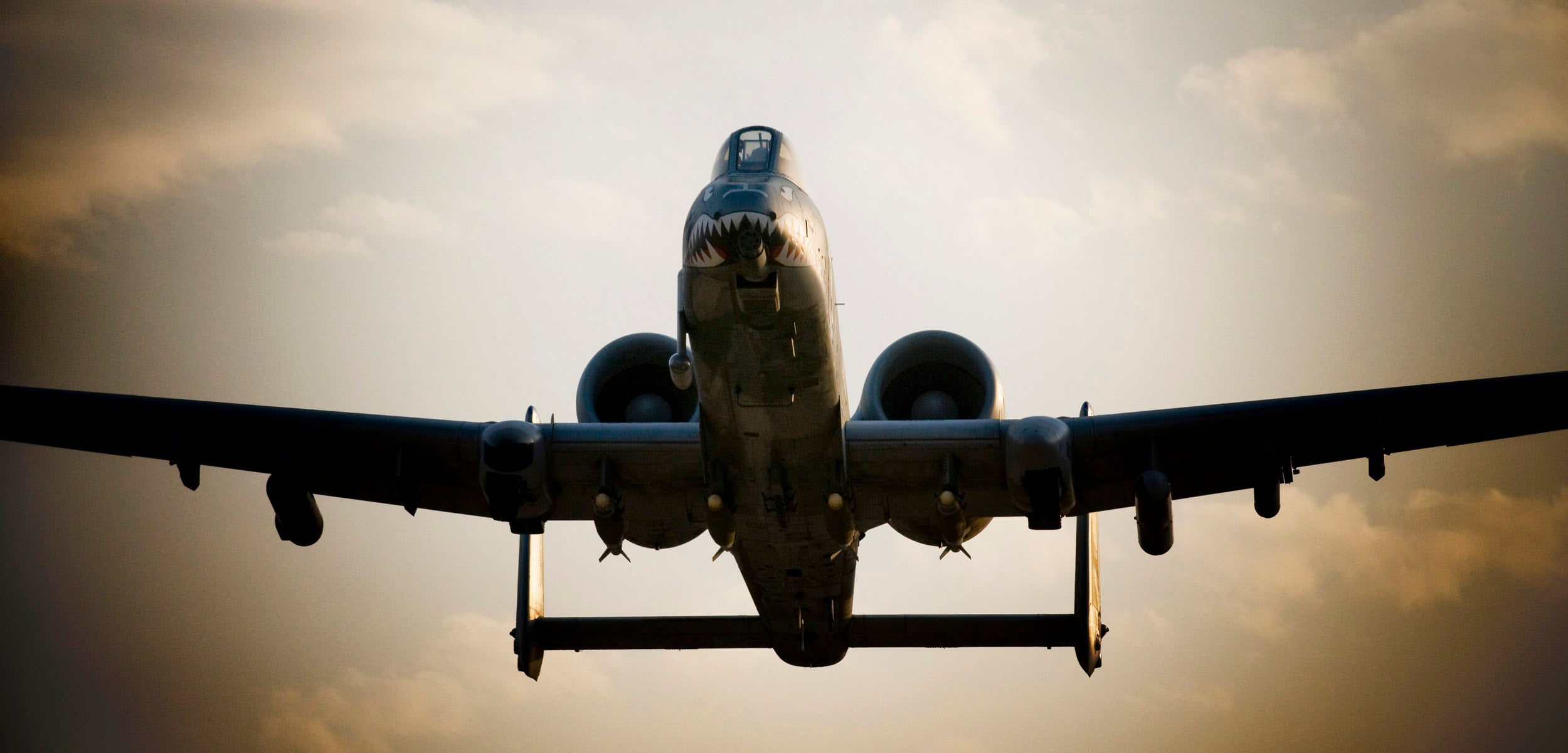
The fact that the USAF is so willing to throw away 300 of the finest close air support platforms ever invented just to save the cost equivalent of 30 F-35 Joint Strike Fighters is total bullshit and both the American taxpayer and those who bravely fight our wars on the ground should be furious.


The Air Force wants to "replace" the A-10 some time in the future, hopefully, with something not nearly as "elegant," to use their own words, but still capable of the basic close air support (CAS) mission. Elegant is not a term not usually associated with this brutish killing machine, but there is little doubt that the Warthog accomplishes its mission with almost an artistic flare. This "something" the USAF brass touts is the F-35 Joint Strike Fighter. In the meantime, our soldiers will be left getting close air support from "adequate" high-performance fighter aircraft, Predator and Reaper unmanned systems, and huge aircraft built originally as strategic bombers.

During an interview with Defense News Air Combat Command chief Michael Hostage stated:

"I would dearly love it to continue in the inventory because there are tactical problems out there that would be perfectly suited for the A-10. I have other ways to solve that tactical problem. It may not be as elegant as the A-10, but I can still get the job done, but that solution is usable in another level of conflict in which the A-10 is totally useless. It does not make any sense to cut the other program and keep A-10s if I have to give one up for the other. I really save the big bucks when I take an entire [platform] and shut it down because I save the squadrons of those airplanes but I also save the logistics infrastructure, the training infrastructure and all of the overhead."

The fact that General Hostage acts like he has no choice in the matter when it comes to shutting down the entire A-10 program, which equates to close to 300 aircraft and their support infrastructure, is bogus. Doing so would reportedly save only a measly 1% of the USAF's total yearly budget of close to $110,000,000,000, and that savings would only be programmed over the next few years.

SEXPAND

The A-10 is a national treasure, and the hundreds, if not thousands, of American and alliedsoldiers it has saved over decades of combat operations will attest to this. Regardless of the Warthog's undeniable effectiveness on the battlefield the aircraft has always been the unwanted straight-winged step child of the USAF. In fact, the boys in blue have tried to kill the A-10 program since its very inception, and have repeated their assassination attempts time and time again. Strangely, these attempts usually come quickly after the aircraft has performed marvelously in combat and has saved the lives of our troops on the ground while taking those of our enemies with great prejudice.

The military wants to scrap the ’70s-era jet that saved lives in IraqRead on businessweek.​com

It would seem that the supersonic, pointy nosed fighter jet culture that has always prevailed in the USAF's top echelon only praises the A-10 when they desperately need it, then when such a time passes, it returns to being their budgetary sacrificial lamb.

SEXPAND
Not Survivable?

The USAF would want you to believe that the A-10 has no place in our future wars. Ones where the USAF is operating in an area-denial/anti-access situation. This is how Secretary of Defense Chuck Hagel tries to sell this bogus rationale:


The A-10 is a 40-year-old single-purpose airplane originally designed to kill enemy tanks on a Cold War battlefield. It cannot survive or operate effectively where there are more advanced aircraft or air defenses. And as we saw in Iraq and Afghanistan, the advent of precision munitions means that many more types of aircraft can now provide effective close air support, from B-1 bombers to remotely piloted aircraft.

On High Seas, Vietnam and China Play Tense Game


ABOARD VIETNAMESE COAST GUARD SHIP 4033 (AP) -- Each day the Vietnamese ships tried to get close to the rig. And each day they were driven back by the much larger Chinese ships.

But before they sped away, laboring engines spewing black smoke, the Vietnamese delivered a message: "Attention! Attention! We are warning you about your provocative act," blasted out a recording from a loudspeaker in Vietnamese, Chinese and English. "We demand you respect Vietnam's sovereignty. Please immediately halt your activities and leave Vietnamese waters."

Occasionally colliding with or firing water cannons at each other, Vietnamese and Chinese ships have been shadow boxing in a sun-dazzled patch of the South China Sea since May 1, when Beijing parked a hulking, $1 billion deep sea oil rig, drawing a furious response from Vietnam.

Vietnam, ten times smaller than its northern neighbor and dependent on it economically, needs all the help it can get in the dispute. Its leaders believe international opinion is on their side. This week they invited foreign journalists to get a closer look at the standoff, the most serious escalation between the countries in years over their overlapping claims.

Vietnam is determined to defend what it regards as its sovereign territory against China, which insists that most of the South China Sea - including the Paracel Islands it took from U.S.-backed South Vietnam in 1974 - belongs to it. But Hanoi lacks options in dealing with Beijing, as China uses it burgeoning economic and military might to press its claims in the seas.

Vietnam has accused Chinese vessels of deliberately and dangerously ramming its ships. TV footage recorded last week from a Vietnamese ship showed a Chinese vessel smashing into the stern of the Vietnamese ship then backing up and ramming it again, damaging its side. The Chinese Ministry of Foreign Affairs on Friday released three photographs purportedly showing a Vietnamese vessel ramming a Chinese maritime ship. The media onboard this week did not witness any ramming.

"It is not that we want to be in confrontation with the Chinese, but it's our duty to carry out daily patrols in Vietnamese territory," said Col. Le Trung Thanh, the skipper of the Vietnamese coast guard ship 4033. "We want to get close to the rig to persuade them that their actions are illegal and they must leave Vietnam's water unconditionally."

That seems unlikely, however many patrol boats Hanoi sends to the area, or pleads its case to the world. For China, a withdrawal would signal weakness.

Beijing has said it plans to keep the rig until August. While most analysts think neither side has any interest in an armed conflict, the longer the confrontation lasts, the greater the risk of an unplanned incident that could lead to a shooting match.

China has set up a 10-kilometer (6.21-mile) exclusion zone around the rig, which was visible on the horizon. On occasion, Chinese surveillance planes flew over the Vietnamese vessels. Both sides have deployed dozens of vessels, mostly coast guard and fisheries protection fleets. At least one of the Chinese ships had cannons, which were uncovered.

Gung Ho! The Communist Origins of the Marine Corps’ Famous Slogan

Scene from the 1950 Chinese film ‘The Girl With the White Hair.’ Changchun Film Studio capture

Maoist tactics, organization and philosophies influenced the U.S. Marines
Kevin Knodell in War is Boring

We’ve all heard the phrase “gung ho.” Today we associate the phrase with enthusiasm, sometimes perhaps over-enthusiasm. Fittingly, it entered the American lexicon as a Marine Corps battle cry.

But the Marines didn’t come up with it on their own. It comes from the Chinese gōng hé, roughly meaning “work together.”

Not only that, a Marine commander picked it up in China while observing Maoist troops fighting against Japan. From there, the commander popularized the term while leading Marine raiders during the Pacific war.

There’s an old story that the Marines adopted the expression while stationed in China in the early 20th century. As the story goes, the Chinese were so impressed with the Marines, they started calling them gōng hé for their outstanding teamwork.

But that story isn’t true. In fact, gōng hé was a Chinese communist work slogan. Nor was the phrase the only hint of Maoism to influence the Marines. To this day, Marine tactics remain subtly influenced by Chinese communist guerrillas.

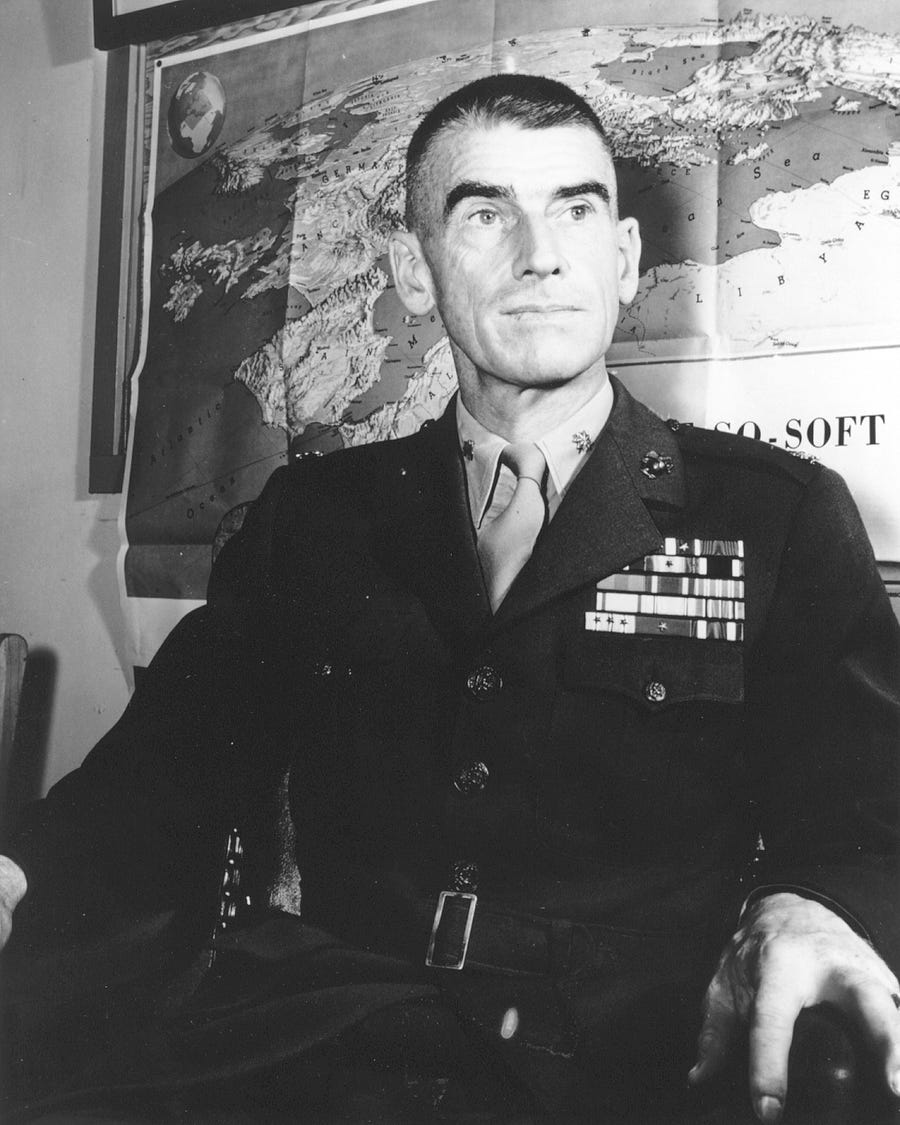
Evans Carlson as a brigadier general. Marine Corps photo

Carlson in China

The term “gung ho” owes its popularity in the West to a man named Evans Carlson.

Carlson had a colorful military career, joining the Army and serving as an enlisted man in The Philippines and Hawaii. He left as a sergeant, then re-enlisted in time to serve during the Punitive Expedition in Mexico prior to the American entry in World War I. After that, he served as an officer in Europe.

After the war, Carlson left and enlisted in the Marines, starting over as a private. Once again, he worked his way up to an officer’s commission. He served multiple tours of duty in South America and China.

But it was his tour of China as a military observer in 1937—and his study of the Chinese language—that would influence the Marines and American popular culture. He accompanied Chinese nationalist troops into battle and watched Japanese forces in action. While in China, he met American journalist Edgar Snow, author of the sympathetic book about communist guerrillas, Red Star Over China.

Carlson was intrigued by these guerrillas—still little known to the rest of the world—and decided to see these fighters for himself.

19 May 2014

China’s chairman is our chairman?

May 19, 2014

It was good to know that after a long hibernation the state had woken up to the acute water problem. But it did seem that to make up for this long neglect the state now wanted do it with a big bang or with one great leap forward. 

When the Bharatiya Janata Party’s election manifesto was released it was most notable for the emphasis on big projects like a hundred new urban centres and a high-speed rail network. If the money can be found, this will no doubt give the economy the big push it badly needs. Hence thinking along these lines needs to be sustained and encouraged. India needs a big push to put it on the rails again. But we must also be mindful of the long-term ecological consequences of big projects and do more rigorous cost benefit analysis. We often embark on big projects without much thought or on the prodding of institutions like the Supreme Court, which even when least knowledgeable, arrogates the right to dictate policies to the Executive. One such project is the project to link all our major rivers.

This is a Sangh Parivar favourite and I am quite sure the nation will once again set out to undertake history’s greatest civil engineering project by seeking to link all our major rivers. It will irretrievably change India. If it works, it will bring water to almost every parched inch of land and just about every parched throat in the land. On the other hand if it doesn’t work, Indian civilisation as it exists even now might then be headed the way of the Indus Valley or Mesopotamian civilisations destroyed by a vengeful nature, for interfering with nature is also a double-edged sword. If the Aswan High Dam turned the ravaging Nile into a saviour, the constant diversion of the rivers feeding Lake Baikal have turned it into a fast receding and highly polluted inland sea ranking it one of the world’s greatest ecological disasters. Even in the US, though the dams across the Colorado have turned it into a ditch by the time it enters Mexico, Nevada and California are still starved for water. I am not competent to comment on these matters and I will leave this debate for the technically competent and our perennial ecological Pooh-Bahs.

But the lack of this very debate is cause for concern. It is true that the idea of linking up our rivers has been afloat for a long time. Sir Arthur Cotton was the first to propose it in the 1800s. The late K.L. Rao, considered by many to be an outstanding irrigation engineer and a former Union minister for irrigation, revived this proposal in the late 60s by suggesting linking the Ganga and Cauvery rivers. It was followed in 1977 by the more elaborate and gargantuan concept of garland canals linking the major rivers, thought up by a former airline pilot, Captain Dinshaw Dastur. Morarji Desai was an enthusiastic supporter of this plan. The return of Indira Gandhi in 1980 sent the idea back into dormancy, where it lay all these years, till President A.P.J. Abdul Kalam revived it in his eve of the Independence Day address to the nation in 2002. It is well known that Presidents of India only read out what the Prime Ministers give them and hence the ownership title of Captain Dastur’s original idea clearly vested with Atal Behari Vajpayee and Suresh Prabhu, was its moving spirit.

That India has an acute water problem is widely known. Over 60 per cent of our cropped areas are still rain-fed, much too abjectly dependent on the vagaries of the monsoon. The high incidence of poverty in certain regions largely coincides with the source of irrigation, clearly suggesting that water for irrigation is integral to the elimination of poverty. In 1950-51, when Jawaharlal Nehru embarked on the great expansion of irrigation by building the “temples of modern India” by laying great dams across our rivers at places like Bhakra Nangal, Damodar Valley and Nagarjunasagar only 17.4 per cent or 21 million hectares of the cropped area of 133 million hectares was irrigated. That figure rose to almost 35 per cent by the late 80s and much of this was a consequence of the huge investment by government on irrigation, amounting to almost `50,000 crores. Ironically enough this also coincided with the period when water and land revenue rates began to steeply decline to touch today’s nothing level. Like in the case of power, it seems that once the activity ceased to be profitable to the state, investment too tapered off.

What India can learn from China

By Ravi Agrawal
May 15, 2014 

A Hindu holy man walks past a line of people after voting at a polling station on Monday, May 12, in Varanasi, India, during the ninth and final phase of elections. Voters will elect 543 members to the lower house of Parliament, which will then select the country's next prime minister. Prime Minister Manmohan Singh is stepping down after a decade in charge. 

STORY HIGHLIGHTS 

Ravi Agrawal: India's business culture could profit from being more like China's 
He says many in India hope winner of the election will introduce more efficiency 
While new leadership can focus on economy, it's not so easy to reshape a nation, he says 
Agrawal: For real change, the impetus has to come up from the bottom up 

Editor's note: Ravi Agrawal is CNN's New Delhi Bureau chief and was formerly senior producer of the network's "Fareed Zakaria GPS." Follow him on Twitter: @RaviAgrawalCNN

Hong Kong (CNN) -- I met an entrepreneur recently who was comparing doing business in Asia's two biggest countries. "When I'm in India," he said, "I spend the first 40 minutes of any meeting exchanging niceties. In the last five minutes, we get to business." What about China? "We do business for 40 minutes. Right at the end, we chit-chat for five."

It's only an anecdote, but the results seem to bear it out. China gets things done; India invents ways not to. China dazzles the world by hosting an impeccable Olympics; India struggles to complete basic infrastructure for the Commonwealth Games.

Perhaps that's why it's fascinating to watch the rise of India's Narendra Modi, the man many believe will be India's next Prime Minister. Modi's sales pitch is simple: he gets things done. For Indians, it's a seductive notion: Can India be like China?

Ravi Agrawal

There is no doubt that India has room to improve. Consider productivity: India's ranks 60th in the world on the World Economic Forum's ranking of countries by competitiveness (China is 29th). Or consider ease of doing business: the World Bank ranks India 134th in the world. If you want to start a business, the World Bank says India ranks 179th in the world -- in other words, go ahead and explore opportunities in 178 other countries before you settle on India. It's as good as putting a "closed" sign on the shop door.