13 July 2014

Capitalizing on the Capitalist Peace

July 9, 2014

The next time the United States is compelled to try to rescue and rehabilitate a broken nation, Washington needs to pay as much attention to building free markets as to holding free elections.

If Americans have learned anything from their well-intentioned, costly efforts in the unforgiving lands of Iraq and Afghanistan, it’s that democratic elections do not ensure freedom. Nor do democratic elections necessarily promote stability, as the post-Arab Spring chaos reminds us. But a new Fraser Institute study helps quantify how building up free-market institutions and promoting economic freedom can strengthen societies by increasing social trust and reducing the risk of war.

Starting from the premise that “adequate finance is a key ingredient for organizing violence against a state,” Indra de Soysa and Krishna Chaitanya Vadlamannati argue that “economic repression and market distortions create conditions that make armed conflict feasible.” These factors “supply the means, motive and opportunity for groups to challenge states because economic distortions spawn underground economies that form the organizational bases of insurgency.” The expansion of free markets and free economic exchange, on the other hand, “marginalizes violence because it binds people meaningfully in a way suited to addressing the collective dilemmas stemming from violence.”

“With economic freedom, people gain when they produce goods and services others desire in mutually beneficial exchange,” the report concludes. “People from other groups become customers, employees, employers, suppliers.” Together, they lay the building blocks for social trust and become essential ingredients in economic expansion — rather than enemies in a zero-sum struggle over scarce resources. In other words, economic freedom raises the costs of violence — and helps remove the incentives and benefits of civil disorder.

Economic freedom raises the costs of violence — and helps remove the incentives and benefits of civil disorder.

Obama and the Syria Two-Step

July 10, 2014

An article that I published last week argued that President Obama is supporting Iran in Syria and Iraq, and that he is leaving America's traditional allies and the Syrian opposition in the lurch. The article claimed that the president was being disingenuous when, in his commencement speech at West Point on May 28, he announced his intention "to ramp up support" for the Free Syria Army (FSA). That accusation deserves a more detailed explanation than I was able to provide in the body of the article itself.

On the surface the president's new initiative looks impressive. After making his grand announcement in a major foreign policy speech, Obama turned to Congress with a request for $500 million to fund a new program to train and equip the FSA. For the first time the military, rather than the CIA, is to play a role in assisting Assad's enemies. But a close look at the details of the request reveals a Potemkin structure.

The West Point initiative fits perfectly with what a well-established pattern of misdirection by the White House. Call it the Syria two-step. The president or a member of his administration issues a statement of support for the FSA that is long on pious intention but short on practical details. After gaining credit from the media for taking action, the president then quietly backs away from his own initiative, taking care never to admit that he is doing so.

In addition to this track record, there are three others reasons to believe that we are, once again, at the beginning of a new round of the two-step.

First, the West Point initiative, if it ever really materializes, will have no practical impact for at least a year, probably longer. Before the military can get to work, two pieces of legislation must pass Congress: an appropriations bill, which will fund the program, and the National Defense Authorization Act (NDAA), which will provide the military with the necessary authorities to involve itself in Syria. Given Congress's schedule, the NDAA will not come up for a vote until after the midterm elections-not until December, possibly even January 2015. Even if the military rushes to work immediately after the passage of the bill, another six months to a year will elapse before American-trained FSA units can actually arrive on the battlefield. The earliest we could hope to see any impact is June 2015, and even that late date is probably unrealistic.

Second, no prior planning went into the initiative before Obama announced it-none whatsoever. The most basic questions have yet to be answered. Who is going to be trained? Which regional allies will help in the effort? Will FSA units receive training to carry out offensive operations, or will they simply defend select locales? It is no exaggeration to say that the president dumped a half-baked plan on lawmakers and then demanded that they take immediate action. This behavior hardly builds the kind of trust necessary to turn the program into a success.

The maneuver calls to mind Obama's sudden request from Congress, in September 2013, for an authorization of force against Assad. The president knew full well that the request had no chance of approval. He was scuttling his own initiative. As it turned out, the Russian proposal to destroy Syria's chemical weapons gave the president a pretext to call off the vote, but defeat was foretold.

Massive Cyber Attack Hits All Major Norwegian Banks and Financial Institutions

July 10, 2014
Anonymous Norway claim massive cyber-attack on Norwegian banks
Anne Sewell
Digital Journal

A massive cyber-attack was launched Tuesday, simultaneously affecting many of the top banks and financial institutions in Norway. Dubbed the country’s biggest-ever network attack, responsibility has already been claimed by Anonymous Norway.

The simultaneous attack hit eight companies’ websites, including DNB, Danske Bank, Nordea, Norges Bank, Sparebank 1 and Telenor, as well as two insurance companies, Storebrand and Gjensidige in what is probably the richest country in the world. Both the online payment systems and the companies’ official websites were hit and all had serious IT problems from the morning until late on Tuesday evening. According to IT experts, Evry, while the size of the attack itself was not unusual, this is the first hacking attack of its kind to simultaneously hit so many large agencies, crashing their websites. The Norwegian news service, Dagens Næringsliv, quoted Sverre Olesen, manager of Evry’s security team as saying, “The extent of the attack is not the greatest we have seen, but it is the first time that such an attack has hit so many central agencies in the financial sector in Norway.”

“Several sectors are affected, but I cannot be certain whether these are random targets or not,” he added. Initially it was thought that the cyber-attack came from hackers outside of the country but later Anonymous Norway took the blame. Apparently the hackers exploited a weakness in the mainstream computer software, Wordpress. They reportedly then attempted to take control of web traffic to the banks’ websites, causing many of them to crash and giving endless problems to clients trying to access the sites and their online banking accounts. Visitors to the Norges Bank website received the following message: “Tango Down | Status OFFLINE. “We are Anonymous. We are Legion. We do not forgive. We do not forget. Expect us. Med vennlig hilsen,” Anonymous Norway.” No actual reason for the cyber-attack was given, however.


Newly Detected Malware Systems Show That Cyber Spying Software Becoming Much More Sophisticated

July 11, 2014
How a Scanner Infected Corporate Systems and Stole Data: Beware Trojan Peripherals
Kurt Marko
Forbes

A new form of highly targeted cyber attack patently demonstrates the shift in malware sophistication and motivation. Annoying hacker pranks done for fun and sport have been supplanted by sophisticated, multi-stage software systems designed for espionage and profit. The new attack, discovered by TrapX, a developer of security software formerly known as CyberSense, is one of an increasingly common genre known as an Advanced Persistent Threat (APT) of the type that stole debit card numbers from Target TGT +0.02% or sensitive data and login credentials from any number of companies. What makes this recent attack noteworthy isn’t its basic design, operation or targets, but means of initial delivery: contaminated firmware on a type of industrial barcode scanner commonly used in the shipping and logistics industry. Similar to the technique used to introduce the infamous Stuxnet worm that took out Iranian centrifuges and managed to penetrate ostensibly highly secure networks via ordinary USB thumb drives, the so-called Zombie Zero worm invaded corporate data centers through a back door.

Anatomy of the Attack
Source: Wikipedia; Advanced persistent threat

According to TrapX, the malware was loaded onto the scanner’s Windows XP Embedded OS as shipped from the factory by an undisclosed Chinese manufacturer. TrapX believes the manufacturer was directly, if not solely (more on that later) responsible for the malware since: (a) later analysis found 16 of 48 scanners at one customer had recently deployed were infected and (b) TrapX detected the same malware in a firmware update file on the manufacture’s website; updates that the company initially removed after TrapX notified it of the problem, but later restored with malware intact. Carl Wright, EVP & General Manager at TrapX says three elements make this attack noteworthy and dangerous: 
  • it targets a zero-day vulnerability on one of the most popular ERP systems used by many enterprises 
  • it’s polymorphic, namely the code can adapt and change to both elude detection and avoid different network security countermeasures 
  • it’s the first malware he’s seen delivered on hardware fresh from the manufacturer 
Once delivered, the attack itself follows a pretty standard APT playbook. The compromised scanners, which use Wi-Fi to send package information to one or more central databases, give attackers a foothold inside a company’s network. In stage 1 of the attack, the scanner malware probes the network using widely used Windows file sharing (SMB, ports 135/445) and remote administration (Radmin, port 4899) protocols looking for servers with “finance” as part of the Hostname. Although SMB is commonly blocked by corporate firewalls, remote administration ports are often left open to facilitate network-wide server management. Since many companies also use descriptors in the server name, the attack was generally successful at finding any ERP systems on the network. If the ERP server happened to be running the vulnerable software, which was likely since according to Wright it is among the top three in ERP sales, the malware entered and compromised the system through the zero-day vulnerability.

Why Are NSA and GCHQ Still Using Old SIGINT Codewords Discarded in the Late 1990s?

July 10, 2014 
NSA still uses the UMBRA compartment for highly sensitive intercepts 
Peter Koop 
electrospaces.blogspot.com 

Three days ago, on July 5, 2014, The Washington Post published some of the most important stories from the Snowden-leaks so far. It revealed that Snowden did had access to the content of data collected under FISA and FAA authority - a fact that had been kept secret until now. I’ll come back on that main story later.

Here we will take a look at a remarkable detail from two slides that were also disclosed in the Post’s article. The classification marking of these slides contains the codeword UMBRA, which was generally considered to be abolished in 1999, but now seems to be still in use. After going through several options, my conclusion is that UMBRA is most likely the codename of a so-called unpublished SCI control system.


“Target Package” prepared by the National Security Agency
prior to the capture of Abu Hamza in January 2011

These slides are from a 2011 powerpoint presentation which details the plan to capture al-Qaeda facilitator Muhammad Tahir Shahzad and which pinpoints his location and his activities based upon intercepts from his various e-mail accounts. He was captured in Abbottabad the day after this presentation was finalized.

In the 2012 NRO Review and Redaction Guide (pdf) the existance of the UMBRA codeword is approved for public release, just like its paragraph portion marking TSC (for Top Secret Codeword). But as this manual also lists many revoked codewords, it is not conclusive about wether UMBRA is still used. One thing that is interesting though, is that the TSC portion marking would fit some of the redacted spaces in the newly disclosed slide: 


Some possible options for the portion markings 

Uses and Abuses of Social Media in Conflict Zones

SWJ Blog Post | July 11, 2014
Doug Bernard
Voice of America

It can be difficult to remember a time when social networks like Twitter, YouTube and Facebook weren’t always with us, humming along in the background and linking us to the rest of the world. But in fact they’re not even a decade old, and mobile devices like smartphones – where they increasingly live – are even newer than that.

Yet in a short span of time, insurgent groups, political organizations and governments have all rapidly adopted social media platforms to press their case, confuse their opponents, seize world attention and gain advantage over their adversaries.

At present in conflicts from Iraq to Ukraine, from skirmishes in the South China Sea to civilian protests in Venezuela, social media has become a key tool for leveraging money, recruits, opinion and potentially, even victory.

Each new conflict is providing new learning experiences about what’s possible, and what works best. And like any tool, social media have all sorts of positive and negative uses. That said, several analysts VOA recently spoke with suggest that, at least at present, the extremists seem to have the upper hand in wielding their new-found digital power.

“More Sophisticated Than Any Group Before”

The recent images from Iraq have become as familiar as they are unsettling.

From the start of their effort to seize territory in Syria and Iraq by force, the Islamic State in Iraq and the Levant, or ISIL, has also waged a heated social media campaign that surprised many analysts for its sophistication and effectiveness.

Earlier this year, as militant fighters swept through Western Iraq, ISIL’s social media updates reflected the brutality of the conflict. With tweets, bloody photos on Instagram and graphic videos posted on various sites, ISIL portrayed itself as an unsparing foe intent on shooting, decapitating and otherwise executing as many opponents as possible.

Which makes ISIL’s most recent videos all the more surprising.

In one, a smiling shopkeeper, his store filled with produce and bustling with customers, happily tells us how smoothly everything is going. In another, a giggling group of children crowd around ISIL fighters handing out cotton candy and ice cream, bouncing the children on their shoulders. In yet others, temporarily removed from the web, ISIL fighters cannonball into a river and engage in a pickup snowball fight.

“The message is ‘Look how evil we are! We’re just having a snowball fight, come on down and join the party!’” says Cori Dauber, professor of communications studies at the University of North Carolina – Chapel Hill.

“I’ve been looking at their longer videos,” she told VOA. “I would say that they are, by an order of magnitude, more sophisticated than any group that has come before.”

Dauber studies the use of images by extremist groups in propaganda, and recently authored the book “YouTube Wars.” Appearing on a recent taping of VOA’s “Encounter” program, she said that terrorists have always been among the first adopters of new technologies.

“And that’s been true of digital technologies as well,” she said. “YouTube, Twitter, Instagram; they are incredibly creative in their use of those technologies and they use them to recruit, to fundraise, to spread their message.”

The Army’s next enemy? Peace.

U.S. soldiers hold their national flag as they prepare to leave after handing over their military base to the Afghan National Army in Baghlan, Afghanistan on July 8. (Sayed Mustafa/EPA)

By David W. Barno July 10 

Retired Army Lt. Gen. David W. Barno is a senior fellow and co-director of the Responsible Defense Program at the Center for a New American Security. From 2003 to 2005, he served as overall commander of U.S. and coalition forces in Afghanistan. 

The Army is emerging from 13 years of war, battle-tested but weary. It is under pressure from budget cuts, the return of nearly the entire force to domestic bases, and a nation wary of deploying land power after two long conflicts. Yet perhaps the most important challenge facing the Army is not about finances, logistics or public opinion, but about culture — its own. 

A conflict looms between the Army’s wartime ethos of individual initiative and the bureaucratic malaise that peacetime brings. The Army is about to make an abrupt shift: from a sizable, well-resourced, forward-deployed, combat-focused force to a much smaller, austerely funded, home-stationed service. Training and preparation for war will take the place of actually waging it. The Army is moving from 13 straight years of playing in the Super Bowl to an indefinite number of seasons scrimmaging with itself. 

While few in the service would prefer unending wartime deployments over some semblance of peace, the end of full-scale conflict brings unique challenges to those in uniform — especially to those millennials in active service who, since 2001, have experienced nothing but the adrenaline rush of an Army at war. This transition could weaken the Army’s warfighting capabilities and drive talented, combat-experienced young leaders from the force. 

The Army faced a similar situation after Vietnam. Home after a decade in Southeast Asia, its senior officers confronted demands to shrink the Army rapidly and return it to a peacetime footing. With inadequate funds, poor discipline, worn equipment and outdated warfighting doctrines all competing for attention, Army leaders aggressively attacked these problems — but were also far-sighted enough to realize that leadership of a peacetime force would be a critical challenge. 

The Army’s senior leaders of the 1970s had endured the trials of Vietnam as mid-grade combat commanders, and they understood that the traits required for battlefield success — bold decision-making and individual leadership — would be quickly stamped out in a peacetime, rule-focused force. So they took action. 

12 July 2014

Defence Budget 2014-15

IDSA COMMENT
G. Balachandran
July 11, 2014
Interim Budget

The interim budget presented in Parliament was a status quo budget. The 10 per cent hike in the interim defence budget with respect to both budget estimate and revised estimate of 2013-14 allocation was no upward or downward revision of the defence allocations provided in the previous budget & represented the erstwhile popular term of the 80s ‘the Hindu rate of growth’ to cater for inflation. While the overall 2013-14 allocations remained the same, the capital allocation was, however, revised downward by 9.07 per cent or Rs.7868.48 crore, which has been added to the revenue allocation.

What Has Been Ailing the Defence Budget in The Recent Past?

All watchers of the defence budget hoped that the much needed inescapable & overdue corrections will come when the new government that is formed after the elections presents the budget. The anxiety was because of the loss of direction seen in the defence budget allocations over the years was beginning to adversely affect the capability needed to take on the current & emerging challenges to national security. Although when absolute figures of defence are seen they create a perception of substantial increase over the years but when put in context the picture is different. A comparison of the Defence expenditure of 1997-98 and 2013-14 and that of the central government expenditure and the GDP is tabulated below.

Table no 1 (All Rupees in crores)

1997-98
2013-14 (RE)
Increase over 1997-98
Defence Expenditure
35278
203672
4.773
Central Government Expenditure
224866
1590434
6.073
GDP at Market prices
1572394
11355073
6.222


Defence expenditure which was 2.24% of GDP in 1997-98 has come down to 1.79% of GDP in 2013-14 and this gradual decline is depicted in the chart No 1 below. The two spikes on increase in 2008-09 and 2009-10 are on account of pay commission arrears:

Chart No 1


The relationship with the Central government expenditure has similarly been of a steady fall as may be seen in chart No 2

Chart No 2


Three major heads of expenditure account for around 75% of the Non Plan Revenue expenditure. These are Interest, Defence expenditure & Subsidies. At the turn of the century these accounted for 70% of the Non plan expenditure with Interest accounting for 40%, Defence 20% and Subsidies 10%. Today they account for 75% of the Non plan Expenditure with Interest accounting for 34%, Subsidies 23% and Defence 18% (Details given in chart no 3 below.

A leadership moment

Ajay Chhibber | July 12, 2014

For India, the new bank could be a great opportunity to get long-term capital for its huge infrastructure needs. Source: Reuters

SUMMARY

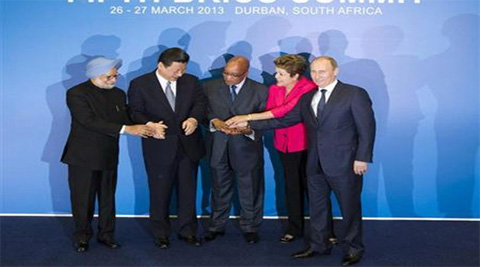
At BRICS summit, a chance for India to start on a path that leads to the UNSC.

Next week, Prime Minister Narendra Modi will attend his first BRICS summit. This is a historic opportunity to position India in a changing global order. India today punches below its weight on global issues. It is a member of the G-20 but plays a marginal role in guiding global discussions. A previous BJP government put India into the nuclear club, and this government could take us all the way to a permanent seat on the UN Security Council. The BRICS summit is an opportunity to start down that path.

The prime minister made a bold start by inviting all SAARC leaders to his inauguration. With festering problems in its own neighbourhood, India is no doubt distracted locally and thereby hobbled in projecting its power more broadly in global affairs. With a better functioning SAARC, India can speak on global issues with a stronger sub-regional backing.

India’s most clearly stated international goal is to have a seat on the UNSC. On the basis of its size as one-sixth of humanity and the third largest economy (PPP adjusted), its claim cannot be challenged. Yet, progress on this issue has been glacial. India today has very few senior positions at the UN. No Indian heads a single UN organisation. China, besides having a permanent UNSC seat, heads three UN organisations. Brazil has strong interests in trade and agriculture and now heads the FAO and WTO, positions it won with greater strategic clarity and concerted effort.

Getting a permanent UNSC seat will also require building coalitions with other key aspirants, such as Brazil and South Africa, and getting the support of China and Russia, which are permanent members. The BRICS summit is a chance to open the dialogue.

The most immediate concrete idea for discussion will be the new BRICS bank, which will rival existing multilateral banks with call-in capital of $50 billion. This is an important signal but will eventually require a bigger capital base, which could come from increasing the contributions of the existing members to at least $100 billion or bringing in other large G-20 developing countries as contributors. For India, which has maxed out its borrowing capacity at the World Bank and the Asian Development Bank, the new bank could be a great opportunity to get long-term capital for its huge infrastructure needs.

Germany and Japan are two other key aspirants to the UNSC with whom India can and must ally. The big powers must be made to realise that global peace will require India’s active participation, a position that can only be reached when India begins to play a more strategic role, especially in Africa, the Middle East and Asia, in helping broker positive solutions.

Possible Collapse of Pakistan: Quantifying the Fallout

IssueVol 23.1Jan-Mar 2008 | Date : 28 Jun , 2014

The overall situation appears to be quite hopeless, and under these conditions, it is only the army that can keep the country together. A military state of emergency is therefore definitely on the cards. It is also very possible that Musharraf and Nawaz Sharif (together) may call in the International community (mainly the US) to help, once they realise that they will not be able to handle the militants. But before any of this happens, we will witness considerable policy confusion both in Rawalpindi and in Washington, as both sides desperately hunt for answers.

Expected Fallout

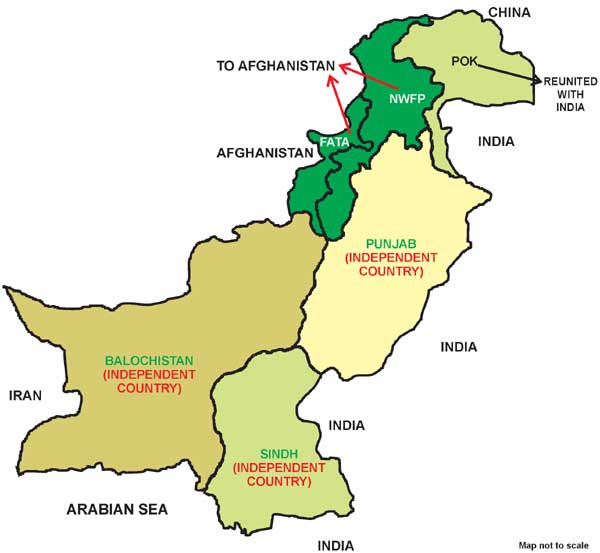
The Sindhis now have no stake left in the Union

With Benazir gone, the Sindhis, who are mainly into business, have no common interest with either the state of Punjab, the lawless north west (including the Peshawar area), Balochistan or Pakistan Occupied Kashmir. Therefore it’s just a matter of time before they sum up the courage to demand a separate state. There are however issues of mental attitude here as Sindh is not Balochistan. Sindhis are traders , not warriors like the Baloch.


If Stratfors information is correct, it would mean that the US and Europe have no real interest or strategic rationale any more for keeping Pakistan together. They will let it fail as it will then allow them to independently target the militants in the various breakaway states.

Benazir’s killing in Rawalpindi has its own significance too. Rawalpindi is Pakistan’s military headquarters. It is also located in the Punjab and this has implications for near term Punjab-Sindh relations. Sindh has a lot of Punjabi settlers besides a huge Mohajir community. The Mohajirs are Bihari Muslims and the Sindhi’s hate them as much as they hate the Punjabi settlers. The recent chain of events therefore has made a civil war between these rival groups very likely.

If violence breaks out in Sindh, Musharraf most likely will send the (mostly Punjabi) military to Karachi to stop the killing. The military however will itself come under attack in Sindh, as being dominated by the Punjabis they will not be seen as a unbiased force. It could then turn out to be a Serbia/Bosnia like situation. Any military action by Musharraf in Sindh could thus create more problems than it would solve.

India’s immediate worry: Civil war in Sindh

For India the main threat is of millions of refugees crossing the international border as a result of the civil war in Sindh. This event that could be just six months or a year away needs to be planned for, and the Indian government will do well to plan the deployment of close to a million men of our armed forces on the western border to prevent a massive refugee problem.

TRIUMPHANT VICTIMHOOD

Politics and play - Ramachandra Guha

In his recent book, History in the Making, J.H. Elliot makes an interesting distinction between two different kinds of nationalist ideologies. On the one hand, there is the “chosen nation” syndrome, where a country is said to have special “spiritual, biological, [or] racial characteristics” that shall make it dominant in global affairs. On the other hand, there is the “victim nation” syndrome, where a poor or defeated country tends to attribute its “misfortunes to others and to ignore or disregard failings closer to home”.

Elliot is a scholar of Europe and North America, and his examples come naturally from those continents. At various points in their histories, the Spaniards, the British and the Americans have thought of themselves as the nations chosen by god to lead the world out of darkness into light. However, the Poles, the Serbs and the Catalans have seen themselves in very different terms — as brave, persecuted people whose territory and liberties were snatched away by perfidious foreigners.

How does Elliot’s formulation resonate with the nations of South Asia? Pakistan is very clearly a “victim nation”. Those who led the movement for a Muslim homeland in the 1940s did so on the grounds that if India was to be given independence as a single country, the Hindus in general — and the wily Brahmins and the greedy Banias in particular — would persecute those of other faiths.

Six-and-a-half decades after the creation of Pakistan, a sense of victimhood persists. Many Pakistanis still blame foreigners for their troubles. Some demonize India, while an equal (or possibly greater) number demonize America. The bad Hindu neighbour and the worse Christian superpower are held responsible for sectarian violence, political instability, economic insecurity, and more-or-less everything else.

Bangladesh also originated out of a sense of victimhood. From the 1950s, there was resentment in East Pakistan over discrimination against the speaking and writing of Bengali. The Bengalis also complained of economic exploitation by West Pakistan. These sentiments gave rise to a wider movement for political separation. The protests were suppressed by the Punjabi-dominated Pakistani army, leading to a large-scale flight of refugees into India. Eventually, the Indian Army intervened, and in December 1971 the new nation of Bangladesh was born.

Forty-two years after Independence, Bangladesh remains to some extent a victim nation. The memories of Pakistani brutality persist, and are often invoked in popular discussion. To these are added complaints of more recent origin, against the overbearing attitude of Big Brother India. Even so, my sense is that the Bangladeshi intelligentsia is more willing to acknowledge the domestic sources of their nation’s problems. Witness the vigorous civil society organizations in the country, which have done groundbreaking work in microcredit, rural healthcare and women’s education. That the social work sector is so much weaker in Pakistan is partly a consequence of the continuing tendency of Pakistanis to blame other nations for their misfortunes.

What of Indian nationalism, then? At least as enunciated by its leading thinkers, it was not animated by a blind or excessive sense of victimhood. Claims for swaraj from the British raj did not deflect reformers from the need to cure the manifest ills of their society. Late 19th-century thinkers like Gopal Krishna Gokhale and Jyotiba Phule knew that discrimination against low castes and women was not the fault of the white colonizer, but a product of traditional Indian customs and practices.

This open-minded orientation was carried forward by influential nationalists in the 20th century. Rabindranath Tagore argued that Indians should glory in the illumination of lamps lit everywhere in the world. When, in the 1920s, Gandhi’s movement seemed to be taking a xenophobic turn, the poet issued the Mahatma a series of stinging rebukes, which hit their mark. Gandhi began a course of self-correction, which led him to stop demonizing Western ideas and institutions. By the 1930s, he was saying that, after Independence, he would “love” to see India become an “equal partner with Britain, sharing her joys and sorrows”.

Pakistan: Worse Than We Knew

by Carlotta Gall
Houghton Mifflin Harcourt, 329 pp., $28.00

Alexandra Boulat/VII

A pro-Taliban rally in Quetta, the capital of Pakistan’s Balochistan province, circa 2002

During the Afghan elections in early April I was traveling in Central Asia, mainly in Kyrgyzstan. I wanted to inquire into the fears of the governments there as a result of the US withdrawal from Afghanistan. What did they think of the growth of Taliban and Islamic extremism in Afghanistan and Pakistan? Officials in each country cited two threats. First, the internal radicalizing of their young people by increasing numbers of preachers or proselytizing groups arriving from Pakistan, Bangladesh, and the Middle East. The second, more dangerous threat is external: they believe that extremist groups based in Pakistan and Afghanistan are trying to infiltrate Central Asia in order to launch terrorist attacks.

Islamic extremism is infecting the entire region and this will ultimately become the legacy of the US occupation of Afghanistan, as the so-called jihad by the Taliban against the US comes to an end. Iran, a Shia state, fears that the Sunni extremist groups that have installed themselves in Pakistan’s Balochistan province on the Iranian border will step up their attacks inside Iran. In February Iran threatened to send troops into Balochistan unless Pakistan helped free five Iranian border guards who had been kidnapped by militants. (The Pakistanis freed four of the guards; one was killed.)

Chinese officials say they are particularly concerned about terrorist groups coming out of Pakistan and Afghanistan that are undermining Chinese security. Although China is Pakistan’s closest ally, its officials have made it clear that they are closely monitoring the Uighur Muslims from Xinjiang province, who are training in Pakistan, fighting in Afghanistan, and have carried out several terrorist attacks in Xinjiang.

Terrorist assaults from Pakistan into Indian Kashmir have declined sharply since 2003, but India has a perennial fear that Islamic militant groups based in Pakistan’s Punjab province may mount attacks in India. Many Punjabi fighters have joined the Taliban forces based in Afghanistan and in Pakistan, and they have attacked Indian targets in Afghanistan. India is also wary of another terrorist attack resembling the one that took place in Mumbai in 2008.

For forty years Pakistan has been backing Islamic extremist groups as part of its expansionist foreign policy in Afghanistan and Central Asia and its efforts to maintain equilibrium with India, its much larger enemy. Now Pakistan is undergoing the worst terrorist backlash in the entire region. Some 50,000 people have died in three separate and continuing insurgencies: one by the Taliban in the northwest, the other in Balochistan by Baloch separatists, and the third in Karachi by several ethnic groups. That sectarian war, involving suicide bombers, massacres, and kidnappings, has gripped the country for a decade.

Is Afghanistan the Next to Crumble?

(U.S. News & World Report)
June 24, 2014

Afghan security forces leave the site of burning NATO supply trucks after an attack by militants near the Pakistani-Afghan border, June 19, 2014

Amid the stunning rout of Iraqi forces in northern Iraq, many have asked whether a similar reversal of American foreign policy goals is possible in Afghanistan. The answer is a qualified yes.

Of course, Iraq and Afghanistan have a number of differences, urbanization, wealth, history, and geography among them. They have in common a lengthy U.S.-led intervention combining efforts to build a military force with the creation of a government. Iraq, like Afghanistan, held elections in the waning days of American involvement, to form a multi-ethnic government. As with Iraq, the U.S. military is announcing plans to leave Afghanistan on a note of cautious optimism.

In Afghanistan, as in Iraq, there is widespread disaffection with the government. In fact, it is not uncommon to hear Afghans refer to their government as a mafia. Corruption and patronage dominate both governments, ranking among the world's worst according to Transparency International. The defense and security sectors of both countries are assessed at a high risk (PDF) of corruption, ranking in the bottom third worldwide. Moreover, the absence of a coherent political strategy in Afghanistan to address issues of factionalism, patronage and corruption has contributed to the development of a government that few seem willing to fight for.

In both countries, a persistent bias toward combat operations over institutional capacity-building and governance prioritized the here-and-now over the long haul. As a result, efforts to develop intelligence, logistics and sustainment capabilities lagged far behind efforts to reach manpower and equipment goals.

Of course, it is too early to say that these failures will lead to a collapse of the military, but few attempts have even been made to ask the question. There is at least a basis for concern: A 2010 audit (PDF) by the Special Inspector General for Afghan Reconstruction found that both corruption and infrastructure failures had a corrosive effect on morale within the Afghan National Security Forces.

Impact of Talibanisation

IssueCourtesy: Aakrosh| Date : 09 Jul , 2014

The most serious implication of this onward march of the Taliban has been the radicalisation of Pakistan’s armed forces. As the armed forces draw their manpower from the same society, its composition is bound to reflect the biases of the society. General Musharraf, after two assassination attempts, did try to cleanse the army of radical elements and succeeded in purging overtly religious generals. However, the junior officers and other ranks by and large reflect the prevailing views of the society. Most of them still believe that the war against Taliban is America’s war and have reservations about fighting them.

The growing Talibanisation is eroding the state structure, and the unravelling of Pakistan is a distinct possibility. For the first time since its creation, there is a threat to the cohesion of the Pakistan army…

Every single attack on a military installation has borne clear marks of collusion by elements from within. Many PAF and Pakistan army personnel, including six officers, were convicted of attempts on General Pervez Musharraf in December 2003, when he was the president. An army soldier, Abdul Islam Siddiqui, was hanged on 20 August 2005, after court martial for the same offence. In April 2012, one of the six convicts, an air force technician Adnan Rashid, who had been sentenced to death, was freed by the Taliban in a daring jail break in Bannu.1 As early as 2006, six middle-ranking officers were court-martialled for refusing to fight in FATA.2

On another occasion, an anti-aircraft gun was discovered on the flight path of General Musharraf’s plane when he was taking off from the Rawalpindi airbase on a pitch-dark night. In September 2006, most of the 40 men arrested for attacks on Musharraf were mid-ranking PAF officers. The conspiracy was uncovered when an air force officer used a cell phone to activate a rocket aimed at Musharraf’s residence in Rawalpindi. The rocket was recovered, and its activating mechanism, also a cell phone, revealed the officer’s telephone number.3 The PAF confirmed in 2009 that it had acted against at least 57 personnel following the December 2003 assassination attempt against Musharraf. Six of these men were sentenced to death; others were arrested or dismissed from service. Over 100 PAF men faced disciplinary action in the aftermath of the murder attempt. However, the possibility that some of the accomplices evaded arrest cannot be ruled out.4 There were numerous instances of sabotage in the PAF to prevent aircraft from being deployed against the militants.

The absence of trust

Khaled Ahmed | July 12, 2014

SUMMARY
How it’s taking a toll in Pakistan.

Housewives wanted stable market prices as always, one of them thought of the kitchens of the poor.

How it’s taking a toll in Pakistan.

On Sunday, June 8, the Taliban attacked the Karachi airport and killed 18 security personnel. All 10 attackers were killed in the battle that ensued. Most TV reporters and anchors, who took it upon themselves to interpret what was being reported live, did not miss the opportunity of pinning the terrorist attack on “foreign countries”, the label regularly given by derelict police officers to India. Then the Taliban, led by a psychopath named Fazlullah, announced that they had done the deed.

But the retired military officers who appeared on TV to comment on terrorism were not blindsided in the same way as the police officers. Their accusations, however, were based on a professional lack of trust all armies are taught to cultivate: “Don’t look at the expressed intent of India; look at its perceived capability.”

The message is: don’t trust India if you have to frame a strategy of national security. (This applies to all armies of the world.) The United States and Israel are thrown in as allies of India and, therefore, rated equally dangerous. If you are a strategist, think black and white and lean on nationalism to avoid intellectual accountability; strategy won’t work if it is shot through with intellectual relativism.

But politicians with their uncertain survival kits can’t afford to be so Manichaean. They tend to “trust” the enemy and its expressed intent and ignore its concealed “capability” of “assured destruction”. That is why in India and Pakistan, military officers tend to think poorly of politicians and will exercise pressure through popular opinion to ignore their policy directives of “peace”. In India, army officers are more inclined to favour the warlike BJP; in Pakistan, they like the religious parties, whose seminarians fight the jihad of covert war to set at naught the theory of military balance of power. The world, after that, is “asymmetrical”.

Some nations are warlike and have no use for trust. Some nations are trading communities based on trust. Armies created by warlike nations are different from the armies created by trading nations. In one case, they are instruments of national pride; in the other, repositories of national gratitude. In the first case, the lack of trust as a communal trait makes economic function difficult. In today’s economically interconnected world, trust as a national trait must be cultivated even if it goes against the grain of the warrior willing to die for honour.

Trust was described first as social capital, that unquantifiable sector that relies on faith among individuals, encourages networking and results in coordinated action needed for competitive economic function. In addition, “trust” yields good governance, better education, lower crime and increased civic participation. Civil society is the matrix within which trust functions as a value. Civil society is the mediator between the state as a coercive apparatus and the citizen, and it can gel around political parties, human rights organisations, professional guilds, etc.

Within this networking, there is the function of trust. Let us imagine that it grows out of man’s transcendence of the animal sense of territoriality. The “other” is not seen as hostile, but presumed to be benign. This is trust. A tribal society or a society less socially advanced will have a low level of trust. An analogy with dogs will be apt. The stranger will be approached with suspicion, then his behind will be sniffed, so to speak, before some kind of acceptance is allowed.

How South Asia Resolves Maritime Disputes

South Asia’s use of international tribunals to settle maritime disputes should be emulated in East Asia.
July 10, 2014

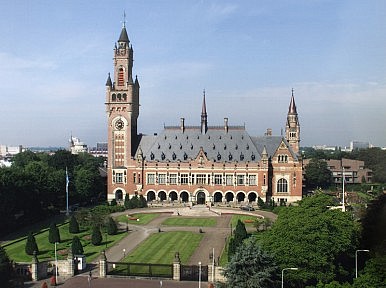
As Ankit noted earlier today, the Hague-based Permanent Court of Arbitration (PCA) ruled on the maritime dispute between India and Bangladesh in the Bay of Bengal this week.

According to news reports, the court awarded 19,467 square kilometers (7,516 square miles) of a total disputed area of 25,602 km to Bangladesh. More importantly, both countries praised the ruling.

“It is the victory of friendship and a win-win situation for the peoples of Bangladesh and India,” Bangladesh’s Foreign Minister Abul Hassan Mahmood Ali told a news conference on Tuesday, Reuters reported. He added: “We commend India for its willingness to resolve this matter peacefully by legal means and for its acceptance of the tribunal’s judgment.”

India’s Ministry of External Affairs also released a statement hailing the court’s ruling in Bangladesh’s favor. “The settlement of the maritime boundary will further enhance mutual understanding and goodwill between India and Bangladesh by bringing to closure a long-pending issue,” the statement said. “This paves the way for the economic development of this part of the Bay of Bengal, which will be beneficial to both countries.”

This is not the first time that India and Bangladesh have peacefully resolved a territorial dispute. Back in 2011, India and Bangladesh reached a bilateral agreement to resolve their disputed land borders

This is also not the first time an international tribunal has peacefully resolved a maritime border dispute in South Asia. At the same time it filed the case with India, Bangladesh asked another tribunal to resolve its maritime dispute with Myanmar according to the terms of the UN Convention on the Law of the Sea. Myanmar, like India, agreed to submit the case to the tribunal and abide by its ruling.

That case, which also concerned resource-rich parts of the Bay of Bengal, was brought before the International Tribunal on the Law of the Sea. The court issued its ruling in in May 2012, and in that case too Bangladesh claimed a victory (it was not a complete victory, however, as the court ruled in Myanmar’s favor on some issues). Although the Myanmar government did not hail the court’s decision as India did, it has honored the ruling.

In both of these cases, the maritime borders had been disputed by the countries in question for decades, and this plagued the larger bilateral relationships. Moreover, in both cases bilateral negotiations to settle the issues failed to resolve them. The failure of bilateral negotiations is what led Bangladesh to seek international arbitration. Notably, both Myanmar and India agreed to submit the cases to the tribunals.

Myanmar: Displaced Kachin Face Bleak Future

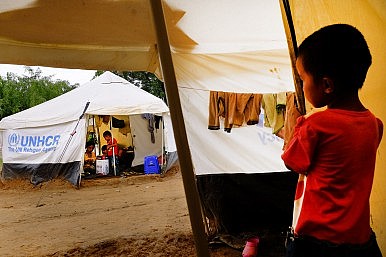
A displaced ethnic Kachin family in a camp in the Kachin Baptist Church in the Myanmar-China border town Muse in northern Shan State.

Many forced from their homes by fighting, conditions are grim for the Kachin people in north-eastern Myanmar.
By Brennan O`Connor
July 10, 2014


The rain is coming down hard, flooding some of the temporary canvas shelters provided by the UNHCR. Families are moving their bedding into the church’s community hall where they will sleep for the night. Despite the obvious discomforts the hundreds of ethnic Kachin recently displaced by fighting in northern Shan State can still count their blessings. At the Kachin Baptist Church (KBC) in Muse; a trade city in north-eastern Myanmar on the border with China, they are safe, especially Zau Gun. He was captured by the Tatmadaw (Myanmar armed forces) and forced to carry heavy mortar rounds as they fought against some of his own people: an alliance of Kachin, Ta’ang and Shan armed groups. With the rain bearing down on the tin roof of one of the church’s offices, Zau Gun tells his sad story.

“At the time I was so afraid, I thought I was going to die,” he recalled. In the early afternoon, several days afterfighting broke out between the Tatmadaw and ethnic rebels nearby, about 100 government soldiers from Light Infantry Division 88 arrived at his little village in Munggu Township. At gunpoint, they spared no time in collecting all the villagers for questioning, separating the men and boys from the women and girls.

“Are you a soldier? Where is your gun?” they asked him. “I don’t have gun,” he answered. By then, his four children were bawling at the sight of their father with hands tied while six soldiers loomed menacingly over him. They told Zau Gun he would be killed if his wife who was tending their vegetable plot didn’t return home; she arrived moments later.

“They took four of us as porters that day,” he recalled in a confident voice, which seemed in stark contrast to what he had endured.

The men were forced to carry the soldiers’ ammunition as they travelled on foot around the front line, sporadically fighting with the ethnic armed groups. “They told me they won’t withdraw from the area until they kill all the Kachin people,” Zau Gun said.

“We weren’t allowed to speak to each other,” he said, explaining they kept them together at night, but if they stirred in their sleep they would investigate.

Exhausted and sick from carrying heavy loads for long hours at a time, Zau Gun asked a captain to release him on the seventh day. Once free, he returned to his village only to discover it was abandoned. Eventually Zau Gun was reunited with his family in the nearby Wing Seng village where many of the displaced had gathered. Days later, he heard one of the other porters had escaped; the remaining two were released less than a week later.