9 August 2014

U.S. Warns Russia That Any Further Intervention In the Ukraine Will Be Viewed As An Invasion

US Warns Russia Against Intervention in Ukraine

Associated Press, August 8, 2014

UNITED NATIONS — The United States warned Russia on Friday that any further intervention in Ukraine, including under the pretense of delivering humanitarian aid, would be viewed as “an invasion of Ukraine.”

U.S. Ambassador Samantha Power delivered the warning at a Security Council meeting focusing on the human rights situation in Ukraine’s east, where government forces are fighting pro-Russian separatists. Recent reports by the West and the Kiev government have accused Moscow of dispatching what NATO estimates is 20,000 troops to the border.

Power said Russia has not only increased aid to the separatists but has amassed “more and more” troops and hardware near the border, began extensive military exercises this week and launched shells across the border into Ukraine.

She noted that Russia has proposed creating “humanitarian corridors” to deliver aid to the separatists.

"The humanitarian situation needs addressing, but not by those who have caused it," she said.

Power welcomed the Ukrainian government’s creation of humanitarian corridors to get aid into separatist-controlled areas and allow civilians out.

If Moscow wants to send aid to the separatists, she said, it should be delivered by neutral international aid organizations including the International Committee of the Red Cross.

"Therefore, any further unilateral intervention by Russia into Ukrainian territory, including one under the guise of providing humanitarian aid, would be completely unacceptable and deeply alarming, and it would be viewed as an invasion of Ukraine," Power warned.

At an emergency council meeting on the humanitarian situation in Ukraine called by Russia on Tuesday, Russia’s U.N. Ambassador Vitaly Churkin had called the situation in the east, particularly in separatist-held Luhansk and Donetsk, “disastrous” and said Moscow wants to send a humanitarian convoy to the two areas under the auspices of the International Committee of the Red Cross.

Britain’s U.N. Ambassador Mark Lyall Grant on Friday accused Russia of continuing “recklessly to fuel the conflict” by building up its forces on the border, “and now we hear that Russia is ready to intervene on humanitarian grounds to alleviate the suffering that it has manufactured.”

Is Putin Really Cornered?

http://carnegieendowment.org/2014/08/08/is-putin-really-cornered/hk9c
 
Andrew S. Weiss Op-Ed August 8, 2014 International New York Times

The dismal flood of news out of Ukraine could hardly be more discouraging for President Vladimir V. Putin of Russia.

The downing of Malaysia Airlines Flight 17, apparently at the hands of Russian-backed separatists, and the ghastly scenes at the crash site shocked the world. After months of dithering, Western leaders have imposed sweeping economic sanctions against Russia. The separatists themselves are in retreat, battered and bloodied.

Mr. Putin appears to be cornered. So why are Western leaders so antsy?

Because a cornered prey is unpredictable. A memorable passage from Mr. Putin’s 2000 quasi autobiography, “First Person,” tells you everything you need to know. Growing up in a dilapidated Leningrad apartment building, Mr. Putin used to chase rats with sticks. “Once I spotted a huge rat and pursued it down the hall until I drove it into a corner,” he recounted. “It had nowhere to run. Suddenly it lashed around and threw itself at me. I was surprised and frightened. Now the rat was chasing me.”

Mr. Putin’s risky, impetuous moves have surprised many observers, me included. Annexing Crimea; framing Russia’s foreign policy around protecting the “Russian world” (the Kremlin’s code word for the legions of Russian speakers scattered throughout the former Soviet Union); and subcontracting the insurgency in eastern Ukraine to marginal figures like ultranationalists, Ponzi scheme con artists and run-of-the-mill criminals — none of this seemed plausible before it happened.

Even now, six months into this crisis, Western leaders don’t know how far Mr. Putin will go in Ukraine. President Obama said as much at a recent news conference, fretting that while Mr. Putin should want to resolve the crisis diplomatically, “People don’t always act rationally.”

Ebola Experts Warn of an African 'Apocalypse'


Abby Haglage
08.07.14

Ebola Experts Warn of an African 'Apocalypse'
At an emergency hearing Thursday, leaders of the fight against Ebola gave updates on the situation in Africa and the future of the deadly disease’s possible spread.

At an emergency hearing in Washington Thursday afternoon, major players in the fight against Ebola in West Africa addressed the outbreak that has stolen the lives of more than 900. Leaders from health agencies and humanitarian efforts addressed the need for increased support as one called the current state of affairs in West Africa “apocalyptic.”

Rep. Christopher Smith, the chairman of the House Foreign Affairs Subcommittee on Africa and Global Health, opened the hearing by urging the speakers to clear the air on a “grave issue” that has “gripped” the mass media for weeks. “We hope to gain a realistic understanding of what we’re up against while avoiding sensationalism,” he told the floor. Here are the takeaways:

The outbreak is getting worse.

Already an unprecedented outbreak, CDC Director Dr. Tom Frieden says the number of infected and killed by Ebola will likely soon outnumber all other Ebola outbreaks in the past 32 years combined. According to the CDC, there have already been more than 1,700 suspected and confirmed cases of Ebola in West Africa, and more than 900 deaths—numbers which Frieden later called “too foggy” to be definitive. Ken Isaacs, the Vice President of Program and Government Relations for Samaritan’s Purse (SIM), painted an even bleaker picture. According to SIM, West Africa has counted 1,711 diagnoses and 932 deaths, already, which could represent only a small fraction of the actual number. “We believe that these numbers represent just 25-50 percent of what is happening,” said Isaacs.

The atmosphere in West Africa is “apocalyptic.”

Ukrainian Army Makes More Gains Around Rebel Stronghold of Donetsk; Russian Troop Buildup on Border Continues

August 7, 2014
Tensions grow in Ukraine over Russia troop buildup

A Pro-Russian rebel adjusts his weapon in Donetsk, eastern Ukraine, Wednesday, Aug. 6, 2014. Air strikes and artillery fire between pro-Russian separatists and Ukrainian troops in the eastern city of Donetsk have brought the violence closer than ever to the city center, as Kiev’s forces move in on the rebel stronghold.

Residents inspect the damage after night shelling on a market in Donetsk, eastern Ukraine, Wednesday, Aug. 6, 2014. Airstrikes and artillery fire between pro-Russian separatists and Ukrainian troops have brought the violence closer than ever to the city center, as Kiev’s forces move in on the rebel stronghold. 

A woman walks by a destroyed outlet after night shelling on a local market, in Donetsk, eastern Ukraine, Wednesday, Aug. 6, 2014. Air strikes and artillery fire between pro-Russian separatists and Ukrainian troops in the eastern city of Donetsk have brought the violence closer than ever to the city center, as Kiev’s forces move in on the rebel stronghold.

Is Russia Really the Cybercrime Capital?


The New York Times reported yesterday that a Russian crime ring had assembled a collection of more than a billion Internet passwords. While some are casting doubton claims that this is the “biggest hack ever,” it does appear to be a significant milestone in the history of cybercrime as well as the latest in a string of high-profile cases involving Russian hackers.

Joshua Keating is a staff writer at Slate focusing on international affairs and writes the World blog. 

Earlier this month, alleged hacker Roman Selezev, known online by the alias Track2, was arrested in Guam on suspicion of stealing data from hundreds of thousands of credit cards. He’s currently the subject of a diplomatic scuffle between Washington and Moscow. And in June, the U.S.unveiled charges against Evgeniy Bogacgev, who is accused of installing malware on computers around the world to access banking data, leading to more than $100 million in thefts. Does this all mean that Russia is the world capital of hacking?

In volume terms, it’s not at all. In a report last year, cloud services provider Akamaireported that Indonesia had overtaken China as the leading source of cyberattacks, accounting for 38 percent of the worldwide total. Russian hackers accounted for a measly 1.7 percent of attacks, putting them behind their counterparts in the United States, Taiwan, Turkey, and India.

What Russia does have is a fairly robust underground cybercrime market, reportedly valued at around $2 billion per year. Russian hackers are also blamed for about a third of all new viruses. The first widely reported bank hacking case—the transfer of $10 million from a Citibank account in 1994—involved a hacker in St. Petersburg. Services from password theft to spamming to denial of service attacks are relatively easy to acquire from Russian hackers.

And while the evidence here is more anecdotal, Russian hackers do seem to be behind plenty of particularly audacious hacks, such as, allegedly, the malware thatcaptured data from 70 million Target customers.

Why would Russia have such a highly developed black market for hackers? It may be that enforcement is lax, although Russia has launched periodic crackdowns on cybercrime. Some have also suggested that the sluggish Russian economy hasfailed to provide employment for graduates of the country’s very strong technical universities.

Whatever the reason, it’s likely that ongoing geopolitical tensions will make it less likely that the U.S. and Russia will cooperate on getting to source of the problem, and that cybercrime will continue to be a source of diplomatic friction in the years to come.

Off the Battlefield, Hackers Are Waging Cyberwar Against Israel and Palestine

Aug. 7, 2014

Hacktivist attacks against Israel quintupled as violence swept across Gaza, but are the hackers doing any damage?

Fighting in the Gaza Strip hit a lull this week as a 72-hour cease-fire ends its third and final day Thursday — but a digital war has still been raging as hackers pay little mind to the temporary truce. Cyberattacks directed against Israel have increased dramatically since it invaded Gaza in early July, intensifying last month as the violence peaked, according to a report released this week by the security research firm Arbor Networks.

Websites of Israeli civilian governmental agencies, financial services and military agencies—including the legendary intelligence agency Mossad and the Prime Minister’s office—were targeted as part of the sharp uptick in attacks that began in July, when the total number of strikes increased by 500%.


Whether those online attacks had much of an impact, however, is a subject of debate. U.S. House Intelligence Committee Chairman Mike Rogers Mike Rogers (R-Mich.) warned in an interview on CBS News’ Face the Nation late last month that cyberattacks against Israeli websites could present a risk to the country’s security. “So far I think Israel has done a great job of defending from these cyberattacks, but the sheer volume and intensity as it grows could spread from what is a conflict between Israel and Gaza to some cybereffort to try to shut these operations down, and that’s always a concern,” Rogers said.

Russia Moves to Top of UK’s Threat List Along With Terrorism and Cyber War

Bruce Jones
IHS Jane’s Defence Weekly
August 7, 2014

Russia to top UK threat assessment levels

Russia is being raised to the top tier of UK threat categories following its actions in Crimea and east Ukraine, the chairman of the UK defence committee has told IHS Jane’s. Russian ‘little green man’ pictured in Crimea. Source: PA

Russia is being placed at the top of the United Kingdom’s defence threat list, on a par with terrorism and cyber warfare, it has been revealed.

Speaking to IHS Jane’s on 4 August, Rory Stewart, chair of the House of Commons Defence Committee, said: “Until recently threats from Russia have been rated at the bottom level Tier 3. They are now seen and will soon be graded as the top level, Tier 1.”

Following the committee’s 22 July Defence and Security Review Report on the implications of the Ukraine conflict and the seizure of Crimea, there has been a complete turnaround in UK government defence policy, with the adoption of “95% of the committee’s recommendations”, he said.

Stewart said that assurances by the UK’s previous defence secretary, Philip Hammond, that UK forces could fully meet all contingencies have also been brushed aside.

He added that there are difficulties involved in this policy change and the turnabout in priorities, as Baltic deterrence and protection requires air defence and submarine defence in particular. The recent ‘Steadfast Jazz’ exercise in the Baltic states in November 2013 involved 6,000 troops, whereas exercises in the 1980s and those currently staged by Russia involve hundreds of thousands, he said.

On 2 August UK Prime Minister David Cameron wrote to NATO Secretary General Anders Fogh Rasmussen, ahead of the alliance’s September summit, recommending that NATO should transform its rapid reaction capabilities into a 21st century update of the ACE Mobile Force, a move which will require expense and commitment from all member countries, including the UK.

Stewart said the UK faces considerable losses in capacity, in high level command and control, armoured warfare, and in intelligence assessments, with only two defence intelligence staff officers studying Russia. Corps level command and control will require significant investment, as despite parliamentary protests, the UK shut down its respected ARAG advanced assessment group in 2010, he said.

New Cyber Espionage Operation Discovered Which Penetrated Computer Systems of 2 Intelligence Agencies and Hundreds of Government Targets in Europe and Middle East

Spy agencies hit in cyber espionage campaign: Kaspersky Lab 
August 7, 2014 

An employee works near screens in the virus lab at the headquarters of Russian cyber security company Kaspersky Labs in Moscow July 29, 2013.

(Reuters) - Security researchers at Kaspersky Lab said they have uncovered a cyber espionage operation that successfully penetrated two spy agencies and hundreds of government and military targets in Europe and the Middle East since the beginning of this year. 

The hackers, according to Kaspersky, were likely backed by a nation state and used techniques and tools similar to ones employed in two other high-profile cyber espionage operations that Western intelligence sources have linked to theRussian government. 

Kaspersky, a Moscow-based security software maker that also sells cyber intelligence reports, declined to say if it believed Russia was behind the espionage campaign. 

Dubbed “Epic Turla,” the operation stole vast quantities of data, including word processing documents, spreadsheets and emails, Kaspersky said, adding that the malware searched for documents with terms such as “NATO,” “EU energy dialogue” and “Budapest.” 

"We saw them stealing pretty much every document they could get their hands," Costin Raiu, head of Kaspersky Lab’s threat research team, told Reuters ahead of the release of a report on "Epic Turla" on Thursday during the Black Hat hacking conference in Las Vegas. 

Kaspersky said the ongoing operation is the first cyber espionage campaign uncovered to date that managed to penetrate intelligence agencies. It declined to name those agencies, but said one was located in the Middle East and the other in the European Union. 

Russian Interests and Policies in the Arctic

August 7, 2014

Russian leaders have in recent months focused on the importance of the Arctic region to their country’s security and economic goals in the 21st century. Russian actions in the Arctic are governed by a combination of factors. The highest priority is economic development of Russia’s Arctic region. However, Russian leaders also see the Arctic as a location where they can assert their country’s status as a major international power. This is done by claiming sovereignty over Arctic territory, and through steps to assure Russian security in the region.

Russian policy is pursued on two divergent tracks. The first track uses bellicose rhetoric to highlight Russia’s sovereignty over the largest portion of the Arctic, as well as declarations of a coming military buildup in the region. This track is primarily aimed at shoring up support among a domestic audience. The second track seeks international cooperation in order to assure the development of the region’s resources. This includes efforts to settle maritime border disputes and other conflicts of interest in the region. Managing the lack of alignment between these two tracks, and the potential for counter-productive setbacks caused by inconsistencies between them, is an important challenge for Russia’s leadership.

The rhetoric of sovereignty claims

Russian officials have frequently made statements and taken symbolic actions to assert Russian sovereignty over parts of the Arctic. Many of these actions have had to do with enforcing Russian territorial claims in the region.

The UN Convention on the Law of the Sea (UNCLOS) allows countries to claim an exclusive economic zone (EEZ) of 200 nautical miles (nm) beyond their shoreline. Large parts of the Arctic Ocean could thus be claimed by more than one country. Furthermore, UNCLOS grants states exclusive rights to extract mineral resources on their continental shelves up to a distance of 350 nm from shoreline provided that they can demonstrate that they have a “broad” continental shelf. This has led to disputes over whether various underwater mountain ranges should be considered extensions of the continental shelf.

Moscow has long claimed that the Lomonosov and Mendeleyev Ridges are not ridges per se, but actually extensions of the Russian continental shelf. Denmark (via its sovereignty over Greenland) and Canada also claim the Lomonosov Ridge as extensions of their respective continental shelves. The adjudication of these claims is particularly significant as the ridges pass very close to the geographic North Pole and would dramatically expand the mineral extraction zone for whichever state had control of extraction rights on them. In December 2001, Russia submitted a claim to the UN Commission on the Limits of the Continental Shelf (CLCS), arguing that a large sector of seabed under the Arctic Ocean, extending to the North Pole, was an extension of the Eurasian continent. According to the claim, Russia should have the exclusive right to explore for natural resources in this area, called the Lomonosov Ridge. The Commission advised the following year that additional research was necessary to substantiate the claim, and thus the claim remains unresolved. An updated submission is expected in the spring of 2015.

Modi leads India to the Silk Road

August 07, 2014 

With Beijing having had a profound rethink on India's admission as a full member of the Shanghai Cooperation Organisation, the tectonic plates of the geopolitics of a massive swathe of the planet stretching from the Asia-Pacific to West Asia are dramatically shifting.

That grating noise in the Central Asian steppes will be heard far and wide -- as far as North America, says Ambassador M K Bhadrakumar.

On the face of it, China has so far been reluctant about India's admission as a full member of the Shanghai Cooperation Organisation.

According to latest reports, Beijing has had a profound rethink.

At the SCO foreign ministers meeting last Thursday in Dushanbe, Tajikistan, a decision has been taken that the grouping will formally invite India, Pakistan, Iran and Mongolia as members at its next summit in September.

To be sure, Russia would be immensely pleased. A Moscow pundit promptly estimated that India's admission into the SCO will pave the way for the grouping to hold itself out as a 'centre of power in world politics.'

Make no mistake, the tectonic plates of the geopolitics of a massive swathe of the planet stretching from the Asia-Pacific to West Asia are dramatically shifting and that grating noise in the Central Asian steppes will be heard far and wide -- as far as North America.

The big question remains: What made China shift its stance?

We know that at the 90-minute meeting between Prime Minister Narendra Modi and Chinese President Xi Jinping in Fortaleza, Brazil, on the sidelines of the recent BRICS summit, the subject of India's role in the SCO did come up.

Several reasons could be attributed to the 'new thinking' in Beijing. First and foremost, China may sense that under Modi's leadership, India is all set to pursue a genuinely independent foreign policy.

The idea of an 'independent foreign policy' has been a cliche in Indian discourses and has been bandied about cavalierly by many governments in India.

But the plain truth is that ever since India embarked on economic reforms a couple of decades ago, the Western industrialised world -- the US, in particular -- assumed centrality in the Indian calculus.

A New American Military Ethic

A New American Military Ethic
At a major conference at the Atlantic Council recently, General Martin E. Dempsey, U.S. Army, the serving Chairman of the Joint Chiefs of Staff, was questioned about the idea of a general officer being elected President. The Chairman’s response went beyond the specific question, raising an important but often misunderstood point about the military profession:

You know what I’ve said about generals and flag officers? If you want to get out of the military and run for office, I’m all for it. But don’t get out of the military–and this is a bit controversial, I got it. Don’t get out of the military and become a political figure by throwing your support behind a particular candidate. Do you think they’re asking Marty Dempsey, or are they asking General Dempsey? I am a general for life, and I should remain true to our professional ethos, which is to be apolitical for life unless I run. May the best man or woman win, but use the title to advocate a particular position, no.

It may be true that an apolitical military and an ethos that prohibits the use of military rank or title for personal gain or partisan political purpose is best for our republic. But this is not yet an accepted element of the military’s professional ethos. On face value, it runs against the grain of American culture, and certainly runs against the common practice of the last few elections, in which both parties vie for the endorsements of anyone who once held senior rank in the U.S. military. Some find the participation of retired generals in partisan advocacy merely “unseemly.” Others believe that retired officers have earned a right to participate in the media and electoral politics in whatever manner they wish after their careers.

The Chairman raised this issue some months ago with the editorial staff of War on the Rocks, saying that his tenure in office has made him ask himself a few questions, such as:


…what it means to be a professional? How is it different from simply a job? What is it that we owe ourselves internally? How do we hold ourselves to a higher standard? How do we identify that standard? What are the key leader attributes that define us? And how do we deliver them?

The Chairman’s questions are not rhetorical. He is laying out the basic elements of a clearly understood American Military Ethic. This is something that the U.S. Officer Corps currently lacks. The U.S. military has commissioning oaths, oaths of office, and various standards of conduct. It has reams of articles on ethics and the ethos of the officer corps, but lacks a defined and enforceable code of ethics. In addition to social responsibility and barriers to entry (certification, license or commissioning) a professional code of ethics is one of the characteristics of a profession. What is the military’s professional ethic, and where is it found? Who determines the expectations and domain of expertise assigned to military officers. Whose role is to establish and enforce this ethic? Professions are supposed to be self-disciplining.

National Defense Panel: New Ideas Needed

August 7, 2014

On July 31, the National Defense Panel, a congressionally chartered bipartisan committee of former defense policymakers and generals, released its critique of the Obama administration’s 2014 Quadrennial Defense Review (QDR). Initial reporting (such as it was) on the panel’s work focused on the committee’s harsh (and unanimous) denunciation of sequestration and the consequences of the budget war still simmering between the White House and Capitol Hill. According to the panel:

… the defense budget cuts mandated by the Budget Control Act (BCA) of 2011, coupled with the additional cuts and constraints on defense management under the law’s sequestration provision, constitute a serious strategic misstep on the part of the United States. Not only have they caused significant investment shortfalls in U.S. military readiness and both present and future capabilities, they have prompted our current and potential allies and adversaries to question our commitment and resolve. Unless reversed, these shortfalls will lead to a high risk force in the near future.

In spite of such a dire warning, this audit of the government’s national security stewardship received little media attention. Washington’s budget wars are tiresome and for the moment seemingly not newsworthy, ironically because the media is transfixed on crises abroad. Although leaders in the Pentagon and on Capitol Hill agree that the return of sequestration in 2016 would be ruinous, there has been no change to the bitter ideological standoff over the federal budget. If the panel’s report is simply a plea for more Pentagon funding and better management, where is the news in that?

But the panel offered more than that. Perhaps even more ominous than a mere shortfall in funding, the panel observed a dearth of new ideas in the Pentagon. Seven times the report called for new “operational concepts” to address challenges that the armed forces will soon face. Calling for new operational concepts is an admission that traditional approaches to solving military problems no longer work. That is a much more interesting conclusion from the panel, and perhaps more alarming than fiscal challenges, simply because downward pressure on the defense budget is unlikely to be reversed anytime soon. And even if that were not the case, if military commanders lack realistic operational concepts to address military challenges, simply providing more money unattached to workable battlefield concepts is a recipe for waste.

8 August 2014

My neighbour, the environmentalist


Rahul Pandita
Published: August 8, 2014


The exiled Kashmiri Pandits have been trying to retain their connection with their homeland by visiting their shrines. Picture shows them offering prayers at the Kheer Bhawani temple in Kashmir Valley.

What does the Kashmiri separatist machinery achieve by preventing 40 persons from undertaking an ancient pilgrimage?

If you ever happen to drive towards Srinagar airport in Kashmir Valley, and if you have a little time to spare, take a little detour towards your left. Go to the posh Hyderpora colony off the airport road, and ask any passer-by for directions to the house of the pro-Pakistan separatist leader, Syed Ali Geelani.

Chances are that he will meet you. He is an extremely polite person — he never raises his voice and the expression on his face hardly changes. If he likes you, he will, after instructing his staff to get you tea, hold your hand and ask you to be the ambassador of Kashmir in “Hindustan.” As you leave, he will gift you a few books on Islam and tell you that it is not a religion but a “way of life” of which politics is an essential part.

You will love him.

Mr. Geelani often visits Delhi, mostly to seek medical treatment from some of India’s best doctors, including a Kashmiri Pandit. When he speaks to journalists, he refers to exiled Kashmiri Pandits as “brothers.” Without batting an eyelid, he says Kashmir is incomplete without them.

But besides his false avowal, Mr. Geelani, in practice, is opposed to the idea of sharing Kashmir with non-Muslims, especially the Pandits. A few days ago, owing to his strong opposition, the State government withdrew permission to a small group of Pandits to undertake the historical Konsar Nag yatra in south Kashmir. The group comprising 40 people, including women, had to halt its journey midway after Mr. Geelani’s supporters resorted to stone pelting and blocked the road leading to the pilgrim site. The pilgrims took shelter in a temple and were then forced to return to Srinagar.

Tagore's art remembered in distant Slovenia


IANS
Published: August 7, 2014


This June 4, 2011 file photo depicts 'Peacock', ink and water colour on paper, by Rabindranath Tagore displayed at the National Gallery of Modern Art in New Delhi. Photo: Shanker Chakravarty

An exhibition of prints of selected paintings by Tagore and his contemporaries begins on Thursday, his death anniversary, in Slovenia.

The anniversary of the passing away of Indian Nobel laureate Rabindranath Tagore will be remembered in Slovenia from August 7, his death anniversary, to Sep 4, with a unique exhibition of prints of selected paintings by Tagore and his contemporaries —— provided by the National Gallery of Modern Art in New Delhi.

The exhibition displays representative works of Rabindranath, Abanindranath and Gaganendranath Tagore, along with those of Abdur Rahman Chughtai, Jamini Roy and Amrita Sher—Gil.

The uniquely curated exhibition will be on display at the house of culture in the world heritage village of Smartno in the municipality of Goriska Brda on the western border of Slovenia with Italy, according to a statement issued by the Indian embassy in Slovenia.

The village of Medana in the municipality of Goriska Brda was the natal home of poet and jurist Alojz Gradnik, who was the most prominent translator of Tagore’s works into the Slovenian language from 1917 onwards.

Gradnik’s translation of “Gitanjali” into Slovenian was published from Ljubljana in 1924. The memory of Gradnik is kept alive by the international festival of poetry and wine at Medana every August and by the “Gradnik evenings” in November each year.

This is the first time that the memory of Tagore is being so honoured in the birthplace of his major Slovenian translator after Tagore visited Yugoslavia in 1926. Slovenia, a country of two million people in Central Europe, is one of the breakaway countries of the original Yugoslavia.

By 1926, the Indian Nobel laureate’s works, translated by Gradnik and others, had generated an unprecedented response in Slovenia. Slovenian identification with Tagore and his people derived from a perceived common goal of striving for political and cultural independence.

Remembering Tagore


Aug 7, 2014

On the 73rd death anniversary of Nobel Laureate Rabindranath Tagore, here are some interesting vignettes into the life and times of the poet. Compiled by: Indrani Dutta Photos: Sushanta Patronobish


Established in 1784 this was the house where Rabindranath Thakur was born and where he breathed his last. He spent half his life here with other members of the Tagore family. Known as ‘Thakurbari’ (Tagore being an anglicized form) this house was the cradle of Bengal’s cultural renaissance for well over a century.


1 / 14
StartStop


LATEST SLIDESHOWS IN THIS SECTION

BEYOND THE BHAI-BHAI LIE

ASHIS CHAKRABARTI 

Strangers across the Border: Indian Encounters in Boomtown China By Reshma Patil,HarperCollins, Rs 599

India and China celebrate this year the 60th anniversary of Panchsheel, the agreement on ‘peaceful co-existence’ that the two countries signed in April, 1954. Governments and the people of both countries and the rest of the world today see that euphoric period of India-China relations as a false dawn. In his review essay on a recent book, India in the Chinese Imagination: Myth, Religion and Thought in the July issue of Foreign Affairsmagazine, Tansen Sen, well-known scholar of Chinese history, calls it the era of the ‘bhai-bhai lie’.

The problem is that much of the discourse on India-China ties still clings to that lie. There is also a modern variant of the old rhetoric in the idea of Chindia, mooted by Indian politician, Jairam Ramesh. On the other extreme, we have scholars, analysts and politicians telling us that the two countries today can only be rivals, if not enemies.

True, there were thinkers like Rabindranath Tagore and his Chinese contemporary, Liang Qichao, who hailed the ‘brotherly’ cultural ties between the two countries. In the first half of the 20th century, a new generation of Chinese scholars sought to rediscover India through their studies of Sanskrit and Buddhism. When he was forced to work as a security guard on the campus of Peking University during the Cultural Revolution, Ji Xianlin, well-known Indologist, took refuge in secretly translating the Ramayan into Chinese.

An indefensible posture

C. Raja Mohan 
August 8, 2014

External Affairs Minister Sushma Swaraj’s talks with many Asian counterparts in a multilateral setting in Myanmar and Defence Minister Arun Jaitley’s engagement with US Defence Secretary Chuck Hagel this week will highlight a big void in India’s external engagement, left behind by the UPA government. It is about India’s defence diplomacy or the lack of it.

Amid the shifting balance of power and the mounting regional tensions to the east and west of India, many countries in Asia and the Indian Ocean were hopeful that Delhi would take on a larger security role in the region. There is deep dismay among India’s Asian neighbours that Delhi is unwilling to step up to the plate. The major powers, meanwhile, are asking if India is ready at all for geopolitical prime time.

If the ministry of defence does not see much utility in bilateral defence cooperation with countries, big and small, its leadership will not even show up at multilateral meetings, and where it does, it has little to say. While the ministry of external affairs and the armed services understand the value of defence diplomacy, they have struggled to persuade the MoD.

The reason for this lies in the nature of the MoD, which views its role in terms of control over the armed forces. The MoD has, over the decades, shunned the responsibility of developing and implementing a defence strategy for India. It has created no institutional capacity within the ministry to engage foreign defence establishments. Its bias is to limit, rather than to promote, India’s defence diplomacy.

Asian leaders will be too polite to bring it up in their meetings with India’s foreign minister. But if Swaraj is willing to ask questions and listen to her Asian interlocutors, she will discover the huge gap between the regional expectations of India as a stabilising force and Delhi’s performance as a security actor.

America’s frustrations are even larger, because Washington had bet big in the last decade that India would rise to be a major power and emerge as a net security provider in the Indian Ocean and beyond. Over the last few years, US defence officials have virtually given up imagining India in grand strategic terms. They find organising even routine meetings with the MoD an enervating exercise.

This was not the way India and the US began in the mid 1980s, when the then prime minister, Rajiv Gandhi, opened the door for defence cooperation with Washington. Successor P.V. Narasimha Rao, and his defence minister, Sharad Pawar, laid the basis for a more systematic military engagement with America and the West, as well as with the East Asian neighbours. India’s prolonged military isolationism had come to an end in the early 1990s.

A bubble called Pakistan

Husain Haqqani 
August 8, 2014

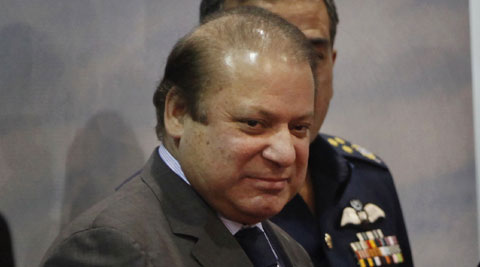
The military wants Sharif to curb his enthusiasm about normalising ties with India and turn away from Pakistan’s past policy of meddling in Afghanistan’s politics.
Summary Appointments and transfers of judges affect the independence of the judiciary and judicial review.

Barely 14 months after convincingly winning a general election, Prime Minister Nawaz Sharif’s government is being asked to resign amid threats of street protests. Cricketer-turned-politician Imran Khan and Canada-based Sunni cleric Tahir-ul-Qadri plan separate marches on Islamabad on August 14, Pakistan’s Independence Day. Several politicians and parties known for their close ties to Pakistan’s deep state, the ISI, have announced support for the anti-Sharif protests

Sharif will most likely ride out this first wave of attack. He retains an absolute majority in parliament and, by most accounts, there is no appetite in the country for a military coup. But the protests will weaken Sharif and sap the elected government’s energies, diminishing its effectiveness. That is exactly how the wings of the previous civilian government led by Asif Zardari and Yusuf Raza Gilani were clipped. Then, the judiciary played a critical role in tying up elected leaders in knots though, this time, the judges have yet to get involved.

The military has ruled Pakistan directly for more than half its existence as an independent country. When it can’t govern directly, the military and its intelligence services still want to exert influence, especially over foreign and national security policies. At any given time, there are enough civilian politicians, media personalities or judges willing to do the military’s bidding for this manipulation to persist.

Currently, the military wants Sharif to curb his enthusiasm about normalising ties with India and turn away from Pakistan’s past policy of meddling in Afghanistan’s politics. It also wants an end to the treason trial of former dictator General Pervez Musharraf.

***Military Power, The Core Tasks Of A Prudent Strategy, And The Army We Need

August 6, 2014 |

The following is Brigadier General (USA Ret.) Huba Wass de Czege’s Keynote Address given at the “West Point Senior Conference 50: The Army We Need in an Uncertain Strategic Environment,” held on June 2, 2014.

Our current Army Chief of Staff, General Raymond T. Odierno, often reminds his audiences of the 1951 admonition from the first Chairman of the Joint Chiefs of Staff, General Omar N. Bradley: “American armed strength is only as strong as the combat capabilities of its weakest service. Overemphasis on one or the other will obscure our compelling need—not for airpower, not for seapower—but for American military power commensurate with our tasks in the world.”2

My purpose here is to present testable hypotheses about what makes a prudent strategy, what military tasks and purposes comprise it, and the logic that transforms military capability into power toward each task. By this reasoning, the Army can make a far more solid case for its relevance to military strategy than it can by making the case for a “land domain” and “land power” within that domain, reasoning that mimics the illogical and shallow arguments being made in Washington for a share of the budget by the other services. The surest guide to the Army we need emerges from the role Army forces play within the Armed Forces as they work together and with allies to deter aggression, defend a status quo, enforce changes to an intolerable situation, and pacify a violent population within a prudent grand strategy.

An Uncertain and Unstable World.

Seeing mostly prosperity and stability in the relations of major global powers, post-Cold War statesmen have come to believe in a durable, mostly self-sustaining, peace between them. They trust foreign statesmen to recognize the common benefits of the peace, and to act in their rational self-interest to maintain it. They thus assume that all future military interventions will be optional, limited in scale and aim, and relegated to the unruly global fringe.

These assumptions have no basis. Prosperity and stability among major global powers can easily become conflict and chaos when statesmen make rational decisions on illogical premises, or when premises are sound enough, but reason is clouded by emotion. Either case is common historically, and could lead to unexpected events that can easily spiral out of control. Going to war is, in many cases, not a matter of choice. War comes unbidden to all but the aggressor, and not in a way anticipated.

India’s Space Diplomacy: A Brilliant Masterstroke by Modi


Perhaps no other head of Indian state has displayed such a keen and well informed interest in space activities as Prime Minister Narendra Modi. Indeed, Modi who went round the facilities at Satish Dhawan Space Centre (SDSC), the Indian space port in Srihairkota Island on India’s eastern coast, before witnessing the spectacularly successful flight of India’s four stage space workhorse PSLV (Polar Satellite Launch Vehicle) on June 30 left a deep imprint on the Indian space community by his pointed questions on the utility of the space technology for improving the life of the common man in the country.

But what made Modi’s visit to the launch site particularly memorable was his strong advocacy of the need for India to use its soft power based on space technology to “win friends and influence people”. While addressing a gathering of ISRO (Indian Space Research Organisation) scientists after the PSLV launch, Modi, in a rare display of statesmanship, called for sharing “the fruits of our technological advancement with those who don’t enjoy the same” Stretching this logic a bit further, Modi called upon the Indian space agency to take up an initiative to develop and deploy a satellite system dedicated to provide a range of services to the country’s neighbours belonging to SAARC (South Asia Association for Regional Cooperation).There is no denying the point that Modi wants to deploy Indian space technology as part of the diplomatic outreach of the country in all its manifestations. On another front, Modi also urged the space scientists to extend the services of India’s home-grown navigation satellite IRNSS (Indian Regional Navigation Satellite System).The first two satellites in the seven spacecraft IRNSS constellation being developed to end Indian dependence on US GPS system are already in place. As things stand now, the countries in India’s neighbourhood can easily access the potentials of IRNSS. For it is designed to provide coverage across 1500-kms beyond India’s geographical boundaries. Civil aviation, marine navigation, road transportation and disaster management are some of the areas that would stand to benefit from the potentials of IRNSS. Modi was quick and in his elements to point out that “India’s space programme is driven by a vision of service to humanity and not by the desire to power”. Touching upon international humanitarian dimensions of the nation’s space programme, Modi noted that India is already sharing satellite based natural disaster information with around thirty countries and the benefits of the telemedicine which was introduced for the first time in the country by ISRO more than a decade back are being made available to war torn Afghanistan whose health care infrastructure is not in fine shape as well as to the African countries.

Significantly, the INSAT communications and IRS earth observation spacecraft constellations being operated by ISRO are being routinely harnessed for a wide ranging purposes including disaster warning, tele medicine and tele education, crop forecast, water resources monitoring and mapping of natural resources. Indeed, India’s experience in exploiting the potentials of satellite technology for accelerating the pace of socio economic development is of immense relevance to the third world countries including the country’s South Asian neighbours.

Rightly, Modi’s view was that India’s advantage lies in the cost effectiveness of its high performance satellite systems. By all means, a dedicated SAARC satellite is a brilliant master stroke by Modi to leverage space diplomacy and further Indian interests in the immediate neigbhourhood. A vastly stepped up regional cooperation in space technology stands out as an additional dimension to the prevailing conventional level relationship for jointly tackling the problems of poverty, backwardness and natural disasters haunting SAARC nations. According to Modi, this satellite can be an Indian “gift to the neighbour” and it should provide a full range of applications and services to all of India’s neighbours. Elaborating on the relevance of an exclusive SAARC satellite, Modi states,”There is a lot of poverty in the SAARC nations and we need scientific solutions for this. It will be beneficial for the development of all the countries in the region.” Spelling out his vision for India’s fast advancing space program, Modi had to this to say, “India is rooted in the age old ethos of Vasudhaiva Kutumbakam (the world is one family)“. In keeping with this age old philosophy, India, says Modi, should help the countries in SAARC region with the offer of its space technology specifically tailored to meet the needs of development in a cost effective manner.

Afghanistan: Between Brinkmanship and Statesmanship


The worst fears about Afghanistan appear to be coming true. For more than a year now, there was a virtual consensus, not just in the international community but also within Afghanistan, that the future of the country was critically dependent on a credible presidential election in 2014. So much so that the prospects for relatively smooth security and economic transition was also contingent on an orderly political transition from President Karzai to his successor. But despite a fair, clean, transparent and untainted election which was accepted by all stakeholders being a sine qua non for a stable and secure future of Afghanistan, the election was subjected to what the front-runner Dr Abdullah Abdullah has called ‘fraud on an industrial scale’. This monumental folly has now put the entire future of Afghanistan at stake and while efforts are underway to resolve the dispute over the elections, the damage has been done.

All is, however, still not lost. If efforts at damage control go beyond merely papering over the deep differences between the leading candidates and their supporters, and are successful in bridging the widening chasm of suspicion and distrust between them, then Afghanistan still stands a good chance of pulling back from the brink. Despite the anger and resentment caused by the electoral fraud, the two main candidates have displayed remarkable sense of responsibility and maturity by not letting things spiral out of control. But whether they can rein in their supporters indefinitely is something that will depend on their political sagacity and skill. Afghans as a people can be amazingly pragmatic and some of this is manifest in the way both Dr Ashraf Ghani and Dr Abdullah have agreed to back off from a headlong confrontation. The attitude of the leading Afghan politicians, when juxtaposed with the behaviour of Pakistani politicians where the opposition is virtually on the war path against the government and challenging an election that has been internationally recognised as credible, generates a lot more optimism about Afghanistan than it does about Afghanistan’s tormentor, Pakistan.

Frankly, Dr Abdullah’s rejection of the verdict that emerged after the run-off election is entirely understandable. Not only did he establish a clear lead over his nearest rival, Dr Ashraf Ghani, and came within sniffing distance of the 50%+1 vote in the first round, he also managed to get endorsements from most of the candidates who did not qualify for the run-off. Add the votes polled by losing candidates like former foreign minister Zalmai Rassoul, the religious leader Abdul Rab Rasul Sayyaf and the influential Pashtun leader Gul Agha Sherzai, all of whom endorsed Dr Abdullah in the run-off, and it was clear that he would romp home easily. His candidature received traction among not just the non-Pashtun Afghans but also among large sections of Pashtuns who saw in him a leader with not just potential to end the feckless governance under outgoing president Hamid Karzai, but also lead Afghanistan out of the impending crisis that loomed against the backdrop of the withdrawal of foreign forces.

According to Dr Abdullah’s supporters, there were other clear advantages that their candidate enjoyed over Dr Ghani. They point out that Dr Abdullah’s credentials of having fought against both the Soviet occupation and the Taliban tyranny were well established. Compared to him, they say, Dr Ghani was comfortably living in the USA when Afghanistan went through its worst period in recent history. They also feel that at a time when Afghanistan faces the real threat of another Taliban offensive, Afghanistan would probably be better off with Dr Abdullah at the helm. Politically, Dr Abdullah not only is seen as a charismatic leader but also as someone with the knack to build bridges across ethnic communities. Dr Ghani, on the other hand, was seen as stand-offish, less than even tempered and someone with an intellect that refused to suffer fools, a quality so critical for success in politics. For all his erudition, brilliance, administrative skill and, most of all honesty, Dr Ghani would probably have to make concerted efforts to take people along and build consensus across communities.