16 November 2014

Russia Will Build First Hypersonic Missile Before 2020

November 14, 2014

A senior official at a Russian defense company said the country will build its first hypersonic missile before 2020. 

Russia will build its first hypersonic missile by 2020, according to local state media.

On Thursday Sputnik News Agency, RIA Novosti’s new international brand, cited a senior official at a state-owned Russian defense company as saying that Russia would build its first air-launched hypersonic missiles before 2020.

“In my estimation, the first hypersonic products should appear … in this decade — before 2020. We have approached this. We are talking about speeds of up to six to eight Mach. Achieving higher speeds is a long term perspective,” Sputnik quoted Boris Obnosov, general director of the Tactical Missile Systems Corporation, as saying on Thursday.

He made the remarks to journalists at the Zhuhai’s Air Show in China this week.

Also citing Obnosov, the report added that Russia’s “hypersonic missiles will be air-launched at first, using the carrier aircraft’s initial velocity to reach the speeds necessary to run a ramjet engine.”

Previously, Obnosov has said that Russia would test its first hypersonic missile by 2020.

Tactical Missile Systems is a state-owned defense company in Russia focusing on missiles that was established by a presidential decree in 2004. According to the Moscow Times, the company produces much of the guided missile systems for Russia’s Defense Ministry.

The target date of 2020 is significant because that is the year Russia intends to complete its military modernization program. In 2010 Russia announced it would spend around $600 billion over the next decade to modernize its armed forces with more high tech weaponry.

Russia is also jointly developing the Brahmos-II hypersonic cruise missile with India. An official at Brahmos Aerospace — the joint venture between India’s Defense Research and Development Organization (DRDO) and Russia – told The Hindu earlier this year that “a preliminary design [of Brahmos-II] is being done in the lab and the complete missile may take nearly five years to fructify.” However, in 2012 Indian officials also projected the hypersonic missile would be ready in five years time.

The United States and China are also busy developing hypersonic missiles, in what some have already dubbed a hypersonic arms race. The U.S. last tried to test a hypersonic missile back in August. That test failed when the rockets exploded four seconds after launch.

China is also believed to have tried to test a hypersonic glide vehicle (HGV), the Wu-14, two times in the past, most recently in August. That test also failed.

Both nations had previously carried out successful tests of some of their boost glide systems.

Hypersonic missiles travel at five times the speed of sound (3,840 miles per hour) or more using boost-glide rockets that differentiate their trajectory from ballistic missiles, which typically carry nuclear warheads. As James Acton, a senior associate at the Carnegie Endowment, explains of hypersonic missile trajectories, “rather than arcing higher than the atmosphere [as ballistic missiles do], they are put on a trajectory to reenter the atmosphere as quickly as possible. Then they just glide to the target.”

This trajectory makes them difficult to target using current missile-defense systems.

http://thediplomat.com/2014/11/russia-will-build-first-hypersonic-missile-before-2020/

The Russian Military

Jonathan Masters, Deputy Editor
November 10, 2014 

Introduction 

The Russian military suffered years of neglect after the Soviet collapse and no longer casts the shadow of a global superpower. However, the Russian armed forces are in the midst of a historic overhaul with significant consequences for Eurasian politics and security. Russian officials say the reforms are necessary to bring a Cold War-era military into the twenty-first century, but many Western analysts fear they will enable Moscow to pursue a more aggressive foreign policy, often relying on force to coerce its weaker neighbors. Some say Russian interventions in Georgia in 2008 and Ukraine in 2014—both former Soviet republics seeking closer ties to the West—demonstrate that President Vladimir Putin is prepared to use military force to reestablish Russian hegemony in its near abroad.

What are Russian conventional military capabilities? 

Both in terms of troops and weapons, Russian conventional forces dwarf those of its Eastern European and Central Asian neighbors (see Table 1), many of which are relatively weak ex-Soviet republics closely allied with Moscow. Russia has a military pact with Armenia, Belarus, Kazakhstan, Kyrgyzstan, and Tajikistan through the Collective Security Treaty Organization, formed in 1992. Moscow also stations significant troops in the region: Armenia (3,200), Georgia's breakaway regions of Abkhazia and South Ossetia (7,000), Moldova's separatist Transnistria region (1,500), Kyrgyzstan (500), and Tajikistan (5,000).

Table 1


Putin’s Project Sparta

BY ADRIAN KARATNYCKY
NOVEMBER 12, 2014
http://www.atlanticcouncil.org/blogs/new-atlanticist/putin-s-project-sparta

As the US Congress Reconvenes, It and Europe Must Respond to the Kremlin’s Coming Offensive in Ukraine


Russian President Vladimir Putin, center, pats President Barack Obama on the arm as leaders take their seats at the Asia-Pacific Economic Cooperation Summit in Beijing. Putin and Obama spoke briefly at the summit on the war in Ukraine as well as other topics, US officials said. (Reuters/Alexei Druzhinin/RIA-Novosti/Kremlin)

Russia has moved a massive wave of tanks, armored personnel carriers, and artillery into Ukraine’s Donbas region in recent days, accompanied by new uniformed troops without insignia, to bolster the armed forces of the Russian-sponsored Donetsk and Lugansk Peoples’ Republics.

This military escalation follows Moscow’s political support for pretended elections to consolidate the two mini-states, a step that Europe and the US regard as a fundamental violation of the Minsk peace process launched in August. Ominously, evidence is growing that this buildup is preparing a new offensive by Russian President Vladimir Putin in his war against Ukraine—a campaign of attrition against Ukraine’s economically fragile state.

Putin’s strategy would build the Donbas “republics” into a highly militarized proto-state, a mini-Sparta, wielding an army of covert Russian troops; Chechen and Russian Cossack mercenaries; and local fighters, many with criminal backgrounds. Ukrainian intelligence services estimate that this expanded force—paid, trained and equipped by Russia—numbers around 30,000, about half recruited from Donbas and half from outside Ukraine, mainly Russia.

US Congress Must Lead

The United States and Europe should heed these signs and prepare now to help Ukraine defend itself. As the US Congress returns to session this week following elections that will strengthen Ukraine’s allies in Washington, it should begin work immediately to authorize the supply of defensive weapons to Ukraine and the imposition of additional sanctions on Russia—steps that the Obama administration and European governments have hesitated to take. One bill, theUkraine Freedom Support Act, has won bipartisan support and unanimous passage in the Senate Foreign Relations Committee.

The End of NATO


November 12, 2014 
http://www.hoover.org/research/end-nato 

Image credit: 
Barbara Kelley

Declaring the North Atlantic Treaty Organization dead has been a pastime of analysts since the end of the Cold War. The alliance, today 28-members strong, has survived 65 years because its glaring contradictions were often overlooked, given the dangers of an expansionist and nuclear Soviet Union and its Warsaw Pact subjects. 

From its beginning, NATO had billed itself as a democratic Western bastion against Soviet totalitarian aggression—if not always in practice then at least in theory. NATO never had much problem keeping Greece and Turkey in the alliance despite their occasionally oppressive, rightwing military dictatorships, given the strategic location of both and the need to keep the pair’s historical rivalries in-house. If the alliance’s exalted motto “animus inconsulendo liber” (“A free mind in consultation”) was not always applicable, NATO still protected something far better than the alternative. 

The United States opposed and humiliated its NATO partners France and Britain during the Suez crisis of 1956, without much damage to NATO at large. True, a petulant France after 1959, gradually withdrew its military participation—and yet secretly still pledged to fight with the alliance in the case of a Soviet attack. The 1989 unification of Germany progressed without a hitch, largely because an economically all-powerful Fourth Reich was happy to allow its historic rivals and NATO partners France and Britain to remain Europe’s only nuclear powers. 

During the Korean and Vietnam Wars, the U.S. managed to leverage a few NATO countries in joining its interventions, while assuming the majority could either stand clear or damn the United States without much consequences to their American-guaranteed security. Ditto the two Iraq wars and the kerfuffle over the Bush administration’s dichotomy between “old” and “new” Europe.

After the fall of the Berlin Wall and its arch nemesis, NATO limped on. Some had assumed that the often quoted aphorism about NATO’s mission from Lord Hastings Ismay, NATO’s first Secretary General—“to keep the Russians out, the Americans in, and the Germans down”—was no longer relevant and so neither would be NATO. But note that Ismay had said “Russians” not Soviets. He knew well that the historical tensions between an always ambitious Moscow and its vulnerable European neighbors transcended Soviet communism. 

In the 1990s, the alliance had been reinvented as a way to reassure newly liberated Eastern European countries that their embrace of Western social democracy would be safe from the specter of post-Soviet Russian expansionism. Of course, there were NATO squabbles over the decision to bomb Serbian strongman Slobodan Milosevic out of power—and rumors, for example, that Greek officers stealthily had collaborated with their Serbian military counterparts, apparently out of Balkan Orthodox solidarity. Nonetheless, NATO has always survived its undemocratic members, expansions both wise and foolish, duplicitous insiders, and pouty major players.

Today, the situation seems different. The current problem is not that NATO will end with a bang, but rather that it will go out with a whimper, given that the insidious forces of the new century are more pernicious than the occasional infighting and turf battles of the twentieth century. So far no one has addressed the modern paradox of NATO. Its present membership and geography mock its title. It is hardly a North Atlantic Treaty Organization, given that just two countries, the U.S. and Canada, reside on the opposite side of the Atlantic. Its 28-nation membership is now as much Mediterranean and Eastern European as North Atlantic. And it has no central organizational principles about where and when it should or should not intervene, much less criteria under which a member should be admitted—or expelled. By 2000, NATO had devolved into a sort of quasi-European Union organization that happened to include the United States largely for its money and guns.

Two Battalions of Chechens Now Fighting the Russians in Ukraine

November 7, 2014 

Chechen commanders Isa Munaev (L) and Muslim Cheberloevsky (Source: hronika.info)

Reading the Ukrainian media earlier this year gave one the impression that Ukraine was fighting not Russia, but Chechnya (vesti.ru, May 28). Few doubted that Chechens were fighting on the Russian side in eastern Ukraine, but their numbers were greatly exaggerated. The deployment of Russian military units from Chechnya in Ukraine (kavkazcenter.com, August 8) was perceived as the deployment of Chechen military units even though the percentage of ethnic Chechens in those units barely reached 1 percent of their total. Those forces also sometimes were referred to as “kadyrovtsy,” but that was also incorrect, since the units sent to Ukraine were from the defense ministry, not the interior ministry, where the kadyrovtsy actually serve.

The issue of Chechens fighting in the Ukrainian war evolved in an unexpected way when a Chechen armed group started to fight under the Ukrainian flag. The commander of the group, Isa Munaev, was quite clear from the very beginning about his motives for fighting against the Russians in Ukraine. “The fight of the Ukrainian people against imperial Russia is part of our common struggle for the decolonization of the Caucasus; we decided to express our support,” Munaev said (golosichkerii.com, March 20). In addition, he said that the handful of Ukrainians who gave their lives for the freedom of Ichkeria in the first Russian-Chechen war in 1994–1996 meant that Chechens were obligated to return the favor (YouTube, October 5).

Munaev’s group is made up of people who fought at the beginning of the second Russian-Chechen war and ended up in European countries for various reasons (pravda.com.ua, September 8). The chance to strike against Russia seems to attract former combatants of the Russian-Chechen war. Moreover, joining the war in Ukraine is seen as a counterbalance to those who would like to travel to fight in Syria, which, until recently, was the only outlet for those Chechens who fled to Western Europe as refugees after the second Russo-Chechen war (1999) and acquired a new status in those countries, but continued to detest Russia’s colonial policy in the North Caucasus. For those Chechens wanting to fight, the advantage is quite obvious: in Ukraine, unlike in Syria, they can strike the Russian army and Russian interests directly.

For a long time, Ukrainian authorities hesitated to accept offers of assistance from Chechen volunteers. The status of the Chechen volunteers in a military operation was initially unclear and that is why the Chechen battalion could not move to the frontline in Donetsk to face the Russian army there. However, the Ukrainian authorities realized that they could resolve the issue through issuing the Chechens Ukrainian IDs. That solution was proposed by Interior Minister Arsen Avakov (gordonua.com, October 31).

FRANCE’S SHIFTING MIDDLE EASTERN ALLIANCES – ANALYSIS


France and the Middle East 

France has traditionally been a pragmatic geopolitical player in the Middle East and North Africa (MENA). In spite of some changes in nuance, neither regional shifts brought about by the ‘Arab spring’ nor François Hollande’s presidency have changed the essentials of the so-called politique arabe de la France: retain friendly and stable relations with all MENA governments (except Syria currently) in pursuit of France’s three main interests: regional stability, energy security and arms exports.

In recent years, France has prioritised key bilateral alliances over efforts to strengthen multilateral schemes, including via the European Union (EU). While his predecessor Nicolas Sarkozy hid this reality behind a multilateral approach (the Union for the Mediterranean), Hollande displays his emphasis on a few regional allies more openly. Under Hollande, France has also further consolidated the geo-economic aspects of its MENA policy on commercial interests.

The Hacktivist’s Dilemma


David Auerbach is a writer and software engineer based in New York. His website ishttp://davidauerba.ch

Can Anonymous’ shadowy prankster activism survive itself? 

A protester wears a Guy Fawkes mask in solidarity with Occupy Oakland protesters in Los Angeles on Nov. 2, 2011. What’s next for the hacker consortium Anonymous, which uses the mask as a symbol?

“Live unknown,” says Epicurus, suggesting one abandon politics, power, and social life to achieve peace of mind. Online, however, it’s become much easier to be involved in all of those things while still living unknown—anonymously. The loose group that goes under the umbrella name Anonymous has made that its explicit goal, with shifting, unpredictable results.

The first association most people have with Anonymous is the Guy Fawkes mask that serves as its unofficial logo—that is, Anonymous is fundamentally about being, well, anonymous. What the collective does beyond that can be difficult to sum up, since it has been in constant flux since its creation. Its members are diverse in age, race, and sexual orientation, but predominantly male. They say they support civil liberties, the rights of the oppressed against the powerful, and the right to dissent. They are capable of noble (if illegal) gestures, like hacking the Westboro Baptist Church and taking down wretched revenge porn king Hunter Moore’s wretched revenge porn site, but also more dubious actions like mass doxings of police officers. Their hacktivism has frequently perplexed the media, generating both fascination and outrage. Journalist Adrian Chen furiously rebuked them Thursday in the Nation, declaring them to be posers wearing the clothes of techno-liberation while ineptly sabotaging the progressive causes they claim to support. Anonymous is so vague and ill-defined that it can be all of these things, and you’d need to have future vision and God’s calculator to figure out whether the net is positive or negative. But it is too simple and too easy to condemn Anonymous outright.

tech sigs


DISA takes early step toward finding secure mobile contractor 

MICHAEL HARDY 
Nov. 3, 2014 

The Defense Information Systems Agency is looking to support up to 2,000 smartphones involved in classified information, according to a sources-sought notice. The document is a preliminary step toward finding a contractor that can engineer, acquire and integrate Secure Mobile Device Gateways equipment.

According to the notice, part of the eventual contractor’s work will be to manage the transition from legacy devices to DoD Mobile Classified Capability devices.

Also according to the notice, only one vendor, Apriva, currently has a virtual private network design that the National Security Agency has approved for classified system use.

The notice is not a request for proposals, but if DISA pursues a contract, the anticipated start date is Feb 1, 2015. 

ARMY TO MANPACK TACTICAL RADIO VENDORS:GO ON A DIET 


A Soldier from 2nd Brigade, 1st Armored Division, uses a Joint Tactical Radio System's Handheld, Manpack and Small Form Fit, known as JTRS HMS, at the Army's Network Integration Evaluation, or NIE 13.1, on Nov. 9, 2012. // US Army

Net Neutrality: President Obama's Plan for a Free and Open Internet

More than any other invention of our time, the Internet has unlocked possibilities we could just barely imagine a generation ago. And here's a big reason we've seen such incredible growth and innovation: Most Internet providers have treated Internet traffic equally. That's a principle known as "net neutrality" — and it says that an entrepreneur's fledgling company should have the same chance to succeed as established corporations, and that access to a high school student's blog shouldn't be unfairly slowed down to make way for advertisers with more money.

That's what President Obama believes, and what he means when he says there should be no gatekeepers between you and your favorite online sites and services.

And as the Federal Communications Commission (FCC) considers new rules for how to safeguard competition and user choice, we cannot take that principle of net neutrality for granted. Ensuring a free and open Internet is the only way we can preserve the Internet's power to connect our world. That's why the President has laid out a plan to do it, and is asking the FCC to implement it.

Watch President Obama explain his plan, then read his statement and forward it on.

President Obama is asking the FCC to keep the Internet open and free. Help spread the word — share his plan with your friends and followers on Facebook or Twitter using the buttons below.

The President's Statement

An open Internet is essential to the American economy, and increasingly to our very way of life. By lowering the cost of launching a new idea, igniting new political movements, and bringing communities closer together, it has been one of the most significant democratizing influences the world has ever known.

“Net neutrality” has been built into the fabric of the Internet since its creation — but it is also a principle that we cannot take for granted. We cannot allow Internet service providers (ISPs) to restrict the best access or to pick winners and losers in the online marketplace for services and ideas. That is why today, I am asking the Federal Communications Commission (FCC) to answer the call of almost 4 million public comments, and implement the strongest possible rules to protect net neutrality.

When I was a candidate for this office, I made clear my commitment to a free and open Internet, and my commitment remains as strong as ever. Four years ago, the FCC tried to implement rules that would protect net neutrality with little to no impact on the telecommunications companies that make important investments in our economy. After the rules were challenged, the court reviewing the rules agreed with the FCC that net neutrality was essential for preserving an environment that encourages new investment in the network, new online services and content, and everything else that makes up the Internet as we now know it. Unfortunately, the court ultimately struck down the rules — not because it disagreed with the need to protect net neutrality, but because it believed the FCC had taken the wrong legal approach.

G20 Warned On Growth

November 14, 2014

World leaders will have a challenging agenda at this weekend’s summit. 

The heat is on world leaders meeting at Brisbane’s G20 Leaders’ Summit to boost economic growth, following more warnings of a sluggish global recovery. With forecasts of a heat wave for the city, the political temperature is also rising on challenges including Ebola and climate change.

Announcing Thursday its latest Economic Outlook, the OECD said the global economy remained stuck in low gear, with the risk of further stagnation without substantial action.

“We have yet to achieve a broad-based, sustained global expansion, as investment, credit and international trade remain hesitant,” OECD Secretary General Angel Gurría said in a statement.

“Financial risks remain high and may increase market volatility in the coming period. There is an increasing risk of stagnation in the euro area. Countries must employ all monetary, fiscal and structural reform policies at their disposal to address these risks and support growth.”

The Paris-based international economic organization said global growth would reach 3.3 percent this year, rising to 3.7 percent in 2015 and 3.9 percent the following year, down from its September forecast and still a modest pace compared with the years prior to the global financial crisis.

Similar to other projections, the United States is seen driving the recovery with growth of 2.2 percent this year and “around 3 percent” in 2015 and 2016. The eurozone is expected to gradually emerge from recession with a sluggish 0.8 percent GDP rise in 2014, expanding to 1.1 percent in 2015 and 1.7 percent in 2016.

China is seen slowing to 7 percent growth over 2015 and 2016, down from the projected 7.4 percent rise this year, as the world’s second-biggest economy attempts “a controlled slowdown to more sustainable growth rates.”

The projection came amid weak industrial production, electricity generation and other Chinese data for October, with ANZ Research noting that Beijing may cut next year’s growth target to 7 percent. According to the Chinese Academy of Social Sciences, the nation’s potential growth rate will moderate to just 5.7-6.6 percent over 2015 to 2020, “due to unfavorable demographic changes and diminishing return on investment.”

The OECD said growth in the world’s third-biggest economy, Japan would reach only 0.9 percent this year, 1.1 percent in 2015, and just 0.8 percent in 2016, on the basis of consumption tax hikes this year and next, althoughconsiderable debate remains over whether the planned hike in October 2015 will proceed.

On a brighter note, India is expected to pick up speed from 5.4 percent growth this year to 6.4 percent in 2015 and 6.6 percent in 2016, helped by rising investment, while Indonesia expands from 5.4 percent in 2015 to 6 percent in 2016, both countries having recently installed reformist leaders.

THE 2014 G-20 SUMMIT: MAXIMISING GROWTH, REVENUE AND STABILITY – ANALYSIS


By Wolfe Braude

Group of 20 (G-20) Summits are a magnet for expectations. Ever since the grouping was formed in the turbulent early days of the 2008 global financial crisis major stakeholders have pinned many hopes on the ability of the group to steer the globe back to growth.

The ongoing impact of the crisis has brought into perspective the relationship between issues which previously were tackled in isolation such as growth, energy, tax, reform of global institutions, corruption, employment, investment, trade, infrastructure, and financial regulation. An unexpected consequence of the crisis was the realisation by financial and political elites that many of these issues are interconnected and have an impact on economic growth and overall development. These revelations are not new to many non-governmental stakeholders and their realisation offers intriguing possibilities for coordinated action, but at the same time has led to a very diverse G-20 agenda and high expectations for delivery across these issues.

The expectations for delivery have been heightened by fractious and paralysed multilateral trade negotiations under the World Trade Organisation and the entrenched nature of Great Power positions in the United Nations. This has highlighted the fact that although the last few decades have seen the construction of an interdependent global economy, there is no central authority for its structured management. The emergence of developing world economic power has not been reflected in related reforms of the few global financial institutions that do exist, such as the International Monetary Fund and World Bank. This lack of reform has therefore reduced their importance and leadership potential, leaving the G-20 as the only legitimate forum.

The 2014 Summit is the ninth for the G-20. The position of Chair and host rotates annually. Last year’s Chair was Russia, this year it is Australia, and in December 2014 the baton will pass to Turkey. Faced with a broad agenda and a fragile, sluggish global economy, Australia decided to focus on two areas that encapsulate the needs of the global economy – growth and resilience.

In February 2014 G-20 Finance Ministers and Central Bank Governors agreed to try and boost GDP across the G-20 by at least 2 per cent above current projected levels over the next five years. Fulfilling this expectation could add over $2 trillion to global GDP and millions of additional jobs. To make this a reality a ‘Brisbane Action Plan’ will be discussed at the Summit and will detail short and medium-term actions to help achieve this growth. This will be a collective commitment; and each country will undertake particular actions to implement this. The G-20 members will each in theory have their comprehensive national growth strategies expected to contain macroeconomic and structural reforms when they meet this month. Areas of intervention include: infrastructure investment, reducing trade barriers, promoting competition and boosting employment and economic participation.

The global economy came within inches of another Great Depression when the crisis erupted. The work of the G-20 members at that time was crucial in coordinating a response. The lingering effects of the crisis and the apparent fragility of the global system has led to concerted efforts by the G-20 to ensure that international and domestic economic policies work together to protect the global economy against future shocks. The repair work is on-going and business and investor confidence have not fully recovered. A return to global growth and growth that is sustainable requires addressing the causes of the crisis and ensuring financial stability.

USING DEFENCE FOR DEVELOPMENT: NEW POLICY OPTIONS FOR INDIA – ANALYSIS

By Bhartendu Kumar Singh
NOVEMBER 13, 2014 

Defence and development have remained watertight compartments in India’s national security discourse and are largely perceived within the ‘guns versus butter debate’. Both compete for the scarce resources and hesitate to reach out to each other, both in terms of academic literature or through policy manifestations.

While former Indian Prime Minister Manmohan Singh’s model of ‘inclusive growth’ attempted to bridge this divide in conceptual terms, the incumbent Prime Minister Narendra Modi’s government has gone a step further and announced an investment of Rs. 50,000 crore towards the development and construction of six submarines on indigenous platforms. The move is likely to usher in another chapter where the defence sector would adopt a development approach in expanding the domestic military industrial complexes (MICs).

The new decision points towards an optimistic future in many ways. First, it is a significant step towards saving foreign exchange that is spent on the purchase of imported weaponry. According to the Stockholm International Peace Research Institute (SIPRI), in the past five years, India accounted for 14 per cent of international arms imports. Its weapons imports are almost three times higher than China and Pakistan; and certainly embarrassing for a great power candidate that imports its 70 per cent armory through imports. An inflated dollar in the international market has only complicated India’s woes. Second, India funds the revitalisation process of foreign MICs. Russia and Israel export 38 and 33 per cent of their arms respectively to India; and many European countries follow.

The sick MICs of these countries owe a lot to Indian benevolence for their resurrection. However, investing this money in domestic MIC will create jobs apart from the proliferation of ancillary industries in different geographical hubs. Third, such investments would also contribute in capacity development of defence Public Sector Undertakings (PSUs) and help them compete in the global market. It is quite a tragedy that there are only two Indian defence PSUs that figure in world’s top 100 arms producer: the Hindustan Aeronautics Ltd (40th position) and the Ordnance Factories (47th position). Their shares in arms exports are quite negligible and make a mockery of the taxpayers’ investments.

Past experiences in defence manufacturing, however, engender certain apprehensions. First, many defence projects have stretched beyond a reasonable period of time and have had excessive cost over-runs. The Light Combat Aircraft (LCA) project, for example, has been delayed for ages and now when it is ready for induction, the preference is for the French-made Rafale. Thus, the opportunity for self-reliance in a critical area like fighter jet technology is again being missed out. The progress in another ambitious project, MBT Arjun has been rather self-defeating, forcing the army to look for substitute purchases from Russia. Similarly, India’s Indigenous Aircraft Carrier (IAC), INS Vikrant, being built by the Cochin Shipyard Limited in Kochi, is delayed by four to five years, and is now likely to be on sea only around 2018. The 2011 defence production policy therefore needs to be made more robust to cater to these issues.

Second, as has been experienced in some projects, the ‘make in India’ efforts ultimately lead to ‘assemble in India’ wherein foreign components still dominate; technological growth does not take place and the efforts to expand the domestic MIC fail miserably. Dependence on foreign countries in critical technologies will dilute the efforts to make commercial use of indigenous defence products since a heavy forex would still fly abroad in royalty.

Additionally, several contemporary challenges thwart the government’s effort to create a mutually supportive environment where defence would promote development. First, the domestic MIC is dominated by defence PSUs and ordnance factories; with very little contribution from the private sector. Worse, their geographical distribution is mostly in developed pockets where the cost of labour and infrastructure is high. Backward states like Bihar, Jharkhand and Orissa etc. should, therefore, also get an equitable pie in the development cake. Fresh capital investments must consider these issues since they will act as ‘engines of growth’ and could arrest outward migration from these regions.

THE RISE OF THE FERAL ADVERSARY

November 13, 2014

The recent war in Gaza was a glimpse of one type of conflict that Israel — and likely other Western countries — can expect to fight in the Middle East. This form is the outcome of three major trends: glocalization, when local power is amplified by global connectedness; littoralization, the rapid urbanization in coastal zones; and feralization, the gradual replacement of state-order by local violent armed actors. These trends set the conditions for the emergence of a new type of enemy — the feral adversary. Avoiding conventional warfare altogether, this enemy has found an effective formula to force its Western opponents into a kind of war that defies orthodox definitions and categories — one where war and peace merge, diffusing into every domain of human activity.


First, I will illustrate the trends that brought about this new adversary, then I will describe its way of war, using examples from the Israeli experience. Surely, much about feral adversaries is not new, and this will not be the only form of war Western states and militaries can expect. Nevertheless, the feral adversary will represent a significant and increasingly predominant challenge in the region and perhaps other regions of the world.

Glocalization

Roland Robertson helped to popularize the term “glocalization.” In short, he argued that the more technologies allow people to integrate and “go global,” the more they use technology to fragment and “go local;” and as global actors infiltrate local environments, local actors gain global outreach.

Glocal groups are fundamentally altering Israel’s strategic operating environment. Threats are now increasingly disaggregated and nested within large licit global networks of actors and markets. Malign actors throughout the Middle East are using globalized networks to disseminate ideologies, weapons, drugs, revenues, and technical expertise.

Unlike past encircled insurgents, glocalization helped Hamas to increase the porousness of its geographical isolation, and thus continue developing its project of building a self-sustained fortress of resistance. During the last decade, for example, the Gazan economy was based on both the import of goods via its crossing with Israel, and on illicit trade through tunnel networks connecting Gaza to Egypt. The Hamas economy was financially bolstered by Qatar, Turkey, and until recently, Iran through the international financial system, and by cash infusions hand-carried in suitcases.

Militarily, Hamas depended on dual-use raw materials from Israel, and on weapons from Iran and war zones in the region, delivered by land and sea. They gained military know-how using information technologies and by sending militants to train outside.

15 November 2014

The lost university

November 15, 2014 

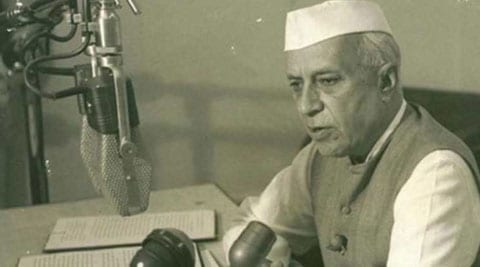
Nehru realised that higher education is also the main instrument of a new form of sociability.

One legacy of Jawaharlal Nehru that has been systematically dismantled over the years: his instinctive understanding of higher education.

The financial outlays to higher education have increased. The clamour for more higher education has been growing. But we have failed to create the capillaries that can sustain and nourish a vibrant higher education system. It is a sector peculiarly resistant to reform. This has one reason, which Nehru recognised well. Education, more than any other sector, depends on the accumulation of a lot of soft skills and tacit understanding, which if lost, are hard to recreate. This is reflected, for instance, in his deep concern about the quality of academic leadership in education. It is a concern we barely seem to understand. Nehru’s weakness on primary education was, in retrospect, a great failing. But he was more clear-headed on higher education. He realised that independence in thinking and technical capacity was a necessary correlate of political independence. While it was necessary to be open to ideas from everywhere, it was also important to develop an independent locus of thought. Above all, this has meant that we have an elite that is not content with the idea that much of our research and higher education can be outsourced. But, though we do not say so, implicitly, we are quite content with outsourcing higher education to the United States. We cannot “make in India” if we don’t “think in India”.

Nehru realised that higher education is also the main instrument of a new form of sociability. It should be a site where group identities can be transcended. Just read his speech from the Aligarh Muslim University convocation, in which he warns against the dangers of aligning reason and identity. But sectarian universities have become even more ghettoised. Nehru also realised that an indigenously educated middle class that has not seceded is necessary for an enlightened vanguard. He was perhaps overly optimistic about how higher education could produce it, but the aspiration was not off the mark.

CERTAIN MISPLACED NOTIONS

http://www.telegraphindia.com/1141115/jsp/opinion/story_19014262.jsp#.VGberPmUfb4
Abhijit Bhattacharyya


Let us be real and follow law and logic to counter the lethality of the deliberate mischief being resorted to by actors of all hues with mala fide intent. Pakistan became independent on August 14, 1947. India followed suit on August 15, 1947; Jammu and Kashmir, which was a princely state till Partition in 1947, was given the choice by the British to opt for either India or Pakistan or to remain independent.

Pakistan invaded Srinagar in October 1947. Later that month, Independent India received a “desperate appeal” for help from the maharaja of Jammu and Kashmir, as its independence was being violated by an aggressive and violent Pakistan. The maharajaappealed for help to Governor General Mountbatten, who agreed to assist on condition that the maharaja accede to India. The maharaja of Jammu and Kashmir signed the Instrument of Accession to India on October 26, 1947, followed by its acceptance by New Delhi on the next day.

In spite of being a monarchy, Jammu and Kashmir had a constitution in place since 1939. And defining the powers of the maharaja of the Jammu and Kashmir State and his jurisdiction, Section 4 of that constitution clearly and emphatically said that the maharajawas “an absolute Monarch” in whom are vested all the powers in relation to the State: “The territories for the time being vested in His Highness are governed by and in the name of His Highness, and all rights, authority and jurisdiction which appertain or are incidental to the government of such territories are exercisable by His Highness...”

Section 5 too clarified: “Notwithstanding anything contained in this or any other Act, all powers, legislative, executive and judicial, in relation to the State and its government are hereby declared to be and to have always been inherent in and possessed and retained by His Highness ...” Hence, when the maharaja acceded to India, the act was legal, bona fide, unequivocal and irrevocable, in accordance with the law of the independent State of Jammu and Kashmir as well as with international conventions and laws guiding relations between sovereign States.

The school that says Osama Bin Laden was a hero

By Mobeen AzharBBC World Service, Islamabad
12 November 2014 

A hardline cleric in Pakistan is teaching the ideas of Osama Bin Laden in religious schools for about 5,000 children. Even while the Pakistani government fights the Taliban in the north-west of the country, it has no plans to close schools educating what could be the next generation of pro-Taliban jihadis.

"We share the same objectives as the Taliban but we don't offer military training. We work on minds. The Taliban are more hands-on," says Abdul Aziz Ghazi, imam of Islamabad's controversial Red Mosque.

"We teach about the principles of jihad. It's up to students if they want to get military training after they leave here. We don't discourage them."

Ghazi runs eight seminaries - madrassas as they are known - the first of which was founded after his father went on a journey to meet Osama Bin Laden in Afghanistan.

"Osama Bin Laden is a hero for us all. He stood up to America and he won. He inspired the mission of the school," says Ghazi.

In one of the seminaries, the library is named in honour of Bin Laden, who was killed by US Navy Seals in Pakistan in 2011.

Ghazi, his mosque and his seminaries, have come a long way since 2007, when the Pakistani army was sent to lay siege to the radical mosque, and later stormed it. The events left 100 dead, including many militants, and Ghazi's younger brother, mother and son.

Ghazi himself became known as the "Burka Mullah" after he was caught trying to escape wearing a woman's face veil and robe as a disguise.

China's maritime threat: How India let its best bet Vizhinjam be sabotaged


Nov 10, 2014 

India’s maritime interests are under threat – mostly from China. There were three news items this week of some significance, both commercial and military. The first was that, despite a strong warning from National Security Advisor Ajit Doval, a Chinese submarine, Changzheng 2, docked at Colombo, along with warship Chang Xing Dao, according to the Times of India 

The second was the sinking of a naval vessel off Vishakhapatnam and the loss of life of Navy personnel. Preliminary reports seemed to indicate that the ship was over 30 years old, which would mean it is older than what a military vessel should be. Besides, given the catastrophic failure of the ship, it is not clear that sabotage can be ruled out. Given the previous tragedy of the Kilo-class submarine INS Sindhurakshak, which sank with all hands in Mumbai, we have to worry about our Navy ships. The INS Sindhuratna, another submarine, also had an on-board fire.

Naval security challenges for India. Reuters

The third event was the series of intelligence warnings that the airport and seaport in Kolkata were under serious threat of an attack by un-named terrorists. According to the Hindustan Times(Kolkata port on high alert after terror threat), two Indian warships, INS Khukri and INS Sumitra, were moved out of the port where they had been for routine visit, with an open house scheduled for 5 and 6 November.

In light of an attempt by Al Qaeda terrorists to capture a Pakistani Navy frigate at Karachi in September, the threat of an attack in Kolkata is credible. In Karachi, the intent was to capture the frigate and then attack American and Indian vessels in the Indian Ocean. Although far-fetched, the idea has merit, and it was purely through good luck that the attack was foiled and no rogue Pakistani ship loomed on the horizon.

For some years, India has under-invested in its Navy, and also in its commercial port infrastructure. These mistakes are now coming back to haunt the country, as our trade capability is affected, and there are long-term strategic holes that our adversaries are looking to exploit. One such is the lack of container ports and the concomitant dependence on the kindness of strangers

To go back to the appearance of Chinese submarines in Colombo, this is an explicit statement by Sri Lanka that it prefers China to India. It may also well be a subtle Chinese warning against India getting too close to Vietnam. Apparently the previous visit by Chinese submarines to Colombo took place in secret at the very time the President of India was in Vietnam earlier this year.

The U.S.-China Climate Change Pact: A Silver Lining?

Nov 11, 2014 

Jacques deLisle and Barry Lefer on APEC and Climate Change

U.S. President Barack Obama and Chinese president Xi Jinping trumped naysayers with Wednesday’s landmark agreement to jointly combat climate change. The setting was the meetings in Beijing this week of the Asia Pacific Economic Cooperation (APEC), a forum of 21 Pacific Rim countries. For the first time ever, China agreed to stop emissions from growing by 2030, while the U.S. agreed to revised targets to reduce carbon emissions. The agreement could pave the way for a global accord on climate change next year. However, according to experts, the two countries must sort out differences for the rest of the world to take them seriously, even as China confronts pollution concerns from its own citizens.

On its part, the U.S. has agreed to accelerate efforts to reduce carbon emissions. If all goes well, by 2025 it would cut its carbon emissions levels of 2005 by between 26% and 28%. “[That] target is both ambitious and feasible,” wrote U.S. Secretary of State John Kerry in a New York Times op-edon Wednesday. China has committed to ensure that by 2030, clean energy like solar and wind power would account for a fifth of its total energy production. Unlike with China, Obama still has to sell the agreement to Congress back home, where Republicans wrested a majority in the November 4 midterm elections.

The real question is whether the U.S. and China, who are the two biggest emitters and the two biggest economies, can get together and lead on this, Twitter ” said Jacques deLisle, director of the University of Pennsylvania’sCenter for East Asian Studies and professor of law and political science. “The political will is not there right now,” said Barry Lefer, University of Houston professor of atmospheric science and atmospheric chemistry. “Unfortunately, we’re going to probably end up doing nothing. The current Congress is not interested in climate change.”

China Is Financing Putin’s Aggression


Russia’s economy is tanking, but Putin is sending long-range bombers on sorties in the Gulf of Mexico and combat troops into Ukraine—thanks to billions in new energy deals from Beijing. 

President Obama may say China can be America’s “partner,” as he did Monday in Beijing, but the Chinese calculate their interests differently. The real partnership is between the Dragon and the Bear. 

On Sunday in Beijing, on the sidelines of the Asia-Pacific Economic Cooperation summit, Russia’s state-owned gas giant Gazprom signed a contract to sell gas from western Siberia to China’s own state energy giant, China National Petroleum Corp. 

The Gazprom-CNPC deal is not the only major recent Russia-China energy deal. Last October, state-owned Rosneft, Russia’s biggest oil producer, gave CNPC an equity stake in an oil field in eastern Siberia. This May, Gazprom and CNPC inked a 30-year, $400 billion gas pact, another landmark arrangement in what AFP has described as a rapidly expanding “energy alliance.” 

And this week CNPC agreed to buy 10 percent of Vankorneft, a Rosneft subsidiary, which operates the lucrative Vankor oil field. As the Financial Times noted in September, the deal “represents a stunning change in strategy.” In the past, Russia brought in a foreign energy company only if it needed technology. For Vankor, Russia has all the expertise it requires, as the field is already in production. In short, it looks as if Russian President Vladimir Putin sold a stake to China because he needed cash quickly. 

The Secret Sauce: If China Wants to Lead Asia, Here Is How

November 13, 2014 

Recently the growing rivalry between the United States and China seems to be spilling over into the economic and institutional arenas. The US is leading the push for the Trans-Pacific Partnership, a new regional free-trade agreement which excludes China. And Beijing appears to be implementing a new strategy for transforming its own economic strength into regional leadership.

Whereas China previously used bilateral channels to build relationships and acquire influence, it’s now leading multilateral initiatives, headlined by the US$50 billion Asian Infrastructure Investment Bank and US$40 billion Silk Road Fund—the latter planning to build a network of trade-and-transport infrastructure linking China to Central and South Asia, the Middle East and Europe. Those initiatives have the potential to eclipse the World Bank and Asian Development Bank as the dominant multilateral lending institutions in Asia, shaking the foundations of the regional order set up by the United States following World War II.

Beijing is also pushing back on the multilateral trade front, securing an agreement from APEC leaders for a two-year study of a Free Trade Area of the Asia-Pacific. The FTAAP could become adirect competitor to the Trans-Pacific Partnership, the central economic component of the Obama Administration’s rebalance to Asia.

There’s a clear strategic logic to China’s multilateral approach. The existing system is a product of US leadership and undeniably favours American interests, but it’s also open, rule-based, and structured around institutions. As John Ikenberry has argued, countries accepted American leadership in part because they were given a say in how the regional order was built and maintained.

China’s Deceptively Weak Anti-Satellite Capabilities

By Jaganath Sankaran
November 13, 2014

Relax, China’s ASAT capabilities do not threaten U.S. satellites. 

In May 2013, the Pentagon suggested that a high altitude Chinese sub-orbital space launch—claimed to be a scientific mission by China—was in reality the first test of an anti-satellite (ASAT) interceptor that would reach all the way to geo-synchronous earth orbit. Previously, on January 11, 2007, China had successfully launched an ASAT missile against one of its own low earth orbit (LEO) weather satellites.

These and other Chinese actions have provoked strong concerns within the U.S. about China’s motivations.James R. Clapper, the U.S. Director of National Intelligence, for example, recently told a Senate hearing that: “Chinese and Russian military leaders understand the unique information advantages afforded by space systems and are developing capabilities to disrupt U.S. use of space in conflict. Chinese military writings highlight the need to interfere with, damage, and destroy reconnaissance, navigation, and communication satellites.”

While these concerns have some validity, all U.S. military satellites are not equally vulnerable to a Chinese ASAT attack. Furthermore, the benefits from an ASAT attack are limited and would not confer decisive military advantage in every plausible conflict.

Limits of the Possible