8 February 2015

THE SCHOOLHOUSE: REMAKING EDUCATION IN INTERNATIONAL AFFAIRS

Ryan Evans
February 4, 2015

America’s higher education system, and in particular, its advanced graduate training, have long been the envy of the world. Richly endowed and highly respected, universities in the United States are counted upon to generate knowledge and innovation, solve pressing problems, train future leaders, and shape national discourse. In the field of international affairs, however, there is a growing sense that something may be amiss, and that our graduate training – in particular our Ph.D. programs – may be coming up short.

At War on the Rocks, we are putting together a series called “The Schoolhouse” to explore and debate the state of advanced graduate education in international affairs. We aim to move beyond the often-repetitive and tiresome debates about the usefulness of scholarship to policy. We believe there are deeper issues at stake. What should be the mission of graduate education in international affairs, and are we successfully meeting it? If you could redesign graduate programs from the ground up, what would they look like? How would you balance the often-competing interests between students, disciplines, universities, and the wider world? Is it possible to prepare students to engage both the world of ideas and the world of action in international affairs?

Tomorrow we launch “The Schoolhouse” with an essay by Frank Gavin of MIT. Frank is the mastermind of this series and we thank him for the energy and effort he has put into the project. His essay will be followed by others, including one by Stephen Van Evera, another by David Betz, as well as future contributions from graduate students, policymakers, think tankers, and more. We hope others will contribute. Disagreement and debate is encouraged. Submissions are welcome at editor@warontherocks.com.
The Coaching Tree : The Impact of Leadership through the Generations

Major General Fox Conner

In his recent post on mentorship at Beyond the Objective, Army Major Nate Finney raised four key points needing further examination:

The effect of both “toxic” and phenomenal leaders on their subordinates

The difficulty in balancing time, work, family, AND mentoring

The challenges in working up through an ossified bureaucracy

The personal reasons for continuing (or leaving) military service

At a time when people seem to be increasingly pushed aside as we race toward an uncertain future, each of these issues represents an essential component of contemporary mentoring. But it’s the first point that brought us here today.

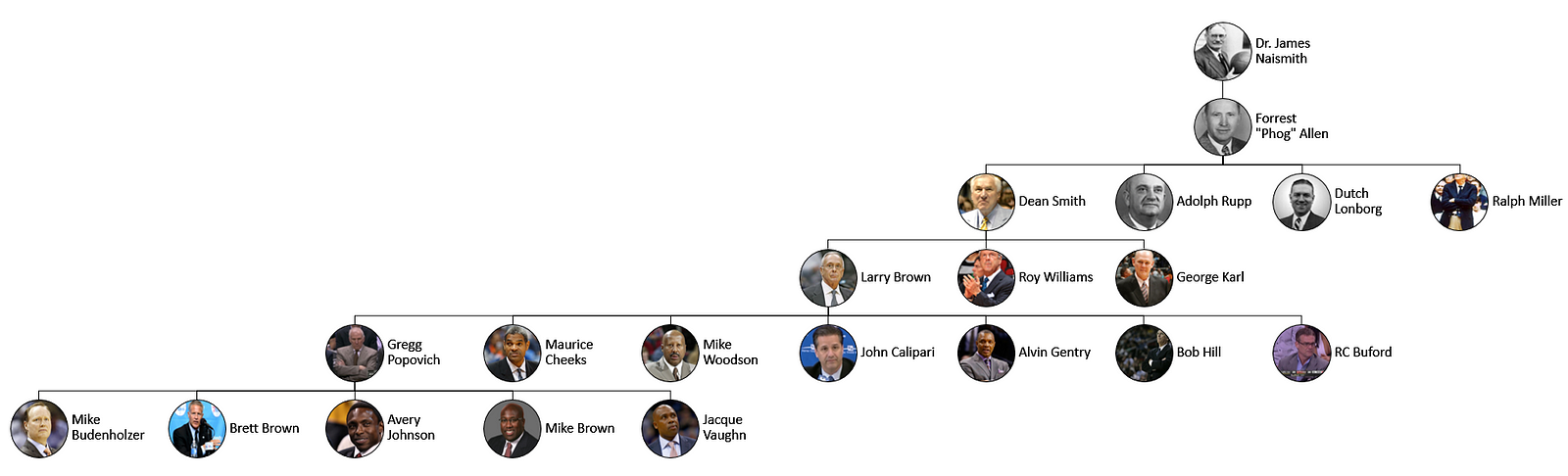
The coaching tree of Dr. James Naismith, the inventor of basketball

Any student of mentoring will recognize the name Fox Conner. His influence on the leaders of “The Greatest Generation” has been the subject of monographs, books, and countless articles. If you were to scribble Connor’s “mentoring tree” on the back of a napkin, it would probably look very similar to the “coaching tree” of Dr. James Naismith, whose influence on the sport of basketball is still visible today. Connor’s tree would likely feature the names of his early proteges, leaders such as George C. Marshall, Dwight D. Eisenhower, Omar Bradley, and George S. Patton. It would branch into subsequent generations and capture the incredible influence of a humble man whose subtle leadership defined how we view mentoring today.

The Indian Air Force 2020 And Beyond

Air Chief Marshal Fali Homi Major (Retd)

Military power, as history bears out, shall always remain a very critical component of national power – without it, the progress and growth of a nation is possible only upto the point where it clashes with the ‘interests’ of another stronger nation. ‘Aerospace power’ today is perhaps the most important component of this military power. There are many reasons for this – flexibility and speed of response, mobility / transportability of national power, long reach, precision targeting, minimum fuss and reduced visibility. Aerospace power fits the bill just so perfectly! How has aerospace power attained such outstanding enabling characteristics? As they say − ‘it is in the very nature of the beast’! This nature is founded and premised on technology – the very reliability and effectiveness of aerospace power hinges upon it! The 21st century undoubtedly belongs to aerospace power, because ‘air’ and ‘space’ with their essential similarities, have come together in a synergy that has dramatically enhanced the capabilities of air power astonishingly – it has become more reliable, effective, clean, responsive, enables ‘effects-based’ / ‘parallel’ operations and creates ‘strategic’ effects, both in peace and in war! The Indian Air Force, in our national security calculus, has the onerous task to conceptualise, plan, execute and project Aerospace power – in all its hues!

The Weapon And Equipment Profile

Not all Air Forces have the capability to project aerospace power in its many hues, but the Indian Air Force – one of the finest in the world can, provided its ongoing modernization and capability building plan is executed with speed, determination, grit and transparency. And based on this modernisation plan, the force structure of the IAF in 2025 would be – about 45 combat fighter squadrons; a formidable combat-ready fleet of helicopters and transport aircraft; adequate numbers of AWACS / AEW and air-to-air refueling aircraft; a mix of modern trainer aircraft / simulators; a well-packaged fleet of UAVs / UCAVs; new generation air defence and surface-to-air missile systems to plug existing gaps in the AD grid; about 40 operational air bases with day / night / all-weather facilities to cater for all types / categories of aircraft; a robust and secure network centric warfare capability; a state-of-the-art and dynamic maintenance / logistics infrastructure; smart weapons and other force multipliers / enhancers. The hardware involved in this modernisation package is in various stages of induction and procurement – some operational, some in the pipeline, some under evaluation, some in design / development stage and some still being identified. 

19 percent pass rate for women in Ranger prep


By Michelle Tan
February 4, 2015 

Five female soldiers successfully completed the Ranger Training Assessment Course at Fort Benning, Georgia, moving them one step closer to attending the Army's storied Ranger School this spring.

A total of 58 soldiers — 53 men, five women — completed the two-week course Jan. 30, officials at Fort Benning announced Wednesday.

In all, 122 soldiers started the course, for a completion rate of almost 48 percent.

Among the men, 55 percent of them successfully completed the course (96 started the course; 53 successfully completed it). Among the women, 19 percent were successful (26 started the course; five successfully completed it).

The five women are all officers.

The Army announced in January that it plans to conduct a one-time, integrated assessment at Ranger School in April.

The assessment is part of a wider effort to determine whether and how to open combat arms jobs to women. This assessment will be a first for the two-month Ranger School, which until now has been open only to men.

Women who successfully complete Ranger School will receive a certificate and be awarded the coveted Ranger tab. They will not, however, be assigned to the 75th Ranger Regiment, which is separate from Ranger School.

Gen. Stanley McChrystal Has A Plan For All Young Americans To Serve Their Country

DRAKE BAER

It all started with a question.

In the summer of 2012, Gen. Stanley McChrystal was wrapping up an onstage conversation at the Aspen Ideas Festival conference.

He was asked if the US should reinstate the draft.

Yes, he replied, but not to grow the size of the armed forces.

He argued that since only 1% of Americans serve their country, America lacks in shared experience — there’s almost no common background between the upper class and the middle class, the educated and the uneducated, the rural and the urban.

The solution, then, wouldn’t be mandatory military service, but national service — programs likeTeach for America and City Year, but made accessible to a full quarter of a yearly cohort rather than an elite few.

Since that conversation, McChrystal has campaigned for making a “service year” a part of young Americans’ trajectories. The goal is to “create 1 million civilian national service opportunities every year for Americans between the ages of 18 and 28 to get outside their comfort zones while serving side by side with people from different backgrounds.”

In an interview with Business Insider, McChrystal, who has held positions as head of US Joint Special Operations Command and as the top commander of US and international forces in Afghanistan, explained his plan for making that happen, and the effects national service could have on American society.

4 Things Television’s Top Writer Can Teach Us About Military Leadership


Nathan K. Finney
February 3, 2015

A true look at mentorship as a flawed and personal relationship with little effect on the bureaucracy is something that is way overdue in the military.

Editor’s Note: This article has been modified from its original version, which was published on “Beyond the Objective,” a blog by Doctrine Man.

Note on suspension of disbelief: This quick piece is not intended to address the political preferences inherent in the television content discussed below. I left my political biases at the door, and I hope you can do the same.

I was recently drawn into the television show “The Newsroom,” a fictional series created by Aaron Sorkin based around the tensions and choices made when covering the news (at least from the perspective of a cable news channel). What struck me about this show was not the sexual drama (everyone is sleeping with or dating everyone else at some point), the shifting existential crises of the main characters in every show, or even the political commentary inherent in the message of each show .  The overall theme of the show is the challenge of treading the fine line between journalistic responsibility and making money for parent corporations to remain on the air. Instead, I was struck that every show contained a healthy dose of mentorship, and not the feel-good, “I’m a commander and I just gave great career advice to a subordinate in a scheduled counseling” kind of way.

The beauty of any Sorkin television drama —  something I didn’t realize until I had this epiphany about “The Newsroom” and went back to look at his other shows like “The West Wing” and “Sports Night ” —  is his coverage of the varied dynamics of mentorship: ambition, loyalty, frustration, intellectual engagement, self-identification, discipline, flexibility, fear for the success of a cause, desire to leave your job/profession better than you found it, personal investment in others, self-sacrifice, and even pride.

Mentorship Done Right


An Aaron Sorkin Version of the Military

Eisenhower relaxing with another man at a camp during the Louisiana Maneuvers, 1941.

Note on suspension of disbelief: This quick piece is not intended to address the political preferences inherent in the television content discussed below. I left my political biases at the door…and I hope you can do the same.

I was recently drawn into the television show Newsroom, a fictional series based around the tensions and choices made when covering the news (at least from the perspective of a cable news channel). What struck me about this show was not the sexual drama (everyone is sleeping with or dating everyone else at some point), the shifting existential crises of the main characters in every show, or even the political commentary inherent in the message of each show — the overall theme of the show is the challenge of treading the fine line between journalistic responsibility and making money for parent corporations to remain on the air. Instead, I was struck that every show contained a healthy dose of mentorship…and not the feel good, “I’m a commander and I just gave great career advice to a subordinate in a scheduled counseling” kind of mentorship.

The beauty of any Aaron Sorkin TV drama — something I didn’t realize until I had this epiphany about Newsroom and went back to look at his other shows like the West Wing and Sports Night — is his coverage of the varied dynamics of mentorship: ambition, loyalty, frustration, intellectual engagement, self-identification, discipline, flexibility, fear for the success of a cause, desire to leave your job/profession better that you found it, personal investment in others, self-sacrifice, and even pride.

No matter what sanitized version of mentorship the military vomits into its doctrine (page 7–11), or even worse, the personnel technocrats warp into an “official” program, mentorship is a relationship. It is an in-depth, long-term personal connection between two people that have an asymmetry in either knowledge or skills — rank matters not. Mentorship only occurs if there’s a personal spark between two people — both the mentor and the protege have to believe the other is worth spending time on and with.

Average Soldiers Don’t Trust Their Generals and They Have a Point


Rep. Duncan Hunter
02.03.15 

A survey last year showed only 27% of the military felt senior leaders looked out for their best interests. To fix the morale crisis generals need to stop acting like politicians. 

Through a decade-plus of war, America’s military men and women, and the families that support them, have experienced their share of hardships. Separations through multiple deployments and the inherent dangers of combat are enough to press the emotional and physical limits of even the strongest individuals. 

For some of these faithful defenders of America’s interests, there have been difficulties far beyond the battlefield—difficulties not imposed by any enemy or the distance and time that separates them from their loved ones. Most ironically, the assault against them—intended or not—can sometimes come from within the military institution for which they fought, bled and sacrificed so much. 

It’s no wonder why there’s concern for morale in today’s force. Just recently, outgoing Secretary of Defense Chuck Hagel said he too is worried about the decline in enthusiasm, and he believes it will take some time to reversing the mindset and perspective of the force. 

There’s no single reason for the decline in morale, although some reasons are more pronounced than others. Take for instance the question about whether “senior military has my best interests at heart.” In 2009, 53 percent of respondents answered yes. By 2014, only 27 percent answered affirmatively. 

One recurring complaint involves what many service personnel perceive as the excessive politicization of the military during wartime, giving rise to high profile prosecutions, excessive punitive actions and decision making that is at odds with the best interests of service personnel. So much so, instincts necessary in combat have been replaced with second-guessing and hesitation, matched by a growing sense of distrust among the ranks. 

129 Army battalion, brigade commanders fired since 2003


By Michelle Tan
February 2, 2015 

The Army has relieved 129 battalion and brigade commanders since 2003 and implemented several initiatives in its ongoing effort to hold leaders and commanders accountable for their actions, senior leaders told Army Times.

"I think the narrative comes out of many soldiers who rightfully or wrongfully believe that the Army doesn't hold senior leaders, senior military officers accountable in the same fashion they hold junior officers or enlisted," Army Secretary John McHugh said. "I view it as a multilevel challenge, and we're trying to respond in a number of different ways."

Since 2003, the Army has relieved 98 battalion commanders and four lieutenant colonel staff officers, according to information provided by the Army. Twenty-four of those reliefs were conducted in combat.

In that same time period, 31 brigade commanders and four colonel staff officers were relieved; one of those was conducted in combat.

In addition, according to Army data:

• The Army has administered non-judicial punishment (Article 15s) to 1,472 officers since 2008.

• It has court-martialed 41 lieutenant colonels or higher, including two general officers, in the last six years.

• Seven general officers have been relieved from their positions since 2008.

• Since 2010, 29 general officers were referred to Army Grade Determination Review Boards.

7 February 2015

No Proof Required: Believe it or not statistics

Surjit S Bhalla
February 7, 2015 

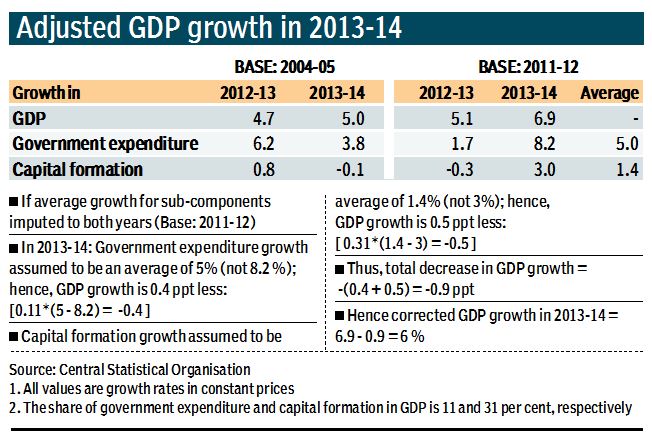
The Indian statistical authorities (Central Statistical Organisation or CSO) recently released a revised set of GDP numbers that have set the statistical house on fire. The new salvoes being fired from the CSO’s shoulders suggest a radically different interpretation of the Indian growth story over the last few years, and indirectly, of what happened in the national elections in May 2014. Just to recall: in May 2014, the ruling Congress party was decimated and registered its lowest seat tally ever, 44 seats in a 543-seat Parliament. For those keeping records, this was the second largest decline in parliamentary history in the world, possibly ever. The record holder for the worst thrashing was the Progressive Conservatives Party of Canada. Under Brian Mulroney, the Progressive Conservatives won re-election in 1988, with 169 out of 295 seats. At the subsequent election, in 1993, the party collapsed to win just two seats, falling from first to fifth place.

Many of us thought that a major reason for the magnificent loss of the Congress was the economy. We were told that GDP growth for two successive years was less than or equal to the 5 per cent mark, 4.7 per cent in 2012-13 and 5 per cent in 2013-14, a toxic decline from the heady years of near-double-digit growth. If GDP growth declines by half, voters are likely to be upset, and we all concluded that the voting reflected the pocketbook. Much ink was spilled, and many trees were cut, to document the close relationship between economic performance and voting behaviour.

India, China and an opportunity

February 7, 2015 

Keeping up the momentum in India-China relations, External Affairs Minister Sushma Swaraj came back from her three-day visit to China with several deliverables — including a new Chinese openness in seeing India take up permanent membership of the Shanghai Cooperation Organisation (SCO) and Asia-Pacific Economic Cooperation (APEC). Previously, the Chinese had linked SCO membership with a greater role for Beijing in the South Asian Association for Regional Cooperation (SAARC). Ms. Swaraj, during her first visit to China as External Affairs Minister, built on the three meetings Prime Minister Narendra Modi has had with Chinese President Xi Jinping. She also called on the Chinese President, a rare opportunity for any visiting Foreign Minister. Clearance for the early operationalisation of a new route to Kailash Mansarovar and a decision to hold a session of talks between the Special Representatives tasked by the two sides to resolve the boundary dispute, are other takeaways. Her trip was also part of preparations for Mr. Modi’s visit later in the year. As reported in the Chinese media, President Xi himself has set the agenda for taking bilateral ties to a new level by suggesting that the two countries seize the “opportunity of the century” by combining their development strategies. With a slowing economy and sluggish European recovery, China may be focussing on the Indian market. It also appears willing to invest, following Prime Minister Modi’s “Make in India” call.

It is in such a scenario of contact and consultation that “strong leaders” such as Mr. Modi and Mr. Xi can think about making some hard decisions when it comes to the decades-old boundary dispute that keeps surfacing during major bilateral visits. So far, the coalition nature of Indian governments has been seen as a major obstacle to the give-and-take, compromise approach on the border question. Today, Mr. Modi is in the happy situation where he can take a political call on issues, rising above intra-coalition pressures. In 2005, the Agreement on the Political Parameters and Guiding Principles for the Settlement of the Boundary Question signed by the two countries had raised hopes for an eventual settlement, but those have been belied. It would also seem that President Barack Obama’s successful visit to India around Republic Day has not dampened Beijing’s willingness to take relations with Delhi to the next level. Interestingly, India while talking to the U.S. and its other allies in the Asia-Pacific about safety in the sea-lanes, has agreed to set up a “consultation mechanism” on Asia-Pacific affairs with China and Russia. India’s diplomatic success lies in keeping several balls in the air at the same time.

India’s tango with the great powers

Srinath Raghavan
February 7, 2015 

Geopolitical and economic factors and the re-energised relationship between the U.S. and India are the drivers of change in the trilateral relationship between India, Russia and China. The cumulative impact of these two trends points to a new, emerging configuration of the triangular relationship

The latest trilateral meeting between the foreign ministers of India, Russia and China was held on shifting strategic sands. It would be no exaggeration to say that the triangular relationship between these countries is entering a new phase — one that differs significantly from the past. India’s ability to navigate this unfolding terrain will not only impinge on its relationships with Russia and China, but also on its wider, international objectives and choices.

The drivers of change in this trilateral relationship are primarily geopolitical and economic. The civil war in Ukraine shows no sign of abating, nor indeed does Russia’s involvement in the conflict. The resurgence of the fighting in eastern Ukraine has left the peace talks in tatters. And Russian support for the rebels has ensured that the Ukrainian forces cannot gain the upper hand. Indeed, the Ukrainians have suffered heavily in the recent fighting. This has led to a chorus of calls in the West to arm the Ukrainian forces. Although U.S. President Barack Obama has demurred against this, several influential voices — including Mr. Obama’s nominee for Defence Secretary, Ashton Carter — have come out in favour of providing heavy weapons to Ukraine.

Any such move will lead Russian President Vladimir Putin to dig in his heels still deeper. Russia already faces a raft of economic sanctions imposed by the European Union (EU) and the U.S. The Russian economy is apparently wilting under the one-two punch of these sanctions and the free-fall in oil prices. The projected slowdown in growth, the depleting foreign exchange reserves, the rising inflation, the downgrading of Russia’s credit rating to junk status: all point to a serious economic crunch. The economic sanctions have already led Russia to tilt closer towards China. The talk of providing weapons to Ukraine or imposing further sanctions will accentuate this shift.

Escalation in Ukraine

S Nihal Singh
Feb 7 2015 

Ukraine has assumed a central role in the West's confrontation with Russia as fighting is escalating and pressure is growing in Washington to arm the Ukrainian military. Thus far, the Obama administration has been supplying blankets and night vision goggles. But Russian support to rebels fighting to hold their strongholds in eastern Ukraine, in addition to sending Russian troops and equipment (officially denied), has tilted the balance against Kiev.

Behind this grim drama lies a total misreading of the situation by the West. Moscow disapproves Washington's attempt at co-opting Ukraine, a country of 45 million adjoining Russia and the cradle of Russian Orthodox Church, civilisation and folklore, into the West. With President Vladimir Putin seeking to expand his sphere of influence in the old Soviet space, the Western aim is like a red rag to a bull.

These events have also fed into Russian resentment at its treatment by the West, in proclaiming victory after the end of the Cold War, bringing NATO, the North Atlantic Treaty Organisation, to the very border of post-Soviet Russia contrary to perceived promises and the military alliance's absorption of the Baltic states which were part of the old Soviet Union. For President Putin, the attempt to take away Ukraine was the last straw.

In the West’s vocabulary, the attempt to absorb Ukraine was to spread democracy throughout Eastern Europe and Western strategists had little time to heed Russian sensitivities. Last year, as Ukraine sizzled, Moscow took matters into its own hands and annexed Crimea, a predominantly ethnic Russian peninsula, the home of the Russian Black Fleet and formerly part of the Soviet Union. The West protested but implicitly accepted the annexation.

However, the main Russian objective was to prevent Ukraine from going over to the West because it was a deeply divided nation between the pro-West western portion and the pro-Moscow east and President Putin conceived it as contrary to its vital interests. His objective was to seek wide autonomy for the provinces to retain the east's traditional links with Russia. Ukrainian President Petro Poroshenko, elected after his pro-Moscow predecessor was overthrown, had plans of going over to the West.

Tracking India’s Imported Uranium

By Mark Hibbs
February 06, 2015

India is busily negotiating bilateral agreements with its nuclear trading partners to assure them that the uranium they supply to India will not end up in Indian nuclear weapons. This is a standard practice for states involved in nuclear cooperation, yet India has set out to weaken the information sharing provisions in its agreements with Canada, the United States, and soon Australia. All three supplier states support India’s bid for membership in the Nuclear Suppliers Group (NSG), but India’s behavior here hardly supports New Delhi’s contention that it is like-minded.

These negotiations follow from an Indian commitment to the United States, pursuant to a bilateral agreement for peaceful nuclear cooperation, to separate its civilian and military nuclear activities. In part on this basis, in 2008 the NSG lifted nuclear trade sanctions against India imposed in 1974 after India had used Canadian uranium, which had been provided to India on condition that it would be used only for peaceful use, to produce plutonium for a nuclear explosive.

Since 2008, foreign suppliers have been permitted to conclude contracts to supply uranium to India. Conditions for this trade are set down in bilateral nuclear cooperation agreements in which India has pledged to use all nuclear materials it obtains from outside suppliers for peaceful purposes. All of the countries which are selling uranium to India are parties to the Nuclear Nonproliferation Treaty (NPT). That commits them to make sure their exports do not contribute to the manufacture of nuclear weapons in India.

Need to Strengthen Indian Maritime Security Apapratus

By Radhakrishna Rao 
February 06, 2015

Abstract: This article looks at the maritime threat facing India in the context of the Indian coast guard intercepting a Pakistani-origin vessel, on 31 December 2014, said to be carrying explosives in the guise of a fishing boat, an operation carried out based on the intelligence outputs provided by National Technical Research Organisation (NTRO).

In a well-planned operation on the high seas on December 31, the Indian Coast Guard successfully foiled an attempt that was believed to be aimed at repeating the 26/11 Mumbai terrorist attack. The 26 November 2008 terrorist attack on Mumbai did expose the gaps in the maritime security mechanism of the country. The most striking lesson of Mumbai terrorist attack is that India’s 7,516-km long coastal stretch needs to be protected much the same way as the landlocked borders are secured. In the 26/11 terror attack , 10 heavily armed militants from Pakistan described as “non state actors” travelled all the way from Karachi, hijacked an Indian fishing vessel plying in the Arabian Sea, steered it to the coastal stretch close to Mumbai before going on a killing spree that resulted in the death of more than 160 people.

Circumstantial evidence point out to the possibility of the Pakistani boat being used as a conduit to supply explosives to mount terrorist attack on the Indian mainland. Unfortunate as it is, even after the ghastly Peshawar terrorist attack that claimed the lives of more than 130 innocent school children, Pakistan seems to have failed to realize that terrorism is a double-edged sword. According to Defence Minister Manohar Parrikar, the crew of the Pakistani vessel claimed to be a fishing boat was in touch with the Pakistan army and it was clearly a part of the terror link on the Arabian sea channel close to India. “The most important factor for classifying the boat as suspected for probable terrorists is that they committed suicide. Even a normal boat with drugs would throw them away and surrender. No one will kill himself unless motivated to do so,” he said.

‘Make in India’ for Defence: A Roadmap

Laxman K Behera
February 05, 2015

The ‘Make in India’ (MII) drive of Prime Minister Narendra Modi offers a way of improving the country’s self-reliance in defence production. However, for the MII to succeed in the defence manufacturing sector, the government needs to address some legacy issues. These are: 

Establish a Defence Minister’s Council on Production (DCMP) to prepare a long term roadmap and set a target for the defence industry, monitor progress, and, more importantly, bring all the stakeholders on one platform and subscribe to the vision of MII. 

Convert the Long Term Integrated Perspective Plan (LTIPP) of the Indian armed forces into a defence manufacturing and R&D plan, to be executed by local entities. 

Promote a certain degree of defence research and development outside the Defence Research and Development Organisation (DRDO). 

Set up a dedicated defence technology university on the lines of the Indian Institute of Space Science and Technology to meet the vast human resource requirement of defence. 

Treat the private sector as an equal partner and expedite big-ticket contracts to be awarded to them under the ‘Make’ and ‘Buy and Make (Indian)’ procurement categories. 

Create a conducive financial framework that incentivises defence manufacturing by domestic industry. 

Reform DRDO, Defence Public Sector Undertaking (DPSUs) and Ordnance Factories (OFs) along the lines suggested by past committees appointed by the Government. 

Transition in Afghanistan: Losing the Forgotten War?

By Anthony H. Cordesman
FEB 4, 2015

The Burke Chair circulated a report in early January on Transition in Afghanistan. We have since received extensive comments and the revised edition is being circulated in final draft form before becoming a CSIS E-book. This report is entitled Transition in Afghanistan: Losing the Forgotten War? It is available on the CSIS web site at.pdf format .

The report focuses on the lessons that need to be learned from of the US experience in Afghanistan to date, and the problems Afghanistan faces now that most US and allied combat forces have left. It builds on more than a decade’s worth of reporting and analysis of the Afghan war. It examines the recent trends and problems in Afghan governance, the trends in the fighting, progress in the Afghan security forces, and what may be a growing crisis in the Afghan economy.

The report asks serious questions about the problems that are arising from the lack of political unity of the country and the problems in the effectiveness of its government. It provides a detailed analysis of the problems resulting from the recent election, a growing Afghan budget crisis, and critical problems with power brokers and corruption.

The report indicates that the military situation is far worse than the US Department of Defense and ISAF have reported, and provides detailed graphs and maps showing the real risks in the current security situation. It also provides a detailed analysis of the problems in the Afghan National Security Forces (ANSF) and the limits in their capability, as well as the weaknesses in past and planned US and allied force development and training efforts.

The report suggests that President Obama’s insistence on rapid cuts in the US advisory presence and its near elimination by the end of 2016 could cripple the Transition effort, and that a large and longer conditions-based effort may be critical to success.

Turbulence in South and West Asia

ByMaj Gen Afsir Karim
06 Feb , 2015

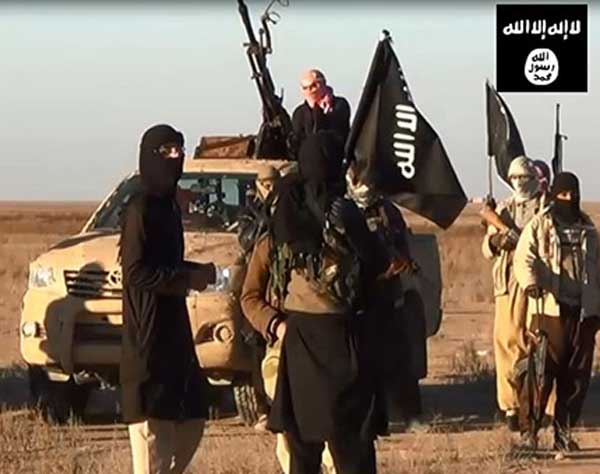
Increase in cross-border firing, attempts to attack coastal areas and targeting army camps in Kashmir show a new aggressive posture of the Pakistan army. The dramatic rise of the Islamic State in Iraq and Syria (ISIS) and the recent Pakistan offensive in Kashmir have added a new dimension to the challenges that India faces from extremism. Although only a few Indians have joined the ISIS or travelled to Iraq and Syria to enlist with the ISIS the danger of its influencing larger segments of Indians persists. In West Asia, ISIS remains undefeated, brutal and defiant despite sustained operations mounted against it by the US led global coalition. A few thousand air strikes by the United States and its partners have failed to degrade ISIS operations so far. The operational capability of the ISIS remains unhampered both in Iraq and in Syria, mainly because the coalition has yet to put more boots on the ground and the war has been compartmentalised between Iraq and Syria.

The longest NATO mission ended at midnight on 31 December 2014. During its 13 long years in Afghanistan, NATO suffered more than three thousand fatal casualties. 2014 was the deadliest year in Afghanistan with overall 10000 civilian and military casualties. The efforts of the Taliban to overthrow the established regime in Afghanistan are likely to intensify, and Pakistan and its proxies may play a leading role in this internal struggle.

The main danger to India’s security is the al-Qaeda and ISIS campaigns in the Indian subcontinent.

India

The internal security environment in the country shows signs of gradual deterioration because of the growing polarisation of the society along with external and internal terrorist threats. The main danger to India’s security is the al-Qaeda and ISIS campaigns in the Indian subcontinent. Besides these threats, a new phenomenon in the form of simmering ethnic or religious unrest is spreading in some parts of the country and has in some cases has taken a violent turn. Violence is hindering economic development and challenging the authority in many states.

Why China's Defense of Internet Censorship Falls Flat

By Shannon Tiezzi
February 06, 2015

The first few weeks of 2015 have seen a renewed push to control the Internet in China. Virtual private networks, typically used to get around China’s “Great Firewall,” have been under “more sophisticated” attacks than ever before. China is (yet again) pushing to require real-name registration of social media accounts, even while deleting a number of accounts “that were disseminating distorted views of history.”

China is well aware that its crackdown has opened it up to criticism from foreign media outlets and free speech advocates. Foreign Ministry spokesperson Hong Lei took time in his press conference today to address those critiques. “China’s Internet has facilitated Chinese citizens and offered them a direct channel to exercise the right to know, the right to participate, the right to express, and the right to supervise,” Hong insisted. He also repeated China’s argument “all countries have the right to administer the cyber space in accordance with the law and the cyber sovereignty of all countries should be respected and maintained.”

An op-ed in Xinhua also responded to recent Western criticisms of China’s internet censorship (Beijing prefers the term “regulation”). To view China’s regulation of the internet as restricting the freedom of speech is a “misunderstanding based on long-term prejudice,” Xinhua argues.

In particular, the Xinhua piece was responding to foreign media reports on recent bans of certain social media accounts. Xinhua dismissed accusations that Beijing was simply deleting accounts that threatened its rule. “The truth is that those accounts had a negative impact [sic] on society,” the piece argued. Deleted accounts either posed as authoritative government outlets (such as the Central Commission for Discipline Inspection) or “were related to terrorism, violence and pornography.” Such accounts “deserve no protection of freedom of speech,”Xinhua declared.

What an Airplane Crash Reveals About Cross-Strait Relations

By Shannon Tiezzi
February 06, 2015

On February 4, a TransAsia airways flight crashed into the Keelung River in Taipei City. The plane, Flight 235 from Taipei to Kinmen, was carrying 53 passengers and five crew members; as of today, 31 have been confirmed dead, with 15 injured and 12 still missing. The plane suffered engine failure, according to a message from the pilot to air traffic control shortly before the crash.

Rescue efforts – and an investigation into the cause of the crash – are complicated by the unique political constraints of the cross-strait relationship. The TransAsia plane was carrying 31 tourists from mainland China, meaning the crash necessitates a response from Beijing. But beyond that, the Chinese Communist Party insists that it has ultimate authority over Taiwan, and its response to the TransAsia tragedy reflects this.

In the wake of the crash, Xinhua ran a story describing President Xi Jinping’s “important orders” for dealing with the disaster. “Chinese President Xi Jinping has ordered obtaining accurate information on the TransAsia Airways … [Xi] also ordered caring for the relatives of passengers and properly manag[ing] other matters,”Xinhua reported. The story perpetuates the idea that Xi, as the top leader in Beijing, can issue orders to the government on Taiwan. Chinese media outlets use similar language when Xi responds to tragedies within mainland China, with orders given to investigate the cause and care swiftly for the victims.

In addition to Xi’s comments, the Civil Aviation Administration of China (CAAC) offered its “all-out assistance to TransAsia Airways” – apparently ignoring the fact that Taiwan has its own Civil Aeronautics Administration. The CAA has already banned TransAsia from receiving international air traffic rights – effectively extending an existing ban laid down after another TransAsia plane crash last July.

Self-Immolations. Threats From Beijing. Playing Politics With the Dalai Lama.

BY ISAAC STONE FISH
FEBRUARY 4, 2015 

DHARAMSALA, India — These days, the Dalai Lama seems to make news mostly when world leaders decide whether or not to meet with him. On Feb. 5, the Dalai Lama will attend the annual U.S. National Prayer Breakfast — a rare victory for the globetrotting spiritual leader of the Tibetan people, as President Barack Obama will also be in attendance. More typical is what happened to the Dalai Lama in mid-December, on the 25th anniversary of his Nobel Peace Prize, when he visited Rome for a summit of Nobel Peace laureates. He requested a meeting with Pope Francis, but the pontiff declinedfor what a Vatican spokesman called “obvious reasons” — i.e., the Church’s relationship with Beijing. Much of the Western world views the Dalai Lama as a superstar: He regularly addresses tens of thousands in stadiums across Europe and the United States. But Beijing sees him as a dangerous separatist (a “splittist,” as the Chinese like to say), and has punished governments and agencies that engage with him.

Tibetan exiles in Dharamsala, the remote Indian town that serves as their headquarters, also wanted to mark the anniversary of their leader’s Nobel. In the Dalai Lama’s absence, the job of master of ceremonies fell to Lobsang Sangay, the prime minister of the Tibetan government-in-exile. The Dalai Lama stepped down from his role as political head of the Tibetans in March 2011, and since then he’s been trying to unload power and responsibility — much of it to Sangay, a Harvard-trained legal scholar elected in April 2011.

On a makeshift stage in a Buddhist temple outside the Dalai Lama’s residence, the 46-year-old Sangay spoke about the bravery and courage of the Dalai Lama to an audience of a few thousand. Smiling and regal in his flowing black robe, he watched Tibetan dances and listened to long Indian speeches. If he was bored, he didn’t show it.

Jordan and Japan Both Lost Citizens to Islamic State

By KEVIN KNODELL and JAMES SIMPSON

Now Amman drops bombs while Tokyo debates military reform

Moath Al Kasasbeh knew he was going to die.

The 26-year-old Jordanian fighter pilot—a prisoner of Islamic State since Christmas—said he believed the militants would kill him when the group’s propaganda wing interviewed him for its English-language magazine Dabiq.

On Feb. 3, Islamic State released a video of its followers burning Kasasbeh alive inside a metal cage. As flames engulf the young pilot, the militants pour debris on the cage, and a bulldozer flattens it with Kasasbeh’s body still inside.

The image of Islamic State burning a fellow Muslim to death—as part of what the group claims is a holy quest to protect and spread Islam—has sparked both disbelief and outrage. The Jordanian government is now openly waging an all-out war against the jihadi group.

On Feb. 5, Jordanian warplanes bombed Islamic State in Syria in revenge strikes.
“[King Abdullah of Jordan] has promised, before God and the Jordanian people, that we will burn Islamic State as they burned our martyr,” Ehab Al Kasasbeh, the pilot’s cousin, said according to The Washington Post.

Days prior to Kasasbeh’s death, the Islamists executed Japanese citizens Kenji Goto and Haruna Yukawa.

In Japan, the death of its citizens opened the public’s eyes to the terror group. For the first time since the country’s foray into Iraq in 2004, Japan seems to have a stake in events in the Middle East.

Kasasbeh was a deeply religious person. He completed the Hajj with his family and got married shortly before his fateful mission. Kasasbeh’s F-16 fighter jet crashed during a mission to Syria in December.

Islamic State and Japan: What Next?

By Mieczyslaw P. Boduszynski and Christopher K. Lamont
February 06, 2015

The beheading of two Japanese citizens at the hands of the Islamic State has sent shock waves through Japan. Over the past two weeks the Japanese public followed the unfolding drama, with domestic media providing in-depth analysis of every video and voice recording released by the hostage-takers. A tearful statement from the mother of murdered journalist Kenji Goto added to a national sense of distress. Meanwhile, ominous televised images of ISIS fighters roaming Iraq and Syria and coverage of the group’s latest threat to Japanese citizens fuel a growing sense of fear that Japan is vulnerable to international terrorism. With Prime Minister Shinzo Abe vowing to make ISIS “pay for their sins,” the hostage crisis has triggered a debate on Japan’s role in the Middle East both within Japan’s parliament, the Diet, and among the wider public. The crisis has thus become a moment of truth for Abe’s activist foreign policy in a region which fulfills the bulk of Japan’s energy needs but also one in which Japan has traditionally been wary of entering into messy political entanglements.

Ninety percent of Japanese oil comes from the Middle East, with nearly ten percent of that supply coming from Iran. Historically Japan has imported oil from the region while attempting to steer clear of Middle East politics, of which most Japanese have little knowledge. However, the reality of its economic interests and its alliance with the U.S. has at times rendered such neutrality difficult, if not impossible. The 1973 OPEC embargo awoke many Japanese to the political consequences of their Middle East oil dependence. More recently, Tokyo has come under significant pressure from Washington to play a supporting role in the U.S.-led wars in Iraq and Afghanistan, as well as to curtail imports of Iranian oil. On all of these fronts, Japan obliged, but in the face of significant public opposition to engaging in Iraq and Afghanistan in particular.

We Can Live with an (Almost) Nuclear Iran

Ted Galen Carpenter
February 6, 2015

Washington should make clear that it can tolerate an Iran that is one screwdriver’s turn away from a nuclear-weapons capability.

As negotiations regarding Iran’s nuclear program drag on inconclusively, calls mount for the Obama administration to abandon diplomacy. Hawks in the United States routinely excoriate President Obama for engaging in “appeasement” and advocate a return to the confrontational mode of previous administrations. Indeed, many of them demand that Washington adopt a harder-line policy than ever before, replete with a new round of tough economic sanctions against Tehran. Even some relatively moderate participants in the policy debate argue that Washington is unlikely to achieve a meaningful agreement and should, therefore, back away from the negotiations.

To his credit, Obama has thus far vigorously resisted such pressure. And for the moment, the congressional drive to sabotage negotiations by passing legislation imposing an array of new sanctions has stalled. But that may be merely a brief respite for the White House, if progress is not made toward a comprehensive settlement to replace the interim agreement reached last year.

Shrill warnings that Tehran is merely using the negotiations to stall for time while it continues to pursue a covert nuclear-weapons program are becoming more frequent. Those warnings emanate both from hawkish circles in the United States and from some foreign governments—most notably, Israel. Such critics insist that Iran is on the verge of a “breakout”—an ability to build nuclear weapons in the near future. They also argue that the Obama administration’s naรฏve commitment to diplomacy is giving the clerical regime breathing space to reach that goal.

Islamic State Tightens Its Grip on Shaky Libya

By Josh Rogin

The U.S. war against Islamic State has not yet extended to Libya. But the terror group is rapidly expanding its presence and activities there, and the embattled government is asking for Washington to include Libya in its international fight against the Islamic extremists.

Top U.S. intelligence officials have publicly stated their concerns about IS expansion in North Africa, following the group’s ramping up of its public acts of mayhem. It has taken credit for the brazen attack on the Corinthia Hotel in Tripoli, which resulted in the death of 12 people including one American contractor. Lieutenant General Vincent Stewart, director of the Defense Intelligence Agency, told the House Armed Services Committee this week that "with affiliates in Algeria, Egypt, Libya, the group is beginning to assemble a growing international footprint that includes ungoverned and under-governed areas."

That’s no surprise to the internationally recognized Libyan government in Tobruk, which has been battling IS in several Libyan cities, including Benghazi. (It is also in a civil war against a rival government in Tripoli, the capital, under Prime Minister Omar al-Hassi.) A top Tobruk government representative told U.S. officials during a visit to Washington this week that IS expansion in Libya is much worse than what is publicly understood.

“We are seeing an exponential growth of ISIS in Libya,” Aref Ali Nayed, Libya’s ambassador to the United Arab Emirates told me in an interview. “Libya, because of its resources, has become the ATM machine, the gas station, and the airport for ISIS. There is an unfortunate state of denial about all of this, and that is the most dangerous thing.”

IS has had an operations base in the port city of Derna for years, but has now established a headquarters at the main conference center in Sirte, where it controls the airport. It has also expanded in southern Libya, recruiting and setting up bases, and has held open marches in Tripoli.

The Men Who Love the Islamic State

BY DAVID KENNER
FEBRUARY 4, 2015 

ZARQA, Jordan — The group of six men, ranging in age from mid-20s to early 40s, were clean-shaven, with slicked-back hair. Over several rounds of coffee, tea, dates, and biscuits, they talked about their lives in this poverty-stricken city northeast of Amman, lectured me on the destructive role the United States and Israel were playing in Middle Eastern politics, and laughed while describing neighborhood drug use and their favorite icons from Western popular culture. “I named you David in my head before I knew your name was David,” one of the young men told me. “David, like David Beckham!”

And yet, when I asked who in the group believed the employees of Charlie Hebdo deserved to be gunned down, I was greeted with a chorus of nodding heads. Each and every one believed that the Jan. 7 murders of 12 people in Paris were justified.* After all, the magazine had insulted the Prophet, they said.

Zarqa is one of the country’s most notorious hotbeds of Islamic radicalism. The city, which is mainly made up of winding alleyways and decrepit-looking concrete apartment blocks, was the birthplace of notorious al Qaeda in Iraq leader Abu Musab al-Zarqawi. Our host, who gave his name as Abu al-Abed, pointed in the distance through the narrow streets to indicate the location of Zarqawi’s family home.

Jordan has played an active role in the international coalition against the Islamic State (IS), carrying out airstrikes against the jihadi group in Syria, while grappling with a radicalized minority at home. The International Center for the Study of Radicalization and Political Violence, a London-based think tank, estimates that 1,500 Jordanians have traveled to fight in Syria and Iraq. And while the country’s government is a staunch U.S. ally, its people are largely anti-American: According to a 2014 poll by the Pew Research Center, only 12 percent of Jordanians have a favorable view of the United States.