15 April 2015

Hamas Prepares Its Next War on Israel

April 12, 2015

Since last summer's war, things have been quiet along the Israel-Gaza border. But the calm is deceiving. No sooner had the fighting halted than Hamas was once again making preparations for its next war with Israel. Those efforts are now well underway, and while the international community's attention is elsewhere, Hamas is busily rearming, retraining, and rebuilding the system of offensive terror tunnels from which it has launched previous attacks on Israeli border communities. Indeed, in recent days, Hamas's armed wing, the Izzedine al-Qassam Brigades, have boasted that their bases close to the Israeli border have been repaired and are ready to confront Israel's military. So when hostilities break out once again, no one should claim to be surprised.

Preparing for the next round

With the smuggling of weapons into Gaza having been significantly disrupted, Hamas is increasingly manufacturing rockets in Gaza itself. These aren't as powerful as some of the Iranian-supplied missiles that they have acquired in the past, but Islamist groups in Gaza have been test-firing rockets into the Mediterranean Sea, and some of these now have formidable range. At the same time, Hamas is believed to be once again diverting concrete designated for rebuilding people's homes and using it to build tunnels and bunkers. Similarly, while the international community picks up the bill for Gaza's humanitarian needs, Hamas has apparently found the resources to open some 18 new terror training camps since the war's end. 

Obama continues to ignore reality

Prof. Ron Breiman 
http://www.israelhayom.com/site/newsletter_opinion.php?id=12243

Prime Minister Benjamin Netanyahu raised a legitimate demand during the talks between the Western powers and Iran -- that Iran should recognize Israel as a Jewish state and stop threatening to destroy it. U.S. President Barack Obama rejected the demand, saying that there was no relation between Iran's view of Israel and the nuclear talks, ignoring the fact that Israel would be the country most threatened by Iran if it did get nuclear weapons. Statements made by Iranian leaders in Tehran only strengthen that claim.

Obama's response should set off alarms for Israeli policymakers. His position could also extend to Netanyahu's legitimate call on Palestinian and Arab leaders to recognize Israel as a Jewish state. Calling for the formation of a Palestinian state to the west of Jordan requires "two states for two peoples," not just two states. Obama's statements are a good indicator of the likely pressure Israel will face regarding the fate of its own land during Obama's remaining time in the White House.Sadly, Obama's performance on all the issues he has tackled gives the impression that the cockpit of the White House, and by extension the whole world, is being flown by a pilot (not unlike the Germanwings pilot) who has decided to put an end to the age of the U.S. leading the world as a powerful, rational, responsible and democratic superpower. 

Clinton’s Long Foreign-Policy Record May Haunt Her 2016 Presidential Run

APRIL 10, 2015

Former Secretary of State Hillary Clinton’s long-anticipatedannouncement that she is running for president in 2016 is expected to come this Sunday. But the decision that played a big part in her losing the 2008 nomination, as well as her long foreign-policy record, is already haunting her 2016 bid.

President Barack Obama successfully used Clinton’s support of the Iraq war to surge to victory over the former senator and first lady during the 2008 Democratic primary. Now, with the rise of the Islamic State and the United States once again engaged in military operations in Iraq, rivals are taking Clinton to task for her decision to support the original war.

“Considering the premise for invading Iraq was based on falsehoods and considering the ramifications we live with now from that mistake, I would argue that anybody who voted for the Iraq War should not be president and certainly should not be leading the Democratic Party,” Sen. Lincoln Chafee (D-R.I.), told CNN in a recent interview. Chafee has formed a committee to explore a presidential bid.

U.S. Moves to Stem Iran Arms Flow to Yemen


DION NISSENBAUM
April 12, 2015

American official says Tehran is trying to supply surface-to-air missiles 

Iranian vessels prepared to leave Iran’s territorial waters on April 7 to patrol the region’s waterways. PHOTO: FARS NEWS AGENCY/ASSOCIATED PRESS

WASHINGTON—U.S. naval forces in the Red Sea this month boarded a freighter suspected of delivering Iranian weapons to Houthi rebels in Yemen, American military officials said.
The destroyer USS Sterett’s search of the Panamanian-flagged Saisaban on April 1 came up empty. But the officials said it marked the U.S. Navy’s first boarding operation in an expanding campaign to ensure Iran doesn’t supply game-changing weapons such as surface-to-air missiles that would threaten Saudi-led airstrikes on the Houthis.

The airstrikes began two weeks ago after Houthi rebels, who have taken over the capital and overrun much of the country, forced American-backed President Abed Rabbo Mansour Hadi to flee the country.

Russian Fighter Jet Nearly Collides with U.S. Spy Jet Over Europe


April 10, 2015

U.S. protests ‘reckless’ aerial encounter over Baltic Sea (UPDATED)

A Russia Su-27 jet fighter flew dangerously close and nearly collided with a U.S. reconnaissance aircraft this week in the latest aerial provocation by Moscow, defense officials revealed to the Washington Free Beacon.

The Su-27 conducted the close-in intercept of an RC-135 reconnaissance aircraft in international airspace over the Baltic Sea on Tuesday, said officials. The incident prompted a diplomatic protest.

“On the morning of April 7th, a U.S. RC-135U flying a routine route in international airspace was intercepted by a Russian Su-27 Flanker in an unsafe and unprofessional manner,” said Pentagon spokeswoman Eileen M. Lainez.

“The United States is raising this incident with Russia in the appropriate diplomatic and official channels,” she said in a statement.

Djibouti Becomes a Theater of Geopolitical Competition

April 12, 2015

The tiny African state of Djibouti is increasingly touted as the unsung hero of America's ongoing war against terror and piracy. Despite a recent closure, brief but worrying, of the American embassy there, the country is considered a rare oasis of stability, and is superbly positioned in the Horn of Africa right next to Yemen. Camp Lemonnier has become secure ground for American special forces, fighter planes, helicopters - and critically, it serves as the major base for Washington's drone operations in Yemen and Somalia. This is why Washington recently renewed its lease for 10 years, with an option for another 10, even though the Djiboutian government more than doubled the rent.

The more than $70 million per year including economic aid that the United States sends to Djibouti is money well spent. America needs Djibouti, and their government knows it. The French, Germans, and Japanese have also handed over tens of millions for use of the prime strategic real estate. Now, however, China has got in on the act. And if money talks and shapes policy - as it tends to do in small and underdeveloped countries run by authoritarian governments - then it could be Beijing's voice and not Washington's which will be heard the loudest by Djiboutian President Ismail Guelleh.

How Southern Europe Can Bounce Back

April 13, 2015

WASHINGTON - The countries of southern Europe need a good comeback story. Young people in Southern Europe are leaving at alarming rates for more competitive northern European countries, and even emerging markets in Latin America. Rising political dissonance in Greece, France, and Italy has increased concern in Brussels about political and economic uncertainty, and even possibly a eurozone break-up beginning with Greece. Escalating concerns that the euro crisis will worsen have investors in a sort of holding pattern, and unemployment remains unsustainably high.

Long-term recovery solutions have not traditionally come from Brussels or Frankfurt. Quick fixes such as quantitative easing may create temporary boosts in demand, but do little to address longer term shortcomings. Long-term employment protection schemes introduced in Spain, France, and other southern European countries may create a better safety net, but will do little to address the underlying investment and growth problems plaguing both old and new firms.

Yet European banks are flush with cash for the first time since 2009. The European Central Bank's stress test last October reflected only a €10 billion shortfall, which was plugged soon after it was reported. This was an overwhelmingly positive result for European banks, especially southern European giants like Banco Santander in Spain, UniCredit Group in Italy, and BNP Paribas in France. At the same time, political and economic uncertainty keeps investors wary, thus perpetuating the investment holding pattern and leaving unemployment in the region high.

France steps up involvement on Iran, Palestine

Author Uri Savir
April 12, 2015

French Foreign Minister Laurent Fabius (C) walks with others during a break in a meeting with world representatives seeking to pin down a nuclear deal with Iran at the Beau Rivage Palace Hotel in Lausanne, March 31, 2015. (photo by REUTERS/Brendan Smialowski)

On the chessboard of the Lausanne negotiations on the Iranian nuclear agreement, France evolved as a surprisingly independent player. Compared with the other negotiating powers, French Foreign Minister Laurent Fabius espoused the toughest positions in relation to the timeline for lifting sanctions, the nature of inspections and curtailing Iran's ability to continue nuclear research and development. The French, who have earned a reputation as the appeasing side in such negotiations, emerged this time as the tough guy within the six world powers and the most proactive European player.

Summary⎙ Print France has been very proactive during talks on the Iranian framework agreement, and it intends to extend this proactive attitude to the Palestinian issue.

The #Future Of War


To prepare for any future war, we need to reassess how we retain, educate, and promote talent. This will help us produce leaders that can think strategically and adapt to ever-changing warfare. Time matters when it comes to preserving and improving our own capabilities and we cannot afford to spend years slowly adapting to an enemy on the battlefield. While major changes to our personnel system may be forthcoming, it will take time to enact them, so we must find other ways to promote, foster, and reward strategic thinking and the peacetime practices that lead to rapid adaptation on the battlefield.

The Federal Government Makes A Killing On Gun And Ammo Sales


Just in time for the NRA's annual convention in Nashville 

Record gun sales and an insatiable demand for ammunition have delivered an unintended gift to the arch enemy of many firearms enthusiasts: the federal government. The Treasury’s Alcohol and Tobacco Tax and Trade Bureau collects a 10 percent tax on ammo sales and a roughly 10 percent tax on gun sales. In both cases, the government taxes the manufacturers, not the retailers. Data provided to Vocativ from the agency shows how the surge in weapons-buying during the Obama administration has generated unprecedented levels of revenue for federal coffers. The money is later earmarked for the U.S. Fish and Wildlife Service.

Federal taxes on guns and ammo reached a high of $875 million in 2013, the year following the Sandy Hook Elementary School shootings. The deadly spree, which left 27 dead, touched off a wave of panic about the possiblity of tighter gun-control laws. Ammo tax receipts alone for that year, roughly $255 million, were nearly double the 1991 tax receipts for handguns, long guns and ammo combined.

Israeli Military Becoming Increasingly Concerned About Its Cyber Security and Cyber Attack Capabilities

Yaakov Lappin
April 13, 2015

IDF works to ward off potential cyber threat while developing cyber attack capabilities

The IDF is looking at the possibility of unifying cyber defenses and offenses into a single branch. The functions are currently carried out by two separate bodies within the military.

According to a report by the Hebrew language People and Computerstechnological website, IDF Chief of Staff Lt.-Gen. Gadi Eisenkot could set up a single center that would bring military cyber defenders and attackers together.

The IDF Spokesman Unit confirmed the report on Monday, saying that the issue is being examined by a team from the General Staff, which will then “present its conclusions for Eisenkot’s approval.” Currently, Military Intelligence is in charge of cyber attacks, while the C4i (Command and Control,Communications, and Computers) Directorate runs cyber defenses from its Cyber Defense Division.

According to People and Computers, should the IDF set up a joint wing, it will constitute a full military branch, with wide-ranging authority.

As the IDF becomes increasingly dependent on digital networks for its combat capabilities, the issue of cyber security has become paramount.

When ‘Killer Robots’ Declare War

APRIL 12, 2015

Militaries must ensure that the decision to go to war is made by humans—not autonomous weapons. 
This week, nations from around the world will debate the future of lethal autonomous weapon systems (LAWS), or so-called “killer robots,” at the United Nations Convention on Certain Conventional Weapons in Geneva. As they do, they should remember that automated systems have long controlled operations across a variety of endeavors, including military ones, often with unexpected results. Some have been amusing, while others have been nearly catastrophic. This essay presents three historical case studies that underscore how LAWS could unexpectedly lead us to war.

Alexander Velez-Green is a Joseph S. Nye, Jr. Research Intern in the 20YY Warfare Initiative at the Center for a New American Security. His research focuses on the impact of autonomous weapon systems on strategic stability. Full Bio

The West, multipolarity, and the liberal order


The liberal order—the system designed to ensure international security that has as its pillars the United Nations, multilateral security treaties, NATO, and European integration—is strongly dependent on Western and in particular U.S. power. With new, non-Western powers rising or resurgent, and the West (especially Europe) in apparent decline, it is natural to ask whether the liberal order is destined to fade away. 

Over the last few years, Russia and China have joined forces to keep the United States out of Central Asia, and have made some inroads into other regions, such as the Middle East and Africa, where U.S. or Western power is not as established as it is in Europe and the Asia-Pacific. Regional tensions have often reverberated on a global level, hampering the ability of the United Nations Security Council (UNSC) to meet its responsibilities for promoting peace and security. 

In light of this, multipolarity has been sometimes compared to an incurable disease that will eventually kill the liberal order. But there is insufficient evidence to take this as a foregone conclusion. Two factors should urge caution.

14 April 2015

Yemen must not occur in India

http://www.asianage.com/columnists/yemen-must-not-occur-india-488

Apr 13, 2015

The Indian Navy has once again kept the country’s flag flying high, in the emergency evacuation of a large number of Indians from Yemen. INS Sumitra and her sister ships, carried out an evacuation under fire reminiscent of the battle of Dunkirk during World War II. Air attacks by German Stuka bombers were absent of course, but even that factor might have been added had rebel pilots of the Yemeni Air Force joined the fray in their decrepit but still flyable MiG-21s.

So what are the lessons for India from the bloody conflagration that is consuming Yemen? The ans-wer is simple — Yemen must not be allowed to occur in India. The wild-eyed, politico-religious hate figures should be restrained. Religious ideology apart, an equally important question is whether the outbreak of sectarian war in Yemen has some hidden agenda as well?

Could it be oil?

The myth of ‘Greater China’

http://www.asianage.com/columnists/myth-greater-china-545


India’s claim over Arunachal doesn’t rest on any historical tradition or cultural affinity. We are there because the British went there. But then the Chinese have no basis to stake a claim, besides the notion of China among some of the hangers-on in the Qing emperor’s court.

Prime Minister Narendra Modi will soon be in Beijing following up on the Chumar incident blighted visit by Chinese’s President Xi Jinping. Meanwhile, the Chinese seem to be either testing the waters or ratcheting up the dispute over control of either the whole of Arunachal Pradesh or part of it. They have made a string of pronouncements on the subject, including strongly protesting the recent visit to Itanagar by the Indian Prime Minister.

The Chinese have based their specific claim on the territory on the premise that Tawang was administered from Lhasa, and the contiguous areas owed allegiance to the Dalai Lama, the spiritual and temporal ruler of Tibet. Then the Chinese must also consider this. Sikkim, till well into the 19th century, was a vassal of Tibet and Darjeeling was forcibly taken from it by the British! By extending this logic could they realistically stake a claim for Sikkim and Darjeeling? Of course not. It would be preposterous. History has moved on. The times have changed. For the 21st century to be stable our borders must be stable, whatever be our yearnings.

CHANCE THAT MUSTN’T BE MISSED

http://www.dailypioneer.com/columnists/oped/chance-that-mustnt-be-missed.html
Tuesday, 14 April 2015 | Abhijit Iyer-Mitra

The Iran nuclear deal is a wonderful opportunity for India. It’s an occassion for Iran to be revisionist. Importantly, it bogs the jihadi problem down in Iran’s own backyard and severely tests the limits of Pakistan-Saudi Arabia security guarantees

The Iran nuclear deal is a wonderful opportunity for India. However, the real test will be whether the deal follows through (or even has the ability to follow through) on the opportunities that are presented. Far from being a stabilising factor, the deal gives Iran the licence to destabilise the region significantly. It is this instability, though potentially economically damaging to India, which can be geopolitically beneficial for India. While North Korea and Pakistan had to nuclearise themselves in order to exploit the sub-conventional space and to change the status quo, the Iran nuclear deal gives Tehran this space without ever having weaponised. Why is it so?

At the top of this argument is the Russian opposition to snapback sanctions. There are two layers to these sanctions — one imposed by the UN that have less bite and one set imposed by the US and the EU that are crippling. The US and the EU can snapback sanctions at will, but should the UN sanctions be lifted? Re-imposing them becomes an onerous task, one that Russia will leverage heavily to its advantage in situations like Ukraine — which is what it wants.

*** Carter: Toss vintage personnel systems

By Andrew Tilghman
April 12, 2015 

Defense Secretary Ash Carter says the military should build an internal social media platform that would transform the way jobs are assigned and how troops are evaluated.

The idea is emerging from corporate America, where some large organizations are spending millions of dollars to create their own Facebook-style systems that can have far-reaching effects on the way they do business every day.

Since taking over the Pentagon's top job in February, Carter has repeatedly cited the professional networking site LinkedIn as an example of what the military needs for better internal management.

"That's an example of a kind of technology that you can use, and we can use, to improve performance evaluations; to make sure that onward assignments, next assignments, that you have the greatest visibility into ... how you find a next assignment that fits you — your skills, your family, your future and your goals in life. We need to be competitive in that way," Carter told a group of soldiers during a recent visit to Fort Drum, New York.

Carter's push for new technology in part reflects a growing anxiety about recruiting and retaining the best and brightest among today's so-called millennial generation.

Yemen crisis: Pakistan finds itself caught between an angry Iran and an angrier Saudi Arabia


Whatever decision Islamabad takes on joining the Saudi campaign against the Houthis, the cost is likely to be steep.

How do you turn down someone who has given you $1.5 billion, discounted oil, and sanctuary when your enemies were calling for your head? That’s the dilemma Pakistan Prime Minister Nawaz Sharif faces. His government needs to respond to Saudi Arabia’s request for troops, warships and airplanes in its military campaign against the Iran-backed Shia Houthi rebels who have taken over large parts of Yemen. The campaign, which began on March 25, is the latest escalation in an increasingly violent tussle for regional supremacy between Saudi Arabia and Iran, who happen to be on opposing sides of a sectarian divide within Islam. Their proxy war is already taking place in Iraq, Syria and Lebanon, and now with Yemen it has just become deadlier.

Yemen ousted its long-time dictator Ali Abdullah Saleh during the Arab Spring in 2011. And like other Arab countries, it has struggled to come up with a replacement. A weak Saudi-backed government put in place after Saleh’s ouster struggled to provide basic services to Yemeni citizens and incurred the ire of the Houthis, who wanted greater participation in the political process.

The Muslim World Is Turning on Hezbollah

April 13, 2015 

Despite the group's initial popularity, it is at risk of losing goodwill throughout the Muslim world...

Hezbollah is currently the strongest group in Lebanon, both politically and militarily. In the past decade it has made a series of tactical decisions that yielded momentary victories. However, these victories might prove costly in the long term. Indeed, in the past couple of years Hezbollah has slowly positioned itself as a sectarian actor instead of a pan-Islamic organization that appeals to both Sunnis and Shia. This is a tipping point for the organization, and its involvement in Syria signals the acceleration of its fall from grace in the eyes of the majority of Muslims. To survive in the long run, the organization will have to execute another volte-face similar to its Lebanonization in the early 1990s.

The 2006 war with Israel was Hezbollah’s Pyrrhic victory, and in retrospect, Hezbollah’s first major mistake in a series of mistakes that the group has made over the past few years. These mistakes have alienated it from Sunnis, especially in Lebanon.

PLA Navy Used for First Time in Naval Evacuation from Yemen Conflict


A PLA Navy soldier watches as Chinese citizens board the Linyi to be evacuated from Yemen. 
On March 29, the Linyi, a People’s Liberation Army Navy (PLAN) missile frigate, evacuated the first 122 Chinese citizens and two foreign experts from Aden, Yemen to Djibouti as the situation in Yemen deteriorated—marking the first time PLAN ships were used to rescue citizens abroad (People’s Daily Online, March 30; Xinhua, March 30). The next day, the Linyi’s sister ship, the Weifang, also rescued another 449 Chinese citizens from Al-Hodayda (Xinhua, March 30). Speaking at the Boao Forum in Hainan on March 29, Chinese Foreign Minister Wang Yi said “there are 590 Chinese nationals in Yemen and the Chinese government launched the evacuation plan Thursday evening [March 26], when Saudi Arabia and its allies launched airstrikes in Yemen. The evacuation will help ensure Chinese nationals come back to China safely” (China Daily, March 29).

The crisis in Yemen escalated this January when Houthi rebels took control of the capital, Sana’a, forcing the president to leave the capital in February, and by early March they had taken large parts of the country. In response to the president fleeing to Saudi Arabia via Oman on March 26, Saudi Arabia was able to build a 10 country coalition, with a reported 150,000 troops, seemingly overnight to begin an air campaign against the rebels. Describing the scene in the capital, Xinhua said residents had fled and businesses were closed (Xinhua, March 29). The instability in Yemen represents a challenge to what was a deepening relationship between Beijing and Sana’a, after Defense Minister Muhammad Nasir Ahmad and President Abdu Rabbu Mansur Hadi visited Beijing in September and November 2013, respectively, to “[seek] cooperative relations” (Xinhua, September 23, 2013; CTTV, November 13, 2013; China Brief, July 7, 2006). However, the Chinese government had already begun pulling back on some projects in the country in January (Yemen Post, January 1).

The Maritime Silk Road and the PLA: Part Two

April 3, 2015

In the previous issue, the first part of this article examined the various strategic and other motivations behind China’s desire for an increased military presence west of Singapore (see China Brief, March 19). Having laid out China’s basic purpose in building up a military presence and supporting bases along the Maritime Silk Road, it is incumbent to assess exactly what constraints China will face in achieving these objectives. This conclusion will examine these constraints and make broad predictions for the future.

Constraints on China’s Military Presence West of Singapore

The first set of constraints (and perhaps the most critical) is that which Chinese leaders place upon themselves. As many analysts have noted, China’s leaders have long made avoiding involvement in other countries’ affairs a key rhetorical and practical plank of their foreign policy, a plank that remains largely intact and would, at the very least, be complicated by efforts to obtain and maintain military facilities in countries lying along the Maritime Silk Road. [1] Moreover, the Chinese have generally shown that while they may be a revisionist power, they are not radically so, preferring to gradually, progressively and incrementally change the existing geopolitical order to more suit their own ends. Beyond this, they cannot help but be aware of the potential for conflict with India incumbent upon any rapid or forceful military expansion into the region, which would be almost certain to exacerbate the presently mild degree of strategic competition between the two (China News, February 12). A similar consideration would also have to be paid to the United States, which would certainly not sit diplomatically or politically idle as Chinese bases were built in the Indian Ocean or Middle East.

Wake up, America: China Must Be Contained


The fundamental problem in U.S.-China relations concerns, quite simply, the balance of power in Asia.

The United States needs to fundamentally change its grand strategy toward China.
One need look no further than the recent Asian Infrastructure Investment Bank (AIIB) debacle to understand how China’s ascent is aimed at challenging American global reach. The China-led international financial institution is poised to undermine the influence of the U.S.-led World Bank and International Monetary Fund while institutionalizing China’s geoeconomic coercion in the Asia-Pacific. Italy, France, Britain, Germany, South Korea, Denmark, and Australia have signed on as members of the AIIB, with Thailand and even Taiwan eyeing imminent entry. Meanwhile, the U.S. remains on the outside looking in as its influence is directly challenged by China’s rise.

Along with the AIIB, China is also pursuing a number of additional initiatives to expand its strategic reach in Asia and beyond. China has announced plans to advance a Free Trade Area of the Asia Pacific (FTAAP) and Regional Comprehensive Economic Partnership (RCEP)—trade agreements that link the economies of China, Japan, and India along with Southeast Asian countries.

Cambodian Activists Released

By Juliette Rousselot
April 13, 2015

A Buddhist monk is detained by Cambodian police officers during a protest, calling the court to release seven detained protesters, in front of Phnom Penh Municipal Court, in Phnom Penh November 11, 2014.

Ten land rights activists from Phnom Penh’s Boeung Kak Lake receive a royal pardon. 
After a lawyer and lawmaker for Cambodia’s opposition Cambodia National Rescue Party (CNRP) announced that negotiations between the ruling party and the CNRP had taken place over the release of imprisoned activists and opposition politicians, ten land rights activists from Phnom Penh’s Boeung Kak Lake received a royal pardon and were released from prison on Saturday afternoon.

Speaking from Boeung Kak Lake upon her release from prison, Tep Vanny, one of the imprisoned activists and one of the most prominent land rights activists in Cambodia, said “I have two feelings right now: I am happy that I am free and that I can be with my family, but I am also hurt because I am innocent and politicians have used us for political ends. I will keep protesting in the future.”

The news of their release was also welcomed by human rights organizations, who have been campaigning for the activists’ release and who had criticized their initial conviction. Rupert Abbott, Amnesty International’s Research Director for Southeast Asia and the Pacific, said in an email that the organization was “very pleased to learn this news. [They] should never have been arrested in the first place. That they have had to endure imprisonment since November 2014 only for exercising their right to freedom of peaceful assembly is appalling.

As the War Escalates, Yemen Risks Disintegration, With No End in Sight

April 10, 2015 

‘‘My family is completely destroyed, we have no more hope in life.’’

Yemenis stand amid the rubble of houses destroyed by Saudi-led airstrikes in a village near Sana, Yemen, Saturday, April 4, 2015.
The al-Amari family was asleep in their home in Yarim, a town some 80 miles south of the Yemeni capital, when the airstrike hit, killing six of them. It was March 31, nearly a week into the air offensive launched by Saudi Arabia against Houthi rebels in Yemen. At around 2:30 AM, a missile crashed into a gas tanker, witnesses said, turning the street into an inferno that lit up the night sky and burned residents alive.

“I saw horrific things,” said Mohamed Abdu Hameed al-Amari, at 32 the eldest of his siblings, and the family’s main provider. He was returning home from a late-night errand when the bomb hit.

His two brothers, their wives, his 5-year-old daughter, Hanan, and his one-and-a-half year-old niece, Emada, were all killed in the blaze.

“To see your brother, your daughter, your son burning in front of your eyes,” Mohamed said. “It was the blackest day in history.”

america-has-abdicated-its-guiding-role-in-the-middle-east-to-a-sectarian-arab-military-force


In the speech on counterterrorism policy that he delivered last year at West Point, President Barack Obama made clear that the United States would no longer try to fight the terrorist threat abroad on its own, but rather would aim to “more effectively partner with countries where terrorist networks seek a foothold.” Last month, the Arab League answered that call by pledging to establish a joint Arab military force to respond to the growing chaos in the region. The Obama administration has given its cautious support to the proposal. A senior State Department official I spoke to said, “We welcome something like this, especially in Syria, but also elsewhere.”

Gulf Armies Are Doomed in Yemen

April 13, 2015 

Despite the poor record of their armies, an emerging Arab alliance worries both Iran and Israel.
Sunni Arab Gulf states have great wealth, spend immense amounts on defense, and command large numbers of troops. They have nonetheless depended on foreign powers, chiefly the United States, for their security. Paradoxically, their arms purchases seek to obligate Western powers to defend their big Arab customers, as they try to build competent militaries.

This was made clear when the startling rise of the Islamic State (IS) last year led to proclamations and bravado from Sunni Arab capitals, but little of military significance. The bulk of the forces fighting IS in Iraq are Shia soldiers and militias and Western fighter pilots.

The Sunnis are trying to change this dependency by building an international force of land, sea, and air units to deal with the Houthi rebels in Yemen. What will come of this coalition in Yemen? What does it portend for the Middle East?

Saudi Airstrikes in Yemen Have Not Reversed Houthi Battlefield Gains

Alexandra Zavis and Zaid al-Alayaa
April 12, 2015

From their post on a rocky hilltop, a pair of Saudi border guards man a .50-caliber machine gun and use binoculars to scan the dry scrubland that separates this kingdom from its war-torn neighbor to the south, Yemen.

The scene before them appeared peaceful Friday: The craggy peaks that rise beyond a riverbed were spotted with goats, cows and families of baboons. But later that day, mortar rounds fired into Saudi territory from Yemen killed three soldiers and injured two others stationed along the frontier, state media reported Saturday.

It was the latest in a series of border skirmishes that have killed six of the kingdom’s troops since a Saudi-led coalition began airstrikes March 25 against rebels known as Houthis, who have seized large parts of Yemen. The Saudi Defense Ministry said that its forces returned fire, and that 500 Houthi fighters have been killed in the clashes.

“Our border is a red line,” said Lt. Col. Hamed Alahmari, a spokesman for the Interior Ministry guards who patrol the highly porous frontier that stretches about 1,000 miles through mountains and desert.

US Drone Strike Killed 2 Leaders of Al Qaeda’s Indian Affiliate Earlier This Year

Al-Qaeda: U.S. drones kill 2 leaders in Pakistan
April 12, 2015

DERA ISMAIL KHAN, Pakistan (AP) — U.S. drone strikes in Pakistan killed two leaders of al-Qaeda’s Indian branch earlier this year, a spokesman for the militants said Sunday, a major blow to the affiliate only months after its creation.

In an audio message, spokesman Usama Mahmood identified the dead as deputy chief Ahmed Farooq and Qari Imran, in charge of the group’s Afghan affairs. Mahmood said a Jan. 5 drone strike in North Waziristan killed Imran, while a later drone strike killed Farooq. His claim corresponds with dates that previously reported suspected U.S. drone attacks were carried out in Pakistan’s tribal region near the Afghan border.

Mahmood said that Farooq’s real name was Raja Suleman and that he graduated from Islamabad’s International Islamic University. Mahmoud said Imran’s real name was Hidayatullah and that he was from Pakistan’s central city of Multan in Punjab province.

Mahmood also lashed out against Pakistan army over its operation in North Waziristan.

“This operation is being carried out under direct supervision of American forces, its leadership and with their direct help through drones and jets,” Mahmood said. “Pakistan’s army is in fact just providing intelligence against the targets America wants to hit.”

Should We Be Afraid of ISIS’ ‘Cyber Caliphate’

Emma Graham-Harison
April 12, 2015

Could Isis’s ‘cyber caliphate’ unleash a deadly attack on key targets?

When a chubby Birmingham teenager went on trial in 2012 for hacking Tony Blair’s personal address book, and taking down an anti-terror hotline, defence lawyers described him as “shy and unassuming” and dismissed the online exploits as a childish prank.

“They weren’t terrorists in any way, shape or form,” his barrister argued in court. Less than two years later, Junaid Hussain was in Syria, apparently on his way to join Isis, one of its most dangerous new recruits.

The group transfixed the world with its ultraviolent ideology, as it swept through Syria and Iraq in a frenzy of bloodshed and destruction. But its leaders’ enthusiasm for medieval barbarity is matched by an equally fervent embrace of modern technology. They know that a hacker like Hussain, behind his laptop, is as intimidating to some of their distant enemies as the gunmen terrorising people on the ground.

“Isis has been recruiting hackers for some time now. Some are virtual collaborators from a distance, but others have been recruited to emigrate to Syria,” said JM Berger, co-author of Isis: The State of Terror. “Activity targeting the west is just part of their portfolio. They’re also responsible for maintaining internet access in Isis territories, for instance, and for instructing members on security.”

Fighting Has Started Again in the Eastern Ukraine

April 13, 2015

Fighting Picks Up in War-Torn Eastern Ukraine

DONETSK, Ukraine — Fighting has picked up in eastern Ukraine, after more than a month of relative calm, as diplomats gathered in Berlin Monday to discuss the Ukraine crisis.

Observers from the Organization for Security and Cooperation in Europe said Sunday that its mission observed an intense clash with the use of tanks and heavy artillery as well as grenade launchers and mortars in the north of the rebel stronghold of Donetsk. On Sunday alone, the OSCE recorded at least 1,166 explosions, caused mainly by artillery and mortar shell strikes in northern Donetsk as well as on its outskirts including the airport, now obliterated by fighting

The OSCE also reported intense mortar fire outside the village of Shyrokyne by the Azov Sea but said its representatives were repeatedly barred from accessing the village on Sunday.

Mortar fire was also heard at night and in the morning on Monday in central Donetsk.

One Ukrainian soldier was killed and six more wounded in eastern Ukraine in 24 hours, Oleksandr Motuzyanyk, military spokesman for the Ukrainian presidential administration, told reporters at noon on Monday, while the rebels reported four wounded.

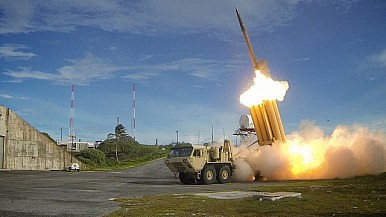
South Korea’s THAAD Decision

Seoul is coming under pressure from all sides on the question of missile defense.

Last month, I argued that North Korea’s combined nuclear and missile program was reaching a tipping point. Previously these systems could be defended – at the outer reaches of rationality, to be sure – as protection against possible American-led regime change. In practice, they were primarily tools for the extortion and blackmail of Pyongyang’s neighbors, most obviously South Korea. North Korea’s gangsterism, while objectionable, has generally been manageable. But if (when?) the Northern program expands into more, faster, and more powerful warheads and missiles (as seems likely), then it would morph into a serious, possibly existential threat to South Korea (and Japan). A North Korea with a few missiles and warheads is unnerving, an obvious concern for proliferation and blackmail, but not a state- and society-breaking threat to the neighborhood. But a North Korea with dozens, or even hundreds, of such weapons (in the coming decades) is a threat to the constitutional and even physical survival of South Korea and Japan.

My greatest concern then for regional stability is that at some point Seoul elites will be so terrified of a spiraling arsenal of Northern nuclear weapons (following the logic of the security dilemma), that they will consider pre-emptive air-strikes (as Israel has done in Iraq and Syria). The possibility of a Northern response and slide into war is obvious.