28 April 2015

Future Warfare: The X-47B

April 25, 2015

Pentagon leaders often speak of the need for disruptive technologies in the Fleet to mitigate the risks of shrinking defense budgets, declining U.S. military technological superiority and improving adversary capabilities. Last week, a remarkable example of disruptive innovation occurred. How did the Navy react? It simply reaffirmed its unimaginative plan to send its carrier-launched drone to the boneyard—and potentially sentence the aircraft carrier to a similar fate.

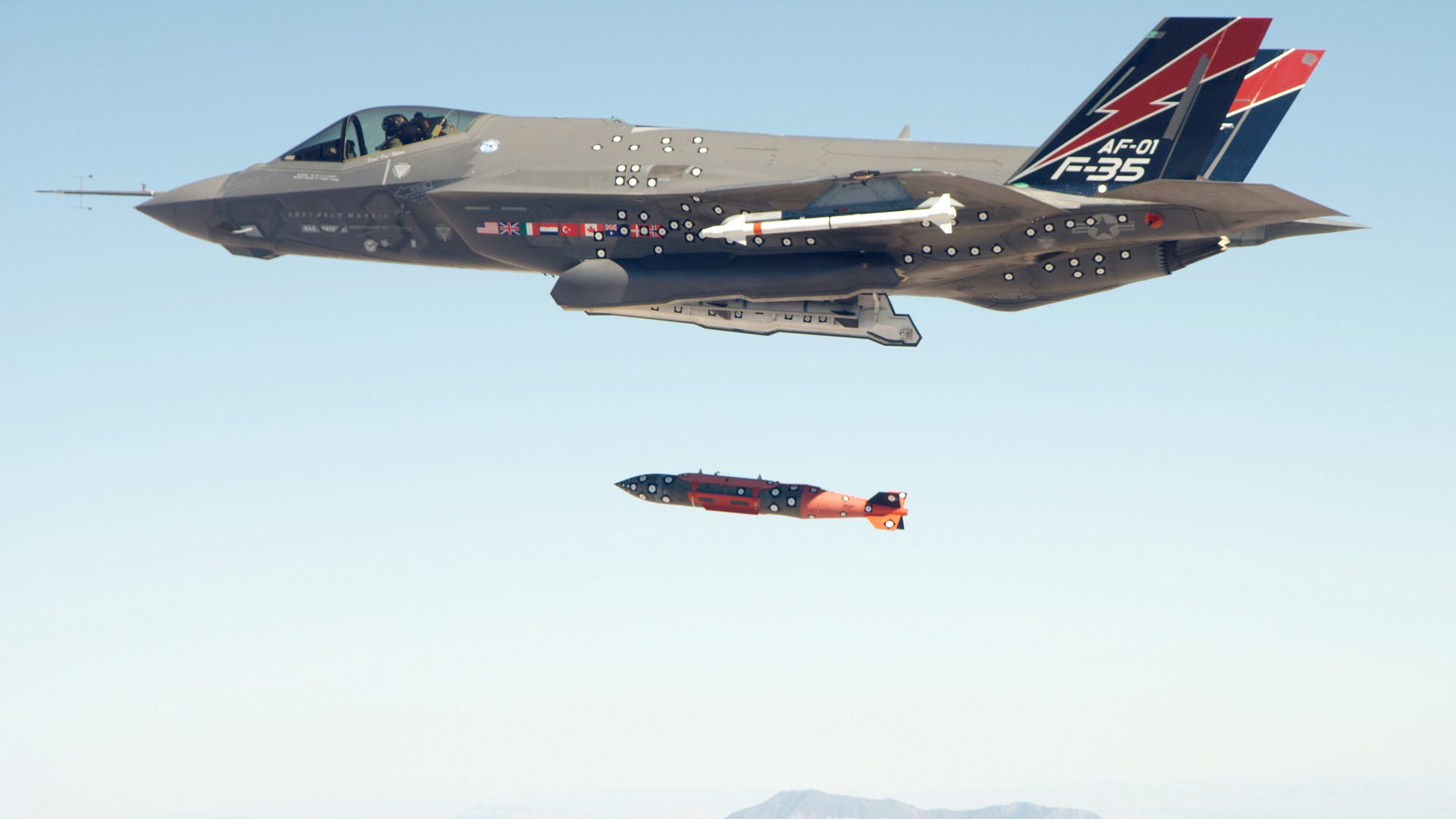
The Navy’s test carrier drone, the X-47B UCAS-D (Unmanned Combat Air System Demonstrator), recently participated in the first-ever fully autonomous aerial refueling at Naval Air Station Patuxent River. Though the implications of this engineering feat are wide-ranging and not wholly known at this point, successful demonstration of unmanned aerial refueling does shed light on several ongoing arguments about the future of U.S. military aviation.

Why 'Leading from Behind' in the Middle East Is Not Enough

April 27, 2015 

While the 2015 National Security Strategy states that the United States will safeguard its national interests through “strong and sustained American leadership,” an Obama adviser more accurately described the administration’s strategic approach as “leading from behind” that encourages regional partners to assume more of the security burden. This is particularly true in the Middle East, where the United States favors a smaller military footprint that relies more heavily on the use of drones, intelligence, cyber and special-operations forces.

After a decade of war and a weary public, President Obama ended U.S. combat operations in Iraq and Afghanistan, where the number of troops has been reduced from 180,000 in 2009 to less than 15,000 today. 

The U.S. Air Force Has Lots of Options for Smashing Iran’s Nuclear Facilities

By JAMES DREW

Earlier this month, Defense Secretary Ashton Carter told CNN the United States military has the capability to “shut down, set back and destroy” Iran’s nuclear program.

The highly-publicized yet classified weapon Carter was referring to is the Massive Ordnance Penetrator — a behemoth, 30,000-pound bunker bomb introduced specifically to destroy Iran’s underground uranium enrichment facilities.

In January, we told you the Pentagon was modifying and testing the bomb as the diplomatic push for a nuclear settlement with the pariah state intensified. But of course, that’s not all the U.S. military has been up to in the background.

The Air Force, which leads the development of air-delivered bunker bombs, is preparing to go shopping for a new “family” of weapons to kill fortified targets — and it’s compiling that shopping list right now.

One rank One pension - Shadow of A Promise


The Modi government is apparently set to keep the promise he made to ex-soldiers 

The Narendra Modi government is expected to deliver on its “one rank, one pension” (OROP) promise, a promise the prime minister himself made to armed forces veterans when he kicked off his election campaign in Rewari, a southern district of Haryana with a strong tradition of sending men into the armed forces. According to a source, defence minister Manohar Parrikar has approved the policy and payments are to be made with arrears, which will altogether cost the government Rs 8,000 crore.

The pension payment would be linked to an ex-serviceman’s last salary drawn and the government has promised to put a previously retired veteran’s pension at par with that of a freshly retired ex-serviceman of the same rank and years of service. This will partly assuage a 40-year-old grievance of officers and ranks from the three forces.

What a Long, Strange, Secret Drone War It Has Been

Steve Coll
April 25, 2015 

“As President and Commander-in-Chief, I take full responsibility for all our counterterrorism operations,” President Obama said in a press conference at the White House on Thursday. Obama was announcing the news that C.I.A. drone strikes in Pakistan last January killed two hostages being held by Al Qaeda—Warren Weinstein, an American, and Giovanni Lo Porto, an Italian—along with two American-born Al Qaeda members. Obama added, “I profoundly regret what happened.” 

That is what a President ought to say at such a moment. Obama owns the decision to prioritize lethal drone strikes over other counterterrorism strategies. He owns the record of civilian and other collateral deaths that those strikes have created—a record still frustratingly shrouded in secrecy. But the President’s mea culpa masks an important and timely question: How exactly did this mistake at the C.I.A.’s Counterterrorism Center happen, and who will be held accountable for it? By putting the President out front and withholding all but the broadest details about the failed operation, the Obama Administration apparently hopes to evade that question. 

Are We Winning the Drone War?

Doyle McManus
April 25, 2015

Almost two years ago, President Obama announced that he was tightening the rules under which the CIA carries out drone strikes against suspected terrorists in Pakistan, Yemen and other countries. “Before any strike is taken, there must be a near-certainty that no civilians will be killed or injured — the highest standard we can set,” he said.

Afterward, civilian casualties did, in fact, fall significantly, according to independent monitoring groups. One of those groups, the Bureau of Investigative Journalism, says four civilian deaths have been reported in Pakistan in the 16 months since the end of 2013, down dramatically from a high of 197 in 2010.

But Obama’s higher standard wasn’t enough to avoid the unintended killing of two civilian hostages, one American and one Italian, in a Jan. 15 drone strike in Pakistan. As the White House acknowledged this week, the CIA didn’t know that Warren Weinstein and Giovanni Lo Porto were being held at the target site.Nor did the new rules protect two other U.S. citizens who had joined Al Qaeda from being killed the same week, even though they weren’t specifically targeted for elimination. If they had been targeted, the two Americans’ cases would have received high-level review — another Obama reform. But the CIA didn’t know that Adam Gadahn and Ahmed Farouq were in its crosshairs, because those strikes weren’t aimed at specific individuals; they were aimed at sites where suspicious activity was going on. The CIA calls these “signature strikes,” because they’re based on troubling patterns that would seem to indicate Al Qaeda’s presence.

Deft Jam: Electronic Warfare Is The Face Of Future Combat


Among the five basic forces that shape our universe, electromagnetism is by far the most malleable in the hands of humans. In fact, civilization as we know it today would be impossible without the myriad uses of electricity that have appeared since Samuel Morse sent his first telegraph message in 1844. But history shows that humans will fight over anything that confers power, and electromagnetism is proving to be no exception. So the electromagnetic spectrum has become a warfighting domain, a place where invisible enemies maneuver for advantage.

Electronic warfare, as this cat-and-mouse game is called, isn’t something that military practitioners like to talk about in public. Almost everything about the subject is secret. Companies such as BAE Systems and Raytheon make billions of dollars every year equipping warfighters with the tools they need to dominate the spectrum, and yet seldom disclose details about what they’re doing. For instance, BAE developed the agile electronic warfare suite on the F-35 fighter, likely to be the most widely used tactical aircraft in the world through mid-century. Good luck getting hard information about how the company designed it, or what it can do.

Special Forces: What U.S. Gets Wrong

By Meaghan Keeler-Pettigrew and Stuart Bradin
April 22, 2015

Meaghan Keeler-Pettigrew is the chief operating officer and Stuart Bradin is the president of the Global Special Operations Forces Foundation, a nonprofit organization that works to advance the capability and efficacy of special operations forces. The views expressed are their own.

(CNN)The United States is failing its partners. If you want to understand one of the reasons that terrorism has been allowed to spread, it is that the majority of our partners do not have credible and capable special operations forces to respond to and defeat the current threat — and we’re not doing nearly enough to address the problem.

The trouble is that little of our foreign military financing — including the recent Counterterrorism Partnership Funds — goes toward this vital facet in our efforts to counter extremism. As a result, violent extremists are making troubling gains.

27 April 2015

Out of the debris

April 27, 2015 

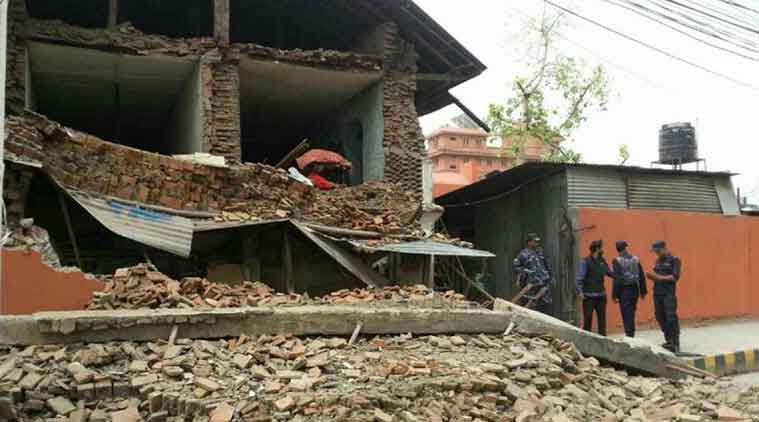
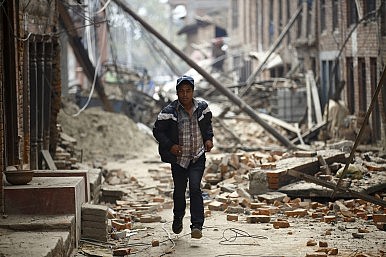
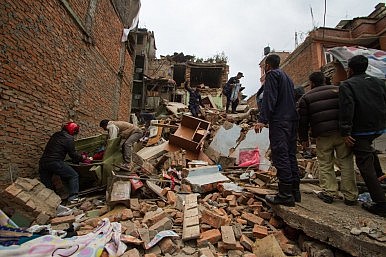
So violently were the buildings shaking in Kathmandu when the earthquake hit just before noon on Saturday that Aunohita Mojumdar, editor of Himal Southasian, who was trying to run down from her first floor apartment, could not reach the stairs. Losing balance, she kept hitting the walls. The 50-metre high Dharahara Tower, a tourist attraction in central Kathmandu, was reduced to a heap of rubble. Two hundred visitors, mostly families, had bought tickets to go up that morning. Less than 10 per cent survived.

This natural calamity might cost as many lives as Nepal’s manmade disaster, the 10-year civil war. As it has overcome armed conflict through a still to be completed but remarkable peace process, so will it overcome this present adversity, Nepal’s friends hope.

Besides the devastating loss of lives, the earthquake has destroyed much of the cultural heritage of Nepal, bringing down important religious and historic monuments in old Kathmandu, Patan and Bhaktapur. The heritage of Nepal is indestructible, however, because its culture is a living one. The confluence of two linguistic streams, the Indo-European and the Tibeto-Burman, as well as of Hindu and Buddhist traditions, has inspired folklore, myth and legend, ritual and belief, myriad forms of music and dance. These live on.

More modestly, with Kabul

April 27, 2015

The presence of Afghanistan President Ashraf Ghani in New Delhi this week offers an opportunity to Prime Minister Narendra Modi to recalibrate India’s Afghan policy towards greater realism and more modest goals. The need for rethinking was evident ever since US President Barack Obama announced, way back in 2009, that America would leave Afghanistan at the earliest possible opportunity.

If inertia prevented change in the Indian approach for too long, Ghani’s election as president last year and his new policies, especially the outreach to Pakistan and China, have made an Indian adjustment to the new circumstances an urgent imperative. Delhi’s fortuitous run in Afghanistan after the ouster of the Taliban at the end of 2001 tended to mask the political and geographic limits on India’s role there. India must now learn to bring its Afghan objectives back in line with the constraints.

A number of factors that facilitated an expansive Indian role in Afghanistan no longer exist. Consider, for example, the US presence in Afghanistan. Although there was a tendency in Delhi to believe that India had an independent role of its own in Afghanistan, its gains over the last decade there were deeply tied to the relative stability that emerged under the American military occupation.

Should Pak bask in the glory of China’s aid?

Aaasim Sajjad Akhtar
Apr 27 2015 

Our ruling class is living in denial if it believes that billions of dollars of Chinese investment can gloss over a long history of state repression of under-represented ethnic nations. Obviously, China’s development plans are a part of a larger strategic blueprint

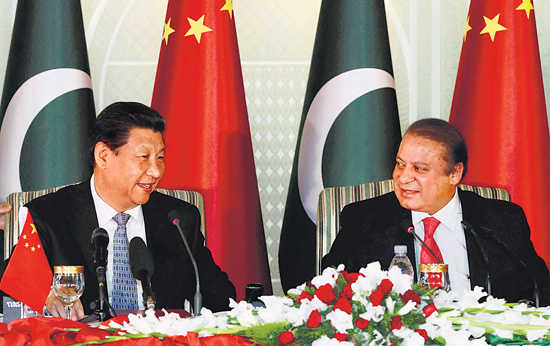
BEYOND the spectacle, what is the long-term significance of the Chinese president's much-hyped two-day visit to Islamabad? Grandstanding aside, what stood out most was the virtual unanimity of mainstream political parties that China and Pakistan are — in Prime Minister Sharif's words —”truly iron brothers”. 

Consensus across political divides is very rare in this country; even more so when the military establishment chimes in. 

So should we all follow suit and bask in the glory of the Asian superpower's unmatched economic and political commitments to Pakistan's development? As with everything else that matters in this country, there has till now been little meaningful debate outside the highest echelons of power about China's ever-expanding role both in Pakistan and the wider region. I will note down here only some pointers that might stimulate such a debate.

Court China with care, tally up the costs & benefits

Khurram Husain
Apr 27 2015 

LET’S clear up some misconceptions that have been doing the rounds since President Xi Jinping dangled a $46-billion carrot before us. The money being offered is project financing, not aid and not concessionary loans. To get a good idea of what that means, take a look at one project that was approved and documents for which were signed during this visit: The Karot hydropower project.

Karot is a run-of-the-river hydropower project with a total generation capacity of 720MW. It is located on the river Jhelum, just south of Rawalpindi. The project was initiated in 2006, when a consortium of Associated Technologies (Pvt) Ltd and China Three Gorges International Corporation, the main sponsor of the project, applied for a Letter of Interest (LoI) from the Private Power Infrastructure Board (PPIB). The LoI was granted in early 2007. By 2009 a technical and financial feasibility study of the project had been completed by the project sponsors and approved by PPIB. Two years later, in 2011, the consortium applied for a generation tariff from Nepra, in which they detailed the technical and financial parameters.

Jihad’s African frontier

Apr 27, 2015

The proliferation of jihad in Africa is the result of the breakdown of state order in Somalia and Libya, the ability to mobilise local grievances into hardcore militia and the absence of state authority in large parts of the African continent

April 14 marked the first anniversary of the abduction of over 200 girls from a small school in a remote corner of Nigeria by a shadowy jihadi organisation, Boko Haram. In the last two years, jihadis have attacked several high-profile targets in the Horn of Africa and across North Africa and the Sahel. Jihad is now a pervasive presence in Africa.

The origins of the “Africanisation” of jihad go back to Algeria where, from the early 1990s, Al Qaeda veterans from Afghanistan fought in the ongoing civil war. From this low-key presence, Al Qaeda in the Islamic Maghreb (AQIM) emerged in 2007, and has Algeria, Morocco, Libya and Tunisia as its operational space. A breakaway group, Al Mourabitoun, headed by the veteran of Afghanistan and the Algerian civil war, Mokhtar Belmokhtar, is active in the Sahel, covering southern Algeria, Mauritania, Niger, Chad and Mali.

‘Climate change is the most important story of our lives’

PARVATHI MENON
April 27, 2015 

“I was thinking about what I would regret not having done as editor and I wished we had done more on this story to wake people up.” Picture shows Alan Rusbridger (right) and the team at the offices of The Guardian in London.

Alan Rusbridger, editor-in-chief of The Guardian, on the massive response to the newspaper’s fossil fuel disinvestment campaign and the urgent need to take action on climate change.

The idea for ‘Keep it in the Ground’ — the campaign on disinvestment in fossil fuel-based energy companies launched by The Guardian early this year — was seeded by Editor-in-Chief Alan Rusbridger, who will soon step down from his 20-year leadership of the highly respected media group. In order to save the planet from catastrophic climate change, global temperatures have to stay within a 2°C threshold. This can be achieved if the 200 top fossil fuel companies wind up operations or shift to alternate renewable fuels. 

I would argue that a mix of benign and non-so-benign intents better explains the emerging situation

HAPPYMON JACOB

New Delhi is steadily losing its northwestern plot and is increasingly looking like a mere spectator to the grand geopolitical churning in the region, clueless and directionless. Afghan President Ashraf Ghani would be visiting India soon and Prime Minister Modi is scheduled to visit China next month, but these high-level visits are unlikely to improve New Delhi’s diminishing influence in the region. Ghani visit is primarily to mollify New Delhi’s feelings of hurt and Modi’s China visit would hardly have any regional implications, even as it might be significant in the Sino-Indian bilateral context. In short, bilateralism seems to have trumped India’s geostrategic future in the region. 

Ghani’s upcoming visit to Delhi 

Ashraf Ghani is no Hamid Karzai, and he has made it abundantly clear by making his first overseas trip to Pakistan Army’s Head Quarters in Rawalpindi whose intelligence agency – the ISI - was consistently blamed by the previous Afghan leadership, under Karzai, as the major spoiler of peace in Afghanistan. The Afghan change of stance vis-ร -vis Pakistan is clearly a pragmatic decision, and Kabul does not have too many choices. After Ghani visited Rawalpindi late last year, Afghan Chief Executive Abdullah Abdullah visited New Delhi in March this year, a visit that was nothing more than to console New Delhi. 

As Pakistan refuses to join Yemen campaign, disconcerted Saudis lose their proxy nuclear option


The Pakistani Parliament, even while stating its commitment to protect the territory of Saudi Arabia, recently adopted a resolution not to join the Saudi-led coalition fighting Houthi rebels in Yemen. Many Pakistanis are worn out by the Taliban insurgency at home and oppose intervention abroad, especially to fight an enemy whose name they are hearing for the first time and risk worsening relations with its backer, Iran.

The foreign affairs minister of the United Arab Emirates, Anwar Gargash, blasted the decision as “contradictory and dangerous and unexpected”, accusing Pakistan of advancing Iran’s interests rather than those of its own Persian Gulf allies. Pakistan was choosing neutrality in an “existential confrontation”, he said, and it would pay the price.

China-Pak relations get a new upgrade 51 agreements worth a total of over US$46 billion have been signed for the China-Pakistan Economic Corridor, which has been talked about for decades.


uring his two-day (20-21 April 2015) visit to Pakistan, Chinese President Xi Jinping substantively upgraded the China-Pakistan strategic relationship. On his first visit to Pakistan and the first by a Chinese President in nine years, Xi Jinping flourished the warmth of this relationship in a signed op-ed published in Pakistan newspapers the day of his arrival, where he said he feels "...I am going to visit the home of my own brother". 51 agreements totaling over US$46 billion for the China-Pakistan Economic Corridor (CPEC), which has been talked about for over a decade, were signed.

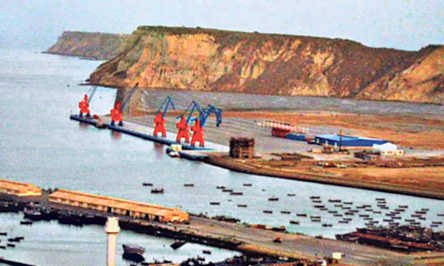
Centred on the development of Gwadar Port and airport, the CPEC includes road, rail and oil and gas pipelines extending 3,000 miles linking China with Gwadar via Islamabad and Karachi. Pakistan had earlier given China "sovereign guarantees" over Gwadar Port. Plans also promote Pakistan Prime Minister Nawaz Sharif's political agenda by agreeing to build two coal-fired power plants by the next general election in 2018 at a cost of US$15.5 billion, adding 10,400 megawatts of electricity.

There are military implications too, as evident in Xi Jinping's address to the joint session of Parliament when he thanked Pakistan for ensuring the security and safety of China's western borders. The proposed communications arteries will bring Chinese and Pakistani armies geographically closer and ensure the presence of Chinese personnel in areas close to India's borders. An estimated 3,000 Chinese military personnel are already working on various projects. 

Prominent Pakistani Social Activist Shot Dead in Karachi

By Zareen Muzaffar
April 25, 2015

A revolutionary voice was silenced tonight in the bustling Pakistani city of Karachi.

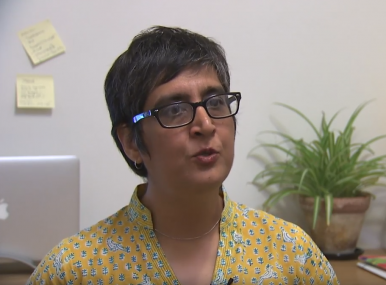
Sabeen Mahmud, a Pakistani social activist, best known as the founder and director of T2F (The Second Floor), was shot by unidentified assailants on April 24. She died on her way to the hospital. Doctors said they retrieved five bullets from her body. Her mother who was accompanying her in the same car sustained bullet wounds and is currently being treated at a hospital; she is said to be in critical condition.

According to Dawn, T2F had on Friday organized a talk on Balochistan, titled “Unsilencing Balochistan Take 2: In Conversation with Mama Qadeer, Farzana Baloch & Mir Mohammad Ali Talpur.” Mahmud had left T2F after attending the session, when she was targeted.

Chinese President’s Visit to “Iron Friend” Pakistan (Apr 20-22)

By Bhaskar Roy
24-Apr-2015

On the eve of his twice postponed state visit to Pakistan, Chinese President Xi Jinping wrote “this will be my first visit to Pakistan, but I feel I am going to visit the home of my brother” (Xinhua, Apr 24).

Chinese Ambassador to Pakistan Sun Weidong told the Xinhua that they had invented a new “unique” name for Pakistan, “Iron Pak” a vivid description for the special, friendly and unshakeable ties between the two countries, henceforth to be known as “Iron brotherhood”.

“Iron brotherhood” coined by the Chinese, is a very interesting phraseology. On the face of it, it may denote a relationship of equals and warm the heart of the Pakistanis. But there is another meaning to it. It is between a very powerful large nation and a weak country that has decided to lie prostrate at the feet of the powerful country. While no third power will be allowed to interfere in this relationship, Pakistan may be wearing China’s iron shackles.

Another new in bilateral relation description between the two countries was elevating it to “All-Weather Strategic Cooperative Partnership” to last from generation to generation. All-Weather Friendship” between the two countries is an oft repeated description, as is the “higher than the mountains, and deeper than the oceans” description. Both China and Pakistan have eulogized their bilateral relationship in such flowery language as no other two countries have. The Chinese know that such words wash very well with the people of Pakistan.

Pakistan Helped Weinstein Family Arrange Ransom three years before he was killed in a botched U.S. drone strike.

APRIL 24, 2015 

The family of missing U.S. aid worker Warren Weinstein worked with the government of Pakistan to relay ransom money to the group holding the missing aid worker and maintained ongoing communications with Islamabad in the years between his capture in Lahore and his death in an errant American drone strike in January, according to people familiar with the interactions.

Islamabad’s role in the Weinstein case, which hasn’t previously been reported, raises new questions about Pakistan’s ties to the militants who have long used their country to plan attacks abroad. In this case, Pakistani officials knew enough about Weinstein’s captors to help ensure the money found its way into the militants’ hands but was unwilling or incapable of rescuing him themselves.

The Weinsteins had long thought they had a way of bringing home their loved one, who was kidnapped in the Pakistani city of Lahore in 2011. Instead, President Barack Obama called them Wednesday to disclose that Weinstein had been killed in a botched mission that also took the life of Italian aid worker Giovanni Lo Porto.

CHINA – PAKISTAN ECONOMIC CORRIDOR: CHANGING DYNAMICS OF SOUTHERN ASIA – ANALYSIS

BRIGADIER ARUN SAHGAL, PHD (RETD)

The strategic landscape in Southern Asia is witnessing three major strategic shifts; most important from Indian point of view is the unveiling of China – Pakistan economic corridor linking landlocked Xinjiang region of China to the warm waters of Arabian Sea and further to Middle East, Europe and East Coast of Africa. In many sense it is game changer with long term strategic consequences for the region in general and India in particular.

Second is the prospect of Iran’s integration with international community as a normal nation a process that has already begun. This has made number of regional actors most predominant being China and Russia and to limited extent even Pakistan initiate serious commercial and security dialogue, given the possibility of opening number of geo political and economic opportunities.

Nepal Quake: Governance Matters


“A major part of Nepal’s vulnerability to earthquake disaster lies in poor infrastructure governance.”

Several years ago, I went on an “Earthquake Walk” in downtown Kathmandu, a walk designed to raise awareness about the city’s vulnerability to a major earthquake. As we ducked into a traditional courtyard, winding our way through a low narrow corridor before emerging into an open square surrounded by high traditional homes, we saw a big stick propping one edge of a building up against another. I’ve thought a lot about that stick today—its inadequacy, its fragility—as news of Nepal’s quake poured in.

Nepal has been waiting for the quake of April 25, 2015 for some years, conscious that it was “overdue” for another. The U.S. Geological Survey has called Nepal “one of the most seismically hazardous regions on Earth.” It sits at the intersection of two tectonic plates, the India and Eurasia, colliding together quickly in geological terms—forty to fifty millimeters each year. That pressure eventually gets released as earthquakes.

Ancient Collision Made Nepal Earthquake Inevitable

APRIL 25, 2015

More than 25 million years ago, India, once a separate island on a quickly sliding piece of the Earth’s crust, crashed into Asia. The two land masses are still colliding, pushed together at a speed of 1.5 to 2 inches a year. The forces have pushed up the highest mountains in the world, in the Himalayas, and have set off devastating earthquakes.

Experts had warned of the danger to the people of Katmandu for decades. The death toll in Nepal on Saturday was practically inevitable given the tectonics, the local geology that made the shaking worse and the lax construction of buildings that could not withstand the shaking.

GeoHazards International, a nonprofit organization in Menlo Park, Calif., that tries to help poorer, more vulnerable regions like Nepal prepare for disasters, had noted that major earthquakes struck that region about every 75 years.

Nepal Hit By Powerful 7.8 Magnitude Earthquake, Death Toll Approaches 900

By Stephen Groves
April 25, 2015

Just before noon on Saturday, Kathmandu, Nepal was rocked by a magnitude 7.9 earthquake. The reported death toll stands at around 900 people, but that is sure to rise.

The Nepali government said there was “massive damage” at the epicenter, which was about 50 miles west of the capital city. The quake could be felt across the entire South Asian region, as far away as the Indian capital of New Delhi.

As the shock waves rolled across the city, buildings collapsed, walls fell over, and roads were destroyed. The city fell into chaos as people rushed into streets and fields. Hospitals were flooded with injured patients, and police scrambled to organize rescue efforts for people caught underneath rubble.

The historic sections of Kathmandu were the hardest hit as older buildings, landmarks, and many temples were destroyed. A nearly 200 hundred year-old landmark known as Dharahara, or Bhimsen Tower, collapsed into a heap of rubble. The tower was 63 about meters tall and built in 1832.

200 Years Ago, Britain Recruited South Asia's Fiercest Warriors

April 25, 2015

The famed Gorkha Rifles, the renowned Nepalese warriors who formed an important part of imperial British and then modern Indian forces, were first formed two hundred years ago on April 24, 1815.

The origin of the Gurkha warriors in the British army dates back to the Anglo-Nepalese War of 1814-1816. At this time, the British East India Company (EIC) was expanding its territories in the subcontinent and had recently acquired what is today’s Uttar Pradesh, bringing it to the borders of the Gorkha or Nepali state. Nepal originated from the medieval Gorkha state in west-central Nepal. Prior to the 18th century, what is today’s Nepal was a patchwork of independent hill states, many of which were tributary to their larger neighbors in India or Tibet. In the wake of disintegration of the Mughal Empire, Prithvi Narayan Shah, king of Gorkha,conquered most of the Himalayan region of South Asia and began to expand outwards into the plains of northern India. The conquest of Kathmandu in the Newar or Nepal valley in 1768 gave the kingdom a new capital and eventually the Gorkha kingdom was named Nepal after the valley where its capital was located. Prior to this, the term Nepal only referred to a series of kingdoms in the Kathmandu valley.

Over Half of World Piracy Attacks Now in ASEAN

April 25, 2015

Southeast Asia accounts for over half of the world’s piracy and armed robbery incidents in 2015, according to a report released by the International Maritime Bureau (IMB).

The IMB’s figures indicate that Southeast Asia accounted for 55 percent of the world’s 54 piracy and armed robbery incidents since the start of 2015. That means that on average a small coastal tanker is hijacked by pirates in Southeast Asia every two weeks. The 30 incidents that have happened in Southeast Asia over the past three months dwarf the figures from other regions, with Africa having 11 incidents and East Asia seeing just eight.

Armenian GenocideThe Islamic StateObama Administration

BY JUSTINE DRENNANAPRIL 

Laundering the Global Garment Industry’s Dirty Business

From time to time, activists concerned about abuses in the global garment industry stage protests in front of gleaming department stores in New York, Paris, and London. They’ve even entered clothing outlets across Europe and pretended to faint from overwork in a show of solidarity with exhausted workers in Asia. Those workers themselves protest loudly and often for better conditions, blocking roads with burning tires near sprawling, dingy factories on the outskirts of Dhaka or Phnom Penh, and sometimes fall to bullets fired by riot police dispatched to return them to work.

Between those two extremes of anger aimed at the global garment supply chain, most attempts at accountability fall away. Linking the dusty Asian factories to the big, bright shops of Europe and North America is a convoluted network of contractors, subcontractors, and sub-subcontractors with little-known names, based in China, Taiwan, Hong Kong, or South Korea — and in small, unmarked buildings in the poorer countries that produce the clothes. These middlemen keep far away from both desperate factory workers and outraged activists — and they’re low-profile enough to escape the international scrutiny given to a Walmart or a Gap.

The Japan Dilemma: Asia's Next Geopolitical Nightmare?


"Washington may end up with a more assertive ally that antagonizes China, South Korea, and perhaps other neighboring states but continues to depend on the United States to achieve its enhanced ambitions."

As Japanese Prime Minister Shinzo Abe arrives in Washington for a summit meeting with President Obama and to give an address to a joint session of Congress, the U.S.-Japanese alliance is at a critical turning point. Because U.S. officials are increasingly concerned about China’s growing economic and military power in East Asia, they look to Japan to play a more vigorous security role. That is a major change in attitude. A little more than two decades ago, General Henry Stackpole, commander of U.S. Marines in Okinawa, opined that the United States was the “cork in the bottle” preventing a resurgence of Japanese militarism and the fears that such a development would engender throughout East Asia. Stackpole may have been undiplomatic, but his views accurately reflected the wariness of U.S. policymakers about Japan playing the role of a normal great power in the security arena.
APR 24, 2015 

The U.S. Department of Defense (DOD) released a new strategy on April 23, 2015, to rewire the Pentagon for cyber operations. The 33-page document includes five key strategic goals, ranging from workforce and human capital development to full integration of cyber capabilities into military operations and deterrence.

Q1: What makes the 2015 DOD Cyber Strategy different from the 2011 cyber strategy?

A1: The 2015 DOD Cyber Strategy is a more comprehensive and detailed articulation of the 2011 strategy, of DOD’s role in defending the United States against cyber attacks, and of how DOD will integrate cyber capabilities into military operations.

The new strategy serves as guidance for the development and deployment of DOD’s Cyber Mission Force structure, which will include 6,200 cyber operators divided into three missions: (1) defense of the department’s own computer networks; (2) protection of the U.S. homeland and U.S. vital interests against significant cyber attacks; and (3) provision of full-spectrum cyber capabilities for military operations.

China's 3 Most Powerful Dynasties


Chinese civilization is one of the world’s oldest continuous civilizations. Indeed, unlike Western, Islamic, and Indian civilizations, China has managed to remain politically unified for much of its history.

Contrary to the common perception of China being historically isolated and weak, many Chinese dynasties were very powerful and have had a profound impact on global history. Yes, it is true that during the Ming Dynasty, China ships conducted multiple voyages of exploration (1405-1433) before abruptly stopping. But this hardly dented the enormous economic and political influence China wielded for most of its history in East, Southeast, and Central Asia. Although the people of these regions pursued their own interests as best as they could, China was always the major power to be dealt with.

Nonetheless, not all Chinese dynasties were created, and these three stood above the rest.

China's South China Sea Disaster


Until the past five years, the Philippines and Vietnam had minimal strategic ties other than working together, through ASEAN initiatives, on a range of nontraditional security issues. The two countries had very different styles of leadership—the Philippines is a vibrant democracy with one of the freest media markets in the world, while Vietnam remains run by a highly opaque Party—and Hanoi remained wary of diverging from its strategy of hedging close ties with China with increasingly close relations with the United States. By contrast, the Philippines, despite a very mixed historical relationship with the United States, was (and is) a U.S. treaty ally and one of Washington’s closest partners in Southeast Asia. Vietnam and the Philippines did not hold joint military exercises, rarely had high-level bilateral interactions between senior political and military leaders, and also had only modest two-way trade.

China, Philippines Spar Over South China Sea Run-Ins

April 25, 2015

China and the Philippines verbally clashed over the South China Sea this week, with Manila accusing China of harassing both fishermen and a military patrol in the disputed maritime region.

On Tuesday, the Philippines said that the Chinese Coast Guard used water cannons on a group of Filipino fishermen at Scarborough Shoal, damaging some of the fishermen’s boats. Hong Lei, a spokesman for China’s Foreign Ministry said the Chinese vessels were performing “guard duty in waters off the Huangyan Island [the Chinese name for Scarborough Shoal] to maintain the normal order of these waters in accordance with the law.” Hong added that Manila should “show earnest respect for China’s territorial sovereignty, step up its regulation and education of the fishermen and stop all actions infringing upon China’s territorial sovereignty, and rights and interests.”

South China Sea: China's Unprecedented Spratlys Building Program

By Victor Robert Lee
April 25, 2015

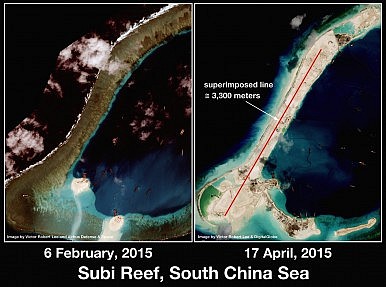
High-resolution satellite images from April 17, 2015 reveal that in the space of ten weeks China has built an island on top of Subi Reef in the disputed Spratly Islands group. The dimensions and shape of the land fill, which is still underway, are compatible with a potential airstrip 3,300 meters long, similar to theprospective length of the runway currently being paved on Fiery Cross, the site of another installation being built by China on a former reef in the Spratlys.

Military analysts have observed that a runway 3,300 meters long could support virtually all types of combat and supply aircraft in China’s navy and air force.

As recently as February 6, 2015, only two small sites of dredging and land fill activity were detectable at Subi Reef, part of a maritime region that is claimed by the Philippines, Vietnam, Malaysia and Taiwan, as well as China. As of April 17, 2015, the land fill of Subi measured 2.27 square kilometers in area, on a par with the rapidly manufactured island at Fiery Cross Reef, recently assessed as 2.65 square kilometers in area.

Why Buy the Hardware When China Is Getting the IP for Free?

APRIL 24, 2015

In Beijing in late March, IBM CEO Virginia Rometty announced that the company’s new strategy in China will be to share its technology to help build the country’s IT industry.

“If you’re a country, as China is, of 1.3 billion people, you would want an IT industry as well,” she told the crowd at the China Development Forum, a government-sponsored event. “I think some firms find that perhaps frightening. We, though, at IBM … find that to be a great opportunity.”

Rometty needs a great opportunity. As the CEO of IBM since 2012, she has spent her more than 30-year career at the company watching it slowly shed the hardware, heft, and influence that earned it the “Big Blue” moniker. Still, IBM is no pipsqueak: With a roughly $160 billion market capitalization andjust under 380,000 employees, the firm remains a massive force in information technology. 

Military Spending and Arms Sales in the Gulf

APR 28, 2015 

There are many ways to measure the Gulf military balance, but one key indicator is to look at the relative size of Gulf military expenditures and the size and nature of Gulf arms imports and transfers of military technology. The Burke Chair has prepared a detailed comparison of key estimates of both military spending and arms transfers, drawing upon official sources as well as the work of key research centers like the International Institute for Strategic Studies (IISS) and Stockholm International Peace Research Institute (SIPRI).

This report is entitled Military Spending and Arms Sales in the Gulf: How the Arab Gulf States Now Dominate the Changes in the Military Balance, and is available on the CSIS web site here. It provides a wide range of tables and charts describing the patterns in military spending and arms transfers both in comparative dollar terms and by major weapons system and transfer of military technology.