13 May 2015

Nepal quake: Covering disaster sensitively

Pamela Philipose
May 13 2015
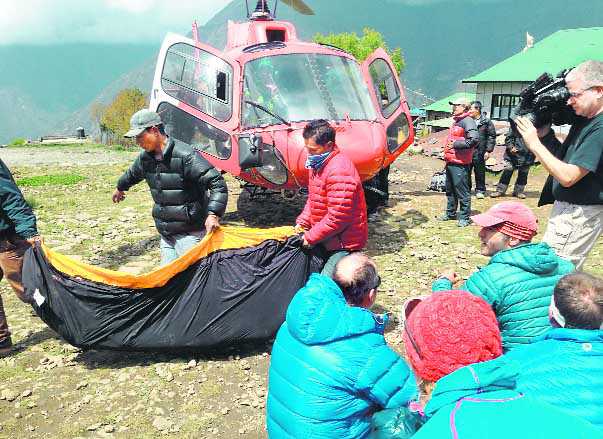
THE continuous and unrelenting pace of the news cycle is the enemy of introspection. The injunction from Camus that “in order to understand the world, one has to turn away from it on occasion”, is a luxury that media in India has never indulged in. So trapped are they in the creation of news that there does not seem to be a minute to spare for the understanding of it or, more to the point, for assessing the understanding of it. Yet if the media do not turn the light on themselves every once in a while — the very light that they are so busy shining on the world — others will do it for them and what gets illuminated in the process will not be pretty. 

The bad press the Indian media received for its coverage of the Nepal earthquake would have left many Indian reporters who did great work in reporting on the disaster puzzled and dispirited. But a backlash of this kind does not sift good coverage from bad. It is a swift, unrelenting and in-your-face verdict on a body of work that seen to be marked by bad faith and suffered from serious credibility deficits. The earthquake occurred on April 25 around midday. Within eight days #GoHomeIndianMedia was trending across social media networks. The tweets that constituted this avalanche of opinion were eloquent in their condemnation. One went: “I am more than greatful to your nation for being w/us in darkest time but let’s face it, India has most stupid media”. Some attempted to be sardonic: “Presstitute…It does not carry news on Baba Ramdev adopting ALL the children orphaned by Nepal earthquake.” Others tried to explain what the problem was in greater detail: “It would be great if you don't sent reporters in so close to ongoing rescue site operation. It's an obstruction and distraction for rescue workers to do their job properly and effectively. Do not waste valuable time of the rescue team. You are doing the same thing like you did showing anti-terrorist operation live. Stop it. Stop obstructing. Be Responsible. First change yourself then raise voice for change.” 
The Fascist impulse

May 13, 2015 

In 1922, the theologian Ernst Troeltsch identified the malaise thus: instead of the “ideas of the equal dignity of reason everywhere and of the fulfillment of universal law, we have the conception of a purely personal and unique realisation of the capacities of the mind”.

“War is beautiful,” wrote journalist and founding father of fascism Filippo Marinetti, “because it enriches a flowering meadow with the fiery orchids of machine guns.” Last week seven decades ago, on May 8, 1945, the war Marinetti’s words helped birth came to end — claiming the lives of some 60 million people, an estimated three of every 100 alive when it began.

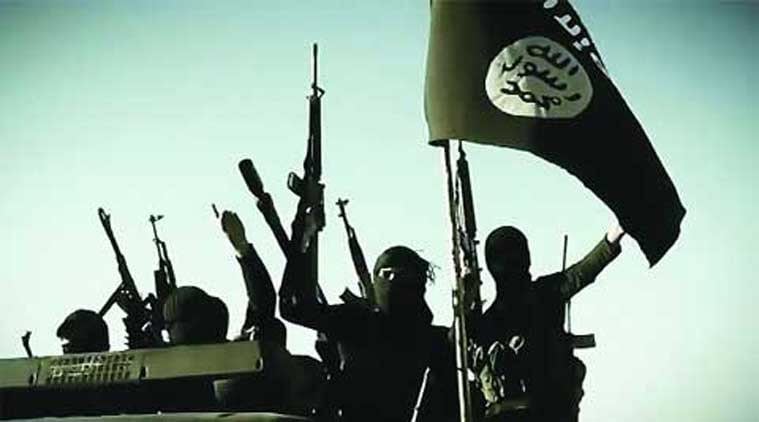
The fascist impulse, though, has survived — though it is rarely called by its proper name. It has manifested itself in the savageries of Islamism, in the blood-cults of Christ and tribe, in communal pogroms. Fascism’s form, though, isn’t always apocalyptic: “It does not always and of necessity,” as French philosopher Bernard-Henri Lévy put it, “mean storms of iron and blood.” Instead, fascism survives in a thousand movements that denigrate the idea of progress built on reason, with human agency at its core. The vanguard of anti-reason is varied: religious or ethnic identity to the centre of political life; romantic celebration of the tyranny called tradition; even in postmoderns who reject political choice between states built on republican ideals and their nihilist adversaries, choosing instead to wallow in weary cynicism.

Green road to Paris

May 13, 2015

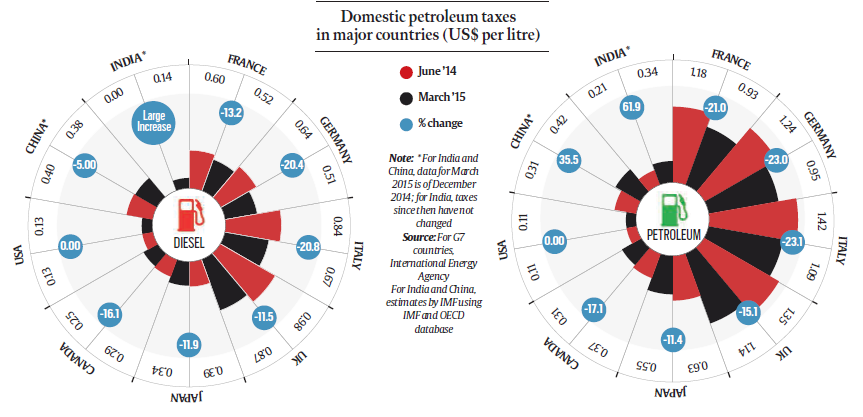
How should India approach the forthcoming, and highly anticipated, climate change negotiations planned for December in Paris (COP-21, as it is called)? The answer is, confidently and constructively, based on a series of green actions domestically that contrast, at least in one key area, with regressive inaction by advanced countries. Start with this contrast.

The cause of climate change has suffered a setback recently because of the large (about 35-40 per cent) decline in international energy prices. But that setback need not have occurred had governments taken offsetting actions to impose taxes on petroleum products. How have the major governments fared on this score? The chart highlights a striking difference between the responses of advanced countries and those of India. The former have reduced taxes while India has increased them substantially. Essentially, advanced countries have stood by passively, passing on the benefits of price reductions to consumers and producers.

Chanakya vs Confucius

May 13, 2015

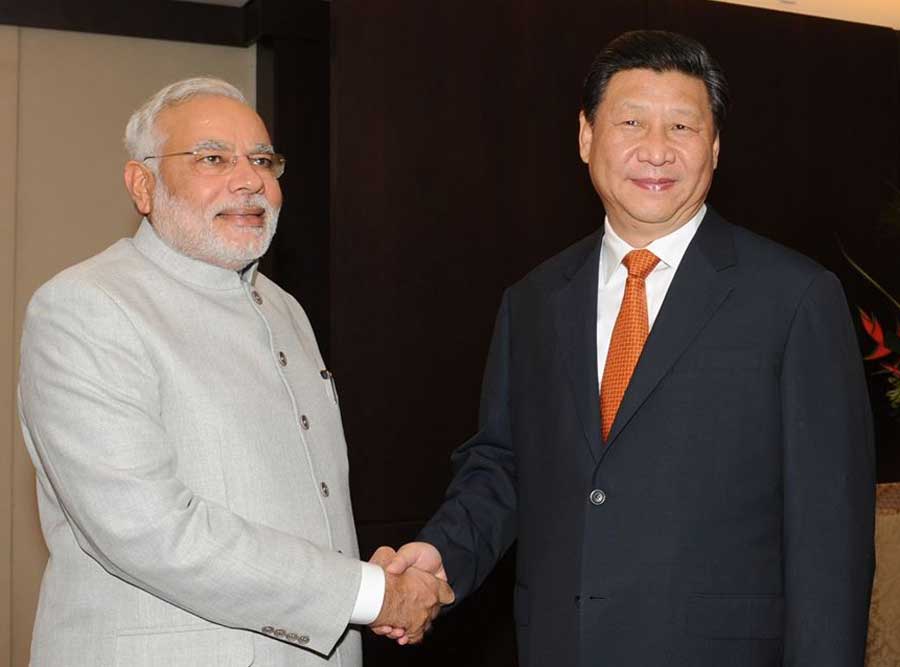
Prime Minister Narendra Modi’s China visit commencing May 14 has been preceded by public debate in India and the US on dealing with China. The mood was set by eminent US strategic thinker of Indian origin Ashley Tellis and Robert Blake, former ambassador to India, in a piece for the Council on Foreign Relations titled “A New US Grand Strategy Toward China”. They recommend US outreach to old and new friends on the Chinese periphery, new preferential trading arrangements like the proposed Trans-Pacific Partnership, ramping-up of US military capability to retain the edge and the denial of cutting edge technologies to China. Michael Pillsbury in The Hundred-Year Marathon also explores the incipient hegemonic underpinnings of the Chinese mind. These counter the Henry Kissinger mantras of Chinese rise being a benign historical event and that China should be engaged and not contained.

Arun Shourie, a hallooed voice from the right, similarly cautioned Prime Minister Modi against being swept by Chinese pomp and economic carrots as fundamental areas of dissonance and persistent Chinese conduct, impinging on national security, need addressing. Promptly contradicting voices were heard, including one absolving Chinese of responsibility for Pakistani sponsorship of terror. He forgot that the Chinese transfer of missile and nuclear weapon technology to Pakistan is what emboldens persistent errant behaviour, its nuclear deterrence negating conventional Indian military retaliation.

For a ‘Look Northwest’ policy

HAPPYMON JACOB
May 13, 2015 

It is worrisome that while the most formidable challenges to India’s national security invariably originate from its northwestern frontiers, New Delhi’s focus has been on the global stage and its southern and eastern neighbours.

The uneventful visit of the Afghanistan President Ashraf Ghani to New Delhi last month has further strengthened the widespread belief that India is losing strategic influence and geopolitical standing as far as its northwestern frontier is concerned, especially Iran and Afghanistan. Just a year ago, during the Karzai presidency, India was the “most favoured nation” in Afghanistan. Today, there is a perceptible change in the new Afghan government’s attitude towards India. For instance, no major agreements were signed during Mr. Ghani’s visit and the India-Afghanistan Strategic Partnership Agreement of 2011, hardly figured in the agenda.

Indeed, India’s new northwestern strategic environment, in which the relegation of the Indo-Afghan strategic partnership is merely one element, is undergoing a grand geopolitical transformation, but New Delhi seems to be clueless about how to engage with it. Moreover, it is worrisome that while the most formidable challenges to India’s national security invariably originate from its northwestern frontiers, both historically and presently, the focus of the Bharatiya Janata Party-led government has primarily been on the global stage and the country’s southern and eastern neighbours.

Modi’s Impending visit to China

12 May , 2015

Prime Minister Narendra Modi is scheduled to visit China from 14 to 16 May this month. ‘Hometown diplomacy’, took President Xi Jinping to Modi’s home state when he visited India last September; it will now be Modi’s turn to visit Xian during his visit.

While ties between India and China have been steadily growing for years, it got a major boost under Prime Minister Narendra Modi, who has signalled his wishes to pursue a more vigorous foreign policy. Xi is the first Chinese head of state to visit India in eight years, while Prime Minister Li Keqiang made India his first overseas destination shortly after taking office last year.

This return visit by Modi in May 2015 comes in less than a year to Xi’s visit to India. He will visit Mongolia and South Korea thereafter. Modi sets foot on Mongolia’s soil after completing China visit, the first leg of his three-nation tour. And from there Indian PM would head to South Korea for his third and final leg of the tour starting 18 to 19 May.

Despite the Modi government’s effort in pushing hard for better ties with the Himalayan neighbour ever since they came to power last year on May 26, 2014. The greatest hurdle continues to be the land border dispute between the two Asian giants. Bitter experience of 1962 war continues to haunt all Indians even after 52 years of that debacle. The sense of betrayal and deep seated mistrust has not diminished in over past half a century or so. Nehru foolishly though, going against all the professional advice had blindly invested complete faith in Mao. The Panch-Sheel and the slogan of Hindi – Chini Bhai Bhai had completely mesmerised Nehru. China in return back stabbed India. The Red army swarmed into the Indian territories routing the ill equipped Indian Army ending in its worst ever modern military defeats. Chinese have since than occupied approximately 38,000 sq. kms of Indian Territory in Jammu and Kashmir illegally.

Construction Work on India’s First Domestically-Produced Aircraft Carrier Progressing Rapidly

Chris Biggers
May 10, 2015

New satellite imagery shows that India’s first indigenous aircraft carrier has made significant progress since it was launched in August 2013, helping India inch towards the goal of a two carrier battle group.

Imagery acquired by commercial satellite firm DigitalGlobe in February 2015 shows further assembly on INS Vikrant, a 40,000 ton aircraft carrier and India’s soon-to-be largest vessel once commissioned. Additional ship modules now welded to the hull have enlarged the deck width — measuring almost 60 meters. The erection of the superstructure reported last November was also confirmed. India’s first domestically produced carrier is currently under construction at state-owned Cochin Shipyard Limited, the country’s largest shipbuilding and maintenance facility located in Kerala on the west coast.

Like other vessels built in India, significant cost overruns and delays have hampered shipbuilding progress. The South Asian country is already four years behind schedule on the project with the latests estimates pushing an operational date closer to December 2018, if not beyond. However, the Indian Navy expects that the vessel will “undock” sometime this month after mounting the propellers on the engine shafts, according to an April statementfrom Vice Admiral Ashok Subedar. Afterward, the shipyard will continue with the fitting out process.

Rethinking food security - There should be free movement of agricultural goods


I have often written about the gigantic corruption programme created by Congress governments, which walks on two legs: the public distribution system and the public works scheme, namely the Mahatma Gandhi National Rural Employment Guarantee programme. Riddled as they were with enormous leakage, the two could not be discarded by the Congress because they were its primary weapons against the Bharatiya Janata Party's sectarian appeal. It could not even countenance any change in the programmes because it would have deprived corrupt supporters of benefits.

Now, however, the Congress is defeated and the BJP is in power. It has continued both the programmes. Its faith in them seems to be less strong: it has provided only a modest sum for the Mahatma Gandhi National Rural Employment Guarantee Act and raised minimum support prices only a little. There is a chance that it will be less loyal to corruption, and more open to reform. So I would like to report on a study of the PDS published a couple of months ago by Marta Kozicka and her colleagues from the Bonn Center for Development Research. What they have done is to formulate models to work out the effects of the government's wheat and rice policies. But before I turn to their work, it is worth stating some of the basic facts, gathered from the works of Ashok Gulati.

A NASA astronaut has spent the last two days capturing India and the results are stunning


Space views will never get old. No matter how many satellites with fancy cameras we send up there, no matter how many laptops have the blue marble as their wallpaper, we'll still be fascinated by a chance to see the the earth from up on high – and catch a glimpse of where we are on it. Twitter and Vine have made this even easier, with astronauts and inanimate robots up in space constantly sending us photos of what our planet and others ones look like from the heavens.

Ever been scared by a lighting storm? This Vine video of one over India on Friday evening could change the way you look at them.

The video was taken by NASA astronaut Terry Virts, who is currently on the International Space Station. Virts seems to have spent quite a bit of time over the last few days taking pictures of India. He posted a couple of views of the southeast coast of the country. 

Five Signs Afghanistan Is Becoming An American Success Story


Fourteen years into waging a frustrating counter-insurgency campaign in Afghanistan, there is at least one thing that every military expert who has studied the country can agree on: Osama bin Laden really knew what he was doing when he picked Afghanistan as a sanctuary for his murderous band of jihadists. There are few places in the world less hospitable to Western goals and values. Geographically isolated, economically backward, politically divided and culturally insular, Afghanistan has been a hard place to stabilize, and its neighbors haven’t been much help.

But despite numerous setbacks, the Bush and Obama administrations have stuck with the task of fashioning an inclusive democracy in Afghanistan that would no longer afford terrorists a safe haven. And in spite of a drumbeat of negative media coverage — including recent reports that high casualty rates among Afghan security forces are unsustainable — that steadfastness seems to be paying off. There are numerous signs that the U.S. and its 40-odd coalition partners have succeeded in making Afghanistan a more peaceful, progressive place. Here are five of them.

Competition intensifies: US seeks to reshape ties as Chinese influence grows

May 10, 2015

In response to Chinese investment in Pakistan, US to provide expertise, technical assistance. PHOTO: PAKISTAN TODAY

In the recent energy talks between Pakistan and the United States, a key thing that became apparent was that Washington was desirous of reshaping its relations with Islamabad in the wake of extensive Chinese influence and investment of billions of dollars to give a push to Pakistan’s economy.

At a press briefing, US Special Envoy for Energy Amos Hochstein though welcomed the massive flow of Chinese investment, a perception has emerged that Beijing’s deepening partnership with Islamabad including the takeover of the strategic Gwadar Port has disturbed the US and India. This has prompted the US to gain a geopolitical foothold in the region which China seems to be dominating.

Hochstein, however, said, “it is not a question of dollar, we are doing it in our own way to build infrastructure in Pakistan,” adding, the US would provide expertise and technical assistance. This indicates that the US has no money to inject into the investment-starved energy sector.

Pakistan opens the door to Chinese domination


China’s stranglehold over cash-strapped Pakistan in the coming years speaks adequately of the latter’s subjugation to China’s long term objectives 

ne of the abiding mentor-protégé relationships in recent history, of nearly 60 years' vintage, notwithstanding differing ideologies, is easily the one existing between Communist China and Islamic Pakistan.

That Pakistan, having been a part of the 1950s-60s US-led anti-Communist military alliances, CENTO and SEATO, successfully manipulated the "milking" of billions of dollars and military largesse from an indulgent Uncle Sam, for years, while simultaneously being a willing supplicant of US bête noire China's geo-strategic regional formulations, may appear surprising, but is attributable to just one common factor. No prizes for guessing the strand that binds both China and Pakistan together — a common animosity for India. That, despite being for many years the US' "frontline state in the global war on terror", Pakistan continues with its terrorist-friendly machinations and the US keeps turning a blind eye to Pakistan's mischief is inexplicable.

Narendra Modi’s trip to China Seeking the Nixon spirit


Two bold leaders share an interest in at least modestly better relations May 9th 2015 | 

THE three-day trip that India’s prime minister, Narendra Modi, will make to China from May 14th to 16th is seen in some quarters as a chance to reset the relationship between Asia’s two giants. Those inclined to enthusiasm note that Mr Modi is easily the most interested in China of any recent Indian leader. He first crossed the border into China many years ago, to a holy site for Hindu pilgrims; he has since returned several times to study China’s rapid economic development. When he was chief minister of Gujarat state, Mr Modi was treated with lavish cordiality in China. At the time, politicians and diplomats from most Western powers, America included, shunned him. Mr Modi has not forgotten the hospitality. 

China Tops U.S. as Biggest Oil Importer

BY KEITH JOHNSON
MAY 11, 2015

But Beijing’s big and growing reliance on energy from the Middle East leaves China vulnerable to regional strife and worries over sea lane security.

The world passed a milestone of sorts last month, as China finally surpassed the United States as the top global importer of crude oil. But what really matters for Beijing — and the world — is less the volume of Chinese imports than where that oil is coming from.

In that sense, China’s continued and, indeed, deepening reliance on volatile regions of the world for energy supplies, especially the Middle East, points to continued security vulnerabilities for Beijing for decades to come. That’s true despite efforts to diversify where China gets its energy from, and breakneck efforts by Chinese leaders to transform the country into a true maritime power.

Taiwan’s Submarine Saga

By Wang, Jyh-perng and Tan, Chih-lung
The Indigenous Defense Submarines program has had a long and convoluted history. 

Taiwan’s Indigenous Defense Submarines (IDS) program has attracted considerable attention in recent years. The diverse information disclosed either by officials or by the media has often been confusing or lacking in credibility. In response to the government’s caution, the media has tried to dig out whatever it can from the limited information that is in circulation, often leading to exaggeration. The authors attempt here to leave the speculation behind, and provide a broader, clearer perspective based on their own extended observation. The article analyzes documentation from credible open sources. (Any consistencies with classified information are purely coincidental).

Strategies of the MND and ROCN

What China Thinks of the Pentagon’s Report on the Chinese Military

May 11, 2015

China’s Foreign Ministry voiced “strong opposition” to a recent DoD assessment on Chinese military strength. 

Yesterday, my colleague Ankit Panda provided a useful summary of the recently released annual U.S. Department of Defense report to Congress on China’s military and security developments (see: “What the Pentagon Thinks of China’s Military”).

In his article, Ankit notes that the paper contains an interesting discussion of China’s alleged “low-intensity coercion” (aka “salami slicing”) in the South and East China Sea, particularly the use of the Chinese Coast Guard (CCG), PLA ships, and its commercial fishing fleet to advance its own territorial claims.

In detail, the paper states that Beijing “uses a progression of small, incremental steps to increase its effective control over disputed territories and avoid escalation to military conflict.” Additionally, next to an increased naval presence,China applies the following means to advance its territorial agenda in disputed areas, according to the Pentagon:

China has (…) used punitive trade policies as instruments of coercion during past tensions, and could do so in future disputes. For example, through trade tariffs, tourism restrictions, and limits on foreign direct investment.

Managing China’s Missile Threat: Future Options to Preserve Forward Defense

April 1, 2015

In this testimony before the U.S.-China Economic and Security Review Commission, Dr. Evan Montgomery discusses the implications of China’s offensive missile force. He argues that in the face of an eroding conventional military advantage in the Western Pacific, the United States faces acute challenges to its forward defense posture. Fielding offensive missile forces might partially ameliorate this problem, enhancing deterrence and improving crisis stability. While the Intermediate Nuclear Forces Treaty with Russia prohibits the United States from testing and deploying surface-to-surface ballistic and cruise missiles with ranges between 500 and 5,500 kilometers, Russia has not complied with the Treaty’s restrictions and China is not a party to the Treaty. Withdrawing from or revising the Treaty could bolster U.S. Western Pacific defense posture and potentially drive a wedge between China and Russia.

China Preparing for Drone Warfare


May 8, 2015

China’s military plans to produce nearly 42,000 land-based and sea-based unmanned weapons and sensor platforms as part of its continuing, large-scale military buildup, the Pentagon’s annual report on the People’s Liberation Army (PLA) disclosed Friday.

China currently operates several armed and unarmed drone aircraft and is developing long-range range unmanned aerial vehicles (UAVs) for both intelligence gathering and bombing attacks.

“The acquisition and development of longer-range UAVs will increase China’s ability to conduct long-range reconnaissance and strike operations,” the report said.

China’s ability to use drones is increasing and the report said China “plans to produce upwards of 41,800 land- and sea-based unmanned systems, worth about $10.5 billion, between 2014 and 2023.”

What the Pentagon Thinks of China’s Military

May 11, 2015

The U.S. Department of Defense’s 2015 report on China’s military offers a detailed look into the PLA. 
On Friday, May 8, the United States Department of Defense released its annual report to Congress on China’s military and security developments. The full report isavailable in PDF form here. The report offers helpful insight into the U.S. government’s threat perception of China’s military and the issues that are primarily shaping U.S. strategic thinking. After reading the report, the one major takeaway is that the United States is primarily concerned with China’s naval modernization. In fact, such is the emphasis on China’s navy, its maritime activities, and modernization, the People’s Liberation Army’s ground forces receive little mention, relegated to a few scattered paragraphs here and there. In this sense, the Pentagon’s 2015 report appears to be heavily influenced by the U.S. Office of Naval Intelligence’s earlier reportfrom this year (released for the first time in six years) which outlined China’s naval modernization in considerable detail.

Chhattisgarh: Army can solve Naxal issue in four hours, but my heart won’t allow it, says Raman Singh

Written by Sagnik Chowdhury
May 12, 2015 

Raman Singh says creating awareness among people, educating them a ‘major solution’.

Chhattisgarh CM Raman Singh says creating awareness among people, educating them a ‘major solution’.
Amid talk about a possible revival of the controversial Salwa Judum movement in Chhattisgarh, Chief Minister Raman Singh has said the issue — of local villagers being brought to the forefront in the fight against Naxals — was a “highly sensitive” one.

If villagers, alongside security forces, were to tackle Naxals head-on in the open, the government would have to ensure their protection, Singh told The Indian Express, reacting to suggestions made by some local leaders about the revival of the anti-Naxal force, albeit under a different avatar.

Days before Prime Minister Narendra Modi visited the Naxalism-affected Bastar region on Saturday, Chhavindra Karma, son of late Congress leader and Salwa Judum founder Mahendra Karma, had issued a public statement about launching a people’s awareness campaign or ‘jan jagaran abhiyan’ against Naxals.

What’s gone wrong with democracy


Democracy was the most successful political idea of the 20th century. Why has it run into trouble, and what can be done to revive it? 

THE protesters who have overturned the politics of Ukraine have many aspirations for their country. Their placards called for closer relations with the European Union (EU), an end to Russian intervention in Ukraine’s politics and the establishment of a clean government to replace the kleptocracy of President Viktor Yanukovych. But their fundamental demand is one that has motivated people over many decades to take a stand against corrupt, abusive and autocratic governments. They want a rules-based democracy.

It is easy to understand why. Democracies are on average richer than non-democracies, are less likely to go to war and have a better record of fighting corruption. More fundamentally, democracy lets people speak their minds and shape their own and their children’s futures. That so many people in so many different parts of the world are prepared to risk so much for this idea is testimony to its enduring appeal.

Billionaire No More: Ukraine President’s Fortune Fades With War


At the November 2013 World Economic Forum in Kiev’s Intercontinental Hotel, billionaire Petro Poroshenko predicted a European Union trade pact would kick-start Ukraine’s economy and enrich his Roshen Confectionery Corp. by dramatically increasing EU-bound chocolate exports.

Eighteen months later, Poroshenko -- now Ukraine’s president -- has seen his wealth head in the other direction.

Since the proposed trade deal collapsed, dragging Ukraine’s economy down with it, his fortune has declined by some 30 percent to about $720 million, according to the Bloomberg Billionaires Index. Roshen’s output, which topped 400,000 tons in 2012, lost 25 percent over the next two years after its products were banned in its most important export market, Russia, and its factory there was seized by the government.

Maoists: False Starts, Critical Losses

Fakir Mohan Pradhan
Research Associate, Institute for Conflict Management

As Prime Minister Narendra Modi addressed a public gathering in Dantewada in the heart of the Communist Party of India-Maoist (CPI-Maoist) insurgency-affected Bastar Division in Chhattisgarh on May 9, 2015, the Maoists registered their symbolic opposition. A call for a Bastar bandh (general shutdown strike) was issued and, in the Munga Forest of Sukma District (earlier a part of Dantewada), just 80 kilometres from the Prime Minister’s meet, the Maoists ‘abducted’ over 200 villagers to hold a praja court (‘people’s court’, an euphemism for Kangaroo court) at Gaadem and killed a villager, identified as Sadaram Nag of Marenga village.

Early in the morning of May 9, a few hours before the Prime Minister’s visit, a large number of armed Maoists descended on Marenga,Tikanpal, Tahakwada and Junapan villages (under Tongpal Police Station) and herded more than 200 people into the praja court. The villagers were supporting the construction of a bridge on Baru river near Marenga and some of them were working there as construction workers. Sadaram, who was killed, was looking after the construction of the bridge. According to media reports, the villagers of Marenga wanted a bridge to be constructed near the village and decided to help the District administration in its construction, much to the displeasure of the Maoists. A day earlier, on May 8, the Maoists had threatened locals for their support to the construction and their failure to cooperate with the Maoists. Further, when villagers of surrounding areas launched a protest in the last week of February 2015 against the arrest of a suspected Maoist, identified as Hidma, villagers from these four villages had not taken part in the protest.

Intelligence, lost and found


The Modi government's goof-up over Dawood Ibrahim is not only embarrassing but demeaning, writes Subir Bhaumik 

The answer to the written question was cryptic:- "[T]he subject (Dawood) has not been located so far. Extradition... would be initiated once subject is located." But the reply of the minister of state for home, Haribhai Parthibhai Chaudhary, to a Bharatiya Janata Party lawmaker's question not only left his government with egg on its face but also gave the Opposition Congress a huge issue with which to corner the BJP. Chaudhary's colleague, Kiren Rijiju, tried to come to his rescue, telling journalists that his government knew Dawood was in Pakistan but at the moment did not know where exactly. That just did not work. Rijiju was stating what successive Indian governments have said: Dawood is in Pakistan, he is close to its intelligence agencies, he provided logistics support for the 2008 Mumbai attack. Lack of specificity is not a virtue in intelligence because information becomes intelligence only when specific.

No minister with an elementary sense of handling intelligence would have cleared this answer to be tabled in Parliament, drafted by a 'joint secretary' or otherwise. The exact location of a 'national security threat' like Dawood is not something one would table in Parliament, especially if it had other implications, such as, using that intelligence to press for his extradition. So a reply saying he is in a neighbouring country (no hostile reference to Pakistan if one is trying to get them to send him back) and his exact locations cannot be disclosed would have sufficed. Since the question was raised by a BJP lawmaker, it was unlikely he would press hard for a definitive answer. There the matter would rest.

The Precision Agriculture Revolution

By Jess Lowenberg-DeBoer 

Making the Modern Farmer
Thousands of years ago, agriculture began as a highly site-specific activity. The first farmers were gardeners who nurtured individual plants, and they sought out the microclimates and patches of soil that favored those plants. But as farmers acquired scientific knowledge and mechanical expertise, they enlarged their plots, using standardized approaches—plowing the soil, spreading animal manure as fertilizer, rotating the crops from year to year—to boost crop yields. Over the years, they developed better methods of preparing the soil and protecting plants from insects and, eventually, machines to reduce the labor required. Starting in the nineteenth century, scientists invented chemical pesticides and used newly discovered genetic principles to select for more productive plants. Even though these methods maximized overall productivity, they led some areas within fields to underperform. Nonetheless, yields rose to once-unimaginable levels: for some crops, they increased tenfold from the nineteenth century to the present.

Stalks of red winter wheat on a farm in Illinois, July 16, 2013. 

Blair’s Bombshell

May 4, 2015

In 1998, the British Parliament fulfilled an election promise that then Labour Prime Minister Tony Blair had made in 1997 and passed the Scotland Act, paving the way for Scotland to elect its own legislature. In 1999, almost 300 years after the old “Estates of Scotland” were absorbed into the Palace of Westminster, an independent unicameral Parliament returned to Edinburgh. For the next 15 years, the Scottish executive and Parliament focused on the nuts and bolts of institution building and governance. Then, in September 2014, Scotland exploded. The ruling Scottish National Party (SNP) presided over a referendum on national independence that sent shock waves across the United Kingdom.

Days before the referendum, with the race too close to call in polling, the Scottish Labour Party scrambled to ramp up a “Better Together,” or “No,” campaign, which received a behind-the-scenes assist from the virtually moribund Scottish Conservative and Unionist Party. Labour’s performance was feeble. Had it not been for voters’ fears about negative economic repercussions of independence and a rousing 12th-hour speech in defense of the union from former Labour leader and Prime Minister Gordon Brown—a Scot with a flair for fiery oratory—the “Yes” votes might have won the day. In the event, the SNP lost the referendum. But the Labour Party seems to have lost Scotland.

SNP leader Nicola Sturgeon poses with a poster during a campaign visit to Portobello, Scotland, April 22, 2015. 

Oil-price shocks and the chemical industry: Preparing for a volatile environment

bySheng Hong, Chris Musso, and Theo Jan Simons
May 2015

The outlook for oil prices is highly unstable. To assure they have the agility to navigate this, chemical companies need to build new organizational capabilities.

The oil-price decline since mid-2014 has been a major shock to the global chemical industry. Many producers were underprepared for both the magnitude and speed of the impact on their businesses. The changing nature of oil supply and demand is expected to exacerbate volatility and increase the likelihood of oil-price shocks. Chemical companies need to develop the organizational agility to prepare for impending shocks and take rapid action when they occur, to capture value and minimize threats.
Oil-price outlook and volatility

Many chemical producers were caught off guard by the unexpected and substantial decline in oil prices starting in the latter half of 2014. After four years of relatively stable prices, some chemical companies appear to have forgotten the inherent volatility in the oil market. These so-called return-to-normal lower oil prices are expected to prevail in the market for the medium term and are driven by fundamental changes in the supply and demand dynamics of the oil industry. In particular, oil supply has grown larger in recent years, with the addition of new production—including unconventional sources such as US light tight oil (LTO), which is produced by horizontal drilling and hydraulic fracturing of shale rock; new offshore sources in Angola, Brazil, Nigeria, and other regions; and rebounding supply from countries that have experienced political or social unrest (for example, Iraq and Libya). The impact of this supply has been compounded by the inaction of the Organization of the Petroleum Exporting Countries (OPEC) to curtail production since crude-oil prices started falling last year. On the demand side, growth has slowed as a result of lower global economic growth and increased energy efficiency driven by historically high oil prices and carbon dioxide reduction initiatives (Exhibit 1).

Congo: Is Democratic Change Possible?

5 May 2015

This report analyzes the tense context in which the national elections in the Democratic Republic of Congo (DRC) are due to take place in 2016. The authors identify several risks, linked to sudden developments in the country's decentralization process, the slow and non-consensual preparation of an overly ambitious electoral calendar as well as divisions within the ruling majority. They then suggest different actions and steps that domestic, regional 
Download:


Baltic Defense & Security After Ukraine: New Challenges, New Threats

Glen E. Howard
April 30, 2015

To commemorate 25 years of Baltic independence, The Jamestown Foundation is proud to announce that, on April 30, it will organize a conference entitled, “Baltic Defense & Security After Ukraine: New Challenges, New Threats.” The event will be the first of its kind ever to be organized in the nation’s capital dedicated solely to defense and security issues pertaining to this strategically important region. Speakers will consist of some of the leading authorities on defense and security in the United States and the Baltic region: including Michael Carpenter, Special Advisor for Europe and Eurasia in the Office of the Vice President of the United States, former US Ambassador to NATO Kurt Volker, Jamestown Senior Fellow Vladimir Socor, long-time Russia and Eurasia expert Paul Goble, Latvian military scholar Janis Berzins, Russian military expert Stephen Blank, and several leading defense experts from the Baltic states. Issues to be discussed will include: Russian threats to Baltic security and independence, Russia’s hybrid threat to the Letgale region and Narva, as well as the military threat posed by Russian Iskander missiles in Kaliningrad to NATO member states Lithuania, Poland and Germany.

Dr. Janis Berzins

Russia’s Hybrid War Against Poland


In early April 2015, the Polish Internal Security Agency’s Governmental Computer Security Incident Response Team (also known as CERT—Computer Emergency Response Team), released its annual report on cyber security in Poland (Cert.gov.pl, April 3). According to the report’s findings, Poland came under a record number of hacker and cyber attacks in 2014—7,498 specific cyber attack “incidents” last year, compared to 5,670 confirmed incidents in 2013, 457 in 2012, and 249 attacks verified by CERT in 2011 (Cert.gov.pl, accessed April 28). In addition to a marked escalation in cases, the threat and level of sophistication of the registered cyber attacks also increased compared to previous years, in many cases pointing to state backing. The report highlights a series of high-profile hacking and distributed denial-of-service (DDoS) attacks against key Polish state and financial websites in mid-August 2014, including the homepage of Poland’s president and the Warsaw stock exchange. Those incidents were promptly claimed by an online group calling itself “Cyber Berkut,” which stated it was acting in retaliation against the Polish government’s support of the post-EuroMaidan Ukrainian authorities.

Chechen Involvement in Middle East Fighting a Growing Concern for Russian and European Governments

May 8, 2015

After each death of a Chechen in Syria or Iraq, the involvement of Chechens in Middle Eastern conflicts becomes a hot topic of discussion in the Russian media. The recent death of a high-profile Chechens from the Northern Front of the Islamic State (IS) organization, Ibrahim Shishani, also prompted a spike in news reports (TASS, May 2). Quoting the Iranian TV channel Press-TV, Russia’s TASS state news agency said the slain militant was responsible for organizing the April attack on one of the largest oil refineries in Iraq, located in the city of Baiji, some 180 kilometers away from Baghdad. Even though war in Syria has demonstrated that Iranian and Kurdish news sources are unreliable, Russian news agencies still made extensive use of the Iranian coverage. Nearly all of Russia’s news agencies republished the story about the death of the high-profile Chechen IS commander (Google.fr, accessed May 8).

The Russian media, however, did not supply any details of the killing apart from what Iranian TV reported. Even worse, some media outlets rushed to announce the death of another Chechen commander, Umar Shishani (Tarkhan Batirashvili), confusing him with Ibrahim Shishani. Russian media apparently have no concrete knowledge of the true situation on the ground in the Middle East (Kavkazsky Uzel, Lenta.ru, others, May 2).

Attrition: India Runs Out Of Patience With Russia


May 3, 2015: India is running out of patience with Russia and its shoddy military equipment. The most irritating issue, one that lasted more than five years, has been the low reliability of the Su-30MKI jet fighters. Fifty of these Russian designed aircraft were built in Russia and the rest of the 272 aircraft order are being assembled locally. Deliveries should be complete by 2019 and at the moment India is not keen on ordering any more. Most of the problems are related to engines and Russia says it has narrowed most of the problems down to difficulties related to ball bearings. The engines are also assembled in India, using Russian and Indian made parts. Russia has devised several fixes for the engine problem but the readiness (for combat) rate of the Su-30MKI is still about 55 percent (compared to 70 percent or higher for most other modern aircraft).

The Indian Air Force has lost five of its Russian designed Su-30MKI jet fighters since 2009. In 2011 the commander of the Indian Air Force took an hour-long flight in one of India's Su-30MKI to reassure Indian pilots that the Su-30MKI was safe. Two had crashed in 2009, due to mechanical failures and there were widely publicized reliability problems with the engines and many of the other Russian designed and built components of the aircraft. There have been two losses since 2013.

Obama’s Much Publicized 2013 Anti-Cyber Espionage Plan Has Not Done Much to Stop Cyber Spying

Nicole Perlroth
An Obama plan to stop foreign hackers has mixed results

NEW YORK — Two years ago, the Obama administration announced a new strategy to curb online espionage.

The five-point strategy came after a 2013 article in The New York Times about how the newspaper had been breached by Chinese hackers. The Times, working with a security company, also concluded that thousands of other American companies had been hacked by a Chinese military unit in Shanghai.

The White House said it would increase public awareness of the threat, encourage the private sector to increase its defenses, focus diplomacy on protecting trade secrets overseas, improve trade secret theft legislation, and make investigations and prosecutions of corporate and state-sponsored trade secret theft a top priority.

Since then, public awareness is up and so is spending. But the hacking continues.

Apple to DoD: Here’s What To Do If Terrorists Take Down the Cell Network

MAY 8, 2015

The iPhone company says there’s a way to keep communicating during a catastrophe.

Correction: In an earlier version of this article statements made by Apple’s Bud Tribble were incorrectly attributed to Defense Department Chief Information Officer Terry Halvorsen. The plan to use cellphones in a national emergency was a suggestion made to the Pentagon not a plan the department is currently undertaking.

Aliya Sternstein reports on cybersecurity and homeland security systems. She’s covered technology for more than a decade at such publications as National Journal's Technology Daily, Federal Computer Week and Forbes. Before joining Government Executive, Sternstein covered agriculture and derivatives ... Full Bio

The 9 Strangest Flying Robots from the World’s Biggest Drone Show

MAY 8, 2015

At a drone conference in Atlanta, everyone was looking for the next big thing in UAV design. Here’s a look at some of the most interesting, innovative and outlandish drones Defense One came across. 
In the past year, drones have crashed onto the White House lawn, hauled radioactive cesium to the roof of the Japanese prime minister’s Tokyo office, and swooped above battlefields in Iraq and Ukraine. The future of drone design is an area with huge importance for companies and for the military. At the recent Unmanned Systems 2015 show in Atlanta, Georgia, that future was on display. 

Patrick Tucker is technology editor for Defense One. He’s also the author of The Naked Future: What Happens in a World That Anticipates Your Every Move? (Current, 2014). Previously, Tucker was deputy editor for The Futurist for nine years. Tucker has written about emerging technology in Slate, The ...Full Bio

Hosted by the Association for Unmanned Vehicle Systems International, the show brought together drone makers, military types, and business leaders from around the globe. (Google founder Larry Page was spotted briefly on the showroom floor.) All were looking for the next thing in UAV design. Here’s a look at some of the most interesting, innovative and outlandish drones Defense One ran across.