17 July 2015

Why you’ll always lose with drones alone

By David Axe 
July 13, 2015

The Triton unmanned aircraft system completing its first flight from the Northrop Grumman manufacturing facility in Palmdale, California, May 22, 2013. U.S. Navy photo courtesy of Northrop Grumman/Alex Evers/Handout via Reuters

The U.S.-led air campaign against Islamic State militants in Iraq and Syria is having a devastating effect on the insurgent forces. That is, if you believe the Pentagon’s continuing tally of destroyed and damaged vehicles, facilities and troop formations.

But the official statistics are meaningless. Because U.S. pilots are flying blind. To a great extent, they don’t know what — if anything — they’re hitting.

More so than in any recent conflict, American aviators soaring over Iraq and Syria rely on remote-controlled drones to spot targets for them. This is one consequence of President Barack Obama’s policy barring U.S. ground troops from any direct combat role.
The Dutch military is trying out a new secret weapon: introverts

WRITTEN BYAimee Groth
July 14, 2015

We have a tendency to glorify extroversion as a necessary trait in our leaders—but that’s now changing.

Officer Mike Erwin’s opinion about the military’s extrovert ideal shifted during his tours of duty in Iraq and Afghanistan. “I started noticing a trend,” he tells Quartz. “Many of these great leaders were fiercely quiet. They were men of few words and very good at planning and very deliberate when they spoke with great intent and great conviction. And everybody would listen.”

After his third deployment, Erwin studied personality psychology at the University of Michigan, focusing his master’s thesis on the character strengths of leadership. He then taught at West Point, where he met Susan Cain, author of Quiet, who spoke about the power of introversion in a popular TED talk.

“I invited her to speak to my cadets, and they were spellbound,” he says, adding that the many introverts in the room immediately “realized that they could lead too.” Erwin names US general Charles Krulak as a notable introverted military leader.

“Introverts score higher in the character strengths of prudence and perspective,” Erwin tells Quartz. “And these are strengths critical to the military skill set of planning.”

Japan Is Right to Ramp Up Its Military


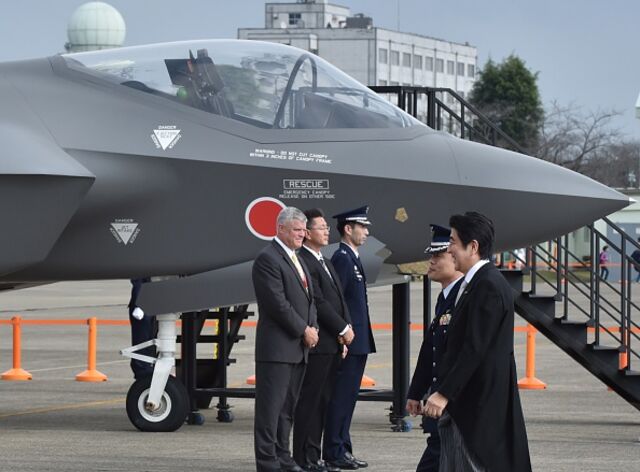
In the face of widespread public opposition, Japanese Prime Minister Shinzo Abe is preparing to ram through measures to deepen security cooperation with the U.S. Abe is right when he says such laws are vital to Japan's security. They also stand to benefit allies in need around the world, especially the U.S. However, the onus is on Abe to make that case to his confused and angry populace. 

The raft of defense bills in question is meant to legitimize Abe's reinterpretation of the country's pacifist constitution and free up Japan's military to support American and other allied forces in conflicts far from home. Opposition has swelled since early June, when a trio of well-regarded experts appeared before the Diet andquestioned the legislation's constitutionality. Eighty percent of Japanese citizens now say the government hasn't explained the new measures or their implications well enough. Ruling party leaders have rudely dismissed constitutional concerns -- some have eventhreatened to retaliate against unfriendly newspapers. 

Jim Webb’s Long War With His Own Party

The short history of a Democratic presidential hopeful’s decades-long fight with his party’s base about Vietnam.

Jim Webb just may be the most unusual, compelling presidential candidate around: He’s a much-decorated Vietnam combat veteran whose heroics make Hollywood war heroes pale by comparison. In an era of ghost-written Tweets, he’s an acclaimed novelist, screenwriter, and journalist. He was Ronald Reagan’s Secretary of the Navy whose early, prescient opposition to the Iraq War brought him back to the Democratic Party—where his views on guns, the environment, Southern culture, and affirmative action are not exactly in synch with his party’s base.

But there’s a far more fundamental sense in which Webb stands in startling contrast to the root assumptions of Democrats about an issue that divided (and then shaped) his party for almost half a century: the Vietnam War. What Webb believes about that war, and specifically about those who opposed it, still makes him an apostate, if not a heretic, in the party whose presidential nomination he now seeks.

PUT THE MARINES BACK IN SUBMARINES


“Up from a sub sixty feet below, Hit the beach and I’m ready to go” is the opening line to a common physical training running cadence sung by marines for generations. For some 80 years, marines planned for and employed the techniques immortalized in the cadence to bring success to the Corps in the unique and demanding environment where surf crashes onto the shore. Marines, as the guardians of “amphibiousity” for our nation, embodied the motto of “any clime and place” by integrating submarines into amphibious operations by virtue of the unique access the platform offers regardless of maritime threats. Unfortunately, as the Marine Corps and our nation face major threats in the 21st century maritime environment, submarines have disappeared from the toolbox employed by the nation’s amphibious “experts.”

Army experiments now underway that integrate cyber and land operations

Amber Corrin
July 10, 2015
The Army is conducting a series of experiments to find the best ways to integrate cyber operations into more traditional land operations, including in the formations closest to the ground.
"The Army chief of staff challenged us last year, saying how do we integrate cyberspace operations into unified land operations? Because it really is about cyber not being a thing unto itself – it needs to be fully integrated," said Ronald Pontius, deputy to the commanding general at Army Cyber Command. "How do you have non-kinetic fires along with kinetic fires? How is it fully integrated as you're defending the network, you're operating and you're maneuvering, and it's in a virtual space?"

Speaking on the sidelines of an AUSA event in Arlington, Virginia, Pontius said the experimental initiative known as "cyberspace operations corps and below" started with a first event held in the May-June timeframe with a brigade combat team at the Joint Readiness Training Center at Fort Polk, Louisiana. The exercise was carried out by the 3rd brigade, 25th infantry, with preparations going back at least 6 months in earlier leadership training programs to gear up for the field experiment.

Abe's World War 2 Statement: Beyond History

With this piece, The Diplomat kicks off a series exploring historical issues in Northeast Asia in the run-up to Japanese Prime Minister Shinzo Abe’s statement on the 70th anniversary of the end of World War II. Stay tuned for future articles in the series.

The Abe Statement to come in August has four principal audiences: Japan, the United States, South Korea, and China. So much attention is being given to the third and fourth of these that the two primary audiences are often overlooked. Under the overall rubric of establishing a “normal Japan,” Abe’s foremost objective is reconstructing national identity. But he also must be attentive to national interests and Japan’s diplomacy in pursuit of them. Unlike earlier statements on the 50th and 60th anniversaries of the end of WWII, this one is part of a sequence of commemorations in 2015, notably also including Xi Jinping’s September 3 narrative on history. Abe can reignite a downward cycle of distrust or facilitate a spirit of reconciliation with South Korea and China. But, more importantly for him, he can boost pride in Japan and trust from the United States.

Domestic Factors

Can Indonesia Speed Up Its Military Aircraft Modernization?

Earlier this week, Indonesian defense minister Ryamizard Ryacudu said that the country would decommission all military aircraft more than 30 years old.

The announcement is not surprising. It comes just weeks after the crash of a C-130 Hercules air force plane killed about 140 people last month. The U.S.-made aircraft had gone into service nearly 50 years ago (See: “Indonesia’s Deadly Air Force Plane Crash”).

As I wrote then, this has predictably led to calls to speed up the modernization of Indonesian military (TNI) equipment. Some have urged the government to buy only new planes instead of relying on grants from other countries to purchase secondhand aircraft, much like the complaints heard earlier this year following an F-16 fighter jet malfunction (See: “Will Indonesia’s Fighter Jet Malfunction Affect its Defense Policy?”). Others, including President Joko “Jokowi” Widodo, have used it as an opportunity to once again reiterate the importance of Indonesia striving for self-reliance in its own domestic defense industry (See: “An Indonesian Defense Revolution Under Jokowi?”).

The Iran Deal Strengthens America's Military Option


While reducing the chances the United States or Israel will resort to the military option, the Iran deal also increases their capabilities to do so.

The Obama administration has sold the recently announced Iran deal as the best alternative to the military option. Although the accord does reduce the chances the United States or Israel will have to resort to the military option, it also increases their capability to carry out airstrikes against Iran’s nuclear program should they become necessary.

The nuclear deal strengthens the military option in a number of different ways. One of the least understood is Iran’s decision to relinquish the plutonium route to the bomb. In one of the only permanent features of the deal, Iran has agreed to redesign its Arak heavy water reactor so that it is incapable of producing weapons-grade plutonium, and promised to ship all the spent fuel from the reactor abroad. Furthermore, Tehran has pledged to never acquire reprocessing facilities, which are necessary to produce fissile material for a nuclear weapon.

16 July 2015

The Kargil Conflict does not qualify to be called a War

By Air Marshal RK Nehra
15 Jul , 2015

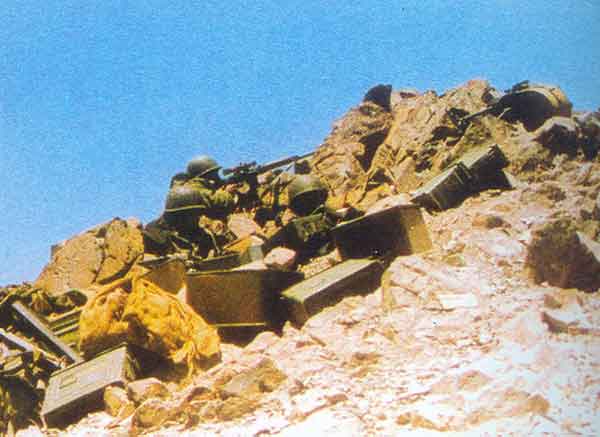
It appears from newspaper reports that some Pakistani mujahideens (irregulars) occupied the Kargil heights sometime around April 1999. Later on, they were joined by regular Pakistan troops. Their overall numbers might have been a few thousand (some estimates talk of about 1000 numbers). Again, going by newspaper reports it would appear that the Pakistanis built some bunkers on those heights. India remained blissfully unaware of these major incursions till some shepherds informed of the same; So much for Indian Intelligence.

…India would not cross the LoC. Hypocritical moral posturing? Why? Pray, why would we not cross the LoC when the other party has? …let us not forget that it was our pseudo-moral posturing and lack of aggressive spirit (i.e. no LoC crossing) that resulted in such high casualties.

Terrorism: Emerging Patterns and Tentacles


What has raised its ugly head is the unfortunate occurrence of well co-ordinated and simultaneous strikes by the determined, indoctrinated ‘soldiers’ turned suicide bombers. If one has to draw a line of comparison with serial Mumbai blasts of 1993, the goal appears identical to scare and terrorise. The modus operandi, however, has certainly undergone a change

If one has to draw a line of comparison with serial Mumbai blasts of 1993, the goal appears identical – to scare and terrorise.

The recent attacks in Kuwait, Tunisia and France leading to senseless killing of fifty four innocent human beings, does not exactly indicate that the curse of terrorism has made a comeback. It was close on the heels of the Taliban strike on the Afghan Parliament on June 22, which saw death of two civilians, including a child and seven assailants, including a suicide car bomber. In this age of ‘live shows’, terror assaults have been always there amidst us, in some form or the other ever since the Palestine-Israel conflict took birth in the late Sixties of last Century.

Modi Sarkar has a 'strong pro-West tilt'

July 14, 2015

'If you look at the relationship with Pakistan, or the relationship with China, both are today, more uncertain than they were when this government came into power.'

Aziz Haniffa/Rediff.com listens to Shiv Shankar Menon's eloquent report card on the Modi Sarkar's foreign policy.
"The biggest difference in substance," between Dr Manmohan Singh's government and Narendra Modi's government, says former national security advisor Shiv Shankar Menon, "is the doubling down in the relationship with the United States. I would go so far as to actually say, it's a strong pro-Western tilt."

Elaborating, Menon pointed out, "If you look at the things that this government has announced, that the prime minister will go and visit Israel, and no prime minister has done that before" and "if you look at the substance of the relationship with the US, which has been revived," he said these were tangible manifestations.

The Seven Signs of India’s Outsourcing Apocalypse

Sean McLain
JUL 13, 2015

After years of success, the outsourcing industry is under stress as the market shrinks and spending falls. Indian companies say their business models, built on cheap labor, are under threat from a shift to cloud computing, where clients ditch server rooms and bespoke software. Here’s how the outsourcing industry has shrunk in the past several years.

$120.4 billion

The value of outsourcing deals worldwide in 2014, down from $206.8 billion in 2010.

1,144

The number of outsourcing deals signed globally in 2014. The deals are down 61% from 1,805 deals in 2010, KPMG data shows.

$552 million

The average value of the world’s 100 largest outsourcing deals in 2012. Since then, the average size has fallen and was at $452 million in 2014, according to International Data Corp.

Inside the Pakistan Army: Moves on the Chessboard

By: Arun Vishwanathan and Ramya PS

On April 9, 2015, Pakistan’s Inter Services Public Relations (ISPR) put out two short press releases. The two-line press releases gave the names of the officers promotedfrom the rank of Maj. General to Lt. General and details of key new postings.

This was the second major reshuffle that has taken place in the higher echelons of the Pakistan Army after General Raheel Sharif took over as the 15th Chief of the Pakistan Army in November 2013.

Changes in the Strategic Plans Division

Interestingly, in both cases, there was a change at the helm of the Strategic Plans Division (SPD), the custodian of Pakistani nuclear weapons. This is in stark contrastto the long period of continuity when Lt. Gen. Khalid Kidwai was at the helm of the SPD for nearly fourteen years between February 2000 and December 2013.

The December 2013 reshuffle took place barely a month after Gen. Raheel Sharif assumed office. One of the important appointments was Lt. Gen. Zubair Mohammed Hayat as Director General, SPD, following the retirement of Lt. Gen. Khalid Kidwai.

Afghan Officials and Taliban Meet in Possible Step Toward Peace Talks

By JOSEPH GOLDSTEIN and MUJIB MASHAL
JULY 7, 2015 

Afghan security forces after an attack by Taliban insurgents on a compound used by Afghanistan's intelligence agency in Kabul on Tuesday. CreditOmar Sobhani/Reuters

KABUL, Afghanistan — An Afghan government delegation met withTaliban officials in the Pakistani capital for the first time on Tuesday, in a significant effort to open formal peace negotiations, according to Afghan, Pakistani and Western officials.

The Islamabad meeting, brokered by Pakistani officials after months of intense effort by President Ashraf Ghani of Afghanistan to get them more centrally involved in the peace process, was the most promising contact between the two warring sides in years. And it followed a series of less formal encounters between various Afghan officials and Talibanrepresentatives in other countries in recent months.

Pakistan’s Foreign Ministry said in a statement Wednesday that the participants had agreed to continue the talks, with another meeting to be held after the Muslim holy month of Ramadan.

Al Qaeda And Islamic State In South Asia – Analysis

By Bhaskar Roy
July 14, 2015

The recent arrest (July, 02) of 12 militants in Dhaka, Bangladesh, including the resident co-ordinator of the Al Qaeda in South Asia (AQIS) may not be a total surprise for counter-terrorism experts, but it is an eye-opener for the people of South Asia.

The arrested included the AQIS co-ordinator, Mufti Mainul Islam (with many aliases), Maulana Zafar Amin, advisor of AQIS, and ten others. The arrests revealed they had acquired a huge amount of arms and explosives, bomb-making and training manuals. They planned to hit Dhaka in a spectacular strike after the holy month of Ramadan, to announce their arrival in the country.

This is not the first time Al Qaeda tried to get a foothold in Bangladesh. According to earlier reports, a group of Al Qaeda men of foreign origin were spotted in 2005, in the Banderban area of Bangladesh. They were reportedly assisted by the Jamaat-e-Islami (JEI). But the group slipped out of the country when the political situation became unfavourable for them and international attention shifted to Bangladesh on terrorism. Mufti Mainul Islam, 35, was earlier a member of Harkat-ul-Jihad-al-Islami, Bangladesh or HUJI-B. The others were committed to Al Qaeda ideology. Senior HUJI leader, Maulana Mufti Moinuddin @ Abu Zandel, who is on death row for his attempt on the life of a former British High Commissioner in Bangladesh, was in touch with this group through mobile phone and letters, from Kashimpur jail, where he is lodged. Have some prison guards been influenced by extremist ideology? Or have they been bribed or been just negligent? The Rapid Action Battalion (RAB) who are pursuing terrorists with a significant degree of success would, expectedly, enquire into this.

Senkaku/Daioyu Islands: Significance, Challenges and Opportunities

Author: Ms. Meenakshi Viswanathan
June 11, 2015

Much has been discussed about Japan’s Prime Minister Shinzo Abe’s weeklong visit to United States of America in April 2015. Defence agreements were updated and signed and apologies for war time aggressions were demanded. But a key issue that cropped up was that of the Senkaku islands. A day before Prime Minister Abe’s visit to the White House, Secretary of the State John Kerry reaffirmed that a treaty that the United States and Japan signed in 1960 requires the former to defend the Senkaku Islands in case of an attack by China. According to Kerry, “Commitment to Japan’s security remains ironclad and covers all territories under Japan’s administration, including the Senkaku islands.

Why has the issue become so prominent in the recent years? Why is this issue proving to be a thorn in the China-Japan relations? What is so significant about these islands that all the big powers in the region have a vested interest in them?

Senkaku Islands: A Brief Overview

Asia's Nightmare: Could India and China Clash over the South China Sea?


Developments in the South China Sea (SCS) have significant implications for India’s strategic interests and its role in the Indo-Pacific. Yet New Delhi has traditionally maintained a safe distance from direct commentary on issues like SCS maritime disputes, instead emphasizing the need for freedom of navigation.

However, India now appears to be picking up the pace. Under the Modi government, New Delhi has turned the ‘Look East Policy’ into the ‘Act East Policy’, made direct comments on the need to resolve the SCS dispute, signed a joint strategic vision with the U.S. for the Asia–Pacific and the Indian Ocean region and is in talks with key regional countries to increase security collaboration, especially in the maritime domain.

The Modi Government recognizes the SCS as an important element of New Delhi’s relationship with the East, for both trade and strategic reasons. In order to strengthen its relationship with Southeast Asian nations, India has to portray itself as a credible security actor in the region. In making comments on the SCS disputes, India took a step in directly voicing its concerns rather than tip-toeing around the matter. New Delhi was clear to state the potential of the disputes in destabilizing regional security through Joint Statement with the U.S., with Vietnam and at the East Asia Summit and the India–ASEAN summit 2014.

China's Preference for Border Peace and Control over Early Resolution

July 14, 2015

When Prime Minister Narendra Modi visited China in May 2015, one of his objectives was to persuade the Chinese leadership to restart discussions on the clarification of the Line of Actual Control (LAC) through the exchange of maps. The rationale for India’s demand was that, pending a final settlement of the border question, LAC clarification would help ease border tensions. But the Chinese leadership was not enthusiastic about India’s proposal. Instead, China called for a comprehensive ‘code of conduct’ for the forces deployed along the border. Here, it is useful to remember that both LAC clarification and Confidence Building Measures (CBMs) are part of the agreed principles in the 2005 agreement. This mismatch in desired outcomes was the main obstacle in the recent border talks, and it showed once again India and China’s contrasting approaches to border negotiations at large.

India considers recurrent border tensions to be the result of the differing perceptions of the border held by the two countries. Hence, its insistence on clarification of the LAC. Disagreeing with this Indian assessment, China contends that border tensions are caused by India’s efforts to modernise border infrastructure, equipment and personnel, and thereby concretise territorial claims. For instance, India’s announcement of the establishment of 54 new Border Out Posts (BOP) led China to caution India to refrain from actions that might “complicate” the boundary issue.1 China often resorts to military patrols and other measures not only to strengthen its own claims but also to counter Indian efforts in the border region. But at the same time it advocates a ‘code of conduct’ as an appropriate mechanism for maintaining border peace.2

Ramadan or Education: An Impossible Choice for China's Uyghurs

By Andi Zhou
July 15, 2015

China’s policies force Uyghurs to choose between losing their cultural heritage and pursuing better living standards.
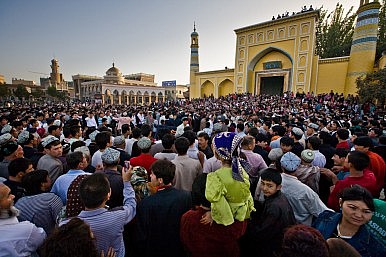
China’s recent decision to bar civil servants, students, and teachers from observing Ramadan in the predominantly Muslim Xinjiang Autonomous Region has put China’s troubled relationship with its minority populations back in the spotlight. China has been stepping up its restrictions on religious practice in Xinjiang to try to loosen the Uyghur ethnic group’s adherence to Islam, which they fear is feeding into an extremist-separatist movement. The decision to target students and teachers with this ban is notable because it ties China’s cultural policies to education — a key battleground in the struggle over identity and enfranchisement in minority China and a revealing window into why China’s attempts to pacify its restive frontier seem to be backfiring.

CHINA’S MASTER PLAN TO THWART AMERICAN DOMINANCE IN ASIA

July 13, 2015 

An interesting subtitle regarding Russia and India:

The first is to backstop precipitous declines in Russian power. Chinese strategic analysts cannot help but be thrilled to have the leading members of the U.S. defense establishment proclaim that Russia is now the principal threat to the United States. Combined with announced cuts in the size of the U.S. Army, this portends well for thinning out any planned increase in the U.S. presence in the Pacific, because the focus now appears to be on a pivot back to Europe in order to shore up the precarious eastern frontiers of the Euro-Atlantic world. The lifeline that China has provided to the Russian economy-not only new contracts for energy and trade deals, but also the purchase of Russian bonds by Chinese financial institutions-has allowed the Putin administration to blunt the impact of Western sanctions and allowed Moscow to continue to maintain its position in Ukraine. China also benefits from a more anti-American Russia that is important for helping to secure China’s western territory by having Moscow guard Beijing’s backyard. Putin’s early flirtations with creating a strategic partnership with the West-including the post-9/11 offer of assistance to facilitate a U.S. military presence in Central Asia-were troubling to the Chinese, who have always feared the possibility of complete American encirclement. The Ukraine crisis has permanently ruptured Russia’s ties to the West and pulled Moscow into a closer relationship with Beijing.

Asia's Nightmare: Could India and China Clash over the South China Sea?

July 14, 2015 

Developments in the South China Sea (SCS) have significant implications for India’s strategic interests and its role in the Indo-Pacific. Yet New Delhi has traditionally maintained a safe distance from direct commentary on issues like SCS maritime disputes, instead emphasizing the need for freedom of navigation.

However, India now appears to be picking up the pace. Under the Modi government, New Delhi has turned the ‘Look East Policy’ into the ‘Act East Policy’, made direct comments on the need to resolve the SCS dispute, signed a joint strategic vision with the U.S. for the Asia–Pacific and the Indian Ocean region and is in talks with key regional countries to increase security collaboration, especially in the maritime domain.

The Modi Government recognizes the SCS as an important element of New Delhi’s relationship with the East, for both trade and strategic reasons. In order to strengthen its relationship with Southeast Asian nations, India has to portray itself as a credible security actor in the region. In making comments on the SCS disputes, India took a step in directly voicing its concerns rather than tip-toeing around the matter. New Delhi was clear to state the potential of the disputes in destabilizing regional security through Joint Statement with the U.S., with Vietnam and at the East Asia Summit and the India–ASEAN summit 2014.

India and Pakistan Bring Risks for Shanghai Cooperation Organization


Dr Farzana Shaikh Associate Fellow, Asia Programme
10 July 2015

Expansion into South Asia comes with important benefits for the security bloc, but the old rivals could create as much turmoil as opportunity.

An Indian army soldier is silhouetted against the snow capped mountains of Pakistan-administered Kashmir as he guards the the line of control on 20 April 2015 in Gohalan. Photo by Getty Images.

India and Pakistan are expected to be simultaneously elevated to full membership of the Shanghai Cooperation Organization (SCO) in 2016, as mooted at this week’s summit of the security bloc. SCO officials have described the move as a ‘constructive’ step that could improve bilateral relations and will see the two rivals become members of the same security bloc for the first time. (Both already have observer status at the SCO.) But their entrenched differences could cripple the SCO, and the organization’s decision-making, which is based on consensus, could face paralysis.

Iraq Begins Military Operation to Drive ISIS From Anbar Province

By OMAR AL-JAWOSHY and ANNE BARNARD
JULY 13, 2015

BAGHDAD — The Iraqi government declared on Monday that it was beginning a major military operation to retake the western province of Anbar from the Islamic State, which occupies much of the area including its major cities, Ramadi and Falluja.

It was not immediately clear if the operation would be more effective than an earlier one thatIraq announced in May, when the Islamic State seized Ramadi, the provincial capital, after holding Falluja for more than a year. Little has changed on the ground since then.

But a barrage of 29 American-led airstrikes near Ramadi on Monday signaled that the United States was strongly backing the operation, a week after President Obama vowed a “long-term campaign” to defeat the Islamic State, also known as ISIS or ISIL.

The Arab-US Strategic Partnership and the Changing Security Balance in the Gulf

By Anthony H. Cordesman, with the assistance of Michael Peacock 
JUL 13, 2015 

The ongoing confrontation with Iran, the war against ISIL, the instability in Iraq, the Civil war in Syria, and the conflict in Yemen have all made major changes in the security situation in the Gulf and in the regional military balance. The strategic partnership between Arab Gulf states, and with the U.S. and other outside states, must now evolve to both deal with conventional military threats and a range of new threats including ideological extremists, non-state actors, their state sponsors, and a growing range of forces design to fight asymmetric wars.

The Burke Chair at CSIS is completing a new book-length assessment of the Gulf military balance, the military capabilities of each Gulf state, the role of the US as a security partners, and the priorities for change in the structure of both the GCC and the Arab Gulf military partnership with the US.

This assessment goes far beyond the conventional military balance and examines how force developments in the region affect joint and asymmetric warfare, missiles, and missile defense, nuclear forces, and in terrorism, the role of non-state actors, and outside powers.

A totally revised and final draft of this study, entitled The Arab-US Strategic Partnership and the Changing Security Balance in the Gulf, is now available on the CSIS web site at http://csis.org/files/publication/150713_Cover_and__Report%20_Gulf_Military_Balance_2015.pdf.

Why Israel, Saudi Arabia, and Neocons Hate the Iran Deal


Israeli Prime Minister Benjamin Netanyahu delivers a statement in his office in Jerusalem on July 14, 2015, after world powers reached a historic nuclear deal with Iran.

Here’s the thing to keep in mind about most critics of the Iran nuclear deal that was signed Tuesday morning: Their objections have nothing to do with the details of the deal.

The most diehard opponents—Israeli Prime Minister Benjamin Netanyahu, Saudi King Salman, and a boatload of neocons led by the perennial naysayer John Bolton—issued their fusillades against the accord (“an historic mistake,” “diplomatic Waterloo,” to say nothing of the standard charges of “appeasement” from those with no understanding of history) long before they could possibly have browsed its 159 pages of legalese and technical annexes.

What worries these critics most is not that Iran might enrich its uranium into an A-bomb. (If that were the case, why would they so virulently oppose a deal that put off this prospect by more than a decade?) No, what worries them much more deeply is that Iran might rejoin the community of nations, possibly even as a diplomatic (and eventually trading) partner of the United States and Europe.

The Real Iran Deal – Analysis

By Adam Garfinkle*
July 14, 2015

It seems there is a deal. We know that because the President has already begun his pirouettes as befitting his role as Spinner-in-Chief, and because we have a leaked Russian version of the text that seems pretty realistically what it claims to be. Let me admit right off that I doubted that the Ayatollah Khamenei could bring himself to take “yes” for an answer, for reasons I have laid out several times before (most recently, in short, in “The Waiting Game”, TAI Online, July 9). And I believe that there’s a good chance he has made a fateful error, from his point of view, in so doing (of which more below).

There will be torrents of commentary coming our way. Some people are actually capable of reading the text professionally, with the requisite political experience and technical background, to make sense of the deal. And some will comment despite not being able to do this. Arguments from authority are always to be suspected, but experience and competence are not to be dismissed either. So take care of whom you trust in this.

WHY JOINTNESS MAKES FOR BAD STRATEGY, AND OTHER THOUGHTS

July 15, 2015 

The 2015 U.S. National Military Strategy is chock-full of wholesome goodness yet may leave those who do business in great waters feeling undernourished. Why? Because the strategy is so determinedly — relentlessly — joint in outlook, from its garish purple cover (purple being the signifier for joint endeavors) all the way to itsbitter end. “Jointness,” to use the awkward Pentagon term, connotes each armed service having a roughly equal claim on missions and taxpayer largesse.

Call it egalitarianism, military style. Released last week, the strategy explains how the Joint Staff headed by U.S. Army Gen. Martin Dempsey (and about to be headed by Marine Gen. Joseph Dunford) intends to harness ground, air, and sea power to achieve strategic and political purposes. What it doesn’t do is explain fully how the armed forces will do things in the terrestrial, air, or nautical realms — let alone set priorities among those domains, or among the land, air, and sea arms.

Climate Scientists Warn That Global Warming Is as Threatening As Nuclear War

JULY 13, 2015

Rising global temperatures and sea levels will become an international security issue if left unattended. 
Gone are the days when talk of global destruction conjured images of nuclear bombs and mushroom clouds. Scientists are now warning that the modern-day parallel to the Cold Era threat of nuclear warfare is global warming.

A newly released report on the issue of climate change begins with a warning that countries should view it as they once viewed the specter of nuclear war: as a major threat to national and international security. The report, “Climate Change: a Risk Assessment,” was commissioned by the UK’s foreign office and cowritten by leading environmental scientists from all over the world.

The analysis reaffirms many well-documented assertions about climate change: Global temperatures are rising drastically, leading to rising sea levels as well as widespread drought and famine, which threaten human lives on all continents, especially in developing nations.

U.S. and Iran Reach Historic Nuclear Deal

JULY 13, 2015

The agreement, swapping sanctions relief for new limits on Tehran’s nuclear program, came after Washington bowed to Iranian demands to lift a U.N. arms embargo.

Iran and six world powers agreed to a historic deal Tuesday that will impose limits on Tehran’s nuclear program in return for relief from punishing economic sanctions, marking the culmination of more than a decade of diplomacy and confrontation.

After 18 days of exhausting negotiations in Vienna, diplomats announced they had clinched the accord, and President Barack Obama hailed it as a breakthrough that would defuse long-running tensions over Iran’s disputed nuclear project.

“Today, because America negotiated from a position of strength and principle, we stopped the spread of nuclear weapons in this region,” Obama said in a televised speech from the White House.

More Pentagon Generals Line Up to Proclaim Russia’s ‘Existential’ Threat to U.S.

JULY 14, 2015 

Add caption
The two generals nominated to sit atop the Defense Department’s hierarchy agree: President Vladimir Putin’s Russia is the greatest threat facing the United States today.

U.S. Air Force Gen. Paul Selva — President Barack Obama’s pick to be the next vice chairman of the Joint Chiefs of Staff — told the Senate Armed Services Committee on Tuesday that he “would put the threats to this nation in the following order: Russia, China, Iran, North Korea, and all of the organizations that have grown around ideology that was articulated by al Qaeda,” offering the same list delivered last week by Obama’s nominee to be the next chairman of the Joint Chiefs, Marine Corps Gen. Joseph Dunford.

During his own July 9 confirmation hearing before the same committee, Dunford called Moscow’s recent behavior in Ukraine and in eastern Europe “nothing short of alarming,” adding that “Russia presents the greatest threat to our national security” and “could pose an existential threat to the United States.”

Greek Crisis Deepens Europe's Fault Lines

July 13, 2015


Finally, the Greek crisis is challenging the Finnish government as well. Since March, Finland has been ruled by a coalition that includes the Euroskeptic Finns Party, which opposes a third bailout for Athens. Finland has traditionally followed a hard line when it comes to eurozone bailouts, but the government's composition has reduced Helsinki's room to maneuver. Like Germany, the Finnish parliament will have to ratify a third bailout for Greece.

A Systemic Crisis

The European Union is not merely facing a Greek crisis. It is facing a systemic crisis. The events in Greece have shown the extent to which a currency union without a fiscal union leads to conflict in Europe. The Greek government has presented the conflict as an attempt to weaken Greece's democracy, which is an incomplete explanation. The eurozone is a club of 19 democracies with their own national interests, priorities and constraints. Each actor has to pursue its own goals, all the while fettered by its domestic politics.

Greece signs up to a painful, humiliating agreement with Europe


Agreeing to long-resisted reforms is just the start for Greece Jul 13th 2015 | Europe

AT ONE point during marathon euro-zone talks in Brussels on the evening of July 12th, Alexis Tsipras was a few minutes late returning from a break. A rumour took flight: the Greek prime minister, facing brutal demands from his 18 fellow euro-zone leaders in exchange for an agreement to begin talks on a new bail-out, had fled the building. It turned out that he was in the bathroom.

Greek Agreement and Iranian Deal Leave Russia Disappointed and Irrelevant

July 14, 2015

Greek Prime Minister Alexis Tsipras (L) and Russian President Vladimir Putin (Source: russianmission.eu)
It was a rare coincidence in world politics that two pivotal and protracted negotiation processes—the European Union’s talks with Greece on managing its debt, and the “P5+1” talks on managing the Iranian nuclear program—both culminated in crucial agreements at the start of this week (July 13–14). Russia was a party (albeit not a very active one by the end) to the bargaining with Iran, but not with Greece (while demonstrating close engagement); and it has large stakes in both crises. Typically, while declaring support for reaching comprehensive agreements in both cases, Moscow was, in fact, more interested in the talks breaking down, so that the EU would plunge into a deep mess marked by a “Grexit” and Iran would remain isolated by the sanctions regime. However, the two landmark compromises signify a big step forward in enhancing the governability of world order, which leaves Russia—as a revisionist power that favors a crisis of the West-imposed global order—quite irrelevant.

The Kerch ‘Curse’: Russian Occupation Makes Crimea an Island

July 14, 2015

By its illegal occupation of Crimea, Moscow has transformed that Ukrainian peninsula into an island, the second non-contiguous part of the Russian Federation and one that is already giving the Russian government and the Russian economy serious problems—as Kaliningrad long has (Ekho Moskvy, July 10). Like Kaliningrad, Crimea can be reached by land only by crossing the territory of a country with which Moscow does not have good relations. But unlike the westernmost oblast of the Russian Federation, the Crimean peninsula could, in principle, be reached by a bridge over the Kerch Straits from Russian territory.

That is the strategy Moscow has announced, even though all earlier efforts to build a bridge across those waters have failed. Furthermore, the problems involved—foreign political, economic, environmental, technical and domestic-political—are now greater than at any time in the past. Together, these obstacles make the realization of such a project more difficult than ever. As a result, Ukrainian defense analyst Igor Fedyk says, it is entirely appropriate to speak of the Kerch “curse.” And Fedyk doubts that even the Russian government will be able to overcome it (Krymr.com, July 3).