15 September 2015

Deficit or Direction?: Prudence in Defence Expenditure

By S.N. Mishra
12 Sep , 2015

Richard Musgrave, an acknowledged authority in public finance, had said that every Finance Minister must grapple with the three issues of Allocation, Distribution and Stabilisation. Arun Jaitley, while flagging the fiscal footprints of consolidation and prudence, seems to have echoed Musgrave’s mantras. Defence expenditure cannot be relegated to cosmetic discussions on its linkage with GDP. A definitive roadmap needs to be etched by the political leadership to ensure that this sector is in sync with national concern for fiscal prudence without compromising needs for modernisation and operational preparedness.

The defence budget for 2014-2015 has raised enormous curiosity regarding the directional change that will be ushered by the new Finance Minister who doubles up as Raksha Mantri. The big news is increase in Foreign Direct Investment (FDI) cap to 49 per cent and the creation of a corpus of Rs 100 crore towards the Defence Technology Fund (DTF). The DTF concept was mooted in the Defence Production Policy 2011. Its activation is welcome as it would hopefully provide funds to universities, the private sector and institutions of repute such as the Indian Institute Science to pursue niche technology. The enhancement of the FDI ceiling with full management control has been bit of a dampener because it has to be routed through Foreign Investment Promotion Board (FIPB) and full management control would remain with India. This will deter global Original Equipment Manufacturers (OEMs) from making investments in key technologies as they would not have majority rights.

Time for America to Get Serious about Its Arctic Policy

September 13, 2015

Washington is waking up to the fact that America is an Arctic nation. But, like a doomed polar expedition, the administration seems to be aimlessly wandering in the policy tundra. President Obama's recent trip to Alaska only raises more questions over whether the White House really has a serious Arctic agenda.

Shifts in the global climate are making the Arctic regions more accessible to human activity. From fishing and shipping to energy, mining and energy, expectations are high for the High North. And, from a U.S. perspective, the timing couldn’t be better. The chairmanship of the Arctic Council rotated over to the United States this April. An intergovernmental forum of the eight countries that own territory in the region, the council coordinates national policies and promotes international cooperation.

For the last two years, the Canadians held the chairman’s gavel. They used their tenure to focus on the lives and livelihoods of those who live above the Arctic Circle. That made sense. The people who populate the region will be most directly impacted by the problems and promise of development in the Arctic. Council members hoped that Washington would build on the momentum from Ontario.

SHEDDING LIGHT ON THE GRAY ZONE: A NEW APPROACH TO HUMAN-CENTRIC WARFARE

By Lt. Gen. Charles T. Cleveland, U.S. Army retired, Lt. Col. Shaw S. Pick and Lt. Col. Stuart L. Farris
August 17th, 2015

At the same time the world is less inclined to go to war, weak governments are failing and the tools of warfare are far cheaper and accessible to both states and nonstate actors. This confluence of forces is enabling our adversaries to find sanctuary in weakly governed spaces where they can leverage technology to increasingly challenge us in a “gray zone” between what we have considered peaceful interstate political competition and open war. Perhaps the single most important characteristic of contemporary gray zone conflicts is that they will occur among human populations living under varying levels of effective governance and security.

Given this reality, we must revisit our understanding of the security environment and ask difficult questions about the efficacy of our current approaches. Further, the concept of winning must be fundamentally re-examined in the context of a future environment in which conventional wars will be supplanted by population-centric conflicts and asymmetric challenges to U.S. power.

How good times can end


OROP can be a turning point. A nationalist leader cannot alienate those who defend the country

Your finance minister shall tell you that it will cost a fair amount. It does. The budget for 2015-16 earmarked Rs 54,500 crore for defence pensions. (Illustration by C R Sasikumar)

Dear prime minister,

This letter is a bit of history and some unsolicited advice — both suggesting how quickly good times can come to an end.

In December 1984, Rajiv Gandhi swept the Lok Sabha elections. In the first phase, the Congress won an unprecedented 404 out of 514 seats; and another 10 in the Assam and Punjab Lok Sabha elections held in 1985. Such a feat had never happened in the history of Indian elections, and has not been repeated since. The nation gave a young man an incredible mandate to lead.

In July 1985, Rajiv Gandhi signed the Punjab Accord with the Akali Dal. Independence Day 1985 saw an agreement being signed with the All-Assam Students Union (AASU). On December 28, 1985 Rajiv Gandhi delivered a brilliant speech at the Brabourne Stadium, Mumbai on the occasion of the Congress’s centenary celebration. It was as good as any of your best oration. I quote:

Protraction: A 21st Century Flavor of Deterrence

September 11, 2015

Interview with Jim Thomas (CSBA) conducted by Octavian Manea

Jim Thomas is Vice President and Director of Studies at the Center for Strategic and Budgetary Assessments (CSBA). He served for thirteen years in a variety of policy, planning and resource analysis posts in the Department of Defense, culminating in his dual appointment as Deputy Assistant Secretary of Defense for Resources and Plans and Acting Deputy Assistant Secretary of Defense for Strategy. In these capacities, he was responsible for the development of defense strategy, conventional force planning, resource assessment, and the oversight of war plans. He spearheaded the 2005-2006 Quadrennial Defense Review (QDR), and was the principal author of the QDR report to Congress.

During the last sequences of the Cold War, the US and NATO emphasized new capabilities and new operational concepts – Assault Breaker, Air Land Battle, Follow-On Forces Attack. What role did these elements have in changing Soviet perceptions about the military balance, including restoring a credible deterrence on the NATO’s Central Front?

Four things stand out as contributing to allied success in influencing the military balance in the early 1980s.

Operational Art and the Operational Level of War, are they Synonymous? Well It Depends.

September 9, 2015

Operational Art and the Operational Level of War, are they Synonymous? Well It Depends.

Which paragraph below do you agree with?

Paragraph 1: “The operational level of war spans a continuum-from comprehensive strategic direction to concrete tactical actions. Bridging this continuum requires operational art which is creative vision coupled with broad experience and knowledge. Without the operational level of war, tactical actions devolve into a series of disconnected engagements that do not accomplish the mission or objectives of the joint force.”

Paragraph 2: “Operational art spans a continuum-from comprehensive strategic direction to concrete tactical actions. Bridging this continuum requires creative vision coupled with broad experience and knowledge. Without operational art, tactical actions devolve into a series of disconnected engagements that do not accomplish the mission or objectives of the joint force.”[i]

A critical reader will notice the only difference between the two is the use of the terms operational art and the operational level of war. The first paragraph uses both terms and makes a distinction between them. The second paragraph makes no distinction and only uses the term operational art. One suggests a difference between the terms; the other does not.

The Three Streams of Leadership


The Three Streams of Leadership

Why ‘Charity vs. Selfishness’ should replace the ‘Management vs. Leadership’ dichotomy in our thinking about leaders.

The Defence of Saragosa (Agustina de Aragon)— David Wilkie, 1828. 

https://medium.com/the-bridge/the-three-streams-of-leadership-d76c13d18538

“But it ain’t all buttons and charts, little albatross. You know what the first rule of flyin’ is? Love. You can know all the math in the ‘Verse, but take a boat in the air you don’t love, she’ll shake you off just as sure as the turning of the worlds. Love keeps her in the air when she oughta fall down, tells ya she’s hurtin’ ‘fore she keens. Makes her home.” — Captain Malcolm Reynolds, ‘Serenity.’

Major General Robert Scales, former commandant of the US Army War College, recently lamented his role in returning the novel Once an Eagle to prominence in the military.

“The book’s lasting attraction for soldiers is the personal and moral battle within its pages between true and false officership as embodied by Sam Damon, a former enlisted man and true soldier’s soldier and Courtney Massengale, a West Pointer who embodies all that is evil among the grasping and politically driven elite… For years the book became a bedside volume and often I would, like many in my generation who had seen insensitive staff REMFs in Vietnam, warn too-clever officers not to ‘act like a Massengale’… With reflection I think, in part as a result of the book, the Army today venerates Sam Damon too much and castigates Courtney Massengale to its detriment. Its pages might well have contributed to the conflation of two views of careerism between the good warrior versus the bad staff officer.”

14 September 2015

India and Iran: Challenges and Opportunity

By Vinay Kaura
September 11, 2015

The strategic map of Iran’s immediate neighborhood will change dramatically following the landmark nuclear deal between Iran and the P5+1. Given the tremendous geostrategic stakes involved, Iran has already begun to explore greater opportunities for economic and security cooperation in the region. This has implications for both India and Pakistan, which are tied to Iran strategically but bitterly opposed to each other.

Per the realist prescription of international relations, survival in an anarchic world requires all states to adopt certain rational behavior, such as power maximization and balancing strategies. Depending to a large extent on their worldviews, all state leaders translate their perceptions of locational advantages and vulnerabilities into geopolitical strategies. Revolutionary rhetoric apart, Iranian decision-makers have conducted their foreign policy, more or less, in a realist manner by weighing costs and benefits. If implemented, the nuclear agreement will surely mark the start of a new age of Asian geopolitics. Iran is preparing itself for a wider and internationally legitimized regional role in which it can act pragmatically to enhance its reputation and take advantage of commercial opportunities wherever it finds them.

Indian Air Force Chief Visits Vietnam

September 12, 2015

The Indian Air Force’s (IAF) chief marshall, Arup Raha, arrived in Vietnam on Thursday, where he was received by Vietnam’s minister of defense, General Phรนng Quang Thanh. Raha is in Vietnam for a three-day visit where he will meet with a range of senior Vietnamese defense officials and discuss military cooperation between the two countries. Raha’s visit emphasizes the ongoing strategic convergence between Hanoi and New Delhi. Both India and Vietnam have expanded their defense cooperation in recent months, with high-level discussions about security cooperation becoming relatively routine.

Thanh, according to a report in Vietnam’s Tuoi Tre, “hailed Raha’s visit, considering it a boost to the traditional friendship, mutual understanding and trust between the two countries and peoples, particularly in defense ties.” To date, India and Vietnam haven’t focused specifically on air force cooperation, preferring instead to build their security ties around maritime security. The specifics of Raha’s agenda in Hanoi remain obscure for the moment. In broad terms, Vietnamese reports notes that the Indian air chief’s agenda will be broad enough to address strategic security cooperation between the two countries.

Here's the Real Reason Why India's Economy Is Smaller Than China's

September 11, 2015

Without doubt, one of the modern world’s rising economic powers is India. Today, India is growing at a modest rate, despite some bumps, and is already the world’s third largest economy in purchasing power parity (PPP) terms. It is estimated to become the third largest economy in GDP by 2030.

For the past few decades, India’s economy has not grown as fast as it could, or as fast as China’s. Much of this is because of the economic policies of the Indira Gandhi government and the fact that India shied away from a manufacturing-based economy for a long time, instead focusing on a white-collar services sector. While India had a natural advantage in leveraging its educated English-speaking elite to become a destination for American outsourcing, this can only be a limited engine of economic growth for India. For a nation overwhelmingly comprised of peasants and farmers to grow, it needs to focus on industrialization and manufacturing. Despite numerous problems, this has been the underlying understanding of the Narendra Modi government and its economic policies. There is much resistance to this, however, since modern India has a historically conditioned wariness towards free trade and manufacturing induced partially in part because of India’s colonization by the British, led by the exploitative British East India Company (EIC).

Pakistan’s Nuclear Policy: A Product of Misplaced Military Policies

By Gaurav Dixit
11 Sep , 2015

Speaking at a seminar in Islamabad in 1999, Pakistan’s former foreign minister and a leading nuclear strategist Abdul Sattar insisted, “We shall not engage in any nuclear competition or arms race”. Six months later, he reiterated, “Our policy of minimum credible deterrence will obviate any strategic arms race.”

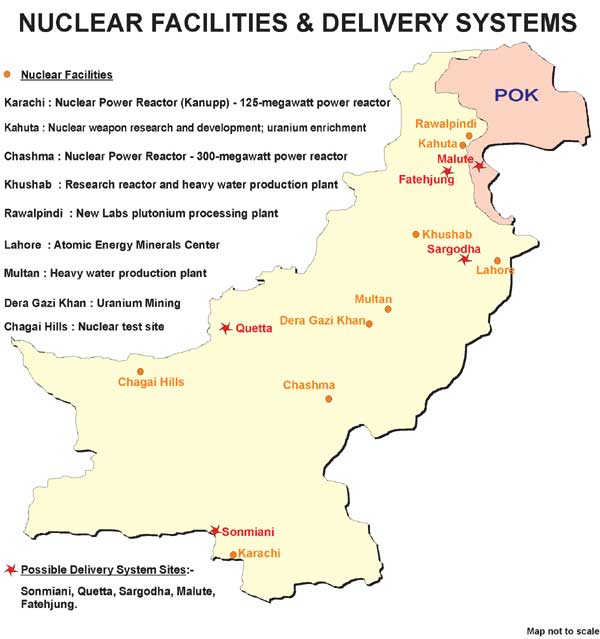
A recent report published by the Carnegie Endowment for International Peace and the Stimson Center, however suggests that Pakistan could become the third largest nuclear stockpile in the world within the next five to ten years, behind only the United States and Russia.

The report further states that the fast development of its nuclear head is out of its fear of existential threat from India. The report certainly suggests the reversal of Pakistan’s nuclear doctrine as suggested by Abul Sattar, and is also sufficient to indicate how the new doctrine has been directed against the very basis of demand for nuclear weapons.

Pakistan is already ahead of India in numbers of nuclear warheads – some estimate it to be 120 compared to 100 possessed by India. It is expected that Pakistan could have 350 nuclear warheads sometime in the next decade.

Special Issue: The Al-Qa`ida Threat 14 Years Later

September 11, 2015

From the Editor

This special issue of the CTC Sentinel focuses on the evolution of the al-Qa`ida threat 14 years after 9/11. “With all the media focus on ISIL, what’s sometimes lost is that we still view al-Qa`ida and the various al-Qa`ida affiliates and nodes as being a principal counterterrorism priority,” Nick Rasmussen, the Director of the National Counterterrorism Center, stresses in our interview. Much of the concern relates to strengthening al-Qa`ida affiliates in Yemen and in Syria that Katherine Zimmerman and Charles Lister focus on respectively. In our cover story, Michael Morell, the former deputy director of the CIA and a senior fellow at the Combating Terrorism Center, warns that the Yemeni al-Qa`ida affiliate “poses an even greater threat to the U.S. homeland than does the Islamic State, at least for now.” This issue also features an examination of al-Qa`ida’s resilience in the Afghanistan-Pakistan region by former CIA analyst Barbara Sude and a profile by Kรฉvin Jackson of Sanafi al-Nasr, a veteran Saudi al-Qa`ida operative now believed to be with the “Khorasan group” in Syria and “whose ideological and personal animus toward the United States may influence the degree to which al-Qa`ida elements plot international terrorism from Syrian soil.” 

This issue also features the first major redesign of the CTC Sentinel since the Combating Terrorism Center launched the publication eight years ago. We are looking to further enhance the reader’s experience both in print and online in the months ahead and to make it even more of a must-read for anyone interested in these crucial subjects.

Paul Cruickshank, Editor in Chief

Censorship by Murder

S. Binodkumar Singh
Research Associate, Institute for Conflict Management

On September 2, 2015, four eminent personalities, including Chittagong District Court’s Additional Public Prosecutors Ashok Kumar Das and Chandan Bishwas; the Vice-Chancellor of Premier University, Chittagong, Dr. Anupam Sen; and International Crime Tribunal’s Prosecutor Rana Dasgupta received death threats in the form of SMS text messages from the banned terrorist formation, Ansarullah Bangla Team (ABT, Volunteer of Allah Bangla Team).

Earlier, on August 12, 2015, Ittehad-ul-Mujahideen (IuM, United Council of Mujahideen), an affiliate of Tehrik-i-Taliban Pakistan (TTP, Taliban Movement of Pakistan), in a letter sent to online news outlet bdnews24.com issued death threats to 19 distinguished people. The list included Education Minister Nurul Islam Nahid; Social Welfare Minister Syed Mohsin Ali; Awami League (AL) Member of Parliament (MP) Suranjit Sen Gupta; ‘War Heroines’ Ferdousi Priyabhashini and Abdur Rahman; Professor of Shahjalal University of Science and Technology Muhammed Zafar Iqbal; Jahangirnagar University teacher Arafat Rahman; Member of the Udichi Shilpi Gosthi (Progressive Cultural Group, the largest cultural organization in Bangladesh) Makbul Hossain; bloggers Arif Jebtik, Sushanta Das Gupta, Arifur Rahman, Omi Rahman Pial, Ananya Azad, Mahmudul Haque Munshi, Maruf Rasul, Nirjhar Mazumder, Dr. Atik, Ashfak Anupa and Nur Nabi Dulal. Though the list also included Niladri Chattopadhyay Niloy aka Niloy Neel (28), who was brutally killed at his flat in Dhaka city on August 7, 2015; the name was struck through with a red pen. The letter contains the threat in the form of a poem:

Time to Protect Southeast Asia's Refugees

By Sara Davies
September 12, 2015

This article is part of “Southeast Asia: Refugees in Crisis,” an ongoing series by The Diplomat for summer and fall 2015 featuring exclusive articles from scholars and practitioners tackling Southeast Asia’s ongoing refugee crisis. All articles in the series can be found here.

Between January and March 2015, 25,000 Rohingya reportedly left Myanmar and Bangladesh. By May, UNHCR, the UN’s refugee agency, reported that the volume of Rohingyas seeking asylum had doubled in comparison with the 2014 average for that month. Yet after this mass exodus, there remain hundreds of thousands left vulnerable in Myanmar. According to the United Nations (UN) Office for the Coordination of Humanitarian Affairs (OCHA), Myanmar has 541,100 people in need of humanitarian assistance; 139,000 people displaced within the Rakhine State and 100,000 people displaced in the Kachin state.

There are grounds for thinking that developed states close to the region, such as Australia, Japan and New Zealand, have not yet provided sufficient support to assist the region with enduring resettlement solutions for the Myanmar refugee population. Australia, as the closest wealthy nation to the region, in particular can do more to assist in mustering the region’s energy towards the need for refugees’ protection, an area that has received little attention over the years as countries in the region focus more on deterring asylum seekers.

Muslims in China and their Relations with the State

Raymond Lee
26 August 2015 


The article explains why the Uyghurs (sometimes spelt Uighur) are under China's harsh restriction and analyzes the future policies the People’s Republic of China (PRC) will adopt and possible reactions from the Uyghur side. The recent rise of violent incidents in Xinjiang further entailed Beijing to adopt austere regulation on Uyghur's religious right, which causes great concern in the global Muslim community. As is well known, Muslims in China account for less than two percent of the population, and most of them belong to the two ethnic groups: Hui and Uyghur. The context of the analysis is the two ethnic groups’ responses to assimilation policies. Hui people exhibit a greater level of assimilation to the majority Han people in language and culture, and such Sinification is reflected in greater degrees of indigenization of the Islamic faith. By contrast, the Uyghur people resist assimilation to the majority Han people and submission of their Islamic identity to China’s state nationalism. 

Introduction

Seeking Safety Abroad: The Hidden Story in China’s FDI Statistics

Farok J. Contractor
10 September 2015

Despite a recent slowdown, China’s economy is still growing. Its citizens are much wealthier than they were just a few decades ago and like investors around the world, they seek secure places to store assets. “However, the fact is that enormous amounts of liquid money held by Chinese individuals and companies have, for many years, been anxiously trying to leave China and leave the renminbi as an asset and instead park in non-Chinese assets,” explains Farok Contractor, a professor at Rutgers School of Business. The tendency devalued China’s renminbi in foreign-exchange markets in August. Contractor examines an array of data to suggest that Chinese firms may be creating subsidiaries to ease transfers: Chinese multinational parents average 36 foreign subsidiaries or affiliates whereas multinational parent firms elsewhere average five; as much as 70 percent of Chinese outbound foreign direct investment capital flows to the Caribbean and Hong Kong. Chinese Investors may overreact on each financial news report, and Contractor anticipates volatility and a herd mentality. – YaleGlobal

The Chinese prefer investing overseas; dummy companies may ease transfers and devalue renminbi

Money flow: Chinese investment in Hong Kong opens the door to fund transfers to the West, top; Chinese oil giant owns major share of Australia’s Queensland Curtis Island LNG 

Is the Czech Republic China's New ‘Bridge to Europe’?

By Richard Q. Turcsanyi
September 12, 2015

The label of China’s “bridge to Europe” has become something of a holy grail. Though no one clearly knows what that would entail, the phrase became hyped during the acceleration of Chinese relations with the Central and Eastern European (CEE) countries after the global financial crisis, and especially after opening up of the so-called 16+1 platform in 2011-2012. With recent news about flourishing Czech relations with China and announcements of various Chinese FDI in the country, the question might be whether the Czech Republic is the new (or yet another) Chinese “bridge to Europe.”

Poland and Hungary: Expectations and disappointments

A New Indonesia Military Boost Near the South China Sea?

September 11, 2015

Earlier this week, the Indonesian defense minister said that the country would boost its defenses near the South China Sea in anticipation of future threats.

Defense Minister Ryamizard Ryacudu said that Indonesia will equip the Natuna islands near the South China Sea with a port and extend its military air base runway so that it can accommodate more planes. He also added that more jet fighters would be stationed at the Ranai military air base in Natuna.

“We are not in a war situation, but the South China Sea is very close to us,” Ryamizard added. “We have to be prepared. Our weapon systems are good, but we need to add more so that we don’t need to worry all the time.”

To close observers, Ryamizard’s comments are consistent with Indonesia’s general approach to South China Sea disputes. As I have written before, while Indonesia is not a claimant, Jakarta has long been concerned that a portion of the surrounding waters of its resource-rich Natuna islands overlaps with China’s expansive nine-dash line claim (See: “Natuna is Indonesian, Not Chinese: Jokowi Adviser”).

China Is Recreating the American 'Hub-and-Spoke' System in Asia

By Lee Jaehyon
September 11, 2015

“Everyone’s security is important, not just the (alliance-based) security of a few countries”; “Asian nations should fully support such initiatives as ‘One Belt, One Road’”; “Considering that the U.K. and other Western countries have joined the AIIB, this is a great success. Following the Chinese example, if we can narrow our differences at the regional level through development, it will help us significantly as we tackle the issue of terrorism”; “China cannot become a regional leader only on the basis of its economic power. It needs a political instrument such as the CICA that has already been well established and is supported by Asian countries.”

These remarks are by former Afghan President Hamid Karzai, former Israeli Prime Minister Ehud Barak, former Turkish Foreign Minister Yasar Yakis, and others at the first round of the Non-Governmental Forum of the Conference on Interaction and Confidence Building Measures in Asia (CICA), which was held May 25-26 in Beijing. The conference was full of praise for China. Foreign participants, without exception, spoke of successful cooperation between China and their respective countries or regions, while also touching upon future developments. In turn, Chinese participants emphasized the need for strengthened cooperation.

Iran's Foreign Minister to Visit China

September 12, 2015

Iran’s foreign minister, Javad Zarif, will visit China on September 15, the Chinese Foreign Ministry announced on Friday. It will be Zarif’s first visit to China since the successful negotiation of a deal on Iran’s nuclear program between Iran and the P5+1 countries (China, France, Germany, Russia, the United Kingdom, and the United States) in July.

Chinese Foreign Ministry spokesperson Hong Lei said Chinese leaders hope to discuss “deepening China-Iran relations and enhancing all-round cooperation under the new circumstances,” a reference to the Joint Comprehensive Plan of Action (JCPOA), which calls for the lifting of sanctions on Iran in exchange for limits on the country’s nuclear program. Hong also said Zarif and Chinese officials would discuss the implementation of the agreement.

China has been looking forward to a post-sanctions Iran since negotiations first began in 2013. China began upping its imports of Iranian oil in 2014, and received a delegation of Iranian oil officials back in April, before the JCPOA was even finalized. According to Fars News, Iran is currently China’s third largest oil supplier, accounting for around 12 percent of China’s annual consumption.

North Korea's Achilles Heel: Propaganda Broadcasts

By Alexandre Dor
September 12, 2015

When two South Korean soldiers had their legs amputated due to North Korea’s placement of box mines in the Demilitarized Zone (DMZ), the Republic of Korea responded by blasting weather reports, K-pop hits, and Buddhist teachings over the zone via loudspeakers. Infuriated, North Korea’s Supreme Leader Kim Jong-un raised all military and reserve personnel to a “quasi-state of war,” threatened to turn South Korea into a “sea of fire,” and recommenced broadcasts of their own propaganda.

Pyongyang’s Korean Central News Agency then asserted that “the resumption of the propaganda loudspeaker campaign is a direct provocation of war against us,” giving Seoul an ultimatum — stop the propaganda broadcast or be held responsible for it as an “open act of war.” Fortunately, the August crisis was deescalated through high-level talks and marathon negotiations.

PLA Transformation: Difficult Military Reforms Begin

September 9, 2015 

President Xi announced a 300,000-personnel reduction at the 70th anniversary military parade (China Military Online, September 3). The reduction represents the most significant element of the current military reforms so far made public. Less contentious elements of the reform plan regarding training, rules and regulations, and military education are already underway, with the major organizational restructuring represented by the establishment of theater joint commands yet to be announced (PLA Daily, August 24; China Military Online, March 25; PLA Daily, January 6). This new round of reforms initially announced in November 2013 will be much more extensive than previous efforts. It is certain that theater joint commands will be formed, probably resulting in some reduction in the number of regional commands, though the lack of announcement on this most significant area could indicate that issues remain unresolved, or was merely delayed for a future announcement. The creation of Chinese theater regional commands would represent a transition to a much more lean and effective military command structure.

New Details Emerge About Chinese Special Operations Forces

September 11, 2015

Special Operations: China Commended Its Competent Commandos

Throughout 2015 China has been, for the first time, publicizing and revealing details of their special operations (commando) forces. This has included confirming that some of these commandos have been sent to troublesome areas like Iraq, Syria and Afghanistan to protect Chinese diplomats. These commandos were noticed because suddenly the Chinese diplomats seemed to have much more efficient security details. Chinese commando detachments have also been sent along on warships assigned to the anti-piracy patrol off Somalia. Commandos are also believe to have been quietly and unobtrusively included with Chinese peacekeeping forces, especially those sent to really dangerous areas like South Sudan. Other unofficial commando assignments appear to have occurred in parts of Africa where Chinese economic interests require some extra protection. Apparently satisfied that this relatively new (especially for China) type of soldier was performing well the government decided to give the lads some deserved recognition. 

There are more ominous implications to all this. China has made it clear that it intends to use its special operations troops to protect its “maritime Silk Road” trade routes to the Middle East and Africa via the South China Sea and Indian Ocean. This has got all the nations adjacent to this new Silk Road worried. Taiwan is also alarmed at China releasing a video showing special operations commandos training by assaulting a facsimile of rather distinctive Taiwanese government buildings. 

Why we need to rethink political Islam


After decades speculating on what Islamists would do when they came to power, academics and Islamists themselves finally have their answer. And it is confusing. In the Sunni hinterland between Syria and Iraq, the Islamic State established a government by brute force and implemented an extreme interpretation of Islamic law. On the opposite end of the spectrum, Tunisia’s Ennahda Party governed in coalition with two secular parties, ratified a liberal constitution, and voluntarily stepped down from power. In Egypt, the Muslim Brotherhood presided over a controversial year in power, alienating most of the country’s major political forces before being overthrown by a military coup.

These dramatic developments, coming in rapid succession, have challenged, and in some cases undermined, the conventional wisdom on political Islam, and forced policymakers to confront the fact that their knowledge of and capacity to engage with such groups remains limited. The 11 working papers which form part of our “Rethinking Political Islam” initiative are an attempt, drawing on the latest field research from top young scholars, to think more systematically about changes in the mainstream Islamist movement and what to do about it. What lessons should academics, policymakers, and mainstream Islamists out of power draw from these divergent examples of Islamists in power?

ISIL Is Winning


Fourteen years after terror struck the U.S., our strategy to defeat terrorism is failing. 

At the tenth anniversary of 9/11, it seemed like we had terrorism on the run; Osama bin Laden was dead, the Taliban was defeated and officials like CIA director Leon Panetta had proclaimed al Qaeda all but finished. But as we mark on Friday the 14th anniversary of the devastating attacks on the United States, it’s time to admit that the terrorists—at least one specific branch of terrorists—are now winning. And it’s time to admit that our response to the so-called Islamic State has been an abject failure.

Last year, fighters belonging to the Islamic State in Iraq and the Levant (ISIL), a group once part of the same organization responsible for the 9/11 attacks stormed into Iraq, conquered half that country, declared itself both a state and a Caliphate and set about to slaughter and enslave thousands of Christians, Shi’a, and members of Islamic minority sects. Fifteen months later, ISIL’s influence has spread far beyond the Levant and Mesopotamia. A thousand foreign recruits converge monthly on its operational cynosure. Hailing from some fifty countries they exceed by a factor of ten the average monthly flow of foreign fighters to Iraq at even the height of the war there a decade ago.

Why Oil Price Could Spike Again

Posted by Andy Langenkamp 
September 8, 2015

With financial markets unnerved by an unpredictable Chinese slowdown, and a Chinese economy beset by bubbles liable to burst, we should not forget the critical part that the Middle East and North Africa region has yet to play. If rising tensions in the region push oil prices upward, China - the world's largest oil importer - is bound to be affected. High oil prices could tip the Chinese economy over the edge.

China is not the only vulnerable country. The ongoing Eurozone recovery masks underlying weaknesses, and European countries import most of their energy. An oil price surge could be very painful. The same applies to other major energy importers such as India and Japan.

Blind spot?

Europe Doubles Down on Russian Gas

BY KEITH JOHNSON
SEPTEMBER 11, 2015

Europe Doubles Down on Russian Gas

After years of talking the talk of reducing reliance on Russian energy, why is Europe now seemingly poised to cement its dependence with a huge new pipeline across the Baltic?

Europe Doubles Down on Russian Gas

Europe has spent years trying to wriggle free from its dependence on Russian energy and the whims of its mercurial president, Vladimir Putin. So why is the continent signing up for a new gas pipeline that will keep Europe hostage to Russian energy shenanigans and outright blackmail for decades to come?

Russia’s multibillion-dollar plans to expand the capacity of the existing Nord Stream pipeline across the Baltic Sea to Germany, announced earlier this year, are taking shape faster than most observers expected — and stand in stark contrast to the bevy of other stillborn energy projects Russia keeps announcing.

Indonesia’s New Counter-Terrorism Challenges

September 3, 2015

Detachment 88, Indonesia's counter-terrorism unit, inspects a stall after arresting individuals for allegedly planning a terrorist attack (Source: Kompus).

Following the 2002 Bali bombings, Indonesia confronted a seemingly unmanageable terrorist problem. Over the next decade, however, the country became widely viewed as a counter-terrorism success story as the threat from al-Qaeda-linked or -inspired jihadist groups declined dramatically. Unfortunately, the transnational pull of the conflicts in Syria and Iraq, and the emergence of the Islamic State, risk undermining Indonesia’s counter-terrorism successes.

Background

In the early 2000s, a range of jihadist groups operated across the Indonesian archipelago. These were not initially considered a major security concern by the government, as Indonesia prioritized rebuilding its economy after the Asian Financial Crisis and consolidating its democracy after overcoming a 32-year-long dictatorship. Additionally, most of these groups confined their violence to the islands of Maluku and Sulawesi, where communal conflicts had broken out between Muslims and Christians.

Moscow Ups the Stakes in the Syrian Conflict

September 10, 2015 

Russian Foreign Minister Sergei Lavrov, US Secretary of State John Kerry, and Saudi Foreign Minister Adel al-Jubeir (Source: US Department of State)

Reports of the alleged troop buildup in Syria of a “Russian expeditionary force” to support Syrian President Bashar al-Assad, first appeared last month (August) in Israeli and Ukrainian online publications. The Kremlin denied these accounts, but seemingly halfheartedly (Kommersant, September 8). On September 4, speaking to journalists in Vladivostok after returning from a visit to Beijing, President Vladimir Putin announced he was working to form “an international coalition to fight ISIS [the Islamic State of Iraq and Syria—more recently renamed the Islamic State, IS]” and has been discussing this over the phone with US President Barack Obama and Middle Eastern leaders. According to Putin, the Russian military command was involved in contacts to organize some cooperation “on the battlefield.” The Islamic State is the main enemy and not the al-Assad regime, Putin insisted, though agreeing that “some political changes in Syria are needed, possibly new parliamentary elections.” While the United States and its allies are bombing IS forces with little effect, according to Putin, Russia is “not yet” ready to join such actions. Moscow is sending al-Assad’s forces arms, munitions and equipment as well as providing training, “while considering other options,” but direct military involvement “is not yet on the table.” Putin several times repeated this “yet” and insisted: “We must act jointly to succeed. If we act unilaterally and quarrel about semi-democratic principles and procedures in these territories, we will end up deadlocked” (Kremlin.ru, September 4).

HILLARY CLINTON GOES TO MILITARISTIC, HAWKISH THINK TANK, GIVES MILITARISTIC, HAWKISH SPEECH

Sep. 9 2015

Leading Democratic presidential candidate Hillary Clinton this morning delivered a foreign policy speech at the Brookings Institution in Washington. By itself, the choice of the venue was revealing.

Brookings served as Ground Zero for centrist think tank advocacy of the Iraq War, which Clinton (along with potential rival Joe Biden) notoriously andvehemently advocated. Brookings’ two leading “scholar”-stars — Kenneth Pollack and Michael O’Hanlon — spent all of 2002 and 2003 insisting thatinvading Iraq was wise and just, and spent the years after that assuring Americans that the “victorious” war and subsequent occupation were going really well (in April 2003, O’Hanlon debated with himself over whether the strategy that led to the “victory” in his beloved war should be deemed “brilliant” or just extremely “clever,” while in June 2003, Pollack assuredNew York Times readers that Saddam’s WMD would be found).

Since then, O’Hanlon in particular has advocated for increased military forcein more countries than one can count. That’s not surprising: Brookings isfunded in part by one of the Democratic Party’s favorite billionaires, Haim Saban, who is a dual citizen of the U.S. and Israel and once said of himself: “I’m a one-issue guy, and my issue is Israel.” Pollack advocated for the attack on Iraq while he was “Director of Research of the Saban Center for Middle East Policy.” Saban became the Democratic Party’s largest fundraiser — even paying $7 million for the new DNC building — and is now a very substantial funder of Hillary Clinton’s campaign. In exchange, she’s written a personal letter to him publicly “expressing her strong and unequivocal support for Israel in the face of the Boycott, Divestment and Sanction movement.”

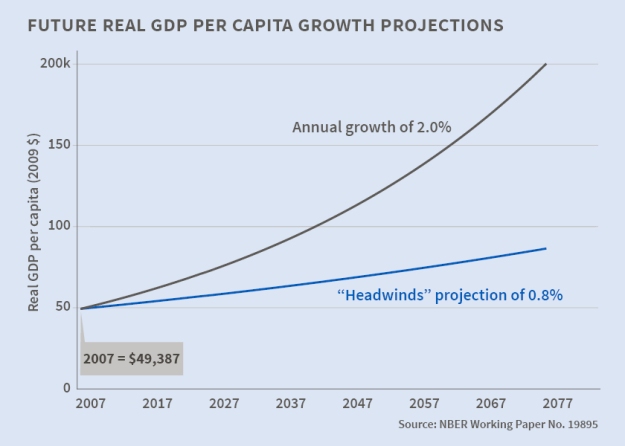
Will American remain a superpower? This graph has the answer.


Summary: Last week’s post looked at China’s rapidly slowing economy, bad news for the world economy. This post looks at the other half of the global power twins: America, and its long-term growth. Continued 2% growth in real GDP might keep us a superpower. Less than 1%, as eminent economist Robert Gordon expects, will not. The story is a bit technical, but important. {1st of 2 posts today.}

“Our real problem, then, is not our strength today; it is rather the vital necessity of action today to ensure our strength tomorrow.”

The graph that will determine if the US remains a superpower

John McAfee: We're facing a cyber war more dangerous than nuclear devastation

By John McAfee
Sep 11, 2015

This is my first article in a foreign publication that I have written since the announcement of my candidacy for US president. I would like to thus take this opportunity to address the vector of my foreign policy.

The United States government, like much of the Western developed world governments, has lost touch with the technology upon which the power, as well as the threats to national security within our government, rests. That technology is the science of cyber engineering, and the cyber-security aspects of this science have been developed into the weapons that will be used as the main offensive means of destruction in the upcoming new age of warfare.

We are on the edge of a precipice and my government is clueless - largely illiterate in the most important science to have ever existed.

The next major war will not be fought with guns, ships and missiles. It will a cyber war with far more devastation than could possibly be achieved by our combined nuclear arsenals. Or if conventional weapons are used, they are likely to be our own turned against ourselves.

Cyber War: a guide to state-sponsored digital assaults

7 September 2015

Not a month goes by without reports of a new cyber attack.

But while it's no secret either that countries across the world are beefing up both their offensive and defensive cyber security capabilities - what often doesn't get documented is how many of the major security breaches around the world are, in fact, the work of governments.

Well, not directly.

State-sponsored hacker groups have the ability to worm into media networks, major corporations, defence departments and - yes - other governments and wreak havoc.

There's even a sense of glamour now attached to the word hacker - popularised by groups like Anonymous, TV shows like Mr Robot and books such as Stieg Larsson's Millennium trilogy.

This overview is based on known attacks: there will, obviously, be others that governments have kept secret.

The Next Wave of Cyberattacks Won’t Steal Data — They’ll Change It

SEPTEMBER 10, 2015

America’s intelligence chiefs say data that goes missing may become the least of our cyber worries.
The big attacks that have been disclosed so far in 2015 involved the theft of data, and a lot of it. Some 21 million personnel records were taken from the Office of Personnel Management, likely by China, while 4,000 records, some with “sensitive” information, were stolen from the Joint Chiefs civilian email system, a theft blamed on Russia.

Patrick Tucker is technology editor for Defense One. He’s also the author of The Naked Future: What Happens in a World That Anticipates Your Every Move? (Current, 2014). Previously, Tucker was deputy editor for The Futurist for nine years. Tucker has written about emerging technology in Slate, The ...Full Bio

But America’s top spies say the attacks that worry them don’t involve the theft of data, but the direct manipulation of it, changing perceptions of what is real and what is not.

Director of National Intelligence James Clapper spelled out his concerns in written testimony presented to the House Subcommittee on Intelligence today.

NSA wants millennial talent without millennial perks

Amber Corrin
September 10, 2015 

Got talent? The kind of whiz-kid computer skills that could help the government get ahead of hacker adversaries? The National Security Agency wants you.

But you can't bring your smartphone.

This isn't a new policy for NSA, or for any high-security building in the intelligence community or even some military facilities. Whether you work there or are just visiting, when you show up you leave your phone in the glove box of your car. And if you're a millennial, your fingers probably twitch for the duration of your time inside.

The no-phone rule — and its fellow no-activity-trackers, no-tablets, no-Bluetooth-anything edicts — is a sort of emblem of the government's struggle to attract young talent lured elsewhere not only by technology access, but higher salaries and other shiny, interesting perks.

"I think we're all having the same problem. It's not just a government or industry problem — it's a holistic problem in keeping people excited and satisfied in this world," Corin Stone, NSA executive director, said Sept. 9 at the Intelligence and National Security Summit in Washington. "There are obvious downsides we hear all the time, like you can't bring a cell phone in the building. We're trying to get creative about how we emphasize the mission, what we have that others don't have … we can work on things here that you can't work on anywhere else. It's exciting and it's fun and it is, in other cases, illegal — really cool stuff."