13 June 2016

ISIS Surrounded on All Sides By Enemies in Northern Syria

The Competing Campaigns Against ISIS in Northern Syria
Institute for the Study of War
June 10, 2016
By Christopher Kozak

Key Takeaway: ISIS currently faces an unprecedented threat to its core terrain in Northern Syria from an array of competing actors. The U.S.-backed Syrian Democratic Forces surrounded the key transit hub of Manbij in Eastern Aleppo Province on June 9, threatening to sever the last remaining supply lines available to ISIS over the Syrian-Turkish Border. Meanwhile, ISIS’s stronghold of Ar-Raqqa City faces mounting pressure as both the U.S.-led coalition and pro-regime forces advance into its countryside. These combined pressures forced ISIS to withdraw from its frontlines with opposition forces in Northern Aleppo Province in order to prioritize the defense of its core terrain. Nonetheless, the degrading position of ISIS in Northern Syria is poised to ignite further conflict between local and regional actors that may jeopardize future successes. The terrain vacated by ISIS will likely host renewed competition between Syrian Kurds, opposition groups, and pro-regime forces as well as a geopolitical struggle involving Turkey, Syria, Russia, and the U.S. These conflicts could strain the international anti-ISIS coalition and stall further progress against ISIS in Syria unless the U.S. can successful navigate the conflicting interests of its allies and adversaries in the region.


Read the full post online

A Peace Plan for Syria II Options for Future Governance


Read Online


by James Dobbins, Philip Gordon, Jeffrey Martini

Download Free Electronic Document
FormatFile SizeNotes
PDF file 0.2 MB
Technical Details »
This Perspective is the second in a series in which the authors argue for practical steps aimed at reducing the fighting in Syria to provide more time for a national transition process. The ultimate goal of that process is an inclusive, unified, democratic Syria. As the international community continues to search for ways to resolve Syria's civil war, this Perspective argues that decentralization of governance could be part of the solution. Syria has a history of highly centralized state control that has stunted the country's development and contributed to the exclusion of significant parts of society. Devolution of power to localities can assist the transition process by lowering the stakes of the conflict, providing security to Syrians who have lost trust in the state, and deferring some of the fundamental issues that will require a drawn out negotiation between Syria's various factions. Some form of decentralization may also figure in any final political settlement in the event that Syrians prove unable to agree on a unitary state and the composition of a central government.

Russia, Iran, and Hezbullah in Syria: Win Today, Lose Tomorrow

http://carnegie-mec.org/2016/06/02/russia-iran-and-hezbullah-in-syria-win-today-lose-tomorrow/j0gm?utm_source=Sailthru&utm_medium=email&utm_campaign=New%20Campaign&utm_term=*Mideast%20Brief
Yezid Sayigh
Op-Ed June 2, 2016 Al-Hayat

Russia, Iran and Hezbullah must seek a genuine accommodation with the Syrian opposition and a meaningful political transition, otherwise they will have to maintain and police a sullen, nonviable post-war peace.
Russia, Iran, and Hezbullah appear increasingly confident that the U.S. is coming round to treating the regime of Syrian President Bashar al-Assad as a partner in the war against the Islamic State. More importantly, they hope to extract U.S. acceptance that Assad will not be required to relinquish the presidency as a prior condition of a political solution to the conflict, whether during or at the end of a transitional period. They believe that once the U.S. has given in, a “domino effect” will ensue as the opposition’s regional backers follow suit.

But victory may prove pyrrhic. Russia, Iran, and Hezbullah are pursuing a short-term outcome that enables them to pull out of Syria and cut their costs. But Assad will be left heading a hollowed-out state, devastated economy, and largely resentful population. His exhausted and morally bankrupt regime will possess few means to rebuild its former system of control and coercion, or even to meet the needs and expectations of its own loyalist social constituencies. A coercive outcome of the sort Russia, Iran, and Hezbullah envisage will result in a perpetually weak and unstable regime that they will have to prop up indefinitely. To avoid such an outcome, they must modify their approach to a political solution to the conflict, and seek meaningful power-sharing and a genuine transition in Syria.
In the short term, Russia, Iran, and Hezbullah have good reason to feel confident. Thanks to their help, regime forces have come close to encircling the northern city of Aleppo, consolidated their position in the south of the country, and most recently made significant advances into the besieged enclave of eastern Ghoutah near the capital Damascus. Meanwhile, the Kurdish-led Syrian Democratic Forces and Islamic State have separately pushed the armed opposition out of most of its enclave in the northern Aleppo countryside.

The Syrian opposition is being boxed in politically as well as militarily. Despite the paralysis of the Vienna talks and continued regime and Russian air strikes on civilian areas, the U.S. has threatened to withdraw support should the opposition pull out of the peace process. It has also notified the armed groups that they must abide by the ragged cessation of hostilities or lose protection from Russian air strikes, and continues to constrain their regional backers from providing greater military assistance.
Some in the opposition anticipate this may stance change as U.S. attention turns to the coming presidential elections after August. And Turkey may undertake limited ground action to end ISIS rocket attacks across the Syrian border. But even if such shifts take place, they will not transform things for the opposition. Indeed, its political and military predicament will become dire should Jabhat al-Nusra declare an emirate in northwest Syria, as reports suggest it may, and if Islamist groups affiliated to the armed opposition defect to it.

What NATO Is For

http://www.americanthinker.com/articles/2016/06/what_nato_is_for.html
June 9, 2016
By Alan W. Dowd

The upcoming NATO summit in Warsaw will complete the transatlantic alliance's transformation back to what it was built for: deterring Moscow.
The reason for NATO's return to its old mission is Russia's return to its old ways. The U.S. Air Force's Gen. Phillip Breedlove, who just recently ended his tour as NATO commander, describes Russia as "resurgent and aggressive."
Consider the record: Vladimir Putin's Russia has lopped off part of Georgia, annexed Crimea and occupied eastern Ukraine, waged cyber-war against the Baltics, threatened Poland with nuclear attack, massed troops on the borders of NATO's newest members, flouted arms treaties, and revived the dangerous Cold War-era practice of conducting mock bombing runs, buzzing Allied warships and testing Allied air defenses. There were 160 Russian incursions into Baltic airspace in 2015.
Another 2015 data point: Putin unveiled a new military doctrine focused on confronting NATO and pledging the use of Russia's armed forces "to ensure the protection of its citizens outside the Russian Federation." Given that there are five million Russians in Ukraine and a million in the Baltics – and that Putin has reserved for himself the right to determine when, where, and whether they need to be protected – this is a recipe for something much more complicated than a new cold war. As if to underscore his intentions, Putin recently reactivated the 1st Guards Tank Army, a large armored force based in western Russia equipped with 500 main battle tanks.

Between 2004 and 2013, Putin – sometimes as prime minister, sometimes as president – increased military spending 108 percent. Russia's 2015 military outlays were 26 percent larger than in 2014.
In short, even as NATO tried to build bridges to Moscow and avoided building bases in Eastern Europe, even as NATO members slashed defense spending, even as NATO offered partnership to Russia and membership to Eastern Europe, Putin was longing for the bad old days. As the Brookings Institution's Robert Kagan concludes, "[i]t is the entire post-Cold War settlement of the 1990s that Russia resents and wants to revise."
Perhaps with that goal in mind, Putin boasts, "If I wanted, Russian troops could not only be in Kiev in two days, but in Riga, Vilnius, Tallinn, Warsaw, or Bucharest."

Given Putin's record and rhetoric, it's no surprise that political leaders from NATO's easternmost members – Lithuania, Latvia, Estonia, Slovakia, Bulgaria, Hungary, Romania, Poland, and the Czech Republic – want "a robust, credible and sustainable Allied military presence in our region." To buttress their request, they cite "the aggressive Russian actions in Ukraine, including the illegal and illegitimate annexation of Crimea ... as well as Russia's military activities in our neighborhood."

War Games: Tracing the History of Cyber Security

http://knowledge.wharton.upenn.edu/article/the-secret-history-of-cyber-war/?utm_source=kw_newsletter&utm_medium=email&utm_campaign=2016-06-09
Jun 09, 2016
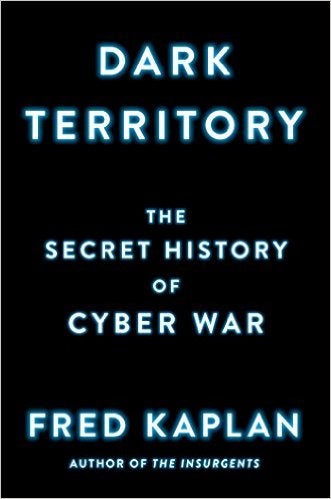
 The concept of “cyber war” goes back to the beginning of the internet, almost 50 years ago. A new book by Pulitzer-Prize-winning journalist Fred Kaplan traces the history of this topic in his new book Dark Territory: The Secret History of Cyber War.
Kaplan recently appeared on the Knowledge@Wharton show on Wharton Business Radio on SiriusXM channel 111 to talk about his new book.

An edited transcript of the conversation follows.
Knowledge@Wharton: Ever since we’ve had the concept of the internet, the thought of cyber war has been in play.

Fred Kaplan: Right. In 1967, the ARPANET was about to roll out. The ARPANET was the precursor to the internet. This was a great boon to scientific research. All the contractors of the Defense Department and labs and universities could communicate with each other on one network, instead of having to go through a zillion consoles. But there was a computer scientist named Willis Ware. He had been a computer pioneer. He was the head of the Computer Science Department at the RAND Corporation and a member of the Scientific Advisory Board at the National Security Agency (NSA). He wrote a paper. It was classified at the time. It’s been declassified since. It’s fascinating to read. He basically said, look, once you put information on a computer network — once you have online access from multiple, unsecured locations — you’re creating inherent vulnerabilities. You’re not going to be able to keep secrets anymore.
When I was doing the research for my book, I talked to the man who was in charge of ARPA [Advanced Research Projects Agency; now known as DARPA, Defense Advanced Research Projects Agency]. I said, “Were you familiar with Willis Ware’s paper?” He said, “Sure, I knew Willis.” I said, “What did you think?” He said, “Well, I took it to the team working on the ARPANET, and they said, ‘Don’t saddle us with a security requirement. Look how hard it is to do what we’ve done. It’s like telling the Wright Brothers that the first plane has to carry 20 passengers for 50 miles. Let’s do this one step at a time. Meanwhile, it’s going to be decades before the Russians can do anything like this.’” Well, it was about two and a half or three decades. In the meantime, whole networks and systems had sprouted up with no provision for security whatsoever. I look at this as the bitten apple in the digital Garden of Eden. It was something that was foreseeable, and by a small number of people, actually foreseen from the beginning; something inherent in the technology.

Knowledge@Wharton: You start the book with a transitional moment. It involves President Reagan. It involves an actual Hollywood movie, War Games, starring Matthew Broderick.

Kaplan: It’s a crazy story. It’s one of the big surprises that I came up with in the research. It’s 15 years after Willis Ware’s paper. Ronald Reagan is up at Camp David the first weekend of June in 1983. He watches a lot of movies up there. On that Saturday night, he watches War Games. This is the Matthew Broderick movie where he plays a teenage whiz kid who unwittingly hacks into the main computer at the North American Air Defense Command. Thinking that he’s playing a new, online game called Global Thermonuclear War, he almost sets off World War III. So, Reagan comes back to the White House. There’s a big meeting on Wednesday with his national security staff about something else completely. But at some point, he puts down his index cards, and he says, “Has anybody seen this movie War Games?” And nobody has. It had just come out.

“Whole networks and systems had sprouted up with no provision for security whatsoever. I look at this as the bitten apple in the digital Garden of Eden.”
He launches into this very detailed plot description. People are looking around the room like, where is this going? He turns to General John Vessey, who is the Chairman of the Joint Chiefs of Staff. He said, “General, could something like this really happen?” The general says, “I’ll look into that, Mr. President,” like generals do. He comes back a week later and says, “Mr. President, the problem is much worse than you think.” This leads, 10 months later, to the presidential signing of the first national security directive on communications and computer security. It reads very much like government papers you read today: “Our computer systems,” which were then just going up, “are vulnerable to electronic interference and interception by foreign powers, by criminals.” But then it takes an interesting step.

This directive was essentially written by people at the NSA because they are the only ones who know anything about this. They write it so that the power to regulate and set the standards for all computers in the United States is controlled by the NSA. Some people on Capitol Hill don’t much like this.

US CyberCom is going to launch attacks against critical American infrastructure for an entire month

http://www.businessinsider.com/us-cybercom-trains-for-attack-2016-6?IR=T
Bill Gertz, The Washington Free Beacon
Jun. 6, 2016,
REUTERS/Kacper Pempel
The US Cyber Command will conduct large-scale military exercises this week simulating cyber attacks against critical US infrastructure, and the war games will highlight the growing threat posed by foreign states capable of crippling the electrical grid and financial networks through digital attacks.
The exercise, known as Cyber Guard 16, is the latest annual war game involving scores of military personnel and civilians at the Fort Meade-based command. Other players will include officials from the Pentagon, FBI, Homeland Security Department, and private industry.
“Cyber Guard offers a fascinating, realistic (but not predictive) scenario of a cyber attack of significant consequence on US critical infrastructure,” Maj. Gen. Paul Nakasone, head of the command’s National Mission Force, said last week.
Nakasone, whose mission team is tasked with defending military networks, also is in charge of the military unit that would be called in to counter and respond to a cyber attack on elements of critical infrastructure.
The month-long exercise is an example of both interagency security cooperation as well as working with private sector stakeholders in dealing with cyber threats, he told Federal News Radio in an online chat.

A command spokesman declined to provide details on the Cyber Guard exercise and referred questions to a fact sheet produce for last year’s version. The exercise ends June 29. Last year, 100 organizations from government, academia, industry, and allied nations took part at the Joint Staff Suffolk Complex, a high-security war-gaming facility in Suffolk, Va.
The command’s cyber warfare game comes amid concerns that the federal government is not doing enough to protect the electrical grid, arguably the most critical of the 16 different elements of critical infrastructure, as most other elements require electricity to operate.
Currently, the federal government is relying on a private consortium of companies that appears to be playing down threats to the power grid from cyber and other attacks.

United States Cyber Command U.S. Air Force/Technical Sgt. Cecilio Ricardo
The non-profit North American Electric Reliability Corporation is the official organization designated by the federal government to be in charge of setting security standards for electrical networks. It is responsible for making sure electrical owners and operators of the bulk power system are taking the steps needed to protect the lattice of power companies stretching throughout the United States, Canada, and Baja California, Mexico.
The private regulatory authority was given the task of setting grid security standards by the Federal Energy Regulatory Commission, or FERC. Testimony before the commission last week reveals that current industry standards for reporting cyber security incidents are allowing power companies to game the system to underreport potential attacks.
In 2014, for example, the non-profit corporation reported only three cyber security incidents, and a draft of the forthcoming annual reliability report is said to report zero incidents.
The consortium’s low numbers conflict sharply with those of the Department of Homeland Security’s Industrial Control Systems Cyber Emergency Readiness Team that monitors infrastructure cyber incidents.

Infographic Of The Day: How User Behavior Is Changing On The Internet

There has been a phenomenal growth in the use of the internet and it is set to increase in the future.


We have also seen significant changes in the way people are using the internet. According to a survey by AddThis, more people prefer mobile phones over desktop computers to search things online. This change is due to the mobile revolution and Google’s move to make the websites responsive and mobile friendly.

[click here to enlarge infographic]


Source: http://infographixdirectory.com/technology/user-behavior-changing-internet-infographic/

Click here for Historical Infographic Post Listing


There has been a phenomenal growth in the use of the internet and it is set to increase in the future.

We have also seen significant changes in the way people are using the internet. According to a survey by AddThis, more people prefer mobile phones over desktop computers to search things online. This change is due to the mobile revolution and Google’s move to make the websites responsive and mobile friendly.
[click here to enlarge infographic]

Source: http://infographixdirectory.com/technology/user-behavior-changing-internet-infographic/
Click here for Historical Infographic Post Listing

Not Forgotten

http://www.nytimes.com/interactive/projects/cp/obituaries/archives/david-petraeus
By The New York Times
Since 1851, more than 200,000 people have been the subjects of obituaries in The New York Times. Join us this summer as we revisit many of these memorable lives.
Generals Petraeus and Grant. 
If you could have dinner with one person who is no longer with us, and whose obituary was published in The New York Times, who would it be, and why that person? Not Forgotten is asking that question of a variety of influential people this summer in a series of posts called Breaking Bread.
Today we have David H. Petraeus, a former C.I.A. director and the highest-profile general from the wars in Iraq and Afghanistan.
I would like to host General Grant for dinner at the Lotos Club, one of the oldest literary clubs in the United States (founded in 1870, early in President Grant’s administration). Besides celebrating writers and those in the arts, the club, in Midtown Manhattan, has also recognized military and government leaders (including the former Defense Secretary Robert M. Gates and me) at its annual state dinners.
Hosting Grant — a great writer as well as a great leader — at the Lotos Club would thus be very fitting. He would feel welcome there.
Coincidentally, the lovely old townhouse that houses the club, on East 66th Street just off Fifth Avenue, is next door to the address at which Grant lived the final years of his life.

I have long admired Grant and felt that some historians were unduly critical of him at various points in the last century (although more recent biographies have once again recognized his extraordinary qualities and how fortunate we were to have him in uniform during the Civil War, in particular).
In my view, Grant stands alone among American military leaders as hugely impressive at all three levels of war: tactically (as shown in his capture of Forts Henry and Donelson in Tennessee early in the war); operationally (the Vicksburg victory in 1863, one of the greatest operational-level campaigns of all time); and strategically (devising and overseeing the first truly comprehensive strategy for the Union forces to defeat Robert E. Lee’s Confederate Army).

In January 2007, a historian at the Command and General Staff College gave me a copy of “Grant Takes Command,” a 1968 history by Bruce Catton, as I was preparing to head to Iraq to command the troop surge. I read it during the tough early months of that endeavor, and I found Grant’s example inspirational.
Especially impressive was his sheer fortitude in the face of congressional sniping, press criticism, political pressures, battlefield setbacks and terrible casualties.
Most important, as the first Union commander to come up with a comprehensive strategy to defeat the Confederate forces, he was the first to give battle to Lee and not retreat back to Washington immediately afterward. Rather, he wrote to President Abraham Lincoln in 1864 that he intended “to fight it out all summer on this line if that’s what it takes.” Photo

Drones Have Now Become Essential Part of U.S. Warfighting Capabilities

Drones emerge from shadows to become key cog in US war machine
Reuters
June 7, 2016
KANDAHAR, Afghanistan/CREECH AIR FORCE BASE, Nevada, June 7 W hen U.S. drones obliterated a car carrying Taliban leader Mullah Akhtar Mansour last month, it was the kind of targeted killing that unmanned aircraft are best known for.
But 15 years after a drone first fired missiles in combat, the U.S. military’s drone programme has expanded far beyond specific strikes to become an everyday part of the war machine.
Now, from control booths in the United States and bases around the Middle East, Afghanistan and parts of Africa, drone crews are flying surveillance missions and providing close air support for troops on the ground.

“In the wars we fight, this is the future,” said drone pilot Lieutenant Shaw, as he stood in a hangar at the Air Force’s drone base in the southern Afghan city of Kandahar.
Crews spoke to Reuters on condition that only their first names and rank be used to identify them.
The increased use of Unmanned Aerial Vehicles (UAVs) in a wide range of battle applications comes as the United States looks to reduce the number of soldiers fighting abroad.

The U.S. military declined to provide statistics breaking down drone activity into types of missions, but dozens of interviews with people working in the secretive programmes show UAVs have become an integral tool on the battlefield.
That is likely to raise further objections from critics who say drones often miss their intended targets, can only partly relay what is happening on the ground and encourage warfare with impunity waged by people at computer screens far from danger.
In Afghanistan, the United States has around 9,800 troops left and plans to cut the level to 5,500 by early 2017.
At its peak a few years ago, the U.S. military had around 100,000 soldiers there, yet the dramatic decrease does not mean the conflict is winding down. In fact, the Taliban insurgency is as potent now as at any time since 2001.

DRONES TAKING OVER
As part of its expanding programme, the Air Force aims to double the number of drone squadrons over the next five years.
Even some proponents, like retired Lieutenant Colonel T. Mark McCurley, a former Air Force drone pilot, say over reliance on remote killing and electronic intelligence has hurt efforts on the ground.
“Too often, remotely piloted aircraft are being used as a tool to wantonly kill individuals, rather than as one of many tools to capture and shut down whole terrorist networks,” he said.
Central to the shift towards remote operations is Afghanistan, where weak local forces, a dwindling troop presence and rugged terrain have made it something of a testing ground.
Drones there log up to eight times as many flight hours as the few remaining manned fighter aircraft. They also release more weapons than conventional aircraft, Reuters reported in April.
For the first time, the top Air Force general in the country was trained as a drone pilot before he deployed, a move he said reflected the importance of unmanned aircraft in the broader military mission.
“Our airmen are flying persistent intelligence, surveillance, reconnaissance, and strike missions all across Afghanistan,” Major General Jeff Taliaferro told Reuters in Kabul, referring to the drone programme.
“They’re performing everything from counterterrorism to base defence, and really it’s a capability a lot of our missions have come to rely on.”

RAPID EXPANSION
The latest generation of drones carries more and bigger weapons and an expanding payload of hi-tech sensors designed to handle a wider range of missions for the conventional military.
The number of hours flown by the Air Force’s newest attack drone, the MQ-9 Reaper, more than doubled globally between 2010 and 2015, to nearly as many hours as F-16 fighter jets, according to statistics from the Air Force Safety Center.
In a plan announced late last year, the Air Force proposed roughly $3 billion in funding to expand its attack drone force further, adding 75 of the latest Reaper aircraft.

12 June 2016

** Don't Be Scared to Squeeze Pakistan

http://nationalinterest.org/feature/dont-be-scared-squeeze-pakistan-16518?page=show
The U.S. toolbox is brimming with $20 billion in carrots but desperately lacking in sticks.
Jeff M. Smith
June 8, 2016
Pakistan returned to the headlines last month, after a U.S. air strike eliminated Afghan Taliban commander Mullah Mansour inside Pakistani territory. It marked the first ever U.S. strike on an Afghan Taliban leader inside the group’s Pakistani sanctuary of Baluchistan, which had been off-limits to U.S. drones as part of an informal arrangement with Islamabad. Washington has touted the drone strike as an important victory for the U.S. war effort in Afghanistan. However, it will prove symbolic and short-lived unless it prompts more fundamental reform of America’s Pakistan policy. To effect real change, Washington must increase pressure not just on the Taliban residing in Pakistan, but on Pakistan itself.

After a U.S. military drone eliminated commander Mullah Mansour as he traveled by taxi to the Afghan Taliban headquarters in Quetta, the militant group moved swiftly to appoint a successor. The sons of Mullah Omar and Jalaluddin Haqqani, the late leaders of the Afghan Taliban and the Haqqani Network, were considered and quickly dismissed due to their youth and inexperience. A more obscure religious figure, Mullah Haibatullah Akhundzada, arose as the consensus candidate. Analysts have now turned their attention to what Akhundzada’s appointment means for the nascent Afghan peace process, and whether the strike was a “one-off” or the catalyst for an expansion of America’s drone campaign into Baluchistan.
While these are important tactical questions, they’re of limited value if the underlying strategy remains flawed. A more consequential question is why Pakistan’s harboring of yet another terrorist commander has been met with a collective shrug by the United States and the international community. It’s an uncomfortable reminder that Pakistan’s “double game” has become old news. Accepted wisdom. Permitted behavior. In Washington, anger has been dimmed by exhaustion, with many now hoping to reach a modicum of stability in Afghanistan and put the whole messy affair behind them. History, however, has been unkind to great powers that fail to learn from their mistakes.

To be clear, few in Washington are under any illusions about the extent of Pakistan’s perfidy. Hillary Clinton has warned that Pakistan “poses a mortal threat to the security and safety of our country and the world.” In his memoir, Defense Secretary Robert Gates recalled how “in every instance” the United States shared intelligence with Pakistan about a target, “the target was forewarned and fled” or Pakistan launched a botched operation of its own. “I knew they were really no ally at all,” he explained.
America suffers not from a lack of information, but from a lack of resolve. And a lack of perspective. They say the greatest trick the devil ever pulled was convincing the world he didn’t exist. The greatest trick Pakistan ever pulled was convincing America it only had two choices: tolerate and bankroll Pakistan’s double game, or stir an unstable cocktail of Islamist extremism and weapons of mass destruction.

What the United States and India can do together on the South China Sea

http://www.brookings.edu/blogs/order-from-chaos/posts/2016/06/10-us-india-south-china-sea-liow?utm_campaign=Brookings+Brief&utm_source=hs_email&utm_medium=email&utm_content=30497484&_hsenc=p2ANqtz-9YY07Dt8SOVm6ijd0sQQHgYliIOVDSPazRGFAKdoQECADDnT9wXIDA_31JHA8JHhpzJ0KGqOoStmqVk5NGU1NcdMIWBg&_hsmi=30497484
Joseph Chinyong Liow | June 10, 2016

Editors’ Note: Although the South China Sea is a source of potential instability for the Asian region, writes Joseph Liow, disputes there also offer an opportunity for greater cooperation between the United States and India in contributing to the management of regional order. This post is excerpted from a new Brookings India briefing book titled “India-U.S. Relations in Transition.”
While a source of potential instability for the Asian region, the South China Sea disputes also offer an opportunity for greater cooperation between the United States and India in contributing to the management of regional order.

The United States has reiterated its neutrality on the matter of competing claims in the South China Sea. Nevertheless, by way of former Secretary of State Hillary Clinton’s statement at the 2010 ASEAN Regional Forum meeting, the United States has also stated that the South China Sea is a matter of national interest. Specifically, the U.S. interest in the South China Sea is related to stability, freedom of navigation, and the right to lawful commercial activity in East Asia’s waterways. The declaratory policy on the South China Sea has gathered strength with the Obama administration’s strategy of a "pivot" (or "rebalance") to Asia. This declaratory policy has been accompanied by a deepening of U.S. diplomatic, military, and economic ties with key Southeast Asian claimant states, notably the Philippines and Vietnam. Unilaterally, the United States has also adopted a more robust position on the South China Sea. This is evident in its conduct of several high-profile freedom of navigation operations (FONOPs) after a hiatus of two years, designed to demonstrate the commitment of the United States to stability in the area.


Chinese dredging vessels are purportedly seen in the waters around Fiery Cross Reef in the disputed Spratly Islands in the South China Sea in this still image from video taken by a P-8A Poseidon surveillance aircraft provided by the United States Navy May 21, 2015. Photo credit: U.S. Navy, via Reuters.

While the South China Sea is a matter of national interest for the United States, its explicit interest is freedom of navigation and unimpeded commerce. Both of these are things China has guaranteed although, granted, both parties have still to arrive at agreement as to acceptable military activities under the rubric of freedom of navigation, especially in the South China Sea. Commerce however, has little if anything to do with the concerns that both parties have. Underlying their differences on this matter is their competing interpretations of the United Nations Convention on the Law of the Sea (UNCLOS) in relation to military activities within a state’s exclusive economic zone (EEZ). Whereas Washington has taken the position—despite not having ratified UNCLOS—that military activities in EEZs are permitted under the Convention, Beijing has opposed this.

Memo To Lutyens Elite: Time To Move To States If You Want To Stay Relevant

http://swarajyamag.com/politics/memo-to-lutyens-elite-time-to-move-to-states-if-you-want-to-stay-relevant
R Jagannathan
June 9, 2016,

The Sonia-Manmohan Singh regime was probably the last one to rule India from imperial Delhi.
Narendra Modi and economic realities are forcing a devolution of power to states.
It is time we acknowledged this reality and dethrone Delhi’s commentariat from its pedestal.
The US gets it, but India’s media and intelligentsia don’t. Under Narendra Modi, India is beginning to become a true federation, but our media is still focused on Delhi. We still expect Delhi to do things and offer answers that only states can deliver.
A Times of India report yesterday (8 May) said that the US wants to hold a “chief ministers’ conclave” to promote commerce and investment between Indian states and US businesses. The report says “the conclave is aimed at offering a platform for ‘leading Indian states to showcase the advantages of doing business in their states and highlight recent business environment reforms.’”
Way to go. After the 14th finance commission ensured that 62 percent of total resources accrue to states, and especially after Modi took over, the emphasis is on passing on more powers – fiscal and regulatory - to the states. The reason why foreign investment has been less forthcoming in the past is because the Centre has stood in the way, or vice-versa - whenever the centre pushed investments, projects got embroiled in state politics and red tape. Barring basic nods for an investment, the bulk of the clearances are today decided by states – land, power supply, labour laws, etc.

A few hurdles still remain. For one, the Foreign Investment Promotion Board (FIPB), originally created for facilitating inward investments, no longer serves any purpose. Once basic rules – who can invest, where they can invest and how much – are clear, it is states that have to do the heavy lifting.
The Reserve Bank, which is directly under central jurisdiction, needs to reduce the paperwork involved in inward and outward remittances, since India still does not have capital convertibility.
Once investment and capital movements are regulated by transparent rules and regulations, there is no need for the centre to be an intermediary in the process.
The only area the centre needs to stand guard on is fund flows and partnerships that can have an impact on national security. This is not a job that can be delegated to states. But this is something to be monitored covertly and through a watch on money directions. Cyber security also needs very strong central investments.
India’s growth has to be driven by states, and the centre’s role will increasingly reduce to defence, foreign affairs, fiscal and monetary policy, and communications.
While the process of true federalisation is far from complete, the direction is clear. Delhi will increasingly be less relevant to the country’s progress.
This process will make the Lutyens elite redundant, unless they want to pontificate to empty benches.

Whether it is growth or law and order, investment or poverty, the place to monitor these developments is at the state level. We produce thousands of economists, but few real experts at the level of states, both in macroeconomics and microeconomics. Who, for example, can give us a study on what a given change in taxes will do to employment in Odisha?
It is time to dismantle Delhi’s ministerial bhavans and move them to the states, with only a small secretariat relevant to coordination and dissemination of information being retained in the national capital.
The White House seems to have got the general idea. Wonder when the rest of the international media and our own Lutyens mafia will realise where the real action is. On television shows, questions on jobs, law and order, and growth are still being asked of the centre. The answers will come less from Delhi and more from the states in future. It is also important to ensure that state parties are questioned more closely. They have gotten away with murder because of the media’s Delhi obsession.
The Sonia-Manmohan Singh regime was probably the last one to rule India from imperial Delhi. Narendra Modi and economic realities are forcing a devolution of power to states. It is time we acknowledged this reality and dethrone Delhi’s commentariat from its pedestal. They know zilch about the real India.
Hopefully, the shift of power away from Delhi will spare us growth-destroying laws like the Land Acquisition Act or one-cap-fits-all social legislation like the Right to Food and the Right to Education. They have caused more damage than anything else.

National Optical Fibre Network: Why Modi’s Pet Project Is Languishing

Swarajya Staff
June 9, 2016,
Digital India is not possible until the infrastructure for that is in place
While the Modi government has sped up the projects related to it, there is still a long, long way to go
Prime Minister Narendra Modi’s pet project Digital India has nine pillars. India Program National Optical Fibre Network (NOFN) is one of the most important of those and is also the building block of the project. Without NOFN, Digital India cannot be realised.
Under NOFN, the government aims to connect 2,44,729 Gram Panchayats (GPs) in the country through optical fibre cable (OFC). Out of these, 97,480 had to be covered in Phase-1 by 31 March. Now, the government has set 31 December as the new deadline. But it looks unlikely that even this will be met.
The project was rolled out by the UPA regime in October 2011 and was expected to be complete within two years. But here we are. Even after five years, two years of Modi sarkar included, the project is languishing.

Present situation
This Economic Times report says that considerable progress has been made under the current government. The paper quoted some Telecom ministry officials saying that “only 500 km of cable had been laid when the Modi government assumed power in May 2014. And that the figure is now over 1,30,000 km. However, only 7,000 GPs have received final connectivity.”
But consider the magnitude of the task still left: Out of 97,480 GPs, only 7,000 GPs have been connected. So, the Ministry of Communication and Information Technology will most likely miss the December target also.

The culprits
To execute the project, the UPA government had created special purpose vehicle, Bharat Broadband Network Limited (BBNL), as a Public Sector Undertaking (PSU). Presently, three state-run executing agencies — Bharat Sanchar Nigam Ltd (BSNL), RailTel and Power Grid Corporation of India Limited (PGCIL) are working on the project under the supervision of BBNL. In the first phase, these three have been entrusted to lay the OFC in 84,366 GPs, 8,678 GPs and 7,156 GPs, respectively.
They are running way behind their targets. RailTel is slowest in implementation. By 2015 end, BSNL had laid 37,822 km of OFC (22 per cent of its target), PGCIL laid 3,110 km of OFC (14 per cent of its target), but RailTel could lay only 1,717 km of OFC (8 per cent of its target).
Frustrated with the slow progress made by RailTel, the Minister Of Communication and Information Technology, Ravi Shankar Prasad had shot a letter to Railway Minister Suresh Prabhu early last year. The concern was also conveyed to the RailTel’s CMD too.
Recently, there has been some progress in RailTel’s execution. While it had laid only 1717 km of OFC till May 2015, the figure stood at 6,152 km in March this year which roughly translates to laying 500 km of OFC per month. But this isn’t enough. One DoT official, in his letter to RailTel, has exhorted the company to expedite the work and instructed it to lay at least 1,000 Km of OFC per month.

Has India Unveiled New Pakistan Policy In Its Tough Talk?

http://swarajyamag.com/politics/has-india-unveiled-new-pakistan-policy-in-its-tough-talk
Hari Om Mahajan
June 8, 2016,

The previous week witnessed Union Home Minister Rajnath Singh and Ministry of External Affairs (MEA) talking tough with Pakistan.
It was after months that both the Foreign Ministry and Home Ministry spoke in one voice creating an impression that there the concerned ministries were working in unison and that New Delhi now meant serious business.
The moral of the story is that the New Delhi’s new foreign policy towards Pakistan has the potential of undoing all the wrongs committed by the Indian political class after Jammu and Kashmir acceded to India.
The previous week witnessed Union Home Minister Rajnath Singh and the Ministry of External Affairs (MEA) talking tough with Pakistan. It all started with the MEA spokesperson Vikas Swarup’s 3 June statement on Pakistan, Kashmir issue, political status of Jammu and Kashmir vis-ร -vis India and Pakistan-occupied-Jammu and Kashmir (POJK).

Talking to reporters, Swarup, inter-alia said:
The Kashmir issue was not the main cause of tensions between the two countries and externally sponsored terrorism and POJK were the central issues. we completely reject the insinuations by the vested interests (read Pakistan) against India which has rightful sovereignty over the entire State of Jammu and Kashmir…Pakistan needs to vacate its illegal occupation of parts of Jammu and Kashmir.
Vikas Swarup didn’t stop just there. He rejected outright the Pakistani sinister contention that Kashmir issue had international dimensions. “We stress that there are no global dimensions of the Kashmir issue except in the minds of those who (in this case Islamabad) seek to needlessly internationalise a bilateral matter” (The Hindu, 3 June).
And by bilateral matter, he clearly meant the political future not of this part of Jammu and Kashmir but POJK and Gilgit-Baltistan, which have been occasionally witnessing anti-Islamabad upheavals for quite sometime now with radicals in both the regions of Jammu and Kashmir State not only demanding independence from Islamabad but also on occasions raising pro-India slogans.
Stop interfering in the internal affairs of India, end cross-border terrorism and vacate the aggression were the three fundamental upshots of the Vikas Swarup’s plain-speaking.

And the very next day, Union Home Minister Rajnath Singh went a step further. He, said:
India will not talk on Kashmir with Pakistan. If at all India and Pakistan talk, the talks only will be on POJK and Gilgit-Baltistan and not on this part of Jammu and Kashmir. The world knows that the Pathankot airbase terror attack was the handiwork of fully trained terrorists. While India allowed Pakistani intelligence team to visit Pathankot airbase to see for itself what was done by terrorists to enact a major anti-India act, Islamabad has not reciprocated”(Dainik Jagran, 5 June). Rajnath Singh made this statement in Pathankot while addressing an intellectuals’ meet.
There was no ambiguity in what Rajnath Singh and Vikas Swarup at two different places within a short span of two days. It was after months that both the Foreign Ministry and Home Ministry spoke in one voice creating an impression that there the concerned ministries were working in unison and that New Delhi now meant serious business. In fact, it was for the first time in more than six decades that the Union Home Minister and the Indian Foreign Office said what they said.
What they said about Pakistan, Kashmir issue, POJK and related issues did suggest that the attitude of New Delhi towards Pakistan had undergone some change. It’s no wonder then that what they said surprised many. The reasons were obvious.

One of the most disturbing reasons was the manner in which New Delhi dealt with Pakistan after the 10 July, 2015 Ufa (Russia) India-Pakistan joint statement. Between 10 July, 2015 and 1 June, 2016, when Pakistan President Mamnoon Hussain said that India was “running away” from talks, the New Delhi’s Pak policy was known more for flip flops than anything else. There is no need to catalogue these flip flops as they are too many.
Suffice it to say that the nation would appreciate the Modi dispensation if it held its ground firmly and didn’t kneel under any pressure whatsoever.What Rajnath Singh and Vikas Swarup said would rattle Pakistan is a foregone conclusion. Indeed, the unequivocal stand of New Delhi has sent a strong message to Islamabad.

Future Ready Combat Vehicle (FRCV): Need for Integrating Information Component

Rahul Bhonsle
Jun 9, 2016

Today a year has gone by since the issue of the Future Ready Combat Vehicle (FRCV) Request for Information (RFI) by the Directorate General of Mechanised Forces (DGMF) of the Indian Army technically known as the Integrated HQ of Ministry of Defence (Army).
The project is to be implemented in three stages Design, Prototype Development and Production. Presently only the first or the Design stage is under consideration. The three stage process is a part of the Defence Procurement Procedure “Make,” category. This is different from the Buy Indian Design and Developed Make category which is priority one in the Buy and Make category of the DPP 2016.
The RFI of 10 June 2015 elaborated the operational requirements and design philosophy relevant to the Design Stage and it is anticipated that the subsequent RFIs will be issued for Stage 2 and 3 though in case adequate homework had been done all three could have been given out simultaneously but that is a moot point.
The main issue is the platform centric rather than information centric approach in the design criteria which restricts the designer to provide sub optimal solution to the next generation tank for the Indian Army, but first a review of the RFI.

The RFI calls for designing a base platform for the Main Battle Tank as a replacement of the T 72 tanks in the Indian Army. This will be a modular concept which can meet the requirements of variants which could be from a tracked light tank to an armoured ambulance. Essentially the chassis will remain the same while the superstructure could vary depending on the numbers and usage desired. The modular concept is not new as at present for instance the Arjun chassis has been used for varied purposes such as the Bhim artillery gun.
The RFI is essentially to select tank design bureaus and agencies which would include the Defence Research and Development Organisation (DRDO) who will be going through a design competition to be selected by a Design Selection Committee. The winning design(s) will carry suitable cash prize(s). Thus the design will be partially gratis. The agency/bureau whose designs are selected will work on the project through the prototype and the Limited Series Production (LSP) stages thereby ensuring providing detailed inputs in the production stage as well. The Design Selection Committee (DSC) is expected to have apart from officers of the DGMF tank design experts from the DRDO and other agencies. Private experts also need to be called up if not as members but to render advice to the DSC.

The basic consideration for selection is nothing very extraordinary, possibly those who respond to the RFI will be given additional information. A number of Seminars and meets have already been held in which the requirement of the RFI would have been expanded.
The FRCV is required to be a `Medium Tank’ which can operate on India’s Western borders across the present category of military bridges and the existing civilian road infrastructure. This will place the FRCV in the 50 tonne category.
Engagement ranges surprisingly are required to be well matched to the contemporary MBTs whereas the actual requirement could have been worked out given the available visibility in the plains and the desert sector. This is the advantage of designing a tank for Indian conditions where the ranges which have already been caliberated in the plains and the desert sector varying between 2500 to 4000 metres should dictate the design. Lack of specific range being provided may result in a more generic criteria being developed, as there is still time this needs to be gone into.

White House Planning to Expand Use of Airstrikes in Afghanistan

Official: U.S. moving to expand strikes in Afghanistan
Associated Press
June 9, 2016
WASHINGTON — After months of debate, the U.S. is close to a decision to expand the military’s authority to conduct airstrikes against the Taliban as the violence in Afghanistan escalates, a senior U.S. defense official said Thursday.
The official said a final decision has not been made, but the discussions are in their final stages. There is a broad desire across the Obama administration to give the military greater ability to help the Afghans fight and win the war. The official said the U.S. is likely to expand the authority of U.S. commanders to strike the Taliban and do whatever else is necessary with the forces they have to support the Afghan operations.
The 9,800 U.S. troops still in Afghanistan, however, would still not be involved in direct combat.
The official was not authorized to talk publicly about the discussions so spoke on condition of anonymity.

The expected decision comes as the Afghans struggle with a resurgent Taliban, particularly in the south. But it is fraught with political sensitivities because President Barack Obama had made clear his commitment to get U.S. forces out of Afghanistan. That effort, however, has been stalled by the slow pace of the development of the Afghan military and the resilience of the Taliban. The Taliban are refocusing their attention mostly on the southern provinces of Helmand, Kandahar and Uruzgan, according to U.S. and Afghan military officials, although the insurgents also have struck elsewhere, such as in Kunduz province in the north, where they overran and held the provincial capital for a few days last fall.
The results have been daunting: The U.N. says 3,545 Afghan civilians were killed and 7,457 wounded in 2015, most of them by the Taliban.
The U.S. has continued to conduct counterterrorism strikes against al-Qaida and Islamic State militants in Afghanistan. But strikes against the Taliban were largely halted at the end of 2014, when the U.S.-led coalition’s combat role ended. Limited strikes have been allowed in cases of self-defense or when Afghan forces were in danger of being overrun. Gen. John Nicholson, the top U.S. commander in Afghanistan, has discussed with Defense Secretary Ash Carter his recommendations for moves the U.S. can make to further assist the Afghans. And there have been ongoing conversations with the White House.
Pentagon press secretary Peter Cook, asked Thursday whether the administration was looking at expanding the U.S. military’s authorities to strike the Taliban more broadly, said: “In every step of our review of Afghanistan, the question of what’s the best way to use our forces is something we’re constantly looking at. It’s also in the same sense that we’re looking at the number of troops. We are always looking at the authorities question and the best use of our troops.”

Stability Projections and Trends

http://www.security-risks.com/security-trends-south-asia/pakistan/pakistan-%E2%80%93-stability-projections-and-trends-5702.html

SR Research , Jun 8, 2016
Pakistan – Stability Projections and Trends[1]

Political
Balanced relationship Ruling PML N and Opposition Parties – Negative [Post Panama Papers Revelations]
Balanced civil military relations - Negative.
Military role in politics and governance - Negative.

Security
Conflict management tribal areas Khyber Pakhtoonwa, Federally Administered Tribal Areas and Balochistan – Positive.
Counter Terrorism Punjab, Sindh – Positive.
De-criminalisation Karachi – Positive.

Geo Political/Regional
Supporting stability in Afghanistan – Negative.
Conflict de-escalation India - Negative

Economic
GDP Growth - Positive
[Real GDP growth at market prices in percent, unless indicated otherwise]
2015 2016 2017 2018
5.5 5.5 5.4 5.4
4.8 4.1 4.5 (CY) – Projections June 2015.
5.5 5.5 5.4 5.4
6.0 3.7 4.5 (FY) – Projections June 2015.

[Estimates as per World Bank Report GLOBAL ECONOMIC PROSPECTS Chapter 2.5 JANUARY 2016]
As per the Asian Development Bank Outlook for 2016, GDP growth is expected to accelerate modestly to 4.5% in FY2016 and 4.8% in FY2017, assuming continued macroeconomic stability, expected improvement in energy supply, and planned infrastructure investment tied to an economic corridor project linking Pakistan with the People’s Republic of China (PRC). Further implementation of structural reform will consolidate recent gains in macroeconomic stability and improve the investment climate amidst the improving security situation, especially in Karachi, the commercial hub of the country. Growth in industry is expected to be driven by strong expansion in construction and continued moderate expansion in mining, utilities, and manufacturing. Growth in large-scale manufacturing accelerated to 3.9% in the first half of FY2016 from 2.7 % in the same period of last year, supported by low prices for raw materials, improved gas and electricity supply, and expanded construction, as well as lower interest rates. Agriculture is likely to continue to grow only moderately, as cotton output is projected to fall because of heavy rains in July 2015 and much lower global cotton prices. However, continued strong expansion in livestock, which accounts for over half of agricultural production, will partly offset reductions elsewhere. Challenges for export growth are generally weak external demand, growth moderation in the PRC, Pakistan rupee appreciation against the euro, lost textile market share to new competitors, and unfavourable terms of trade for exports with little value added. Persistent rupee appreciation, by 20% in real terms over the past 2 years, has adversely affected export competitiveness. [i]

[UPDATED 19 May 16. Indicative measures based on open source information for the purpose of debate on security]

[1] Projections are positive indicators that if achieved could lead to enhanced effectiveness and stability in key vectors such as politics, governance and so on. These are prescriptive based on information from primary sources and analysis of open sources. Trends indicate possibility or otherwise of projections identified as positive, negative or uncertain and are indicated against each vector. Sources based on which trends have been assessed are included in detailed assessments provided to subscribers. FOR DETAILED ASSESSMENT AND FUTURE TRENDS SUBSCRIBE TO PAKISTAN, DAILY WEEKLY OR MONTHLY BRIEFS. EMAIL officemail@security-risks.com.

[i] Asian development outlook 2016. Asia’s potential growth. Mandaluyong City, Philippines: Asian Development Bank, 2016. Page183-185.

A Bloody Setback for China’s Africa Surge Beijing learns that peacekeeping is dangerous

https://warisboring.com/a-bloody-setback-for-chinas-africa-surge-
by KEVIN KNODELL
On May 31, a rocket attack in the Water Tower neighborhood of the Malian town of Gao struck Chinese peacekeepers. The attack killed 29-year-old First Sgt. Shen Lianlian and injured several of his fellow soldiers. A separate strike the same day killed one French national and two Malians.
Beijing dispatched an investigative team of soldiers and diplomats to Gao. China’s ambassador to Mali, Lu Huiying, told Chinese media the team is to assist the United Nations as it probes the attack.
The U.N. peacekeeping mission in Mali is currently the most dangerous in the world.
In addition to monitoring the shaky detente between the Malian military and northern Taureg rebels, peacekeepers must contend with Al Qaeda in the Islamic Maghreb. The terrorist group is a wildcard that doesn’t play by any of the rules the other actors do.
Eighty-one peacekeepers have died in Mali since the mission began in 2013. Shen is the first Chinese fatality.
 
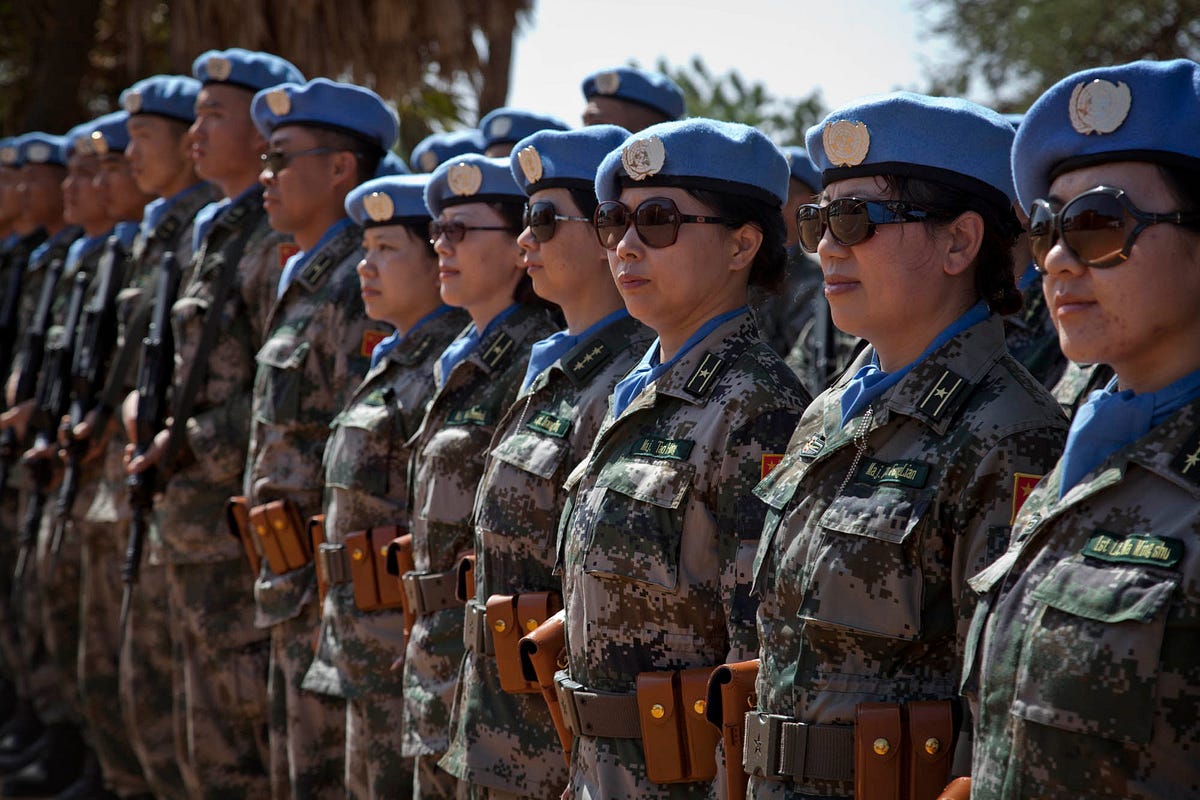
Historically, the Chinese military has sent medical personnel and engineers to Africa in support roles. However, the nature and structure of China’s peacekeeping missions are changing — in both size and the ability to fight.
Beijing’s deployment to Mali in 2013 brought a much larger combat component than previous Chinese peacekeeping missions.
In 2015, China deployed an infantry battalion to South Sudan. It is Beijing’s largest troop deployment — combat ready or otherwise — to a U.N. mission to date. The 700-troop contingent is equipped with drones, armored fighting vehicles, mortars and heavy machine guns.
In May 2015, the Chinese troops got their first taste of action when they intervened to stop a riot in one of three refugee camps near their barracks in the South Sudanese capital of Juba. The riot resulted in two deaths and around 100 injuries before the Chinese troops stopped it.
“China has gone from being a nation that voiced its opposition to international peacekeeping efforts to one that has committed a fully equipped infantry battalion, whose troop strength and capabilities equal that of a reinforced battalion in time of war,” analyst Cindy Hurst wrote in a special essay the May 2016 issue of O.E. Watch, the monthly newsletter of the U.S. Army’s Foreign Military Studies Office.
“This change of heart has many observers questioning China’s possible intentions and motives.”
 
Chinese officials typically tout a policy of non-interference in the politics of African nations. However, there are occasional signs of shrewd politicking.
After the Liberian civil war, China deployed military engineers to build roads and infrastructure in the small west African Nation — conspicuously after Monrovia dropped its diplomatic recognition of Taiwan.
Many commentators have been particularly critical of Chinese policy in both Sudan and South Sudan, both places China has sent peacekeepers. Chinese weapons have routinely been spotted in South Sudan. And human rights groups have accused China of running interference for Sudan during the height of the Darfur Genocide.
eijing eventually agreed to authorize a peacekeeping mission in the Darfur region — and even sent troops. But the presence of Chinese peacekeepers angered several Darfuri rebel groups. Some rebels threatened to attack them, though thus far no Chinese troops have died in Darfur.

India, Pakistan continue to view the opening of trading routes as threat to their security

http://indianexpress.com/article/opinion/columns/india-pakistan-trade-routes-security-threat-chabahar-corridor-2846247/
Pakistan is small and comparatively weak, so it seeks extra-regional alliances before facing up to the Indian threat


Written by Khaled Ahmed | Updated: June 11, 2016 
It is tragic that high-strung India and Pakistan have taken the opening of trading routes as a threat to their security, growling at each other while pretending to reach for their nukes. (File/AP Photo)
The recent statement by India’s National Investigation Agency chief Sharad Kumar exempting the Pakistani state from responsibility in the January attack on the Pathankot airbase by terrorists from across the border has thrown the Pakistani media on the wrong scent of reminding India that all its accusations against Pakistan in the past were also wrong. It is unforgivable that in South Asia even television newsreaders abandon their put-on objectivity by tilting into sarcasm against the neighbouring state.
Indian retired military officers are writing against the China-Pakistan Economic Corridor (CPEC) seeing all kinds of evil conspiracies to harm India. According to them, this must be part of a plan to encircle India, already partly done by the Chinese troop deployment in Kashmir. Gwadar is being seen as the next Chinese naval base from where to challenge, and ultimately blockade, India. On the other hand, Pakistani retired officers view India’s Chabahar venture as aimed against Pakistan, a stepping stone to an encircling move in Afghanistan with Iran’s help.

Two retired Pakistani generals, both former defence secretaries, spoke at the Strategic Vision Institute workshop condemning the three-state trade hub at Chabahar in Iran as a threat to Pakistan’s security. They declared that the CPEC was no threat to India: “The alliance between India, Afghanistan and Iran is a security threat to Pakistan and Pakistan is going into isolation”, said one while the other described it as, “falling into an abyss of isolation”. Their recommendation was Pakistan should approach China for a written military pact that would commit China to come to Pakistan’s defence in case there was an India-Pakistan war over the Chabahar corridor. They should have known that China doesn’t sign such treaties.

Pakistan is small and comparatively weak, so it seeks extra-regional alliances before facing up to the Indian threat. Fear drives action more often than anger: Pakistan attacks but doesn’t win. And so far China has shown no interest in attacking India to save Pakistan from hurting itself. It didn’t budge when the Pakistan army was getting a drubbing in East Pakistan in 1971. And military experts in Islamabad must have been put off by a recent statement from the Chinese Prime Minister Li Keqiang: “The projects (Chabahar and CPEC) have the potential to complement each other in boosting the otherwise sluggish economies of the region.” Lower down, Chinese officials have hinted at this earlier and even recommended thinking about making CPEC available for Chinese trade with India and Central Asia.

It is tragic that high-strung India and Pakistan have taken the opening of trading routes as a threat to their security, growling at each other while pretending to reach for their nukes. Pakistan, committed to SAARC pledges of “connectivity”, refused to allow SAARC-members India and Afghanistan to transit their goods through its territory. Normally the median state gains through transit duties, but in this case “security” is threatened if Indian goods pass through and the median state gains nothing. If there was some political advantage from allowing Afghan transit trade from Karachi it has already been nullified: 40 per cent of it is gone to Chabahar already and the rest is undermined by poor law and order in Pakistan.