2 September 2016

Cyber Specialists and Future Force Structure: “Jemes” & “Soldier 2040”

August 31, 2016

Cyber Specialists and Future Force Structure: “Jemes” & “Soldier 2040”

The need for personnel in the Army grows and shrinks; the need for firepower never shrinks. We see firepower needs in a new light today, with the struggle to find clear success nullifying non-lethal actions such as cyber-attack. The four concerns of digital warfare have now become five with the addition of hacking. As weapons platforms become increasingly digital, the risk from electronic interference becomes increasingly troublesome—including hacking, jamming, and even hijacking of remote platforms.

As we redefine fires to include non-lethal effects, we must also redefine the Soldiers on the battlefield. The author of this story suggests that the current system of specialization will become obsolete. Future Soldier training and expertise must include not only warfare tasks but operation of automated and remote platforms. This requires training unlike anything our military has to date; the control of these systems alone will change the very meaning of “Soldier.”

Will the current trend towards virtual reality continue into the realm of neural implants as the author of “Jemes” and “Soldier 2040” suggests? Is this essentially the same as directly weaponizing the Soldier? One thing seems certain, in the feasible world created by this author, even command and control may become a weapon.

The heat, the flies, the teeming hordes in massive cities, and the insufferable sand in everything — all because New Middle East oil was no longer needed to power the world. Jemes looked down at his wrist after feeling the unmistakable tingle of an incoming notification from his Task Force (TF) leader. Putting down his multipurpose weapon, careful not to bend the electronic leads that powered the encephalonic disruptors, Jemes thought again what a pain it was to be on this mission in the New Middle East. But the Integrated Communities of the United States of America and the Associate Politikos voted overwhelmingly to deploy this military mission to restore order in area where the few remaining world powers, and some “wannabes,” conducted proxy wars for the last two decades.

Space Warfare: Deterrence, Dissuasion and the Law of Armed Conflict

August 30, 2016

We humans have a habit of allowing the latest technological marvels to overwhelm our more critical strategic sense. 


Early in his administration, President Barack Obama emphasized that space is vital to U.S. national interests. Both the U.S. Department of Defense and the intelligence community underscored this same point, while also highlighting the increasingly congested, contested, and competitive nature of space. Despite all this official focus on space, U.S. military and intelligence leaders remain worried that American satellites are vulnerable to attack, because countries — like China — have been developing anti-satellite weapons capable of attacking vital U.S. space assets.

Secure access to space is a critical U.S. national interest because space provides a decision advantage and is vital to monitoring strategic and military developments. Yet, despite notable national security interests in space and potential emerging threats to those interests, U.S. space strategy remains unclear. A major reason for this is a misguided belief by some strategists and policymakers that war in space will somehow be “new,” where traditional principles of warfare have little applicability. Yet, as Colin Gray observes, war has a constant nature but an ever-changing character. Therefore, much of what is most important about war and warfare does not change, even as technology advances. Historical experience and thinking on strategy can therefore help policy makers consider the proper relationship between deterrence, dissuasion, and the Law of Armed Conflict (LOAC) in space. Without this fundamental understanding, the fear is that future space systems may be developed that fail to protect national interests in space.

Deterrence and the Law of Armed Conflict

Trends in Cyber Security Threats & How to Prevent Them

August 29, 2016

Upwork is the world’s largest online freelance marketplace linking independent professionals with businesses seeking talent. Over 4M businesses tap into its global marketplace to find, engage and securely pay freelance talent. To learn more, check out how it works or read best practices on our blog, Hiring Headquarters.

In our Introduction to IT Security article, we covered a number of ways to help protect your data, systems, and customers’ information against security threats. But new types of threats are emerging that can compromise your business. Here’s a quick guide to some trends in IT security and a few ideas to safeguard yourself against them.
Classifying the type of attack: Active attacks vs. passive attacks

First, an important distinction to make is active attacks vs. passive attacks. These differ both in how they are accomplished and what they do once the unauthorized party gains access.

Passive attacks happen when a program is constantly searching for vulnerabilities, and when one is found, it gains entry. These can be vulnerable plugins, active versions of old plugins, or open ports. Server ports are basically how each application or service running on a server can send and receive requests from a client. They’re numbered and assigned to a service, such as email or FTP. If a port isn’t protected by a firewall, it’s open to the outside world—leaving the network behind it open as well. Attacks of chance are passive attacks, too, and account for about 99.9 percent of attacks. They typically happen when a program passively scans the web for open ports and gains access from there.

When a passive attack occurs, the unauthorized eavesdropper is mostly just listening in and gathering information and not making any changes to the data or system. They can, however, often serve as a scouting mission for an active attack in the future.

Report: If DOD Doesn't Embrace Open Source, It'll 'Be Left Behind'

August 29, 2016 

Unless the Defense Department and its military components levy increased importance on software development, they risk losing military technical superiority,

In the report, the Washington, D.C.-based bipartisan think tank argues the Pentagon, which for years has relied heavily on proprietary software systems, “must actively embrace open source software” and buck the status quo.

Currently, DOD uses open source software “infrequently and on an ad hoc basis,” unlike tech companies like Google, Amazon and Facebook that wouldn’t exist without open source software.

“From game-changing weapons to routine back-office systems, the DOD is entirely reliant on its ability to identify, acquire, certify, deploy and manage software,” the report states. “But while the commercial world has installed repeatable and scalable frameworks that improve the software it uses, the DOD struggles to keep pace. Unless the department is able to accelerate how it procures, builds, and delivers software, it will be left behind.”

DOD defines open source software as “software for which the human-readable source code is available for use, study, re-use, modification, enhancement and re-distribution by the users of that software.” That public availability of source code is why open source gets shorted in national security discussions, usually because of “technical security concerns,” as the report notes.

However, its authors attempt to debunk those and other misconceptions.

10 things to know about the Army's move to Windows 10

August 28, 2016

Ask soldiers to list their mission-critical gear, and you might need to wait a bit until any of them mention their computer’s operating system. 

That doesn’t make Windows any less important to the day-to-day duties of many soldiers and Army civilians, and it’s why the upcoming Army-wide upgrade to Windows 10 – which will roll out in earnest in the coming weeks – should be on the radar of anyone who uses one of the 1.1 million-plus pieces of equipment that will feel the effects of the upgrade. 

Here’s 10 questions and answers about the changeover, straight from the office of the Army’s Chief Information Officer/G-6 and Army Network Enterprise Technology Command. 

1. How big a deal is this? “The Army is treating the Windows 10 rollout as a military operation,” said Chief Warrant Officer 5 Brian S. Wimmer, a senior technical adviser with NETCOM, in a written response to Army Times questions on the move. 

2. When does it happen? The Defense Department-mandated changeover to Windows 10, a move made to improve security and interoperability among military systems, is required by the end of January. The Army plans to “execute the transition as rapidly as feasible,” officials said in the statement, but also plans to make use of a waiver process to allow more time for some systems. 

3. Who goes first? The main rollout will come in a four-region approach. Soldiers in Europe are set to begin early this fall, with some test groups coming online in the next few weeks. They’ll be followed by those in the U.S. and Southwest Asia, with the Pacific/Korea region rounding things out in early 2017. 

4. What changes? Most of the upgrades will be under-the-hood security improvements, Army officials said. The user interface will be similar to Windows 7, with a familiar Start menu. But not every upgrade will be seamless. 

Buffalo Soldiers in Angola: 32 Battalion Operations in the South African Border War

August 31, 2016

Buffalo Soldiers in Angola: 32 Battalion Operations in the South African Border War

The South African Border War is one of the least studied, most poorly understood conflicts of the 20th century. The “Bush War”, as it is known in South Africa, spanned the spectrum of warfare from the lowest intensity fighting, to high technology tank and aerial combat. Both sides pitted the most advanced weaponry of the age against each other, all while under some of the harshest conditions on the planet. The war saw the engagement of South African, Namibian, Angolan, Cuban, Soviet, Chinese and even American forces in an array of operations and offensives.[1][2][3]

The Bush War conflagration began with the fall of the Portuguese government in Luanda. Portugal, after a recent coup de etat had decided to relinquish its African colonial possessions. There had been ongoing insurgencies in both Angola and Mozambique, but they had been kept from overrunning the nations through the efforts of the Portuguese military. However, after their rapid exit, wherein they appointed no governmental authority, both Angola and, by virtue of its proximity, the colonial possession of South Africa, South West Africa (SWA) or Namibia, became the target of the ongoing communist backed liberation insurgencies. These insurgencies directly threatened South Africa, and its possessions, and are described best in the seminal work on the subject, The SADF in the Border War 1966-1989.

WHEN INTERVENTION WORKS: THE INSTRUCTIVE CASE OF SIERRA LEONE

AUGUST 31, 2016

Editor’s Note: This is adapted from a longer article published in the Journal for Strategic Studies. It is available to read for free for a limited time.

Lately whenever Western militaries intervene, they seem to leave behind bigger messes than they found. Whether the intervention is large (Iraq and Afghanistan), medium (Libya), or small (Syria), the record is dismally consistent. Such assessments can breed despondence, but while there is good reason for humility, some interventions do work. In some cases, deployed forces meet their objective, military and political efforts are integrated, and peace is crafted out of war. It can happen…

One such success-story is the British campaign in Sierra Leone between 2000 and 2002. When the Revolutionary United Front (RUF) rejected the Lomé Peace Agreement and again threatened Freetown, the capital, Britain provided vital support to the Sierra Leone government and the beleaguered U.N. peacekeeping mission on the ground (UNAMSIL). British forces repelled the RUF advance and then remained in Sierra Leone to clear the path to peace. That peace has held for well over a decade and seen the passage of political power through fair elections.

The British intervention is a rare success story, but in spite of this, it is also a poorly understood and little studied case. The popular telling tends to miscast or misunderstand the important lessons that this campaign can provide. To improve on this record, I wrote an in-depth operational assessment, published in the Journal of Strategic Studies, and I offer its core points here.

The Utility of Force…

1 September 2016

*** An Opinion on J&K: Fighting done by Fools & Thinking done by Cowards

By Maj Gen Nitin P Gadkari
31 Aug , 2016

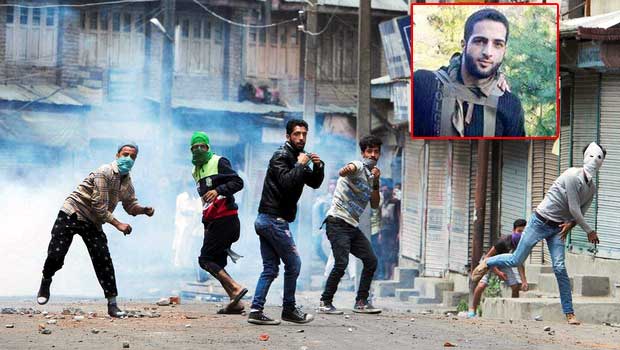
Recently J&K has been seen some trouble times. The PDP, BJP alliance under the new Chief Minister (CM) Mehbooba Mufti has seen baptism by fire and there is no let up. The Burhan Wani encounter started the wave of protest which doesn’t seem to be stopping and has put the CM under tremendous strain, the government at the center too has been feeling the heat.

The state of J&K is going through a cusp period which if not handled properly could spiral into something which would match the breaking down of the Berlin Wall.

The question that is upper most in many people’s mind is: what happens if the PDP government is not able to deliver, and the protests continue in spite of everyone’s best efforts. Is there a plan B with the government? The role of the governor in such a scenario becomes critical. The present governor of J&K, Shri NM Vohra has been holding the job for last eight years should be allowed to exit with grace and bouquets, for the wonderful job that has he has done under very difficult circumstances.

Governor’s post in the troubled state of J&K has always been a very sensitive issue. The ghost of Jag Mohan’s legacy still haunts the J&K. Most political parties and specially the one in power desire a low key, non-interfering, mild man who would not rock the boat too much even if things turn ugly in the state. The central government would like someone who can look after the center’s interests with a certain amount of soft glove approach. Any man with certain administrative background or skill should fit the bill for both these criteria. Hence the administrative service would get preference to hold that post.

Traditional Indian diet cuts Alzheimer’s risk, finds study

Aug 27 2016

Study says traditional diets of countries such as India, Japan and Nigeria may significantly reduce the risk of Alzheimer’s due to lower meat content 

Dietary supply of meat or animal products (not including milk) five years before Alzheimer’s disease prevalence had the highest correlations with it. Photo: iStock 

Washington: Consuming traditional diets of countries such as India, Japan and Nigeria—which have lower meat content than the Western diet—may significantly reduce the risk of Alzheimer’s disease, a new study has found. 

Globally, about 42 million people now have dementia, with Alzheimer’s disease as the most common type of dementia. Rates of Alzheimer’s disease are rising worldwide. The most important risk factors seem to be linked to diet, especially the consumption of meat, sweets, and high-fat dairy products that characterise a Western Diet. 

For example, when Japan made the nutrition transition from the traditional Japanese diet to the Western diet, Alzheimer’s disease rates rose from 1% in 1985 to 7% in 2008, with rates lagging the nutrition transition by 20-25 years. 

The evidence of these risk factors, which come from ecological and observational studies, also shows that fruits, vegetables, grains, low-fat dairy products, legumes, and fish are associated with reduced risk. In addition to reviewing the journal literature, a new ecological study was conducted using Alzheimer’s disease prevalence from 10 countries (Brazil, Chile, Cuba, Egypt, India, Mongolia, Nigeria, Republic of Korea, Sri Lanka and the US) along with dietary supply data 5, 10 and 15 years before the prevalence data. 

A French Solution to India’s Defence Acquisition Problem

By Laxman K Behera
31 Aug , 2016

In a move to streamline defence procurement and push the Make in India initiative, the Ministry of Defence (MoD) has constituted a nine-member committee under the chairmanship of Vivek Rae, former Director General (Acquisition) – DG (Acq). The committee’s Terms of Reference (ToR) require it to suggest a suitable organisational structure in light of international best practices. In this context, this Special Feature highlights the importance of studying the French procurement system.

Notwithstanding the establishment of structures and procedures, India’s defence acquisition has not progressed as desired.

India’s Defence Acquisition Framework: The Problems

India’s current acquisition framework consists, broadly, of a two-tiered structure, comprising the Defence Acquisition Council (DAC) and its subordinate bodies ­– the Defence Procurement Board, the Defence Research and Development Board and the Defence Production Board. This structure was created in 2001 in pursuance of the recommendations of the Group of Ministers (GoM), which was set up to review the “national security system in its entirety”. The acquisition procedures, which are captured in a document known as Defence Procurement Procedures (DPP), predate the current structure and were first announced in 1992. The DPP has been revised several times, the latest revision being in June 2016.

Notwithstanding the establishment of structures and procedures, India’s defence acquisition has not progressed as desired. Among the failures of India’s defence acquisition framework has been its inability to ensure time-bound procurement thus forfeiting available budgetary resources, as well as vulnerability to import-centric pressures, corruption and controversies. In the last 10 years alone, the MoD has forfeited a cumulative total of Rs. 51,515 crore of the allocated budget (see Table 1). It is partly because of these unutilised funds that modernisation of the armed forces has been delayed inordinately.

India–US Joint Statement on the visit of Minister of Defense Manohar Parrikar to the US

By IDR News Network
30 Aug , 2016

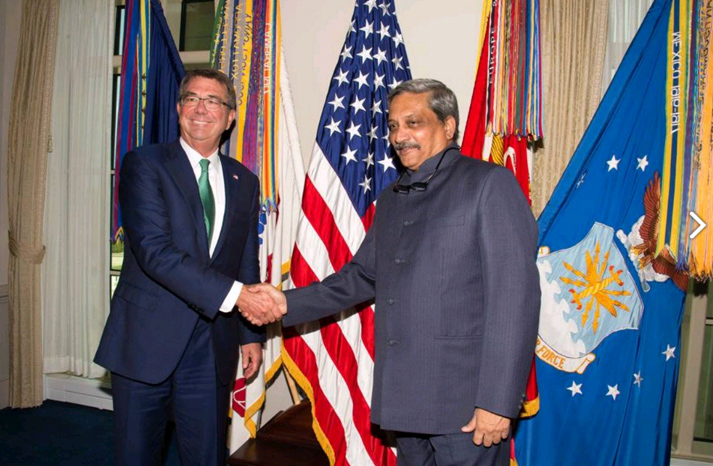
The Defence Minister Manohar Parrikar is on a three-day visit to the United States of America from 29 August 2016. Manohar Parrikar met the US Secretary of Defence Dr. Ashton Carter amongst other senior officials on 29 August 2016. An India-US Joint Statement was issued on the visit of the Defence Minister which is as follows:- 

“At the invitation of U.S. Secretary of Defense Ashton Carter, Minister of Defence of India Manohar Parrikar made his second official visit to the United States from August 29-31, 2016. In addition to his official meetings at the Pentagon and joint visit to the 9/11 Memorial with Secretary Carter, Minister Parrikar also met with the leadership of the Defense Innovation Unit Experimental (DIUx) and visited U.S. Cyber Command (CYBERCOM). He will also visit the Defense Advanced Research Projects Agency (DARPA), and Joint Base Langley-Eustis for a tour of the Air Combat Command (ACC) and the 480th Intelligence, Surveillance, and Reconnaissance (ISR) Wing. In addition, he will interact with representatives of U.S. defense industry during the visit.

The defense relationship between India and the United States is based on the two countries’ shared values and interests, and their abiding commitment to global peace and security. During their meeting, Minister Parrikar and Secretary Carter discussed the wealth of progress in bilateral cooperation and the deepening strategic partnership between the United States and India. The visit – their sixth interaction to date – demonstrates the importance both sides place on strengthening defense ties across many areas: from increased strategic and regional cooperation, to deepened military-to-military exchanges, to expanded collaboration on defense technology and innovation.

Inderjit Badhwar takes on Prashant Bhushan and his ilk on Kashmir A Lesson for Mr Prashant Bhushan

Inderjit Badhwar
India Legal (14 Aug , 2016)

It is not anti-national to express dissent but in the light of the current crisis in Kashmir, it is inappropriate for people of stature to be shooting from the hip on issues such as referendum and plebiscite

Since I started covering the trials and tribulations of Jammu & Kashmir starting in 1986 as a reporter and editor, I have met, interviewed and known every important actor on the scene—chief ministers, ministers, separatists, clergymen, exiled Pandits, slain leaders, bereaved mothers, governors, intelligence officials, Pak-trained border crossers, prime ministers in Delhi. You name them.

My views on Kashmir, my understanding of “Kashmiriyat” and the socio-political psyche that fuels this passionate, ineluctable identity-urge were derived from the people and wisdom of that soil and not from propagandist-posturing by either Delhi or Rawalpindi and its paid apologists and hit men. My outlook is well-known. The problem is between Delhi and the people of Kashmir and not between India and Pakistan. Pakistan has no role to play in this except that of a blood-stained mischief-maker into whose hands Indian governments and politicians have stupidly played since 1948.

That is why statements by lawyers like Prashant Bhushan, the uncrowned Emperor of India’s PIL domain, advocating a plebiscite of referendum in Kashmir, distort history and give moral firepower to those hell-bent in preventing a just resolution of Kashmiri grievances within the Indian union.

When Amitav Ghosh issues a warning, it's time to listen

August 30, 2016


'We know many things are going to happen.'
People should be preparing for sea level rise, for increased cyclonic activity, for drought.'
'One reason I wrote the book is to alert people to the dangers that they face.'
'For example, Mumbai faces enormous threat.'

Amitav Ghosh, one of India's finest writers, discusses climate change, with Rediff.com's Vaihayasi Pande Daniel.

Soon after The Great Derangement: Climate Change And The Unthinkable, his latest book released, the areas of Bihar where Ghosh's family resettled after leaving then East Bengal are battling fearsome floods.

Weather and water have been an essential part of the narrative of Amitav Ghosh's life.

Almost like a relative. Also a lead character in many of his books.

Water particularly.

It followed him around wherever he went. In Kolkata the cloudy Hooghly formed the backdrop of his early life. Alexandria, where he studied, had the Nile delta that edges the Mediterranean. Oxford was on the placid Isis river, a portion of the upper Thames. Delhi, merely the distant Yamuna. When he moved to New York, the Atlantic Ocean and the Hudson river wound their way into his life.

For anyone who has had occasion to look out their window at the horizon to where water meets the sky, there are instances when the scene can perturb you. The thunderous heavens or a rising ocean is as discomforting as a calm blue sea is soothing.

Scorpene leak and why it makes no sense

Abhijit Iyer-Mitra 
August 29, 2016 

Even though none of the explanations seem to hold water, India could be staring at a US$ 3.6 billion white elephant

Whether one looks at the Scorpène data leak from a commercial point of view or a state espionage point of view the facts simply don't add up. 

Here is what we know thus far. Sometime before 2011 someone collated a document that by the laws of secrecy - specifically to compartmentalise sensitive information - should have never been collated. This was a comprehensive sheet of specification of three weapons systems - The Scorpène class submarine, the FREMM class frigates and the Mistral class Helicopter Carriers/Amphibious operations support ships. This document was then according to The Australian newspaper either stolen or transmitted to a South Asian Subsidiary of French shipbuilder DCNS and was then transmitted to a private company in South East Asia in support of a bid. That document was then transferred to a private company in the same South East Asian company and was mysteriously emailed to an Australian Company. DCNS surprisingly has yet to make any public statement at the time of writing. In private they have suggested that the leak may have happened on the Indian side - with Mazagaon Docks limited. Now the story has shifted that this was a French ex-naval officer who stole the document. The problem is none of these stories make sense and here's why. 

In 2011 there were only two countries that were looking at all three systems in question - India and Singapore. India was looking at a follow on to the Scorpène under the P75I programme, at a new frigate design that would bring modular construction methods into Indian shipbuilding for the first time and a helicopter carrier under somewhat vague terms. The Singaporeans at the same time were evaluating the same three platforms. Their helicopter carrier plans remain vague and in 2011 it was still an expression of interest that solicited concepts ships from various shipyards. Singapore was also looking at the FREMM frigates at the time as a possible successor to their then brand new Formidable class. this was natural as Singapore likes to plan procurements well ahead of time. Finally Singapore evaluated and rejected the Scorpène for a German design. 

Return of Haji Pir still haunts us

Dinesh Kumar
Aug 30, 2016

The Haji Pir Pass provides easy access to both Jammu and Kashmir regions. It also provides vastly shorter connectivity between the two regions. However, India returned the pass to Pakistan which has been infiltrating terrorists to cause trouble in Jammu & Kashmir for the last 27 years

51 years ago, the Indian Army wrested this pass in a 37-hour blood-and-guts battle in fog, rain and steep terrain

At 10.30 am on 28th August, 51 years ago, a group of soldiers of the Army’s 1 Para led by Major (later Lieutenant General) Ranjit Singh Dayal wrested control of the Haji Pir Pass in Jammu and Kashmir, which for 18 years after partition had been under Pakistani occupation. A Pakistani counter attack the next day was effectively repulsed and by August 30, the Indian Army had established complete control over the Pass along with most peaks in the vicinity. It was, however, only with the capture of Kahuta in the vicinity on September 10 that the mouth of the Haji Pir Bulge was closed, the entire sector sealed and Pakistani resistance in the area brought to an end. 

The initial victory had come after a 37-hour pitched battle by a stubbornly brave and innovative 1 Para against all odds comprising rain, slush, fog, a steep hostile terrain and, of course, enemy fire. The attack was part of a multi-pronged assault by a total of five Infantry battalions supported by the equivalent of two Artillery regiments to take the geographically and militarily important Haji Pir Bulge of which this Pass is the central feature. Interestingly, the taking of the Pass marked the Army’s only decisive and successful offensive military action undertaken from start to finish during the entire duration of the 1965 India-Pakistan War that had unofficially begun on 5th August with the first detection of Pakistani infiltrators and formally ended with an UN-directed ceasefire on 23rd September. The 8,652 feet high Haji Pir Pass, a dominating feature located on the western fringe of the formidable Pir Panjal range that divides the Kashmir Valley from Jammu region, provides a direct road link between Poonch, located west of the Pir Panjal in Jammu region, and Uri, located across the mountain range in the Kashmir Valley. 

Kashmir and the clash of symbolisms

August 29, 2016 

To successfully reach out to Kashmiris, and establish good faith, the Central government needs to address the symbolism that drives the separatist quarter 

Over the past one and a half months, a host of institutions and individuals in India have impressed upon the Bharatiya Janata Party(BJP)-led Central government to reach out to Kashmiris to bring a peaceful end to the crisis in the Valley. Parliament discussed it at length, participants in an all-party meeting urged Prime Minister Narendra Modi for a political solution, and even a senior Army general has indirectly hinted at the need to talk to ‘all stakeholders’ in Jammu and Kashmir (J&K). And yet, the BJP leadership has summarily failed to act on such advice and normalise the Valley.

The BJP continues to approach the Kashmir issue either using a Pakistan angle (insisting that the Kashmir uprising is propped up by Pakistan) or from a Hindu-Muslim perspective. Home Minister Rajnath Singh’s attempts to blame the unrest entirely on Pakistan and rope in Delhi-based Muslim clerics to reach out to Kashmiris are indicative of these flawed approaches. The reality is that neither do Indian Muslims have anything to do with what happens in Kashmir nor is the ‘azadi’ struggle in Kashmir a purely Islamic movement.

This shocking inability of the BJP to meaningfully resolve or sensibly respond to the ongoing turmoil in Kashmir is not merely a result of the arrogance of power or sheer political ignorance. At a very fundamental level, this is the result of a clash that exists between the BJP’s politics of symbolism and what Kashmir’s ‘azadi’ movement symbolises. While some of the demands made and positions taken by both the BJP leadership and the Kashmiri dissidents are indeed substantive, if not entirely useful, the fact is that there are thick layers of symbolism that surround these substantive arguments, with the latter almost clouding the former. The Kashmir issue is as much symbolic as it is substantive. Hence one cannot address the substantive issue of conflict resolution in Kashmir without addressing the symbology of the ‘azadi’ movement.

BJP’s politics of symbolism

Caught in the crossfire: Bangladeshi expats in Pakistan risk being classified as 'stateless'


Relations between the two South Asian countries may have soured, but both have a duty to to protect vulnerable Bengali expatriates.

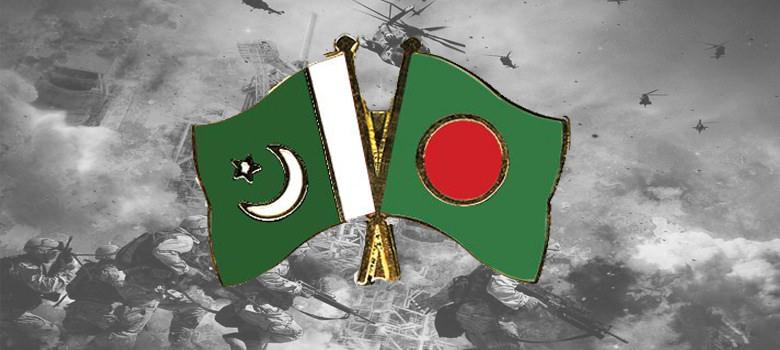
Recent relations between Pakistan and Bang­ladesh have, regrettably, been far from ideal, and the fact that the Awami League party in Bangladesh has been at the helm of its country’s affairs for two successive terms serves to further strain diplomatic ties between the two populous South Asian states.

Unlike Khaleda Zia, who leads the Bangladesh Nationalist Party, Prime Minister Sheikh Hasina Wajed is a strong ally of India and is well known for her anti-Pakistani posturing. The recent execution of Motiur Rahman Nizami, head of the banned Jamaat-i-Islami party, as well as the earlier executions of senior Jamaat-i-Islami members for their alleged involvement in war crimes in the 1971 war by a controversial and widely discredited Bangladesh’s International Crimes Tribunal has only further polarised Bangladesh’s relations with Pakistan.

These events have also had an adverse impact on the existing visa regime between the two nations. The issuance of visas is becoming increasingly difficult and, coupled with onerous requirements im­­posed upon their approval, is making travel for ordinary citizens between the two countries exceptionally hard.
The potentially stateless

The larger problem at hand, however, is something else entirely. Estimates put the total number of Bengalis currently residing in Pakistan at around three million. Many of them are low-income labourers from Bangladesh who have either overstayed their visas and/or are illegal immigrants. Bangladesh denies the presence of any such illegal aliens in Pakistan, and with the recent cooling in relations there is a genuine fear that such groups could face expulsion or refoulement from Pakistan or even the possibility of domestic incarceration.

How China's Biggest Tech Company Compares To Facebook

by Felix Richter, Statista.com

Due to the fact that social media services such as Facebook, Twitter, Instagram and Snapchat are inaccessible in China, there exists a whole ecosystem of social networking and messaging platforms that are immensely popular in and around China but hardly known anywhere else in the world.

Platforms such as QQ, WeChat or Qzone have hundreds of millions of users and, just as Facebook, Instagram and WhatsApp, they're all owned by the same company. Their parent company Tencent recently became China's largest tech company, after surpassing its rival Alibaba in terms of market capitalization this week.

As our chart illustrates, there's no need for Tencent to fear the comparison to Facebook. While its social networking / messaging services have yet to reach the billion-user mark, its financial results are roughly on par with those of the world's largest social networking company. In fact, until as recently as 2015, Tencent was more profitable than Facebook, and has been for many years prior. From an investing standpoint, both companies have been doing great over the past 12 months: Tencent's stock price soared 45 percent since August 2015, Facebook's is up by 30 percent.

This chart compares Tencent and Facebook in terms of financial and operating metrics.


You will find more statistics at Statista.

Memo to the (Future) President: 5 Things Clinton and Trump Need to Know about China

August 30, 2016

As Hillary Clinton and Donald Trump continue to sling accusations—and as their campaigns sink to new lows—they may want to remember that dangerous states continue to threaten America.

At the top of that list of adversaries is the People’s Republic of China. Here are the top five things for them to keep in mind.

Scarborough Shoal Could Be This Century’s Poland

Beijing seized Scarborough Shoal, just 124 nautical miles from the main Philippine island of Luzon, in early 2012.

Then, both Chinese and Philippine vessels surrounded the South China Sea feature. Washington tried to end the confrontation by getting both sides to agree to withdraw their craft. Only Manila complied, however, and China has remained in control of the feature since then.

The Obama administration did not enforce the agreement it brokered. If it thought inaction could defuse tensions, it was making a Chamberlain-type mistake. Chinese policymakers, obviously emboldened by their success, then ramped up pressure on Second Thomas Shoal, another Philippine feature in the South China Sea, and the Senkakus in the East China Sea, controlled by Japan but contested by China. The Chinese, in short, simply broadened the geographic scope of their provocative activities.

The White House, fortunately, changed course. In March, President Obama privately warned Beijing of, in the words of the Financial Times, “serious consequences” should China begin to cement over coral at Scarborough, thereby making permanent its act of aggression. In April, four U.S. Air Force A-10s, feared ground-attack craft, flew “an air and maritime domain awareness mission in the vicinity of Scarborough Shoal,” reinforcing the administration’s point. Analysts Zack Cooper and Jake Douglas believe the A-10 flights deterred Beijing from reclaiming Scarborough at that time.

Suu Kyi’s China Visit: Not a Point of Strategic Worry

By Obja Borah Hazarika
31 Aug , 2016

State Counsellor of Myanmar Aung Sang Suu Kyi’s recent visit to China from 17-21 August 2016 signalled the importance which Myanmar continues to attach to its ties with Beijing. During the visit Suu Kyi met Chinese President Xi Jinping and Chinese Premier Li Keqiang to promote bilateral relations and friendship. She also met with Zhang Dejiang of Chairman of Standing Committee of the National People’s Congress. 

China is important to Myanmar for ensuring peace along its northern border areas where ethnic conflicts continue to simmer. Some of the rebel ethnic groups operating along the China-Myanmar border are said to be backed by China which is a constraining factor in the ties of the two countries. The National League for Democracy (NLD)-led government is keen to harness China’s help in restoring peace in the country by ensuring that such insurgency is tackled. From the joint statement which was released during Suu Kyi’s visit it is evident that both China and Myanmar are keen to extend their friendship and advance their comprehensive strategic cooperative partnership. It was also affirmed that promoting rule of law in the border areas was of particular interest to both countries and it also mentioned China’s keened on helping Myanmar in its process of national reconciliation.

Close on the heels of assured support from China for the national reconciliation process n Myanmar, three ethnic rebel groups- the Kokang group, the Arakan Army and the Ta’ang National Liberation Army, which have connections to China and which had thus far stayed away from the reconciliation process declared their intention to join a peace conference which Suu Kyi will convene later this month. An end to the insurgency along the Myanmar-China border would help China as it had become impossible to conduct legitimate trace in these regions due to the lawlessness created by these groups. If the peace process is successful, it would be easier for China to build communication and transport lines across northern Myanmar to Bay of Bengal, allowing it to circumvent the South China Sea. If Suu Kyi is able to being these three groups to the peace conference it would imply that she has been hugely successful in reconciling the rebel groups which would mean that the NLD was able to achieve one of its main goals after assuming power in Myanmar.

Why China Should Fear the US Military's Third Offset Strategy

August 28, 2016 

The Pentagon has never been at a loss for cute catch phrases when it comes to describing the Next Big Thing in the way of warfare.

In the 1900s, the U.S. military was all about the “revolution in military affairs” (RMA) and “network-centric warfare.” This gave way to “force modernization” in early 2000s, when Donald Rumsfeld was in charge. By 2010, it was “AirSea Battle” (ASB), later transmuted into the jaw-mangling “Joint Concept for Access and Maneuver in the Global Commons.”

Today, the buzzword of choice is the “third offset strategy.”

Like many initiatives coming out of the Pentagon, it is long on ambition and short on details. Yet people in the Asia-Pacific had better become familiar with this new idea, as it will likely have a significant impact on the region.

The third offset strategy is all about leveraging US advantages in new and emerging critical technology areas in order to overcome supposedly weakening US advantages in more “traditional” areas of conventional military power.

The concern is that the US is losing its “near-monopoly” in “reconnaissance-precision strike,” as potential adversaries are now capable of fielding their own reconnaissance-strike networks to challenge US power projection. As such, the US military is increasingly vulnerable to long-range strike, modern integrated air-defense systems, more capable underwater systems, and attacks in the space and cyber domains.

The third offset strategy is both about developing new capabilities and about exploiting state-of-the-art enabling technologies.

China to develop its own aircraft engine with new company

2016-08-29 

Chinese Vice Premier Ma Kai (3rd L) attends a ceremony to mark the establishment of the (AECC) in Beijing, Aug. 28, 2016. [Photo: Xinhua/Rao Aimin] 

China has established the Aero Engine Corp of China in Beijing on Sunday, a “strategic” move that aims to boost its fast-growing aviation industry and the modernization of the Chinese military.

The AECC was set up with investment from the State Council, the Beijing municipal government, Commercial Aircraft Corp of China and Aviation Industry Corp of China (AVIC), with a registered capital of 50 billion yuan (US$7.5 billion).

It also has 96,000 employees, including six academics from the Chinese Academy of Sciences and Chinese Academy of Engineering, according to the company.

Chinese President Xi Jinping hailed the establishment in a written note, calling for acceleration of the research, development and manufacturing of aircraft engines and gas turbines to help China to build a strong aviation industry.

Premier Li Keqiang also said in his written instruction that engineers at the company should learn from other nations' experience and focus on key technologies for aircraft engines.

China shadow over Modi's Vietnam visit

August 30, 2016 

'During his visit to Vietnam on September 3 -- the first visit by an Indian prime minister in 15 years -- Modi will notice the widespread anti-China sentiment in that country,' says former RA&W officer Jayadeva Ranade.

Prime Minister Narendra Modi will have a busy and complicated agenda as he travels to South East Asia in the next few days. He will observe that dark clouds continue to linger on the horizons of the South China Sea well after the Permanent Court of Arbitration at The Hague delivered its decision on July 12.

Countries that have maritime territorial disputes with China are increasingly uneasy. During his visit to Vietnam on September 3 -- the first visit by an Indian prime minister in 15 years -- Modi will notice the widespread anti-China sentiment in that country.

There is also palpable tension as Vietnam anticipates that China may take some robust steps in the South China Sea in the weeks following the G-20 Summit in Hangzhou on September 3-4.

Uncertainty is accentuated by the apparent unwillingness of the US to draw easily identifiable 'red lines.' China's economic and military might has pressured countries in the region and widened fissures in the Association of Southeast Asian Nations further weakening it. The Philippines and Taiwan are already feeling the adverse effects of China's economic pressure.

Leaked ISIS Documents Show Internal Chaos


08.30.16 

Recently uncovered ISIS documents read like a bad comedy about embezzlement, infiltration, and bureaucratic infighting. 

What appear to be internal documents from the administration of the so-called Islamic State, obtained exclusively by The Daily Beast, show the terrorist organization under strain from financial misappropriation, embezzlement, alleged infiltration by anti-ISIS spies, and bureaucratic infighting.

These documents, originally captured by a Syrian rebel group near Damascus, are stamped by official ISIS “ministries.” They show the dollar salaries ISIS paid to its jihadist fighters, at least as of a year ago, in addition to other income earmarked for those fighters’ dependents.


The information contained in the documents confirms what various ISIS defectors and deserters have disclosed previously to The Daily Beast about the inner workings of the organization.

Fight for Syria's Aleppo exposes limits of Russian air power


Men inspect a damaged site after double airstrikes on the rebel held Bab al-Nairab neighborhood of Aleppo, Syria, August 27, 2016.

MOSCOW Russia's politically-sensitive and ultimately fruitless decision to launch bombing missions on Syria from Iranian soil has exposed the limits to its air power, leaving Moscow in need of a new strategy to advance its aims.People familiar with Russia's military said Moscow opted for the sorties from Iran - and Tehran agreed to allow them - because they were struggling to achieve their aim of crushing rebels in the city of Aleppo.

The gamble failed and rebels fighting their ally, Syrian President Bashar al-Aasad, remain ensconced in parts of Aleppo.

Russia began air strikes on Syria in support of Assad on Sept. 30 last year, launched from bases in government-held territory and from warships. Then this month, facing logistical problems in mounting an expensive campaign at a time of tight state finances, it intensified the bombing of Aleppo in what turned out to be a brief series of raids from Iran.

The strikes on the Aleppo rebels seem to have achieved little beyond stirring a political row in Iran, whose constitution forbids the establishment of any kind of foreign military base.

The fact that Russia went to such lengths to achieve its aims in Aleppo and still failed could strengthen the hand of those in Moscow who believe the operation in Syria has reached a watershed, and that it is time to seek a negotiated solution.

In Syria, Rebels Threaten Kurdish-Controlled Territory as U.S. Allies Clash

AUG. 28, 2016 

BEIRUT, Lebanon — In a new escalation that further complicates American involvement in the Syrian war, Syrian rebels pressed deeper into the northern part of the country on Sunday, seizing territory with the aid of Turkish airstrikes.

The rebels, with Turkey’s help, took the border town of Jarabulus last week from the Islamic State — an incursion supported by the United States. But the rebels are now advancing into territory controlled by Syrian Kurds.

That means the new fighting pits two American-backed Syrian forces against each other: rebel groups aided by the C.I.A. and allied intelligence agencies, and Kurdish-led militias that work with the Pentagon under an umbrella group called the Syrian Democratic Forces, or S.D.F. The United States has considered the Kurdish-led militias its most reliable partner on the ground in the fight against the Islamic State, also known as ISIS or ISIL.

The United States has in recent days appeared to rebalance its support for the Kurdish militias with its backing of the Syrian rebels and Turkey, a NATO ally. The Turks consider the Syrian Kurdish militias their enemy and are intent on keeping them from taking over an unbroken stretch of land along the border.

As part of that rebalancing, the United States warned the Kurds last week that they should return to the eastern side of the Euphrates River, essentially asking them to cede control of areas they had seized recently from Islamic State fighters.

But it is unclear what the United States will do if its allies continue to fight each other.