28 October 2016

Hackers Publish Surkov’s Plans To Destabilize Ukraine In Coming Months – OpEd

OCTOBER 26, 2016

In a case where those who live by hacking may die by it, Vladislav Surkov, the Kremlin’s point man on Ukrainian policy, has had his computer hacked by Ukrainian activists who have now posted online two documents detailing on the Kremlin plans to destabilize Ukraine over the next five months.

A Ukrainian hacker group said yesterday that it had broken into the email accunt of Vladimir Surkov, Putin’s chief advisor on Ukraine and was now publishing two documents, one about Surkov’s plans for destabilizing Ukraine in the next three months and a second on forming a Transcarpathian Republic (cyberhunta.com/news/kiberhunta-peredaet-privet-surkovu/).

While there is no way to independently confirm that the documents are in fact from Surkov’s email account, their level of specificity make them plausible and thus deserving of scrutiny. What will be potentially even more interesting is if CyberHunta publishes more such materials in the future as it promises to do.

The first document is 15 pages long and lists a series of steps Russia should take between November 2016 and March 2017 to destabilize Ukraine and provoke new parliamentary and presidential elections. Among the steps listed are talks with Ukrainian opposition parties to organize protests in the form of a “Customs Maidan” in the second half of November.

Other measures include activating some deputies in the Ukrainian parliament to expand corruption probes of the Ukrainian president and his team, and perhaps most worrying of all, “to introduce among volunteers [promoting these measures] one’s own people in order to sow panic, provoke church marches, and develop separatism in the regions.”

Old Linux Flaw Gives Any User Root Access In Under 5 Seconds

OCTOBER 26, 2016

If you need another reason to be paranoid about network security, a serious exploit that attacks a nine-year-old Linux kernel flaw is now in the wild, Engadget said. The researcher who found it, Phil Oester, told V3 that the attack is “trivial to execute, never fails and has probably been around for years.” Because of its complexity, he was only able to detect it because he had been “capturing all inbound HTTP traffic and was able to extract the exploit and test it out in a sandbox,” Oester said.

The kernel flaw (CVE-2016-5195) is an 11-year-old bug that Linus Tovalds himself tried to patch once. His work, unfortunately, was undone by another fix several years later, so Oester figures it’s been around since 2007. The problem is that the Linux kernel’s memory system can break during certain memory operations, according to Red Hat. “An unprivileged local user could use this flaw to gain write access … and thus increase their privileges on the system.”

In other words, it can be used to get root server access, which is a terrible thing for the internet. Though it’s primarily an attack for users that already have an account on a server, it could potentially be exploited on a Linux machine that lets you execute a file — something that’s common for online servers.

How to Fix the National Laboratories


The Department of Energy’s (DOE’s) National Laboratories are a core engine of the U.S. national innovation system but one in urgent need of a tune-up if the United States is to meet the pressing challenges of energy security and climate change mitigation. The next administration and Congress must modernize the policy framework shaping the National Labs to allow them to more effectively drive the innovation necessary to meet energy policy priorities.

The seventeen National Labs, which have an annual budget of about $14 billion, are owned by the government and (with one exception) operated by external, independent contractors. The Labs are widely recognized as invaluable resources to the nation. They played an important role in the Manhattan project, in the development of energy technologies – including nuclear power, solar power, and shale gas technology – and continue to advance the frontiers of science in areas such as high energy physics, scientific computing, cyber security and quantum cryptography. Recently, Congress has renewed its interest in addressing long-standing issues in Lab management. Our research (described in a recent article in Nature Energy) highlights worrying trends in Lab performance related to energy innovation and outlines steps we believe are required to improve performance.

Our work concurs with numerous reports that cite a breakdown in trust between the Labs, DOE, and Congress. This breakdown results from a vicious cycle: fiscal and political pressures force Congress to demand ever-greater evidence for the effectiveness of Lab research and development (R&D). In turn, DOE and its Lab-management bureaucracy have implemented more onerous reporting requirements and operational mandates. By one measure, non-research costs associated with running the Labs have doubled as a share of the total Lab technology budget from 1990 to 2015. Consequently, a smaller fraction of the funds are allocated to actual research, and the R&D that is conducted is of a less risky nature, risk that is essential for innovation. Further, the Labs have limited incentives to engage in novel initiatives and in outside collaboration with the private sector. Finally, disappointing Lab performance, a consequence of increasingly burdensome oversight, reduces the Labs’ ability to produce results, creating more pressure from a distrustful Congress and DOE management.

The Cyber Espionage Predominant Purpose Test

October 20, 2016

Jessica “Zhanna” Malekos Smith

While ‘spying’ may strike some as indecorous state behavior, it is essentially akin to a bodily function, like sneezing, that is necessary to sustaining the health of the body politic.

But can international law meaningfully distinguish between cyberespionage for national security purposes and economic espionage? According to former U.S. Treasury Secretary, Henry M. Paulson, Jr. in Dealing with China, “the distinction between cyberespionage and cybertheft from a company for commercial use can become fuzzy.” This article proposes a new approach – a Cyber Espionage Predominant Purpose (CEPP) Test – to resolve international disputes concerning cyberespionage operations that involve mixed elements of national security espionage and commercial espionage.

But first, what exactly is the value of the CEPP Test?

In 2013 the U.S. National Intelligence Estimate announced that “France, alongside Russia and Israel, to be in a distant but respectable second place behind China in using cyberespionage for economic gain.” In comparison, according to Dr. Catherine Lotrionte, the Director of the CyberProject at Georgetown University, the U.S. does not conduct commercially motivated cyber espionage. In fact, the Obama Administration avers that a distinction exists between economic intelligence – a subset of national security espionage – and commercially motivated economic espionage.

For Drake University Law Professor Peter Yu, however, this distinction is nebulous at best: “Not only do most countries—democratic or otherwise—fail to recognize it, this line is also not always drawn in situations involving U.S. intelligence and surveillance efforts.” Yu highlights that for countries like China, the U.S.’ definitional distinction imparts little clarity here, “given the perceived “overlap between security and economic concerns” among Chinese policymakers and the continued domination of state-owned enterprises in the local business environment.”

IS THE COALITION FIGHTING AL-SHABAAB FALLING APART?

OCTOBER 26, 2016

This has not been an encouraging month in the fight against the Islamist group known as al-Shabaab. The group launched three deadly and successful attacks yesterday alone — in a town in Kenya, a mosque in the Somali capital of Mogadishu, and on an African Union military base in the country’s strategically important Hiran region.

Perhaps more troublingly, Ethiopian troops abruptly withdrew this week from a base in Halgan, also in Hiran. The withdrawal is at least the third town in the last month that Ethiopian forces have abandoned, though there are rumorsthey have recently withdrawn from as many as eight. Al-Shabaab quickly occupied Halgan, from where it can menace the entire Hiran region.

Addis Ababa has not confirmed why it left Hiran exposed, but it is likely repositioning its forces to respond to large-scale domestic protests that have rattled the Ethiopian government. The Ethiopian withdrawal is problematic because it adds to the growing strains on the African Union Mission in Somalia (AMISOM), the anti-Shabaab military coalition of which Ethiopia is a member. AMISOM is due to start leaving Somalia in late 2018, but the growing pressure on its members suggests that an even earlier exit is possible. AMISOM’s other major troop-contributing countries — Burundi, Uganda, and Kenya — are all vulnerable to political upheaval of the sort that appears to have Ethiopia contemplating a drawdown.

This should set off alarm bells from Mogadishu to Washington. AMISOM is the only capable ground force battling al-Shabaab, and it is critical to protecting the highly fragile and reversible military gains made against the group. An all-out fracturing of the mission would have dire consequences for the fight to defeat al-Shabaab.

27 October 2016

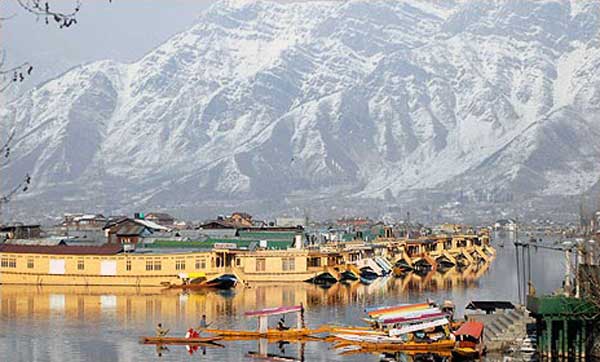
*** Accession Day Marks True Aspirations of the People of J&K

By Col Jaibans Singh
26 Oct , 2016

October, 26, is celebrated as Accession Day in Jammu and Kashmir, across the country and the world. It was on this day that Maharaja Hari Singh, the last ruler of the state, signed the Instrument of Accession and legally acceded to India under the provisions of the Indian Independence Act 1947.

The Instrument of Accession signed by Maharaja Hari Singh was no different in content and spirit than what had been signed by other princely states, but due to some misconceptions the then Government of India agreed to conduct a referendum or plebiscite to determine the future of the state. This plebiscite or referendum was to determine the relationship between the state and the Government of India and not the accession of the state to India or Pakistan which was, in any case, legally accomplished in India’s favour by the by the Instrument of Accession.

The very next day on October, 27, the Indian army landed in Srinagar airport and, against great odds, saved the people of Kashmir from large scale massacre, rape, loot and arson in the hands of the mercenary hordes of Kabilies (Tribal’s of the North West Frontier province) sent by Pakistan under the leadership of its army to annex the state.

The Indian troops who fought the war had only the safety and security of the people of Kashmir in mind. They did not know or care about how politics would play out in the long run. Their only concern was to ensure that the barbarians were thrown out in the shortest possible time without causing any further damage. In this, they were singularly successful, but not without paying a heavy price including loss of lives of many soldiers.

United States Should not be Strategically Diverted from Asia Pacific 2016

By Dr Subhash Kapila
26 Oct , 2016

The United States stood strategically distracted from Asia Pacific in the last decade resulting in China’s unimpeded militarisation of the South China Sea and the emergence of China as a maritime power—both impinging on stability and credibility of US security architecture.

The United States seems to be once again strategically distracted from the Asia Pacific by Middle East turbulence and now locked in a geopolitical tussle with Russia in Syria and also in Ukraine and Crimea. The United States in doing so seems to be oblivious to the fact that in doing so it is repeating the creation of a security vacuum in the Asia Pacific which China is hopping mad to fill in.

In the21st Century, Asia Pacific security should be the foremost geopolitical and strategic concern of the United States. Simply, because China as a revisionist power amassing exponential military power seems intent to prompt the United States exit from the Western Pacific to begin with so as to limit any possible military intervention by against China by the application of overwhelming massive American naval and air power for close-in offensives on China’s Pacific littoral

China’s military rise still is not in a position to challenge United States status as the global strategically predominant power though China is engaged in reducing the asymmetric differentials of United States military power in the Asia Pacific. As a global power unquestionably, the United States has to shoulder global responsibilities in maintaining security and stability.

However, even the United States has to face the daunting challenge of strategic choices so that US application of force and military resources are best focussed at that global point where United States supremacy is more challenged and not dissipated in penny packets all over the world.

India should not Gloat over a Moderate Tactical Success

By Lt Gen Kamal Davar (Retd)
26 Oct , 2016

The last three weeks may not have been historically momentous, as some in the establishment would like us to believe, but certainly India has been in the news, both within and globally, and more for good reasons. The reported surgical strikes conducted by India on September 29, 2016 at seven Pakistani terror-camp locations across the volatile Line of Control (LoC) changed the mood of the nation in one swift master-stroke. That all political parties in India, cutting across party lines, unequivocally feted the Indian Army and the Modi government for this timely initiative to teach a perennially treacherous Pakistan a befitting lesson, showcased to the world Indian unity when confronted with a national challenge. 

However, like any succulent dish, happy tidings have a nasty habit of not lingering for long. With the euphoria of India’s ‘macho’ actions against a terror-exporting Pakistan gradually receding, the mood in India’s agitated political environment is back to its not-so-cordial normal.

Electronic media channels, naturally looking for better TRPs, seemed to exacerbate the eternal political divide by pinning down some political parties with awkward and insolent questions on the parties’ sense of nationalism and their degree of support to the government, as if it is a quantifiable commodity.

Most political outfits seem to have walked into the media trap with the ruling party, the Bharatiya Janata Party (BJP), chest-thumping themselves as the sole repository of fiery patriotism leaving other political dispensations in the country far behind in self-assessed jingoistic formulations. Anyway, the media does not direct national policies and hence it is time for the nation to leave behind the cacophony of proving one’s patriotism, introspect and seriously plan for the myriad challenges looming ahead.

Why Sectarian Violence Is Resurging in Pakistan

October 24, 2016

After a decline in scale and casualties, the anti-Shia sectarian violence is once again resurging in Pakistan. In the last two weeks, Lashkar-e-Jhangvi (LeJ) Al-Alami, an anti-Shia extremist outfit, has claimed responsibility for the targeted assassinations of four women of the ethnic Hazara Shia community in Quetta and the attack on a Shia Imambargah in Karachi. Alarmingly, during the same period, two deadly attacks of almost similar modus operandi were witnessed against the Shia worshippers in Afghanistan, one in Kabul and the other in the northern Balkh province. Since 2014, sectarian terrorism—spearheaded by Khurasan chapter of the Islamic State (IS)—has emerged as a new potent threat in Afghanistan alongside the Taliban insurgency.

There are operational linkages between anti-Shia outfits in Karachi, Balochistan, and those operating across the western border. According to reports, the IS-Khurasan assigned the killing of the Hazara women in Quetta to Tehreek-e-Taliban Pakistan’s (TTP) Karachi chapter, which then outsourced it to the LeJ-al Alami in Balochistan.

According to the South Asia Terrorism Portal database, Pakistan witnessed a peak in sectarian violence between 2007 and 2013, which left 2,714 people dead in as many as 905 violent incidents. Since then, the sectarian attacks decreased sharply across Pakistan in 2014 and 2015. In these two years, the sectarian incidents and casualties came down to 144 and 484 respectively.

The attack on APS Peshawar in December 2014 was a turning point, which resulted in a slump in sectarian violence in Pakistan. Under the National Action Plan (NAP), Pakistan’s 20-point counter-terrorism strategy, and Zarb-e-Azb operation, Pakistani security forces hit different modules of Lashkar-e-Jhangvi hard in Karachi, Balochistan, Punjab and other parts of the country.

Afghan Military Continues to Be Dependent on U.S. Airpower in Fight Against Resurgent Taliban

W.J. Hennigan
October 24, 2016

Taliban’s deadly onslaught across Afghan provinces draws increased U.S. air power

One after another, American fighter jets and armed drones screech down the runway at this mountain-fringed northern military outpost, launching missions around the clock to support Afghan forces battling militants aligned with Islamic State and the Taliban.

More than 700 U.S. airstrikes have been carried out this year against the militants, twice as many as last year, as Afghan soldiers and police have struggled to contain a perpetual insurgency. 

The ferocity of the fighting, more than 15 years after the U.S.-led military invasion, highlights Afghanistan’s deepening security crisis and unremitting reliance on the United States. The Taliban has waged a campaign of attacks on government-held provincial capitals throughout the country and is expected to continue its assault well into the winter months, beyond what was historically referred to as the “fighting season.”

The Afghan military, riddled with corruption and taking orders from President Ashraf Ghani’s fragile government, lacks intelligence-gathering and other essential capabilities to ward off attacks. As a result, the security forces depend upon American air power and special forces to help them in their fight, two years after President Obama formally ended U.S. combat operations in Afghanistan.

In June, the White House authorized changes to restrictions on airstrikes against Taliban and Islamic State targets, which would be hit only as a self-defense measure to protect forces from harm. The new authorization gave U.S. commanders the power to launch a strike if it promises to bring “strategic effects” on the battlefield.

The move widened the air war by expanding the U.S. military’s ability to provide close air support to the Afghans as they maneuver on the battlefield.

Afghan Military Continues to Be Dependent on U.S. Airpower in Fight Against Resurgent Taliban

W.J. Hennigan
October 24, 2016

Taliban’s deadly onslaught across Afghan provinces draws increased U.S. air power

One after another, American fighter jets and armed drones screech down the runway at this mountain-fringed northern military outpost, launching missions around the clock to support Afghan forces battling militants aligned with Islamic State and the Taliban.

More than 700 U.S. airstrikes have been carried out this year against the militants, twice as many as last year, as Afghan soldiers and police have struggled to contain a perpetual insurgency. 

The ferocity of the fighting, more than 15 years after the U.S.-led military invasion, highlights Afghanistan’s deepening security crisis and unremitting reliance on the United States. The Taliban has waged a campaign of attacks on government-held provincial capitals throughout the country and is expected to continue its assault well into the winter months, beyond what was historically referred to as the “fighting season.”

The Afghan military, riddled with corruption and taking orders from President Ashraf Ghani’s fragile government, lacks intelligence-gathering and other essential capabilities to ward off attacks. As a result, the security forces depend upon American air power and special forces to help them in their fight, two years after President Obama formally ended U.S. combat operations in Afghanistan.

In June, the White House authorized changes to restrictions on airstrikes against Taliban and Islamic State targets, which would be hit only as a self-defense measure to protect forces from harm. The new authorization gave U.S. commanders the power to launch a strike if it promises to bring “strategic effects” on the battlefield.

Pentagon Metrics on Afghan War are Useless

Shawn Snow
October 22, 2016

Pentagon Metrics on Afghan War are Useless

What is going on in Afghanistan? After 15 years of U.S. and NATO involvement in the war torn country, many of Afghanistan’s cities find themselves surrounded and under siege by a resurgent Taliban force.

The train, advise, and assist mission known as Resolute Support, still contends that Afghan forces are capable of defending major cities and population centers. During a visit to the embattled city of Lashkar Gah, the commander of Resolute Support General Nicholson promised that the provincial capital of Helmand would never fall to the Taliban.

“The Afghan government and security forces are getting stronger each day and eventually they will be able to secure the entire province,” Nicholson said.

On October 11, 400 reinforcements for Afghan forces were spearheaded to the capital to prevent its collapse after a suicide bomber destroyed a police station and Taliban militants briefly entered the city.

In Farah city, Afghan forces continue to struggle against a Taliban onslaught as militants captured the city gateway and threatened to collapse the entire city, despite airstrikes carried out by Afghan forces on Monday that reportedly killed 27 Taliban militants.

Afghan forces are still struggling to push back an attack on Kunduz that occurred last Monday as Taliban forces launched coordinated attacks; and on Tuesdaylocal reports indicate that Gormach district in Faryab province fell to militants as Afghan forces retreated from the area.

The poor performance of Afghan forces despite overtures from the Resolute Support mission that Afghan forces continue to “grow stronger each day” questions the reporting and metrics utilized by coalition forces to highlight strengths and current health of Afghan security forces.

Taliban's deadly onslaught across Afghan provinces draws increased U.S. air power

W.J. Hennigan

One after another, American fighter jets and armed drones screech down the runway at this mountain-fringed northern military outpost, launching missions around the clock to support Afghan forces battling militants aligned with Islamic State and the Taliban.

More than 700 U.S. airstrikes have been carried out this year against the militants, twice as many as last year, as Afghan soldiers and police have struggled to contain a perpetual insurgency. 

The ferocity of the fighting, more than 15 years after the U.S.-led military invasion, highlights Afghanistan’s deepening security crisis and unremitting reliance on the United States. The Taliban has waged a campaign of attacks on government-held provincial capitals throughout the country and is expected to continue its assault well into the winter months, beyond what was historically referred to as the “fighting season.”

The Afghan military, riddled with corruption and taking orders from President Ashraf Ghani’s fragile government, lacks intelligence-gathering and other essential capabilities to ward off attacks. As a result, the security forces depend upon American air power and special forces to help them in their fight, two years after President Obama formally ended U.S. combat operations in Afghanistan.

In June, the White House authorized changes to restrictions on airstrikes against Taliban and Islamic State targets, which would be hit only as a self-defense measure to protect forces from harm. The new authorization gave U.S. commanders the power to launch a strike if it promises to bring “strategic effects” on the battlefield.

The move widened the air war by expanding the U.S. military's ability to provide close air support to the Afghans as they maneuver on the battlefield.

M-9 Reaper drones, F-16 fighter jets and other aircraft here along the windswept flight line at Bagram have dropped about 1,000 bombs so far this year, according to the U.S. military.

Japan's Master Plan to Defend Itself from China

October 23, 2016

For decades, Tokyo’s plans to defend the homeland were frozen in amber. During the Cold War it was assumed, that in the event of war the Soviet Union would invade the northern one-third of the country. A powerful tank corps to contest a Soviet landing, a strong air force to beat back city-destroying bombers and a strong destroyer force to keep open the sea-lanes would be all that was needed to hold out until the Americans arrived.

The defense plan staggered on after the end of the Cold War like a zombie, even after the evaporation of the Soviet threat, for lack of anything better to plan for. Now the rise of the Chinese military and Beijing’s claims on what Japan calls the Senkaku Islands have Japan reorganizing its forces to face new potential threats to the south.

Sino-Japanese relations were relatively good for decades, even as China’s defense budget grew a solid 10 percent annually for eighteen years. In 2010, Beijing abruptly began to press its claim to what it calls the Diaoyu Islands, also known to Japan as the Senkaku Islands. Suddenly, China’s defense buildup—including Type 071 amphibious ships and a new fleet of destroyers and frigates—began to look a lot more menacing than a nonexistent Soviet Union.

The so-called “Dynamic Defense Plan” is a total turnaround, in practically every way. Instead of the northern island of Hokkaido, Japan’s focus is on the the southern Senkaku and Ryukyu island chains. While the old plan envisioned a tank-heavy defense centered around the Seventh Armored Division, the new plan involves a newly created brigade of rapidly deployable marines.

Are Saudi Arabia's Sovereign Bonds a Game Changer?

October 24, 2016

October’s $17.5 billion sovereign bond deal launched by the Kingdom of Saudi Arabia was an emerging-markets record, eclipsing Argentina’s $16.5 billion deal earlier this year. According to the Financial Times, demand for the Saudi deal was well in excess of its size, reaching $67 billion. The size and success of the Saudi deal reflects the increasingly risky nature of global securities markets and has significant geopolitical implications.

International financial markets are dominated by the search for yield. A number of factors are at play: a growing number of people in the West and Japan are trying to retire and tap retirement and pension plans, wages in many advanced economies have stagnated for an extended period, and near-zero or negative-interest-rate policies by major central banks have increasingly penalized savers, pension funds and insurance companies. In the latter case, highly accommodative monetary policy has taken away the option of would-be retirees to generate interest-rate income, which is making many work longer and contributes to social angst, giving impetus to populist political parties and leaders in Europe and the United States.

To find yield, investors are being forced to assume greater risk, a situation that benefits sovereign issuers such as Saudi Arabia. The plunge in oil prices since 2014 has hurt the Middle Eastern country in terms of larger fiscal deficits (over 10 percent of GDP last year), lower export revenues and painful cuts in public expenditures. Yet the kingdom remains solidly investment-grade, continues to have a comparative advantage in pumping cheap oil and has enjoyed a relative degree of political stability. Moreover, a young, well-educated group of royals is implementing long-needed structural reforms to diversify the economy. The new bond issue will add to the country’s rising debt (up from $38 billion in December 2015 to $73 billion in August 2016), but will replenish foreign-exchange reserves and be used to help reforms.

Don't Blame NATO for Libya

October 23, 2016

In mid-March 2011, as Libyan government troops were closing in on Benghazi, the de facto capital of the rebellion that had started the month before, NATO decided to act. Its bombardment, which followed votes of support in the Arab League and UN Security Council, turned the tide of war. Seven months later Muammar el-Qaddafi was dead and his regime in tatters. Once this initial intervention came to a close, outsiders seemed to lose interest in the future of Libya. Despite initial optimism, no successor government has been able to unify the country’s various ethnic groups, tribes and fundamentalists. Now, five years after the fall of the tyrant, Libya is one of four failed states in the Arab world, and no end to its suffering is in sight.

Criticism of the two NATO decisions – to intervene and then to leave – has been widespread, reaching from the campaign trail to the pages of elite policy journals. President Obama himself told Chris Wallace of Fox News that the worst mistake he made in office was “failing to plan for the day after” in Libya. Whether by commission or omission, therefore, critics contend that the disasters that followed are largely the fault of the United States and its allies.

A little more thought is warranted before these conclusions are allowed to become conventional wisdom. The low-cost NATO intervention was hardly the disaster that its critics portray; the decisive moments in the destabilization of Libya had already occurred, and the country was unlikely to return easily to the pre-rebellion status quo. More importantly, no amount of post-intervention activity on the part of the West could have produced a better outcome. Rebuilding the Libyan state was not something outsiders could do. 

TURKEY’S SYRIA INTERVENTION: NO GUARANTEE OF EASY VICTORY AT AL-BAB

OCTOBER 24, 2016

With all eyes on the Battle of Mosul, fewer observers of the war against ISIL are paying attention to a major anti-ISIL offensive underway in Syria that may soon reach a crescendo. With the capture of the town of Dabiq from ISIL in northern Aleppo, Turkish-backed Syrian rebels taking part in Turkey’s Operation Euphrates Shield have secured a 20-kilometer deep Syrian buffer zone along the Turkish border.

This is a major development in the wide-ranging Syrian war that offers Turkey two immediate benefits: ISIL won’t be able to lob rockets across the border towards the Turkish province of Kilis and ISIL fighters can no longer easily cross the border, making it harder for them to conduct attacks in Turkey and supply themselves from Turkish territory.

This buffer zone offers significant long-term benefits for Turkey as well. It provides ample territory for theresettlement of Syrian refugees and it prevents the Kurdish People’s Protection Units (YPG) — an affiliate of the Kurdistan Workers’ Party (PKK), a Turkish based designated foreign terrorist organization — from consolidating its territories along the Turkish border. All of this was accomplished with minimal casualties.

Ankara may be pleased with how this operation has gone so far, but problems are just around the corner. If ISIL chooses to offer serious resistance, Turkey will not have such an easy path to victory as it attempts to take al-Bab, an urban city south of their buffer zone. So far, ISIL has put up little effort in stopping advancing Turkish backed rebel forces, preferring to withdraw after placing mines and improvised explosive devices (IEDs). Satellite imagery and information from key rebel sources on the ground suggest that ISIL has prepared al-Bab for siege.

POLITICAL AIRPOWER, PART I: SAY NO TO THE NO-FLY ZONE

OCTOBER 21, 2016

There is an old adage about shortcuts: If they worked, they would simply be called “the way.” For military strategy, any shortcuts come with significant penalties. This is applicable across multiple domains, and it is the reason that operational flexibility is valued so highly in conflict. Since before World War II, advocates have trumpeted airpower as a strategic and tactical shortcut — the way to win battles and even wars without the messy complications inherent in the operations of other military arms. After the rise of airpower in World War II, it was invigorated by the lopsided victory in 1991’s Operation Desert Storm and propagated through repeated limited military air-centric actions. These conflicts reinforced the notion that airpower is the solution to all military challenges overseas. The problem with this view is that it is not supported by a century of evidence. Although airpower can prove decisive and has even been used as the primary method of settling conflicts, airpower is not the one-size-fits-all solution its most fervent proponentsmake it out to be. Air campaigns, just like naval and ground campaigns, must be carefully tailored to political and military objectives, the adversary, the environment, and the prevailing conditions. Over the last 25 years, there has been an evolving political infatuation with two pillars of “political airpower”: airstrikes and no-fly zones. While each can be effective, neither is a shortcut around a need for a comprehensive strategy — both are merely elements of one.

The Rise of Limited Intervention

In Korea, airpower played a valuable supporting role, particularly when ground forces were rocked back on their heels by major communist assaults. In Vietnam, airpower became a visible element of a strategy intended to apply gradually increasing force — the creeping incrementalism of Operation Rolling Thunder. Despite poor effectiveness when used this way, combat airpower evolved into the presidential choice of military force du jour, used in Cambodia, Libya, Panama, Lebanon, and Grenada in the 15 years after the fall of Saigon. Airpower application demonstrated political will while minimizing risk and masquerading as a strategy. In many ways, airpower changed the flavor of U.S. limited intervention from gunboats and marines to fighters and precision weapons.

Pentagon Expects Mosul Push to Unlock Trove of ISIS Intelligence

Eric Schmitt
October 23, 2016

Pentagon Expects Mosul Push to Unlock Trove of ISIS Intelligence

WASHINGTON — The Pentagon is sending dozens of additional intelligence analysts to Iraq to pore over a trove of information that is expected to be recovered in the offensive to recapture Mosul from the Islamic State, data that could offer new clues about possible terrorist attacks in Europe.

The analysts will have several immediate priorities: Share with the Iraqi military any information crucial to the unfolding fight in Mosul; pass along insights useful to American officials planning an attack on Raqqa, the Islamic State’s de facto capital in eastern Syria; hunt for clues about the location of the group’s shadowy leader, Abu Bakr al-Baghdadi; and search for any information about terrorist cells in Europe and any attacks they may be plotting.

Maj. Gen. Gary J. Volesky, the commander of American ground forces in Iraq, has called Mosul the Islamic State’s Iraqi “crown jewel.” Noting that the militants had been entrenched there for more than two years, he added on Wednesday, “Clearly, there’s going to be intelligence that will be able to be exploited.”

European intelligence and counterterrorism officials said they were eagerly awaiting data gleaned from computer hard drives, cellphones, recruiting files and other sources after Iraqi forces advance into the city in coming weeks. These officials fear an influx of foreign fighters fleeing the campaigns against Mosul and Raqqa.

To read the rest of this article, click here.

Iraqi forces advance near Mosul as ISIS attacks western town

October 23, 2016

Iraqi forces advance near Mosul as IS attacks western town

KHAZER, Iraq (AP) – Iraqi and Kurdish forces advanced on a town near Mosul on Sunday as part of an operation to retake the northern city from the Islamic State group, which staged an assault in western Iraq that appeared to be another diversionary attack.

The Kurdish forces, known as peshmerga, said they launched a dawn offensive on two fronts to the northeast of Mosul, near the town of Bashiqa.

Maj. Gen. Haider Fadhil, of Iraq’s special forces, said they had also launched an assault on Bashiqa, surrounding it and seizing parts of the town. He said the Kurds had captured two villages near Bashiqa and a small Shiite shrine in the area.

Over the last week, Iraqi and Kurdish forces have been battling IS in a belt of mostly uninhabited towns and villages around Mosul, contending with roadside bombs, snipers and suicide truck bombs.

In western Iraq, IS militants stormed into the town of Rutba, unleashing three suicide car bombs that were blown up before hitting their targets, according to the spokesman for the Joint Military Command, Brig. Gen. Yahya Rasool.

He said some militants were killed, without giving an exact figure, and declined to say whether any civilians or Iraqi forces were killed. He said the militants did not seize any government buildings and that the situation “is under control.”

IS carried out a large assault on the northern city of Kirkuk on Friday, in which more than 50 militants stormed government compounds and other targets, setting off more than 24 hours of heavy fighting and killing at least 80 people, mainly security forces.

The IS-run Aamaq news agency had earlier said militants stormed the town from several directions.

Iraqi Christians Narrowly Escape ISIS

10.24.16 

Erbil, Iraq — Monaly Najeeb and the other young women were hiding under their beds when they heard the ISIS fighters enter their house. Machine gun fire had woken them up around 4 a.m. that morning, and they had spent hours huddling in fear, trying to keep quiet and silently praying that the militants wouldn’t enter their house as firefights continued right outside their door.

Now, as the men entered the kitchen that shared a wall with the room where she hid, all Monaly could do was hope that her cell phone wouldn’t make noise. The fighters were rummaging through the kitchen, eating, she thought, based on the noises. Soon, though, the militants left the kitchen and entered the room where Monaly and six other young women were hiding. An ISIS fighter than sat down, directly on top of the bed she hid underneath.

On Friday, ISIS militants launched a daring raid in the city of Kirkuk, located 90 miles from Mosul where coalition and Iraqi forces had just this week launched the biggest operation yet in the fight against ISIS. As ISIS began losing wide swathes of territory, they deployed a familiar tactic: focusing their attention on a more vulnerable area far from the main battles. Kirkuk, a bit far from Mosul but close enough to a smaller ISIS stronghold in the nearby city of Hawija, had been a target before for spectacular attacks. 

ISIS fighters fanned out at different points across the city. Estimates put the number involved between 70 and 100, although Kirkuk governor Dr. Najmaldin Karim told local media that as of Sunday, 74 bodies of ISIS militants had been recovered.

The Islamic State After Mosul

By HASSAN HASSAN
OCT. 24, 2016
Source Link

An oil field was set on fire Friday by retreating Islamic State fighters in Qayyarah, Iraq. CreditCarl Court/Getty Images

WASHINGTON — As an alliance of Iraqi and Kurdish forces pushes to retake the city of Mosul from the Islamic State, there should be no doubt about what the group plans to do next. It will fight to the bitter end to defend its most populous and symbolic stronghold. After all, it was in Mosul that Abu Bakr al-Baghdadi — the city’s leader for two years before he became the Islamic State’s leader in 2010 — declared a caliphate from the pulpit of an iconic 12th-century mosque.

If the Islamic State loses Mosul, the group has a clearly articulated contingency plan, a strategy it has frequently broadcast on multiple platforms for the past five months: inhiyaz, or temporary retreat, into the desert.

The word “inhiyaz” appeared in May, in the last speech delivered by Abu Muhammad al-Adnani, the group’s spokesman who was killed by an American airstrike in August. Mr. Adnani explained that territorial losses did not mean defeat and that militants would fight until the end and then retreat to the desert, preparing for a comeback, just as they did between 2007 and 2013.

Various Islamic State outlets picked up the theme. Al-Naba, the group’s newsletter, ran an article about the subject in August, recalling how the militants of the Islamic State of Iraq, the Islamic State’s predecessor, survived after they were driven out of Iraqi cities following the 2007 American troop surge and the tribal insurrection known as the Awakening.

While most militants retreated, according to the article, dozens of operatives remained to fom

As Racism Spreads And Economic Woes Increase, Is Tide Turning Against Brexit? – OpEd

OCTOBER 25, 2016

On the face of it, only a little, but beneath the surface all is not right with the Brexit camp, as Britain — or perhaps, particularly, England — has settled into some horrible racist reality that ought to alarm all decent human beings. This week, as child refugees with relatives in the UK were finally allowed into the country after months languishing in the refugee camp in Calais (the so-called “Jungle”) because the government, up to that point, had done nothing, the response of our disgusting right-wing tabloid newspapers — the Mail, the Sun, the Express, the Star — was to claim that they were not children (I was reminded of Donald Rumsfeld and Chief of Staff Richard Myers claiming that the children held at Guantánamo were not children).

Then the disgusting ordinary racists of Britain got involved — the seemingly countless numbers of people empowered since the referendum result to be even more openly racist than previously, and, of course, those who, for many years now, have been exulting in their power to write whatever filth they want on social media, up to and including death threats, and mostly to get away with it.

Two particular targets of the online trolls were the singer Lily Allen, who had been reduced to tears after visiting the Calais refugee camp, and had apologised “on behalf of England”, and footballing hero and Match of the Day presenter Gary Lineker, who so appalled by the media witch hunt and support for it that he tweeted, “The treatment by some towards these young refugees is hideously racist and utterly heartless. What’s happening to our country?” and then faced calls for him be sacked, which he fought back against admirably, His best response, I thought, was, “Getting a bit of a spanking today, but things could be worse: Imagine, just for a second, being a refugee having to flee from your home.”

In another tweet, Ian Dunt of Politics.co.uk summed up the shameful racist position succinctly. “What we’re witnessing in coverage of Lily Allen and Gary Lineker,” he wrote, “is an attempt to make compassion towards refugees socially unacceptable.”

Does America Need Rodrigo Duterte?

October 24, 2016

America’s alliance structure in Europe and Asia dates back more than six decades. A few of the smaller, less viable organizations collapsed (CENTO, SEATO), but since the end of the Cold War, Washington has expanded rather than contracted its treaty obligations. That includes in the Philippines, which two years ago approved a new agreement providing the U.S. military with bases and joining in exercises.

Now this alliance might finally be coming to an end.

No one knows what Philippine president Rodrigo Duterte will do next. He makes Donald Trump look like a deep thinker of notable civility and stability. Nevertheless, after spending the last month trashing President Barack Obama, the United States and the U.S.-Philippine relationship, Duterte announced he’d joined the opposing team while visiting Beijing.

America’s relationship with the Philippines always has been complicated. Americans arrived claiming to be liberators, ready to free the archipelago from its Spanish masters. Then Washington used even greater violence to suppress an indigenous independence movement. Several hundred thousand Filipinos died in the ensuing conflict.

Nevertheless, Washington eventually released its colony, and the two peoples fought together in World War II. Although the Philippine government was a model of how not to operate, military ties remained close, reflecting the 1951 “mutual” defense treaty as well as ongoing U.S. troop presence. Eventually rising nationalism, along with an ill-timed volcanic eruption, resulted in the closure of Clark Air Base and Subic Bay naval station.