19 June 2017

***Modi’s DeMo Gambit Failed: Costs Exceed Gains And Farm Anger Is The Final Piece Of Evidence


R Jagannathan

Good politics begins with accepting that DeMo did not work. Hiding the truth can hurt Modi more than acknowledging it – directly or indirectly.

But DeMo is his ultimate test. If he learns from this, his next two years may still be his best.

It is time for a mea culpa on demonetisation. This writer has been largely positive on the medium-to-long-term benefits of notebandi, as opposed to its short-term downsides, including a fall in gross domestic product (GDP) growth rates for one or two quarters. Now, and especially after the farmer agitations for loan waivers, I believe that the negative side of the ledger on demonetisation (DeMo) is larger than the positive. It has failed.

The critics have been right for the wrong reasons. They did not have a better crystal ball on DeMo’s side-effects than the optimists; but they did have a deeper animus against the Narendra Modi government that the optimists, including me, did not have. Thus, they were faster to pick up the negative signals than the rest of us.

***China’s Cult of Stability Is Killing Tibetans


On the morning of May 19, 22-year-old Tibetan monk Jamyang Losal set himself alight in Qinghai province’s Tsojang Tibetan Autonomous Prefecture. Losal, who died at the scene, was the 150th Tibetan to set himself on fire in protest against Chinese policy on the Tibetan Plateau since 2009. He had previously been detained for 10 days for posting a photo of the Dalai Lama on the heavily monitored messaging service WeChat. After this fiery act of protest, he was taken away again for the last time by police, who refused to return his body to his family.

Ever since 1989 and the Tiananmen Square protests, the Chinese state has explicitly prioritized “stability above all else” (wending yadao yiqie). The goal of this policy is an authoritarian feedback cycle combining political and cultural controls from the top with rapid economic growth from below that theoretically produces bottom-up support for the party-state. This stability drive targets any potential source of political, cultural, legal, or spiritual opposition and paints its foes, particularly in Tibet, as “cultic.” But this drive for stability has become a cult itself, one backed by the state: a totalitarian form of belief that refuses all counterevidence or opposition and that must be embraced regardless of consequences. This cult is locking people in Tibet, both Han Chinese and Tibetan, into a downward spiral of anger and pain.

*** Hezbollah Watches and Waits

By Ben West


For Hezbollah, revenge seems to be a dish best served cold. After an explosive device concealed in a vehicle killed the Lebanese militant group's leader, Imad Mugniyah, on Feb. 12, 2008, reprisal attacks looked all but certain. Hezbollah, after all, could hardly let such a high-level assassination go unanswered. Then on June 8 of this year, nearly a decade after Mugniyah's death, the U.S. Department of Justice announced that it had arrested two Hezbollah operatives in New York and Michigan. One of the suspects, Ali Kourani, appears to have played a part in planning the long-awaited retaliatory strike. The criminal complaint against him accuses Kourani of conducting surveillance against various targets, including individuals connected to the Israel Defense Forces (IDF), in preparation for an attack avenging Mugniyah. Though the attack never materialized, the information Kourani passed back to Lebanon in the course of his surveillance operations could provide the basis for a future act of terrorism. The case, moreover, offers insight into Hezbollah's workings and highlights the distinctions between its tactics and those of its peers in the world of Islamist militancy.

** CHIEF OF STAFF OF THE ARMY: CHANGING NATURE OF WAR WON’T CHANGE OUR PURPOSE

GEN. MARK A. MILLEY

One year ago in these pages, I published my first status report as Army chief of staff. In it, I outlined my three priorities: Readiness, future force and people. My priorities have not changed over the past year; readiness remains the No. 1 priority. The security challenges we face also have not changed. Great power competition is returning to a world wracked by irregular war and stressed by violent instability and rapid change. Our Army’s fundamental purpose—to fight and win our nation’s wars—certainly has not changed.

Our understanding of what must be done has changed. Over the past year, we have laid a promising but incomplete foundation for improving current readiness. We have new insights into the character of future conflict, and we have had glimpses of what our Army and its soldiers must be ready to do in the coming decades. Make no mistake: We have the best fighting force the world has ever seen, and the million men and women who make up the Total Army stand ready to execute the nation’s missions.

Readiness Through 2025

* NATO working out how to conduct operations in cyberspace

by Gerard O'Dwyer

TALLINN, Estonia – NATO reinforced its position as a leader in the cyber-threat battle space when it officially recognized cyberspace as a domain of war in July 2016. In a similarly significant action, the Western Alliance adopted the position that international law, as has been the case in conventional warfare, also applies in cyberspace.

A fundamental challenge faced by NATO, particularly in the development and deployment of effective defensive and offensive cyber weaponry tools, is how to optimize collaboration with the cyber intelligence infrastructures of member nations in responding to attacks in an ever-changing cyber battle theater.

On the strategic-response side of NATO’s cyber warfare operations, the organization must grapple with the omnipresent operational concern about whether it is better to have a good defense or a strong offense.

The Alliance’s evolving strategic direction to counter threats against critical military and civilian network infrastructure in cyber space was outlined by NATO chiefs at the four-day Cyber Conflict (CyCon) conference in Tallinn, Estonia that ended June 2.

Narendra Modi’s challenge in Washington

Harsh V. Pant

At the end of this month, Prime Minister Narendra Modi will head to the US to meet President Donald Trump. Nothing earth-shattering is likely to happen during the visit but it is conceivable that this might just end up being the defining visit of Modi’s US policy in the age of Trump.

During the campaign, in a first for a US presidential candidate, Trump attended an Indian-American event organized by the Republican Hindu Coalition, termed India as a “key strategic ally” and promised that if voted to power, India and the US would become “best friends”. His hard-line position on Pakistan and Islamist extremism also endeared him to a section of Indians.

But since he became President, Trump has given mixed signals about his priorities, confusing many in India. Though his aides have often delivered tough messages to Pakistan about terror, his approach has been erratic at best. In a phone conversation with Pakistan Prime Minister Nawaz Sharif, he seems to have told him that he was ready to play any role desired by Pakistan to resolve the country’s outstanding problems. Trump told Sharif that he has a “very good reputation”, is a “terrific guy” and is doing “amazing work which is visible in every way”. In his usual hyperbolic manner, Trump is reported to have said that Pakistan is “amazing, with tremendous opportunities” and “Pakistanis are one of the most intelligent people”. The US ambassador to the UN, Nikki Haley, went so far as to say that the US may play a proactive role in de-escalating tensions between Islamabad and New Delhi, though this was later dialled down by the state department.

ISIS Captures Tora Bora, Once Bin Laden’s Afghan Fortress

Source Link
By ROD NORDLAND 

KABUL, Afghanistan — Tora Bora, the mountain redoubt that was once Osama bin Laden’s fortress, fell to the Islamic State early Wednesday, handing the extremists a significant strategic and symbolic victory, according to Afghan officials and local elders and residents.

Taliban fighters who had previously controlled the extensive cave and tunnel complex fled overnight after a determined, weeklong assault by the Islamic State, also known as ISIS or ISIL, according to villagers fleeing the area on Wednesday.

Hazrat Ali, a member of Parliament and a prominent warlord from the area who helped the Americans capture Tora Bora from Al Qaeda in 2001, said that the offensive was prompted by the American decision to drop the so-called mother of all bombs on an Islamic State network of tunnels in Achin District in April. The 20,000-pound bomb was thought to be the largest non-nuclear bomb ever deployed.

Pakistan: U.S. Drone Strikes "Against Spirit of Ongoing Cooperation"

By Bill Roggio

Pakistan’s Chief of Army Staff General Qamar Javed Bajwa said today that US drone strikes and other unilateral actions “are against spirit of ongoing cooperation” and that any intelligence on terrorist whereabouts should be forwarded to the army for action. Bajwa made the statement despite the fact that Pakistani officials have routinely passed along actionable intelligence to terrorists to help them avoid raids, as well as supposed “counterproductive” drone strikes have historically been effective in killing scores of top tier terrorist leaders.

Bajwa’s view on drone strikes were summarized in an Inter-Services public relations press release that was issued on June 14, just one day after the US killed a Haqqani network leader and two of his deputies in an attack in Pakistan’s northwestern district of Hangu. From the ISPR press release:

THE TROUBLE WITH TANF: TACTICS DRIVING STRATEGY IN SYRIA

AARON STEIN

In what represents the biggest change to America’s use of force in Syria, U.S. forces have, on three separate occasions, struck Syrian government-allied militias. The incidents happened near Tanf, a border town seized by Syrian rebel groups trained in Jordan from the self-proclaimed Islamic State, or ISIL, in March 2016. In all three cases, we are told, the strikes were nothing more than force protection measures and didn’t signify a major change in U.S. policy. U.S. General Joseph Dunford, chairman of the Joint Chiefs of Staff, made this point on May 19, just one day after the first strike, telling reporters, “That was a force protection strike. Our commanders on the ground felt like they were threatened at that point. And their rules of engagement allow them to do that.”

Yet, despite efforts to portray these strikes as one-off reactions to Syrian backed provocations, the attacks risk expanding the goals of the military campaign, currently aimed solely at defeating the Islamic State. America’s use of military force appears to be unfolding independent of any broader strategic or political guidance. It is not clear how these actions align with broader foreign policy goals. This lack of clarity allows tactical decisions (i.e., the need to protect U.S. forces) to dictate strategy. In this case, the purported link between the militias struck and Iran, the most important backer of Syria’s Bashar al Assad, risks a broader escalation — perhaps one that some hawkish voices in the Trump administration would welcome.

China: Our Way And The Highway


June 13, 2017: China has a grand strategic plan and it’s no secret. For the last few years Chinese officials have been describing their economic and military expansion plan as Obor (One Belt, One Road). A new PR campaign for Obor describes it as a revival of the ancient “Silk Road” but that’s not accurate as the ancient Silk Road was only partially run by the Chinese. Most of it was operated by other major powers (Iranian, Indian and Arabs) and was largely put out of business after the 16 th century by European innovations in ship building and management of sea routes that presented a safer and cheaper way to move goods worldwide. Moreover, until the late 20 th century Chinese leaders never encouraged (and often banned) foreign trade. For most of Chinese history the leaders believed China had all it needed (largely true) and considered all non-Chinese and their products as inferior. The big change now is that China needs international trade and Obor is the Chinese plan to control as much of it as possible. This is essential for a prosperous economy because without that the communists are in big trouble. Obor means China owning or otherwise controlling as many of the new roads, railways, ports, pipelines and sea routes as possible. China is investing nearly $200 billion in Obor construction. This includes land routes through Central Asia to Europe and the Middle East, another through the Himalaya Mountains to the Indian Ocean (soon to be under new management if China has its way) and new land connections into Southeast Asia. The key to China’s new sea routes is asserting ownership of the South China Sea.

Another feature of Obor is that it offers business relationships that are more acceptable (than Western ones) to most of the nations Obor is investing in. The Chinese can, as they like to put it, be more flexible and respectful of local customs. In other words the Chinese don’t see bribes and corruption as a defect but an opportunity. This is great for the foreign political and business leaders but less so with most of the others and this is causing problems. Africans and Asiansliving near many Chinese foreign operations complain that

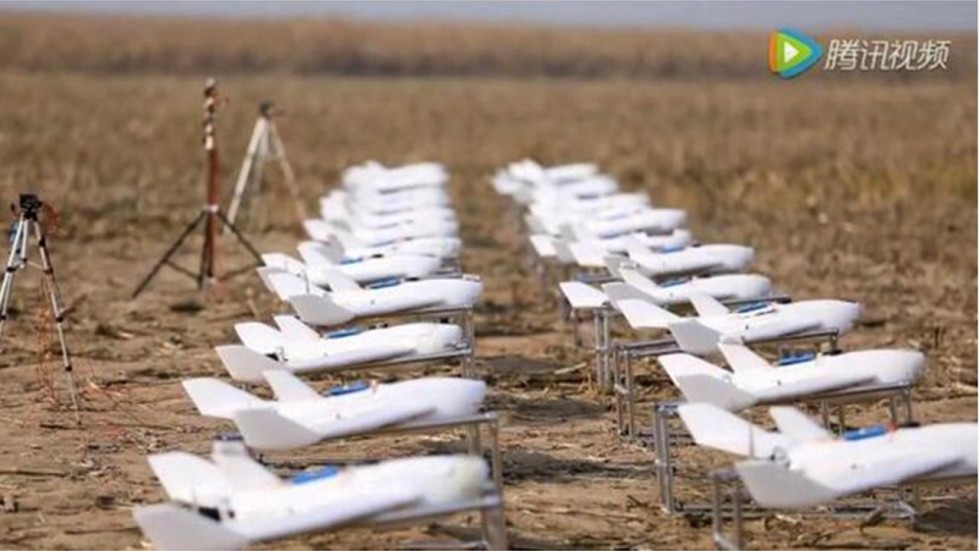
Chinese defence firm claims drone formation world record

Stephen Chen

China Electronics Technology Group Corporation said it has flown 119 fixed-wing unmanned aerial vehicles simultaneously, the state-run Xinhua news agency reported.

The Chinese drone maker Ehang sent a squadron of 1,000 drones into the air earlier this year, state media reported, but they were powered by rotary wing technology.

No details were given in the report of where or when the Chinese company made its record attempt.

The company, one of the main suppliers of electronic equipment to the People’s Liberation Army, told Xinhua that the technological breakthrough put China in a leading position on the large deployment of drones.

The machines were launched in several batches using a power-assisted take-off system similar to those used by fighter jets on aircraft carriers, according to the report.

US military warns of Shabaab resurgence, strikes ‘command and logistics node’

BY BILL ROGGIO

While announcing an airstrike that targeted a Shabaab “command and logistics node” in southern Somalia, the US military warned of al Qaeda’s resurgence in the country and said it has “taken advantage of safe haven.” The strike is the first announced by the US military since the Trump administration declared that it would expand operations against al Qaeda’s branch in Somalia.

US Africa Command, or AFRICOM, announced that it targeted a “command and logistics node at a camp located approximately 185 miles southwest of Mogadishu in a stronghold for the al-Qaeda-affiliated al-Shabaab organization” in an airstrike. AFRICOM assessed that eight Shabaab operatives were killed.

AFRICOM’s worrying assessment of Shabaab’s revival in Somalia is an admission that efforts by the US, African Union, and Somali government to contain and defeat the group over the past several years have failed. The US Department of Defense admitted as much in late March, when it announced that the Trump administration approved “additional precision fires” to target Shabaab throughout Somalia.

GCC businesses are facing a major cybersecurity deficit

Amar Diwakar

As the WannaCry ransomware spread across 150 countries last month, the Middle East held its breath. While Saudi Telecom Co. (STC) denied that the virus had affected its systems, it was another stark reminder of cyber security risks that loom large over the region, and the GCC in particular.

After all, the GCC represents an emerging information environment with accompanying economic, social, and security promises and challenges. With cyberattacks being increasingly wielded as asymmetric weapons of war, robust and proactive cybersecurity structures will undoubtedly be an essential component for securing both regional influence and stability.

Bullets in cyberspace 

The Gulf is a lively cyber conflict zone. According to Symantec's annual Internet Security Threat Report, Saudi Arabia and the UAE are the two most targeted MENA countries for ransomware attacks – in which cyber criminals steal and encrypt files until a ransom is paid.

ISIS drones are attacking U.S. troops and disrupting airstrikes in Raqqa, officials say

by Thomas Gibbons-Neff

Islamic State drones are attacking U.S. Special Operations forces located around the group’s de-facto capital of Raqqa in Syria, U.S. officials and Syrian fighters said, sometimes disrupting the ability of American troops to call in airstrikes.

The Pentagon, in response, is looking to send additional anti-drone equipment and troops into Syria, according to one official, who spoke on the condition of anonymity to discuss planning.

Unlike in Mosul, where U.S. forces have deployed an array of drone-stopping systems, U.S. troops on the ground in Raqqa are operating with fewer resources and have a limited ability to defend against the small, hard-to-spot aircraft, the official said. The off-the-shelf drones, sometimes used in swarms by the extremist group, are often rigged to drop small 40mm grenade-sized munitions with a relatively high degree of accuracy.

In Raqqa, the Islamic State has been attacking U.S. targeting teams working alongside the coalition of Kurdish and Arab fighters, known as the Syrian Democratic Forces or SDF, the official said. The teams — usually operating from a vehicle with radios and a computer synced to communicate with the aircraft overhead — often have a spotter looking for incoming drones. In recent days, according to one SDF fighter, the Americans were preparing for a set of strikes after receiving coordinates from their Syrian counterparts when they had to move position because of a drone.

NYT: Israel Accomplished Pivotal Cyber Attack Against ISIS

BY TYLER O'NEIL

In a bombshell report on Monday, The New York Times revealed just how difficult the cyber war against the Islamic State (ISIS) has been, along with a remarkable success in hacking ISIS with the help of Israel.

"Top Israeli cyberoperators penetrated a small cell of extremist bombmakers in Syria months ago," the Times quoted U.S. cyber officials as saying. "That was how the United States learned that the terrorist group was working to make explosives that fooled airport X-ray machines and other screening by looking exactly like batteries for laptop computers."

The Times' David Sanger and Eric Schmitt reported that this intelligence was "so exquisite that it enabled the United States to understand how the weapons could be detonated."

The UK Can Leave Europe but Not EU Regulations

By Antonia Colibasanu

One of the major concerns following Brexit was that Britain’s departure from the European Union would be detrimental for the financial sector in the U.K. and the EU, since London is a financial hub. Those who hold this view would see the European Commission’s new plans announced on June 13 to regulate a very lucrative industry in London’s financial sector as a case in point. But this fails to recognize that both the U.K. and the EU will be able to adjust to the new circumstances and do not want to see a massive shake-up in the sector.

The proposed plan would allow the EU to regulate clearinghouses that settle certain types of euro-denominated contracts and which are located outside the EU. Clearinghouses act as a middleman between buyers and sellers of derivatives; they ensure that transactions are completed smoothly and bear the cost if one of the parties doesn’t hold up its end of the deal. They therefore help ensure that the effects of a default don’t spread to the rest of the financial system.

The London Clearing House, which is partly owned by the London Stock Exchange, is the global leader for the euro clearing business. It clears roughly three-quarters of all euro-denominated interest rate derivatives transactions. Since this is a substantial portion of the global business, what happens in London could have a significant impact on the stability of the eurozone, even though the U.K. doesn’t use the single currency. For this reason, the European Central Bank insisted in 2011 that euro-denominated derivatives trading should take place only in the eurozone. Eurozone countries had argued that the LCH made the debt crisis even worse by raising its margin requirements (the amount that buyers and sellers are required to hold in an account as collateral against derivative contracts) on debt for Spain and Ireland. The U.K. challenged the ECB in court and won.

The Free World: What it Achieved, What Went Wrong, and How to Make it Right

By Daniel Fried

The Free World appears to be in trouble, says Daniel Fried. Indeed, aggressive authoritarians and newly-emboldened nationalists are challenging the very foundations of a rules-based, democratic international order. Given these dangers, Fried believes it’s important for us to remind ourselves what the Free World achieved, where it has gone wrong, and what democratic forces can do to help restore it.

Ideas have power, not all ideas and not under all circumstances, but the idea of a liberal world order demonstrated its power at two turning points: the resurrection of the West after World War II and the expansion of the West after the fall of Communism in Europe in 1989. The phrase “liberal world order” sounds like the invention of a political science seminar. It may be better to call it the Free World Order, as the Free World—its values, institutions, and purposes—remains the best organizing framework for humanity in the twenty-first century.

It’s Getting Harder to Draw Lessons from Today’s Wars

BY ADIN DOBKIN

The researchers compiling the U.S. Army’s accounts of Iraq and Afghanistan have an overwhelming yet spotty volume of material to work through. 

When Major Spencer Williams was ordered to “shut down shop and move out” of Afghanistan in 2005, he closed his final message from the field as he always did—quoting a long-dead historian. “Plant yourself not in Europe but in Iraq; it will become evident that half of the roads of the Old World lead to Aleppo, and half to Bagram.” 

Williams made up one-third of the U.S. Army’s historical field staff in Afghanistan—a team directed to cover the breadth of the country, vacuuming up media, documents, and oral histories so that some future soldier or academic could better understand the course of the war and how one might respond to circumstances should they arise again. The war offered more than enough material to keep Williams and the others busy, but they weren’t able to communicate the importance of that work to those leading the mission in the country. Following a command from the highest-ranking officer in Afghanistan, the historians were on their way out of Kabul.

SOF Operational Design and Strategic Education for the 21st Century Warrior-Scholar

by Tony Rivera and Robert Schafer

Introduction

In August of 2011 a special working group was assembled at the Pinewood Campus of the Joint Special Operations University (JSOU) on MacDill, Air Force Base in Florida. In attendance were “Eleven participants from various SOF and academic backgrounds... the SOF Chairs from PME institutions; Senior Fellows from the JSOU Strategic Studies Department; and other academic and strategic thinkers with an interest in SOF’s strategic utility.”[1] The attendees were given three very difficult questions to answer: What is Special Operations Forces (SOF) power? What is the theory and art of SOF power? How can SOF power be better implemented by civilian leadership? “The workgroup confirmed the Special Operations community lacks a unifying theory and associated literature on how Special Operations fit into national security policy even as preference for their use as an instrument of national policy increases.”[2] The recommendations were thoughtful, serious, and worthy of further consideration. What was striking, however, was the virtual absence of the mention of SOF Operational Design.

The United States Army Special Operations Command (USASOC) has been taking the lead in answering some of these questions through their development of SOF Operational Design. SOF Operational Design emerged from the work done by the J-7 Operational Design Planner’s Handbook[3] and the School of Advanced Military Studies’ Art of Design curriculum—a curriculum that embraces the complex adaptive nature of the battlefield and the operational environment. “These continually emerging realities require adaptive leadership techniques, new strategic and tactical cognitive approaches, and organizational

What will it take for the Army to succeed in multi-domain battle?


By: Mark Pomerleau,

The Army is facing a critical juncture in sustainment of communications and information technology equipment. The service is realizing it must change its posture to potentially fight an amalgam of actors in a complex battle space leaders call the multi-domain battle.

In her role as director of the Integrated Logistics Support Center for Army CECOM, Liz Miranda has a key role in helping the Army succeed in multi-domain battle. 

C4ISRNET Reporter Mark Pomerleau caught up with Miranda at her office at Aberdeen Proving Ground in Maryland for her first interview since assuming her new post. Miranda discussed her role in the Army’s sustainment and logistics.

Can you describe what you’re responsible for and what your office does?

We are responsible for providing integrated logistics and integrated logistic sustainment and acquisition support for [command, control, communications, computers, intelligence, surveillance and reconnaissance] systems.

The responsibility of what we call integrated logistics sustainment — it’s not just ... having the right part in the right place at the right time and the movement of those. It is the planning, the projection, the actual procurement of the parts, the delivery of those parts, and that is just one aspect.

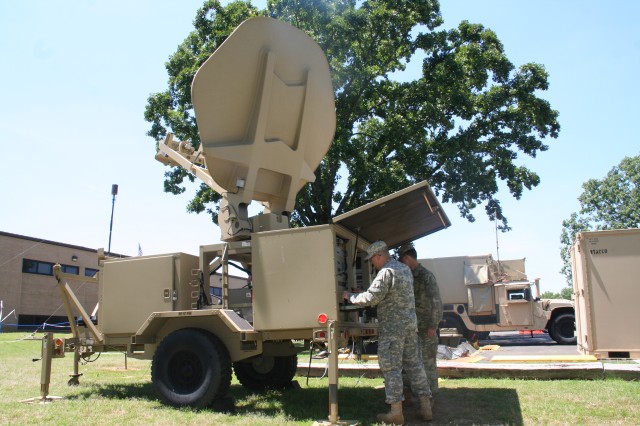
Army prepares to field disaster response communication tool suite


LITTLE ROCK, Ark. -- If disaster strikes the U.S. homeland, a new network communications tool suite will enable Army National Guard Soldiers to provide first responders with network and phone communications, even when local infrastructure has been destroyed.

"In a disaster situation, interoperable communications between the military, first responders and other [non-government] agencies is always critical," said Maj. Gen. Timothy McKeithen, deputy director for the National Guard. "Lessons learned from Hurricane Katrina [taught us that] it's all about timing -- a few minutes, compared to an hour or days, in communicating is huge when it comes to your property, life and family members."

DARPA works to ensure man can trust machine

By: Mark Pomerleau

Under initiatives such as the so-called third offset strategy, which on a basic level imagines humans and machines teaming together to overcome the parity competitors have reached with American capabilities, artificial intelligence will be a critical component.

For humans, however, learning to trust machines is a real challenge. “A lot of AI today is a black box, you have this neural net that you put in the inputs, it spits out an answer and 90 percent of the time it’s right. But that last 10 percent, sometimes it really screws up,” Defense Advanced Research Projects Agency acting Director Steven Walker said Wednesday at the Defensive Cyber Operations Symposium in Baltimore, Maryland.

Walker's predecessor, Arati Prabhakar, last year at the Atlantic Council displayed a picture of a baby holding a toothbrush that a machine identified as a baseball bat. This could have mortal implications if a drone feed misidentifies a rake for an AK-47.

3 ways DARPA will attack the cyber problem

By: Mark Pomerleau

During a keynote presentation June 14 at the Defensive Cyber Operations Symposium in Baltimore, Steven Walker, acting director of the Defense Advanced Research Projects Agency, outlined three research areas his organization is focusing on in cyber.

1. Hardening systems against attacks. 

Walker referenced the Cyber Grand Challenge that was held last August as an example that could represent a paradigm shift in the way cyber is currently thought of. The challenge, he said, sought to defend a network and counterattack an adversarial network in a matter of minutes without human intervention — essentially machines versus machines in virtual capture the flag.

Robot revolution

By: Rachael Kalinyak

To maintain a decisive edge over the enemy the Navy must accelerate its operations and how it develops as a service, particularly when it comes to dealing with big data, according to top naval leadership. 

Chief of Naval Operations Adm. John Richardson, speaking at the 68th Current Strategy Forum that took place at the United States Naval War College in Newport, Rhode Island on June 13, addressed concerns about the “OODA Loop,” according to Federal News Radio. OODA is an acronym for the cyclic strategy decisions combat operations go through, meaning “Observe, Orient, Decide and Act.” 

With the rapid advancement of technology, more and more devices are gathering and feeding data throughout the web. As these connections progress, more information will be brought forth and with that information comes “a new age of cognitive computing decision, and cognitive assistance, machine assistance, to help us make sense of all that data,” Richardson said. 

Top threats to cyber defenders, according to a senior DISA official

By: Mark Pomerleau

Almost simultaneously as patches are released, adversaries are probing Department of Defense networks, according to Col. Paul Craft, commander of Global Operations Command at the Defense Information Systems Agency, which is responsible for global DoD network boundary defense.

Even adversaries know about “patch Tuesday," Craft said during a June 14 panel at the Defensive Cyber Operations Symposium in Baltimore, Maryland. “We all know that patches come out and we know that it’s our responsibility within the DoD to get it patched quickly. I’ll tell you as the command that runs the boundary: We are immediately scanned for any of those vulnerabilities … by our adversaries."

The adversary receives the same patch notice releases as everyone else making, it a known vulnerability, he said, and they're going after these patches an hour after they're released.

18 June 2017

Credible EU Defense Means Rethinking Sovereignty

CLAUDIA MAJOR

A wave of defense euphoria is sweeping Europe. It started about a year ago after the UK’s vote to leave the EU and the publication of the EU global strategy, and increased with the elections of U.S. President Donald Trump and French President Emmanuel Macron. The European project could be relaunched via reinforced defense integration, the idea goes. Migration and economic questions are too controversial to broach, but defense matters to all Europeans, especially since Russia and the self-proclaimed Islamic State reminded them that Europe cannot take security and defense for granted.

Over the last year, political rhetoric and ideas on how to improve the EU’s defense setup have flourished. As a result, new acronyms appeared: a military planning and conduct capability (MPCC), a sort of European headquarters; a coordinated annual review of defense (CARD); a European defense fund (EDF) to finance developments of prototype military kits; and permanent structured cooperation (PESCO), which allows groups of willing EU members to advance more quickly in defense cooperation.

What is more, the European Commission, traditionally not involved in this field, is tipping its toes into defense, bringing its financial tools to the table and broadening the narrow focus from the EU’s Common Security and Defense Policy (CSDP) to a broader idea of EU defense.

*** Winning the War of Ideology: Leveraging Religious Commonalities

By John J. Houser

Twenty times in the course of my late reading have I been on the point of breaking out, ‘This would be the best of all worlds if there were no religion in it!' But in this exclamation I would have been…fanatical…without religion this world would be something not fit to be mentioned in polite company, I mean hell. - John Adams writing to Thomas Jefferson

Leveraging common principles found in different religions forms a foundation to undermine those using religious differences as a weapon. Expressing a deeper sense of religious understanding paints the U.S. as a pluralist society in a world where “more than eight-in-ten people identify with a religious group.”[1] Some assert Samuel Huntington prophetically warned about a pending “Clash of Civilizations” citing religiously inspired violence ranging from organized terror groups to “lone wolf” incidents as evidence of a world bound for a cultural collision. Although terrorists represent only a small portion of a religious population, their ability to project global influence indicates the current international framework of nation-states is reaching a tipping point.

*** Xi Jinping’s Marco Polo Strategy


CAMBRIDGE – Last month, Chinese President Xi Jinping presided over a heavily orchestrated “Belt and Road” forum in Beijing. The two-day event attracted 29 heads of state, including Russia’s Vladimir Putin, and 1,200 delegates from over 100 countries. Xi called China’s Belt and Road Initiative (BRI) the “project of the century.” The 65 countries involved comprise two-thirds of the world’s land mass and include some four and a half billion people.

Originally announced in 2013, Xi’s plan to integrate Eurasia through a trillion dollars of investment in infrastructure stretching from China to Europe, with extensions to Southeast Asia and East Africa, has been termed China’s new Marshall Plan as well as its bid for a grand strategy. Some observers also saw the Forum as part of Xi’s effort to fill the vacuum left by Donald Trump’s abandonment of Barack Obama’s Trans-Pacific Partnership trade agreement.

** The US Is Due for a Recession

By Xander Snyder

June 14 brought good news and bad for the United States. The U.S. Federal Reserve announced that it would increase the federal funds rate – the rate at which banks borrow from one another in private markets – from 1 percent to 1.25 percent. That the Federal Reserve would raise short-term borrowing rates is not wholly surprising – it started raising them incrementally in December 2015, when rates were still at 0.25 percent. What’s surprising is that the Fed announced it would also begin selling bonds that it had purchased as part of its quantitative easing program – the first time it has done so since the most recent recession ended.

Central banks can manipulate interest rates in a couple of ways. One way is to alter federal funds rates, which lets them control short-term interest rates. Low rates mean cheaper money.

Adjustments in the federal funds rate are accomplished through open market operations. But open market operations can also be used to control long-term interest rates. Quantitative easing, a bond-buying program that the Fed enacted in 2008, was a form of open market operations that targeted debt with a longer tenor. (The results of open market operations on longer-term debt are generally less predictable than are federal funds rate changes.) Through several rounds of quantitative easing, the Fed purchased $2.4 trillion worth of U.S. government debt and mortgage-backed securities. The additional demand for bonds that this purchasing program generated increased the price of bonds, which drove down long-term interest rates.

** Quest for an AI Revolution in Warfare

Elsa B. Kania

THE PLA’S TRAJECTORY FROM INFORMATIZED TO “INTELLIGENTIZED” WARFARE

China aspires to surpass the U.S. in artificial intelligence, seeking to take advantage of the unique opportunities that this critical emerging technology could confer to its economic competitiveness and military capabilities. To date, the scale of Chinese research in artificial intelligence, as reflected by the number of papers published and cited, has already exceeded that of the U.S., and China also ranks second in AI patent applications.[i] From speech recognition to computer vision, Chinese efforts in artificial intelligence are cutting-edge and evidently constitute a priority for China’s leadership at the highest levels. Within the past year alone, China has released a series of national science and technology plans that seek to advance artificial intelligence and established a national deep learning lab.[ii] In particular, China’s new national mega-project for artificial intelligence, known as “Artificial Intelligence 2.0,” will advance and direct an ambitious agenda for research and development, including economic and national security applications.[iii]

...THE RELATIVE TRAJECTORIES OF U.S. AND CHINESE ADVANCES IN ARTIFICIAL INTELLIGENCE WILL IMPACT THE FUTURE MILITARY AND STRATEGIC BALANCE...

India’s Space Business Is Ready For Lift-Off


Rudraneil Sengupta

Leaps in technology, the demands of a new global space race, and a rapid increase in ISRO’s satellite launch capabilities are opening up the skies

For the Indian Space Research Organisation (ISRO), this has been a remarkable year. It took two launches to make it so. The first, in February, set the startling record of the maximum satellites injected into orbit by a single launch, 104—a tremendous leap from the previous record of 37.

The second, in June, was the first successful launch of India’s heaviest, most powerful rocket, GSLV Mark III, developed entirely at home, through more than 15 years of patient work. GSLV is short for Geosynchronous Satellite Launch Vehicle.

Big data, big dangers

Hemant Kanakia

India needs to negotiate the world of big data technology with adequate safeguards

With the Supreme Court turning its gaze on privacy issues associated with Aadhaar, can we take a moment to look to the myriad ways in which our privacy is being assaulted in the digital world? When my neighbour across the street got too curious about my life, I installed curtains to block his gaze. But what about when the invisible drones at Facebook send him a message that one of my colleagues has tagged me enjoying a music festival in Goa and he might want to “like” this picture? How do we draw a curtain around our digital lives?

CPEC: the need for a second look by India

Ranjit Singh Kalha

Most narratives on the subject published in India stress that as the proposed China-Pakistan Economic Corridor (CPEC) traverses through Indian sovereign territory in Gilgit-Baltistan (GB) which is a part of Pakistan-occupied Kashmir (PoK), India is well within its rights to refuse any participation. This stand is a principled one with considerable merit. While this position meets with the short-term tactical requirements it does not answer what should be India’s long-term strategy on this issue.

When India gained independence in August 1947, the state of Jammu and Kashmir had an area of 222,236 sq. km. Since then, due to conflict and aggression, Pakistan occupies about 78,114 sq. km and China about 42,685 sq. km, including 5,180 sq. km illegally ceded by Pakistan to China. About 101,437 sq. km remains with India. Thus three states are now in contention in Kashmir, with China denying strenuously that Aksai Chin, the area that it occupies, was ever a part of Kashmir. However, as far as CPEC is concerned, what interests us is the position of GB.

A Flawed Plan for Afghanistan The Trouble With Deploying More U.S. Troops

By Aaron B. O'Connell

In April 2002, in the early days of what would become the longest war in American history, President George W. Bush offered a rousing summary of the United States’ goals in Afghanistan. “We will stay until the mission is done,” he said in a speech at the Virginia Military Institute. “Peace will be achieved by helping Afghanistan develop its own stable government. Peace will be achieved by helping Afghanistan train and develop its own national army, and peace will be achieved through an education system for boys and girls which works.”

Since then, the United States has repeatedly sent more troops to Afghanistan; by 2011, U.S. force levels topped one hundred thousand. Drone strikes and special operations raids have weakened al Qaeda’s leadership and killed Osama bin Laden. But almost all of Bush’s other goals remain out of reach. Today, the Taliban is gaining ground, the Afghan army is suffering unsustainable losses, and the government in Kabul is corrupt and riven by ethnic divisions. Eleven thousand civilians were killed or wounded in Afghanistan last year—the highest toll since the United Nations started keeping track in 2009.

Mr. Trump, Afghanistan Is Your War Now


President Trump was typically self-absorbed in his tweet on Wednesday celebrating the 242nd birthday of the United States Army. “Proud to be your commander-in-chief,” he proclaimed to the soldiers.

Yet, when it comes to the actual life-and-death responsibilities of the commander in chief — overseeing America’s vast war machine and sending men and women into conflict — Mr. Trump seems more like the delegator in chief. The latest evidence was his decision this week to give Defense Secretary Jim Mattis the authority to determine troop levels in Afghanistan, which could lead to an increase of as many as 5,000 troops, if proposals favored by Mr. Mattis and his generals go forward.

Mr. Mattis has acknowledged to Congress that the United States-led coalition is “not winning” in Afghanistan. It is not at all clear that adding 5,000 more troops — a roughly 50 percent increase over the current troop level of 9,800 — can make a difference, especially when the administration has yet to confront the basic problem of ensuring public safety and the larger political and economic issues that must be part of a comprehensive strategy to resolve the conflict.

What such a decision would do is reverse the drawdown President Barack Obama put in place and set a new policy of expanding involvement in a war that has already dragged on for 16 years, cost thousands of American and Afghan lives and consumed billions of dollars.

Having spent five years in Afghanistan (between 2004 and 2014) I am convinced that the fundamental problem is governance failure.1) Local... 
stu freeman 42 minutes ago

Pakistan is our "regional partner"? Were it not for that country and its security service the Afghan Taliban would have no refuge to plan... 
OSS Architect 46 minutes ago

Where is the diplomatic initiative in Afghanistan? Mr Trump is de-funding the State department, and the generals like Mr Mattis have told... 

Military commanders chafed under Mr. Obama’s tight controls on troop deployments and war making, which some of them saw as micromanagement. Even so, commanders in chief cannot subcontract their most sacred duties; what the United States faces at this moment is not some routine tactical maneuver or choice. It is what to do about America’s longest war. That is, at bottom, Mr. Trump’s responsibility, and at the moment the nation has no idea what he thinks or where he is headed.

Mr. Trump, who has no prior government experience, leaves the impression that he is cowed by the weighty responsibility of sending more Americans into battle, and is looking to put that onus on Mr. Mattis so he has somebody to blame if things go wrong, as he did when he fingered the generals for a botched raid in Yemen in January, in which one member of the Navy SEALs was killed.

That the president may be distancing himself from a complex challenge is only one concern. Another is the absence of an informed, wide-ranging public debate. Discussions about possible troop increases have largely been theoretical and limited to experts, prompting Senator John McCain, the Republican chairman of the Senate Armed Services Committee, to complain fiercely at a hearing on Tuesday that the Pentagon has yet to present a plan to regain the battlefield momentum that could provide a framework for decision making.

There is an urgent need for just such a plan and such a discussion, not least because everything in Afghanistan seems to be going backward. Mr. Mattis says that he may send some additional troops even before the new war plan is completed, perhaps next month, because the Taliban is once again “surging.” (The Islamic State, a relative newcomer to the conflict, has been flexing its muscles in Afghanistan this year.)

Apart from the fact that the need for additional troops has not been cogently debated, much less established as necessary, such a move now would be premature: None of the big questions have been answered. How will 5,000 more troops turn the tide, when the United States was unable to bring stability to Afghanistan when it had more than 100,000 troops there in 2011? What is the core American national security interest — defeating Al Qaeda, ISIS, the Taliban? Stabilizing the Afghan state? All of the above? None?

American civilian and military leaders have long agreed that the goal must be a political settlement with the Taliban. Yet five months into Mr. Trump’s tenure, the well-resourced Pentagon, which is on track to receive a large budget increase this year, is calling the shots — not the State Department, which Mr. Trump’s budget would decimate.

One major hindrance to sound policy making is the fact that there are few experts in place to do the work; many senior national security positions remain unfilled. However capable and respected Mr. Mattis may be, the Pentagon and American military forces cannot alone bring stability, or whatever counts as “winning,” to Afghanistan. To achieve any worthwhile outcome, the president must be committed and involved, as must his entire national security team. So far the Pentagon is running the show, largely by default.