16 October 2017

Deepening India-Israel Ties: Changing Landscape of the Indian Defence Sector

By Ketan Salhotra

Israel has become a prominent defence partner for India in recent times. A string of defence deals between the two countries have benefitted Indian companies seeking advanced manufacturing technologies and Israeli companies looking at new defence markets. Israel has also been able to provide the Indian armed forces with weapons which it could not directly buy from its usual defence partners – Russia and US.

Pak heading for military rule

By Maj Gen Harsha Kakar

The recent statement, post the meeting between the Pak foreign minister, Khawaja Asif and the US secretary of state, Rex Tillerson, included a comment indicating concerns about the future of Pakistan’s government. This announcement was made after inputs began flowing of a growing rift between the polity and the army, which holds sway over the country. The statement aimed to support the civil establishment and was possibly signalling a warning to the army to stay away.

'The Taliban Can't Win,' Says Commander Of U.S. Forces In Afghanistan

TOM BOWMAN

Gen. John W. "Mick" Nicholson settles into his wood-paneled office inside the American-led military headquarters in Kabul. It's lined with plaques, pictures and ceremonial swords.

He has spent more time in Afghanistan, in various jobs, than any other senior American officer — a total of 5 1/2 years. The commander of NATO's Resolute Support mission and U.S. forces in Afghanistan since March 2016, Nicholson is a genial West Point graduate with salt-and-pepper hair — and a renewed confidence.

THE GROWING DANGER OF A U.S. NUCLEAR FIRST STRIKE ON NORTH KOREA

DAVID BARNO AND NORA BENSAHEL

The escalating tensions over North Korea have brought the United States closer to war on the Korean peninsula than at any other time in decades. Yet Washington is just as likely as Pyongyang, if not more likely, to initiate the first strike — and would almost certainly use nuclear weapons to do so. Such a strike may be the only way to decisively end the North Korean nuclear program, but its incalculable effects would extend far beyond the devastation and destruction in Korea. 

Kaspersky in focus as US-Russia cyber-tensions rise


The security software firm Kaspersky has become the focal point in an escalating conflict in cyberspace between the United States and Russia.

The Russian-based company has been accused of being a vehicle for hackers to steal security secrets from the US National Security Agency, and was banned by all American government agencies last month.

North Korea: Where China Can Beat the US

By Jacob L. Shapiro

Of all the parties involved in the Korean missile crisis, the most difficult to read is China. The Chinese Foreign Ministry’s almost daily platitudes about the need for a peaceful resolution do little to reveal what China’s real interests and objectives are – and what they are is multiple and conflicting. At one level, China is concerned with the balance of power on the Korean Peninsula. China doesn’t want Pyongyang to have nuclear weapons, and it doesn’t want the peninsula to unify. But at the same time, what happens on the Korean Peninsula also affects China’s relationship with the U.S., and despite the deep economic ties between the two countries, from Beijing’s perspective that is a relationship defined ultimately by fear and mistrust.

The Long Game In North Korea – Analysis

By Robert C. Thomas

North Korea is once again vying to hold the top spot among the most pressing and nerve-wracking global security crises of the moment. Although it is entirely reasonable to be concerned about how to respond to an aggressive and erratic state developing ever more powerful nuclear weapons and longer-range missile delivery technology, it is actually extremely dangerous to confine policymaking on North Korea to the immediate nuclear crisis. 

When the Commander in Chief Disrespects His Commanders

James Stavridis

Recently, at President Trump's first of these dinners, it was surprising to see him use those senior officers and their spouses as a backdrop for a cryptic comment to the press: "You guys know what this represents? Maybe it's the calm before the storm." When asked what the "storm" was, he responded equally oddly: "You'll find out." Speculation ran wild. Was it a military strike on North Korea? Iran? Venezuela? The White House refused to clarify, citing a desire to keep the enemy guessing. 

After-action analysis from last month’s massive drill

By: Barbara Opall-Rome

After-action analysis from last month’s massive drill at Israel’s northern border has validated, with very few exceptions, more than a decade worth of development, deployment and operational procedures associated with the military’s cyber-secure, C4I-operational network, the military’s chief signal officer said.

“Our concept of fighting in the cyber domain was validated in the latest drill,” Brig. Gen. Netanel Cohen, the Israel Defense Forces‘ chief signal officer, told Defense News. “We took all the digital transformation of the past decade, and … bottom line: It worked.”

How artificial intelligence is becoming a key weapon in the cyber security war

Michael Sentonas

In the last 12 months, 60% of Australian organisations experienced a ransomware attack. This is according to Telstra’s Cyber Security Report 2017, which also found that ransomware was the number one type of malware downloaded in the Asia Pacific region during 2017. 


The future in the war against cybercrime — machine learning and AI

Christian Stevenson

Antivirus programs just aren't cutting it any more, with developers finding it impossible to keep up with the rapidly changing threats. But there is a white knight on the horizon, says tech expert Dr Christian Stevenson, who explains how machine learning and artificial intelligence will drive cyber-security in the near future.

Army Pledges To Fix Networks; Skeptics Abound

By COLIN CLARK

“The urgency of now is upon us,” Lt. Gen. Bruce Crawford told reporters and aides to explain why the Army would act and get things fixed. That was the message from the generals and civilians leading the Army’s network efforts who appeared in an unwieldy panel yesterday. (The Army loves to put these panels on. They seem to be a reflection of the service’s approach to acquisition: throw good people at it from multiple parts of the bureaucracy and hope they can all make sense of it.) It was a message similar to the one they delivered to a very skeptical Congress late last month. And it was a message was greeted with skepticism from myself and other media who have heard the Army make similar claims for at least five years.

“A Way” To Develop a Toxic Leader: How We as Leaders Create Our Own Monsters


Toxic leaders don’t just appear on the scene, they develop over time- and we are the ones that create them. Yep! It’s partly our fault as leaders because we fail to properly counsel them as they move up the ladder.

There you have it: “A way” to create a toxic leader.

So, I think it’s important for all of us to learn how not to build our own Frankensteins.

Optimism has made wars likelier and bloodier


THIS is not really a book about the future of warfare, with all that might imply in terms of exotic technologies that will transform not only the character of war, but, some believe, even its very nature. Lawrence Freedman does indeed discuss the impact of cyber-attacks, artificial intelligence and machine learning on the conflicts of the future. But that is not his main purpose. The clue is in the title. The author, arguably Britain’s leading academic strategist, examines how ideas about how future wars could be fought have shaped the reality, with usually baleful results.

How Technological Advancements Will Shape the Future of the Battlefield

By ROBERT H. LATIFF

Dr. Robert H. Latiff retired from the U.S. Air Force as a major general, is an adjunct faculty member at the University of Notre Dame, and is the director of Intelligence Community Programs at George Mason University’s School of Engineering. His book, Future War, looks at how future technology will change virtually every aspect of war as we know it and how we can respond to the serious national security challenges ahead.

15 October 2017

CyFy

Recently I attended CyFy organized by ORF.

Dr Gulshan Rai, the Indian National Cyber Security Co ordinator, the Cyber Czar of India, gave the keynote address. Some of the issues highlighted by Dr Gulshan Rai are given below.

As per the latest WEF report on an average daily e-transaction per day worldwide is 12 billion. In India daily e-transaction is about 2.2 billion. Number of online  threat/day is 0.6 billion. As the transitions going up so does the online threat. Out of these threats 6% are serious in nature and merits immediate attention. 50% of them need attention. In the next 7/8 years things world become much more complex.

Emerging trends

Artificial intelligence (AI) and Machine Learning will have mind boggling expansion.
Proliferation of offensive cyber tools in the net.
There will be repressive order on online media whether one likes or not.
Existing business models would come under extreme pressure, will undergo further transformation.
Big data and analytics will be used more effectively.
Growth of Public Private Partnership. Citizen will demand more and more control.
Heterogenity of state posture will also increase.
Militarization of Cyber Space. Tools used will be much more complex. States will indulge in Cyber Warfare issues.
Attacks like Wanacry, Petracry and their different versions will increase. We are still not clear about and their originatiors.

 Challenges

We are in the process of drafting our Data Protection Act. There is a serious issues of privacy. Will have to be reinterpreted.
International Laws will become predominant. There has to be worldwide consensus on International Law’s. UN Group of Govt Experts (UNGGE) are working.
Jurisdiction in an important issue in light of expansion of digital space. There are issues of technology, cross border, date residing in different parts of the world.

Cloud Computing. There are issues of encryption, legal and technical aspects.

Encryption Policy. Draft encryption policy was put on public domain. Due to various reasons this was withdrawn and could not be proceeded. Many other countries also have the same view as we have in India in Govt circle.

Cyber Diplomacy. Taking Importance.

Cyber Norms. After recent cases of Wanacry there is an impetus on voluntary or enforcement of internationally agreed cyber norms. There is a need to debate/agree on cyber norms.

Right to self definer/counter measures/use of force. Critical issue. We need to debate. Many countries have the same view as India.

Internet governance:- After intense debate we have adopted multi stake holder model. Whether it needs any modification or amendment , whether we should follow ideal multi stake holder model or have some role of Govt needs to be debated in a transparent manner. India has taken up a case of route server in our country with ICANN. Due to lack of transparency and changing of rules this has been blocked at ICANN. The culture of a country or a region has to be considered. UNGGE did not succede this year. We have to find ways and means to come to a consensus.

Q&A Session.

Q1. In India 50% hand held devices are Chinese manufactured. There is  legitimate Cyber Security concerns. There is a demand to ban Chinese brands in India. How do you respond?

Ans1. Today every device is collecting information, updating. Location is updated, date is transferred. This is true everywhere in the world. Issues of privacy and data protection are important but complex, India is bound by International agreement. This issues have to be sorted out at International level. Specific issues are raised in bilateral/multilateral talks.

Q2. How do you secure our critical infrastructure when there are foreign manufactured machinery in them?

Ans. There is nothing 100% secure. We cannot ensure that. Most of our critical infrastructure is imported. Maintenance has to be done by the companies who have supplied these equipments. We have valid contracts between parties. We ensure that resilience in very high. We are vigilant round the clock. We take help of all stake holders as well as other countries. We invite manufacturers to share information in advance. We take a Multi Stake holder approach.

Dams on Myanmar’s Irrawaddy river could fuel more conflicts in the country

Julian Kirchherr

Myanmar makes many headlines these days. While most of the focus has been on the Rohingya issue, the country is also heading towards an important economic and livelihood crisis. Myanmar was once called “Asia’s rice bowl”, and that label stuck for much of the 20th century. While the country is keen to reclaim this title, it’s doubtful this ambition will be realised soon.

China targets American technology in drive to become innovation leader

Bill Gertz

China has stepped up efforts to work with American businesses in a bid to acquire advanced technology, part of a drive to become a leading technology-innovation power.

China is pushing to further deepen technology collaboration with U.S. business and academic institutions as part of a national effort to transform its economy, including by putting China at the leading edge of global technological innovation,” said a U.S. intelligence official who provided a recent assessment of China.

China's Undewater Nukes: The Most Dangerous Nuclear Threat No One Is Talking About?

Robert Farley

Deployed appropriately, any of the more modern submarines can strike the United States with nuclear missiles. The Type 096 can strike the U.S. from secure areas near China’s coast. The Pentagon currently believes that China will build around eight SSBNs in total, giving the PLAN the capacity to maintain multiple boats on continuous patrol. Much depends, however, on whether China shifts its overall nuclear posture from minimal deterrence to active pursuit of secure second strike capability.

Here’s what the Pentagon’s persistent cyber training platform might look like


One of the most important components needed in the coming years by the cyber operations community within the Pentagon is its own cyber firing range.

Leaders have pointed to parallels in the physical world, where infantry troops use a shooting range to improve marksmanship.

Turkey Poised to Roll Into Syria


Weeks after Turkish forces started to deploy in large numbers along the border with Syria, adjacent to the province of Idlib, Ankara appears to be on the verge of launching yet another significant military operation into the war-torn country. Unlike Operation Euphrates Shield, which targeted lands occupied by the Islamic State, the upcoming operation into Idlib will be directed toward lands occupied by Syrian rebels. As befitting a convoluted conflict such as Syria, Turkey's advance into Idlib will be assisted by other Syrian rebel groups trained over time by Turkey in neighboring Aleppo province. And according to Turkish President Recep Tayyip Erdogan's latest statements, they will be supported by Russian aviation.

Russian Military Strategy, Stuck in the Past


By Pavel Felgenhauer

On Sept.7, General Alexander Shevchenko announced a major change in plans to scrap 10,000 old Soviet-made tanks still on the Defense Ministry’s inventory.

By 2020 only 4,000 tanks will be scrapped, while the rest will be modernized and put back into service or exported. “The changing international situation, the increased patriotism of Russian citizenry and the introduction of new modernization technologies have induced a change of plans,” Shevchenko explained.

The True Danger of the North Korea Crisis: It Could Cost America Its Allies


Tough North Korea rhetoric from the U.S. administration continues. Major South Korean media increasingly talk as if U.S. air strikes are likely, and theexpert community seems increasingly resigned to them as well. Despiteconstant criticism of his incendiary language, President Donald Trump continues to suggest that major action against North Korea is imminent—most recently by suggesting that we are now in a period of ‘calm before the storm.’

Trump’s North Korea Threat-Theater Is Working

By Austin Bay

The heated rhetorical exchanges between Washington and Pyongyang have once again fired public interest in Korean war scenarios and the Korean information war.

Obvious truth tends to die in Beltway media darkness, but The Washington Post finally noticed the intent and utility of the Trump administration’s orchestrated information warfare operation, something Observer readers know I began covering in March and emphasized in August and September while mainstream media dismissed Trump as incompetent.

Congress warned North Korean EMP attack would kill '90% of all Americans'

by Paul Bedard

Congress was warned Thursday that North Korea is capable of attacking the U.S. today with a nuclear EMP bomb that could indefinitely shut down the electric power grid and kill 90 percent of "all Americans" within a year. 

At a House hearing, experts said that North Korea could easily employ the "doomsday scenario" to turn parts of the U.S. to ashes. 

IN BETWEEN SECURITY ARRANGEMENTS: THE TROJAN HORSE OF MILITARY INTERMARIUM

JACEK SARYUSZ-WOLSKI

“Who rules East Europe commands the Heartland; who rules the Heartland commands the World-Island; who rules the World-Island commands the world.” Every scholar of international relations knows this formula uttered by the geopolitics pioneer Halford Mackinder almost a century ago. While the geopolitical center of gravity may have since moved towards the Asia-Pacific, these words still apply to security and stability in Europe.

An unabashed defense of the Trump administration’s favorite object of ire.

BY MAX BOOT

The defining epithet of the Age of Trump is “globalist.” This is the all-purpose term of abuse that the president and his most fervent supporters hurl at anyone who dissents from their populist agenda. During last year’s campaign, Donald Trump tweeted that the choice was “between Americanism” and Hillary Clinton’s “corrupt globalism.” His former strategist Steve Bannon, who thinks that “the globalists gutted the American working class and created a middle class in Asia,” was said to call economic advisor Gary Cohn, a former president of Goldman Sachs, “Globalist Gary.”

Waltzing Toward a Two-Front Global War

BY CHRISTOPHER J. BOLAN

A few years ago, a Heritage Foundation analysis argued that the sine qua non of a superpower was the ability to fight two major campaigns in different regions of the globe nearly simultaneously. That same report noted that reduced defense investment and a decade of counterinsurgency campaigns had left the U.S. military unprepared to do so.

If War with Russia Breaks Out, Borders and Bureaucracy Could Slow the West’s Response

BY CAROLINE HOUCK

A 2,200-kilometer road trip across Europe with a Stryker brigade combat team takes a while. It takes even longer if the convoy sits, sweltering under the summer sun, waiting for paperwork to be stamped at border crossings both international and municipal.

The road to artificial intelligence in mobility—smart moves required

By Andreas Cornet, Matthias Kรคsser, Thibaut Mรผller, and Andreas Tschiesner

Is AI all hype? No. But automotive OEMs need to take five steps to overcome challenges and position themselves to succeed.

Artificial intelligence (AI) is the word on everyone’s lips. But in the automotive industry today, many products and services being labeled as such are in fact reliant on a form of advanced analytics (evolving from conventional algorithms) that enables those features—for example, predictive maintenance in manufacturing.


The Paradox of Control

by David Zelaya

One of the most praised and routinely ignored ideas in the Army is the philosophy of mission command. The virtues of a clear end-state, simple purpose, disciplined initiative and prudent risk are roundly praised in lectures, LPDs, and initial counseling; however, when rubber meets the road, the first shot is fired and the proverbial shit hits the fan lofty ideals go out the window and leaders find themselves grappling with the burden of uncertainty. Many rely on the edict that “if you want a job done right you best do it yourself.” They take comfort in the certainty of their own actions. Unbeknownst them, however, they are falling prey to a paradox of their own making and is simple to understand: under uncertain conditions increased control on subordinates increases uncertainty and the possibility of failure.

14 October 2017

$ Six billion US Army's Tactical Communication Networks is scrapped, what can we learn

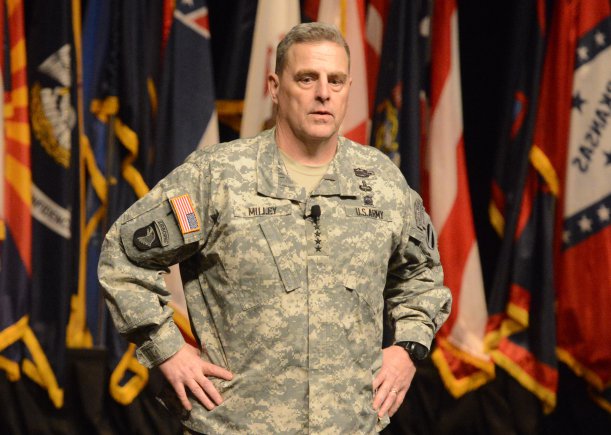
General Mark Milley, the US Army Chief of Staff is a go getter and a man in a hurry. He has initiated number of measures like acquisition of equipment and improvement in their  communication network - Warfighter Information Network-Tactical (WIN-T), the Backbone Of The U.S. Army's Tactical Network

Today’s soldiers expect to have network access anywhere, anytime. With the General Dynamics-built Warfighter Information Network-Tactical (WIN-T), commanders can communicate on-the-move and soldiers can have their voices heard, their texts received, and their location displayed on a map.WIN-T is the U.S. Army’s tactical network backbone providing secure voice and data communications for soldiers on the battlefield without the need for fixed infrastructure. 

The US Army may not have stealth fighters or nuclear submarines, but it’s a high-tech organization all the same. Even walkie-talkies are digital and networked nowadays. From the foot soldier navigating the front lines with GPS, to the drone taking pictures overhead, to the officer making plans at the command post, to the supply clerk ordering spare parts back at base, a modern army depends on a complex network of computers sharing data over land lines and radio waves. But land lines can be cut, radio waves can be jammed, and computers can be hacked—especially if you’re up against the Russians. In their unofficial invasion of Ukraine, Russian forces routinely shut down Ukrainian communications, leaving units isolated, deaf, and blind. They triangulated the sources of Ukrainian transmissions so they could target devastating artillery barrages.

The Army is “taking a hard look” at its flagship tactical communications network after receiving more negative reviews from the field, said Chief of Staff Gen Mark Milley. He listed several issues plaguing the  WIN-T: it is too complex to operate in combat conditions, it is not as transportable as it needs to be and it is not completely secure from cyber intrusions. Milley sees the current systems as too vulnerable to jamming and hacking, too big a target for artillery, and too immobile for rapid maneuver. Those are tolerable weaknesses against the low-tech Taliban or Islamic State, but crippling in a high-intensity war against Russia or China. Milley faces the risk that, in the next war, the US Army’s communications will get shut down — as the Ukrainian Army’s networks were in 2014, paralyzing them against the Russian invasion.  He looked at the Russian threat and decided that Army networks weren’t up to it. A generation fighting low-tech guerrillas in Afghanistan and Iraq had left the Army with a digital backbone deeply unsuited to fighting a sophisticated nation-state. There had been billions invested in Army networks since 9/11, but in the urgency of constant combat, they’d grown  with different systems slapped together to meet different needs and then kludged into submission. The network depended on a legion of contractor field service representatives and a mountain of heavy equipment, all installed at a large, stationary bases—completely incompatible with a war of maneuver in eastern Europe. The network emitted radio signals at high power in all directions—easy for Russian antennas and artillery to zero in on. The network wasn’t designed to withstand  serious electronic or cyber attack—favoured weapons of the modern Russian military. Perhaps worst of all, at least some commanders were using the network to micromanage their subordinates—a path to disaster in mobile warfare, as the French army of 1940 could tell you. 


So this spring, General Milley ordered a comprehensive review of the Army’s networks. What the Chief of the Army originally thought might take “four to six weeks” has turned into a massive effort involving not just the military but extensive outreach to Congress and industry. Milley briefed congressional committees on progress and met personally with major contractors to get their input on the art of the possible, kicking off a series of Army-industry roundtables.He spun off a separate but related review of electronic warfare—both the defensive systems that protect US networks and offensive systems that jam an adversary’s.

Gen. Mark Milley shared in his posture hearing in May, “the character of war does change on occasion. And one of the drivers – not the only driver – is technology.” In other forums, he has elaborated that “we have new insights into the character of future conflict, and we have had glimpses of what our Army and its Soldier must be ready to do in the coming decade.” Shifts in the character of war offer an opportunity: if we can anticipate or at least recognize them, we can adapt proactively, maintaining or regaining overmatch and forcing competitors to react to us.

Over and over, Milley and other Army leaders mentioned one essential: speed. In a world where Moore’s Law doubles computer power every 18 months, you can’t afford an acquisition cycle that took 15 years to field new technology. Cybersecurity in particular has to be updated constantly or it becomes obsolete. Speed is a problem for all four armed services, but the Army especially has a poor track record on high-tech programs, from the cancelled Comanche stealth helicopter to the cancelled Future Combat Systems. FCS, in particular, struggled with the complexity of the mobile network it was  trying to build. As a result, while the Army isn’t a low-tech service, it does face a higher bar of skepticism when it asks Congress to fund high-tech systems.

Some fixes won’t take any new technology at all—just retraining on old techniques. Cold War soldiers learned to maintain radio silence, or at least cut conversations short, when they didn’t want the Russians to pick them up. They learned to position antennas behind hills, so the Soviets couldn’t detect their emissions, or well away from other assets, so a barrage targeting the transmissions wouldn’t destroy everything and everyone else. All these tactics must be updated for the modern age. At the same time, however, an army in the field may need to discard some bandwidth-hungry luxuries of modern networks: live video from drones, video teleconferencing,and massive packets of PowerPoint slides. The junior officers who’ve been digitally micromanaged with these tools might even say good rid 

WIN-T increment 1 was fielded to the entire Army between 2004 and 2012. An increment 1b upgrade was developed to improve cybersecurity. Increment 2 is focused on mobile users, and was approved for full rate production in June 2015 by the Defense Department. It has so far been fielded to 14 brigade combat teams and eight division headquarters. WIN-T increment 3 is in development, and one of its key features will be “ease of use.”

Meanwhile, a letter signed by 176 House and Senate members was sent to Milley  asking for the program to be accelerated. “I'm not going to accelerate it until I'm convinced it will work in combat against the enemies of our country that may be coming in the future,” Milley insisted. “That's kind of where we stand right now. But I owe you and this committee and others a rigorous review within about four to six weeks.”

How bad is it? At a hearing  of the House Armed Services air and land subcommittee Army Lt. Gen. Bruce Crawford, Army Chief Information Officer/G-6 said this: “

Current Network Challenges The network evolved over the past 16 years to address numerous challenges, including a common operating picture that could not be shared among all formations at echelon, data storage and transport challenges, warfighting systems that lacked the ability to work together, Unfortunately, our current network is too complex, fragile, not sufficiently mobile nor expeditionary, and one that will not survive against current and future peer threats, or in contested environments. We find ourselves  where our network is not user-friendly, intuitive, or flexible enough to support our mission in the most effective manner and demands a heavy reliance on industry field service representatives to operate and sustain these systems. In addition to the emerging threats, we have also seen a commercial innovation explosion that accelerated at a rate with which our standard acquisition process could not keep pace. Future adversaries are not inhibited by the same processes, allowing them to better exploit new technology to their advantage. 

Readiness Challenges Based on the emerging threat and the explosion of technology, we are seeing a change in warfare of the future.

Network Assessments.  Over the past year, the Chief of Staff of the Army led an assessment of the Army’s network and modernization plans. These network assessments involved all four network mission areas – the Enterprise Information Environment Mission Area, Intelligence Mission Area, Business Mission Area and the focus of today’s testimony, which is the Warfighting Mission Area. The Army conducted this internal assessment in parallel with the study directed by Congress  on the Army’s tactical network, which was carried out by the Institute for Defense Analyses (IDA). The findings of the internal Army assessment were corroborated by the IDA study as well as feedback from Department of Defense testing agencies, combat training center rotations, joint exercises, and feedback from operational commanders. The internal and external assessments have revealed high risk challenges that we feel must be mitigated to enable our Army to “fight tonight” against peer adversaries. These findings documented significant challenges across four broad areas of network governance, requirements, acquisition, and innovation, which continue to negatively affect the Army’s ability to provide its Warfighters with simple, intuitive, resilient and protected network enabled capabilities.

Specifically, in the area of governance, the assessments revealed that the lack of a single Army network integrator has resulted in multiple “stove-piped” mission command systems and networks, with multiple, duplicative and non-integrated information technology programs. The assessments noted an emphasis on technical specifications, rather than clearly defined operational requirements leading to disconnects between the acquisition community and the operational force. Our current acquisition process does not allow the Army to rapidly acquire and integrate emerging capabilities, allowing the warfighter to keep pace with technology and stay ahead of the evolving threat. This prevented the Army from effectively leveraging the exponential growth of investments by commercial industry partners over the past decade and capitalizing on the robust Research, Development, Testing and Evaluation (RDT&E) capabilities of our Joint partners. Additionally, the extensive developmental and operational testing required for programs of record has prolonged development and delayed delivery of network-enabled capabilities. 

Finally, in the area of innovation, the assessments found that the Army is not capitalizing on industry best practices and must increase integration between developers and operators. This lack of direct engagement with the actual users of the network-enabled capabilities has reduced the Army’s ability to assess and provide immediate feedback to the acquisition community in order to influence the development of improved solutions to network challenges.  

Army Network Priorities. As the Army has looked at developing its new network path forward, we have focused on four priorities: command posts, tactical network transport, mission command systems, and interoperability. For command posts, the new path will seek to improve survivability and mobility. For tactical network transport, the Army will take steps to integrate multiple network transmission paths into a unified transport layer to increase survivability against evolving electronic warfare threats. For mission command systems, the Army will take steps aimed at delivering a common operating environment through a unified mission command suite of systems and applications.


New Mission Command Tactical Network Path Forward.    After comprehensive senior Army leadership consideration and review of potential alternatives, the Army’s new network modernization path forward will be to halt programs that do not remedy operational shortfalls identified by internal and external assessments, fix those programs required to “fight tonight” and then pivot to a new acquisition strategy of “adapt and buy” that allows for rapid insertion of new technologies. This requires us to leverage industry best practices by creating and enforcing a standards-based open architecture that is both coherent and flexible enough to define standards while not limiting possibilities for insertion of new technologies; and  alignment to new governance, acquisition reform, testing reciprocity, innovation venues, and initial ‘adopt and buy’ capabilities. 

The Army will maximize available Commercial-off-the-Shelf (COTS) and available solutions to improve the survivability and mobility of command posts. We will incorporate solutions to increase survivability against electronic warfare and cyber threats.  The Army will also deliver coalition and Joint radio gateways with access to tactical data links aimed at integrating air-to-ground communications to improve Joint and Army interoperability and close air support. The Army’s pivot to an “adapt and buy” acquisition approach will enable us to deliver a “future state” network to counter the high-end threats and to keep pace with technology. This new approach will help us leverage proven Joint, Special Operations Forces (SOF), and industry solutions that are readily available. 

The future network must be built with real-time feedback from Soldiers on the ground and immediately address jamming, cyber, electronic warfare, power and spectrum consumption, joint and interagency interoperability, and air-to-ground communications shortfalls. In the near term, the Army will focus on a less-complex tactical network, moving complexity to the enterprise, freeing up Soldiers to focus on warfighting tasks rather than integrating information technology. This improves current network capability that includes satellite communications, network mobility and security, tactical radios, mission command applications and Position, Navigation and Timing capacity.

The Army left lawmakers shaking their heads when they announced they plan to shut down the controversial WIN-T program — except they aren’t really shutting it down: They’re going to keep buying it for a year. They’re also planning to buy other hardware and software that’s not 10 years out of date, as much of the current network equipment is. Senate Armed Services Committee Chairman Sen. John McCain blasted Army leaders for WIN-T performance setbacks and questioned how it is possible that these issues are now surfacing after the Army already invested $6 billion in the program. Congress appropriated $552 million for WIN-T in fiscal year 2017, and the Army is seeking $420 million for 2018.

Major General James J. Mingus U.S. Army Mission Command Center of Exelence blamed the troubles on the sheer size of the program. High-tech systems that require frequent updates are hard to manage when they are as large as WIN-T
Industry experts said WIN-T has suffered from the slow pace of development and production, and the Army’s inability to keep up with the speed of innovation in the IT world.

Turner and other lawmakers asked if the Army knew what system it will move to in the future. “What are you pivoting to?” he asked. “And what you described was a process, not a destination, not a system, not a procurement program. So, and with all due respect, I believe that the answer is, you don’t know, right?”
Crawford conceded that the Army does not yet know the answer to that question.
“The answer is we do not have an objective system,” the general said. “If there were an objective system on the shelf, sir, we would be trying to go and purchase that objective system.”Lawmakers also asked if the Army has an alternative system for on-the-move mission command capability.
“The alternative system for on-the-move mission command — between now and fiscal year 2022, we have a system called Joint Battle Command Platform,” Crawford said. “It’s actually one of the preferred at the maneuver level — systems and our formations for on-the-move mission command.” The service plans to field JBCP to the entire force between now and fiscal 2022, Crawford said.

As the hearing wrapped up, Rep. Niki Tsongas, D-Massachusetts, told Army officials that she is still not satisfied with what she heard in the hearing. “Even after testimony today I still feel that your way forward is half-baked, not fully developed and overly optimistic,” she said. “My father used to have the saying, ‘You may not be right but you’re positive.’ And in essence I think you’re being very positive, but it’s not clear that the way forward is actually right.”
To streamline, the Army is targeting tools and technology that are less complicated and easier for soldiers on the ground to operate. It’s a problem Crawford and other Army leaders acknowledged has taken a long time and concerted effort to attempt to fix.

Other key areas of emphasis involve toughening troops against interference with satellite communications, including through more use of tropospheric transmission capabilities that extend the network and enable communication amid loss of satellite communication. And then there’s the push to simplify and restructure command posts themselves, making them lighter, more mobile and less susceptible to enemies intercepting signatures and communications that reveal soldiers’ locations.

“Peer adversaries have been developing [capabilities] — not just electronic warfare and cyber — with the ability to link sensor to shooter. They’re able to sense us and link to direct and indirect fire capabilities that can kill. Survivability of the command post is based on real threats and the realization that while fighting 16 years of combat, our peers have also gone to school on us and developed capabilities that put us at significant risk if we don’t mitigate that risk.”

If we see the situation in Indian conditions most of the issues are similar in nature. Look at the different projects undertaken by Indian Army's Director General of Information Systems. A total budget of Rs 90000 crores ( a wild estimation) to be delivered in 2025 and beyond when the technology will be obsolete. Look at the time span the different projects are taking. Is it acceptable?

In 2007 my Army Commander once told me, If I was the Chief I would go to Bangalore, meet the three head honchos of Indian Silicon Valley, ask them this is what I require, get a timeline and fund requirement and hand over the projects of DG Info System to whoever is selected. Period. 

Though it looks too simplistic, but somebody has to catch the bull by the horn as Gen Milley has done. Do we have it in us to show the guts to do it.

You guess is as good as mine. 
Can India Counter Emerging Chinese Capabilities Like Stealth Aircraft? – Analysis

By Pushan Das
Source Link

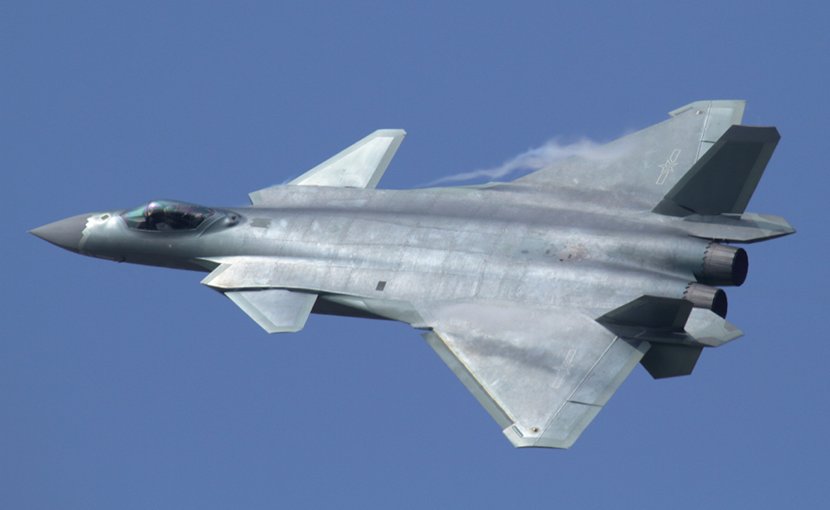
Defending Indian airspace from any potential Chinese aerial challenge or intrusions in the future with the proliferation of stealth aircraft in the region, will be eventualities that the Indian Air Force must contend with.


Army Chief Milley Turns To Industry For Network Overhaul

By SYDNEY J. FREEDBERG JR.
Gen. Mark Milley

ARLINGTON: Want to sell information technology to the US Army? Then you need to write this down: Paul.A.Ostrowski.mil@mail.mil. That’s the email of the generalseeking industry’s input — historically something of a struggle for the service — as the Army reviews and overhauls its networks.


Why the world should worry about North Korea's cyber weapons

By Joshua Berlinger
Source Link


North Korea's hackers have been accused of carrying out some of the most audacious cyber attacks of the past few years, from siphoning millions of dollars to stealing state secrets. Analysts say cyber capabilities have become a key asset in North Korea's war chest, used for a wide range of purposes including hacking adversaries like South Korea and pilfering money.