 New Delhi has recently made a sound move by agreeing to work in tandem with similarly-minded powers to protect the Indian Ocean.The acquisition of its own assets in the Indian Ocean Region is a bonus and will retain some autonomy for India. The small, out-of-mind archipelago of Seychelles has been in the Indian news cycle an inordinate amount. Part of this is due to a prospering Indian public starting to take greater interest in the geopolitics of their region. Another reason is the recent agreement signed between India and Seychelles for the construction of a military base on Assumption Island, one of the 115 islands of the African country. Originally signed in 2015 during a visit by Prime Minister Narendra Modi to the country, work could not begin on the strategic asset as the deal was not ratified by the Seychelles parliament during the term of the previous president, James Michel.
24 March 2018
Seychelles Strategy: Why A Base On Assumption Island Is Crucial For Securing The Indian Ocean Region
New Delhi has recently made a sound move by agreeing to work in tandem with similarly-minded powers to protect the Indian Ocean.The acquisition of its own assets in the Indian Ocean Region is a bonus and will retain some autonomy for India. The small, out-of-mind archipelago of Seychelles has been in the Indian news cycle an inordinate amount. Part of this is due to a prospering Indian public starting to take greater interest in the geopolitics of their region. Another reason is the recent agreement signed between India and Seychelles for the construction of a military base on Assumption Island, one of the 115 islands of the African country. Originally signed in 2015 during a visit by Prime Minister Narendra Modi to the country, work could not begin on the strategic asset as the deal was not ratified by the Seychelles parliament during the term of the previous president, James Michel.China quietly & cleverly finds a new route to S. Doklam, 7 months after India stopped it
COL. VINAYAK BHAT (RETD)
 New alignment is 5 km away from Indian posts, making it difficult for India to do anything about it. The new road will open up South Doklam to Chinese troops. New Delhi: China has worked through the winter to bypass India’s aggressive blockade at Doklam, making a new road that can give its troops access to the southern part of the plateau – a move that has serious strategic implications for New Delhi. The Doklam crisis was sparked in June last year after Indian troops crossed over to stop the construction of a road that would enable the Chinese military to move vehicles to South Doklam, thus giving it easy access to the Jampheri ridge that overlooks the strategic Siliguri corridor.
Army flags concerns over OFB rifles
RAJIB CHOWDHURI
 Kolkata: Close on the heels of the Modi government’s clearance to procure around 7.40 lakhs assault rifles of 7.62 mm calibre which will replace the 5.56 mm calibre INSAS rifles for the Indian Army, the Army has flagged its serious questions on the quality of the latest weapon being developed by the Kolkata-headquartered state defence manufacturer: Ordnance Factory Board (OFB). Vowing to not to compromise with the qualitative requirements (QR) for its weapons the Army also pointed out that the new assault rifle failed trials while deliberating that no one can meet its requirement.
B.R. Ambedkar in the time of farmer protests
Niranjan Rajadhyaksha
 The challenge of sustainable industrial growth is intimately linked to the situation in rural India, as Ambedkar rightly pointed out a hundred years ago B.R. Ambedkar persuasively argued in his 1918 article that the solution to rural stress is rapid industrialization. This year marks the centenary of a landmark article by B.R. Ambedkar. Its central insight deserves attention at a time when thousands of protesting farmers touched the hearts of Mumbaikars with their quiet dignity during the long march this week.
The U.S. Needs to Talk to the Taliban in Afghanistan
By Borhan Osman
 KABUL, Afghanistan — The Taliban appear to have rejected the bold proposal by President Ashraf Ghani of Afghanistan to invite them for direct peace talks with the government. In an unsigned commentary published last week on their official website, the Taliban said, “The permission of peace and war are with the Americans ….” and claimed that their policy of wanting to “talk to American invaders about peace and stability rather than talking to their slave regime is now widely accepted by the independent Western analysts and other intellectuals.”
KABUL, Afghanistan — The Taliban appear to have rejected the bold proposal by President Ashraf Ghani of Afghanistan to invite them for direct peace talks with the government. In an unsigned commentary published last week on their official website, the Taliban said, “The permission of peace and war are with the Americans ….” and claimed that their policy of wanting to “talk to American invaders about peace and stability rather than talking to their slave regime is now widely accepted by the independent Western analysts and other intellectuals.”
Has China Overtaken The U.S. In Terms Of Innovation?
by Ana Maria Santacreu and Heting Zhu
Two measures of innovative activity of a country are: Its research and development (R&D) intensity (that is, the fraction of total output invested in R&D), which reflects the effort of innovation Its number of patent applications, which reflects the output of innovation Larger R&D investment is associated with faster technological progress, higher productivity and faster output growth. One of the outcomes of the R&D process is an increase in the number of patent applications.1 Indeed, there tends to be a positive correlation between the R&D intensity of a country and the number of patent applications in that country.
Xi Jinping tells parliament China must not be complacent
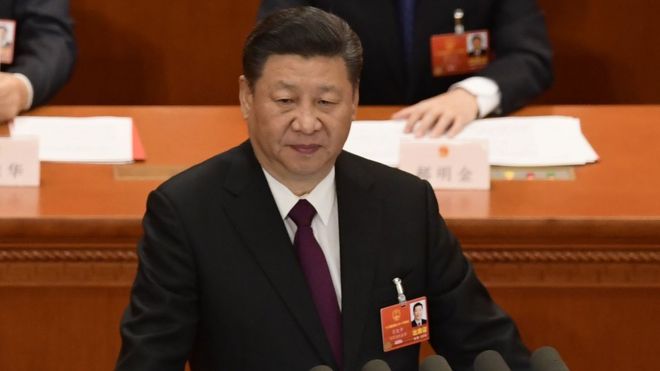 Chinese President Xi Jinping has told the National People's Congress (NPC) that China must not become complacent about its development. Speaking at the closing session of the annual parliament, Mr Xi said China was at a critical stage in its history and only socialism could save it. He also warned against Taiwanese separatism or attempts to split China. Mr Xi is now set up to be China's president for life, after the NPC removed a two-term limit. The motion was overwhelmingly approved by the roughly 3,000 delegates at the start of the session.
Liu He: China's quiet economist becomes top economic leader
By Sarah Porter
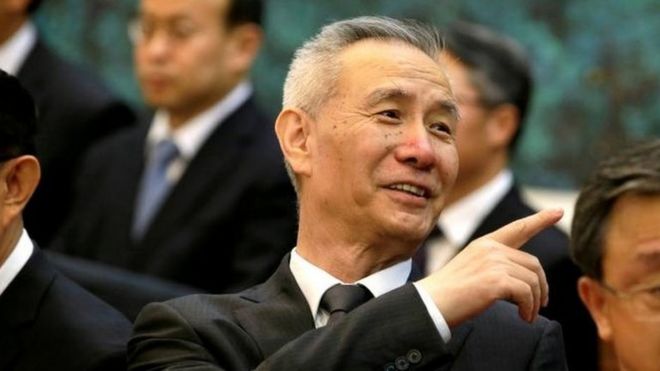 Harvard-educated Liu He has been named one of China's four vice-premiers - in charge of economic policies and financial issues. It's a huge and high-profile job. Known affectionately by some as "Uncle He", it's widely rumoured Liu He has been friends with President Xi Jinping since they were teenagers. Whether that's true or not, his status today as President Xi's top economic adviser is beyond dispute. He has been called the brains behind China's shift in economic policy, which has seen a focus on slower but more sustainable consumption-based growth, rather than the debt-fuelled investment and exports that have driven the country's expansion of the past four decades.
China's stealth wars in the Himalayas
Brahma Chellaney
 Operating in the threshold between peace and war, China has pushed its borders far out into international waters in the South China Sea in a way no other power has done elsewhere. Less known is that China is using a similar strategy in the Himalayas to alter facts on the ground -- meter by meter -- without firing a single shot. India is facing increasingly persistent Chinese efforts to intrude into its desolate borderlands. China, however, has not spared even one of the world's smallest countries, Bhutan, which has barely 8,000 men in its security forces. In the disputed Himalayan plateau of Doklam, claimed by both Bhutan and China, the People's Liberation Army has incrementally changed the status quo since last fall.
Trade Wars and Real Wars
The world is rudely awakening to the dangers of President Donald Trump’s tariffs. Markets are correcting. Countries and industries are scrambling for exemptions. Economists now see greater downside than upside to growth projections for the U.S. economy this year. But the hazards could be even greater than anyone wants to admit. As protectionist sentiment rises, so does the risk of war. The link between international commerce and peace has been apparent for so long that it is sometimes taken for granted. As the German philosopher Immanuel Kant wrote in his 1795 essay, Perpetual Peace, “The spirit of trade cannot coexist with war, and sooner or later this spirit dominates every people.”
The Armed Conflict in Eastern Ukraine
By Nikolaus von Twickel, Gwendolyn Sasse and Mario Baumann for Center for Security Studies (CSS)
 The three articles in this edition of the RAD look at 1) the “people’s republics” of Donetsk and Luhansk in eastern Ukraine, arguing that though they may be best described as Russian puppet states, Moscow’s denial of formal ties to these entities makes a comprehensive analysis difficult; 2) the attitudes and identities of the Donbass region’s population, including both the Russian and Ukrainian controlled areas; and 3) key factors driving the recurrence of violence in eastern Ukraine and the potential for peacekeeping efforts to address them.
Allies “Entering a New World” in Confronting Russia, U.K. Official Says
By PAUL MCLEARY
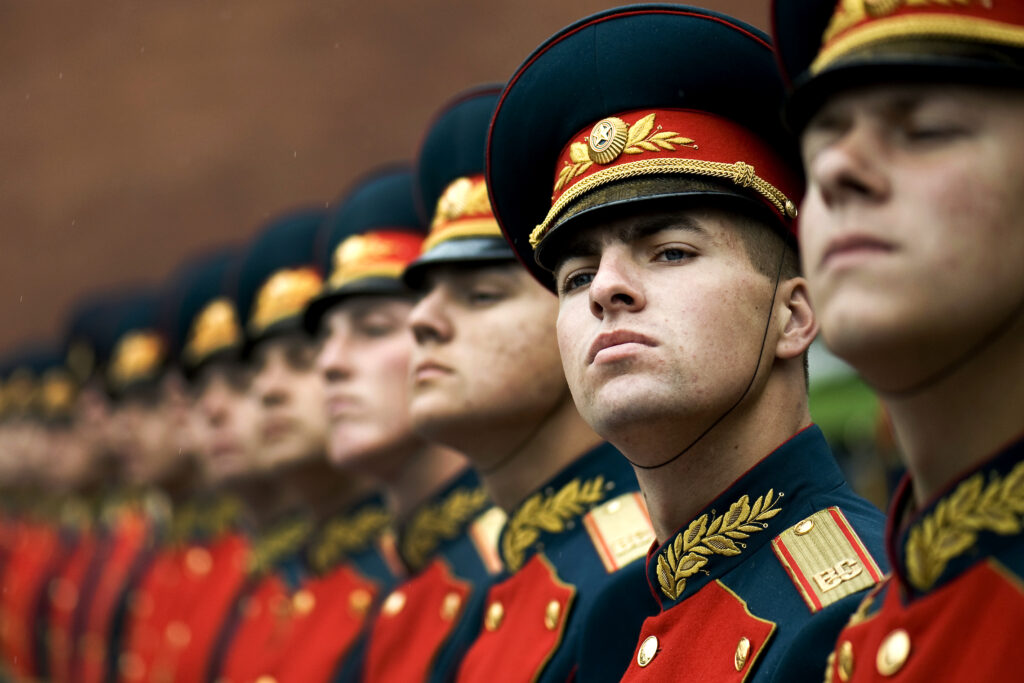 WASHINGTON: The No. 2 official in the British Ministry of Defence promised a “robust” response to the alleged Russian assassination attempt on U.K. soil. Mark Lancaster‘s remarks to reporters here Friday echoed a rising drumbeat of British and other allied statements on the seriousness of the Russian threat, including from the top European general in NATO.
The 25 Countries With The Most Billionaires
There are roughly 36 million millionaires in the world. However, the billionaire on the other hand is a much rarer breed. According to Forbes, there are just over 2,000 billionaires in existence, making up just 0.00003% of the global population.
Tsunamis of innovation are shaking the energy industry
David G. Victor
The World Economic Forum’s Global Future Council on Energy recently released a paper on Transformation of the Global Energy System. One of the Council’s authors, David Victor, also co-chair of the Cross-Brookings Initiative on Energy and Climate, highlights its findings on the global energy system below. Tsunamis of innovation, anxiety, and opportunity are now washing over the world’s energy system. New technologies have transformed the global markets for oil and gas. The United States is on track to become the world’s largest oil producer within a decade, as my Brookings colleague Samantha Gross has analyzed. Meanwhile, countries from Russia to Saudi Arabia—that used to have the problem of finding ways to spend huge amounts of cash earned from oil exports—are now learning to be a lot more frugal. Innovation is making some fuels, like natural gas, significantly more competitive while crushing coal in some markets. Even more profound changes are now appearing in the electric power industry, where traditional firms that operate large power grids see threats from new upstarts that are siphoning away customers and creating totally new types of local power grids.
US says Russian hack did not compromise power grid, plants
By: Matthew Daly
/arc-anglerfish-arc2-prod-mco.s3.amazonaws.com/public/XNRG54W3TVDYRP55XTOFK3WGEI.jpg) WASHINGTON — A Russian government hacking operation aimed at the U.S. power grid did not compromise operations at any of the nation’s power plants, federal regulators and the industry said Friday. Corporate networks at some of the 99 nuclear power plants licensed by the Nuclear Regulatory Commission were affected by the 2017 hack aimed at the energy grid and other infrastructure, but no safety, security or emergency preparedness functions were impacted, the NRC said in a statement.
WASHINGTON — A Russian government hacking operation aimed at the U.S. power grid did not compromise operations at any of the nation’s power plants, federal regulators and the industry said Friday. Corporate networks at some of the 99 nuclear power plants licensed by the Nuclear Regulatory Commission were affected by the 2017 hack aimed at the energy grid and other infrastructure, but no safety, security or emergency preparedness functions were impacted, the NRC said in a statement.Are Cold War Spy-Craft Norms Fading?
by Jonathan Masters
 The poisoning of a Russian former double agent, Sergei V. Skripal, and his daughter with a rare nerve agent in England has raised new concerns in NATO capitals about Russia’s willingness to escalate intelligence operations beyond established norms. The British and U.S. governments have blamed Russia for the attack, which follows a series of unexplained deaths of Russians in the United Kingdom in recent years. For longtime CIA veteran Jack Devine, it appears that some of the unwritten conventions of spy-craft with Russia no longer apply. “Russia today seems unconstrained by any norms,” says Devine in a written interview, citing assassination campaigns, meddling in foreign elections, and bombing civilians in Syria.
The poisoning of a Russian former double agent, Sergei V. Skripal, and his daughter with a rare nerve agent in England has raised new concerns in NATO capitals about Russia’s willingness to escalate intelligence operations beyond established norms. The British and U.S. governments have blamed Russia for the attack, which follows a series of unexplained deaths of Russians in the United Kingdom in recent years. For longtime CIA veteran Jack Devine, it appears that some of the unwritten conventions of spy-craft with Russia no longer apply. “Russia today seems unconstrained by any norms,” says Devine in a written interview, citing assassination campaigns, meddling in foreign elections, and bombing civilians in Syria.
Are there spy-craft norms?
Here’s how Army soldiers in Europe are doing mobile electronic warfare
By: Mark Pomerleau
/arc-anglerfish-arc2-prod-mco.s3.amazonaws.com/public/G262ANSACFD7HNTNAPOXIJNLO4.jpg) The Russian electronic warfare threat in Europe has caused the U.S. military and its foreign partners to scramble to reevaluate their capabilities and force postures. Some leaders have even asserted the U.S. is “outgunned” when it comes to electronic warfare. Army soldiers in Europe, as a result, require additional capabilities. For the first time, details regarding soldiers needs — such as the ability to be mobile and operate disconnected from a network, which the current capability and program does not include — are coming to light.
The Russian electronic warfare threat in Europe has caused the U.S. military and its foreign partners to scramble to reevaluate their capabilities and force postures. Some leaders have even asserted the U.S. is “outgunned” when it comes to electronic warfare. Army soldiers in Europe, as a result, require additional capabilities. For the first time, details regarding soldiers needs — such as the ability to be mobile and operate disconnected from a network, which the current capability and program does not include — are coming to light.Acropolis is DISA’s bastion against today’s threats and future cyber wars
By Patience Wait
 There already are battles in cyberspace. The Defense Information Systems Agency (DISA) has got the warriors — and the weapons — to prove it. And just as in kinetic war, it takes constant adaptation, new strategies, tactics and weapons to engage adversaries whose own means and methods are constantly changing. DISA’s Acropolis is the infrastructure upon which the agency runs its platforms and tools – the weapons – to track down and fight off opponents. “This division has been working with Acropolis since it was invented about 15 years ago,” said DISA’s Dr. Jim Travis, chief of the Cyber Situational Awareness/Cyber NetOps Solution Division. “It’s lots and lots of servers that we run defensive cyber solution operations on top of…Acropolis is a stack of things, with specialists at each layer.”
Addressing The Dark Side Of The Crypto World
by Christine Lagarde
 Whether Bitcoin’s value goes up or Bitcoin’s value goes down, people around the world are asking the same question: What exactly is the potential of crypto-assets? The technology behind these assets - including blockchain - is an exciting advancement that could help revolutionize fields beyond finance. It could, for example, power financial inclusion by providing new, low-cost payment methods to those who lack bank accounts and in the process empower millions in low-income countries.he possible benefits have even led some central banks to consider the idea of issuing central bank digital currencies.
Trans-Alaska pipeline fights 22 million cyberattacks per day
/arc-anglerfish-arc2-prod-mco.s3.amazonaws.com/public/LTQ4DDSAZZFINCNNBUHJYJF2RU.jpg) ANCHORAGE, Alaska — Alyeska Pipeline Service Company’s chief information officer said his team fights off about 22 million cyberattacks per day. Bill Rosetti said that at the Anchorage headquarters for the trans-Alaska pipeline, his team is kept busy by mass, automated attacks — often from servers overseas, Alaska’s Energy Desk reported Wednesday. “It can be 6 or 7 million some days and 45 million the next,” Rosetti said. “I wish I could tell you why it changes that way, but I really don’t know.” Rosetti said that Alyeska has never been breached, but the challenge is growing. The rate of cyberattacks has roughly doubled in the last five years, he said.
ANCHORAGE, Alaska — Alyeska Pipeline Service Company’s chief information officer said his team fights off about 22 million cyberattacks per day. Bill Rosetti said that at the Anchorage headquarters for the trans-Alaska pipeline, his team is kept busy by mass, automated attacks — often from servers overseas, Alaska’s Energy Desk reported Wednesday. “It can be 6 or 7 million some days and 45 million the next,” Rosetti said. “I wish I could tell you why it changes that way, but I really don’t know.” Rosetti said that Alyeska has never been breached, but the challenge is growing. The rate of cyberattacks has roughly doubled in the last five years, he said.Edward Snowden: Facebook Is A Surveillance Company Rebranded As "Social Media"
 (Zero Hedge) NSA whistleblower and former CIA employee Edward Snowden slammed Facebook in a Saturday tweet following the suspension of Strategic Communication Laboratories (SCL) and its political data analytics firm, Cambridge Analytica, over what Facebook says was improper use of collected data. In a nutshell, in 2015 Cambridge Analytica bought data from a University of Cambridge psychology professor, Dr. Aleksandr Kogan, who had developed an app called “thisisyourdigitallife” that vacuumed up loads of information on users and their contacts. After making Kogan and Cambridge Analytica promise to delete the data the app had gathered, Facebook received reports (from sources they would not identify) which claimed that not all the data had been deleted – which led the social media giant to delete Cambridge Analytica and parent company SCL’s accounts.
 Facebook’s Surveillance Machine
Zeynep Tufekci
 In 2014, Cambridge Analytica, a voter-profiling company that would later provide services for Donald Trump’s 2016 presidential campaign, reached out with a request on Amazon’s “Mechanical Turk” platform, an online marketplace where people around the world contract with others to perform various tasks. Cambridge Analytica was looking for people who were American Facebook users. It offered to pay them to download and use a personality quiz app on Facebook called thisisyourdigitallife.
In 2014, Cambridge Analytica, a voter-profiling company that would later provide services for Donald Trump’s 2016 presidential campaign, reached out with a request on Amazon’s “Mechanical Turk” platform, an online marketplace where people around the world contract with others to perform various tasks. Cambridge Analytica was looking for people who were American Facebook users. It offered to pay them to download and use a personality quiz app on Facebook called thisisyourdigitallife.Why the military needs to take 3-D printer cybersecurity seriously
By: Meredith Rutland Bauer
/arc-anglerfish-arc2-prod-mco.s3.amazonaws.com/public/UTJLJEAEARCR7FJLVYWLWJR2Z4.jpg) Marines with 2nd Maintenance Battalion, 2nd Marine Logistics Group discuss the capabilities of 3-D printing technology with a British Royal Navy Commando during Exercise Bold Alligator 17 at Camp Lejeune, N.C., Oct. 26, 2017. (Lance Cpl. Abrey D. Liggins/Marine Corps) The use of 3-D printing in the military is becoming more commonplace, and as a result experts are emphasizing the importance of treating 3-D printers like the hackable machines they are. While a 3-D printer’s capability for experimental on-site manufacturing is far more futuristic than a traditional Wi-Fi enabled printer, the hardware is as vulnerable to cyberattacks as an average laptop or connected printer, said Nikhil Gupta, a New York University associate professor of engineering and materials researcher.
Marines with 2nd Maintenance Battalion, 2nd Marine Logistics Group discuss the capabilities of 3-D printing technology with a British Royal Navy Commando during Exercise Bold Alligator 17 at Camp Lejeune, N.C., Oct. 26, 2017. (Lance Cpl. Abrey D. Liggins/Marine Corps) The use of 3-D printing in the military is becoming more commonplace, and as a result experts are emphasizing the importance of treating 3-D printers like the hackable machines they are. While a 3-D printer’s capability for experimental on-site manufacturing is far more futuristic than a traditional Wi-Fi enabled printer, the hardware is as vulnerable to cyberattacks as an average laptop or connected printer, said Nikhil Gupta, a New York University associate professor of engineering and materials researcher.Comparing A 355-Ship Fleet With Smaller Naval Forces
In December 2016, the Navy released a new force structure assessment (FSA) that called for a fleet of 355 ships - substantially larger than the current force of 280 ships. In response to a request from the Subcommittee on Seapower and Projection Forces of the House Committee on Armed Services, CBO explored the costs of achieving that goal in a previous report. To expand on that analysis, CBO has estimated the costs of achieving a 355-ship fleet under two alternatives. The agency then compared those scenarios with two other alternatives involving smaller fleets. For all four alternatives, CBO explored shipbuilding and operating costs, the composition and capabilities of the fleet, and effects on the shipbuilding industry.
23 March 2018
Things could turn bad for India's economy in 2018: Credit Suisse

India is one of the most vulnerable Asian economies should another round of "taper tantrum" — a wave of selloffs — occurs, said Santitarn Sathirathai, Credit Suisse's head of emerging Asia economics.
The huge inflows into India's bond and stock markets mean a reversal is also likely to happen when there's a spike in U.S. yields, said Sathirathai.
India has emerged as one of the Asian economies most vulnerable in an environment of rising interest rates in the U.S., according to Credit Suisse.
Higher interest rates stateside could trigger capital outflows from emerging economies as investors search for better yields in the U.S.
The Federal Reserve on Wednesday raised rates by another 25 basis points, and the Swiss banking giant is expecting three more hikes this year.
India is one country that would lose out in the event of a capital flight, Santitarn Sathirathai, the bank's head of emerging Asia economics, said ahead of the latest Fed rate increase.
"In the last 12, 15 months, India has seen a lot of inflows into the bond market, as well as the equity market. That means that the potential reversal if there's a shock is also quite high," Sathirathai said at the Credit Suisse Asia Investment Conference.
India was one of the Asian economies that were badly hit by a wave of selloffs in 2013 — called the "taper tantrum" — after the Fed suggested it would start tightening monetary conditions.
While much of Asia has since built up buffers to better withstand such capital flights, India's current account balance has continued to deteriorate, noted Sathirathai.
India, the third-largest economy in Asia, last month announced a budget with massive spending that would result in a fiscal deficit of 3.3 percent of GDP — wider than the recommended 3 percent in the country's fiscal consolidation road map.
"Broad-based trade war is not our base case," said Sathirathai. "What's more likely is the taper tantrum in 2013 and when we look at countries with current account deficits, India, Philippines and maybe Indonesialook vulnerable."
Tibet and India’s China Policy
By K.S. Venkatachalam
 China’s foreign policy with India has oscillated between a ballistic approach and studied indifference. India’s approach, meanwhile, has recently flipped from a hardline to a conciliatory approach, confusing observers. At the heart of India-China tensions is the dispute over territory in the Aksai Chin area, and Tawang in the Indian state of Arunachal Pradesh, which China claims as a part of southern Tibet. Both countries have so far held 20 rounds of talks to settle the disputes, but, unfortunately, an acceptable solution has eluded them. To the credit of both sides, they have not allowed the situation to go out of control.
When Nehru meets the Dalai Lama
 A circular of the Cabinet Secretary asking Indian ministers and officials not to attend a function for the Dalai Lama in Delhi, has been in the news. While the controversy (and the MEA's kowtowing to China) continues to rage, it is interesting to look at the transcript of a talk between the Dalai Lama and Jawaharlal Nehru, the Prime Minister on India.
The encounter took place on April 16, 1961.
KL Mehta, Joint Secretary, Ministry of External Affairs took the notes. A couple of weeks later (May 2), in a debate in the Lok Sabha, the Prime Minister was asked:
Will technology be able to disrupt the legal industry?
Rahul Matthan
 We rarely see disruption coming. Most businesses function under the belief that the infrastructure that supports their operations is so difficult to replicate that its very existence is a barrier against competition. Retail stores relied on the friction inherent in developing supply chains to keep them safe from challengers. Travel businesses took comfort in the fact that the effort involved in replicating their large fleets of taxis would keep them ahead of new entrants looking to displace them. Newspapers saw the distribution networks that they had built to get the news to our doorsteps as the moat that no competitors could cross.
The Bajwa Doctrine: Pakistan Army chief pushes back against US pressure in Afghanistan, threats of funding cuts from Donald Trump
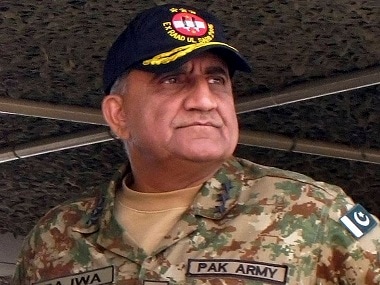 Pakistan's generals, particularly General Qamar Javed Bajwa, think their country has done more than enough to secure neighbouring Afghanistan and is not intimidated by the threat of US funding cuts, according to an analysis entitled 'The Bajwa Doctrine', published by the Royal United Services Institute (RUSI), a leading British think-tank. In the document, Pakistan's generals spell out their vision for the future of US-Pakistan military relations under the administration of President Donald Trump.
China Upgrades Diplomacy While the US Pulls Back
By Helena Legarda
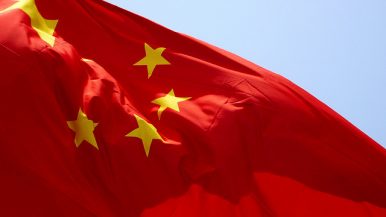 China’s diplomacy has emerged as a stronger player from this year’s National People’s Congress (NPC). China comes out of this NPC with at least five high-ranking officials in charge of the country’s foreign policy. The once sidelined Ministry of Foreign Affairs (MFA) has received a substantial boost through a budget increase, leadership changes, and rumored structural reforms. And a newly created State International Development Cooperation Agency (国家国际发展合作署) will now be in charge of coordinating China’s growing budget for foreign aid.
Redefining the Belt and Road Initiative
By Andreea Brînză
 The narrative of the Belt and Road Initiative (BRI) as spanning over 65 countries and gathering 62 percent of the world population, 31 percent of its GDP, and 40 percent of global land area should once and for all disappear now that China has announced the extension of the BRI to Latin America. Ever since Xi Jinping put forward China’s attempt to recreate the old Silk Road in 2013, observers have considered the Belt and Road Initiative (BRI) to be a project spanning Asia, Europe, and Africa, encompassing around 65 countries that have signed up for it. The two corridors that form the BRI, the Silk Road Economic Belt (the Belt) and the 21st Century Maritime Silk Road (the Road), were perceived as two routes that will stretch over Eurasia or the maritime rimland, respectively, to link China with Europe.
Economic Cooperation In Indian Ocean Region And One Belt One Road Initiative: Threat Or Opportunity? – Analysis
By Dr Palitha Kohona*
 The Indian Ocean region is experiencing a fondly anticipated luxury. Almost every one of the economies of the region is expanding at a rate that gives hope to the entire region, especially to its poor and marginalised. The promise of prosperity enthusiastically proclaimed at independence from colonial rule, so many decades ago, may at last become a reality. India is powering ahead with an anticipated growth rate of 7.3% and now is ahead of China. Still the South Asian region continues to be confronted by an inexcusably massive burden of poverty, literacy deficits, malnutrition and deprivation. South Asia has the dubious distinction of being home to the largest concentration of the poor in the world. Inadequate policy frameworks, corruption, military rivalries and internal conflicts, among others, drain resources which could be devoted to economic advancement. Some internal conflicts are funded from the outside.
Shooting An Own Goal: China’s Belt And Road Funding Terms Spark Criticism
James M. Dorsey
Steep commercial terms for China’s investment in infrastructure projects across Eurasia related to its Belt and Road initiative may give it control of key ports and other assets as recipients of Beijing’s largess find themselves trapped in debt. Yet, that comes with a risky price tag: potentially rising anti-Chinese sentiment, questioning of Chinese intentions, and a tarnishing of the image China is seeking to cultivate. Cynically dubbed debt-trap diplomacy, multiple countries along China’s Belt and Road risk financial crisis. The Washington-based Center for Global Development recently warned that 23 of the 68 countries involved were “significantly or highly vulnerable to debt distress.”
The Rise of China-Europe Railways
The Dawn of a New Commercial Era?
For over two millennia, technology and politics have shaped trade across the Eurasian supercontinent. The compass and domesticated camels helped the “silk routes” emerge between 200 and 400 CE, and peaceful interactions between the Han and Hellenic empires allowed overland trade to flourish. A major shift occurred in the late fifteenth century, when the invention of large ocean-going vessels and new navigation methods made maritime trade more competitive. Mercantilism and competition among Europe’s colonial powers helped pull commerce to the coastlines. Since then, commerce between Asia and Europe has traveled primarily by sea.
Subscribe to:
Posts (Atom)