7 May 2018

Is China’s Road In Kashmir’s Shaksgam Valley A Threat To India?

by Rohit Vats

A
A report has emerged that the Chinese are building a 36km road in Shaksgam Valley, near the critical Siachen Glacier. Does this development pose a military threat to India? Or will it do so in the future? Here is a comprehensive assessment. Boundary-related issues have cropped up once again between India and China. Only last year the two countries had a standoff at Doklam, which, by all estimates, is far from over. And now a report says that the Chinese have built a 36km road in Shaksgam Valley. It also suggests that this could pose a military challenge to India, especially with respect to its position on Siachen Glacier.

The Indian Army is fighting a bigger problem - it's broke

AROON PURIE

It is said the more you sweat in peace, the less you bleed in war. This is a lesson India refuses to learn - sadly, most of the sweat is not out of any exertion, but frustration at the pace of modernisation and indigenisation of our armed forces. The world is moving towards third and fourth generation warfare. Third generation warfare uses speed, stealth and surprise and involves cyber warfare, airpower and networked armed forces delivering precision strikes. Fourth generation warfare is aimed against violent non-state actors like the ISIS. Yet, here we are, still struggling, confusing military modernisation with a shopping list of weapons - which we are the world’s largest importers of - waiting patiently for the Defence Research and Development Organisation (DRDO) to deliver the magic bullet.

India-China summit highlights Modi’s hope versus Xi’s strategy

Brahma Chellaney

Chinese President Xi Jinping’s “informal” summit meeting with Indian Prime Minister Narendra Modi in the central Chinese city of Wuhan, significantly, began on the same day as the inter-Korean summit on April 27. That Xi chose the same date for the two-day summit might not have been a mere coincidence, given that the historic meeting between the leaders of North and South Korea left China on the sidelines, with little influence over those proceedings. It was Modi’s government, however, that initiated the effort at rapprochement with Beijing following a rocky year in which new disputes flared between the two Asian giants, including over China’s Belt and Road Initiative, the Dalai Lama’s visit to a Chinese-claimed Himalayan Indian state, transboundary river waters, and the Chinese military encroachment on Doklam plateau, which India’s ally Bhutan regards as its own territory. The relationship between the two countries, which make up more than a third of humanity and almost a fifth of the global economy, is critical to international relations.

Pakistan Embraces Multipolarity—and That Might Be Good for America

Arif Rafiq

Pakistan’s move toward diversification in a post–American world order is reflected in its military hardware acquisitions and in its diplomatic ties. Over the past two years, Indian and pro-Indian commentators have argued that Pakistan is “diplomatically isolated.” This claim has less to do with reality and more to do with the fact that isolating Pakistan is an Indian foreign-policy goal. In September 2016, Indian prime minister Narendra Modi, referring to Pakistan, declared: “We will isolate you. I will work for that.” Within weeks, op-eds appeared asserting that Pakistan was diplomatically isolated. Declaring “mission accomplished” is, of course, the fastest path to “victory,” but it doesn’t necessarily mean that one actually has won.

Chabahar: Gateway to Afghanistan and Central Asia

Brahma Chellaney

Exaggerated media accounts have sought to portray commercial glitches in India’s Chabahar port project, such as attracting a private partner for the operation of marine facilities there and resolving an excise-duties dispute, as emblematic of India’s eroding influence in southern Asia. Some have seized on the Iranian foreign minister’s statement in Islamabad that Chinese and Pakistani investment in Chabahar was welcome as evidence of India’s declining strategic reach. That statement was largely an attempt to dispel a perception that Iran has teamed up with India to checkmate China’s Gwadar designs.

There’s no stopping the American forever war

By Ishaan Tharoor 

Army Spec. Gabriel D. Conde, 22, was a child when his nation invaded Afghanistan in 2001. This week he became the latest American casualty in the ongoing war there. According to Pentagon officials, Conde was hit by enemy gunfire while participating in a counterterrorism mission in a district east of Kabul, making him the second American service member killed in Afghanistan this year. More than 2,400 Americans have died during the war, as well as tens of thousands of Afghan civilians.

China's Future Stealth Bomber Fleet

By Rick Joe

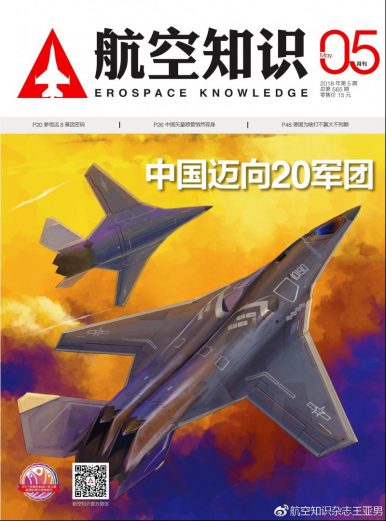
In the last few weeks, a magazine cover for prominent Chinese aerospace magazine Aviation Knowledgefeatured a pair of stealthy bomber aircraft concepts. A small number of English language articles have commented on this aircraft, speculating whether its presence on the cover of Aviation Knowledge may indicate some subtle official Chinese military backing for this concept, and what its relationship to the future Chinese stealth bomber – commonly referred to as H-20 – might be. This piece will seek to explore the current body of understanding towards the H-20. The potential role of the aircraft concept shown in the magazine will also be discussed.


Stealth Bomber Background

Australia and China's DF-26 Intermediate-Range Ballistic Missile

By Ankit Panda

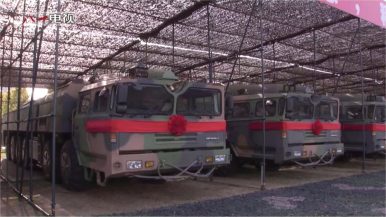
In late April 2018, China formally commissioned a brigade of Dong Feng 26 (DF-26) intermediate-range ballistic missiles (IRBM). As I discussed then, the first brigade consists of what appear to be 22 transporter-erector-launchers. The missiles are capable of both conventional and nuclear payloads; in their conventional configuration, they become the world’s longest-range conventional payload-bearing ballistic missile, with a maximum range estimated at around 4,000 kilometers. The DF-26 has been informally dubbed China’s “Guam-killer.” Its range gives it the ability to conventionally disable U.S. facilities on Guam, including Andersen Air Force Base, which hosts U.S. Pacific Command’s forward-based bomber presence in the Asia-Pacific. China’s declared nuclear no first-use posture means that, in a conflict, the People’s Liberation Army-Rocket Force would presumably strike these targets with conventionally armed weapons.

Targeting China’s tools of aggression


As U.S. Trade Representative Robert E. Lighthizer, Treasury Secretary StevenMnuchin and other officials head to Beijing this week for high-stakes trade talks with Chinese counterparts, they seek to correct an economic relationship with China that has become increasingly unbalanced — and, over the long term, dangerous — for the United States and other nations. U.S. lawmakers will support them. Since joining the World Trade Organization in 2001, China has offered an economic grand bargain with two contradictory faces. One face outwardly offers soaring and seductive promises of an emerging global economic order that will become more open and equitable as nations increase trade and commerce with China. Witness Chinese President Xi Jinping, who at the 2017 World Economic Forum in Davos, Switzerland, gushed at how “mankind has become a close-knit community of shared future” while assuring that “China is committed to a fundamental policy of opening-up and pursues a win-win opening-up strategy.”

How America Paved the Way for Iran's Success in the Middle East

Aliakbar Kiani

The Trump administration claims that all of its efforts for liberal improvement of Middle East have been ruined by Iran. U.S. President Donald Trump has said that America has paid with money and blood only to be rewarded with abuse from the Ayatollahs. How correct is this notion? The Middle East in general—and west of Asia in particular—is known for its mosaic of identities and political structure. Complications, interests that have been interfered with, and values are boiling in the pot of global religions. Jews, Christians, Muslims (Shia and Sunni) and various other dependent and independent religions and cults—besides diverse ethnic identities like Arabs, Persians, Turks, and Kurds—are shaping western Asia, which is unique in the world.

With 3 Rapid Strokes, Netanyahu Advances Israel’s Agenda Against Iran

By DAVID M. HALBFINGER
Source Link

Prime Minister Benjamin Netanyahu during his presentation on Iran, which was broadcast live on Monday. “It seems that he is pushing everybody toward a more hostile environment,” a columnist said. JERUSALEM — In three bold moves this week — with F-15s, a PowerPoint presentation and the passage of a contentious new law — Prime Minister Benjamin Netanyahu has strengthened his hand in trying to foil Iran’s strategic ambitions, while potentially pulling the two nations closer to direct conflict. In Syria late Sunday, F-15s, widely assumed to be Israel’s, struck facilities where Iran and its proxies had entrenched themselves. The attack on a storage site near Hama destroyed 200 missiles and killed at least 16 people, 11 of them Iranians.

The New Risks, Realities and Opportunities in the Middle East

NORMAN ROULE
As Iran and Israel trade accusations over Iran’s nuclear program, and the U.S. sends indicators that it may pull out of the JCPOA agreement, The Cipher Brief talked with Norm Roule—the former National Intelligence Manager for Iran at ODNI and a Cipher Brief Expert —at The Cipher Brief’s Annual Threat Conference in April. Roule’s comprehensive insights into the region covered everything from U.S. efforts to roll back Iranian influence, to a potential new Arab Spring in the making. Despite the realities and risks, there is also a significant amount of good news in the region that could yield opportunity. Some of the highlights from the conversation are adapted for print below. 

Russia’s Sole Aircraft Carrier to Be Fitted With Advanced New Air Defense System

By Franz-Stefan Gady

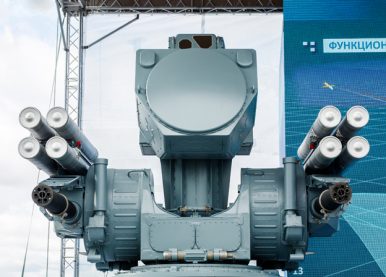
The flagship of the Russian Navy, the aircraft carrier Admiral Kuznetsov, is slated to receive an advanced new air defense system during upcoming modernization work on Russia’s sole operational flattop, the Russian Navy Deputy Commander-in-Chief Vice Admiral Viktor Bursuk said on May 2. A contract between the Russian Ministry of Defense (MoD) and state-owned United Shipbuilding Corporation (USC) for the modernization and overhaul of the Admiral Kuznetsov has finally been signed last month, following a long delay due to contractual disputes between the two sides.

THREE HARD QUESTIONS FOR U.S. MARITIME STRATEGY IN A DIGITAL AGE

By Frank T. Goertner

From the White House to the Pentagon, the message is clear. The world of 21st Century great power competition has arrived, and it is distinctly different from the one today’s U.S. national security enterprise was designed to confront. Now is the time for every agency, department, and service in the executive branch to ask itself hard questions and consider decisive change. Nowhere is the imperative for introspection more acute than in the U.S. Navy, Marine Corps, Coast Guard, and Merchant Marine. They are the sea services responsible for sustaining American sea power; their forces the guarantors of maritime superiority for a maritime nation. Moreover, their leaders are the custodians of the national assets most threatened by the rise of China and Russia as new global rivals in the maritime domain.

The Pentagon Is Losing the Innovation Battle. Here’s How to Turn It Around

BY TIM GREEFCEO

The United States military is losing the innovation battle. This is not hyperbole. Ellen Lord, defense undersecretary for acquisition and sustainment, made this point last December. In testimony before the Senate Armed Services Committee, she said, “The current pace at which we develop advanced capability is being eclipsed by those nations that pose the greatest threat to our security, seriously eroding our measure of overmatch.” The Pentagon began to respond to this challenge in 2015, following the game plan of the intelligence community and planting a stake in Silicon Valley. After all, the thinking went, Silicon Valley has by far the world’s largest concentration of tech firms supported by private equity and venture investors; and the military would close the innovation gap by sitting at the same table as the investors funding future global-technology giants. DIUx later opened outposts in Boston and Austin.

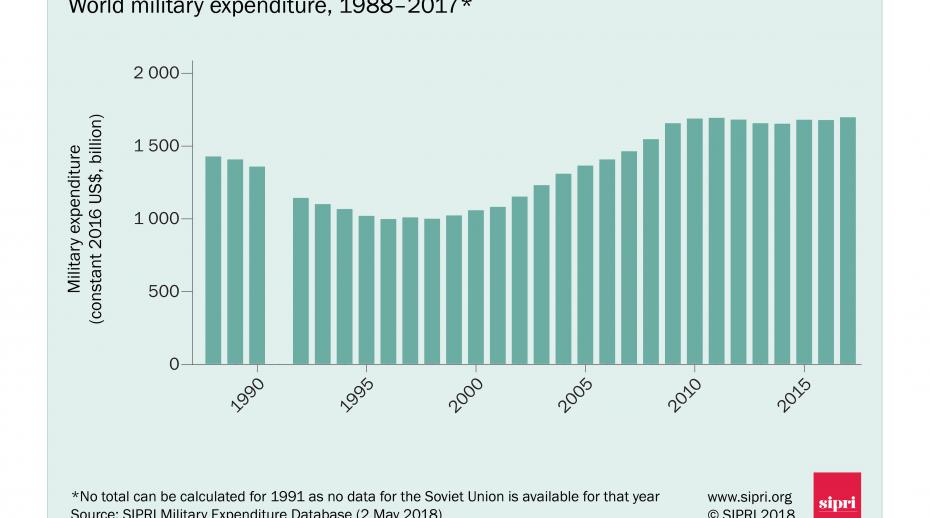
Global military spending remains high at $1.7 trillion


World military spending 1988–2017. Data and graphic: SIPRI

Could America’s Cyber Competitors Use Blockchain for Their Defense?

By Wilson VornDick

As the world was ensconced in Bitcoin euphoria this past fall, the Chicago Mercantile Exchange made headlines as the first to offer bitcoin futures, and bitcoin’s value skyrocketed to nearly $20,000 in December before its value plummeted to well below half that value. The gyrations of the cryptocurrency market that includes Bitcoin, Dash, Ripple, and a growing basket of other currencies has roiled global finance and governments. In March, the G20 finance ministers wrapped up a special meeting in Buenos Aires to coordinate laws to prevent cryptocurrencies from being used for criminal and terrorist purposes.

Blockchain Efforts

The Redacted Testimony That Fully Explains Why General MacArthur Was Fired

By H.W. Brands
Source Link

Far beyond being insubordinate, the military leader seemed to not grasp the consequences of his desired strategy  Brigadier General Courtney Whitney, government section, Far East Command; General Douglas MacArthur, Commander-in-Chief, United Nations Command, and Major General Edward Almond (at right, pointing), Commanding General, X Corps in Korea, observe the shelling of Incheon from the USS Mount McKinley. Harry Truman’s decision to fire Douglas MacArthur at the height of the Korean War in April 1951 shocked the American political system and astonished the world. Much of the world didn’t realize the president had the power to fire a five-star general; much of America didn’t realize Truman had the nerve.

RETURNING THE TECHNICAL CONTROL AND ANALYSIS ELEMENTS (TCAE) FOR THEATER SIGNALS INTELLIGENCE SUPPORT

Scott R. Hammon

We exist to support the one mission of the Army, “to fight and win our Nation’s wars, by providing prompt, sustained, land dominance, across the full range of military operations and the spectrum of conflict in support of combatant commanders.” Rise and Fall of the TCAE One of the first things Intelligence and Security Command (INSCOM) did after its creation was to conduct an echelon above corps (EAC) intelligence organization and stationing study. It was this study that recognized the need to provide cryptologic support to tactical military intelligence units. To answer this requirement, INSCOM fielded technical control and analysis elements (TCAE). These TCAE’s were found at every echelon but played a vital role at what was then called the MI brigades at echelons above corps (EAC). In the past, each of the ground component commands had a regionally aligned TCAE (e.g. Army South TCAE, or AS-TCAE).

America vs. the Hackers: a Cyber-Security Bootcamp

Hannah Kuchler 

With US midterms approaching, election officials are learning how to combat fake news, malware and troll farms It is a war game with a twist. Instead of army officers, election officials are in charge. Instead of battling against an enemy armed with missiles, defences are choreographed against hackers hidden behind foreign computers. With the US midterm elections fast approaching, more than 160 election officials from across the country have just months to learn how to defend democracy. These public servants have centuries of experience between them, managing polling stations and vote counts across 38 states. They are experts in dealing with foul weather, irate voters and fights between rival candidates. But none ever expected to be on the front line in a battle against Russian hackers. Today’s responsibilities include patching up vulnerabilities in voting machines, preventing tampering with electronic records and stalling the spread of disinformation through social media.

Local governments’ cybersecurity crisis in 8 charts


Within the past few weeks, two large American cities learned that their information systems were hacked. First, Atlanta revealed that it had been the victim of a ransomware attack that took many of the city’s services offline for nearly a week, forcing police to revert to taking written case notes, hampering the Atlanta’s court system and preventing residents from paying water bills online. Then, Baltimore’s 311 and 911 dispatch systems were taken offline for more than 17 hours, forcing dispatchers to log and process requests manually. Both attacks could have been prevented. And they are more evidence of the poor, if not appalling, state of local government cybersecurity in the United States.

The U.S. Army Is Close To Bungling Its Chance To Get Badly Needed New Weapon Systems

Loren Thompson 

The U.S. Army's opportunity to carry out the first comprehensive modernization of its combat equipment since the Cold War ended may be slipping away. That opportunity was created by the election of President Donald J. Trump in 2016, but now the budget walls are beginning to close in, and the Army is taking too long to get its act together. The latest evidence that the Army may be headed for yet another false start on modernization was provided by the Secretary of the Army himself, Mark Esper, in remarks Monday at the Atlantic Council. As reported by Byron Callan of Capital Alpha Partners, Secretary Esper stated that the service plans to prioritize readiness until 2022, and then turn to the procurement of a new generation of combat systems.

What To Do When the Army Stops Promoting You

By: Major Bob Gordon

Imagine you’ve been married for more than 15 years. There have been ups and downs, but for the most part, it has been a fun, exciting, mutually beneficial, and fruitful relationship. Then one day, your spouse comes to you and says, “Look, this isn’t working out. It’s not me – it’s you. You’re just not good enough. I want a divorce, but not right away. You’re going to stay married to me until our twentieth anniversary. Until that time, I expect you to act and perform your duties as my spouse, but you will receive none of the benefits and perks of being married. No date nights, no back rubs, no rewards, and no physical activity between us, unless I decide that you’re required to perform such acts. Just do as you’re told. Then, once we’ve hit our 20-year anniversary, you can divorce me.”

How to Read the Army’s Budget Request for More Precision Ordnance

By Luke O’Brien
Source Link

American howitzers appear to be making a resurgence after nearly two decades of frequently being relegated to other duties. The 2019 Army ammunition budget allocates more than $376 million toward the purchase of high-explosive and Excalibur rounds, which have been fired more frequently in the fight against the Islamic State than in the previous 40 years. The move is striking, given how marginalized artillery was in America’s post-9/11 wars. A decade ago, as a freshly minted Army artillery officer trained in the fundamentals of setting up and firing howitzers, I could compute ballistics by hand and correct the fall of artillery shells using just a pair of binoculars and a radio. Artillery fired often during the invasion of Iraq and the drive toward Baghdad in 2003. Yet when my first unit deployed to Iraq in 2008, we traded in our self-propelled howitzers for armored trucks and spent the next 12 months of that deployment essentially acting as infantry troops. In the years after the invasion, the United States Army viewed artillery as secondary to having as many soldiers as possible running patrols, staffing guard towers and escorting convoys of supplies.

Five questions on autonomous weapons and the future of war

By: Kelsey Atherton
Source Link

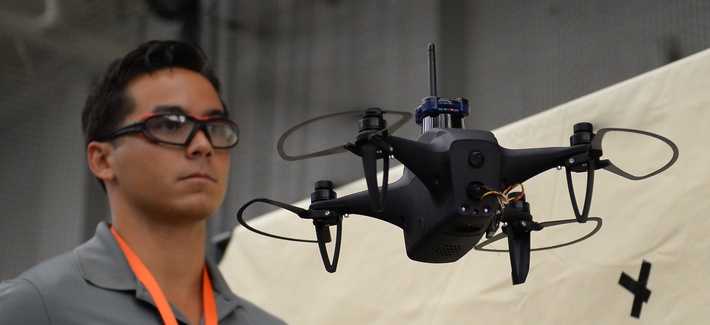
A RQ-8A Fire Scout Vertical Takeoff and Landing Tactical Unmanned Aerial Vehicle System takes off for a flight demonstration. One of the looming questions for future wars is the role of autonomous systems. We are living in an era that blurs the line between science fiction and technological present. This is felt acutely in consumer electronics, but it also has tremendous implications for the future of war. Into this moment comes “Army of None: Autonomous Weapons and the Future of War,” a new book examining the present, past, and future of autonomous weapons by Paul Scharre, a former U.S. Army Ranger now heading a program at the Center for New American Security focused on technology and security.

6 May 2018

India spends a fortune on defence and gets poor value for money


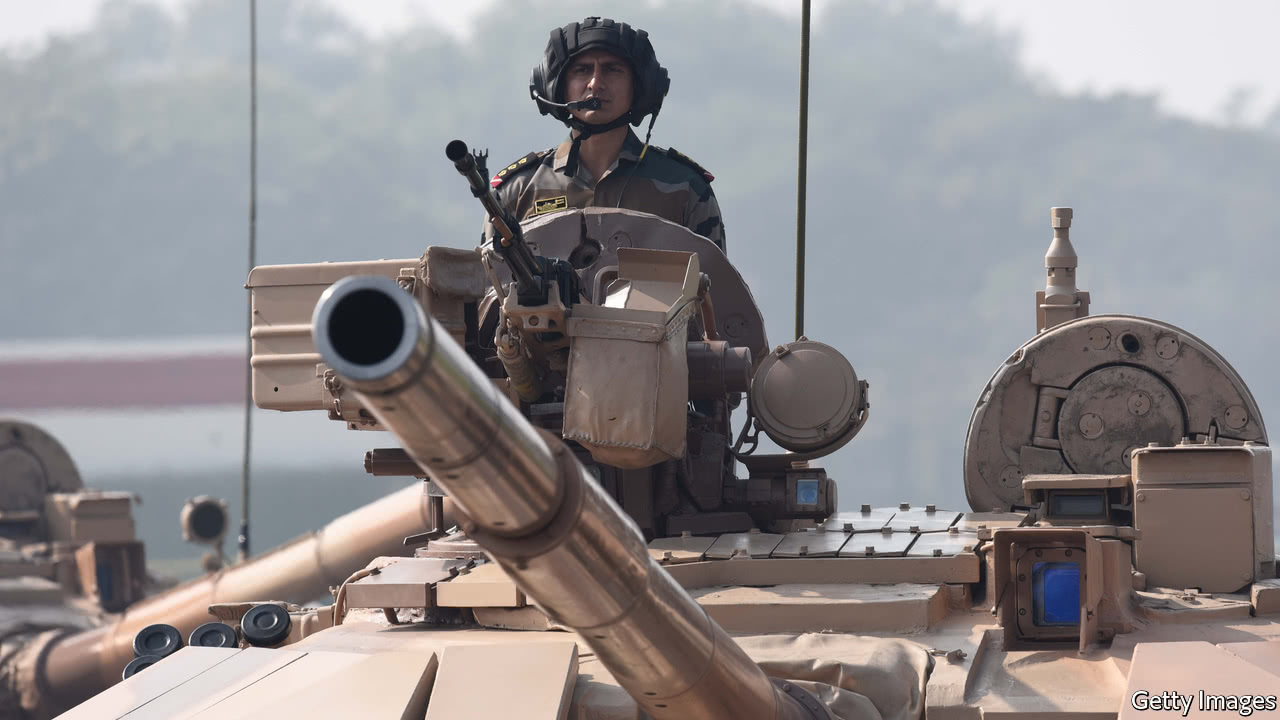
IN FEBRUARY India quietly passed a milestone. The release of its annual budget showed that defence spending, at $62bn, has swept past that of its former colonial master, Britain. Only America, China, Saudi Arabia and Russia lavish more on their soldiers. For nearly a decade India has also been the world’s top importer of arms. In terms of active manpower and the number of ships and planes, its armed forces are already among the world’s top five.

Taliban Control of Afghan Districts Remains Unchanged Despite Increased U.S. Military Pressure

By Bill Roggio Alexandra Gutowski

The latest report by the Special Investigator General for Afghanistan Reconstruction (SIGAR) indicates that the Taliban’s control of districts as of the end of Jan. 2018 remains virtually unchanged. The Taliban continue to maintain its grip on half of Afghanistan, despite U.S. military’s reinvigorated effort to force the group from its strongholds. The U.S. Department of Defense and Resolute Support (RS), NATO’s command in Afghanistan, provides the district control data to SIGAR. SIGAR’s data is dated as of Jan. 31, 2018. According to the SIGAR report, the Afghan government controls or influences 229 of Afghanistan’s 407 districts (56.3%). The Taliban controls or influences 59 districts (14.5%). The remaining 119 districts (29.2%) are contested.

Under the Radar: China's Coercive Air Power in the Taiwan Strait

By: Colby Ferland

On January 4, 2018, the People’s Republic of China (PRC, China) unilaterally modified an aviation route near the centerline of the Taiwan Strait. The northbound routes on this M503 flight path violate the existing cross-Strait civil aviation agreements between each side’s respective authorities. Taiwan, and many members of the international community, view this as a coercion tactic by Beijing to limit Taiwan’s ability to operate effectively near its borders on matters of national security. Further complicating the matter is Taiwan’s exclusion from international organizations, such as the International Civil Aviation Authority (ICAO), which limits Taipei’s ability to voice its concerns without the assistance of informal allies. The move is part of Beijing’s long-term plan of forcing Taipei to the negotiation table on unfavorable terms. More alarming, however, are the implications for the future of airspace security in Taiwan, as well as America’s ability to exercise freedom of navigation around the island. In response to this occurrence, the Project 2049 Institute brought together a distinguished panel of security experts to flesh out the PRC’s coercive airspace management, Taiwan’s security, and implications for U.S. interests.

China: Magic Weapons and 'Plausible Deniability'

By Graeme Smith

This article is based on Episode 20 of The Little Red Podcast with Gerry Groot of the University of Adelaide. We’re also pleased to announce The Little Red Podcast is a finalist in this year’s Australian Podcast Awards, in the News and Current Affairs category. Xi Jinping’s radical overhaul of the Chinese bureaucracy is not, as Xinhua would have you believe, just about streamlining government administration and reducing “red tape”. A host of state agencies that once stood between the public and the Chinese Communist Party have been done away with. One of the chief beneficiaries is the United Front Work Department (UFWD), the same department whose influence operations have made headline news in Australia. 

The U.S. and China Are Finally Having It Out

By Thomas L. Friedman

With the arrival in Beijing this week of America’s top trade negotiators, you might think that the U.S. and China are about to enter high-level talks to avoid a trade war and that this is a story for the business pages. Think again. This is one for the history books. Five days of meetings in Beijing with Chinese, U.S. and European government officials and business leaders made it crystal clear to me that what’s going on right now is nothing less than a struggle to redefine the rules governing the economic and power relations of the world’s oldest and newest superpowers — America and China. This is not a trade tiff.

White House Considers Restricting Chinese Researchers Over Espionage Fears

By ANA SWANSON and KEITH BRADSHER

WASHINGTON — It sounds like something out of a science fiction movie: In April, China is said to have tested an invisibility cloak that would allow ordinary fighter jets to suddenly vanish from radar screens. This advancement, which could prove to be a critical intelligence breakthrough, is one that American officials fear China may have gained in part from a Chinese researcher who roused suspicions while working on a similar technology at a Duke University laboratory in 2008. The researcher, who was investigated by the F.B.I. but never charged with a crime, ultimately returned to China, became a billionaire and opened a thriving research institute that worked on some projects related to those he studied at Duke.

What Beijing is Building in the South China Sea


Since China began its extensive land reclamation program in the South China Sea in 2013, Beijing has focused on improving its presence and infrastructure at seven locations in the Spratly Island chain: Cuarteron Reef, Fiery Cross, Gaven, Hughes, Johnson, Mischief and Subi reefs. Of the seven locations, the Fiery Cross, Mischief and Subi reefs received particular attention in the form of large-scale airfields built there. Over time, China has also added harbors, barracks, radar and other sensors. This is in addition to communications equipment, storage bunkers and general infrastructure installed across all seven islands. Stratfor partners at AllSource Analysis have provided imagery that confirms mobile electronic warfare (EW) equipment was recently deployed to Mischief Reef.

How Do You Control 1.4 Billion People?

By ROBERT FOYLE HUNWICK

A few months ago, you accidentally defaulted on a phone bill. The mistake affects your credit score: It’s hard to get a loan. You can no longer make jokes about Marco Rubio on Twitter; such remarks will algorithmically define you as a libertarian loon—another sort of person likely to default on social obligations. After a couple of close friends miss their student loan repayments, you can’t even travel: your social circle is now all “discredited, unable to take a single step.” This is the incipient scenario in China, whose state-backed “social credit scheme” will become mandatory for all residents by 2020. The quoted text is from a 2014 State Council resolution which promises that every involuntary participant will be rated according to their “commercial sincerity,” “social security,” “trust breaking” and “judicial credibility.” 

Iran and Israel draw closer to war than ever

by Oren Liebermann
Source Link

(CNN)On a January weekend in 2015, an Israeli missile streaked across the country's northern border into Syria. Among seven people killed were Jihad Mughniyeh, the son of one of Hezbollah's founders, and a senior commander from Iran's Revolutionary Guard Corps. Hezbollah's response was fierce. Rockets rained down for days on the northern Israeli countryside, with the Iranian proxy exchanging fire with Israeli forces near the border. Hezbollah fired five anti-tank missiles at an Israeli convoy on the border, killing two soldiers. As tensions soared along the border, a Spanish soldier serving as a UN peacekeeper was killed in the crossfire.

Trump should strengthen the Iran nuclear deal, not blow it up

By Max Boot 

Credit Israeli intelligence for another coup: Its agents smuggled 100,000 pages of documents out of Iran about that country’s nuclear program. The mullahs will now have to patch a major security leak. But the revelations contained in those papers are not quite as newsworthy as Prime Minister Benjamin Netanyahu claimed in a made-for-American-TV presentation on Monday. “I’m here to tell you one thing: Iran lied. Big time,” Netanyahu said. So what did Iranian leaders lie about? That they had a secret nuclear-development program called Project Amad … that was shelved in 2003.