16 May 2018

Will mobile kill Maoism? Certainly technology can help improve governance for the Adivasis

Shubhranshu Choudhary

Just after rains, in the year 1980, seven batches of seven armed people entered Dandakaranya forest, the Amazon of India. They have now become “India’s biggest internal security threat,” as our former Prime Minister Manmohan Singh once called them. These people, now members of Communist Party of India (Maoist), came there to “hide”. They believed revolution, will still be led by Indian peasants from the mainland villages who will encircle the cities as followers of Chairman Mao once did in China. In their document, the ‘Rear area document’, they wrote “revolution will not happen in forests. These Adivasis do not have political consciousness. We need to develop these areas as place to hide when we encounter rough weather in plains and cities.”

No, the War in Afghanistan Isn't a Hopeless Stalemate

By Robert M. Cassidy

The war in Afghanistan has become so protracted that it warrants the epithet the “Groundhog Day War.” Fighting has gone on for nearly 17 years, with U.S. troops in Afghanistan seven years longer than the Soviets were. The U.S. leadership claims to have a strategy for victory even as warm weather brings in yet another “fighting season” and new rounds of deadly violence in KabulSixteen years and seven months of violence, loss, sacrifice and significant investment, without victory, is alarming – but is it without hope?  As a scholar of Afghanistan and strategy and a soldier who has served four tours in the country, I’d like to explore both the apparent stalemate and the reasons for harboring hope of an eventual resolution.

Trump Effect Comes to Afghanistan

By James R. Van de Velde

Before President Donald Trump’s August 21, 2017, speech on Afghanistan (the ‘new South Asian strategy’), in which the President announced a renewed commitment to ‘win;’ to avoid nation-building; and to stay until conditions allowed for U.S. withdrawal, Afghanistan’s ‘proxy-insurgency’ was a political-military strategy-free zone, intellectually empty, heading to a miscarried future. The war resembled the final scene in any Rocky movie where the two parties just hit each other at the same time over and over. No thoughtful, comprehensive diplomatic-military strategy existed.

Could Bangladesh Be Heading for One-Party Rule?

By Amit Sengupta

Two visuals dominate the cityscapes of Dhaka in central Bangladesh, Jashore (Jessore) in the southwest, and Khulna in the south: posters of Sheikh Mujibur Rahman, the founder of the country born of genocide and schism in 1971, and of his daughter, Prime Minister Sheikh Hasina Wajed, leader of the ruling Awami League (AL). Posters of leaders from the opposition are rare. Rarer still is opposition graffiti. Even in the vast Khulna Division, one of the eight in Bangladesh and a stronghold of the right-leaning Bangladesh Nationalist Party (BNP), it is almost impossible to see a poster or banner of the party or its leader, Begum Khaleda Zia.

Xi Jinping's Excerpt on the Overall National Security Concept


Xinhua News Agency, Beijing, April 15th: A book edited by Xi Jinping on the exposition of the overall national security concept published by the Central Party History and Literature Research Institute of the Communist Party of China was recently published by the Central Literature Publishing House and distributed throughout the country. Adhering to the overall national security concept is an important part of Xi Jinping’s socialist ideology with Chinese characteristics in a new era. The report of the 19th CPC National Congress emphasizes that coordinating development and security, enhancing awareness of hardships, and making peace at peace times are a major principle for our party to govern the country. Comrade Xi Jinping’s series of important expositions on the overall national security concept are highly ambitious, rich in content, and profound in thought. 

CHINA WILL TAKE OVER THE WORLD, ONE PORT AT A TIME

VANDANA MENON

New research suggests China’s port investments as part of the Belt and Road Initiative are aimed at generating political influence and military presence in the Indo-Pacific. New Delhi: Launched in 2013, China’s ambitious Belt and Road Initiative (BRI) has been pegged as a trade masterstroke meant to recreate the ancient Silk Road, facilitating development along the way in a win-win situation. But new research suggests a clear political agenda behind the initiative, aided by the exercise of ‘corporate obfuscation’ by the Chinese companies involved. In a report by Washington-based nonprofit research group C4ADS, titled ‘Harboured Ambitions: How China’s port investments are strategically reshaping the Indo-Pacific’, China analysts Devin Thorne and Ben Spevack noted, “Questions surrounding China’s intentions plague the BRI”.

CHINA MEDIA REPORTS A NEW MISSILE BRIGADE THAT CAN HIT MUMBAI/GUAM: WHAT IS REALLY NEW ABOUT IT?

VINAYAK BHAT (RETD)

The Dongfeng-26 or DF-26 is an intermediate range ballistic missile (IRBM) whose primary target is the US base in Guam in the western Pacific Ocean. New Delhi: The Chinese media Sunday reported that the People’s Liberation Army-Rocket Force had commissioned a new brigade of its DF-26 missile, capable of striking key Indian cities such as Mumbai. This claim, however, appears to be factually inaccurate given that the existence of an operational brigade of DF-26 was first reported at least four years agoAn analysis of Google Earth imagery reveals that the Chinese army’s DF-26 brigade could be located at a garrison in Xinyang in southeastern Henan province.

China will take over the world, one port at a time

VANDANA MENON 

New research suggests China’s port investments as part of the Belt and Road Initiative are aimed at generating political influence and military presence in the Indo-Pacific. New Delhi: Launched in 2013, China’s ambitious Belt and Road Initiative (BRI) has been pegged as a trade masterstroke meant to recreate the ancient Silk Road, facilitating development along the way in a win-win situation. But new research suggests a clear political agenda behind the initiative, aided by the exercise of ‘corporate obfuscation’ by the Chinese companies involved.

Report: Chinese government is behind a decade of hacks on software companies

Dan Goodin

Researchers said Chinese intelligence officers are behind almost a decade’s worth of network intrusions that use advanced malware to penetrate software and gaming companies in the US, Europe, Russia, and elsewhere. The hackers have struck as recently as March in a campaign that used phishing emails in an attempt to access corporate-sensitive Office 365 and Gmail accounts. In the process, they made serious operational security errors that revealed key information about their targets and possible location.

China's first homegrown aircraft carrier heads out for sea trial

By Ben Westcott and Brad Lendon

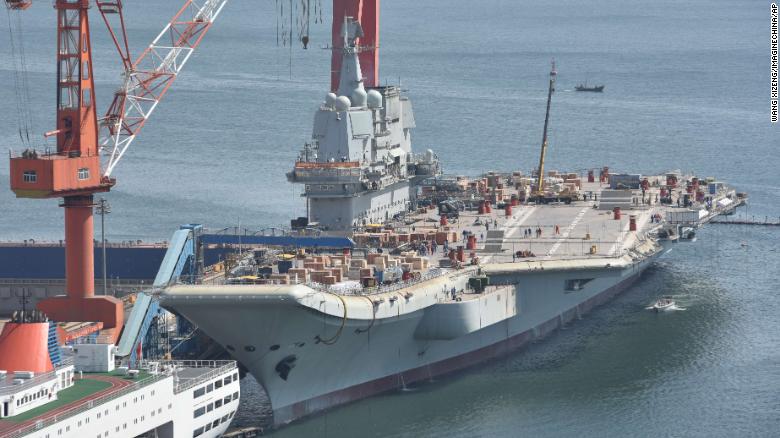
(CNN)China's first domestically built aircraft carrier began sea trials on Sunday, a historic step in the country's mission to build a navy capable of rivaling the world's leading maritime powers. The new aircraft carrier, temporarily named Type 001A, sailed out at around 7 a.m. in Dalian, in the northeast province of Liaoning, according to reports in Chinese state media. The 50,000-tonne ship will become the country's second aircraft carrier, and the first to be entirely built and designed inside of China, when it joins the navy sometime before 2020.
The carrier's maiden sea trial follows a speech given by Chinese President Xi Jinping on April 12, in which he announced plans to build a "world-class" navy under the banner of the Chinese Communist Party. 

China Wants 'Transformer' Drones (And It's More Likely to Happen Than You Think)

Lyle J. Goldstein
Source Link

Drones of all types are leading a revolution in military technology. Originally spurred on by the battlefield imperatives of the wars in Iraq and Afghanistan, unmanned aerial vehicles are now emerging at the heart of future warfare plans; not just at the low end, but increasingly to address high-end threats as well. For example, the MQ-4C Triton may well be the most promising new technology to undergird U.S. strategy across the vast expanses of the Asia-Pacific region. Progress on and under the water has not been quite as rapid, but there have been some exciting breakthroughs there as well. For example, the testing by the U.S. Navy of an extreme long-endurance unmanned surface vessel (USV), Sea Hunter—a development covered in this Dragon Eye column early last year.

Why a Trade War Shouldn't Wreck World Markets

Todd Royal
Source Link

Geopolitical spats taking place in Syria, tensions over China’s militarization of the South China Sea, nuclear threats from North Korea, and daily tweets from President Trump have caused market turbulence in 2018. Yet the ten-year United States Treasury yield reached 3 percent for the first time in ten years, which is a sign of investor confidence and stable economic growth. The IMF also reiterated strong market fundamentals and U.S. jobless claims are at their lowest level in forty-eight years. Then why are markets considered so volatile at this time? The reason seems to be geopolitical-news-headlines-of-the-day trumping market sanity and strong macroeconomic fundamentals.

What Keeps Xi Jinping Awake at Night

By Chris Buckley

BEIJING — As the leader of the world’s most populous country and biggest communist party, China’s president, Xi Jinping, has plenty to worry about, and a new book sheds light on what probably keeps him up at night. The recently released 272-page book of Mr. Xi’s remarks on “national security” includes previously unreleased comments that give a starker view of the president’s motivations than found in most Communist Party propaganda. Here is a selection.
Winning the Technology Race The recent trade dispute between China and the United States has brought new attention to China’s zeal to become technologically self-reliant. The book shows that Mr. Xi was determined that China master its own microchips, operating systems and other core technologies well before this recent quarrel. In two speeches — in July and August 2013 — Mr. Xi pointedly said that Western domination came thanks to technology.

Plastics mines? Europe struggles as pollution piles up


OSLO (Reuters) - Europe has sent just over half the plastic waste it used to ship to China to other parts of Asia since Beijing’s environmental crackdown closed the world’s biggest recycling market in January. The knotty problem is what to do with the rest. Some of the surplus is piled up in places from building sites to ports, officials say, waiting for new markets to open up. Recycling closer to home is held back by the fact that the plastic is often dirty and unsorted, the same reasons China turned it away. Countries led by Malaysia and Vietnam and India imported far more of Europe’s plastic waste in early 2018 than before, European Union data show, but unless they or others take more, the only options will be to either bury or burn it.

Trump made a savvy psychological evaluation of Kim Jong-un – so should we trust his judgment on Iran?

Mary Dejevsky

The television pictures of the prisoners’ return are the perfect prelude to the main act: the Donald and Kim show. The second perfect prelude, in fact. The first was the North-South Korean leaders’ handshake across the demilitarised zone at Panmunjom. And the warm-up act for that was the joint Korean team at the Winter Olympics. From winter to spring, how much distance has been travelled. And it looks – though in matters of personality and diplomacy, you never quite know – as though one of the least probable turns in international relations of recent times is on course to be accomplished: the bringing in of North Korea from the cold. What is more, it would be fair to say that this would not have happened – or not have happened with such speed – without the intervention, and instincts, of Donald Trump.

The US Should Embrace the EU’s New Defense-Cooperation Plan

BY RACHEL RIZZO, GENE GERMANOVICH

In late December, all but three European Union nations agreed to activate the continent’s latest, and perhaps most promising, effort to coordinate their defense investments. This initiative, dubbed PESCO for Permanent Structured Cooperation, has largely been met with bewilderment and concern on this side of the Atlantic. But U.S. officials should welcome it — and press the EU’s leading nations to use its framework to move from project-based collaboration to properly resourced militaries with credible capability.

Don't Bet Against American Shale

James Clad, James Grant
Source Link

The United States stands on the precipice of global energy supremacy. Over the past decade, the confluence of innovative drilling techniques with favorable market and regulatory conditions has made the extraction of tight domestic resources economical. This has resulted in an energy boom which has transformed fears of American energy shortages into proclamations of energy dominance. But is it here to stay?

Russia Confirms a Revolutionary New Tank Was Sent to Syria

Eugene K. Chow
Source Link

Russia has been on the forefront of building unmanned ground vehicles and last week the Russian Defense Ministry confirmed that their armed drone tank Uran-9 was tested in Syria. The Uran-9 is powerfully armed with anti-tank missiles, an automatic cannon and a machine gun. It can also be reconfigured to carry different weapons like surface-to-air missiles. Additionally, the unmanned vehicle is equipped with advanced optics and targeting systems including a laser warning system and thermal imaging. While the deployment of the Uran-6, a minesweeping drone, in Syria has been widely reported on, little has been said publicly about the Uran-9, and military observers and analysts have yet to see it in Syria.

3 Reasons Israel Would Start a Nuclear War

Robert Farley
Source Link

Israel’s nuclear arsenal is the worst-kept secret in international relations. Since the 1970s, Israel has maintained a nuclear deterrent in order to maintain a favorable balance of power with its neighbors. Apart from some worrying moments during the Yom Kippur War, the Israeli government has never seriously considered using those weapons. The most obvious scenario for Israel to use nuclear weapons would be in response to a foreign nuclear attack. Israel’s missile defenses, air defenses, and delivery systems are far too sophisticated to imagine a scenario in which any country other than one of the major nuclear powers could manage a disarming first strike. Consequently, any attacker is certain to endure massive retaliation, in short order. Israel’s goals would be to destroy the military capacity of the enemy (let’s say Iran, for sake of discussion) and also send a message that any nuclear attack against Israel would be met with catastrophic, unimaginable retaliation.

CATACLYSMIC EVENT OR GRADUAL EROSION? THE DECLINE OF US DIPLOMATIC POWER

Sam Wilkins 
Source Link

Last week Mike Pompeo, the newly-confirmed Secretary of State, announced to his new workforce that together they would “get our swagger back,” an unspoken but clear reference to the rock-bottom morale in Foggy Bottom during the tenure of his predecessor, Rex Tillerson. While Pompeo may see the Department of State’s doldrums as related solely to the management-style of his predecessor, Ronan Farrow argues persuasively in The War on Peace: The End of Diplomacy and the Decline of American Influence, that the department’s declining capacity and gradual exclusion from policy making began long before Tillerson’s ill-fated “restructuring” or what he sees as the militaristic inclinations of the forty-fifth president.

On Brexit island it’s all getting a bit Lordships of the Flies

Marina Hyde

How promising to learn that there is going to be another cabinet “crunch meeting” next Tuesday to discuss the customs issue. Cabinet “crunch meetings” on Brexit are like Super Sundays on Sky Sports. There seems to be one every week, and the only thing that changes is the definition of the word super. And now the word crunch. A friend of mine at university once pressed snooze on his alarm clock for eight and a half hours. Can you imagine? Every 10 minutes – a sort of torturous, self-punishing deferment that ends up being the worst of both worlds. This remains Britain’s Brexit strategy.

LITTLE MEN IN BLACK: THE FROGMAN THREAT IN MARITIME HYBRID WARFARE

By Ben Ho Wan Beng

Introduction

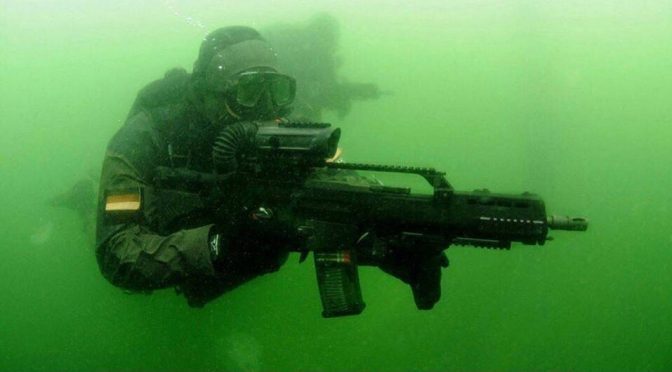
Maritime hybrid warfare is upon us, so proclaimed James Stavridis, a retired United States Navy admiral. “(I)t will sail out to sea and prove a formidable challenge,” he contended in a December 2016Proceedings article. According to security analyst Frank Hoffman, ahybrid opponent is one that “simultaneously and adaptively employs a fused mix of conventional weapons, irregular tactics, terrorism, and criminal behavior in the battlespace to obtain desired political objectives.” Indeed, Beijing’s use of its maritime militia, or “little blue men”, in the South China Sea (SCS) and similar measures by Teheran in the Persian Gulf are worrisome signs of hybrid warfare taking on a nautical slant.

What a cyberwar looks like — and what it doesn't

Daniel Dobrygows

President and Chief Legal Officer Brad Smith of Microsoft in April told the RSA cybersecurity conference about attacks that don't involve tanks and warplanes, but bytes and bots. And they are aimed at our energy grids, our infrastructure, and even our private financial information. We've increasingly seen reports of cyber incursions, attributed to nation-states, into critical infrastructure and financial systems. We've seen further attempts to affect countries' internal political institutions. Nations are reportedly stockpiling software and network vulnerabilities, to use for espionage or in the event of an internet-enabled conflict.

Future Challenges for Special Operations Forces

Michael Vickers

The U.S. Special Operations Command has about 67,000 troops and an annual budget of around 14 billion dollars. That may not seem to be a huge dent in the overall DoD budget (about 2%), but it greatly outnumbers the special operations budgets of other U.S. allies around the world. With deployments operating at high frequencies today and with operations increasing in places like Syria, what should we be thinking about in terms of the impact on U.S. Special Operations in the coming decade?

Forget Stealth Fighters: The Army Wants 'Stealth' Uniforms

Michael Peck
Source Link

First there were stealth fighters that didn’t show up on radar. Now the U.S. Army wants uniforms that allow ground troops to escape the notice of electromagnetic eyes. Radar has become an integral part of ground warfare, which makes it that much harder for soldiers to hide on the battlefield. Thus, the Army wants uniforms woven out of a material that will absorb rather than reflect radar waves. "Radar absorbing and shielding technology has attracted a growing interest due to the recent advances in enemy electronic warfare and detection capabilities, leaving U.S. forces, especially infantry forces, vulnerable to detection across the electromagnetic spectrum," according to a new Army research solicitation. "Advanced battlefield and ground surveillance radar (BSR/GSR) are readily available in military markets that are highly effective, portable, and automated for large area monitoring."

15 May 2018

Should India Take Pakistan’s Overtures Seriously?

By Tridivesh Singh Maini

Over the past couple of months, both India and Pakistan have been trying to lower the temperature of their bilateral relationship through goodwill gestures and reconciliatory statements. While both sides have reiterated their commitment to amicably resolve the issue of the harassment of their respective diplomats, India and Pakistan have also agreed to some humanitarian gestures with regard to prisoners languishing in jails on both sides.

The Cold Start hypothesis

Maj Gen Raj Mehta (retd)

BEREFT of a stated nuclear doctrine, Pakistan obdurately plans to use tactical nuclear weapons (TNWs) to neutralise Integrated Battle Groups (IBGs) if launched by India across the border against Pakistani proxy war terror strikes. Does this ploy throw cold water on India’s ‘Cold Start’ doctrine? Is Pakistan’s adaptation of an outmoded Cold War tactic implementable? Can nuclear wars be ‘tactical’? Is India’s no-first-use (NFU) policy ‘didactic’ (patronising) or ‘persnickety’ (irritatingly detailed) as former NSA Shivshankar Menon, author of Choices – Inside the Making of India’s Foreign Policy (2016), puts it? 

New Wine in a New Bottle

TCA Raghavan

The coming out on the streets of large numbers of ethnic Pashtun marks a new phase in the history of Pakistan’s interface with its Frontier. What sparked this was the extra-judicial killing in January 2018 in Karachi of a young Mehsud tribal from South Waziristan. The local protests over this morphed into something larger with rallies in Islamabad, Peshawar and Lahore drawing in many others outside the Mehsuds. The demands in these protests also evolved beyond demands for enquiry into extrajudicial killings and amelioration of specific issues in South Waziristan such as demining, tracing missing persons removal of army road blocks etc. These rallies became the platform for a generalized sense of rage, helplessness and dissatisfaction amongst Pashtuns in general, and those in the tribal belt in particular, at having been treated no more as pieces on a chess board as the global war against terror was waged on the border of Afghanistan and Pakistan. 

Pakistan's 'Name Game' Gives Terror Groups a Pass

Madeeha Anwar,Mubashir Zaidi

Changing one's name in Pakistan is a daunting and lengthy legal procedure that requires extensive paperwork. Surprisingly, that is not the case with militant groups that get banned by the government. In the past two decades, several groups accused of carrying out terror attacks have avoided a crackdown by changing their names. Islamist cleric Hafiz Saeed, a U.S.-designated terrorist who allegedly was the mastermind of the 2008 Mumbai attacks that killed 160 people, is perhaps the most prominent leader accused of the tactic.

Malaysia's New Political Tsunami

By Michio Ueda

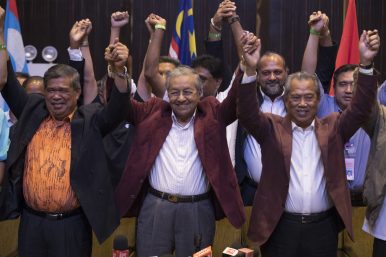
On the evening of May 10, just one day after the historic election, people were spontaneously gathering and chanting these slogans around Istana Negara, the Sultan’s Palace in Kuala Lumpur, where Mahathir Mohamad was about to be sworn in as Malaysia’s seventh prime minister. These opposition slogans had frequently been heard as anguished cries during the harsh campaign period. This time, however, the people’s chants were rather filled with joys and hopes for the country’s future.

What Is the Nature of Power in the Asia-Pacific and Who Wields It?

By Ankit Panda and Prashanth Parameswaran

The Diplomat‘s Ankit Panda (@nktpnd) and Prashanth Parameswaran (@TheAsianist) discuss the newly released Asia Power Index from the Lowy Institute and the nature of power in Asia. Click the arrow to the right to listen. If you’re an iOS or Mac user, you can also subscribe to The Diplomat’s Asia Geopolitics podcast on iTunes here. If you use Android, you can subscribe on TuneIn or on Google Play Music. If you like the podcast and have suggestions for content, please leave a review and rating on iTunes and TuneIn.

The Aftermath of US Withdrawal from the Iran Agreement

by Steven Aftergood

A new report from the Congressional Research Service begins to sort through the implications and the practical consequences of the Trump Administration decision to end US compliance with the Iran nuclear agreement, known as the Joint Comprehensive Plan of Action (JCPOA). “The Trump Administration could have used provisions of the JCPOA itself to cease implementation of U.S. commitments under the agreement. It opted not to do so, but instead to cease implementing the JCPOA by reimposing U.S. sanctions,” the CRS report noted. For related background from CRS, see also Iran: U.S. Economic Sanctions and the Authority to Lift Restrictions, updated May 10, 2018; Withdrawal from International Agreements: Legal Framework, the Paris Agreement, and the Iran Nuclear Agreement, updated May 4, 2018; and Iran Nuclear Agreement, updated May 2, 2018.

Iran vs. Israel: Is a Major War Ahead?

AVI ISSACHAROFF

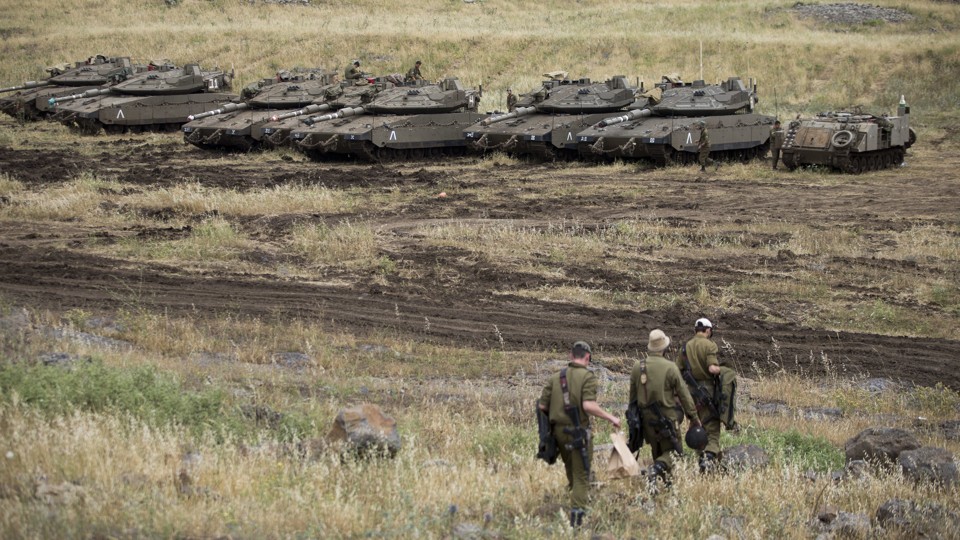
TEL AVIV—These are uneasy days for citizens of Israel. Almost everywhere, one hears anxious questions: Will there be war? How bad will it be? Should we prepare the bomb shelter at home? And what should we tell the children? At the same time, though, routine life goes on despite recent tensions on the border with Syria. At most, they have meant inconveniences like canceling a planned family holiday for Shavuot, the Jewish holiday that takes place in about a week, because a top Israeli vacation spot in the Golan Heights recently came under rocket fire from Syria. (All the rockets missed their targets.) The prevalent view of the security establishment and media pundits has trickled down to the public: We are not yet at the cusp of an all-out war, but merely in the midst of a round of hostilities between Iran and Israel. Even the events of the early hours of Thursday—the rocket fire and then the Israeli retaliation—do not herald war so much as they portend exacerbated hostilities.

China’s J-20 Fighter Undergoes First Over-the-Sea Combat Training

By Franz-Stefan Gady

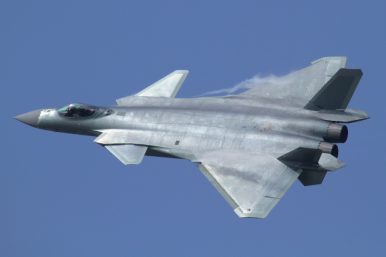
The People’s Liberation Army Air Force’s (PLAAF) purported first fifth-generation stealth fighter aircraft, the Chengdu Aerospace Corporation (CAC) J-20A multirole fighter, conducted its first over-the-sea combat exercise, the PLAAF announced this week. “The J-20 has conducted a combat training mission in sea areas for the first time, and this has further strengthened the comprehensive combat capability of the PLA Air Force,” PLAAF spokesperson Shen Jinke said on May 9, without specifying the date or location of the combat training.

Xi Jinping’s Great Step Backward

Gerald F. Hyman

Xi has now accumulated more political and economic power and authority than any leader since Mao Tse-tung. The 19th Communist Party Congress last October reelected Xi as the general secretary of the party and the only contender of the post-Deng period left standing. Xi has replaced the collective leadership model and organizational limitations Deng installed to diffuse authority, to create some balance of individual and institutional power, and to preclude another cult of personality like the one Mao built, all precisely to thwart, for example, the catastrophes of the Great Leap Forward, the purges and the Cultural Revolution. In March 2018, the National People’s Congress, China’s parliament, unanimously re-elected Xi to another term as president and amended the national constitution to eliminate the two-term limit on presidential terms, another provision established by Deng to prevent indefinite rule, the personality cult and the concentration of power.