25 May 2018

Robert Steele: Peace in the Middle East – Denuclearizing Israel, Restoring Palestine, and More

Robert David 

Everybody has this wrong – Trump is not bluffing and he is not Netanyahu’s puppet. What has really happened here is that Xi, Trump, and Putin agreed over a year ago to take down the Deep State. The denuclearization of Korea, combined with the destruction of the old banking order, will be followed by the denuclearization of Israel and the restoration of Palestine. We are at the beginning of a 1,000 year period of peace and prosperity for all.
China upgrades air capability in Tibet, monitors Indian exercise

Sudhi Ranjan Sen 

Chinese airfields in the Tibet Autonomous Region (TAR) that face India are being upgraded, security agencies have told South Block. South Block houses the Prime Minister's Office as well as the defence and foreign ministries. Importantly, security agencies have warned that "permanent hangers" too are being built in these airstrips. Permanent hangers or "blast pens" which protect aircraft on ground during an air raid are crucial in times of war for fighter operations. Senior defence ministry officials told India Today TV the airfields being upgraded include Hotan, Hoping and Lhasa -- the capital of Tibet. Permanent hangers are coming up in the Hoping airfield, security agencies have warned. The airstrip in Lhasa is being extended, "the construction will be completed soon", security agencies have told the government.

What's Behind India's Recent Outreach to North Korea?

By Harsh V. Pant

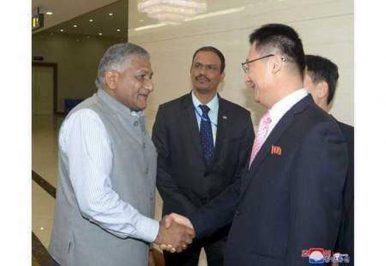
As strategic equations in the Korean Peninsula undergo a dramatic shift, India too has decided to enter the fray. Last week, India’s Minister of State for External Affairs General V K Singh paid a two-day visit to North Korea. This first ministerial visit from India to North Korea in nearly two decades was at the invitation of the North Korean government, but comes at a time when developments in the region have the potential to bring in a fundamental realignment in the balance of power. Given New Delhi’s longstanding concern regarding the role of Pakistan in helping North Korea develop its nuclear and missile programs, India during Gen. Singh’s visit underlined “the threat from nuclear proliferation, in particular India’s concerns in the context of the proliferation linkages with India’s neighborhood.” In return, Pyongyang reassured New Delhi that “as a friendly country DPRK will never allow any action that would create concerns for India’s security.” The two nations not only explored cooperation in areas such as vocational education, agriculture, pharmaceuticals, promotion of Yoga and traditional medicine, but also decided to enhance people-to-people linkages to mark 45 years of diplomatic relations.

Watchdog: US Strategy in Afghanistan Shows Little Result


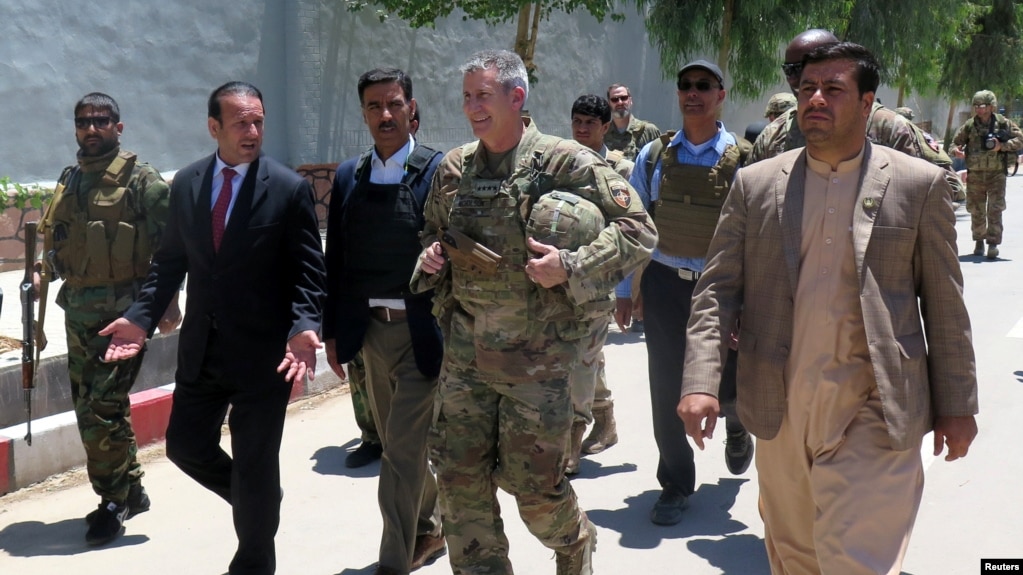
The Trump administration's revamped Afghanistan strategy has made little progress against the Taliban insurgency, leaving the country a "dangerous and volatile" place nearly 17 years after the U.S. invaded, a government watchdog report said Monday. The conclusion contrasts with assertions last fall by the American military that the Afghans, with U.S. support, had "turned the corner" and captured momentum against the Taliban, which it called fractured and desperate. The report to Congress by inspectors general of the Pentagon, the State Department and the U.S. Agency for International Development also cast doubt on the administration's decision to send a new set of military advisers this year to work with Afghan forces closer to the front lines. It said this, combined with stepped-up Afghan offensives, "further raises the risk of civilian casualties, insider attacks, U.S. casualties, and other conflict-related violence."

China, Trade and Artificial Islands


China and the United States have agreed to substantially reduce the massive trade imbalance between the two countries, according to a joint statement released over the weekend. Also over the weekend, China reportedly landed military aircraft on artificial islands it built in the South China Sea. Though these issues don’t appear connected, they are: Both have to do with the relative power of China and the United States, and both deal with perceptions more than reality. Since President Donald Trump’s election, the United States has been deeply concerned with the balance of trade with China. For the United States, trade is a social issue. Increased trade with China has helped the U.S. economy as a whole by shifting production of certain goods to China’s low-wage economy. But it has also created severe social stress among those left unemployed or underemployed, a significant part of U.S. society.

Is Pakistani Agriculture Ready for CPEC?

By Andrew McCormick

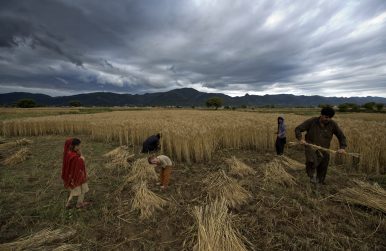
The basmati rice grown in Pakistan’s Punjab province is long and slender-grained. It is aromatic, fluffy when cooked and, in classic Pakistani dishes, pairs well with lentil and gravies made from chickpea flour and spices. At market, it draws double the price, if not more, of non-basmati, long-grain rice varieties. In recent years, however, basmati revenues have slumped in Pakistan amid low-yield harvests and uneven quality. At the Sino-Pakistan Hybrid Rice Research Center in Karachi, Chinese and Pakistani scientists are working to reverse this trend. Using state-of-the-art genetic technologies, they are developing high-yield, high-quality, and pest-resistant rice varieties, for both domestic sale and export.

The Trump administration’s Plan B on Iran is no plan at all

Suzanne Maloney

The suspense is over. Two weeks after President Trump ruptured the 2015 nuclear accord with Iran to a chorus of questions about the administration’s “Plan B,” Secretary of State Mike Pompeo yesterday outlined a new U.S. strategy for contending with the persistent challenges posed by the Islamic Republic of Iran. There’s only one problem with the strategy: It’s not a strategy at all, but rather a grab bag of wishful thinking wrapped in a thinly veiled exhortation for regime change in Iran. Actually, there are about a dozen other problems with the strategy that Pompeo articulated—that being the number of benchmarks that the speech laid out as the prerequisites for any “new deal” that he insisted the administration is “ready, willing, and able to negotiate” with Iran. Despite this nod to the possibility of new negotiations, the substance of Pompeo’s remarks forecloses any realistic avenue for diplomacy with or around Iran’s current leadership. And it will exacerbate existing frictions around a variety of diplomatic and trade issues with all of America’s traditional partners.

The Iran deal is a done deal

Aaron Arnold

This past week President Trump dropped a hand-grenade on the Joint Comprehensive Plan of Action (JCPOA), leaving European leaders scrambling to keep the deal intact as the United States moves to re-impose unilateral sanctions against Iran. Europe’s leaders must balance the strategic security of keeping Iran’s nuclear program at bay or risk further political fallout with the United States, possibly jeopardizing EU-US business interests.

Trump’s Step Beyond the 'Art of the Deal’ Changes Everything

ALASTAIR CROOKE 

Nahum Barnea writing in Yedioth Ahronoth sets out, plainly enough, the gamble underway between Israel and Iran (and to which Trump is willing accessory): In the wake of the US exit from JCPOA, Trump will threaten a rain of ‘fire and fury’ onto Tehran, should the latter attack Israel directly, whilst Putin is expected to restrain Iran from attacking Israel, using Syrian territory – thus leaving Netanyahu free to set new rules of the game by which the Israel may attack and destroy Iranian forces anywhere in Syria (and not just in the border area, as earlier agreed) when it wishes, without fear of retaliation.

A Letter to John: Where Are U.S.-Russia Relations Headed?

Andrey  Kortunov

In the decades I spent working with the United States, I acquired quite a large circle of contacts in Washington. Collectively, they represent the so-called American establishment. Today, I’d like to address these Washingtonians as one individual, whom I’ll name John for the sake of simplicity.

Dear John,

My letter is full of grief, which you probably share. U.S.-Russia relations are deteriorating with each passing day, and we still can’t see the light at the end of the tunnel. Yet another desperate attempt to reverse the negative trend in bilateral relations has yielded no result. It’s clear that we’re in for even tougher times that may last for quite a while.

Why Trump’s Intense Focus on the Trade Deficit Could Cost the Economy in the Long Run

By Neil Irwin

Image A soybean field in Indiana. Selling more commodities like soybeans to the Chinese would make U.S. farmers happy, and reduce the trade deficit, but would not accomplish much more than that.CreditDaniel Acker for The New York Times  The Great Sino-American Trade War of 2018 has fizzled, at least for now. Global markets rose Monday after the Trump administration, at least for the time being, backed away from its threat to impose tariffs on Chinese imports. But as negotiations proceed, a big question for the administration remains. Is the goal to make some supporters in farm states and energy extraction industries happy, and shrink the trade deficit temporarily?

Cryptocurrencies: Potential for Terror Financing?

By Ahmad Helmi Bin Mohamad Hasbi and Remy Mahzam

Given their transaction anonymity and user-friendliness, cryptocurrencies appeal to extremist groups as they offer a viable alternative to the mainstream financial system and fiat money which are perceived as ‘kafir’ (infidel) currencies. The threat of cyber-driven terrorist financing is expected to grow.

Commentary

What the Iran Nuclear Deal and Franz Ferdinand Have in Common

Source Link

The improbable turn of events that led to World War I may not have been so consequential were it not for the shifts simultaneously underway in the global order. Today, the dizzying pace of technological advancement and the rapid rate of economic growth in Asia signal another transition in the global order. These factors could amplify the effects of the U.S. withdrawal from the Iran nuclear deal, perhaps paving the way for another international conflict. 

EU Lawmakers Fume at Zuckerberg Over Answers to Their Questions

By Stephanie Bodoni

Facebook Inc. founder Mark Zuckerberg left European Union lawmakers fuming over unanswered questions at the end of a hearing that began with a mea culpa for the company’s recent privacy woes. At a meeting at the EU Parliament, Zuckerberg repeatedwhat he’s been telling every audience recently: that his company didn’t take a broad enough view of its responsibility for user data, fake news and foreign interference in elections and that he is sorry for that. But at a session where lawmakers got to ask all their questions in one go at the start, he annoyed them by batting many of them away -- including on whether people can opt out of advertising and also on whether the U.S. giant is a monopoly that needs to be broken up.

What Have the Swiss Ever Done For Us?


This article was first published under the title “Danke, Schweiz” in the Basler Zeitung, a Swiss daily newspaper. Translation by the author. Classical liberal ideas work. But they are usually counterintuitive, and often hard to explain. Proponents of interventionist policies therefore enjoy a natural rhetorical advantage in policy debates. It is therefore helpful for classical liberals if we can point to a practical example, i.e. a country or region which already practices something close enough to our ideas. For British liberals, it is Switzerland which, in many ways, represents such an example. Switzerland is not a libertarian paradise. But it is a country which, through its mere existence and its economic success, refutes a lot of the UK’s conventional wisdoms.

Turkey and Israel: Barking, Biting, But Still Doing Business

Cengiz Candar 

While the recent diplomatic rift between Israel and Turkey indicates a further deterioration in relations, the Turkish government has avoided taking concrete steps that could directly hurt Israel, whereas the Israeli response to Turkey's rhetoric was more detrimental and bitter. Israeli security forces have killed some 62 Palestinians and wounded scores of civilians by firing during demonstrations held on the Gaza border, which coincided with the opening of the US Embassy in Jerusalem. The carnage drew a harsh denunciation from Turkey’s sworn pro-Palestinian President Recep Tayyip Erdogan. Yet closer scrutiny suggests Erdogan wasn't framing his response for the international community, but rather to appeal to Turkish voters ahead of the June 24 snap elections.

Broken fighter jets, grounded helicopters and idled tanks: Germany's military is ailing

By ERIK KIRSCHBAUM

There are so few German army helicopters available for the troops that pilots have been forced to train in bright yellow civilian choppers leased from the German Automobile Club. A chronic shortage of spare parts and assorted technical woes have grounded 29 of the Bundeswehr's 130 camouflage-green helicopters. Acute shortages of parts have also left only 39 of the Luftwaffe's 128 Eurofighter jets combat-ready — idled along with nearly half of the armed forces' 224 Leopard tanks and five of its six submarines. No country in the North Atlantic Treaty Organization alliance has savored the "peace dividend" as much as Germany, which slashed military spending in half after the Cold War. And no country in NATO has drawn more criticism from President Trump for not carrying its own military weight than Germany.

Europe's Italian Problem Is Bigger Than Brexit

By Clive Crook 

The new government finally taking shape in Italy is one of the weirdest coalitions you could imagine — and a pretty effective combination if your aim was to sabotage the European Union. Although predictions about where this Italian misadventure is heading are difficult, it could easily be worse than Brexit for the EU.  The coalition partners — the left-populist Five Star Movement led by Luigi Di Maio and the right-populist League led by Matteo Salvini — are poles apart in most respects, but come together over immigration, disdain for politics as usual and dislike of the EU. With notable originality, the program they announced last week combines the high-spending ambitions of the left with the low-tax ambitions of the right. This implies a surge of public borrowing. The partners are undaunted by Italy’s current debt burden (130 percent of gross domestic product) and seem to be downright inspired by the EU’s rules on fiscal consolidation. Their program doesn’t just break those rules; it laughs at them.

Developing a Containment Strategy in Syria


Some U.S. policymakers have argued that the United States should withdraw its military forces from Syria. But the United States has several interests in Syria:  Balancing against Iran, including deterring Iranian forces and militias from pushing close to the Israeli border, disrupting Iranian lines of communication through Syria, preventing substantial military escalation between Israel and Iran, and weakening Shia proxy forces.  Balancing against Russia, including deterring further Russian expansion in the Middle East from Syrian territory and raising the costs—including political costs—of Russian operations in Syria. Preventing a terrorist resurgence, including targeting Salafi-jihadist groups like the Islamic State and al Qaeda that threaten the United States and its allies. 

Our Recommendations: 

Counterterrorism in an Era of More Limited Resources


With the National Security Strategy and National Defense Strategy lowering the prioritization of terrorism, the U.S. government will need cost-effective options to continue to diminish the terrorist threat. Nonkinetic efforts can be a cost-effective way to reduce terrorist groups’ ability to radicalize, disseminate messages, use the internet, facilitate foreign fighters, fundraise, and exploit poor governance. Undercutting these intertwined terrorist enablers weakens the groups writ large. 

The Road to a TB-Free World

MICHEL SIDIBร‰ , LUCICA DITIU

Despite being preventable and curable, tuberculosis infects more than ten million people each year and is the most common cause of death by an infectious agent in modern times. The international community needs to take five specific actions to eliminate the scourge of TB once and for all. GENEVA – When Mabruka was 18, she came home from school one day and started coughing up blood. She had been feeling sick for about two months, and when she went to a health clinic, she described symptoms such as weight loss, fatigue, shortness of breath, fever, night sweats, chills, loss of appetite, and pain when breathing and coughing. Mabruka was diagnosed with tuberculosis (TB) and prescribed a daily regimen of 9-10 pills. The treatment lasted six months, and during that time she could not attend school.

South China Sea: What China's First Strategic Bomber Landing on Woody Island Means

By Ankit Panda

Last week, on Friday, reports emerged that the Chinese People’s Liberation Army-Air Force (PLAAF) had, for the first time, landed an H-6K strategic bomber on one of the country’s South China Sea islands. China’s state-run People’s Daily shared footage of the bomber landing on an airstrip. The island in question was Woody Island, China’s largest military outpost in the South China Sea. Woody Island sits in the Paracel Islands, but Chinese military activity there has foreshadowed possible moves in the seven artificial islands that Beijing also possesses in the Spratly group. In addition to permanently stationing military personnel on Woody Island, China has deployed J-11 fighters, HQ-9 surface-to-air missiles, YJ-62 anti-ship cruise missiles, and other materiel there. 

Shrinking the infantry squad: Why the Corps wants to fight with fewer Marines

By: Shawn Snow

The Marine Corps is setting in motion plans to shrink the size of the traditional rifle squad, cutting manpower for the Corps’ most basic building block of combat power from 13 Marines down to 12 — a risky move that the Corps admits could fail.  To compensate for the reduced size, Marine Corps officials say the rifle squads will get more lethal weaponry, more responsibilities, better intel and enhanced support from the company and battalion level. Yet the decision to remove a man from the squad adds a level of risk: At the end of the day there will be one less Marine to help carry gear, to return fire, to stand watch or to divide up work. “If someone goes down as a casualty, there will be fewer people who can evacuate the casualty,” one former Marine infantry officer told Marine Corps Times.

Drones Don’t Wear Uniforms. They Should.

BY FAINE GREENWOOD, OSSAMA A. ZAQQOUT

The video from Gaza starts with a just-visible multirotor drone juxtaposed against a remarkably blue sky. A group of TV journalists in blue helmets stand at the bottom of the frame, looking up at it. It hangs there for a second, and then tear gas canisters fall from it, issuing waving tails of white smoke. The canisters come to earth immediately in front of the cameras, and the reporters begin to run in all directions, coughing. The camera looks to the blue sky again, and the little black dot recedes, mysteriously, into the distance.

On Tactics

By Erik Archer

"Strategy is not, however, the final arbiter in war. The battle-field decides.”[1]

—Charles Caldwell

As Colin Gray said, “If Thucydides, Sun Tzu or Clausewitz didn’t say it, it probably isn’t worth reading.”[2] Clausewitz, Sun Tzu, Thucydides, and their fellow strategic soothsayers, however, are of limited use to leaders charged with employing tactical formations. The battalion commander dutifully keeps her blue-striped white copy of On War from Command and General Staff College, but does the Prussian’s influence extend to her tactical mission? What about her platoon leaders? Fresh out of college, should Clausewitz’s strategic masterpiece rate high on their initial order of merit list? To a field grade officer, Clausewitz has cachet, and his book is ubiquitous. Platoon commanders, though, are less interested in the Prussian than they are in maneuvering their formation to close with and destroy the enemy, and to achieve that end at that level, tactics are king.

Rediscovering Statecraft in a Changing Post-War Order


If Washington doubles down on U.S. military and geopolitical predominance, it risks transforming the emerging competitive era into something far more confrontational and zero-sum than it needs to be. If it hopes to retain its position of leadership, the United States will have to make the present international order truly multilateral. 

“Politics is the art of the possible.”

-Otto von Bismarck, 1867

24 May 2018

Commentary: India Should Be Innovative in the Challenging Times Ahead

Arvind Gupta

Prime Minister Modi has shown remarkable innovativeness in foreign policy arena recently. This shows that he is cognisant of the challenges for India that are looming ahead. The ‘informal summit’ with Xi Jinping in April 2018 was an attempt to arrest the slide in Sino-Indian relations which had manifested in the 2017 Doklam stand-off between the Indian Army and the People’s Liberation Army (PLA). Prime Minister Modi held yet another ‘informal summit’ with Russian President Putin in Sochi in May to keep the Indo-Russian relations on the positive trajectory. Russia has been concerned about India’s tilt towards the Americans particularly after the revival of the Quadrilateral Grouping, or the ‘QUAD’. He visited Nepal within a month of the visit of Nepalese Prime Minister Oli to India. The meeting between the two prime ministers was to put Indo-Nepal relations back on the rails after the knocks that they took during Prime Minister Oli’s earlier tenure.

The impact of rising oil prices on Indian economy

Nikhil Gupta

India, the world’s seventh-largest economy, was a key beneficiary of falling crude oil prices between 2013 and 2015. An analysis by this newspaper, more than a year ago, had indicated that almost the entire reduction of about 0.6% of the gross domestic product (GDP) in India’s fiscal deficit between FY14 and FY16 could be attributed to the sharp fall in crude prices. Lower crude prices also contributed to the narrower current account deficit. The biggest benefit of the fall in oil prices was evident in narrower twin deficits. Since the pass-through of the fall in crude prices to retail consumers was limited (the government retained a large part of the benefits by hiking excise duty on retail fuel products), the direct impact on inflation—measured by consumer price index (CPI)—was muted.

Could Pakistan’s Protests Undercut Taliban and Extremism?

BY: James Rupert

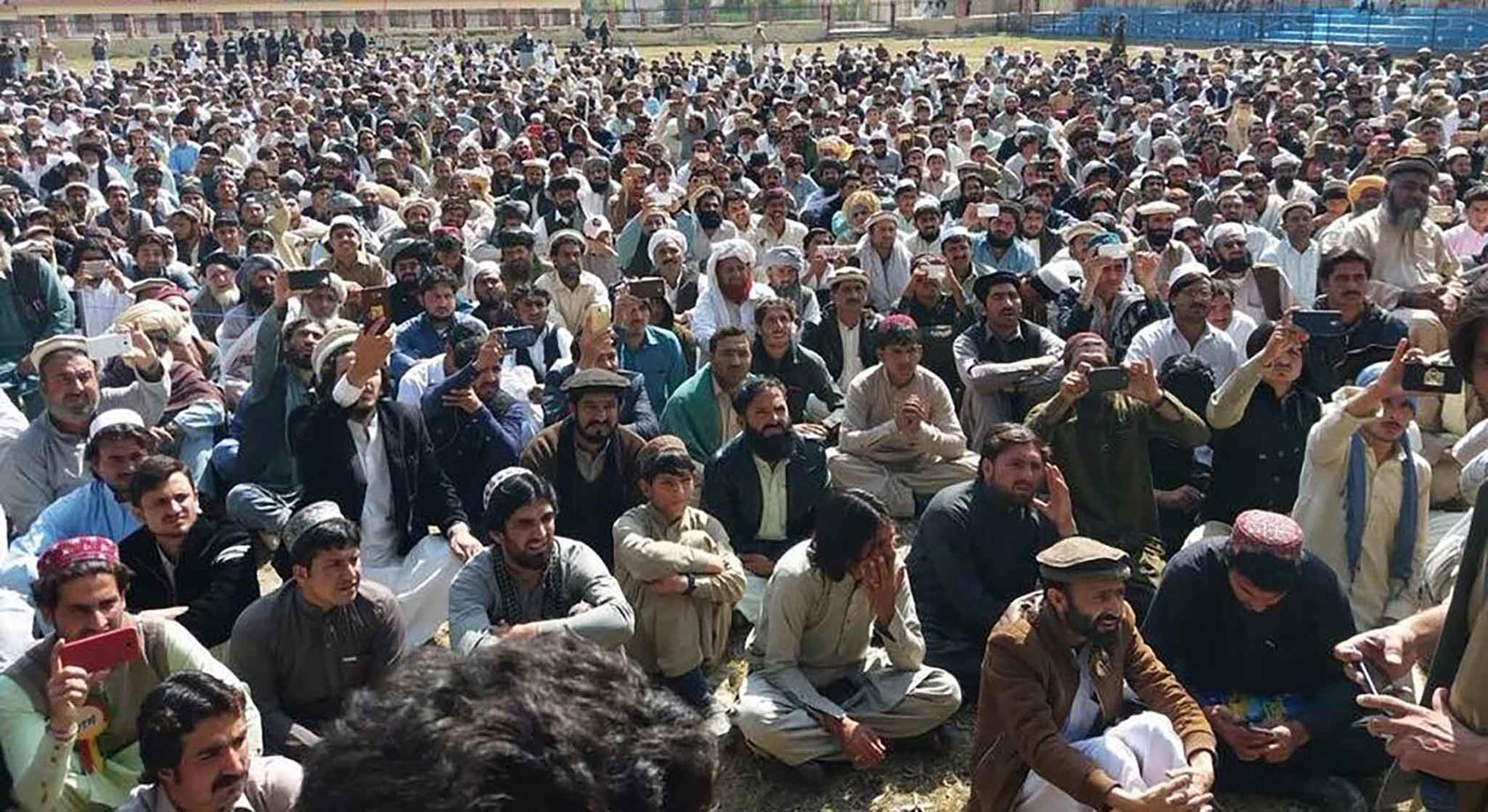
Tens of thousands of ethnic Pashtuns have held mass protests in Pakistan in the past three months, demanding justice and better governance for their communities. The largely youth-led protests forged an organization, the Pashtun Tahafuz Movement (“tahafuz” means “protection”), that has broadened its goals to include democracy and decentralization of power in Pakistan. The movement reflects demands for change among the roughly 30 million Pashtuns who form about 15 percent of Pakistan’s population, the country’s second-largest ethnic community. In March, hundreds of Pashtun men attended a protest at the North Waziristan town of Mir Ali, one of dozens of rallies since January. (Photo Courtesy: RFE-RL)

Beijing’s Building Boom

By Bushra Bataineh, Michael Bennon, and Francis Fukuyama

Scholars and pundits in the West have become increasingly alarmed that China’s planned Belt and Road Initiative (B&R) could further shift the global strategic landscape in Beijing’s favor, with infrastructure lending as its primary lever for global influence. The planned network of infrastructure project—financed by China’s bilateral lenders, the China Development Bank (CDB) and the Export-Import Bank of China (CEXIM), along with the newly formed and multilateral Asian Infrastructure Investment Bank—is historically unprecedented in scope. But the B&R is only the natural progression of a global sea change in developing economy infrastructure finance that has already been under way for more than two decades.

Trump’s Charm and Threats May Not Be Working on China. Here’s Why.

By Keith Bradsher

Chinese negotiators left Washington this weekend with a significant win: a willingness by the Trump administration to hold off for now on imposing tariffs on up to $150 billion in Chinese imports. China gave up little in return, spurning the administration’s nudges for a concrete commitment to buy more goods from the United States, and avoiding limits on its efforts to build new high-tech Chinese industries. The trade fight is far from over. And large Chinese technology companies in particular could be vulnerable if the United States starts punching again, with administration officials appearing to back away from Mr. Trump’s pledges to help ZTE, a Chinese telecommunications company hit with severe American penalties.

China Has a Vast Influence Machine, and You Don’t Even Know It

By Yi-Zheng Lian

Amid all the hoopla about Russia’s covert attempts to manipulate the 2016 American presidential election, one state has been conspicuously quiet: China. Yet its leaders may well be sneering at the Russians’ heavy hand. Since the project masterminded from Moscow largely relied on social media in the United States, American techies were bound to find out about it soon enough. Likewise with the baldfaced poisoning of an ex-Russian spy and his daughter in Britain, which has also been pegged to Moscow. Too crude, too traceable, these operations could only generate a backlash. China, too, can be a bully, especially with Asian governments in its immediate sphere of influence — imposing economic sanctions on South Korea for deploying defensive missiles or orchestrating the kidnapping of book publishers from Hong Kong and Thailand. But it doesn’t usually set out to openly hurt or antagonize stronger opponents like the United States; instead, it tries to quietly gain an edge for the long haul.

How Chinese mining in the Himalayas may create a new military flashpoint with India

Stephen Chen

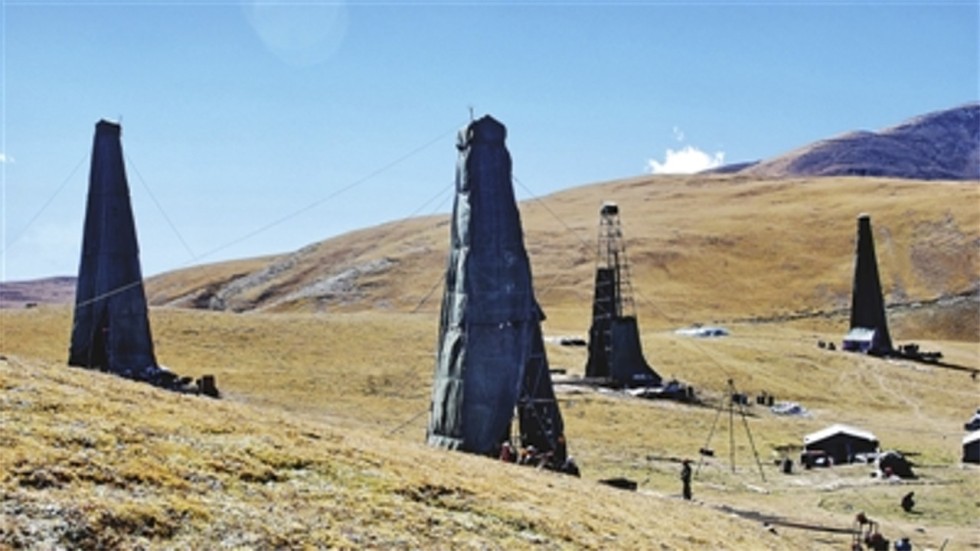
China has begun large-scale mining operations on its side of the disputed border with India in the Himalayas, where a huge trove of gold, silver and other precious minerals – valued at nearly US$60 billion by Chinese state geologists – has been found. Although mining has been going on in the world’s highest mountain range for thousands of years, the challenge of accessing the remote terrain and concerns about environmental damage had until now limited the extent of the activities. The unprecedented scale of the new mines follows years of heavy investment by the Chinese government in roads and other infrastructure in the area. People familiar with the project say the mines are part of an ambitious plan by Beijing to reclaim South Tibet, a sizeable chunk of disputed territory currently under Indian control. 

How Taiwan Would Defend Itself from a Decapitation Strike (By China)

Robert Beckhusen

In military terms, a “decapitation” strike refers to the practice of targeting a country’s top leadership in the opening hours of a war — cutting off the head of an enemy army and its political system. Taiwan, situated close to China with its many ways of carrying out such an attack, is vulnerable. Remote though it may seem, Taiwan takes the possibility seriously enough to treat defending against decapitation to be among its top military priorities under its “resolute defense” doctrine. China also seems to prepare to do it, at least as a way of rattling Taiwan and putting it under pressure. In 2015, Chinese troops drilled in Inner Mongolia at a base built to resemble the Taiwanese Presidential Palace.

Israel vs. Iran: Who Holds the Advantage in an Increasingly Looming War?

By Carlo Muรฑoz - Washington Times

As two of the Middle East’s military heavyweights edge closer to a shooting war, Israelboasts one of the world’s most effective militaries backed by a nuclear arsenal, but Iranhas 10 times the population and an increasing number of ways to strike back asymmetrically. The Iran military’s total force is reported to be 934,000 active-duty and reserve troops, while the total number of Israeli troops comes in at 615,000, according to figures compiled by GlobalFirepower.com. Expanding the aperture to include all fighting-age citizens, Iran still holds the advantage with over half of the country’s population of 84 million eligible to fight, compared with 3.6 million in Israel  But the age of high-tech warfare and armed drones is where Iran ’s advantages end in terms of conventional warfare, military analysts say.