11 August 2018

What the US Iran Sanctions Mean for India

By Paras Ratna

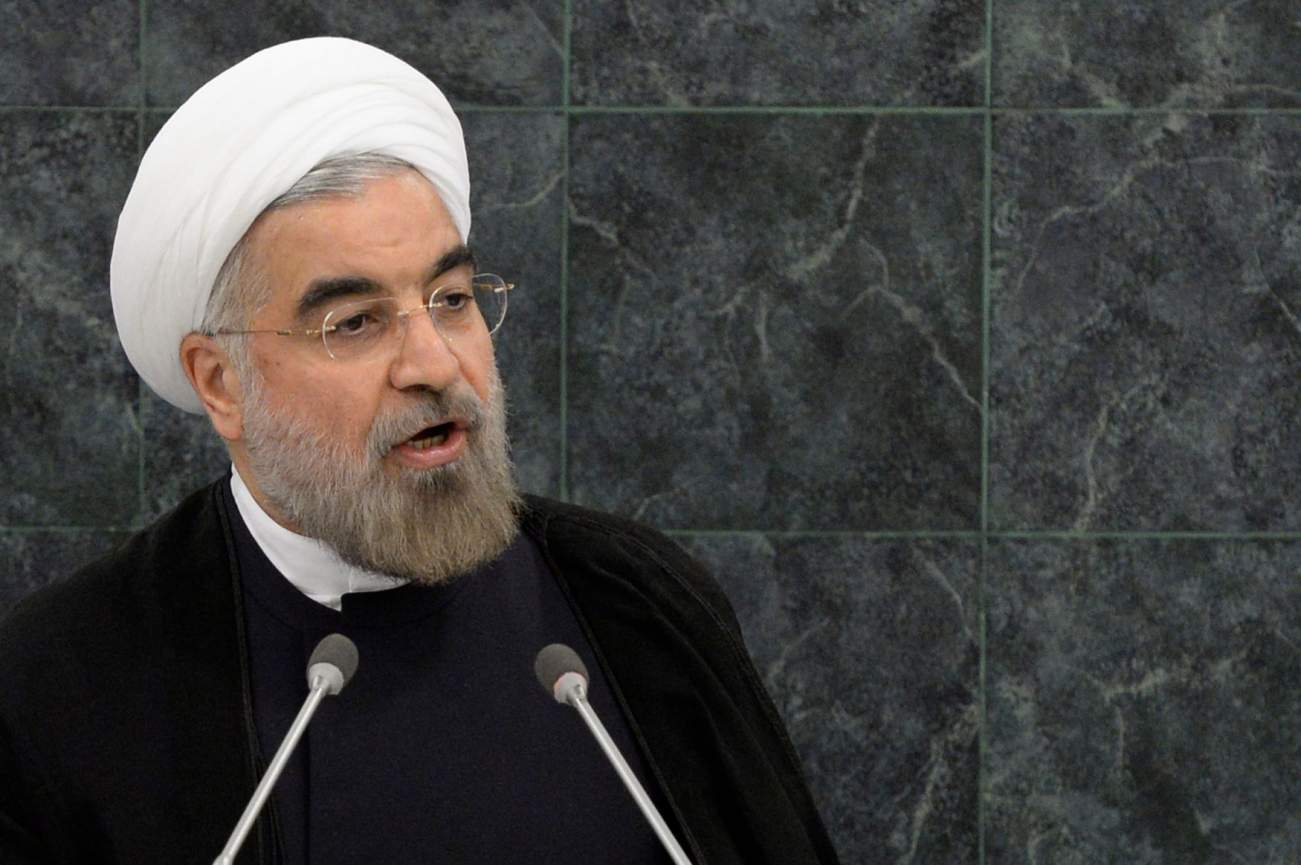
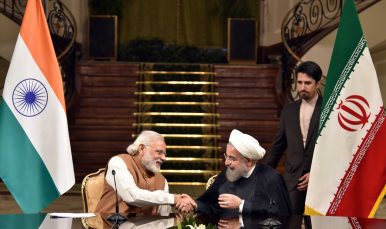
The Iranian nuclear deal fiasco has made the whole world anxious. U.S. President Donald Trump announced on May 8 that the United States will withdraw from the deal and planned to reinstate sanctions against the Iranian government. The sanctions were reimposed this week, making good on Trump’s threat. The scrapping of the nuclear deal is bound to have widespread repercussions for the regional security architecture in particular and global polity in general. Given New Delhi’s engagement not only with the United States and Iran but also with other significant Middle East countries like the UAE, Saudi Arabia, and Israel, the diplomatic headache resulting from these sanctions has multiplied for India.
WHAT ARE U.S. SPECIAL FORCES DOING IN FARAH IN WESTERN AFGHANISTAN?

David Brennan
Source Link

Afghanistan’s Ministry of Defense has confirmed that American special forces are being deployed to the country’s western province of Farah. According to the Khaama Press News Agency, the American troops are being deployed alongside Afghan forces to help train local troops. It is not yet clear how many Americans will be part of the Farah mission. Ministry of Defense spokesman General Mohammad Radmanish said the U.S. troops will not participate in combat operations, and will be on a train, advise and assist mission. Radmanish added that the Americans will be helping the Afghansget to grips with new weapons. Farah is a province in the west of the country on the border with Iran. The province’s main city, also named Farah, has become a key target of the Taliban, who are still fighting for control of the country 17 years after it was invaded by the U.S.-led coalition.

IS in Afghanistan Just Won't Go Away, US Officials Say

Jeff Seldin

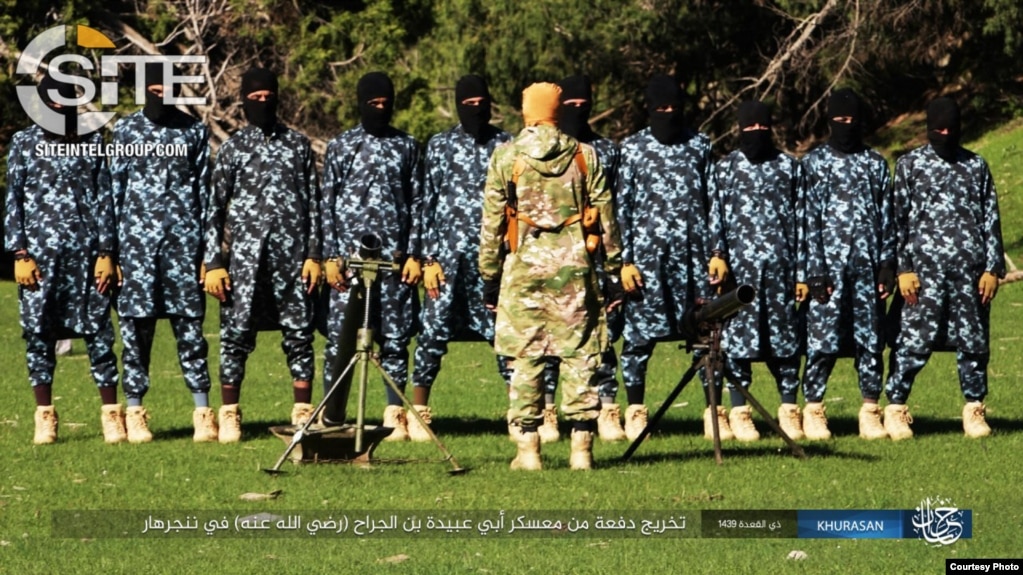
Intensified efforts to root out and destroy the Islamic State terror group in Afghanistan are making progress in some areas but have so far failed to prevent the terror group from maintaining a foothold in the country, based on the latest U.S. intelligence estimates. IS-Khorasan is thought to have more than 1,000 fighters, most of them located in Afghanistan's southern Nangarhar province, with a small number operating in the country's eastern Kunar province. Those remaining loyal to IS's black flag include local Afghans, as well as fighters from Pakistan and Uzbekistan, a senior counterterrorism official told VOA, adding that IS-Khorasan fighters are believed to also be carrying out operations in Pakistan.

Mattis Says Taliban Under Increasing Pressure to Reconcile


The secretary spoke before welcoming British Defense Secretary Gavin Williamson to the Pentagon for discussions.
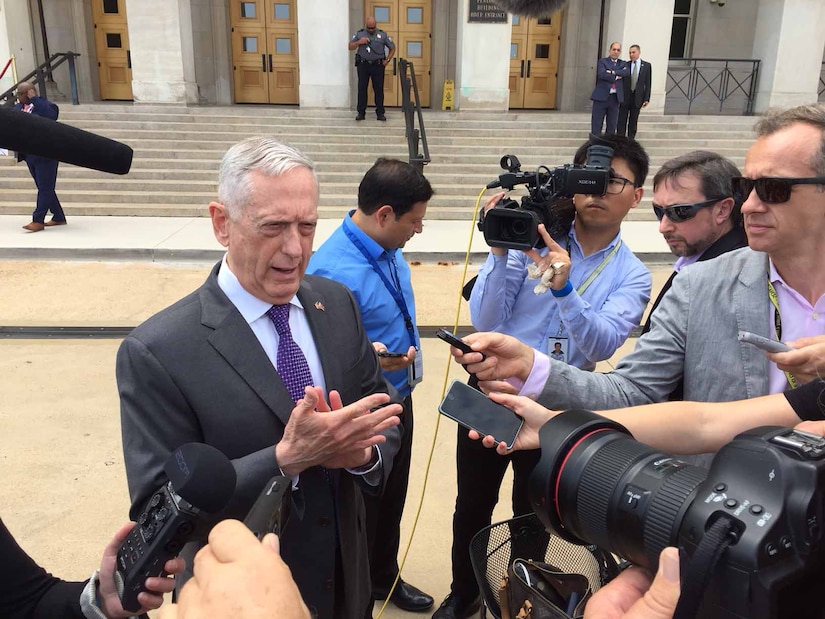
The strategy looks at coalition efforts in Afghanistan in a regional way, because many of the threats in the area are transnational. The strategy also called on the United States to realign its forces in Afghanistan to support the train, advise and assist mission with Afghan security forces and to accompany them on selected operations. But the reconciliation portion of the strategy is the most important pillar, Mattis told reporters, noting that through history, these conflicts and situations are solved via reconciliation. He cited the experiences in Northern Ireland and South Africa as examples.

U.S.-China Trade War: How We Got Here

by Brad W. Setser

For understanding trade law, I rely on the work of others. A trade war[1] is, among other things, a legal process—at least in the United States. Congress has delegated a lot of authority over the regulation of international commerce to the executive branch, which has given the Trump Administration a lot of latitude. But Trump and his team are still working within the framework of U.S. trade law (“232s”, “301s,” “201s,” etc.).

Is ‘Made in China 2025’ a Threat to Global Trade?

by James McBride

Introduction

The Chinese government has launched “Made in China 2025”, a state-led industrial policy that seeks to make China dominant in global high-tech manufacturing. The program aims to use government subsidies, mobilize state-owned enterprises, and pursue intellectual property acquisition to catch up with—and then surpass—Western technological prowess in advanced industries. 

The Security Risks of a Trade War With China

By Ali Wyne

Trade tensions between the United States and China continue to rise. In June, U.S. President Donald Trump’s administration announced that it would impose tariffs of 25 percent on $50 billion worth of Chinese exports, with the first wave targeting some 800 goods worth $34 billion. China pushed back with its own set of tariffs targeting the U.S. agricultural sector and industrial heartland. In response, Trump has reportedly ordered his administration to consider a 25 percent tariff on an additional $200 billion worth of Chinese exports. As the showdown escalates, many observers are understandably focused on the potential for a full-fledged trade war that could destabilize the world economy. But they should also consider second-order, longer-term implications—in the security realm. Up until recently, the two nations’ economic ties had served as an effective brake on escalating strategic distrust. A China less constrained by and invested in economic ties with the United States could pose a substantially greater challenge to U.S. foreign policy. For all the Trump administration’s frustrations with managing interdependence, the consequences of decoupling could mean even bigger headaches.

A New Cold War? Why the U.S. and China Would Both Lose


With escalating threats of higher American tariffs on more Chinese imports, followed inevitably by Chinese tit-for-tat retaliation on American exports, talk of a trade war is everywhere. But the Trump administration’s strategy is about far more than trying to level the playing field in trade, with potentially much worse consequences for both countries, and for the global economy and global stability. The U.S. claims that Chinese trade is unfair — because of government subsidies, restricted American access to the Chinese market, and manipulation of the Chinese currency, among other things — and hence merits tough tariffs. But that is only the beginning.

Trump’s Post-ISIS Retreat Leaves Syria Vulnerable to Russia and Iran

BY LARA SELIGMAN
As the U.S.-led coalition winds down its fight against the Islamic State in northeastern Syria, analysts are warning that Washington’s reluctance to devote resources to stabilizing the area could allow Russia and Iran to exert greater influence over the country. Coalition forces are closing in on the last bastion of Islamic State fighters in the city of Hajin, near the Iraqi border. Once the militants are routed, the next challenge will be providing food and services to civilians, demining the cities, repatriating millions of refugees, and re-imposing rule-of-law in broad swaths of the country.

Why an Attack by Grassroots Jihadists in Tajikistan Matters By Scott Stewart

By Scott Stewart

The July 29 attack on a group of cyclists was clearly conducted by grassroots jihadists and not by a professional terrorist cadre.  Despite its proximity to Afghanistan, Tajikistan has managed — with Russian assistance — to keep the jihadist threat in check. Beneath its relative stability, Tajikistan is significantly divided, and it will be important to watch for signs of increasing radicalization, specifically among younger members of the population. 

How to Strike a Missile Deal With Iran

BY MICHAEL ELLEMAN, MARK FITZPATRICK

The United States’ confrontational posture toward Iran is not likely to enlist any international partners apart from those already in the anti-Iran camp. But as European leaders try to salvage the nuclear deal with Iran, they should seek to find common cause with Washington to address their shared concerns. A key issue is the potential threat inherent in Iran’s ballistic missile program: If Iran ever decides to go for broke in building nuclear weapons, some of its missiles, which today are fitted with conventional warheads, could be repurposed to deliver nuclear warheads.

Japan urges overworked employees to take Monday mornings off

Justin McCurry 

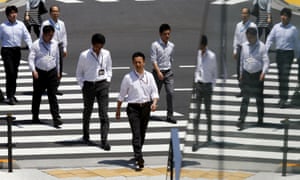
Japan was forced to confront its work culture by the 2015 suicide of a young advertising employee who had clocked up more than 100 hours’ overtime in the months before her death.  Japan’s government is to urge companies to give employees Monday mornings off in its latest attempt to improve the country’s poor record on work-life balance. The economy, trade and industry ministry believes that “Shining Mondays”, part of a wider campaign to address the punishingly long hours many Japanese are expected to work, will give employees a much-needed lie-in at the start of the working week, although similar schemes aimed at reducing people’s workload have been largely unsuccessful.

Daily Memo: Mixed Signals from the US and Turkey, Circled Wagons in China


Two stories stand above the rest today.

The first concerns the U.S. and Turkey’s on-again, off-again relationship. On Tuesday, things seemed to be going well again. A Turkish delegation headed by the deputy foreign minister arrived in Washington, where the two sides reached a preliminary agreement over imprisoned American pastor Andrew Brunson, according to Hurriyet. The U.S. Embassy in Turkey piled on the good news, tweeting that “the U.S. continues to be a firm friend and ally of Turkey despite current tensions.” The embassy also emphasized the vibrant “economic relations” between the two countries – a notable statement, considering the value of the Turkish lira continues its nosedive. (It fell to a new record low against the dollar – down to 5.4 – marking a 28 percent slide on the year and an almost 8 percent drop this month. On Tuesday, the Turkish Central Bank changed its foreign reserve requirements. It hoped to strengthen the lira but instead weakened it further.) The government in Ankara insists that it will not abide by U.S. sanctions against Iran, but the events from Tuesday suggest the U.S. and Turkey can find a way to pursue their interests without bludgeoning the Turkish economy.

How to Keep the US-India Defense Relationship Moving Ahead

BY VIKRAM J. SINGH

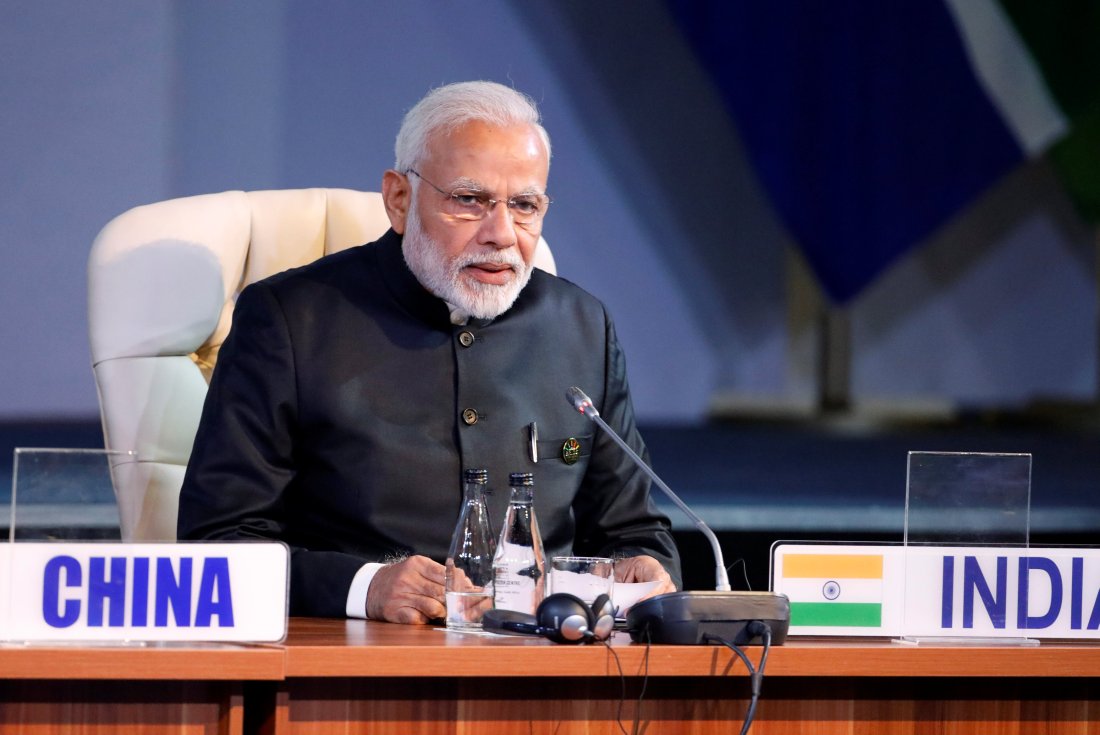
For the United States and India, a strong defense partnership is one of very few strategic opportunities in a rapidly changing Asia. Yet despite their strong commitment to the relationship, leaders in Washington and New Delhi risk letting it become an underperforming asset for both countries. Positive steps like avoiding secondary sanctions on India over Iran or Russia and adding India to the top-tier U.S. list of “Strategic Trade Authorization-1” partners can leave officials sanguine about their ability to handle bilateral bumps in the road through calm collaboration, but the partnership needs to move beyond avoiding problems to maximize its strategic value.

Truth and Reconciliation and Violence in Mexico

By Allison Fedirka

For many Mexicans, insecurity is commonplace. They look at the news and see stories of new vigilante groups, or they learn about the piles of bodies that were the most recent victims of organized crime, or they hear anecdotes of how business was obstructed or suspended because of some unnamed security concern. Now, the media coverage they watch tends to overemphasize these kinds of acts of violence while de-emphasizing the fact that Mexico has a mostly functional government and thriving economy. Still, violent crime, especially associated with the country’s drug cartels, is a serious issue in Mexico. So serious, in fact, that President-elect Andres Manuel Lopez Obrador’s radical proposal to resolve it – which features amnesty and reconciliation rather than confrontation – helped win him the presidency. He will soon begin to execute the plan, but as he does, he needs to bear in mind that virtually every previous plan to eliminate the cartels in the past few decades has failed.

Dawn of a New Armageddon

Cynthia Lazaroff

A personal essay on the meaning of a ballistic missile alert issued in Hawaii in January 2018, at the height of nuclear tensions between the United States and North Korea.

The Real History of the Liberal Order Neither Myth Nor Accident

By Michael J. Mazarr

For 70 years, U.S. commentators have, by and large, supported the idea of a U.S.-led, rules-based international order. Yet recently, more and more scholars and experts, including the political scientist Graham Allison writing in the latest issue of Foreign Affairs, have started dismissing it as a “myth.” Their argument has more than academic significance: given the accelerating assault on the institutions and practices of the postwar order by politicians around the world, the idea that the system is more mythical than real implies that the United States can get along perfectly well without it.

Somalia Is a Country Without an Army

BY AMANDA SPERBER

MOGADISHU, Somalia—Last week, the U.N. Security Council unanimously agreed to extend the African Union Mission in Somalia (AMISOM) mandate in the country until May 2019. The security situation has been getting worse by the day. On Sunday, two car bombs killed at least six people; one detonated in the capital, Mogadishu, and the other in a nearby town. A few days before, a popular young entrepreneur was murdered, sparking protests demanding accountability and better security.AMISOM first deployed to Somalia in 2007 with a six-month authorization to counter al-Shabab, a militant anti-government group. Although initially a marginal peacekeeping force of privately trained Ugandan soldiers, AMISOM has since expanded in size and in scope of mandate, and is now comprised of an estimated 22,000 troops from Uganda, Burundi, Ethiopia, Kenya, Djibouti, and Sierra Leone. Unlike typical peace-support missions, AMISOM has taken the lead role in the counterinsurgency campaign, filling in as a de facto army until the Somali National Army (SNA) is strong enough to counter the jihadi group on its own.

The Agriculture Industry Is Losing Its Voice in American Politics


As agriculture's contribution to overall employment declines in large part because of farm consolidation and mechanization, the political influence of agriculture lobbies will also continue to decrease. The U.S. government will become less protective of its agricultural sector in the long term, making it more vulnerable to market forces. As agriculture's political power continues to wane, farming subsidies and protections could face cuts. As members of the U.S. Congress debate the 2018 Farm Bill, which outlines funding for the agriculture industry and food supplement programs, they are focusing less on the needs of U.S. farmers and more on the work requirements for the Supplemental Nutrition Assistance Program (SNAP). And though Secretary of Agriculture Sonny Perdue announced $12 billion in emergency aid for U.S. farmershit by retaliatory tariffs, producers are struggling more and more to succeed financially and to influence politicians on policies that directly affect the industry. The overshadowing of traditional support mechanisms in the Farm Bill, which controls government aid for U.S. producers, is one sign of the agriculture lobby's waning influence.

You Live in Robert Lighthizer’s World Now

BY QUINN SLOBODIAN

Last month, U.S. President Donald Trump’s trade representative, Robert Lighthizer, sat through two hours of grilling by Congress, fending off grievances about the Trump trade war’s effects on Alaskan salmon, Maine lobsters, and Delaware chickens. “Nobody is declaring war on Canada,” Lighthizer protested, even as he conceded that the use of Section 232 of the 1962 Trade Expansion Act to levy tariffs on steel and aluminum was premised indirectly on assessing that country as a national security threat. When pushed on whether he had this assessment vetted by the National Security Council, he demurred that doing so was the Commerce Department’s responsibility, not his own.

How prepared is the U.S. to fend off cyber warfare? Better at offense than defense, author says

by Nick Schifrin, Dan Sagalyn, Larisa Epatko
Source link

“We spent years worrying about the giant cyber-Pearl Harbor,” says David Sanger, author of “The Perfect Weapon: War, Sabotage and Fear in the Cyber Age.” But, he argues, that has blinded us to more subtle uses, in which we are all collateral damage. Sanger joins Judy Woodruff to discuss the threats and realities, how the U.S. wages cyber warfare, and how prepared the U.S. is to stop attacks. Nick Schifrin:Last week, David Sanger of The New York Times reported that Russian intelligence hackers are now more focused on disrupting the U.S. electrical grid than on sowing chaos in the U.S. electoral system.Sanger has been reporting on the threats and realities of cyber-warfare, who wages it and how prepared the U.S. is to stop it in a new book.Judy Woodruff recently sat down with Sanger to discuss it.

QUANTUM COMPUTING WILL CREATE JOBS. BUT WHICH ONES?


CHRIS MONROE’S VISION for quantum computers is simple: He wants people to use them. Monroe, a physicist and co-founder of the quantum computing startup IonQ, wants the machines to be as sleek as the iPhone. He wants people to code on them without needing to understand complicated quantum physics. Basically, he wants the devices to be so intuitive that, on a lonely evening in 2050, a high schooler will log on to invent the cultural equivalent of Snapchat—but quantum. The industry has a ways to go. They have a timeline, sort of, give or take a few decades. And at the moment, their roadmap has at least one glaring pothole: a lack of trained people. “Quantum computer scientists are in high demand right now,” says Monroe. “I would know. IonQ has a lot of trouble hiring people.”

Crossing $1 Trillion: What’s Next for Apple?


Consumer electronics giant Apple is finding itself in a whole new race after last Thursday, when its share price rose to $207, making it the first U.S. company to cross $1 trillion in market capitalization. As Apple and its CEO, Tim Cook, set their sights on the future, experts from Wharton and elsewhere point out that the company does face some challenges: Apple’s smartphone sales have slowed (although margins have gone up); it has no big-bang product around the corner, notably in augmented reality or artificial intelligence (AI); its R&D investments are lagging; and its next big leap may take place under a different CEO.

Crossing $1 Trillion: What’s Next for Apple?


As Apple and its CEO, Tim Cook, set their sights on the future, experts from Wharton and elsewhere point out that the company does face some challenges: Apple’s smartphone sales have slowed (although margins have gone up); it has no big-bang product around the corner, notably in augmented reality or artificial intelligence (AI); its R&D investments are lagging; and its next big leap may take place under a different CEO. Meanwhile, other tech giants such as Amazon, Google’s parent Alphabet and Microsoft are close runners-up in the trillion-dollar race, heralding a new era of large, cash-rich companies. Platforms and ecosystems are critical to success in the next round, and some predict that Amazon looks poised to become the first $2 trillion company, especially with its ability to seemingly enter any industry it chooses to.

US Navy's Top Admiral Cites Increased Threat in Ocean Nearest Washington

Carla Babb

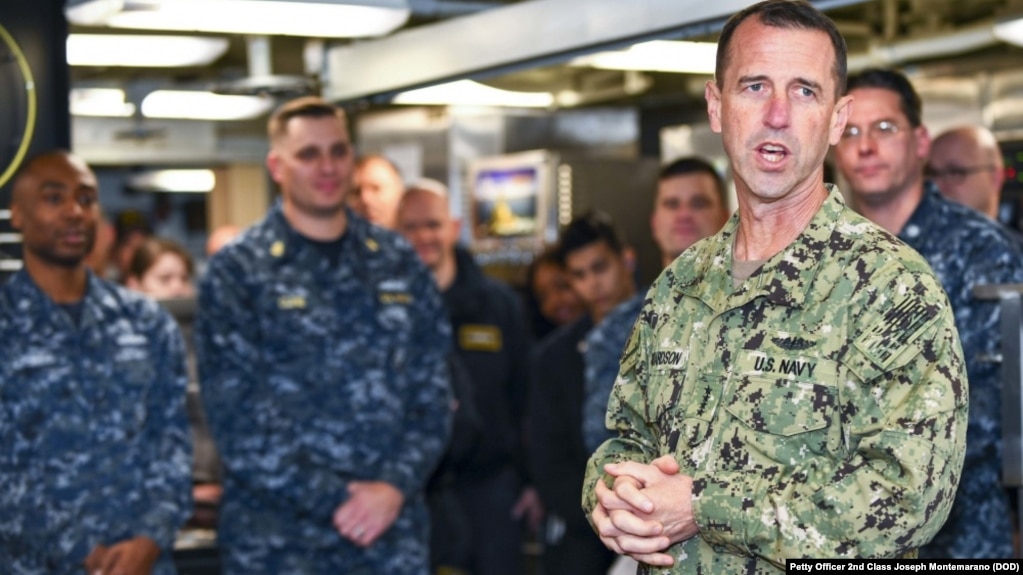
Chinese military vessels are now operating in the Northern Atlantic, and Russian submarines are prowling those same waters at a pace not seen since the end of the Cold War, the Navy’s top admiral told VOA in an exclusive interview. Chief of Naval Operations Adm. John Richardson said China's military movements from the North Atlantic into the Mediterranean Sea create a "new dynamic." "Even five years ago, we wouldn't have seen anything like this,” Richardson said.

10 August 2018

Reforming Indian agriculture by sprinkles and drips

Narayan Ramachandran

A water effectiveness focus for agriculture policy will improve yield, change cropping patterns and reduce misery. It is the only way to mitigate the significant impact likely from climate change. Each year in India, one half of a billion people pray for rain. The rain has to be just right. Too little and there is drought. Too much and there are floods. In either of these cases, their agricultural crop does not provide them sufficient livelihood. Misery generally follows in its wake.

U.S. Sanctions Threaten India's Importation of Iranian Oil

by Rauf Mammadov 

When the United States pulled out of the Iran nuclear deal in May, it told countries trading with Iran that they would have to stop soon or face American sanctions. As the first ninety-day wind-down period for ceasing trading with Iran comes to an end, Washington is ratcheting up the pressure on the main importers of Iranian crude oil. However, most of the other countries that signed the nuclear deal —including many in Europe—continue to support it. But companies, not governments, import oil—and they are likely to buckle under the U.S. pressure.

Too many deficits to bridge in modern era

By Ajit Ranade

It is received wisdom that prior to the era of liberalisation, the Indian economy was a story of chronic shortages. This was the fate of most newly free post-colonial nations of the mid twentieth century. The shortages in a macroeconomic sense were of three kinds. Firstly, and most importantly, were food shortages. This was because the nation was unable to produce enough to feed its population. If food prices remained unregulated, then food inflation would be so high that most of the poor would not be able to afford, and hence suffer from starvation. The way to bridge the food deficit was by importing food, and possibly depend on foreign aid. Also, prices were regulated so that the poor could afford to buy food. Which leads us to the second deficit, caused by the need to import stuff. This was the shortage of foreign exchange. The only way to bridge this gap was to earn via exports, and keep a strict control on the outgo of foreign exchange. Those were the days when the per diem to government servants on their trips abroad was around two dollars a day. The third deficit was the fiscal deficit, wherein the government was unable to collect enough through taxes (or non tax revenue) to pay for its expenditure. A developing country naturally had a low tax base, and a very high development expenditure requirement.

WHAT ARE U.S. SPECIAL FORCES DOING IN FARAH, AFGHANISTAN?

BY DAVID BRENNAN 

Afghanistan’s Ministry of Defense has confirmed that American special forces are being deployed to the country’s western province of Farah. According to the Khaama Press News Agency, the American troops are being deployed alongside Afghan forces to help train local troops. It is not yet clear how many Americans will be part of the Farah mission. Ministry of Defense spokesman General Mohammad Radmanish said the U.S. troops will not participate in combat operations, and will be on a train, advise and assist mission. Radmanish added that the Americans will be helping the Afghans get to grips with new weapons.

Daily Memo: Iran's New Sanctions, China's Broken Traditions, Afghanistan's Definitions


As expected, the U.S. reimposed sanctions on Iran on Tuesday morning, putting the U.S. in direct violation of the Joint Comprehensive Plan of Action, better known as the Iran nuclear deal. The revived sanctions cover Iran’s purchases of U.S. dollars, metals, coal and industrial software as well as the Iranian auto sector. (The second round of expanded sanctions targeting Iranian energy exports won’t kick in until November.) This puts the U.S. and the European Union on something of a collision course. On Monday, U.S. President Donald Trump tweeted that anyone doing business with Iran will be barred from doing business with the United States. But now that the sanctions have kicked in, the EU is using an obscure law from the 1990s to shield it from any repercussions. (In theory, anyway. The law will prove difficult to enforce.) As for Iran, the sanctions come at a bad time. Demonstrations in cities across the country entered into their seventh day on Tuesday. The hardline-dominated Assembly of Experts called on Iranian President Hasan Rouhani to be held to account for the country’s economic woes and demanded a sweeping overhaul of his Cabinet. Rouhani said Tehran will not negotiate with Washington while under sanctions.

Wanted: A Strategy for the Indo-Pacific Region

by Scott D. McDonald

Four months ago, Singaporean foreign minister Vivian Balakrishnan stated that Singapore would not be joining the Free and Open Indo-Pacific (FOIP) because he did not know what the strategy entailed. In fact, the United States has not released a formal FOIP plan. At the time of his statement, public descriptions of the developing strategy had been confined to President Trump’s speech at the Asia-Pacific Economic Cooperation CEOs Summit and a press event at the State Department. At the time, the world knew only that the United States was pursuing an international rules-based order built around the centrality of ASEAN (Association for Southeast Asian Nations) and defined as free and open. Congressional testimony on May 15 provided a more refined statement of the principles “free” and “open,” but did not speak to the manner in which FOIP would achieve them.

Can Iran Wait out Trump's Pressure Campaign?

by Lawrence J. Haas

U.S. foreign policy toward Iran is approaching a “back to the future” moment, with the Trump White House resurrecting the strategy pursued by President George W. Bush (and, for a while, President Barack Obama) of pressuring Iran economically into abandoning its nuclear pursuits. The question now is whether President Trump, or if necessary a successor, will push this pressure campaign—which the Administration is supplementing with outreach to Iran’s people and more security cooperation with its regional adversaries—to its conclusion.

A Brief Guide to Understanding the Kurds


It has been said that the Kurds are a nation without borders, though that is only partly true. They are, of course, citizens of any number of countries, ones that envelop their homeland in the Middle East and ones much farther afield. But for the Kurds — a nation of some 25 million people who, despite their shared culture, speak different languages, practice different religions, subscribe to different political ideologies and hold different passports — citizenship is not such a simple matter. It would be more accurate to say that Kurds, having assimilated into countries they do not consider their own, tend to be citizens in name but not in practice. And they are subject, therefore, to discrimination and outright oppression. In Turkey, Kurdish language curriculums are still banned in most schools. In Iraq, an estimated 50,000 to 100,000 Kurds were killed in the late 1980s during Saddam Hussein's al-Anfal campaign. In Iran, as many as 1,200 Kurdish political prisoners were allegedly executed after the Iranian Revolution of 1979.

YEMEN CIVIL WAR: U.S. LAWMAKERS RAISE ALARM BELLS ABOUT PENTAGON’S ROLE IN ‘WORLD’S WORST HUMANITARIAN CRISIS’

BY JONATHAN BRODER 

Congress rarely gets outraged over an internecine war in a distant land where American troops are not bleeding and dying. But in a rare exception, lawmakers have become deeply troubled over the Pentagon’s role in Yemen’s civil war—a conflict that has eviscerated the civilian population, provoked a deadly famine and ignited what health officials are calling the worst cholera outbreak in recorded history. For the first time since the war began in 2015, U.S. lawmakers are taking concrete steps to halt or tightly restrict weapons sales to their allies Saudi Arabia and the United Arab Emirates—the leaders behind an Arab coalition fighting Yemen’s rebels, who are seen as proxies for a common enemy, Iran. Much of the damage from the war, independent observers say, has been caused by Saudi and UAE airstrikes using U.S. and British warplanes and munitions, leading human rights groups to accuse Washington and London of complicity in Yemen’s agony.

BATTLE OF THE PORTS: EMIRATES SEA POWER SPREADS FROM PERSIAN GULF TO AFRICA | OPINION

CAMILLE LONS 

The past few weeks have been particularly rich in new developments for the UAE’s foreign policy. In Yemen, the UAE is at the forefront of the current struggle for the seizure of the Houthi-held port of Hodeidah, a critical chokepoint for the arms and humanitarian supplies to the Houthis, and an important access to the Red Sea and strait of Bab el Mandeb, where 4.8 million barrels of oil and 8 percent of global trade transit every day. On the other shore of the Red Sea, the Emiratis have reportedly played a key role at facilitating the rapprochement between 20-year rivals Eritrea and Ethiopia. On July 24, a few weeks after the two countries signed a peace agreement, Abu Dhabi hosted a tripartite summit with the two leaders, where it reaffirmed its support to their peace efforts. For the UAE, the stabilisation of these important partners could have strategic advantages, including for reinforcing its already solid influence on Horn of Africa’s ports. Indeed, Eritrea hosts the UAE’s first foreign military base in its port of Assab since 2015, and reports suggest that landlocked Ethiopia plans to use this port, possibly developed by Dubai Ports World, to diminish its reliance on the port of Djibouti.