19 October 2018

Make in India has become Assemble in India for Chinese mobile phones

VINEET SACHDEV, HT 

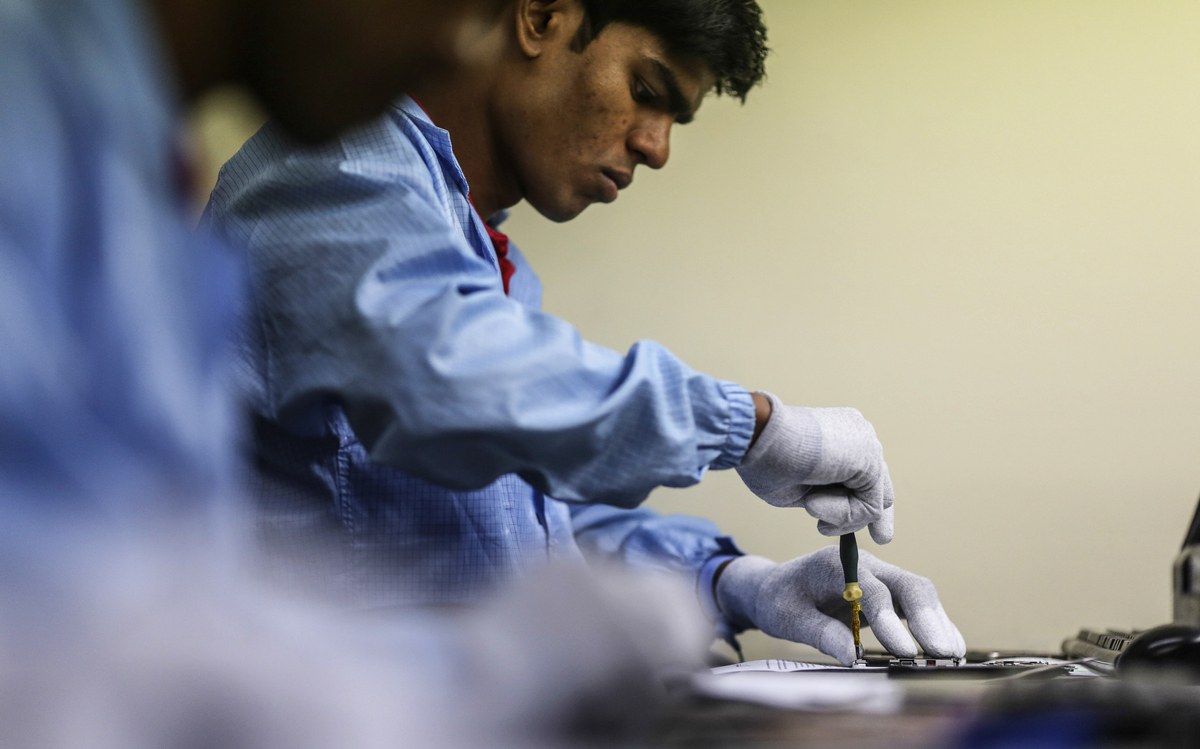
Chinese firms have started assembly in India but as yet import telecom parts substantially from home country, govt study shows. New Delhi: India imported $6.3 billion worth of mobile phones from China in 2014, the year Narendra Modi became the country’s prime minister. This number has declined continuously and reached $ 3.3 billion in 2017 according to a study conducted by the ministry of commerce and industry. This would suggest that the ambitious Make in India programme of this government is working. But another set of statistics indicates otherwise. India’s import of parts of mobile phones as well as telecom equipment from China increased from $1.3 billion in 2014 to $9.4 billion in 2017. The total import of mobile phones and telecom parts increased from $7.6 billion to $12.7 billion during this period.

What Is Saudi Arabia's Grand Plan for Pakistan?

by Arif Rafiq

Pakistan’s new government has been in a mad dash to attract foreign aid and investment—most notably from Saudi Arabia—to offset a widening current account deficit, rising foreign debt repayment obligations, and avert a balance of payments crisis. Pakistan’s external financing needs will approach or exceed $30 billion this fiscal year. A return to the International Monetary Fund (IMF)—for the twenty-second time in Pakistan’s history—has been all but certain for much of this year. But Pakistan’s new quarterback, Prime Minister Imran Khan, came late into the game and decided to throw a few Hail Mary passes to his country’s traditional receivers of wish lists, hoping to avoid the fund altogether or pursue a smaller bailout and avoid strict conditionality.

The corridor of power

Suzanne Levi-Sanchez

In January, rumours swirled around policy and security circles that China intended to build a military base in the Little Pamirs, a remote mountainous section of the Wakhan Corridor in Afghanistan that forms a narrow wedge bordering China, Tajikistan, and Pakistan. A journey to the Little Pamirs takes six days on horseback; vehicles can get a little closer to the area via a small bridge on the Tajik side of the border. As China works to advance its Belt Road Initiative, the area at the tip of the Wakhan Corridor in the Little Pamirs will become a key crossing point for its China-Pakistan Economic Corridor. Chinese officials denied that they are building a base, but on the ground, and in back channel chats, many asserted that not only was this the plan but it had already been in the works since 2016. Some said Chinese troops had been stationed in the region for over a year already.

Religion in China

by Eleanor Albert

Religious observance in China is on the rise. Amid China’s economic boom and rapid modernization, experts point to the emergence of a spiritual vacuum as a trigger for the growing number of religious believers, particularly adherents of Christianity and traditional Chinese religious groups. While China’s constitution allows religious belief, adherents across all religious organizations, from state-sanctioned to underground and banned groups, face intensifying persecution and repression.

Freedom and Regulation

China’s Great Leap Backward

BY JONATHAN TEPPERMAN

In the last 40 years, China has racked up a long list of remarkable accomplishments. Between 1978 and 2013, the Chinese economy grew by an average rate of 10 percent a year, producing a tenfold increase in average adult income. All that growth helped some 800 million people lift themselves out of poverty; along the way, China also reduced its infant mortality rate by 85 percent and raised life expectancy by 11 years. that made these achievements all the more striking is that the Chinese government accomplished them while remaining politically repressive—something that historical precedent and political theory suggest is very, very difficult. No wonder, then, that the China scholar Orville Schell describes this record as “one of the most startling miracles of economic development in world history.”

Israeli Worries About Chinese Investment Spark Calls For Closer Scrutiny

By ARIE EGOZI
TEL AVIV: Israel needs something like America’s Committee on Foreign Investment in the United States (CFIUS) to monitor and, when needed, curtail Chinese investment that may pose a national security threat. “Surprisingly, we don’t have a body that supervises operations of Chinese companies in Israel and that is very worrying. I hope that this will changed,” a senior member of the Israeli Knesset’s Committee for Foreign Affairs and Security told Breaking Defense on condition of anonymity. “This is a very sensitive issue and it was discussed recently in the committee.” Shaul Horev, head of the University of Haifa’s Center for Maritime Strategy, was co-author of a report about the Chinese penetration into Israel. In a special interview with Breaking Defense, the former deputy commander of the Israeli navy said that Israel should not stop Chinese investments in Israel, but should create a body to supervise these investments: “Today there is no such body and that is a reason for great concern.”

Kenyans Say Chinese Investment Brings Racism and Discrimination

By Joseph Goldstein

Before last year, Richard Ochieng’, 26, could not recall experiencing racism firsthand. Not while growing up as an orphan in his village near Lake Victoria where everybody was, like him, black. Not while studying at a university in another part of Kenya. Not until his job search led him to Ruiru, a fast-growing settlement at the edge of the capital, Nairobi, where Mr. Ochieng’ found work at a Chinese motorcycle company that had just expanded to Kenya. But then his new boss, a Chinese man his own age, started calling him a monkey. It happened when the two were on a sales trip and spotted a troop of baboons on the roadside, he said.

“‘Your brothers,’” he said his boss exclaimed, urging Mr. Ochieng’ to share some bananas with the primates.

US trade war could cost millions of jobs in China


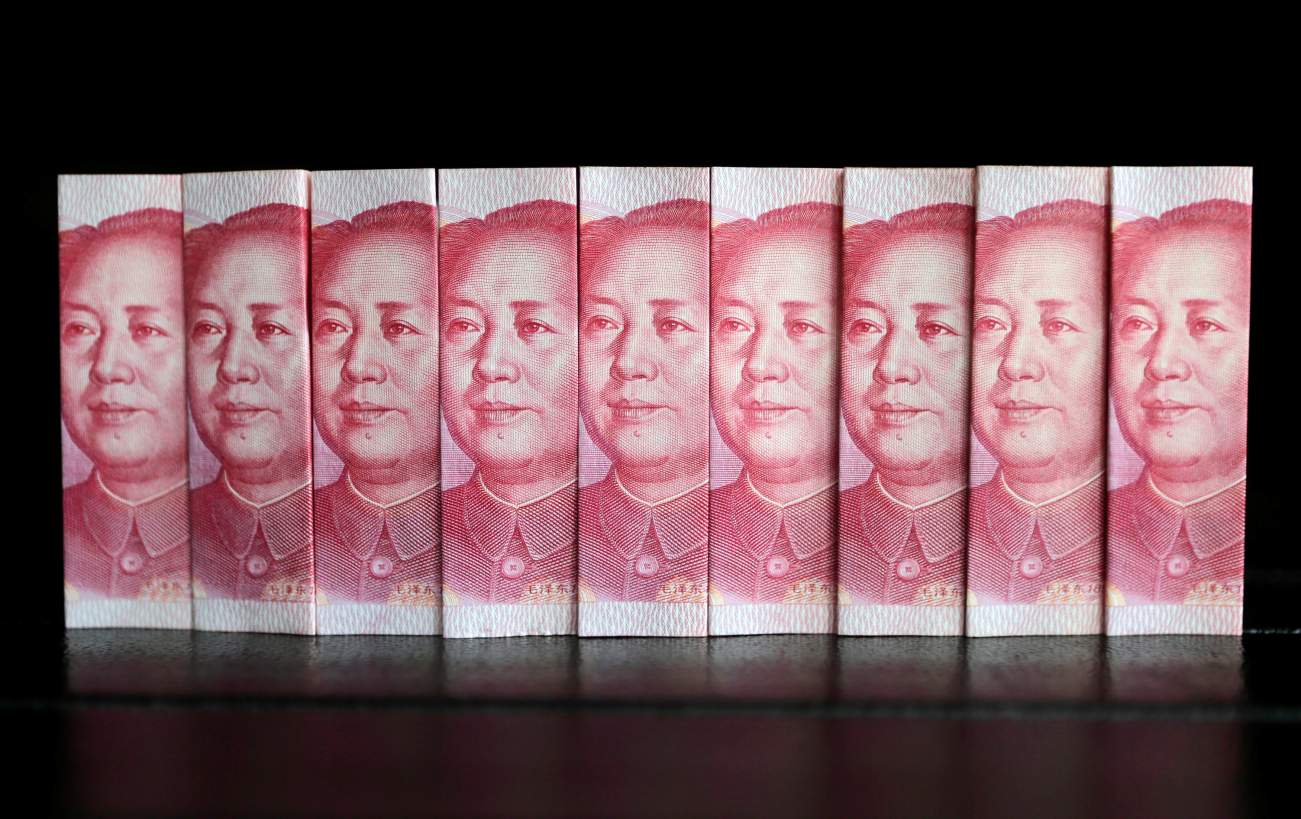
The trade war with the United States could cost China 700,000 jobs in the short-term and nearly three million if the conflict spirals out of control. Economists led by Haibin Zhu at JPMorgan Chase outlined the scenarios in a note. Job losses would kick-in if US President Donald Trump wheels out 25% tariffs on Chinese imports worth another US$200 billion and Beijing retaliates by devaluing the yuan, or renminbi, by 5%, as well as slapping duties on US goods. If China fails to take action, up to three million people could lose their jobs, JPMorgan revealed earlier this week, according to Bloomberg news agency. The study highlighted the impact of tit-for-tat tariffs on China which is grappling with a cooling economy. Growth has slowed across a range of sectors while Beijing is struggling to contain ballooning local government and corporate debt.

China's Diplomacy Has a Monster in its Closet

By Ben Lowsen

China has been brandishing its might and the world is taking notice. Not with military exercises, cyber attacks, or by harassing vessels in international waters. China has been doing these things, of course, but its latest show of force comes straight from its heart: displays of ultra-nationalism by its diplomats. Recently, China’s embassy in London offered a stinging reproach to Britain, defending the right of a Chinese reporter to shout down speech Beijing finds offensive, in this case about Hong Kong. Chinese Ambassador Liu Xiaoming’s spokesperson blamed the United Kingdom for impinging on the reporter’s right to free expression. This is doubly ironic for China in that free expression cannot mean stifling the right of others to the same and because China offers only a very anemic version of this right. Indeed, China seems emboldened to extend its Orwellian system of social control wherever and whenever it likes.

‘Curse the Jews,’ Yemen’s Houthi Rebel Slogan Handed out at University

by Seth Frantzman

“Death to America, Death to Israel, Curse the Jews, Victory to Islam,” is the slogan printed on small cards handed out at Sana’a University in Yemen. Nadwa Dawsari, a specialist on conflict and tribes in Yemen, posted a photo of a laminated “student and staff ID” on October 9 on Twitter.

Now Houthis slogan "Death to America, Death to Israel, Curse the Jews, Victory to Islam" is stamped on public university student and staff IDs. #Yemen pic.twitter.com/to9PX4tfDD

— Nadwa Dawsari (@Ndawsari) October 9, 2018

The slogan has been used for years according to Dave McAvoy, a security and risk analyst who tracks developments in the region.

Turkey's Revolution Looks like Iran's - but in Slow Motion

by A.J. Caschetta

Watching Turkey's transformation into an authoritarian Islamist nation over the last 16 years has been eerily like watching Iran's rapid fall in 1979 -- but in slow motion. Whereas Iran went from a secularist American ally to an implacable Islamist foe in a matter of months, Turkey has been on a similar path but led by a more cautious Islamist, Recep Tayyip Erdogan, who has moved at a much slower rate. 

Rise to Power

The Pahlavi Shah of Iran exiled Ruhollah Khomeini (to Turkey, coincidentally) in 1964. When he returned to Iran on February 1, 1979, Khomeini seized absolute power almost immediately. With the Shah out of the country seeking treatment for his cancer, there was little to stop Khomeini and his clerical allies. He quickly created the Islamic 

Saudi Arabia Does a Big Favor for Iran

KRISHNADEV CALAMUR
Source Link

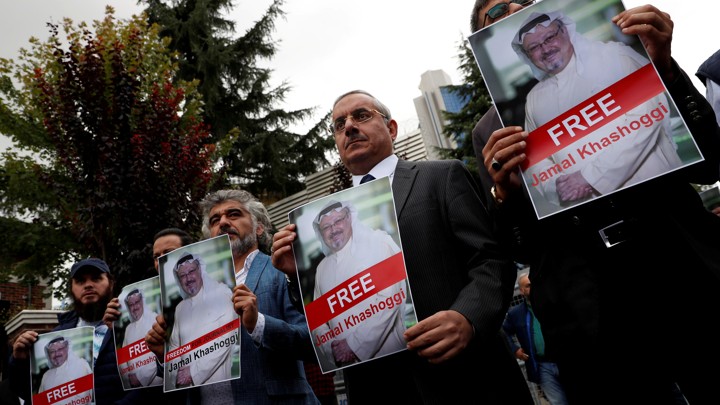
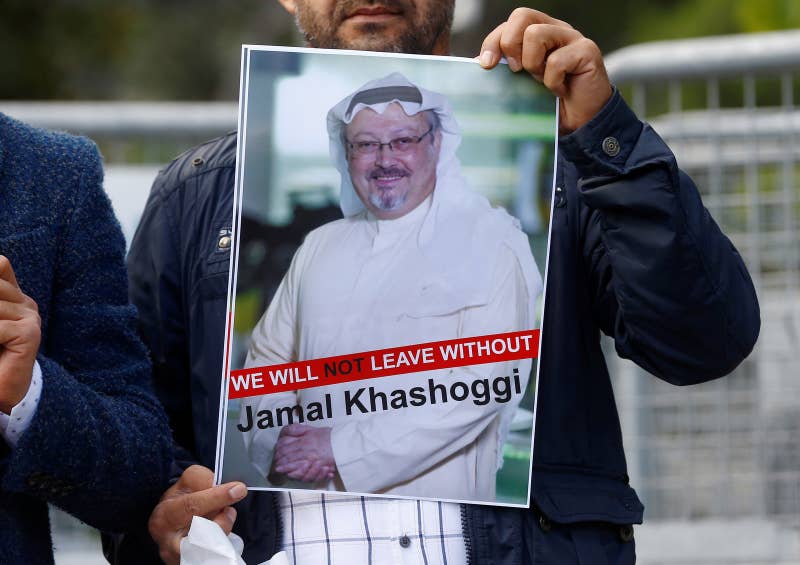
When the Trump administration talks about “severe punishment” for a country in the Middle East, it is generally referring to Iran, a country whose regional influence troubles both its Arab neighbors as well as the United States. Yet on Sunday, President Donald Trump used those words to describe what could happen to Saudi Arabia— arguably the closest U.S. ally in the Muslim world— if investigations determine that the regime is complicit in the disappearance of Jamal Khashoggi, a dissident journalist. 

German Politics: It Could Have Been Worse

By Holger Schmieding

The center-right CSU and the centre-left SPD lost the state election in Bavaria. This spells trouble for Merkel’s CDU/CSU-SPD coalition. Whether the parties backing Merkel can arrest the erosion of their support will hinge on one issue: Can they stop their noisy disputes that are putting off voters? If the state election in Hesse on October 28th yields a result for the center-right that is not worse than opinion polls, Merkel will likely not face a challenge from within her CDU. German politics may remain noisy for a while. A significant change in policies is not on the cards, though.  The state election in Bavaria this past weekend didn’t go well for Germany’s once-dominant parties. The center-right CSU and the centre-left SPD each lost over ten percentage points.

A New Route From Asia to Europe


Last month, Maersk, one of the world’s largest logistics firms, sailed a cargo ship from Asia to Europe through a route north of Russia for the first time. The melting Arctic ice has opened up new possibilities for the shipping industry.

How Russian hybrid warfare changed the Pentagon’s perspective

By: Justin Lynch   
In 2014 Russia-backed separatists used a blend of digital and traditional fighting during their takeover of Crimea, and the Pentagon took note. As the Russians blitzed the contested eastern region of Ukraine with cyberattacks, electromagnetic jamming and unmanned aerial systems, the U.S. military closely monitored the battle tactics, according to officials speaking Oct. 8 at the Association of the U.S. Army’s annual meeting

What Pentagon officials observed sparked change.

The events in Ukraine helped the U.S. military become more “threat informed in how we develop our future capabilities,” Maj. Gen. Garrett Yee told reporters while speaking about electronic and cyber warfare.

Washington Think Tanks Still Divided On Whether To Return Saudi Donations Over Journalist's Disappearance

Emily Tamkin

The Center for Strategic and International Studies, one of Washington’s most prominent think tanks on international affairs, still has not decided whether to return funding from Saudi Arabia in the wake of the disappearance and likely murder of journalist Jamal Khashoggi.

But another influential research center, the Middle East Institute, said it would stop taking Saudi donations "pending the outcome of the investigation" into Khashoggi's disappearance.

CSIS's hesitance to reject a Saudi grant and the Middle East Institute's decision to stop receiving Saudi donations are further signs of the split roiling Washington, as officials here search for ways to respond to Khashoggi’s probable death.

An AI Wake-Up Call From Ancient Greece

ADRIENNE MAYOR

Those who warn about the potential dangers and unintended consequences of artificial intelligence and machine learning are right to invoke Pandora and her jar of miseries. In fact, the myth of Pandora is actually more appropriate than many realize, not for what it says about naive curiosity, but for what it tells us about humankind's relationship with technology. STANFORD – In discussions about the implications of artificial intelligence (AI), someone almost always evokes the ancient Greek myth of Pandora’s box. In the modern fairytale version of the story, Pandora is depicted as a tragically curious young woman who opens a sealed urn and inadvertently releases eternal misery on humankind. Like the genie that has escaped the bottle, the horse that has fled the barn, and the train that has left the station, the myth has become a cliché.

Microsoft, Amazon CEOs Stand By Defense Work After Google Bails on JEDI

By Frank Konkel

Google’s decision not to bid for the Pentagon’s $10 billion Joint Enterprise Defense Infrastructure cloud contract drew criticism from the chief executives of two rival tech companies: Amazon and Microsoft. “One of the jobs of a senior leadership team is to make the right decision even when [it] is unpopular,” Amazon CEO Jeff Bezos said Monday at the WIRED25 summit. “If big tech companies are going to turn their back on the DOD, then this country is going to be in trouble.” Google announced the decision Oct. 8 in a statement that cited ethical concerns and uncertainty regarding whether it could meet the Pentagon’s security requirements for JEDI. In June, the company opted not to renew an artificial intelligence-based contract—called Project Maven—it held with the Pentagon after its employees voiced opposition to performing work that could be used for lethal purposes.

Army works to overcome personnel challenges for offensive cyber

By: Mark Pomerleau 
One of the U.S. Senate’s most vocal members on cybersecurity is concerned that Army Cyber Command does not have the personnel it needs to conduct offensive cyber operations. In a Sept. 26 joint Senate Armed Services Cybersecurity and Personnel Subcommittee hearing, Sen. Mike Rounds, R-South Dakota, said the Army needs more tool developers. “The Army faces significant manning gaps in the roles of tool developers and interactive on-net operators, or I think as we call them IONs,” Sen. Mike Rounds, R-South Dakota, said. “While the Army needs about 15 operators … it has about half of its requirements.” Part of the problem, Rounds said, is the Army has about 14 spots in the NSA’s Remote Interactive Operator Training, or RIOT. About half of those 14 operators will fail the training, meaning there will likely be just seven graduates to move onto the Cyber Mission Force, the cadre of cyber warriors that conduct operations on behalf of U.S. Cyber Command.

How to protect jets, missiles and ships from cyberattacks

By: Justin Lynch  

Hackers pierced the weapon system’s terminal, giving them the ability to feed operators false commands or spoof logistics. But instead, the intruders opted to display a taunting message across the screen, according to a new report from the Government Accountability Office. They chose a time-tested instruction.

"Insert two quarters to continue operating.”

In this case, the the hackers in question were red-team testers discovering vulnerabilities in Pentagon weapons systems under development. The prank was just one example that was included in a 50-page report that that underscored just how susceptible American military weapons are to cyberattacks. The report did not name the particular weapon system that offered arcade style instruction, but it fit the description of a drone.

Support for ‘hack back’ grows after Trump’s pledge to get aggressive in cyberspace

By: Justin Lynch   

Few issues more divisive in the cybersecurity community than the idea that private firms should be allowed to digitally retaliate, but the concept has gained support after promises from the United States to become more aggressive online. Support for the idea that businesses should be able to respond to cyberattacks, or “hack back,” has recently come from former government officials, experts and lawmakers who say it could be effective deterrent. “It sure seems like the environment is getting a lot friendlier to hack back, considering the U.S. government has pledged to take more offensive actions in cyberspace,” said Bryson Bort, head of the cybersecurity firm Scythe. Bort said that firms like Microsoft have increasingly moved into a “grey space” where they try to deter hackers through attribution or shutting down botnets.

The Pentagon’s Push to Program Soldiers’ Brains

BY MICHAEL JOSEPH GROSS

I. Who Could Object?

“Tonight I would like to share with you an idea that I am extremely passionate about,” the young man said. His long black hair was swept back like a rock star’s, or a gangster’s. “Think about this,” he continued. “Throughout all human history, the way that we have expressed our intent, the way we have expressed our goals, the way we have expressed our desires, has been limited by our bodies.” When he inhaled, his rib cage expanded and filled out the fabric of his shirt. Gesturing toward his body, he said, “We are born into this world with this. Whatever nature or luck has given us.”

His speech then took a turn: “Now, we’ve had a lot of interesting tools over the years, but fundamentally the way that we work with those tools is through our bodies.” Then a further turn: “Here’s a situation that I know all of you know very well—your frustration with your smartphones, right? This is another tool, right? And we are still communicating with these tools through our bodies.”

The strategic threat to U.S. tech companies

By Robert Hannigan
LONDON — While its veracity remains in much doubt, Bloomberg Businessweek’s cover story — of Chinese spies allegedly hacking hardware manufactured in China and used by tech giants like Apple and Amazon — has once again raised the alarm about the risk to information technology’s global supply chain. To be clear, the tech companies involved, as well as government officials and experts, have denied or questioned elements of the story, arguing that much of the reporting is unsubstantiated. But whatever the truth of these particular allegations, such threats to our IT infrastructure are not new. The crucial challenge for the West is to prevent them from happening in the first place and to detect them when they do.

THE FEET OF THE MASTERS: LESSONS ON IRREGULAR CYBER WARFARE

José de Arimatéia da Cruz and Travis Howard

The United States invented the Internet. Andrew Blum’s chronicle of the Internet’s vast inner workings in Tubes: A journey to the Center of the Internet (2012) describes the moments the ARPANET went live on October 29th, 1969, digitally hand-shaking with another university’s SDS Sigma 7 host computer in a cramped room on the University of California Los Angeles (UCLA) campus. U.S.’s academic ingenuity and engineering expertise brought life to what is today “cyberspace.” The birth of the Internet would launch the world into the Information Age, with the U.S. leading the charge. Cyberspace and the Internet are American inventions, reflecting American values, which are used in all nations by all generations (Healey, 2016: 17). As the world becomes more interconnected and complex, warfare theorists immediately went to work in discovering how the Internet could be harnessed for defense-purposes (it was, after all, started as a project supporting the U.S. Department of Defense). Cyberwarfare becomes a force multiplier in any kinetic conflict between nation-states. As Courtney Weinbaum, a management scientist at the RAND Corporation, and John N.T. Shanahan, retired Air Force Lieutenant General currently the Director for Defense Intelligence (Warfighter Support) in the Office of the Under Secretary of Defense for Intelligence, argue, “the future battlespace is constructed of not only ships, tanks, missiles, and satellites, but also algorithms, networks, and sensor grids...future wars will be fought on civilian and military infrastructures of satellite systems, electric power grids, communications networks, and transportation systems, and within human networks” (Weinbaum and Shanahan, 2016:4).
18 October 2018

Decoding the Rafale controversy

Rakesh Sood

The controversy over Prime Minister Narendra Modi’s decision to go in for an outright purchase of 36 Rafale fighter jet aircraft, after scrapping the old negotiations, is unlikely to die down. The Congress party has yet to find a smoking gun and hopes that a joint parliamentary committee probe might reveal it. The government has meanwhile tied itself up in knots by making opaque, and often, contradictory statements, in turn raising more doubts and questions.

From 126 to 36

Nepal and the Regional Giants: Geography, Deliverables and Leadership

By Udayan Das

Three developments over the last month have enforced a renewed take on Nepal’s policies towards India and China. First, in a protocol treaty for the follow-up of the Transit and Transportation agreement, Nepal got access to Chinese ports, ending its dependency on India for third-party trade. Second, Nepal canceled the West Seti hydropower project with the Chinese organisation, Three Gorges Corporation, while restoring the Budhi Gandaki project back to the Gezhouba Group, reversing its decision to scrap the project 10 months ago. Third, while Nepal pulled out of the maiden Bay of Bengal Initiative for Multi-Sectoral Technical and Economic Cooperation’s (BIMSTEC) military exercise organized in Pune, India, it joined China in the second Sagarmatha Friendship exercise.

The Trump Administration Has Escalated Its Conflict with China Even Further. Here’s What Needs to Happen to Stay Out of War

By JAMES STAVRIDIS
Source Link

Those preoccupied last week with concerns over the effect Justice Brett Kavanaugh would have on the Supreme Court for decades were actually, it turns out, being too near-sighted — as the Trump Administration made a move that could significantly affect an international relationship that will last centuries. In a little-noticed pivot, the Administration set up China as the major geopolitical opponent of the United States in no uncertain terms, led by a speech from Vice President Mike Pence. This change in position — not to be confused with the far more benign “Pacific Pivot” of the Obama Administration — has set off alarm bells ringing from Tokyo to Melbourne.

Why Containing China Is Easier Said Than Done

by Peter Harris

What does Mike Pence’s recent speech on China signal about the future of U.S. foreign policy toward Beijing? On its face, the vice president’s speech at the Hudson Institute was a harsh rebuke to the leaders of America’s nearest geopolitical competitor. Pence took the Chinese to task on issues ranging from trade and investment to industrial espionage and human rights. But his speech was conspicuously short on detail, suggesting that the administration has not yet mastered the practicalities of translating harsh rhetoric on China into a meaningful, effective, and enduring foreign policy.

How to Goad China into a War in the South China Sea

by Mark J. Valencia

Some analysts have a particular flair for proposing U.S. military moves that would goad China into a military confrontation with collateral damage for Asia. To do this consistently probably takes a special mindset that includes a phobia of China and a desire to use the United States’ current superior military power to bully and punish it. Judging by Tuan Pham’s articles, he seems to be one of these individuals. Indeed, with his latest proposal in the National Interest for the United States to hold the 2020 multilateral but China-less Rim of the Pacific exercise (RIMPAC) in the South China Sea, Pham has become a contender for the warmonger’s fictional equivalent of the Nobel Peace Prize.

China's great leap forward in biotech


HONG KONG -- At 28, Dai Wenyuan quit his job developing artificial intelligence software for Chinese internet giant Baidu to launch his own company. It was a smart move: his AI start-up quickly attracted an initial $4 million investment from Sequoia Capital China in 2015. Three years later, Dai's company is capturing attention for developing a medical tool that uses AI to predict whether patients are at risk of developing diabetes. His company, 4Paradigm, said its accuracy rate was 88%. Key to that success is access to reams of patient data. 4Paradigm's AI software scanned medical information -- including gender, blood sugar levels and weight -- collected from 170,000 patients by researchers at Shanghai's Ruijin Hospital. From there, it used machine learning to predict which patients were most at risk of developing the disease.

Saudi Vision 2030: A Progress Report – Analysis

By Neville Teller

The kingdom of Saudi Arabia is such an established feature of today’s Middle East that it comes as something of a surprise to realize that it is less than a hundred years old. It was only in 1932 that Abdul Aziz ibn Saud emerged from many years of political and military struggle against other local chieftains and the Ottoman empire and was able to name the area that he had conquered “Saudi Arabia”, and proclaim himself monarch. It was doubtless with an eye to the eventual centenary celebrations of the monarchy and the kingdom that in April 2016 Saudi’s dynamic young crown prince, Mohammad bin Salman (known as MBS), launched Saudi Vision 2030, an ambitious plan to revitalize the nation. If it succeeds, by 2032 Saudi Arabia will have been transformed from its current dependency on oil revenues into a modern, liberalized, thriving, entrepreneurial society, its prosperity underpinned by flourishing industrial, financial, economic and commercial sectors.

The Catholic Church’s Biggest Crisis Since the Reformation

By Massimo Faggioli

The Catholic Church is facing its most serious crisis in 500 years. In these last few months, a new wave of clerical sexual abuse revelations left the world in shock. From Australia to Chile to Germany to the United States, horrifying reports revealed thousands of cases of child molestation by members of the clergy. One U.S. grand jury report documented 1,000 children abused by 300 priests in the state of Pennsylvania alone over seven decades.

U.S. Needs a Global Alliance Against Russia’s Cyberattacks

James Stavridis
Source Link

While Russian hacking has been a persistent threat for several years now, the past few days shed new light on the vast scale of Moscow’s cybercrimes directed against the U.S., NATO and nongovernmental organizations around the world. At the top of the list was the revelation of an attempted attack on the Organization for the Prohibition of Chemical Weapons, which has led the effort to investigate the use of banned munitions by Bashar al-Assad, the Syrian dictator supported by the Kremlin. The plot was foiled by Dutch and British intelligence agencies, and resulted in the arrest of four men said to be members of the Russian military’s massive spy agency, the GRU.

Germany’s Strategic Repositioning

By Gunther Hellmann

Editor’s Note: For many years, Germany and the United States cooperated to advance mutual foreign policy goals while Germany embedded itself in the European Union. This mutually beneficial arrangement is now in crisis as the Trump administration questions the German alliance and as Europe turns on itself. Gunther Hellmann of the University of Frankfurt gives us a picture of Germany at a crossroads and discusses the perils of each possible path.

Daniel Byman

German foreign policy is currently undergoing its most dramatic strategic repositioning since the 1950s. The “idea of a balanced partnership,” which German Foreign Minister Heiko Maas laid out recently in a widely discussed newspaper article, is the most articulate expression of a fundamental reorientation vis-à-vis the United States. Never before has a German foreign minister advocated a role for Germany to serve as a soft balancer that would “form a counterweight when the U.S. crosses the line.” This reorientation coincides with an increasingly prominent role for Germany in European affairs with the European Union facing an increasingly assertive Russia and continuing internal divisions. For Germany (and Europe) this boils down to a dramatic realignment of the European balance of power. It also carries risks.

What Is a Rogue State?

by Paul R. Pillar

The concept of a rogue state (or outlaw state, or any equivalent term) cannot just refer to a state pursuing interests that we do not happen to like or do not identify with. States must be expected to pursue their interests, and every state on the globe has at least some interests that differ from those of the United States. Rather, rogue or outlaw behavior has to do with how a state pursues its interests. To be a “rogue” means pursuit through methods contrary to accepted standards of international behavior and contrary to international law. It means cheating or reneging. It often means the use of violent methods when peaceful ones are available.