24 October 2018

Harvesting golden opportunities in Indian agriculture: From food security to farmers’ income security by 2025

By Lutz Goedde, Avinash Goyal, Nitika Nathani, and Chandrika Rajagopalan

Several megatrends may drive the next wave of growth in Indian agriculture. Focusing on a number of investible themes could enhance farmers' incomes and transform their quality of life. India’s determined pursuit of agricultural self-sufficiency since independence has led the country to have a high-growth agriculture sector today. Despite this, India’s farmers are not faring too well and only a third of all agriculture companies posted a profit in recent years. The government’s recent shift in approach, by adopting the goal of doubling farmer incomes, is a welcome attempt to transform the sector. There is scope for agriculture companies and the government to ride emerging megatrends and successfully be a part of this transformation.

The outlook for Indian agriculture and farmers
There’s No Path to Victory in Afghanistan There never was.

By FRED KAPLAN

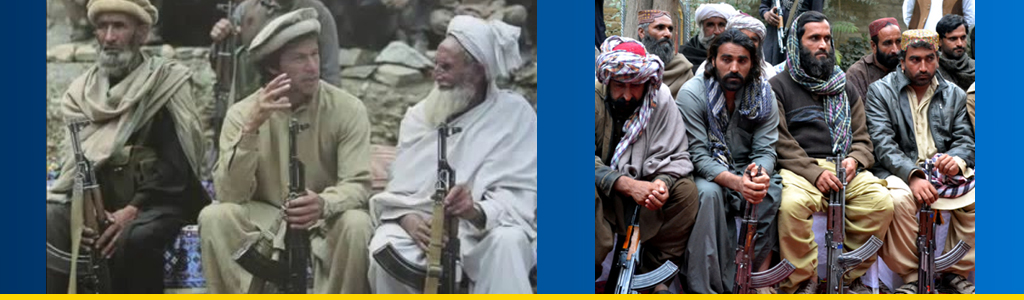
This month, for the first time, the U.S. armed forces are recruiting young men and women who weren’t yet born when the invasion of Afghanistan took place. The war has been going on for 17 years now (17-year-olds can enlist with parental consent), making it the longest war in American history. Yet we are no closer than we have ever been to accomplishing our objectives, in part because those objectives have been so sketchily, inconsistently, and unrealistically defined. In fact, the Taliban is gaining strength; other jihadist groups, including ISIS and a revivified al-Qaida, are joining the fight (against the Afghan government, Western forces, and the Taliban); the Afghan Army is suffering casualties at an alarming rate; the chaos is spiraling to unsustainable levels.

Pakistan’s Civil-Military Relations

Riaz Hassan

ADELAIDE: Of Pakistan’s many problems nothing is perhaps as enduring or as debilitating as the conflictual relationship between its civilian leadership and the military. Unlike in most democratic countries, Pakistan’s elected civilian government rarely commands the gun. Scholarly debates and analyses have identified multiple reasons including weak political institutions and parties, incompetent political leadership, the entrenched power of the civil-military bureaucracy, and threats to Pakistan’s sovereignty and territorial integrity. 

No Strings Attached? How Sri Lanka Can Make the Most of Security Grants

By Natasha Fernando

Sri Lanka is a middle-income country that is strategically located in the Indian Ocean. It emerged from a three-decade civil war and is now in a post-conflict era, struggling to maintain internal political and economic stability while maintaining friendly relations with the world. But Sri Lanka’s strategic location has led to geopolitical tensions among major powers, all seeking to further their ambitions in the Indian Ocean. Sri Lanka has thus seen the construction of Chinese funded ports, Indian management of national assets such as the Mattala airport, and Japanese aid.

A Chinese Perspective on the Pentagon’s Cyber Strategy: From ‘Active Cyber Defense’ to ‘Defending Forward’

By Lyu Jinghua 

The 2018 Department of Defense Cyber Strategy is the third report of its kind: The document, a summary of which was issued on Sept. 18, follows the Department of Defense Strategy for Operating in Cyberspace in July 2011 and the April 2015 Department of Defense Cyber Strategy. As a Chinese cybersecurity analyst reading the three documents, I have noted several interesting developments over time. The most significant among them, in my opinion, is the change of operating concept—from “active cyber defense” to “defending forward.” Here, I’d like to consider what might be behind such a change and why the change in concepts will have implications not only for the U.S. military but also for international cyber stability.

US Tech, Social Media Embolden China in Cyber War

By Larry Bell
Source Link

On Oct. 1, Vice President Mike Pence called upon U.S. companies to reconsider business practices in China that involve turning over intellectual property or "abetting Beijing’s oppression." Speaking at the Hudson Institute, he said, "For example, Google should immediately end development of the Dragonfly app that will strengthen Communist Party censorship and compromise the privacy of Chinese customers." Dragonfly is a mobile version of Google’s search engine which is being designed and tested to adhere to China’s strict citizen censorship program. In response, a spokeswoman for Google, a unit of Alphabet Inc., simply referred to a previous statement that described the company’s work as exploratory and "not close to launching a search product in China."

US, China thrusting towards a new Cold War

By RICHARD JAVAD HEYDARIAN 

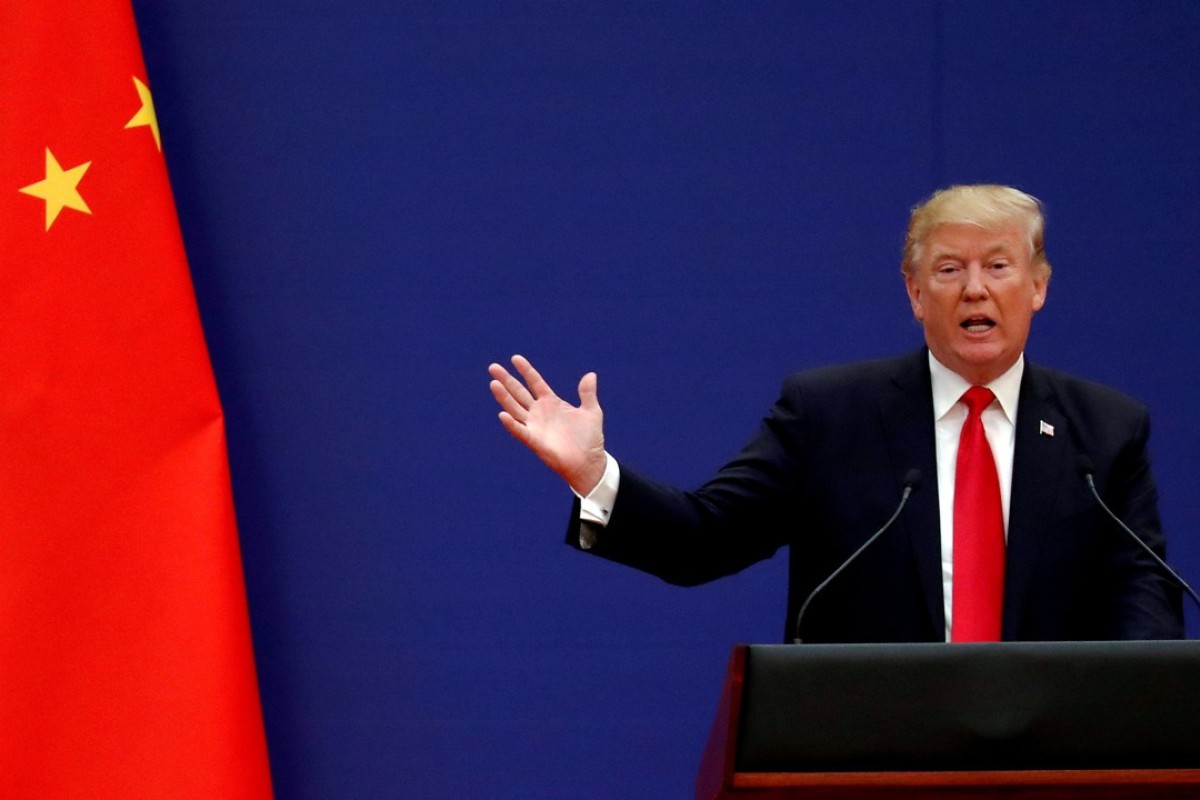
As the United States squeezes China economically through an escalating trade war, it is simultaneously ramping up military efforts to challenge Beijing’s recent strategic gains in the contested South China Sea. The tit-for-tat punitive exchanges on economic and strategic fronts has effectively commenced what some analysts now see as a new Cold War pitting America versus China, a contest that is spiraling dangerously towards a possible armed conflict at sea. US President Donald Trump recently stepped up his trade war with Beijing by imposing new tariffs on an additional US$200 billion worth of Chinese products, adding to the US$50 billion of measures applied on Chinese imports earlier this year.

China’s Great Leap Backward

BY JONATHAN TEPPERMAN

In the last 40 years, China has racked up a long list of remarkable accomplishments. Between 1978 and 2013, the Chinese economy grew by an average rate of 10 percent a year, producing a tenfold increase in average adult income. All that growth helped some 800 million people lift themselves out of poverty; along the way, China also reduced its infant mortality rate by 85 percent and raised life expectancy by 11 years. What made these achievements all the more striking is that the Chinese government accomplished them while remaining politically repressive—something that historical precedent and political theory suggest is very, very difficult. No wonder, then, that the China scholar Orville Schell describes this record as “one of the most startling miracles of economic development in world history.”

WHAT JAPAN CAN TEACH CHINA ABOUT THE AMERICAN ART OF (TRADE) WAR

BY CRYSTAL TAI

US President Donald Trump doesn’t have the most consistent political views – but when it comes to trading with Japan, his protectionist outlook has remained virtually the same for decades. During the 1980s, Japan’s staggering rise into a potential economic superpower, threat and successor to US global hegemony greatly irked the man who would go on to become the 45th American president. Appearing on The Morton Downey Jr Show in 1989, Trump said of Japan, America’s largest overseas trading partner at the time: “They have systematically sucked the blood out of America. They have got away with murder … We have to tax the hell out of them.”

Nepal and the China-EU Lending Race

By Peter Gill

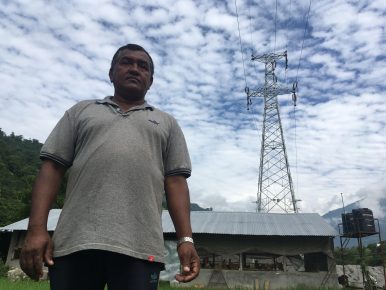
One morning in the summer of 2016, Chandra Mishra, a farmer from Udipur town in Nepal’s Lamjung district, discovered that a tree on his property had gone missing. It was a large Albizia tree, which Mishra had hoped to one day harvest for wood for making furniture. But during the night, someone had cut the tree and it fell down a steep bank into the Marsyangdi River, which courses below Mishra’s rice fields. Mishra soon learned that workers for a new electricity project – the 132 kilo-volt (kV) Bhulbhule power line, which transports electricity from a Chinese-built 50 megawatt hydro-electric power plant upriver to Nepal’s national grid – had cut his tree to make way for their development.

Defining Xi’s ‘Chinese Dream’

Jacob L. Shapiro

In 2012, after being named the new leader of the Chinese Communist Party, President Xi Jinping gave his first public address in front of the 18th National Congress and declared that the party’s main duty was “to achieve the great renewal of the Chinese nation.” It’s an ambitious statement that has induced much debate, not only because it defined a new vision for China’s future but also because it’s an exceedingly hard phrase to translate. The Chinese version is “zhonghua minzu weida fuxing.” The important part is “zhonghua minzu” – which has been translated as “the Chinese nation,” “the Chinese people” and even “the Chinese race.” The problem isn’t really the phrase’s lack of an English equivalent but that, even in Chinese, its meaning is ambiguous. And considering Xi has made renewal of the zhonghua minzu the cornerstone of what he calls the “Chinese Dream,” it’s an enormously important ambiguity.

China May Have $5.8 Trillion in Hidden Debt With ‘Titanic’ Risks

By Eric Lam

China’s local governments may have accumulated 40 trillion yuan ($5.8 trillion) of off-balance sheet debt, or even more, suggesting further defaults are in store, according to S&P Global Ratings. “The potential amount of debt is an iceberg with titanic credit risks,” S&P credit analysts led by Gloria Lu wrote in a report Tuesday. Much of the build-up relates to local government financing vehicles, which don’t necessarily have the full financial backing of local governments themselves.

Missed bond repayments in 2018 have already surpassed previous highs

Assessment of Current Efforts to Fight the Islamic State

By Ido Levy

Ido Levy has a BA in government specializing in global affairs and counter-terrorism from the Interdisciplinary Center Herzliya in Herzliya, Israel. He is currently pursuing a Master in Public Policy at Georgetown University. He has researched Middle Eastern Affairs at the Institute for National Security Studies and radicalization at the International Institute for Counter-Terrorism, where he has publications on the subject. He is an editor at Georgetown Public Policy Review and has written op-eds for Jerusalem Post, The Forward, and Times of Israel. He can be found on Twitter @IdoLevy5. Divergent Options’ content does not contain information of an official nature nor does the content represent the official position of any government, any organization, or any group.

Title: Assessment of Current Efforts to Fight the Islamic State

Iran and the GCC Hedging, Pragmatism and Opportunism

Sanam Vakil 

In recent years political tensions in the Middle East have reached new heights over the intersecting crises stemming from the Syrian civil war, the unravelling of the Iran nuclear agreement, the war in Yemen, and the Qatar crisis. The common denominator in these events is the direct or indirect involvement of Iran. The country’s increased regional activity since its 2012 intervention in Syria has stoked anger and anxiety in the Gulf states, which fear Iran’s regional hegemonic ambitions. The Gulf states felt abandoned by the US under the Obama administration, which they believed prioritized the nuclear agreement ahead of pressuring Iran over its regional policies. From the perspective of the Gulf states this has led to Iran’s destabilizing influence spreading, which is evidenced by its support for Bashar al-Assad in the Syrian civil war, its military support for the Houthis in the Yemen civil war, its ongoing relationship with Lebanon’s Hezbollah, and its relations with Popular Mobilization Forces (PMF) in Iraq. Iran has also repeatedly been accused of fomenting unrest and supporting the principally Shia opposition in Bahrain. 

This is the front line of Saudi Arabia’s invisible war

by DECLAN WALSH

A BATTLEWAGON ROARS through the gates of a beach villa on Yemen’s Red Sea coast, a luxury property with a 20-foot chandelier and indoor pool, now repurposed as a busy field hospital. Young fighters, drenched in the sweat of the battle, leap from the pickup and hoist a wounded comrade, blood streaming down his face, into the emergency ward. A piece of shrapnel had sliced his nose and lodged in his right eye. The fighter, a portly young man named Ibrahim Awad, groans. “Please, Hameed” he calls to a fellow fighter, a glint of panic in his one good eye. “My head feels heavy.” The Saudi-led war in Yemen has ground on for more than three years, killing thousands of civilians and creating what the United Nations calls the world’s worst humanitarian crisis. But it took the crisis over the apparent murder of the dissident Jamal Khashoggi in a Saudi consulate two weeks ago for the world to take notice.

The Next Arab Uprising

By Marwan Muasher

Two perfect storms have struck the Arab world in the past decade. In 2011, in what was at first optimistically called “the Arab Spring,” popular uprisings unseated autocrats across the region. Hopes ran high that these peaceful protest movements would usher in a new era of democracy in the Middle East. But except in Tunisia, they ended in turmoil or deadly civil wars. Then, in 2014, the region’s leaders were dealt another blow when the price of oil plummeted, threatening the basic model of governance on which their power rested. Low oil prices since have made it difficult for regimes to fund bloated budgets, buy off elites, and hold up long-postponed reforms. This is not a temporary aberration: it is unlikely that the price of oil will ever again rise to its pre-2014 levels. 

The 8 Major Forces Shaping the Future of the Global Economy

By Jeff Desjardins 
Source Link

With billions of people hyper-connected to each other in an unprecedented global network, it allows for an almost instantaneous and frictionless spread of new ideas and innovations. Combine this connectedness with rapidly changing demographics, shifting values and attitudes, growing political uncertainty, and exponential advances in technology, and it's clear the next decade is setting up to be one of historic transformation. But where do all of these big picture trends intersect, and how can we make sense of a world engulfed in complexity and nuance? Furthermore, how do we set our sails to take advantage of the opportunities presented by this sea of change?

1. The Tech Invasion

The Anarchy That Came

by Robert D. Kaplan

Twenty-five years ago, in the February, 1994 issue of The Atlantic , I published a decidedly unAmerican cover story: unAmerican in that it was pessimistic, deterministic, and, most importantly, declared that the victory of the United States in the recently concluded Cold War would be not so much short-lived as irrelevant, because of various natural, demographic and cultural forces underway in the world that would overwhelm America’s classically liberal vision. It eschewed the debate over ideals that have traditionally been the fare of intellectual journals and newspaper opinion pages. Moreover, because of the unrestrained optimism of the era—globalization in the 1990s was being employed as a freshly conceived buzzword—the pessimism of my essay was deeply alienating, if not abhorrent, to many. The title that the editors chose said it all: “The Coming Anarchy: How Scarcity, Crime, Overpopulation, Tribalism, and Disease Are Destroying the Social Fabric of the Planet.” They turned “The Coming Anarchy” into “the most xeroxed article of the decade,” in the words of Lester Brown, president of the Worldwatch Institute.

African Governments Are Paying for the World Bank’s Mauritius Miracle

BY MATT KENNARD, CLAIRE PROVOST

PORT LOUIS, Mauritius—The security guard at Malawi Mangoes’ registered address at an office at the St Louis Business Centre in downtown Port Louis is not sure if we’re in the right place. The staff at the front desk are bewildered by our request to speak to someone from the company. The otherwise modest office block has flat-screen televisions on the walls and glossy magazines with titles like Savile Row and Family Business on a table in a small waiting area. After about 20 minutes, a woman in a suit appears, bearing apologies—she had been out to lunch. At first, she seems to mistake us for investors in Malawi Mangoes. We jump in to clarify: We’re journalists looking to talk to someone from the company, which in 2014 received a $5 million loan from the private investment arm of the World Bank, the International Finance Corporation (IFC). Our interlocutor appears confused, as if she knows little about the business, or why we might be attempting to learn more about it in Port Louis, Mauritius.

How artificial intelligence is already impacting today's jobs - Some Extracts from A LinkedIn Report

Vaibhav Jain

The research into emerging skills around the world shed light on a few growing trends: AI skills are among the fastest-growing skills on LinkedIn, and saw a 190% increase from 2015 to 2017. Industries with more AI skills present among their workforce are also the fastest-changing industries. The countries with the highest penetration of AI skills are the United States, China, India, Israel, and Germany. The findings suggest that while changes driven by AI technologies may still be in their infancy, we are already seeing their impact across the global labor market.

Building momentum across industries 

The U.S. Government Needs to Better Immunize Itself From Supply-Chain Attacks

By Nicholas Weaver

It has now been two weeks without confirmation of Bloomberg’s reporting concerning a supply chain attack targeting SuperMicro motherboards from any news outlet. Given the alleged widespread nature, incredibly strong denials from the allegedly affected companies and multiple intelligence agencies around the world (including the NSA), and at least two previous incidents where the same reporters probably got a computer security story horribly wrong, absent independent evidence many are right to call this particular incident a false alarm. Earning less attention is a new article by the same reporters describing an implant supposedly designed for an ethernet jack. This story makes less sense to me and adding a second, more suspicious story makes me less inclined to believe the original story.

Trade War Damage Is Spreading And Time Is Running Out

by Dan Steinbock

According to new data, China’s exports rose by 14.5% year-on-year in September, which is an acceleration from the previous month. However, growth in imports declined to 14.3%. What about China-US trade? Chinese exports to the US increased 14.0% on year-to-year basis; the most since February. But as Chinese imports from the US dropped 1.2% year-to-year, that pushed China's exports to US to a new record high. In turn, That’s why China's trade surplus with the US rose to a new record high.

Damage is spreading

Electronic Warfare From a Laptop

Raytheon’s Raven 


You need more than good Wi-Fi for electronic warfare.


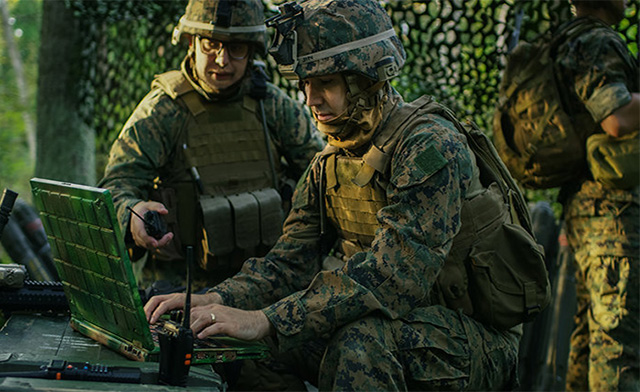
Effective EW – conflict in the electromagnetic spectrum – relies on a complicated mix of signals, data and critical decisions. Yet operators can find themselves in locations with fragmented connections, or in some cases, no connections at all. That can shut them off from the comms and data they need to make immediate, informed decisions, a bad situation made worse by the heavy investment the enemy may have made in their own EW technology. The U.S. Army recently enlisted Raytheon’s help in the European theater. The end result was Raven Claw, a mobile electronic warfare tool that helps operators control signals in the field even without a host server or reliable connection to external data.

What Can 24 Satellites Do for U.S. Missile Defense?


Despite some missile defense advocates' claims that 24 satellites could form the basis of a boost-phase space-based missile interceptor (SBI) system, many physicists do not agree.1 A better question is how could a satellite constellation of this size best contribute to U.S. missile defense? A 24-satellite constellation is too small for boost-phase missile defense. Hundreds or thousands of satellites would be needed to provide continuous coverage of even a small threat region like North Korea. A similar constellation could work for limited midcourse-phase missile defense, but not all threat regions could be covered by the same architecture and midcourse intercepts are difficult, requiring detailed tracking and target discrimination data to avoid being fooled by decoys. A constellation of this size would work, however, for space-based sensor (SBS) systems, which could observe missiles during their midcourse phase as long as they can maintain line-of-sight contact.

Introduction

The Digital Battlefield and the Future of War

by Ana C. Rold

While the United States has endured as a world leader in traditional warfare for well over a century, the global battlefield today has shifted decisively in the digital realm. With countries like Russia, Iran, and even North Korea showing signs of extremely sophisticated digital maneuvers capable of infiltrating other countries’ databases, influencing foreign elections, and even altering physical systems such as hard drives and power grids, large-scale digital are already occurring in real-time.

23 October 2018

India’s Sleeping Tech Giants Are About to Awaken

BY WILLIAM FISHER

Perhaps Walmart’s $16 billion acquisition of India’s online shopping leader Flipkart this summer was the last straw. Soon after the massive deal was signed, journalists got a look at a draft proposal for a new e-commerce policy from the central government. Suddenly India seemed prepared to follow China’s playbook: Measures that appeared to be copied straight from Beijing included closing loopholes permitting foreign ownership and requiring firms to store Indian consumer data in country and make it accessible to the government. All this and more, the proposal asserted, is needed to “level the playing field,” “encourage domestic innovation,” and give India’s tech companies an opportunity to flourish.

Opinion | A new process for peace in central India

Rohit Prasad

In his Nobel Memorial Prize lecture, entitled ‘War and Peace’, game theorist Robert Aumann emphasizes that characterizations of war as irrational may only serve to prolong conflict. Violent conflict has to be understood as a rational, albeit painful, response to certain incentives. He also demonstrates that peace can emerge, even with selfish parties involved, through a process of long-term interaction, provided the parties have a sufficiently low discount rate—they do not inordinately prioritize present gains over future benefits. He memorably writes, “If you want peace now, you may well never get peace. But if you have time—if you can wait … then you may get peace now.”

Infosys Built Its Global Machine With Indian Workers. Can It Adjust to Trump’s ‘Hire American’?

By Steve Lohr

When Infosys, a big Indian technology outsourcing company, opened a new office in Indianapolis this year, executives hailed it as a step along a new path. Infosys built itself into a global giant by running the digital engine rooms of American corporations with armies of engineers in India. But the new technology center — a sprawling open-plan space in a downtown office tower — is in the epicenter of the American Midwest. And its recruits are people like Keith Smith Jr., a graduate of Indiana University, who previously held a variety of jobs before Infosys trained him as a software engineer. Ravi Kumar, a president of Infosys, described the office as “a manifestation of what the future is going to look like.”

Saudi Investment in Pakistan Could Yield Global Returns

By Xander Snyder

Pakistan’s tenuous economic situation is opening the door to foreign competition in the country. Since Islamabad signed on with the China-Pakistan Economic Corridor, the largest project in Beijing’s expansive Belt and Road Initiative, China has spent billions of dollars on the endeavor. And the financing comes with plenty of strings attached. Sri Lanka, for example, had to concede control of Hambantota port, another Belt and Road production, to a state-owned Chinese firm after failing to repay what it owed for the project. Though Pakistan hopes to avoid the same fate, doing so won’t be easy. To fend off downward pressure on its currency, the rupee – which has lost 15 percent of its value this year – Pakistan has had to dip into the foreign exchange reserves it needs to service its mounting obligations. The country, facing a balance of payments crisis, seemed to have no choice but to borrow even more money from Beijing or solicit yet another bailout (its 12th since the 1980s) from the International Monetary Fund.

SOUTH ASIA INTELLIGENCE REVIEW [SAIR]

Ajit Kumar Singh, S. Binodkumar Singh

INDIA


INDIA: J&K: Political Fiasco 
Ajit Kumar Singh
Research Fellow, Institute for Conflict Management

On October 13, 2018, elections for the third of the four-phase Municipal Elections 2018, were held in 96 wards spread across the State of Jammu and Kashmir (J&K). The average polling percentage in this phase worked out to a sorry 16.4 per cent. Elections for the second phase on October 10, 2018, held across 263 wards, recorded an average of 31.3 per cent poling. On October 10, 2018, elections for the first phase were held across 321 wards, with 56.6 per cent of voters participating. The State average after the completion of the third phase of polls stands at 41.9 per cent.

The fourth phase of the polls are scheduled to be held on October 16, 2018. The date of counting is October 20, 2018.

A Sting Operation Lifts the Lid on Chinese Espionage

By Scott Stewart

China and others, such as Russia, will continue their attempts to acquire intelligence as they strive to achieve technological parity with the West. Because it is faster and cheaper to steal technology than develop it from scratch, Western companies, universities and other organizations will remain prime targets. Although the Chinese operative at the center of the latest case has been captured, the high stakes involved mean that the arrest will do little to curb the persistent threat of industrial espionage.

China Risks a Backlash to Secure a Western Buffer


In recent years, China has intensified its security crackdown on Uighur Muslims and other minority groups in Xinjiang as part of its efforts to control the strategic region, but the move has drawn international criticism. Now, the United States is weighing whether to impose human right sanctions as part of its campaign against China. International criticism is growing against China over its crackdown on Uighur Muslims and other minority groups in the western province of Xinjiang — and now there are rumblings that Washington could impose targeted sanctions against Beijing as peer competition grows. The White House reportedly is considering all its options to increase pressure on China, including sanctions on human rights grounds that could cause wider international ramifications.

Chinese Anti-Submarine Warfare: Aviation Platforms, Strategy, and Doctrine

By Rick Joe

This is the second piece in a two part article evaluating the anti-submarine warfare (ASW) capabilities of the Chinese People’s Liberation Army Navy (PLAN). The first piece documented the PLAN’s significant recent growth in capable ASW surface combatants, with many of those warships equipped with capable organic ASW sensor suites including variable depth sonar (VDS) and towed array sonar systems (TASS). Frigates (FFGs) and destroyers (DDGs) also have organic ASW weapons, such as vertically launched missile/rocket launched torpedo systems. This piece will consider the rotary and fixed wing ASW capabilities the PLAN currently has and their trajectory, as well as briefly describing some of the other specialized ASW assets that the PLAN is developing. Finally, all of the aforementioned systems and platforms will be brought together to consider what an overall PLAN ASW strategy may look like.

How China’s AI Technology Exports Are Seeding Surveillance Societies Globally

By Scott N. Romaniuk & Tobias Burgers

China has increasingly used its technological advances against its own people. Enabled by striking innovation in both the private and public spheres, it has gradually become the “perfect police state,” a “high-tech superpower” in-the-making, and a world leader in oppression. Authoritarian regimes have long tried to control their societies through surveillance, policing, and fear. China presents no exception to this. What is significant, however, is China’s application of new technologies to build an ever-growing, an ever-intruding surveillance state. To be sure, China has created a novel model of networked authoritarianism. Xinjiang in China’s far west has become a real-life experiment: An area where individual freedom, liberty, and security are absent, replaced by a state surveillance system that aims for near total control.

A First: China, EU Launch New Combined Military Exercise

By Zoe Stanley-Lockman

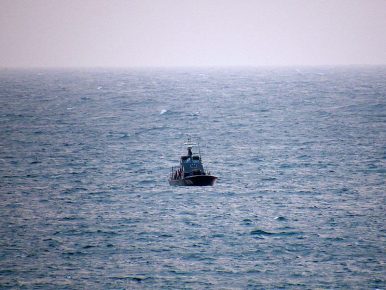
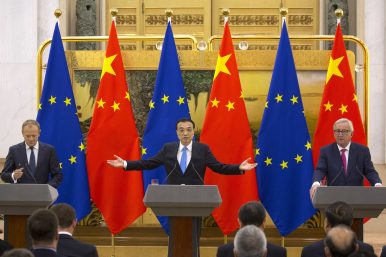
For the first time, as announced on October 16, European Union military forces have completed a combined exercise with the People’s Liberation Army Navy (PLAN). While European Union Naval Force (EU NAVFOR) interactions with the PLAN in the Gulf of Aden are not entirely new, this exercise indicates an unprecedented level of coordination between European and Chinese naval forces. Set in the current geopolitical context, this new development merits attention for activity not only in the Gulf of Aden, but also in the Mediterranean Sea.

Context