30 March 2019

They Are Thriving After Years of Persecution but Fear a Taliban Deal

By David Zucchino and Fatima Faizi

KABUL, Afghanistan — Daoud Naji was a student in the northern Afghan city of Mazar-e-Sharif during a massacre of members of his ethnic Hazara minority in 1998. He remembers digging tunnels to hide terrified families during a Taliban killing spree that left as many as 2,000 civilians dead.

Mr. Naji, now 45 and a leader of a Hazara political movement, fears more mass killings if peace talks between the United States and the Taliban produce a deal that brings the insurgents back into government. He and many other Hazaras worry that the negotiations will deliver oppression rather than peace.

Persecuted for more than a century, Hazaras have carved out a thriving urban enclave in west Kabul, the capital of Afghanistan, since the Taliban government was overthrown by an American-led coalition in 2001. But they say peace talks have put those gains at risk, especially with Hazaras already bloodied by persistent attacks from Taliban insurgents and Islamic State suicide bombers.


Israel, Palestinian Territories: With Rockets and Retaliation, the Specter of Another Gaza Conflict Looms


Relations between the Israeli government and the militant forces who rule the Palestinian Gaza Strip frequently deteriorate into small-scale skirmishes along the Gaza-Israel border. Yet political constraints on both sides contain the violence, preventing a larger conflict — such as the localized war that took place between Israel Defense Forces and Hamas in 2014 — from evolving. If unusually long-range rocket launches from the Gaza Strip occur more frequently, the Israeli threshold for a stronger retaliation will lower, even on the eve of a contentious general election.

Editor's Note: After this Snapshot was published, a provisional ceasefire agreement was announced at 10 p.m. local time. Though it remains to be seen whether the ceasefire if effective, the willingness of both parties to negotiate in the face of escalatory rhetoric and military preparations indicates a shared desire to avoid a sustained confrontation. Israel's retaliation against the most recent long-range rocket launch by Hamas was substantial, but it did not deviate much beyond previous responses to fire from Gaza. Israel targeted offices and residences of top Hamas leaders with precision strikes, though it should be noted that the premises were empty. Israel's military preparations included a major mobilization of ground forces. This act demonstrates Israel's willingness to escalate the fight against Hamas, something not only for Palestinian militants to take into account but also the Israeli population and government. Following the ceasefire, reports of strikes in Gaza and rocket attacks against Israeli communities continued. It is important to note, however, that even if the ceasefire is successful, it requires time to take effect. 

Europe’s Largest Party Suspends Its Resident Autocrat—for Now

By Kim Lane Scheppele

Less than two months ahead of elections to the European Parliament, the body’s largest party is in disarray. The European People’s Party (EPP), a center-right, pro-EU alliance of more than 40 national member parties, has been roiled by a dispute over how to deal with its enfant terrible: the far-right nationalist party Fidesz, led by Hungarian Prime Minister Viktor Orban.

Since 2010, Orban has taken Hungary far enough down the road to autocracy that the NGO Freedom House demoted the country from “free” to “partly free” in its 2019 report—a first in EU history. Fidesz’s slide into authoritarianism has drawn growing criticism from the European Parliament, including from many EPP backbenchers. But it took a blatant anti-EU campaign by Fidesz, featuring unflattering posters of Jean-Claude Juncker, the president of the European Commission and one of the EPP’s own, for the EPP to take action. At a party conference in Brussels last week, the EPP announced it was suspending Fidesz—but stopped short of kicking the party out entirely.

A Test Case for Reciprocity: The US Reciprocal Access to Tibet Act

By Natasha Kassam

Western governments have long complained about the lack of reciprocity in dealing with China. As the traditional basis for international relations, reciprocity suggests that benefits and penalties alike, granted from one state to another, should be returned in kind.

As a result of its developing country status, China is the beneficiary of special treatment in the World Trade Organization. China is entitled to more relaxed environmental protections under various treaties and defends its human rights record on the basis of this status – despite now being the world’s second-largest economy. Western governments have catered to various demands in trade and elsewhere, based on the principle that the benefits of engagement with China outweighed the drawbacks.

We are now at a point where China’s state broadcaster is able to beam news programs that often amount to little more than propaganda into the living rooms of Americans and Australians. By contrast, access to many foreign news services, including the New York Times and the Wall Street Journal, are banned in China.

The Economic Consequences of Global Uncertainty

by A. Michael Spence

As Lawrence J. Lau of Stanford University has shown, the problem is not that tit-for-tat tariffs have had an especially large impact, except perhaps on particular US and Chinese economic sectors. Rather, the conflict has cast doubt on the future of global economic connectivity, which has led to lower investment and consumption in China and the United States, and among their respective trading partners.

Moreover, the Chinese state has expanded its role in the economy. State-owned enterprises are back in favor among young jobseekers and in the eyes of the largely state-owned banking sector, even though many SOEs really should be restructured rather than kept afloat. At the same time, many private-sector firms are finding credit scarce and very expensive, and bankruptcies appear to be on the rise. Periodic policy interventions to reverse these longstanding public-private asymmetries have proved insufficient.

As for the US, the economy is coming down from a pro-cyclical fiscal stimulus that was bound to leave a mild hangover. And until very recently, the US Federal Reserve has been tightening monetary policy, with the effects of higher interest rates probably delayed by the Trump administration’s December 2017 tax cuts.

A Middle Path? US Public Opinion and Grand Strategy

By Ionut Popescu

In recent years, a sharp debate dominates the scholarly literature on American foreign policy and grand strategy: should the United States retrench from the expansive commitments undertaken in the aftermath of World War II as a globe-spanning military superpower, or should it renew its efforts to pursue the present strategy of global leadership? This issue is not merely of parochial interest to academics; rather, it represents the key dilemma faced by Washington foreign policymakers in the aftermath of the 2016 election campaign and the changes brought by the anti-establishment Trump presidency. Both sides of this debate contend that the American public supports their preferred strategy. However, a closer examination of recent public opinion date actually shows that the American people favor a “middle path” rather than either of the two preferred grand strategies advanced by proponents of Global Leadership and Restraint, respectively.

The Lost Art of American Diplomacy

By William J. Burns

Diplomacy may be one of the world’s oldest professions, but it’s also one of the most misunderstood. It’s mostly a quiet endeavor, less swaggering than unrelenting, oftentimes operating in back channels, out of sight and out of mind. U.S. President Donald Trump’s disdain for professional diplomacy and its practitioners—along with his penchant for improvisational flirtations with authoritarian leaders such as North Korea’s Kim Jong Un—has put an unaccustomed spotlight on the profession. It has also underscored the significance of its renewal.

The neglect and distortion of American diplomacy is not a purely Trumpian invention. It has been an episodic feature of the United States’ approach to the world since the end of the Cold War. The Trump administration, however, has made the problem infinitely worse. There is never a good time for diplomatic malpractice, but the administration’s unilateral diplomatic disarmament is spectacularly mistimed, unfolding precisely at a moment when American diplomacy matters more than ever to American interests. The United States is no longer the only big kid on the geopolitical block, and no longer able get everything it wants on its own, or by force alone.

Global police arrest dozens of people in dark web stin

Tomáš Foltýn 

Law enforcement from Europe, the United States, and Canada have announced the results of a recent international operation against dozens of people who reportedly sold and bought illicit goods on the dark web.

The sting led to the arrests of 61 people who are believed to have plied their trade using 50 dark web accounts. The police also seized nearly 300 kilos of drugs, 51 firearms, and over €6.2 million (US$7 million). Two-thirds were in virtual currency, while the remainder was in cold hard cash.

In Europe, the operation encompassed 17 countries, notably Germany, the Netherlands, Austria, and Portugal, according to the press release that Europol, Europe’s law enforcement agency, released on Tuesday. A statement from the US Federal Bureau of Investigation sheds additional light on the operation, dubbed SaboTor.

Preparations for the crackdown began in July 2018, when “60 experts from 19 countries, Eurojust and Europol looked for the illegal sale and signs of counterfeit goods and money, drugs, cybercrime, document fraud, non-cash payment fraud, trafficking in human beings and trafficking in firearms and explosives”.

U.K., EU: London Buys More Time for Brexit. What's Next?


In our 2019 Annual and Second-Quarter Forecasts, Stratfor said that a delayed Brexit was possible, considering the United Kingdom's difficulties with approving an exit agreement. Developments on March 21 confirmed those forecasts. But the United Kingdom has only bought more time, and a hard exit is still possible considering the country's internal divisions.

What Happened

The European Union agreed on March 21 to delay Brexit until May 22 under the condition that the British Parliament approves the withdrawal agreement next week. If Parliament rejects the agreement, then the Brexit date will be April 12, but the United Kingdom will have the chance to present new Brexit proposals and the European Union will consider another extension. On March 22, junior Brexit minister Kwasi Kwarteng said the government will hold a new vote on the withdrawal agreement next week. He also suggested that, should members of Parliament reject the deal, the government would hold a series of "indicative votes" on different Brexit options.
What It Means

Have the grown-ups killed the Green New Deal?

Yesterday, the United States Senate rejected the Green New Deal. The measure, a non-binding resolution containing ambitious goals but no specific policies, is down but not out. With kids striking for climate action and intense discussion happening over solutions, 2019 may be the year the US finally comes to terms with climate change.

Here are the pros and cons of an historic effort for climate action in the US:


Dan Drollette Jr.


Myles Allen


Nathanael Johnson


Dan Drollette Jr.

Maddy Fernands, Isra Hirsi, Haven Coleman, Alexandria Villaseñor

Rebecca Leber

Dana Nuccitelli

How to Read a Scientific Paper in 5 Steps

by Ashley Hamer

In a perfect world, we'd all have access to the same information, the training to make the right judgments about it, and the wisdom to know how it should be implemented. But the fact is, we don't. Scientific research is often blocked behind paywalls, and even when it's freely available, few people have the ability or patience to wade through its scientific jargon. That's why websites like this one exist: to wade through it for you and put it into language that's easy to understand. But if you really want to be a responsible consumer of information, sometimes you've got to wade through it yourself. And for that, we've got this handy guide. Here's how you can read a scientific paper and actually understand what it means.

First Things First: How to Get Access

That thing we said about paywalls is definitely no joke: More than three-quarters of scholarly papers on the web are only available if you're either affiliated with a university or another institution that can afford a subscription, or you can afford to buy them (usually at about the price of a tank of gas). But there are online tools out there that can help: Google Scholarsearch results will usually indicate if there's a PDF of the paper freely (and legally) available, and Chrome extensions like Unpaywall and Open Access Button will automatically search the web for a free and legal version. There's also the old-fashioned way: Just contact the authors and ask. As Canadian researcher Dr. Holly Witteman noted on Twitter, "If you just email us to ask for our papers, we are allowed to send them to you for free, and we will be genuinely delighted to do so."

Andrew Marshall, Pentagon’s Threat Expert, Dies at 97

By Julian E. Barnes

WASHINGTON — Andrew Marshall, a Pentagon strategist who helped shape American military thinking on the Soviet Union, China and other global competitors for more than four decades, died on Tuesday in Alexandria, Va. He was 97.

His death was confirmed by Jaymie Durnan, his executor.

Mr. Marshall, as director of the Office of Net Assessment, was the secretive futurist of the Pentagon, a long-range thinker who both prodded and inspired secretaries of defense and high-level policymakers. Virtually unknown among the wider public, he came to be revered inside the Defense Department as a mysterious Yoda-like figure who embodied an exceptionally long institutional memory.

In the early 2000s, at a time when the Pentagon was focused on counterinsurgency and wars in Afghanistan and Iraq, Mr. Marshall urged officials to focus on the challenge of China — a view that many considered outdated. But today, national security officials are increasingly adopting Mr. Marshall’s view of China as a potential strategic adversary, an idea now at the heart of national defense strategy.

Lasers: Beyond The Power Problem

By SYDNEY J. FREEDBERG JR.

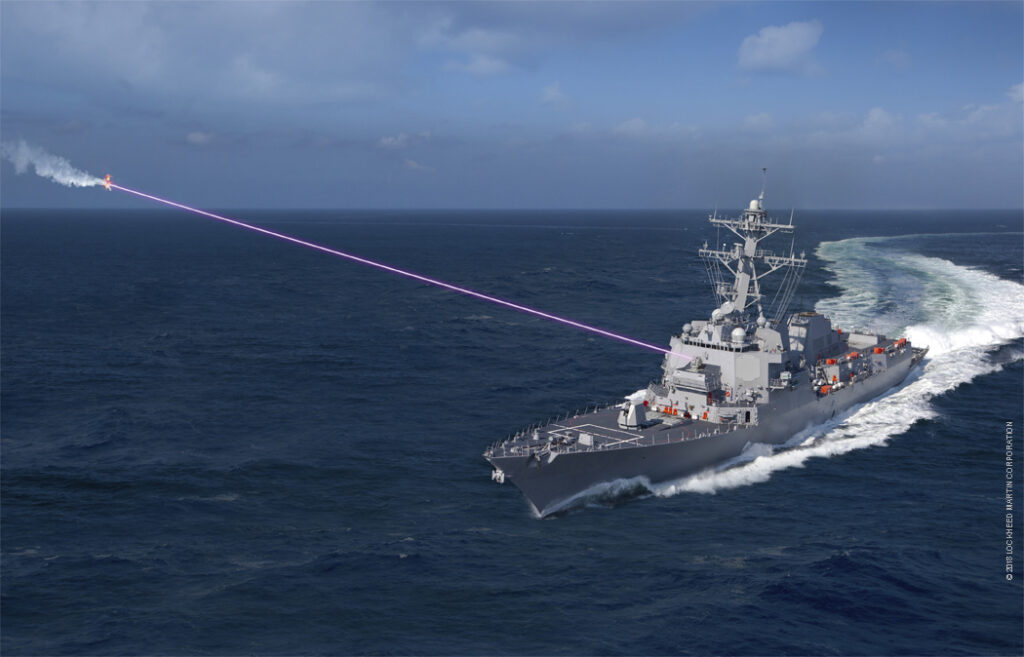
WASHINGTON: Integration of lasers on ships and other weapons is the biggest challenge today— not power. Officers and officials say there are lots of devilish details to deal with before the US military can employ laser weapons on the battlefield, from beam control to targeting to controls you can operate without a PhD.

“I’m not as worried about the power,” said Rear Adm. Ron Boxall, director of surface warfare (N96) on the Navy’s Pentagon staff. “Everyone seems to be on this race to get more and more power, and make no mistake, we’ve got to get more power — but to me the problem I have today is the integration of that [laser] into my existing combat system.”

Navy & SOCOM: Integration

The Navy’s already experimented with a 30-kilowatt laser, LaWS, on the USS Ponce, and this year it will field a “roll-aboard” laser to blind sensors, ODIN, that can go on “anything that’s floating,” Boxall told last week’s Directed Energy Summit. But LaWS and ODIN are stand-alone systems that don’t connect to the combat system that controls a ship’s permanently installed weapons and sensors.

Mobility’s second great inflection point

By Rajat Dhawan, Russell Hensley, Asutosh Padhi, and Andreas Tschiesner

There’s a well-known quote attributed to Henry Ford that he actually never said but that historians confirm he almost certainly believed: “If I had asked people what they wanted, they would have said faster horses.”1 The story resonates, of course, because we know what consumers circa 1900 thought mobility was supposed to mean, and we know from about 1920 onward what mobility in fact came to mean.

And still does. Indeed, the extent to which Ford’s (and his contemporaries’) automobile paradigm has endured is remarkable. One hundred years ago, mobility conjured cars and trucks, a space to park and the price at the pump, city streets and open roads. And more: “the freedom machine,” mass transportation, car dealerships, internal combustion. Congestion. Accidents. Pollution.

At the first great inflection point, the fundamental dimensions of transportation—cost, convenience, user experience, safety, and environment—saw “mobility” and “cars” become well-nigh synonymous. That was a dramatic shift from the previous several hundred years, when overland mobility meant horses, which people needed in ever-growing numbers. Emissions problems of a different sort than today’s were an unintended consequence. In 1894, the London Times ran the numbers: at prevailing rates, nine feet of manure would accumulate on city streets by the mid-1940s.2

Understanding the Army’s new approach to its tactical network

By: Mark Pomerleau  

As Army leaders develop a new approach to the tactical network, which allows soldiers on the battlefield to communicate with their commanders, officials are deviating from past practices as a way to improve connectivity, bolster resiliency and keep pace with technology.

They said the easiest way to think of the integrated tactical network — which is not a new network — is as a mix of existing programs of record and commercial off the shelf capabilities that allows a unit to communicate in congested environments and provide situational awareness. This approach is different than years past in that it is relies more on commercial systems — and a variety of them strung together — and a DevOps model that allows the Army to continuously iterate.

Three of the main benefits of the ITN that didn’t previously exist are the redundancy in communications, unprecedented situational awareness for units and a secure but unclassified capability for lower echelons unburdening units and allowing for greater information sharing with coalition partners. This detailed vision of the network, one of the Army’s top acquisition priorities, has emerged through several interviews with service leaders and visits to industry days and exercises over multiple months.

How 5G Can Advance the SDGs

GEORGE LWANDA

A powerful tool for achieving the 2030 Sustainable Development Agenda is already here. African governments must come together not only to invest in building 5G networks, but also to seize all of the opportunities those networks create – including a quality education for all.

ADDIS ABABA – Ultra-fast 5G wireless technology has been widely touted as a potentially transformative development, on par with the advent of electricity. This is not mere hyperbole. One area where 5G will play a decisive role is in progress toward achieving the 2030 Agenda for Sustainable Development, adopted unanimously by the United Nations in 2015.

Consider Sustainable Development Goal 4 – to “ensure inclusive and equitable quality education and promote lifelong learning opportunities for all” – which affects the achievement of all other SDGs, beginning with ending poverty (SDG 1). As the UN Development Programme’s Multidimensional Poverty Index shows, of all of the deprivations that affect the poor – from inadequate nutrition to lack of access to clean water and sanitation – lack of quality education is among the biggest obstacles to upward social mobility.

The adverse effects of educational deprivation intensify as a person ages. And, because the children of uneducated adults are less likely to attend school, deficient education is a leading contributor to intergenerational poverty.

In Test of Boeing Jet, Pilots Had 40 Seconds to Fix Error

By Jack Nicas, James Glanz and David Gelles

During flight simulations recreating the problems with the doomed Lion Air plane, pilots discovered that they had less than 40 seconds to override an automated system on Boeing’s new jets and avert disaster.

The pilots tested a crisis situation similar to what investigators suspect went wrong in the Lion Air crash in Indonesia last fall. In the tests, a single sensor failed, triggering software designed to help prevent a stall.

Once that happened, the pilots had just moments to disengage the system and avoid an unrecoverable nose dive of the Boeing 737 Max, according to two people involved in the testing in recent days. Although the investigations are continuing, the automated system, known as MCAS, is a focus of authorities trying to determine what went wrong in the Lion Air disaster in October and the Ethiopian Airlines crash of the same Boeing model this month.

The software, as originally designed and explained, left little room for error. Those involved in the testing hadn’t fully understood just how powerful the system was until they flew the plane on a 737 Max simulator, according to the two people.

29 March 2019

Modi’s Middle East Deals Snub Iran

BY HARSH V. PANT, HASAN ALHASAN

Indian Prime Minister Narendra Modi is finally doing something about his country’s sluggish approach to the Middle East. Over the past five years, he has pushed an aggressive strategy of partnering with Saudi Arabia, the United Arab Emirates, and Israel in a bid to attract investments and forge deeper security partnerships. In doing so, he has largely ignored Iran and broken with India’s Cold War-era legacy in the region.

Since his election in 2014, Modi has made foreign policy a priority, prompting some observers to claim that a “Modi doctrine” is now in effect. The Middle East is no exception. Despite the complexity of governing a country the size of India and navigating its dizzying domestic politics, Modi has visited eight Middle Eastern countries and territories since 2014, more than his four predecessors combined.

As so often is the case in the Middle East, the big driver is oil. India is likely to overtake China as the top driver of growth in oil demand by 2024. During his maiden trip to New Delhi in February, Saudi Crown Prince Mohammed bin Salman said that he saw over $100 billion worth of investment opportunities in India over the next two years, although details of these investments have yet to be revealed. India has also shored up its energy investments in the region. India’s state-owned oil company ONGC Videsh has acquired a 10 percent stake in an offshore oil concession in Abu Dhabi for $600 million.

How Pakistan’s Constitution Facilitates Blasphemy Lynching and Forced Conversions

By Kunwar Khuldune Shahid

Over the past week, a student in Bahawalpur killed his teacher over blasphemy and two Hindu minor girls from Ghotki were kidnapped and forcibly converted to Islam before being married off. Blasphemy linked vigilante violence and forced conversion of Hindu girls not only prevail in Pakistan, but the perpetrators of these two atrocities usually enjoy complete immunity. That’s because these acts of persecution and violence are rooted in an idea that the state has failed to curtail, but instead propagated: Islamist supremacy.

According to a Human Rights Commission of Pakistan report, over 1,000 non-Muslim girls are forcibly converted to Islam every year. Meanwhile, over 4,000 blasphemy cases have been registered since 1986, with at least 75 people being extrajudicially killed over accusations of insulting Islam since 1986 – the year Sections 295-B and 295-C were added to the Pakistan Penal Code, which sanctioned the death penalty for blasphemy.

Both blasphemy lynching and forced conversion are rooted in the Islamist clauses etched in the Pakistani Constitution. These range from the preamble naming the country an “Islamic” republic and granting sovereignty to Islamic scriptures to upholding violent penalties for breaching Islamic injunctions.

Love Allah, Love China

BY LIWEI WU 

On a Friday evening, the call to prayer sounds throughout Mamichang, in southwest China, calling worshippers to the old mosque next to the village square. It sounds five times every day, each time drawing these devout Muslims through the square and past a Chinese flag and meter-high characters in traditional script: 愛國愛教. “Love your country, love your religion.”

After prayer, a handful of those men wind their way back through Mamichang’s narrow alleyways, a labyrinth of mud-brick walls that finally opens up into a large courtyard lined with cars and motorcycles. There, under an empty sky and an unfurled Chinese flag, they roll out three royal blue carpets, each one 20 feet long. The 12 men and one little girl slip off their shoes and face westward toward Mecca. Adjacent to the courtyard is their “house mosque,” a nondescript residential building with doors chained shut and sealed by official tape that reads “Ethnic and Religious Affairs Bureau.”

Helmand’s Flower That Threatens Us All

By Matthew S. Reid and Cybele C. Greenberg

A peace deal in Afghanistan may be on the horizon. The latest round of high-level negotiations between the United States and the Taliban ended last week in Doha without a formal agreement, but with cautious optimism on both sides. If the U.S. envoy, Zalmay Khalilzad, gets the deal he reportedly seeks, all parties in Afghanistan will observe a general cease-fire, the United States will withdraw its forces, the Taliban and the Afghan government will open a dialogue, and the Taliban will pledge to harbor no foreign terrorist organizations on Afghan soil.

These developments are, in theory, encouraging: the United States’ longest war may finally be coming to an end. But in practice, the peace negotiations are unlikely to achieve Washington’s main national security objective in Afghanistan—preventing the formation of a terrorist safe haven—if they do not include a plan to directly address the country’s opium problem.

The Afghan drug economy is thriving. Although the United States has spent almost $9 billionto stem narcotics production over the course of the war, the most recent UN survey reports that opium cultivation in Afghanistan is at its second-highest level since 1994. Largely based in the southern provinces of Helmand and Kandahar, along the irrigated shores of the Helmand River, this multibillion-dollar trade has turned the country into the “opium capital of the world.” The industry makes up half of Afghanistan’s GDP and provides roughly 85 percent of the world’s opium.

China’s Future Looks Brighter Away From Beijing

By Scott Moore

In Beijing earlier this month, thousands of Chinese officials gathered for the annual sessions of China’s two legislative bodies, known as the “two sessions.” So too did hundreds of foreign journalists and observers seeking signs of where the world’s second-largest economy is headed. For both Chinese and foreign observers, this year’s sessions have been grimmer than most: Crackdowns on dissent have been even harsher than usual, and the official economic growth target was set at the lowest level in decades.

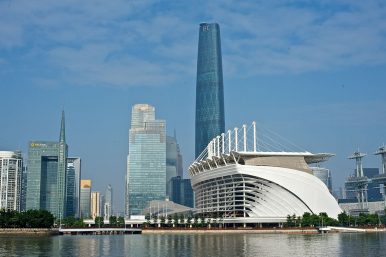
But as it turned out, the biggest stories in China weren’t unfolding in Beijing. Increasingly, China’s capital is the wrong place to look to understand its future. To do that, you have to look much further south, to the dynamic coastal cities like Guangzhou and Shenzhen that are building China’s future. And it’s a brighter one than it might look from under Beijing’s typically smoggy skies.

China’s Bid for the Heart and Soul of Italy

By Duncan Bartlett

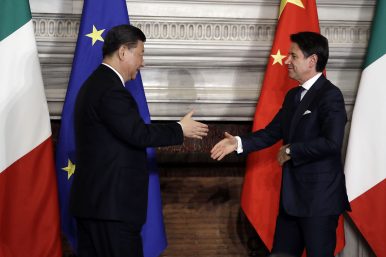
Italy’s Prime Minister Giuseppe Conte received warm praise in Chinese state media when he hosted President Xi Jinping in Rome and formally endorsed China’s contentious Belt and Road Initiative (BRI).

Italy is the first G-7 nation to officially join the BRI, which aims to revive ancient trade routes between East and West. China has promised to reward its supporter with new business opportunities and generous investment in its infrastructure.

For the Chinese media – which always enthusiastically endorses Xi’s actions and policies – it is a classic “win-win” situation. Italy is presented in heroic terms, setting a shining example for other EU countries to follow.

Within Italy, there is much excitement about the reward of Chinese gold. People talk about how they could grow rich selling luxury goods from Milan or hosting more high-spending Chinese tourists in Venice and Rome. The ports of Tauro and Genoa also expect investment and the Italians hope China can lift their country out of recession, bringing good fortune in the Year of the Pig.

China’s Scare Tactics Prompt U.S. Fears of a Clash Over Taiwan

BY LARA SELIGMAN 

JOINT BASE PEARL HARBOR-HICKAM, Hawaii—U.S. military forces in the Pacific are alarmed by what they see as an increasingly capable China using military intimidation and economic coercion to bully its smaller neighbors.

So far, these tactics fall short of actual armed conflict. But U.S. defense officials here and in Washington, most of whom spoke on condition of anonymity to discuss a sensitive topic, say if the United States does not stay on alert in the region, Beijing could use force to advance its interests—and Taiwan in particular is a major potential flash point.

Among the signs of Beijing’s increasing aggression, a Chinese warship came within 45 yards of the bow of a Navy destroyer in the South China Sea late last year, a close encounter the service characterized as “unsafe and unprofessional.” Meanwhile, the U.S. Navy has increased the frequency of movement through the strategically important Taiwan Strait, including most recently on March 24, after China repeatedly sent military aircraft and ships to circle the island for drills.

China’s military modernisation: Recent trends

KARTIK BOMMAKANTI, AMEYA KELKAR

Since the assumption of Xi Jinping to the post of General Secretary of the Communist Party of China (CPC) in 2013, the People’s Liberation Army has undergone numerous changes, both in its modernisation and organisation, that are meant to ensure that the PLA forces will be battle-ready. The modernisation aims for the PLA to acquire the latest technology and logistics that can lead the military to quick and decisive victories in any theatre of battle. This brief examines these institutional changes in China’s military, which have also resulted in the PLA firmly coming under the control of the CPC, ensuring the loyalty of the PLA is always kept under check.

This brief is an updated version of ORF Issue Brief No. 201 written by Kartik Bommakanti and published in October 2017. It is part of ORF’s series, ‘Eye on China’. Find other research in the series here:

Attribution: Kartik Bommakanti and Ameya Kelkar, “China’s Military Modernisation: Recent Trends”, ORF Issue Brief No. 286, March 2019, Observer Research Foundation.
Introduction

The Problem With Xi’s China Model

By Elizabeth C. Economy

As China’s National People’s Congress and its advisory body, the Chinese People’s Political Consultative Conference, gather this March in Beijing for their annual two-week sessions to discuss the country’s challenges and path forward, President Xi Jinping may well be tempted to take a victory lap. Within his first five years in office, he has pioneered his own style of Chinese politics, at last upending the model Deng Xiaoping established 30 years ago. As I wrote in Foreign Affairs last year (“China’s New Revolution,” May/June 2018), Xi has moved away from Deng’s consensus-based decision-making and consolidated institutional power in his own hands. He has driven the Chinese Communist Party (CCP) more deeply into Chinese political, social, and economic life, while constraining the influence of foreign ideas and economic competition. And he has abandoned Deng’s low-profile foreign policy in favor of one that is ambitious and expansive.

And yet the mood in Beijing is far from victorious. As Xi begins his second five-year term as CCP general secretary and (soon) president, there are signs that the new model’s very successes are becoming liabilities. Too much party control is contributing to a stagnant economy and societal discontent, while too much ambition has cooled the initial ardor with which many in the international community greeted Xi’s vision of a new global order “with Chinese characteristics.”

China’s Massive Belt and Road Initiative

by Andrew Chatzky and James McBride

In 2013, Chinese President Xi Jinping announced the launch of both the Silk Road Economic Belt and the 21st Century Maritime Silk Road, infrastructure development and investment initiatives that would stretch from East Asia to Europe. The project, eventually termed the Belt and Road Initiative (BRI) but sometimes known as the New Silk Road, is one of the most ambitious infrastructure projects ever conceived. It harkens back to the original Silk Road, which connected Europe to Asia centuries ago, enriching traders from the Atlantic to the Pacific.

Some analysts see the project as an unsettling extension of China’s rising power, and as the costs of many of the proposed projects have skyrocketed, opposition has grown in some participant countries. Meanwhile, the United States shares the concern of some in Asia that the BRI could be a Trojan horse for China-led regional development, military expansion, and Beijing-controlled institutions. Under President Donald J. Trump, Washington has raised alarm over Beijing’s actions even as it has abandoned some U.S. efforts to isolate China and deepen its own ties with economic partners in the region.
What was the original Silk Road?

The Key to Countering Iran

By Stratfor Worldview

Political and economic pressure from the United States will unite Iran's fractious political system behind the Islamic Revolutionary Guard Corps (IRGC), which lies at the heart of Tehran's regional strategy. Washington's recent addition of the IRGC to the Treasury Department's list of terrorist groups probably won't have a substantial impact on the organization's ability to fund itself and allied militant groups across the Middle East. In response to the U.S. decision, Iran will boost its military and political support for the IRGC by expanding its budget for asymmetric operations, including the activities of the elite Quds Force and ballistic missile development.
Big Picture Update

As the U.S. campaign against Iran and its regional allies continues, measures to further sanction the Islamic Revolutionary Guard Corps could follow. But Iran's deep connections to many Middle Eastern governments create additional consequences for the United States if it follows through with that idea and sanctions an entity connected to the IRGC. Perhaps nowhere else is this truer than in Iraq.

The Netherlands’ Luck Is Running Out

BY ROBIN SIMCOX 

Last week, police arrested a 37-year-old man born in Turkey, Gokmen Tanis, in the shooting on a busy tram in Utrecht, which killed three and injured five. Dutch authorities have said it may have been terrorism, and if it was, it would be the worst Islamist terror attack the Netherlands has ever suffered.

This may seem surprising, since Holland has been at the center of the debate around Islam and European security. One reason is that highly visible, controversial politicians such as Pim Fortuyn and Geert Wilders, who have vociferously condemned the religion, have placed it there. Another is that the Netherlands was the site of one of the most notorious Islamist-led attacks in the post-9/11 world. In November 2004, Mohammed Bouyeri, a Moroccan-Dutch man, killed the director Theo van Gogh on the streets of Amsterdam for making a film critical of Islam. Bouyeri vowed the same for Ayaan Hirsi Ali, a collaborator of Van Gogh’s and, at the time, a Dutch politician.

Yet the Netherlands has seen no catastrophic terror attack like those that rocked London, Madrid, or Paris. Dutch officials point to tight cooperation between law enforcement and intelligence agencies as part of the reason, but they also admit that they do not possess a secret formula. It partly comes down to luck—luck that cannot last forever.

Washington's Worst Kept Secret: The Islamic State Isn't Defeated

by Daniel R. DePetris 

Many of the extremist group's fighters will now become insurgents but that is not something America can solve.

It took a lot more time, patience, and ordnance than expected, but after a two-month offensive in the dusty, Syrian border village of Baghouz, the U.S.-supported Syrian Democratic Forces finally made the announcement the world was waiting for: the Islamic State’s caliphate is history. For the millions of Iraqis and Syrians who were subjected to the group’s brutality and dogmatic extremism, the SDF’s final clearing operation in the Islamic State’s remaining speck of land in the Mediterranean must have come as a cathartic moment.

Governments the world over are gushing with celebration. President Donald Trump, who days earlier unveiled a map for reporters showing how little land the Islamic State occupied, will likely claim all the credit for himself. British prime minister Theresa May issued a statement calling the capture of Baghouz “a historic milestone.” German foreign minister Heiko Maas and French president Emmanuel Macron issued their own congratulations to forces on the ground. And the Kurdish fighters who did most of the fighting and the dying capped off their success in celebratory fashion, complete with a parade and a marching band, musical instruments in tow.

Australia Shares Secrets of Its Offensive Cyberwar Against ISIS to Entice New Hacker Troops

Matt Novak

Australia has revealed for the first time that the country conducted a remote cyberattack against ISIS commanders in the Middle East to disrupt communications, all coordinated with Coalition fighters on the ground.

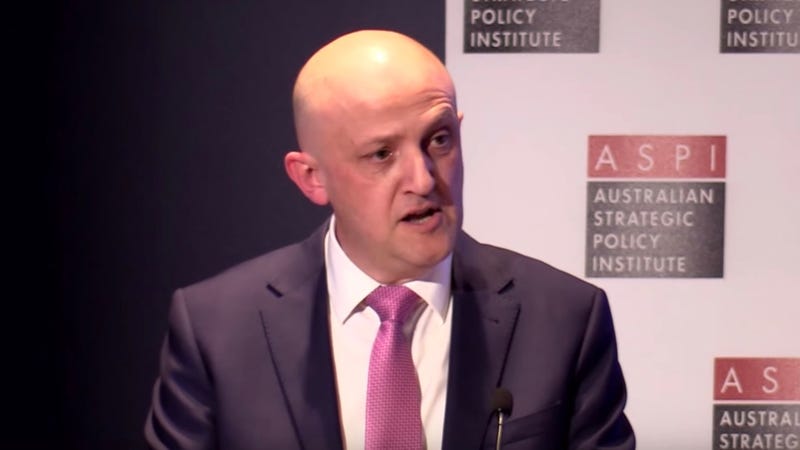
Offensive cyber operations are typically the kind of thing that governments around the world keep pretty quiet. But Mike Burgess, Director-General of the Australian Signals Directorate (ASD), delivered a speech today that boasted of Australia’s fight against ISIS from almost 7,000 miles away. The ASD is roughly equivalent to the National Security Agency (NSA) in the U.S.

“Just as the Coalition forces were preparing to attack the terrorists’ position, our offensive cyber operators were at their keyboards in Australia–firing highly targeted bits and bytes into cyberspace,” Burgess said at the Lowy Institute think tank in Sydney according to audio released by the group.

Where is the Islamic State Group Still Active Around the World?

By Mina al-Lami 

After months of fighting, the jihadist group Islamic State (IS) has finally lost Baghuz, a village in eastern Syria that came to represent the final chapter in its self-styled caliphate.

While this is a major blow, the loss of the small enclave near the Iraqi border does not spell the end of IS as a militant group capable of mounting deadly attacks worldwide.

IS and its affiliates continue to be active in various countries, claiming attacks on a daily basis through the group's online propaganda outlets.

Data collected by BBC Monitoring shows that despite having lost most of its territory in Syria and Iraq at the end of 2017, IS said it was behind 3,670 attacks worldwide last year - an average of 11 attacks per day - and 502 attacks in the first two months of 2019, while Baghuz was under siege…