19 April 2019

Tuberculosis: India’s Silent Epidemic

By Siddharthya Roy and Sayan Ghosh
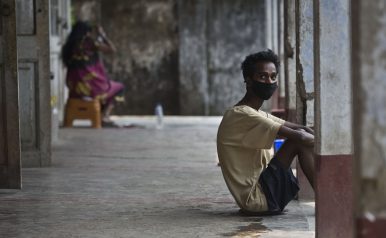
Aditi (name changed), 18, sat cross-legged on her private hospital bed in Kolkata. The black scarf covering her mouth did little to hide her emaciated face. Cheeks stained with long-dried tears, she stared at the ceiling unsure of whether she’d live or die – unsure of whether or not there was a real cure for her.

It had all begun about a year before our meeting, when she’d started experiencing severe bouts of coughing and unexplained weight loss. Her parents initially took her to a homeopathic doctor who had prescribed medicines. As is the norm in most homeopathic clinics, no diagnosis or pathological tests were done and whatever was given to her as medicine was to treat the symptoms.

The reason for choosing the local homeopathy practitioner was an obvious one – his fee was what Aditi’s parents could afford and they trusted him to keep the disease a secret.

Needless to say, her condition worsened.

Afghanistan Needs an International Solution

By Sandy Adams

The last time I walked by the presidential palace in Kabul and headed back to my NATO base, in 2011, I wondered whether I had made any difference during my year as a NATO advisor to the Afghanistan Ministry of Defense. I was one of about 20 Canadian and American senior military advisors working in partnership with Afghan generals and their staff. We advised the Ministries of Defense and Interior on the manning, training, and equipping of the Afghan National Army and Afghan National Police. Amongst ourselves, we advisers wondered what was in fact the right path to bring security to Afghanistan.

I was in Afghanistan during a time when the United States had 100,000 military personnel deployed in the country. These troops led much of the fighting, but they worked side-by-side with the National Army and Police while these grew in capacity and capability. Today, the United States has less than 15,000 personnel deployed in Afghanistan.

While I am neither a diplomat nor an economist, I am a retired military officer who cares deeply about our men and women in uniform. I also care deeply about peace and stability in Central Asia, because the region is critical to America’s broader strategic interests. 

Bangladesh: Enduring Stabilization – Analysis

By Giriraj Bhattacharjee*

Eleven terrorists belonging to different Islamist formations [Jamat-ul-Mujahideen Bangladesh (JMB), nine; and Neo-JMB, two] were killed and 504 Islamist terrorists were arrested through 2018. Those arrested included 307 cadres of the Jamaat-e-Islami (JeI)-Islami Chhatra Shibir (JeI-ICS), followed by 122 cadres of the JMB, 19 of Ansarullah Bangla Team (ABT), 16 of Ansar-ul-Islam, 12 of Neo-JMB, 11 of Hizb-ut-Tahrir (HuT), 10 of Allah’r Dal and seven of Jama’at ul Muslemin.

In 2017, 52 Islamist terrorists were killed and another 905 were arrested. 74 Islamist terrorists were killed in 2016, 31 in 2015, 22 in 2014, and 133, the highest number in a year, in 2013.

Unsurprisingly, Islamist terrorists have failed to act as brazenly as they did earlier, inflicting just three fatalities (all civilians) in 2018; as against 13 (nine civilians and four SF personnel) in 2017; 47 (43 civilians and four SF personnel) in 2016; 25 (23 civilians and two SF personnel) in 2015; 38 (29 civilians and nine SF personnel) in 2014; and 246 (228 civilians and 18 SF personnel) in 2013.

Will China Undermine Its Own Influence in Southeast Asia Through the Belt and Road?

By Xue Gong

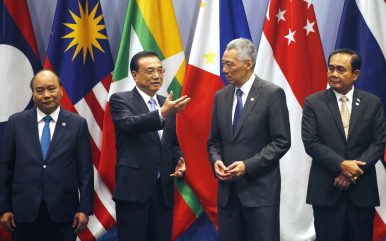
The Belt and Road Initiative (BRI) is China’s grand plan to revive ancient trading routes over both land and sea. Since its inception in late 2013, how China has influenced Southeast Asia through the BRI has become central to the debate on China’s keynote global outreach strategy.

For Southeast Asia, the BRI is not a brand-new policy initiative. China and ASEAN states have enjoyed extensive economic cooperation in past decades and had previously worked together on many large-scale projects. Almost all regional states appear to be generally supportive of the BRI because the initiative promises to meet their infrastructure and economic needs.

Since the BRI was proposed, there has been significant growth of Chinese investment in Southeast Asia – not just in infrastructure, but also in areas such as manufacturing, agriculture, and services. If China’s growing economic importance for the region in the past decades had led to greater Chinese influence, there should be no doubt that the BRI will, by the same logic, help Beijing consolidate its regional foothold in Southeast Asia.

With New South China Sea Tensions With Philippines, China Overplays Its Hand

By Ankit Panda

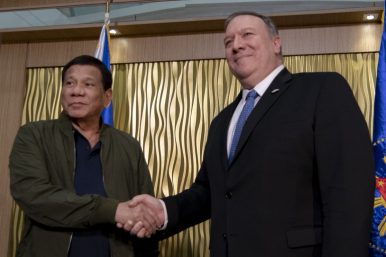
The South China Sea is heating up once again. This time, tensions are rising between China and the Philippines, with echoes of their 2012 stand-off over the Scarborough Shoal. However, unlike then, the Philippine leadership – specifically President Rodrigo Duterte – has, for some time, been expressing favour towards Beijing.

The current crisis concerns the Philippines’ most significant military outpost in the Spratly group – in waters that China claims under its capacious nine-dash line that covers nearly 90 per cent of the South China Sea.
According to official Philippine government statistics for the first quarter of 2019, there were 657 sightings of 275 distinct Chinese vessels in the waters around Thitu Island, which is not far from one of China’s largest artificial islands in the Spratly group, Mischief Reef.

These vessels encompass the gamut of Chinese capabilities, including so-called “maritime militia” vessels – commercial ships tasked with asserting Beijing’s interests. In recent years, China also has supported the operation of these vessels with warships and maritime law enforcement vessels.

Will China’s ‘16+1’ Format Divide Europe?


On April 11-12, 2019, Croatia will host the eighth summit between China and Central and Eastern European countries—the flagship gathering of China’s “16+1 format.” The summit takes place just weeks after the European Commission labeled China a “systemic rival” and economic competitor and a day after Premier Li Keqiang of China participates in the China-EU leaders' meeting in Brussels. As the summit commences, here are some key issues to consider.

Q1: What is China’s “16+1” Format?

A1: The 16+1 format, also called the China-CEEC (Central and Eastern European Countries) summit, is a Chinese initiated-platform initiated in 2012 to expand cooperation between Beijing and a group of 11 EU member states and 5 Balkan countries: Albania, Bosnia and Herzegovina, Bulgaria, Croatia, the Czech Republic, Estonia, Hungary, Latvia, Lithuania, Macedonia, Montenegro, Poland, Romania, Serbia, Slovakia, and Slovenia. Although the initiative predates the formal announcement of China’s Belt and Road initiative (BRI), the 16+1 summit is widely seen as an extension of the BRI. The three priority areas that China has identified for increasing cooperation under the 16+1 include infrastructure, advanced technologies, and green technologies. Although the grouping gives the outward impression of multilateralism, it is mainly a forum for China to strike bilateral deals.

Q2: What does the investment activity look like under the initiative?

How Europe learned to fear China

By BRUNO MAÇÃES

Last month, the European Commission published its much-awaited new strategic outlook on China. The document offers up sweeping judgments on China’s development strategy and 10 detailed responses. It is written in the usual technocratic jargon that is second, or even first, nature to officials in Brussels, but it also shows signs of a more political approach. China is described as a “systemic rival,” whose economic power and political influence have grown with unprecedented scale and speed.

There’s been a significant change in Europe’s attitude to Beijing. Not too long ago, Europeans shrugged at China’s rise. Overnight, it seems, their world changed. So, why did the tide turn? And how did we get here?

First, there was the story of the solar panels. European producers once enjoyed a clear first-mover advantage, and yet the industry has been all but wiped out in Europe. Look at the list of the world’s 10 largest solar-panel manufacturers. In 2001, five were European. In 2018, eight were Chinese; the other two were Canadian and South Korean.

China’s Crackdown on Uighurs in Xinjiang

by Lindsay Maizland

Human rights organizations, UN officials, and many foreign governments are urging China to stop the crackdown. But Chinese officials maintain that what they call vocational training centers do not infringe on Uighurs’ human rights. They have refused to share information about the detention centers, however, and prevent journalists and foreign investigators from examining them.

When did mass detentions of Muslims start?

Some eight hundred thousand to two million Uighurs and other Muslims, including ethnic Kazakhs and Uzbeks, have been detained since April 2017, according to experts and government officials [PDF]. Outside of the camps, the eleven million Uighurs living in Xinjiang have continued to suffer from a decades-long crackdown by Chinese authorities.

Most people in the camps have never been charged with crimes and have no legal avenues to challenge their detentions. The detainees seem to have been targeted for a variety of reasons, according to media reports, including traveling to or contacting people from any of the twenty-six countries China considers sensitive, such as Turkey and Afghanistan; attending services at mosques; and sending texts containing Quranic verses. Often, their only crime is being Muslim, human rights groups say, adding that many Uighurs have been labeled as extremists simply for practicing their religion.

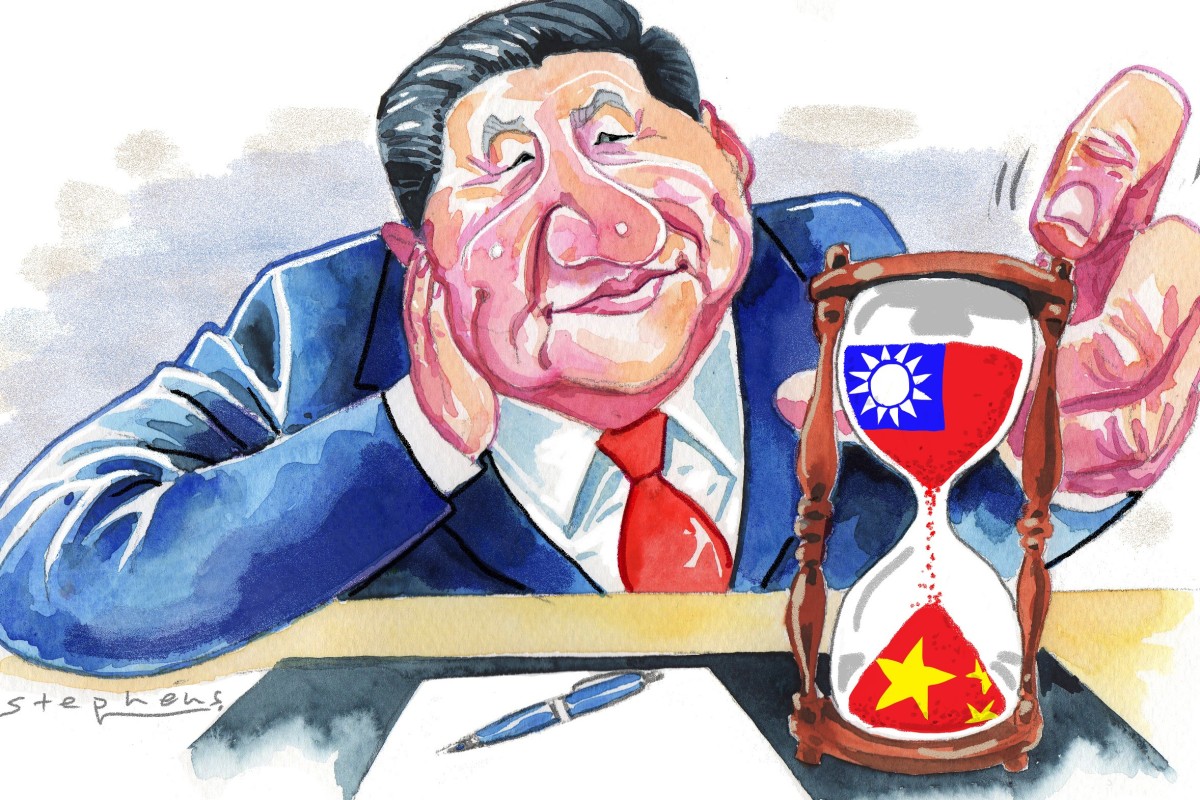
Xi Jinping won’t force unification on Taiwan for now, the show of force by China’s PLA notwithstanding

Deng Yuwen

For the first time in years, two Chinese fighter jets 
crossed into Taiwanese airspace on March 31, causing Taiwan to scramble its own aircraft in a tense stand-off. What impact will this incident have on cross-strait relations, and will a similar stand-off eventually lead to an accidental exchange of fire?

As Taiwan gears up for the 2020 presidential election, unification and independence will surely be one of hot topics of debate.
So far, both President Tsai Ing-wen and her colleague at the Democratic Progressive Party, former premier William Lai Ching-te, a self-proclaimed “pragmatic Taiwan independence worker”, have said they would seek nomination for the contest. We can’t rule out the possibility that the DPP will turn to some underhand means to try to win the election, but it would not want to trigger a Chinese campaign to force unification.

The U.S. Is Losing a Major Front to China in the New Cold War

By Lulu Yilun Chen and Yoolim Lee

A swathe of the world is adopting China’s vision for a tightly controlled internet over the unfettered American approach, a stunning ideological coup for Beijing that would have been unthinkable less than a decade ago.

Vietnam and Thailand are among the Southeast Asian nations warming to a governance model that twins sweeping content curbs with uncompromising data controls -- because it helps preserve the regime in power. A growing number of the region’s increasingly autocratic governments watched enviously the emergence of Chinese corporate titans from Tencent Holdings Ltd. to Alibaba Group Holding Ltd. -- in spite of draconian online curbs. And now they want the same.

The more free-wheeling Silicon Valley model once seemed unquestionably the best approach, with stars from Google to Facebook to vouch for its superiority. Now, a re-molding of the internet into a tightly controlled and scrubbed sphere in China’s image is taking place from Russia to India. Yet it’s Southeast Asia that’s the economic and geopolitical linchpin to Chinese ambitions and where U.S.-Chinese tensions will come to a head: a region home to more than half a billion people whose internet economy is expected to triple to $240 billion by 2025.

Jihadism May Be Waning, but New Forms of Violent Extremism Are Emerging

Steven Metz 

Since 9/11, any mention of violent extremism usually referred to Salafi jihadism and the likes of al-Qaida and, more recently, the self-styled Islamic State. While not the only type of extremism plaguing the world, the sociopathic brutality and morbid self-publicity of these jihadist groups put them in the spotlight. There had never been anything like them, or so it seemed. In the minds of many people, al-Qaida and its offshoots were the paradigm of violent extremism.

Jihadism is far from defeated today, even if the Islamic State has been rolled back in Syria and Iraq. From Boko Haram in Nigeria to the Taliban in Afghanistan, jihadist groups continue to draw recruits and find new ways to kill. But jihadism’s ability to intimidate its enemies is waning. As an extremist movement, it will persist for many years, but only as a spent force fading away.

The New Islamist Lobby

By Oren Litwin

On April 1st and 2nd, the United States Coalition of Muslim Organizations(USCMO) descended on Congress for its fifth annual National Muslim Advocacy Day. USCMO is a national umbrella group for a veritable Who’s Who of Islamist organizations such as the Council on American-Islamic Relations (CAIR), the Muslim-American Society (MAS), American Muslims for Palestine (AMP), and the Muslim-Brotherhood think tank International Institute of Islamic Thought (IIIT). USCMO describes its mission as facilitating communication and coordination between all these groups, “to create and sustain an urgent, collective sense of direction.”

USCMO is led by Oussama Jammal, a longtime Islamist who raised money for terror financer Sami al-Arian and has close ties with the Islamist party of Turkish ruler Recep Erdogan, and with the government of Qatar and the MuslimBrotherhood -- as do many of the other USCMO leaders. USCMO nevertheless presents itself as the spokesman for the entire American Muslim community (most members of which want nothing to do with the Brotherhood). And it is thatmessage, more than any other, that USCMO wants to convey to our elected representatives: that Islamists speak for all Muslims in America.

Lessons of the War in Ukraine for Western Military Strategy

By Niklas Masuhr 

In this article, Niklas Masuhr writes that NATO is prioritizing conventional military capabilities to deter Russian encroachment on the Alliance. Further, Western planners and strategists view the war in Ukraine as a key benchmark that defines future capability requirements. As a result, various adaptive processes are underway within national armed forces.

When Russian intervention forces occupied the Crimean peninsula in February 2014 in a coup de main, NATO was still committed in Afghanistan. After more than ten years of counterinsurgency and stabilization operations, the crisis in Ukraine triggered a reorientation towards its original purposes of defense and deterrence. During the same year, at the NATO summit in Wales, it was decided to enhance the speed and capability with which NATO forces could respond to a crisis. The subsequent Warsaw summit in 2016 added rotating multinational contingents in its eastern member states in order to signal the entire alliance’s commitment to their defense. Below these adaptations at the level of NATO, national armed forces are being reformed and rearranged because of the shift in threat perception. This analysis focuses on the military forces of the United States, the United Kingdom and Germany. The tactics and capabilities Russia has brought to bear in eastern Ukraine in particular serve as the benchmark according to which these Western forces are being shaped. 

Resilience: The ´Fifth Wave´ in the Evolution of Deterrence

By Tim Prior 

According to Tim Prior, the ‘fifth wave’ of deterrence development is rising at a point when established approaches are fumbling to provide an effective response to complex contemporary security threats. However, Prior believes that an answer lies in resilience thinking. Indeed, he argues that resilience can increase the ability of security institutions to cope with complex threats, for instance, by reducing vulnerabilities and denying threatening actors suitable targets for their attacks.

The concept of resilience is becoming more relevant for current deterrence debates at a time of evolving threats. The fifth wave of deterrence development is rising at a point when established international security practices are fumbling to respond effectively to security challenges. Resilience can increase the ability of security institutions to cope with and respond to complex threats in a deliberative manner. Security policy decision-making processes must match the complex threat environment they seek to govern by being flexible, proactive, and distributed. 

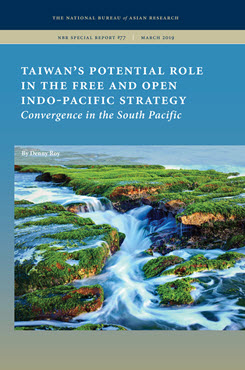
Taiwan’s Potential Role in the Free and Open Indo-Pacific Strategy

by Denny Roy

This report examines the role of the Pacific Islands in Taiwan’s grand strategy and argues that Taiwan’s struggle to maintain formal diplomatic relations with these states dovetails with the United States’ reformulated Indo-Pacific strategy, even if Washington has yet to articulate a clear plan for coordinating activities in the South Pacific with Taipei.

The long-standing rivalry between Taiwan and China for diplomatic recognition among the Pacific Island states in some respects mirrors the larger competition between the U.S. and China for influence in the Asia-Pacific region, now reformulated as the “Indo-Pacific.” Taiwan’s activities in the Pacific Islands are largely supportive of the goals of the U.S. “free and open Indo-Pacific” strategy (FOIP), and Taipei has openly expressed willingness to partner with Washington at a time when China has a clear and growing commitment to exploiting Oceania for political, economic, and strategic gains. The U.S. government, however, lacks a concept or plan for cooperating with Taiwan either in the South Pacific or elsewhere in the region. Consequently, Taiwan acts as an unacknowledged partner.

High-Level US Visits to Taiwan Mark 40 Years of Unofficial Ties

By Nick Aspinwall

Taiwan will continue to welcome officials from the United States to the island as the two countries commemorate the 40th anniversary of the Taiwan Relations Act (TRA), passed in 1979 shortly after the United States severed diplomatic relations with Taipei and established ties with Beijing.

A 26-member United States delegation headed by former Speaker of the U.S. House of Representatives Paul Ryan is scheduled to arrive in Taiwan on Monday to attend events commemorating the TRA and to open the new compound of the American Institute in Taiwan (AIT), according to the AIT and Taiwan’s Ministry of Foreign Affairs (MOFA).

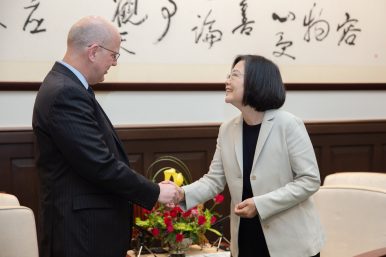
Earlier this week, Taiwan President Tsai Ing-wen welcomed U.S. Deputy Assistant Secretary for Trade Policy David Meale to a banquet at AIT. Meale said during the event that the United States “will remain steadfast in all of its commitments to Taiwan,” citing the shared economic interests and democratic values of the United States and Taiwan.

America’s Global Infrastructure Opportunity: Three Recommendations to the New U.S. Development Finance Corporation


The launch of the U.S. Development Finance Corporation (USDFC) in October 2019 is an extraordinary opportunity to accelerate capital flows into emerging and frontier markets in support of U.S. national security, development, and commercial objectives. The new agency is inheriting a fundamentally solid foundation to build upon from the Overseas Private Investment Corporation (OPIC). However, it would represent a tremendous missed opportunity if the USDFC merely replicated OPIC’s activities at a higher volume. This is especially the case for infrastructure finance, the sector where USDFC has the greatest potential to have impact. To help ensure success at scale, we recommend the USDFC:

Focus on fast-growing emerging market urban clusters by organizing investment opportunities around building Smart Cities.

Respond to unmet power needs by investing aggressively in both hard and soft energy infrastructure and technology.

Help close the digital divide with soft infrastructure investments.

Poverty Under Democratic Socialism — Part II: Escaping the Padded Cage


There aren’t many signs that the French will soon free themselves from the trap they have sprung on themselves. The Macron administration had been elected to do something precisely about the strangling effect of taxation on French economic life and, on individual freedom. (The latter message may have been garbled during his campaign.) Are there any solutions in sight for the French crisis of psychic poverty, framed by both good social services and high taxes?

I see two kinds of obstacles to reform. The first is comprised of collective cognitive and of attitudinal deficiencies. The second, paradoxically, is a feature of French society that American progressives would envy if they knew about it.

Cognition and attitudes

A White House strategy for fixing the climate?

By Dawn Stover

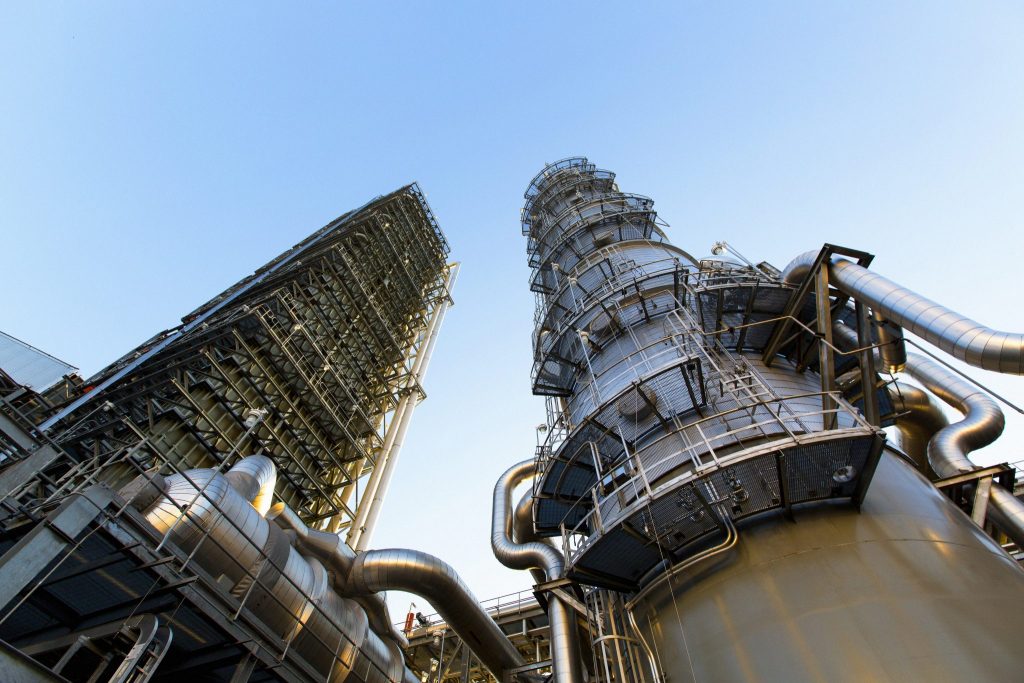
Petra Nova is the world’s largest carbon capture project at a coal-fired power plant. With funding from a $190 million Energy Department grant, NRG Energy and JX Nippon retrofitted one of the Texas plant’s boilers to capture one-third of its carbon dioxide emissions before they enter the atmosphere. The captured carbon dioxide is injected into oil reservoirs to boost production. Credit: NRG Energy

According to a report from McClatchy’s DC bureau, two senior administration officials say the White House is developing a new strategy to demonstrate that it’s doing something about climate change: promoting a technology known as carbon capture and storage. The idea is to avoid regulation by focusing instead on innovation that would allow for the continued use of coal, natural gas, and other fossil fuels.

Carbon capture and storage has the potential to capture most of the carbon dioxide emitted by power plants and industrial facilities, before it enters the atmosphere. The captured carbon could then be piped or shipped to underground repositories—depleted oil and gas fields or cavernous salt formations. Ironically, this technology was developed by fossil fuel companies, which have for decades used captured carbon dioxide to force more oil and gas out of declining well fields.

Dragons, nuclear weapons, and Game of Thrones

By Timothy Westmyer

[Editor’s note: As we rapidly approach what is the first episode of the final—supposedly—season of Game of Thrones, the editors of the Bulletin of the Atomic Scientists thought it appropriate to reprint this 2014 essay. And say: “Valar morghulis.”)

On the surface, Game of Thrones is merely another cable television series with the requisite battles, backstabbing court intrigue, and scantily clad (or unclad) characters. But it has deeper meanings with a surprising number of lessons about peace and security for real life. Commentators from institutions such as the Fletcher School of Diplomacy, Foreign Policy, and the Atlantic.com have written about how this HBO show—based upon George R.R. Martin’s epic fantasy series, A Song of Fire and Ice—helps explain international relations in the real world.

One parallel, however, has escaped analysis: dragons as living, fire-breathing metaphors for nuclear weapons. Despite the fantasy setting, the story teaches a great deal about the inherent dangers that come with managing these game-changing agents, their propensity for accidents, the relative benefits they grant their masters, and the strain these weapons impose upon those wielding them.

Gov’t warns on VPN security bug in Cisco, Palo Alto, F5, Pulse software

By Michael Cooney

The Department of Homeland Security has issued a warning that some VPNpackages from Cisco, Palo Alto, F5 and Pulse may improperly secure tokens and cookies, allowing nefarious actors an opening to invade and take control over an end user’s system. 

The DHS’s Cybersecurity and Infrastructure Security Agency (CISA) warning comes on the heels of a notice from Carnegie Mellon's CERT that multiple VPN applications store the authentication and/or session cookies insecurely in memory and/or log files.[Also see: What to consider when deploying a next generation firewall. Get regularly scheduled insights by signing up for Network World newsletters]

“If an attacker has persistent access to a VPN user's endpoint or exfiltrates the cookie using other methods, they can replay the session and bypass other authentication methods,” CERT wrote. “An attacker would then have access to the same applications that the user does through their VPN session.”

DARPA Seeking To Create A New, Anonymous Communications Program/Platform


Staying hidden online is a very difficult, if not impossible to do. Yes, there are cumbersome steps you can take to substantially muddy the digital waters, with respect to your identity; but, nothing is digitally bulletproof. If a determined adversary is intent on finding you digitally, and they have the time, talent, and resources available to enable them — then, more than likely they will unmask your digital identity at some point in time, People and organizations are constantly seeking ways to communicate digitally, anonymously. No wonder the Dark Web has become so popular, though even with the encrypted Tor router, prying eyes can still find you. Now comes word that the Defense Advanced Research Projects Agency, the Pentagon’s research arm that created the Internet — is seeking to create a new, anonymous communications program/platform.

Dividbyo posted an April 14, 2019 article to the cyber security and technology website, DeepDotWeb noting that last summer/2018, DARPA quietly announced a new research program known as the Resilient Anonymous Communications for Everyone (RACE) program. The program aims “to develop a completely anonymous, and undetectable method for communicating over the Internet,” the site said. “It appears the RACE program will utilize network stenography to hide messages in other Internet traffic. The proposed distributed messaging system would allow for messages and metadata to be exchanged; and, it would not be possible to alter the information while it is in transit over the network. The RACE program seeks to avoid large-scale targeting, and large-scale compromises, through the use of a combination of stenography (or obfuscation) and encryption,” Dividedbyo wrote.

Tracking Phones, Google Is a Dragnet for the Police

by JENNIFER VALENTINO

The tech giant records people’s locations worldwide. Now, investigators are using it to find suspects and witnesses near crimes, running the risk of snaring the innocent.

The tech giant records people’s locations worldwide. Now, investigators are using it to find suspects and witnesses near crimes, running the risk of snaring the innocent.

When detectives in a Phoenix suburb arrested a warehouse worker in a murder investigation last December, they credited a new technique with breaking open the case after other leads went cold.

The police told the suspect, Jorge Molina, they had data tracking his phone to the site where a man was shot nine months earlier. They had made the discovery after obtaining a search warrant that required Google to provide information on all devices it recorded near the killing, potentially capturing the whereabouts of anyone in the area.

Writing Women at War

BY TERESA FAZIO

Long before the #MeToo movement began to spread across the world, women had started playing increasingly prominent roles in armies around the globe, from the United States to Iraqi Kurdistan. It’s no surprise, then, that the literature of war is finally catching up, expanding past macho tales into more nuanced investigations of women’s experiences.

Against this backdrop comes D-Day Girls by the journalist Sarah Rose, Code Name: Lise by Larry Loftis, who previously wrote about the World War II double agent Dusko Popov, and Madame Fourcade’s Secret War by Lynne Olson, who has written five previous historiesof World War II. The first two books tell the stories of female British spies who worked to shore up the French Resistance in preparation for the Allied D-Day landings, and the third tells the story of a privileged Frenchwoman, Marie-Madeleine Fourcade, who became the head of occupied France’s largest spy network. It’s hardly an unknown slice of the war—numerous previous World War II narratives have focused on women and their work—but Rose, Loftis, and Olson delve unusually deeply into the personal lives of their heroines, as well as their work.

Krypton 85 monitoring: Solution to clandestine reprocessing

By Michael Schoeppner

During the Cold War, Canberra bombers such as this one were used by the Royal Air Force to collect samples from the atmosphere, to see if there were any elevated levels of the radioactive material krypton 85 to indicate that the Soviets had done any reprocessing of spent nuclear fuel to make plutonium-based nuclear bombs. Image courtesy Robin A. Walker, https://abpic.co.uk

One of the many obstacles to reaching an arms-control agreement with North Korea revolves around the risk that undeclared, clandestine nuclear facilities might exist in that country, which—if they remain undetected—would allow the Kim Jong-un regime to maintain and continue its military nuclear ambitions. It is therefore very important that any agreed-upon denuclearization of the Korean peninsula includes methods to verify that North Korea is not conducting any illicit reprocessing—the procedure where fissionable material such as plutonium is recovered from spent nuclear fuel, and used for making nuclear bombs.

18 April 2019

Lessons From Vietnam on Leaving Afghanistan

By George C. Herring

The prospect of an end to the conflict in Afghanistan has led many U.S. foreign policy experts to ponder the ignoble conclusion of another war, now a half century past. Vietnam reportedly offers a cautionary tale for some Pentagon officials who worry about reliving the ignominious events of 1975, when the North Vietnamese and the National Liberation Front (NLF) marched triumphantly into Saigon and the last Americans, along with some South Vietnamese allies, struggled frantically to escape by helicopter. Former U.S. Ambassador to Afghanistan Ryan Crocker and others who worry about the humanitarian and geopolitical consequences of withdrawing from Afghanistan warn of a “Vietnam redux” and hear “echoes of America’s retreat from Vietnam.” They seem to fear an Afghanistan syndrome, like the so-called Vietnam syndrome before it, that could cripple the United States’ ability to intervene militarily.

Just how similar was the war in Vietnam to the war in Afghanistan, and how similar are their endings likely to be? What will be the consequences of U.S. withdrawal for Afghans and Americans—and what lessons might the United States take from Vietnam to mitigate them?
GRAVEYARDS OF EMPIRES

The Real Enemy of Pakistani Women Is Not Men

By Bina Shah

KARACHI, Pakistan — On International Women’s Day in Pakistan last month, thousands of exuberant young feminists staged their second Aurat (women’s) March. Intended to build on the success of a well-received march last year, it was designed to be inclusive, peaceful and raucously joyful. It had women from all walks of life, some in Western clothes, others in full veils, head scarves and burqas. Women from cities and villages. Female health workers and teachers. Trans women and male allies.

Then came an ugly backlash that still simmers — a sign that the feminists’ goal of breaking the hold of patriarchy is still a long way away.

Recalling the joys of the 2018 march, the activists and volunteers had gone to low-income neighborhoods and rallied women there. They bused women from rural villages. They printed fliers with artwork by young female artists, and drew posters that expressed their frustration, anger, hope and courage. On March 9, perhaps 6,000 women marched peacefully in Karachi, and another 3,000 in Lahore. Smaller groups walked in smaller locales: Peshawar, Quetta, Hyderabad, Faisalabad and Chitral. The marchers made headlines all across Pakistan.

China’s Surreptitious Economic Influence on Taiwan’s Elections

By Jason Li

In Taiwan’s local elections held on November 24, the Kuomintang (KMT) trounced the ruling Democratic Progressive Party (DPP). Common in post-election reporting was the idea that cross-strait relations, one of the traditional defining issues in Taiwanese partisan politics, was less of a factor in determining voters’ decisions than in previous years. According to some experts, DPP President Tsai Ing-wen’s inability to combat stagnant wages, reduce unemployment, and enact labor reform were the principal contributors to her party’s “stunning” loss. These commentators have made it a point to distinguish “China issues” from domestic, economic issues in determining the election outcome.

Missing from such arguments, however, is consideration of the underlying and ever-present influence of China on the Taiwanese economy. Although local grievances toward DPP economic policy were the resounding driving force behind the KMT’s victory, Chinese policy cannot escape implication with regard to Taiwan’s ailing economy. Since Tsai’s election in 2016, Beijing has responded to Taipei’s refusal to recognize the 1992 Consensus and the DPP’s pro-independence leanings by choking the island’s economy and exploiting its vulnerabilities and dependence on mainland markets. It is in this way that Beijing, on the local level, indirectly enabled the DPP’s defeat last year.

How the US Can Win Its Trade War With China

By Arjun Kapur

Are trade wars “good, and easy to win,” as President Donald Trump put it last year? Most mainstream economists and foreign policy analysts answer with a resounding “no.” Citing dire analogies such as the Great Depression and Pearl Harbor, they denounce Trump’s trade policy as ignorant toward the principles of free-trade economics, and fraught with security risks. Both the United States and China will lose, critics warn.

Yet a more thorough review of the historical record reveals a winning playbook for the White House, provided that it devises clear, limited aims it deems achievable through targeted measures and negotiations, and avoids presenting China’s leadership with a binary choice of absolute, humiliating surrender or forceful, even violent retaliation.

The American Smoot-Hawley Tariff Act of 1930 has become the default worst-case analogy for macroeconomic analysts, much as the Munich Agreement has become for security analysts. A protectionist wave unleashed by the devastating 1929 U.S. stock market crash paved the way for Smoot-Hawley’s passage into American law. The resulting trade war reduced world trade by 66 percent between 1929 and 1934. Global economic conditions rapidly deteriorated, and the political fortunes of dangerous populist, nationalist, and even fascist leaders rose.

China’s Bad Old Days Are Back

By Kelly Hammond, Rian Thum, and Jeffrey Wasserstrom

Disturbing things have been happening in China lately. Hundreds of thousands of Muslim Uighurs have been sent to Orwellian reeducation camps in the western province of Xinjiang. A political party in Hong Kong has been outlawed despite the city’s special status and history of free speech. Teachers in a southern port city were asked to hand over their passports so that closer watch could be kept on their movements. An ailing dissident, the Nobel Prize laureate Liu Xiaobo, was barred from seeking medical treatment abroad. Upon traveling to his native China, the chief of the international crime-fighting organization Interpol vanished, only to reappear in government custody, facing corruption charges. And the list goes on. 

As reports of such events trickle out, each may be shocking in its own right but all too easy to dismiss as an outlier to more positive trends. Taken together, however, the dots connect to present a clear—and distressing—picture of China’s course under President Xi Jinping. For all its talk of moving forward, the country is in many ways returning to the past, with its officials and leaders displaying a new brazenness in their crackdown. Rounding up five to ten percent of an entire ethnic group, as the government has in Xinjiang, is a method that seems to belong in the last century, not this one.

US, Japan kick off trade talks amid China deal optimism


As optimism grows that the United States and China are nearing a trade deal, Japan kicks off its own negotiations with Washington from Monday, hoping to resolve some of the issues "very quickly."

US Trade Representative Robert Lighthizer and Japan's Economy Minister Toshimitsu Motegi are set to embark on two days of talks in Washington.

In Tokyo last week, Motegi predicted the crunch talks would be "candid", with the first round on Monday about "making a decision on which areas we will discuss, chiefly in the field of goods".

"I will do my best to have thorough discussions so as to produce a good result in line with our national interest," said Motegi.

Self-styled dealmaker Donald Trump has been playing hardball with traditional US trading partners, using tariffs and threats in an effort to boost US exports and curb Washington's longstanding trade deficit.

Branding IRGC Terrorist Is Game Changer Escalating US-Iran Showdown – Analysis

By Riad Kahwaji*

The U.S. Administration decision to brand the Iranian Revolutionary Guards (IRGC) as a terrorist organization appears to be a pre-determined step in line with the ongoing escalatory policy of the White House aimed as subjecting Tehran to unprecedented pressure that would prompt it to either concede to Washington’s demands or to react in a violent manner that would ignite a war sought by hardliners on both sides. Tehran’s reaction by regarding U.S. troops as terrorists indicates that Tehran is keeping all options on the table, including a military option of targeting American forces in the region either directly or via its proxy groups operating in Iraq, Syria, Lebanon and Yemen.

Although the timing of the U.S. action might have been to give a push to Israeli Prime Minister Benjamin Netanyahu in Israel’s general elections on April 9, nevertheless it seemed in sync with President Donald Trump’s policy towards Iran, which has been marked by steady escalation for the past year. Secretary of State Mike Pompeo heightened his rhetoric against Iran and its Lebanese ally Hezbollah in his visit to Beirut in late March 2019. He repeated his threats to Hezbollah and the IRGC in his press conference April 8 announcing the latest actions by his administration against Iran.

Russia’s Repatriation Of ISIS Members – Analysis

By Carl Lampe*

(FPRI) — On March 25, the Kurdish-led and American-backed Syrian Democratic Forces (SDF) transferred three Russian orphans, aged five to seven, to a Russian government delegation in northeast Syria. The transfer marked the beginning of the repatriation process for children of ISIS members. This is just one event in a string of sporadic repatriations to Russia. In January 2019, the Presidential Commissioner for Children’s Rights in Russia, Anna Kuznetsova, helped repatriate thirty Russian minors from a prison in Baghdad. Processes like these may occur more frequently in the coming months as the U.S.-backed alliance of Syrian fighters has defeated ISIS territorially. Moscow now must decide what to do with Russian female ISIS members and children who remain in Iraq and Syria.

Leading up to its intervention in Syria in 2015, Russia reportedly allowed its citizens to leave the country to join ISIS. Reuters reported that Russian government officials allowed radicalized Muslims to cross the border to join ISIS before the Sochi 2014 Winter Olympics. Estimates reveal that thousands of Russian citizens, predominately from Chechnya and Dagestan, joined ISIS.

What Will Happen When Governments Disagree Over Who Is A Terrorist Organization... And Who Needs To Be Blocked Online?

Mike Masnick

You may have heard the recent news that President Trump has decided to label the the Islamic Revolutionary Guards Corps (IRGC) a "foreign terrorist organization." The IRGC is Iran's powerful military/security/law enforcement apparatus -- that also owns a ton of businesses. As the White House itself admits, this is the first time a foreign governmentagency has been referred to as a foreign terrorist organization. This is big news in a huge variety of ways -- in large part because it could end up criminalizing lots of people and businesses who unwittingly do business with the IRGC including (checks notes) a firm called The Trump Organization.

But, leaving that aside, it raises some other issues as well. We've been talking about the impact of the terrible EU Terrorist Content Regulation that the EU Parliament will soon be voting on. But, as we've discussed in the past, there are lots of questions about who decides just what is "terrorist" content. Daphne Keller tweeted about the IRGC decision, wondering what happens when one country's laws demand the removal of content from another country's government and suggests (accurately) this is going to lead to a huge mess.

Lost Malaysian Hopes And The Pakatan Catch 22 – Analysis

By Murray Hunter

Asia’s experiment in democracy deeply threatened

It took the Malaysian opposition more than a generation to topple the Barisan Nasional government, led by the now-discredited United Malays National Organization. Throughout mosques, coffee shops and markets in Malaysia, there has been an atmosphere of hope and anticipation by many for change that goes all the way back to when Mahathir Mohamed dismissed Anwar Ibrahim as deputy prime minister back in 1998 and jailed him in a trial regarded universally as trumped up.

From that day on Anwar Ibrahim became synonymous for reform in Malaysia. The charismatic opposition leader, from jail and out, managed to unite a wide diversity of NGOs and most of the opposition parties against the Barisan. But it took 20 years and reports by the Sarawak Report, the Wall Street Journal, Asia Sentinel and others to expose what is now known as the 1Malaysia Development Bud scandal which tainted Prime Minister Najib Razak as a complete crook and his wife as a grasping harridan. Najib shut down critical parts of the local media and sacked the Attorney General before charges could be laid against him.